Reading view

There are new articles available, click to refresh the page.

Wisconsin groups say federal appeals court ruling to uphold soot pollution limits is a ‘win’

Wisconsin health and environmental advocates are hailing a federal appeals court decision that upheld the Biden administration’s tighter limits on soot pollution after two dozen Republican-led states challenged the rule. 

The post Wisconsin groups say federal appeals court ruling to uphold soot pollution limits is a ‘win’ appeared first on WPR.

States show their stuff: The Great American State Fair opens in D.C.

Attendees sit in the grass in front of the Ferris wheel at the Trump administration's Freedom 250 Great American State Fair on the National Mall on Thursday, June 25, 2026. (Photo by Ashley Murray/States Newsroom)

Attendees sit in the grass in front of the Ferris wheel at the Trump administration's Freedom 250 Great American State Fair on the National Mall on Thursday, June 25, 2026. (Photo by Ashley Murray/States Newsroom)

WASHINGTON — Visitors from across the United States traveled to the National Mall Thursday for the opening day of the Great American State Fair, a days-long event that is part of President Donald Trump’s Freedom 250 celebration of the nation’s semiquincentennial.

States and territories showed off cultural and agricultural exports at exhibits stretching nearly a mile. Attendees snapped photos on the small Grand Ole Opry stage in the Tennessee booth, kids tried putt-putt at Indiana’s miniature golf course and cowboys rode horses at Montana’s rodeo. 

A crowd watches a rodeo on the National Mall as part of Montana's exhibit for the Freedom 250 Great American State Fair on Thursday, June 25, 2026. (Photo by Ashley Murray/States Newsroom)

A crowd watches a rodeo on the National Mall as part of Montana’s exhibit for the Freedom 250 Great American State Fair on Thursday, June 25, 2026. (Photo by Ashley Murray/States Newsroom)

A 110-foot Ferris wheel slowly turned at the center of the freshly manicured lawn, framing the Washington Monument and the U.S. Capitol in the distance on either side. Nearby stood a model of Trump’s controversial “triumphal arch.”

People collected swag from each state — drawstring bags from Ohio, stickers from South Dakota, snacks from Tennessee — and could receive a stamp on state fair passports.

The Trump administration's Freedom 250 Great American State Fair opened on the National Mall on Thursday, June 25, 2026. (Photo by Ashley Murray/States Newsroom

The Trump administration’s Freedom 250 Great American State Fair opened on the National Mall on Thursday, June 25, 2026. (Photo by Ashley Murray/States Newsroom

The fair is part of the larger Freedom 250 programming and kicked off Wednesday night with a rally on the mall featuring a speech from the president that closely resembled his remarks along the 2024 presidential campaign trail. The festivities will continue over Independence Day, when Trump will deliver a second speech followed by what is promised to be an impressive fireworks display. 

The president will visit North and South Dakota as part of his Freedom 250 tour for the opening of the Teddy Roosevelt presidential library and Independence Day eve fireworks above Mount Rushmore.

Emma Francus, 10, of Detroit, Michigan, plays mini golf at Indiana's golf-themed exhibit at the Freedom 250 Great American State Fair on the National Mall on Thursday, June 25, 2026. (Photo by Ashley Murray)

Emma Francus, 10, of Detroit, Michigan, plays mini golf at Indiana’s golf-themed exhibit at the Freedom 250 Great American State Fair on the National Mall on Thursday, June 25, 2026. (Photo by Ashley Murray)

Freedom 250 then extends into August with a high school athletic competition in Washington, D.C., dubbed the “Patriot Games” and a Freedom 250 INDYCAR race around the National Mall.

The administration’s celebration is separate from the America250 commission, created by Congress a decade ago, and which has its own nationwide programming this year.

From Lake Erie to the Ohio River

Ohio Gov. Mike DeWine and first lady Fran DeWine greeted guests in Ohio’s pavilion. The couple posed for photos in front of a map of the Buckeye State.

“We wanted to see on the wall all the different things, from Lake Erie to the Ohio River, all the different fun things you can do in Ohio,” the Republican governor said, adding the state has local celebrations and initiatives planned for the 250th anniversary, including “Movies in Ohio” for community showings of films that feature the state.

From left, Ohio first lady Fran DeWine and Gov. Mike DeWine take a photo with Miles Armiger, 12, of Severn, Maryland, and his grandmother, Robyn Toman, on Thursday, June 25, 2026, at the Ohio exhibit, part of the Trump administration's Freedom 250 Great American State Fair. (Photo by Ashley Murray/States Newsroom)

From left, Ohio first lady Fran DeWine and Gov. Mike DeWine take a photo with Miles Armiger, 12, of Severn, Maryland, and his grandmother, Robyn Toman, on Thursday, June 25, 2026, at the Ohio exhibit, part of the Trump administration’s Freedom 250 Great American State Fair. (Photo by Ashley Murray/States Newsroom)

Ohio’s first lady showcased a children’s literacy exhibit on the opposite wall and touted the roughly 427,000 participants in the state’s partnership with the Dolly Parton Imagination Library, a program that mails free children’s books monthly to households with kids under age 5. 

“We’ve mailed out 27 million books. We know that a child’s brain is 80% developed by age 3, so we want to get them those books early,” she said.

Reflecting on America’s milestone birthday, the governor said, “We’re always a work in progress, Ohio’s a work in progress, this country is a work in progress.”

“I think you know the thing we need to keep in mind, all of us, is there’s some essential core principles that we all believe in. … We may disagree about different policies, but the core principles are the same,” he said.

Cartwheels on the lawn

People from various states walked from exhibit to exhibit, while stopped in the nation’s capital during road trip vacations.

Tanya Geders, 43, of St. Louis, Missouri, did a cartwheel in the mall lawn, trying to persuade her son to join in. The family stopped at the state fair on their way to Virginia Beach.

Tanya Geders, 43, of St. Louis, Missouri, modeled a cartwheel for her son on the National Mall at the Freedom 250 Great American State Fair on Thursday, June 25, 2026. (Photo by Ashley Murray/States Newsroom)

Tanya Geders, 43, of St. Louis, Missouri, modeled a cartwheel for her son on the National Mall at the Freedom 250 Great American State Fair on Thursday, June 25, 2026. (Photo by Ashley Murray/States Newsroom)

“We’re like, well, if we go to the ocean, we can go to D.C. and what a better time to be here than the 250th anniversary,” Geders said.

Faith Eliza, of Grand Junction, Colorado, performed on the National Endowment for the Arts stage at the Freedom 250 Great American State Fair on the National Mall on Thursday, June 25, 2026. (Photo by Ashley Murray)

Faith Eliza, of Grand Junction, Colorado, performed on the National Endowment for the Arts stage at the Freedom 250 Great American State Fair on the National Mall on Thursday, June 25, 2026. (Photo by Ashley Murray)

Robyn Toman, 71, of Severn, Maryland, escorted her 12-year-old grandson Miles to meet DeWine and grab a photo with the governor.

Toman said she remembers the country’s bicentennial.

“I was a kid about his age, and I came in 1976. I said, ‘We’re gonna go, let’s go down to D.C. for a couple days and see this,’” she said. 

“We’ve enjoyed it. We went over to the archives yesterday, and saw the Constitution, and the Declaration of Independence, and the Bill of Rights. And, oh, that was so nice, that was fantastic.”

Not all states are there. A spokesperson for Washington state’s lieutenant governor’s office told States Newsroom the administration declined to join because of “the costs to the state associated with participating.”

According to news reports, Connecticut, Massachusetts, North Carolina, Oregon, Pennsylvania, Rhode Island and Vermont did not contribute exhibits, though many are still represented by flags outside the individual booths.

The state officials did not immediately respond to States Newsroom for confirmation.

All states that reportedly did not participate, with the exception of Vermont, are Democratic-led.

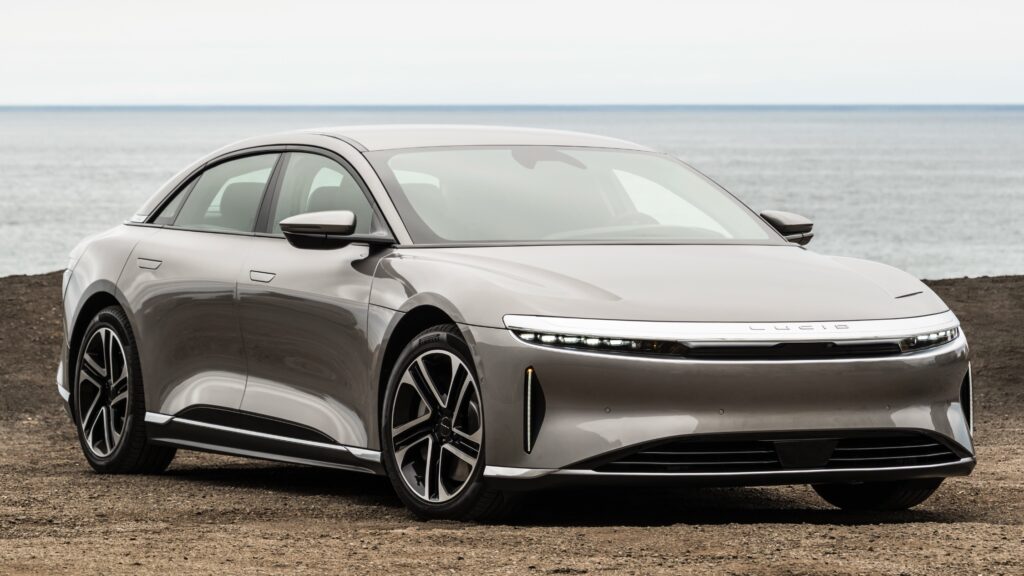
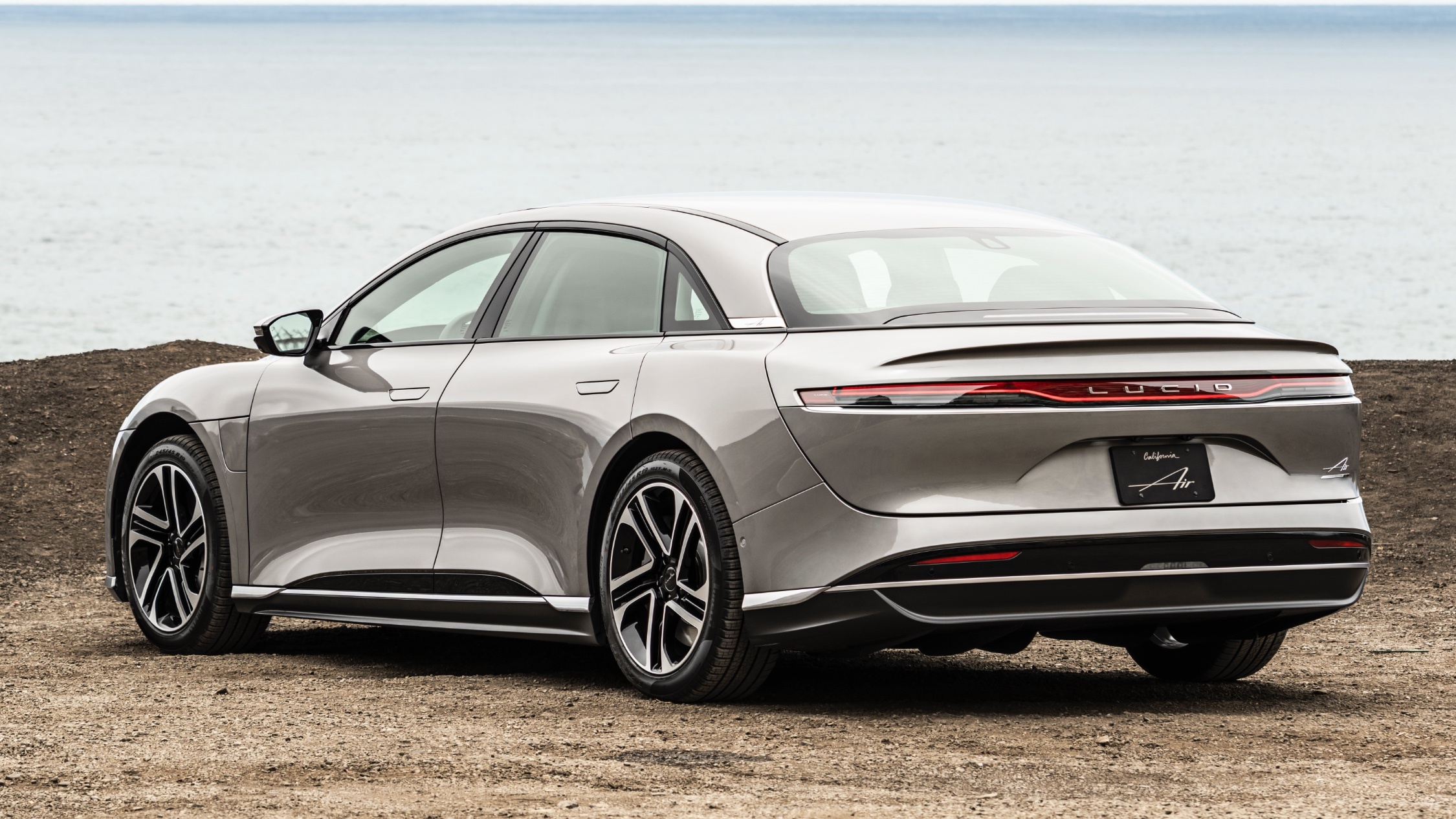
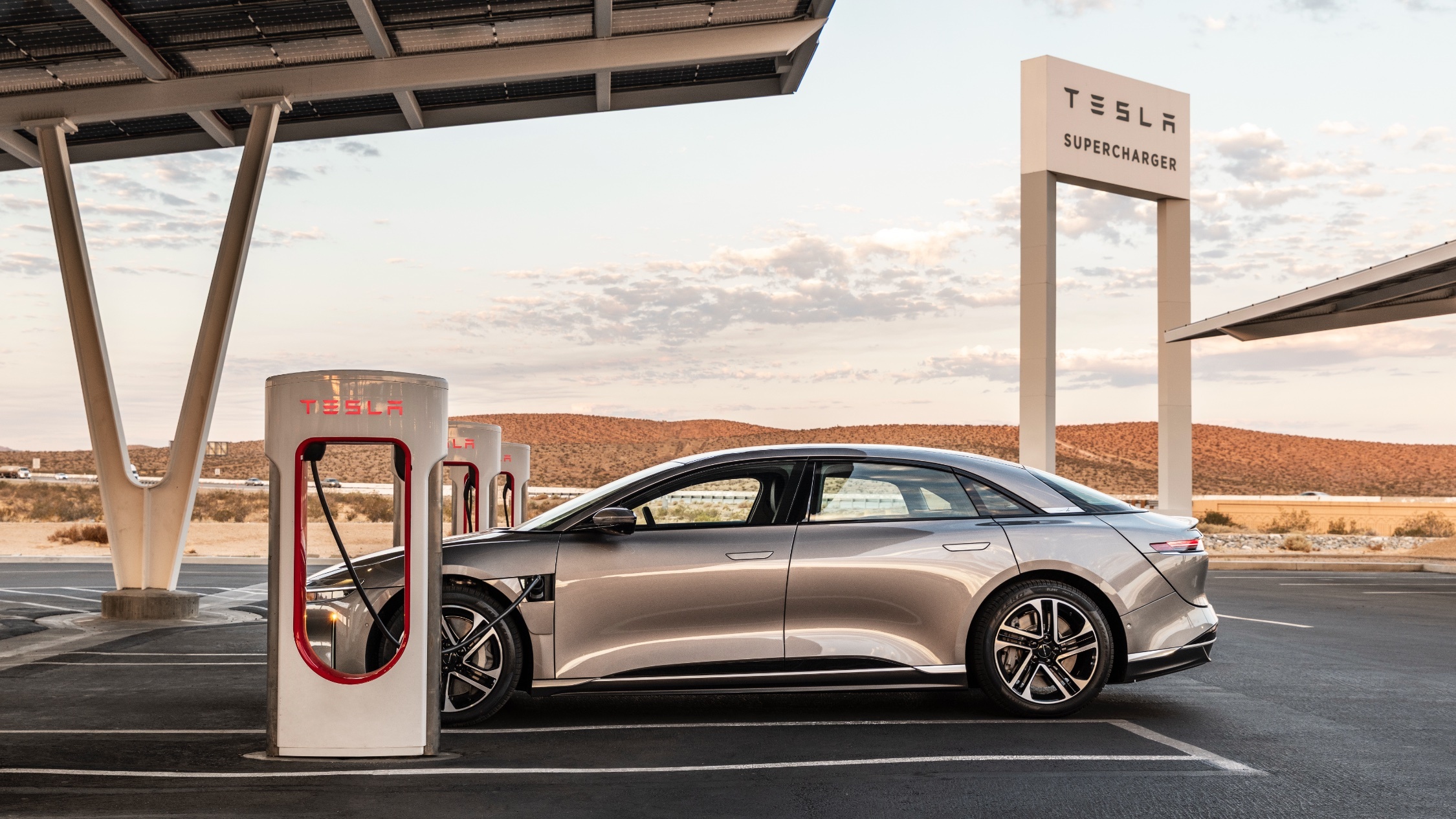
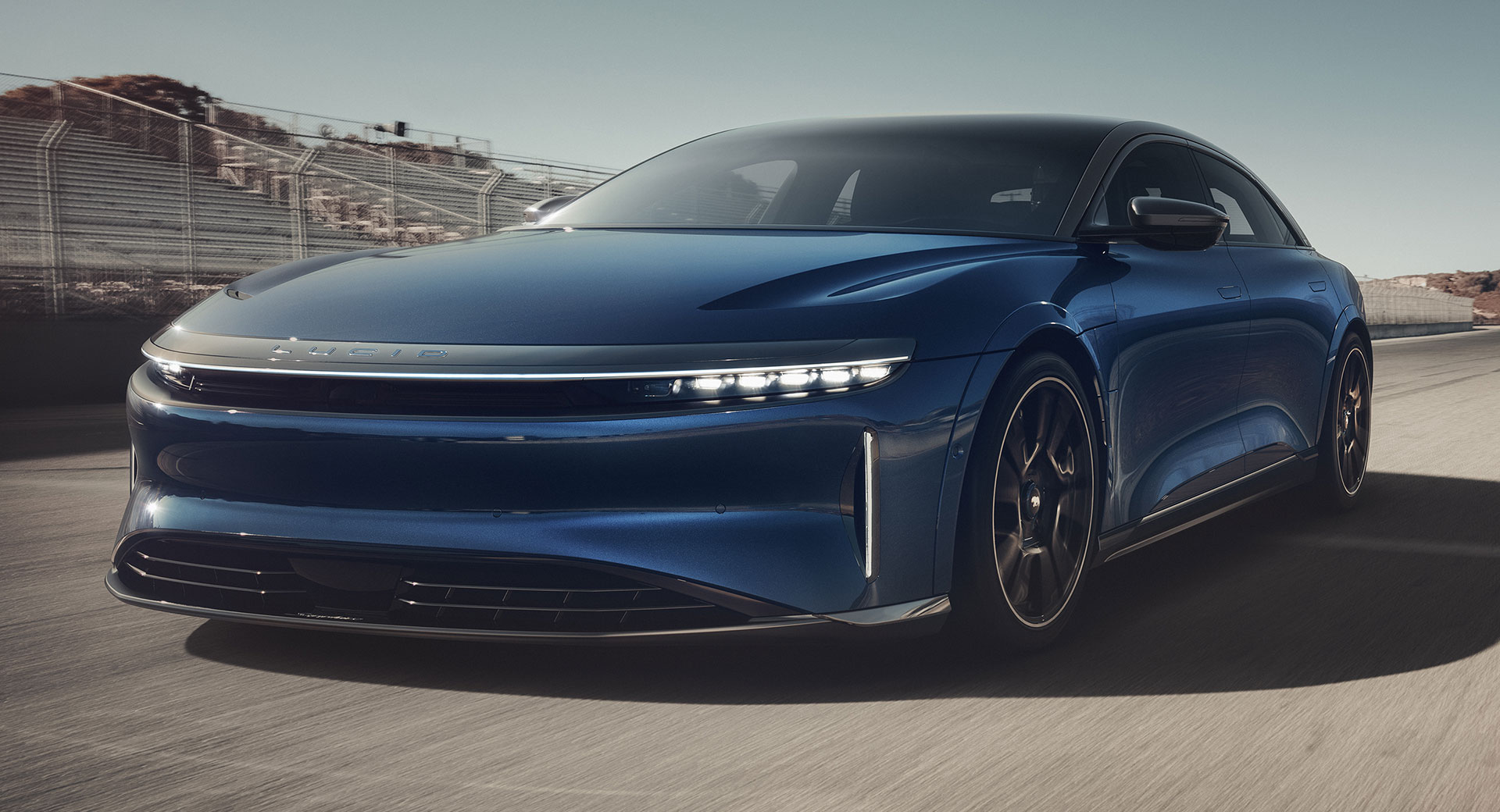
The Lucid Air Can Lose Power Mid-Drive, But The Fix Only Comes After It Does

  • Lucid is recalling a total of 2,039 vehicles built over 14 months.
  • The Gen 4 inverter used in the Air Pure RWD can trigger a loss of power.
  • The issues were first prevalent across Air models used by a fleet operator.

Lucid has been in the news for all the wrong reasons in recent weeks. Not only has it been forced to buy back an Air from popular YouTuber Jason Fenske due to a dizzying array of faults, but it was also recently forced to recall vehicles with half-shaft bolts that may not have been properly secured. It’s now been prompted to issue yet another recall, once again for the Air.

As with April’s recall, this one is also limited to the Air Pure RWD models. The electric car manufacturer says these vehicles have its Gen 4 inverters, which may experience signal interruptions and module failures due to damage from friction between internal connectors.

Read: Lucid’s Fix For Losing Drive Power Is A Notification That You’re About To Lose Drive Power

If the connectors sustain damage, it could cause a complete loss of power, as it’ll prevent the inverter from converting DC power into the AC power needed to operate the motor. This is obviously a safety issue, particularly if the failure occurs while driving.

A total of 2,039 vehicles are involved in this recall. All of them were manufactured between September 13, 2023, and December 12, 2024.

OTA Update Before Replacements

 The Lucid Air Can Lose Power Mid-Drive, But The Fix Only Comes After It Does

Lucid first noticed inverter failures in March 2025, in cars run by a US fleet operator. The early assumption was that fleet use explained it, since those vehicles pile on miles far quicker than privately owned ones. That theory did not hold. Failures soon turned up in non-fleet Air Pure RWD cars too, and by March 2026, the company had logged 55 of them.

Rather than immediately replacing all inverters, Lucid will roll out an over-the-air software update that detects potential failures and triggers a warning on the instrument cluster, which must be cleared by a dealer. Vehicles that receive this warning will be eligible for inverter replacement. Owners of vehicles who don’t receive this warning won’t be eligible for a replacement.

 The Lucid Air Can Lose Power Mid-Drive, But The Fix Only Comes After It Does

Lucid’s Flagship EV Broke So Often Even Jason Fenske Tapped Out

  • Jason Fenske’s 2025 Lucid Air began showing faults almost immediately.
  • Lucid failed to source a matching replacement Air for the YouTuber.
  • The automaker instead agreed to buy back the troubled EV outright.

On paper, the Lucid Air is one of the most accomplished electric sedans on sale, a technological tour de force wrapped in clean bodywork with class-leading efficiency. For one prominent YouTuber, the past eleven months of actually living with one have been a study in attrition.

Jason Fenske of Engineering Explained signed a three-year lease on a 2025 Lucid Air Touring last year. The problems started almost immediately. Door handles, phone-as-key functionality, the cupholder, the list grew quickly. Lucid reached out and promised to sort it.

Watch: Popular YouTuber Got Critical With Lucid, And Things Didn’t End With A Shrug

Fast forward a few months, and the YouTuber has reached his breaking point. During a recent four-day road trip, the Air kept suffering problems. For example, there was a time when the rear doors couldn’t be opened, even though they were unlocked. The HVAC system threw its own curveball.

As his dog sat in the rear, he noticed it was getting too hot. He checked the air vents and realized that while both were set to 65°F, one side was blowing much hotter than the other. He also experienced an issue where the reversing lines on the screen with the reversing camera would randomly disappear, and, most annoyingly, a number of Apple CarPlay issues, including it completely failing to load.

Then There’s A Big Safety Issue

His biggest issue is particularly concerning. Fenske also drives his Lucid Air with the vehicle’s Stop Mode set to hold. This essentially means that when it comes to a stop, it will automatically hold without applying the brake. It can also be set to roll, as a traditional automatic car would if you let off the brake while stopped. One time, when the YouTuber turned on the EV, put it into reverse, and lifted off the brake pedal, the car randomly started rolling forward. If this had happened on a steep hill, it could have caused an accident.

After contacting Lucid, the company first suggested it could take back Fenske’s Air and replace it with a like-for-like example, allowing him to continue his lease. That plan fell apart when Lucid couldn’t source a matching Air, so the automaker instead agreed to buy back the EV outright and reimburse him for every payment he’s made. It works out well for Fenske, though owners dealing with the same issue, minus the 4.2 million YouTube subscribers, probably shouldn’t expect identical treatment.

\\\\\\\\

Those potholes in your street reveal a money problem for cities and states

A work crew fills potholes on Perring Parkway in Baltimore. Crews filled at least 32,000 potholes from late February through mid-March, and the city aims to fill another 25,000 potholes by mid-July. (Photo by J.J. McQueen/Baltimore City Mayor’s Office)

A work crew fills potholes on Perring Parkway in Baltimore. Crews filled at least 32,000 potholes from late February through mid-March, and the city aims to fill another 25,000 potholes by mid-July. (Photo by J.J. McQueen/Baltimore City Mayor’s Office)

Across the country, potholes are more than a seasonal nuisance. They are a visible symptom of aging roads and bridges that many state and local governments say they cannot afford to fully maintain.

From local streets in small towns to major urban corridors, transportation agencies are grappling with deferred maintenance, rising construction costs and limited revenue streams. Even as federal infrastructure dollars increased in recent years, some transportation officials and infrastructure experts say the need continues to outpace available funding.

Gas taxes, which historically have largely gone to road repairs, have not kept up with inflation or shifts in vehicle efficiency, including the growing use of fuel-efficient and electric vehicles. The federal gas tax, at 18.4 cents per gallon, has remained unchanged since 1993. President Donald Trump has proposed temporarily suspending the federal gas tax to provide relief from surging fuel prices because of the Iran war.

“What states end up doing, partly because resources are limited, is they’re sort of triaging the system,” said Rocky Moretti, the director of policy and research at TRIP, a nonprofit research group focused on transportation issues.

For drivers, the cost of deteriorating roads often becomes clear only after damage occurs. At a time when many Americans are already feeling squeezed by fluctuating gas prices, tire blowouts, bent rims and suspension repairs can turn potholes into costly and unexpected expenses.

At the same time, some state and local governments are struggling to keep up with repairs while exploring new technologies — including artificial intelligence-powered road monitoring systems, sensors and camera-equipped vehicles — to identify road damage and respond more efficiently.

Federal transportation data shows that U.S. road conditions have changed little over the past three decades. Nationwide, the share of roadways rated in acceptable condition peaked at about 91% in 1999, but has since declined and averaged around 80% in recent years — leaving roughly 1 in 5 roadways in poor condition.

In 2024, the latest year with available data, the share of road miles rated in poor condition ranged from 34% to 89% in the five states or jurisdictions with the worst roads: the District of Columbia, Rhode Island, Hawaii, California and New Mexico. By comparison, the share of roads rated in acceptable condition ranged from 94% to 97% in the five best-performing states: Kansas, Tennessee, Indiana, Wyoming and Vermont.

With spring bringing warmer weather and heavier traffic, many transportation agencies have ramped up seasonal repair efforts by launching “pothole blitzes” aimed at rapidly filling road damage ahead of the busy summer driving season.

Just last month, West Virginia Republican Gov. Patrick Morrisey pledged to have potholes across the state filled by the end of May, saying road crews had already patched more than 18,000 miles of potholes since January.

New York City also hit a milestone in April, filling 100,000 potholes in the first 100 days under Mayor Zohran Mamdani. New Yorkers called in at least 19,406 reports flagging potholes in fiscal 2026 through April, up roughly 88% from at least 10,297 reports during the same period in fiscal 2025, according to the city’s 311 data.

In Baltimore, crews filled at least 32,000 potholes from late February through mid-March, and the city aims to fill another 25,000 potholes and resurface 10 lane miles by mid-July, according to Veronica McBeth, the director of the Baltimore City Department of Transportation. The agency repaired more than 134,000 potholes in 2025, she said.

“(Potholes are) one of those things that is a real pain,” McBeth said. “City services are out here trying to get the work done, and we are actively trying to grow deeper partnerships with the state to get larger pots of money to do bigger and more robust infrastructure investments.”

A growing maintenance gap

Potholes form when water seeps into cracks in pavement, freezes and expands, then melts and leaves gaps beneath the road surface. As vehicles repeatedly drive over those weakened areas the pavement breaks apart, creating potholes. The cycle is especially common in regions with frequent freeze-thaw weather swings.

“Years of that combination of traffic and climate action will cause you to have to do maintenance. Things will break down,” said Bill Buttlar, a professor of civil and environmental engineering at the University of Missouri.

Poor drainage is also a major factor, Buttlar said, as moisture and stormwater can significantly weaken pavement over time. The aging transportation systems in many parts of the country can make the problem even worse, as older roads are often more vulnerable to cracking and deterioration.

Responsibility for repairing potholes depends on who maintains the roadway. Local streets are often maintained by city or county public works departments, while state departments of transportation typically oversee highways and major roads.

Many agencies rely heavily on resident complaints submitted through 311 systems or online reporting tools to identify new potholes, alongside routine inspections and maintenance crews.

State and local governments increasingly rely on a patchwork of federal funding and local revenue sources to cover maintenance costs. Research from The Pew Charitable Trusts found that state roadways face a combined maintenance and repair shortfall of $86.3 billion over the next decade.

“(Transportation agencies) don’t have the budget to do proper maintenance practices and stay out ahead of things, just with the increase of costs and the lack of funding that we’ve been putting into the roads as a nation over the last 30 years,” said Richard Willis of the National Asphalt Pavement Association. Willis is the industry group’s vice president for engineering, research and technology.

The lack of funding often creates a cycle of reactive maintenance, according to experts. Delaying repairs can worsen deterioration as water continues penetrating cracks and weakening pavement foundations, leading to more costly reconstruction later.

“The last thing you want to do is try to save a buck here and there, kind of kick the can down the road, and pushing the maintenance back,” Buttlar said. “It turns out, it’s less expensive to do light maintenance more often.”

Innovative tools

Some states and cities are turning to technology to stretch maintenance dollars further.

In Worcester, Massachusetts, City Councilor Satya Mitra said he wants the city to become the “city with no potholes.” Since joining the council earlier this year, Mitra said he has heard repeated concerns from residents about road safety and infrastructure conditions and is pushing for the city’s transportation officials to explore whether artificial intelligence could help detect potholes earlier.

“It is not only the damage to our vehicle that happens, but also it is a potential health risk,” Mitra told Stateline. To underscore how seriously he takes the issue, Mitra even made a T-shirt that reads, “Proud to live in Worcester, a city with no potholes,” which he said he would like to distribute to residents if the city reaches that goal.

Worcester is far from alone. Transportation agencies across the country are increasingly experimenting with AI-powered cameras, sensors and predictive software to identify road damage before it worsens. Supporters say the technology can help agencies prioritize repairs, respond faster and potentially reduce long-term maintenance costs. But for many cities already struggling with limited budgets, the systems can also come with significant upfront costs.

Worcester, Massachusetts, City Councilor Satya Mitra (Photo courtesy of Satya Mitra)

Last week, Chicago announced a partnership with tech company Samsara to test artificial intelligence tools designed to improve road operations. The system will use sensors and video technology to detect and log potholes.

Similar technology is also being tested in more than a handful Massachusetts communities through a pilot program using pothole detection software.

In Hawaii, the state Department of Transportation has expanded its “Eyes on the Road” initiative, which relies on volunteer drivers equipped with free dash cameras to collect roadway footage statewide.

Last year, San Jose, California, released results from an AI-powered road safety pilot project that found the technology identified potholes with 97% accuracy and roadway debris with 88% accuracy. The pilot, launched in 2023, uses cameras mounted on city vehicles to detect potholes, illegal dumping and other infrastructure problems.

In recent years, some municipalities have upgraded their 311 systems with mobile apps, photo uploads and GPS-based reporting tools aimed at making them easier and faster to use.

But some researchers warn that complaint-based systems can leave behind communities that are less likely to engage with local government reporting tools. A 2024 study published in the Policy Studies Journal found that in Houston, lower-income neighborhoods and communities with larger Black and Hispanic populations submitted fewer 311 pothole complaints despite often having worse road conditions.

Rather than waiting for roads to deteriorate into major reconstruction projects, focusing on preventive measures such as crack sealing, resurfacing and rapid pothole patching could help more. Experts say addressing smaller problems early can extend the lifespan of roads, reduce long-term repair costs and help prevent more dangerous driving conditions.

“If we invest in maintaining what we have, that’s the most effective way to preclude the formation of potholes,” said George Conner, the deputy director for operations at the Alabama Department of Transportation. Conner also serves as the chair of the committee on maintenance with the American Association of State Highway and Transportation Officials.

“A prioritized overall preservation is probably the best starting point. But there is no single fix for potholes, especially if you want the repair to last,” Conner said.

Stateline reporter Amanda Watford can be reached at awatford@stateline.org.

This story was originally produced by Stateline, which is part of States Newsroom, a nonprofit news network which includes Wisconsin Examiner, and is supported by grants and a coalition of donors as a 501c(3) public charity.

(STN Podcast E301) STN EXPO East: Connection, Leadership & Quality Transportation Products

Tony and Taylor review the most compelling takeaways from STN EXPO East in Charlotte, North Carolina this past week. From rock star leadership and workplace culture advice, to a bus mirror training that went viral, to the latest in cutting edge tech shown on the Trade Show floor, attendees and vendors connected in meaningful ways.

Last year, bus window and glass provider Lippert acquired seating supplier Freedman Seating and HVAC manufacturer Trans/Air. Dan Cohen, vice president of sales for Lippert’s transportation products group, and Austin Lehnert, regional sales manager for Trans/Air by Lippert, join us to share new safety technology innovations.

Read more STN EXPO East coverage.

This episode is brought to you by Transfinder.


Message from School Radio.


Message from RTA.


Stream, subscribe and download the School Transportation Nation podcast on Apple Podcasts, DeezeriHeartRadioSpotify and YouTube.

The post (STN Podcast E301) STN EXPO East: Connection, Leadership & Quality Transportation Products appeared first on School Transportation News.

ADAboy Van Conversions Announces Two Strategic Leadership Hires to Drive Growth in Wheelchair-Accessible Vehicle Division

By: STN

BACONTON, Ga., — ADAboy Van Conversions has announced the addition of two senior leaders to guide strategic development and expand growth in its wheelchair-accessible vehicle division.

Todd Hawks has been appointed Executive Director of Business Management. Hawks brings extensive experience working with transit agencies nationwide to improve transportation access and safety for ADA passengers. Throughout his career, he has worked with manufacturers and suppliers serving the accessible transportation market, including selling vehicles for MV-1 and providing wheelchair restraint systems for AMF.

Hawks also recruited Dave Rose, who joins the company as Vice President of Sales. Rose brings more than 30 years of experience in the transportation industry, including the past two decades with Freedman Seating, a leading manufacturer specializing in passenger safety solutions and ADA-focused seating systems designed to improve space and accessibility for wheelchair passengers.

CEO Hayes Stills, a founding member of ADAboy Van Conversions, said the new hires represent a major step forward for the company’s growth strategy.

“These two are the best at what they do,” said Stills. “ADAboy Vans are growing our relationships and building trust with some of the best dealerships in the country. Their experience will help us continue expanding our reach while delivering high-quality accessible transportation solutions.”

ADAboy Vans is a leading provider of 10-passenger multipurpose vehicles (MPVs), available in both full-passenger configurations and wheelchair-accessible models with stowable seating. The company is preparing for a busy summer production season as it works to supply school systems across the country with vehicles in time for the start of the fall school year. ADAboy’s flexible seating and accessibility options allow school districts and transportation providers to quickly adapt vehicles to meet the needs of both traditional and wheelchair-accessible student transportation.

The company will also serve as a leading sponsor at the Transportation Alliance Annual Conference in Washington, D.C. this May.

The post ADAboy Van Conversions Announces Two Strategic Leadership Hires to Drive Growth in Wheelchair-Accessible Vehicle Division appeared first on School Transportation News.

❌