Reading view

There are new articles available, click to refresh the page.

Honda’s Prologue Might Soon Become An EV Epilogue

  • Honda may cancel Prologue after current production ends this December.
  • EV sales plunged after federal tax credits vanished and demand cooled.
  • Honda is now pivoting toward hybrids after scrapping several planned EVs.

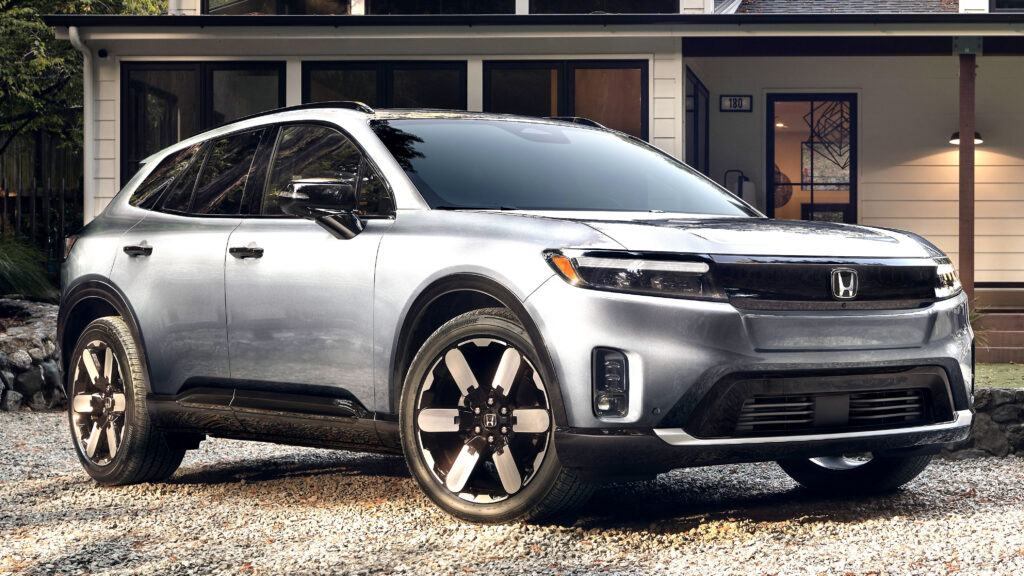
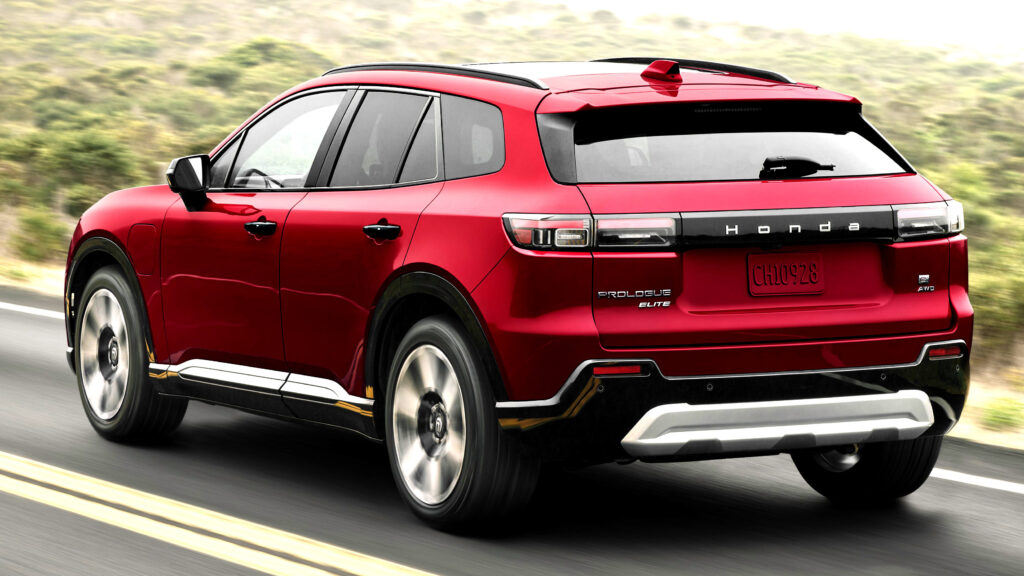
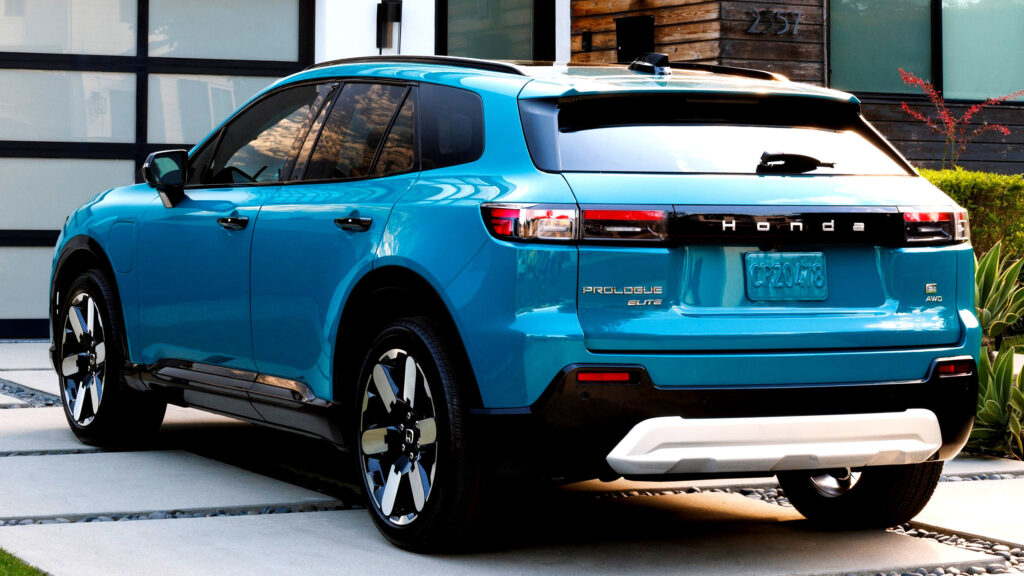
Honda’s big electric push in the United States may soon get a lot smaller, and not just because the company has scrapped three new EVs at the eleventh hour. According to a report from Auto News citing AutoForecast Solutions, Honda isn’t planning a second generation of the Prologue crossover once the current production run ends later this year. And if that happens, the brand would effectively exit the US EV market altogether.

The Prologue only launched in 2024 and initially looked like a success story. Nearly 39,000 buyers took one home in 2025, helped along by heavy incentives and a handy federal tax credit worth $7,500. Then the incentives disappeared, and so did much of the demand.

Related: That Strange Clicking Noise In Honda’s Prologue Is Now A Lawsuit

After the US government scrapped the EV tax credit, Prologue sales reportedly plunged. Deliveries in early 2026 have fallen about 74 percent compared with the same period last year, Auto News reports. Honda has already cut production roughly in half and now expects to sell fewer than 18,000 units this year.

We asked Honda about the report and it refused to confirm that the Prologue was on its way out, but didn’t categorically deny it either.
“The Automotive News article is based purely on speculation,” a spokesperson told us.  “The Prologue remains in our lineup.”

Regardless of whether it stays or goes, the Prologue was always a slightly unusual project anyway. It isn’t built by Honda but by General Motors at a plant in Mexico using GM’s electric platform. Honda essentially borrowed the technology as a fast way to get an EV into American showrooms while it developed its own architecture. Acura already cancelled its version of the Prologue, the ZDX, last September, after just one year of production.

\\\\\\

Now the company appears ready to pull back even further. Earlier this week, Honda confirmed it is scrapping several future electric models planned for North America and due to be built in Ohio. Those three models shown in the gallery below are the 0 Series SUV, the futuristic 0 Series Saloon, and the upcoming Acura RSX crossover.

Suppliers Were Already Up And Running

The strategy shift could cost the automaker up to $15.8 billion in write-downs and expenses, and suppliers Auto News spoke to are also in line for some hurt. They’d already started building RSX parts and had begun hiring and training staff in readiness for the start of EV production in July.

Honda dealers, however, aren’t exactly mourning the change. Many say customers simply prefer hybrids right now and are happy to skip expensive full electric models altogether.

\\\\\\\\\\\\\

Honda/Acura

That Strange Clicking Noise In Honda’s Prologue Is Now A Lawsuit

  • Honda faces lawsuit over persistent Prologue axle noise.
  • Two owners cite popping and clicking after early delivery.
  • Dealers replaced CV axles but noises reportedly remain.

Honda’s all-electric Prologue has found itself under legal scrutiny following reports of some rather odd drivetrain noises. Not long after the company warned US dealers that certain 2024–2026 Prologue models might require repairs due to clicking or ratcheting-type sounds from the drive axles, a lawsuit followed. Owners say the noises can linger even after a trip, sometimes more than one, to the dealership.

A class action lawsuit filed in Pennsylvania names two Prologue owners who say their SUVs developed unusual noises from the front axle. One of them, Ashley Custer, leased a 2024 Prologue in May 2025 and soon began hearing the sounds, prompting a trip to the dealer with just 4,039 miles (6,500 km) on the odometer.

Read: She Expected 200K Miles From Her V6, Now She’s Suing Honda

After she reported a creaking noise when turning, the Honda dealer replaced the CV axles. That, however, didn’t solve the problem. Custer returned to the dealership in November, where she was told no repair was currently available. An associated repair order reportedly noted that she was “experiencing the suspension noise that we are familiar with and have seen on other Prologues,” adding that it is a “known issue that Honda is working on.”

 That Strange Clicking Noise In Honda’s Prologue Is Now A Lawsuit

She took her Prologue to a dealer last month, but was again told that no repairs were available. Similarly, the second plaintiff, Jorge Santiago, drives a 2024 Prologue and started noticing popping and clicking sounds shortly after taking delivery. Despite the car also being taken to a dealership, it hasn’t been fixed.

What’s The Fix?

In December, Honda issued a Tech Line to dealerships, asking them to verify the noise of faulty Prologue models, inspect for damage, and make any necessary repairs. However, the lawsuit claims that the fix is pointless as Honda is simply using the same defective front axles and components. As such, the noise continues, even after multiple dealership visits.

The lawsuit claims that Honda was aware of the “abnormal and anxiety-inducing noises” when it first started selling the all-electric Prologue.

\\\\\\\\\

Tesla Still Rules EV Satisfaction, Though One Rival Just Caught Up

  • EV owner satisfaction has reached an all-time high.
  • Best models come from Tesla, BMW, and Cadillac.
  • Most EV owners would consider getting another one.

Electric vehicles have come a long way in the past few years, and the progress is finally showing up where it matters most: in owner satisfaction. According to the latest data, these steady gains in technology and infrastructure are translating into record-high approval from drivers.

That’s the verdict from JD Power’s 2026 U.S. Electric Vehicle Experience Ownership Study, which found premium EV satisfaction climbed from 756 points last year to 789 in 2026. Mainstream EVs also improved two points to hit 727 out of 1,000.

More: A Third of Americans Are Priced Out Of New Cars, And It’s Getting Worse

The highest rated premium EVs were the Tesla Model 3 (804), Tesla Model Y (797), and BMW i4 (795). On the flip side, the new Audi Q6 e-tron came in dead last at 690. It placed well below the Lucid Air (740) and Rivian R1T (739).

 Tesla Still Rules EV Satisfaction, Though One Rival Just Caught Up

Segment Standouts And Stragglers

On the mass market side of the equation, the Ford Mustang Mach-E took top honors with a score of 760. The electric pony car was followed by the Hyundai Ioniq 6 (748) and Kia EV9 (745). Interestingly, the two lowest rated EVs were the Chevrolet Blazer EV (711) and Honda Prologue (623). That’s a huge point spread considering both models are built by GM and have a lot in common.

Of course, things aren’t completely straightforward as the study examined ten different factors. This includes the “accuracy of stated battery range, availability of public charging stations, battery range, cost of ownership, driving enjoyment, ease of charging at home, interior and exterior styling, safety and technology features, service experience, and vehicle quality and reliability.”

Encouragingly, 96 percent of EV owners said they would consider buying or leasing another one and the study also found quality has improved. That’s especially true of premium EVs, which had 15.9 fewer problems per 100 vehicles compared to last year. This brought the total down to 75 and JD Power said this was driven by noise improvements as well as fewer problems with driver assistance technology.

 Tesla Still Rules EV Satisfaction, Though One Rival Just Caught Up

Is Charging Still A Concern?

The study also found that EV drivers are becoming more satisfied with public charging. Scores climbed by over 100 points and this is being attributed to growing charging infrastructure as well as the opening of Tesla’s Supercharger network to other automakers.

Last but not least, EV drivers are more satisfied than those with plug-in hybrids. Premium EVs scored 114 points higher than their PHEV rivals, while mainstream electric vehicles had a 117 point advantage. Part of this can be chalked up to the cost of ownership as plug-in hybrid drivers have to deal with a more complex powertrain that involves gas and electricity.

In a statement, JD Power’s Brent Gruber said “Improvements in battery technology, charging infrastructure and overall vehicle performance have driven customer satisfaction to its highest level ever. What’s more, the vast majority of current EV owners say they will consider purchasing another EV for their next vehicle, regardless of whether they benefited from the now-expired federal tax credit.”

 Tesla Still Rules EV Satisfaction, Though One Rival Just Caught Up

Honda Walks Back Its EV Plans As Losses Spiral

  • Honda logged its fourth straight quarter of operating losses.
  • EV-related write-offs reached $1.71 billion through December.
  • A revised EV roadmap is expected to be announced this year.

Honda, like many other automakers, is learning just how expensive missteps and overinvestment in the EV market can be. The Japanese company has already taken major write-offs tied to its electric vehicle efforts and now finds itself in damage control after multiple consecutive quarters of operating losses.

Read: Honda’s New Electric SUV Might Be Small But Its Global Ambitions Are Big

In the nine months ending December 31, Honda reported 267.1 billion yen (or $1.71 billion) in write-offs and expenses tied to its push into electric vehicles. While the financial impact hasn’t reached the same level as Ford’s EV setbacks, it remains a troubling sign for Honda’s strategy.

Losses Pile Up

 Honda Walks Back Its EV Plans As Losses Spiral

Honda has shelved several upcoming EV models and recently logged its fourth straight quarter of operating losses. For the first three quarters of its fiscal year, those losses total 166.4 billion yen, or $1.07 billion. Industry outlet Auto News projects that the full-year impact could reach 700 billion yen, around $4.48 billion, all stemming from its EV ventures.

Speaking about Honda’s most recent financial results, executive vice president Noriya Kaihara acknowledged the firm needs “to conduct a fundamental review of our strategies to rebuild our competitive strength.”

GM Partnership Unwinds

 Honda Walks Back Its EV Plans As Losses Spiral

Things will soon become even more costly. Honda is ending its close cooperation with General Motors on EVs, due in part to slow sales of the Acura ZDX and Honda Prologue, both of which use GM’s Ultium EV platform. It’s understood that Honda reduced the number of vehicles it purchased from GM, and compensated the carmaker.

Redrawing The EV Map

As recently as 2024, Honda said it aimed to sell up to 2 million EVs annually by 2030. However, it greatly overestimated the global popularity of EVs, which has undoubtedly been affected in part by the change in administration in the US just over twelve months ago. According to Kaihara, the company now plans to “significantly revise our future EV strategy” and expects to unveil an updated roadmap in the near future.

 Honda Walks Back Its EV Plans As Losses Spiral

That said, Honda recently told us during a roundtable that the new electric Acura RSX and Honda 0 Series SUV are still on track for a launch later this year.

Central to this realignment will be a renewed emphasis on hybrid models. Honda aims to double its hybrid sales to 2.2 million units in 2020, signaling a clear pivot away from its earlier EV-heavy approach.

 Honda Walks Back Its EV Plans As Losses Spiral
❌