❌

Reading view

There are new articles available, click to refresh the page.

VW’s ID Tiguan Replaces ID 4 With Up To 373 Miles Of Range
  • The new ID Tiguan replaces both the VW ID 4 and ID 5.
  • VW’s latest electric SUV uses its familiar MEB+ platform.
  • The ID Tiguan will launch in North America, but timing is unconfirmed.

Like many of its competitors, Volkswagen has realized the best way to convince motorists to buy an EV is not to make it look weird or give it an odd name, but instead to create an EV that looks and sounds familiar. This is exactly what it’s done with the new ID Tiguan, built to replace the ID 4 and ID 5, and leaning into a more traditional SUV design that should better appeal to typical VW buyers.

Just like the Cupra Raval, VW ID Polo, and VW ID Cross, the new ID Tiguan uses the company’s latest MEB+ platform. This architecture supports three distinctive versions and two different battery packs. Sitting at the base of the range will be a rear-wheel-drive version using a 58-kWh battery. VW hasn’t provided chemistry details about this pack, nor has it said whether it’s the same usable 58-kWh pack that had been offered in North America’s ID 4. What we do know is this base model is rated at 187 horsepower.

Read: As VW Kills Off The ID 4, It Launches A $12,500 Discount In The U.S.

Positioned in the middle of the range will be a more powerful, 282 hp rear-wheel drive model with a larger 77 kWh battery. Shoppers who want all-wheel drive traction will be able to order the ID Tiguan in a single 4MOTION all-wheel drive configuration, producing a combined 295 hp and also using the 77-kWh pack.

VW says the new ID Tiguan can travel up to 373 miles (600 km) on a single charge under the WLTP cycle. This is presumably for the rear-wheel-drive, 77-kWh model, although that has yet to be confirmed. Prospective buyers of the ID Tiguan will be pleased to know the 58-kWh version can haul up to 3,968 lbs (1,800 kg), while the 77 kWh models are good for 4,409 lbs (2,000 kg).

A Fresh New Design

\\\\\\\\

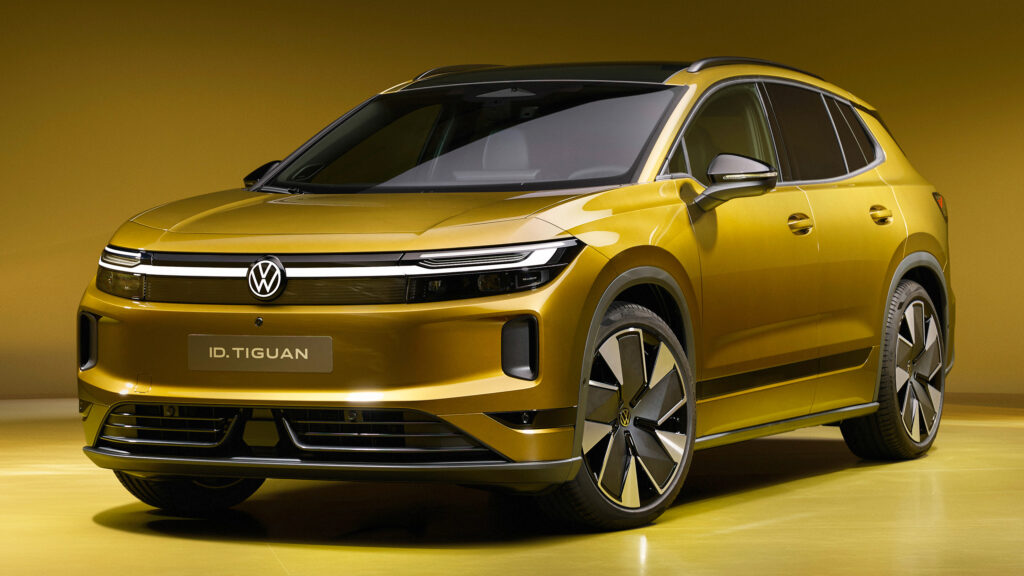
The ID Tiguan’s design immediately distinguishes it from the ID 4 and ID 5. VW says it uses the company’s Pure Positive design language, boosting its presence and making it look more modern. Like the ID Polo and ID Cross, which it shares its platform with, the ID Tiguan also has several design similarities to those models.

The most obvious of these is the intricate LED daytime running lights and light bar stretching the width of the front fascia. Instead of a traditional grille, VW has added a pair of black intakes near the base of the bumper. There’s nothing radical about the EV’s side profile, but the shoulder line running from the corner of the headlight, along the doors, and across the tailgate catches the eye. At the rear are an intriguing set of taillights with bold LED graphics and four narrow illuminated stripes connecting them. Glowing emblems have also been added to the front and rear of the ID Tiguan.

A Cabin With Real Buttons
 VW’s ID Tiguan Replaces ID 4 With Up To 373 Miles Of Range

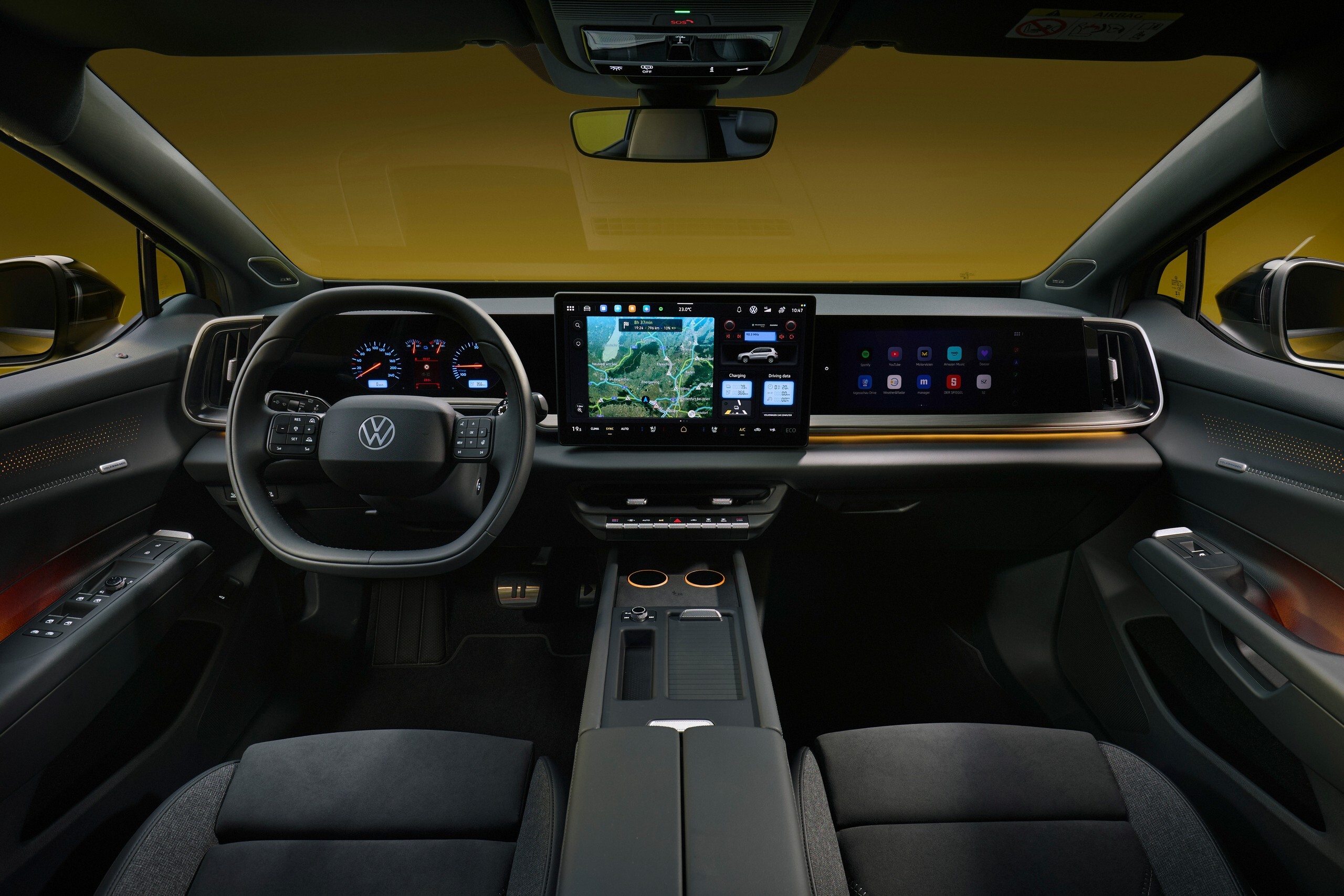
Arguably more important than how the EV looks from the outside is what the interior is like. By comparison, the old ID 4 and ID 5 feel very outdated. It starts with the new steering wheel that uses physical buttons for the cruise control and audio settings, rather than the silly piano black plastic haptic switches of old.

Additionally, the ID Tiguan has a larger digital instrument cluster built into the dashboard, rather than just perched on top of it like this model’s predecessors. This cluster even includes a very cool ‘Retro’ theme which displays four traditional gauges. A larger infotainment system has also been added, although VW hasn’t mentioned how big it is. A passenger display will also be available.

\\\\\\\\\\\\\\\

Then there are the buttons. VW was almost burned at the stake for its silly touch-sensitive controls used across its outgoing generation of cars. There are none in sight with the ID Tiguan. Located under the central air vents are nine physical switches to control the HVAC, including the temperature and fan speed, all with a lovely, knurled metal finish. There’s also a small volume knob on the center console and two wireless phone chargers.

The materials throughout also appear slightly nicer, particularly the soft-touch surfaces on the tunnel and door panels, although we’ll reserve final judgment until we actually see it in person. A full range of options has yet to be announced, but VW says the ID Tiguan will be available with optional massaging, heated, and ventilated front seats, a Harman Kardon audio system, and a panoramic sunroof. It also supports a Digital Key, so owners can use their smartphone to lock, unlock, and start the EV.

VW has confirmed the ID Tiguan will launch in North America, but it’s not yet ready to say when it will arrive locally. In the meantime, pre-sales across Europe will start on October 13 with prices kicking off at €42,695 ($47,900). Deliveries will start early next year.
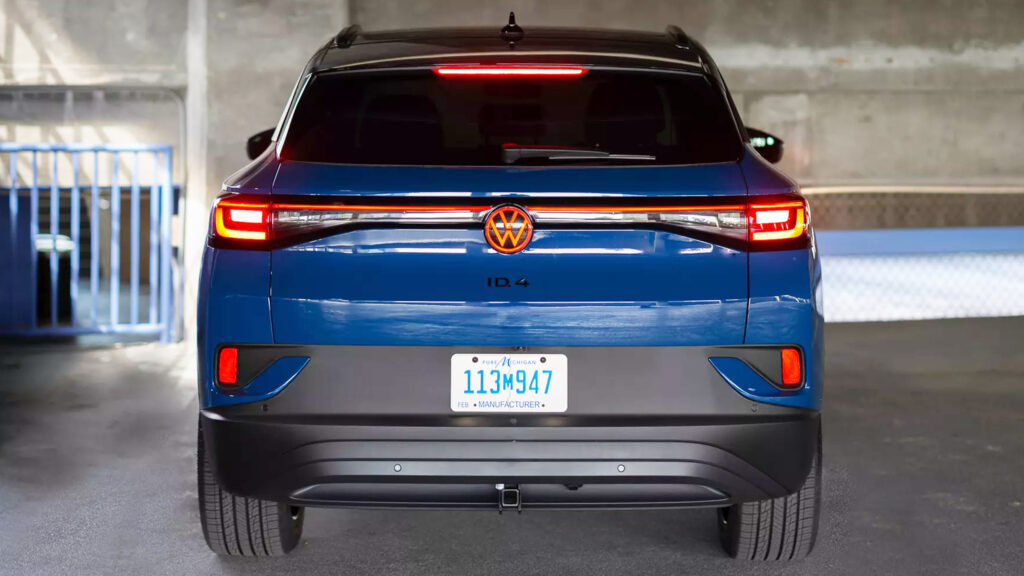

\\\\\\\\\\\\\\\\\\\

As VW Kills Off The ID.4, It Launches A $12,500 Discount In The US

  • VW is offering generous discounts for the 2025 ID.4 and 2026 ID.4.
  • Customer bonuses of $6,000 and $12,500 are available in the US.
  • Sales of the ID.4 have plummeted from the all-time high in 2023.

Hot on the heels of Volkswagen announcing the ID. Tiguan will replace both the ID.4 and the ID.5, the brand has announced some generous incentives to clear remaining inventory in the United States.

The most sizeable offer is for the 2025 ID.4. From now until November 2, anyone who purchases or leases a new ID.4 will receive a $12,500 ‘customer bonus’ that’s applied directly to the sticker price.

Read: VW Confirms ID. Tiguan To Replace The ID.4 And ID.5

VW’s local inventory search tool doesn’t allow you to select the model year, so it’s hard to know how many 2025 versions are sitting around at VW dealership lots across the country. What we can see is that there are hundreds of ID.4 models available across the 2025 and 2026 model years, so there’s certainly no shortage of options.

If you’re unable to find a 2025 model nearby, there’s also an offer available for 2026 ID.4s. This one is worth $6,000, and it is also available until November 2. Prices for the 2026 ID.4 start at $45,095 for the entry-level Pro excluding destination, or $46,570 including destination.

\\\\\\\\

This isn’t the only offer available for the 2026 ID.4, either. Military members, veterans, and first responders can also receive a $500 discount when they purchase the outgoing EV, cutting the price even further.

US sales of the ID.4 peaked in 2023 when 37,789 units were sold but then plummeted to 17,021 units the following year. In 2025, sales rebounded to 22,373 units, but that clearly wasn’t enough to convince VW to keep selling the model for the long term. Through the first six months of this year, just 2,205 were sold, following the end of local production in Chattanooga, Tennessee, in April.

What Comes Next?

 As VW Kills Off The ID.4, It Launches A $12,500 Discount In The US

Once VW clears inventory of ID.4 models, it will be able to turn its attention to the ID. Tiguan. Lightly camouflaged prototypes have revealed it will look radically different than the ID.4 and, instead, look more similar to the gas-powered Tiguan. VW has confirmed it will start European sales of the new model at the start of next year, before launching it in the United States.

Limited technical details are known about the new ID. Tiguan, but it’s believed to be based on VW’s MEB+ platform and should be offered with new and improved battery packs. The current ID.4 is sold with 58 kWh and 79 kWh packs, providing it with a peak driving range of just 292 miles (470 km) in the US.

\\\\\\\\\\\\\\\

VW Confirms ID. Tiguan To Replace The ID.4 And ID.5

  • The VW ID. Tiguan has been previewed with a bold new design.
  • Underpinning the new electric SUV will be VW’s MEB+ platform.
  • The EV will offer many of the same practicalities as the ICE model.

VW has confirmed recent reports that the ID.4 and ID.5 will be replaced by an all-new model, badged the ID. Tiguan. This new EV will be sold alongside the combustion-powered Tiguan and, following a lengthy period of development and teasing, will be unveiled in early October.

As we’ve seen from plenty of other car brands, VW has obviously decided it doesn’t need to position its electric models as completely different propositions from their combustion counterparts. By using a recognizable name for its latest EV, VW’s marketing team will no doubt be hopeful the ID. Tiguan will feel familiar to existing customers.

Watch: VW’s New ID. Tiguan Finally Stops Pretending It’s An ID.4

VW most recently adopted a similar approach with the ID. Polo, naming it after the brand’s most iconic pint-sized hatchback. In the case of the ID. Tiguan, it will land in European markets at the beginning of 2027. It will also be available in North America, although VW says it will arrive “at a later date,” without providing more details.

A More Traditional Design

\\\\\\\\\\\\\\\\\\\

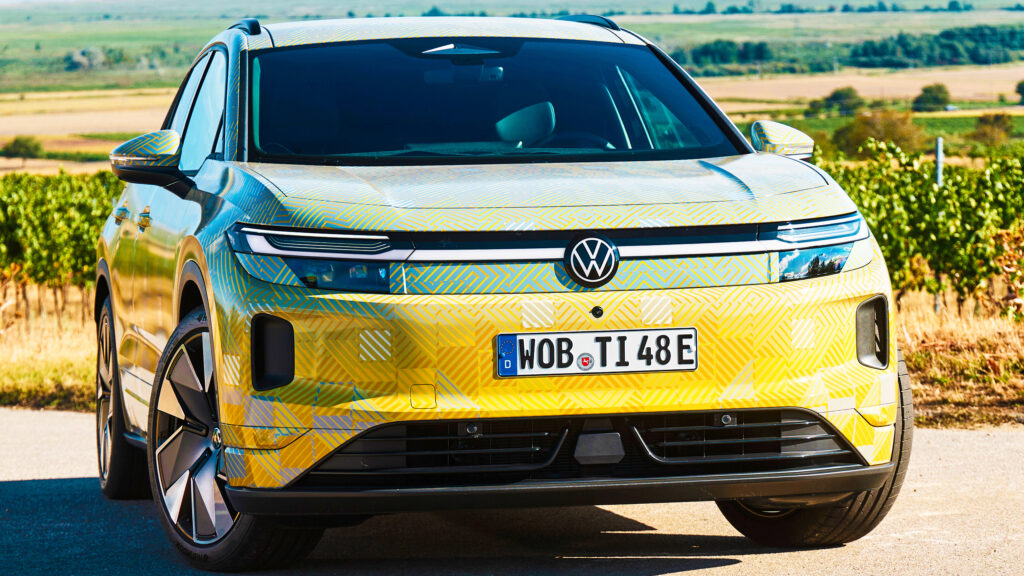
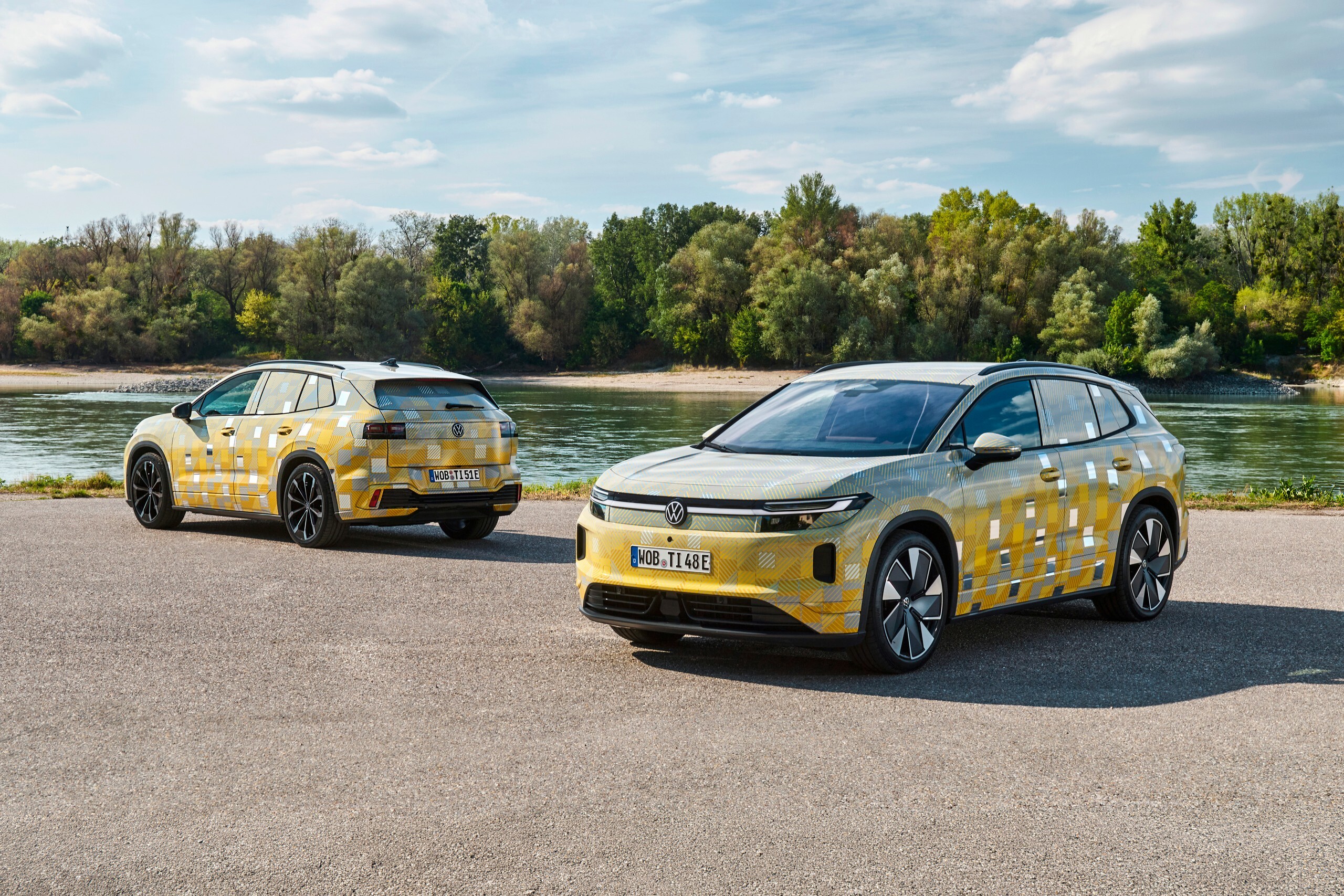
Newly released photos of a lightly disguised ID. Tiguan prototype also gives us our best look at the SUV’s design. Compared to the ID.4 and ID.5 which looked completely unlike any other VW SUV, the ID. Tiguan will share similarities to the combustion-powered Tiguan.

More: VW’s Most Powerful GTI Ever Is A RWD Electric Hot Hatch

The front of the new model features sleek LED headlights and daytime running lights, in addition to a black lower grille and a pair of small air curtains on the outer edges of the bumper. Other eye-catching elements include the low-set wing mirrors, the roof rails, and the chunky door handles, vastly different than the flap-style handles of the ID.4.

 VW Confirms ID. Tiguan To Replace The ID.4 And ID.5

Plenty of changes have also been made at the rear, including a new bumper, tailgate, and window. The taillights of this prototype don’t appear to be production-spec units.

More: Volkswagen’s ID. Buzz Comeback Slips To 2028

Interestingly, VW has released images of two different versions of the ID. Tiguan, without specifying the differences. Whereas one has small air intakes positioned at the front, the other has vertical LED daytime running lights. It also has a unique lower grille.

What About The Hardware?

\\\\\\\\\\\\\\\\\\\\

The ID. Tiguan is tipped to be built on VW’s MEB+ platform. Whereas the outgoing ID.4 is available with relatively small 58 kWh and 79 kWh batteries, we’d expect this new model to get larger and more efficient packs.

“Tiguan represents a versatile, premium vehicle and embodies the essence of True Volkswagen,” VW chief executive Thomas Schäfer said in a statement. “With the ID. Tiguan, we are carrying this product promise into the electric future. The all-electric model builds on the strengths of the bestseller and offers premium design, generous space, intuitive operation and innovative technologies. Together, both models form a strong offering for our customers’ different powertrain preferences.”

\\\\\\\\\\\\\\\\\\\\
❌