❌

Normal view

There are new articles available, click to refresh the page.
Today β€” 12 September 2026Electric Vehicles - Latest News | Carscoops

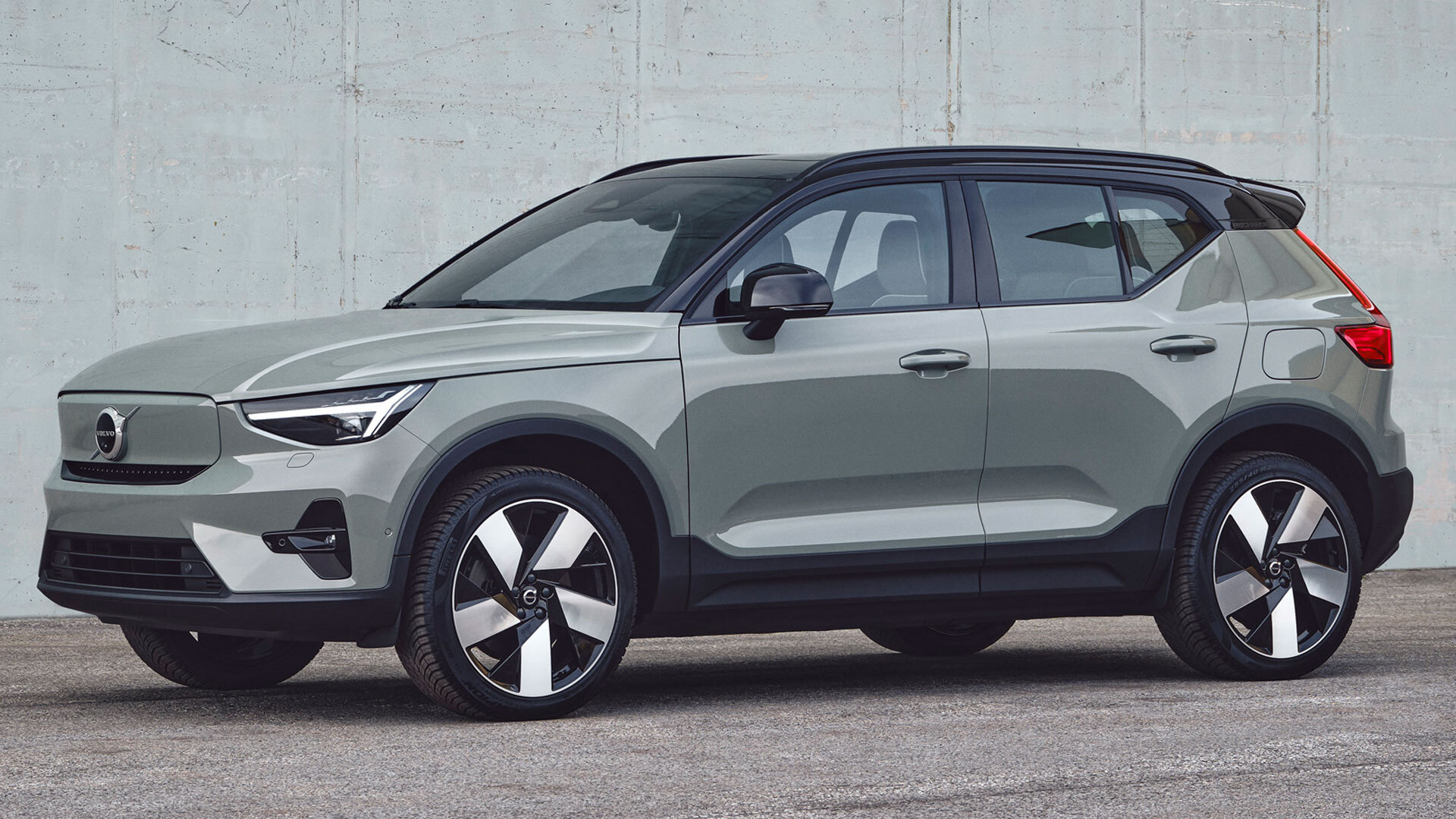
Volvo’s Decade-Old XC40 Refuses To Die, Gains Design And Tech Updates

  • Volvo applies a second facelift to the XC40, extending its lifecycle.
  • It gains modern styling cues, a larger screen, and improved safety.
  • The fully electric EX40 and EC40 benefit from the same updates.

Volvo has announced substantial updates for the 40 series SUVs, including the evergreen XC40, its fully electric EX40 twin and the closely-related EC40 coupe-SUV. All three models receive a redesigned face, larger screens, AI tech, and improved safety features in a quest to stay relevant against younger rivals.

The XC40, in production since 2017, received a facelift in 2022, but the 2027 update is more substantial. The fully electric coupe-SUV variant debuted in 2021 as the C40 Recharge before being renamed to EC40 in 2024 and receiving its first facelift for 2027.

More: New Volvo EX50 Could Be Better, Bigger And Cheaper Than The SUV It Replaces

Visually, the first thing you notice is the reshaped headlights with the trademark Thor’s Hammer LED graphics, joined by a cleaner front bumper. The grille is wider than before, reaching out to the headlights, and adopts the body-colored finish of the zero-emission EX40 and EC40.

\\\\\\\\\\\\\\\\\\\\\\\\\\\\\\\\\\\\\\\\

Volvo XC40

The sculpted profile is largely unchanged, but the diamond-cut alloy wheels measuring 18, 19 or 20 inches are new. The rear end benefits from sharper LED taillights in the XC40 and EX40, alongside fresh surfacing on the tailgate and the rear bumper. Volvo has also shown photos of the Black Edition variants combining a stealthy finish with a dark-themed cabin.

More: Volvo May Bring Sedans And Wagons Back To America

Inside, the centerpiece is the larger 11.2-inch central touchscreen (up from 9 inches), with its top end sticking out of the dashboard. The display runs Volvo’s latest infotainment software with Google Gemini integration. Other interior updates include a new wireless charging pad, β€œrefined” ambient lighting, and new materials such as Arianne Cardamom leather, Brown Ash or Black Ash wood accents, and aluminum inserts.

\\\\\\\\\\\\\\\\\\\\\\\\\\\\

Volvo EC40

On the safety front, the XC40 gets new hardware and software. Volvo threw in new radars, a new forward camera, and a total of 12 ultrasonic sensors. These enable a 3D view for the optional 360-degree camera system and make the optional Pilot Assist with lane change assist run more smoothly. The company has also added a Door Opening Alert and real-time hazard detection for the emergency braking and steering functions.

More: The EX30 Is Dead, But Volvo’s Next Cheap EV Is Already On The Way To America

The XC40 continues to be powered by the familiar mild-hybrid turbo 2.0-liter four-cylinder engine, available with different outputs depending on the market.

The fully electric EX40 and EC40 also retain their existing single-motor and twin-motor configurations, delivering up to 584 km (363 miles) of WLTP range. Note that the PHEV powertrain option has been discontinued.

\\\\\\\\\\\\\\\\\\\\\\\\\\\\\\\\

Volvo EX40

The updated Volvo 40 series is scheduled to enter production in Belgium later this fall. Depending on the market, deliveries are expected to start in early 2027 with pricing to be announced.

The main rivals of the Volvo 40 series in the premium compact SUV segment include the soon-to-be facelifted BMW X1 and X2, the brand new Mercedes-Benz GLA, and the Audi Q3 / Q3 Sportback.
Before yesterdayElectric Vehicles - Latest News | Carscoops

New Volvo EX50 Could Be Better, Bigger And Cheaper Than The SUV It Replaces

  • Volvo is reportedly working on a new EX50 to replace the EX40.
  • Crossover is set to arrive in 2027 and be based on new SPA3 platform.
  • Expected to be cheaper, despite being larger and more advanced.

The Volvo EX40 starts at $56,545 and largely flies under the radar. However, the company is reportedly plotting an all-new model that could adopt the EX50 moniker.

Expected to be significantly cheaper than the outgoing EV, the new EX50 will allegedly be priced in the β€œhigh $40,000s.” This would make it far more appealing as the current EX40 is only $3,250 less than the EX60.

More: Volvo’s Entry SUV Gets A Successor, But Dealers Aren’t Sure It’s The Right Priority

According to Automotive News, the entry-level crossover will arrive in the fall of 2027 and be based on the new SPA3 platform, which debuted on the EX60. It will be made at the company’s new Slovakian plant and the brand is reportedly aiming to sell 10,000 units in the United States in its first year. That would make it one of Volvo’s best-selling vehicles in America, although the publication noted the automaker could end up prioritizing production for Europe.

 New Volvo EX50 Could Be Better, Bigger And Cheaper Than The SUV It Replaces

Little is known about the crossover, but it’s said to be longer and taller than the EX40. That should make it more appealing to Americans and buyers can also expect an 800V electrical architecture that offers faster charging.

When asked about the model, Volvo spokesperson Thomas McIntyre Schultz declined to comment. However, he said β€œwe’re going to continue to invest in expanding our EV lineup.”

The XC40 Could Survive With A Facelift

\\\\\\\\\\\\\

SH Proshots

While the crossover is expected to replace the EX40, the gas-powered XC40 could continue chugging along. Back in June, spy photographers snapped a facelifted variant undergoing testing in Spain.

The updated model features a new front fascia with a revised grille and restyled headlights. They’re joined by a revamped bumper and a revised lower intake.

Changes continue out back with a new bumper and updated taillights. The model also adopts smaller, repositioned reflectors.

The modifications will be more than skin deep as images showed a revamped interior that echoes the EX30. Most notably, there’s a new portrait-style infotainment system that protrudes above the dashboard.

\\\\\\

SH Proshots

After 62,000 Miles, The Healthiest EV Battery Belonged To A Kia, Not A Tesla

  • Hyundai Motor Group swept the top three places for battery performance.
  • The analysis ranked the Model 3 as Tesla’s best-performing vehicle.
  • Other strong performers include the Volvo XC40 Recharge and Polestar 2.

Several years ago, prospective EV buyers had every reason to feel nervous about how long the battery pack would last. Battery technology has come a long way since EVs went mainstream, though, and a new study out of Sweden puts a number on how much capacity new EVs hold onto after 62,000 miles, or 100,000 km, of driving. The results may surprise you.

The study, run by online car marketplace Carla, went through 9,954 battery tests of EVs sold in Sweden between 2022 and 2026, using a diagnostic tool from AVILOO that measures a pack’s true state of health instead of leaning on the estimates the car itself provides. That distinction matters, because in-car readouts can sometimes paint a rosier picture than reality.

Read: A Seven-Year-Old Tesla Model 3 Survived 380,000 Miles, Its Range Did Not

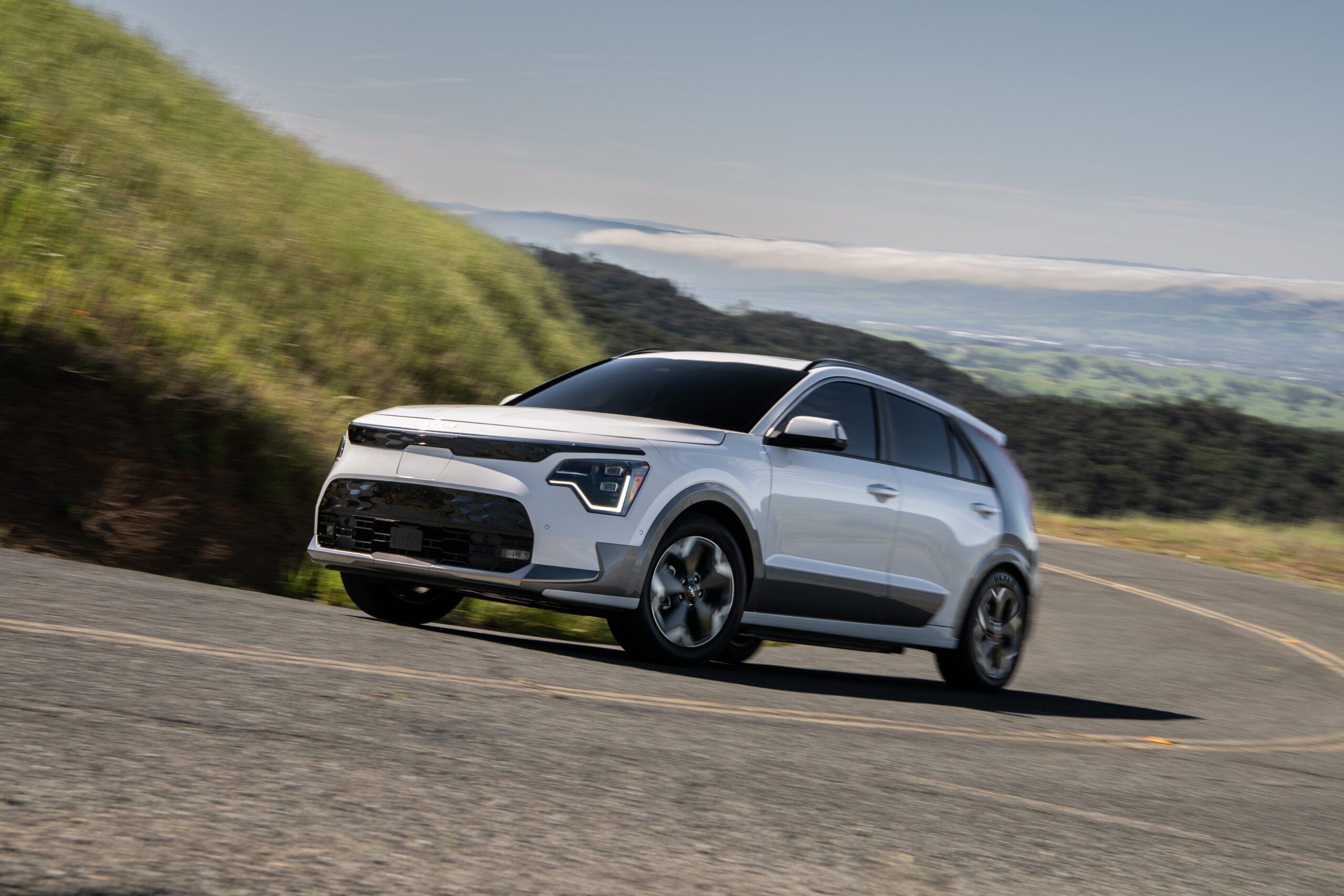
The Kia e-Niro came out on top, hanging on to an impressive 97.25 percent of its original capacity after 62,000 miles. It shares its 64 kWh battery with the Hyundai Kona, which nearly matched it at 97.18 percent, and the podium stayed within the Hyundai Motor Group family thanks to the Kia EV6 and its 77.4 kWh pack in third place.

Top-Performing EVs
ModelBattery Health
After 62K Miles
Kia e-Niro – 64 kWh97.25%
Hyundai Kona – 64 kWh97.18%
Kia EV6 – 77.4 kWh95.95%
Volvo XC40 Recharge – 69 kWh (CATL)94.70%
Polestar 2 – 78 kWh (CATL)94.35%
BMW i3 – 120 Ah93.77%
Polestar 2 – 78 kWh (LG Chem)93.53%
Tesla Model 3 – 60.5 kWh (CATL LFP)93.34%
Audi e-tron 50 – 71 kWh93.02%
Audi e-tron 55 – 95 kWh92.93%
Skoda Enyaq iV – 77 kWh92.88%
Tesla Model 3 – 78.8 kWh (LG Chem)92.83%
Tesla Model S – 96 cells92.80%
Volkswagen ID.4 – 77 kWh92.77%
Skoda Enyaq iV – 77 kWh92.60%
Tesla Model X – 96 cells92.52%
Volkswagen ID.4 – 77 kWh92.27%
Tesla Model Y – 78.8 kWh (LG Chem)92.18%
Audi Q4 e-tron – 77 kWh92.18%
Volkswagen ID.3 – 58 kWh91.79%
SWIPE

The strongest European EV was the Volvo XC40 and its CATL-sourced 69 kWh battery, which held 94.70 percent of its capacity after 62,000 miles, trailed closely by the Polestar 2 and its 78 kWh CATL pack at 94.35 percent. The BMW i3 and the LG Chem version of the Polestar 2 landed close behind at 93.77 percent and 93.53 percent.

What About Tesla?

 After 62,000 Miles, The Healthiest EV Battery Belonged To A Kia, Not A Tesla
Tesla Model 3

The best-placed model from EV leader Tesla was the Model 3 fitted with a 60.5 kWh LFP battery from CATL, retaining 93.34 percent of its capacity. This put it slightly above the Model 3 with an LG Chem-sourced NMC battery at 91.5 percent.

Among the other EVs ranked inside the top 20 were the Audi e-tron 50 and 55 at 93.02 and 92.93 percent, respectively, the Skoda Enyaq iV at 92.88 percent, the Tesla Model S with 92.80 percent, the VW ID.4 at 92.77 percent, and the Tesla Model X at 92.52 percent.

The bigger lesson here is that the old fear of an EV’s battery dying young no longer holds up. Every car in this ranking kept more than 90 percent of its capacity past 62,000 miles, and most owners will not even reach that figure until three or four years of driving. The pack is now likely to outlast the car wrapped around it.

 After 62,000 Miles, The Healthiest EV Battery Belonged To A Kia, Not A Tesla
Kia Niro EV
❌
❌