
Normal view

There are new articles available, click to refresh the page.
Before yesterdayMain stream

The 2026 Jeep Wagoneer S Is Fast, Comfortable, And Wearing The Wrong Badge | Review

PROS ›› Fun to drive, sleek looks, surprisingly refined ride CONS ›› Lacks Jeep identity, weak brakes, cheap materials

The Jeep Wagoneer S Limited marks a pivotal moment for the brand. It’s Jeep’s first fully electric SUV for the U.S. market, a clean-sheet design meant to usher one of America’s most recognizable brands into a battery-powered future. On paper, it sounds compelling: 500 horsepower (373 kW), all-wheel drive, a claimed 294 miles of range, and an as-tested price of $67,195. 

Review: The 2026 Land Rover Defender 130 V8 Is Everything You Want Until You Drive It

At the same time, critics have recently called into question just how well-made this SUV is. They’ve said it’s cheap, that it’s shoddily assembled, and that it’s a big miss overall. To find out just how true any of this is, we tested the Wagoneer S Limited for a full week.

We took it on road trips, drove it around sprawling urban environments, and charged it at no less than four different public charging stations. We won’t leave you waiting for a general takeaway. 

Quick Facts
› Model:2026 Jeep Wagoneer S Limited
› Powertrain:Dual Motors Battery Electric
› Output:500 hp (373 kW) / 524 lb-ft (710 Nm)
› Curb Weight:5,667 lbs (2,570 kg)
› Range294 Miles
› Price:$65,200 before options ($67,195 as tested)
› On Sale:Now
SWIPE

After a week behind the wheel, one thought kept nagging: why is this a Jeep? Nothing about the Wagoneer S, the ride, the interior, the styling, the on-road demeanor, connects meaningfully to Jeep’s brand DNA. 

There’s no ruggedness, no outdoorsy vibe, no sense that this thing even wants to see a dirt road. Instead, it feels polished, quiet, fast, and slightly aloof. In other words, it feels like a Chrysler. And that’s not an insult. In fact, it might be the Wagoneer S’s biggest missed opportunity… Read on to find out why. 

The Basics Outside and Under The Skin

\\\\\\\\

Photos Stephen Rivers / Carscoops

The Wagoneer S rides on Stellantis’ STLA Large platform and is firmly a two-row midsize SUV. Power comes from dual electric motors driving all four wheels. In Limited trim, output is rated at 500 hp (373 kW) and 524 lb-ft (710 Nm) of torque.

More: Jeep’s Wagoneer Is Dead So Long Live The Overhauled 2026 Grand Wagoneer

Jeep does offer an over-the-air software upgrade that unlocks additional performance, pushing output closer to the Launch Edition’s headline numbers, but my test vehicle did not have the power bump enabled. Jeep claims a 0–60 mph (97 km/h) time of around 3.4 seconds for higher-output versions. In the real world, performance varies significantly with battery state of charge, which we’ll get to shortly.

 The 2026 Jeep Wagoneer S Is Fast, Comfortable, And Wearing The Wrong Badge | Review

For now, let’s take a gander at exactly how this SUV presents itself outwardly. Nothing about it screams power, performance, or ruggedness. The Wagoneer S simply doesn’t read as a Jeep. Yes, there’s a Jeep-esque grille up front, but beyond that? Not really.

Perhaps it’s the white and black paint job, but from most angles, this gives off strong Chrysler vibes. It’s sleek, modern, and a little understated.

Review: The 2026 Lexus GX 550 Will Give G-Wagon Owners Second Thoughts

The bright silver mixed with black on the wheels surely adds even more to that feeling. The rear spoiler is another interesting note. Some will miss it entirely, but those who notice it might also think, “How many Jeeps have come from the factory with a spoiler, much less one this big?” 

Interior Quality

\\\\\\\

Photos Stephen Rivers / Carscoops

Let’s start with the good news. The seats, front and rear, are very comfortable, even if they look almost aggressively basic for a nearly $70,000 vehicle. Cushioning is excellent, bolstering is just right, and long stints behind the wheel never become fatiguing.

Headroom is slightly tight up front for me at 6’6″, but that’s not exactly shocking. Most folks will have no issue with it. Rear-seat passengers fare well, and legroom is more than adequate for a two-row SUV in this class. Jeep did a great job of optimizing cabin space here. 

That said, for this kind of money, the seats should offer more. Ventilation should be standard, not optional, and additional power adjustments, or even massage, would go a long way toward justifying the price. Hyundai, for example, makes this feel easy at lower price points.

The dash and center stack are modern, clean, and easy to understand. Stellantis’ latest infotainment software is straightforward, responsive most of the time, and not overloaded with unnecessary menus. But there’s a glaring issue… literally.

 The 2026 Jeep Wagoneer S Is Fast, Comfortable, And Wearing The Wrong Badge | Review

That giant piano-black plastic panel on the passenger side of the dash is an absolute eyesore. It looks cheap. It feels cheap. And it becomes a magnet for dust and fingerprints almost immediately. Jeep does offer an optional front passenger display, which at least gives that panel a purpose, but our test car didn’t have it, and without it, that glossy slab just feels like cost-cutting dressed up as design.

Review: The 2026 LBX Morizo RR Is A GR Corolla Disguised As A Lexus SUV

Climate controls are another mixed bag. The heated seat and heated steering wheel buttons live persistently on-screen, but they often feel delayed or outright unresponsive unless you tap them just right. It’s frustrating in cold weather, and it’s exactly the sort of thing physical buttons solve instantly.

Notably, Jeep does allow users to set up automatic climate settings based on exterior temperatures, which is great, but if the seats are too warm, turning them back off can be just as annoying as trying to turn them on. 

\\\\\\

Photos Stephen Rivers / Carscoops

Below the screen is a haptic-feedback climate control panel, which is slightly better. It’s still not ideal; real buttons would be preferable, but at least you’re not digging through menus just to adjust temperature. The digital gauge cluster, however, is excellent. It’s bright, intuitive, easy to read, and customizable enough without being distracting. No complaints there.

Review: 2026 Ram 1500 V8 Hemi Is Worse On Paper But Better In Reality Than The Hurricane Six

There’s been plenty of chatter online about subpar build quality in the Wagoneer S. Honestly? We didn’t see it. Panel gaps were consistent, nothing rattled, and the cabin is well insulated from road and wind noise. Structurally, this feels like a solid, well-assembled vehicle. But material quality tells a more nuanced story.

 The 2026 Jeep Wagoneer S Is Fast, Comfortable, And Wearing The Wrong Badge | Review

Some elements, like the air vent controls, feel genuinely good under the fingers. There’s real tactile satisfaction there. But beyond that, there’s very little that feels truly luxurious, high-end, or special. Again, put this next to a similarly priced Hyundai, and I’d wager the Jeep loses that comparison pretty quickly, possibly even against vehicles that cost thousands less.

This isn’t a bad cabin. It’s just not ambitious enough, especially given that this is Jeep’s first EV in the U.S. It should feel like a statement. Instead, it feels like a safe first draft. Storage is adequate. The front trunk is useful for smaller items, and while rear cargo space isn’t huge, folding the rear seats opens things up nicely.

Drive Impressions

 The 2026 Jeep Wagoneer S Is Fast, Comfortable, And Wearing The Wrong Badge | Review

This is where the Wagoneer S genuinely shines and also where its identity crisis becomes impossible to ignore. It drives nothing like a Jeep. If we had to compare it to anything wearing a Jeep badge, it would be the Grand Cherokee Trackhawk. That’s not because of sound or drama, but because of how shockingly quick and composed it feels on pavement.

Even without the optional power unlock, the Wagoneer S is genuinely fast. Acceleration is strong and immediate, though performance clearly degrades as battery state drops. At 19% charge, the best 0–60 mph run we managed was 4.85 seconds, which is well off Jeep’s headline claims but still far from slow. Importantly, it never feels sluggish, even at low charge.

Read: Jeep Has Reached A Decision On The Recon EV

The steering is excellent. It’s sharp, communicative, and confidence-inspiring. Turn-in is quick, body roll is minimal, and the SUV changes direction with surprising eagerness. This is one of those EVs that actually encourages spirited driving rather than merely tolerating it.

 The 2026 Jeep Wagoneer S Is Fast, Comfortable, And Wearing The Wrong Badge | Review

Braking, however, is a concern. This is a heavy SUV, and the brakes simply don’t feel up to the task in the way you’d expect after driving similarly powerful competitors. We never had a true panic moment, but pedal feel and stopping confidence lag behind the rest of the driving experience. The suspension is even more puzzling.

On smooth or moderately imperfect roads, the Wagoneer S is perfectly fine. It’s quiet, composed, and stable. But hit a pothole or a badly broken stretch of pavement, and the ride turns jarringly harsh. Sharp impacts aren’t well damped, and the resulting thuds make their way straight into the cabin.

Given that this isn’t meant for off-road use and is riding on Falken all-season tires, the stiffness feels unnecessary. If Stellantis insists on calling this a Jeep, maybe it should at least lean into ruggedness with tougher rubber. As it stands, the suspension feels mismatched to the vehicle’s mission. Maybe that’s why it isn’t a Chrysler.

Competition
 The 2026 Jeep Wagoneer S Is Fast, Comfortable, And Wearing The Wrong Badge | Review

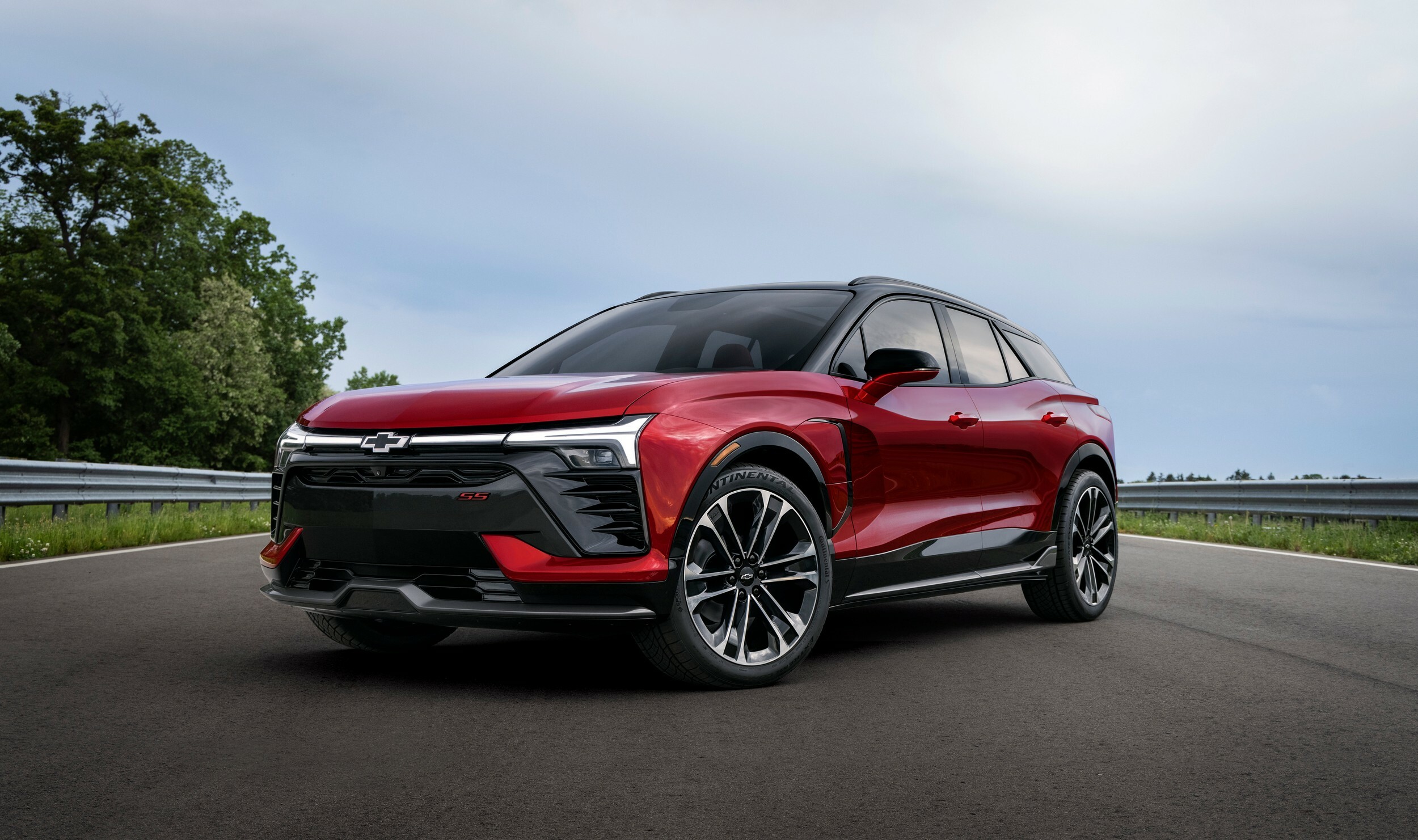
The Wagoneer S faces some really tough competition, and it’s hard to ignore. Starting at $65,200 before options, it’s firmly facing off against things like the Tesla Model Y Performance, the Chevrolet Blazer EV SS, and the Ford Mustang Mach-E GT. All of those offer similar or better performance, similar or better interiors, and similar or better range for around the same price or less. 

That doesn’t take into account those who really just want something that hones in on one skill or another. Want a fast five-door EV? Hyundai Ioniq 5 N. How about something spacious and comfortable? Cadillac has a Lyriq and a Vistiq that it would like to show you. 

The options out there really are wide-ranging, even in the $65,000+ EV space. Shoot, at $80,000, which isn’t all that far off from a fully-loaded Wagoneer S, the Porsche Macan EV is available. This is again where leaning into the thing Jeep does well, going off-road, would benefit the Wagoneer S. 

Final Thoughts

 The 2026 Jeep Wagoneer S Is Fast, Comfortable, And Wearing The Wrong Badge | Review

The Jeep Wagoneer S Limited is attractive, quick, usually comfortable, and genuinely fun to drive. But it doesn’t feel like a Jeep, and that’s the only real problem. This could have been Chrysler’s modern halo car. Not a supercar like the Halcyon concept, and not an EV version of the 300, but something stylish, fast, refined, and aspirational. 

Review: New Kia Tasman X-Pro Is Great, But Its Biggest Flaw Is Hard To Miss

Aim it at boomers, throw in better standard seats, offer a few fun colors, and let Chrysler rebuild some relevance. Instead, it risks getting lost in Jeep’s broader lineup and ethos. As it stands, the Wagoneer S is good. It’s the one Jeep available for those who love to drive on pavement. But it still feels like it’s wearing the wrong nameplate.

 The 2026 Jeep Wagoneer S Is Fast, Comfortable, And Wearing The Wrong Badge | Review

Photos Stephen Rivers / Carscoops

We Imagined Stellantis’ Tiny EV As Jeep, Dodge, And Chrysler Oddballs

  • Fiat will bring its smallest EV to America, and it’s not even a car.
  • We visualize Jeep, Dodge, and Chrysler versions of the tiny EV.
  • Each brand gets its own styling twist on the same platform.

Americans aren’t exactly spoiled for choice when it comes to pint-sized urban runabouts. Those Kei cars from Japan that caught Donald Trump’s attention recently are off-limits, and Europe’s laughably compact quadricycles are considered too tiny to share the road with trucks and SUVs.

Still, Stellantis seems ready to test the limits of what American drivers will accept, choosing to bring over the Fiat Topolino, a vehicle so small, it makes the already diminutive 500 look like a family hauler.

Read: Fiat’s Bringing An EV To America So Small It Makes Kei Cars Look Like Cadillacs

To give you a sense of scale, the Topolino measures just 2.53 meters long (99.6 inches), making it seven inches shorter than the already tiny Smart Fortwo. That car, if you remember, looked like a Little Tikes Cozy Coupe next to your average truck.

 We Imagined Stellantis’ Tiny EV As Jeep, Dodge, And Chrysler Oddballs

Stellantis has been dabbling in the heavy quadricycle category since 2020, starting with the Citroen Ami, followed by the Opel Rocks Electric in 2021, and most recently the Fiat Topolino in 2023. All three share the same platform, and all three are designed with urban mobility in mind rather than highway cruising.

That got us wondering: what if this squat little EV were rebadged as a Dodge, Chrysler, or Jeep? Would American buyers warm up to it with a familiar name on the front?

Officially, Stellantis has no plans to expand the model lineup in North America. But given how freely these micro-EVs swap badges in Europe, it’s not much of a leap to imagine a domestic version. Maybe if it wore the right logo, this pocket-sized commuter could stand a better chance on American streets.

So we sketched out a few ideas: what would it look like if Dodge, Jeep, and Chrysler each took a swing at the format?

Jeep TrailBug: Like A Golf Cart For The Apocalypse

 We Imagined Stellantis’ Tiny EV As Jeep, Dodge, And Chrysler Oddballs
Illustrations Thanos Pappas / CarScoops

Based on the rugged Citroen Ami Buggy – more specifically, the Rip Curl concept with grippy tires, an LED roof bar, frame doors, and other accessories – the Jeep version was an easy win.

Using the Citroen Ami Buggy as a starting point, and specifically, the Rip Curl edition with its chunky tires, roof-mounted LEDs, and open-air doors, we imagined a Jeep-branded version that leans fully into rugged charm.

More: 2025 Citroen Ami Gets Funkier With Bulging Eyes And 2CV-Style Gills

The reworked front fascia includes a five-slot grille (sorry folks, room constraints nixed the full seven), with circular Wrangler-style LED headlights and Jeep-branded alloys. Matte plastic panels and a spartan cabin keep it functional, while the aesthetic reads more off-road pit crew than farmer’s market errand runner.

No, it wouldn’t come with Trail Rated credentials, but the TrailBug could still inject some Jeep attitude into cul-de-sac crawls and campground loops.

Dodge Lil’ Demon: Tiny Muscle Car Attitude

 We Imagined Stellantis’ Tiny EV As Jeep, Dodge, And Chrysler Oddballs
Illustrations Thanos Pappas / CarScoops

Our Dodge concept starts from the Opel Rocks Electric but pushes it in a more aggressive direction. The front gains a retro-style Cross Hair grille and a sharper lower bumper design.

More: Updated Opel Rocks Is A Mild Refresh Of The Citroen Ami Twin

Other touches pull directly from the brand’s muscle playbook, including Challenger-inspired quad headlights, Charger Daytona wheels, and a red paint scheme with full-length black stripes.

Chrysler AeroMini: A Retro Armchair On Wheels

The Chrysler version stays closest to the Fiat Topolino, as the retro aesthetic works great regardless of badge. We added a Chrysler wing emblem up front, U.S.-spec yellow indicators, chrome disc wheels, whitewall tires, and vintage mirrors.

The result is part mid-century cruiser, part bubble car. Its glossy navy finish paired with satin silver accents looks more like something from an airport lounge in 1958 than a modern EV.

 We Imagined Stellantis’ Tiny EV As Jeep, Dodge, And Chrysler Oddballs
Illustrations Thanos Pappas / CarScoops

As with their European siblings, all three of our fictional variants would share the same EV drivetrain and hardware underneath.

More: Tiny Jeep Dune Digital Concept Wants To Conquer Your Sidewalks

A single electric motor puts out 8 hp (6 kW / 8 PS), drawing power from a 5.4 kWh battery that offers up to 46 miles (75 km) of range. Hardly numbers that will worry Tesla, but then again, this thing looks more like a powered shopping cart than a proper car , and it performs accordingly.

In the US, these would likely fall into the “Neighborhood Electric Vehicle” category. They’re legal on certain public roads, but only at low speeds. European regulations follow a similar pattern, as under the L6e quadricycle class, models like this are capped at 28 mph and must weigh under 425 kg (without the battery).

So, from our imaginary garage, which of the three would you bring home? Would you take the Jeep TrailBug with its post-apocalyptic vibe, the sporty Dodge Lil’ Demon, or the Chrysler AeroMini channeling the Eisenhower era? Let us know which one you’d most like to wheel down the block.

Who knows, maybe someone from Stellantis is listening.

\\\\\\\

Photos Stellantis, Illustrations Thanos Pappas for CarScoops

Stellantis Furious At Influencers Who Tore Apart Recon Interior To Mock Its Build Quality

  • Influencers tore apart a Jeep Recon interior at the LA Auto Show.
  • Stellantis called the act destructive, citing a pre-production model.
  • The viral TikTok drew over 1.1 million views and 2,300 comments.

Stellantis has publicly condemned two influencers after a viral video showed them dismantling parts of the new fully-electric Jeep Recon during the 2025 Los Angeles Auto Show. The clip, which spread quickly across social media, reopened the debate over how pre-production prototypes ought to be treated at auto shows.

The automaker explained that the show car mocked for its poor build quality was a hand-assembled pre-production prototype, not the finished model, describing the creators’ actions as “destructive.”

Online Outrage or Honest Critique?

The viral video, posted by an LA-based channel called “The Middle Lane,” has drawn more than 1.1 million views and 2,300 comments on TikTok since November 22. It reportedly appeared on YouTube and Instagram as well, though it has since been removed from both platforms.

More: Jeep’s $65,000 Recon Is Surprisingly Fast, But Can It Outrun The EV Slowdown?

The creators blasted the build quality of the latest Jeep, saying they expected better fit and finish for a vehicle with an MSRP of $65,000. They are shown removing and then reattaching plastic pieces from the Recon’s interior, including trim around the center console and above the digital instrument cluster.

They also zoom in on uneven gaps between materials on the door panels and wiggle the infotainment screen and passenger grab handle, saying they were simulating “off-road use.”

@themiddlelanes Jeep Recon Moab build quality… #laautoshow #tiktokcartalkcontest #electriccar #buildquality ♬ original sound – The Middle Lane

Stellantis Responds

In response, Stellantis released a statement: “The vehicle in question is a preproduction show car, built exclusively for reveals and events to highlight the design inspiration for the final product. These prototype units are typically hand-built and not intended to demonstrate final production, durability, quality, or integrity of materials.”

More: Jeep’s Latest Special Edition Honors A Classic Military Truck

Kaileen Connelly, Senior Vice President of North America Communications at Stellantis, added in an email to the Detroit Free Press: “The actions taken to disassemble the all-new Jeep Recon on display at the LA Auto Show were both destructive and unprofessional.”

What the Creators Say

The Detroit Free Press later spoke with Luke Miani, founder of “The Middle Lane,” who said they were surprised by the video’s reach and the conversation it triggered. According to Miani, their intention had simply been to share “thoughts on many different cars.”

Addressing Stellantis’ statement, he explained, “I want to push back on the claims of ‘destructive’ conduct as the video clearly shows the clips holding certain interior parts together were loose and the parts easily pop out by hand without damage.”

He added that he looks forward to seeing the production version of the Recon, hoping that “the build quality is indeed improved.”

\\\\\\\\\\\\

How the Public Reacted

Reaction online has been mixed. Some commenters expressed disappointment with what they perceived as poor craftsmanship, placing blame on Stellantis. Others defended the automaker, noting that the vehicle was a pre-production demo unit brought to LA for the show and never intended for close physical inspection.

The story also gained traction on Reddit, where many users criticized the influencers for “unprofessionalism,” while others argued that automakers should be more discerning about who gets access to display cars.

One self-identified “interior trim engineer” commented that building pre-production models is “way different” from production, describing a process where “employees are working on a table with a drill and some screws” long before an assembly line is operational.

The electric 2026 Jeep Recon is scheduled to enter production in early 2026 at Stellantis’ Toluca plant in Mexico. Initial deliveries in North America are expected shortly after, with global rollout planned for the final quarter of the year. The first version, a Moab trim exclusive to the US and Canada, will start at $65,000, with more affordable variants to follow

\\\\\\\\\\\\

Jeep’s $65,000 Recon Is Surprisingly Fast, But Can It Outrun The EV Slowdown?

  • 2026 Recon is fully electric with dual motors, 650 hp and 620 lb-ft.
  • Trail-rated Jeep does zero to 60 mph in 3.6 secs, has 250-mile range.
  • Launches with $65,000 Moab trim: 33-inch tires, 9.1 inches clearance.

Jeep is taking another swing at zero emissions adventure with the 2026 Recon, the first fully electric, Trail Rated Jeep, one that packs sports car-level acceleration, and promises real off-road ability. But the timing might raise eyebrows.

With EV sales slowing, companies like Ram scrapping planned electric utilities and Jeep’s first EV, the Wagoneer S struggling for sales, is this the right moment to launch a $65,000 electric off-roader?

Also: The 2026 Grand Cherokee’s Biggest Surprise Is Hiding Under The Hood

The Recon range will expand in time but for now Jeep is launching with just one trim, the dirt-lovin’ Moab. It comes with a single motor mounted at each end of the 112.9-inch (2,870 mm) wheelbase platform, the pair together pushing out numbers that are strong, even if they don’t set any EV records.

What Powers Jeep’s Electric Trail Machine?

\\\\\\\\\\\

The Recon delivers 650 hp (659 PS) and 620 lb-ft (841 Nm) of torque, which is 50 hp (51 PS) and 3 lb-ft (4 Nm) more than the priciest version of Jeep’s first US EV, the road-biased Wagoneer S that rides on the same STLA Large platform.

It also hits 60 mph (97 kmh) in a speedy 3.6 seconds and claims a 250-mile (155 km) range from its 100 kWh battery, compared with 3.4 seconds and 294 miles (473 km) for the Launch Edition Wagoneer S. But that inconsequential difference in acceleration, and rather more worrying range gap is the price you pay for genuine off-road chops.

Only the Recon gets Jeep’s Trail Rated stamp of approval, the one you’ll have seen on vehicles like the Wrangler, meaning it’s passed a series of tough tests to prove its ability to ford water and clear obstacles that would make a crossover cry.

Mud or Midtown?

To earn that Trail Rated badge the Moab features 33-inch tires and a 15:1 final drive at the rear for extra torque multiplication when things get messy. It has selectable locking differentials Selec-Terrain driving modes, including a Rock mode that’s exclusive to the Moab, and Selec-Speed Control to make light work of steep inclines or rocks.

The 100-kWh battery is protected by a full set of steel skid plates, and suspension components like large CV joints and half shafts have been beefed up to handle all that torque.

Unlike the solid-axle Wrangler, the Recon’s suspension is independent via short-long arm (SLA) at the front and integral link at the back. And it skips the combustion SUV’s vague recirculating ball steering for a modern rack and pinion setup.

\\\\\\\

That bodes well for on-road comfort, where the Recon operates mostly as a RWD vehicle, but what about those all important off-road angles? A 33.8-degree approach, 23.3-degree ramp and 33.1-degree departure angle are no match for the new V8-powered Wrangler Moab 392’s 46.7, 24.5 and 39.8-degree stats.

Some of that can be chalked up to the 193.3-inch (4,911 mm) Recon being almost exactly the same length as a Wrangler, but riding on a 5.5-inch (140 mm) shorter wheelbase, and having far less daylight beneath its floorpan.

The Recon loses the ground clearance battle by a big margin, 9.1 (231 mm) inches playing 11.1 inches (282 mm) in the Wrangler Moab, and up to 12.9 inches/328 mm on other Wranglers.

Classic Jeep Design With a Modern Edge

 Jeep’s $65,000 Recon Is Surprisingly Fast, But Can It Outrun The EV Slowdown?

Still, that’s more trail ability than 99 percent of people will ever need, and at least the Recon looks the part. The design stays true to Jeep’s roots with a boxy stance, upright grille and four-square proportions.

The illuminated grille rings, flush door handles, and contrast roof options give it a modern edge without losing the heritage feel, buyers also getting the option to replace the standard dual-plane sunroof for an optional Sky One-Touch power top.

And yes, you can remove the doors, the swing gate glass and the quarter windows, for those really hardcore adventures without needing any special tools.

Try that in your Rivian R1S. Moab trim brings a few design tricks of its own, including tough-looking black coloring for the front and rear fascias, the fender flares, uniquer badge and an anti-glare hood graphic.

Jeep’s Biggest Screen

\\\\\\\\\\\\\\\

The cabin sticks to the adventure theme, blending durable materials with forward-looking tech and looking nothing like the inside of a Wagoneer S. A horizontal dashboard layout and grab handle nod to classic Jeep interiors, but a 26-inch digital display area stretches across the dash made up of a 12.3-inch digital cluster and 14.5-inch touchscreen – the biggest in any Jeep – running Uconnect 5.

That screen’s generous dimensions should make it easier to see the pitch and roll mapping on the automaker’s Trails App, as well as checking out the camera views. And if you want to bring your own camera, a modular accessory rail is ready for your GoPro.

Related: Stellantis Spends $13 Billion To Revive Jeep And Dodge In America

Audio comes from a standard Alpine system, and Jeep has even relocated the speakers under the seats so the sound doesn’t vanish when you pop the doors off.

How Much Does It Cost?

The 2026 Jeep Recon EV will be built at Jeep’s Toluca Assembly Plant starting early next year, priced at $65,000 for the Moab trim. But expect that price to fall later as other trims, and less powerful motor setups become available – or just through massive discounts if the Recon proves as tricky to sell as the Wagoneer S.

No doubt, Jeep is taking a bold bet on a market that’s still figuring out what it wants. How do you rate the Recon’s chances?

 Jeep’s $65,000 Recon Is Surprisingly Fast, But Can It Outrun The EV Slowdown?

Jeep’s Next Renegade Isn’t Going All-Electric After All

  • Second-generation Jeep Renegade will debut within the next two years.
  • SUV keeps a similar footprint, placed between the Avenger and Compass.
  • It will offer multiple powertrains, including a fully electric BEV version.

The Jeep Renegade first appeared in 2014, carving out its place as a compact SUV with global reach. Over the years it has seen updates and regional variations across Europe and South America, but time has caught up with it.

More: Jeep Avenger Vs Dacia Duster – Which Budget Small SUV Deserves Your Money?

Jeep is now developing a long-anticipated successor, scheduled to arrive by 2027, aiming to refresh the smallest member of its off-road family without losing the character that defined the original.

Between Avenger and Compass

The upcoming Renegade will be sold in both North America and Europe, marking the nameplate’s return to the US market after the current generation was discontinued following the 2023 model year. It will slot beneath the Compass as Jeep’s most compact American offering, while sitting just above the Avenger in the European lineup.

Marco Montepeloso, Head of Jeep Product Planning in Europe, recently spoke with Auto Express about the Renegade’s future role.

He confirmed that the next generation will keep a similar footprint to today’s model, which measures 4,236 mm (166.8 inches) in length. This size positions it neatly between the 4,084 mm Avenger (160.8 inches) and the 4,550 mm Compass (179.1 inches), placing it toward the upper end of the sub-compact SUV class.

\\\\\\\

The current Jeep Renegade e-Hybrid in Europe after the 2024 facelift.

Montepeloso drew a clear line between the Avenger and the Renegade, noting that customer data shows little overlap.

“Looking at the customer analysis, there is a clear difference between a four-metre-long car that mainly addresses the needs of compactness for some European buyers, and a bigger 4.25 to 4.3-metre-long vehicle that caters more to young families or active lifestyles,” he told Auto Express. “These people need extra space, whether it’s in the second row or the boot.”

He added that the two models serve distinct audiences, leaving a healthy gap for the Renegade to occupy. “I don’t see a risk of cannibalisation,” he said. “There are clear differences in customers, and that’s exactly why there’s a strong opportunity for the Renegade between Avenger and Compass.”

Design Direction

\\\\\\\\

Jeep Renegade concept study created by independent designer Marco Maltese

Jeep has yet to reveal the design of the next Renegade, but its visual cues will likely align with the brand’s evolving aesthetic. Expect a compact, upright stance anchored by the familiar seven-slot grille, framed by modern LED lighting and more defined wheel arches.

Short overhangs and a solid ground clearance should preserve the Renegade’s capable look, while the cabin is expected to balance technology and practicality with durable materials and physical controls alongside a digital display setup.

Earlier this year, independent designer Marco Maltese imagined his own take on a next-generation Renegade through a digital study, blending Jeep’s rugged styling cues with sharper, more contemporary proportions.

Updated Foundations and Powertrain

The next Renegade will finally move away from its aging FCA-era underpinnings in favor of a more advanced Stellantis architecture. The leading candidate is the STLA Small platform, a development of the CMP and eCMP structures already used for the Avenger and several other compact vehicles across the group.

More: Canada’s Furious As Stellantis Boss Gets Grilled Over Jeep Move

While originally planned as an EV-only, Jeep’s European boss strongly hinted that it won’t be the sole option. Mild-hybrid variants with both front- and all-wheel-drive configurations are expected, helping the brand navigate an increasingly unpredictable market landscape.

Montepeloso described this as a core principle for Europe, saying that “Freedom of Choice” remains central to Jeep’s approach. “If you want to be relevant in all markets, you need to have a wide offering of powertrains,” he said. “We need to stick with this philosophy, giving customers freedom. It’s essential for sales and for staying adaptable as regulations evolve.”

Pricing and Competition

 Jeep’s Next Renegade Isn’t Going All-Electric After All
The Jeep Avenger (above) and the new Compass (below)
 Jeep’s Next Renegade Isn’t Going All-Electric After All

The Jeep Renegade is set to stand among the more rugged contenders in the subcompact / B-SUV segment, sharing that space with the Dacia Duster.

Its competition will also include Stellantis stablemates like the Citroëen C3 Aircross and Opel Frontera, though those models lean more toward budget-minded buyers. Beyond that, the new Renegade will have to go up against the VW T-Roc, the next-generation Peugeot 2008, and the fully electric Renault 4 E-Tech.

Jeep has stated that the electric Renegade will reach North America by 2027 with a starting price below $25,000. However, since that figure previously included the now-discontinued $7,500 tax credit, the real-world starting price will likely climb to just over $30,000.

In Europe, the model will sit between the Avenger and Compass in the lineup, with pricing expected to begin below €30,000 (around $35,000).

 Jeep’s Next Renegade Isn’t Going All-Electric After All

Source: Auto Express

❌
❌