Normal view

There are new articles available, click to refresh the page.
Before yesterdayMain stream

The 2026 Leapmotor C10 REEV Fixes The Biggest EV Problem Only To Fail At The Basics | Review

PROS ›› Smooth powertrain, generous range, well-priced CONS ›› Tech gremlins, subpar AC, inconsistent ADAS

Range extenders are enjoying a bit of a renaissance at the moment. Early examples like the Chevrolet Bolt and BMW i3 gave the world a preview of what these powertrains were capable of, but they largely fell out of favor in the middle of the last decade as carmakers shifted their focus to fully electric models.

Review: Before You Buy A Small SUV, Look At Kia’s 2026 K4 Turbo Hatch First

Things have changed. Thanks in large part to several major Chinese manufacturers, range-extender EVs are becoming more common and are even being adopted by legacy brands like Ford and Hyundai. Last year, Leapmotor, Stellantis’ Chinese partner brand, joined the movement by adding a range-extender option to its mid-size C10 SUV, and we had the chance to live with it over the Christmas period.

QUICK FACTS
› Model:2026 Leapmotor C10 REEV Ultra Hybrid
› Price:AU$47,888 (US$33,500) as tested
› Dimensions (L x W x H):186.5 x 74.8 x 66.1 in (4,739 x 1,900 x 1,680 mm)
› Wheelbase:111.2 in (2,825 mm)
› Curb Weight:1,950 kg (4,299 lbs)
› Powertrain:1.5-liter four-cylinder / Single electric motor
› Output:212 hp (158 kW) / 236 lb-ft (320 Nm)
› 0-62 mph:8.5 seconds
› Transmission:Single speed
› Efficiency:14.5 kWh/100 km, 6.1 l/100 km as tested
› On Sale:Now
SWIPE

In markets where charging infrastructure is still patchy and long-distance driving is simply part of life, the range-extender idea holds up. You get the smooth, instant response of an EV without planning your schedule around charging stops.

On paper, the C10 REEV arrives at the right moment, pitching itself as sensible rather than compromised. In reality, while the powertrain delivers on that promise, the experience is undercut by a collection of nagging tech issues that chip away at its appeal.

What Changes With The REEV?

\\\\\\\\\\\

Photos Brad Anderson/Carscoops

The first Leapmotor I tested last year was the regular C10 EV, equipped with a 69.9 kWh battery and a rear-mounted electric motor with 215 hp and 236 lb-ft (320 Nm). The C10 REEV is quite a bit different.

Review: I Drove Stellantis’ Chinese Electric SUV That Rivals Tesla For Just $30K

Under the hood sits a 1.5-liter four-cylinder that never drives the wheels, serving solely as a generator to charge the battery pack. That battery is a 28.4 kWh unit powering a rear-mounted electric motor rated at 158 kW (212 hp) and 320 Nm (236 lb-ft) of torque.

Leapmotor says the C10 REEV can travel up to 1,150 km (715 miles) between top-ups and charges, average 15.2 kWh/100 km in electric operation, and has a quoted fuel consumption of 0.9 l/100 km (261 US mpg).

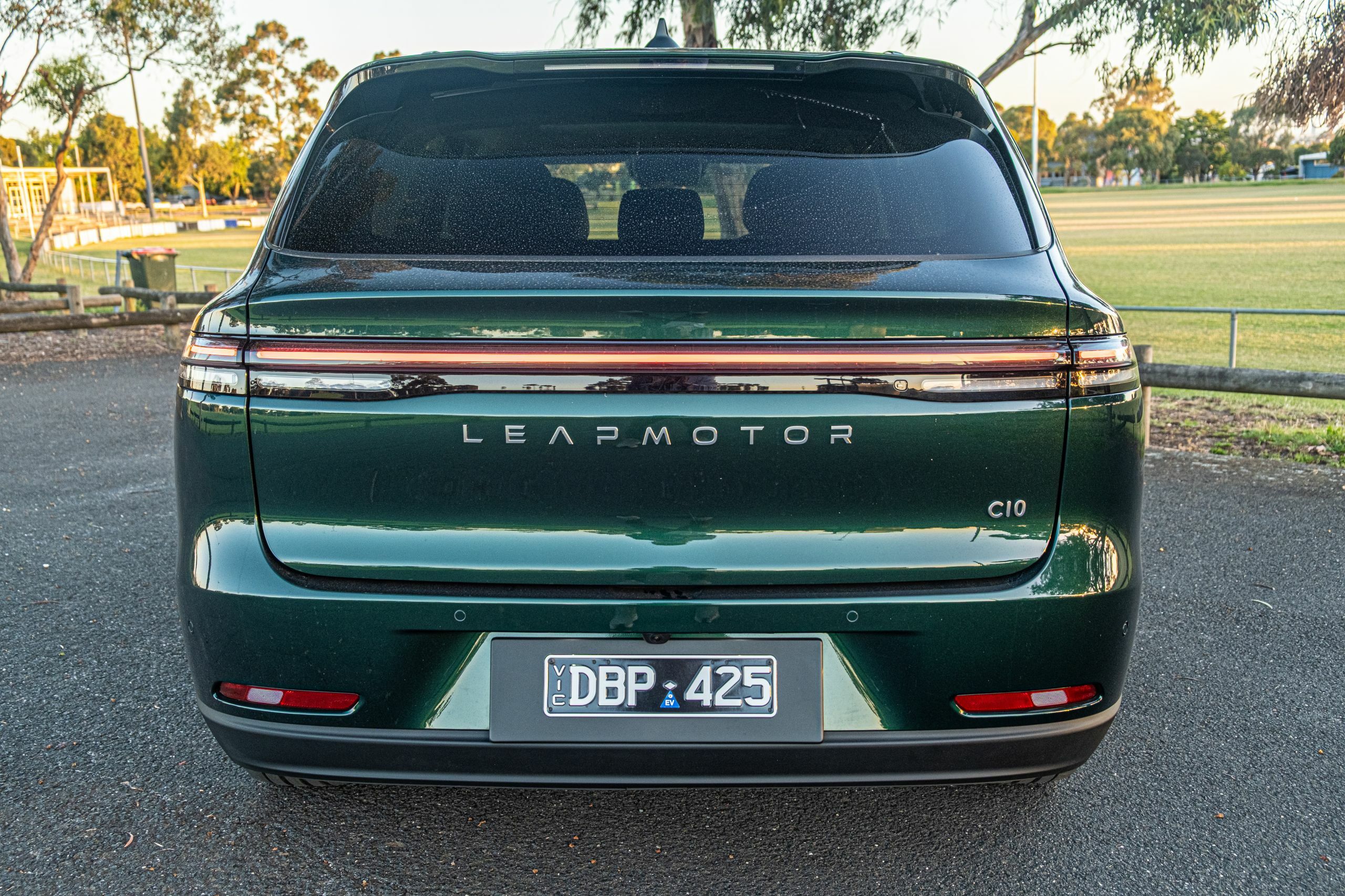
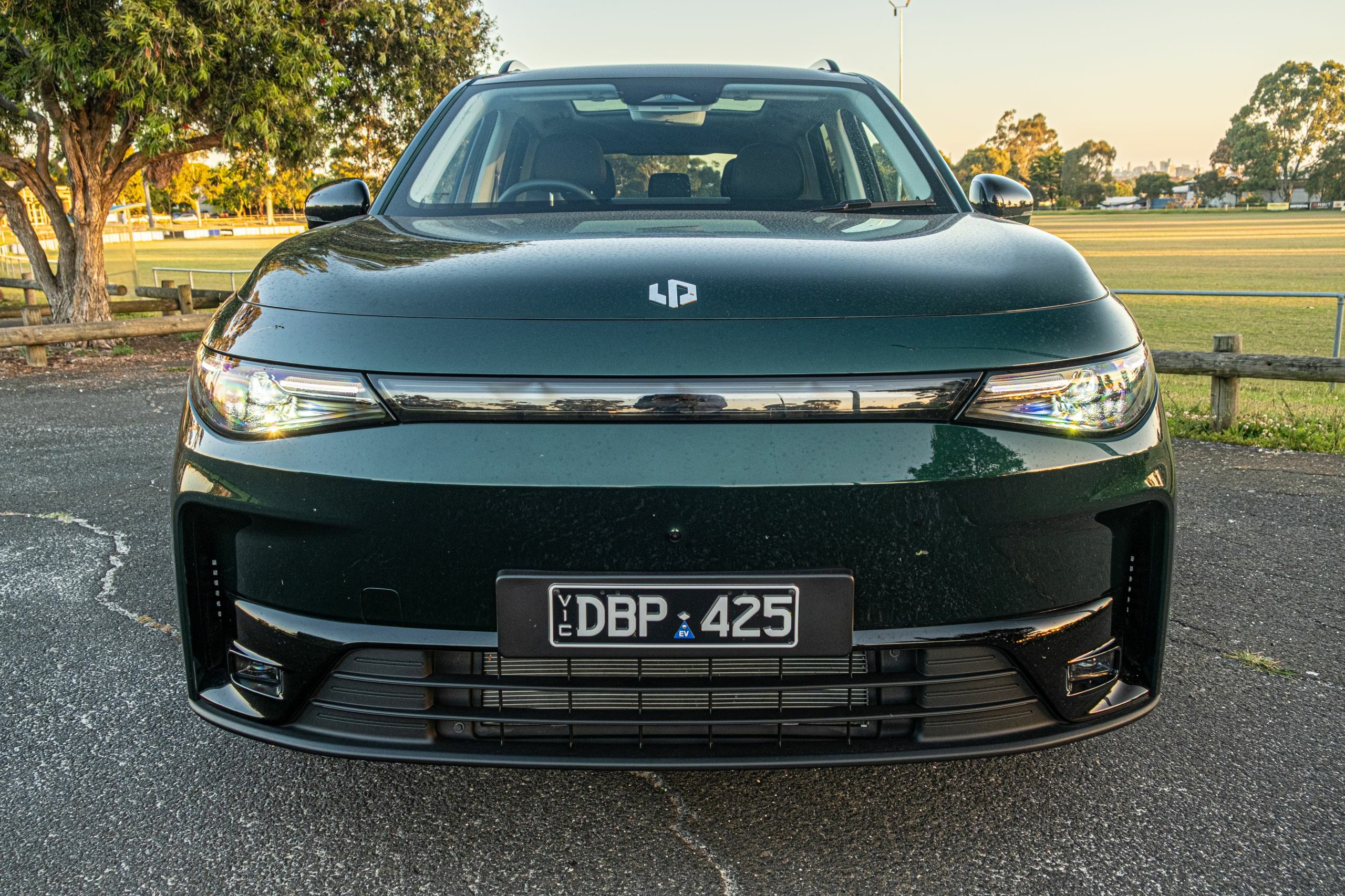
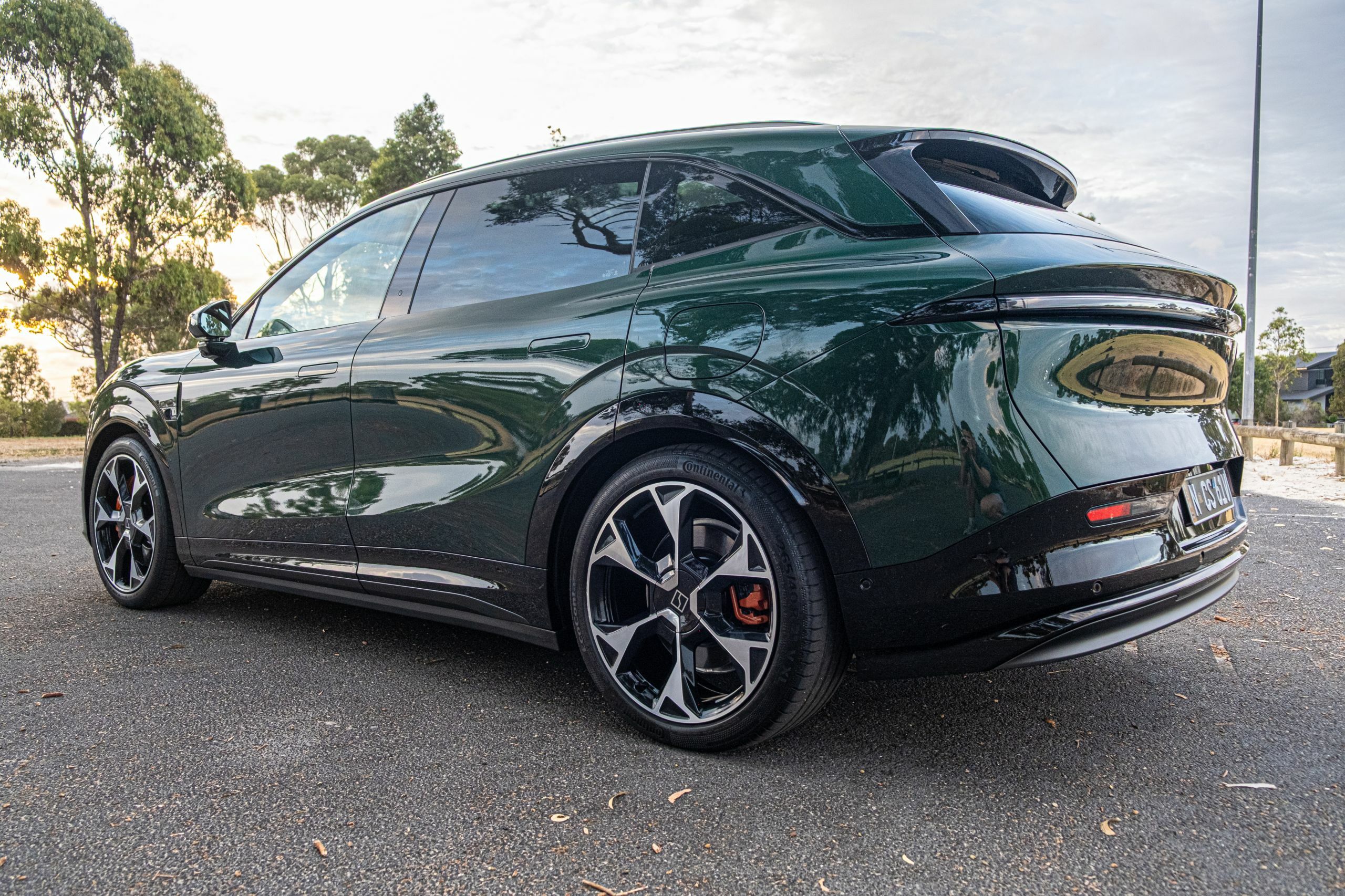
Visually, there’s nothing differentiating the C10 REEV from the EV. That means it looks as uninspiring as the EV, with not even the slightest bit of personality.

How’s The Interior?

\\\\\\\\\\\\

Photos Brad Anderson/Carscoops

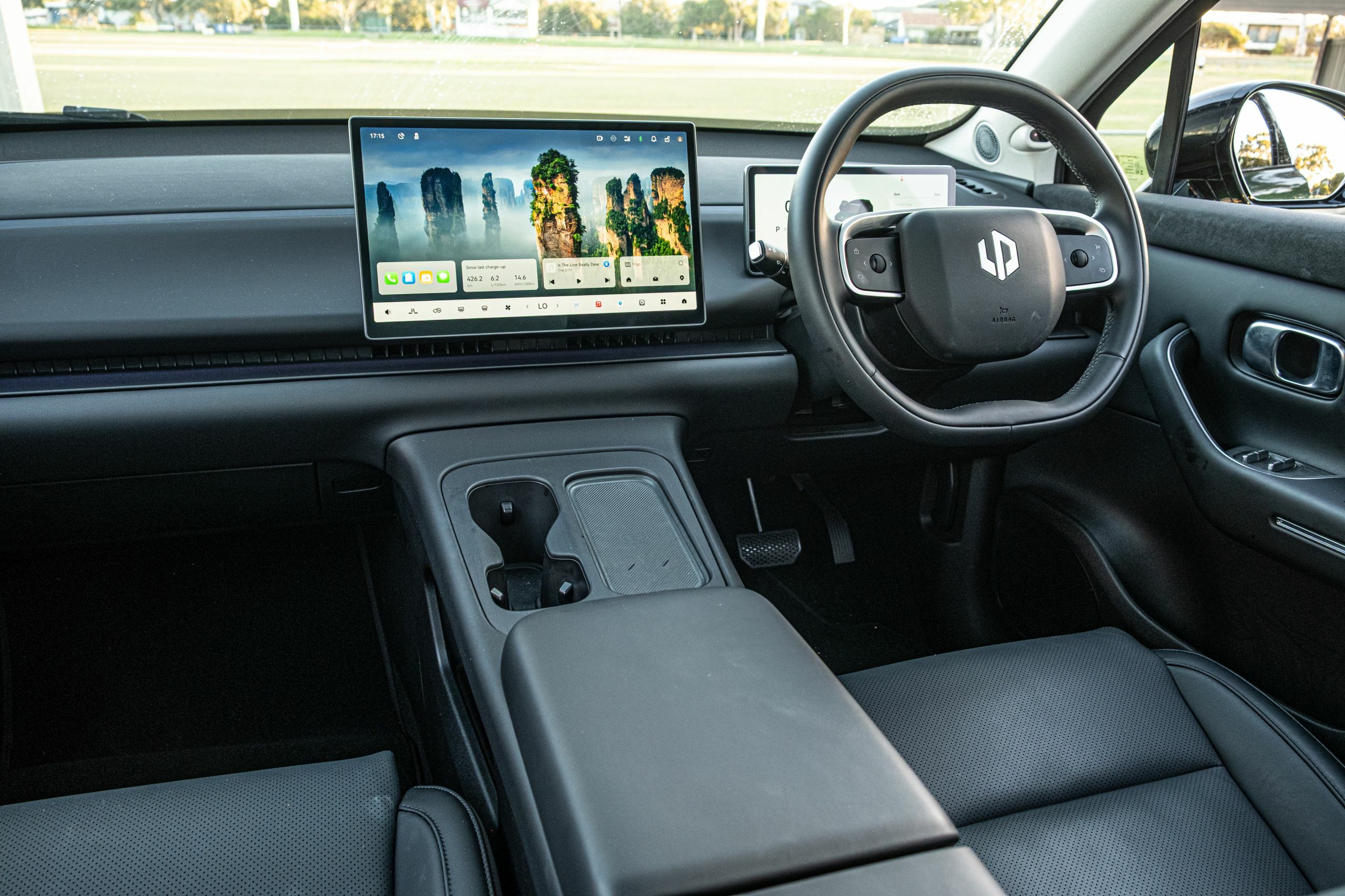
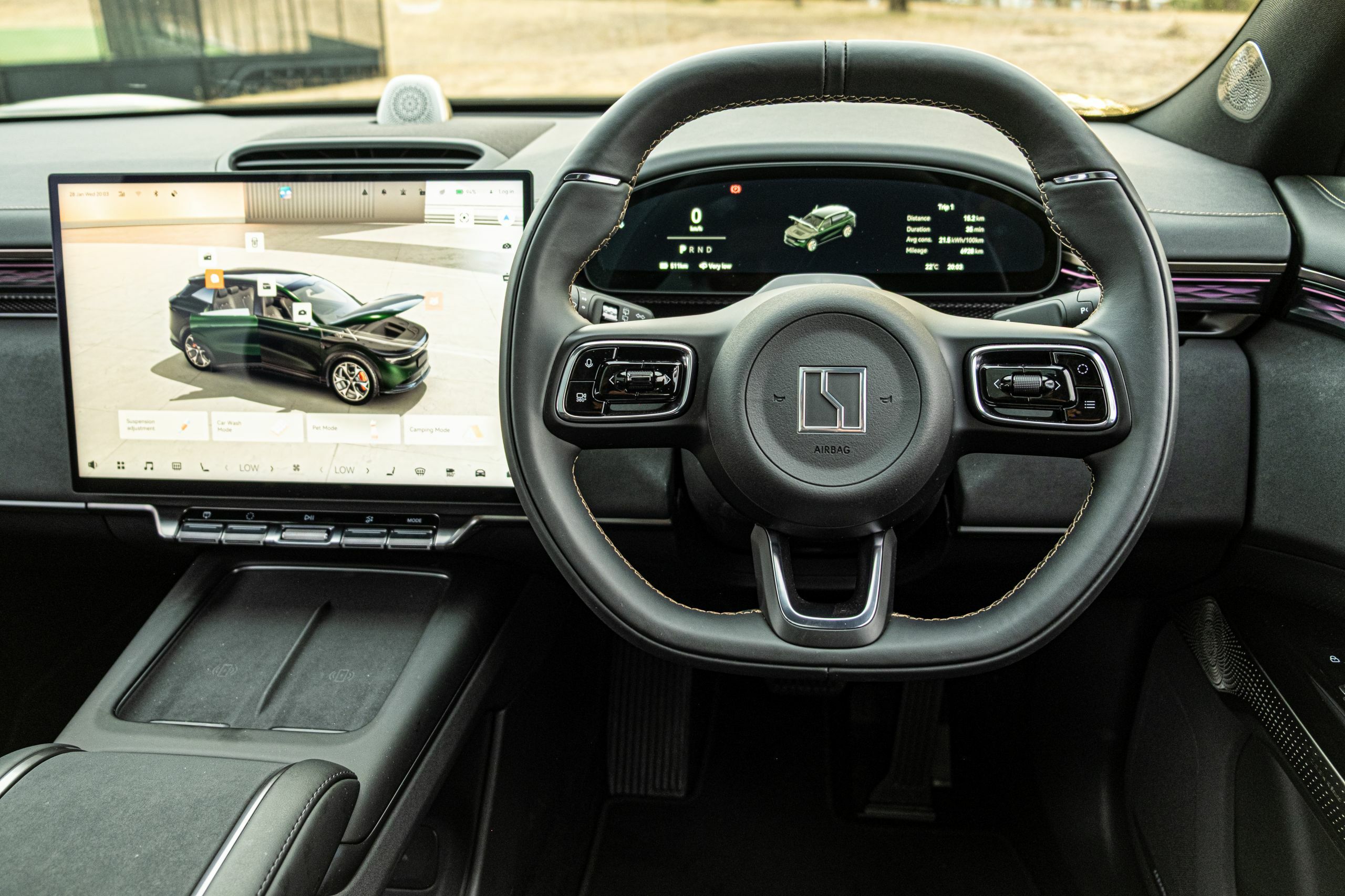
In the cabin, it’s also very familiar. Leapmotor has done exactly what Tesla popularized with the Model 3 and Model Y, opting for an ultra-minimalist design that some people will love, but others will hate.

A 14.6-inch infotainment display sits at the center of the dash running on Leapmotor’s in-house operating system, which uses Android as its base. While we wouldn’t go as far as to describe the C10’s infotainment as good as Tesla’s, it’s surprisingly not far off.

The tablet-like design doesn’t require a steep learning curve to get used to, and the display is very responsive to the touch. Admittedly, some of the settings hidden in the menu are a little too comprehensive, and it can be difficult to find things while on the move. Fortunately, there is a swipe-down notification menu that can be configured with dozens of different toggles for important vehicle functions, ensuring they’re never more than a couple of touches away.

\\\\\\\\\\\\\\\\\

Photos Brad Anderson/Carscoops

Frustratingly, the display does not support smartphone mirroring, so there’s no Android Auto or Apple CarPlay, leaving me to place my phone in the cupholder for navigation. Additionally, the quality of the reversing camera is shocking and not up to modern standards. The infotainment system also needs 15 seconds to load after the car is turned on, by which time I’d often already reversed without the camera loading and started driving away.

All of the materials used feel pleasantly plush, particularly the soft-touch leather adorning the seats, door panels, dashboard, and center console. However, I found that the leather marked very easily, so while it looks nice, it doesn’t stay clean for very long.

Entering and exiting the C10 REEV also turned into a bigger hassle than it should have been. In the first C10 I tested, I easily synced my phone with it and used it as the key. When I tried to use the Leapmotor app on my phone to do the same with this C10, it refused to work. A bit of digging suggests this could have been because the VIN had already been assigned to another device. Apparently, resetting the infotainment system should have fixed it. It didn’t.

Do Small Annoyances Add Up?
 The 2026 Leapmotor C10 REEV Fixes The Biggest EV Problem Only To Fail At The Basics | Review

This left me with no choice but to use the silly keycard for my two weeks with the C10 REEV. Not only is a keycard inferior to a traditional key in every single way, but it also doesn’t have any buttons, meaning I had to tap the NFC logo on the driver’s side mirror every time I wanted to lock or unlock it. It doesn’t even have a proximity locking/unlocking function, so when unloading things out of the passenger side or the trunk, I’d have to walk back around to the driver’s mirror and tap it.

I get it, keycards are in fashion (thanks, Tesla…), but they are just not nice to use.

My issues didn’t stop here. The air conditioning is genuinely disappointing. With the temperature turned down to its lowest setting, the AC on, and the fan speed at full, the C10 would only blow out mildly cool air, equivalent to what most cars do with the AC turned off and just the fans running. In the Australian summer, that was very annoying.

Set those issues aside, and the cabin of the C10 REEV is a nice place to spend time. It’s spacious, and there’s plenty of room in the rear, too. Cargo space is also good, as it can swallow up to 546 liters (19.2 cubic feet) or 1,375 liters (48.5 cubic-feet) with the rear seats folded down.

Smooth Power

\\\\\\\\\\

Photos Brad Anderson/Carscoops

Out on the open road, I quickly grew quite fond of the range-extender powertrain, and actually preferred it to the more traditional full-EV version.

As the engine is only ever operating in the background to charge the battery, it doesn’t intrude on the driving experience at all. In fact, even when I had the Leapmotor in the mode that prioritizes the engine charging the battery, the four-cylinder barely ever revved to beyond 2,000 rpm, so it couldn’t be heard. Around town, it’ll happily sit at less than 1,200 rpm, remaining completely silent while the instant power and torque of the rear-mounted electric motor make the REEV drive just as smoothly as an EV.

I ended my two weeks with the C10 REEV averaging 14.5 kWh/100 km, while fuel consumption sat at 6.1 l/100 km (38.5 US mpg).

On The Road
 The 2026 Leapmotor C10 REEV Fixes The Biggest EV Problem Only To Fail At The Basics | Review

Admittedly, the Leapmotor isn’t particularly fun or engaging to drive. It takes 8.5 seconds to reach 100 km/h (62 mph) and isn’t the type of SUV that likes to be driven in a sporty manner. Drive it calmy, and it does the job just fine.

As I found in my first test of the all-electric C10, the driver assistance systems leave a lot to be desired. The SUV includes both adaptive cruise control and active lane centering, neither of which works well. Even if the adaptive cruise is set and the C10 detects a vehicle ahead, it’ll struggle to maintain a consistent distance from it, repeatedly accelerating and decelerating to hold position.

The lane centering also needs improvement. I spent hours on end sitting on well-marked highways during my time with the Leapmotor, and it’d consistently ping-pong between the lines. That’s unacceptable in this day and age.
 The 2026 Leapmotor C10 REEV Fixes The Biggest EV Problem Only To Fail At The Basics | Review

The C10 REEV also has several other overactive sensors, like the driver attention monitoring system and speed limit warnings. Fortunately, these can be easily disabled in the swipe-down menu, and I didn’t find them to be as intrusive as I did when I first tested the C10 six months ago.

Ride quality is good most of the time, but there were a few instances when it felt like I hit the bump stops after going over speed bumps a little too fast, which most cars would have easily dealt with. The steering is exceptionally light, particularly in the Comfort setting, but it can be configured to feel slightly firmer in Sport mode.

Verdict

\\\\\\\\\\\

Photos Brad Anderson/Carscoops

The Leapmotor C10 REEV has promise. The trick hybrid powertrain works well, combining all of the benefits of a traditional EV like smoothness and instant power, without any of the downsides like range anxiety, particularly in Australia, where the charging network is sub-par.

However, the overall experience of living with the C10 is marred by poorly calibrated safety systems and some tech gremlins that need to be fixed. If these systems can be improved with software updates, the C10 REEV would be a very tempting proposition.
\\\\\\\\\\\\\\\\\\\\\\\\\\\\\\\\\\\\\\\\\\\\\\\\\\\\\\\\\\\\\\\\\\\\\\\\\\\\\\

Photos Brad Anderson/Carscoops

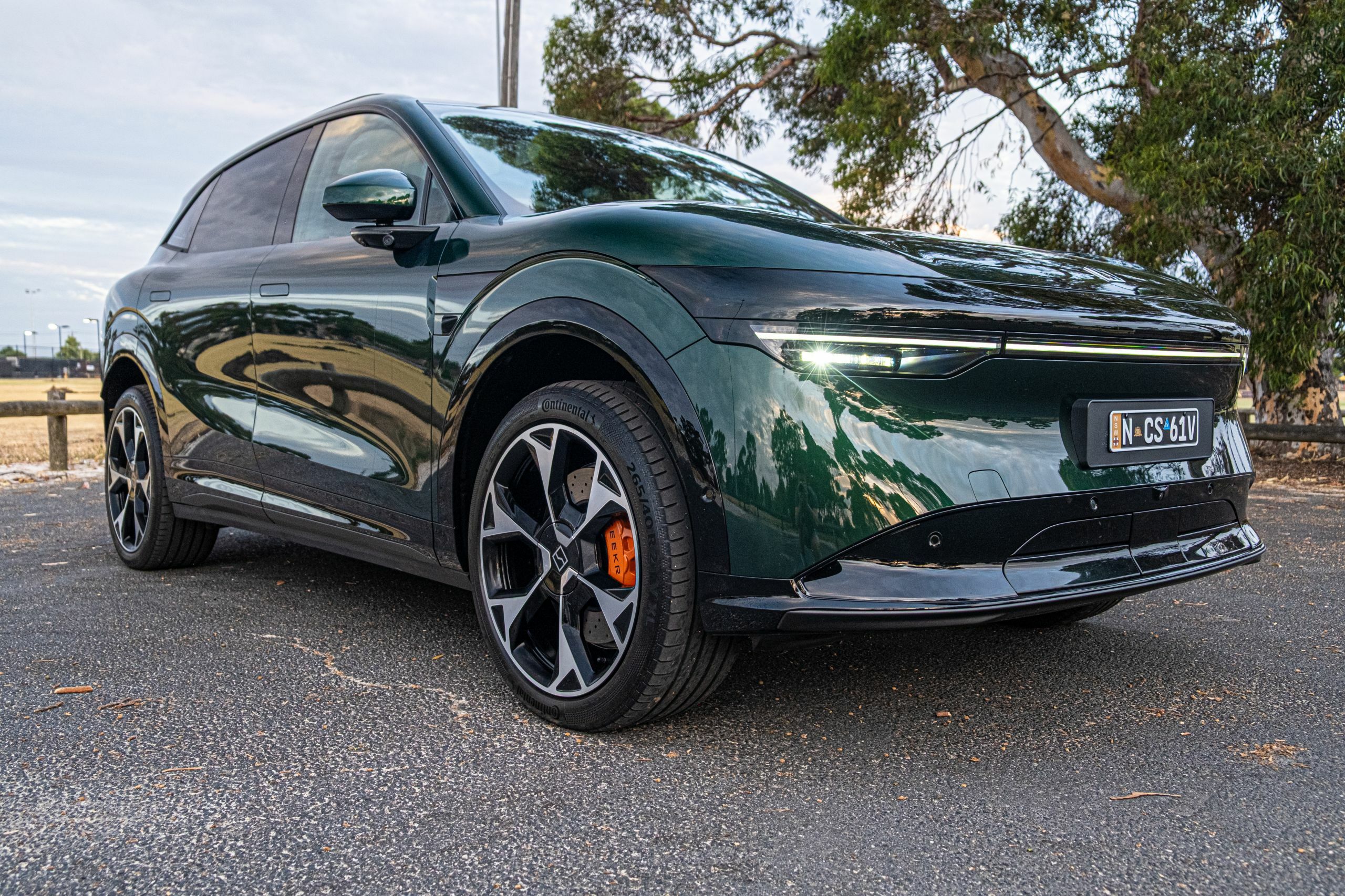
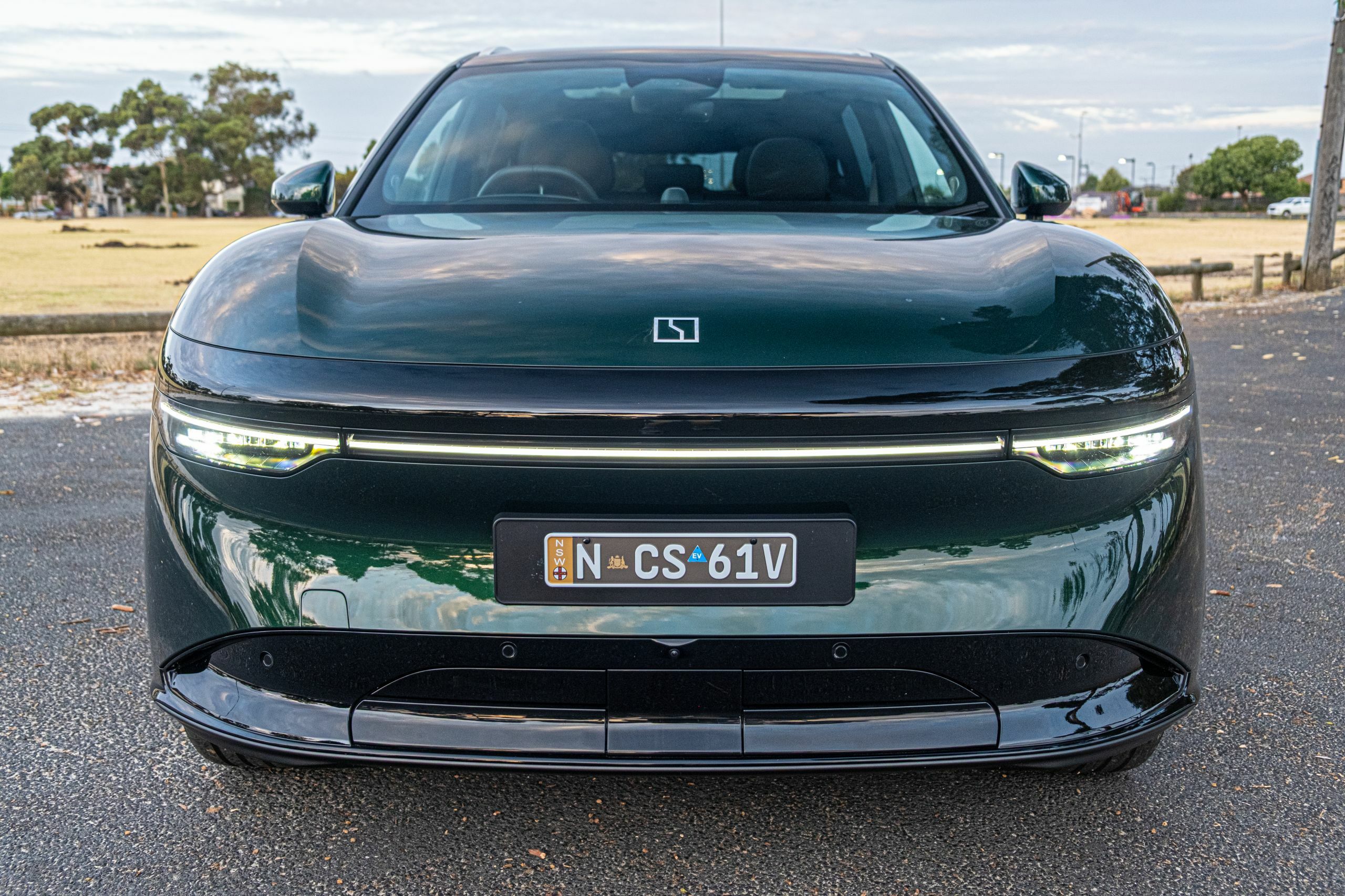
2026 Zeekr 7X Performance Is Proof That Tesla Isn’t The Benchmark Anymore | Review

PROS ›› Interior, good tech, great value CONS ›› Inefficient, slow A/C, heavy

Electric car startups are everywhere these days, but most struggle to move beyond the hype. Zeekr is one of the rare exceptions. In just five years, Geely Group’s premium EV-focused brand has already rolled out a handful of genuinely impressive models and is making real progress with its battery tech.

Review: The 2026 Ioniq 9 Calligraphy’s Biggest Threat Is Another Hyundai

Initially, Zeekr’s models were sold only in China, but the company has since expanded quickly abroad. First came the smaller X, a compact SUV that shares its tech with the Volvo EX30 and Smart #1. Most recently, Zeekr launched the 7X in Australia. It’s been pitched as a Tesla Model Y rival, but can it really measure up to the world’s most popular EV?

QUICK FACTS
› Model:2026 Zeekr 7X Performance AWD
› Starting Price:AU$72,900 ($50,800) as tested
› Dimensions:4,787 mm (188.4 in.) Length

1,930 mm (75.9 in.) Width

1,650 mm (64.9 in.) Height

2,900 mm (114.1 in.) Wheelbase
› Curb Weight:2,385 kg (5,258 lbs)
› Powertrain:Dual electric motors / 100 kWh battery
› Output:637 hp (475 kW) / 524 lb-ft (710 Nm)
› 0-62 mph (100kmh)3.8 seconds
› Transmission:Single speed
› Efficiency:21.8 kWh/100 km
› On Sale:Now
SWIPE

After spending time living with the flagship 7X Performance AWD, we came away convinced. It doesn’t just keep up with Tesla’s best, it beats it in several areas, and in some cases, rivals EVs that cost two or even three times more. In short, it’s well worth your attention.

How Much Does It Cost?

\\\\\\\\\\

Photos Brad Anderson/Carscoops

Three different versions of the 7X are available. The range starts at AU$57,900 (equal to US$40,400 at current exchange rates) for the RWD, undercutting a Model Y Rear-Wheel Drive by AU$1,000 (US$700). Sitting in the middle of the 7X family is the Long Range RWD, priced at AU$63,900 (US$44,500), or AU$5,000 (US$3,500) less than the Model Y Long Range All-Wheel Drive.

Perched at the top of the line-up is the Performance AWD, starting at AU$72,900 (US$50,800), making it comparatively cheap compared to the AU$89,400 (US$62,300) Model Y Performance All-Wheel Drive.

So, what do you get for your money? The 7X Performance AWD uses a 100 kWh NMC battery and has electric motors at the front and rear, combining to produce a monstrous 475 kW (637 hp) and 710 Nm (524 lb-ft) of torque. Thanks to its advanced 800-volt architecture, it supports DC charging at up to 420 kW and AC charging at 22 kW.

What’s It Like Inside?

\\\\\\\\\\

Photos Brad Anderson/Carscoops

It’s also a certifiable tech-fest, and this is no more obvious than in the cabin. Unlike Tesla and some competitors like Xpeng, Zeekr hasn’t adopted the same ultra-minimalistic approach that appeals to some but, to us, is usually an exercise in penny-pinching.

After pressing a button on the B-pillar to open the driver’s door, I was immediately struck by the remarkable fit and finish of the 7X’s cabin. Not only does it feel more premium and way more interesting than a Model Y, but it also feels of a higher standard than cars from legacy rivals like Kia’s EV5, and even BMW and Audi. In fact, the 7X’s cabin feels almost as plush as the Lotus Eletre I tested last year, which also comes from Geely but costs three times as much.

\\\\\\\\\\\\\\\\\\

Photos Brad Anderson/Carscoops

A 16-inch infotainment display sits in the center of the dashboard and is brilliant. It’s among the snappiest I’ve ever used, thanks to the high-end Qualcomm processor, and is an absolute joy to use.

Review: New Zeekr X Got Me Questioning My Feelings For Volvo

Like so many other EVs, it has a smartphone-inspired setup with a swipe-down menu for shortcuts and notifications, as well as an in-depth settings menu. You don’t have to wait even a split second for the screen to load after sitting inside, and if your phone’s connected, Apple CarPlay or Android Auto will load instantaneously.

All the climate control settings are on the screen, and while auto scribes like ourselves often complain about this, it didn’t bother me in the 7X, as it’s easy to use, even on the move. However, I found it could take up to 5 minutes for the AC to start blasting really cold air on hot days.

What Else Makes The Cabin Stand Out?

 2026 Zeekr 7X Performance Is Proof That Tesla Isn’t The Benchmark Anymore | Review

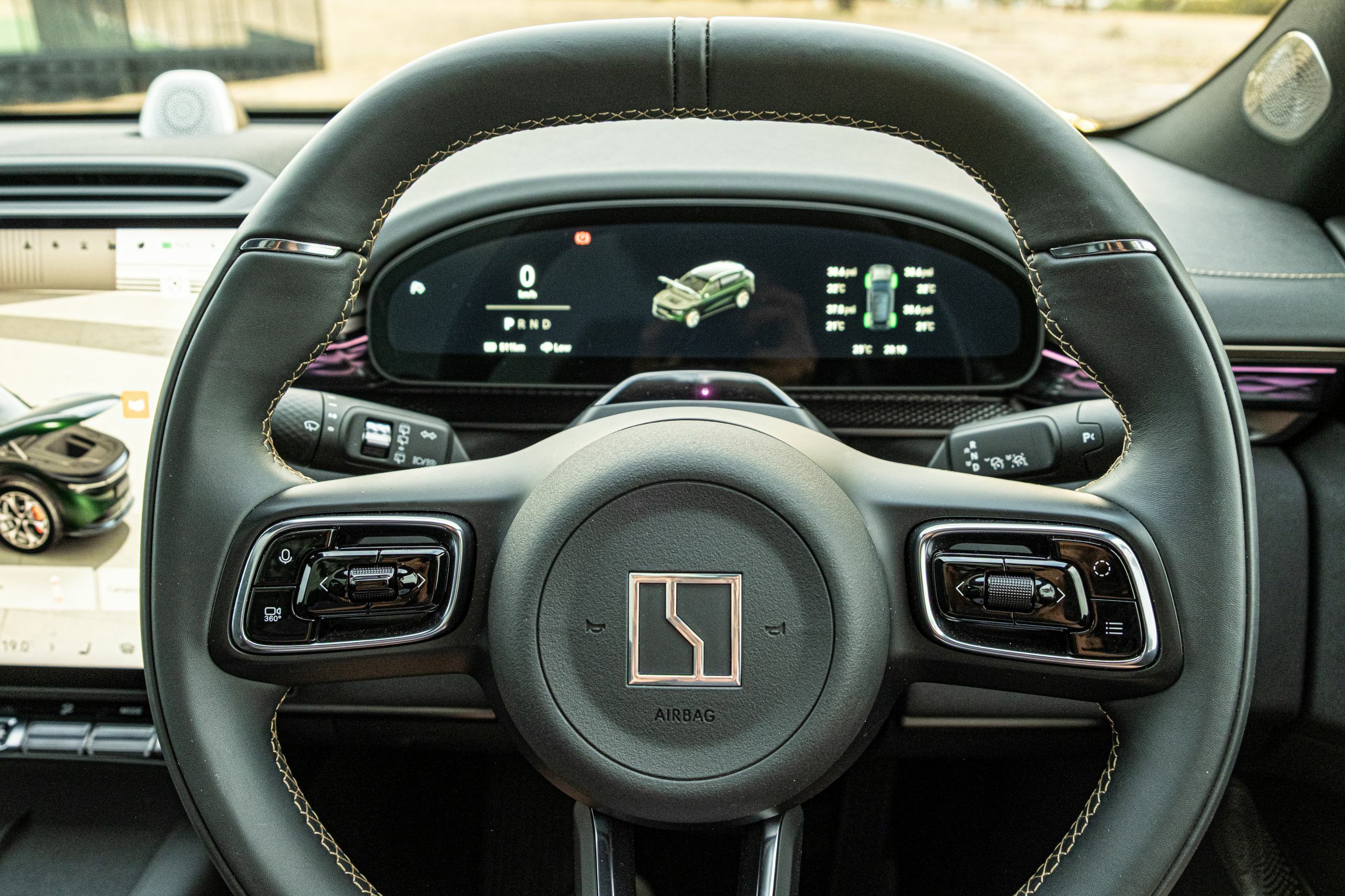
The 13-inch digital instrument cluster and 36-inch head-up display are also superb, although the cluster offers very little scope for customization, which is a shame.

Zeekr’s designers and engineers were incredibly thoughtful when crafting the 7X’s cabin. There are beautiful knurled metal switches below the screen, metal speaker grilles on the pillars and door panels, and beautiful soft-touch materials across virtually every square-inch of the cabin, even along the lower parts of the door panels.

Elsewhere, there are hidden pockets on the door’s armrests, two 50-watt cooled wireless charging pads, and a gargantuan center console storage area. There are plenty of luxurious features too, including heated and ventilated seats, as well as massage functions for the front pews, which are among the best I’ve ever used. In the rear, there are even electronic sunshades that deploy at the press of a button, and hidden storage draws under the seats.

\\\\\\\\\\\\\\\\

Photos Brad Anderson/Carscoops

The 7X Long Range RWD and Performance AWD also include a 21-speaker audio system that’s incredibly adjustable and of great quality, although it didn’t sound quite as crisp as I would have liked. Zeekr has also added a panoramic glass roof, and unlike some rivals, it includes a folding shade. There’s even an interior camera on the B-pillar, which displays a live video to the infotainment screen, allowing drivers to keep a watchful eye on their kids at any time.

What About The Trick Doors?

Then there are the doors. As mentioned, they’re electric. From inside, you touch a button, and they will open, using sensors to determine if there’s an object nearby, automatically adjusting how far they’ll open. When entering, the doors can be pulled shut manually or by pressing the same button. The driver can even close the doors by stepping on the brake, just like a Rolls-Royce.

For the most part, these doors work well, although there were occasions when they didn’t open as wide as they could have, even if there was nothing blocking them. Fortunately, the electric functions can be disabled, and they can be used like manual doors.

 2026 Zeekr 7X Performance Is Proof That Tesla Isn’t The Benchmark Anymore | Review

The 7X also has adaptive Magic Carpet air suspension with Zeekr’s Continuous Damping Control system and five different ride heights, including one where it looks slammed to the ground, and one where it sits high enough for off-roading.

Visibility is good, though the rear window view is very limited. Given how much tech is found inside the 7X, it’s perhaps surprising that there isn’t a digital rearview mirror, similar to what sister brand Polestar uses. Storage space is great with 539 liters (19 cubic-feet) of cargo space, and 1,978 liters (69.8 cubic-feet) with the rear seats folded down. There’s also a 42-liter (1.4 cubic foot) frunk.

How Does It Drive?

\\\\\\\

Photos Brad Anderson/Carscoops

With a serious amount of power, it’s no surprise that the 7X Performance AWD feels absolutely ferocious in a straight line. Zeekr says it needs just 3.8 seconds to hit 100 km/h, (62 mph) and that’s a figure we were able to match. There’s no need to worry about the acceleration being capped as the battery drains either, as it’ll still run sub-4.0 second times even below 30 percent state of charge.

The ‘Performance’ name could easily lead you to think this is a focused, razor-sharp model like a BMW M or an Audi RS, but that’s not the case. Let me explain.

SUVs, particularly heavy electric ones that place too much emphasis on dynamic handling, often have compromised levels of comfort. Some owners may be willing to live with this for an occasional blast along a mountain road, but for the vast, vast majority of driving scenarios, luxury EVs like the 7X need to feel polished and comfortable. That’s exactly the feeling Zeekr has achieved.

 2026 Zeekr 7X Performance Is Proof That Tesla Isn’t The Benchmark Anymore | Review

If you throw the 7X aggressively into turns, it offers immense levels of grip, but can feel a little unsettled. Additionally, the front seats offer very little bolstering, so you can slide around while behind the wheel. However, drive it at 80 percent of its capabilities, or below, and it feels just about perfect.

First is the ride. The adaptive suspension offers Comfort, Standard, and Sport options. The first is very supple, but perhaps is a little too floaty. For most of my time with the 7X, I drove it with the ride in Standard mode, finding it remained soft over speed bumps, without bouncing around unnecessarily. Even in the stiffer Sport mode, it feels softer than some other heavy electric SUVs, like the Kia EV5.  

The steering also offers Comfort, Standard, and Sport settings. Regardless of which is selected, the steering remains sharp, even though it lacks communication like virtually all electronic steering systems on the market. Much to my surprise, I left it in Comfort most of the time, enjoying how light and direct the steering was.

\\\\\\\\\\\\

Photo Credits: Brad Anderson/Carscoops

Zeekr has also done a superb job of calibrating the brakes, and they feel completely natural, as if there isn’t any regen going on, even though there is. Of course, there is also a one-pedal driving mode, perfect for use in town. However, the one-pedal mode isn’t nearly as strong as some rivals, so unless you lift off the throttle far in advance before a stop, you’ll still need to gently apply the brakes. That’s no drama, as even when driven spiritedly, the big orange calipers feel up to the task.

Review: The Kia EV5 Makes More Sense Than A Tesla Model Y

Whereas the RWD and Long Range RWD models have 19-inch wheels, the Performance AWD sits on larger 21-inch forged units wrapped in Continental EcoContact7 tires. Grip is good, although there’s quite a bit of tire noise at highway speeds. We suspect the 19-inch wheels are quieter.

Is Zeekr’s ADAS As Polished As The Rest?

 2026 Zeekr 7X Performance Is Proof That Tesla Isn’t The Benchmark Anymore | Review

Zeekr’s ADAS system is also a good one. It’s enabled just like Autopilot on a Tesla, offering good radar cruise control functionality, as well as active lane centering. During multiple long highway stints, it always kept me in the center of my lane and even includes an automatic lane-change function that worked faultlessly.

However, there was also one time when the entire ADAS system was disabled as I hit a bump while crossing onto a bridge. But, for the most part, it works well.

Interestingly, Australian models use a Mobileye software stack for their ADAS, where in other markets there’s an Nvidia system instead. This system is also included in the recently updated 7X launched in China, which features a 900-volt platform, and it is expected to come to Australia next year. According to some reports, the Nvidia system is even better, but we will have to wait and see.

How Far Can It Go?

 2026 Zeekr 7X Performance Is Proof That Tesla Isn’t The Benchmark Anymore | Review

Zeekr says the 7X Performance AWD can travel up to 543 km (337 miles) on a single charge and quotes power consumption of 19.9 kWh/100 km. During my time with it, I averaged 21.8 kWh/100 km with an even mix of urban and highway driving.

That’s not great, but it is better than the 22.4 kWh/100 km I averaged in the Audi SQ6 e-tron, even though it has 95 kW (127 hp) less grunt than the Zeekr. Those seeking better efficiency would be wise to opt for either the RWD or Long Range RWD models with driving ranges of 480 km (298 miles) and 615 km (382 miles).

What’s The Verdict?

\\\\\\\\\\\\\

Photos Brad Anderson/Carscoops

The Zeekr 7X is superb in almost all areas. Its cabin is a key highlight: not only does it feel way more premium than a Tesla, but it also feels nicer than the excellent BYD Sealion 7, and many other German EVs, for that matter. Vehicles like the 7X have shattered the illusion that you need to buy something from a premium legacy brand, and to pay a hefty price, to get a high-quality vehicle.

While I haven’t had the chance to drive the RWD and Long Range RWD versions, I suspect that these will suit most buyers more than the Performance AWD. Regardless, all three have been competitively priced, offer amazing features, and once again prove that when it comes to EVs, the Chinese do it better than most.

\\\\\\\\\\\\\\\\\\\\\\\\\\\\\\\\\\\\\\\\\\\\\\\\\\\\\\\\\\\\\\\\\\\\\\\\\\\\\\\\\\\\\\\\\\\\\\\\\\\\\

Photos Brad Anderson/Carscoops

Driving The 2026 Audi RS e-Tron GT Performance Feels Like Falling Into A Black Hole | Review

PROS ›› Insane performance, amazing handling, stunning looks CONS ›› Big price jump, parking sensor issues, depreciation

We’ve grown accustomed to how quickly electric cars evolve, but few models illustrate that pace of change as clearly as the latest iteration of Audi’s e-tron GT. What is essentially Audi’s halo EV has been completely reengineered in just a few short years. This isn’t your usual mid-cycle refresh, and Audi isn’t pretending it is.

Read: Audi Gave Up On The A2, Now It’s Making The Q2 e-Tron To Win You Back

Sales of the original e-tron GT kicked off in Europe back in mid-2021, though Australian deliveries didn’t begin until late 2022. Fast forward just over 18 months, and Audi has already rolled out a completely new e-tron GT line-up, one so far ahead of its predecessor that even the latest base model now outguns the previous RS flagship in power.

QUICK FACTS
› Model:2026 Audi RS e-tron GT Performance
› Starting Price:AU$309,900 ($216,800) as tested
› Dimensions:4,996 mm (196.6 in.) Length

2,158 mm (84.9 in.) Width

1,394 mm (54.8 in.) Height

2,901 mm (114.2 in.) Wheelbasee
› Curb Weight:2,330 kg (5,136 lbs)
› Powertrain:Dual electric motors / 97 kWh battery
› Output:912 hp (680 kW) / 757 lb-ft (1,027 Nm) w/Launch
› 0-62 mph2.5 seconds
› Transmission:Twin speed
› Efficiency:21.0 kWh/100 km as tested
› On Sale:Now
SWIPE

This new model went on sale Down Under towards the end of 2025, and we recently had the opportunity to live with the flagship model in the range, the all-new RS e-tron GT Performance. I was not prepared for what I would discover.

What’s New?

\\\\\\\\\\\

Photos Brad Anderson/Carscoops

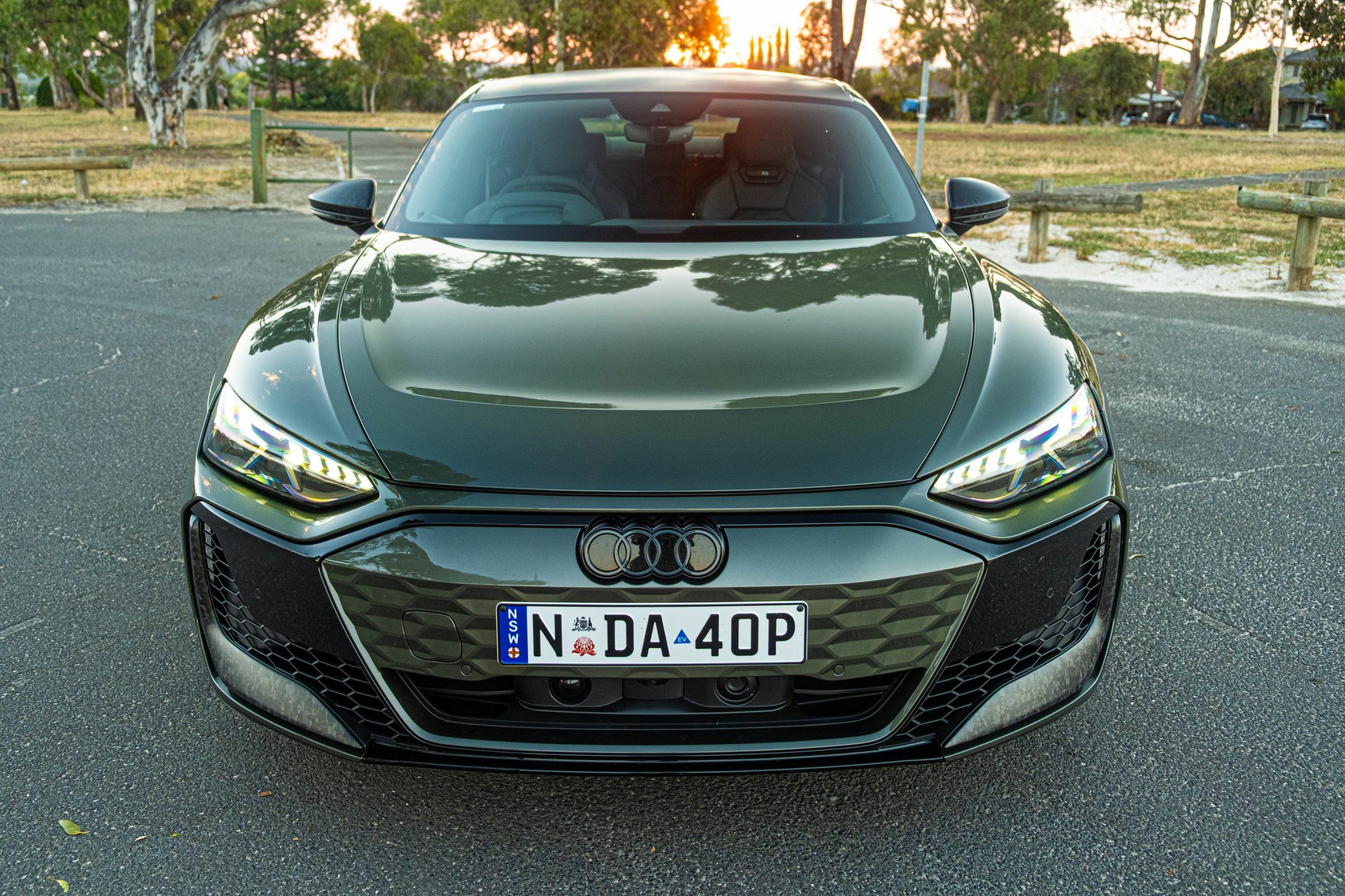
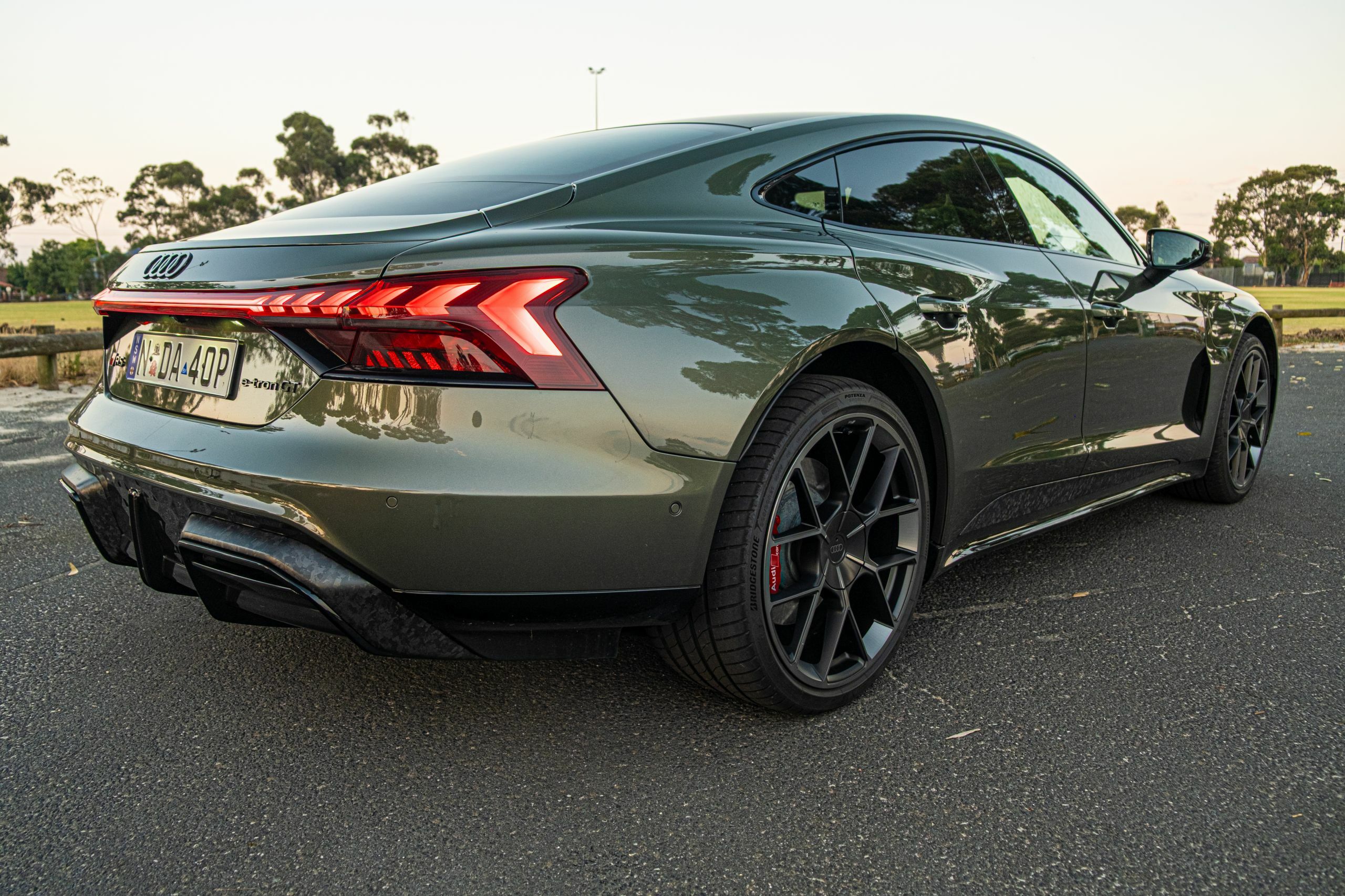
Most would agree that the e-tron GT is an extraordinary piece of automotive design. We’d argue it’s the best-looking EV on the market, and one of the finer-looking sedans of the past decade. However, the original RS version just didn’t look special enough.

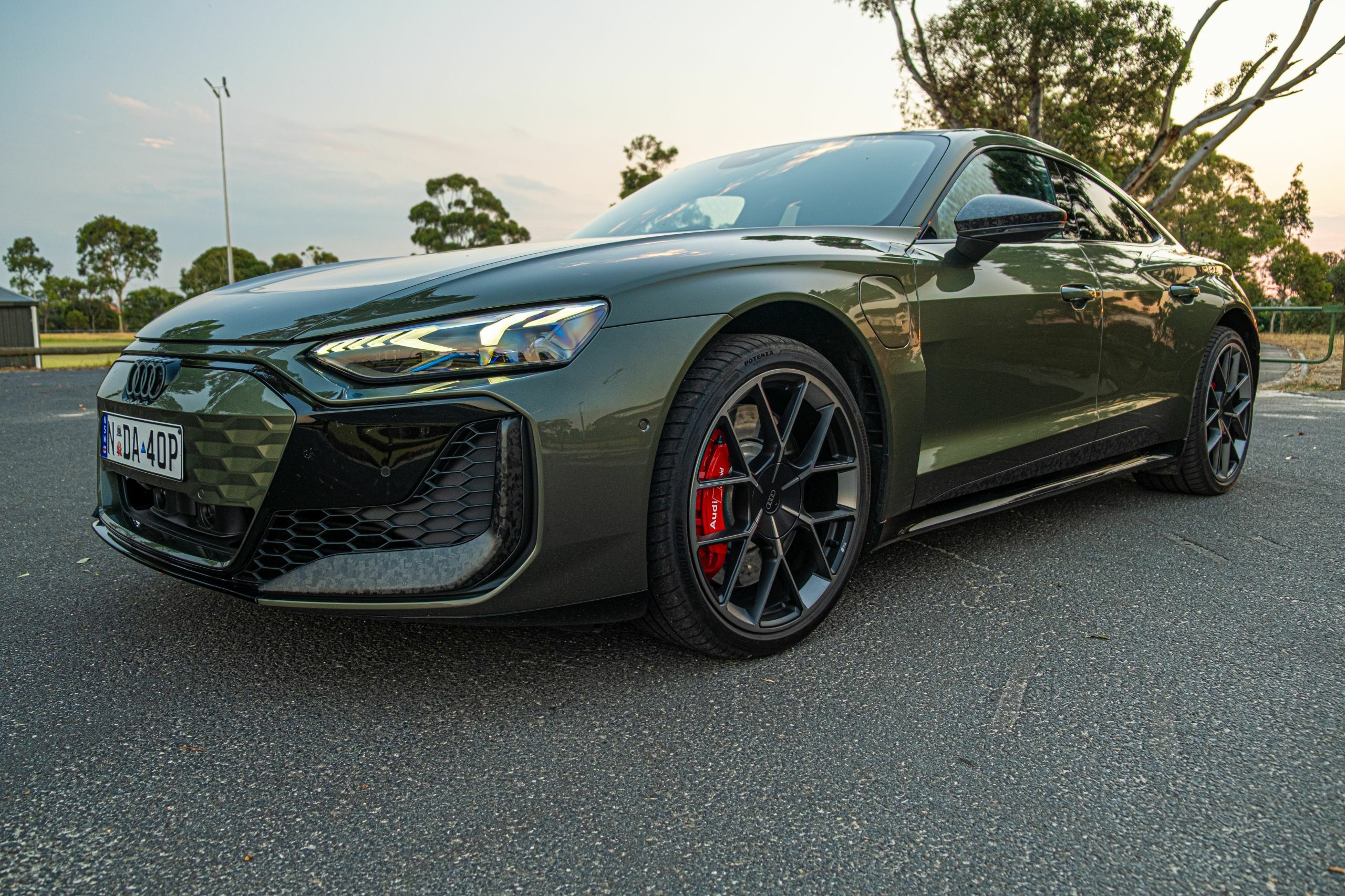
Aside from minor visual tweaks, the flagship version looked virtually identical to the base model, which was somewhat disappointing for an RS-branded car. Audi appears to have addressed these complaints and, for the 2026 RS e-tron GT and RS e-tron GT Performance models, has ensured they stand out from the base version.

Also: All Future Audis Will Have This Grille, Mustache Memes Be Damned

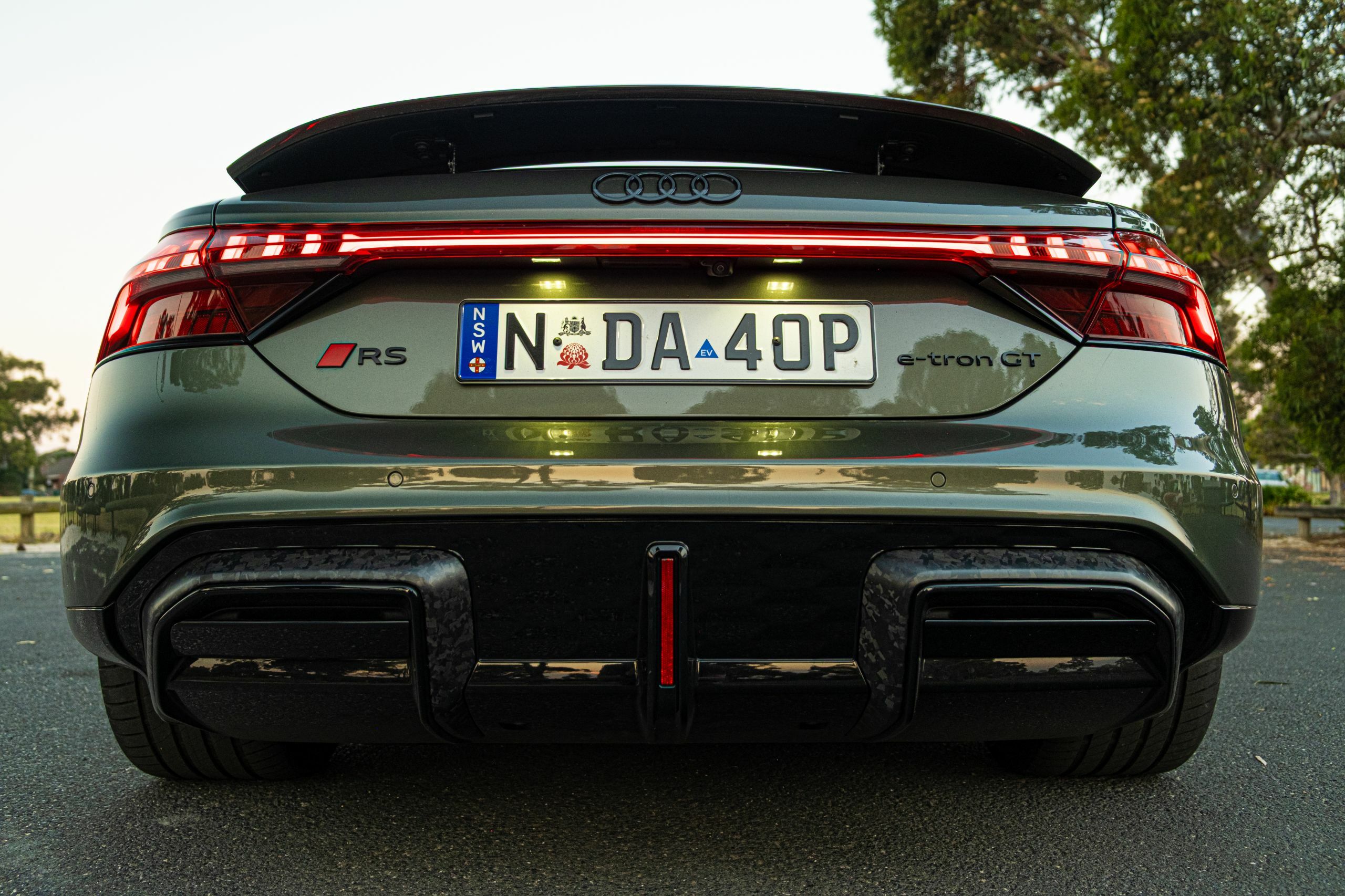
The most obvious updates are found at the front. While the same basic grille has been retained, the front air intakes are now more aggressive, with a forged carbon fiber finish, as on our test car. The bold new touches continue at the rear with a bespoke diffuser, also finished in forged carbon, and a set of unique six double-spoke 21-inch wheels.

An Updated Powertrain

 Driving The 2026 Audi RS e-Tron GT Performance Feels Like Falling Into A Black Hole | Review

These updates are welcome, but they pale in comparison to the changes that Audi has made under the skin. The 84 kWh battery pack of the old model has been removed and replaced with a larger 97 kWh battery that weighs 9 kg (19.8 lbs) less. Additionally, all three e-tron GT versions now support DC charging speeds of up to 320 kW, a welcome boost from the 270 kW of the old model.

Read: 2025 Audi RS e-tron GT Performance Has 912 HP, Hits 62 MPH In 2.5 Seconds

Then there’s the power. The base S e-tron GT has 500 kW (670 hp) and 717 Nm (529 lb-ft) with launch control, allowing it to hit 100 km/h (62 mph) in 3.4 seconds and drive 558 km (347 miles) on a charge. The mid-tier RS e-tron GT is rated at a peak of 630 kW (845 hp) and 865 Nm (638 lb-ft), running to 100 km/h in 2.8 seconds and boasting a driving range of 522 km (324 miles).

The daddy of the line-up is the RS e-tron GT Performance we tested, Audi’s equivalent to the refreshed Taycan Turbo S. It peaks out at 680 kW (912 hp), 1,027 Nm (757 lb-ft) of torque, and can hit 100 km/h in a claimed 2.5 seconds. It does all of these while boasting a range of 528 km (328 miles). It’s not cheap, however. In Australia, prices for the flagship start at AU$309,900 ($216,800), though our test car included several options, bringing the total to AU$324,400 ($226,900).

A Cabin To Remember

\\\\\\\\\\\\\\\

Photos Brad Anderson/Carscoops

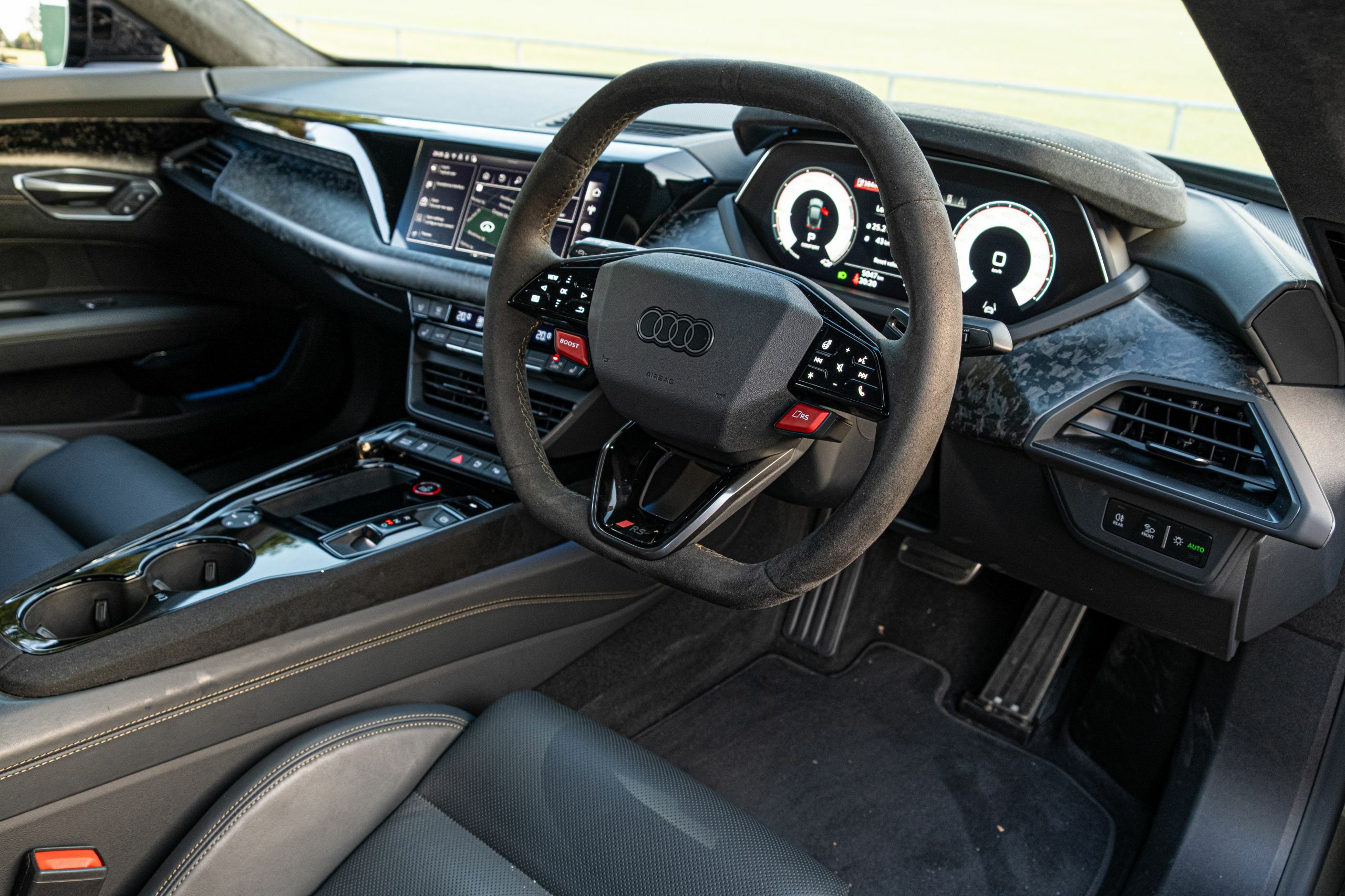
The interior of the new RS e-tron GT Performance is largely the same as the pre-facelift model, but does benefit from some updates. These include a new flat-bottom and flat-top Alcantara steering wheel with bright red Boost and RS buttons.

Our tester was also fitted with the AU$4,500 ($3,100) performance design package, adding several green accents and Nappa leather. It also included the AU$10,000 ($7,000) Matt carbon camouflage package, which adds forged carbon to the exterior, side sills, dashboard, and door panels. The look of the carbon won’t be to everyone’s tastes, but it’s certainly striking.

Review: The 2024 Audi RS e-tron GT Will Warp Your Sense Of Reality

Most touchpoints are excellent, and the cabin carries a premium feel. Still, much of the switchgear and lower-grade plastics come straight from less expensive Audi models, which is somewhat disappointing given the car’s sky-high price tag.

 Driving The 2026 Audi RS e-Tron GT Performance Feels Like Falling Into A Black Hole | Review

Among the key features carried over from the pre-facelift model are the superb RS-branded front seats, the 10.1-inch infotainment display, and the 12.3-inch digital instrument cluster. There’s wireless Apple CarPlay and Android Auto, a thumping 16-speaker Bang & Olufsen audio system, and among the finest front seat massage functions of any car currently on sale. To put it simply, the RS e-tron GT is a joy to spend time in.

Read: Audi Design Boss Wants To Remove Big Screens From Future Models

Perhaps the most obvious downside of the incredibly good looks and that swooping roofline is that headroom in the rear isn’t great for tall adults. It also feels a little sparse back there with just a pair of USB-C ports and simple fan speed controls.

Unrelenting Acceleration

\\\\\\\\\\\\\\\\\\\\\\\\\\\\\\\\

Photos Brad Anderson/Carscoops

Heading into my week with the RS e-tron GT Performance, I knew it was going to be the quickest car I’d ever driven. But nothing could quite prepare me for this EV’s ferociousness off the line, and yet its plushness and comfort during daily driving.

As mentioned, Audi quotes a 0-100 km/h time of 2.5 seconds. Try as I might, I was never able to match that with my GPS timer, recording a best time of 2.63 seconds, covering the sprint to 100 km/h in just 39.1 meters (129 feet). If you can actually feel the difference between 2.63 and 2.5 seconds, congratulations, you might be part stopwatch. As for what that kind of speed feels like? Absolutely brutal.

Pin the throttle and the Audi throws you back into the seat, building speed in a way that is truly terrifying. Like the original e-tron GT, this new model retains a two-speed transmission. While the original shifts into second gear at around 85 km/h (53 mph), the flagship Performance model will hold first gear for as long as possible, enabling remarkable acceleration.

 Driving The 2026 Audi RS e-Tron GT Performance Feels Like Falling Into A Black Hole | Review

During my testing, it felt like the car changed into second gear at around the 120 km/h (75 mph) mark, and when it does, the EV accelerates even faster, as if it’s a spaceship getting sucked into a black hole. It’s absolutely mesmerizing. Remarkably, the car delivers this performance while struggling to put all its power to the ground.

Regardless of whether the ESC is on, in Sport mode, or disabled entirely, the car will spin all four wheels to beyond 100 km/h, leaving faint black tire marks in its wake. I have no doubt that if I had been able to find a grippier piece of tarmac to reduce wheel slip, a 2.5-second run would have been achievable.

Chassis Changes

\\\\\\\\\\\\

Photos Brad Anderson/Carscoops

Equally impressive as the way the RS e-tron GT Performance lurches forward is the new active suspension system. It builds upon the already remarkable setup of the old car, using technology similar to what’s found in the facelifted Porsche Taycan.

There’s trick air suspension working alongside two-valve dampers that eliminate the need for traditional anti-roll bars. In Comfort mode, the system is so advanced that it can actually lean the car into a corner, while in one of the RS modes, the suspension activates to eliminate even the slightest hint of body roll. Yes, despite the car weighing 2,330 kg (5,137 lbs), it has an uncanny ability to remain flat, even during high-speed slaloms.

I was offered my first taste of this system when I unlocked the car for the first time. As soon as I opened the driver’s door, the ride height quickly jumped up a couple of inches, making it easier to get in. When exiting, the same thing happens. It’s a neat party feature that can be disabled if owners prefer not to have it.

Read: Audi’s 2026 A5 And Q5 Fix One Of Its Most Annoying Interior Decisions

Presented with a mountain road, the car absolutely shines. Fitted with 265/35 front and 305/30 Bridgestone Potenza Sport tires, the RS e-tron GT Performance can speed through corners beyond what some potent sports cars can do, with very little fuss. It’d take a very brave soul to push this thing to its limits on the road, and it probably needs to be driven on a track to be fully appreciated.

 Driving The 2026 Audi RS e-Tron GT Performance Feels Like Falling Into A Black Hole | Review

As with before, the comfort is also superb. With the suspension in one of the softer settings, the e-tron GT soaks up bumps better than any other Audi, oftentimes making potholes and speed bumps feel almost non-existent. It honestly beggars belief how comfortable the car is on long journeys. An all-wheel steering system also ensures it’s easy to drive in tight urban areas and parking lots, reducing the risk of curbing those inevitably very expensive wheels.

All of the incredible performance comes at the expense of efficiency. Audi quotes efficiency of 21 kWh/100 km, and while I was able to match that figure, it’s slightly higher than the old car. But, just like you shouldn’t buy an Audi RS6 Avant expecting it to be fuel efficient, the Performance isn’t the type of EV you should buy if you want to eke out as much range as possible.

See: Audi Driver Hits 190 MPH On Public Road, Then Shows It To The Cops On TikTok

Critiquing the car’s handling is rather difficult. Some may find the steering to feel overly assisted and unnaturally sharp, but I grew accustomed to it very quickly.

One frustrating issue I experienced with the parking sensors is that they beep incessantly and loudly, as if you’re about to hit something, even when there are several inches of clearance. There were also a couple of occasions when the rear-cross traffic alert system was engaged while I was reverse parking, even though there was no risk of hitting anything.

Verdict

 Driving The 2026 Audi RS e-Tron GT Performance Feels Like Falling Into A Black Hole | Review

The e-tron GT remains the best EV that Audi currently produces, and the flagship RS e-tron GT Performance provides true supercar-levels of performance, making it one of the most engaging and enjoyable EVs to drive, too.

The additional performance Audi has added is extraordinary, but it comes at a cost. The old flagship started at AU$246,875 ($172,700), or more than AU$63,000 ($44,000) less than the new one. That’s a sizeable price hike, regardless of the changes made. If this new model follows the same depreciation curve as the pre-facelift model, it could be an absolute bargain in a few years.

\\\\\\\\\\\\\\\\\\\\\\\\\\\\\\\\\\\\\\\\\\\\\\\\\\\\\\\\\\\\\\\\\\\\\\\\\\\\\\\\\\\\\\\\\\\\\\\\\\\

Photos Brad Anderson/Carscoops

I Crashed Hyundai’s Massive N Festival In My French Hot Hatch, And It Was Glorious

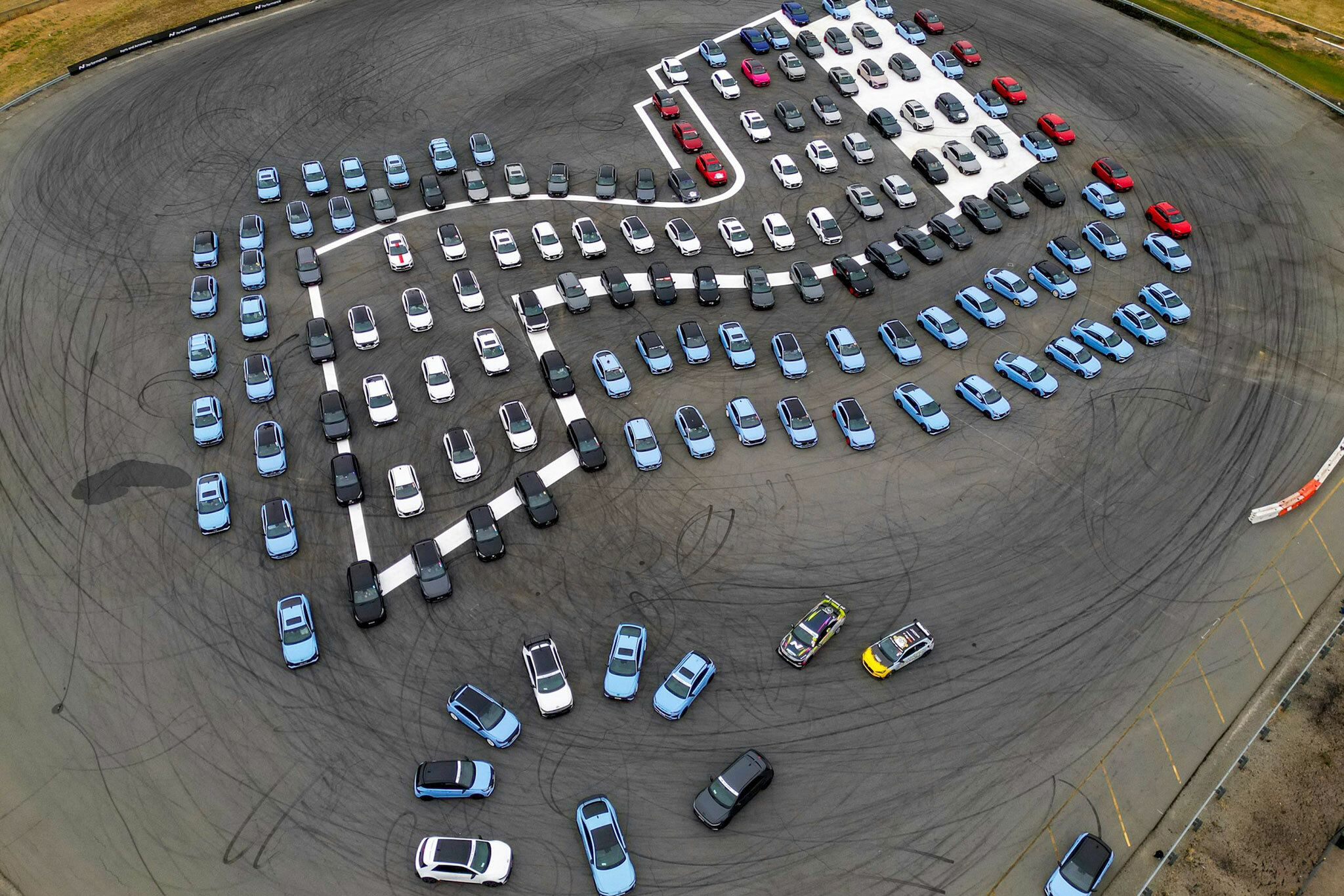
  • Hyundai’s N Festival in Australia drew more than 350 cars.
  • Entry was AU$60, including track time and instructor support.
  • Non-N owners can attend through the new Nvy Track Sessions.

Building a loyal enthusiast following from the ground up isn’t something carmakers typically pull off overnight. For Hyundai, a brand that wasn’t exactly on anyone’s radar for fun, driver-focused cars to begin with, establishing its N performance sub-brand was not just about creating engaging machines. It was about cultivating a culture, and that’s a far more elusive achievement.

Review: What’s It Like Living With The Hyundai Ioniq 5 N?

However, thanks to a host of owner-focused events, Hyundai Australia has done just that. There are now thousands of tightly-knit N owners across the country, helping the company’s creations become among the nation’s best-selling hot hatches. Not only that, but cars like the i20 N and i30 N have become genuine benchmarks in their respective segments.

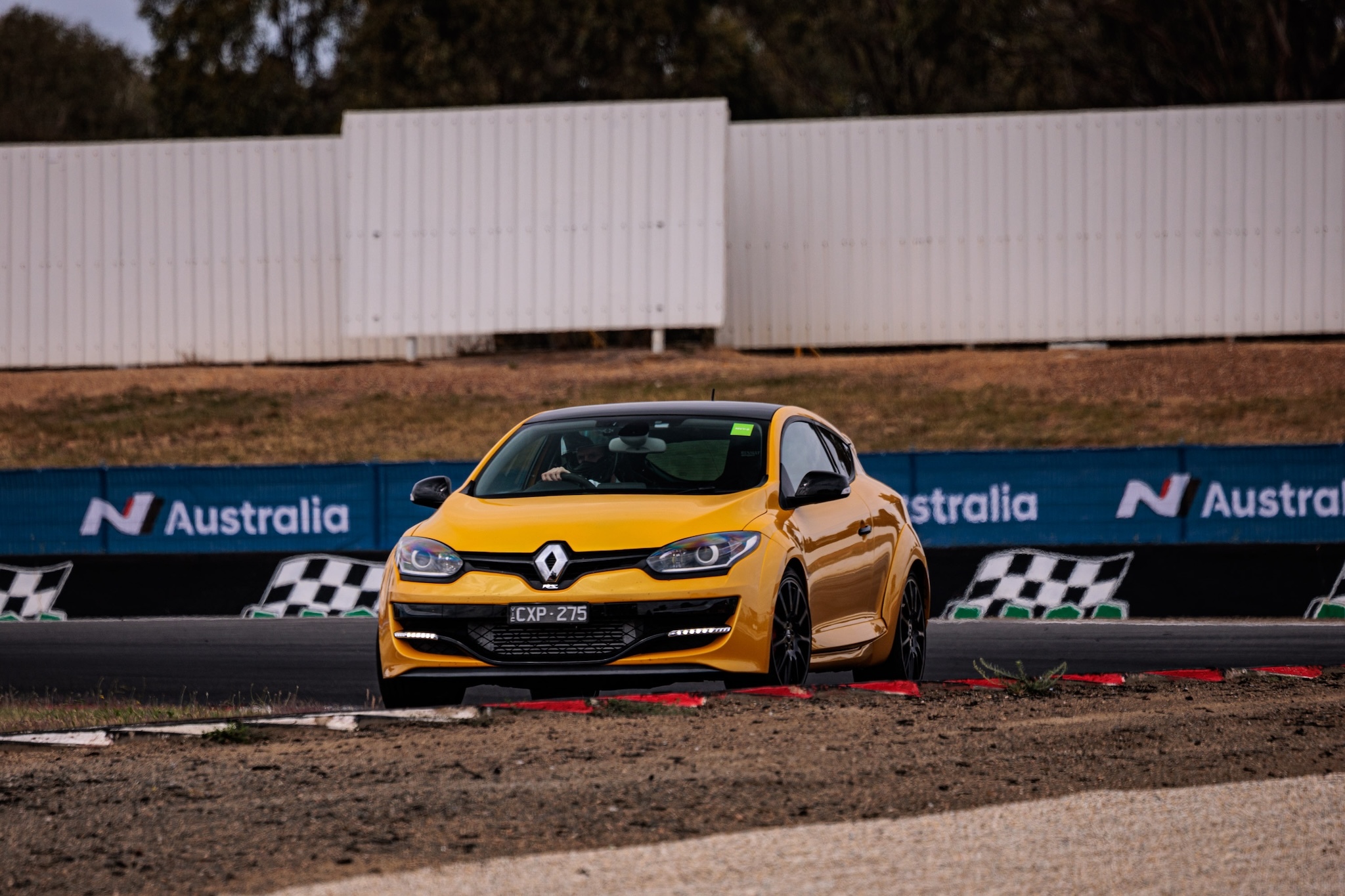
In late November, the annual N Festival returned for its seventh iteration, but with a twist. Not only was the event open to N owners, but also to a select number of owners from other brands, so we decided to join in with a bright yellow Renault.

Nvy

\\\\\\\\\\\\\\\\\\\\\\\\\\\\\\\\\\\

Hyundai N Australia

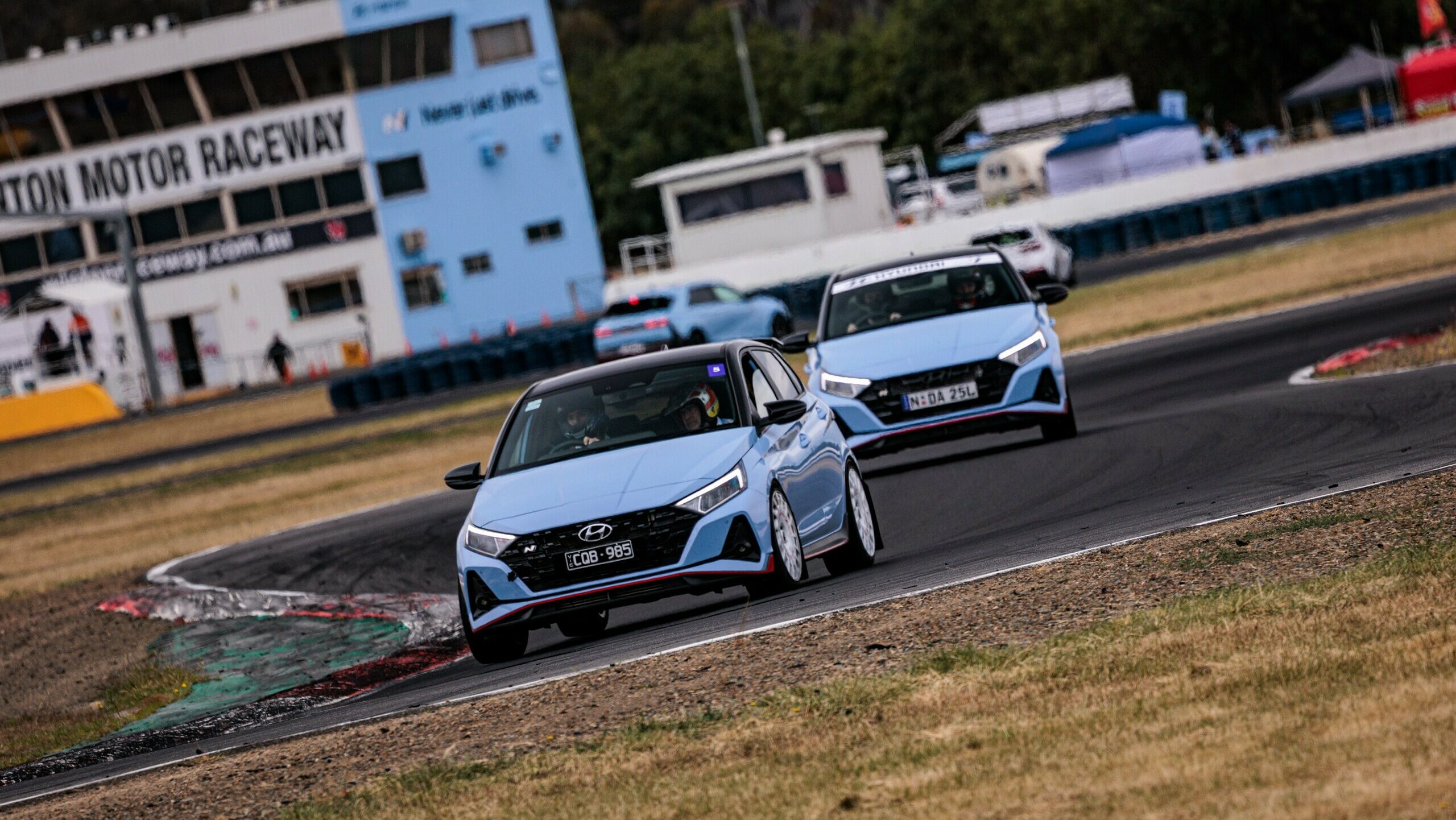
The 2025 event was held at Winton Raceway, roughly two hours north of Melbourne. As interest in the N Festival has increased in recent years, it’s no longer just an event run over Saturday and Sunday, but for the first time, it was extended to a three-day event. For eager owners wanting to get onto the track, there’s no better event.

Read: I Flew To Germany To Conquer The Nurburgring; It Conquered Me Instead

More than 350 cars attended in December. To join in, all that was required was a AU$60 ($40) entrance fee. In return, owners get ample time on the track, a gift bag of N merchandise, and tutelage from experienced driving instructors. This makes it an absolute bargain, particularly since regular track days usually start at upwards of AU$300 ($200).

Newcomers Join the Action

 I Crashed Hyundai’s Massive N Festival In My French Hot Hatch, And It Was Glorious
My fiesty baguette

New to the 2025 N Festival were the ‘Nvy Track Sessions.’ These sessions were open to 20 non-N car owners each of the three days. To participate, you needed to receive an invitation from an N owner and to pay the same fee. I managed to secure a spot for my Renault Megane RS275.

On Friday, Saturday, and Sunday, participants were split into six groups of 20 cars, with one group for the non-N cars. Each group had five 15-minute sessions on the track, totaling 75 minutes across the day. For pretty much anyone not named Max Verstappen, that’s more than enough track time.

Read: Riding In The Ioniq 5 N At Hyundai Australia’s N Festival

While I’ve done plenty of track days in the past, this was the first one in my Renault. The chassis and brakes are standard (for now…), although I have had it fitted with sticky Continental SportContact7 road tires, and the engine modified with a new intake, blow-off valve, intercooler, downpipe, and tune. It’s good for 219 kW (294 hp) and 445 Nm (328 lb-ft) of torque at the wheels, a healthy amount for the 2.0-liter turbo.

\\\\\\\\\\\\\\

Hyundai N Australia

The temperatures were hot, pushing over 30° C (86° F) throughout my sessions, but my little French hot hatch performed flawlessly. There were some impressive cars in my sessions, like a new G80 BMW M3, an Audi RS5, a Porsche Cayman GT4, modified Toyota Supras, and a tuned Toyota GR Yaris, but I had no issue reeling each of them in and overtaking.

Review: The 2026 LBX Morizo RR Is A GR Corolla Disguised As A Lexus SUV

Just like the i30 N is considered among the best hot hatches on the market, the third-generation Megane RS275 was held in similarly high regard when it was launched. Honed on the Nurburgring, it felt right at home on the circuit, providing immense levels of grip, combined with superb stability under braking and great straight-line pace. Admittedly, my tires now look a little worse for wear.

Ns On The Track

 I Crashed Hyundai’s Massive N Festival In My French Hot Hatch, And It Was Glorious

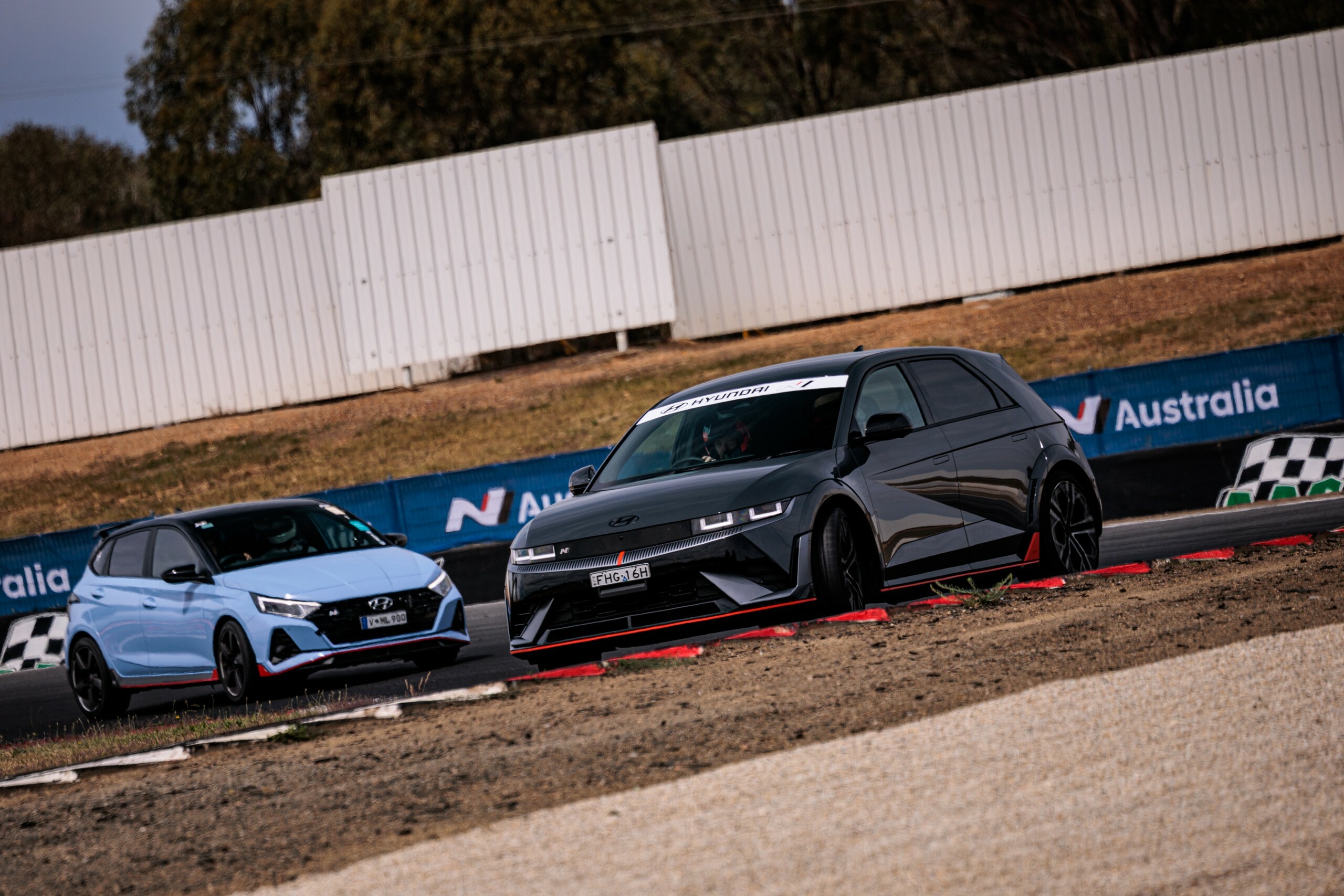
Of course, it was the Hyundais that were the real stars of the day. Hyundai Australia brought along a slew of press cars for journalists to test out. I managed to snag some seat time in each of the company’s current models, including the i20 N, i30 N hatch, i30 N Sedan, and the potent Ioniq 5 N.

Winton Raceway is quite a tight, short track, perfect for hot hatches like those from Hyundai rather than high-horsepower monsters. The pint-sized i20 N proved to be the perfect companion for the circuit.

While the i20 N only has a 1.6-liter turbocharged four-cylinder and is down more than 50 kW (67 hp) over the i30 N, it had no issue sticking with its bigger brothers on the circuit. It feels incredibly nimble and responsive, particularly around the circuit’s sweeping bends and tighter corners, often lifting one of its rear wheels as the front tires stick mercilessly to the track.

First Drive: 2026 Dodge Charger Sixpack Sounds Off, But Drives Better Than You Think

As standard, the i20 N comes with Pirelli P Zero NH tires, and they perform brilliantly on the track. As the day progressed, they did start to lose some grip, but importantly, they remained predictable despite the wear. The only issue I encountered was difficulties downshifting from 3rd to 2nd with the auto-rev match function enabled, something I also experienced at the N Festival back in 2022.

Extra Power, Extra Thrills

 I Crashed Hyundai’s Massive N Festival In My French Hot Hatch, And It Was Glorious

For those seeking superb on-track handling, combined with on-road comfort, and great straight-line speed, the i30 N hatch and i30 N Sedan remain among the best options on the market. While they may share a name, the i30 N Sedan has a longer wheelbase than the hatch and is based on a different chassis. In most of the world, it’s known as the Elantra.

Review: I Flew To Germany To Conquer The Nurburgring And It Conquered Me Instead

In a straight line, the i30 N hatch is a little sprightlier. While both cars have the same 2.0-liter turbocharged four-cylinder and are advertised with the same 206 kW (276 hp) and 392 Nm (289 lb-ft), the hatch’s boost pressure peaks at 17 psi, whereas it usually sits around 14 psi in the Sedan. This is because the sedan has Hyundai’s controversial ‘Octane Learning Mode’.

 I Crashed Hyundai’s Massive N Festival In My French Hot Hatch, And It Was Glorious

To enable the full 17 psi, you’ll have to either drive in 8th gear between 109-159 km/h (68 -99 mph) for 5 minutes or more, or drive for 5 minutes or more in 44th or 5th gear at 40-70% throttle between 40-120 km/h (25 -75 mph). Obviously, this isn’t achievable on a track. Many owners I spoke to have had their cars tuned to unlock full boost without having to do this procedure.

The duo also feels quite different through the turns. Both stick extraordinarily well, providing enough grip to warp your face. However, the hatch is noticeably stiffer and feels a little lighter. By comparison, the i30 N Sedan feels more stable, owing to the longer wheelbase, and is easier to find the limits in. On the track, we prefer the hatch, but on the road, it’s the Sedan that stands out.

What the Ioniq 5 N Does Best

We also had the opportunity to do a few hot laps in Hyundai’s potent Ioniq 5 N. This is the performance car that has redefined what we thought was possible for an EV. Not only is it extraordinarily quick, but it’s also loads of fun to drive. It’s no surprise that Porsche and Lamborghini have benchmarked their EVs against it.

 I Crashed Hyundai’s Massive N Festival In My French Hot Hatch, And It Was Glorious

Obviously, the dual-motor powertrain makes the Ioniq 5 very quick in a straight line. However, because Winton’s straights are quite short, it doesn’t get much room to stretch its legs. Thankfully, it shines in other ways, particularly in its handling dynamics.

Review: The Hyundai Ioniq 5 N Is A Ballistic Missile That Redefines EVs

Thanks to some engineering trickery, it’s possible to shift the amount of power sent to the front and rear wheels. As such, the Ioniq 5 N can be driven effectively as a front-wheel-drive or rear-wheel-drive car. This means it is inherently more configurable and playful than Hyundai’s other N products. The downside? It’s electric, meaning it’s not so practical for track use unless a circuit has a DC fast charger.

Track Day Antics

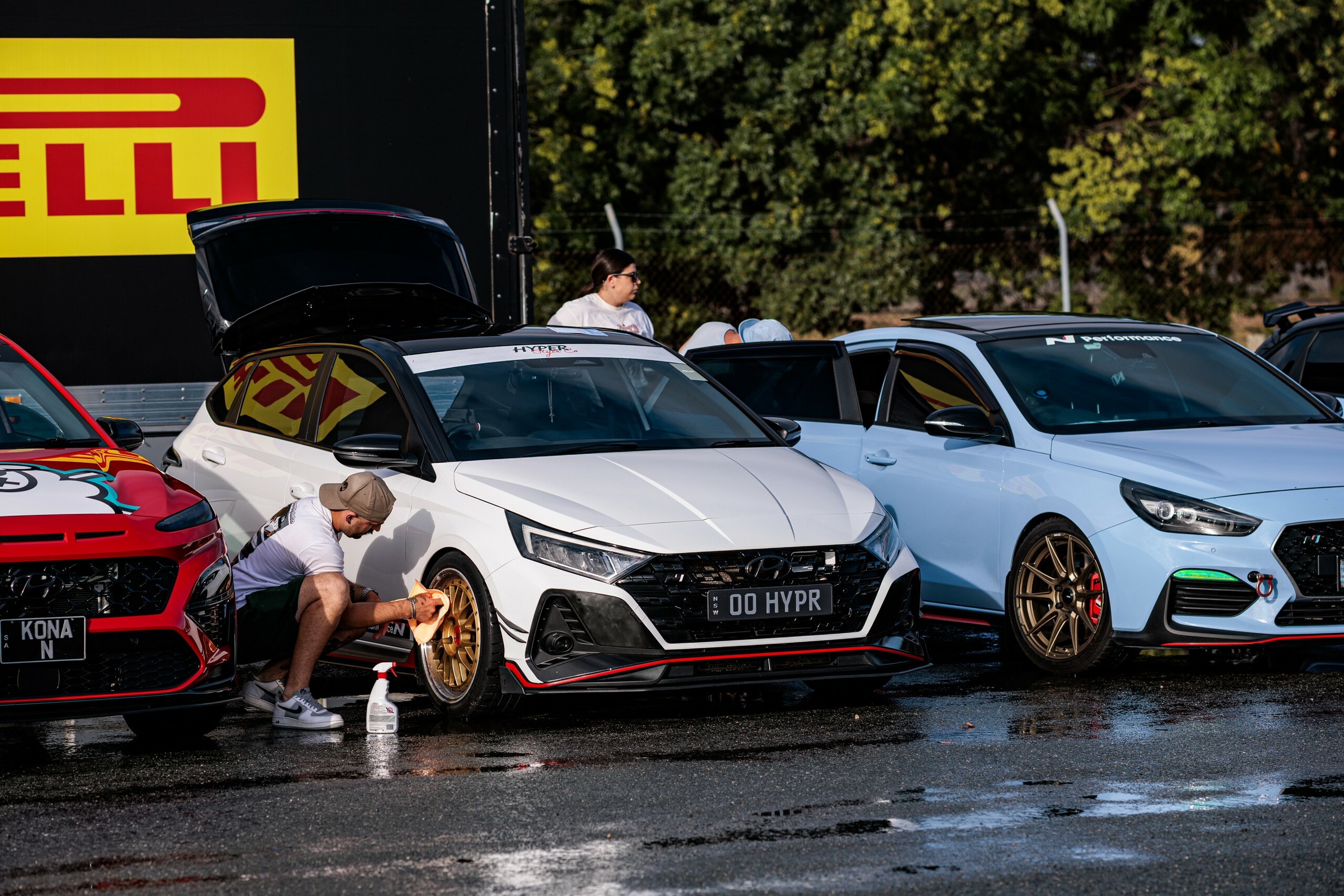
The 2025 N Festival didn’t just include dozens of track sessions. This year, owners were also able to participate in a series of head-to-head rolling races to see who owns the quicker car in a straight line. There was also a Show’N Shine and an organized drive through some of the circuit’s neighboring country roads.

Australia’s N Festival has established itself as one of the best events on Australia’s track day calendar, and it’s easy to see why. It’s affordable, well organized, and welcoming. I’m sure it convinced some non-N owners to call up their local Hyundai dealership and place an order. As for me, used Ns remain out of my price range, so I’ll be keeping my French hot hatch.

\\\\\\\\\\\\\\\\\\\\\\\\\\\\\\\\\\\\\\\\\\\\\\\\\\\\\\\\\\\\\\\\\\\\\\\\\\\\\\\\\\\\\\\\\\\\\\\\\\\\\\\\\\\\\\\\\\\\\\\\\\\\\\\\\\\\\\\\\\\\\\\\\\\\\\\\\\\\\\\\\\\\\\\\\\\\\\\\\\\\\\\\\\\\\\\\\\

Hyundai N Australia

Lucid Owner Gets A $50,000 Lesson On Depreciation

  • Lucid Air Grand Touring originally retailed for $124,950 new.
  • Seller drove 6,500 miles before listing it online this month.
  • Buyer avoided steep depreciation, gaining a flagship EV deal.

While Lucid has carved out a niche in the premium EV market with impressive engineering and design, even the most advanced models aren’t immune to real-world ownership realities. Software hiccups aside, the Lucid Air remains a strong contender, but like many luxury electric vehicles, it faces steep depreciation, a fact this particular seller encountered firsthand.

Read: Spilled Water Bricks Lucid, Repair Costs As Much As A Used Corolla

This 2025 Air, finished in Fathom Blue Metallic, is the Grand Touring variant. It sits near the top of Lucid’s lineup, just below the range-topping Air Sapphire, which plays in near-hypercar territory when it comes to straight-line performance.

A look at the window sticker shows a base price of $110,900 before destination charges. This example came well-optioned, including the $5,500 Tahoe extended leather package, Lucid’s $2,500 DreamDrive Pro driver assistance system, and $3,750 power front seats equipped with massage and ventilation.

What’s The Price Of Premium?

 Lucid Owner Gets A $50,000 Lesson On Depreciation

With these extras and a $1,500 delivery fee, the total MSRP climbed to $124,950 before taxes. The seller acquired the car less than a year ago, making the next part of the story particularly painful.

According to the Cars & Bids listing, the original owner bought it in February of last year and drove it just 6,500 miles (10,500 km) before putting it up for sale a few days ago. Despite being in near-new condition, it sold for only $75,500. That’s a brutal financial loss of $49,450. And that’s before taxes and other expenses like registration fees. It’s a sharp reminder of how rapidly luxury EVs can shed value.

\\\\\\\\\\\\\\\\

Cars & Bids

The good news, if you’re the buyer, is that much of that initial depreciation has likely already happened. Although the car will continue to lose value over time, as most do, the worst of the drop may be behind it. Some 2022 Air Grand Touring models are now changing hands for prices in the mid-$50,000 range, so this one may continue along that curve.

Read: Popular YouTuber Got Critical With Lucid, And Things Didn’t End With A Shrug

Still, for a long-term owner, there’s reason to feel good about the purchase. They’ve essentially sidestepped nearly $50,000 in immediate depreciation, while gaining access to one of the most refined and tech-laden luxury sedans available.

The Air Sapphire has attracted most of the buzz over the past couple of years, but the Grand Touring remains extraordinarily impressive. It has a pair of electric motors with a combined 819 hp, allowing it to hit 60 mph (96 km/h) in around 3 seconds. In addition, it has an exceptional driving range of 512 miles (824 km), among the highest of any current EV in the market.

\\\\\\\\\\\\\

Cars & Bids

❌
❌