❌

Reading view

There are new articles available, click to refresh the page.

The Avatr 07 May Be The Best Case For Chinese Cars Yet | Review
PROS ›› The best self-parking tech we’ve experienced, solid build quality, looks unique,
CONS ›› Firm ride, tech overload, model tested was not quick

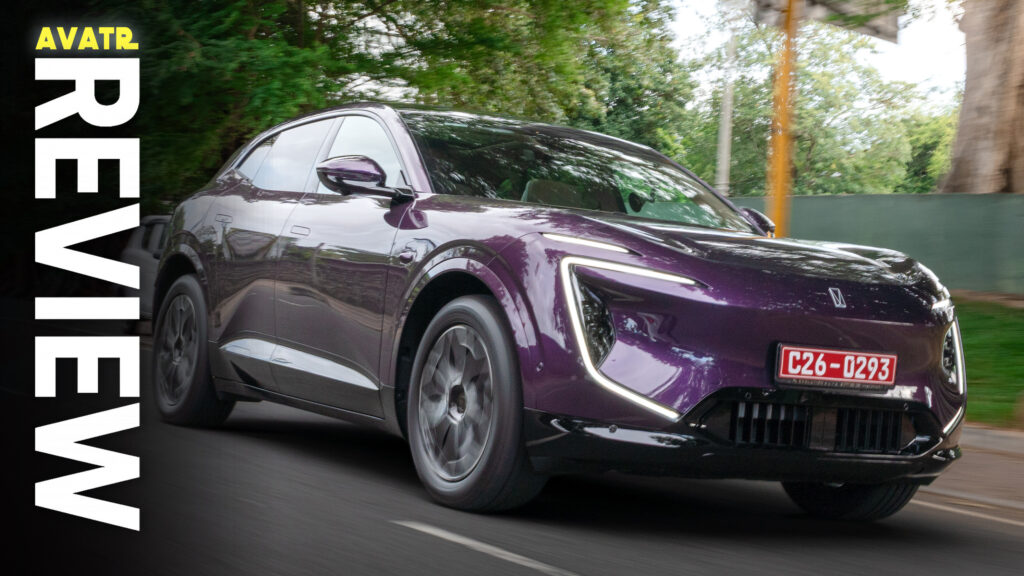
Avatr is likely a brand you’ve never heard of. And yet, it’s the kind of car company that is likely to shake you out of your slumber when you realize just how quickly China is developing its top-flight tech powerhouses. The Avatr 07 is another feather in the company’s cap. And while the 11 that we tested last year had its drawbacks, the 07 — which should be the 11’s smaller brother — outclasses it in many respects. It does so, seemingly by virtue of just, well, being newer.

But that’s the kind of progress a brand needs to display in what is a ruthless Chinese home market. Model cycles are short, and designers and engineers are constantly pushing to out-niche the competition with weird and wonderful features that can differentiate their products in what has to be the most crowded market for cars.

Review: The Avatr 11 Blends European Style And Chinese Tech But Still Comes With A Catch

That said, the Avatr 07 doesn’t attempt to win you over with gimmicks, although it does have a few. As a refresher, Avatr is a joint venture between state-owned automaker Changan, tech giant Huawei, and China’s largest battery manufacturer, CATL. Unlike the many copycats, who invariably deploy some kind of take on a Defender or Bronco in their lineup, Avatr has decided to take design seriously.

QUICK FACTS
› Model:2026 Avatr 07
› Dimensions:4,825 mm (189.9 inches) Length

1,980 mm (77.9 inches) Width

1,605 mm (63.2 inches) Height

2,940 mm (115.7 in) Wheelbase
› Curb Weight:2,225 kg / 4,905 lbs
› Powertrain:Rear-wheel drive with 82.16 kWh battery
› Output:99 kW (132 hp / 134 PS) and 365 Nm (273 lb-ft) of torque
› Transmission:Single Speed
› Performance:0-100 kmh (62 mph) in 13 sec, 180 kmh (112 mph) top speed
› Range:575 km / 357 miles (NEDC)
› On Sale:Now
SWIPE

A Closer Look At That Exterior

Avatr has invested in a design studio in Munich and has reportedly attracted top talent to their stable. Their chief designer is Nader Faghihzadeh. He’s the guy who penned the BMW i8. And the fact that the 07 genuinely isn’t a mish-mash of existing rival styling cues earns the 07 some brownie points in my book.

However, it’s not quite as imposing in person as the larger 11 was, even if it is just a smidgen smaller (4,825 mm / 190 inches vs 4,880 mm / 192.1 inches long). The styling is very much a continuation of the precedent set by the 11, but with a lower waistline, and an overall more rounded hatchback rear, vaguely reminiscent of the U.S. Honda HR-V in outline alone. Or, to put it another way, it’s the 11’s CliffsNotes, toned down for a broader audience. Kill Bill without so much of the Kill, if you will.

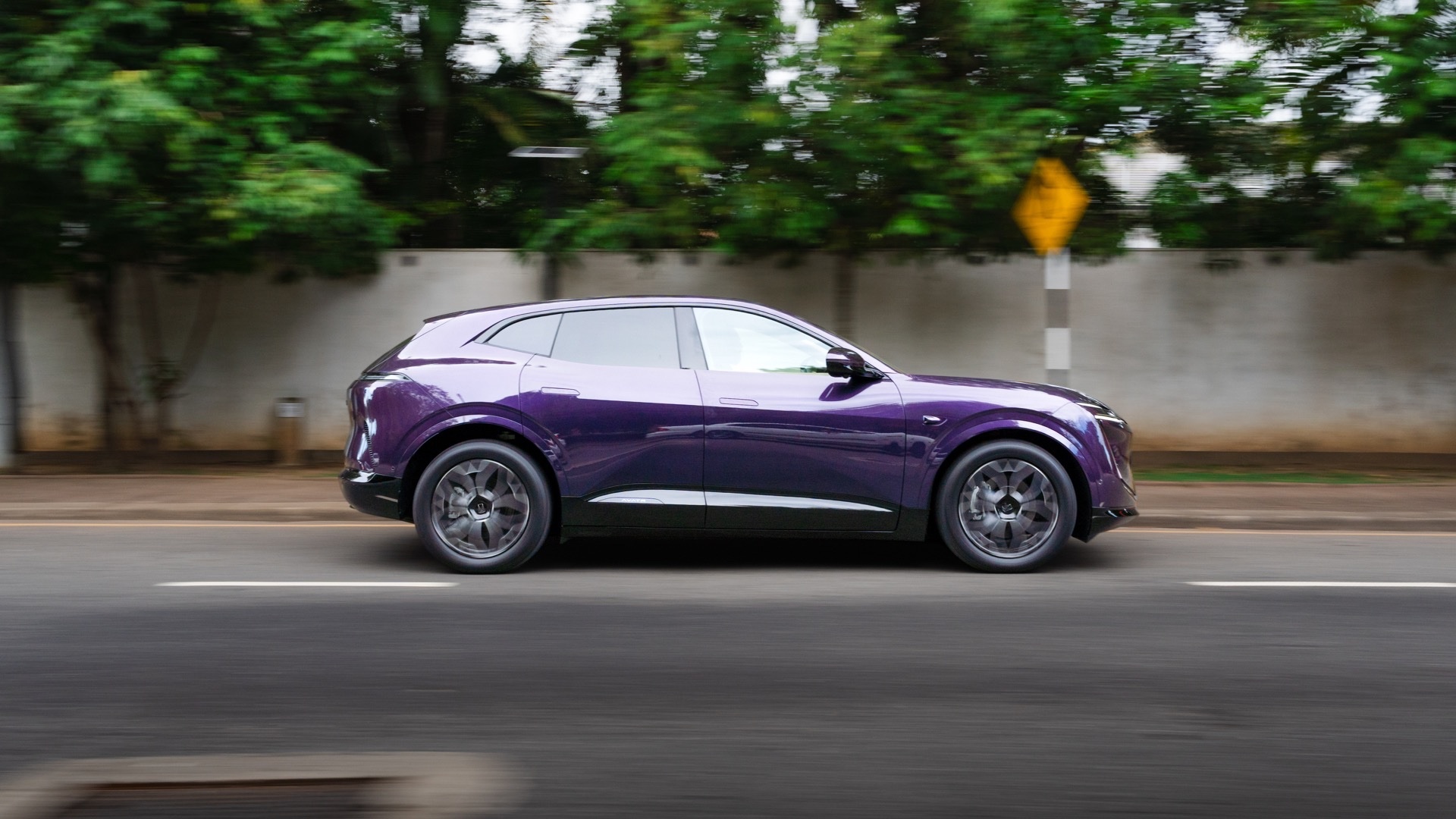
But that’s okay, because the 07 is meant to attract a larger audience to the brand, while staying somewhat stylish. The overall design, with its large arches and differently surfaced panels down the side, do make the car look a bit underwheeled in the spec we tested, with the predominantly black 20-inch wheels not standing out against the purple bodywork.

It All Comes Together Inside
 The Avatr 07 May Be The Best Case For Chinese Cars Yet | Review
Shervin Meerwald/Carscoops

Step into the Avatr 07 and its hard not to be impressed by the sheer quality of it all. We’re talking Nappa leather seats, real Dinamica microfiber suede on the roof, and an overall air of quality that will genuinely have the German big three scratching their heads. There are no shiny or creaky plastics (we can’t say the same about some Mercedes of late), and there’s an attention to detail that showcases that thought has been put into the design − even the lower B-pillar trim panel is wrapped in leather.

Ahead of the driver, at the base of the windscreen, is a cabin-wide thin strip of screen. This 35.4-inch display incorporates the use of widgets to add an extra layer of seriously useful customisation to the experience. Here you can select a number of things to display, including tire pressure, temperatures, power, and multimedia. In a world of pointlessly expanding screen real estate, it was more than refreshing to be able to glance at some of those excessive pixels and have it tell you something relevant to your drive.

The driver and passenger seats both feature heating, ventilation, and massage functionality, and a zero gravity mode (fancy word for saying the seat goes into a theatre-style recline mode) can come in handy when recharging the 07 at a public charger. The relaxation features are coupled with several scenario modes, which you can select through the display. Want to experience a pretty poor recreation of a roaring fireplace? Select the mode, and the screen will flicker a warm light, the heating will turn on, and you’ll hear the faint crackle of a wood fire piped through the audio. Of more use, though, is the Tesla-esque pet mode, which allows you to keep the cabin at a constant temperature, with a prominent message letting passersby know your furry friend is comfortable.

Spend a little more time inside though, and some issues start to creep to the surface. The AC vents, for instance, are designed to be invisible. It’s a nice concept that grabs the minimalism-to-the-max concept by the horns, but in practice it’s impractical. Want to change the direction of the airflow, and instead of quickly making a minor adjustment to a vent, you have to delve into a menu via the touchscreen and drag to where you want the airflow blowing.

\\\\\\\\

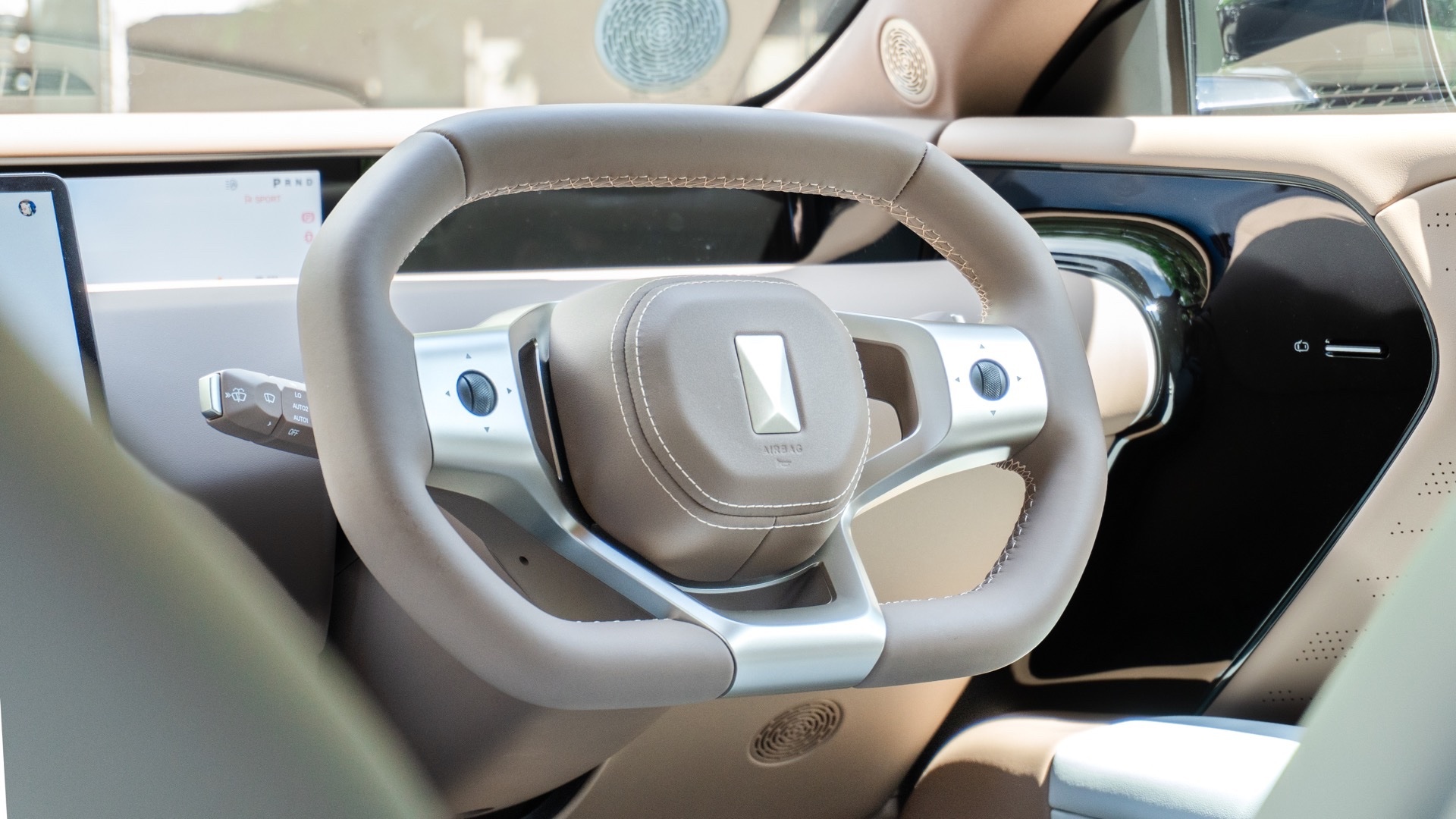
There’s the steering wheel, too. Arguably inspired by Tesla, the yoke is just not a great experience. F1 cars have them because your steering inputs are limited to a small range of motion. But in real road cars, as soon as you need to park (more on that later) and you have to do several lock-to-lock maneuvers, it just becomes a chore. Shuffling the wheel is impossible, and instead you have to half-palm it.

Another frustration is that the steering wheel and mirror adjustments need to be accessed through the screen too. We understand that this isn’t the first car, and it won’t be the last, to hide everything behind a screen, but for those of us who like to make minor corrections to our seating position, having an extra step to navigate is just an annoyance. And if we’re nitpicking, replacing the interior door pulls with push buttons seems like an exercise in frivolity.

Of course, none of that will be of concern if you opt to spend your time in the back. Now, for the Chinese market, rear space is a serious consideration, so much so that there are many long-wheelbase versions of various cars over there. There’s even a 07L, confined to China. But even in the standard 07, the legroom is seriously impressive. If the front-seat occupants are six-footers, there’s more than enough space to stretch out in the rear. If you require further legroom, then flip down the armrest, and you’ll find a set of touch-sensitive controls which allow you to move the front passenger seat forward. You can also electrically recline each outboard rear seat back, control the seat heating (but no ventilation), and open or close the moonroof sunshade, which spans the entire length of the passenger compartment.

The rear row can be folded to expand the 735-liter trunk space to 1,645 liters. There’s also a 90-liter frunk up front, providing another useful way of storing things.

Behind The Yoke
 The Avatr 07 May Be The Best Case For Chinese Cars Yet | Review

Our tested car was supplied in Sri Lanka, which receives a much smaller motor variant. This is due to punitive taxes on cars, similar to Singapore. So, what you get is a rear-mounted 99kW motor, which works out to 130 hp in old money. Despite the smaller motor, the cost of the car is still an astronomical $107,000 (LKR 35,500,000) in Sri Lanka. For perspective, in its home market of China, the 305 kW RWD version of the 07 retails for a much more palatable $34,300 (¥229,900), which makes it Toyota RAV4 money.

There’s also a tri-motor all-wheel-drive version with an insane 712 kW and 996 Nm of torque that’ll do the 0-62 mph (0-100 km/h) sprint in just 3.7 seconds. The price for that? It works out to around $41,755 (¥279,900 in China). No wonder the industry is sounding the alarm over their cars.

But back to our test unit. That limited motor output and the rather pudgy curb weight of 2,360 kg means that our Avatr 07 is not fast. Correction: It’s downright slow. It gets to 62 mph (100 km/h) in 13 seconds. That’s slower than the Mitsubishi Mirage, which, up until it was retired, held the unenviable title of the slowest-accelerating car on sale in the US, at 12.8 seconds.

\\\\\\\

The weird thing is though, that behind the wheel of the 07. It doesn’t feel as slow as it is. Whereas that 1.2-liter Mirage had access to just 74 lb-ft (100 Nm) of torque, the Avatr 07 still boasts an impressive 270 lb-ft (365 Nm). In practice, it means this heavy EV doesn’t run out of grunt and even manages to feel unstressed. And of course, being an EV, having access to all of that torque at once helps with the sensation of progress too, even if it’s just that: a sensation.

One sensation you’ll find hard to shake, though, is the ride. With an interior as luxuriously appointed as this, you’d expect the Avatr’s ride to be as cushioned as possible. Not so. The Avatr 07 handles well, thanks to its double wishbone suspension, but the lack of body roll quickly translates into an unsettling approach to potholes and smaller road imperfections.

Again, in other markets, the 07 is offered with the option of air suspension and continuous damping control. Not so here, and perhaps the engineers spent significantly less time on the coil-sprung version of the car. And while I wouldn’t call the 07 uncomfortable per se, the firm experience is less in line with the high expectations that the rest of the car’s build and tech have set.

The Party Trick

The real party piece with the Avatr 07, though, is its suite of connected systems. Unlike Tesla, Avatr chooses not to rely solely on cameras for its semi-autonomous tech and employs millimeter-wave radar as well. Combined with Huawei’s advanced processors and related tech, the 07 manages to impress on multiple safety fronts.

What the 07 can’t do in this region is self-drive like FSD can. It can, however, self-park. Now auto-parking in itself isn’t a massive boon. But the car’s walk-away parking is. Here, you’re given the option of parking the car centered within a space, or to the left or right side — ideal if you’re parking next to a wall for example and you could do with the extra room to squeeze out the door. You also get walk-away parking, which allows you to exit the car and let it park itself completely unsupervised. Similarly, you can summon it from said parking space, via the connected app.

See Also: China Wants To Build Cars In America. Should We Let Them In?

More than the concepts themselves, there’s a marked improvement in these operations from the now 4-year-old 11. When tested around pedestrians and busy traffic, the 07 was able to handle itself without freaking out at all, not needing the same kind of wide berth that its larger sibling did.

The Verdict

While it’s not perfect, the Avatr 07 stands as proof of just how quickly the tides are changing. The 11 we drove last year, already a car that was midway through its lifecycle at the time, was an impressive statement. The 07, even if it isn’t as flashy, manages to present itself as an almopst generational shift. There are no departures in design, materials, or even the basics behind the technology.

However, the experience of everything else — the design of the interior, the hushed ride, and the focus on premium materials — they all come together to paint the picture of a product that is very mature. It’s no longer experimental, like the 11, with its waterfall-inspired center speaker, electric doors, and gimmicky passenger screen, was. The 07 is a genuinely compelling car because it’s an excellent package.

I suspect not everyone will be happy about that. But the truth is, China’s home market is the most cutthroat we’ve seen. Manufacturers have to move the needle if they’re to survive. The benefit is we get to see that real-time shift. And yet something tells me, the best is still yet to come.
\\\\\\\\\\\\\\\\\

Alfa Romeo Wants To Take On Tinder With The Junior Elettrica, But Can You Think Of A Better Way?

  • Alfa Romeo carried out a study that suggests people are tired of dating apps.
  • The Italian carmaker has teamed up with a relationship coach to create their own guide to dating.
  • Alfa is pitching the Junior Elettrica as the perfect companion for a first date.

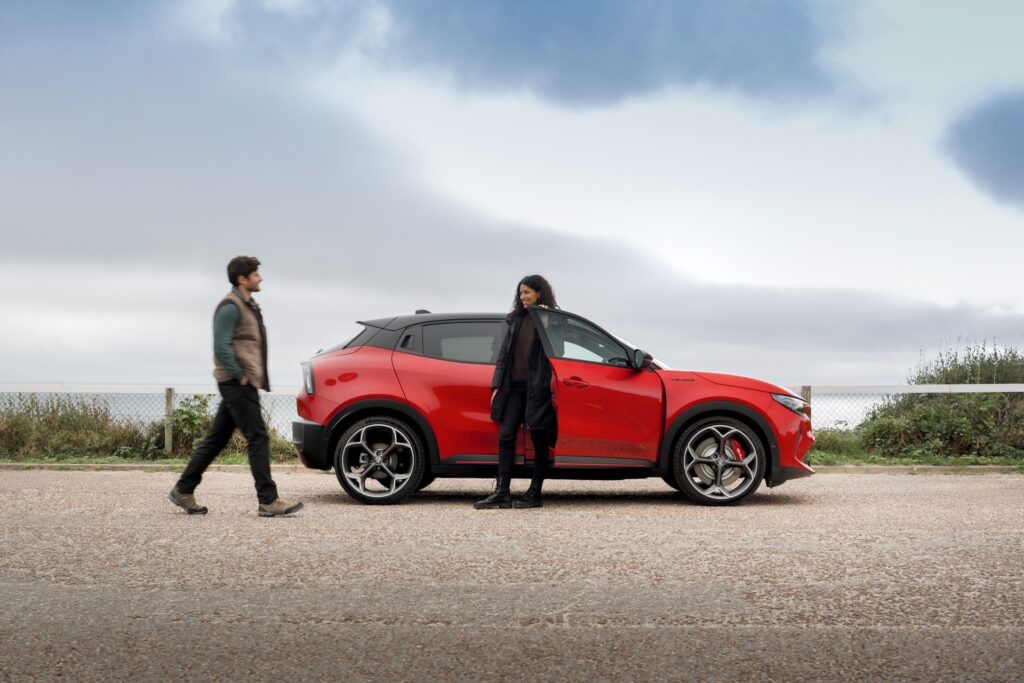
In a bizarre turn of events, rather than focusing on developing replacements for the aging Stelvio and Giulia, it appears the storied Italian automaker is instead trying its hand at the dating scene. The pitch? That the Junior Elettrica is the perfect segue to a romantic date.

According to its research, which comprises a 1,000-member sample size of people actively dating in the U.K., 60% of daters are tired of their dating apps. The solution? Go on a drive. Again, based on Alfa’s own research, 44% would prefer to go on a drive or a day trip versus the traditional dinner and drinks.

Read: Alfa Romeo’s Junior Has Some Appeal, But It’s Not The Smart Choice | Review

Fear not, singles. Because Alfa Romeo has partnered with Kate Mansfield, a dating and relationship coach, to craft the “Love Thy Romeo” guide to dating in real life, and not from behind a screen. Mansfield is apparently outstanding in her field, and specializes in helping women move from those pesky apps to a real-life connection.

It’s an odd development for a car company, sure. But then, we’ve seen weirder, and we suppose Alfa Romeos are often associated with passion, right?

A Ploy For The Junior

 Alfa Romeo Wants To Take On Tinder With The Junior Elettrica, But Can You Think Of A Better Way?

Now, obviously, we’re not really suggesting that Alfa has diverted its R&D budget away from replacements (even if the lineup is beginning to look a bit aged a la Chrysler) into creating a dating guide. What’s actually happened is it spent some of its marketing budget on something a bit different, if a bit odd.

But the way the Junior is being shoehorned in as the perfect road-trip companion is what makes it especially entertaining, with Jules Tilstone, Managing Director, Alfa Romeo UK, saying: “Junior Elettrica is the perfect date companion for a romantic escape, combining performance with passion and style, rooted in its Italian DNA.”

We’re not convinced, and it’s got us thinking: what might be the perfect car for that long, romantic road trip? A few suggestions we’ve come up with: perhaps a classic R107-generation Mercedes-Benz SL500, with that smooth, torquey V8 and the wind in your hair. Or, if you wanted to keep the Italian passion front and center, how about the Pininfarina-designed Fiat 124 spider. New or old, we’d probably take either of these over the electric Alfa.

Let us know what kind of vehicle you’d choose for a first-date getaway.

\\\\\

Russia’s EV Market Share Is Now Higher Than The U.S. Thanks To Fuel Shortages

  • Demand for EVs in Russia has driven up prices and depleted inventory.
  • It comes as fuel stocks run low in the country after Ukrainian attacks, and lower-grade fuel has caused issues.
  • Russia’s EV demand has come suddenly, and charging infrastructure is still lacking.

Russian car buyers are driving up demand for EVs as Ukrainian attacks on fuel facilities increase. It’s a jarring adoption process for many, as cheap fuel has helped stave off the development of electric vehicle charging infrastructure, leading to a bizarre cyclical effect for some drivers who have switched a fuel queue for a charger queue.

The number of new EVs on Russian roads has jumped this year. In 2025, between January and August, the number of electric and hybrid cars sold amounted to 43,000. Figures from the Russian Ministry of Industry and Trade indicate that for the same period this year, that number has nearly doubled, with 83,000 electric and hybrid cars sold. EVs have jumped in popularity so much that the adoption rate is almost as high as in the U.S.

Read: Russia Is Selling Bootleg BMWs Built With Leftover Parts From $153,000

The shift towards EVs in Russia has been heavily influenced by Ukraine’s attacks on oil refineries, making both petrol and diesel scarce. Last Friday, The New York Times reported that only 46% of gas stations had stocks to sell, with just half of the stations in the capital city able to dispense petrol. In other major cities, that figure is reported as low as just 27%.

The Russian government has reacted to the mounting queues for gas by allowing lower-quality gasoline and diesel to be sold in the market. However, the side effect of this is that some cars have reacted badly to the fuel and are breaking down. More modern machines can’t handle the lower grade of gas.

A Chicken And Egg Situation

 Russia’s EV Market Share Is Now Higher Than The U.S. Thanks To Fuel Shortages
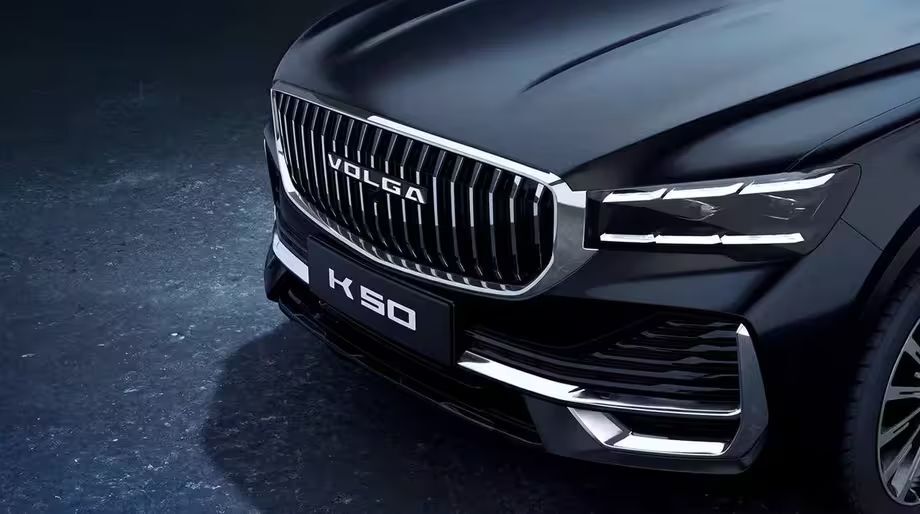
Volga K50

When most of the world’s legacy automakers exited the Russian market due to pressure from the West over Russia’s invasion of Ukraine, thousands of dealerships and local assembly plants were left bare. Capitalizing on this drastic reduction in competition and sudden upturn in manufacturing capacity, Chinese manufacturers have since swooped in to fill the void.

Sergei Tselikov, a Russian auto industry expert, told The New York Times that he quickly bought a GWM Ora 03 GT after he saw drivers having to queue for hours to get fuel. But even though he acted quickly, the sudden demand for EVs meant that the price had already increased by $2,000.

Now, many EV dealerships have been cleared out of their inventory, while second-hand EV listings are few and far between. The other resultant effect that the EV boom has had has, perhaps ironically, been an increase in wait times at public EV chargers. The very buyers who wanted to avoid waiting in long lines for fuel may now be caught in similar (albeit shorter) queues waiting to recharge.

In addition to fuel, which has been relatively plentiful and cheap up until now, another reason why Russia’s EV network is lacking is down to the geography of the country. Large cities lie many miles from each other, and the demand just wasn’t there to set up a proper charging network. The story is slightly different in the Capital, which has seen the number of EV chargers rise from 1,5000 in 2022 to 8,000 today, thanks to government incentives.

But the demand for Russian EVs will likely continue and follow similar trends around the world thanks to a different conflict: the Iran war. Sales of electric cars in more than 90 countries have risen this year and, globally, EVs are on track to account for a record 29 percent of all new car purchases in 2026.

 Russia’s EV Market Share Is Now Higher Than The U.S. Thanks To Fuel Shortages
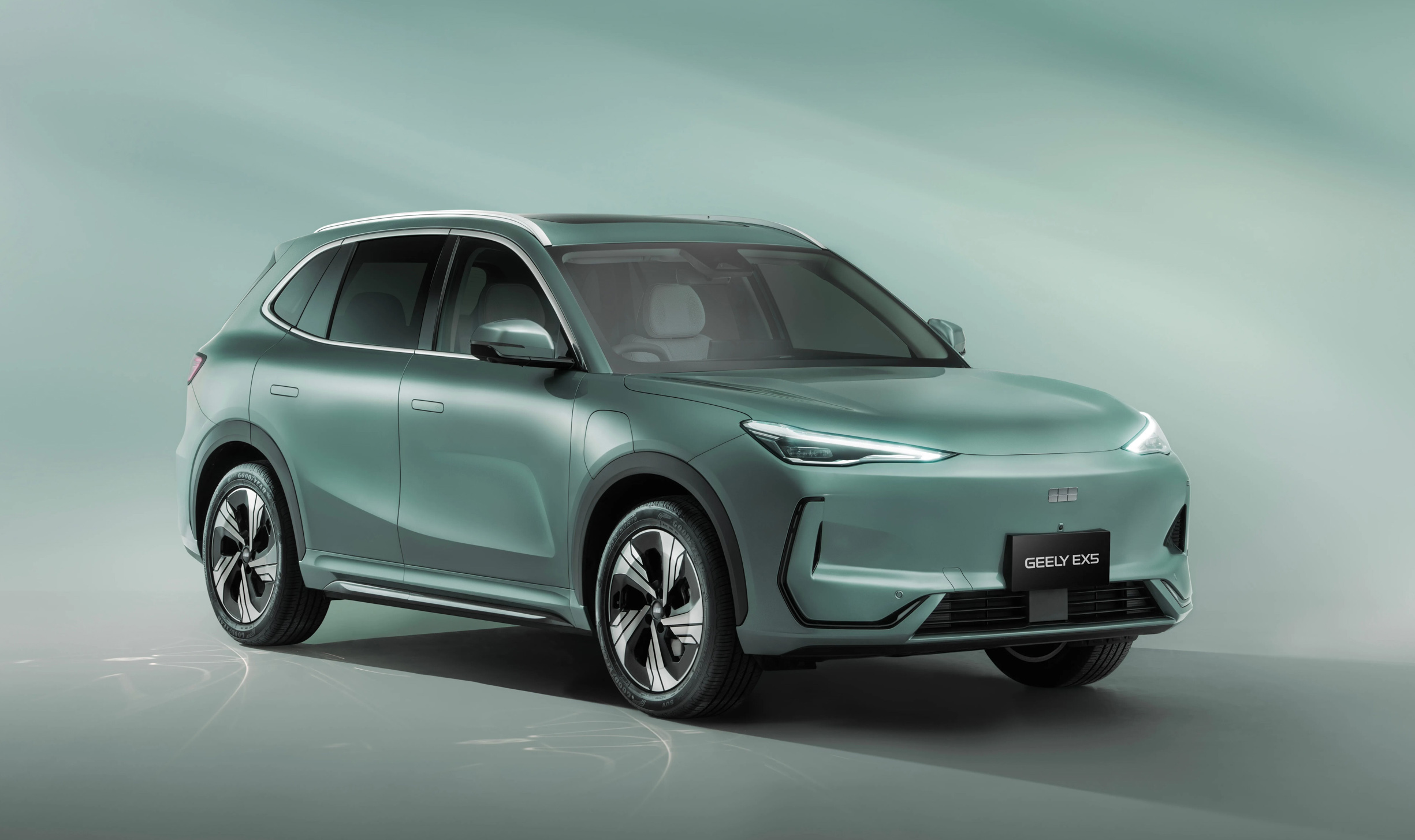
Geely EX5

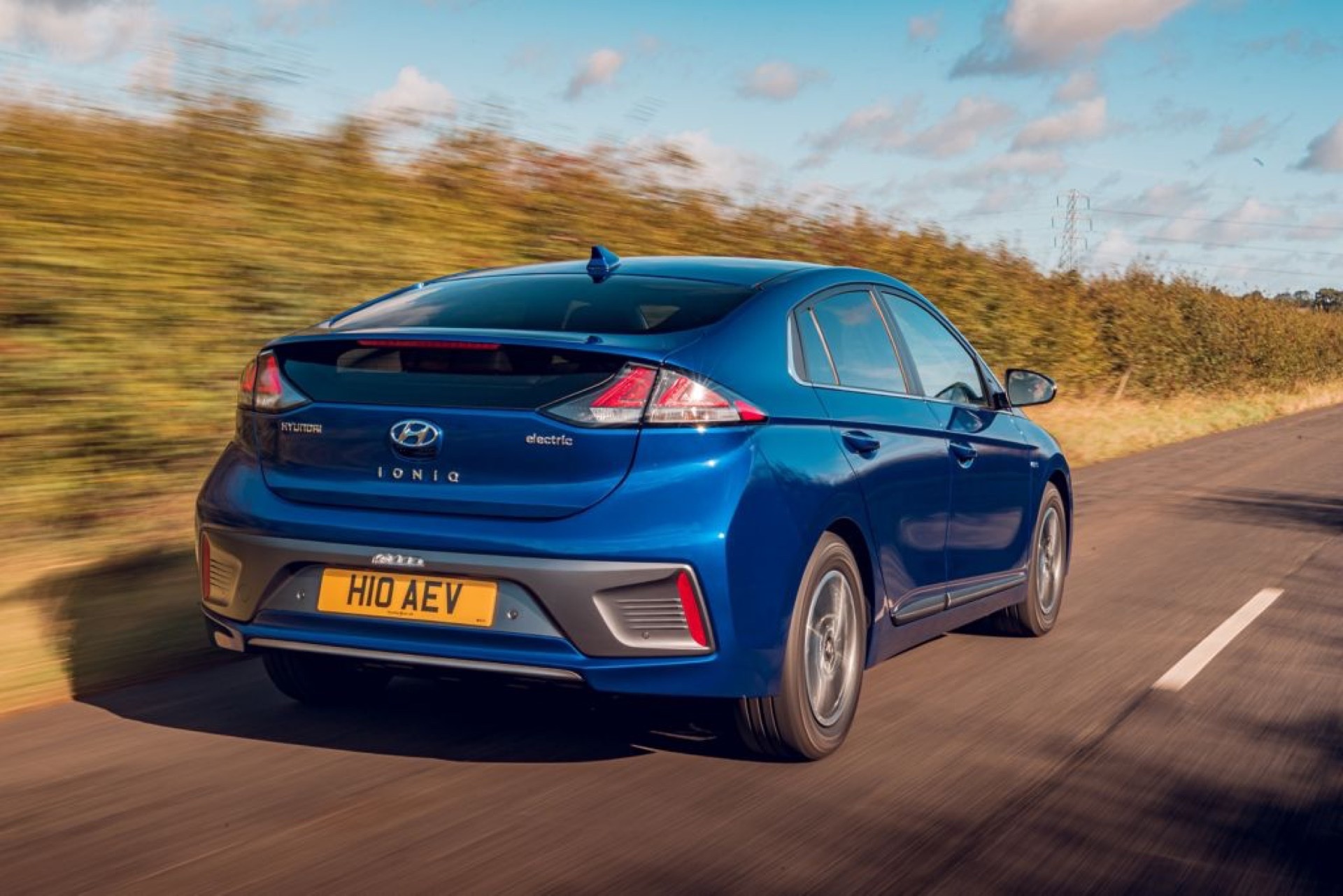
British Traffic Officers Testing Hyundai Ioniq 9 EV For Highway Duty

  • The UK’s National Highways Traffic Officers are civilians, not police.
  • The Ioniq 9s have been converted for frontline duty, with additional lights, horns, and cameras.
  • The agency is looking at further purchases this year, if the trials are successful.

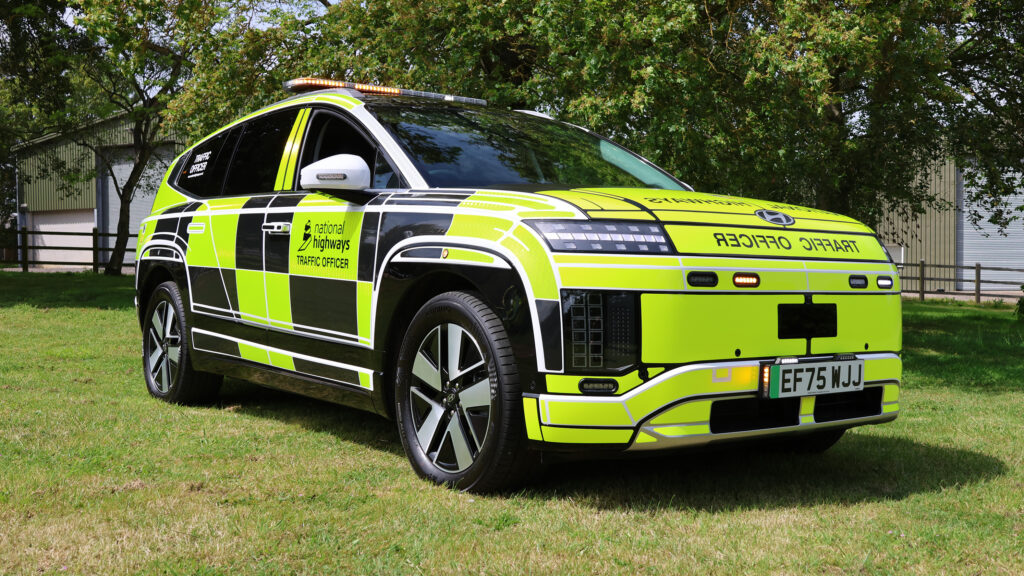
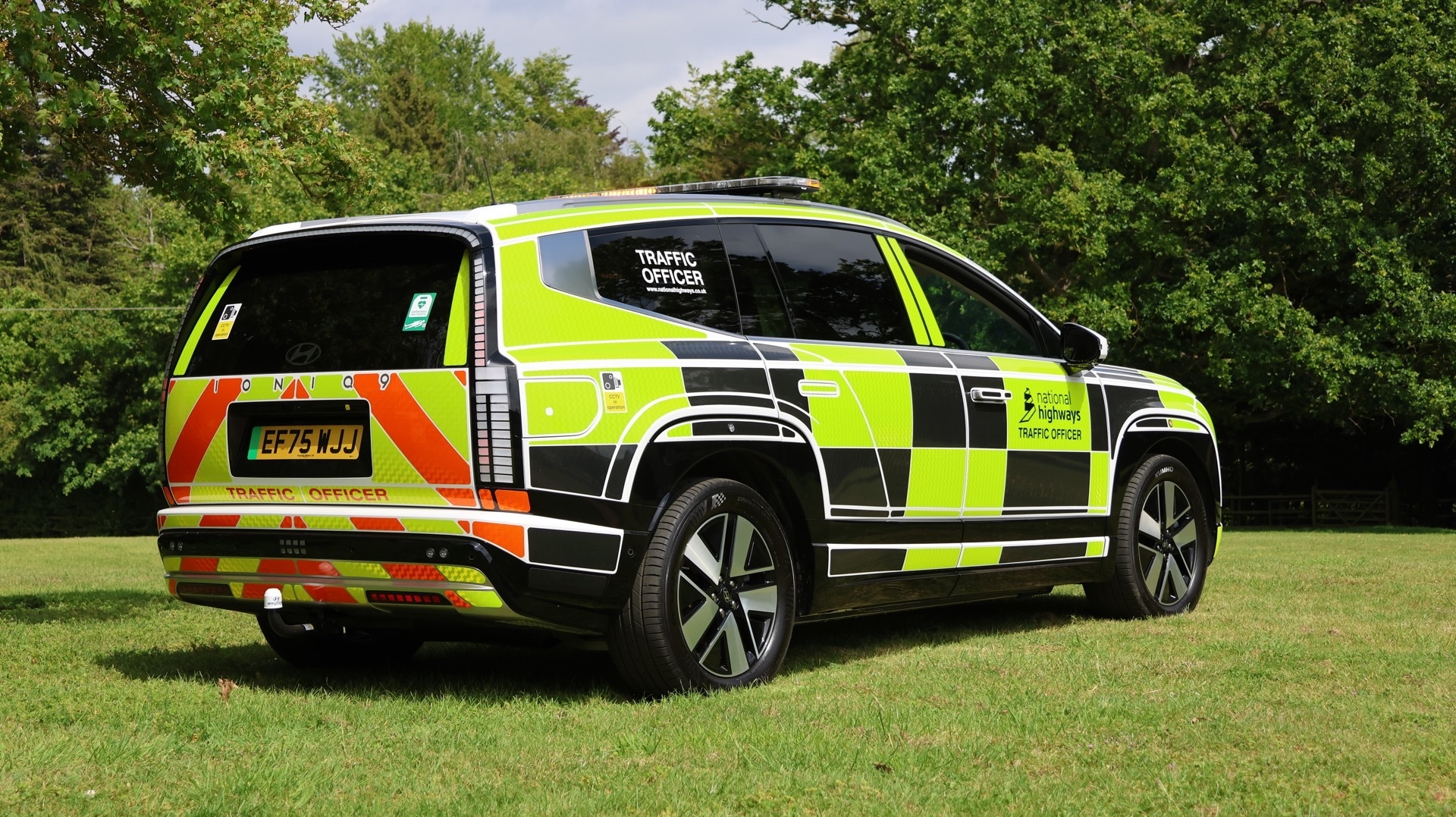
The UK’s Traffic Officers are looking for an all-new, all-electric tool for their fleet, as National Highways runs testing on the Hyundai Ioniq 9. Four examples of the full-size electric SUV have been commissioned for use by the agency and are currently deployed for evaluation on England’s motorways and major A-roads.

These seven-seaters from Hyundai have been decked out in the highway agency’s traditional high-visibility livery, with reflective decals and the all-important emergency lighting systems. In addition to the low-profile amber and red LED light bar, there are additional warning lights installed in the rear windscreen, side mirrors, front bumper, and tailgate, plus a programmable LED signboard for good measure.

Read: Fake Cop Pulls Over Tesla, Then Calls Real Cops On Himself

Add the lighting, CCTV, a 100W bullhorn, and the additional juice needed for the full suite of on-board equipment for patrolling the UK’s roads, and you’re looking at some significant power draw. Normally, that would be especially concerning for an EV. However, the folks at Richell Vehicle Conversions, who handled the conversion, thought of that and have fitted the on-test Ioniq 9s with their own dedicated 240 Ah auxiliary battery system.

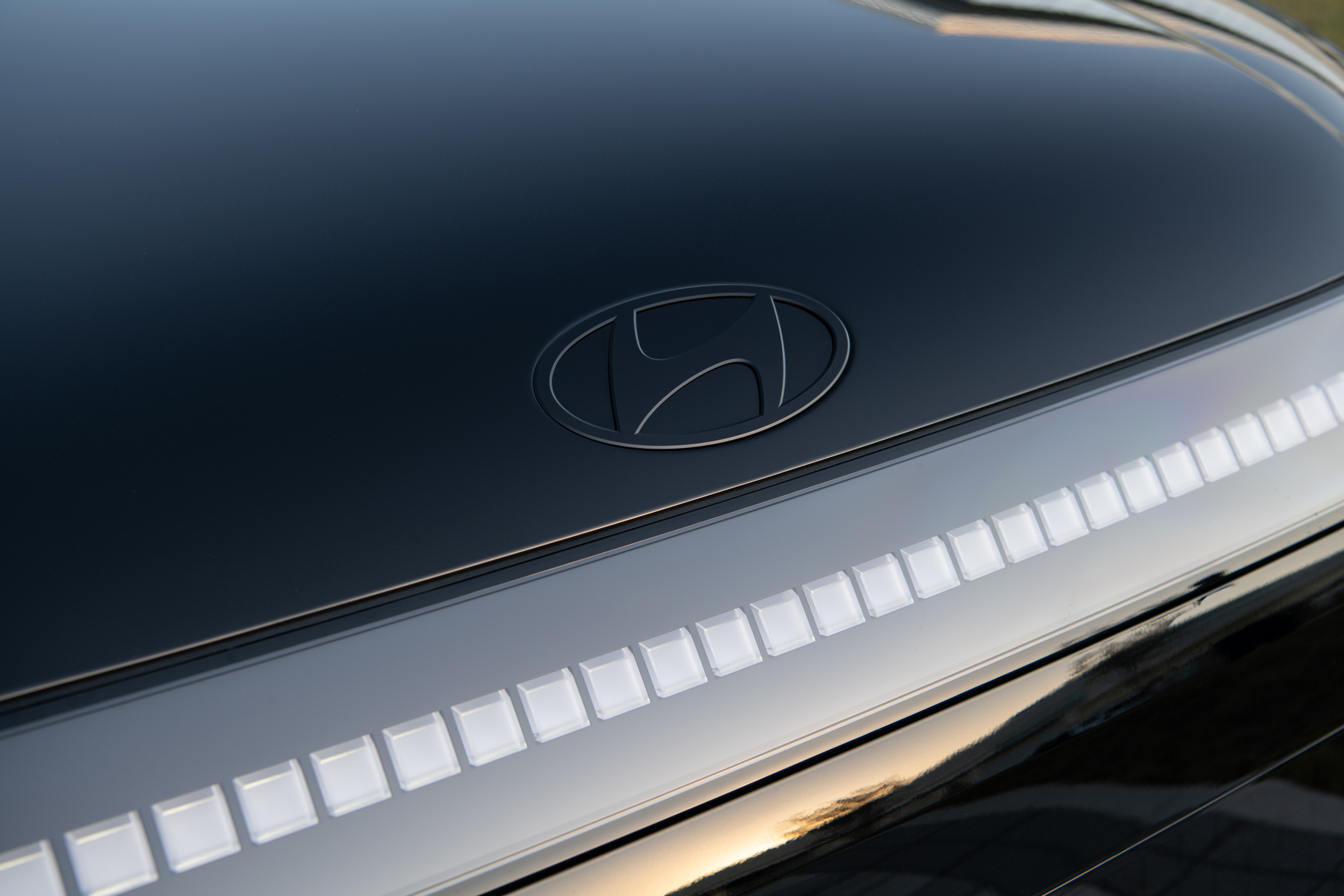
Even though the auxiliary battery system is kept separate from the 110 kWh battery that powers the rest of the car, it’s still not clear what the extra draw and added weight (plus the aerodynamic penalty of the lightbar) will do to the Ioniq 9’s 385-mile (620 km) electric range. Still, at least the Ioniq 9 comes with rapid charging thanks to its 800-volt architecture.

 British Traffic Officers Testing Hyundai Ioniq 9 EV For Highway Duty

Although they may look like police cars at a passing glance, National Highways Traffic Officers and their vehicles aren’t actually affiliated with the UK police force. However, despite the role of a traffic officer being one of a civilian, officers are allowed to stop and direct traffic, pull drivers over for safety reasons, and close lanes of a motorway. What they can’t do is arrest or charge drivers or search vehicles.

Either way, if the tests are successful, UK roadgoers may be seeing a lot more of these EVs, provided they’re up to the task. The trail is being used as the UK’s National Highways is considering further purchases during 2026.

 British Traffic Officers Testing Hyundai Ioniq 9 EV For Highway Duty

Images: Hyundai

UK Study Shows High-Mileage EVs Are More Reliable Than Combustion Cars, With One Big Caveat

  • The annual MOT tests inspect vehicles for safety, roadworthiness, and emissions.
  • The inspections look at items such as brakes and suspension, but not battery health.
  • EVs were more likely to have tire and brake defects compared to ICE cars.

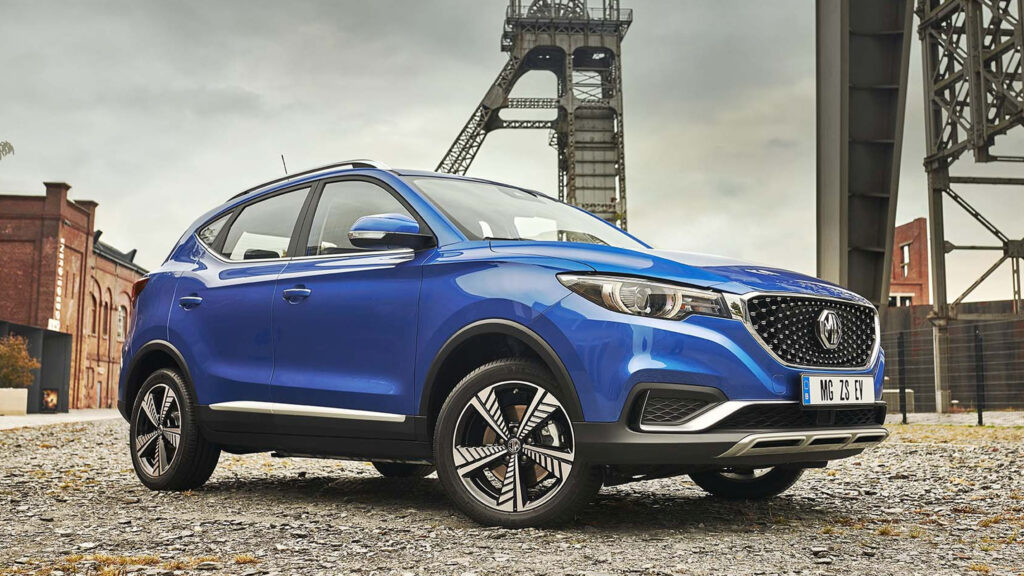
In news that is sure to either surprise or delight you, depending on where you sit on the EV vs ICE divide, a recent study from the U.K. has found that high-mileage electric cars are more reliable than their combustion counterparts. On the face of it, the evidence flies in the face of those put off by higher-mileage EVs, due to concerns over wear and tear.

However, there’s an important catch: the study was carried out using the UK’s MOT test data. While the sample size is impressive, with 47.4 million MOT tests analyzed, you do need to remember what the inspection looks out for and, importantly, what it doesn’t.

Read: The Priciest Repair On A Used EV Isn’t The Battery

An MOT is a legally required annual test for cars over three years of age registered in the U.K. It ensures a car meets minimum standards of safety and emissions. What an MOT doesn’t do is test things like an EV’s remaining battery capacity or recharging health. Similarly, for an ICE car, it doesn’t factor in engine performance or the condition of a vehicle’s transmission.

What The Data Says

 UK Study Shows High-Mileage EVs Are More Reliable Than Combustion Cars, With One Big Caveat
British Vehicle Rental and Leasing Association (BVRLA)

While it may not paint the whole picture, there is some merit to the study, suggesting that high-mileage EVs shouldn’t necessarily be skipped over when browsing the classifieds. The research, which was carried out by transport consultancy New AutoMotive and commissioned by the British Vehicle Rental and Leasing Association (BVRLA), was carried out on cars aged between three and eight years old.

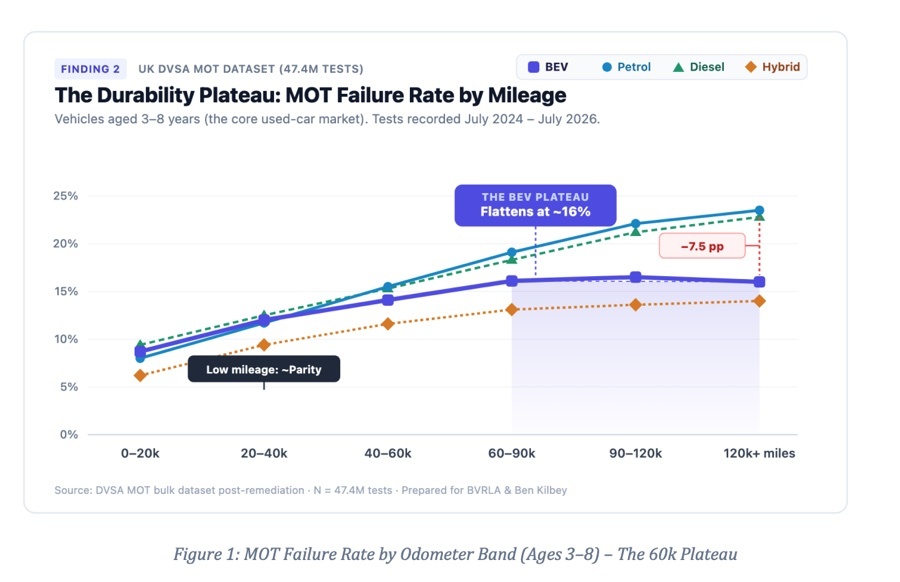
For EVs with between 90,000-120,000 miles (145,000-193,000 km), only 16.5 percent failed. Compare that with 22.1 percent of combustion-powered cars, and that’s a 25 percent lower relative rate. The gap between the two drivetrain types increases the more miles are added. For EVs that had more than 120,000 miles on the odometer, the MOT test failure rate stayed roughly constant, with 16 percent failing, while ICE vehicles had a higher failure rate of 23.5 percent.

The study also found that, at lower mileages, the difference between electric and combustion was negligible. Between 20,000-40,000 miles / 32,180-64,370 km the EV failure rate was 12 percent, with ICE cars at 11.7 percent.

The Full Picture

On the failure rate alone, it would appear that high-mileage EVs aren’t as unreliable as their gas-powered alternatives. However, as an MOT test doesn’t factor in battery health, one of the largest components of high-mileage EVs wasn’t accounted for. An MOT test still checks safety and wear items, including tires, steering, suspension, brakes, lights, and the condition of a vehicle’s structure.

However, wear items are still a big concern. The research found that EVs recorded nearly twice as many tire defects as ICE vehicles. In lower-mileage EVs, brakes were also flagged. This was likely due to the fact that EVs mainly rely on regenerative braking, meaning that the friction brake components were less likely to be used as much, and therefore more susceptible to corrosion-related wear.

See Also: After 62,000 Miles, The Healthiest EV Battery Belonged To A Kia, Not A Tesla

While the research was carried out by the independent transport consultancy New AutoMotive, it’s also perhaps prudent to note who commissioned the study. The British Vehicle Rental and Leasing Association (BVRLA) represents over 1,000 companies operating within the UK’s vehicle rental, leasing, and fleet management sectors. Many of those companies likely have fleets of high-mileage EVs ready to enter the used car market.

“The important thing about this study is that we can separate age from mileage,” said Ben Nelmes, chief executive at New AutoMotive, speaking to Fleet News. “Looking simply at the headline MOT numbers gives a misleading picture because Britain’s electric cars are much younger than its petrol and diesel fleet, while comparing cars by age alone misses the fact that EVs have typically covered considerably more miles.”

“Once we compare cars of the same age and mileage, something striking happens. At lower mileages, there is very little between petrol and electric cars, but beyond around 60,000 miles (96,560 km) the failure rate for EVs flattens while the petrol failure rate continues to rise. High mileage isn’t a proxy for poor condition in the way buyers have traditionally assumed. The data suggests the mechanical simplicity of an electric drivetrain starts to become increasingly valuable as cars accumulate miles.”

 UK Study Shows High-Mileage EVs Are More Reliable Than Combustion Cars, With One Big Caveat

Images: MG / Hyundai

China’s GAC Wants To Increase European Manufacturing As It Expands Into France

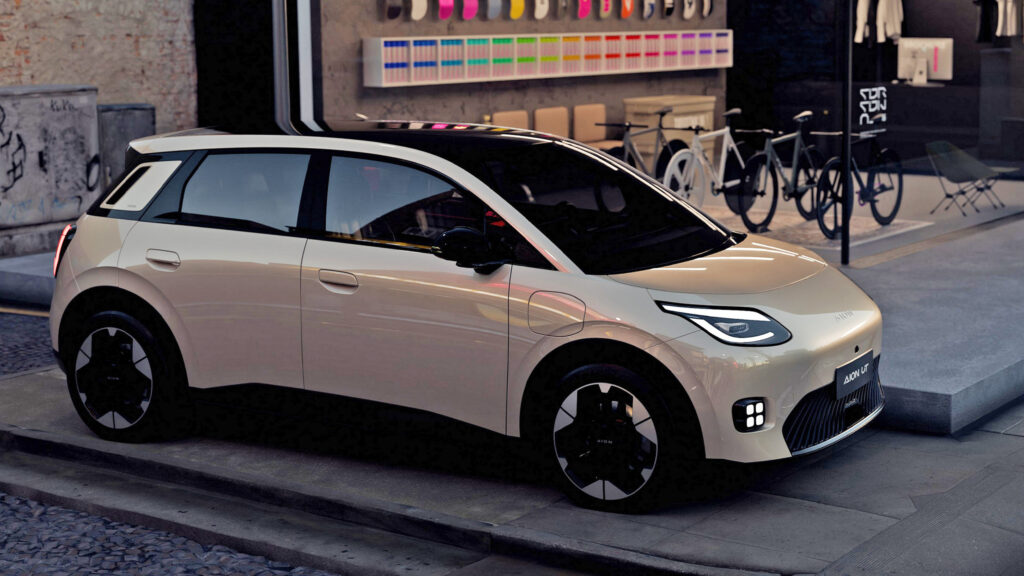
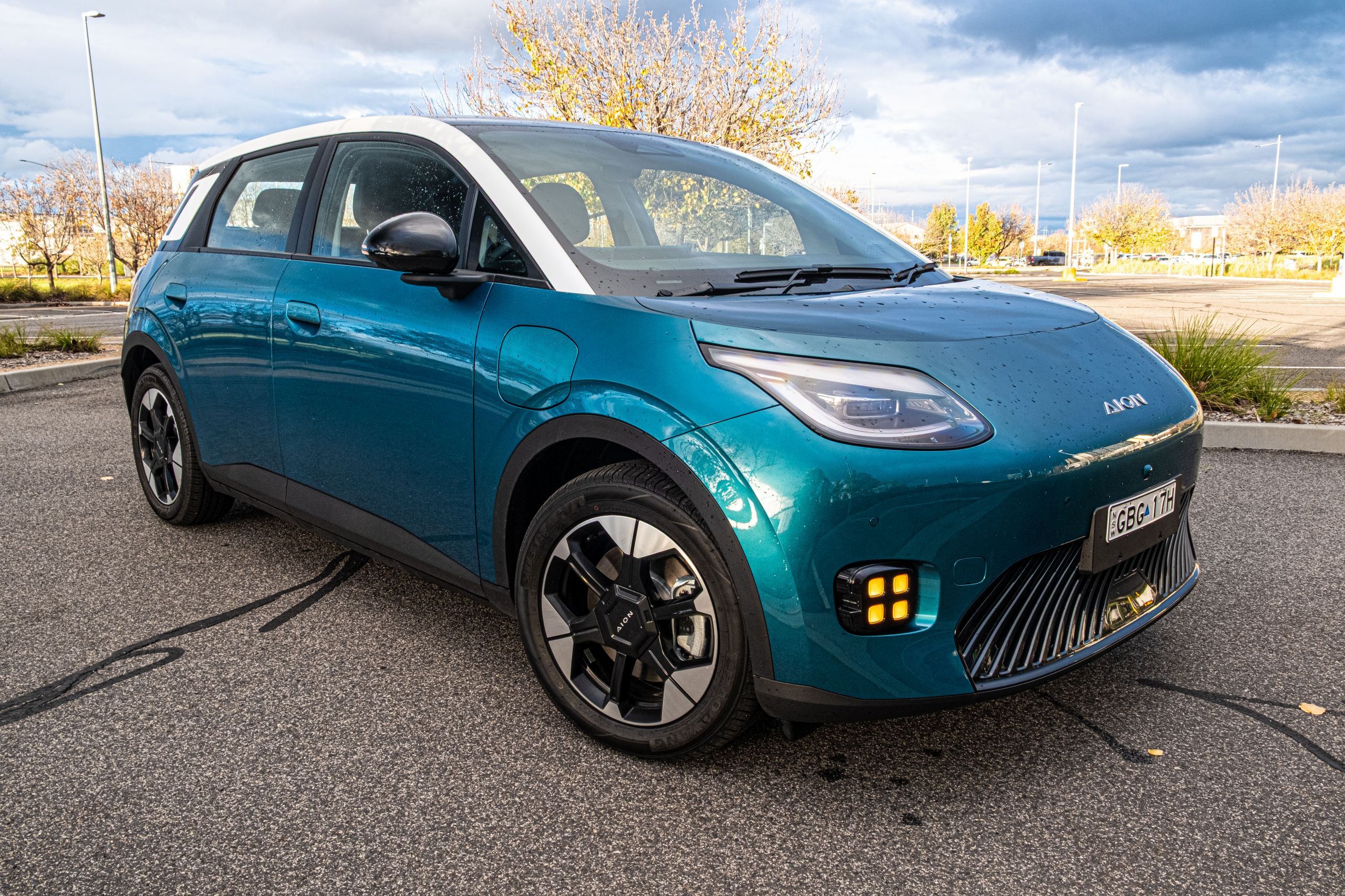
  • GAC has just introduced its Aion V and Aion UT to France.
  • The company will expand its lineup, offering French comsumers 12 new cars by 2030.
  • To support this, GAC is actively looking at expanding their European production capacity.

China’s state-owned GAC (Guangzhou Automobile Group) has announced ambitious plans to expand its presence in Europe, which includes offering 12 new models in France before the decade is out. To do so, Cedric Lacour, GAC France Deputy CEO, revealed that the company is looking at ramping up European production capacity.

GAC is already present in Europe, with the company’s cars being available in the UK, Finland, Greece, Poland, Spain and Portugal. Currently GAC produces the Aion V and Aion UT in knock-down form at the Magna Steyr plant in Graz, Austria.

Read: GAC Aion’s New Sedan Borrows Level 4 Robotaxi Tech It Can’t Fully Use

Knock-down assembly means that, although manufacturing of the car’s components continues in China, the parts and assemblies are shipped before final assembly in Europe. The decision to move assembly of the V crossover-SUV and UT hatchback was seen as a way of side-stepping existing EU tariffs on Chinese vehicles, with Xpeng, another Chinese manufacturer, also employing the expertise of Magna for its G6 and G9 models.

Now, GAC is looking at adding to its European capacity. According to Lacour, those plans may include Magna Steyr or other investors completely. “We really want to establish a long-term presence here (in Europe), ​which automatically means we need production capacity,” said Lacour, speaking to Reuters.

12 New Models By 2030

 China’s GAC Wants To Increase European Manufacturing As It Expands Into France

Brad Anderson/Carscoops

GAC’s ambitions go beyond just ramping up European manufacturing. At the French launch of the all-electric Aion UT and Aion V, Lacour revealed that the two new introductions are just the tip of the iceberg. By 2030, the brand intends to have 12 electric and hybrid offerings for the French market.

Read: GAC Is Ready To Storm Europe With Its EV Army And Big Ambitions

In addition to manufacturing, GAC also has a dedicated European research and development center, situated in Milan. In the first half of this year, GAC reported that export sales recorded a 35.69 percent increase, year-on-year, with 346,000 units sold. While the growth was mainly fueled by strong performances the Americas and Southeast Asia, the brand also ranked second amongst Chinese EV brands in Greece.

French Ambitions

In a bid to ramp up its French presence, the automaker also plans to have 200 dealerships across France in the next four years, with 50 planned for this year alone. However, GAC trails some of its competitors. For context, BYD, established their French footprint back in 2024, and, according to Automobile Magazine, aims to have 250 outlets by the end of next year,

But when asked whether GAC was late to the party, Lacour disputed that. “Our ​goal is to ​take a ⁠brand from launch to scaling up in just four years.” He went on to say that the brand was entering the market “at just the right time.”

 China’s GAC Wants To Increase European Manufacturing As It Expands Into France

GAC Aion / Weibo

Tesla May Be About To Lose A Bet With YouTube’s Biggest Tech Creator

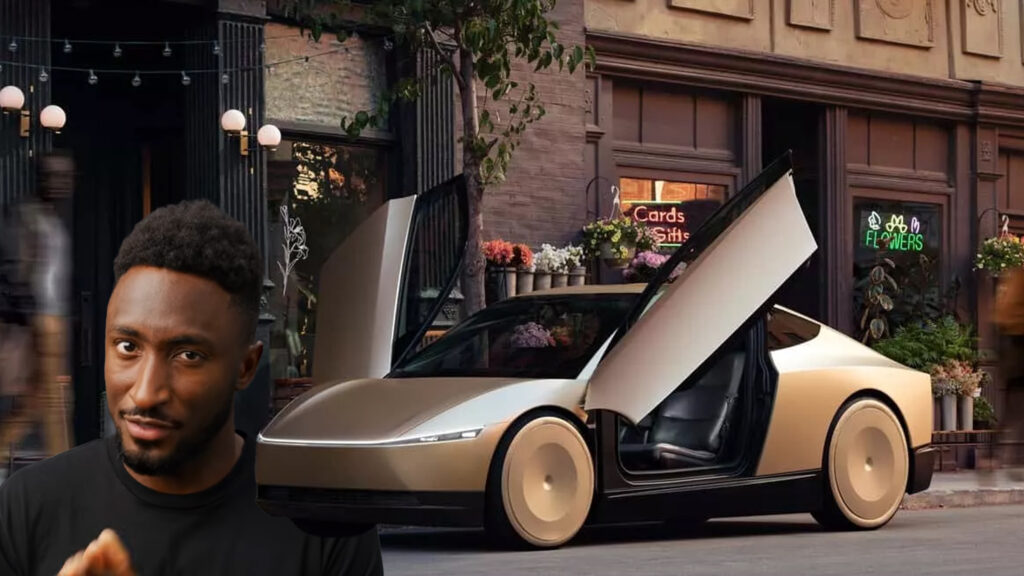
  • Tech Youtuber MKBHD cast doubt on Elon Musk’s Cybercab timeline.
  • With less than four months to go, it looks like the bet could be safe.
  • However, MKBHD concedes that Tesla is at the forefront of change.

Back in October 2024, Tesla’s “We, Robot” event introduced the world to Optimus, the Robovan, and the Cybercab. Drawing design inspiration from the Cybertruck, the Cybercab offered yet another look at the proposed driverless car future, this time sans a steering wheel and pedals.

But the biggest shocker was the Tesla CEO’s claim that not only did he expect the Cybercab to be offered to customers at under $30,000, but that it would also enter high-volume production before 2027. Granted, by his own admission, Elon Musk said at the time that he tends to be “a little optimistic with timeframes,” but it got tech creator Marcus Brownlee, aka MKBHD, thinking.

More: Tesla Offers Rides In A Car With No Wheel Or Pedals, So Naturally The Feds Showed Up

So confident was MKBHD that Tesla wouldn’t meet such a timeline, he made a bit of a one-sided bet: he offered to shave his head live on camera if they made good. To be specific, Brownlee said that Tesla wouldn’t sell a Cybercab to a customer for $30,000 before 2027.

Semantics aside, that moment triggered a bunch of AI videos and memes, particularly from fans of Tesla, with Elon Musk even replying to one such post on X, saying, “Gonna happen. 😂”

A Long Time Coming

Since the Cybercab reveal, we’ve seen more information about the car trickle out, including it would likely deliver around 300 miles (482 km) of range, use large castings to save costs, and still projected to cost $30,000 or less. In February, the team even appeared to be ahead of schedule, with the first Cybercab rolling off Tesla’s Texan production line.

Brownlee himself admitted he was a little nervous when it came to light that a new Cybercab event had been scheduled for the 3rd of September. But luckily for him (and his hair), the event had nothing to do with customer sales. Instead, it announced that the Cybercab would be added to the Tesla Robotaxi network within their existing geofenced areas.

But while it looks like his hair is safe for now, the Tech Tuber went on to say that although he thinks Tesla may be ahead of its time with the Cybercab, he expects self-driving cars to become more mainstream in the next 10 years. Oh, and regardless of whether he wins the “bet” or not, he’ll be donating to Cancer Research in January.

\\\\\\\\\\\

Tesla Cybercab

Bentley’s Torcal Is Its Quickest And Most Powerful Car Ever, Just Don’t Ask About Its Porsche Cousin

  • Bentley confirms the new Torcal EV SUV will be the company’s quickest-ever accelerating car.
  • Instead of going for outright horsepower, Bentley says the focus is on its signature comfort.
  • The Torcal will feature 850 hp from two electric motors and will be built on the VW PPE base.

Bentley has spent the last few months drip-feeding us info about their upcoming Torcal EV. But the British marque has given the hype machine one last squeeze ahead of its unveiling, confirming that the new platform-shared SUV will officially be the company’s most powerful production car, as well as its quickest-accelerating.

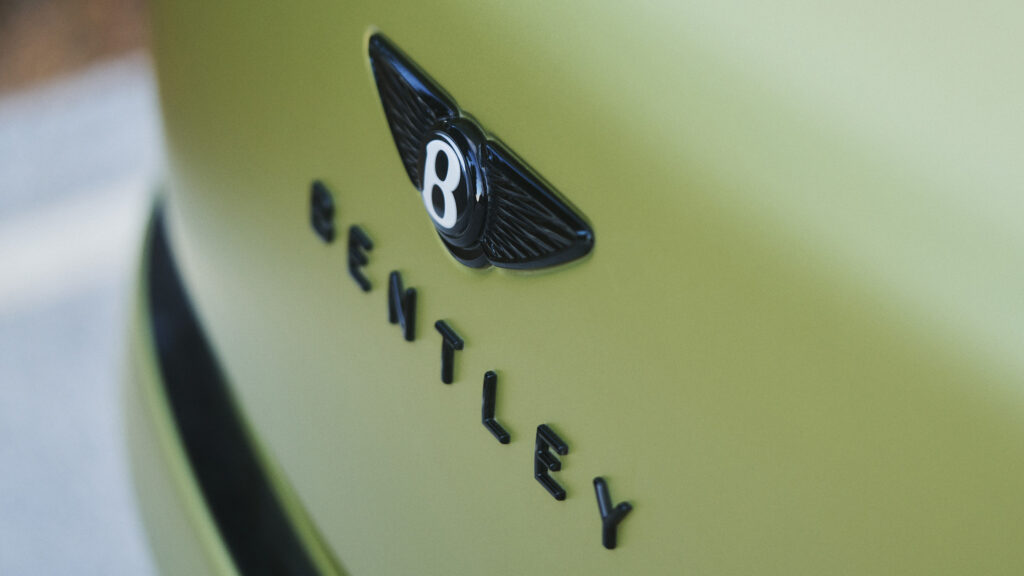
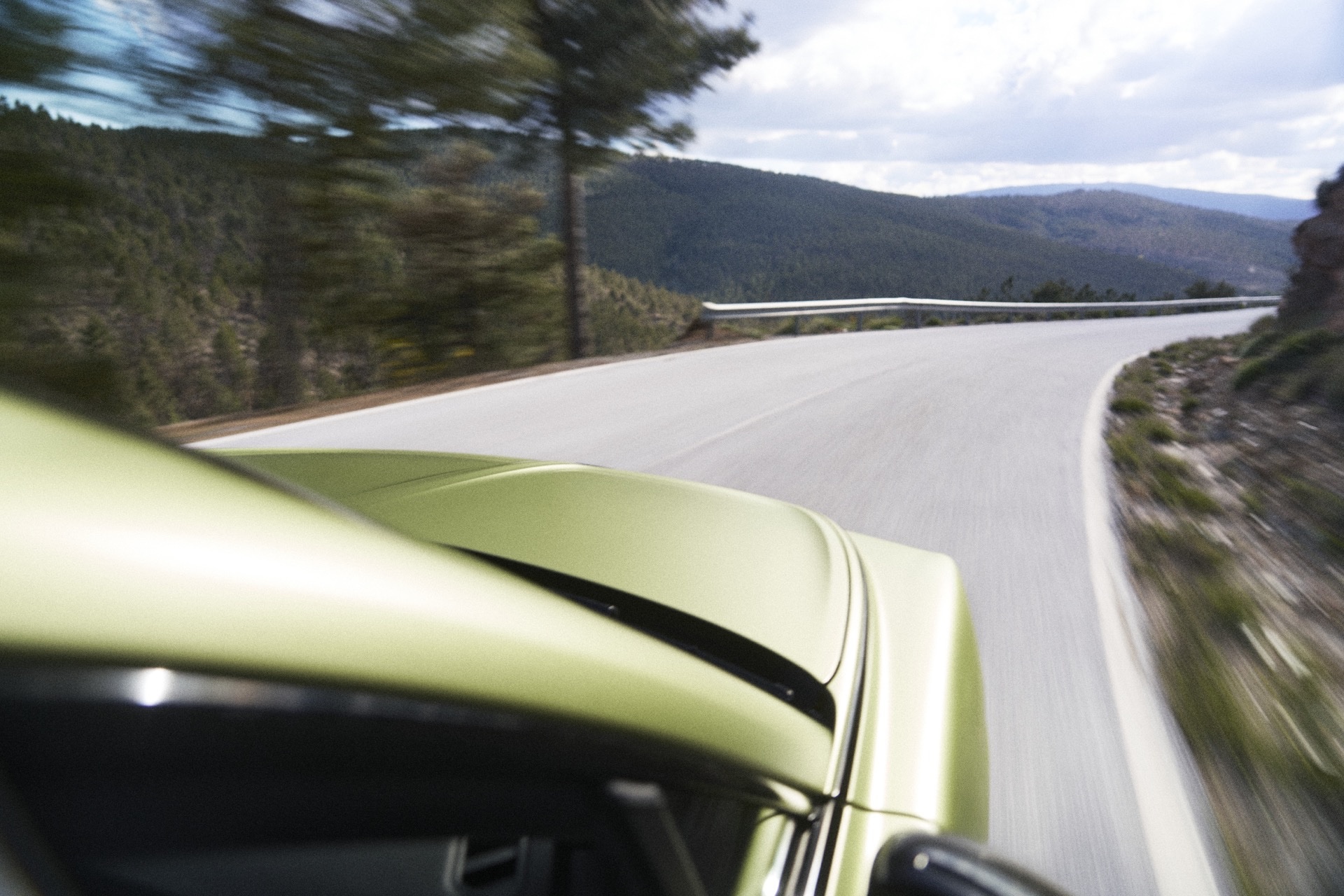
We also got a couple of new teaser photos, which showcase a portion of the hood, front wing, and A-pillar, revealing a mini-Bentayga-esque feel to the overall design, and a shot of the trunk with the winged “B” logo.

Read: Bentley’s Torcal Is Basically A Mid-Grade Cayenne Electric With 850 HP And A British Accent

 Bentley’s Torcal Is Its Quickest And Most Powerful Car Ever, Just Don’t Ask About Its Porsche Cousin
Bentley

Power-wise, Autocar has already confirmed that the Torcal is set to offer 850 hp (634 kW / 862 PS), dethroning the 771-hp Continental GT Speed, although the latter remains top dog for combustion-powered machinery. That 850-hp figure isn’t surprising for those who know what underpins the car. The Bentley Torcal is based on the VW Group’s PPE (Premium Platform Electric) base, which underpins multiple electric offerings from both Audi and Porsche. It uses 800V architecture, and we’ve seen up to 1,139 hp deployed in Porsche’s Cayenne Turbo Electric.

With that in mind, their latest tidbit of info appears to be framing the Torcal’s output figures in a way that gets ahead of those wondering why it’s “only” 850 hp. Granted, the word “only” in that last sentence is doing a lot of heavy lifting, but in a world of 1000hp+ EVs, could this actually be a bother to clients?

Quick But Comfortable

\\\\\\\\\\\\\\\\\\\\\\\\\

Bentley says the Torcal isn’t merely chasing numbers, and while it will be the brand’s quickest-accelerating model, they reaffirm to us that it will be comfort-focused, in line with what customers expect. The distinct Bentley “feeling” is something that the company goes to great pains to reinforce.

The skeptical among us, though, will remain somewhat unconvinced. In addition to the car sharing the same platform as the Cayenne Electric, the drivetrain is a bit of a hodgepodge of other VW Group bits. The Torcel will reportedly use the front motor from the Audi Q6 e-tron, and the rear motor from the Cayenne Electric. Meanwhile, the 113 kWh battery will also be shared with the Cayenne.

\\\\\\\\\\

Of course, we expect the interior to be one of the main differentiators, with Ombre wood trim, 100% Merino wool upholstery (a world’s first), and a curved infotainment system all confirmed for the Torcal. You can also expect a sub-3.0-second 0-60 mph (0-96 km/h) time, a limited top speed of 155 mph (250 km/h), air suspension, four-wheel steering, and active anti-roll bars.

\\\\\\\\\

SHProshots

❌