A group of retired judges asked the state's highest court to consider changing rules that govern when judges should step down from a case because of conflicts of interest.
Barnes, an avid runner and biker, told the Examiner in an interview that politics is an “endurance sport” and that “sometimes you face setbacks” — adding that he faced setbacks every day in the Assembly and views his w loss to Johnson as another setback. There is too much on the line, however, to give up and stop working toward his goals, he said. Barnes speaks to a bike shop owner in Madison. (Photo by Baylor Spears/Wisconsin Examiner)
At a forum hosted by the Madison West High School civics club, former Lt. Gov. Mandela Barnes told students that he would be the strongest Democratic candidate for governor because of his previous statewide experience.
“This will be an incredibly competitive race. It already is. The general election is going to show up fast and furious,” Barnes said in April. “I am the only person who has ever competed at that level.”
Barnes was referring to his 2022 U.S. Senate race, which he lost to Sen. Ron Johnson by about one percentage point. Barnes is now seeking Wisconsin’s top executive office and arguing that nearly winning that Senate seat combined with his statewide experience has uniquely prepared him to take on U.S. Rep. Tom Tiffany, Republican candidate for governor endorsed by President Donald Trump.
Barnes entered the race in December and he’ll need to get through a crowded Democratic primary to make it onto the November ballot. It’s unlikely the rest of the Democratic candidates will drop out to clear the field for him as they did in the 2022 Senate race. Other Democratic candidates on the ballot include state Rep. Francesca Hong (D-Madison), Lt. Gov. Sara Rodriguez, Milwaukee County Executive David Crowley, former Wisconsin Economic Development Corp. CEO Missy Hughes, former head of Gov. Tony Evers’ Department of Administration Joel Brennan and State Sen. Kelda Roys.
Putting in the work
Barnes, 39, grew up in Milwaukee the child of a public school teacher and an auto worker who was a member of United Auto Workers (UAW) union and worked third shift for decades. He first ran for office at 25, winning a seat in the state Assembly. He served two terms in the Legislature before launching a failed campaign for the state Senate.
“I felt that there weren’t enough people who understood what it meant to be born in our state’s poorest and nation’s most incarcerated ZIP code,” Barnes said of his motivation for seeking political office. He came back in 2018 to run for lieutenant governor, winning a spot on the ticket with Gov. Tony Evers in 2018. He served as the state’s first Black lieutenant governor before he challenged incumbent U.S. Sen. Ron Johnson.
Barnes, an avid runner and biker, told the Examiner in an interview that politics is an “endurance sport” and that “sometimes you face setbacks” — adding that he faced setbacks every day in the Assembly and views his loss to Johnson as another setback. There is too much on the line, however, to give up and stop working toward his goals, he said.
“In order for us to truly make Wisconsin the place that it can and should be — not just to catch up to our Midwest neighbors, but to lead this entire country in terms of progress — I have put in that work. I have put in that fight, and there’s nobody who’s put in their work in the advocacy space,” more than he has, Barnes said. “I see becoming governor as the best opportunity to continue that focus, to continue that work.”
Barnes has made it his campaign motto that he will do things the “Wisconsin Way” instead of the “Washington Way.” He criticizes Trump and his ally Tiffany as being “out of control.”
The Barnes campaign is focused on the rising cost of living for Wisconsin families.
“There is an affordability crisis that affects almost every household in this state, whether it’s healthcare, whether it’s groceries, whether it’s energy bills, or whether it’s housing, and it feels like there’s no sign of things letting up,” Barnes said. He added that voters are looking for leaders who understand those pressures firsthand.
Barnes spoke with the Examiner about two weeks after the failure of a bill negotiated by Wisconsin’s soon-to-retire Democratic governor and Republican legislative leaders who are also about to leave office that would have spent down the state’s $2.5 billion projected budget surplus to provide tax cuts to Wisconsinites and additional special education funding to schools. He expressed opposition to the deal, which most legislative Democrats along with a handful of Republicans rejected. He said policymakers need to “be more deliberate about negotiating big tasks.”
An organizer’s mindset
Over the last three years, Barnes has led Power to the Polls Wisconsin, a grassroots voting rights organization dedicated to mobilizing voters, combating voter suppression and advocating for underserved communities of color and working-class families. He also founded Forward Together Wisconsin, a clean energy nonprofit. He brings an organizing mindset to the legislative process.
“People shouldn’t feel like they’re rushed to get legislation passed… I think that there should be more public hearings,” he said, adding, “There’s not a whole lot of public input.”
Barnes said the projected surplus “didn’t just come out of nowhere; it’s because Republicans have withheld investments in our future.” He, like the Democrats who are hoping to win control of at least one chamber of the Legislature in the fall, would like the opportunity to reverse years of Republican budget policy without facing a looming budget deficit, which analysts predicted would result from the tax-cut and school funding deal.
“The answer to most of our problems is simple,” Barnes said. “It’s just a tax on billionaires, tax the wealthiest, tax large corporations that have every tax advantage at their disposal.”
“Ultimately, if a state like Wisconsin is a place that fully funds our schools, puts more support into higher education, tech schools, and university system, invests in public transportation,” he added, “that’s how you make the state a much more attractive place.”
Closing tax loopholes
Barnes said he would focus on closing tax loopholes that allow large corporations and wealthy individuals to reduce their tax burden. One example is Wisconsin’s manufacturing and agriculture tax credit, which provides a credit of 7.5% on income from eligible qualified production activities — reducing the effective corporate tax rate on qualifying income from 7.9% to about 0.4%.
Barnes wants to change it so “it benefits our family farmers, not these factory farms, corporate farms” and the “primary benefit also goes to Wisconsin very small businesses versus out-of-state corporations.”
He said he would not seek to raise income taxes on families making $400,000 or less, but those making more should pay more. He didn’t offer specifics, but said that the income tax brackets could change, mentioning Minnesota as an example. Wisconsin’s neighbor’s top income tax rate is currently 9.85%, while Wisconsin’s is 7.65%.
“I’m not saying we’re taxing people into poverty, right? That’s not the case. We’re not taxing people out of the state,” Barnes said. “We’re just looking for a little bit of parity.”
Barnes said that Wisconsin “shouldn’t be left behind anymore.”
Barnes has said he supports increasing state funding so it covers two-thirds of public school costs and has called for repealing Act 10 to restore collective bargaining rights for public employees, including teachers. He also backs increased investment in the University of Wisconsin system and technical colleges, though he has not outlined a specific number.
Barnes, if elected, will need to win support in the Legislature to advance his agenda. He said he is optimistic about Democrats’ chances of winning the majority, but he would be open to negotiating with anyone should he win office.
“I’m willing to play ball,” Barnes said, though that negotiation commitment would not extend to one of his top promises — Medicaid expansion. He has promised to veto any budget that doesn’t include it, even as candidates have argued over whether an expansion would be the best way to address costs in light of federal changes made by the Trump administration.
Barnes said an ultimatum would not inhibit his ability to negotiate with lawmakers because the issue shouldn’t be partisan.
“It is a politicized issue,” Barnes said, noting that Republican-led states including Louisiana have taken the expansion.
Republican lawmakers who hold the majority in the Legislature, have refused to expand Medicaid since 2010. Barnes said during the student forum that he finds it “very hard” to find common ground with Republicans because the party has become “essentially the Republican party of one person” and he doesn’t want to find himself “in a place where I am validating bad behavior.”
Making a comeback
Barnes argues that his gubernatorial candidacy has the support he needs to win, although there was some public skepticism even before he entered the race. He was the subject of a New York Times article comparing his loss to Johnson in 2022 to former Vice President Kamala Harris’ loss in 2024. The Milwaukee Courier, a prominent Black-owned newspaper, urged him in an opinion piece not to enter the race.
Barnes said of the criticism that people have “gotta have something to write about.” Asked whether he needed to build back trust with Wisconsin Democrats ahead of running statewide again, he said he didn’t think it was about that.
“People know how much money was spent against me. People know that I was the most targeted Democrat in the entire country, the target of the largest anti-Democratic candidate super PAC in the country. People know what I was up against and the relationships I built over the course of that race. People know that I was counted out from the very beginning,” Barnes said. “People know how Republican billionaires are willing to spend big, and this is a moment for us to fight back against those corporate interests that have held Wisconsin back, and they’re ready to see this through.”
Barnes’ campaign finance report from December included a mix of donations from Wisconsin-based donors, including those who live in Milwaukee and Madison as well other towns and cities across the state, and many from other states including California, Colorado, Illinois, Massachusetts, New York and Virginia as well as Washington D.C. Barnes also received a donation from the Long Run PAC, a group he launched to support progressive candidates. He has a goal to raise $50 million over the course of the campaign.
In the first half of the year, Barnes has also received a mix of endorsements from Wisconsin Democrats, including State Reps. Angelina Cruz and Amaad Rivera-Wagner and Green Bay Mayor Eric Genrich and from national political players including California Sen. Adam Schiff, and most recently, the Natural Resources Defense Council Action Fund, a leading environmental advocacy organization.
Climate change and utility costs
“No one in Wisconsin has done or will do more to tackle the climate crisis while lowering costs for working families than Mandela Barnes,” Jed Ober, managing director of Natural Resources Defense Council Action Fund, said in a statement.
Barnes has made reducing utility rates one of the key parts of his affordability platform. He says that he’ll seek to freeze rates as governor by appointing commissioners to the Public Service Commission, which regulates utilities and approves rates, who will do so. Utility experts have criticized the plan and said its unclear whether he could carry it out, though Barnes said that criticisms of that plan are being levied by “the industry itself.”
Barnes has said he would appoint commissioners who have a “demonstrated commitment” through a “thorough interview process” and they will need to have worked alongside the industry and have a “real deep understanding of how we can actually benefit the public to make sure that the PSC is doing its job to represent the public interest.” He added that he would like to increase staffing at the PSC as well.
Barnes said environmental policy will be a priority. He chaired a climate change task force as lieutenant governor that he noted produced a slate of policy solutions that were later introduced by Democratic lawmakers as a package of 18 bills.
The Senate race as well as his time serving as the state’s second-in-command helped him enter the race with the most name recognition, according to polling by Marquette Law School. On the other hand, Charles Franklin, the Marquette Law School poll director, looked at the track record of five statewide candidates, Republican and Democrat, who lost an election and ran again for statewide office. He found that name identification and previous campaign experience, including established donors, did not significantly improve the percentage of votes they got in the general election in their second statewide campaign. The last successful “second act” was the 1970s, he said.
Barnes is working to convince enough voters that he can overcome the historical pattern and is the best candidate to compete in November. He is reaching people in a variety of ways, including traveling the state to attend forums and county Democratic Party meetings, where he said he’s been glad to reconnect with people across the state whom he hasn’t seen in a while.
Through his @MandelaHQ account on X, Barnes has adopted a rapid-response social media style reminiscent of national campaign-style accounts like @KamalaHQ during the 2024 cycle. The account highlights poll results, including a recent one that showed Barnes winning in a matchup against Tiffany, targets Tiffany with humor and memes — one post featuring Tiffany at a farm joked that “cows can smell DC stink” — while also promoting policy proposals through short videos. In one video on banning AI-driven dynamic pricing and hidden fees, a group of children raise the price of lemonade after Barnes passes by on a run.
Barnes told students that one of the biggest misconceptions about him is that he doesn’t “get to be as funny” as he’d like.
“It’s tough because in politics, if you crack a joke or people aren’t able to translate sarcasm, like the story’s getting written the wrong way,” Barnes said. “I can’t be as funny as I want to be… sometimes my humor is a little dry. It’s not for everybody.”
Editor’s note: The Examiner is running periodic profiles of the contenders in the Aug. 11, 2026 gubernatorial primary as well as the candidates in the general election Nov. 3.
Political journalist Craig Gilbert tells “Wisconsin Today” Trump’s visit to Wisconsin this week could play a role in the races for the state’s 3rd and 7th Congressional Districts, which Democrats are hoping to flip.
A liberal provocateur who on Monday turned in signatures to run for governor has hit a major roadblock after it was revealed that dozens of pages of signatures he submitted were invalid.
A total of 333 people filed nomination papers with the Wisconsin Elections Commission to run for office in Wisconsin this fall — the first official act in a campaign season that will see the state elect a new governor and potentially change the balance of power in the state Legislature.
In the races for statewide offices such as the governor’s race, candidates are required to collect at least 2,000 signatures. Candidates for Congress must file at least 1,000 signatures while state Senate candidates must file 400 and Assembly candidates 200.
Any member of the public can challenge the sufficiency of a candidate’s nomination papers. To challenge a candidate, a person must make a verified complaint to WEC by 5 p.m. Thursday. The candidate will get an opportunity to respond, and the commission will meet June 9 to certify or deny ballot access.
The seven major candidates in the Democratic primary for governor all filed enough signatures to ensure ballot access, according to WEC records.
Minocqua Brewing Company owner and political gadfly Kirk Bangstad did not reach the 2,000 signature threshold after listing the wrong date on a number of signature forms — writing the date of the Aug. 11 primary rather than the Nov. 3 general election. Circulators who gathered signatures for Bangstad also omitted information on the forms such as the municipality they live in.
Bangstad, who did not announce his run for governor until early May, will have until Sunday afternoon to file affidavits seeking to fix the errors on the forms.
“Bangstad is NOT DEAD YET,” a post on the Minocqua Brewing Facebook page stated.
Former Democratic state Rep. Brett Hulsey, who has regularly turned up at political events around Madison in recent months to draw media attention and tout his run for governor, did not file any signatures with the commission, records show.
On the Republican side, U.S. Rep. Tom Tiffany filed nearly 4,000 signatures. Tiffany cleared the field of serious contenders after he was endorsed by the Republican Party of Wisconsin and President Donald Trump earlier this year. But 27-year-old medical services technician Andy Manske filed 2,040 signatures to get on the Republican primary ballot.
In the race for lieutenant governor, Democrat Sarah Godlewski and Republican Will Martin filed enough signatures. But WEC only counted 1,977 valid signatures from Republican David Varnam.
In the state’s congressional races, the once-crowded Democratic primary in the 1st Congressional District to unseat Rep. Bryan Steil will have four candidates: Miguel Aranda, Mitchell Berman, Peter Burgelis and Lorenzo Santos.
Randy Bryce, an ironworker who previously ran for the seat in 2018 and was the first to announce his intention to challenge Steil for 2026, did not file any signatures and announced he was suspending his campaign.
In the 3rd Congressional District, where Democrats are again focusing their attention in an effort to unseat Rep. Derrick Van Orden, Democrats Rebecca Cooke and Emily Berge both filed enough signatures to gain ballot access. Berge was the first candidate in the entire state to file her signatures with WEC. Two independents, Alexander Valiensi Kent and Rustin Provance, also filed to run in the race.
Democratic Rep. Gwen Moore in the Milwaukee area’s 4th Congressional District is set to face a primary challenge from Democratic Socialist Amy Donahue.
Six potential challengers filed to run in the 6th Congressional District, held by Republican Rep. Glenn Grothman. Seven candidates, including three Democrats and four Republicans, filed enough signatures to run in the 7th District to replace Tiffany, and three candidates filed to run in the 8th District Democratic primary to challenge GOP Rep. Tony Wied.
In four races, candidates were given an extension until 5 p.m. Thursday because Tiffany, Lt. Gov. Sara Rodriguez, state Rep. Dave Murphy (R-Hortonville) and state Rep. Jenna Jacobson (D-Oregon) did not file declarations of non-candidacy. Murphy is retiring while the other three are running for higher office.
The U.S. Postal Service is proposing major changes to absentee voting by mail, including creating new lists of which voters are eligible to do so. Wisconsin elections officials say they're not in a hurry to respond to the proposal because it may not survive legal challenges.
Currently, some disabled Wisconsinites have to rely on help from someone else when filling out an absentee ballot at home. Disability Rights Wisconsin says that violates the right to a secret ballot.
The Wisconsin Elections Commission is asking the U.S. Postal Service for "extraordinary measures" to speed up deliveries of absentee ballots after two thirds of clerks reported problems during the April 7 election.
The League of Women Voters of Wisconsin is challenging the state’s law governing voters’ ability to fix missing information on their absentee ballots, alleging that the law violates the Wisconsin Constitution by giving clerks a vast amount of discretion over whether to reject ballots.
The group is asking a Dane County judge to require all clerks to provide voters notice when an absentee ballot certificate is lacking necessary information — such as a signature or the address of a voter or the person who witnessed the ballot’s casting — and give them an opportunity to add that information before rejecting the ballot, a process known as “curing” the ballot.
Right now, the law tells clerks that they “may” return incomplete absentee ballots to voters. That results in some municipal clerks sending voters prompt notice about faulty ballots, while other clerks put those ballots in the rejected pile without informing the voter at all, the lawsuit states. Municipalities also treat absentee ballots differently depending on when they receive them, the lawsuit alleges, and those that arrive closer to Election Day often have a lesser chance of getting cured.
The lawsuit, which names the Wisconsin Elections Commission as the defendant, argues that, without a blanket curing requirement, “mail-in absentee ballots are jeopardized by the lack of mandatory notice and curing opportunities across the state.”
“Right now, we have ballots that come in weeks ahead of the election, and they’re being set aside for rejection with no attempt by the clerk to contact the voter,” Debra Cronmiller, executive director of the League of Women Voters of Wisconsin, told Votebeat.
“If even one clerk is not curing ballots, that’s one clerk too many in a democratic system where voting is an absolute right,” Cronmiller said, adding that the number of clerks who fail to follow the practice could reach into the hundreds.
While the lack of uniformity could create legal issues, clerks say a blanket curing requirement could be difficult to implement if courts maintain the state’s 8 p.m. Election Day deadline for receiving ballots as the deadline to cure those ballots, too.
In 2024, Milwaukee received about 150 mail ballots just minutes before polls closed. At that late hour, it would have been virtually impossible for officials to notify those voters about any deficiencies with their ballots — much less give them a chance to cure them before the polls closed.
Size and resource disparities between Wisconsin’s many municipalities would also present challenges to a uniform curing system.
A part-time clerk working from home in a small rural town operates with dramatically fewer resources than election officials in Milwaukee, where thousands of absentee ballots can arrive on Election Day. Resources in both settings would be stretched by a uniform curing requirement, depending on how courts ultimately require it to be implemented. If courts grant the league some version of the relief it is seeking, questions about how the process would work in practice could also be settled in court.
Marathon County Clerk Kim Trueblood, a Republican, said another complicating factor for clerks is that Wisconsin’s voter registration form doesn’t require registrants to provide their email addresses and phone numbers.
Trueblood said she already tells the 60 municipal clerks in the county to try to cure ballots, but that process is harder when voters don’t provide contact information or when ballots are returned on Election Day. Requiring voters to provide their contact information would make a curing requirement a lot easier to comply with, she said.
If such a requirement were imposed ahead of this year’s midterms, Trueblood said, bigger villages and cities would likely have the staff and resources to contact every voter, but for town clerks who work a different full-time job and spend just a few hours working as a clerk on weekends and evenings, “it could be a little more challenging.”
Curing lawsuits play out in Wisconsin and across the nation
Ballot curing practices vary widely across the country. Some states don’t allow curing at all. Others allow voters to cure absentee ballots well after Election Day if they’re missing a date, signature, address or something else. As arguments over voting practices increasingly head to court, lawsuits over ballot curing have played out across the nation.
In Pennsylvania, for example, ballot curing is neither required nor prohibited under state law. Similar to Wisconsin, different counties have different curing practices — some allow voters to cure their ballots, while others don’t.
In North Carolina, a robust curing process was created as the result of a lawsuit that mirrors the one in Wisconsin. It was brought by the League of Women Voters of North Carolina, among other groups, and relied on a similar allegation: that the lack of a statewide-mandated procedure to cure absentee ballots amounted to a denial of voters’ right to due process under the U.S. Constitution.
The lawsuit resulted in a settlement that created a curing requirement in every county. Now, voters have up to three days after Election Day to cure issues on their ballot.
The ballot rejection rate has dropped dramatically as a result of the case, said Joselle Torres, a spokesperson for Democracy North Carolina, a voting rights group that joined the state’s league chapter in the case. But she added that state and local funding is crucial to educate poll workers, voters and other election officials about the changes — “and that’s no small fee.”
Marc Meredith, a political scientist at the University of Pennsylvania who researched ballot curing in North Carolina in the wake of the settlement, said he had initially expected under 50% of voters to fix their ballot or vote a new one. But ultimately, about 82% of the 26,000 voters eligible to cure their ballots did so. Many opted to vote a new ballot in person rather than fix their old one, he said.
Curing has potential benefits but also challenges in Wisconsin
The drastic increase in the number of voters curing their ballots in North Carolina may not be replicated in Wisconsin, where many municipalities already have curing notifications and procedures in place.
Another difference is that North Carolina has 100 counties running elections, whereas Wisconsin has about 1,850 municipalities doing so. That could complicate implementation, Meredith said, because the same procedures would need to work in places ranging from Milwaukee to towns with 100 residents.
“In the places that aren’t currently curing,” he added, “I would expect lots of voters would take opportunities to make corrections.”
That issue of municipalities not curing ballots is especially pronounced in rural Wisconsin, Cronmiller said. There, part-time clerks don’t always have the bandwidth to return ballots to voters ahead of Election Day, she said. If courts call for a more stringent curing requirement, Cronmiller added, “it would force all municipalities to give resources sufficient to their clerks so they could do this work.”
A requirement for clerks to tell voters can create practical issues in bigger cities, too, especially those that can receive thousands of ballots on Election Day.
To get every last ballot cured, Wisconsin would likely have to implement a cure deadline after Election Day, Meredith said.
“You don’t want to let the perfect be the enemy of the good, is my opinion on these things,” Meredith said. “There are going to be some things that will slip through the cracks, but … don’t let the fact that a few might slip through the cracks prevent you from putting that system in that way that would help the rest.”
At the highest level, the League of Women Voters is seeking a declaration that Wisconsin’s discretionary ballot-curing law violates the state constitution, said Nina Beck, a counsel at the Fair Elections Center, which represents the league in Wisconsin and also represented the North Carolina league chapter in its lawsuit to create ballot-curing there.
What’s required under the due process clause of the Wisconsin Constitution, Beck said, is adequate notice and the ability to cure a defect if clerks are otherwise denying people their fundamental right to vote. Instead, right now, clerks are dealing with curing in many ways and may even be treating voters within the same municipality differently, she said. “That’s fundamentally unfair.”
If the court sides with the league, the group will ask the court to set a uniform procedure for all clerks to follow, Beck said, adding that the current system is “kind of a free-for-all.”
Alexander Shur is a reporter for Votebeat based in Wisconsin. Contact Shur at ashur@votebeat.org.
U.S. Rep. Tom Tiffany, the leading Republican candidate for governor, said he stands by his criticisms of a budget surplus deal that failed in the Legislature, despite widespread support for the bill in a new public poll.
A federal judge on Thursday rejected the U.S. Justice Department’s demand for Wisconsin’s unredacted voter list, the latest defeat for President Donald Trump’s administration in its quest to obtain more information about voters around the country.
In his 10-page ruling, U.S. District Judge James D. Peterson said the department’s allegation that the Wisconsin Elections Commission violated the Civil Rights Act by not turning over the state’s voter roll “fails as a matter of law.”
The Department of Justice has requested voter rolls with unredacted information — including voters’ full birthdates, full or partial Social Security numbers, and driver’s license information — from at least 48 states, according to the Brennan Center for Justice. At least 15 states have provided or said they will provide the data, but most have not, prompting the department to file suit against 30 states plus Washington, D.C.
The department has so far appealed three of those dismissals, the ones in Michigan, Oregon and California.
The Justice Department has said it is entitled to the voter rolls under federal law and needs the data to enforce requirements in federal statutes. Officials in both Republican- and Democratic-led states have pushed back on the Justice Department’s request for unredacted voter data, saying it could put voters at risk. They also say the department hasn’t provided enough information on how the data would be used.
The Justice Department didn’t immediately respond to a request for comment.
“This ruling protects against federal intrusions into Wisconsin’s election system,” said ACLU of Wisconsin legal director Ryan Cox, adding that it “ensures private voter data is safe from abuse and prevents the Trump administration from playing politics with our right to vote.”
Alexander Shur is a reporter for Votebeat based in Wisconsin. Contact Shur at ashur@votebeat.org.
Last year, the Wisconsin Elections Commission declined to provide federal officials with a voter registration that would have included driver's license numbers or partial social security numbers. That prompted the Trump administration to sue.
Election worker Josh Del Colle counts ballots at the Milwaukee central count location after the polls had closed for the evening on Nov. 3, 2020. (Eric Kleppe-Montenegro for Wisconsin Watch)
The federal government’s probe into the 2020 election has reached Wisconsin, with several current and former election officials, including multiple people in Milwaukee, confirming they have been interviewed or approached by the FBI.
The exact nature of the investigation remains unclear, though it appears to be at least somewhat centered around the 2020 election. The agency’s election investigations elsewhere in the country have featured subpoenas for ballots and other election records, but legal experts still say it won’t be easy for the federal government to convince a court to give it access to ballots.
Milwaukee County officials are nonetheless preparing for that possibility, in part because they still retain ballots from the 2020 election, though they declined to discuss those preparations or comment on the record. Those ballots contain identifying information that could, in some cases, allow otherwise unidentifiable absentee ballots to be matched to the voters who cast them. Milwaukee is one of the few jurisdictions in Wisconsin that still has ballots from that election, and the city has long been a target of voter fraud accusations and related attacks from the political right.
Elsewhere in Wisconsin — in communities whose elections have faced less scrutiny and in the vast majority of municipalities where 2020 ballots were destroyed according to the standard retention schedules in state law — election officials are less alarmed and are instead focused on preparing for the midterm elections.
Still, news of the FBI interest has created confusion and some fear on the part of voters and election officials.
What happened?
So far, the FBI has contacted multiple current and former election officials in Wisconsin.
The FBI interviewed Wisconsin Elections Commission deputy administrator Robert Kehoe within the last few weeks. The news of the interview was first reported by the Milwaukee Journal Sentinel. The interview focused on the 2020 election, with agents asking Kehoe to explain how Wisconsin elections operate.
The agency has also attempted to contact Milwaukee County Election Director Michelle Hawley. An agent left a business card at Hawley’s home when she was not there. Milwaukee County Clerk George Christensen criticized the agency for approaching Hawley at her home rather than through the county.
“While we cooperate with all legitimate law enforcement actions, we will defend against any attack on our democracy and will defend the rights of voters of Milwaukee County,” Christensen said in a statement.
Agents also left a card for, called and texted a former Milwaukee election official, who confirmed the contact to Votebeat but requested anonymity because of personal safety concerns. That official declined to say whether they responded to the FBI.
“The president for whatever reason cannot seem to let it go that he lost an election,” Johnson told a WISN 12 reporter.
Wisconsin Elections Commission spokeswoman Emilee Miklas declined to comment for this story. Other officials declined to speak on the record, and an FBI spokesperson didn’t answer Votebeat questions about the probe.
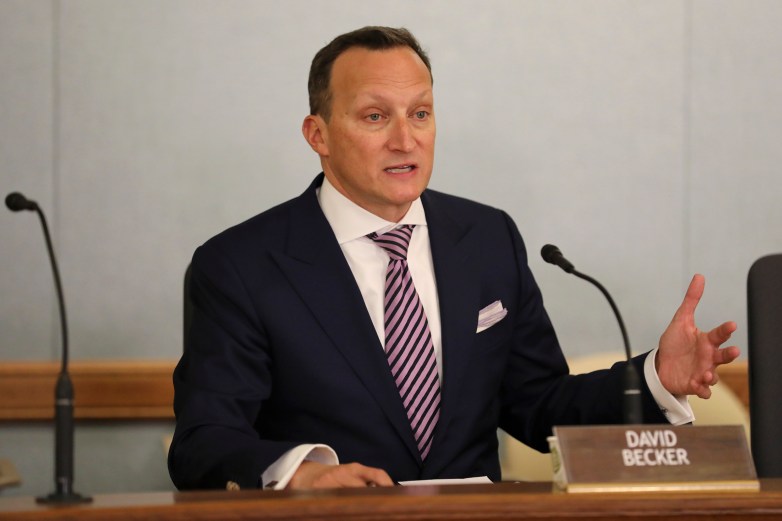
David Becker, the executive director of the nonpartisan nonprofit Center for Election Innovation and Research and a former Justice Department voting section attorney, said the federal government’s actions appeared more to be aimed at intimidating election officials than producing actionable criminal cases.
He pointed to FBI Director Kash Patel’s public statements in April suggesting arrests related to the 2020 election were coming, as well as federal officials discussing potential cases on social media before they’re brought before courts.
“If you think you’re going to bring charges and prosecute individuals, you don’t do anything that the federal government has done over the last few months,” he said.
Becker also noted that any potential federal crimes connected to the 2020 election are “well beyond the statute of limitations for any potential federal jurisdiction or crimes,” adding, “This is a problem for any investigation relating to 2020.”
Even so, Becker said election officials’ worries were justified. He said the Election Official Legal Defense Network, which he leads, has received more requests for legal assistance from election officials than ever before “even though all of these efforts indicate that the federal government knows it’s got nothing.”
David Becker, executive director and founder of the Center for Election Innovation and Research, briefs the media on growing threats to election professionals in Wisconsin at the Wisconsin State Capitol in Madison, Wis., on Dec. 13, 2021. (Coburn Dukehart/Wisconsin Watch)
How do the events in Wisconsin relate to probes elsewhere?
It’s unclear how the FBI interviews in Wisconsin relate to the agency’s scrutiny of the 2020 election in other states.
Those jurisdictions share several characteristics with Milwaukee County. All are located in highly competitive swing states won by former President Joe Biden in 2020, and all became central targets of President Donald Trump, who repeatedly challenged the election results despite court rulings, audits and reviews repeatedly reaffirming his loss.
Fulton, Wayne, Maricopa, and Milwaukee County are the largest and most heavily scrutinized election jurisdictions in their respective states. Each has been the subject of persistent conspiracy theories about the 2020 election, many of which remain prevalent on social media, even after extensive investigations found no evidence of widespread fraud.
“What’s really disconcerting,” said former longtime Wisconsin election chief Kevin Kennedy, “is the fact that there is a clear pattern here to try and continue to stir up issues that were resolved in every single opportunity there was to review them, whether it was a court case, an independent audit or the actual certification and review process that exists.”
What comes next?
The short answer is that nobody really knows.
Officials have been considering the possibility that the federal government may seize the city’s 2020 ballots, which contain personally identifiable information.
Kennedy said recent actions by the Trump administration offer “no reason to think that information that should be protected is going to be protected.”
Kennedy said Wisconsin’s decentralized election system was intentionally designed to distribute authority among local jurisdictions — both to keep election administration accountable at the community level and to limit the amount of sensitive voter information concentrated in any one place.
“You put that at the national level,” he said, “and it only takes one bad actor — and we’ve got evidence there’s more than one of those already in the federal government — to totally disrupt the process when you consolidate that kind of information that’s protected through the various state and local laws and practices.”
Becker said it will be an uphill battle for the federal government to successfully obtain Milwaukee’s ballots. But he said the mere possibility that federal officials could theoretically identify how individual people voted is deeply troubling.
“That is not the way a democratic society works,” he said. “Now, I don’t think they’re likely going to be able to do that. I think that’s going to be incredibly difficult. It’s not impossible, but the fact that they seem to engender this fear is troubling enough.”
Alexander Shur is a reporter for Votebeat based in Wisconsin. Contact Shur at ashur@votebeat.org.
The federal government’s probe into the 2020 election has reached Wisconsin, with several current and former election officials, including multiple people in Milwaukee, confirming they have been interviewed or approached by the FBI.
The exact nature of the investigation remains unclear, though it appears to be at least somewhat centered around the 2020 election. The agency’s election investigations elsewhere in the country have featured subpoenas for ballots and other election records, but legal experts still say it won’t be easy for the federal government to convince a court to give it access to ballots.
Milwaukee County officials are nonetheless preparing for that possibility, in part because they still retain ballots from the 2020 election, though they declined to discuss those preparations or comment on the record. Those ballots contain identifying information that could, in some cases, allow otherwise unidentifiable absentee ballots to be matched to the voters who cast them. Milwaukee is one of the few jurisdictions in Wisconsin that still has ballots from that election, and the city has long been a target of voter fraud accusations and related attacks from the political right.
Elsewhere in Wisconsin — in communities whose elections have faced less scrutiny and in the vast majority of municipalities where 2020 ballots were destroyed according to the standard retention schedules in state law — election officials are less alarmed and are instead focused on preparing for the midterm elections.
Still, news of the FBI interest has created confusion and some fear on the part of voters and election officials.
What happened?
So far, the FBI has contacted multiple current and former election officials in Wisconsin.
The FBI interviewed Wisconsin Elections Commission deputy administrator Robert Kehoe within the last few weeks. The news of the interview was first reported by the Milwaukee Journal Sentinel. The interview focused on the 2020 election, with agents asking Kehoe to explain how Wisconsin elections operate.
The agency has also attempted to contact Milwaukee County Election Director Michelle Hawley. An agent left a business card at Hawley’s home when she was not there. Milwaukee County Clerk George Christensen criticized the agency for approaching Hawley at her home rather than through the county.
“While we cooperate with all legitimate law enforcement actions, we will defend against any attack on our democracy and will defend the rights of voters of Milwaukee County,” Christensen said in a statement.
Agents also left a card for, called and texted a former Milwaukee election official, who confirmed the contact to Votebeat but requested anonymity because of personal safety concerns. That official declined to say whether they responded to the FBI.
“The president for whatever reason cannot seem to let it go that he lost an election,” Johnson told a WISN 12 reporter.
Wisconsin Elections Commission spokeswoman Emilee Miklas declined to comment for this story. Other officials declined to speak on the record, and an FBI spokesperson didn’t answer Votebeat questions about the probe.
David Becker, the executive director of the nonpartisan nonprofit Center for Election Innovation and Research and a former Justice Department voting section attorney, said the federal government’s actions appeared more to be aimed at intimidating election officials than producing actionable criminal cases.
He pointed to FBI Director Kash Patel’s public statements in April suggesting arrests related to the 2020 election were coming, as well as federal officials discussing potential cases on social media before they’re brought before courts.
“If you think you’re going to bring charges and prosecute individuals, you don’t do anything that the federal government has done over the last few months,” he said.
Becker also noted that any potential federal crimes connected to the 2020 election are “well beyond the statute of limitations for any potential federal jurisdiction or crimes,” adding, “This is a problem for any investigation relating to 2020.”
Even so, Becker said election officials’ worries were justified. He said the Election Official Legal Defense Network, which he leads, has received more requests for legal assistance from election officials than ever before “even though all of these efforts indicate that the federal government knows it’s got nothing.”
David Becker, executive director and founder of the Center for Election Innovation and Research, briefs the media on growing threats to election professionals in Wisconsin at the Wisconsin State Capitol in Madison, Wis., on Dec. 13, 2021. (Coburn Dukehart / Wisconsin Watch)
How do the events in Wisconsin relate to probes elsewhere?
It’s unclear how the FBI interviews in Wisconsin relate to the agency’s scrutiny of the 2020 election in other states.
Those jurisdictions share several characteristics with Milwaukee County. All are located in highly competitive swing states won by former President Joe Biden in 2020, and all became central targets of President Donald Trump, who repeatedly challenged the election results despite court rulings, audits and reviews repeatedly reaffirming his loss.
Fulton, Wayne, Maricopa, and Milwaukee County are the largest and most heavily scrutinized election jurisdictions in their respective states. Each has been the subject of persistent conspiracy theories about the 2020 election, many of which remain prevalent on social media, even after extensive investigations found no evidence of widespread fraud.
“What’s really disconcerting,” said former longtime Wisconsin election chief Kevin Kennedy, “is the fact that there is a clear pattern here to try and continue to stir up issues that were resolved in every single opportunity there was to review them, whether it was a court case, an independent audit or the actual certification and review process that exists.”
What comes next?
The short answer is that nobody really knows.
Officials have been considering the possibility that the federal government may seize the city’s 2020 ballots, which contain personally identifiable information.
Kennedy said recent actions by the Trump administration offer “no reason to think that information that should be protected is going to be protected.”
Kennedy said Wisconsin’s decentralized election system was intentionally designed to distribute authority among local jurisdictions — both to keep election administration accountable at the community level and to limit the amount of sensitive voter information concentrated in any one place.
“You put that at the national level,” he said, “and it only takes one bad actor — and we’ve got evidence there’s more than one of those already in the federal government — to totally disrupt the process when you consolidate that kind of information that’s protected through the various state and local laws and practices.”
Becker said it will be an uphill battle for the federal government to successfully obtain Milwaukee’s ballots. But he said the mere possibility that federal officials could theoretically identify how individual people voted is deeply troubling.
“That is not the way a democratic society works,” he said. “Now, I don’t think they’re likely going to be able to do that. I think that’s going to be incredibly difficult. It’s not impossible, but the fact that they seem to engender this fear is troubling enough.”
Alexander Shur is a reporter for Votebeat based in Wisconsin. Contact Shur at ashur@votebeat.org.

 Login
Login