
Reading view

There are new articles available, click to refresh the page.

As energy-hungry data centers loom, Wisconsin ratepayers owe $1 billion on shuttered power plants

An aerial view of a large electrical facility surrounded by dirt roads, open fields, railroad tracks and nearby industrial buildings
Reading Time: 11 minutes
Click here to read highlights from the story
  • Wisconsin utility ratepayers owe nearly $1 billion on coal power plants that have been or soon will be shut down. That includes debt taken on to build and upgrade the plants, plus a guaranteed rate of return of nearly 10% for the utility companies that own the plants.
  • Other states have found ways to limit the effect on ratepayers, such as allowing debt to be securitized at a lower rate than the guaranteed investment return and having comprehensive planning processes that reduce the likelihood of overbuilding.
  • Wisconsin utility groups have pushed back on bipartisan proposals, and Republicans have blocked efforts by Gov. Tony Evers to reduce costs for ratepayers.

By some measures, the Pleasant Prairie Power Plant, once regarded locally as an “iconic industrial landmark,” had a good run.

Opened in 1980 near Lake Michigan in Kenosha County, it became Wisconsin’s largest generating plant, burning enough Wyoming coal, some 13,000 tons a day, to provide electricity for up to 1 million homes. 

But over time, the plant became too expensive to operate. The owner, We Energies, shut it down after 38 years, in 2018.

We Energies customers, however, are still on the hook.

A portion of their monthly bills will continue to pay for Pleasant Prairie until 2039 — 21 years after the plant stopped producing electricity. 

In fact, residential and business utility customers throughout Wisconsin owe nearly $1 billion on “stranded assets” — power plants like Pleasant Prairie that have been or will soon be shut down, a Wisconsin Watch investigation found.

That total will likely grow over the next five years with additional coal plants scheduled to cease operations. 

Customers must pay not only for the debt taken on to build and upgrade the plants themselves, but also an essentially guaranteed rate of return for their utility company owners, long after the plants stop generating revenue themselves.

“We really have a hard time with utilities profiting off of dead power plants for decades,” said Todd Stuart, executive director of the Wisconsin Industrial Energy Group. 

The $1 billion tab looms as Wisconsin utility companies aim to generate unprecedented amounts of electricity for at least seven major high-tech data centers that are proposed, approved or under construction. By one estimate, just two of the data centers, which are being built to support the growth of artificial intelligence, would use more electricity than all Wisconsin homes combined.

All of which raises an important question in Wisconsin, where electricity rates have exceeded the Midwest average for 20 years. 

What happens to residents and other ratepayers if AI and data centers don’t pan out as planned, creating a new generation of stranded assets?

How much do Wisconsin ratepayers owe on stranded assets?

Of the five major investor-owned utilities operating in Wisconsin, two — We Energies and Wisconsin Public Service Corp. — have stranded assets on the books. Both companies are subsidiaries of Milwaukee-based WEC Energy Group.

As of December 2024, when the company released its most recent annual report, We Energies estimated a remaining value of more than $700 million across three power plants with recently retired units: Pleasant Prairie, Oak Creek and Presque Isle, a plant on Michigan’s Upper Peninsula.

Wisconsin Public Service Corp.’s December 2024 report listed roughly $30 million in remaining value on recently retired units at two power plants.

In total, utilities owned by WEC Energy Group will likely have over $1 billion in recently retired assets by the end of 2026. 

The company also noted a remaining value of just under $250 million for its share of units at Columbia Generating Station slated to retire in 2029, alongside a remaining value of roughly $650 million for units at Oak Creek scheduled to retire next year.

Its customers will pay off that total, plus a rate of return, for years to come.

The company estimates that closing the Pleasant Prairie plant alone saved $2.5 billion, largely by avoiding future operating and maintenance costs and additional capital investments.

Both Wisconsin Power and Light and Madison Gas and Electric also own portions of the Columbia Energy Center, and Wisconsin Power and Light also operates a unit at the Edgewater Generating Station scheduled for retirement before the end of the decade. Neither company provided estimates of the values of those facilities at time of retirement. Andrew Stoddard, a spokesman for Alliant Energy, Wisconsin Power and Light’s parent company, argued against treating plants scheduled for retirement with value on the books as future stranded assets.

How stranded assets occurred: overcommitting to coal

In 1907, Wisconsin became one of the first states to regulate public utilities. The idea was that having competing companies installing separate gas or electric lines was inefficient, but giving companies regional monopolies would require regulation.

Utility companies get permission to build or expand power plants and to raise rates from the three-member state Public Service Commission. The commissioners, appointed by the governor, are charged with protecting ratepayers as well as utility company investors.

A chain-link fence, a “STOP” sign and a tilted “DANGER Demolition Work in Progress” sign stand in front of an open lot with a large industrial building in the background.
A demolition sign is posted at the former site of the We Energies Power Plant on Nov. 13, 2025, in Pleasant Prairie, Wis. (Joe Timmerman / Wisconsin Watch)

Stranded assets have occurred across the nation, partly because of the cost of complying with pollution control regulations. But another factor is that, while other utilities around the country moved to alternative sources of energy, Wisconsin utilities and, in turn, the PSC overbet on how long coal-fired plants would operate efficiently:

  • In the years before We Energies pulled the plug on Pleasant Prairie, the plant had mostly gone dark in spring and fall. Not only had coal become more expensive than natural gas and renewables, but energy consumption stayed flat. By 2016, two years before Pleasant Prairie’s closure, natural gas eclipsed coal for electricity generation nationally.
  • In 2011, We Energies invested nearly $1 billion into its coal-fired Oak Creek plant south of Milwaukee to keep it running for 30 more years. The plant, which began operating in 1965 and later became one of the largest in the country, is now scheduled to completely retire in 2026 — with $650 million on the books still owed. That will cost individual ratepayers nearly $30 per year for the next 17 years, according to RMI, a think tank specializing in clean energy policy. The majority of the debt tied to those units stems from “environmental controls we were required to install to meet federal and state rules,” WEC Energy Group spokesperson Brendan Conway said.
  • In 2013, to settle pollution violations, Alliant Energy announced an investment of more than $800 million in the Columbia Energy Center plant in Portage, north of Madison. But by 2021, Alliant announced plans to begin closing the plant, though now it is expected to operate until at least 2029. 

Various factors encourage construction and upgrades of power plants.

Building a plant can create upwards of 1,000 construction jobs, popular with politicians. Moreover, the Public Service Commission, being a quasi-judicial body, is governed by precedent. For example, if the PSC determined it was prudent to allow construction of a utility plant, that finding would argue in favor of approving a later expansion of that plant.

The PSC allowed utility companies “to overbuild the system,” said Tom Content, executive director of the Wisconsin Citizens Utility Board, a nonprofit advocate for utility customers. “I think the mistake was that we allowed so much investment, and continuing to double down on coal when it was becoming less economic.”

Utilities “profit off of everything they build or acquire,” Stuart said, “and so there is a strong motivation to put steel in the ground and perhaps to even overbuild.”

Conway, the WEC Energy Group spokesperson, argued that the utilities’ plans to retire plants amount to a net positive for customers. 

“We began our power generation reshaping plan about a decade ago,” he wrote in an email. “That includes closing older, less-efficient power plants and building new renewable energy facilities and clean, efficient natural gas plants. This plan reduces emissions and is expected to provide customers significant savings — hundreds of millions of dollars — over the life of the plan.”

Guaranteed profits add to ratepayer burden

The built-in profits that utility companies enjoy, typically 9.8%, add to the stranded assets tab. 

When the Public Service Commission approves construction of a new power plant, it allows the utility company to levy electricity rates high enough to recover its investment plus the specified rate of return — even after a plant becomes a stranded asset.

An aerial view of an electrical facility in the foreground. Beyond it are large industrial buildings, open fields and a rectangular patch of ground covered with blue sections.
The former site of the We Energies Power Plant on Nov. 13, 2025, in Pleasant Prairie, Wis. (Joe Timmerman / Wisconsin Watch)

“We give them this license to have a monopoly, but the challenge is there’s no incentive for them to do the least-cost option,” Content said. “So, in terms of building new plants, there’s an incentive to build more … and there’s incentive to build too much.”

When the Pleasant Prairie plant was shut down in 2018, the PSC ruled that ratepayers would continue to pay We Energies to cover the cost of the plant itself, plus the nearly 10% profit. The plant’s remaining value, initially pegged at nearly $1 billion, remained at roughly $500 million as of December 2024.

Eliminating profits on closed plants would save ratepayers $300 million on debt payments due to be made into the early 2040s, according to Content’s group.

New ‘stranded assets’ threat: data centers

As artificial intelligence pervades society, it’s hard to fathom how much more electricity will have to be generated to power all of the data centers under construction or being proposed in Wisconsin. 

We Energies alone wants to add enough energy to power more than 2 million homes. That effort is largely to serve one Microsoft data center under construction in Mount Pleasant, between Milwaukee and Racine, and a data center approved north of Milwaukee in Port Washington to serve OpenAI and Oracle AI programs. Microsoft calls the Mount Pleasant facility “the world’s most powerful data center.” 

Data centers are also proposed for Beaver Dam, Dane County, Janesville, Kenosha and Menomonie. 

The energy demand raises the risk of more stranded assets, should the data centers turn out to be a bubble rather than boom.

“The great fear is, you build all these power plants and transmission lines and then one of these data centers only is there for a couple years, or isn’t as big as promised, and then everybody’s left holding the bag,” Stuart said. 

An aerial view of a large industrial complex next to a pond and surrounding construction areas at sunset, with orange light along the horizon under a cloudy sky.
The sun sets as construction continues at Microsoft’s data center project on Nov. 13, 2025, in Mount Pleasant, Wis. (Joe Timmerman / Wisconsin Watch)

In an October Marquette Law School poll, 55% of those surveyed said the costs of data centers outweigh the benefits. Environmental groups have called for a pause on all data center approvals. Democratic and Republican leaders are calling for data centers to pay their own way and not rely on utility ratepayers or taxpayers to pay for their electricity needs.

Opposition in one community led nearly 10,000 people to become members of the Stop the Menomonie Data Center group on Facebook. In Janesville, voters are trying to require referendums for data centers. In Port Washington, opposition to the data center there led to three arrests during a city council meeting.

Utilities are scheduled in early 2026 to request permission from the Public Service Commission to build new power plants or expand existing plants to accommodate data centers.

Some states, such as Minnesota, have adopted laws prohibiting the costs of stranded assets from data centers being passed onto ratepayers.

Wisconsin has no such laws.

Shifting cost burden to utility companies

Currently, ratepayers are on the hook for paying off the full debt of stranded assets — unless a financial tool called securitization reduces the burden on ratepayers.

Securitization is similar to refinancing a mortgage. With the state’s permission, utilities can convert a stranded asset — which isn’t typically a tradeable financial product — into a specialized bond. 

Utility customers must still pay back the bond. But the interest rate on the bond is lower than the utility’s standard profit margin, meaning customers save money. 

A 2024 National Association of Regulatory Utility Commissioners report noted that utilities’ shareholders may prefer a “status quo” scenario in which customers pay stranded asset debts and the standard rate of return. Persuading utilities to agree to securitization can require incentives from regulators or lawmakers, the report added.

In some states, utilities can securitize the remaining value of an entire power plant. Michigan utility Consumers Energy, for instance, securitized two coal generating units retired in 2023, saving its customers more than $120 million. 

In Wisconsin, however, utilities can securitize only the cost of pollution control equipment on power plants — added to older coal plants during the Obama administration, when utilities opted to retrofit existing plants rather than switching to new power sources.

Two smoke plumes billow into a blue sky at a power plant next to a lake.
The Oak Creek Power Plant and Elm Road Generating Station, seen here on April 25, 2019, in Oak Creek, Wis., near Milwaukee, are coal-fired electrical power stations. (Coburn Dukehart / Wisconsin Watch)

In 2023, two Republican state senators, Robert Cowles of Green Bay and Duey Stroebel of Saukville, introduced legislation to allow the Public Service Commission to order securitization and allow securitization to be used to refinance all debt on stranded assets. The bill attracted some Democratic cosponsors, but was opposed by the Wisconsin Utilities Association and did not get a hearing.

Democratic Gov. Tony Evers proposed additional securitization in his 2025-27 budget, but the Legislature’s Republican-controlled Joint Finance Committee later scrapped the provision.

Even Wisconsin’s narrow approach to securitization is optional, however, and most utilities have chosen not to use it. 

We Energies was the first Wisconsin utility to do so, opting in 2020 to securitize the costs of pollution control equipment at the Pleasant Prairie plant. Wisconsin’s Public Service Commission approved the request, saving an estimated $40 million. “We will continue to explore that option in the future,” Conway said.

But the PSC expressed “disappointment” in 2024 when We Energies “was not willing to pursue securitization” to save customers $117.5 million on its soon-to-retire Oak Creek coal plant. The utility noted state law doesn’t require securitization.

Stuart said that if utilities won’t agree to more securitization, they should accept a lower profit rate once an asset becomes stranded. 

“It would be nice to ease that burden,” he said. “Just to say, hey, consumers got to suck it up and deal with it, that doesn’t sound right. The issue of stranded assets, like cost overruns, is certainly ripe for investigation.”

Comprehensive planning required elsewhere — but not Wisconsin 

Avoiding future stranded assets could require a level of planning impossible under Wisconsin’s current regulatory structure.

When the state’s utilities propose new power plants, PSC rules require the commission to consider each new plant alone, rather than in the context of other proposed new plants and the state’s future energy needs. Operating without what is known as an integrated resource plan, or IRP, opened the PSC to overbuilding and creating more stranded assets. IRPs are touted as an orderly way to plan for future energy needs. 

“There’s no real comprehensive look in Wisconsin,” Stuart said. “We’re one of the few regulated states that really doesn’t have a comprehensive plan for our utilities. 

”We’ve been doing some of these projects kind of piecemeal, without looking at the bigger picture.”

People hold signs reading “SAY NO TO NEW METHANE GAS PLANTS” outdoors with leafless trees in the background.
Protesters speak against a proposed natural gas power plant in Oak Creek, Wis., on March 25, 2025. (Julius Shieh / Milwaukee Neighborhood News Service)

Structured planning tools like IRPs date back to the 1980s, when concerns about cost overruns, fuel price volatility and overbuilding prompted regulators to step in. Minnesota and Michigan require utilities to file IRPs, as do a majority of states nationwide.

Evers proposed IRPs in his 2025-27 state budget, but Republican lawmakers removed that provision because it was a nonfiscal policy issue.

Northern States Power Company, which operates in Wisconsin and four other Midwestern states, is required by both Michigan and Minnesota to develop IRPs. “Because of these rules, we create a multi-state IRP every few years,” said Chris Ouellette, a spokesperson for Xcel Energy, the utility’s parent company.

Madison Gas and Electric, which only operates in Wisconsin, argued that its current planning process is superior to the IRP requirements in neighboring states. “A formal IRP mandate would add process without improving outcomes,” spokesperson Steve Schultz said. “Wisconsin’s current framework allows us to move quickly, maintain industry-leading reliability and protect customer costs during a period of rapid change.”

How to influence decisions relating to stranded assets

The devil will be in the details on whether the Public Service Commission adopts strong policies to prevent the expected wave of new power plant capacity from becoming stranded assets, consumer advocates say.

The current members, all appointed by Evers, are: chairperson Summer Strand, Kristy Nieto and Marcus Hawkins.

The public can comment on pending cases before the PSC via its website, by mail or at a public hearing. The commission posts notices of its public hearings, which can be streamed via YouTube. 

A barbed-wire fence with security cameras and signs reading “PRIVATE PROPERTY No Trespassing Violators will be prosecuted” stands in front of electrical equipment.
Barbed wire fence surrounds the former site of the We Energies Power Plant on Nov. 13, 2025, in Pleasant Prairie, Wis. (Joe Timmerman / Wisconsin Watch)

Among the upcoming hearings on requests by utilities to generate more electricity for data centers:

Feb. 12: We Energies’ request to service data centers in Mount Pleasant and Port Washington. We Energies says the fees it proposes, known as tariffs, will prevent costs from being shifted from the data centers to other customers. The “party” hearing is not for public comment, but for interaction between PSC staff and parties in the case, such as We Energies and public interest groups.

Feb. 26: Another party hearing for a case in which Alliant Energy also said its proposed tariffs won’t benefit the data center in Beaver Dam at the expense of other customers.

To keep abreast of case developments, the PSC offers email notifications for document filings and meetings of the commission.

The PSC would not provide an official to be interviewed for this article. It issued a statement noting that utilities can opt to do securitization to ease the financial burden on ratepayers, adding: 

“Beyond that, the commission has a limited set of tools provided under state law to protect customers from costs that arise from early power plant retirements. It would be up to the state Legislature to make changes to state law that would provide the commission with additional tools.”

On Nov. 6, state Sen. Jodi Habush Sinykin, D-Whitefish Bay, and Rep. Angela Stroud, D-Ashland, announced wide-ranging data center legislation. One provision of their proposal aims to ensure that data centers don’t push electricity costs onto other ratepayers. 

But there is no provision on stranded assets.

Wisconsin Watch is a nonprofit, nonpartisan newsroom. Subscribe to our newsletters for original stories and our Friday news roundup.

As energy-hungry data centers loom, Wisconsin ratepayers owe $1 billion on shuttered power plants is a post from Wisconsin Watch, a non-profit investigative news site covering Wisconsin since 2009. Please consider making a contribution to support our journalism.

Redefining Renewable Energy: A Critical Push to Optimize Hydroelectric Power Efficiency

By: newenergy

Hydroelectric energy is the “backbone of clean power,” but an urgent need to improve efficiencies is driving engineers to explore a whirlwind of options Among alternative energy solutions, wind, solar, and hydrogen capture the majority of attention. Yet the combined output from these sources pales in comparison to that of hydroelectric power. Producing more than …

The post Redefining Renewable Energy: A Critical Push to Optimize Hydroelectric Power Efficiency appeared first on Alternative Energy HQ.

How New York can get on track to meet its big clean energy goals

The New York Capitol building features an I love NY sign outside.

After the reelection of former President Donald Trump, clean energy advocates across the country are preparing for a White House that will no doubt pursue aggressive rollbacks of climate policies and further expand fossil-fuel production.

Now more than ever, states will need to step up and pursue climate efforts on their own to ​“ensure continued progress toward clean energy,” said Caroline Spears, executive director of the advocacy group Climate Cabinet.

Few states are as important as New York, which is large, Democrat-controlled — and already committed to ambitious clean energy goals. In 2019, the state passed the Climate Leadership and Community Protection Act (CLCPA), which pledged to reach 70 percent renewable energy by 2030 and net-zero emissions by 2050.

“New York State can continue to lead without federal support or federal oversight,” said Mandy DeRoche, deputy managing attorney at the advocacy group Earthjustice. ​“We’ll continue our progress regardless, and that will happen in every state no matter what.”

But so far, the Empire State is falling behind on its climate goals. Across a slew of initiatives under New York’s 2019 climate law, regulators are missing key rulemaking deadlines. According to a July report from the state, New York will likely miss its landmark clean energy target for 2030. Right now, it’s on track to get just 53 percent of its electricity from renewable sources by that date, far short of 70 percent.

The report mostly blamed external economic factors, including supply-chain disruptions and high interest rates that led to a spate of major renewable project cancellations. Another issue is skyrocketing energy demand, largely driven by new data centers for crypto mining and AI, as well as microchip manufacturing facilities and the rise in electric vehicles and appliances.

Environmental advocates argue that faltering political will contributes just as much, if not more, to the state’s lackluster progress. Governor Kathy Hochul, a Democrat, has expressed ambivalence over meeting looming clean energy targets.

“The costs have gone up so much I now have to say, ​‘What is the cost on the typical New York family?’” Hochul said in a recent TV interview. ​“The goals are still worthy. But we have to think about the collateral damage of these decisions.”

Missing the 2030 deadline would jeopardize many of the state’s other climate goals, including achieving 100 percent zero-emissions energy by 2040 and shuttering ​“peaker” fossil-gas plants that disproportionately spew toxic pollutants into low-income communities and communities of color, in addition to emitting large amounts of planet-warming carbon dioxide.

But missing these goals is far from inevitable. From raising energy procurement targets to leaning on public power agencies, climate and legal experts say that there’s still plenty of ways New York can make good on its clean energy pledge.

“We’re not ready to say we can’t meet the 2030 goal,” said DeRoche. ​“Of course, there are obstacles, but the messaging and the approach from the state should be, ​‘This is a statutory obligation, and we will do everything in our power to meet it.’”

How New York could get back on track

On some level, New York’s struggles come down to a straightforward problem: The state doesn’t have enough existing or upcoming renewable energy projects to meet its goals. 

About 30 percent of the state’s electricity currently comes from renewable sources, mostly from upstate hydropower plants built many decades ago.

One bright spot is that New York has already outpaced its 6-gigawatt goal for rooftop and community solar — but its targets for utility-scale solar, wind, and battery storage projects, which make up the bulk of its clean energy plan, remain well off-track.

To help solve this, DeRoche and her team at Earthjustice argue in public comments to state energy regulators that New York should vastly increase its renewable energy procurement targets, which set guidelines for how much clean power the state should purchase from private developers. State agencies have determined that they would need to purchase about 14,000 gigawatt hours each year for the next three years to meet the 2030 deadline, yet have recommended procuring only 5,600 gigawatt hours per year.

“The Draft Review provides no basis for setting the target so low,” her team wrote, arguing that state agencies should reevaluate how feasible it would be to procure a higher volume.

New clean energy construction should be prioritized in downstate New York, DeRoche adds, a region that houses most of the state’s population yet relies heavily on fossil fuels compared with the largely hydro- and nuclear-powered upstate areas. The state will also need to address transmission and interconnection backlogs that make it harder to connect new power generation to the grid. Earlier this year, lawmakers passed the RAPID Act to expedite that process for clean energy projects and transmission lines.

Some activists argue that the state itself should take a leading role to develop more clean energy.

Last year, an amendment to the state budget granted the New York Power Authority the ability to build, own, and operate renewable energy projects for the first time. Organizers at the grassroots coalition Public Power New York say that government leaders have yet to capitalize on the change, commonly referred to as the Build Public Renewables Act. In October, NYPA released its first strategic plan for developing renewable energy projects, proposing the installation of 3.5 gigawatts of new clean energy in the next several years.

“This is only the first tranche of NYPA renewables projects,” the report said, with potentially ​“further projects for consideration.”

Andrea Johnson, an organizer with the New York City chapter of Democratic Socialists of America, a member group of Public Power New York, called that number ​“measly.” Public Power New York is rallying for the authority to commit to 15 gigawatts of new clean power by 2030, an amount based on research commissioned by the group.

Expanding clean power at a faster rate would fulfill NYPA’s responsibilities under last year’s expanded authority, which calls on it to build projects when the state falls short on its climate mandates, Johnson said. ​“When the private sector fails — and the private sector is failing — the state needs to step in and actually fill the gap.”

Leveraging NYPA can also allow New York to meet its climate goals at a lower cost, Johnson said. As a nonprofit, public institution, NYPA can access more favorable financing. It also owns and builds transmission lines, allowing it to plan for both energy generation and distribution at the same time, she said. NYPA is also required to provide utility bill credits to low- and moderate-income households for any clean energy produced from its projects.

Beyond building more clean energy, the state should also take steps to ease growing power demand, including strengthening building efficiency standards and accelerating the installation of heat pumps, said Michael Gerrard, faculty director of the Sabin Center for Climate Change Law at Columbia Law School.

That includes addressing the rapid growth of crypto mining and AI electricity use and its effects on residents, said DeRoche. State officials noted that those rising energy demands have made it far more difficult to reach clean energy targets. But agencies have policy tools available to understand and reduce unabated growth — and they should start with making sure that discounted electricity rates for cryptocurrency and AI companies aren’t being subsidized by residents, DeRoche said.

Offshore wind’s uncertain future

Any effort to accelerate New York’s adoption of clean energy will need to grapple with challenges in the offshore wind sector, a cornerstone of the state’s strategy that is likely to face even more setbacks under the incoming Trump administration.

New York aims to install 9 gigawatts of offshore wind power by 2035, but in the past four years, inflation, high interest rates, and supply-chain issues led developers to pull out of contracts in the state.

That challenging economic environment is now improving, however, according to Atin Jain, an offshore wind analyst at the energy consulting firm BloombergNEF. As inflation has started to ease and interest rates have begun to come down, ​“We have probably passed the worst of it,” Jain said. State officials have been quick to respond to the industry’s economic pressures, he added, expediting auctions to renegotiate previous agreements and adding language in contracts to allow for inflation adjustments.

Two new projects, Sunrise Wind and Empire Wind 1, with 924 and 810 megawatts of capacity, respectively, are currently moving forward in New York. The 132-megawatt South Fork Wind farm went live in March off the coast of Long Island.

But Trump’s reelection casts a new uncertainty over the industry. Trump has vowed to stop offshore wind development ​“on day one” and to ​“terminate” the Inflation Reduction Act. If those declarations end up translating to real policy, then offshore wind, which relies heavily on federal tax credits and requires federal approval and permits to build and operate, could suffer — in New York and beyond.

Still, New York has enshrined a legal mandate to decarbonize its economy — meaning no matter the headwinds, the state has an obligation to follow through, DeRoche said. 

“We hear from the governor that the CLCPA is the nation’s leading climate law,” said DeRoche. ​“Well, it’s only the nation’s leading climate law if we’re implementing it.”

How New York can get on track to meet its big clean energy goals is an article from Energy News Network, a nonprofit news service covering the clean energy transition. If you would like to support us please make a donation.

Study: EV charging stations boost spending at nearby businesses

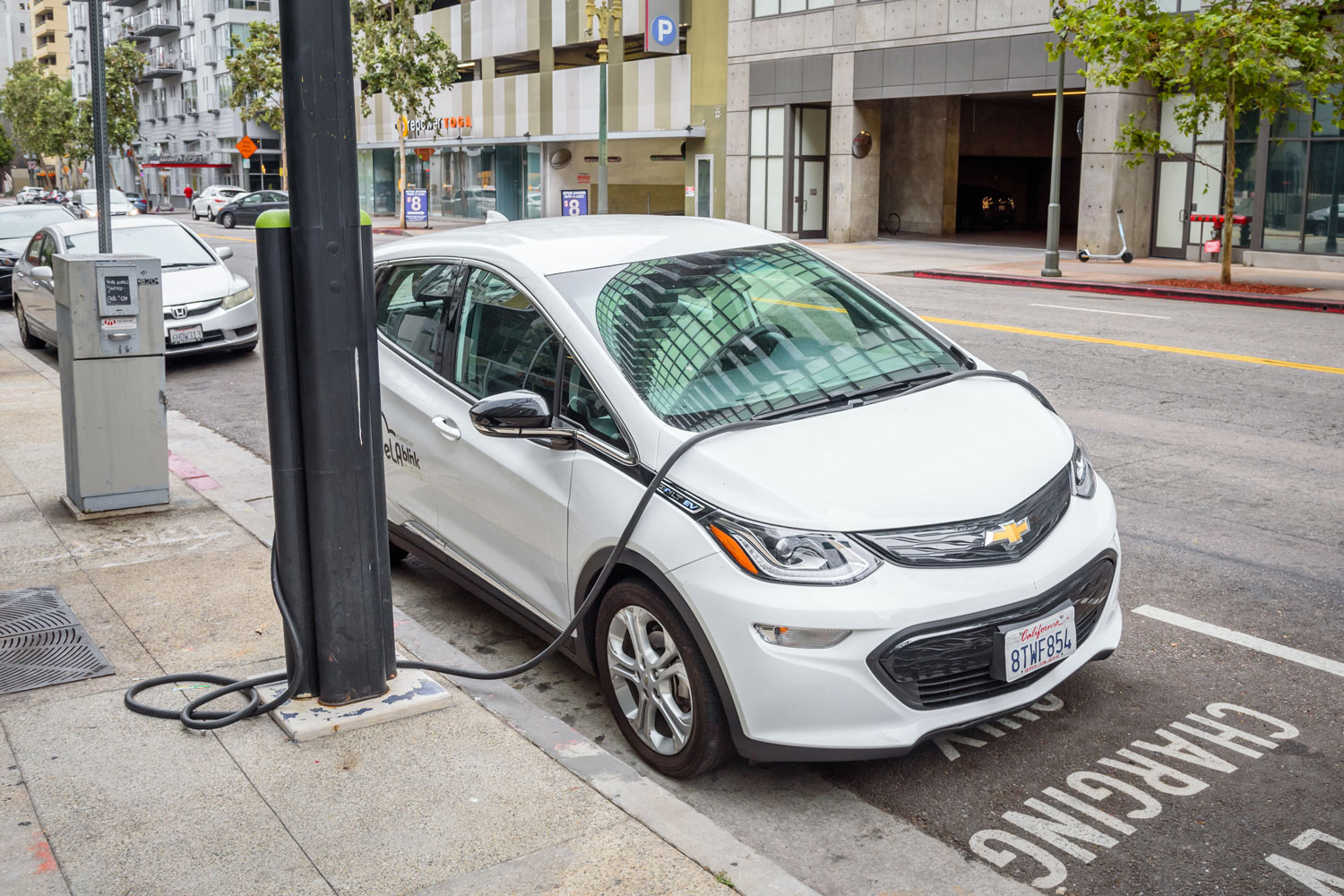
Charging stations for electric vehicles are essential for cleaning up the transportation sector. A new study by MIT researchers suggests they’re good for business, too.

The study found that, in California, opening a charging station boosted annual spending at each nearby business by an average of about $1,500 in 2019 and about $400 between January 2021 and June 2023. The spending bump amounts to thousands of extra dollars annually for nearby businesses, with the increase particularly pronounced for businesses in underresourced areas.

The study’s authors hope the research paints a more holistic picture of the benefits of EV charging stations, beyond environmental factors.

“These increases are equal to a significant chunk of the cost of installing an EV charger, and I hope this study sheds light on these economic benefits,” says lead author Yunhan Zheng MCP ’21, SM ’21, PhD ’24, a postdoc at the Singapore-MIT Alliance for Research and Technology (SMART). “The findings could also diversify the income stream for charger providers and site hosts, and lead to more informed business models for EV charging stations.”

Zheng’s co-authors on the paper, which was published today in Nature Communications, are David Keith, a senior lecturer at the MIT Sloan School of Management; Jinhua Zhao, an MIT professor of cities and transportation; and alumni Shenhao Wang MCP ’17, SM ’17, PhD ’20 and Mi Diao MCP ’06, PhD ’10.

Understanding the EV effect

Increasing the number of electric vehicle charging stations is seen as a key prerequisite for the transition to a cleaner, electrified transportation sector. As such, the 2021 U.S. Infrastructure Investment and Jobs Act committed $7.5 billion to build a national network of public electric vehicle chargers across the U.S.

But a large amount of private investment will also be needed to make charging stations ubiquitous.

“The U.S. is investing a lot in EV chargers and really encouraging EV adoption, but many EV charging providers can’t make enough money at this stage, and getting to profitability is a major challenge,” Zheng says.

EV advocates have long argued that the presence of charging stations brings economic benefits to surrounding communities, but Zheng says previous studies on their impact relied on surveys or were small-scale. Her team of collaborators wanted to make advocates’ claims more empirical.

For their study, the researchers collected data from over 4,000 charging stations in California and 140,000 businesses, relying on anonymized credit and debit card transactions to measure changes in consumer spending. The researchers used data from 2019 through June of 2023, skipping the year 2020 to minimize the impact of the pandemic.

To judge whether charging stations caused customer spending increases, the researchers compared data from businesses within 500 meters of new charging stations before and after their installation. They also analyzed transactions from similar businesses in the same time frame that weren’t near charging stations.

Supercharging nearby businesses

The researchers found that installing a charging station boosted annual spending at nearby establishments by an average of 1.4 percent in 2019 and 0.8 percent from January 2021 to June 2023.

While that might sound like a small amount per business, it amounts to thousands of dollars in overall consumer spending increases. Specifically, those percentages translate to almost $23,000 in cumulative spending increases in 2019 and about $3,400 per year from 2021 through June 2023.

Zheng says the decline in spending increases over the two time periods might be due to a saturation of EV chargers, leading to lower utilization, as well as an overall decrease in spending per business after the Covid-19 pandemic and a reduced number of businesses served by each EV charging station in the second period. Despite this decline, the annual impact of a charging station on all its surrounding businesses would still cover approximately 11.2 percent of the average infrastructure and installation cost of a standard charging station.

Through both time frames, the spending increases were highest for businesses within about a football field’s distance from the new stations. They were also significant for businesses in disadvantaged and low-income areas, as designated by California and the Justice40 Initiative.

“The positive impacts of EV charging stations on businesses are not constrained solely to some high-income neighborhoods,” Wang says. “It highlights the importance for policymakers to develop EV charging stations in marginalized areas, because they not only foster a cleaner environment, but also serve as a catalyst for enhancing economic vitality.”

Zheng believes the findings hold a lesson for charging station developers seeking to improve the profitability of their projects.

“The joint gas station and convenience store business model could also be adopted to EV charging stations,” Zheng says. “Traditionally, many gas stations are affiliated with retail store chains, which enables owners to both sell fuel and attract customers to diversify their revenue stream. EV charging providers could consider a similar approach to internalize the positive impact of EV charging stations.”

Zheng also says the findings could support the creation of new funding models for charging stations, such as multiple businesses sharing the costs of construction so they can all benefit from the added spending.

Those changes could accelerate the creation of charging networks, but Zheng cautions that further research is needed to understand how much the study’s findings can be extrapolated to other areas. She encourages other researchers to study the economic effects of charging stations and hopes future research includes states beyond California and even other countries.

“A huge number of studies have focused on retail sales effects from traditional transportation infrastructure, such as rail and subway stations, bus stops, and street configurations,” Zhao says. “This research provides evidence for an important, emerging piece of transportation infrastructure and shows a consistently positive effect on local businesses, paving the way for future research in this area.”

The research was supported, in part, by the Singapore-MIT Alliance for Research and Technology (SMART) and the Singapore National Research Foundation. Diao was partially supported by the Natural Science Foundation of Shanghai and the Fundamental Research Funds for the Central Universities of China.

© Image: iStock

"The joint gas station and convenience store business model could also be adopted to EV charging stations," Yunhan Zheng says.
❌