Reading view

There are new articles available, click to refresh the page.

The 2026 Toyota C-HR Refuses To Grow Up And Goes All-In On EV Thrills | Review
PROS ›› Genuinely quick, nimble handling, faithful design features CONS ›› Tight rear seating, Uncharted undercuts it, limited cargo space

A quick look around the automotive industry would have most thinking that EV adoption is slowing down. Whether that perception holds true or not, Toyota is moving ahead full steam with not one, but three new electric vehicles, and the C-HR might be the most playful of the bunch. Yesterday, we talked about how the bZ Woodland is a great improvement on the old bZ4x. 

Review: 2026 Toyota bZ Woodland Is Quicker Than A GR Corolla, But That’s Not Its Real Trick

Today, the focus shifts to the C-HR, a revived nameplate that now returns exclusively as an EV. It’s a huge deal beyond just the fact that it’s going electric. It’s the first formerly gas-powered Toyota nameplate to go fully electric. Sure, it only beat the new Highlander by a few months, but that’s more than enough. Both will have a big impact on Toyota moving forward. 

While we don’t know what the Highlander will end up selling for, the C-HR is clearly aimed at a different demographic. With a starting price shy of $38,000 before destination and handling, it’s aimed at Tesla Model Y buyers wanting something a touch smaller. Packing standard all-wheel drive, 338 hp (252 kW), and almost 300 miles of range, it’s a new face in the segment that will no doubt blow up one day. 

Quick Facts
› Model:2026 Toyota C-HR
› Starting Price:$37,000 (excluding destination)
› Dimensions:177.9 L x 73.6 W x 63.8 in H (4,519 x 1,870 x 1,621 mm)
› Wheelbase:108.3 in (2,751 mm)
› Curb Weight:4,322 lbs (1,960 kg)
› Powertrain:Dual electric motors / 74.7 kWh battery
› Output:338 hp (252 kW)
› 0-60 mph4.9 seconds
› Transmission:Single speed
› Range:Up to 287 Miles
› On Sale:First-half of 2026
SWIPE

Now, all that’s left is to figure out if it’s good enough that it’ll gain a foothold for a long ride, or if it’s still a battery cell or two away from a fully-formed EV. Thankfully, a week of testing it in hilly Ojai, California, helped us figure out the good from the bad. 

Styling

\\\\\\\\\\\

Photos Stephen Rivers/Carscoops

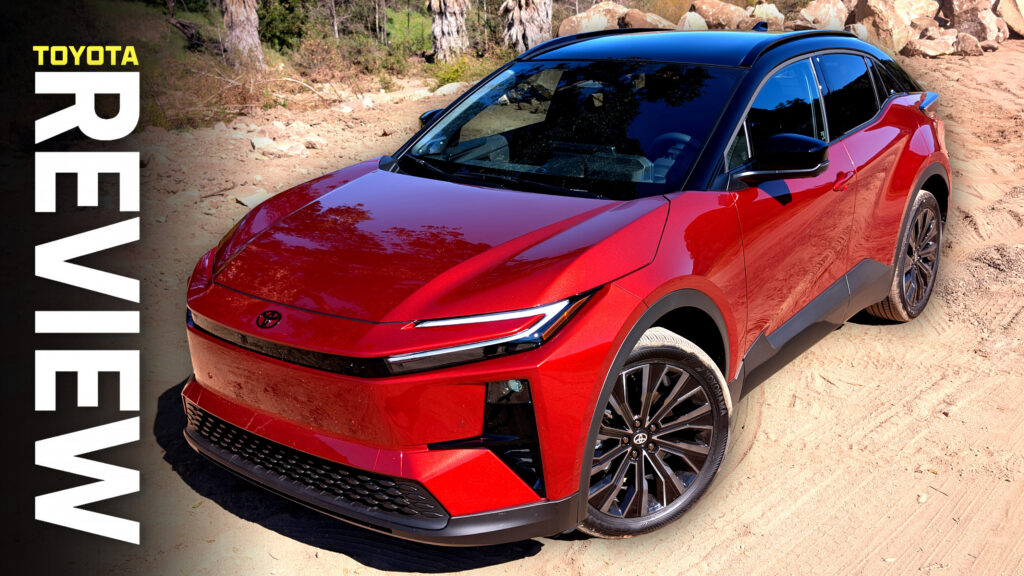
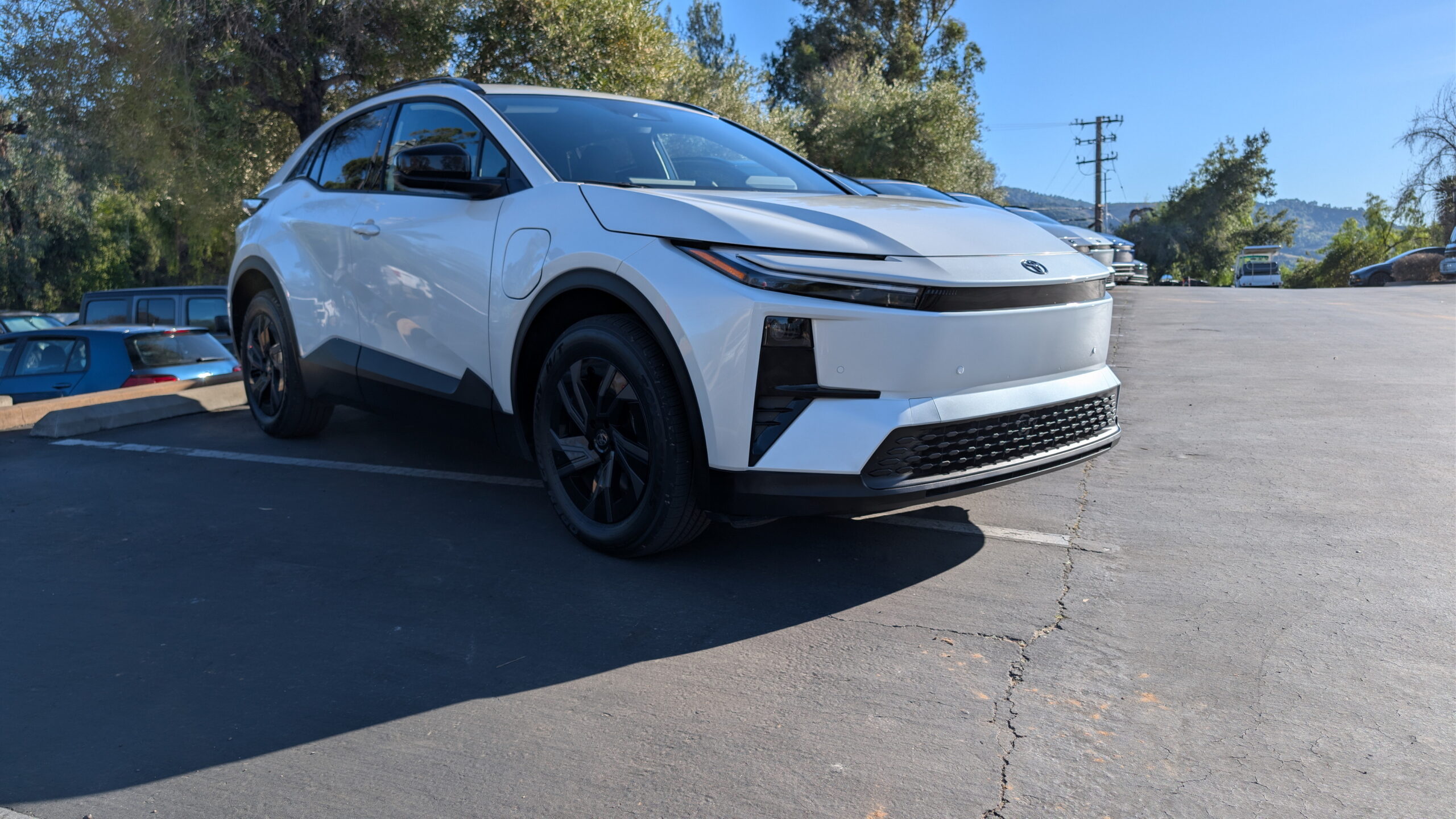
Let’s not play coy. While the C-HR’s nomenclature has always invited comparisons to Honda’s HR-V, the exterior designs couldn’t have been much more different when it first arrived. We’re happy to report that the same playful attitude carries over to this new electric version of the crossover. 

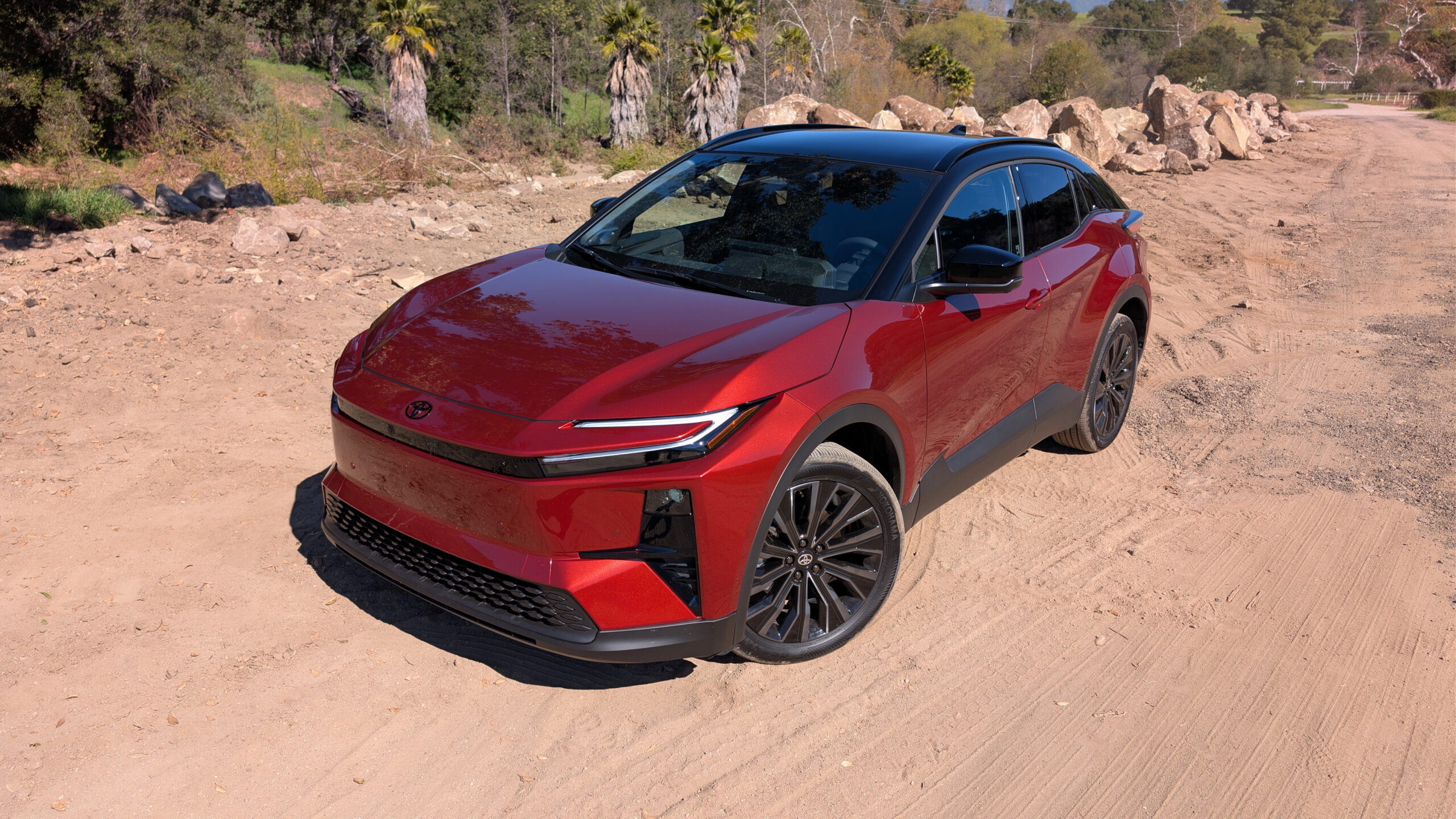
The front end adopts Toyota’s newer hammerhead design language, with a low, aggressive nose and slim lights that visually widen the car. The coupe-like roofline flows cleanly into the rear, and from certain angles, the C-HR almost looks more hatchback than crossover, which works in its favor. It feels athletic despite being clearly compromised on that front. 

Also: New Toyota Highlander Drops Its Biggest Tradition, And I Got A Front-Row Look

Compared to the bZ Woodland, the C-HR looks tighter and more urban. It’s clearly aimed at buyers who want something sporty and expressive rather than rugged or adventurous. The wheel options help sell that image, too, with 18-inch alloys on the SE and aggressive 20-inch wheels on higher trims.

If the old C-HR was bold but polarizing, this one is more mature. It’s still stylish, but it’s less desperate for attention and more apt to provide an experience worthy of an offbeat appearance. 

Cabin Space
 The 2026 Toyota C-HR Refuses To Grow Up And Goes All-In On EV Thrills | Review

Photos Stephen Rivers/Carscoops

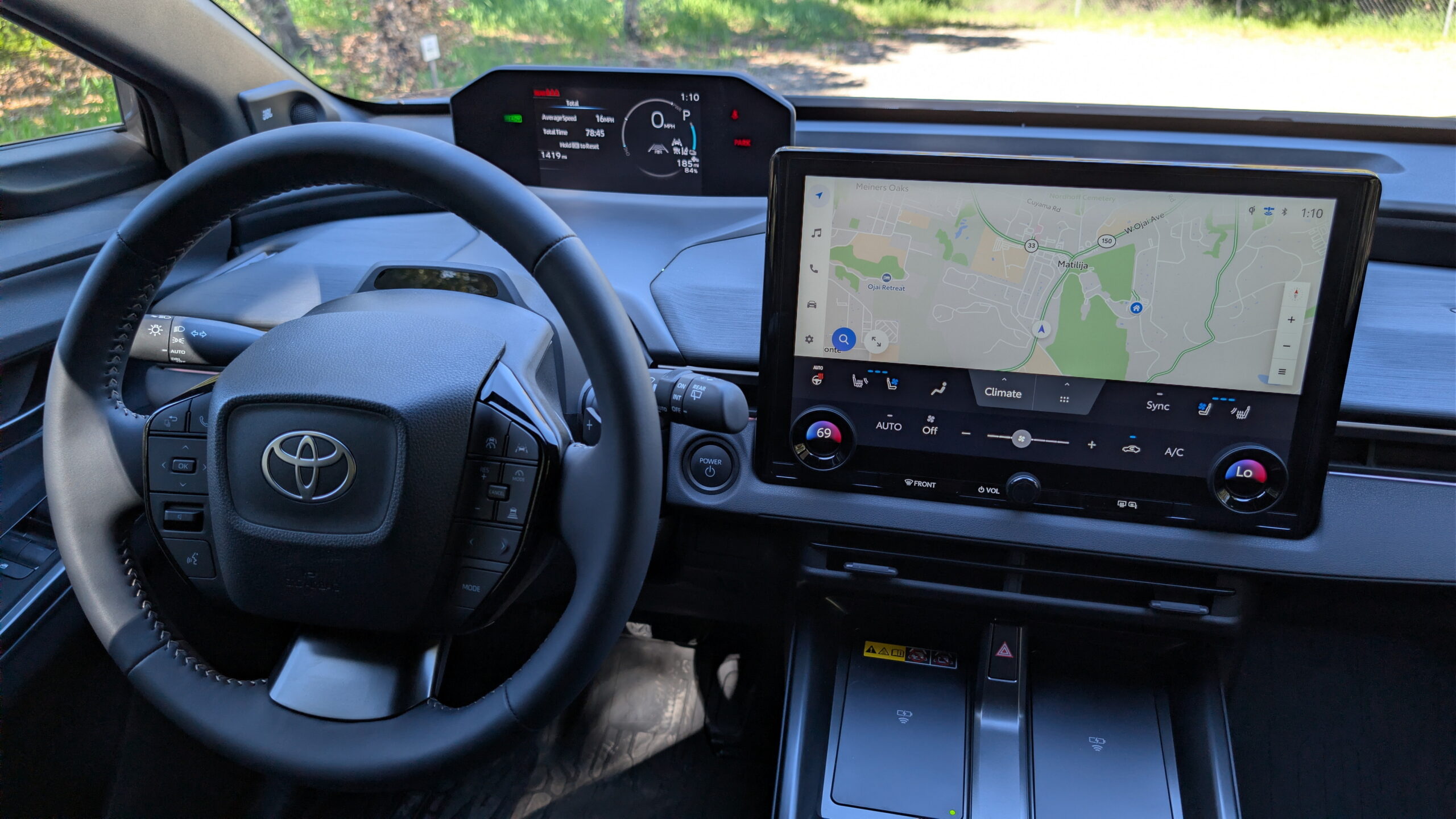
Toyota told us early on that we’d see a lot of crossover between this and the bZ Woodland, and it was right. It leverages supportive front seats, an intuitive infotainment setup, a steering wheel that feels good in your hands, and visibility that’s better than the sloping roofline suggests. The driver’s position feels good, though; we’d love a little more adjustability from the steering wheel. 

\\\\\\

Photos Stephen Rivers/Carscoops

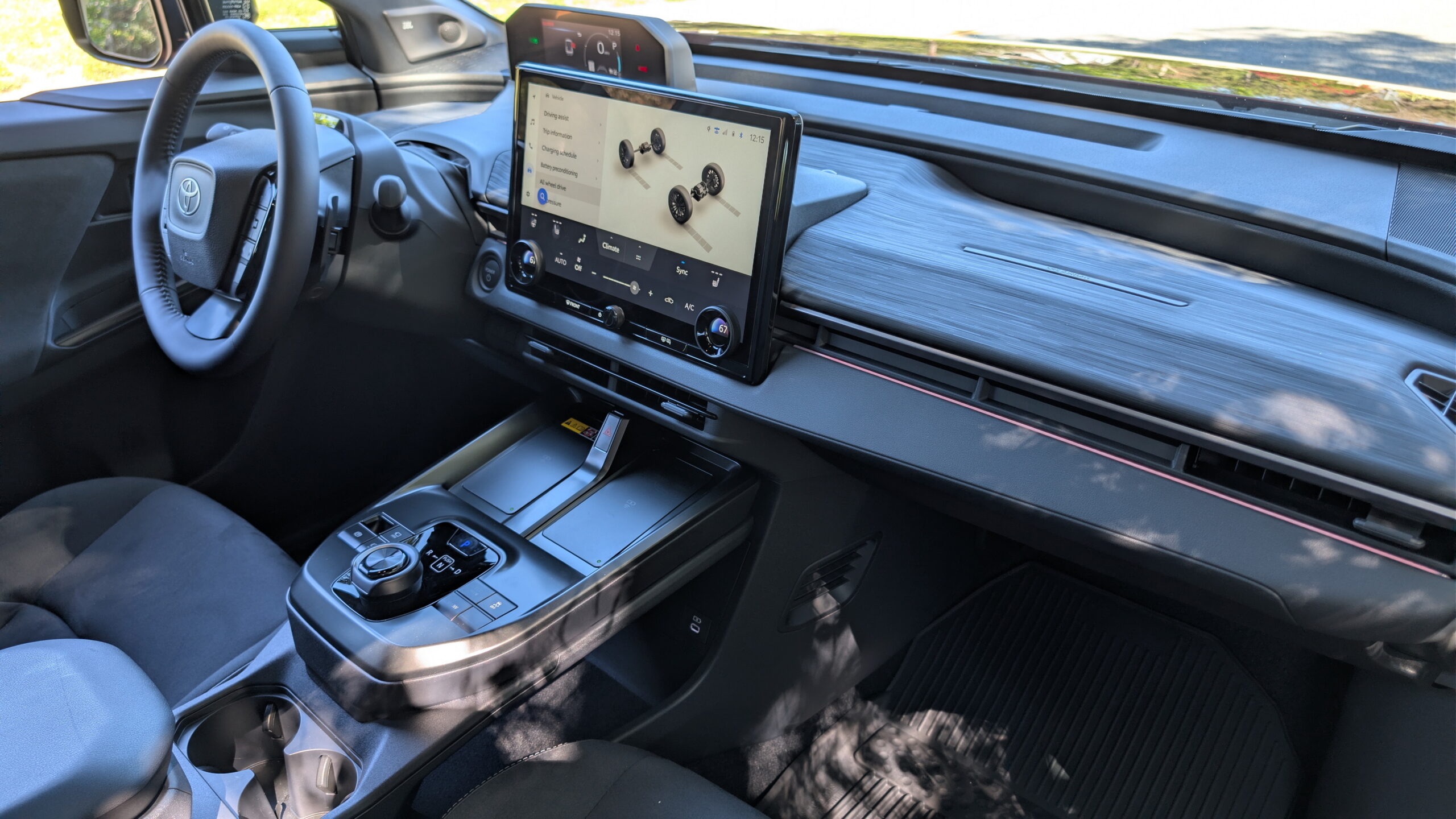
The 14-inch touchscreen dominates the dashboard and comes standard across the lineup. It’s responsive, cleanly laid out, and avoids the over-complicated UI issues that plague some competitors. Dual wireless charging pads and practical storage touches reinforce that Toyota still knows how to design for daily life.

Material quality is a step up from Toyota’s earlier EV efforts, too. Soft-touch surfaces and ambient lighting keep things modern without crossing into gimmicky territory. And then you climb into the rear seats. Things go from perfectly livable to suddenly only for the smallest around us. 

How Tight Is Too Tight?
 The 2026 Toyota C-HR Refuses To Grow Up And Goes All-In On EV Thrills | Review

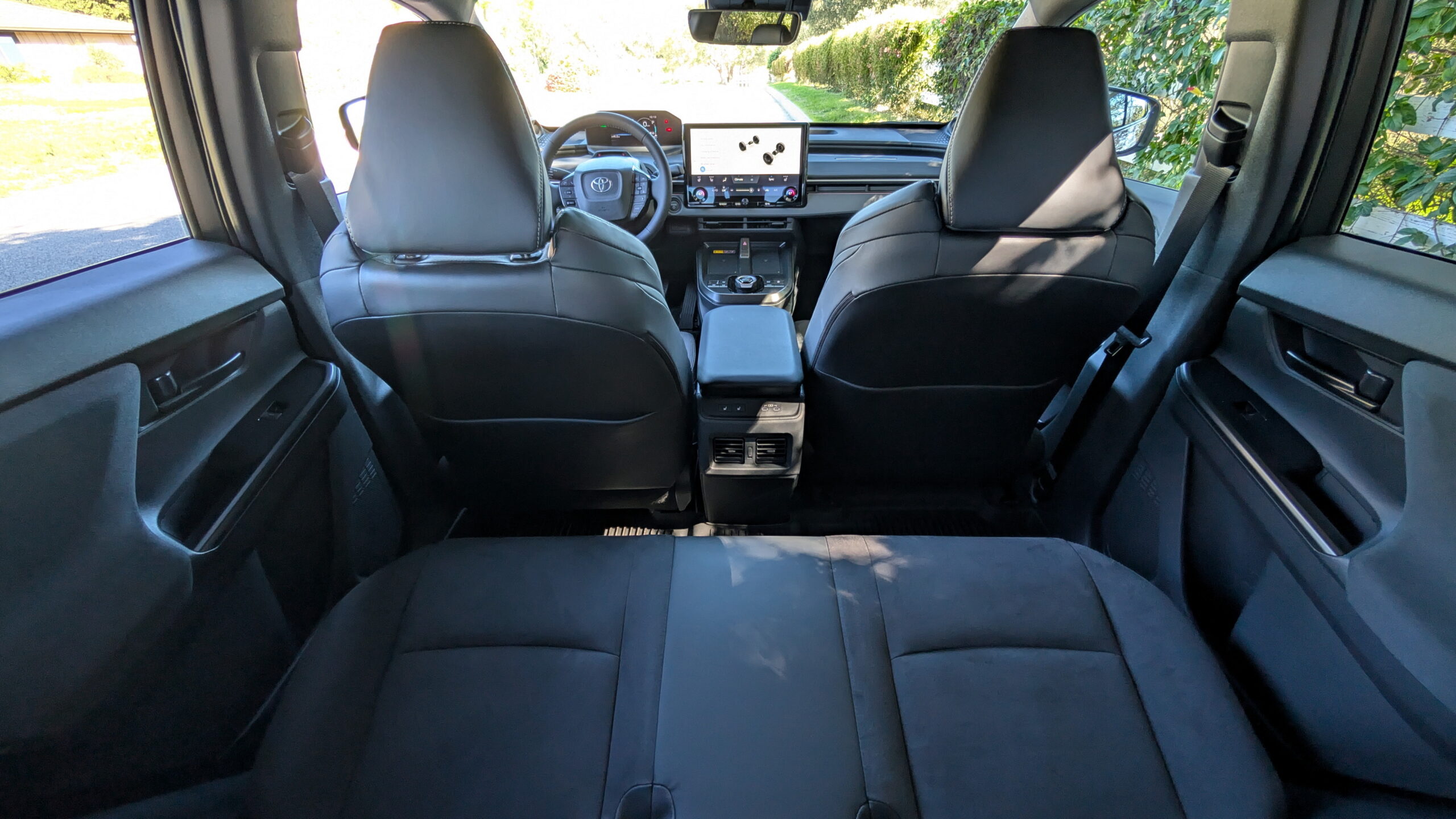
I get that as a taller-than-average guy, I won’t fit everywhere, but I was sincerely shocked at just how tight the back seats of the C-HR are. This is a compact crossover, and that’s clear as soon as we compare it to another new crossover in the form of the Mazda CX-5

The Mazda has a wheelbase that is just 2.5 inches (63 mm) longer. Despite that, the CX-5 offers 7.7 inches (195 mm) of additional legroom, up to 2.8 inches of headroom, and in total over 10 cubic feet of extra space in the rear seats. Put simply, rear-seat occupants won’t be happy in the C-HR unless they’re relatively small. That said, they’ll fit kids just fine. 
 The 2026 Toyota C-HR Refuses To Grow Up And Goes All-In On EV Thrills | Review

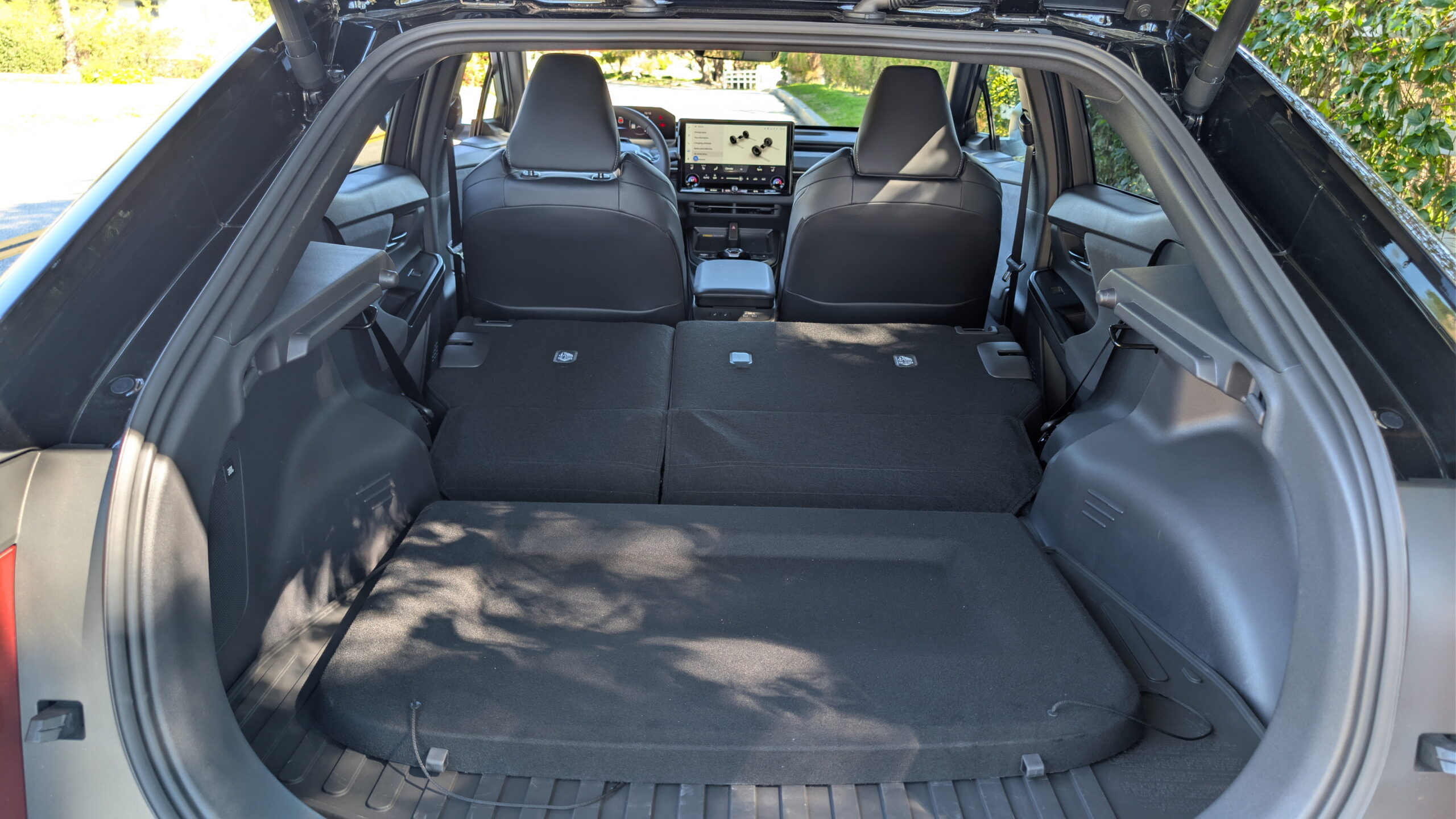
Cargo space fares better, with 25.3 cubic feet behind the rear seats and nearly 60 cubic feet with them folded. That’s perfectly usable for daily life, but the passenger packaging tells you clearly where Toyota’s priorities were.

Driving Impressions
 The 2026 Toyota C-HR Refuses To Grow Up And Goes All-In On EV Thrills | Review

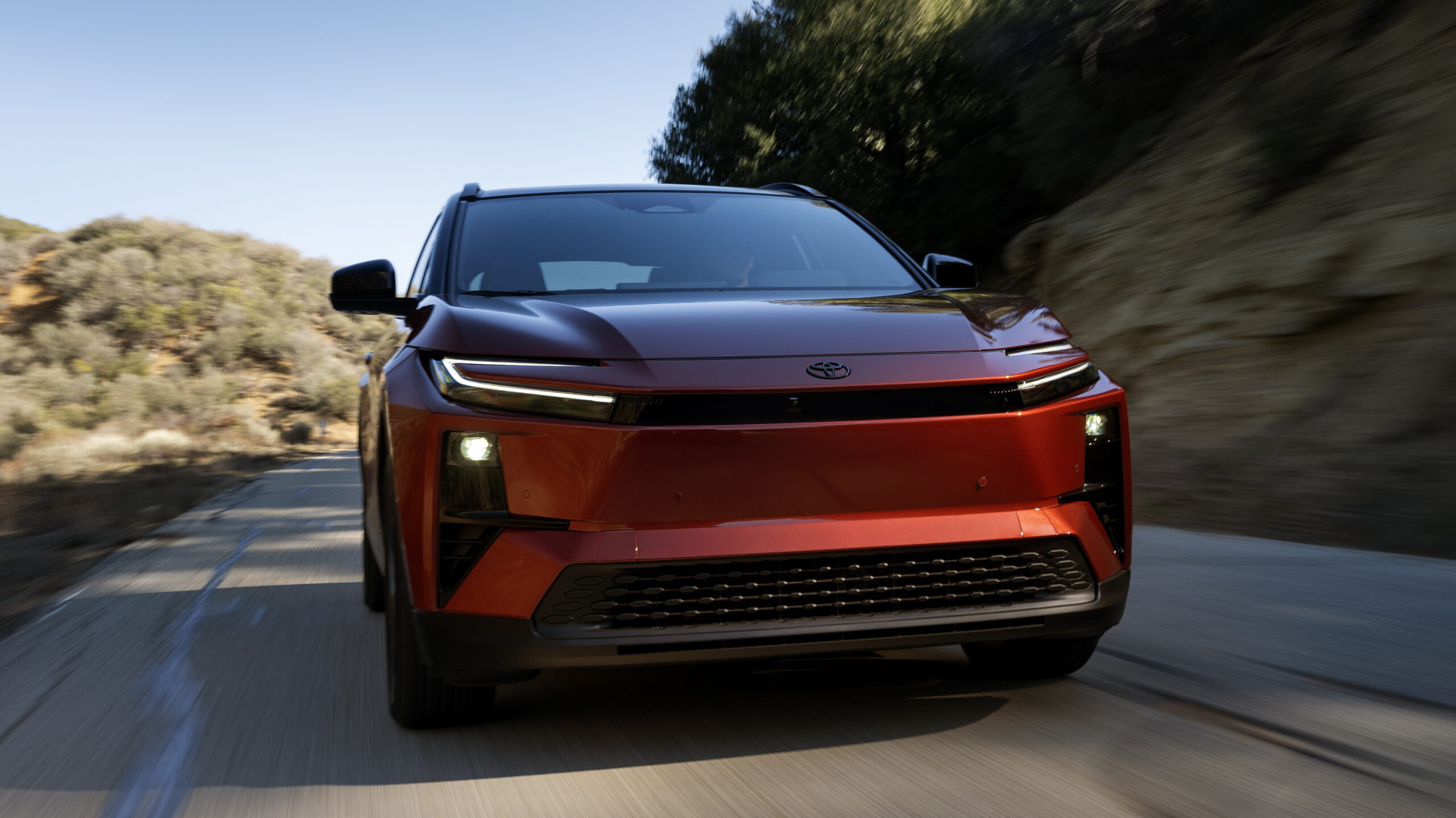
Here’s where the plot thickens, in the best way possible. EVs are well-known for their instant torque, but that doesn’t automatically make one good to drive. The way the C-HR moves about the world is with more authority than one might expect. It’s sharp. The short wheelbase helps it manage bends with confidence. And the steering is more communicative than in the larger bZ Woodland

Toyota claims 0-60 mph in 4.9 seconds, and it absolutely feels believable. This thing moves… not with the aggressive chaos of a GR Corolla, but with the smooth, relentless urgency only an EV can deliver. In fact, this might be the quickest pseudo-practical car in Toyota’s lineup right now. It’s not trying to be a sports car, yet it’s faster in a straight line than many cars that are.

The low battery placement keeps the center of gravity down, and the chassis feels planted through corners. Steering is light but accurate enough that you want to push a little harder than you probably expected. There’s a maturity to the tuning. It’s composed, predictable, and easy to trust. The brakes are excellent, too. 
 The 2026 Toyota C-HR Refuses To Grow Up And Goes All-In On EV Thrills | Review

The regenerative braking paddles let you adjust deceleration on the fly, which adds a layer of driver involvement often missing from mainstream EVs. It’s not revolutionary, but it does make the driving experience feel more interactive.

Ride quality strikes a nice balance, too. It’s firm enough to feel sporty without punishing you over rough pavement. The C-HR doesn’t feel like a small SUV pretending to be sporty. It just feels like a well-sorted EV with some genuine personality. No, it’s a far cry from a Hyundai Ioniq 5 N or a Tesla Model Y Performance, but it’s the EV I’d pick from Toyota’s lineup if driving feel was all that mattered. 

More: Toyota Made An Electric Subaru Outback As Powerful As A Supra

From a more practical standpoint, range tops out at 287 miles on the SE trim, dropping slightly with the larger wheels. Charging speeds max out at 150 kW DC fast charging. That’s enough to go from 10–80 percent in roughly 30 minutes under ideal conditions. As we’ve seen in the past, ideal conditions can be rare, but the inclusion of Tesla’s NACS port should help. 

Competition
 The 2026 Toyota C-HR Refuses To Grow Up And Goes All-In On EV Thrills | Review
Photo Stephen Rivers/Carscoops

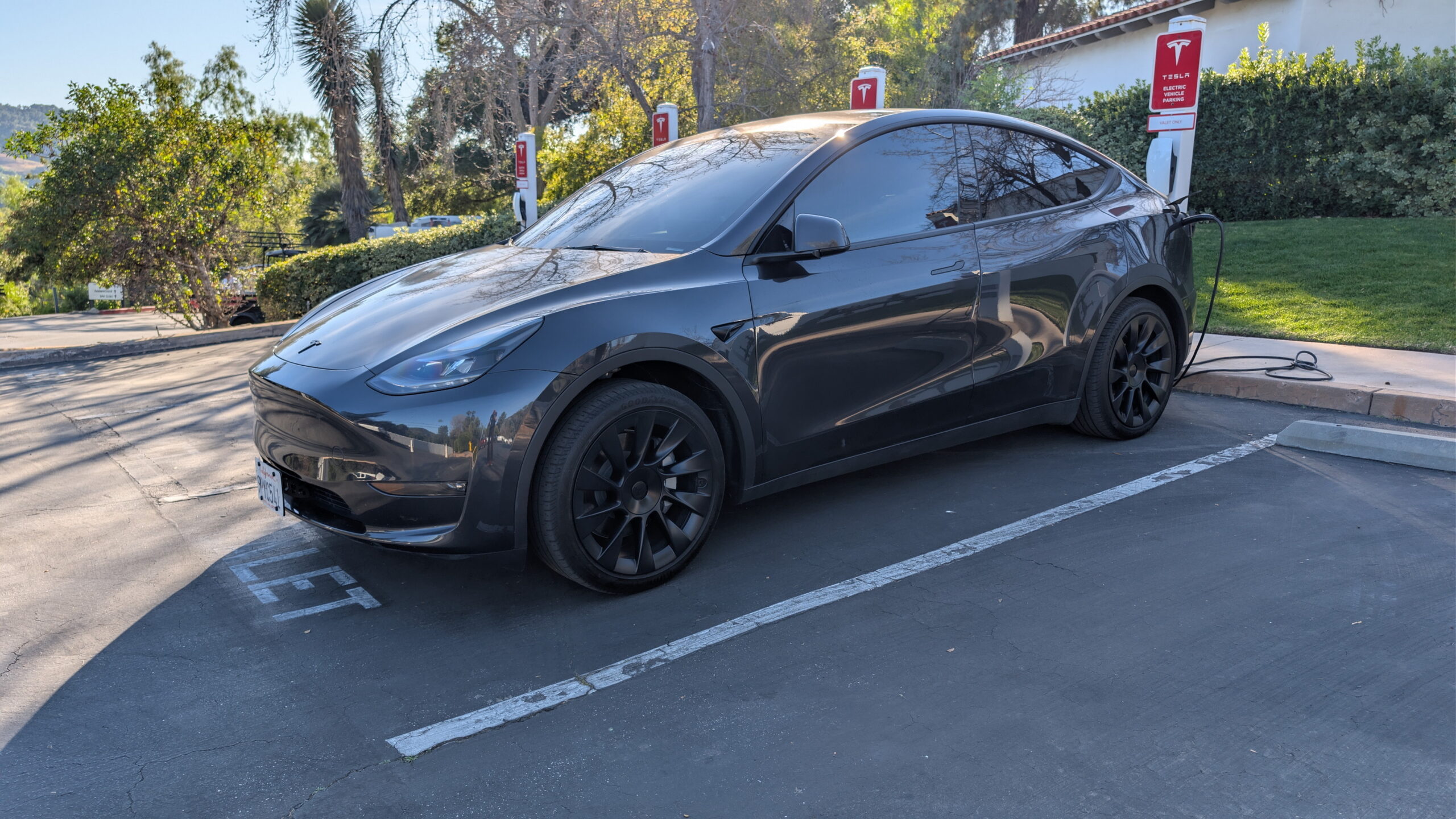
The C-HR lands in an increasingly crowded space, but its personality gives it, like the bZ Woodland, a unique angle. The Tesla Model Y remains the benchmark for space and usability. It’s roomier, more versatile, and easier to live with if rear-seat comfort matters. The Model 3, while technically a sedan, also beats the C-HR for rear-seat comfort despite looking smaller.

Frankly, comparing it on paper to most cars in the segment makes the C-HR look like a middling choice at best. Even pairing it against its badge-engineered sibling, the Subaru Uncharted, it costs more and isn’t available with front-wheel drive, which unlocks more range. That said, I’m not about to start complaining that we need more front-wheel drive cars.

Where the C-HR stands out is key, though. All-wheel drive is something that plenty of folks want and or need where they live. Second, it’s probably the easiest car in the segment to park, thanks to great sightlines and one of the shortest wheelbases here. That matters. 

No, it’s not the quickest, cheapest, or most spacious. Instead, it’s leaning into the vibe of a compact, economical electric vehicle to the best of its ability in its current form. And that form just so happens to be quite attractive and fun. 

The Verdict
 The 2026 Toyota C-HR Refuses To Grow Up And Goes All-In On EV Thrills | Review

Toyota just launched the new Highlander in all-electric form, which is a huge deal in itself, but let’s not forget that this new C-HR is the first formerly gas-powered Toyota to go all-EV in America. That’s also a big deal, and it makes this little commuter car an important inflection point in history. 

To that end, it’s great to see that Toyota didn’t hold back here regarding performance. The C-HR is properly quick, genuinely fun to pilot, and even fun to look at. The front seats, infotainment, and overall driving position are all excellent, and on the road, it feels composed, lively, and far more engaging than many electric crossovers in its segment.

That said, it’s not without compromise. Rear-seat space is tight enough to be a real consideration, especially if you regularly carry adults. This is a crossover that prioritizes style and driving feel over maximum practicality. And honestly, that might be exactly the point. Here, the fun comes first, and the practicality, while important, comes in second place. Will it be a mix that sells well? Only time will tell. 
\\\\\\\\

Photos Stephen Rivers/Carscoops

2026 Toyota bZ Woodland Is Quicker Than A GR Corolla, But That’s Not Its Real Trick | Review

PROS ›› Lots of utility, genuinely quick, quiet cabin CONS ›› Tight rear space, Trailseeker is cheaper, divisive styling

Toyota is one of the few brands that still seems intent on giving enthusiasts something to get excited about. Vehicles like the Land Cruiser, GR Corolla, and GR Supra make that clear. But what about the eco-conscious buyer with a family? Until now, that same energy hasn’t really carried over to its EV lineup. The bZ Woodland is meant to change that.

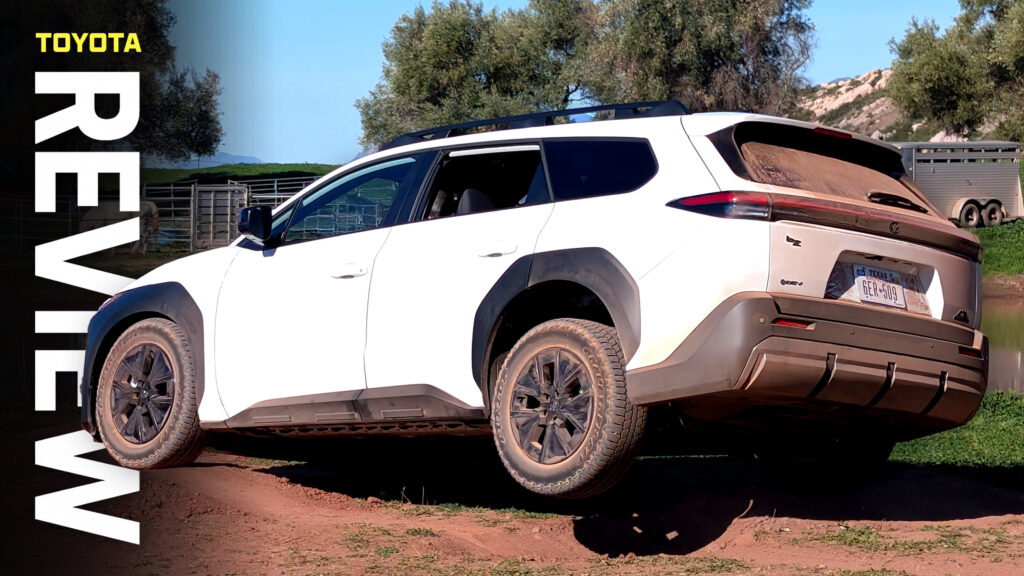
It would be easy to look at it and assume this is just another trim level dressed up with black plastic cladding and a roof rack meant to suggest capability more than deliver it. After all, Toyota is still a long way from securing a serious foothold in the all-electric space. This SUV, which actually looks more like a wagon on stilts, not dissimilar to older Subaru Outbacks, pushes the brand more squarely into the conversation.

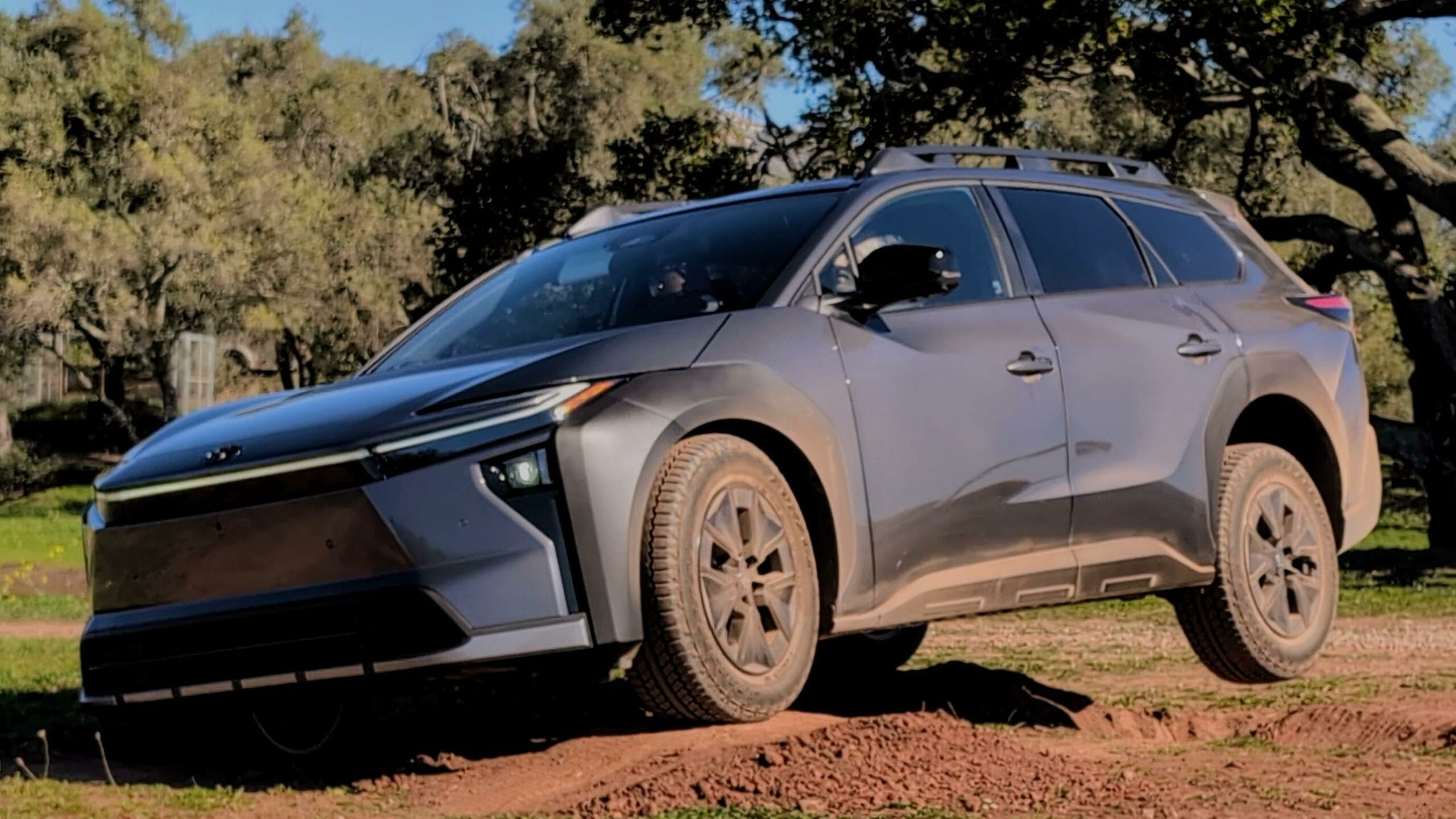
Positioned above the standard bZ SUV, the Woodland adds nearly six inches of length, unique over-fenders, standard all-wheel drive, and boasts 8.4 inches (213 mm) of ground clearance. That’s just about an inch shy of a base Tacoma, and the pickup doesn’t come standard with 375 horsepower and a 0-60 time of 4.4 seconds either. 

QUICK FACTS
› Model:2026 Toyota bZ Woodland
› Starting Price:$45,300 (excluding destination)
› Dimensions:190.2 L x 73.2 W x 63.8 in H (4,830 x 1,860 x 1,620 mm)
› Wheelbase:112.2 in (2,850 mm)
› Curb Weight:4,376–4,453 pounds (1,985–2,020 kg)
› Powertrain:Dual electric motors / 74.7 kWh battery
› Output:375 hp (280 kW)
› 0-60 mph:4.4 seconds (97 kmh)
› Transmission:Single speed
› Efficiency:21.0 kWh/100 km as tested
› On Sale:First-half of 2026
SWIPE

On paper, this could be the vehicle to move Toyota’s EV aspirations higher. It’s a family hauler. It sounds like it’ll be reasonably capable off-road. Clearly, on-road performance is something the automaker considered as well. Does it all actually pay off in the real world, though? That’s what we went all the way to California to find out. 

Rugged Cues With Familiar DNA

\\\\\\\\\\

Photos Stephen Rivers/Carscoops

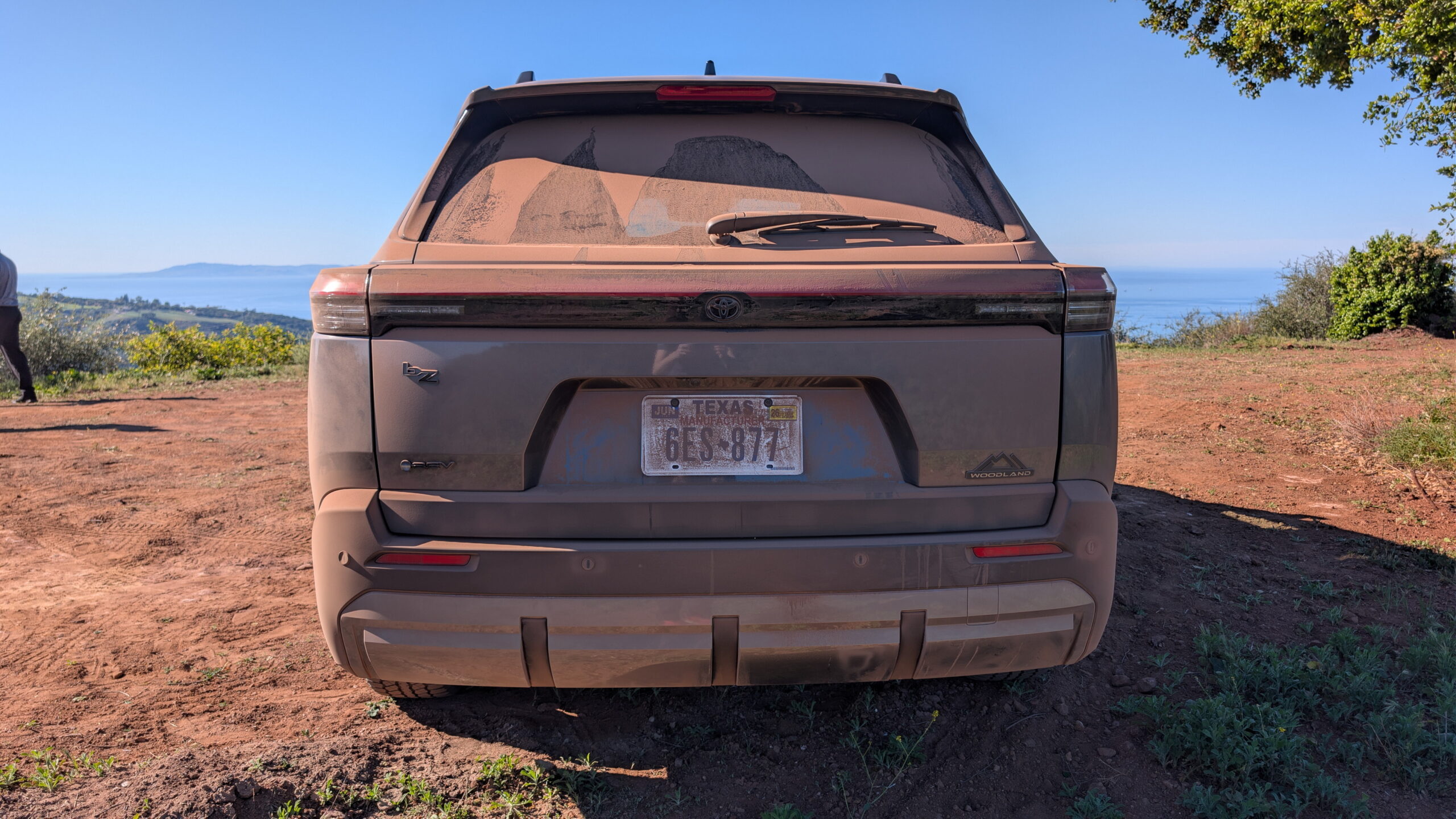
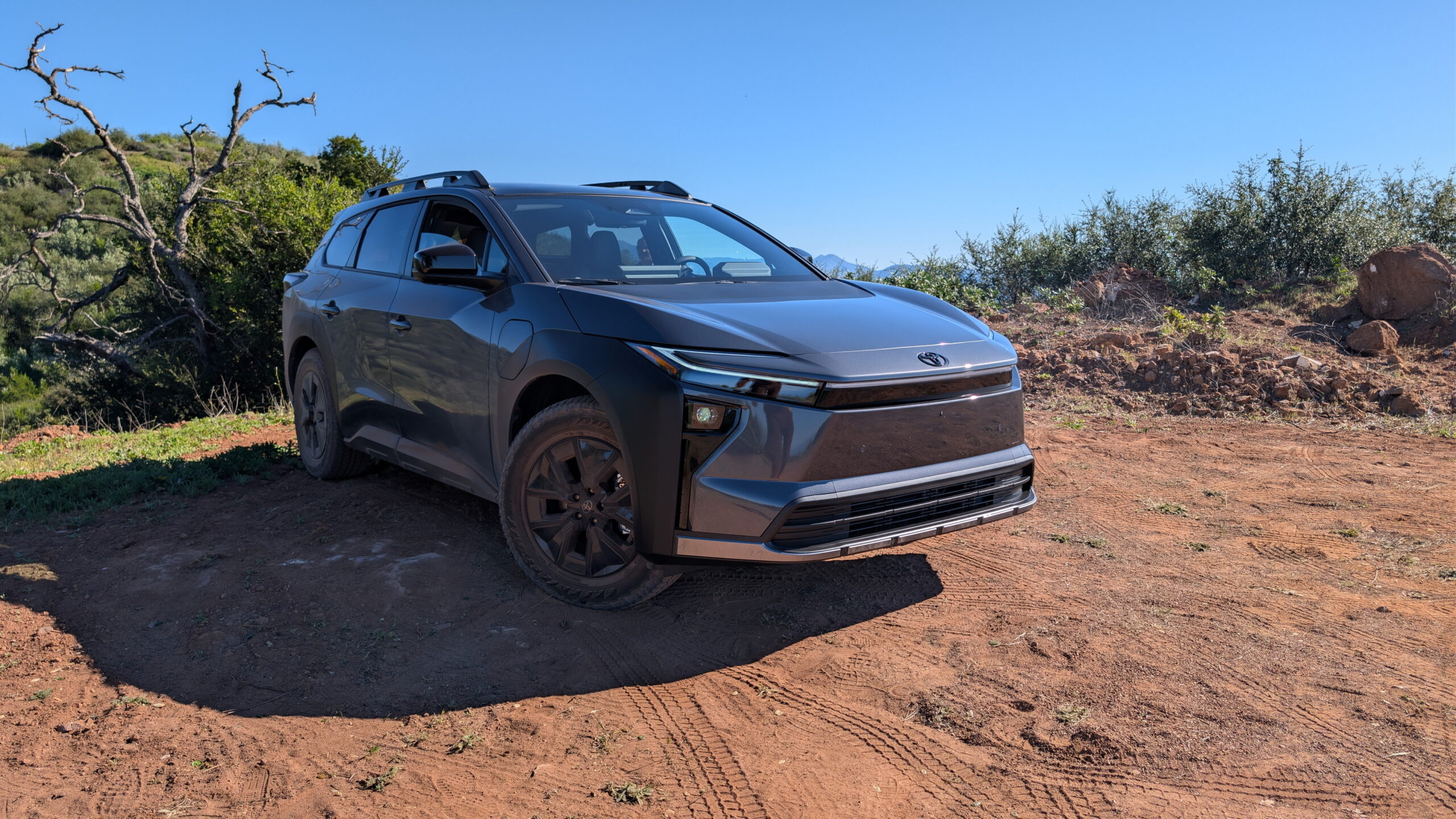
From afar, the bZ Woodland looks like it’s gone out into the world in a monotone plaid shirt. It’s trying to stand out and appear rugged, but not shouting for others to look at it. Some will love it and appreciate the understatedness, and others will think it’s trying too hard and is a bit overdone. Personally, I’m not sure the black plastic cladding is doing much good, but once it has some dirt on it, the overall package does appear appropriate. 

Read: Toyota’s Lineup Overhaul Could Include A Surprise Sedan

That said, it’s far from a departure from Toyota’s previous design efforts. The hammerhead nose, first introduced on the widely-loved new Prius design, is here and is complemented by a full-width LED lightbar and DRLs. The sideskirts and rear of the car offer more cladding and even a faux diffuser treatment below another full-width LED lightbar. 

 2026 Toyota bZ Woodland Is Quicker Than A GR Corolla, But That’s Not Its Real Trick | Review

Photos Stephen Rivers/Carscoops

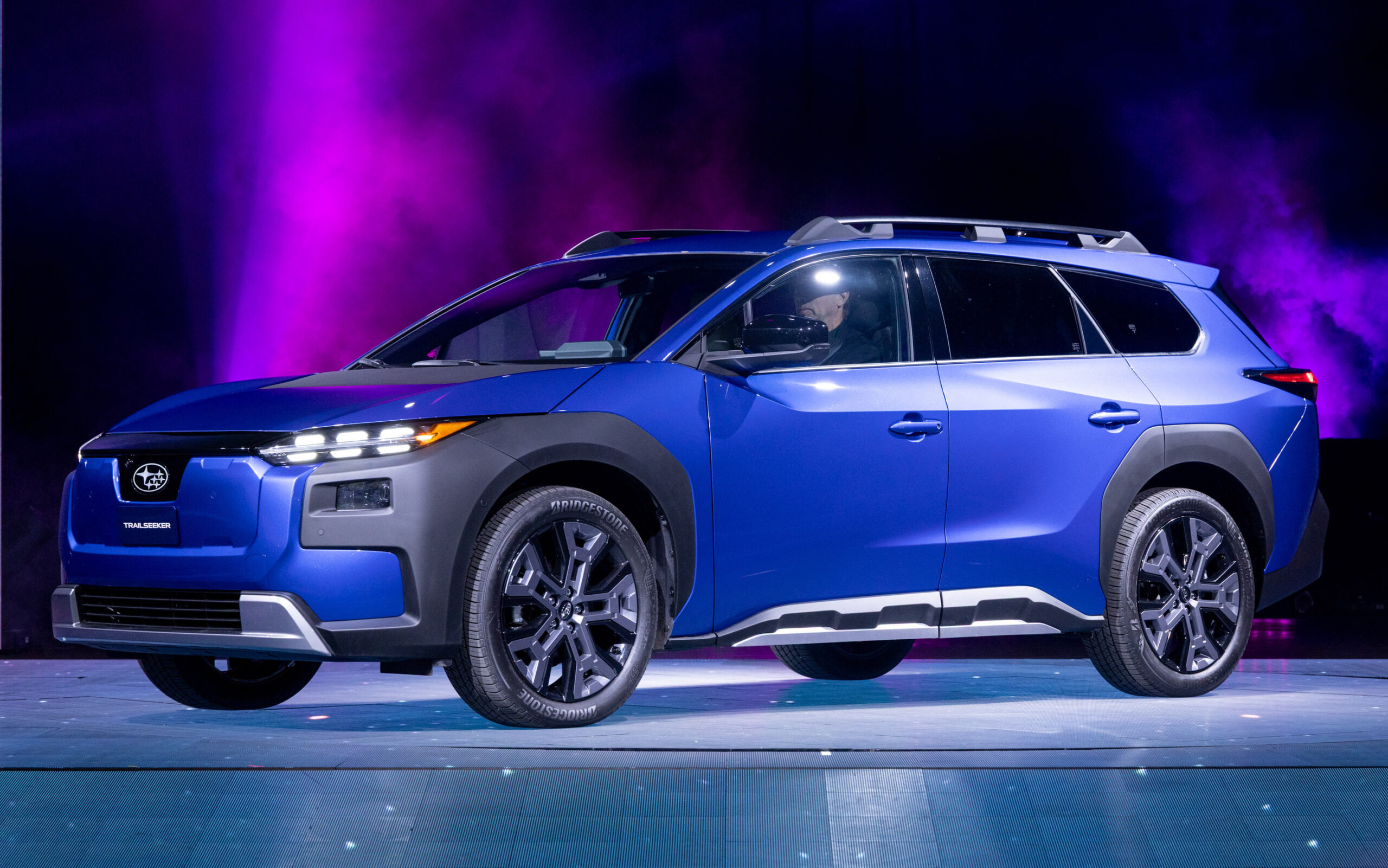
If you’re getting Subaru vibes from the shape, don’t feel bad. This SUV rolls off a Subaru production line with that brand’s Trailseeker SUV. The two share just about everything under the skin, but compare them side to side, and to my eye, it’s the Toyota that seems to have a more cohesive design overall. 

Cabin Design And Layout

 2026 Toyota bZ Woodland Is Quicker Than A GR Corolla, But That’s Not Its Real Trick | Review

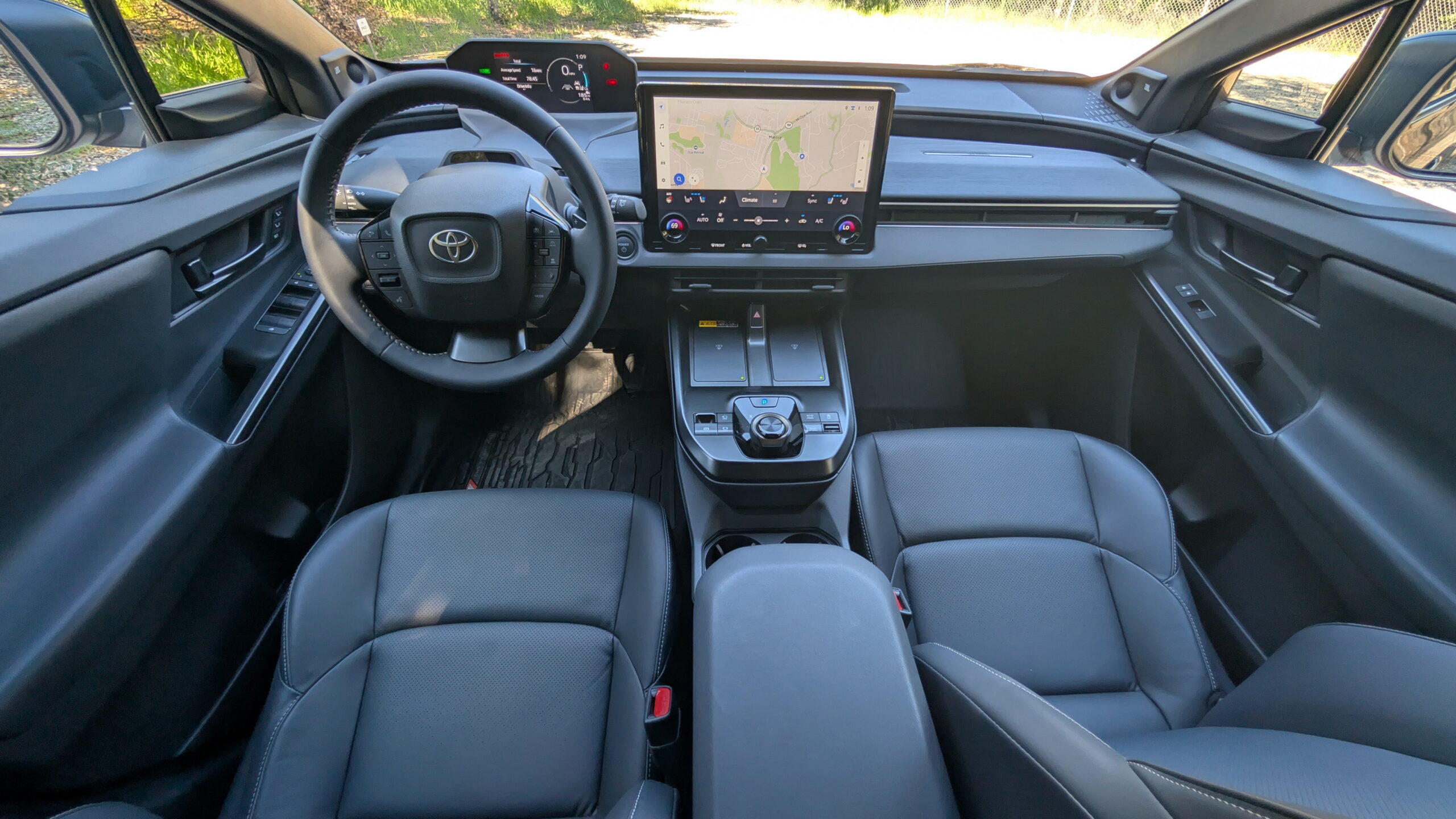
In the cabin, this crossover walks a fine line between rugged and refined. The materials feel good overall. They’re not luxurious or even what I’d call premium necessarily, but there’s a lot of thoughtful little touches to enjoy. Take, for example, the visual texturizing of the dashboard edges and upper door cards. 

It elevates what could otherwise be a very plain space. That said, it’s all monotone. Black and more black, unless you opt for Stone Brown. I wish there were a little more visual drama inside, but from a business standpoint, Toyota probably made the smart call.

Also: New Subaru Outback Finally Comes Out As An SUV

The cabin layout is straightforward to the point of being almost clinical. The 14-inch infotainment screen dominates the dash. It’s fast, intuitive, and thankfully backed up by integrated physical controls for key functions. The steering wheel feels tech-forward, with buttons for lane centering, voice commands, regenerative braking adjustments, and more. It’s busy, but logical.

Ergonomics And Everyday Usability

\\\\\\\\\

Photos Stephen Rivers/Carscoops

One potential issue, especially for shorter drivers, is that the steering wheel doesn’t have much in the way of maneuverability. My drive partner, Jason Torchinsky from our friends over at The Autopian, specifically remarked on how shorter drivers will struggle to see the entire gauge cluster without having the wheel block a significant portion of it. 

In other words, shorter drivers might have to pick between seeing the whole road or seeing the whole gauge cluster because doing both at once might be impossible. 

Another strange choice is the shifter knob. You have to press down on a ring and then rotate it in the direction you want. It’s not terrible. But it’s not intuitive, either. And it doesn’t feel like it adds anything meaningful. That space could’ve been used more creatively. Ahead of it, dual wireless chargers are a genuinely nice touch. It’s the kind of small usability win that makes daily life easier.

More: Are We Entering A New Era Of Badge Engineering?

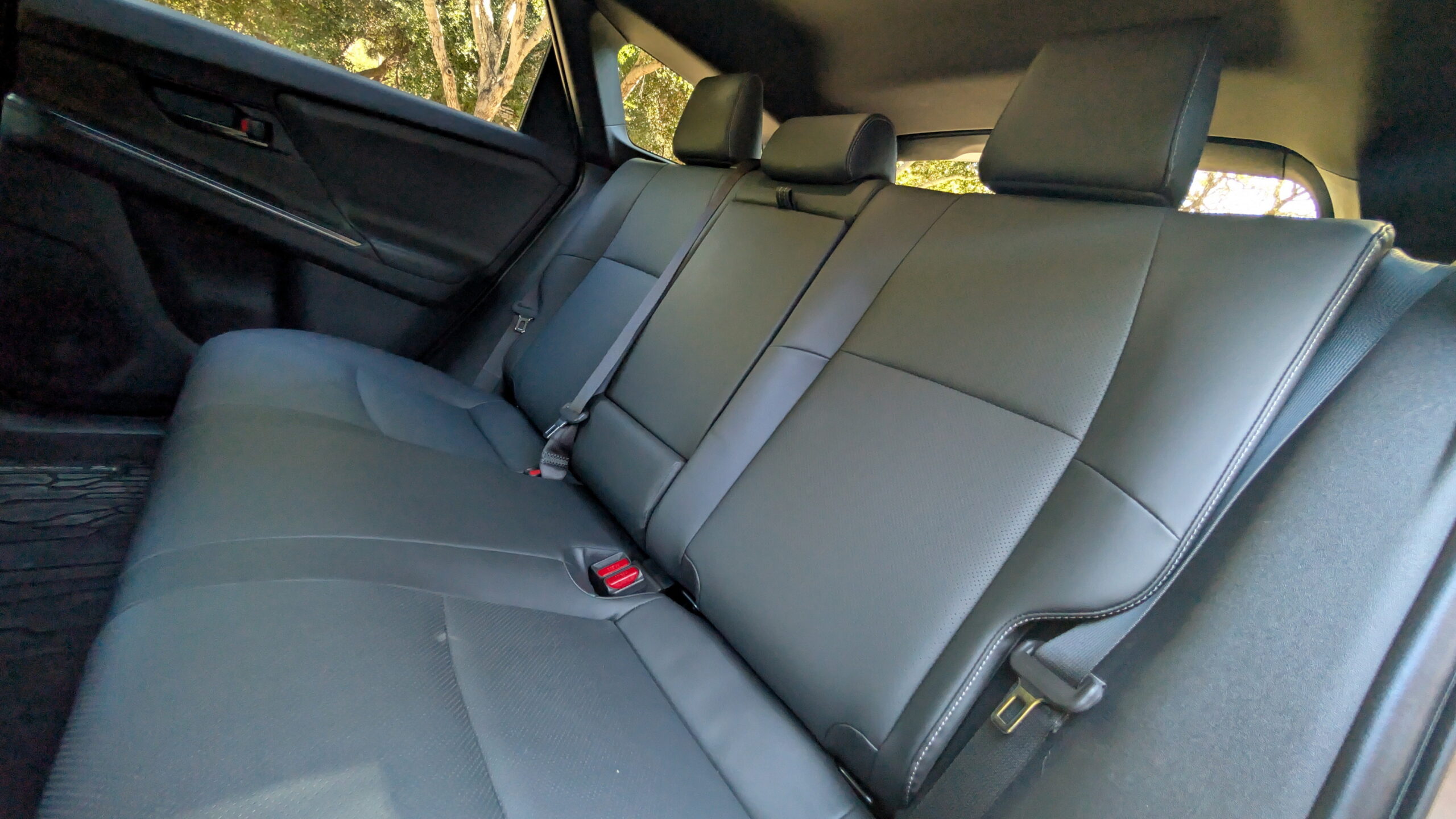
Rear seat space is where reality sets in. For a relatively large crossover, comparable in footprint to something like a Crown Signia, it’s tight back there. At 6’6″, I’ve endured my share of cramped rear benches, but I wasn’t expecting to have to slouch this much. Average-sized adults will be fine. Taller passengers should absolutely call shotgun.

 2026 Toyota bZ Woodland Is Quicker Than A GR Corolla, But That’s Not Its Real Trick | Review

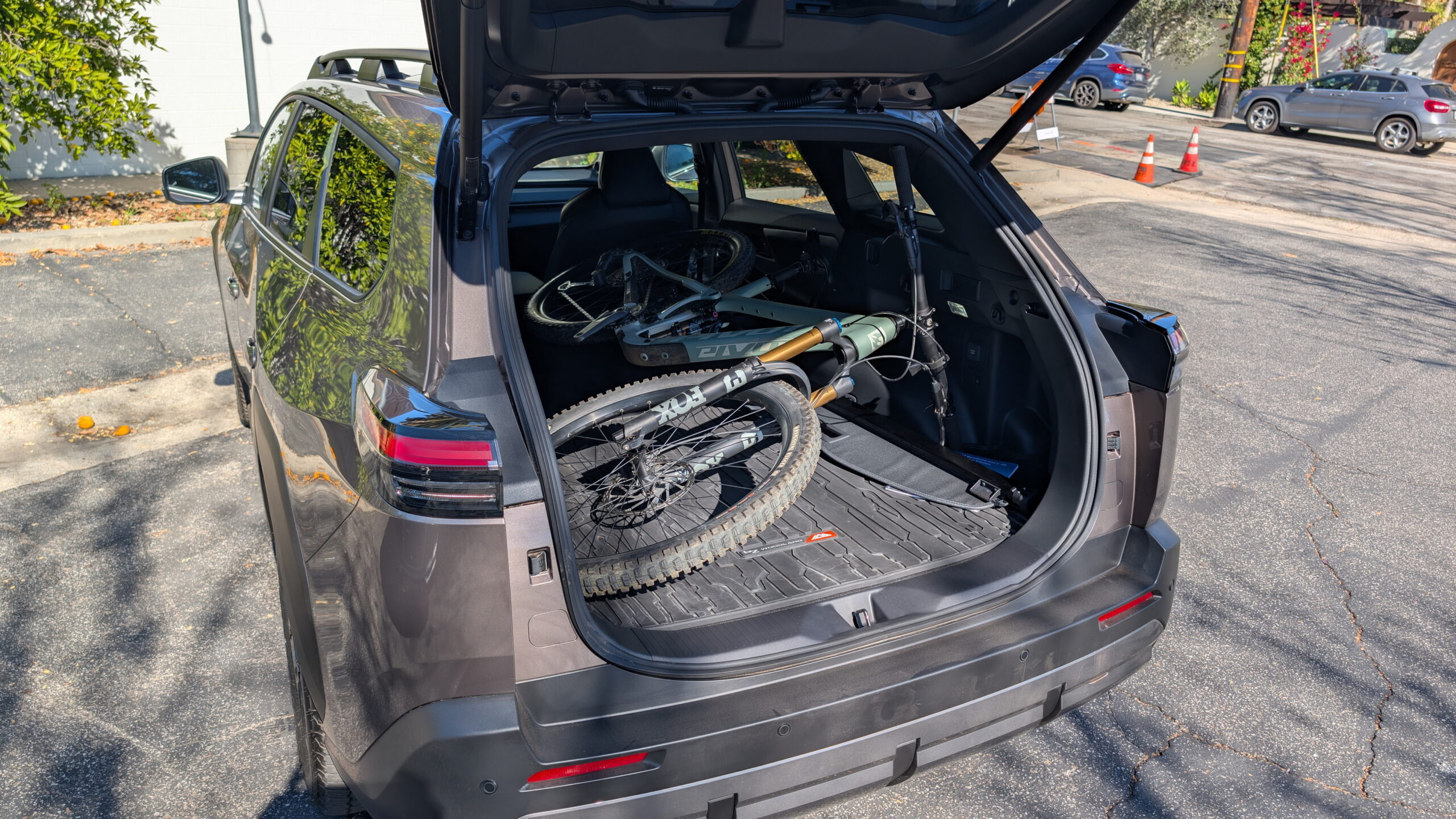
Cargo space makes up for it. With 74.9 cubic feet available with the seats folded, it’s genuinely cavernous. I fit a full-size, full-suspension mountain bike in the back, thanks to The Mob Shop, without removing the front wheel. That’s impressive. 

 2026 Toyota bZ Woodland Is Quicker Than A GR Corolla, But That’s Not Its Real Trick | Review

It speaks not only to total volume but to how large and usable the rear opening is. If it swallows a modern mountain bike that I could ride whole, it’ll handle just about anything else you throw at it. If that’s not enough, it can also tow up to 3,500 pounds (1,588 kg). 

Technology And Charging

 2026 Toyota bZ Woodland Is Quicker Than A GR Corolla, But That’s Not Its Real Trick | Review

Toyota loads the Woodland well. The 14-inch touchscreen runs Toyota’s latest multimedia software with wireless Apple CarPlay and Android Auto. The system is quick and easy to navigate. Dual Bluetooth pairing, Wi-Fi hotspot capability, and available JBL audio round things out nicely. 

Charging is handled via a North American Charging Standard (NACS) port, giving access to a broad network of fast chargers. Under ideal conditions, Toyota says it’ll go from 10% to 80% in around 30 minutes. There’s also battery preconditioning and Plug & Charge capability to simplify public charging. That alone is a huge step in the right direction. 

Steering-wheel-mounted paddles allow you to adjust regenerative braking intensity on the fly. It’s a useful way to fine-tune the driving experience depending on terrain or traffic. Toyota Safety Sense 3.0 comes standard, along with features like Blind Spot Monitoring, Rear Cross-Traffic Alert, Panoramic View Monitor with Multi-Terrain Monitor, and Safe Exit Alert.

It’s a comprehensive package that just about all buyers will benefit from. 

Drive Impressions

 2026 Toyota bZ Woodland Is Quicker Than A GR Corolla, But That’s Not Its Real Trick | Review

Here’s where things take another unexpected turn, and this time, it’s decidedly for the better. Testing crossovers often means evaluating a vehicle that starts out compromised by design. What you don’t expect is something that does so many things at an above-average level, but that’s exactly where the bZ Woodland lands from a driver’s perspective.

Within 60 seconds of the opening presentation surrounding this vehicle, Toyota was proudly boasting that it has a 0-60 time of just 4.4 seconds. That’s unusual both in how it’s positioned and in terms of outright quickness.

For context, that’s quick enough to leave a GR Corolla (4.8 seconds) for dead and to almost keep up with a GR Supra manual (4.2 seconds). It actually beats the older four-cylinder version of the Supra (5.0 seconds). That said, this car isn’t really about outright speed. It’s about well-rounded capability.

\\\\\\\

Photos Stephen Rivers/Carscoops

What matters is how broad its competence is. On steep dirt roads, even with minimal momentum, the Woodland climbed confidently. On an off-road course with deep ruts that frequently lifted a wheel into the air, it slowly and methodically found traction and worked its way forward.

Grip Control functions like a low-speed cruise control for rough terrain, maintaining a steady crawl (roughly 3–5 mph or 5–8 km/h)) without constant throttle or brake input. In my testing, it wasn’t strictly necessary, but I can see it being useful on tight trails where steering precision matters more than pedal modulation.

On pavement, it’s exactly what most buyers want. Quiet. Smooth. Stable. Even on the optional all-terrain tires, road noise is impressively subdued. 

Is it engaging? Not really. It’s more forgettable than fun. But it’s also sharp enough and consistent enough that you won’t complain. Visibility is good. Controls are balanced. Feedback is predictable. It’s faster than most people need, more capable off-road than most buyers will ever test, and more comfortable in daily driving than you’d expect from something with this much performance on tap. That’s a pretty compelling blend.

Range And Real World Efficiency

 2026 Toyota bZ Woodland Is Quicker Than A GR Corolla, But That’s Not Its Real Trick | Review

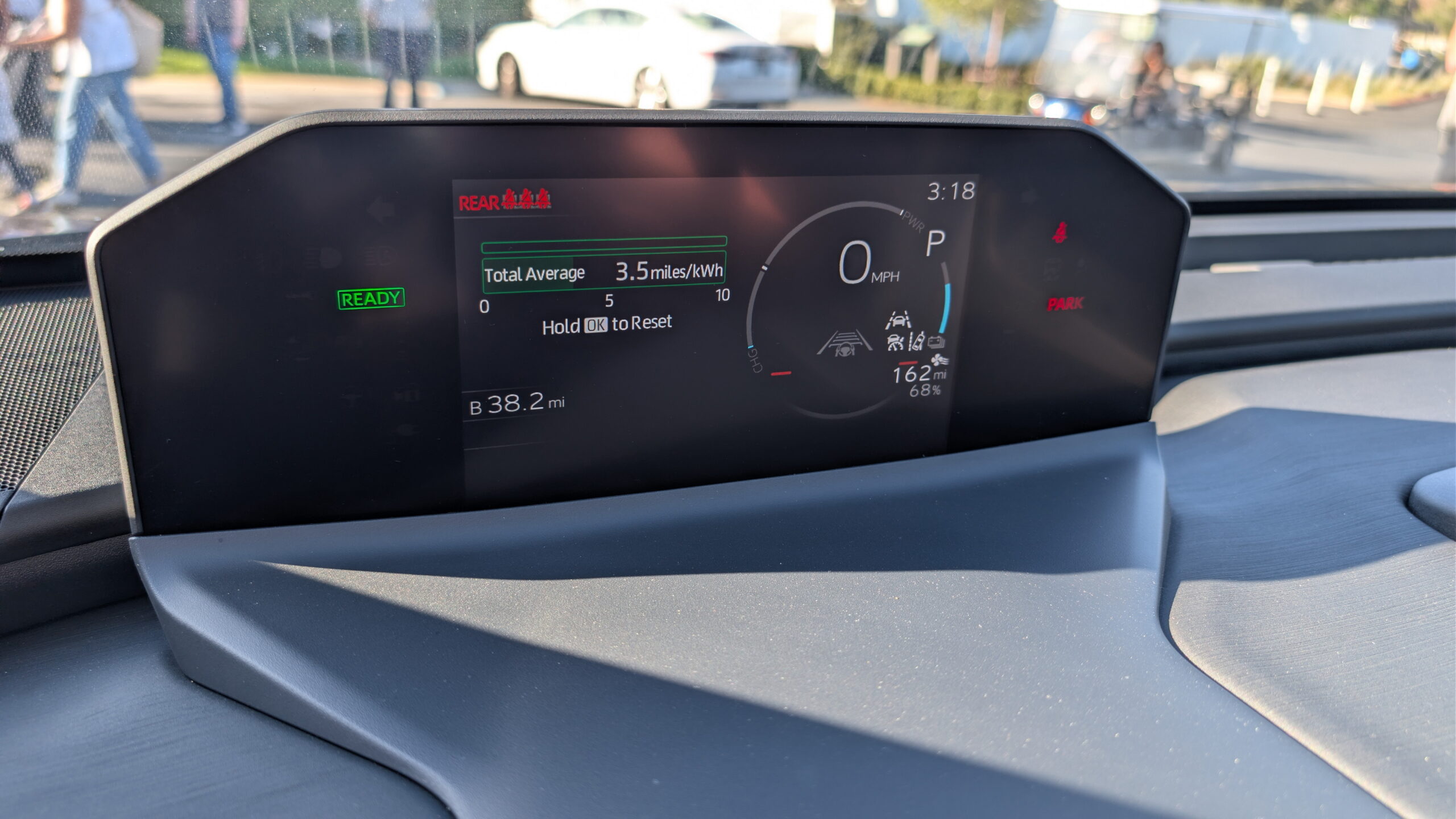
Toyota says the bZ Woodland will get up to 281 miles of range or 260 with its $0 optional all-terrain rubber. We drove different versions to different degrees of accelerator pedal excess, but managed one key finding in the end. During one restrained trip on a car equipped with all-terrain tires, we managed 3.5 miles per kWh. 

Considering the 74.7 kWh battery pack under the floor, that works out to a potential 261 miles (420 km) on a single charge, assuming conditions stayed consistent. It’s difficult to view that as anything but a win, especially given that this wasn’t a tightly controlled test facility but real-world driving in Ojai, California, where the roads are rarely flat or straight.

Sure, we’d love even more range, but for now, we’ll take just barely beating an EPA estimate. After all, few folks will use up 260 miles of range in a day anyway. 

Market Rivals And Positioning

 2026 Toyota bZ Woodland Is Quicker Than A GR Corolla, But That’s Not Its Real Trick | Review

Unquestionably, the biggest competition for the bZ Woodland will be from the Subaru Trailseeker. Positioned as an electric version of the well-loved Outback, the Trailseeker starts at around $5,000 less ($39,995) than the bZ Woodland ($45,300) and features the same underpinnings, battery, and AWD system. We haven’t sat in one, but based on photos, the cabin looks very similar. We expect the two to drive and handle almost identically as well. 

Beyond the Subaru, there aren’t many EVs in this same niche. Rivian’s upcoming $45,000 R2 is likely the closest as it attempts to pair off-road capability with a premium cabin and on-road performance. Even so, it lacks the brand loyalty and recognition Toyota commands, along with the broader availability and ownership advantages, including a vast dealership network and established service infrastructure, that come with choosing a legacy automaker rather than a startup still finding its footing.

Other automakers like Tesla, Ford, Chevrolet, and Honda all have two-row crossovers or SUVs that could go up against the bZ Woodland on the road. None of them really has the same off-road capability angle to their game, though. Some, like Tesla, can’t come close to matching Toyota’s 3,500-lb towing capacity either. We expect that it’ll help Toyota capture a portion of the market that these others simply can’t touch. 

Final Thoughts

 2026 Toyota bZ Woodland Is Quicker Than A GR Corolla, But That’s Not Its Real Trick | Review

The bZ Woodland reminds me of something like the Ford F-150. It’s very capable, but very few folks will ever use it to eight tenths of its performance envelope, much less ten tenths. That said, it’s hard to ignore just how much of Toyota’s DNA and ethos managed to find its way into this crossover. The original bZ4x never really felt all that akin to the brand from an identity standpoint. 

Toyota’s newest EV offers serious practicality, objective soft-roading capability, and even a bit of serious performance on paved roads. Yes, the rear seat is tight for tall passengers. Yes, the shifter is odd. And yes, the interior could use a little more visual excitement.

But taken as a whole, the bZ Woodland is a genuinely well-rounded electric crossover that does more things well than it does poorly. And for a first serious swing at an adventurous, all-electric Toyota SUV, that’s a strong place to start.

\\\\\\\\\\\

Photos Stephen Rivers/Carscoops

Volvo’s New 400-Mile SUV Has One Feature Tesla Owners Will Be Jealous Of

  • Volvo’s EX60 delivers 400 miles of range and 400 kW charging.
  • First Volvo EV with native Tesla Supercharger access in US.
  • Rugged EX60 Cross Country adds lift, air suspension, and flair.

Volvo calls the new EX60 a game-changer and for once, that might not be completely marketing hyperbole. This new SUV is the brand’s most important EV yet and it rolls into the segment with some impressive numbers on paper.

More: The New EX60 Is The First Volvo To Talk Back At You

It offers 400 miles of EPA-estimated range, 400 kW fast-charging capability, and native access to Tesla’s Supercharger network. It’s also arriving with a special soft-roader variant.

Volvo Enters Long-Range Territory

The new peak of the EX60 lineup is what the brand calls the P12 AWD Electric. It boasts 400 miles (644 km) of EPA-rated range in North America and a more generous 503 miles (810 km) of estimated range in Europe and other regions around the world, likely due to the differences in testing methods, though Volvo didn’t clarify this in its international release.

That immediately puts it ahead of all other previous Volvo EVs and squarely in the same space as the Tesla Model Y Long Range, if not ahead of it. But wait, there’s more.

\\\\\

Charging at 400 kW enables the EX60 to add up to 173 miles (278 km) of range in just 10 minutes. Keep in mind that you’ll need a charger capable of handling such speed, which is very rare in the U.S. right now. Not even Tesla’s Supercharger network, which this car has native support for, often offers such speeds. Still, the fact that the capability is built in shows where Volvo expects the infrastructure to go.

Powertrain Options

In total, Volvo is offering the EX60 with three powertrains and seven trim levels. The P6 RWD delivers up to 310 miles (499 km) of range, the P10 AWD provides 320 miles (515 km), and then the P12 AWD brings the 400 miles (644 km) we’ve already discussed.

The brand backs its battery technology with a 10-year warranty. That’s a key point, given that this is a completely new and untested platform for Volvo.

\\\\\\\\\\\\\\\\\\\\\\\\\\\

Dubbed the SPA3, the brand pairs this new architecture with a HuginCore computing system. This setup introduces several key technologies, including cell-to-body battery construction, mega casting, and next-generation in-house electric motors.

Volvo says this all equates to less weight, better efficiency, better manufacturer scalability, and importantly… lower cost to the consumer. In the end, it matches the carbon footprint of the smaller EX30. While the brand hasn’t publicly mentioned specific pricing per trim, it has said to expect that a well-equipped EX60 to cost around $60,000.

Design Inside and Out

\\\\\\\\\\\\\\\\

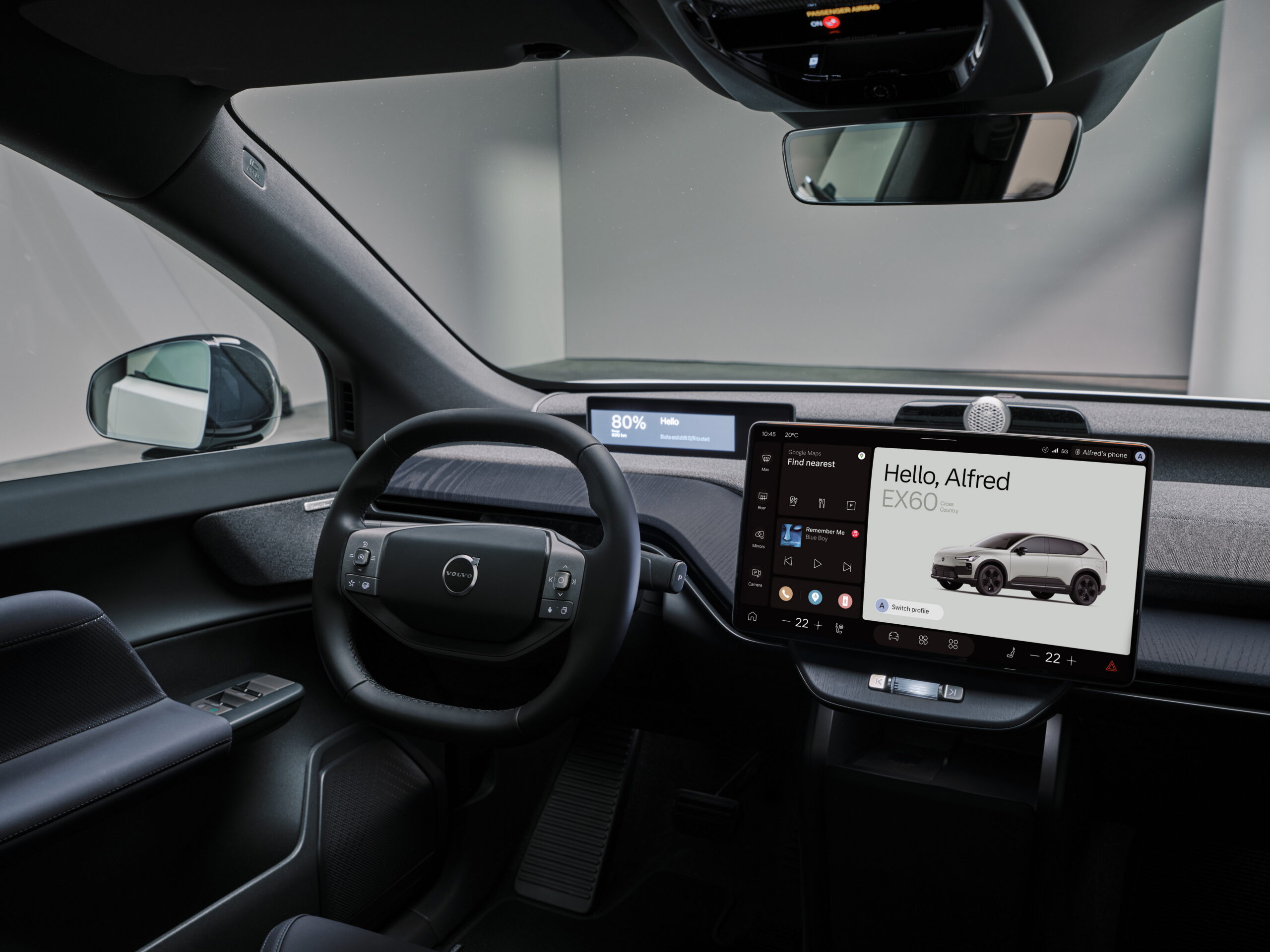
Visually, the EX60 doesn’t reinvent Volvo’s design language so much as it evolves it. The car manages a 0.26 drag coefficient thanks to a low nose, a sloping roofline, and tapered sides. In the cabin, the long wheelbase and flat floor enable extra legroom in the rear along with a large cargo area.

Tech highlights include a 28-speaker Bowers & Wilkins audio system, headrest speakers for all four main seats, and Apple Music with Dolby Atmos built in.

The EX60 Runs Google Gemini AI

 Volvo’s New 400-Mile SUV Has One Feature Tesla Owners Will Be Jealous Of

Let’s not forget the AI assistant that Volvo says will speak like a normal person and accept the same type of speech inputs. The system runs Google’s Gemini AI atop Android Automotive OS so it should be snappy and smooth, but we’ll have to test it to be sure. The new multi-adaptive safety belt is something else to get excited about, as are the other safety innovations in the EX60.

Volvo leveraged a reinforced safety cage using boron steel, a wide array of sensors, and constant environmental monitoring to go beyond what they say are current regulatory standards. In other words, Tesla might not be the only manufacturer with safety scores that go beyond NHTSA or IIHS ratings in the near future.

A Cross Country Version on the Way

\\\\\\\\\\\\\\\\\\\\\\\\\

Volvo also confirmed that an EX60 Cross Country model will be heading to the U.S., though it’ll debut in Europe first. This version gets 20mm (0.8 inches) of extra ride height as standard, with another 20mm (0.8 inches) available via an adjustable suspension system. Forty millimeters (1.6 inches) might not sound like much, but the Cross Country packs more than just lift.

There are underbody skid plates, wider arches, unique wheels, and exclusive Frost Green paintwork. It also comes standard with all-wheel drive and will be offered only with the P10 and P12 powertrains

\\\\\\\\\\\\\\

Availability

European customers can already place orders for the EX60. U.S. order books will open in late spring, with production kicking off around the same time at Volvo’s Swedish plant. The P6 and P10 models will arrive first this summer, followed by the long-range P12 not long after.

\\\\\\\
❌