Reading view

There are new articles available, click to refresh the page.

Kia Is Coming For The Tacoma With Powertrains Toyota Doesn’t Offer In America
  • Kia confirms midsize pickup with hybrid and range extender powertrain options.
  • Truck targets US buyers with towing skills, off road ability and a roomy cabin.
  • Wider Kia strategy includes more hybrids, EV growth and big US sales targets.

Kia’s nearly ready to saddle up and ride into America’s most fiercely loyal segment, and it’ll be doing it with the help of two totally different electrified powertrains.

We’ve known for a while that Kia, along with its Hyundai sister brand, are working on a pair of midsize pickups for the US. They’ll be proper body-on-frame trucks designed to deprive Toyota and Ford salesmen of truck hunters that might otherwise have snapped up a Tacoma or Ranger.

More: Hyundai’s New Pickup Truck Will Be Everything The Santa Cruz Refused To Be

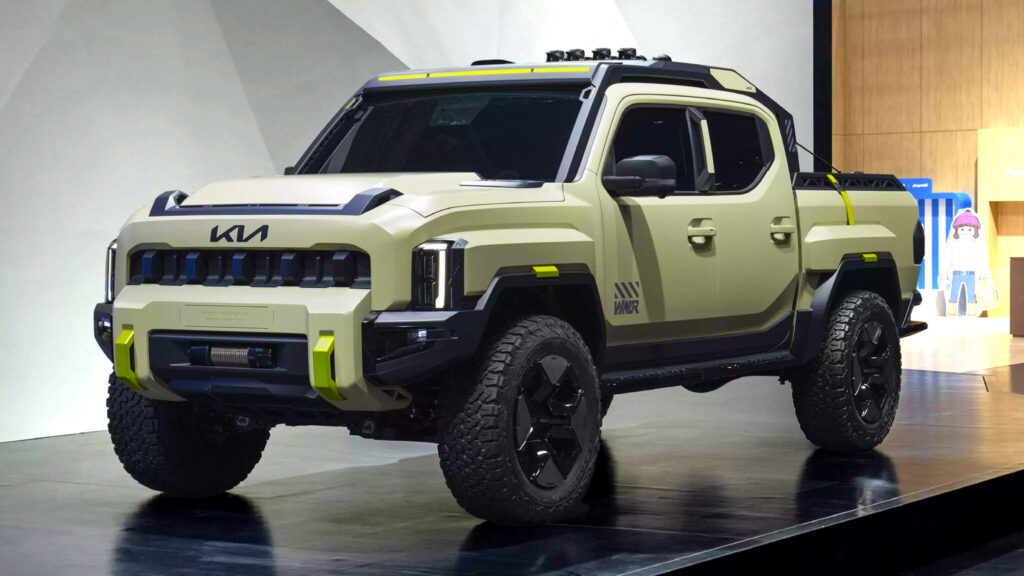
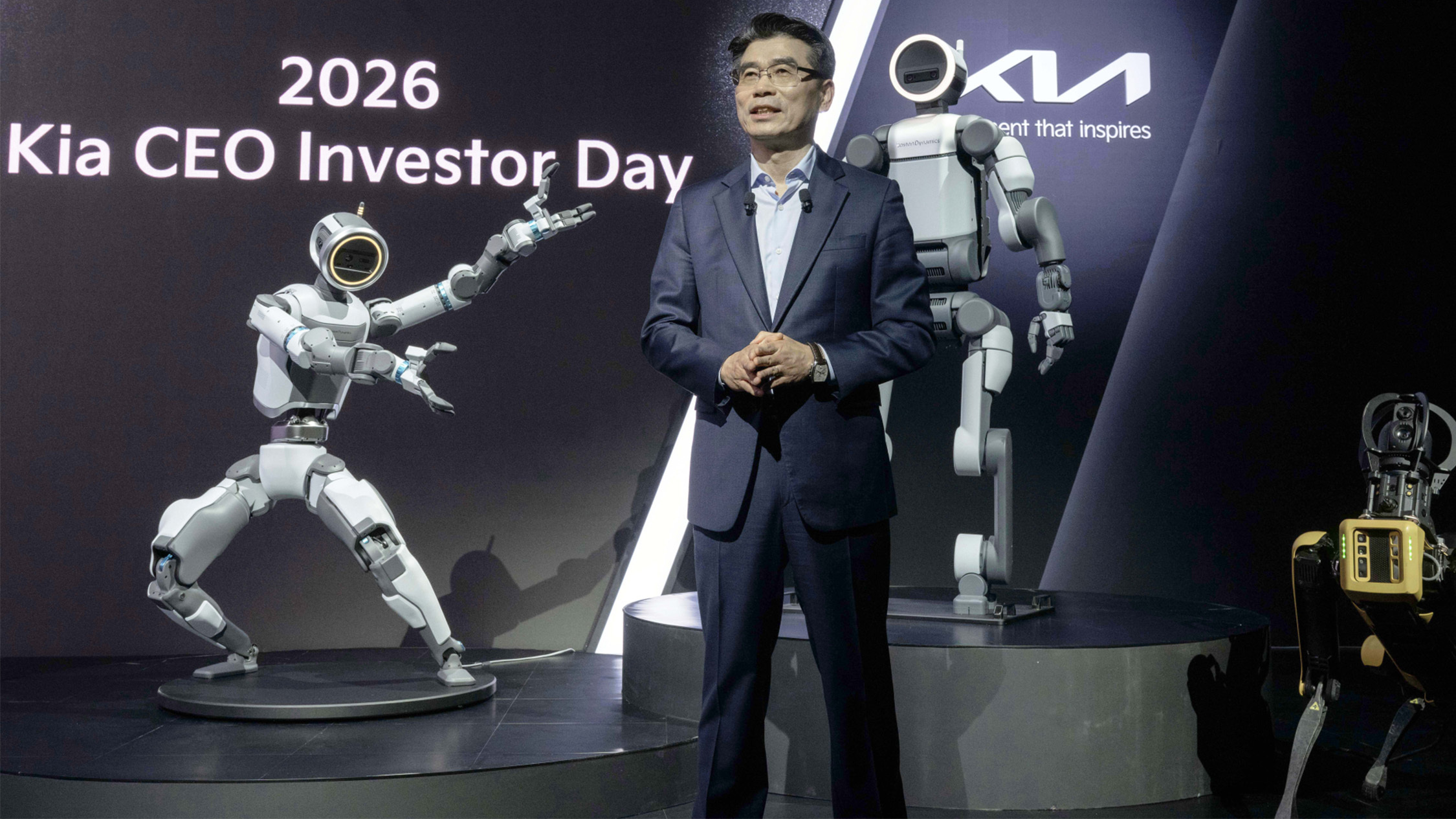
What wasn’t confirmed until today at Kia’s investor briefing, is what will be under the hood of those trucks. A hybrid option seemed likely, but Kia CEO Ho Sung Song says the pickup will offer buyers the choice of both hybrid and range-extender electric powertrains. That means it won’t just be chasing the usual suspects like the Tacoma and Ranger, but could potentially steal sales from more bigger, high-tech machinery like the Rivian R1T and Tesla Cybertruck.

Details are still thin, but Kia says the truck will offer proper capability where it matters. Expect solid towing, genuine off road chops and a roomy double-cab layout designed for real world use.

Boulder’s Brother
 Kia Is Coming For The Tacoma With Powertrains Toyota Doesn’t Offer In America
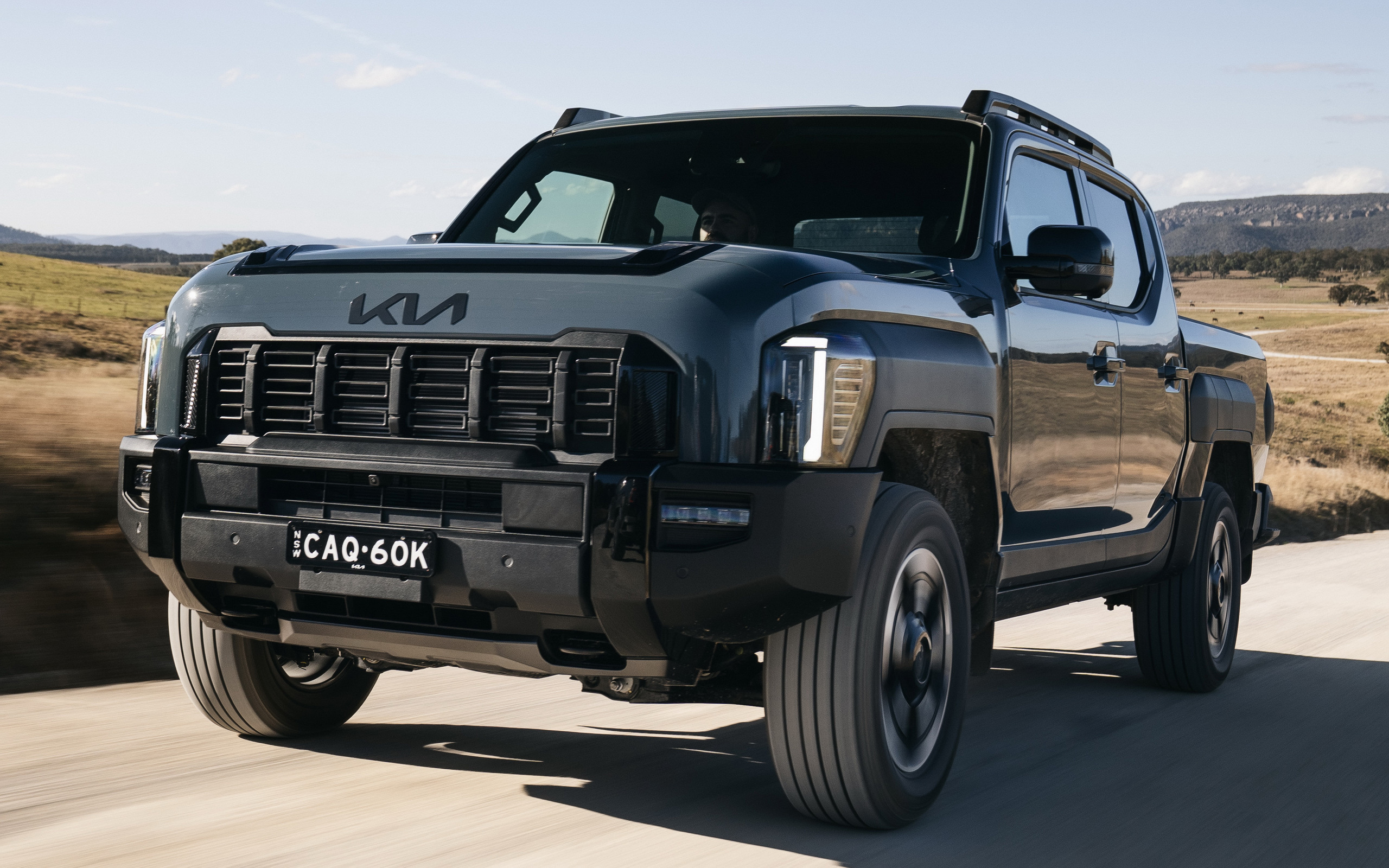
Current Kia Tasman.

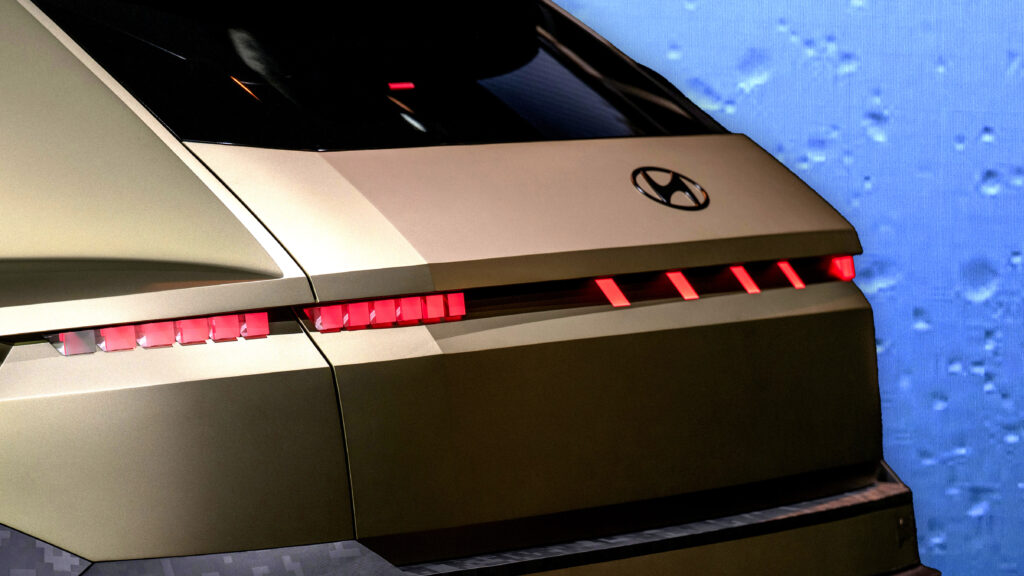
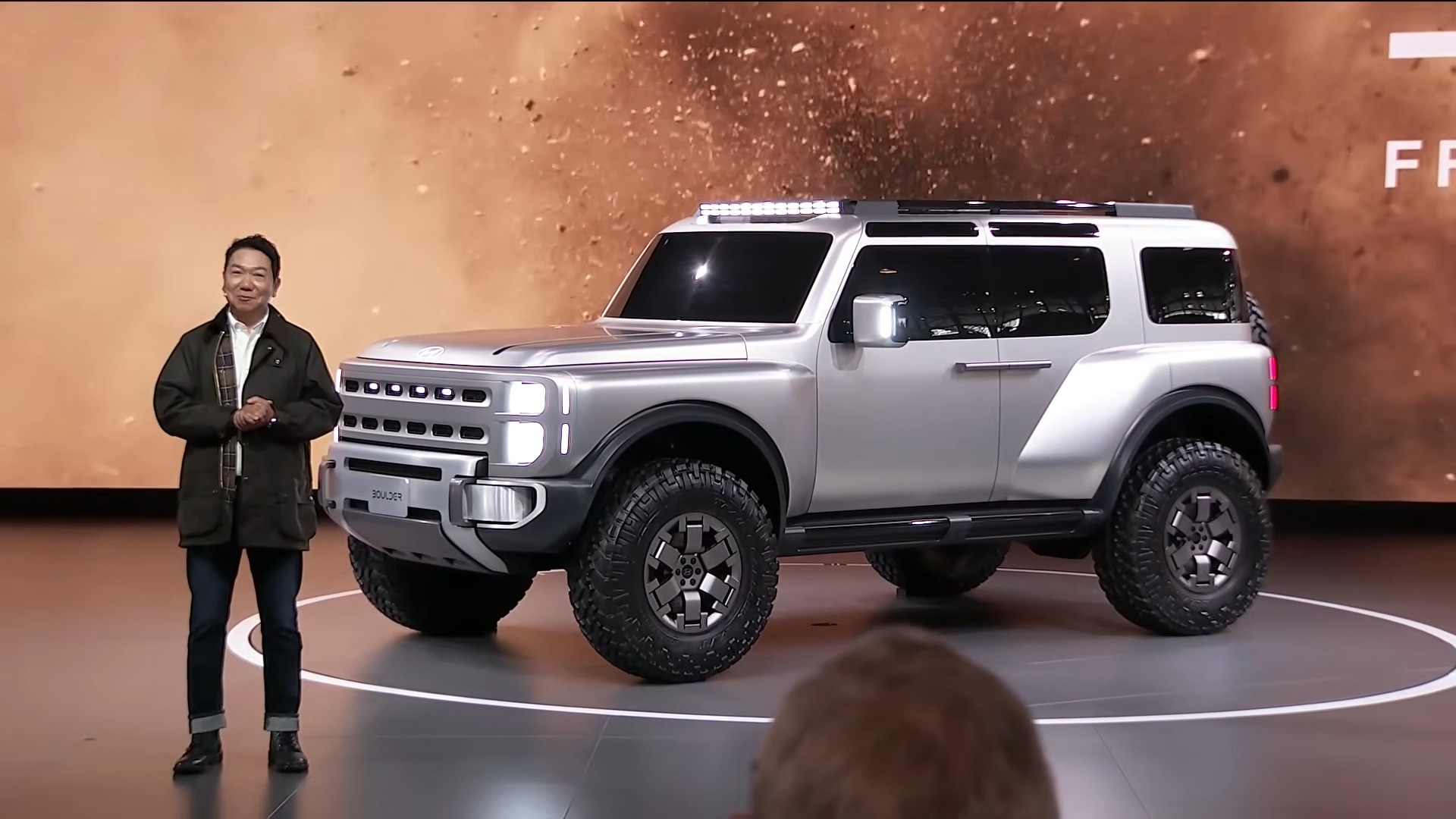
Underneath, it will share its rugged bones with a future Hyundai truck previewed by the Boulder SUV concept unveiled at the New York Auto Show earlier this month. Given the Boulder’s butch aesthetic, we can expect both trucks to have plenty of attitude, but hopefully it’ll be less ugly than the Kia Tasman truck (shown above and in the lead image) that’s sold in Australia and other markets.
 Kia Is Coming For The Tacoma With Powertrains Toyota Doesn’t Offer In America
The Hyundai Boulder SUV concept.

This new pickup won’t just be a niche addition either. Kia reckons it can shift around 90,000 units annually in North America, Auto News reports, and carve out a meaningful slice of the segment. That’s ambitious for a brand that’s never sold a truck in the US before, but then Kia isn’t exactly lacking in confidence these days.

Hybrids For US, EVs For Europe

The truck also fits neatly into Kia’s broader US push. The company is targeting more than one million annual sales stateside by 2030, with a 6.2 percent market share. To get there, it’s doubling down on hybrids, expanding from four to eight nameplates and adding electrified options to core models.
 Kia Is Coming For The Tacoma With Powertrains Toyota Doesn’t Offer In America

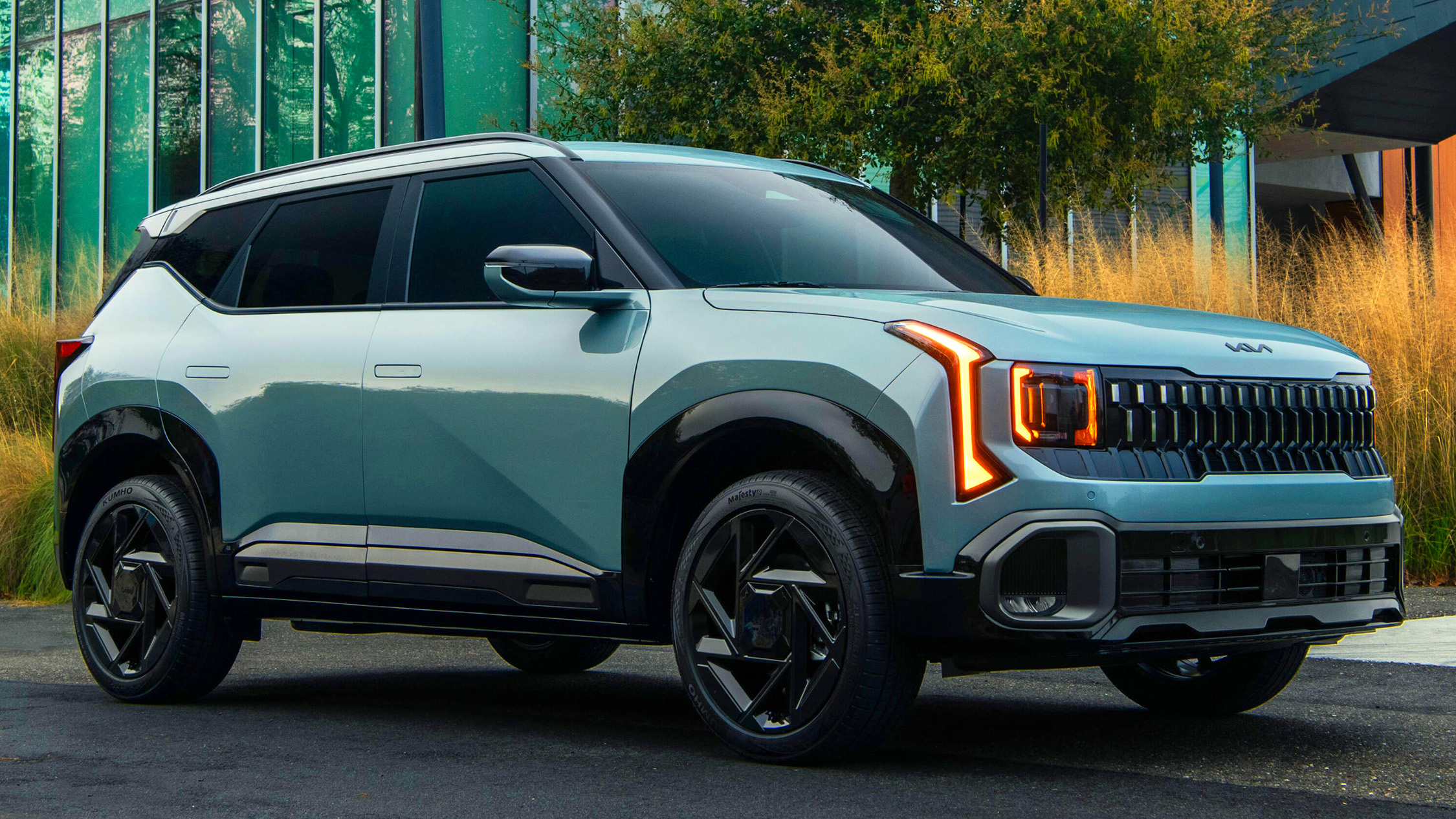
That includes big hitters like the Telluride, which is set to gain hybrid and range extender variants, plus the Sportage, which Kia wants to push past 200,000 annual sales. Even the smaller Seltos is getting in on the action with a new look (seen above) and a hybrid version aimed at cracking six-figure sales.

And while America gets a tough new truck, Europe is getting something much smaller but just as important. A new EV1 hatch is on the way to take on cars like the Renault 5, proving Kia’s strategy really does cover everything from city streets to dusty trails.
 Kia Is Coming For The Tacoma With Powertrains Toyota Doesn’t Offer In America
Kia

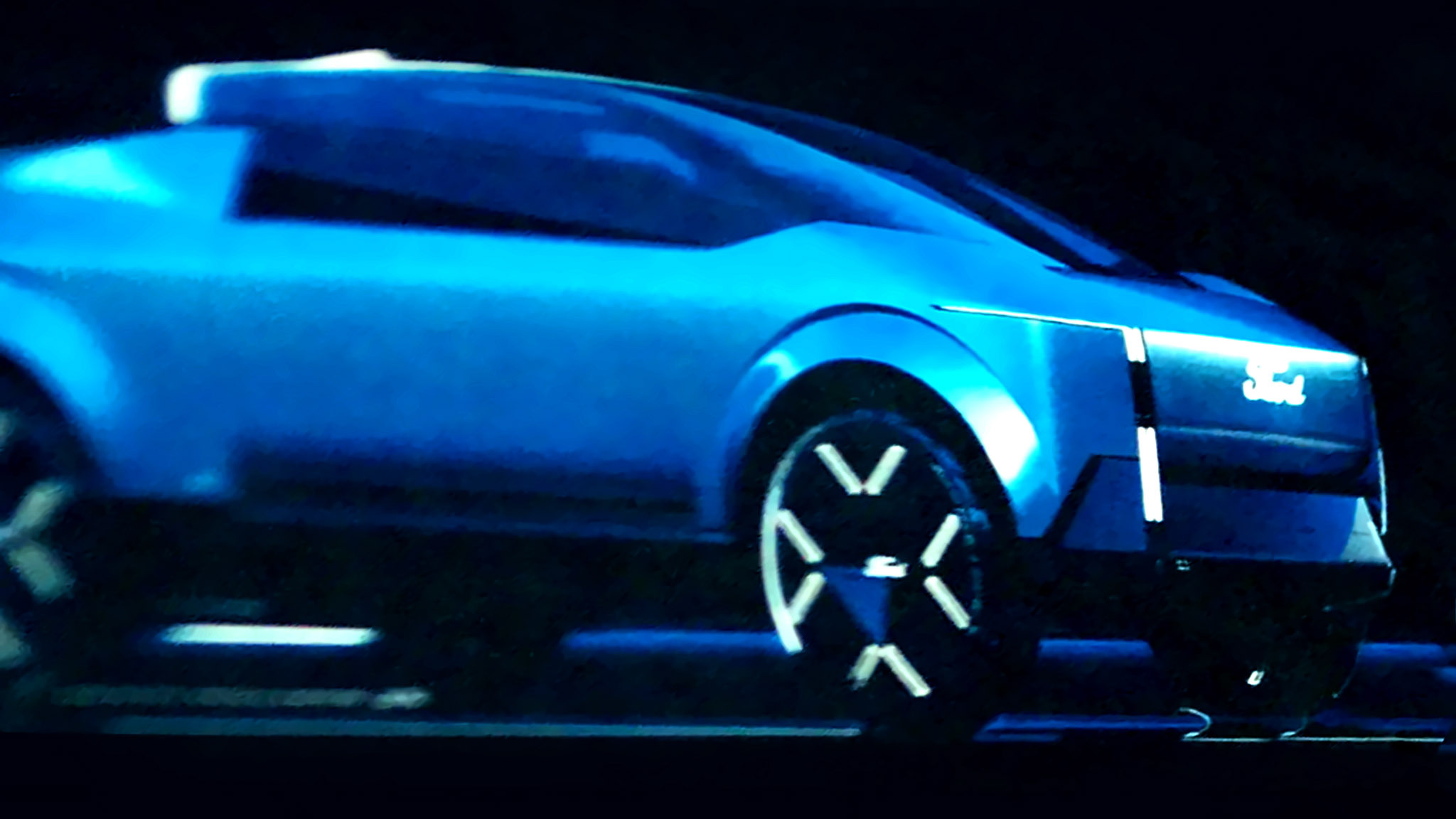
Ford’s CEO Said His Own Cars Were Boring, But What He’s Teasing Next Isn’t

  • Jim Farley says Ford will ditch generic cars in favor of passion products.
  • New affordable electric pickup will redefine mainstream EV appeal in US.
  • Europe gets small EVs with attitude via Renault partnership and technology.

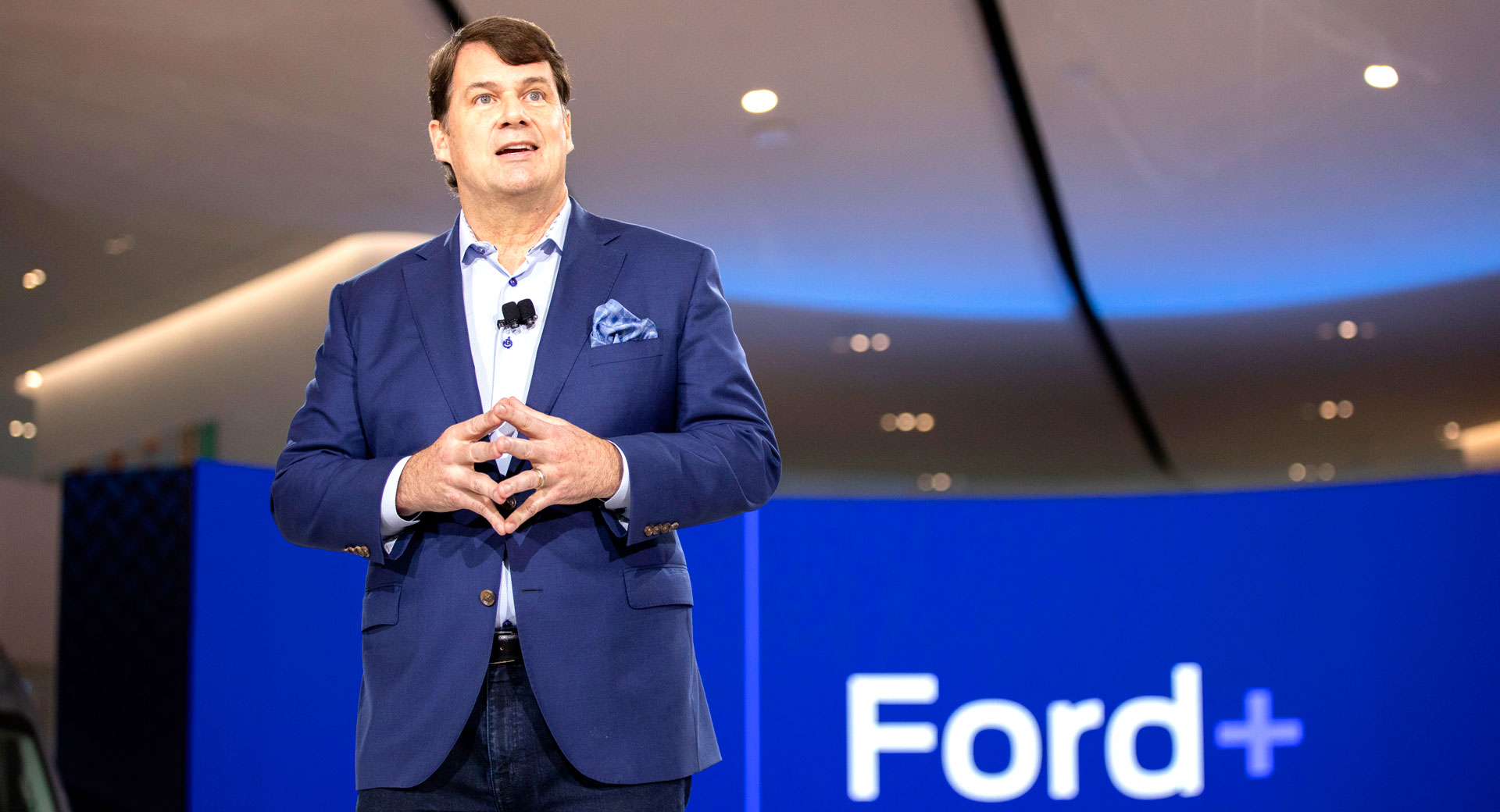
Jim Farley has been saying it for a while now, and he’s not backing off. Ford’s CEO doesn’t want to build boring cars, and now that promise stretches from American pickups to small European EVs, with even a supercar tease thrown in for good measure.

Farley first floated the idea back in 2024, but in a new chat with Top Gear, he reasserted his position, this time with Europe firmly in his sights.

Related: Ford Killed Fiesta For A Crossover, Now It Might Return Like This

“No more generic vehicles,” Farley told TG’s reporter at an interview in Detroit recently. “People loved Focus and Fiesta because they were affordable vehicles with great driving dynamics. They were not boring vehicles.”

But it sounds like their replacements, built around the same Renault AmpR platform that’s helped make the 5 a hit, will be much funkier, and also tangibly different from Renault’s own products.

Aspirational Appeal In Europe

 Ford’s CEO Said His Own Cars Were Boring, But What He’s Teasing Next Isn’t

“Our EV strategy is changing in Europe and we intend to compete differently,” Farley says. “The cars will have a specific feel that is not mid-market. Even in the EV world I think that’s possible, but we’re going to have to take some risks.”

He even reached for a big-name comparison to underline the point.

“We’re making passion products, this is not a marketing conversation. This is a Steve Jobs kind of conversation. I’m challenging the concept that the Fiesta ST is the best example of democratized performance at Ford. Whether they’re based on a VW or Renault platform, we’re going to execute those cars with a swagger that’s specific to Ford of Europe.”

Affordability For America

 Ford’s CEO Said His Own Cars Were Boring, But What He’s Teasing Next Isn’t

Meanwhile, in the US, Ford’s taking a different route to the same destination. Instead of chasing premium EVs, it’s working on a smaller, cheaper, $30k electric pickup (seen above) aimed squarely at the mainstream. The idea is simple: build something affordable that people actually want, not just something that ticks regulatory boxes.

Related: Ford’s $30K Pickup Wants To Beat Cybertruck At Its Own Game

It’s all part of a broader rethink that also pushes hybrids and new production methods designed to cut costs and complexity. If it works, Ford could finally crack the code on making electrified vehicles both desirable and profitable.

A New GT?

And then there’s the wildcard. Right at the end of the interview, Farley hinted that a new halo performance car has already been decided, and suggested his team was way past the question of what kind of car it should be.

“We’re not pondering, we’ve already answered it,” he teased. Farley didn’t spill details, but the message was clear. Ford wants excitement back at every level, from entry EVs to whatever sits at the very top.

 Ford’s CEO Said His Own Cars Were Boring, But What He’s Teasing Next Isn’t

Ford

Toyota’s Electric Hilux Costs $20K More Than The Diesel, And That’s Not Even The Worst Part

  • The Hilux BEV enters Australia as the most expensive variant in the local lineup.
  • Electric pricing carries a significant premium over both diesel and hybrid versions.
  • Dual motors provide AWD capability with modest output and limited driving range.

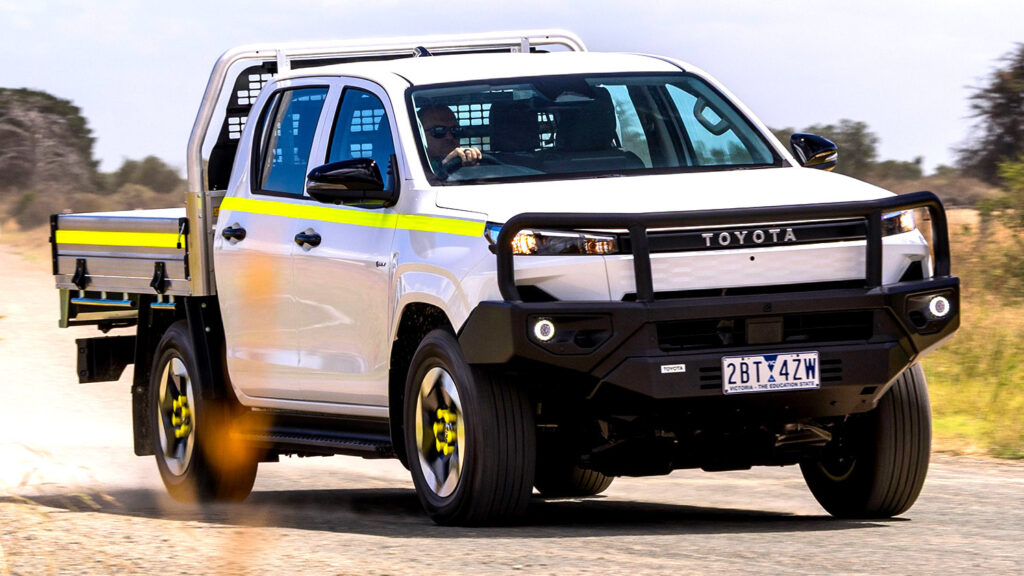
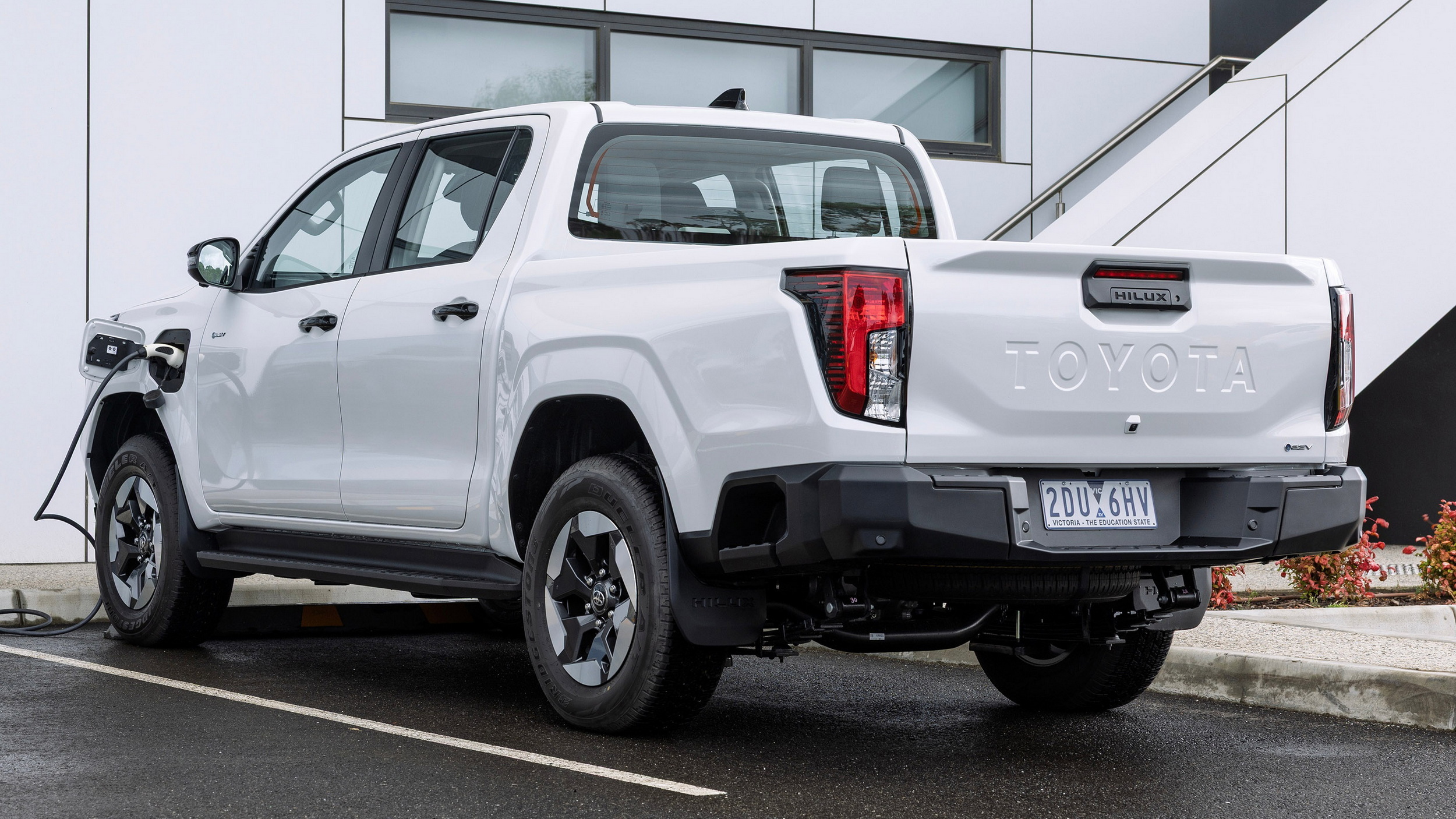
The latest generation of the Toyota Hilux has entered a new era. For the first time in its history, the nameplate offers a fully electric variant alongside existing gasoline, diesel, and mild-hybrid options. In Australia, the zero-emission truck is now available to order, sitting at the top of the local Hilux lineup as its most expensive model.

Jumping straight to the numbers, the entry-level Hilux BEV SR double-cab chassis starts at a hefty AU$74,990 (equal to US$51,400). That’s AU$20,000 (US$13,700) more than the equivalent diesel version with a manual gearbox. Move over to the electric SR double-cab pickup, and the price climbs to AU$76,490 (US$ 52,500), which still leaves it AU$ 17,000 (US$ 11,700) above its mild-hybrid diesel automatic counterpart.

More: Toyota’s $15,800 Pickup Went To Bangkok And Came Back Looking Like A Brabus

The SR5 sits at the top of the electric Hilux range, largely by default, as the Rogue and Rugged X trims skip electrification altogether. Priced at AU$82,990 (US$56,900), it now stands as the most expensive Hilux you can buy in Australia.

Put that into perspective, and the electric SR5 carries a AU$19,000 (US$13,000) premium over the diesel SR5, while also undercutting expectations by coming in AU$11,000 (US$7,500) above the former range-topping mild-hybrid diesel Rugged X. More tellingly, it lands right on top of the starting price of the new Ford Ranger Super Duty, which says plenty about where Toyota is positioning its first electric truck.

Technical Specifications

 Toyota’s Electric Hilux Costs $20K More Than The Diesel, And That’s Not Even The Worst Part
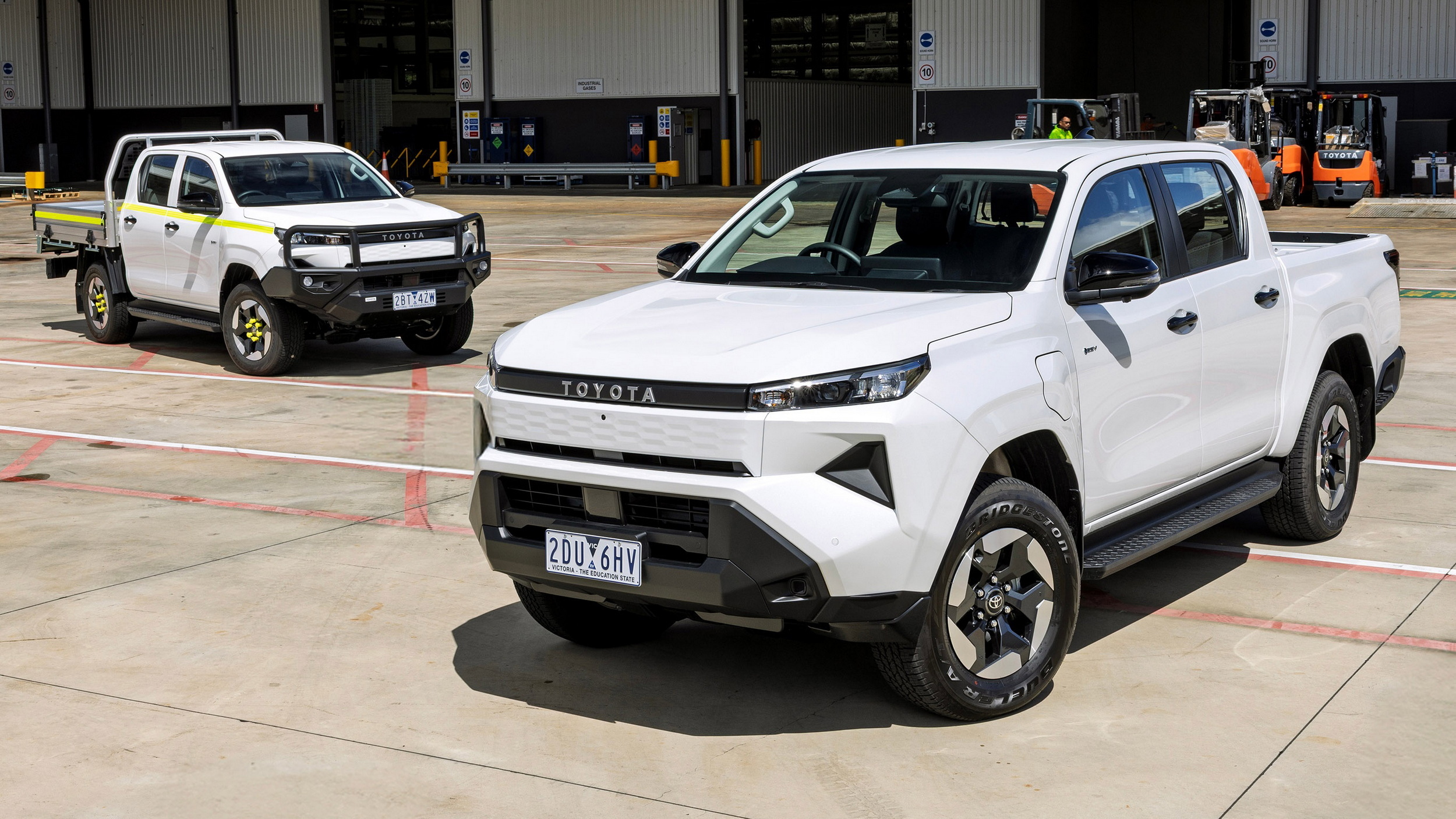
The Hilux BEV SR double-cab chassis (left) and the SR5 double-cab pickup (right).

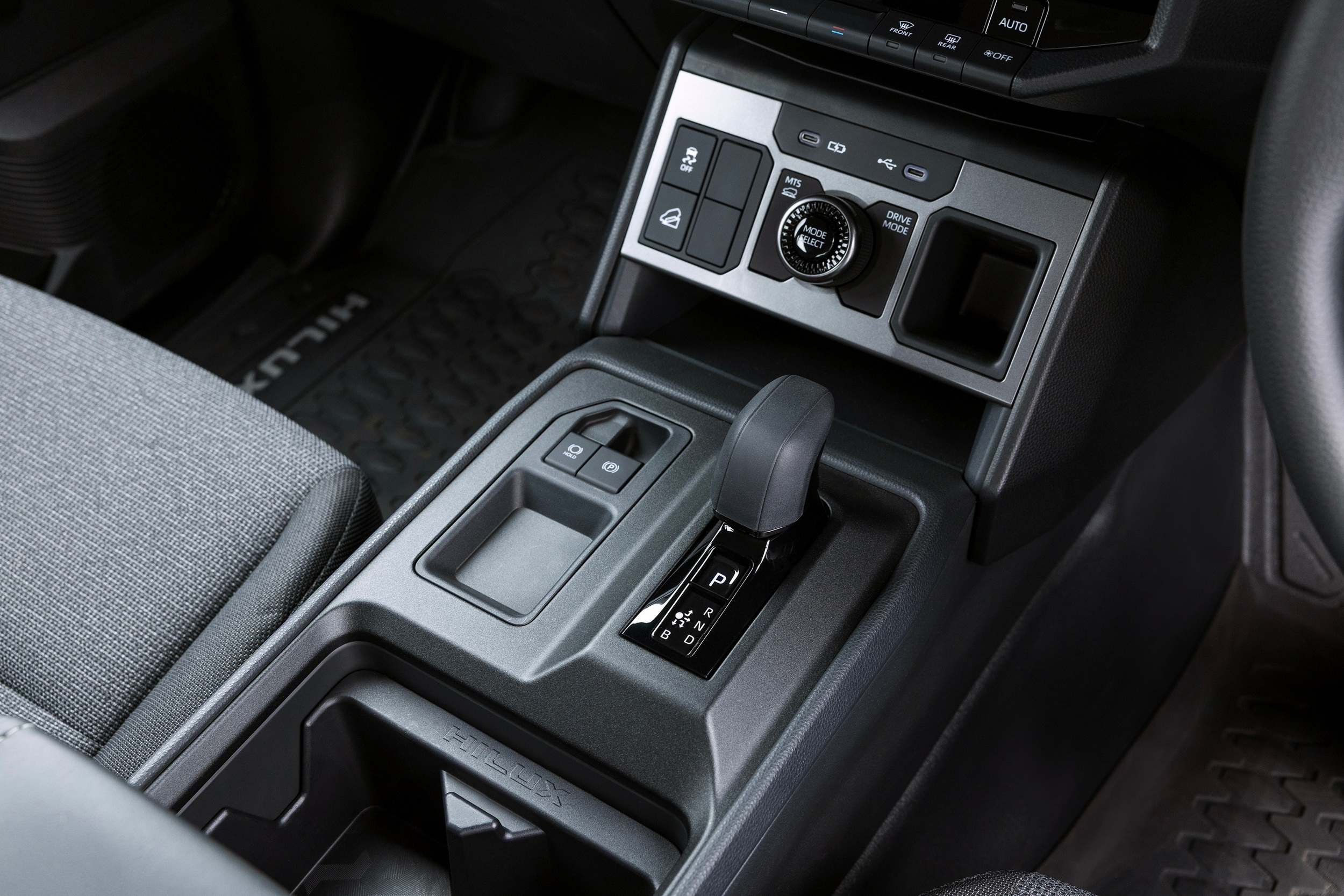
But what do you actually get for the money? The Hilux BEV runs a dual-motor setup delivering a combined 193 hp (144 kW / 196 PS) and 468 Nm (345 lb-ft) of torque. It comes with full-time AWD and six selectable drive modes via the Multi-Terrain Select system, so it’s not short on off-road intent.

More: Toyota Turns The New Hilux Into A Rugged Three-Row SUV

Power comes from a 59.2 kWh battery, good for a claimed 245–315 km (152–196 miles) of range on the NEDC cycle, depending on spec. That’s hardly ideal for long hauls across the vast Australian outback, though a 10–80% charge takes around 30 minutes. There’s also a practical touch, as a 1,500 W inverter in the center console lets it double as a mobile power source when needed.

Underneath, the ladder-frame chassis gets a bespoke De Dion rear suspension with leaf springs, plus additional reinforcements to cope with the battery weight. Towing is capped at 2,000 kg (4,409 lbs), well short of the diesel’s 3,500 kg (7,716 lbs) figure.

Design And Features

 Toyota’s Electric Hilux Costs $20K More Than The Diesel, And That’s Not Even The Worst Part

Visually, the Hilux BEV sets itself apart with a closed-off grille and a set of distinct 17-inch alloy wheels shaped for improved aerodynamics. Color choices are kept tight, as they’re limited to Glacier White, Frosted White, and Ash Slate, reinforcing its fleet-focused brief, even if private buyers are still free to place an order.

More: Toyota Says The New Hilux’s Design Is Just “Fine”

As for equipment, the SR trim comes well stocked. LED headlights, body-colored bumpers, side steps, fabric upholstery, and all-weather floor mats are all standard. So are dual-zone climate control, a pair of 12.3-inch displays with built-in navigation, eight airbags, and the full Toyota Safety Sense ADAS suite.

The SR5 adds auto-leveling headlights, LED tech for the footlights and taillights, retractable and heated mirrors, privacy glass, leather upholstery, heated seats and steering wheel, an eight-speaker audio system, a wireless charging pad and more. Thanks to the shared design, the BEV is compatible with most of the optional accessories already available for the diesel, including the pictured bull bar.

 Toyota’s Electric Hilux Costs $20K More Than The Diesel, And That’s Not Even The Worst Part

Modest Sales Target

Given its pricing and rather underwhelming driving range, Toyota keeping expectations in check with just 500 units for Australia’s first year doesn’t come as much of a shock. Most are likely headed straight for mining and construction fleets, where outright range matters less than predictable daily use. To help make that case, the company says the HiLux BEV has already been pushed through extensive testing in remote outback conditions, working closely with mining operators.

Australia won’t be the only market in play. The electric HiLux is also headed for Europe, Japan, South Africa, and several Southeast Asian countries.

For now, Thailand is the first place where buyers can actually place an order, fittingly as the truck’s production hub. There, the Hilux Travo-e starts at ฿1,491,000 ($45,300), undercutting expectations slightly but still landing ฿165,000 ($5,000) above a comparable diesel automatic Hilux Travo 4TREX.

\\\\\\\\\

Toyota Australia

Hyundai Is About To Flood The North American Market With 36 New Models

  • Hyundai will launch 36 vehicles in North America through 2030.
  • This includes new and updated models as well as derivatives.
  • There will be new XRT and N variants, and range-extended EVs.

Hyundai CEO José Muñoz used the company’s annual shareholders meeting to reveal an accelerated North American growth strategy. It calls for launching 36 all-new or “significantly enhanced” vehicles in Canada, Mexico, and the United States between 2026 and 2030.

The automaker didn’t go into many specifics, but confirmed we can expect commercial vehicles as well as cars, trucks, and SUVs. There will also be a mix of “core models and expanded trims” as well as new XRT and N variants.

More: Hyundai’s Best-Seller Is About To Get A Major Redesign

While Hyundai has bet heavily on EVs, they’re not putting all their eggs in one basket. Quite the opposite as they promised a “broad mix” of powertrains that will include gas and hybrid options as well as battery and range-extended EVs. This is designed to meet “evolving customer demands across the region,” which is codeword for slower than expected electric vehicle adoption.

\\\\

Muñoz alluded to this as he said, “By expanding our product portfolio and offering a wider range of powertrains in North America, we’re giving customers more choice while continuing to strengthen our long‑term investment in U.S. manufacturing, jobs, and the broader automotive ecosystem.”

Speaking of the latter, Hyundai aims to have more than 80% of vehicles sold in the United States assembled domestically by 2030. The automaker also wants to increase U.S. parts content from around 60% to 80% by the end of the decade.

What’s Coming?

\\\\\\\\\\\\\

The automaker was tight-lipped on what to expect, but spy photographers have already snapped an assortment of upcoming models including the redesigned Tucson and Elantra. The company is also working on a facelifted Santa Fe, while a larger truck is expected to replace the Santa Cruz.

On top of those models, Hyundai and General Motors have teamed up to jointly develop five new vehicles including an electric commercial van for North America.

\\\\\\\\

The Cybertruck Nobody Wanted New Is Now The One Nobody Wants Used

  • The Cybertruck Long Range RWD was only built for a limited time last year.
  • This pickup has a single electric motor and a 123 kWh battery pack.
  • Tesla lowered the Cybertruck’s towing capacity from 11,000 lbs to 7,500 lbs.

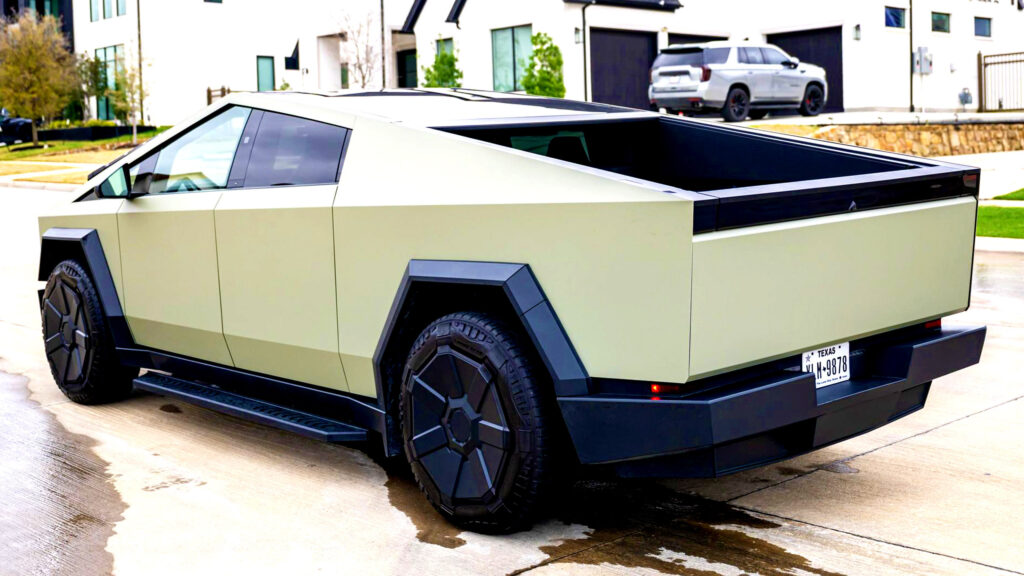
The Tesla Cybertruck’s Long Range RWD variant was short-lived, produced for less than six months, yet that rarity has done little to shield it from steep depreciation. Just look at this 2025 example, which recently changed hands for just $56,500.

Tesla introduced the Cybertruck Long Range RWD last year, pricing it from $69,990 and undercutting the All-Wheel Drive model by $10,000. However, it never proved particularly popular as Tesla cut out some important features to achieve the somewhat more approachable price tag.

 The Cybertruck Nobody Wanted New Is Now The One Nobody Wants Used

To get there, Tesla stripped back more than just an electric motor. The front axle is left unpowered, and buyers also miss out on a powered tonneau cover, 120/240V outlets, and the premium 15-speaker sound system, replaced here by a basic seven-speaker setup. The interior takes another step down with textile seats instead of leather and no rear touchscreen.

Capability takes a hit too. Towing drops from 11,000 lbs (4,989 kg) to 7,500 lbs (3,401 kg), while payload falls from 2,500 lbs (1,133 kg) to 2,006 lbs (910 kg). It’s a long list, and not the kind that quietly disappears once you’ve signed the paperwork.

Read: New Video Shows Tesla Nearly Going Off Overpass With Mom And Baby Inside

With this in mind, it’s perhaps no surprise that demand for used examples isn’t particularly strong. This Cybertruck was sold on Cars & Bids earlier this week, falling well short of its original price tag of $73,490, which included optional $3,500 20-inch Cyber wheels with 35-inch tires.

The Least Desirable Cybertruck?

\\\\\\\\

Cars & Bids

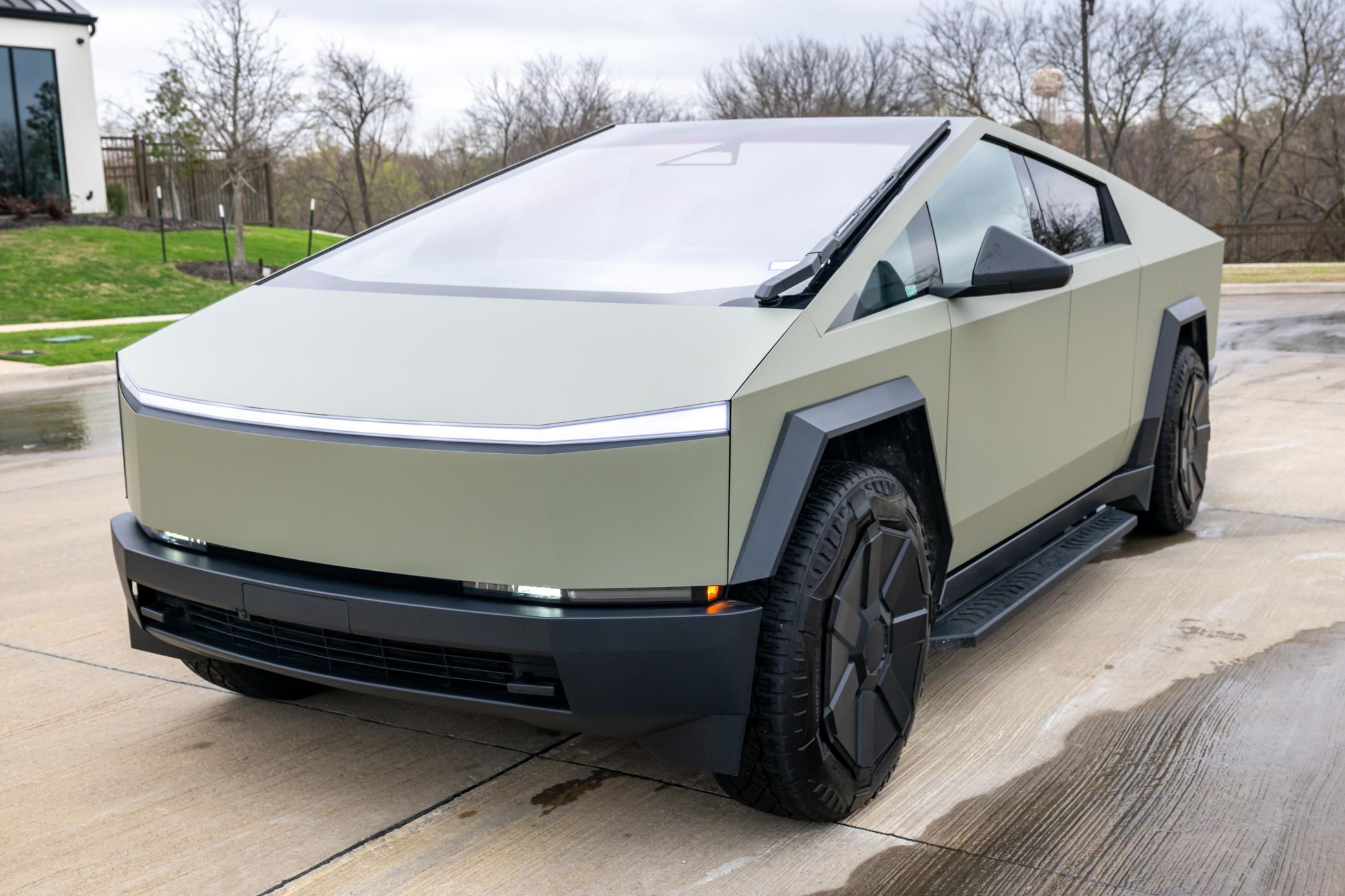
The fact that the owner also spent several thousand dollars to wrap the truck in Halo Green, add aftermarket side steps, and fit leather seat covers doesn’t seem to have boosted interest. It has just 5,800 miles (9,334 km) on the clock, which should have helped its value, but clearly hasn’t made much difference.

There is, at least, one clear strength. The RWD Long Range model carries a sizeable 123 kWh battery pack, giving it the best range of any Cybertruck at an EPA-rated 350 miles (563 km). That should be a headline advantage. Still, pairing that range with a rear-wheel-drive setup in a pickup limits how useful it feels in the real world, especially for buyers who expect capability to match the look.

In the end, this version lands in an awkward middle ground. It is cheaper, yet not cheap enough. It goes farther, yet gives up too much along the way. And in a segment where image and ability matter just as much as numbers, that balance does not seem to be working.

\\\\\\\\\\\\\\\\\\

Cars & Bids

New Video Shows Tesla Nearly Going Off Overpass With Mom And Baby Inside

  • Texas lawsuit says Tesla FSD steered a Cybertruck into barrier.
  • Driver says the system aimed straight at a concrete divider.
  • The crash allegedly caused spinal injuries and wrist damage.

Update: There’s now video of the Houston Cybertruck crash. Footage shared by Hilliard Law, which represents the woman in the lawsuit, shows the electric truck, reportedly operating in self-driving mode, failing to follow a right-hand curve and continuing straight toward an overpass barrier. The driver attempts to intervene, but it is already too late, and the impact is severe. She is now suing Tesla for $1 million, alleging the system did not perform as promised.

'TERRIFYING': Dashcam video shows the moment a Tesla Cybertruck, allegedly operating in self-driving mode, nearly sent a Houston mom and her infant off a bridge before violently crashing into an overpass barrier.

The woman claims she suffered multiple injuries from the incident… pic.twitter.com/DgcnHp2FtZ

— Fox News (@FoxNews) March 17, 2026

Tesla’s Full-Self Driving (Supervised) system has placed advanced semi-autonomous capability in the hands of thousands of owners across the United States. The technology remains one of the most closely watched developments in the industry. Yet despite its promise, the system is still far from flawless, and according to a recent lawsuit filed against Tesla, it can also be dangerous.

The suit, filed in Harris County Court in Houston, Texas, alleges that Tesla Cybertruck owner Justine Saint Amour was using the FSD system in August last year while traveling along the 69 Eastex Freeway. As the electric pickup approached a Y-shaped junction near the Houston Metro 256 Eastex Park & Ride, the vehicle’s onboard systems should have followed the right-hand curve of the freeway.

FSD Navigation Error Alleged

Instead, the lawsuit claims the Tesla attempted to continue straight ahead toward a concrete barrier. The driver reportedly took control just before impact but was unable to avoid the obstacle, with the Cybertruck striking the barrier head-on. A 1-year-old child was also in the back seat at the time but was not injured.

Read: Tesla On FSD Suddenly Swerves And Crashes Into A Tree, Claims Driver

The impact reportedly left the woman with two herniated discs in her lower back, a herniated disc in her neck, sprained wrist tendons, and neuropathy. Chron reports that dashcam footage captured the crash, showing the Cybertruck attempting to negotiate the curve at the interchange but ultimately hitting the barriers.

\\\\\\\

Camera Only System Criticized

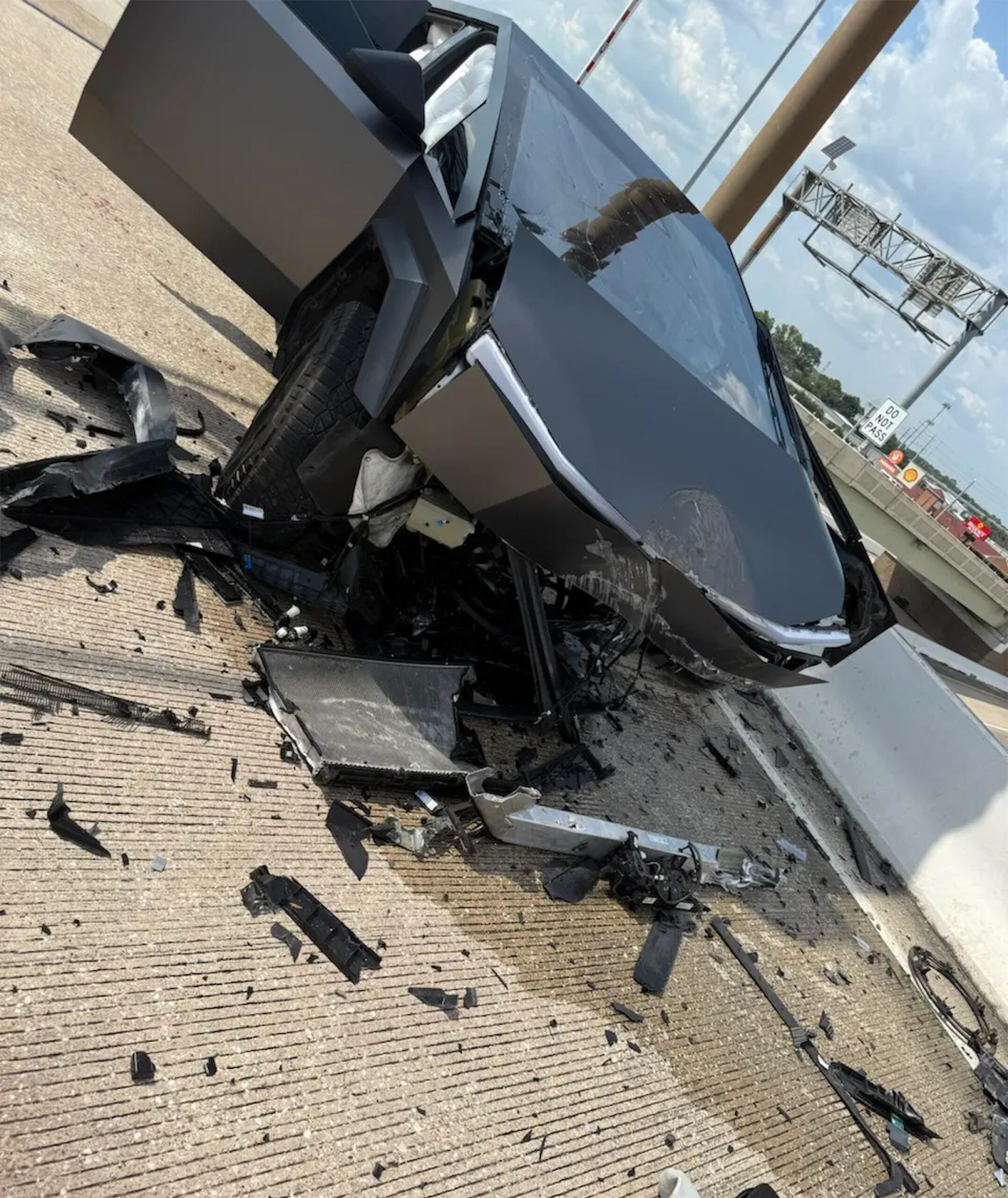
An image taken after the crash shows that the front of the blacked-out Cybertruck took a serious hit, and that the front bumper shattered, leaving pieces of bodywork strewn across the road.

The lawsuit further alleges that Tesla’s decision to rely exclusively on a camera-based system for its self-driving technology, rather than incorporating radar or LiDAR sensors, contributed to the crash. It also claims Elon Musk is “an aggressive and irresponsible salesman” with a history of “making dangerous design choices.”

“Tesla’s decisions made Justine’s accident inevitable,” Saint Amour’s lawyer, Bob Hilliard, told Chron. “This company wants drivers to believe and trust their life on a lie: that the vehicle can self-drive and that it can do so safely. It can’t, and it doesn’t.”

The lawsuit accuses Tesla of negligence and seeks more than $1 million in damages.

 New Video Shows Tesla Nearly Going Off Overpass With Mom And Baby Inside
Hilliard Law Firm
❌