Reading view

There are new articles available, click to refresh the page.

Feds and 22 states sue Amazon, alleging deceptive advertising scheme

An Amazon warehouse near Newport, Delaware. The Federal Trade Commission and 22 states have sued Amazon over an alleged scheme to inflate advertising prices. (Photo by Jacob Owens/Spotlight Delaware)

An Amazon warehouse near Newport, Delaware. The Federal Trade Commission and 22 states have sued Amazon over an alleged scheme to inflate advertising prices. (Photo by Jacob Owens/Spotlight Delaware)

The Federal Trade Commission and attorneys general from 22 states sued Amazon Monday, claiming the online retail company used artificial bids to inflate costs for advertisers, bringing in tens of billions of dollars.

The complaint alleges that Amazon used an “invented auction participant” to drive up prices for advertising placements and sponsored product spots on its online store. The lawsuit quotes a former company employee who said the system allowed the company to charge prices “beyond what [can] be achieved through advertiser competition.”

“Amazon has millions of advertising customers who were misled into paying significantly higher prices,” FTC Chairman Andrew Ferguson said in a statement. “These higher costs were largely passed on to American consumers.”

The complaint says that Amazon has carried out the scheme for more than seven years, increasing prices for more than a million brands and sellers.

The FTC’s lawsuit was filed along with the attorneys general of Alaska, Arizona, California, Colorado, Florida, Idaho, Illinois, Indiana, Iowa, Kentucky, Louisiana, Maryland, Nebraska, New Jersey, New York, North Carolina, Oklahoma, Pennsylvania, Rhode Island, South Carolina, Vermont and Washington.

“As alleged, this is a textbook example of illegal behavior by a corporation which places profits above all else,” Rhode Island Attorney General Peter Neronha, a Democrat, said in a statement. “The ubiquity of Amazon in American society pushes small- and medium-sized businesses to engage with the Company in order to stay afloat.”

Per Neronha’s statement, the coalition is pursuing “civil penalties, restitution, costs and fees, and injunctive relief.”

In a blog post responding to the lawsuit, Amazon said that “the FTC’s claim fundamentally misunderstands how advertisers operate.” The company asserted that the average cost-per-click for sponsored product search ads remained flat adjusted for inflation from 2019 to 2024.

“After reviewing approximately 1.5 million pages spanning six years, the FTC leans on a handful of simplified communications to allege a companywide effort to deceive,” Amazon wrote in its blog. “That is patently false.”

The company claims its “soft reserve prices” allowed it to award advertisements to the most relevant bids, rather than the highest bid amount, while still charging the true market value of an ad placement.

The complaint was filed in U.S. District Court for the Western District of Washington. Amazon is headquartered in Seattle.

Amazon is the third-largest digital advertising business worldwide, according to CNBC, behind only Google and Meta, with more than $68 billion in ad revenue last year.

Last year, Amazon and the FTC agreed to a $2.5 billion settlement over separate allegations that the company deceptively enrolled customers in Prime subscriptions and made it difficult for them to cancel.

Stateline reporter Alex Brown can be reached at abrown@stateline.org.

This story was originally produced by Stateline, which is part of States Newsroom, a nonprofit news network which includes Wisconsin Examiner, and is supported by grants and a coalition of donors as a 501c(3) public charity.
Hyundai Is Slashing Battery Costs And Increasing Their Lifespan By 20%

  • Hyundai’s Level 2+ semi-autonomous driving system arrives in 2028.
  • Future EVs will use new cells that reduce battery costs by 30%.
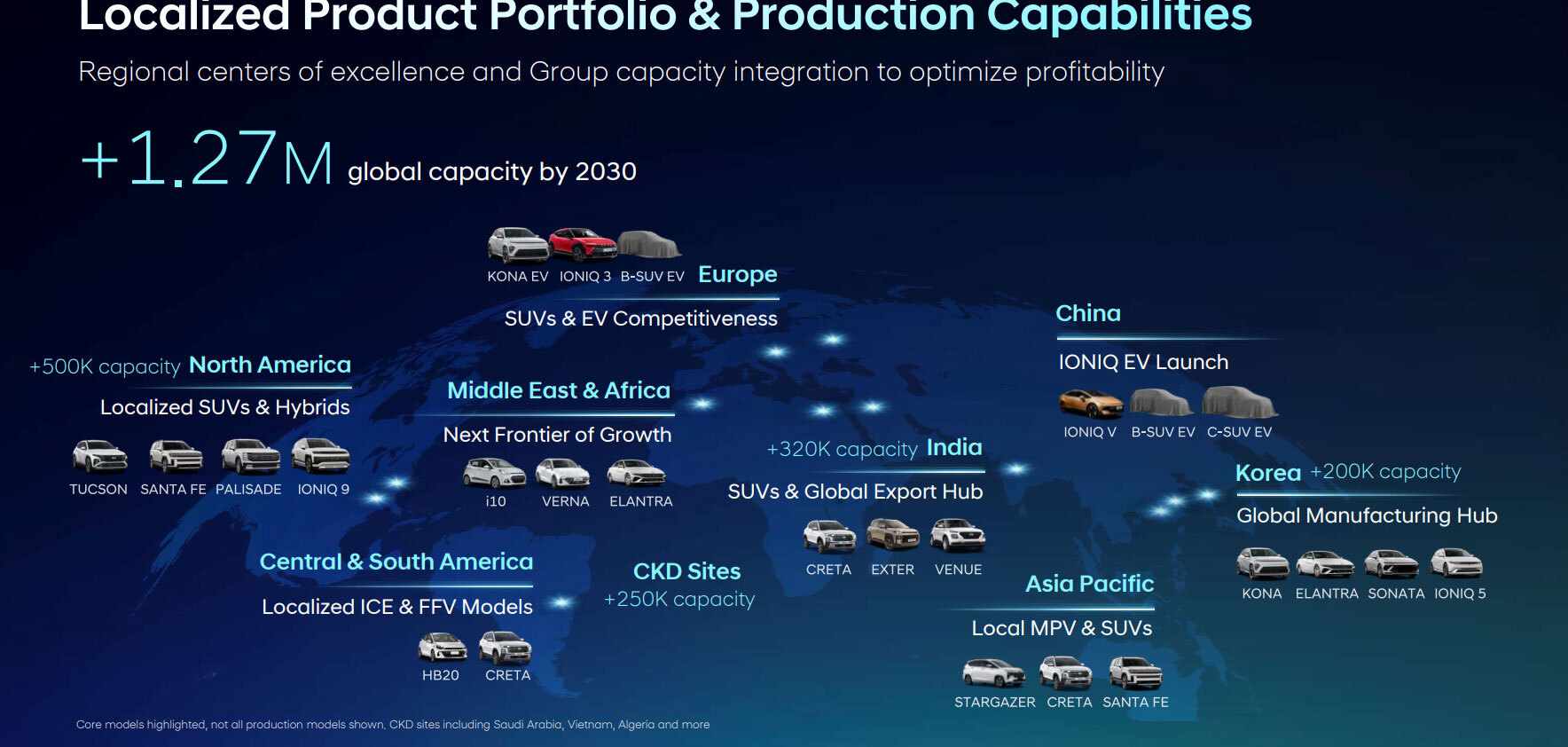
  • Global production capacity is set to increase by 1.27 million units.

Hyundai’s massive product push dominated their investor day event, but it wasn’t the only thing the company announced. Quite the opposite as the automaker talked about increasing production, ramping up autonomous driving efforts, and offering improved technology.

Starting with autonomous driving, the first Ioniq 5 Waymo robotaxis will be delivered in the fourth quarter and they’ll “enable an international expansion of robotaxi services as early as 2027.”

More: Hyundai Is Launching More Than 100 New Vehicles By 2030

Besides the Waymo effort, Hyundai-owned Motional will use Ioniq 5 robotaxis. They’re scheduled to begin commercial operations later this year in Las Vegas. Additional cities should then follow in 2027.

On the consumer front, “Hyundai Motor Group is standardizing its sensor architecture around the NVIDIA ecosystem so that data acquired by Hyundai Motor, Kia, 42dot, and Motional can be integrated and used to a single consistent standard.” This means learnings from one company can be applied to others.

\\\

Hyundai is also working to deploy its autonomous driving artificial intelligence, known as Atria AI, by the end of the year. It will eventually be used to power the company’s Level 2+ system, which arrives in 2028.

The automaker went on to say “Atria AI will be extended progressively across mass-produced vehicles, building a full lineup of autonomous driving capability from Level 2+ to Level 4.” Since Hyundai sells millions of vehicles annually, they’ll collect a ton of data, and this will be used to rapidly improve the AI’s self-driving capabilities and performance.

Improved EVs

\\\

Hyundai has been an electric vehicle pioneer and this experience is about to pay off as the company has developed its own battery cells. They “deliver more than double the output of the high-nickel cells … used previously, while cutting charging time by 40 percent.” The new cells will apparently debut in the upcoming Santa Fe or Genesis range-extended vehicle.

Starting next year, EVs will use new “mid-nickel NCM cells.” This will reduce battery costs by approximately 30%, while “maintaining optimal performance under real-world driving conditions.” Furthermore, the new batteries will have 30% more energy than equivalent LFP batteries of the same size.

Lastly, the company will improve its cloud-based battery management system by 2028. This will reportedly extend battery life by an average of 20%.

Amazon Partnership

 Hyundai Is Slashing Battery Costs And Increasing Their Lifespan By 20%

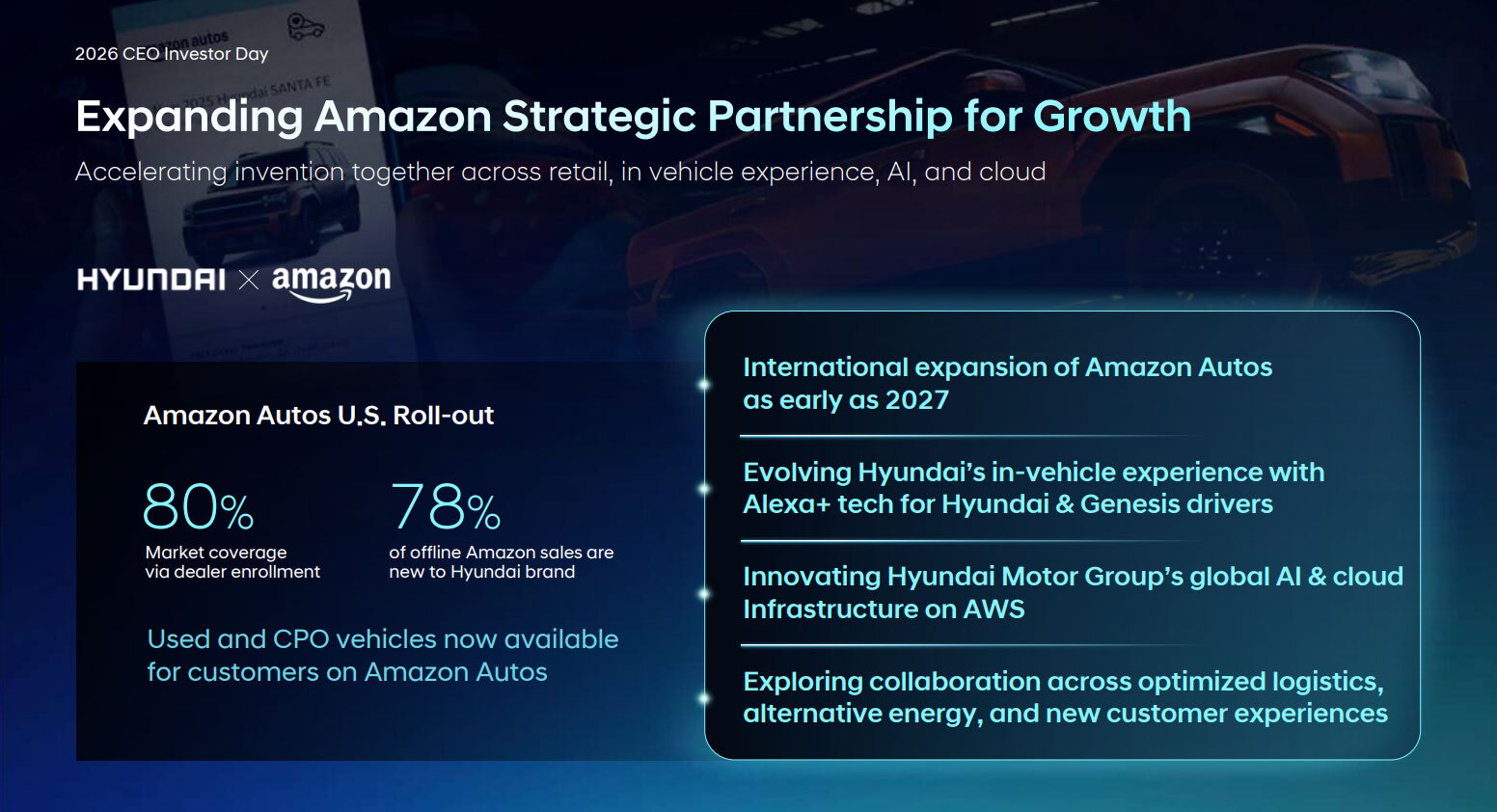
Hyundai’s partnership with Amazon on Amazon Autos appears to be a success as they’ll expand listings to markets outside of the United States next year. Alexa built-in will also roll out across the Hyundai lineup, while Genesis models will follow.

Speaking of tech, Hyundai is relying on Amazon Web Services to accelerate their “cloud and AI capabilities.” Amazon is also said to be looking at using Hyundai fuel cell vehicles.

Increased Production Capacity

 Hyundai Is Slashing Battery Costs And Increasing Their Lifespan By 20%

With more than 100 new models coming by 2030, Hyundai is ramping up their production capacity by 1.27 million units globally. North American plants will be able to build an additional 500,000 units, while Indian facilities add 320,000 units. Korean production will increase by 200,000 vehicles, while CKD sites will see their capacity grow by 250,000 units.

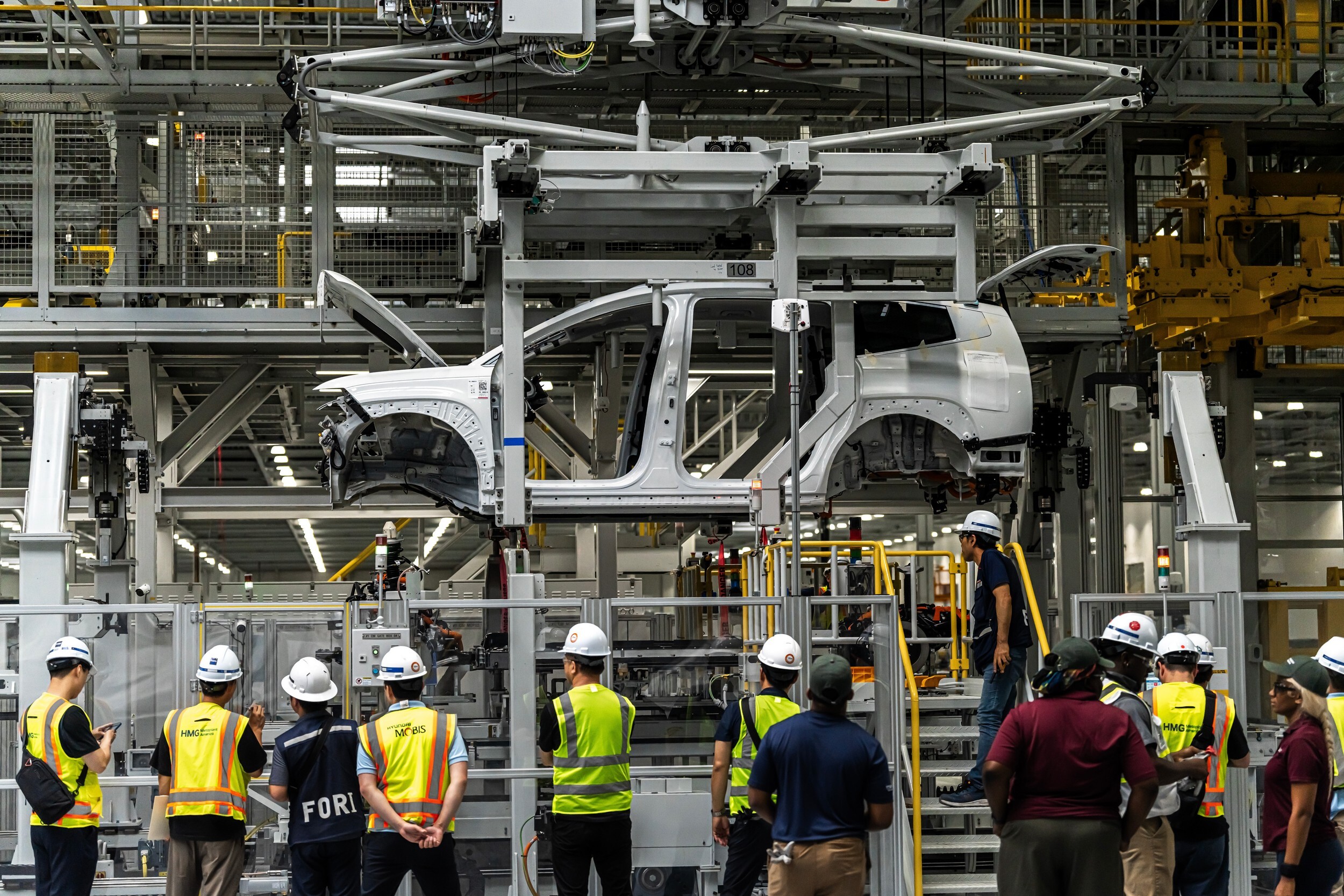
Focusing in on North America, Hyundai is increasing their local parts sourcing target to 80%. That’s up from 60% and the automaker confirmed there will be more than ten hybrids on the continent by 2030, which are produced at Hyundai Motor Manufacturing Alabama and Hyundai Motor Group Metaplant America.

 Hyundai Is Slashing Battery Costs And Increasing Their Lifespan By 20%

Rivian’s Point-To-Point Autonomous Driving System Arrives Later This Year

  • Rivian’s autonomous driving push is kicking into high gear.
  • Point-to-point driving arrives soon and eyes-off comes in 2027.
  • Automaker also announced new delivery vans for Amazon.

Rivian has released its second-quarter financial results, and things are looking up for the automaker. Jumping right into the numbers, revenues were up 27% to $1.658 billion. The company also achieved a gross profit of $179 million, which was $385 million more than a year ago.

More: For $50 A Month, Rivian Will Make You A Passenger In Your Own EV

Despite a glimmer of good news, Rivian still expects to lose $1.8-2 billion this year. CNBC notes that’s down slightly from a previous estimate of up to $2.1 billion.

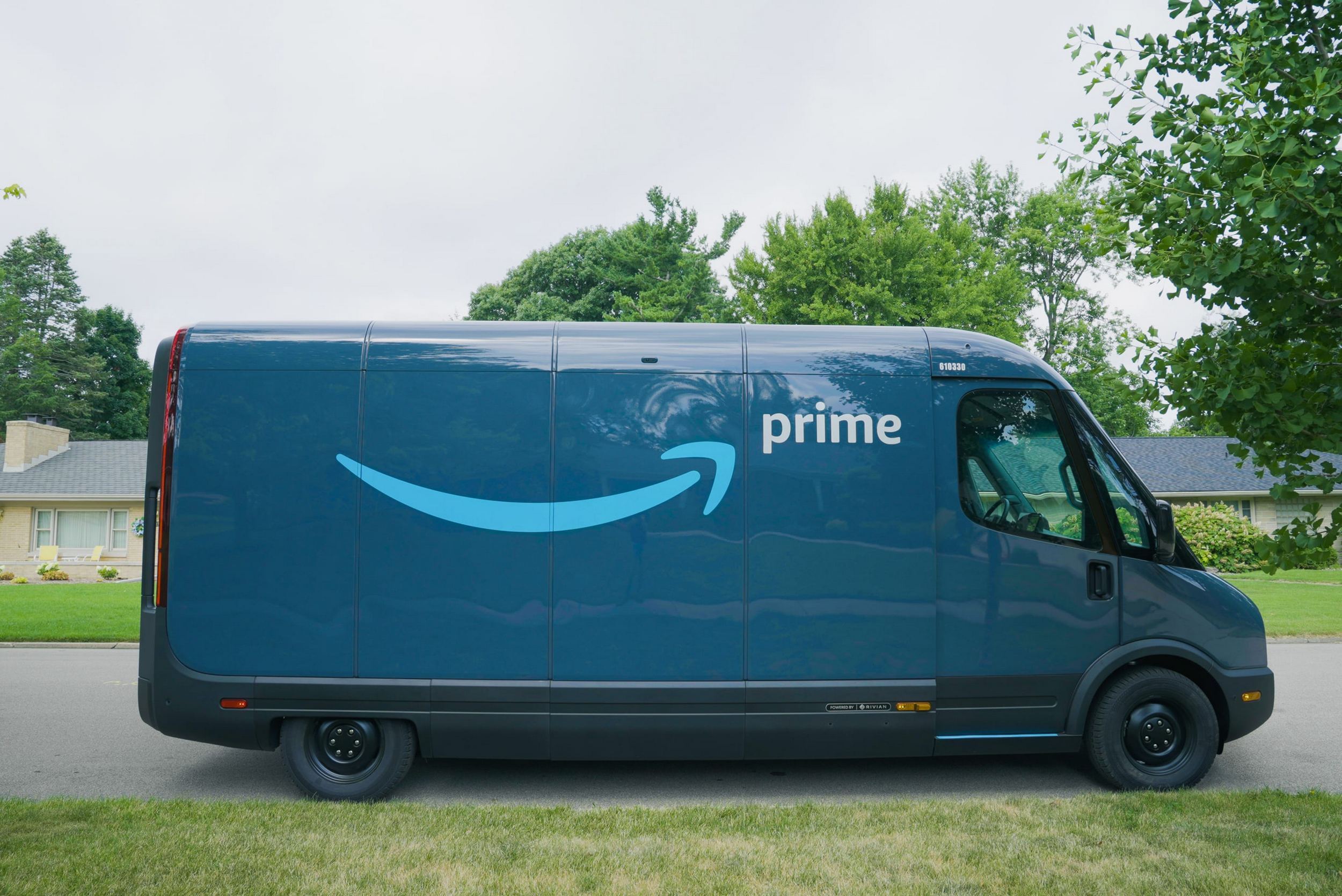
Putting the financials aside, the automaker announced Amazon now has over 40,000 electric delivery vans, and they recently surpassed one billion miles (1.6 billion km) traveled. The company also confirmed they’re developing new variants to support the online retailer.

 Rivian’s Point-To-Point Autonomous Driving System Arrives Later This Year

According to Rivian, they’re working on models with all-wheel drive as well as a larger battery pack. The latter is “expected to offer a 30% increase in range,” which would equate to around 210 miles (338 km/h). The all-wheel drive variant, on the other hand, appears aimed at markets with snow as well as rural areas with muddy dirt roads.

As a refresher, the current Delivery 500 and 700 are front-wheel drive and offer a range of up to 161 miles (259 km). Pricing starts at $79,900, and the larger of the two can hold up to 652 cubic feet (18,463 liters) of goods.

 Rivian’s Point-To-Point Autonomous Driving System Arrives Later This Year

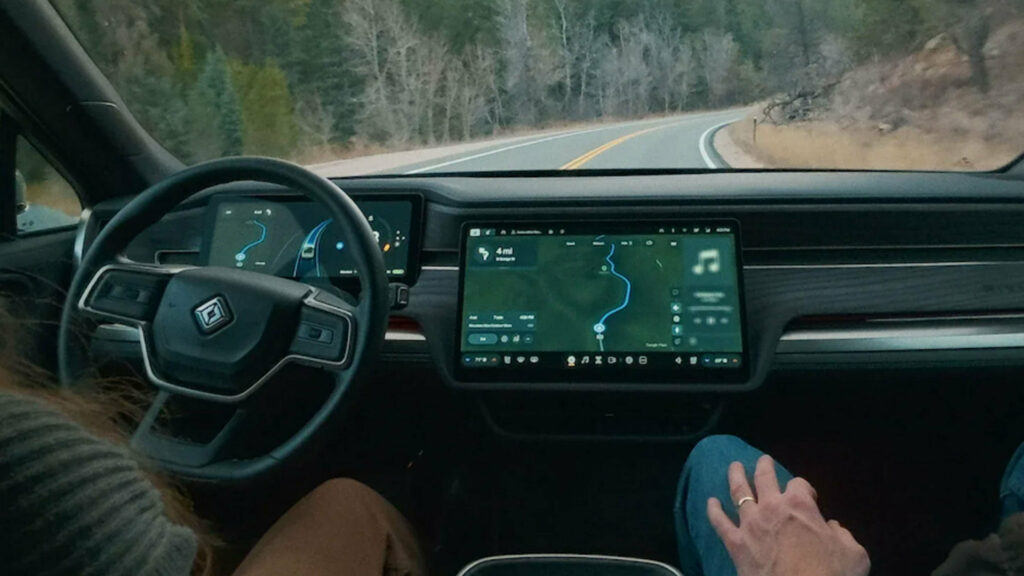
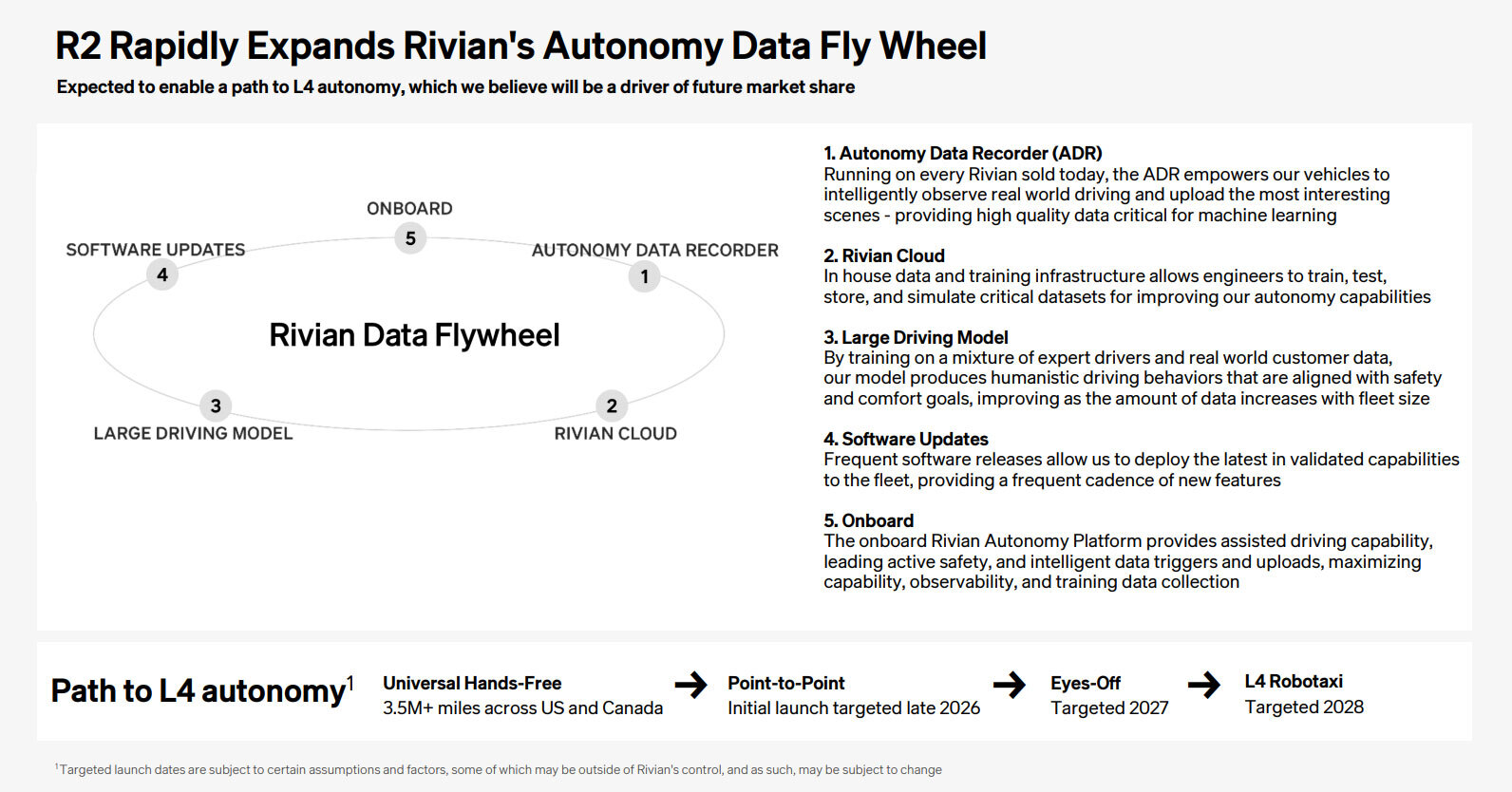
Besides talking about Amazon, Rivian said they expect to begin rolling out “point-to-point advanced assisted driving capabilities by the end of this year.” This is an evolution of their current Universal Hands-Free driving system, which works on more than 3.5 million miles of roads in the United States and Canada.

If everything goes according to plan, eyes-off driving will arrive in 2027. A Level 4 robotaxi could then follow in 2028.

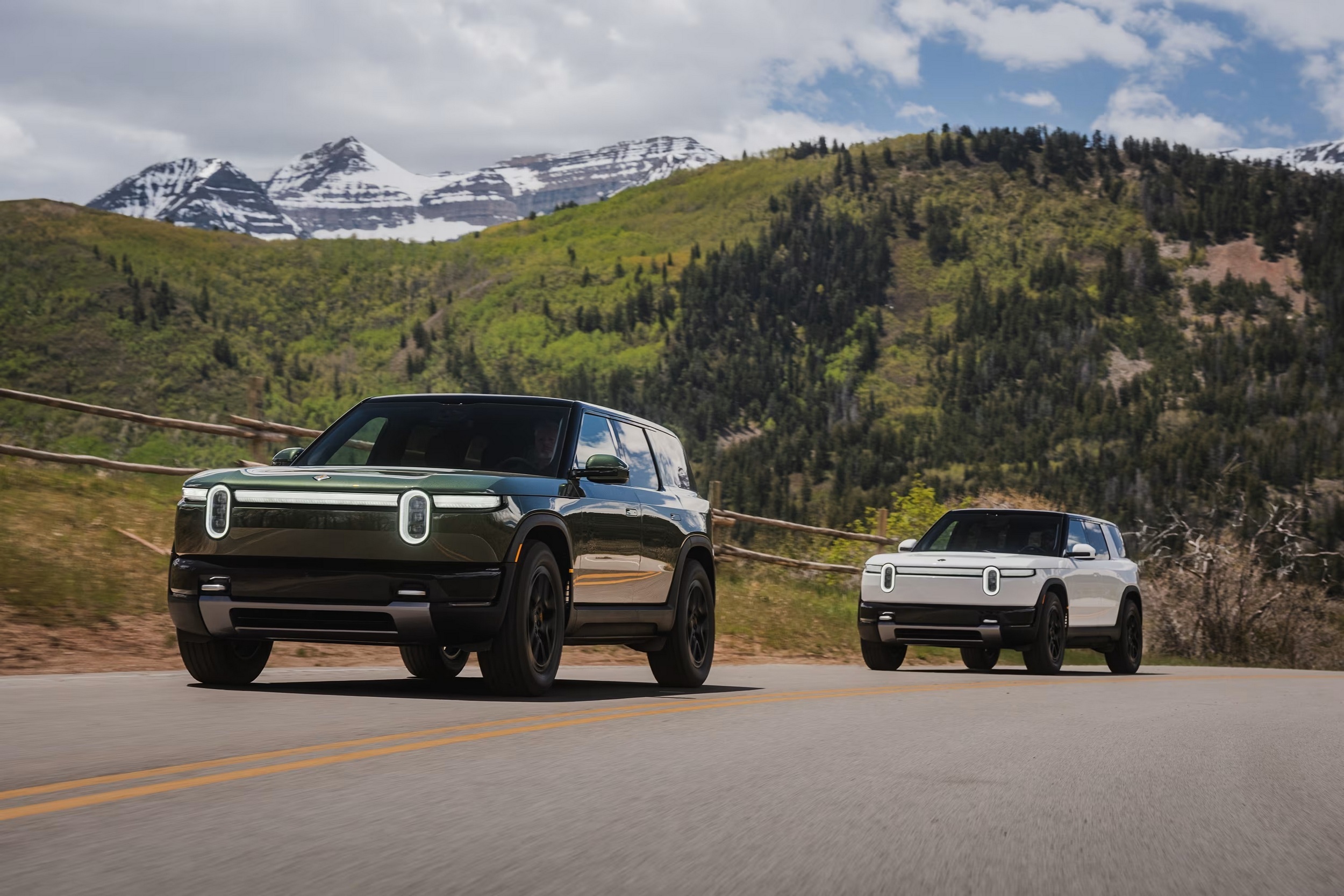
The company delivered 12,194 vehicles in Q2, and the R2 launched on June 9. Rivian is still ramping up production, but CEO RJ Scaringe said “I believe R2 will be a game changer for our customers and a driver of Rivian’s long-term growth and profitability.” He added the “U.S. automotive marketplace is starved for high-quality EV choice, and I believe R2 is an attractively priced option for everyday adventures that will resonate with a broad set of consumers.”

 Rivian’s Point-To-Point Autonomous Driving System Arrives Later This Year

California Smashes ZEV Sales Record in Q3  

By: newenergy

WHAT YOU NEED TO KNOW: California’s demand for zero-emission vehicles (ZEVs) is surging despite federal attempts to derail the Golden State’s pursuit of a 100% clean energy future. A record 29.1% of all new cars purchased in Q3 of 2025 were ZEVs. SACRAMENTO — Today, Governor Gavin Newsom announced that Californians purchased 124,755 zero-emission vehicles (ZEVs) in the third …

The post California Smashes ZEV Sales Record in Q3   appeared first on Alternative Energy HQ.

Anti-renewable policies are going to cost consumers

By: newenergy

Stop-work orders for wind undercut investor confidence in financing all energy projects, including nuclear September 3, 2025 – The administration’s energy dominance agenda will fail, done in by collapsing investor confidence, unless the White House stops issuing stop-work orders for offshore wind. Undercutting these projects, each of which has billions of private investment dollars committed …

The post Anti-renewable policies are going to cost consumers appeared first on Alternative Energy HQ.

❌