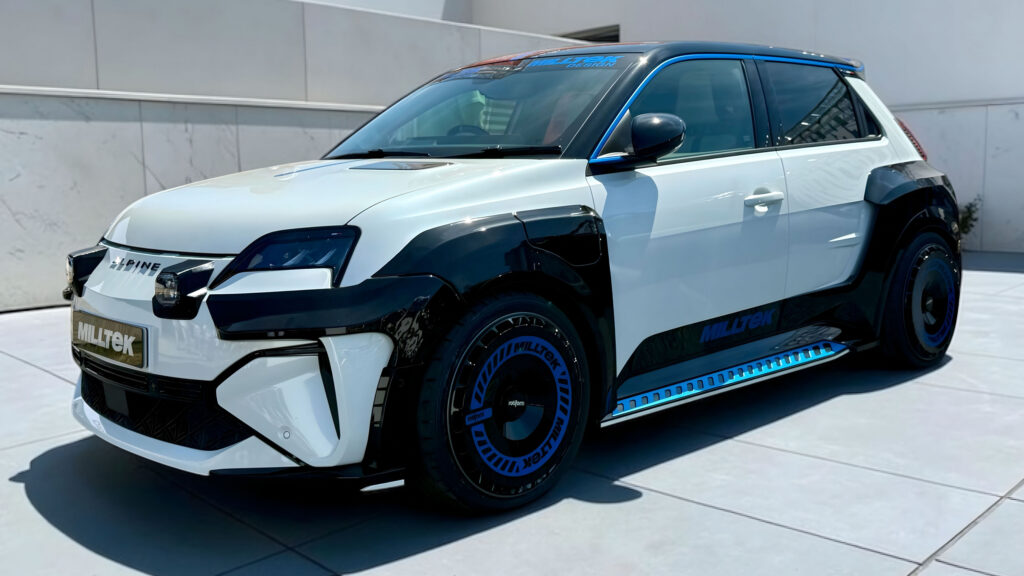
Milltek debuts a Group-B inspired widebody kit at Goodwood.
The modular kit fits both the Renault 5 and Alpine A290 EVs.
In the UK, the basic package is priced at £2,000 ($2,700).
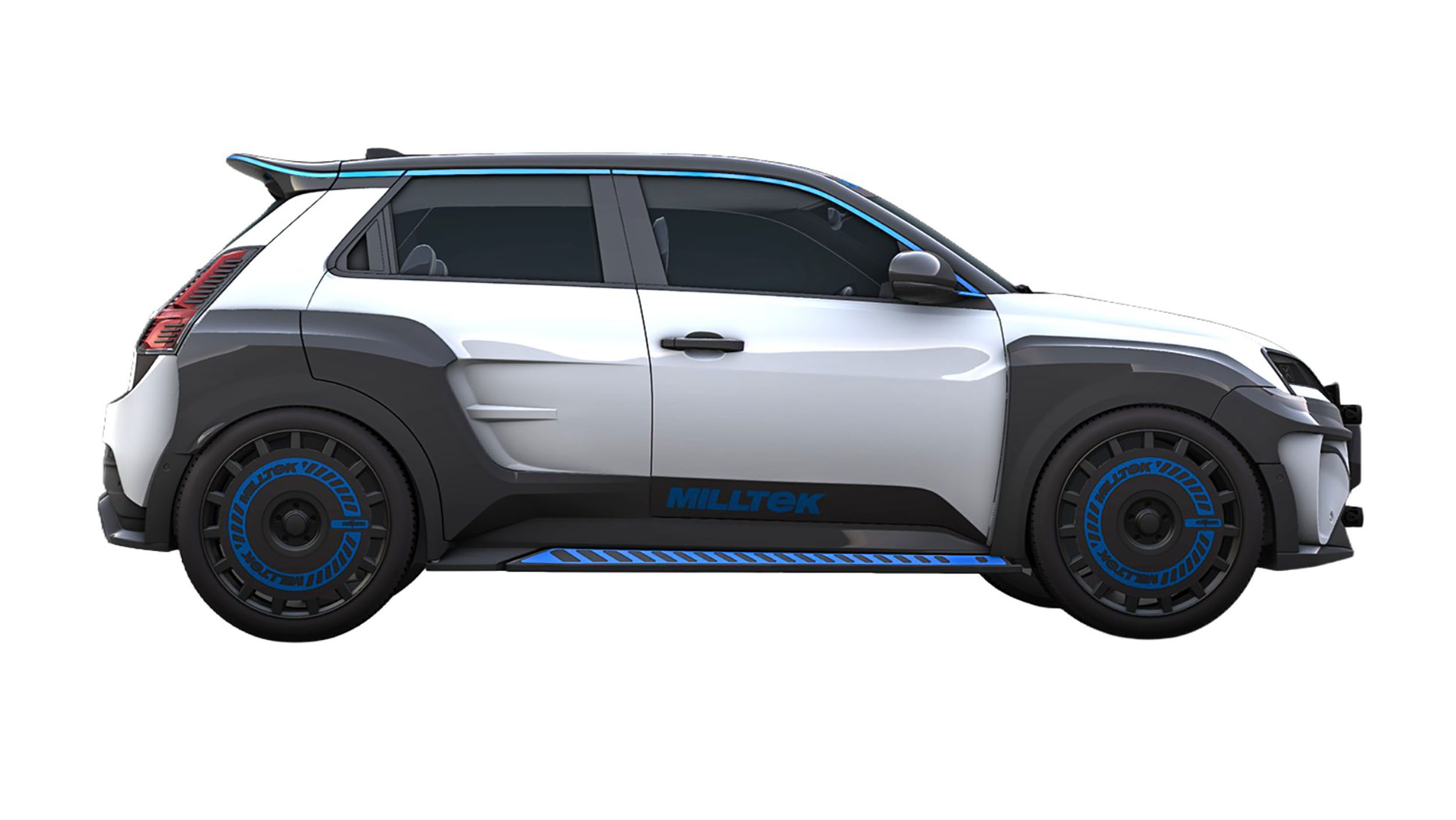
The Alpine A290 is a beefed-up take on the R5 E-Tech, with styling and performance upgrades over the standard car, but some owners will want something sharper still. UK tuner Milltek has now revealed a wide bodykit for the electric hatchback, drawing on the 1985 R5 Maxi Turbo Group B monster for its cues.
Interestingly, the styling upgrades are compatible with both the Renault and the Alpine versions. Still, the additional rally-style DRLs are exclusive to the Alpine due to the different design of the front bumper.
The centerpiece is the pair of wide front and rear fenders with integrated vents and a dedicated opening for the charging port. These tie into aerodynamic extensions for the front bumper and matching add-ons for the rear doors with faux side intakes. Milltek has also fitted aluminum trim along the side skirts and a larger roof spoiler at the back.
The package leaves performance and the chassis alone, though the car in the photos sits on aftermarket alloy wheels that sell the rally car stance. It’s worth noting that the more potent R5 E-Tech produces 148 hp (110 kW / 150 PS), while the Alpine A290 climbs to 215 hp (160 kW / 218 PS).
Milltek
According to the company, the styling upgrades are designed to be fully reversible as the fitment doesn’t require any cutting, with the extra ABS parts employing “localized removable bonding”.
Milltek showed a prototype of the kit at the Goodwood Festival of Speed and promised the production version would follow shortly. Deliveries of the first limited-edition runs are set to begin this autumn.
As for pricing, the basic kit starts at £2,000 ($2,700) before taxes. Finally, those who don’t want the full treatment will be able to purchase each component individually.
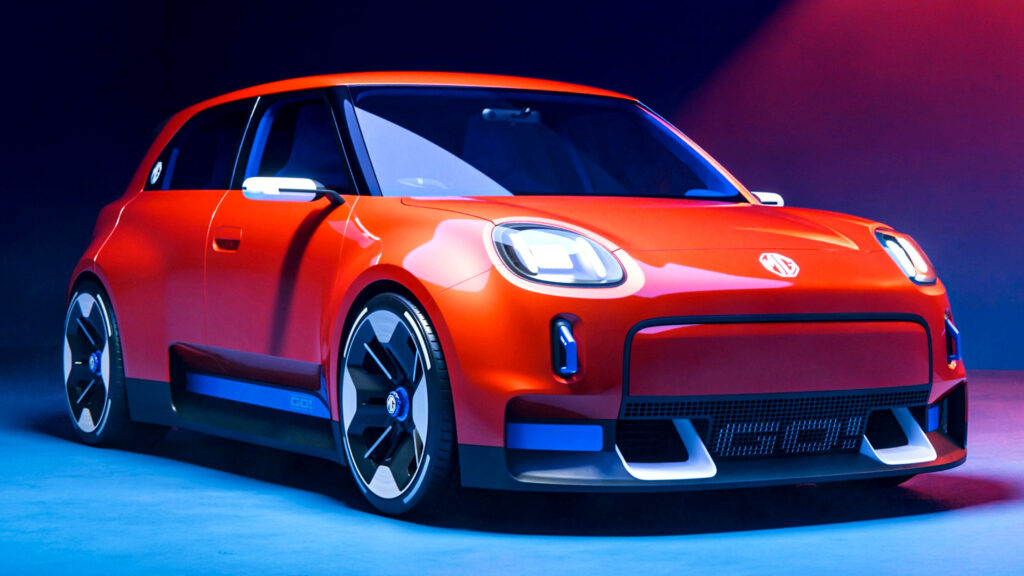
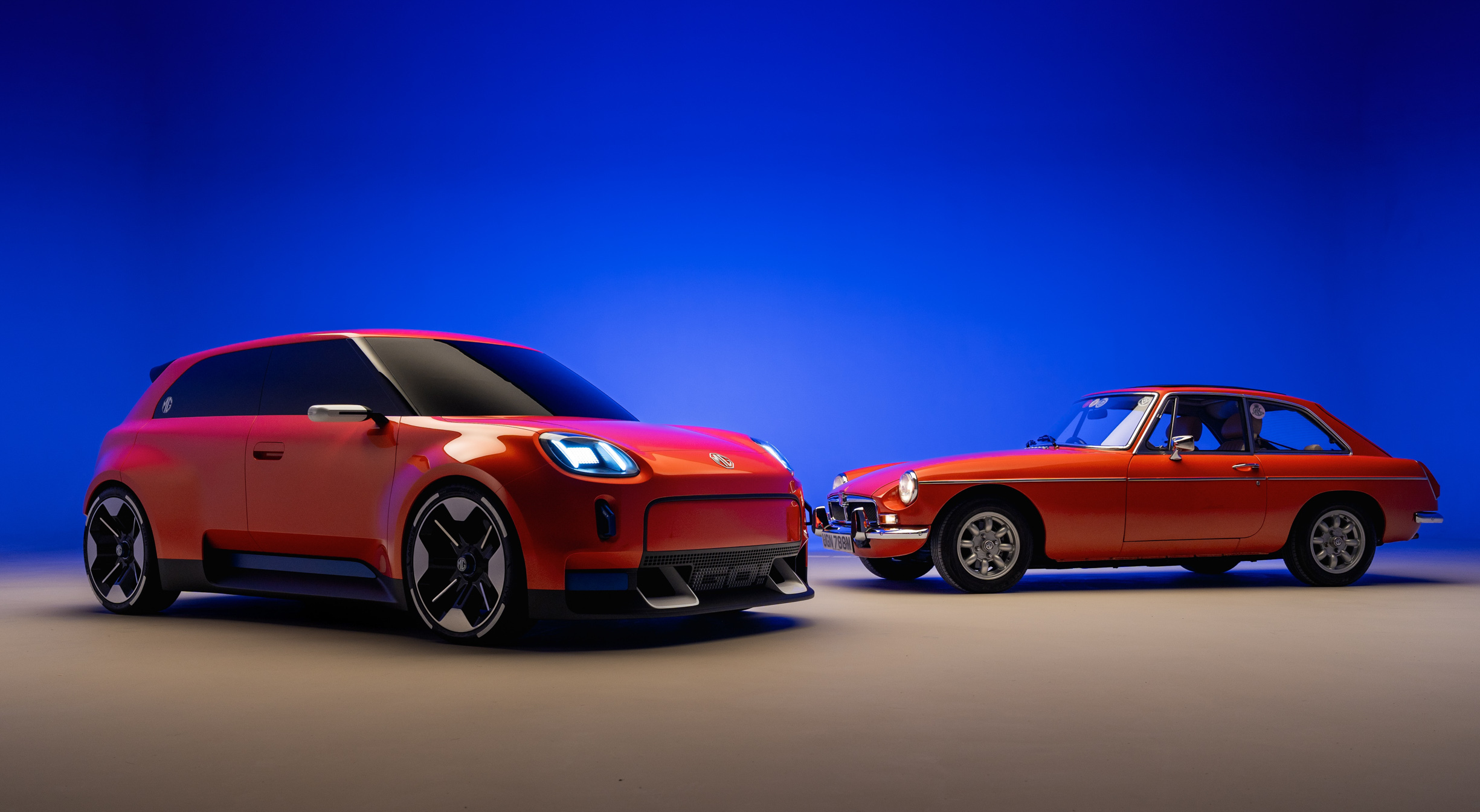
MG’s Go! concept takes inspiration from past MGs like the B GT, 6R4, Metro Turbo and ZR.
Fat-arched electric hatch previews the production MG2 electric subcompact coming 2027.
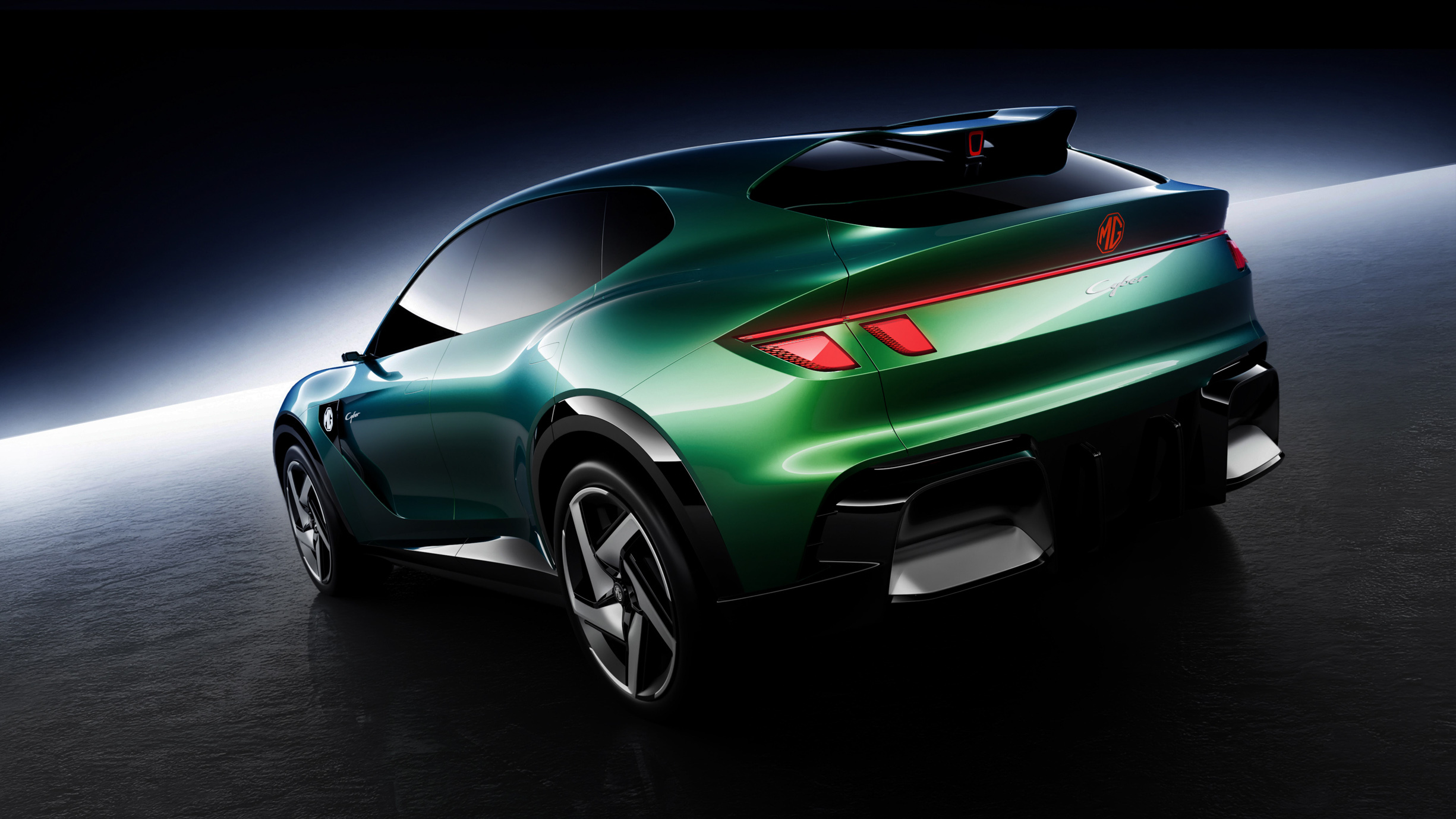
Cyber Concept is a sporty-looking flagship SUV that’s less production-ready than the Go!
The Car of the Year-winning Renault 5 and its Mini Cooper E rival have proved that affordable EVs can actually have personality, and now MG wants in on the action. The British-born, but Chinese-owned brand is coming to the 2026 Goodwood Festival of Speed with two concept cars, one of which previews a Renault 5 rival called the MG2 on sale in 2027.
Called the MG Go!, it’s a compact electric hatchback that takes inspiration from a diverse collection of past MGs, including the MGB GT and MG 6R4 Group B rally car. Another less famous but notable car MG’s press bumf namechecks is the 2000s ZR, which was massively popular with young drivers thanks to its fun chassis, tough styling and low insurance and running costs. No doubt the brand is hoping the 2 will do the same 25 years later.
MG says the goal wasn’t to recreate the past but to borrow from it to build something with emotional appeal today. So while you can clearly see nods to the MGB GT in the face created by the grille outline and headlights, plus the shape of the C pillar, and the swollen fenders subtly tip a hat to the 6R4, the overall look is very modern, and hugely appealing.
The second MG concept coming to Goodwood heads in almost the opposite direction. The Cyber Concept imagines a large electric performance SUV flagship that’s definitely not aimed at young, cost-conscious drivers.
Ferrari SUV Vibes
It’s supposedly inspired partly by MG’s record-breaking EX181 streamliner from the late 1950s, although thankfully it doesn’t resemble an enormous silver torpedo. Instead, the swoopy, muscular Cyber Concept bears more than a passing resemblance to a Ferrari Purosangue, while the taillights might look familiar to Hyundai Tucson owners.
While the Go! is primed to return as a production model in two years, it sounds like the Cyber is much further away from the showroom, lacking even an interior at this stage. And even if it does translate to the street, an MG spokesman told Autocar it might not be offered in the UK.
Honda’s kei-derived EV on sale in the UK from £18,995 this summer.
Boost mode slashes 0-62 time by 4.5 seconds, adds fake gears, sounds.
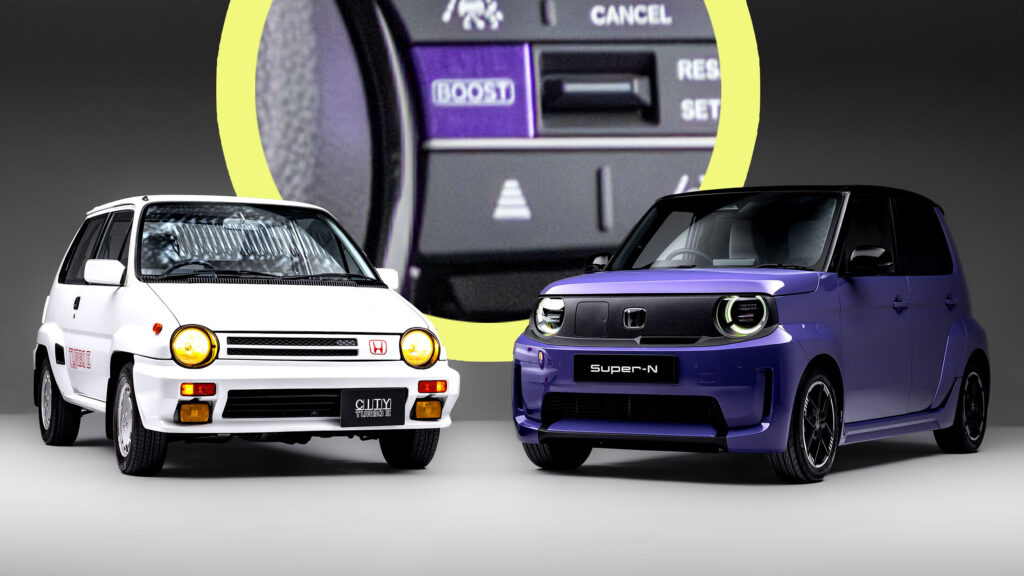
Boxy design with flared fenders inspired by iconic 1980s City Turbo II.
It’s not hard to buy a used kei car outside of Japan, but for the past 20 years buying a new one in the West from an official franchised dealer has been almost impossible. Honda rights that wrong this summer when its Super-N lands in Europe with a bargain price and a full factory warranty.
If you haven’t met the Super-N before, it’s a pint-sized electric hatch based on Japan’s Super-One kei car and inspired by the now legendary City Turbo II hot hatch of the 1980s. More importantly, it starts at just £18,995 (equal to around $25,100 or €21,900 at current rates), making it both Honda’s cheapest EV in Europe and one of the cheapest EVs on sale in Britain.
At that price it should undercut rivals like the Renault Twingo E-Tech (sub-£20k est) and is only £345 ( $456 or €398) more than BYD’s most basic Dolphin Surf.
The Super-N measures just 3,599 mm (141.7 inches) long and 1,573 mm (61.9 inches) wide, yet Honda claims it can comfortably accommodate four adults while delivering the kind of packaging genius the brand built its reputation on. It has the same fold-up “magic” rear seat base that made the Honda Jazz so much more useful than a Ford Fiesta back in 2001, for example.
In normal driving mode, the compact e-Axle produces 63 hp (64 PS / 47 kW), enough to get the little electric hatch from 0 to 62 mph in a leisurely 14.5 seconds. But press the BOOST button and output jumps to 94 hp (95 PS / 70 kW), cutting the sprint time to 10.0 seconds.
Seven Fake Gears
No, that won’t trouble a hot hatch. But in a car weighing only 1,097 kg (2,420 lbs), it’s going to feel pretty eager squirting away from city stoplights. Especially since Honda has even added a simulated seven-speed transmission and an artificial engine soundtrack. We first saw this kind of tech in the Hyundai Ioniq 5 N, but even Porsche has jumped on the trend, this week adding it to the updated Taycan.
The Super-N’s range means the city is its natural habitat. A tiny 29.6 kWh battery delivers a WLTP combined figure of 128 miles (206 km), though Honda says urban driving can stretch that to 199 miles (320 km). Fast charging to 80 percent takes around 30 minutes.
Bose Hifi Is Standard
For enthusiasts, though, the biggest attraction isn’t the range or the price, or the fact that the CarPlay/Android Auto-enabled infotainment system is hooked up to a standard Bose audio system. Or that Honda plans to offer multiple exterior graphics packages to make the little box stand out even more.
It’s the fact that Honda has leverage its existing kei catalog to bring a quirky, affordable, lightweight small car to Europe that genuinely looks like it’ll be fun to drive and own. If only America could buy one too.
Honda’s kei-derived EV on sale in the UK from £18,995 this summer.
Boost mode slashes 0-62 time by 4.5 seconds, adds fake gears, sounds.
Boxy design with flared fenders inspired by iconic 1980s City Turbo II.
It’s not hard to buy a used kei car outside of Japan, but for the past 20 years buying a new one in the West from an official franchised dealer has been almost impossible. Honda rights that wrong this summer when its Super-N lands in Europe with a bargain price and a full factory warranty.
If you haven’t met the Super-N before, it’s a pint-sized electric hatch based on Japan’s Super-One kei car and inspired by the now legendary City Turbo II hot hatch of the 1980s. More importantly, it starts at just £18,995 (equal to around $25,100 or €21,900 at current rates), making it both Honda’s cheapest EV in Europe and one of the cheapest EVs on sale in Britain.
At that price it should undercut rivals like the Renault Twingo E-Tech (sub-£20k est) and is only £345 ( $456 or €398) more than BYD’s most basic Dolphin Surf.
The Super-N measures just 3,599 mm (141.7 inches) long and 1,573 mm (61.9 inches) wide, yet Honda claims it can comfortably accommodate four adults while delivering the kind of packaging genius the brand built its reputation on. It has the same fold-up “magic” rear seat base that made the Honda Jazz so much more useful than a Ford Fiesta back in 2001, for example.
In normal driving mode, the compact e-Axle produces 63 hp (64 PS / 47 kW), enough to get the little electric hatch from 0 to 62 mph in a leisurely 14.5 seconds. But press the BOOST button and output jumps to 94 hp (95 PS / 70 kW), cutting the sprint time to 10.0 seconds.
Seven Fake Gears
No, that won’t trouble a hot hatch. But in a car weighing only 1,097 kg (2,420 lbs), it’s going to feel pretty eager squirting away from city stoplights. Especially since Honda has even added a simulated seven-speed transmission and an artificial engine soundtrack. We first saw this kind of tech in the Hyundai Ioniq 5 N, but even Porsche has jumped on the trend, this week adding it to the updated Taycan.
The Super-N’s range means the city is its natural habitat. A tiny 29.6 kWh battery delivers a WLTP combined figure of 128 miles (206 km), though Honda says urban driving can stretch that to 199 miles (320 km). Fast charging to 80 percent takes around 30 minutes.
Bose Hifi Is Standard
For enthusiasts, though, the biggest attraction isn’t the range or the price, or the fact that the CarPlay/Android Auto-enabled infotainment system is hooked up to a standard Bose audio system. Or that Honda plans to offer multiple exterior graphics packages to make the little box stand out even more.
It’s the fact that Honda has leverage its existing kei catalog to bring a quirky, affordable, lightweight small car to Europe that genuinely looks like it’ll be fun to drive and own. If only America could buy one too.
A prototype of VW’s sportiest ID.3 Neo has been spotted testing in Germany.
Replacement for the old 322 hp ID.3 GTX could get the GTI badge this time.
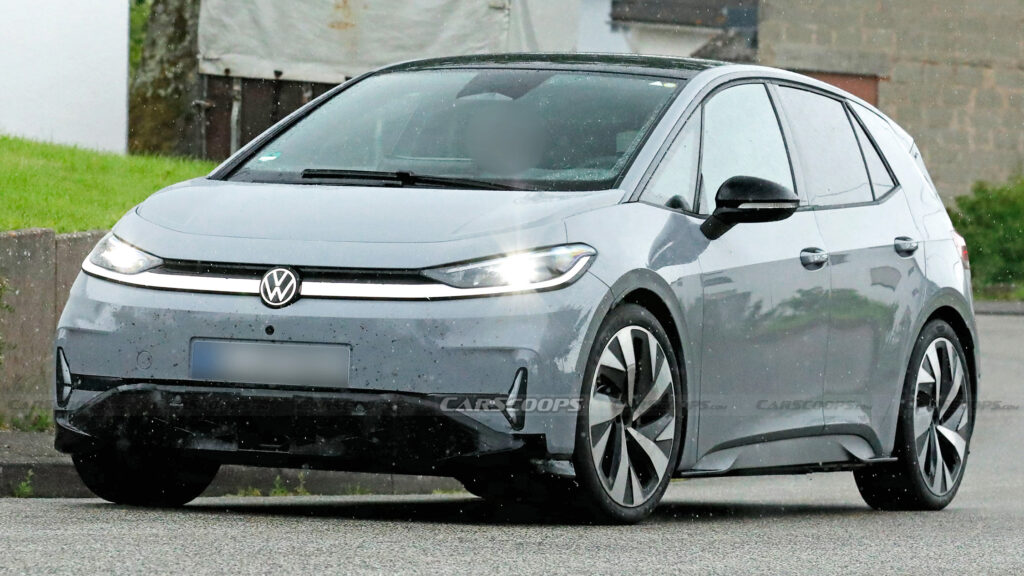
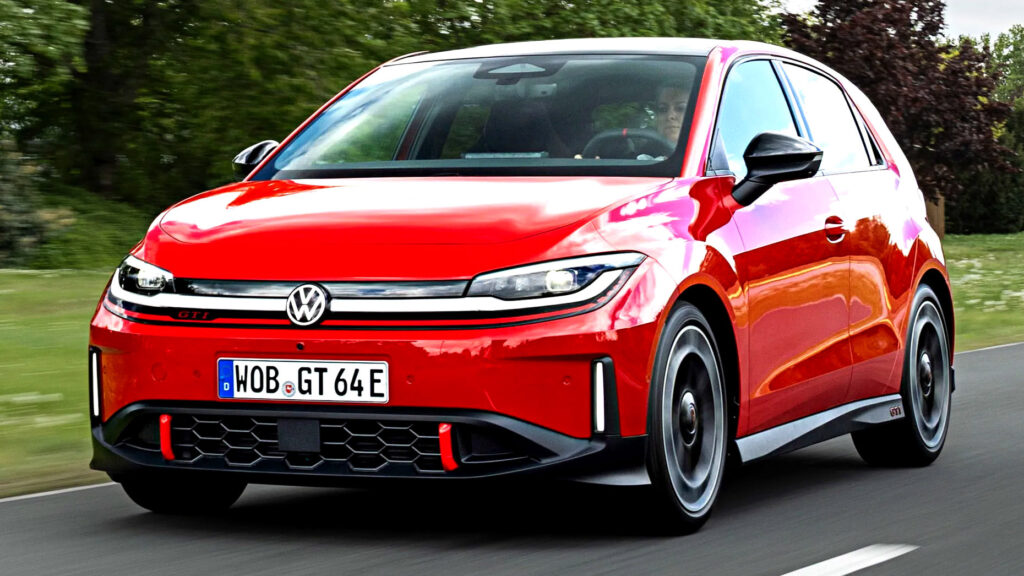
Mostly undisguised Neo test car has an ID. Polo GTi-style lower front bumper.
Volkswagen only recently unveiled the heavily updated ID.3 Neo, but one important version was conspicuously absent. While buyers can currently choose from three sensible powertrains, there’s still no replacement for the departed ID.3 GTX. That now looks set to change.
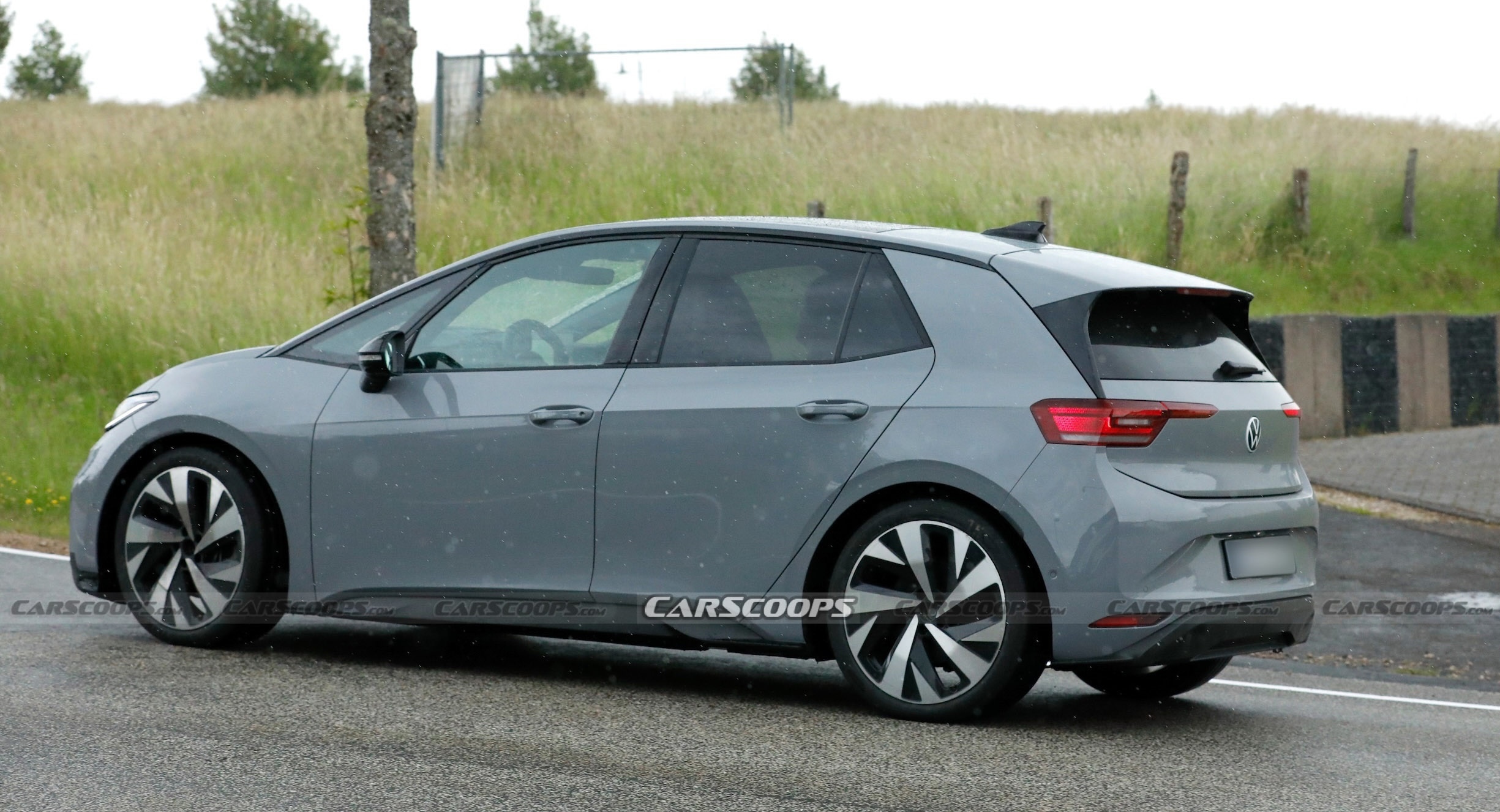
Our spy photographers have caught what they’re calling the first ID.3 Neo GTX prototype testing on public roads. Whether it actually reaches production wearing a GTX badge is another matter entirely.
Baldauf
At first glance, the prototype doesn’t look dramatically different from the standard ID.3 Neo. But that’s partly because VW appears to be hiding its work. The lower front intake is disguised though we can still make out it has the same mouth-like shape as the new ID. Polo GTi. And the rear bumper features camouflage covering what looks like a redesigned diffuser section.
The fact that VW gave the hot electric Polo the GTI name is a strong indicator that the most performance-focused ID.3 Neo will get the same honor. Either way, the recipe is likely to remain familiar. Unlike the front-wheel-drive ID. Polo GTI, the ID.3 sits on VW’s older MEB architecture with a rear-mounted motor driving the back wheels. That would give it a layout no GTI has ever enjoyed before if it really does get that badge.
322 HP At A Minimum
The most likely outcome is a carryover of the old electric GTX hardware. That would mean up to 322 hp (326 PS) and 402 lb-ft (545 Nm) of torque, and a 5.6-second zero to 62 mph (100 km/h) time. The old GTX achieved 373 miles (600 km) of WLTP range from its 79 kWh battery, but VW might squeeze a few more miles out for the refresh.
The standard ID.3 Neo currently tops out at 228 hp (231 PS) and offers up to 391 miles (630 km) of range. It also introduced sharper styling, a redesigned dashboard, improved materials, larger screens, and, perhaps most importantly, a return to physical buttons after years of complaints about touch controls. That interior overhaul should carry straight across to the hot version, but hopefully with plenty of plaid upholstery and red detailing.
Look for a European debut later this year, but as with the old GTX and new ID. Polo GTI, this updated electric hot hatch will be off-limits to Americans.
First electric GTI brings hot hatch spirit to Volkswagen’s new EV era.
Single front motor delivers 223 hp for a 6.8-second 0-62 mph time.
LSD, adaptive dampers, 19-inch wheels and retro screens are standard.
The GTI badge has spent 50 years making small Volkswagens feel more exciting than they probably had any right to be. Now it’s going electric for the first time, but the Wolfsburg team reckons the new ID. Polo GTI still has the right hot hatch character, even if the recipe is very different.
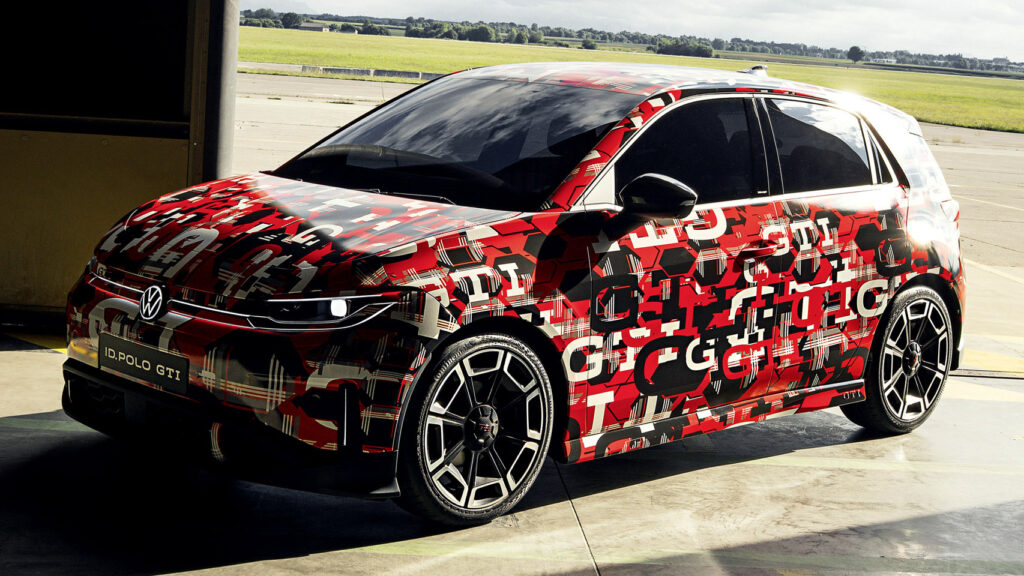
Unveiled at the Nürburgring 24 Hours where VW is racing a widebody Golf R, the ID. Polo GTI gets a single electric motor that sends 223 hp (226 PS / 166 kW) and 214 lb-ft (290 Nm) to the front wheels. That’s enough for 0-62 mph (100 km/h) in 6.8 seconds and a far less exciting 109 mph (175 km/h) top speed. The larger gas-powered Golf GTI handles the same sprint in 5.9 seconds and keeps pulling to 155 mph (250 km/h).
It’s punchier than the top version of the regular electric Polo, which only recently launched and tops out at 208 hp (211 PS 155 kW). But there’s a tradeoff. The standard car claims 283 miles (455 km) of range, while the GTI’s 52 kWh net NMC battery is rated at up to 263 miles (424 km) on the WLTP cycle. That’s still good for the segment though, and we’ll come back to it later.
Charging should be painless enough. The GTI can take up to 105 kW at a DC charger, and VW says its flat charging curve means a 10 to 80 percent top-up takes around 24 minutes. AC charging is rated at 11 kW.
Electric LSD And Adaptive Dampers
VW hasn’t simply turned up the motor and thrown some red stitching at it. Every ID. Polo GTI gets an electronically controlled front differential lock, adaptive DCC sports suspension, progressive steering, 19-inch alloy wheels, premium sports seats, IQ.LIGHT LED matrix headlights, and a dedicated GTI driving mode.
Hit the GTI button on the odd, two-spoke squircle steering wheel and the motor response, steering, dampers and chassis systems all switch into their angriest settings. The ambient lighting turns red, the graphics change, launch control becomes available, and Volkswagen even pipes in a combustion-style soundtrack.
ID. Polo Clubsport In The Works
Fake gearshifts, which featured on the almost identical-looking ID. Concept GTI back in 2023, don’t appear on the production GTI, sadly. But they will make it to the more hardcore ID. Polo Clubsport currently in development, a recent report claimed. Hopefully the Clubsport will also get the concept’s black plastic arch trims, a nod to the original Golf GTI’s, but which are missing from this one.
Other than the arch spats and fatter mirrors though, this 2027 car looks damn near identical to the concept. There’s a full-width red stripe across the nose, a 3D GTI badge, honeycomb lower intake, a split rear spoiler, illuminated rear graphics, and a chunky black diffuser. Six colors will be offered, including Tornado Red, Candy White, Oyster Silver, Celestial Blue, Magnetic Grey, and Grenadilla Black.
Tartan Seats, Real Buttons
Inside, the GTI gets red stitching, a 12 o’clock steering wheel marker, illuminated GTI logos, sports seats with traditional GTI tartan trim, and brake regen paddles. A 10.25-inch digital cluster is paired with a 12.9-inch touchscreen, and best of all, there’s a retro display mode that replicates an old Golf dashboard and plenty of real buttons on the wheel and dashboard to press.
It’s practical, too. The electric platform’s 2,599 mm (102.3 inches) wheelbase is only 37 mm (1.46 inches) shorter than a Golf’s, and the Polo’s 441 liters (15.6 cu-ft) of trunk space actually shames the supposedly much bigger car’s 381-liter cargo bay (13.5 cu-ft), despite not having a frunk.
Options include a 425-watt Harman Kardon sound system with 10 speakers, a panoramic glass roof, 12-way electrically adjustable front seats with pneumatic massage, and Bridgestone Potenza Sport performance tires for drivers who want to give the 1,540 kg (3,395 lbs) GTI a real workout.
Alpine A290 And Mini JCW In The Crosshairs
Stick to the base spec and VW says you could take a GTI home for less than €39,000, or around £35,000 in the UK after government EV incentives. That’s a big step up from the regular ID. Polo’s €25,000 starting price, but it’s on a par with the 255 hp (258 PS / 190 kW) Mini John Cooper Works E and 215 hp (218 PS / 160 kW) Alpine A290 GTS.
Both are at least 0.4 seconds faster to 62 mph than the Polo, and the Opel Corsa GSE and its Peugeot 208 GTI cousin both punch out a massive 276 hp (280 PS / 206 kW) and hit 62 mph in as little as 5.5 seconds. But none of these cars can do more than 230 miles (370 km) on a charge. The Polo, remember, does 263 miles (424 km).
This Or A Combustion GTI?
What’s also interesting is that the performance Polo comes in around €7,000 / £6,000 / $8,150 cheaper than a Euro-spec 262 hp (265 PS / 195 kW) petrol Golf GTI. True, it’s 0.9 seconds slower to 62 mph, but with the EV being closer in size to the Golf than to the old combustion Polo, we wouldn’t be surprised if a few would-be Golf GTI buyers find themselves in an ID. Polo GTI instead. Except in North America, of course, which isn’t taking the ID. Polo in any form.
The ID. Polo GTI might not be the quickest electric hot hatch on sale, but VW GTIs have rarely been the fastest in their class. What they are is great all-rounders, and with a strong electric range, loads of standard hardware, proper retro charm, and a famous badge finally dragged into the EV age, it might be the one electric hat hatch ICE fans actually care about.
VW’s ID. Polo GTI Clubsport could fake shifts for extra fun.
The hotter EV hatch may jump from 223 hp to nearly 282 hp.
Mini and Stellantis rivals already push as much as 276 hp..
Volkswagen hasn’t even officially launched the electric ID. Polo GTI yet, and already there’s talk of an even hotter Clubsport version lurking in development. Better still, it might come with fake gearshifts and simulated combustion-style power delivery and sounds designed to make EV hot hatch feel less, well, EV-ish.
According to Autocar, VW engineers are exploring a more extreme ID. Polo GTI Clubsport packing roughly 282 hp (286 PS / 210 kW), up substantially from the regular car’s expected 223 hp (226 PS / 166 kW) output. That would immediately put it closer to the upper end of the growing electric hot hatch class.
While the standard ID. Polo GTI should comfortably match the 215 hp (218 hp / 160 kW) Alpine A290 GTS and its mechanically related 223 hp Cupra Raval sibling, several rivals already bring considerably more firepower. The electric Mini JCW produces 255 hp (259 PS / 190 kW), while Stellantis has gone properly aggressive with the 276 hp (280 PS / 206 kW) Peugeot e-208 GTI and Opel Corsa GSE.
The Opel, unveiled this week, sets a serious benchmark, sprinting to 62 mph in just 5.5 seconds. Current expectations suggest the regular VW GTI might need around a second longer than that, though the Clubsport should give the Opel a real fight.
Performance upgrades reportedly won’t stop at extra power. Autocar says VW’s also considering replacing the current electronically controlled BorgWarner limited-slip differential with a fully mechanical setup for sharper front axle behavior.
Hyundai N-Style Shifts
But arguably the most interesting part is the fake shifting system, something that appeared on the GTI concept back in 2023, but which VW then said would not appear on a production GTI. Of course nobody asked about a GTI Clubsport.
VW dynamics boss Florian Umbach said the company is working on “a similar kind of paddleshift power delivery that the [electric] Hyundai N cars have.” Like the Ioniq 5 N, the setup would use software-controlled power delivery to imitate a combustion engine and transmission.
“It’s all about motor control and an audio soundtrack to match,” Umbach told the magazine, suggesting fake sounds – also featured on the 2023 VW GTI concept – will also be part of the Clubsport package.
Purists will absolutely argue about whether fake shifts belong in a GTI, but the reality is many drivers miss the interaction traditional hot hatches delivered and VW clearly knows engagement matters just as much as raw acceleration numbers.
New Corsa GSE delivers 276 hp and 0-62 mph in 5.5 seconds.
FWD chassis gets a limited-slip diff and performance brakes.
Plaid bucket seats tip a hat to classic hot hatches from the ’80s.
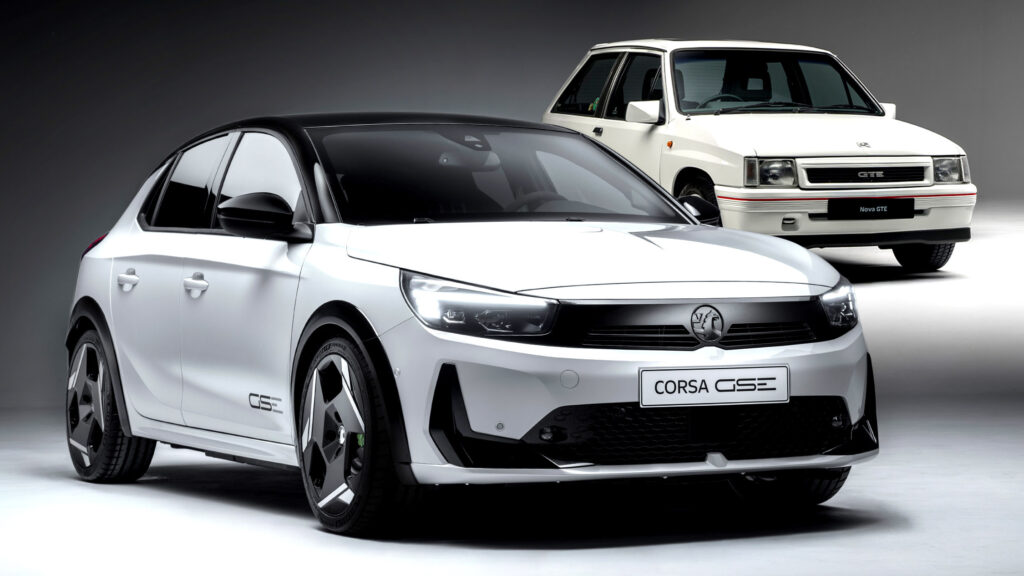
Opel and its badged-engineered British sister brand Vauxhall are rediscovering their hot hatch roots, but with a charging cable this time. The pair dropped their Corsa GSE today, along with a zero to 62 mph (100 kmh) time that says it’s faster than any rival electric hot hatch on the market.
That includes fellow Stellantis company Peugeot’s e-208 GTI whose platform, powertrain and basic chassis setup the GSE shares. Under the skin is a single electric motor that sends 276 hp (281 PS / 207 kW) and 254 lb-ft (345 Nm) of torque to the front wheels through a limited-slip differential, though only in Sport mode. In Normal you make do with 228 hp (231 PS / 170 kW).
Zero to 62 mph (100 kmh) takes 5.5 seconds in Sport, versus 5.7 seconds for the e-208 and 5.9 seconds for the 1,550 kg (3,420 lbs) Corsa’s mechanically identical, but 47 kg (104 lbs) heavier crossover brother, the Mokka GSE. That’s pretty damn swift for a small, front-wheel drive hatch, and also makes the Corsa GSE significantly quicker than its key non-Stellantis electric rivals like the Alpine A290 and Mini Cooper JCW, which need 6.4 and 5.9 seconds respectively to hit the 60 mph mark.
Stiffer, lower suspension and uprated brakes with four-pot calipers are part of the chassis package, Opel claiming that both the steering and pedal responses are massively improved over what you experience from the regular EV. Rolling stock is Michelin Pilot Sport 4S 215/40 R18 rubber wrapped around alloy rims whose three-spoke design is there to evoke memories of the 1980s Opel Corsa GSE, which traded blows with the Peugeot 205 GTI almost 40 years ago.
Plaid Buckets? Check!
Climb inside and you’ll find the sports seats have plaid centers to carry on the 1980s hot hatch theme. Other GSE interior details on the 2027 car include Alcantara trim, aluminum pedals, and strong yellow accents, plus a performance data display showing acceleration stats and G-force readings. On the outside, in addition to those three-spoke rims you get a black roof, rear spoiler and sportier bumpers.
As for range, we don’t have numbers yet, but we do know that the GSE uses the same 51 kWh (usable) battery as other Corsas and other Stellantis cars built on the same CMP platform. So we’d expect the GSE to roughly equal the e-208 GTI’s 217-mile (349 km) range, which will be fine for blasting around town, but not so good on longer trips.
VW’s ID. Polo GTI debuts any day, and should deliver more than 260 miles (418 km) of range, though with only 223 hp (226 PS / 166 kW) it won’t trouble the GSE in a race to 62 mph. Which one gets your vote?
Hyundai’s N division is weighing whether the Ioniq 3 deserves its badge
Kia already launched an EV3 GT using nearly identical underpinnings
A 400-volt performance EV was something Hyundai previously ruled out
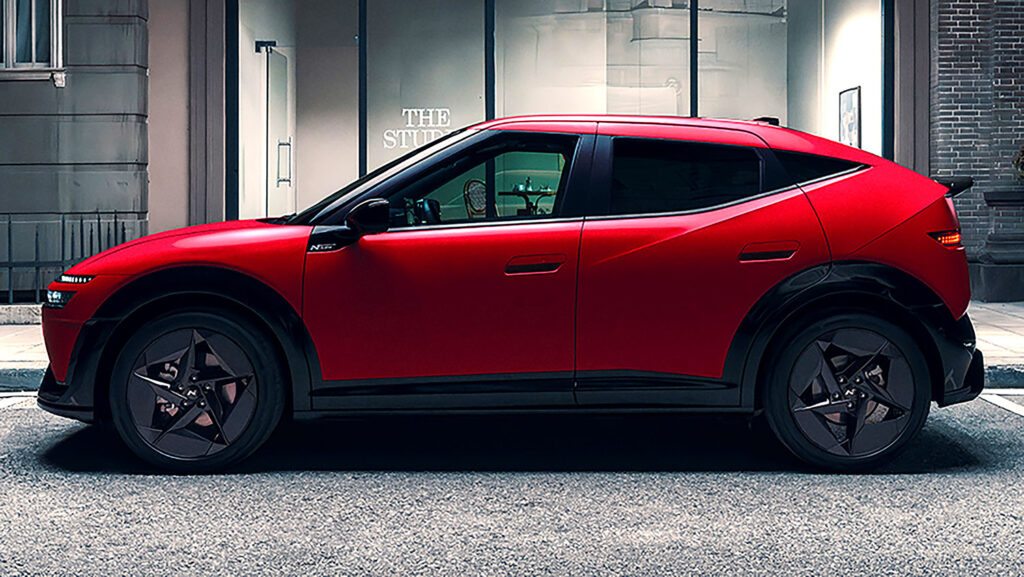
Electric performance cars are still working out what they want to be. Some feel quick but distant, others try a bit too hard. The new Hyundai Ioniq 3’s design has already picked up some unflattering Pontiac Aztek comparisons, yet this all-electric hatch could still be first in line for the N treatment.
Hyundai’s N performance division fast dabbled in the world of performance EVs with the Ioniq 5 N three years ago, proving it was possible to build an electric car that’s fun and engaging to drive. It’s since followed this up with the Ioniq 6 N, and senior executives at the company appear open to the idea of an Ioniq 3 N.
“We are looking into different ways to expand the N line-up,” Hyundai Europe product vice president Raf van Nuffel told Car Sales. “N was always about cornering and fun to drive. When we launched the i30 N, it was not about the sheer 0-100km/h number and so on. It’s about having fun while driving,” noting a smaller and lighter vehicle like the Ioniq 3 doesn’t need supercar-levels of performance.
Up until now, Hyundai has shied away from making any N EVs that use cheaper 400-volt architectures, citing concerns that they lack cooling systems to maintain on-track performance. Lower charging speeds could also impact their appeal for those seeking out their local circuit. However, it seems executives are reversing this stance and see an opportunity to make the Ioniq 3 more exciting.
Hyundai Could Follow Kia’s Lead
Kia has launched a GT-branded version of its EV3, and it shares many of its parts with the Ioniq 3, so there’s certainly scope for the Hyundai to be given some extra power. In the case of the EV3 GT, a pair of electric motors delivers 288 hp (215 kW) and 345 lb-ft (468 Nm) of torque, figures right in line with current combustion-powered hot hatches, including Hyundai’s own i30 N.
Speaking about the possibility of an Ioniq 3 N last year after the reveal of the dramatic Concept Three, the president and chief executive of Hyundai Motor Europe, Xavier Martinet, indicated such a project was under consideration.
“The concept is quite sporty, and obviously you have heritage with the N brand. I think it’s a fair topic to consider,” he said.
Mugen reveals upgrades for the Honda Super-One EV platform.
A widebody kit with carbon aero parts adds visual aggression.
Changes focus on style and dynamics rather than outright power.
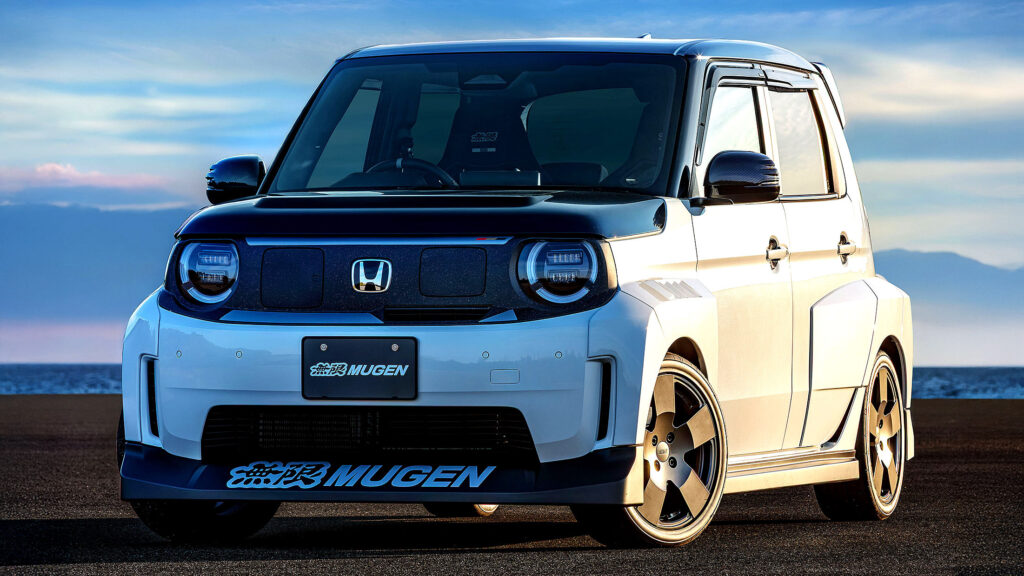
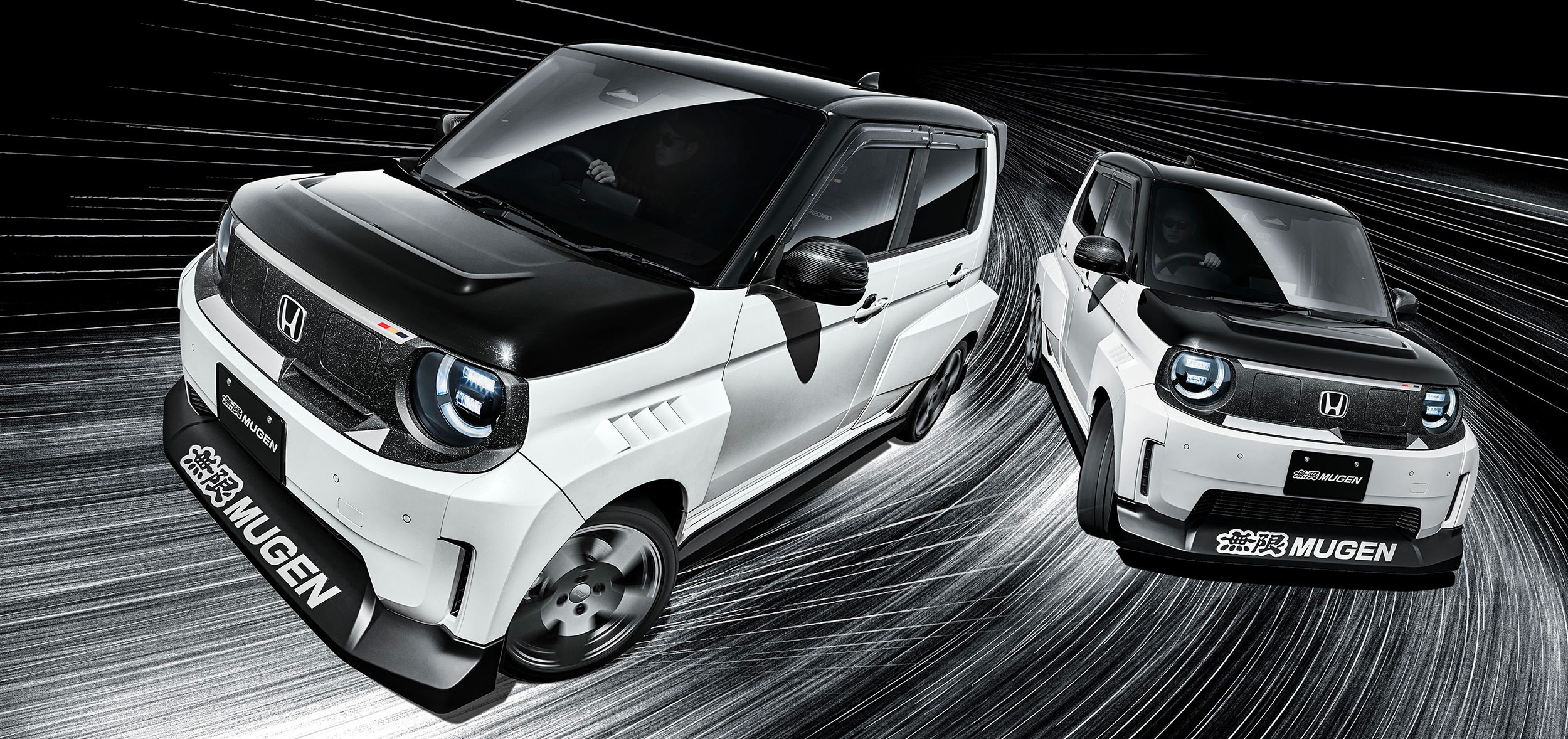
The new Honda Super-One taps into a growing appetite for retro-flavored EVs, borrowing heavily from the irreverent charm of the City Turbo II from the ’80s. While the standard model already leans into a sporty aesthetic, Mugen has taken it further with a more aggressive bodykit, interior tweaks, and a set of performance dampers to back up the look.
Starting with the exterior, the Japanese tuner injects a dose of motorsport attitude into the Super-One. Up front, it gains a black chin spoiler and a vented hood, but the real standout sits along the sides, where vented wide fender extensions are mounted over the already flared arches.
Those arches are complemented by carbon mirror caps, deeper side skirts, and a set of 16-inch forged aluminum wheels with a five-spoke design. Around back, Mugen adds a sizeable roof spoiler and sharper extensions to the rear bumper.
Inside, the front seats have been swapped with semi-buckets from Recaro, complementing the track-ready stance. Buyers can also get special floor and luggage mats, scuff plates, and protective door trim with Mugen branding, which can also be found on the rim of the two-spoke steering wheel. Other accessories include the hydrophobic mirrors and the window visors.
Under the skin, Mugen is offering Performance Dampers developed in collaboration with Yamaha, which are said to improve handling and reduce vibrations. Note that the Super-One has a more aggressive chassis setup compared to the N-One e: kei car, featuring a lowered suspension and wider tracks.
Unfortunately, the zero-emission powertrain is left untouched. The Super-One sticks with a single electric motor producing 94 hp (70 kW / 95 PS) in Boost Mode. It is not a headline-grabber, though Honda tries to add some theatre with an Active Sound Control system that pipes in simulated gearshifts and engine noise through the speakers.
Mugen has yet to put a price on any of these upgrades, as they remain under development. A market launch in Japan is scheduled for late May 2026.
Beyond Japan, the Super-One is headed to the UK, Europe, Australia, New Zealand, and parts of Asia, which raises the prospect of a one-make series. It would suit the car rather well.

 Login
Login