❌

Reading view

There are new articles available, click to refresh the page.

Suzuki Confirms Light Range Extender Setup Alongside More Efficient Hybrids
  • Suzuki unveils 10-year tech roadmap with faster vehicle development.
  • Modular e-Axles will be used across BEVs, Series HEVs, and Light REEVs.
  • The plan includes a new turbo engine and weight-saving measures.

Suzuki has announced its roadmap for the next decade, focusing on a multi-pathway approach, reduced development times, and increased modularity. The company is working on a new turbo gasoline engine, a mild-hybrid system, and a modular series hybrid family of powertrains which is set to include its first-ever light range extender setup.

According to Suzuki, the new e-Axle 3-in-1 system used in the fully electric e Sky kei car, will evolve into a modular 6-in-1 unit with the exact same dimensions. This will be shared across BEVs and HEVs, under the “Right x Light Mobile Tech” philosophy, and will also be available in a 10% larger version for subcompact, compact, and midsize models.

More: Suzuki’s New Electric Kei Car Squeezes 193 Miles From A Really Tiny Battery

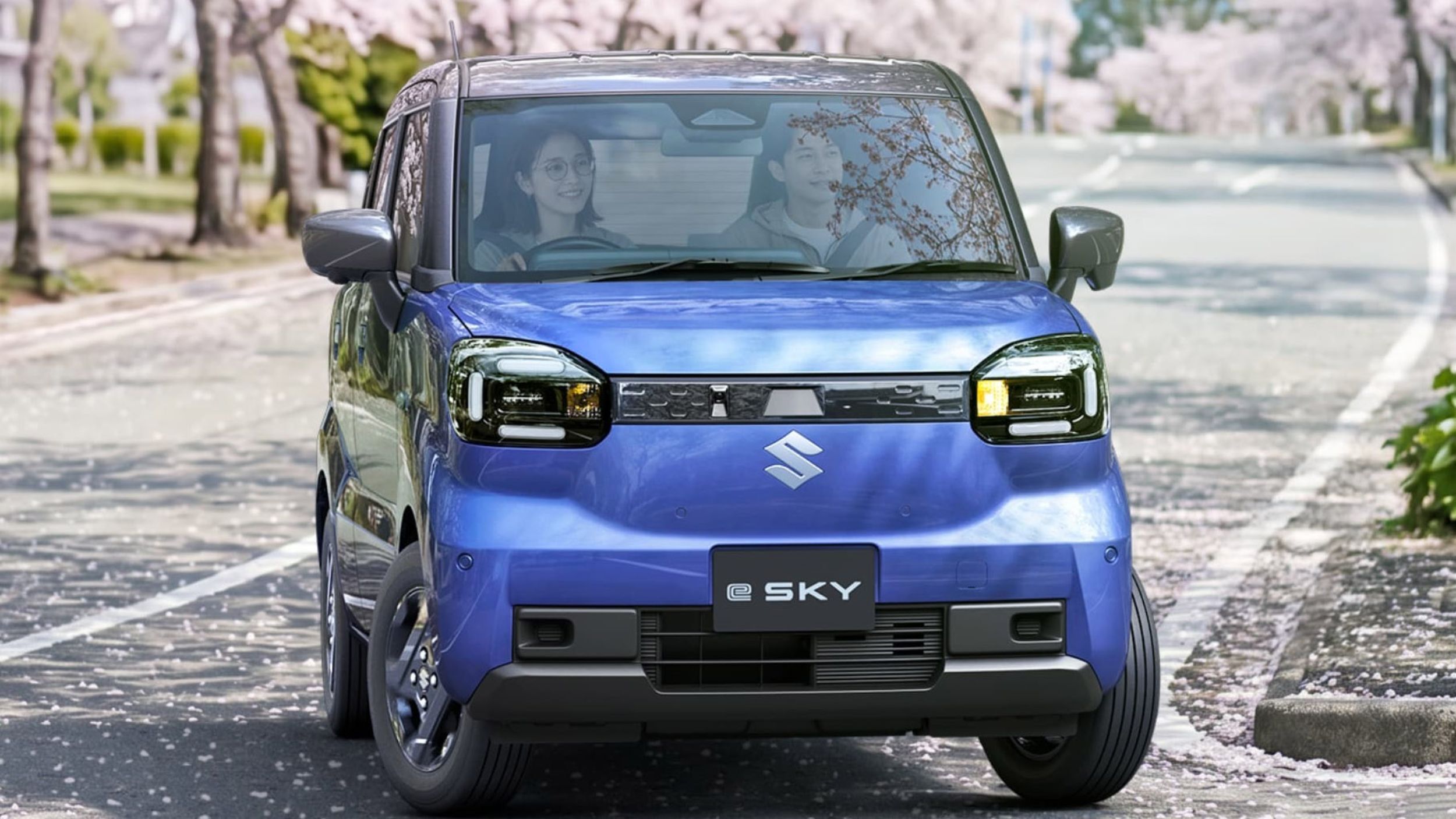
Urban EVs such as the e Sky will get a 94 hp (70 kW / 95 PS) front electric motor paired with a 13 hp (10 kW / 14 PS) rear motor in 4WD trims.
 Suzuki Confirms Light Range Extender Setup Alongside More Efficient Hybrids
Suzuki e Sky

Larger models will feature a more potent 174 hp (130 kW / 177 PS) primary e-Axle and an optional 40 hp (30 kW / 41 PS) e-4WD unit at the back. Suzuki wants its electric motors to be free of Heavy Rare Earths, improving their recyclability.

Hybrids And Light REEVs

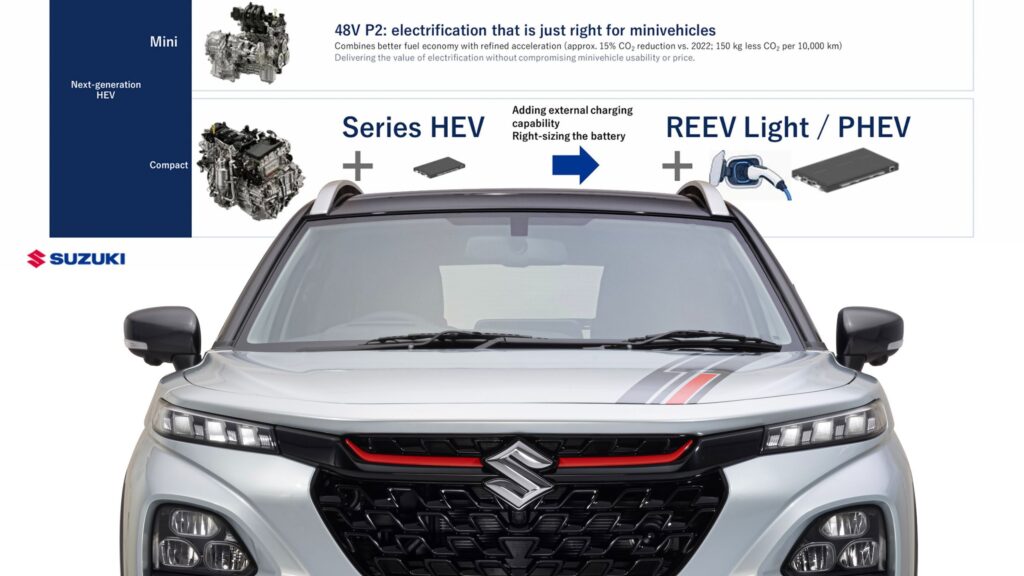
Smaller models will benefit from a new mild-hybrid system, targeting to cut down carbon emissions by 15% which translates to 150 kg (331 lbs) less CO2 for every 10,000 km (6,214 miles). The more advanced Series HEV powertrain targets a 29% reduction, doubling the CO2 savings to 300 kg (661 lbs) per 10,000 km (6,214 miles).

More: Think You Know The Suzuki Alto? There Are Five Different Versions On Sale Right Now

More importantly, in the new Series HEV powertrain which sounds like a successor to the current Strong Hybrid unit, the ICE will be working as a generator. This allows engineers to evolve it further into a “REEV Light” setup by adding plug-in capability and “right-sizing” the battery pack. Suzuki said that its range-extender won’t require an oversize battery, and will combat range anxiety compared to BEVs.
 Suzuki Confirms Light Range Extender Setup Alongside More Efficient Hybrids
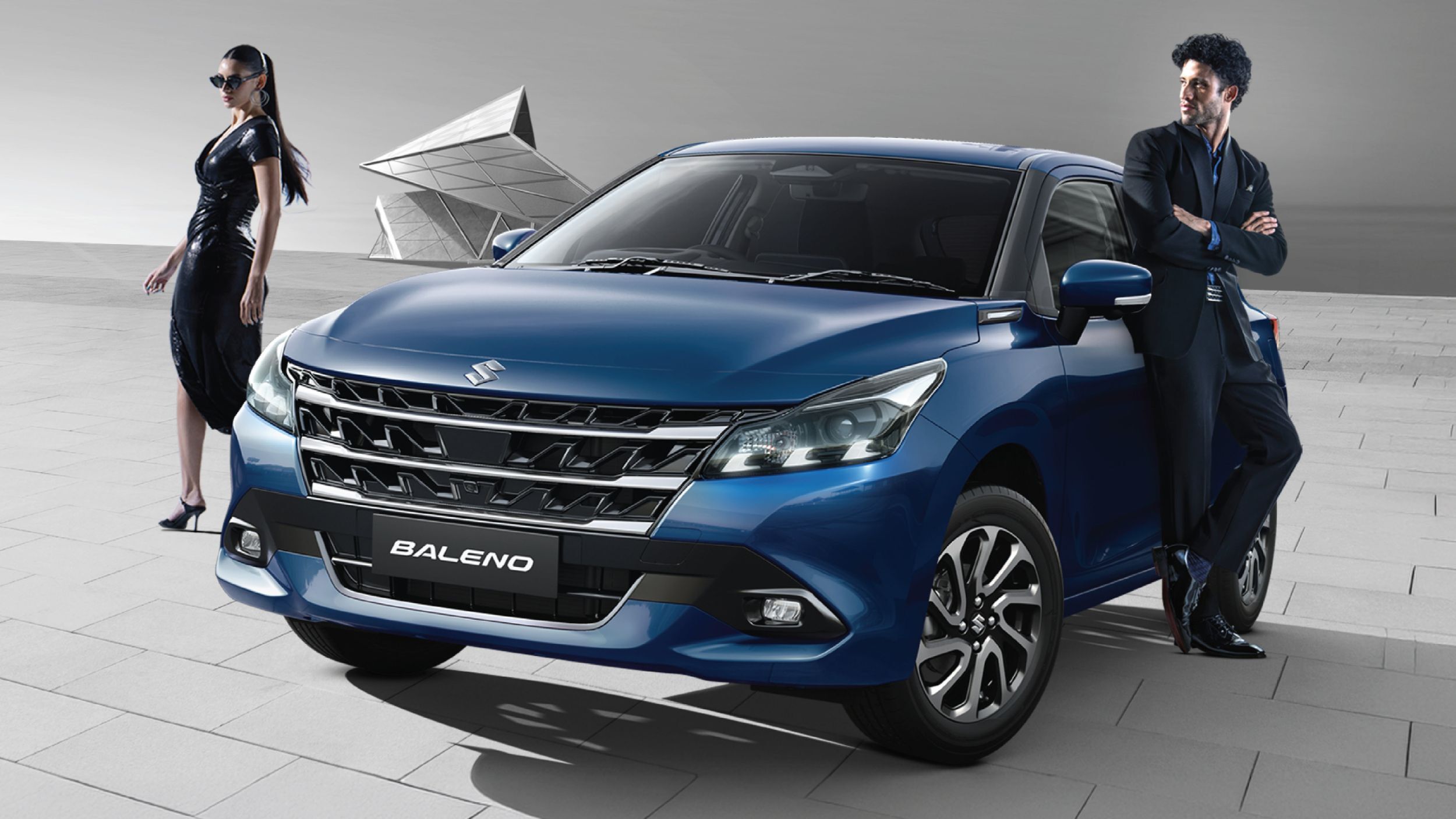
The recently facelifted Suzuki Baleno.

As reported by Autocar India, the smallest Suzuki models to get the upcoming Series HEV system are expected to be the Baleno hatchback and the Fronx SUV. This means that the S-Cross, Vitara, Grand Vitara, and Victoris, are potential candidates.

New Turbo ICE

Despite the focus on modular electrified powertrains, the Japanese automaker remains loyal to combustion power. A new Direct Injection Turbocharged gasoline engine is being developed for markets like India, likely to be joined by a CNG variant.

More: Suzuki’s Decade-Old $6,500 Hatch Loses A Cylinder To Chase Mileage

The long term goal of Suzuki engineers is to improve ICE thermal efficiency from the 40% of the current 1.2-liter Z12E three-cylinder engine to an ambitious 50% on future powertrains. This can be achieved by high-EGR lean combustion, waste-heat recovery, low-viscosity lubricants, nano-carbon materials, and an improved Miller-cycle operation.

Lighter Is Better

 Suzuki Confirms Light Range Extender Setup Alongside More Efficient Hybrids
Suzuki Swift

Suzuki is known for producing lightweight cars, and will continue to do so in the future, despite the fact that stricter safety and emission regulations for 2030 and beyond are expected to add 80 kg (176 lbs) to each vehicle. In order to offset these mandatory gains, the automaker plans to reduce weight by 100-120 kg (220-265 lbs) per vehicle across its entire lineup, without compromising safety.

More: Suzuki’s Old Swift Sport Made 138 HP. The New One Makes A Splitter

Engineers went to great lengths for the new “S Light” weight-reduction initiative. Examples include the use of M8 bolts with smaller heads that could save 1 gram per unit across over 2,000 fasteners per car, and utilizing 1,470 MPa ultra-high-tensile steel for crash-critical zones.

The strategy briefing also included the “SDV Lite” term for a simplified Software-Defined Vehicle architecture. As for safety, the company wants to find ways to route heavy masses away from the occupants in the event of a crash, and standardize ADAS across its future lineup. Starting from 2031, a new Central Zone ECU will slash electronic costs by 30% and module weight by 15%.

Faster Development To Fight The Chinese

Another important element of the future roadmap is development times. Suzuki wants to halve them to 24 months by 2030, matching the fast-paced cycles of Chinese automakers. The plan includes boosting development efficiency by 30% and production efficiency by 50% at the Manesar plant in India, by using digital tools and modular components.

Finally, the company has announced its goal of increasing its annual manufacturing capacity in India to 4 million units by 2030.
\\\\\\\\\

Suzuki

Suzuki’s New Electric Kei Car Squeezes 193 Miles From A Really Tiny Battery

  • The Suzuki e Sky is a new electric kei car for Japan.
  • The model has a targeted range of 310 km (193 miles).
  • It is also expected to be sold in Europe and the UK.

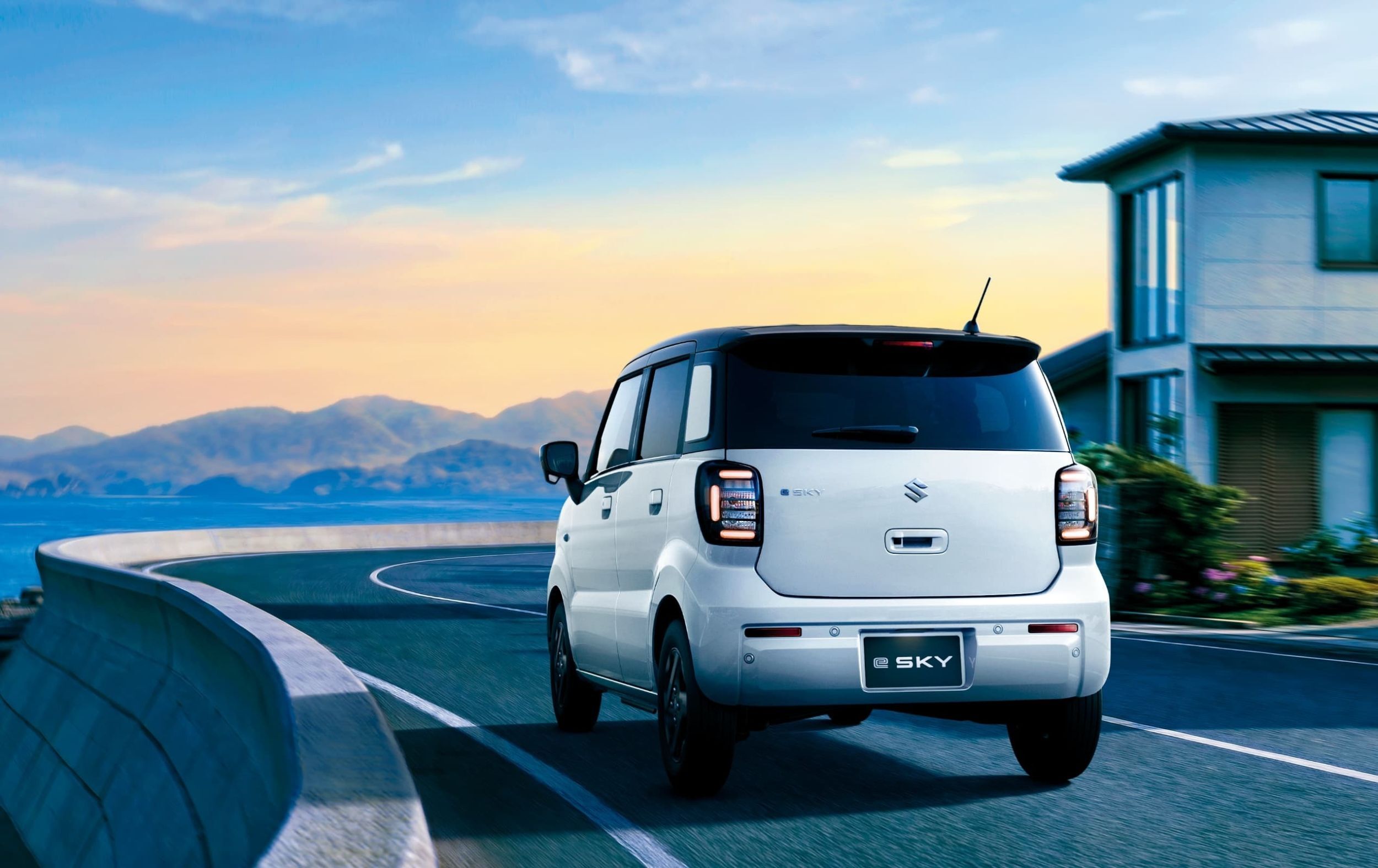
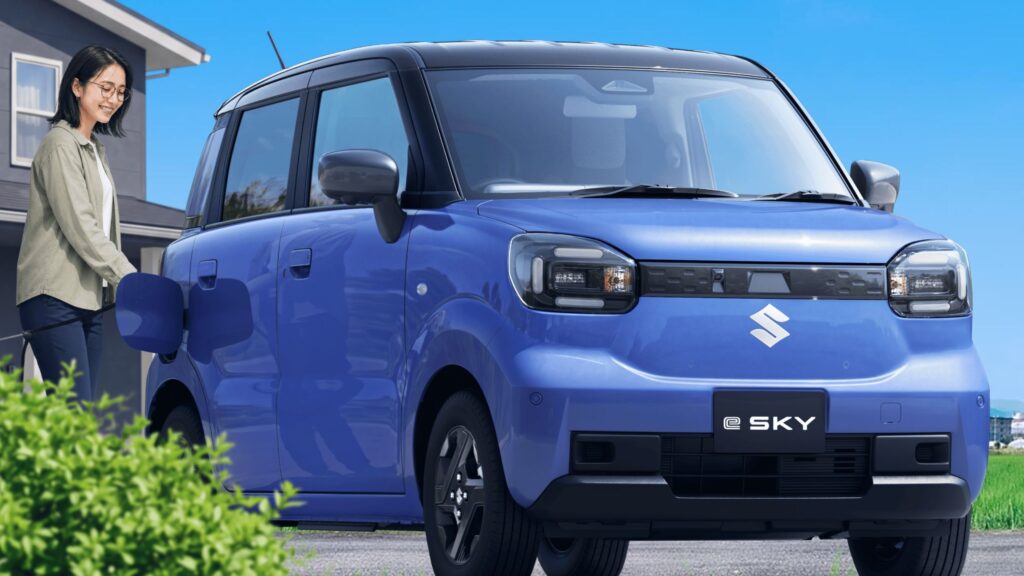
Suzuki has released the first official images and details of the e Sky, the production version of the Vision e-Sky concept, and not much got lost on the way from the show stand. It goes on sale in Japan this autumn, with mainland Europe and the UK expected to follow in 2027.

That makes it Suzuki’s third production EV, arriving behind the e Vitara subcompact SUV and the e Every kei van. It’s also the company’s first entry in Japan’s fast-growing light passenger EV segment.

More: Suzuki’s $8,400 Kei Van Still Has Crank Windows, But It Also Has A Manual

According to Suzuki, the goal is to help drivers make the switch from ICE vehicles to EVs. The e Sky was developed as a light vehicle for everyday use, offering a comfortable ride, smooth acceleration, and a quiet cabin.

Concept Car, Minus The Show-Stand Extras

 Suzuki’s New Electric Kei Car Squeezes 193 Miles From A Really Tiny Battery
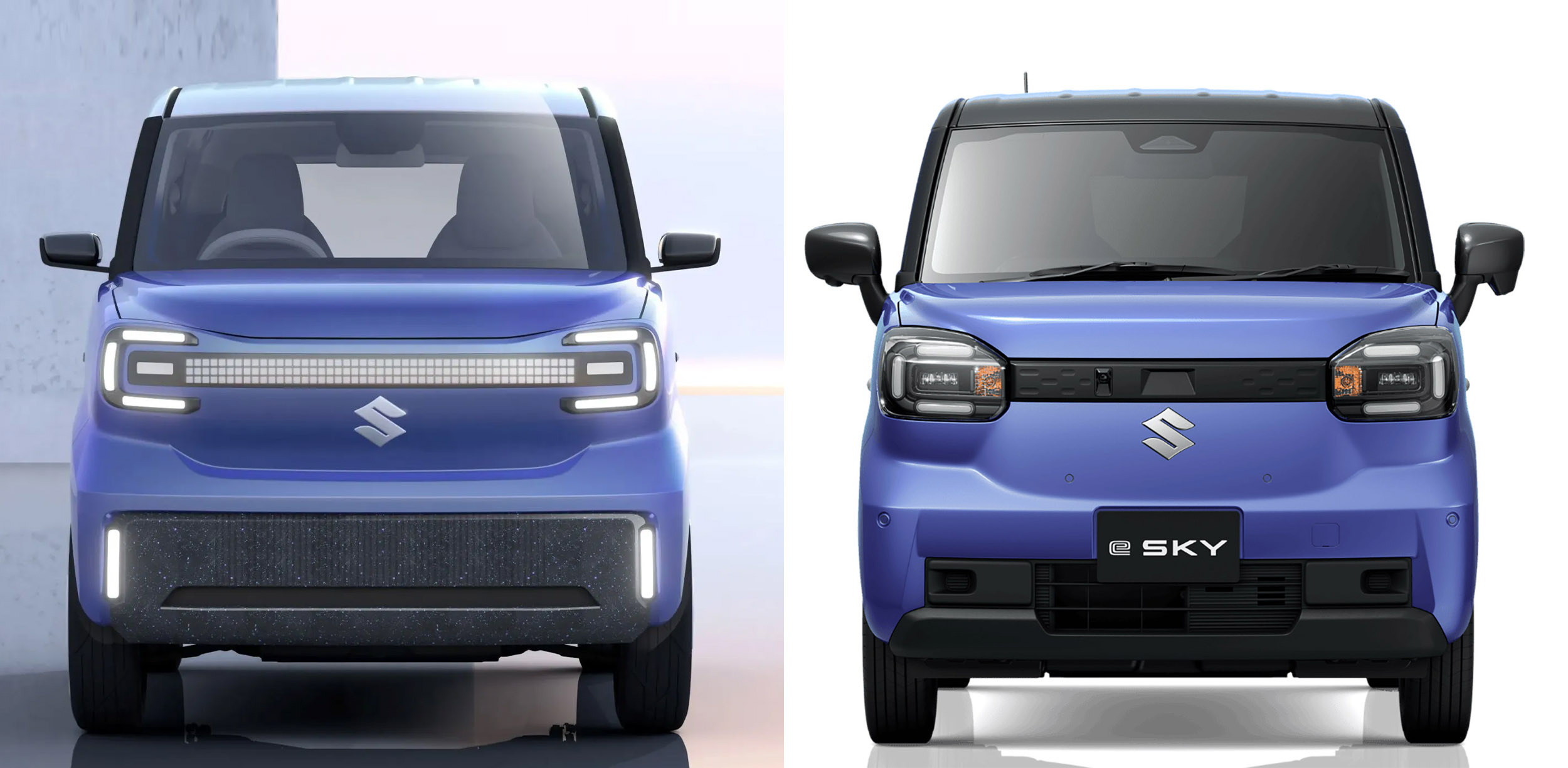
The Vision e-Sky concept (left) compared to the production Suzuki e Sky (right).

Visually, the small hatchback looks like an evolution of the concept from 2025, although several features have been toned down. The front end adopts larger LED headlights with a tinted background, and the illuminated grille gave way to a black trim piece. The revised Suzuki emblem sits on the sculpted nose, and the bumper incorporates a single cooling intake.

More: This $7,700 Suzuki Just Got A New Face And Over 66 MPG

The profile stays true to the concept, although the EV gets smaller wheels, larger mirrors, and conventional door handles reminiscent of the Suzuki Alto. Still, the EV retains the floating roof and the body-colored trim on the C-pillar. At the back, changes are focused on the bulkier LED taillights, the visible tailgate handle, and the body-colored cladding on the rear bumper.

Naturally, the model complies with kei car regulations in terms of footprint, reportedly measuring 3,395 mm (133.7 inches) long, 1,475 mm (58.1 inches) wide, and 1,625 mm (64.0 inches) tall, with a 2,460 mm (96.9 inches) wheelbase.

Inside, The Budget Speaks Up

\\\\

The dashboard layout is familiar, but the pale materials, futuristic detailing and ambient lighting of the concept have been replaced by choices made with a calculator nearby. The centerpiece is the 10.1-inch infotainment display, combined with a digital instrument cluster, a traditional auto gear shifter and a dedicated panel for climate controls.

More: Suzuki’s Quirky Crossover Hides More Than A Fresh Face

Other features include a practical tray on the passenger side of the dashboard, heated seats and steering wheel, an electronic parking brake, and a heat pump paired with an electric air heater for efficiency during the Japanese winter. As with most kei cars the e Sky has a four-seater cabin with a small boot.

Small Battery, Surprising Number

\\\\\\\\

The new model rides on the Heartect e architecture, designed for urban EVs. According to Japanese media, it is powered by a front e-Axle integrating the electric motor, inverter, and gears. Suzuki has yet to announce the output, but the maximum permissible figure for kei cars is 63 hp (47 kW / 64 PS).

More: Suzuki’s Old Swift Sport Made 138 HP. The New One Makes A Splitter

Energy is reportedly stored in a 26 kWh lithium iron phosphate battery mounted under the floor. Despite its small capacity, the targeted range is 310 km (193 miles), which is significantly higher compared to other Japanese kei cars but slightly less than BYD’s Racco, which offers up to 199 miles (320 km). However, the latter achieves that with a much bigger 35.84 kWh battery.

The impressive range figure was achieved thanks to aerodynamics, improved motor efficiency and weight reduction, with the EV tipping the scales at 1,030 kg (2,271 lbs).

 Suzuki’s New Electric Kei Car Squeezes 193 Miles From A Really Tiny Battery

A full charge is expected to take 8 hours via a standard home outlet, or in 4.5 hours from a 6 kW wallbox. The EV is also compatible with 50 kW DC fast charging, replenishing 80% capacity in 25 minutes, while supporting Vehicle-to-Home (V2H) functionality with an AC 100v/1500W power outlet for external devices.

Not Exclusive To Japan

The e Sky reaches the Japanese market in autumn 2026, where it will face the Nissan Sakura, the Mitsubishi eK X EV, the Honda N-One e and the BYD Racco.

More: BYD’s Kei EV Has The Lowest Sticker In Japan And The Highest Price On The Road

Its home market won’t have it to itself, however, since exports to Europe and the UK begin in 2027. Rivals there include the Renault Twingo E-Tech, the upcoming Dacia Spring, and the production version of the VW ID.Every1 concept.

 Suzuki’s New Electric Kei Car Squeezes 193 Miles From A Really Tiny Battery

Suzuki

Suzuki’s Cheapest EV Yet Is Kei-Sized, And It’s Coming To Europe

  • Suzuki will introduce an urban EV in Europe and the UK in spring 2027.
  • The production version of the Vision e-Sky will start from under £20k.
  • Rivals include the Dacia Spring, Renault Twingo, and Honda Super-N.

Suzuki wants a piece of Europe’s affordable-EV boom, and it’s bringing the production version of the Vision e-Sky concept to do the job. The model will reportedly be sold outside Japan, reaching mainland European and UK roads in spring 2027, which puts Suzuki in direct competition with a growing field of small, affordable electric cars.

The yet-unnamed EV will be smaller than the 3,860 mm (152.0 in) long Suzuki Swift. The concept is eligible for Japan’s kei car regulations, measuring 3,395 mm (133.7 inches) long.

More: Suzuki’s $8,400 Kei Van Still Has Crank Windows, But It Also Has A Manual

Judging from earlier Suzuki models, the styling is not expected to deviate much from the prototype. The production model will likely feature small tweaks on the bumpers and lighting units, along with conventional door handles and larger mirrors.

David Kateley, Suzuki’s UK boss, spoke to Autocar about the car. “The A-segment BEV is vitally important. It’s an entrant in a different segment for us and I’m very excited about its prospects,” he said.

\\\\\\\\\\\\

2025 Suzuki Vision e-Sky Concept

Suzuki has yet to reveal any information about the single electric motor or the size of the battery pack, but the concept had an advertised range of over 270 km (168 miles). For comparison, the rival Renault Twingo E-Tech has a WLTP range of 263 km (163 miles) while the Honda Super-N can cover 206 km (128 miles) between charges in the combined cycle.

More: Dacia’s Budget EV Is Leaving China For Europe, And It’s Getting Pricier

The same report adds the new Suzuki will slip under the £20,000 (€23k / $26k) mark, putting it right alongside the Twingo E-Tech and Super-N. Other city EVs on the way should undercut it, with the Dacia Spring starting around £16,000 (€18,800 / $21,400) and the production take on the VW ID.Every1 concept aiming for £17,000 (€20k / $22k).

Crucially, the new electric model could also help Suzuki handle the strict emissions rules across Europe and the UK. For now, the brand leans hard on mild-hybrid and hybrid powertrains, with the e Vitara standing as its only fully electric car. The latest reports say a third Suzuki EV should arrive by 2029, probably wearing a crossover body.

 Suzuki’s Cheapest EV Yet Is Kei-Sized, And It’s Coming To Europe
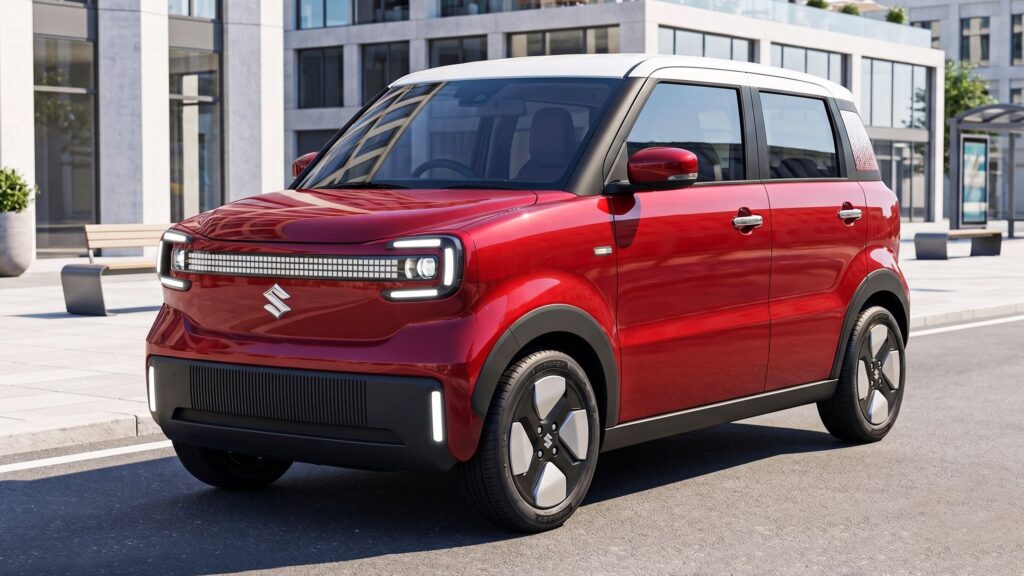
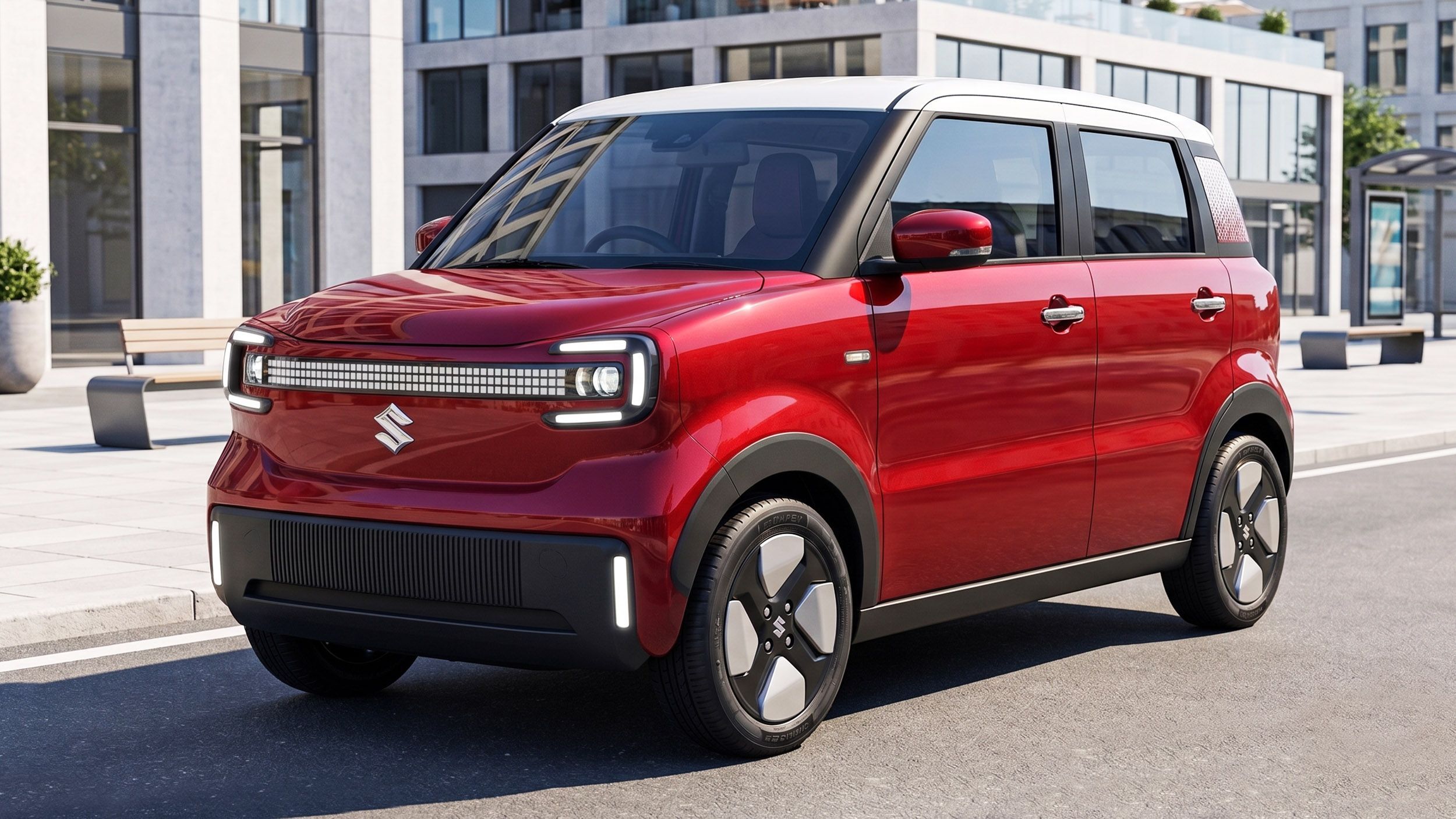
Our rendering of the upcoming kei-sized EV.
❌