โŒ

Normal view

There are new articles available, click to refresh the page.
Today โ€” 28 July 2026Vehicles

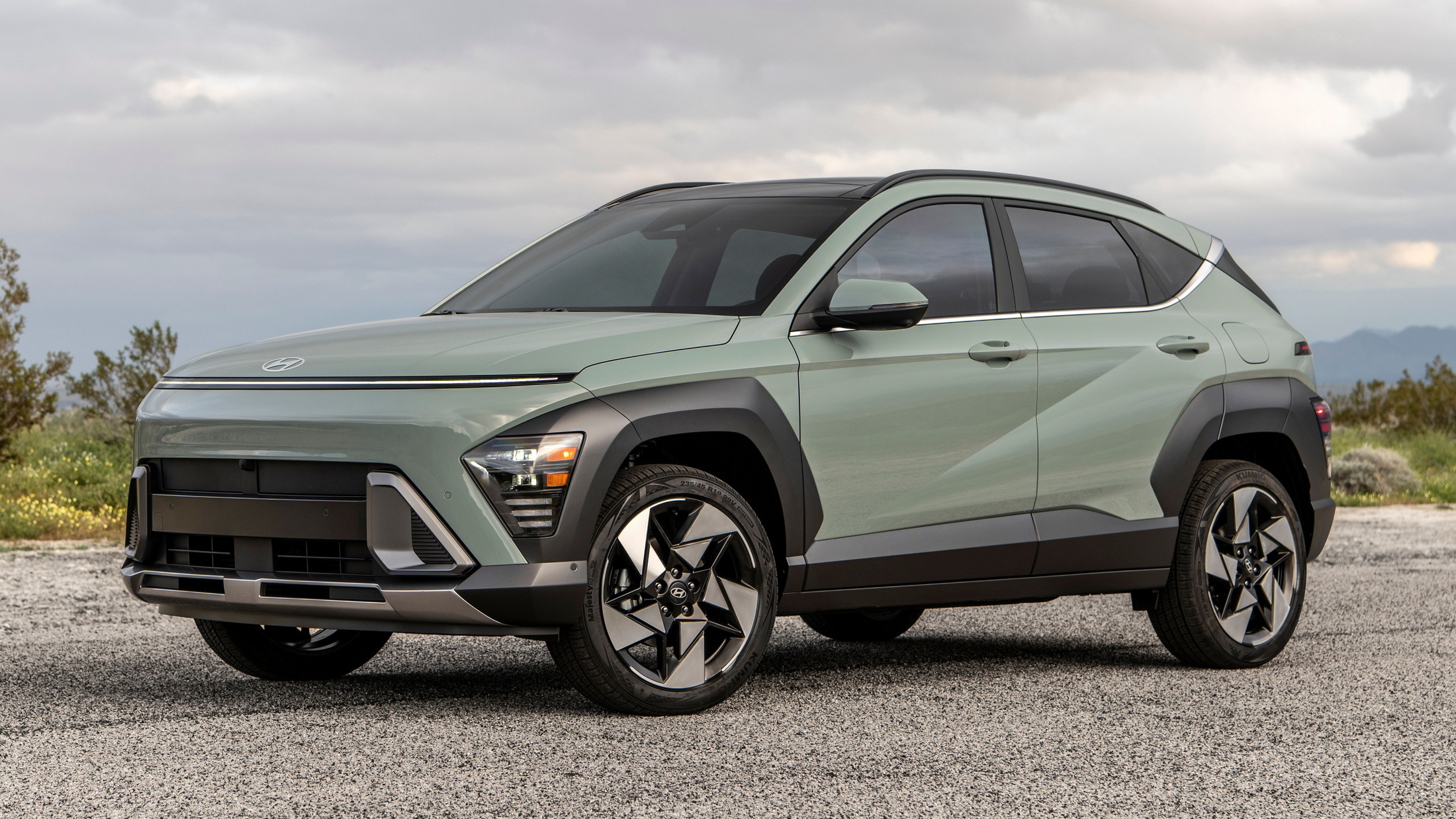
Hyundaiโ€™s New Kona Looks So Much Like An Ioniq Youโ€™d Think It Went Electric

  • The next-generation Hyundai Kona was caught completely undisguised.
  • It will bring a boxier and more mature styling alongside advanced tech.
  • The SUV could merge with the Creta and underpin a new GM crossover.

Hyundai pulled the wraps off the second-generation Kona in December 2022, but rather than settle for a mid-cycle nip and tuck, the automaker is preparing a more thorough redesign for 2027. After earlier runs of camouflaged prototypes, the new Kona has now turned up completely undisguised in Korea, and the exposed sheetmetal reveals a taller, more upright stance than the car it replaces.

The styling is only part of the story here, as reports suggest Hyundai wants to fold the Kona and Creta lines into a single global model, a logical move given their size and where each sits in the market. Thereโ€™s also talk that the SUVโ€™s underpinnings could be shared with the next Chevrolet Tracker, the product of an agreement struck with General Motors.

More: Redesigned Hyundai Tucson Spied Alongside The Current Model

The photos making the rounds on social media, including a set posted by @EWVexillary, point to a Kona that borrows the rugged cues from the Crater concept. At the same time, the cleaner surfacing pulls it visually closer to the Ioniq EV family, splitting the difference between off-road attitude and electric-era modernity.

Mature Styling
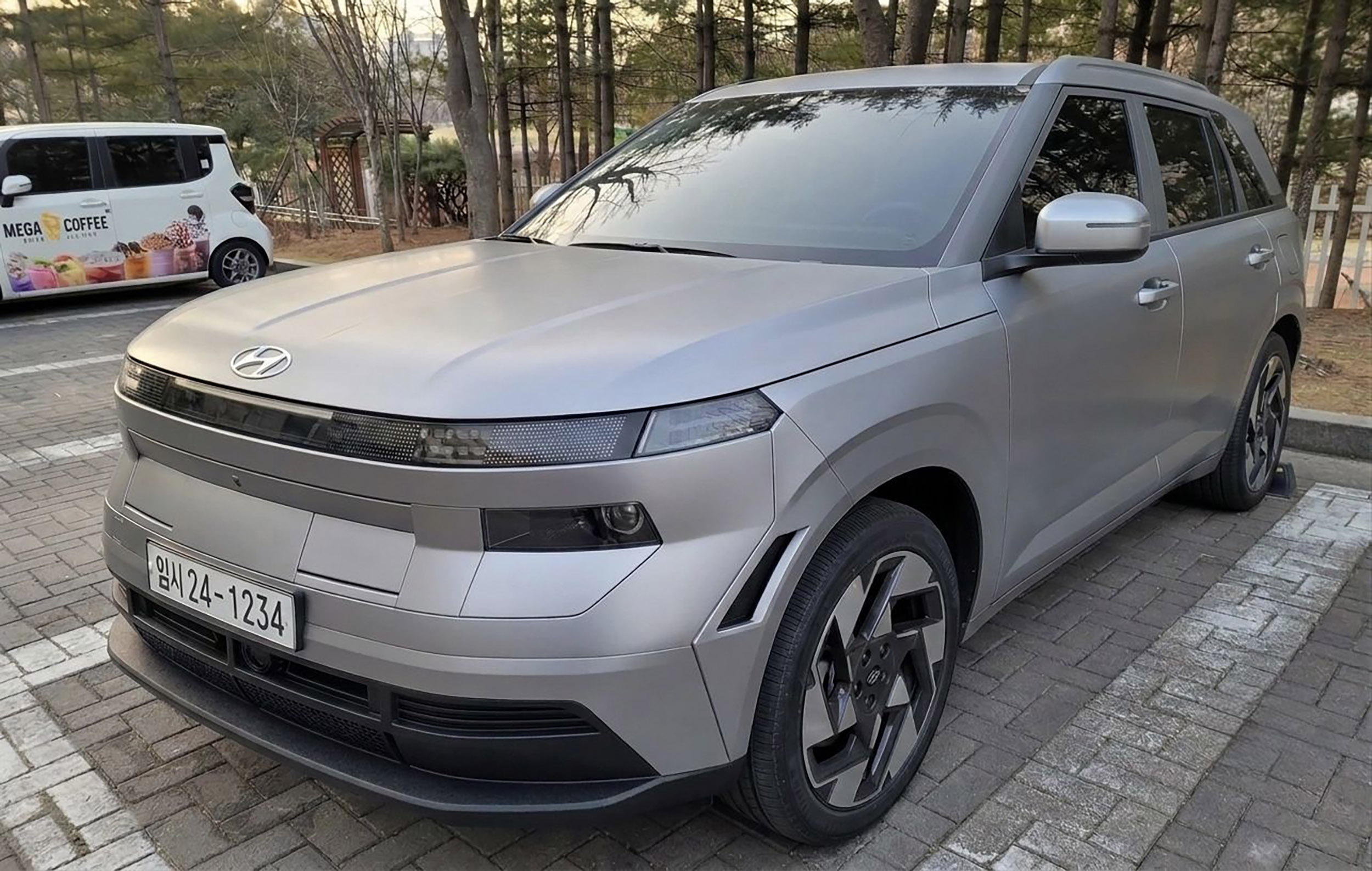
 Hyundaiโ€™s New Kona Looks So Much Like An Ioniq Youโ€™d Think It Went Electric
An undisguised prototype of the new Kona (above) compared to the outgoing model (below).
 Hyundaiโ€™s New Kona Looks So Much Like An Ioniq Youโ€™d Think It Went Electric

The front end keeps the split-headlight arrangement of the previous generations, though the main units are much smaller now and the full-LED bar runs thicker than before. Below sits a sculpted bumper with smaller intakes and what looks like a covered grille.

More: Hyundaiโ€™s Popular Three-Row SUV Is Going Under The Knife

The profile is defined by whatโ€™s gone, namely the unpainted plastic cladding, which lends the car a more modern stance. A subtle two-tone treatment reinforces the effect, pairing gray pillars against matte silver bodywork. The flanks trade the diagonal creases of the outgoing model for cleaner surfacing, and the greenhouse is entirely new, its straight belt line running back to a more upright tail.

Dimensions havenโ€™t been confirmed, but the SUV could grow, following the lead of the mechanically related Kia Seltos, which stretches to 4,430 mm (174.4 inches) long. By comparison, the current Hyundai Creta measures 4,330 mm (170.5 in), and the Kona is slightly longer at 4,350 mm (171.3 in).

Hyundai Kona 2027
Tamamen sฤฑzdฤฑ .

Segment bรผyรผdรผ stil Ioniq โ€˜leลŸti.
Pleos gelecek https://t.co/tXX8fNP2po pic.twitter.com/TNuBdBLW6e

โ€” Elvis Will Vexillary ๐Ÿ”‹ (@EWVexillary) July 21, 2026

A further increase in size could help the Kona cement its position between the subcompact and compact SUV segments in Europe, bridging the gap between the smaller Bayon and the larger Tucson. Rivals will include the likes of the VW T-Roc, the Toyota C-HR, the Honda HR-V, and the Mazda CX-30.

New Tech Inside
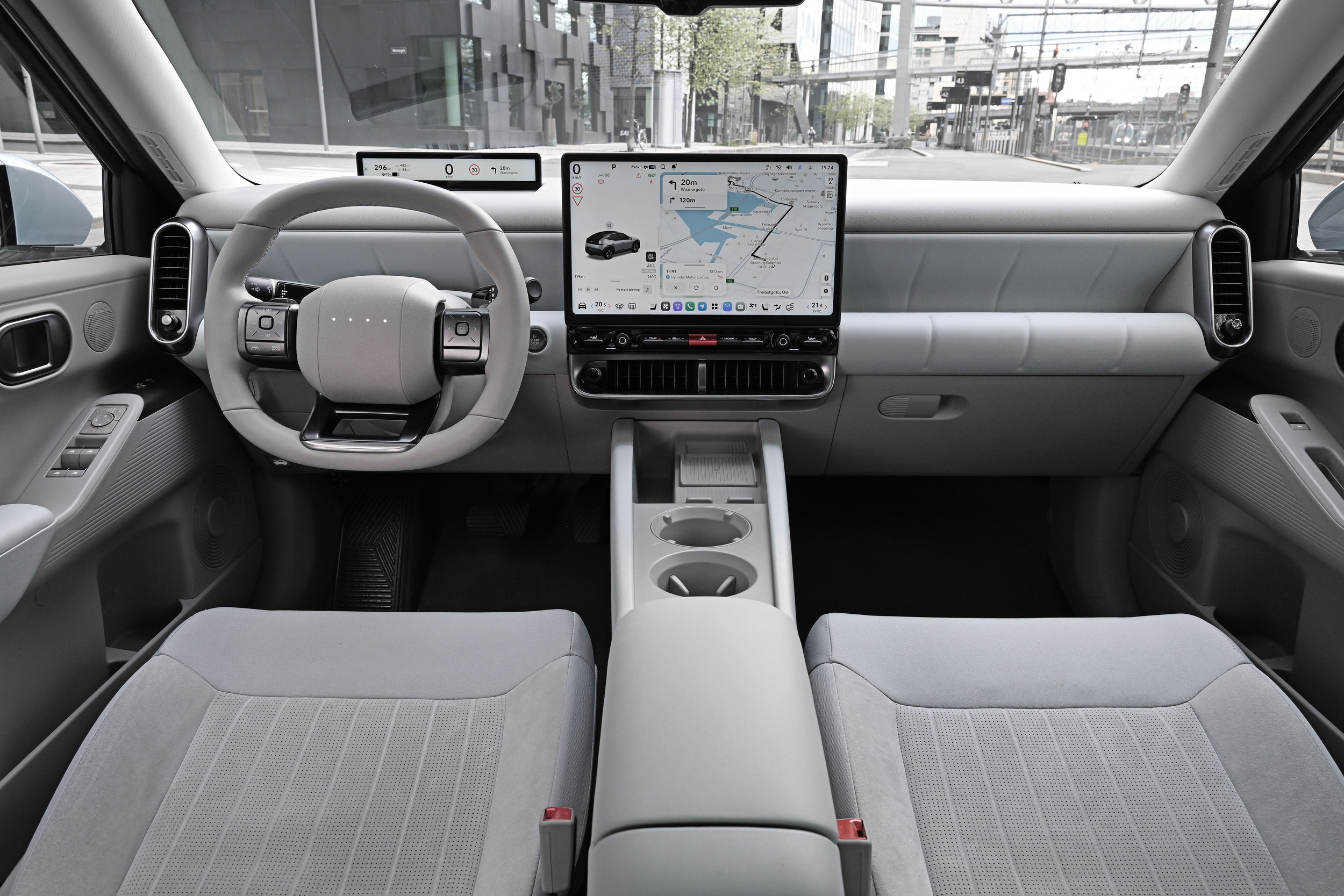
 Hyundaiโ€™s New Kona Looks So Much Like An Ioniq Youโ€™d Think It Went Electric
The dashboard of the Hyundai Ioniq 3 with the Pleos infotainment.

Inside, the crossover will most likely gain a digital cockpit with larger screens, following the lead of the Ioniq 3. Those run on the new Hyundai Pleos Connect infotainment, built on Googleโ€™s Android. Hyundai isnโ€™t ditching buttons either, keeping physical controls for the functions that matter. Practicality should improve too, with a slightly larger footprint freeing up more room for passengers and their bags.

More: Hyundai Strips The New Ioniq 3 Down To Its Cleaner, Cheaper Self

Depending on the market, the powertrain range may include a naturally aspirated 2.0-liter, a turbocharged 1.6-liter, and a self-charging hybrid 1.6-liter in FWD and AWD forms. Hyundai might also keep the fully electric variant around and potentially add a range-extender setup.

The unified third-generation Kona and Creta is expected to make its formal global debut within the next few months, likely as a 2027 model.

\\\\\\\

Baldauf

Before yesterdayVehicles

After 62,000 Miles, The Healthiest EV Battery Belonged To A Kia, Not A Tesla

  • Hyundai Motor Group swept the top three places for battery performance.
  • The analysis ranked the Model 3 as Teslaโ€™s best-performing vehicle.
  • Other strong performers include the Volvo XC40 Recharge and Polestar 2.

Several years ago, prospective EV buyers had every reason to feel nervous about how long the battery pack would last. Battery technology has come a long way since EVs went mainstream, though, and a new study out of Sweden puts a number on how much capacity new EVs hold onto after 62,000 miles, or 100,000 km, of driving. The results may surprise you.

The study, run by online car marketplace Carla, went through 9,954 battery tests of EVs sold in Sweden between 2022 and 2026, using a diagnostic tool from AVILOO that measures a packโ€™s true state of health instead of leaning on the estimates the car itself provides. That distinction matters, because in-car readouts can sometimes paint a rosier picture than reality.

Read: A Seven-Year-Old Tesla Model 3 Survived 380,000 Miles, Its Range Did Not

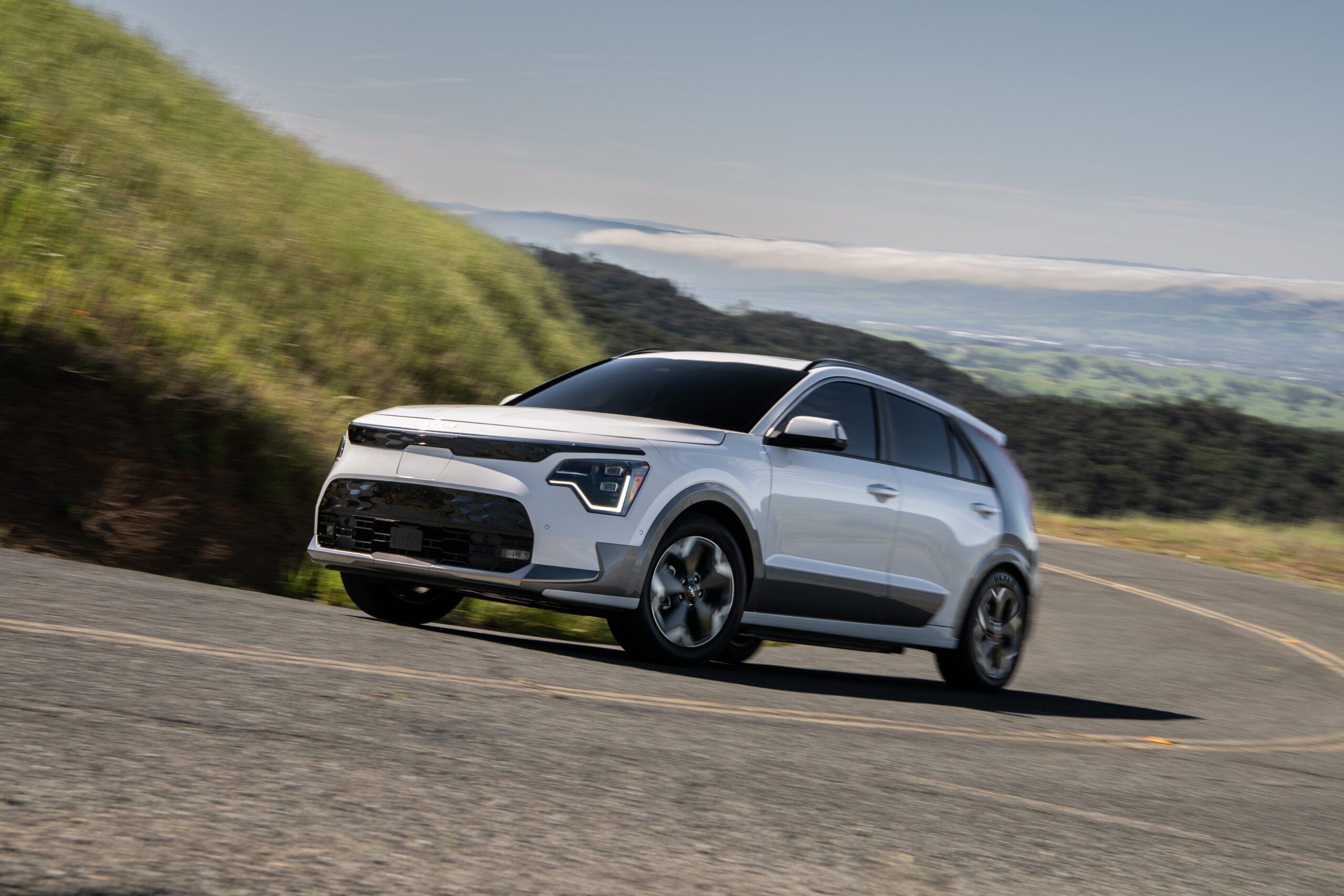
The Kia e-Niro came out on top, hanging on to an impressive 97.25 percent of its original capacity after 62,000 miles. It shares its 64 kWh battery with the Hyundai Kona, which nearly matched it at 97.18 percent, and the podium stayed within the Hyundai Motor Group family thanks to the Kia EV6 and its 77.4 kWh pack in third place.

Top-Performing EVs
ModelBattery Health
After 62K Miles
Kia e-Niro โ€“ 64 kWh97.25%
Hyundai Kona โ€“ 64 kWh97.18%
Kia EV6 โ€“ 77.4 kWh95.95%
Volvo XC40 Recharge โ€“ 69 kWh (CATL)94.70%
Polestar 2 โ€“ 78 kWh (CATL)94.35%
BMW i3 โ€“ 120 Ah93.77%
Polestar 2 โ€“ 78 kWh (LG Chem)93.53%
Tesla Model 3 โ€“ 60.5 kWh (CATL LFP)93.34%
Audi e-tron 50 โ€“ 71 kWh93.02%
Audi e-tron 55 โ€“ 95 kWh92.93%
Skoda Enyaq iV โ€“ 77 kWh92.88%
Tesla Model 3 โ€“ 78.8 kWh (LG Chem)92.83%
Tesla Model S โ€“ 96 cells92.80%
Volkswagen ID.4 โ€“ 77 kWh92.77%
Skoda Enyaq iV โ€“ 77 kWh92.60%
Tesla Model X โ€“ 96 cells92.52%
Volkswagen ID.4 โ€“ 77 kWh92.27%
Tesla Model Y โ€“ 78.8 kWh (LG Chem)92.18%
Audi Q4 e-tron โ€“ 77 kWh92.18%
Volkswagen ID.3 โ€“ 58 kWh91.79%
SWIPE

The strongest European EV was the Volvo XC40 and its CATL-sourced 69 kWh battery, which held 94.70 percent of its capacity after 62,000 miles, trailed closely by the Polestar 2 and its 78 kWh CATL pack at 94.35 percent. The BMW i3 and the LG Chem version of the Polestar 2 landed close behind at 93.77 percent and 93.53 percent.

What About Tesla?

 After 62,000 Miles, The Healthiest EV Battery Belonged To A Kia, Not A Tesla
Tesla Model 3

The best-placed model from EV leader Tesla was the Model 3 fitted with a 60.5 kWh LFP battery from CATL, retaining 93.34 percent of its capacity. This put it slightly above the Model 3 with an LG Chem-sourced NMC battery at 91.5 percent.

Among the other EVs ranked inside the top 20 were the Audi e-tron 50 and 55 at 93.02 and 92.93 percent, respectively, the Skoda Enyaq iV at 92.88 percent, the Tesla Model S with 92.80 percent, the VW ID.4 at 92.77 percent, and the Tesla Model X at 92.52 percent.

The bigger lesson here is that the old fear of an EVโ€™s battery dying young no longer holds up. Every car in this ranking kept more than 90 percent of its capacity past 62,000 miles, and most owners will not even reach that figure until three or four years of driving. The pack is now likely to outlast the car wrapped around it.

 After 62,000 Miles, The Healthiest EV Battery Belonged To A Kia, Not A Tesla
Kia Niro EV
โŒ
โŒ