Normal view

There are new articles available, click to refresh the page.
Before yesterdayMain stream

Ford Got The Loan And Built The EV Battery Plant. Now Everything’s Falling Apart

  • SK On takes over Tennessee plant as Ford gets two in Kentucky.
  • Trump administration will cut a loan up to $9.6 billion total.
  • Ford CEO says U.S. EV sales could fall by as much as 50 percent.

In 2021, Ford and South Korean battery manufacturer SK On committed to a massive $11.4 billion investment aimed at building several joint-venture electric vehicle battery plants across the United States. It was a huge business decision that showed Ford’s commitment to the EV market.

That was then. As 2025 winds down, the two companies are pulling the plug on the battery partnership altogether, a sharp turn that underscores how turbulent the EV landscape has become.

Also: Ford’s CEO Applauds Trump’s CAFE Rollback, Says They Were Forced Into EVs

The move follows two key developments. First, the rollback of the federal EV tax credit, which has hit sales across the board. Second, the U.S. administration’s recent decision to revise fuel economy standards, a move expected to favor gasoline-powered vehicles over electric ones.

Disruption in the Battery Game

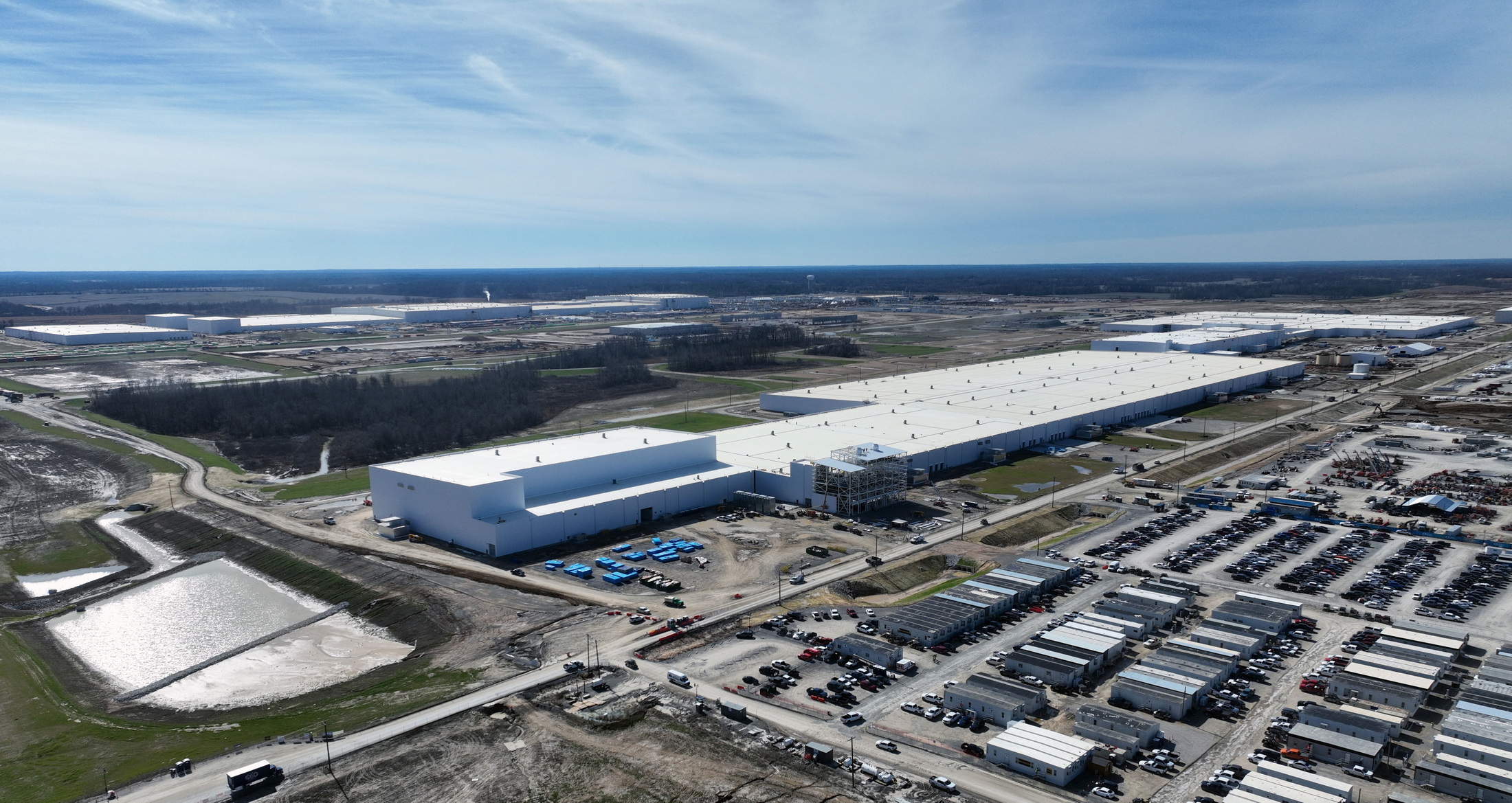
Through the high-profile breakup, SK On will take over the joint venture factory that’s already been established in Tennessee, known as the BlueOval plant. Ford will then take control of two factories in Kentucky located next to each other.

SK On was the one to formally dissolve the partnership, although the company maintains that it intends to continue working with Ford around the Tennessee facility.

It believes that ending the joint venture will allow it to enhance productivity and improve operational flexibility. Additionally, it notes the split will allow it to accelerate its North American energy storage system business.

What Happens to the Government Loan?
 Ford Got The Loan And Built The EV Battery Plant. Now Everything’s Falling Apart
Ford BlueOval Tennessee

One of the more immediate consequences of the split is a reassessment of a government loan approved near the end of the Biden administration. Originally pegged at up to $9.6 billion for the joint venture, the loan will now be reduced under the Trump administration’s oversight.

Exactly how much it will be cut remains to be seen. According to Bloomberg, the loan will be restructured to “reduce exposure to taxpayers and ensure its prompt repayment.”

Read: Ford And SK On Get $9.6 Billion Loan From US Government For Local Battery Plants

It’s understood that Ford is working voluntarily with the Energy Department to repay the loan more quickly than originally planned.

Bleak Outlook for EV Sales
 Ford Got The Loan And Built The EV Battery Plant. Now Everything’s Falling Apart

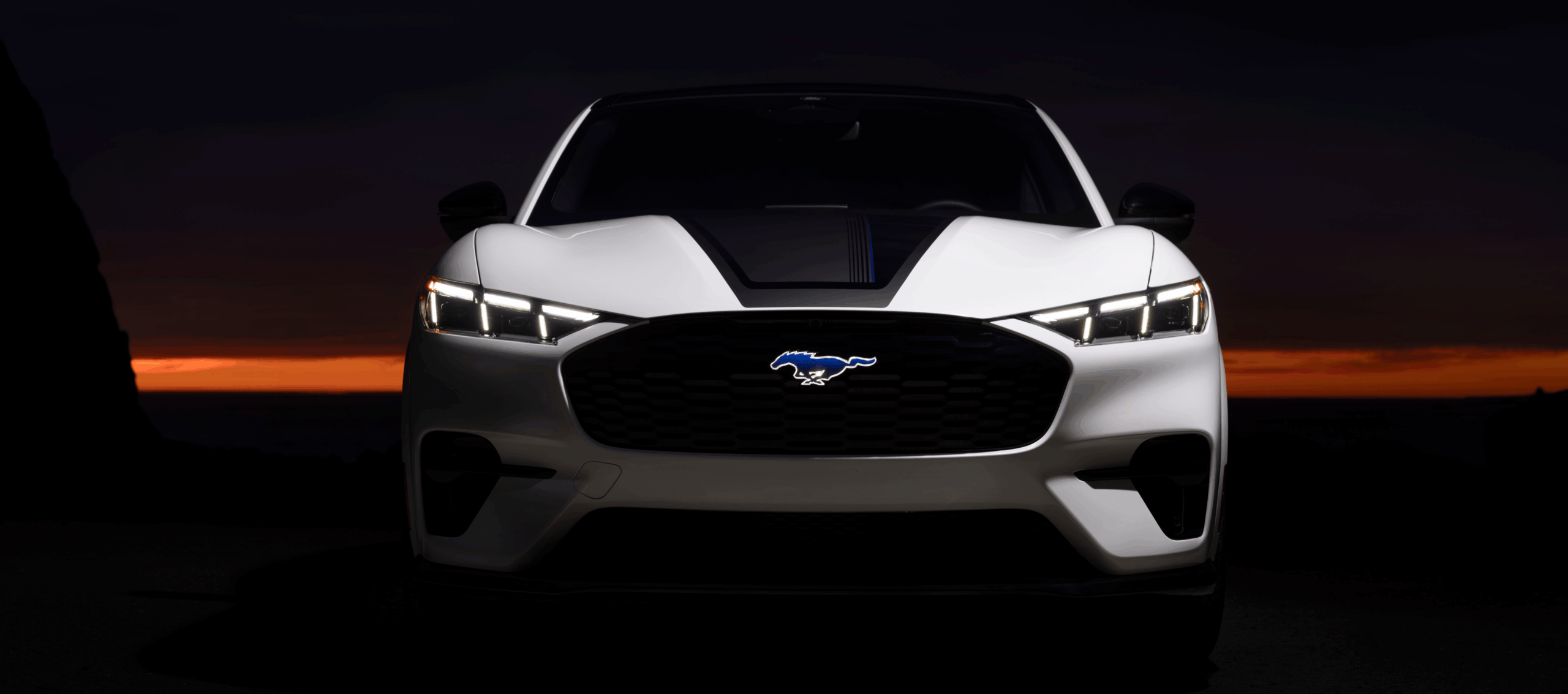
In the background, Ford’s local EV sales are falling, and chief executive Jim Farley expects further carnage. He recently said that because of the Trump administration, EV sales could fall by as much as 50 percent in the US.

Ford also lost $5.1 billion before interest and taxes on its EV business in 2024 and expects to lose even more this year.

“We believe the writing was on the wall this partnership was not going to work moving forward,” WedBush securities managing director Dan Ives told the Detroit Free Press.

“Ford has to make some difficult moves and this was a smart strategic one to rip the band-aid off. The EV market is dramatically scaled down for Ford now and they have to adjust accordingly.”
Ford Turns To French Carmaker To Revive Fiesta

  • Ford and Renault will collaborate on two new electric cars for Europe.
  • Renault 5 may inspire a new Fiesta in 2028, with a crossover to follow.
  • Both EVs will be built in France by Renault with unique Ford styling.

Ford has finally found a way back into Europe’s affordable small-car market by borrowing one of Renault’s smartest ideas.

Related: Renault Is Emptying Its Secret Vault And The Concept Cars Inside Are Unreal

The two automakers have announced a new strategic partnership that will see Ford launch at least two electric cars for Europe using Renault’s Ampr EV platform, the same architecture used in the Renault 4 and 5.

What’s Replacing the Fiesta?

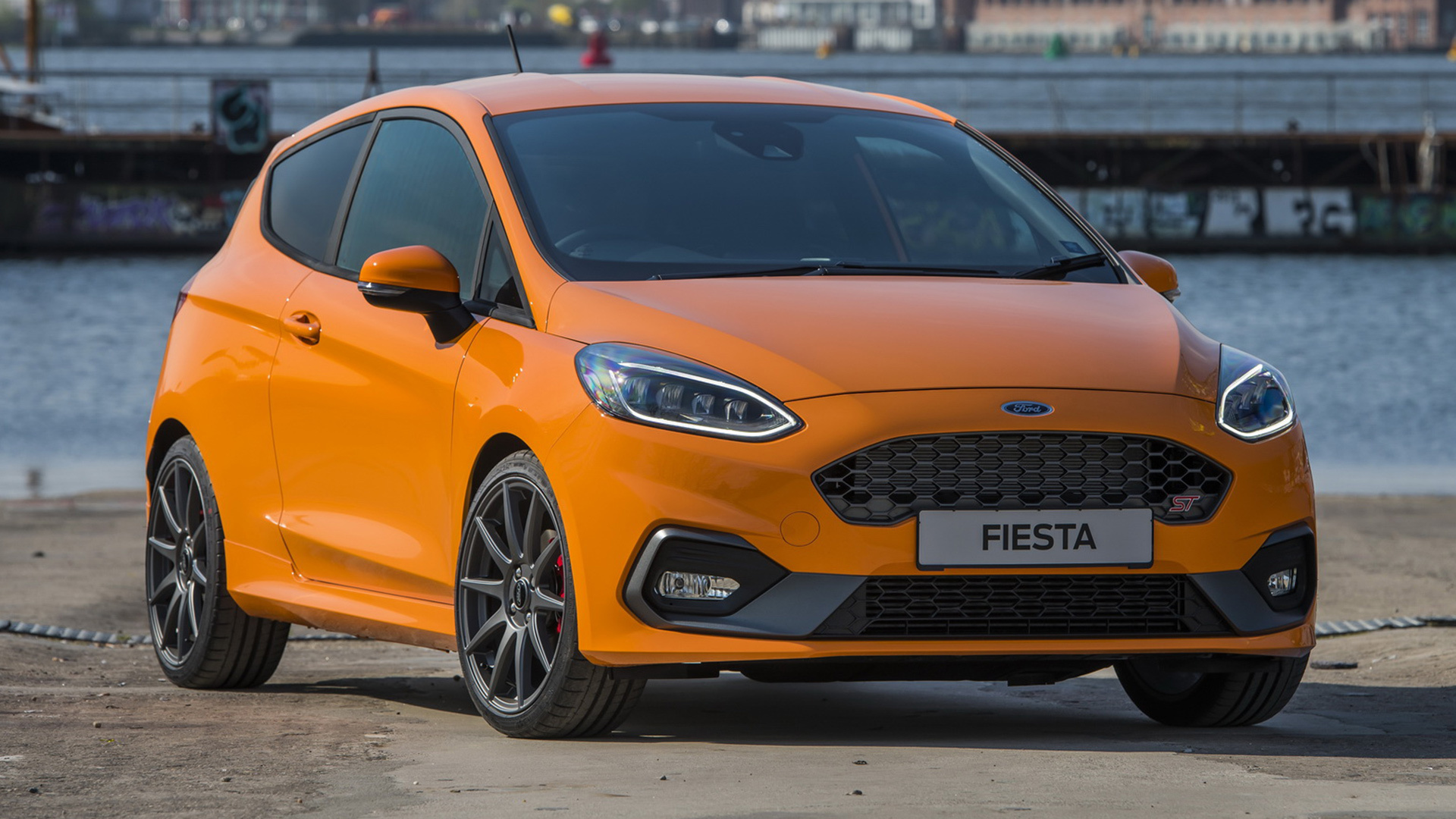
One of Ford’s upcoming EVs is expected to become a spiritual successor to the Fiesta, a car Ford unceremoniously killed off in 2023 after eight generations and nearly five decades.

The new electric supermini is due to arrive in early 2028 and will be built alongside the Renault 5 at Renault’s ElectriCity complex in Douai, France.

The second model will likely be a compact electric crossover based on the Renault 4, potentially replacing the Puma Gen-E somewhere down the line.

 Ford Turns To French Carmaker To Revive Fiesta
The discontinued Ford Fiesta.

Given Ford’s Explorer EV is based on VW’s ID.4 you might have expected Ford to borrow the upcoming ID.Polo and ID.Cross’s MEB platform for its new small cars, but instead it turned to Renault.

Crucially, Ford is insisting these won’t be lazy badge-engineering exercises. Unlike the new Nissan Micra, which is essentially a rebodied Renault 5, Ford says its new EVs will be “distinct Ford-branded vehicles” designed in-house.

Expect unique styling, bespoke interiors, and chassis tuning aimed squarely at delivering the driving feel Ford fans expect.

Under the skin, though, the shared EV hardware will be identical. That likely means front-mounted motors producing 121 hp (122 PS / 90 kW) in regular versions and 215 hp (218 PS / 160 kW) in a reborn Fiesta ST, plus battery options of 40 kWh and 52 kWh.

Can It Save Ford in Europe?

 Ford Turns To French Carmaker To Revive Fiesta
Renault

For Ford, time is of the essence. With Focus production ended, the Fiesta long gone and its Explorer and Capri electric SUV and crossover underperforming, the brand’s market share has cratered.

A Fiesta-sized EV priced close to the Renault 5’s expected €25,000 (£22k/$29k) mark could be exactly what Ford needs to regain relevance.

But a new lineup of subcompact EVs isn’t all we’ll see as a result of this partnership. The duo has also agreed to explore the possibilities of joining forces for new light commercial vehicles.

 Ford Turns To French Carmaker To Revive Fiesta
Renault

The Fake Sounds In Scout’s EVs Come Straight From Real American Machines

  • Scout is creating over 40 unique sounds sourced from real environments.
  • Engineers recorded a vintage Scout and grain silo for authentic audio.
  • Terra truck and Traveler SUV production begins in South Carolina in 2027.

Scout Motors is getting closer to production every day, and it’s planning to launch with a curated soundscape. Forget generic beeps, the revived American off-road brand is sending sound engineers across the country on what sounds like an audio-archeology road trip.

More: Scout Motors Says Over 80% Of Buyers Picked A Surprising Powertrain

If everything goes according to plan, the Traveler SUV and Terra pickup won’t just be made in the United States, they’ll sound like it, too.

What Does America Sound Like?

Scout Chief Design Officer, Chris Benjamin, says the brand’s UX team has been collecting natural mechanical noises and atmospheric tones to create more than 40 bespoke sounds for locks, turn signals, warning chimes, and startup sequences. 

“All of the sounds inside the vehicle, we want them to feel authentic to us and unique,” Benjamin told Autonews at the L.A. Auto Show, adding that Scout isn’t aiming for an utterly quiet, library-like cabin.

Obviously, recorded sounds are quite different from the real thing, but it’s clear that the Scout team wants to do the best it can with the modern technology on hand.

 The Fake Sounds In Scout’s EVs Come Straight From Real American Machines

The team even brought a vintage International Harvester Scout, complete with a V8, into an anechoic chamber and recorded sounds in isolation. 

The same raw mechanical noises found on that model, from the door latches to the locks to the V8 itself, will make it into the new offerings from Scout.

In a nod to the brand’s agricultural heritage, the team also visited Adairville, Kentucky. There, they found a farm and recorded industrial farming equipment inside a grain silo. Other audio layers in the car come from an acoustic guitar.

“You have a little bit of industry, a little bit of agriculture, a little bit of the original Scout in each one of the sounds,” Benjamin said.

 The Fake Sounds In Scout’s EVs Come Straight From Real American Machines

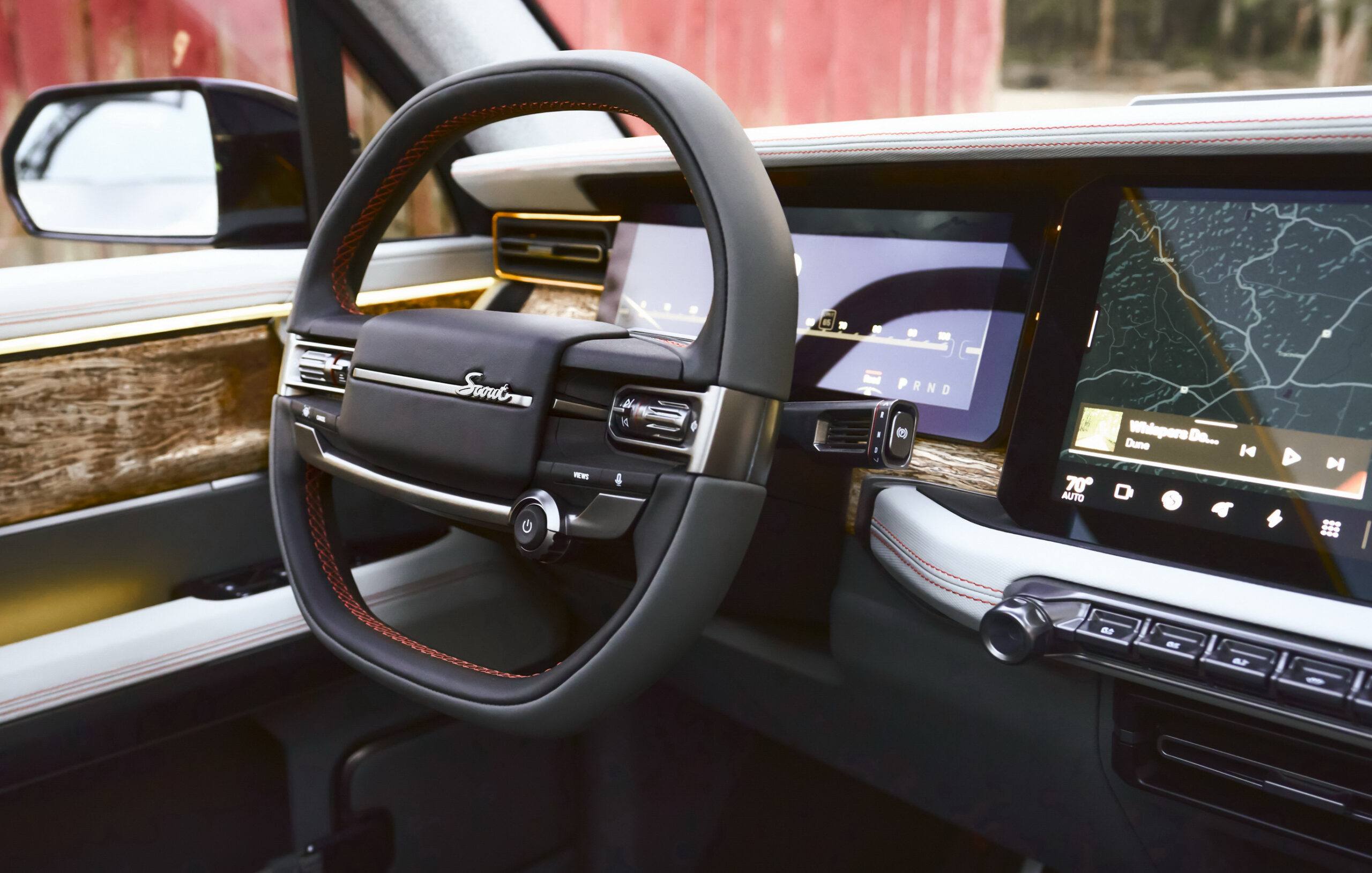
Scout says its EVs won’t chase sterile, ultra-minimalist, sci-fi EV interior cues. Yes, there’s a digital gauge cluster and a large center screen, but there will also be real knobs, real switches, and real buttons.

The tactile nature of the cabin connects to the brand’s rugged DNA, and the carefully curated sounds will reinforce it.

“We’re not creating spaceships,” Benjamin said. “We’re creating hearty, wholesome vehicles that people will love, and we want the sounds to reflect that.”

Production of the Terra and Traveler begins in South Carolina in late 2027, after a run of pilot builds in 2026. 

 The Fake Sounds In Scout’s EVs Come Straight From Real American Machines

GM Drops Another Half A Billion To Make More Gas Cars In America

  • GM invests $550 million to boost U.S. output of gas-powered vehicles.
  • Chevrolet Blazer production moves from Mexico to Spring Hill in 2027.
  • Orion Assembly retools for Silverado, Sierra, and Escalade production.

General Motors is doubling down on its US operations with a fresh round of investment aimed at boosting local production of internal combustion models at its Ohio and Michigan plants. The automaker has announced $550 million in new spending as part of nearly $5.5 billion set aside for wider production expansion across its network.

Roughly $250 million of that sum is headed to GM’s Parma Metal Center in Ohio, a facility central to the company’s manufacturing backbone. The added funding will support higher output of sheet metal stampings and assemblies.

Currently, the Parma site produces more than 100 million parts each year and handles over 400 tons of steel daily. It supplies components for a wide range of GM vehicles built across North America, making it one of the company’s most productive operations.

Read: GM’s EV Plant Will Now Build The Gas Models People Actually Want

“Our commitment to Parma Metal Center isn’t just about upgrading equipment—it’s about investing in the people who make it all happen,” GM senior vice president of global manufacturing, Mike Trevorrow, said.

“Our manufacturing teams are the driving force behind GM’s success, and we’re committed to giving them the tools and training they need to excel in today’s advanced manufacturing world. When we invest in our workforce, we’re not only building great vehicles—we’re helping secure the future of American manufacturing.”

 GM Drops Another Half A Billion To Make More Gas Cars In America

Other Investments

Beyond Ohio, GM is allocating $300 million to its Romulus Propulsion Systems plant near Detroit. The upgrade will expand output of the company’s 10-speed automatic transmissions, the same units found in its full-size pickups and SUVs.

Shifting consumer demands have forced GM to make significant production changes. Its Orion Assembly plant has been down since 2023 and was originally being retooled to build electric pickup trucks, but it will now instead handle production of gas-powered Chevrolet Silverado, GMC Sierra, and Cadillac Escalade models.

Looking further ahead, GM confirmed that production of the gas-powered Chevrolet Blazer will move from Mexico to its Spring Hill plant in Tennessee in 2027.

There, it will join the Cadillac XT5, Lyriq, and Vistiq on the production line, another sign that while GM’s electric future is still in motion, its gasoline-powered present remains very much alive.

 GM Drops Another Half A Billion To Make More Gas Cars In America

Audi’s Making A Defender Rival Out Of The Scout In America

  • Audi plans its first US built vehicles to ease pressure from tariffs.
  • New range extender SUV uses a Scout platform built in South Carolina.
  • Defender-sized SUV is designed specifically for the American market.

Audi is stepping up its assault on the North American market by finally doing something its BMW and Mercedes rivals have been doing for years: building vehicles inside the US.

Related: Audi’s New 4×4 Could Blend Scout DNA With G-Class Swagger

The VW-owned luxury brand already lagged behind its opposition in terms of stateside sales, but its lack of a US plant means it’s been particularly hard-hit by the tariffs, since it relies on imports from Europe and Mexico. Now it plans to tackle that problem with a new luxury SUV aimed at the Land Rover Defender and produced in the US.

Built by Scout

 Audi’s Making A Defender Rival Out Of The Scout In America
The interior of the Scout Traveler SUV.

The secret SUV will be a range extender hybrid designed specifically for the US market and will be built locally. But that doesn’t mean Audi is about to commission a new factory of its own on American soil, German website Automobilewoche reports.

Instead, it will build the SUV at the Blythewood, South Carolina, plant currently being constructed by VW-owned Scout Motors, which hopes to begin rolling out Scout trucks and SUVs by late 2027.

Scout, a utility brand launched by International Harvester in the late 1950s but dormant since 1980, was resurrected by VW in 2022 and plans to launch with two vehicles, the Scout Traveler SUV and Scout Terra truck.

Scout’s new models have ladder-frame chassis, which would be a first for Audi, and four-wheel drive systems with proper locking differentials. Although Scout offers both fully electric and range-extender powertrains, over 80 percent of reservations are for the range-extender, CEO Scott Keogh told Bloomberg recently.

 Audi’s Making A Defender Rival Out Of The Scout In America
Scout

While the full EVs can travel for 350 miles (563 km) on their 120 kWh batteries, the range-extenders offer around 500 miles (800 km) of range, only 150 miles (240 km) of which comes from their smaller battery.

What Could it Look Like?

Although Audi hasn’t revealed any images of its tough new SUV, and we’ve yet to see it in spy shots, we have had strong hints from the automaker that one is on the way.

Earlier in 2025, Audi debuted the Q6 e-tron Offroad Concept, which featured portal axles and a massively increased ride height to underline how serious Audi is about building a more off-road-focused machine.

Though Audi used the Q6 as a base for that concept, the real SUV, probably due in 2028, will be much bigger and almost certainly boxier, as imagined in these images below from @theottle.

\\\\\\

@theottle

Toyota’s Pouring Another $10 Billion Into America During ‘Pivotal Moment’

  • Toyota is investing $10 billion in the United States over the next five years.
  • The company also began production at their new battery plant in North Carolina.
  • The facility will build batteries for hybrids, plug-in hybrids, and EVs.

Toyota has announced plans to invest an additional $10 billion in the United States over the next five years. The company didn’t say where the money is going or what it will fund, but it will bring their total U.S. investment to nearly $60 billion.

While the automaker was coy on specifics, the move comes amid tariffs and pressure from the Trump administration to build more vehicles in the United States.

Just last month, the White House said “Toyota plans to export its U.S.-made vehicles to Japan and open its distribution platform in Japan to U.S. automakers.”

The country also decided to allow sales of American-made vehicles and “U.S. safety-certified vehicles” without additional testing.

An American Battery Plant

Putting politics aside, Toyota Battery Manufacturing North Carolina has officially opened and begun production. Located in Liberty, the $13.9 billion plant is the company’s eleventh manufacturing facility in America and Toyota’s only battery plant outside of Japan.

It’s expected to generate up to 5,100 jobs and be capable of producing 30 GWh of battery capacity annually. While the opening comes shortly after the clean vehicle tax credit was eliminated, Toyota noted the plant has 14 battery production lines that support not only electric vehicles, but also hybrids and plug-in hybrids.

\\\\\\\\\\

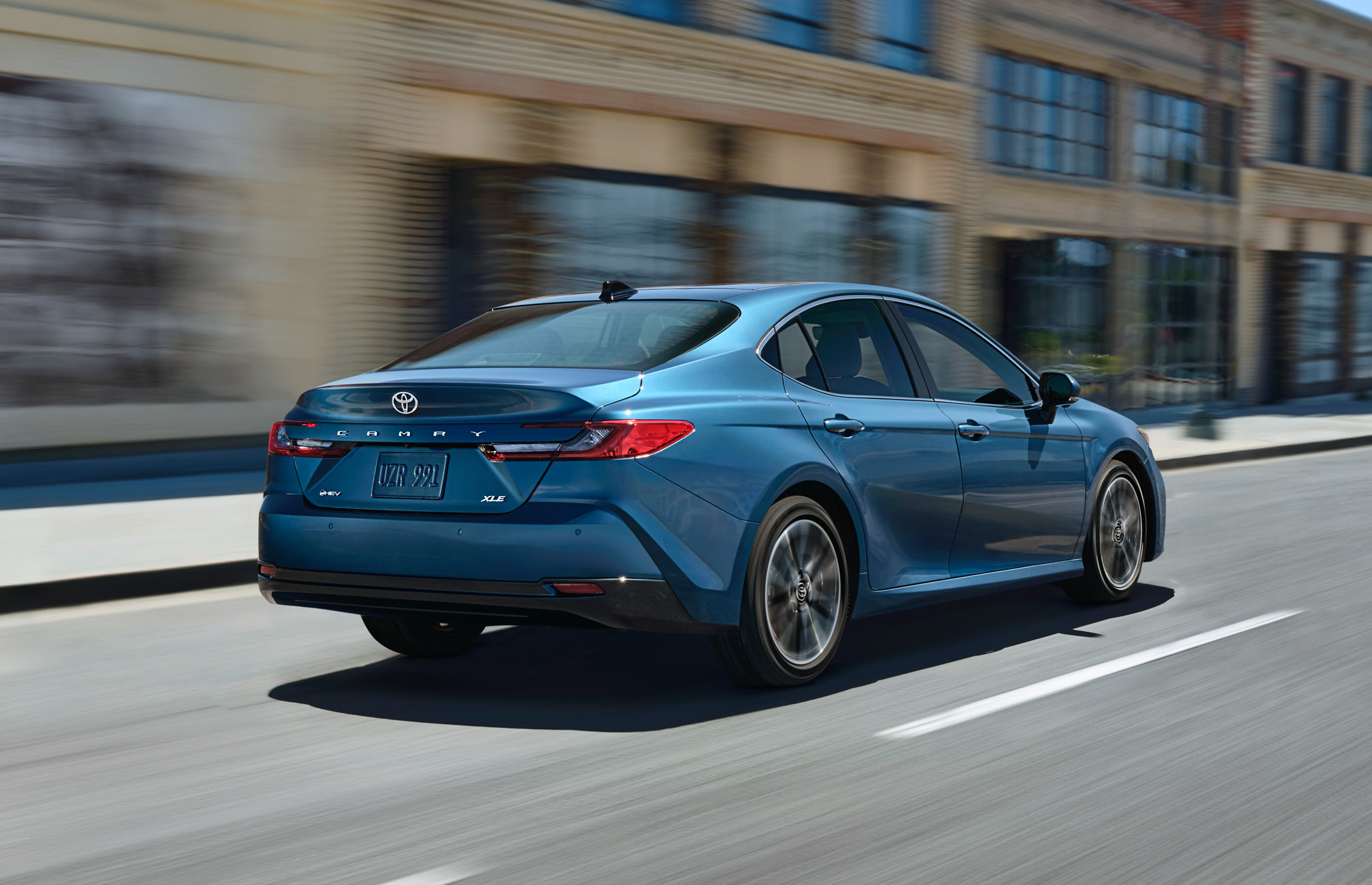
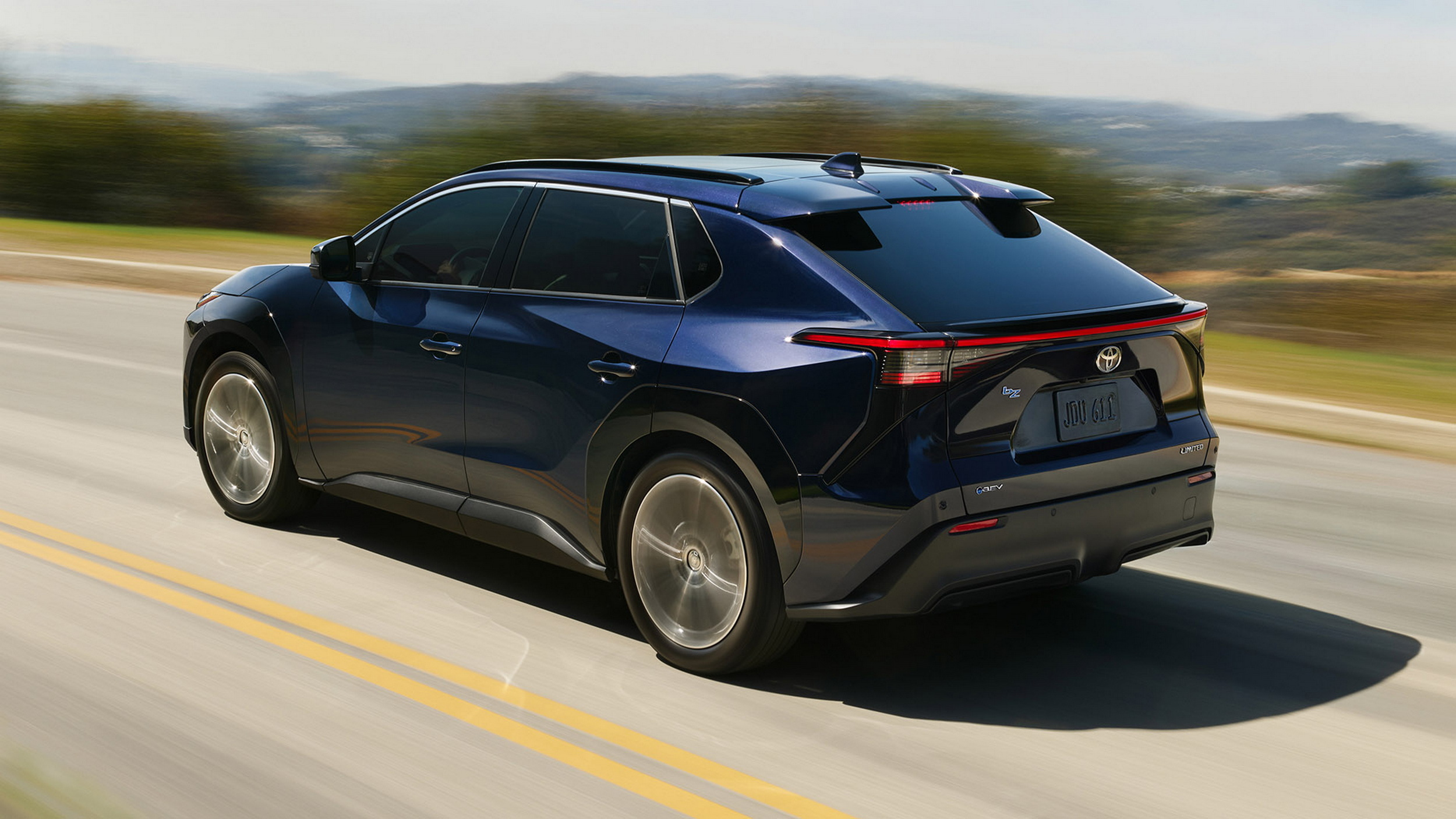
Speaking of which, batteries made at the plant will be used in the Camry Hybrid, Corolla Cross Hybrid, and RAV4 Hybrid. It will also make batteries for the company’s upcoming three-row EV.

While production is just getting started, Toyota plans to open additional assembly lines by 2030. The company also noted that once construction is complete, the facility won’t just be a workplace as it will also house a pharmacy, a medical clinic, a fitness center, and on-site childcare.

Toyota Motor North America CEO Tetsuo Ogawa remarked, “Today’s launch of Toyota’s first U.S. battery plant and additional U.S. investment up to $10 billion marks a pivotal moment in our company’s history. Toyota is a pioneer in electrified vehicles, and the company’s significant manufacturing investment in the U.S. and North Carolina further solidifies our commitment to team members, customers, dealers, communities, and suppliers.”

 Toyota’s Pouring Another $10 Billion Into America During ‘Pivotal Moment’

The EV Slowdown Just Made Toyota Change Its Mind Again

  • Toyota must begin development within three years of buying land.
  • The automaker has also cut its global electric vehicle sales outlook.
  • Brand’s EV sales have grown by just over twenty percent this year.

For the second time this year, Toyota has delayed its plan to build a new factory dedicated to EV batteries in Japan’s Fukuoka Prefecture. The decision, while not unexpected, highlights the company’s cautious approach amid fluctuating global demand for electric vehicles.

Sales of Toyota’s EVs have slowed, yet the automaker maintains that the plant will still move forward in due course.

Read: Toyota’s Lineup Overhaul Could Include A Surprise Sedan And Electric Highlander

Toyota paid roughly 6 billion yen, about $39 million, for the site located in an industrial zone under development in northeastern Fukuoka Prefecture. As part of the purchase, the company agreed to begin construction within three years.

Earnings Results Shift The Timeline

Despite this, the car manufacturer announced in March that it would postpone work at the site due to fall demand for its EVs. The governor of Fukuoka, as well as Toyota President Koji Sato, have since confirmed work on the site has been postponed for a second time.

Production had initially been slated to start in 2028, though an updated timeline has yet to be provided, according to Nikkei Asia.

 The EV Slowdown Just Made Toyota Change Its Mind Again

Word of the delay coincided with Toyota’s latest earnings report. It cut its global EV sales expectations by 10 percent from a previous forecast of 277,000 units for the fiscal year ending March 2026.

Even so, Toyota hasn’t ruled out adjusting its long-term targets, including its aim to reach 1.5 million global EV sales in 2026, a figure that could yet evolve as market conditions change.

Toyota Is Still Betting On EVs

Notably, Toyota is still investing heavily in new electric vehicles and factories. It continues to work towards opening a new factory in Shanghai, China, around 2027, to produce EVs for Lexus. This facility will likely handle the production of the LF-ZC and LF-ZL that were introduced a couple of years ago as concepts.

Toyota’s EV sales through the first nine months of the year were actually up 20.6 percent to 117,031 units, but even so, that number has still fallen short of expectations.

Until the company is confident that sales will rise significantly, it doesn’t make sense to rush and build new plants only for them to sit idle or operate at partial capacity.

 The EV Slowdown Just Made Toyota Change Its Mind Again

Sources: Nikkei Asia

❌
❌