Normal view

There are new articles available, click to refresh the page.
Before yesterdayMain stream

These Dealers Say Ford Paid $600 For EV Repairs Worth Nearly 40 Times

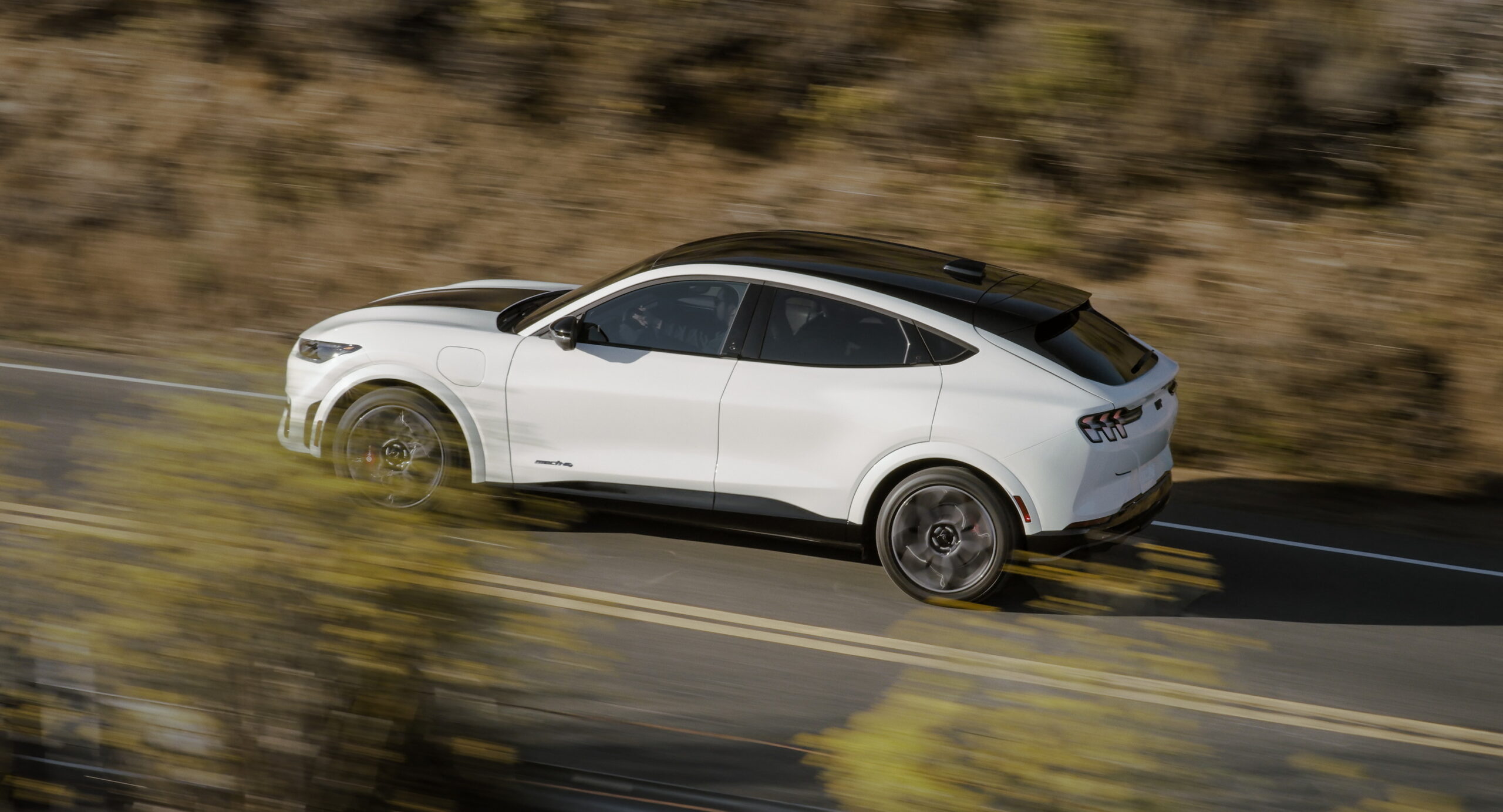
  • Dealers say Ford only paid $600 per EV battery replacement.
  • They claim the real cost should be $22,600 per battery.
  • More lawsuits are reportedly being prepared in other states.

As more legacy automakers navigate the shift to electric vehicles, the complexity of servicing and supporting them is beginning to reveal fault lines, especially when it comes to who pays for what.

Ford is now facing allegations that it underpaid two New York dealerships for comprehensive EV battery replacements, according to a lawsuit filed in US District Court.

Read: Ford Accused Of Advertising A Missing Feature On New Trucks

And the trouble may not stop there, as attorneys say similar legal actions are in motion and could eventually be consolidated into a class action, raising the stakes for the company.

Jericho Turnpike Auto Sales and Patchogue 112 Motors allege that Ford has sidestepped state warranty reimbursement laws by issuing low flat-rate payments for full battery pack replacements, rather than covering the actual costs of the repairs.

The dealer says it has completed 15 EV battery replacements on Ford models since early 2024. Of those, Ford allegedly reimbursed the dealer just $600 per battery for 13 jobs that should have cost $22,600 each, leaving a gap of $286,200. In the remaining two cases, the dealer received $13,000 per battery. Even so, the lawsuit claims Ford still failed to pay the full amount.

Patchogue 112 Motors reports a similar pattern, stating it was paid only $600 per battery instead of the expected $22,600.

What Are Ford’s Responsibilities?
 These Dealers Say Ford Paid $600 For EV Repairs Worth Nearly 40 Times

At the heart of the lawsuit is the question of how franchised dealerships are compensated for warranty and service contract repairs.

The filling alleges that Ford ignored legal requirements despite a state statute requiring manufacturers to reasonably cover repairs and manufacturer service contracts not “less than the price and rate charged by the franchised motor vehicle dealer for like services to non-warranty and/or non-service contract customers.”

That includes the cost of parts plus a 40 percent markup. Dealers are also allowed, under the law, to apply their typical non-warranty retail markup on labor, which can range from 70 to 200 percent depending on the service. The lawsuit claims Ford has not followed these provisions.

Leonard Bellavia, one of the attorneys representing the dealerships, told Auto News that Ford isn’t alone. His firm is pursuing similar claims against other automakers in multiple states, all centered on what he describes as a pattern of failing to meet warranty payment obligations

\\\\\\\

Justice Department sues 6 more states for voter lists

3 December 2025 at 20:48
Security personnel stand watch outside the U.S. Department of Justice in Washington, D.C., in August. The Justice Department on Tuesday sued six more states for unredacted copies of their voter rolls. (Photo by Jonathan Shorman/Stateline)

Security personnel stand watch outside the U.S. Department of Justice in Washington, D.C., in August. The Justice Department on Tuesday sued six more states for unredacted copies of their voter rolls. (Photo by Jonathan Shorman/Stateline)

The U.S. Department of Justice on Tuesday expanded its legal campaign to force states to turn over voter lists containing sensitive personal information, suing six more states that have refused to provide the data.

The Justice Department has now sued officials in more than a dozen states for the voter lists, following a first round of lawsuits filed in September. The lawsuits are aimed at mostly Democratic states that won’t turn over unredacted copies of the lists, which include driver’s license and partial Social Security numbers.

For months, the Trump administration has demanded that states provide copies of their voter lists, calling the information necessary for election integrity efforts. While some states have turned over lists that withhold sensitive personal data, most have declined to offer all the information on their lists.

Democratic election officials have raised privacy concerns over how the Trump administration plans to use the data. They are especially concerned that the Justice Department will share the data with the U.S. Department of Homeland Security, which is building a powerful citizenship verification tool. The Trump administration previously confirmed to Stateline it plans to share the data.

The new wave of lawsuits target Delaware, Maryland, New Mexico, Rhode Island, Vermont and Washington, the Justice Department announced in a news release. The department has already sued California, Maine, Michigan, Minnesota, New Hampshire, New York, Oregon and Pennsylvania.

“Accurate voter rolls are the cornerstone of fair and free elections, and too many states have fallen into a pattern of noncompliance with basic voter roll maintenance,” U.S. Attorney General Pamela Bondi said in a news release on Tuesday. “The Department of Justice will continue filing proactive election integrity litigation until states comply with basic election safeguards.”

Rhode Island Secretary of State Gregg Amore in September offered the Justice Department a free copy of his state’s publicly available voter list. The information is typically provided upon request with a $25 fee, but he refused to provide confidential personal information absent legal action.

“This lawsuit, like those filed in other states, is a continuation of the current presidential administration’s unconstitutional attempts to interfere with elections processes across the country,” Amore said in a statement on Tuesday. “One of my most important responsibilities as the chief state election official is safeguarding the data privacy of Rhode Islanders, who entrust us with their personal information when they register to vote. I will continue to fight to protect it.”

Editor’s note: This story has been updated to clarify the states previously sued by the Department of Justice. Rhode Island Current reporters Nancy Lavin and Christopher Shea contributed reporting. Stateline reporter Jonathan Shorman can be reached at jshorman@stateline.org.

This story was originally produced by Stateline, which is part of States Newsroom, a nonprofit news network which includes Wisconsin Examiner, and is supported by grants and a coalition of donors as a 501c(3) public charity.

Ford Accused Of Advertising A Missing Feature On New Trucks

  • Ford is being sued over missing safety tech in 2024 F-150 Lightnings.
  • Plaintiffs claim Ford misrepresented features listed on window stickers.
  • Company offered $100 refunds, but owners say that barely covers losses.

Ford’s electric pickup has long been seen as a bellwether for mainstream EV demand, but the latest news surrounding it has little to do with torque or battery range. Instead, the company now faces scrutiny of an entirely different kind inside a courtroom.

Read: F-150 Lightning Production Halted Indefinitely As Ford Bets On Gas Trucks Again

Ford is being sued in the United States over claims that certain 2024 F-150 Lightning models advertised with a Forward Sensing System were delivered without it. The lawsuit alleges that customers have “incurred damages” due to the missing safety feature and that the company’s efforts to make amends have fallen short.

Missing Sensors or Missing Disclosure?

The class action, filed in the US District Court for the Eastern District of California, argues that the window stickers on 2024MY F-150 Lightning models clearly state the vehicles are equipped with the Forward Sensing System, which includes several parking sensors on the front bumper.

Ford reportedly notified U.S. dealerships on March 31 that every 2024 F-150 Lightning advertised with the system was actually built without it. The company subsequently began contacting customers, offering a $100 refund to address what it described as a window-sticker error.

 Ford Accused Of Advertising A Missing Feature On New Trucks

What the Plaintiff Claims

The plaintiff named in this new lawsuit, Ibrahim Lunawadawala, contends that the refund offer is negligible, pointing out that installing equivalent aftermarket sensors would cost substantially more. The filing states that Ford “has been unwilling to provide adequate compensation to aggrieved consumers.”

“Plaintiff Lunawadawala has suffered an ascertainable loss because of Ford’s misrepresentations, including but not limited to, diminished value of his vehicle and other consequential damages,” the lawsuit continues, as cited by Carcomplaints.

Production Pause and Broader Troubles

This legal development arrives just weeks after Ford confirmed it had indefinitely paused production of the all-electric F-150 Lightning, redirecting resources toward gas and hybrid models instead.

The decision was made not just to address falling sales of the model, but also because of a huge fire at a Novelis aluminum plant in Canada that supplies Ford with the aluminum it needs for all F-150 models.  

\\\\\\\\

Sources: Law, CarComplaints

Owners Sue VinFast After VF 8 Takes Almost 24 Hours To Charge

  • Owners allege VF 8 charges under 2 kW, requiring nearly 24 hours.
  • Plaintiffs say charging shuts down at the advertised 32-amp rate.
  • Judge pauses class action, sends owners’ claims to arbitration.

VinFast is in the spotlight again, this time for reasons it would rather avoid. The Vietnamese automaker now faces another lawsuit, adding a fresh speed bump to its already bumpy road. Owners in the United States claim that the VF 8 Plus AWD charges so slowly it can take a full 24 hours to replenish its battery.

Filed in the U.S. District Court for the Central District of California, the lawsuit represents customers who leased or purchased a VF 8 Plus AWD in the past four years.

Why So Slow?

The electric vehicles are supposed to charge at a rate of 6.6 kW or higher. Instead, these customers say that their VinFasts charge at under 2 kW. That’s closer to the speed of an original Nissan Leaf than it is to a modern EV.

More: Vinfast Owner Says Their EV Took Over Steering And Nearly Hit A Wall

The plaintiffs, Gil Swigi and Joseph Mizrahi, say that they were led to believe that they were getting standard Level 2 charging performance. VinFast allegedly advertised that its cars could charge at up to 32 amps.

When Mizrahi and Swigi tried that, they claimed the cars would shut down due to software defects. Their only recourse was to charge at 19 amps, which cut total charging speed by almost 40 percent.

 Owners Sue VinFast After VF 8 Takes Almost 24 Hours To Charge

To make matters worse, the shutdowns would allegedly happen in the middle of the night with regularity, meaning that owners would wake up to a nasty surprise.

Not only did their car have a problem, but that meant less range to do whatever they had planned for that day. According to Carcomplaints, VinFast attempted multiple repairs on both vehicles in question.

Only when the owners bought additional charging equipment did their cars start to charge at the claimed manufacturer speeds. That said, VinFast successfully argued that both owners agreed to arbitrate their differences. A judge granted that motion, and arbitration is set for February 20, 2026.

 Owners Sue VinFast After VF 8 Takes Almost 24 Hours To Charge

Source: Classaction, CarComplaints

Tesla Sued Again After Doors Wouldn’t Open As Car Burned

  • Lawsuit claims Model 3 doors failed to open after a fiery crash.
  • Witnesses tried rescuing the couple but couldn’t open the doors.
  • Complaint says Tesla sold cars with faulty door handle designs.

Another day brings another legal challenge for Tesla, this time centered on a tragic crash that once again raises questions about the company’s design choices.

The latest lawsuit claims that the electrically operated door handles of a 2018 Model 3 failed to function after a collision and subsequent fire, trapping one of the occupants inside and leading to her death.

Read: Trapped Children Die In Tesla Fire After Door Handles Allegedly Wouldn’t Open

It marks yet another serious concern for Tesla, one that could prove costly and push the automaker to reexamine how its vehicles handle emergency situations, particularly when power is lost.

Door Handles Under Scrutiny

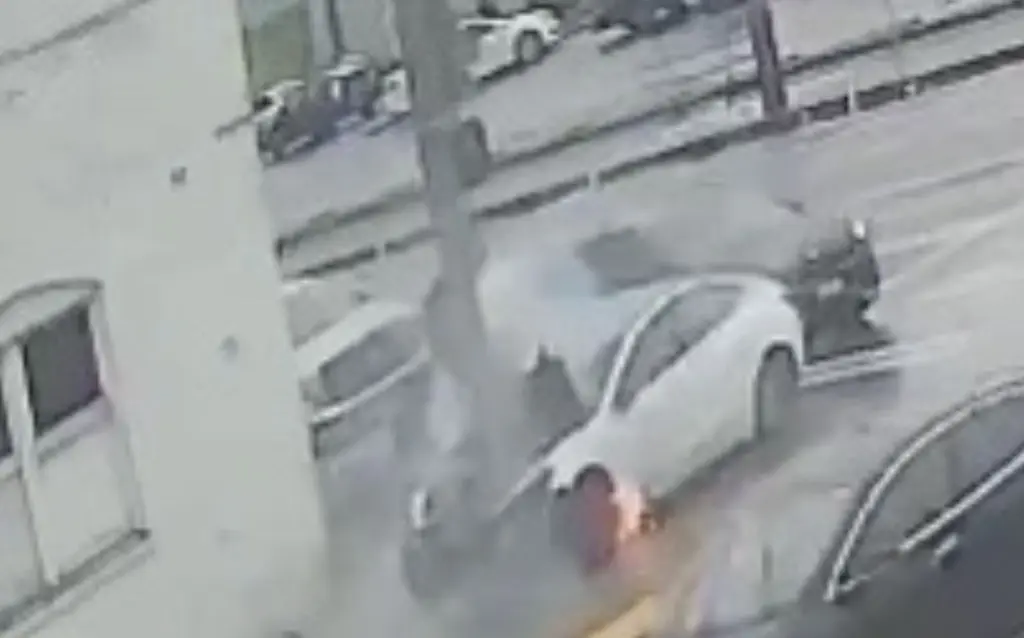
Filed last week in the U.S. District Court for the Western District of Washington, the complaint outlines a sequence of events. On January 7, 2023, Jeffrey Dennis was driving his Tesla Model 3 with his wife in Tacoma, Washington, when the car reportedly accelerated suddenly and struck a utility pole at the corner of South 56th and South Washington Streets.

Shortly after impact, the EV caught fire. It’s alleged that several witnesses tried to open the Tesla’s doors to rescue the couple, but were unable to do so because they failed to operate without battery power. The lawsuit says that some witnesses even tried to break the Model 3’s windows with a baseball bat, but it also failed.

First responders eventually managed to extract the pair, though Wendy Dennis succumbed to her injuries at the scene. Jeffrey Dennis suffered severe burns to his legs.

Could It Have Been Prevented?

 Tesla Sued Again After Doors Wouldn’t Open As Car Burned
US District Court

The complaint says the Model 3 has a “unique and defective door handle design” that prevented rescuers from freeing the couple. It is also alleged that Tesla knew about the defect with the door handle but failed to address it, and continued to market and sell the popular EV.

The lawsuit doesn’t stop at the door handles. It also claims that Tesla’s Automatic Emergency Braking system failed to activate as the vehicle sped toward the utility pole. In addition, it accuses the company of using “a highly explosive battery chemistry” despite the existence of safer, more practical, and less costly alternatives.

Jeffrey Dennis is seeking financial relief for the wrongful death of his wife and his long-term injuries, as well as compensatory damages and punitive damages under California law.

VW Doesn’t Think Its Capacitive Buttons Deserve A Day In Court

  • VW faces a lawsuit over ID.4 steering wheel touch button safety issues.
  • Drivers claim light contact can trigger ACC and cause sudden acceleration.
  • One plaintiff says her EV struck a tree after brushing the ACC button.

Several months after VW was sued in the United States over claims the capacitive steering wheel buttons of the ID. 4 pose a safety risk, the company has filed a motion to dismiss.

A case like this can gather momentum long before it reaches a courtroom, so VW is trying to shut it down before it turns into a long, expensive tangle.

Read: VW Drivers Say They’re Terrified Of Touching Their Steering Wheels, So They’re Suing

The class-action lawsuit, filed in the U.S. District Court for the District of New Jersey, argues that drivers can inadvertently trigger Adaptive Cruise Control with a light pass of the hand over the steering wheel’s capacitive controls.

The two plaintiffs named in the lawsuit say they are “terrified and hesitant” to drive their vehicles because of this risk.

What Does VW Say?

 VW Doesn’t Think Its Capacitive Buttons Deserve A Day In Court

While no doubt inadvertently engaging a vehicle’s Adaptive Cruise Control system could be a little unnerving, VW has noted that neither of the two plaintiffs has had to stop driving their vehicles because of the alleged fault.

One plaintiff, Janice Beecher, says she brushed the ACC button while pulling into a parking space, claiming the ID.4 then accelerated and struck a tree. VW counters that Beecher never stated she applied the brakes during the incident.

The company adds that although Beecher reported the issue, the ID.4’s event data recorder did not capture any sign that the event occurred.

As for the second plaintiff, Omar Hakkaoui, he says his wife damaged their ID.4 after it suddenly accelerated in their driveway. However, according to VW, Hakkaoui has not claimed that his wife touched the ACC controls on the steering wheel.

 VW Doesn’t Think Its Capacitive Buttons Deserve A Day In Court

The German automaker argues that the class action’s warranty claims fall short and that the plaintiffs have not clearly identified the defect they believe affects the electric crossover.

It also maintains that the lawsuit should not go forward as a class action because the plaintiffs live in Massachusetts and Connecticut and cannot represent owners who live outside those states.

\\\\\\\\\\\\\

Tesla Beats Racial Bias Class Action But Now Faces Hundreds Of Lawsuits

  • California judge ruled Tesla workers can’t sue as a class for bias.
  • Many plaintiffs reportedly can’t afford to miss work to testify.
  • Lawyers warn Tesla may now face hundreds of individual lawsuits.

Tesla has long been familiar with the courtroom, especially when it comes to class-action lawsuits in the United States. Over the years, the company has paid out millions to settle various cases, but this week brought a rare turn of fortune for the EV maker.

Read: California Judge Approves Class Action Against Tesla Over Racial Harassment

A California state judge has ruled that a group of African American factory workers cannot sue Tesla as a class over alleged racial discrimination, handing the company a temporary reprieve in a high-profile case that’s been unfolding for years.

What Changed in Court?

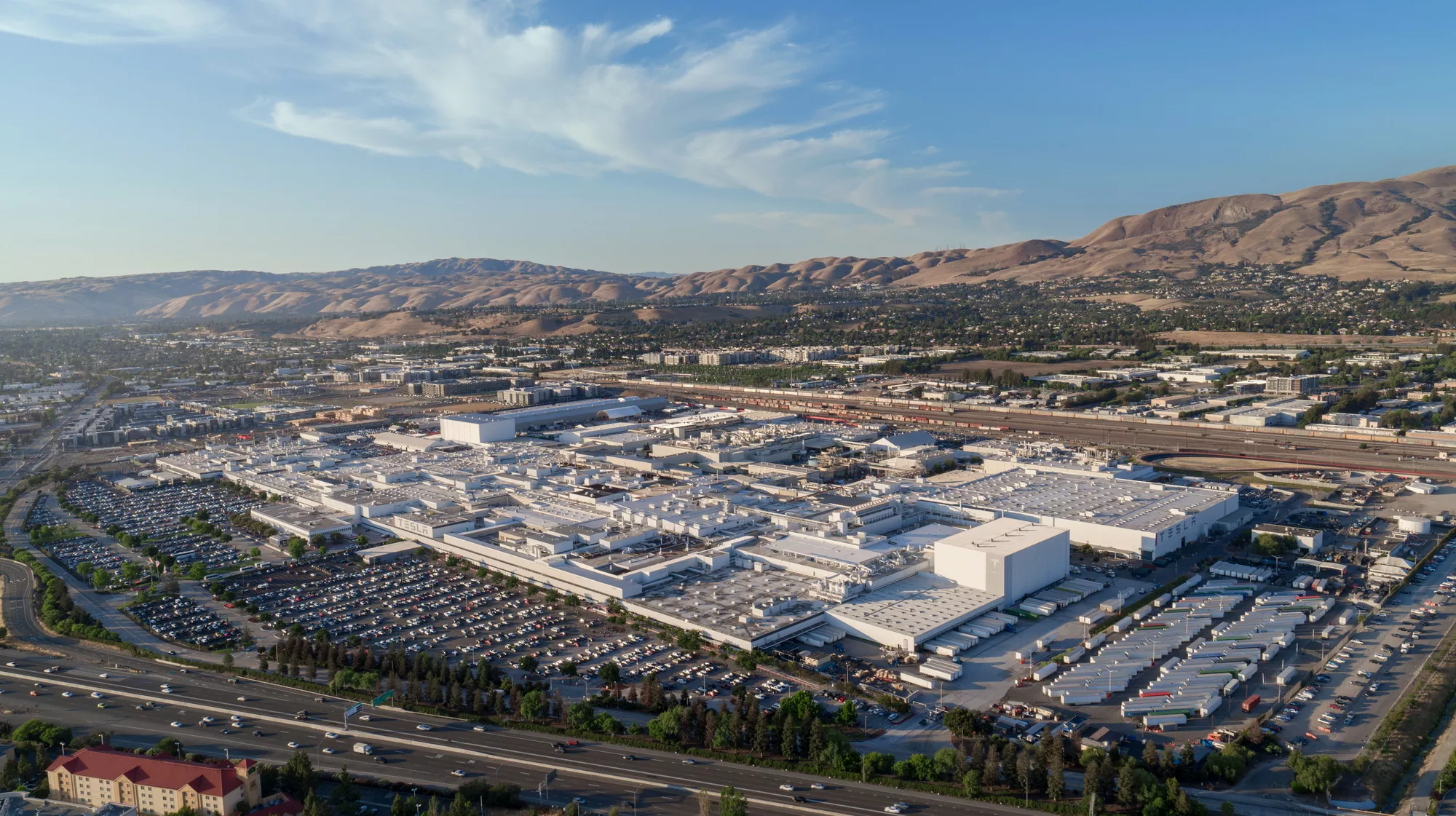
The lawsuit, originally filed by former assembly-line worker Marcus Vaughn, had claimed that Black employees at Tesla’s plant in Fremont, California, were subjected to racial discrimination that included slurs directed at them and nooses hung at their workstations.

Initially certified as a class action in 2024, the case was scheduled to go to trial in April 2026. However, earlier this week, California Superior Court Judge Peter Borkon said the 2017 lawsuit can no longer proceed as a class action, noting that many of the 200 workers randomly selected to testify at trial have been unwilling to do so.

As such, Borkon says he can no longer trust that the experiences of a smaller selection of workers can be applied to the entire class.

 Tesla Beats Racial Bias Class Action But Now Faces Hundreds Of Lawsuits

According to one of the lawyers for the plaintiffs, Lawrence Organ, many of those named in the class-action are low-income workers who cannot afford to miss work and testify in the case.

More Lawsuits Could Come

But Tesla is still in hot water. While the class action hasn’t been certified, the plaintiffs’ co-lead counsel, Bryan J. Schwartz, says lawyers will pursue hundreds of individual lawsuits. So far, more than 500 have been filed, and by the time it’s all said and done, more than 900 separate lawsuits alleging racial discrimination could be filed against Tesla.

“Tesla has jumped out of the frying pan and into the fire with this decertification, because they are now facing hundreds of victims of race harassment seeking damages in their own suits,” Schwartz told KQED.

 Tesla Beats Racial Bias Class Action But Now Faces Hundreds Of Lawsuits

Social Development Commission buildings in Milwaukee face foreclosure

A brick building with a sign reading "sdc Social Development Commission" above the entrance and a poster in a window
Reading Time: 3 minutes

A Milwaukee County Circuit Court judge has ruled that the Social Development Commission’s property corporation defaulted on mortgage payments for its North Avenue buildings and faces foreclosure in the coming months.

This judgment, which was issued Monday, Oct. 6, is the latest development for the Social Development Commission as the anti-poverty agency attempts to reconcile its budget and secure funding amid lawsuits, board tensions and government reviews.  

The properties will now enter a redemption period for three months before the court can take further action, including selling the properties at auction. 

“I can tell you that (SDC) is working tirelessly to be able to secure and redeem the properties,” said Evan P. Schmit, an attorney with Kerkman & Dunn representing SDC and SD Properties. 

Millions owed

Forward Community Investments, a community development financial institution, filed a foreclosure lawsuit in March against SD Properties Inc., the tax-exempt corporation that owns SDC’s buildings. The lawsuit claimed SD Properties defaulted on mortgage payments in 2024 and lists SDC as a guarantor.

On Monday, Milwaukee County Circuit Court Judge J.D. Watts granted a summary judgment for Forward Community Investments, which included a judgment of foreclosure against SD Properties and SDC and declared that Forward Community Investments is entitled to a money judgment. 

This judgment allows the foreclosure process to advance, according to Ryan Zerwer, the president and CEO of Forward Community Investments.

The total judgment amount owed by SD Properties was just over $3.1 million, as of June 16, according to court records

The lender’s complaint outlines that this includes $2.42 million in principal, interest and other costs for a construction mortgage SD Properties entered into in 2020 and $687,000 for an additional mortgage started in 2023. 

Additional accrued interest and other costs may be added to the tally before the properties are redeemed or sold. 

SDC moves out

A tan brick building with a flat roof next to an empty parking lot and sidewalk under a cloudy sky
The warehouse located at 1810 W. North Ave. is one of the Social Development Commission’s buildings facing a judgment of foreclosure. (Jonathan Aguilar / Milwaukee Neighborhood News Service / CatchLight Local)

SDC voluntarily vacated the 1730 W. North Ave. office and removed personal property, said Laura Callan, an attorney with Stafford Rosenbaum LLP, which is representing Forward Community Investments. William Sulton, SDC’s attorney, confirmed the agency moved out of both the office and the warehouse building at 1810 W. North Ave. 

SD Properties still owns a property on Teutonia Avenue that is not included in the lawsuit. 

Watts said that both parties have been cooperative. 

“This is, of course, a major event in the community, so I’m aware of the importance of this case,” Watts said.  

What’s next?

Wisconsin foreclosure laws require a redemption period, which will be for three months in this case. 

During this period, SD Properties has the chance to redeem the mortgaged premises by paying the total amount of the judgment and other attorney fees, costs and interest

“The board is gonna have to decide whether they want to try and redeem the building or not,” Sulton said.  

SDC is awaiting responses from the federal government on its status as a community action agency and Wisconsin departments on their audits. This is preventing the board from making decisions on the agency’s future direction and services, Sulton said. 

If the properties are not redeemed after three months, the Milwaukee County Sheriff’s Office will arrange a public auction or sale.

Schmit said a hearing to confirm the sale will be held after the redemption period, which would be the final opportunity for SD Properties to maintain the buildings.

“We will wait for the procedure for the confirmation of the sheriff’s sale, just to be clear,” Watts said.


Meredith Melland is the neighborhoods reporter for the Milwaukee Neighborhood News Service and a corps member of Report for America, a national service program that places journalists in local newsrooms to report on under-covered issues and communities. Report for America plays no role in editorial decisions in the NNS newsroom.


Jonathan Aguilar is a visual journalist at Milwaukee Neighborhood News Service who is supported through a partnership between CatchLight Local and Report for America.

Social Development Commission buildings in Milwaukee face foreclosure is a post from Wisconsin Watch, a non-profit investigative news site covering Wisconsin since 2009. Please consider making a contribution to support our journalism.

❌
❌