Normal view

There are new articles available, click to refresh the page.
Before yesterdayMain stream

A Gullwing Door Hides The Coziest Room On Wheels

  • Isuzu Elf box truck was repurposed into a cozy room.
  • Inside are a wooden floor, shelves, a couch, and table.
  • Isuzu has also built camper and pickup versions of it.

Forget the cold, hard plastics and hose-down austerity usually associated with commercial vehicle interiors. Isuzu’s latest creation flips that script, turning its Multi Utility Vehicle into something that lets you park your living room almost anywhere, preferably somewhere with a view worth staring at.

The concept is based on the standard cab version of the Isuzu Elf, featuring a black exterior with gold accents and aerodynamic panels on the roof and sides. But the real talking point is what Isuzu has done with the cargo area out back.

More: You Can Buy Isuzu’s Wildest Concept, But You Better Have A Big Lawn

A gullwing door and a drop-down side panel swing open to reveal a snug space that looks more theatre set than box truck. There is a wooden floor, lashing rails, modular shelving and actual furniture. A drop-down table is set up for brewing your coffee of choice, best enjoyed from the comfort of a proper couch rather than a fold-out stool.

\\\\\\\\

It feels tailor-made for a pop-up coffee shop, though in reality it would probably serve primarily as a promotional showpiece. In the accompanying video, one occupant seems perfectly content sipping his drink while watching the sun dip below the horizon.

The Elf MUV was created in collaboration with bodywork specialists Nippon Fruehauf and was exhibited at the Tokyo Auto Salon 2026. It is not heading for showrooms any time soon, but it highlights how much imagination can be squeezed out of a humble commercial vehicle.

\\\\\\\\\\

What About The Other Rooms?

If you like the idea of escaping into nature but would rather bring more than a sofa, Isuzu has another answer. The Be-Cam GeoRoam sits somewhere between camper and motorhome and was developed with Nippon Tokushu Body.

\\\\\\\\\\\\\\\\\\\

This build rides on the wide-cab, long-wheelbase Elf, which frees up a far more generous rear section. It also throws in some proper adventure kit, including a bull bar, roof rack and extra LEDs, giving it a stance that says it is ready to head well past the campsite entrance.

More: Tiny Kei Truck Becomes A Real Tiny Home On Wheels

The interior looks like a mini apartment, with warm tones and plenty of wood surfaces. You get a dining area, a fully equipped kitchen, a sofa that converts into a bed and a separate rear bedroom, complete with a projector for late-night film sessions.

\\\\\\\\\

The Rugged Workhorse

Isuzu has also rolled out a more work-focused take on the Elf. The Elfmio Cross Style Concept is a dropside pickup that swaps lounge vibes for a tougher look, helped along by new wheels and optional add-ons such as the rear metal frame. It is based on the Space Cab bodystyle, which means it can be driven in Japan with a standard driver’s license.

More: Isuzu’s New Pickup Is Luxury In The Front, Business In The Back

Across all three concepts, the mechanical bits are lifted straight from the regular Elf. That means a 3.0-liter turbodiesel paired with a nine-speed dual-clutch automatic and the option of 4WD. Output stands at either 148 hp or 173 hp. Alternatively, there is a zero-emission Elf powered by a 161 hp electric motor, drawing from a modular battery pack offered in 60, 100 or 180 kWh capacities.

Below are the official videos showcasing the different use-case scenarios. Which one would you take home?
Photos Isuzu / Tokyo Auto Salon

VW’s ID. Buzz Picks Up A Feature No Minivan Has Any Business Offering

  • VW has launched factory partition for the cabin of the ID. Buzz.
  • The composite wall adds cargo-style utility to the five-seater EV.
  • Available for SWB and LWB models, it costs €1,856 in Germany.

Ever wished your family-friendly van could moonlight as a workhorse? Volkswagen Commercial Vehicles is narrowing the divide (quite literally) between passenger comfort and utility with a new factory accessory designed for the European market ID. Buzz.

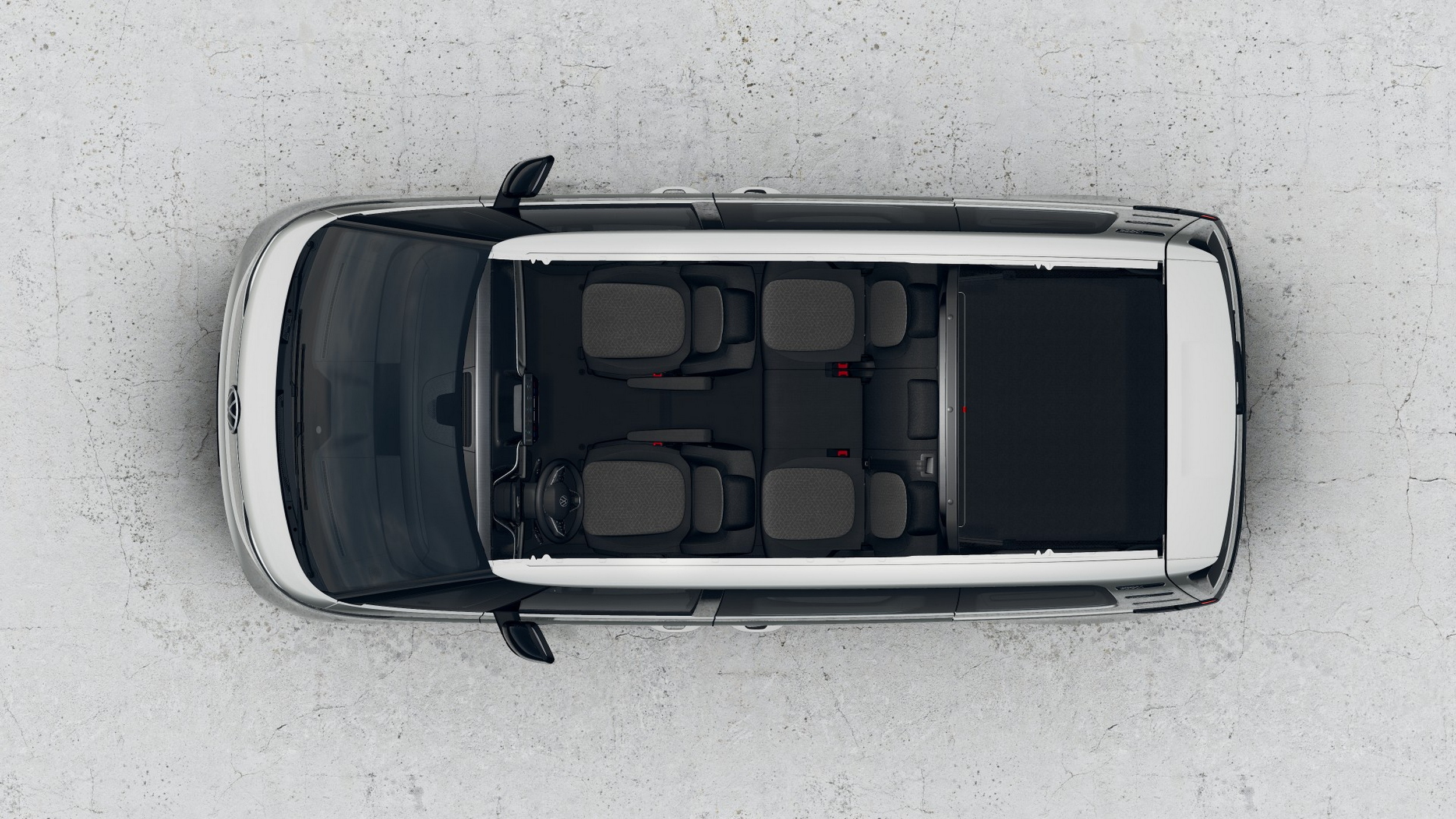
Developed in collaboration with long-time partner Snoeks Automotive in the Netherlands, the fixed partition gives owners a way to convert the rear of their five-seat electric van into a proper cargo area, without sacrificing everyday practicality.

More: VW Spruces Up ID.Buzz Cargo With Factory Bodykit And Fake Windows

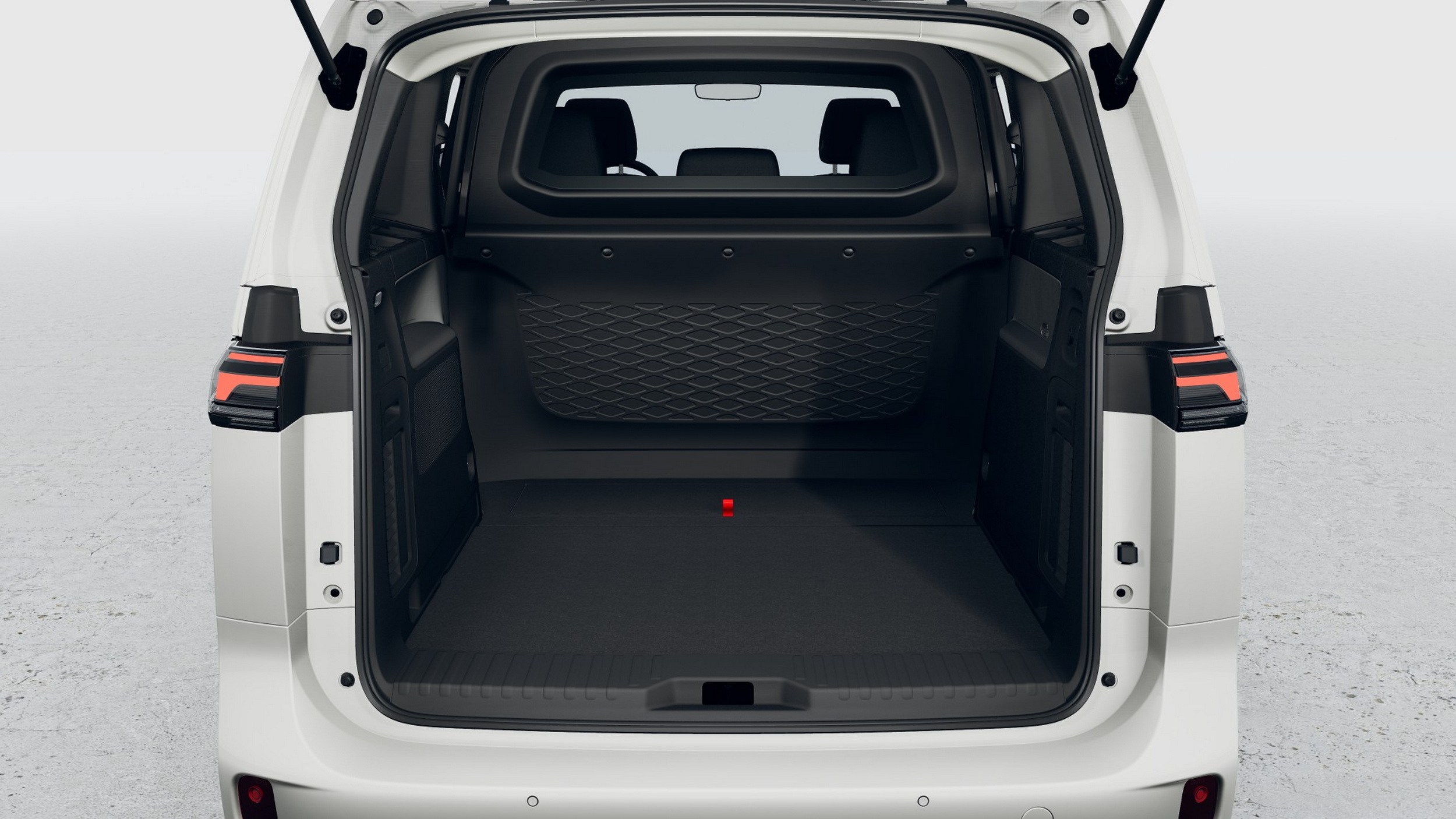
The new partition is mounted directly behind the second row and includes a window, preserving the ID. Buzz’s five-seat layout while creating a separate floor-to-ceiling cargo space much like the ID. Buzz Cargo variant.

Beyond safety, the partition keeps dirt, smells, and noise from the cargo area out of the cabin, while also helping the climate control system work more efficiently by reducing the volume of the space that needs to be heated or cooled.

 VW’s ID. Buzz Picks Up A Feature No Minivan Has Any Business Offering

The divider is made from Compax, a composite material known for being both lightweight and durable. To avoid a purely industrial feel, Volkswagen finished it in a high-grade soft-touch surface. There’s even a built-in storage compartment under the floor, designed specifically to hold the charging cable. Importantly, the setup doesn’t interfere with rear seatbelts or the operation of the side airbags.

More: VW’s New Van Shows Up In GTI Cosplay, But No One Told The Engine

The new accessory can be fitted to both the standard and long-wheelbase versions of the ID. Buzz. For the short wheelbase, it’s offered on the Freestyle, Pure, Energy, and Pro trims. For the longer model, it’s available on the Energy and Pro lines. In Germany, pricing starts at €1,856.40, or roughly $2,000 based on current exchange rates.

While the ID. Buzz remains part of VW’s European lineup, the electric minivan has skipped the 2026 MY in the US market, due to lower-than-expected demand. A return isn’t off the table, though. Volkswagen may bring it back in 2027 with more substantial updates aimed at attracting US buyers.

 VW’s ID. Buzz Picks Up A Feature No Minivan Has Any Business Offering

Volkswagen Commercial Vehicles

Toyota’s New EV Kei Vans Cost Three Times More Than Their Gas Versions

  • Toyota and Daihatsu launch electric kei vans in Japan.
  • Powertrain delivers 63 hp and up to 160 miles of range.
  • Prices are nearly triple those of gasoline equivalents.

After years of delays and development setbacks, Japan’s long-awaited electric kei vans from Toyota, Daihatsu, and Suzuki have officially made the leap from concept to production.

The three brands have confirmed the market launch of their collaborative battery-powered van lineup: the Toyota Pixis Van BEV, the Daihatsu e-Hijet Cargo, and the Daihatsu e-Atrai RS. Suzuki’s equivalent, the nearly identical e-Every, is also on the way. These production models arrive almost three years after the original trio debuted in prototype form back in 2023.

More: Daihatsu Hijet Is Available In 26 Configurations, Including Tiny Dump Trucks

On the outside, these new zero-emission vans mirror their combustion-engine siblings, which have been on sale since 2021. The main visual clue is the addition of a charging port on the front bumper.

Between the Toyota and Daihatsu versions, the only visible difference lies in the badges. The e-Atrai RS, Daihatsu’s more passenger-friendly variant, is sold exclusively in a single RS trim. It features black steel wheels, color-matched accents, chrome detailing, and power sliding doors on both sides.

\\\\\

Inside, the highlight is the new shifter, sourced from other Toyota models such as the Prius. Equipment includes heated front seats and auto A/C for greater efficiency, a USB port, an AC 100V outlet for powering external devices, and an enhanced preventing safety system called Smart Assist.

Practicality remains central, with an overhead compartment and smart storage solutions integrated throughout the cabin. More importantly, the move to electric power leaves both the cargo space and the 350 kg (772 lb) maximum load capacity untouched.

Fully Electric Powertrain

The kei vans are identical under the skin, riding on the Daihatsu New Global Architecture (DNGA) platform with a new powertrain developed jointly by Suzuki, Daihatsu and Toyota.

More: Daihatsu Built A Sleeper Kei Car With A Roll Cage And It’s Headed For Sale

A single rear-mounted electric motor (e-axle) produces 63 hp (47 kW / 64 PS) and 126 Nm (93 lb-ft) of torque. That matches the output of the turbocharged 660cc three-cylinder gasoline engine, with an added 35 Nm (26 lb-ft) of torque.

\\\\\

The floor-mounted lithium-ion battery pack has a capacity of 36.6 kWh, allowing a WLTC range of 160 miles (257 km) between charges. This is 36 miles (57 km) more than the targeted figure during development, and should be enough for urban deliveries. It is also slightly better than the 152 mile (245 km) range of the Honda N-Van e: which is their main competitor.

A full charge is completed in around 6 hours from a standard 6 kW outlet, while a 50 kW fast charger will take it to 80% in 50 minutes. Finally, the EVs are compatible with Vehicle-to-Home (V2H) technology.

More: For $8,500, Nissan Will Sell You A Kei Truck That Still Thinks It’s The ’90s

Engineers have also applied BEV-specific structural reinforcements to the chassis, promising better handling thanks to the lower center of gravity, and improved ride comfort thanks to the new trailing-link rigid-axle rear suspension and the optimised spring rates.

\\\\\\\\\\\\\\\\\\

A Premium for Zero Emissions

The jump to electric doesn’t come cheap. Both the Toyota Pixis Van BEV and Daihatsu e-Hijet Cargo start at ¥3,146,000 (about $20,300 at current exchange rates) in Japan, nearly three times the cost of their entry-level gasoline counterparts, which begin at ¥1,100,000 (roughly $7,100). The Daihatsu e-Atrai RS comes in higher still, starting from ¥3,465,000 ($22,400).

Production will take place at Daihatsu’s plant in Nakatsu, Japan. Toyota is targeting 50 sales per month, while Daihatsu expects to move around 300 units monthly.

Tesla Never Made A Cybervan, So A Russian Startup Did It First

  • Russian brand Russo-Balt unveils an electric van with Tesla flair.
  • The F200 uses a hand-welded stainless steel body and monocoque.
  • It looks similar to a Chinese van, but company claims it’s original.

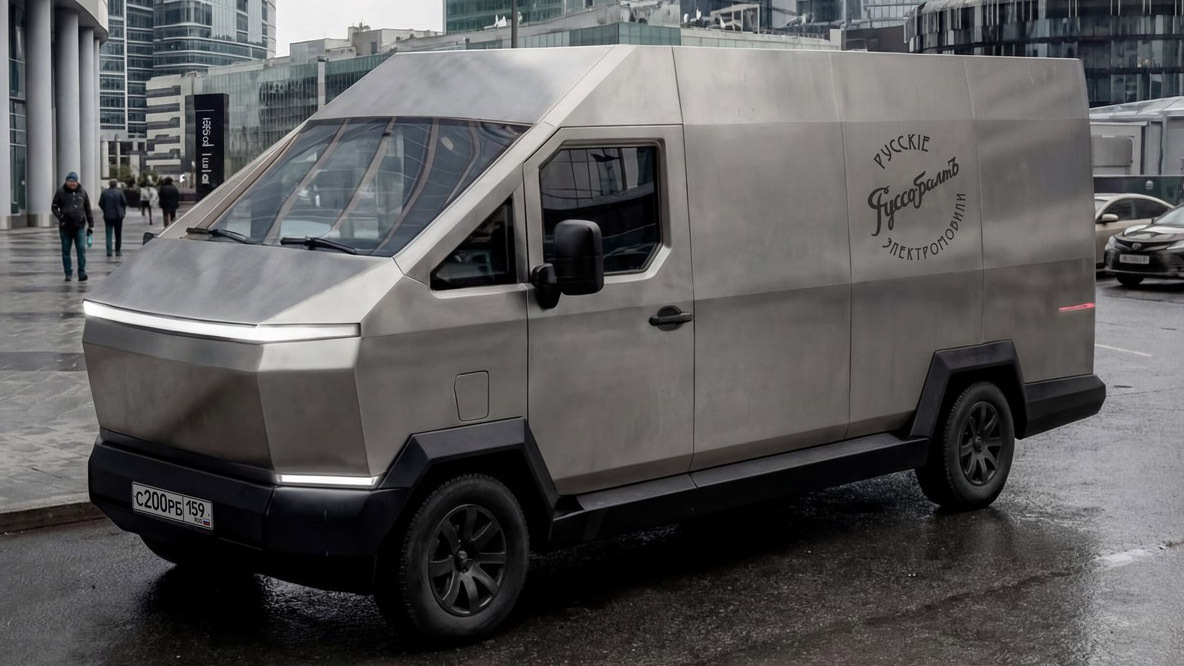
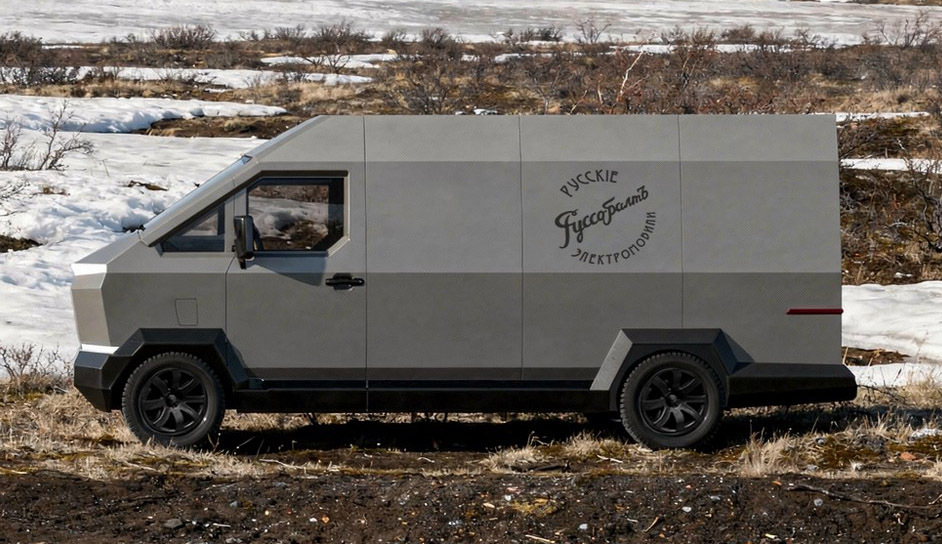
Tesla hasn’t created a Cybervan yet, but someone else just beat them to it. A Russian startup has stepped in with something that looks uncannily like a bulked-up Cybertruck, except it’s an electric van, and yes, it’s heading for production.

Meet the Russo-Balt F200, a stainless steel slab of a van with unmistakable Cybertruck flair. It’s the first model from a newly revived brand that traces its name back to a storied Russian automaker and railway carriage builder that operated between 1869 and 1918. Production plans are already in motion, with initial deliveries scheduled for January 2027.

More: Russia’s Cybervan Looks Like A Sci-Fi Tesla Truck That Gave Up

As we previously reported, the F200 has already been seen roaming public roads in Russia, confirming that it’s more than a rendering or vaporware project. Amusingly, the company even featured a link to our earlier coverage on its own website.

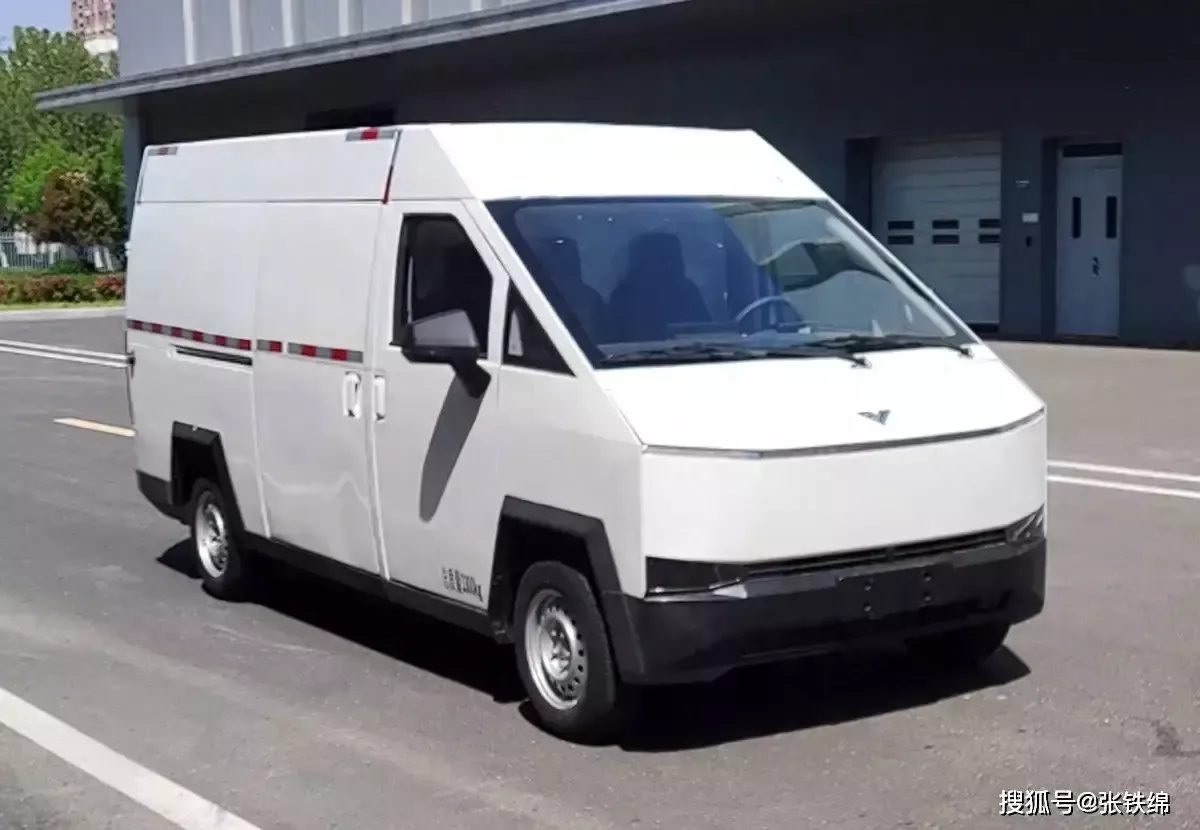
Although we pointed out a resemblance to China’s Weiqiao New Energy V90, Russo-Balt insists the F200 is its own creation and not a rebadge job.

What Is This Thing, Exactly?

 Tesla Never Made A Cybervan, So A Russian Startup Did It First
The Russo-Balt F200 above, compared to China’s Weiqiao V90 below.
 Tesla Never Made A Cybervan, So A Russian Startup Did It First

The body panels are shaped from unpainted stainless steel, just like the Cybertruck, welded together by hand. Despite the raw-metal finish, buyers can personalize the look with optional polyurethane wraps, available in a full range of colors and graphics.

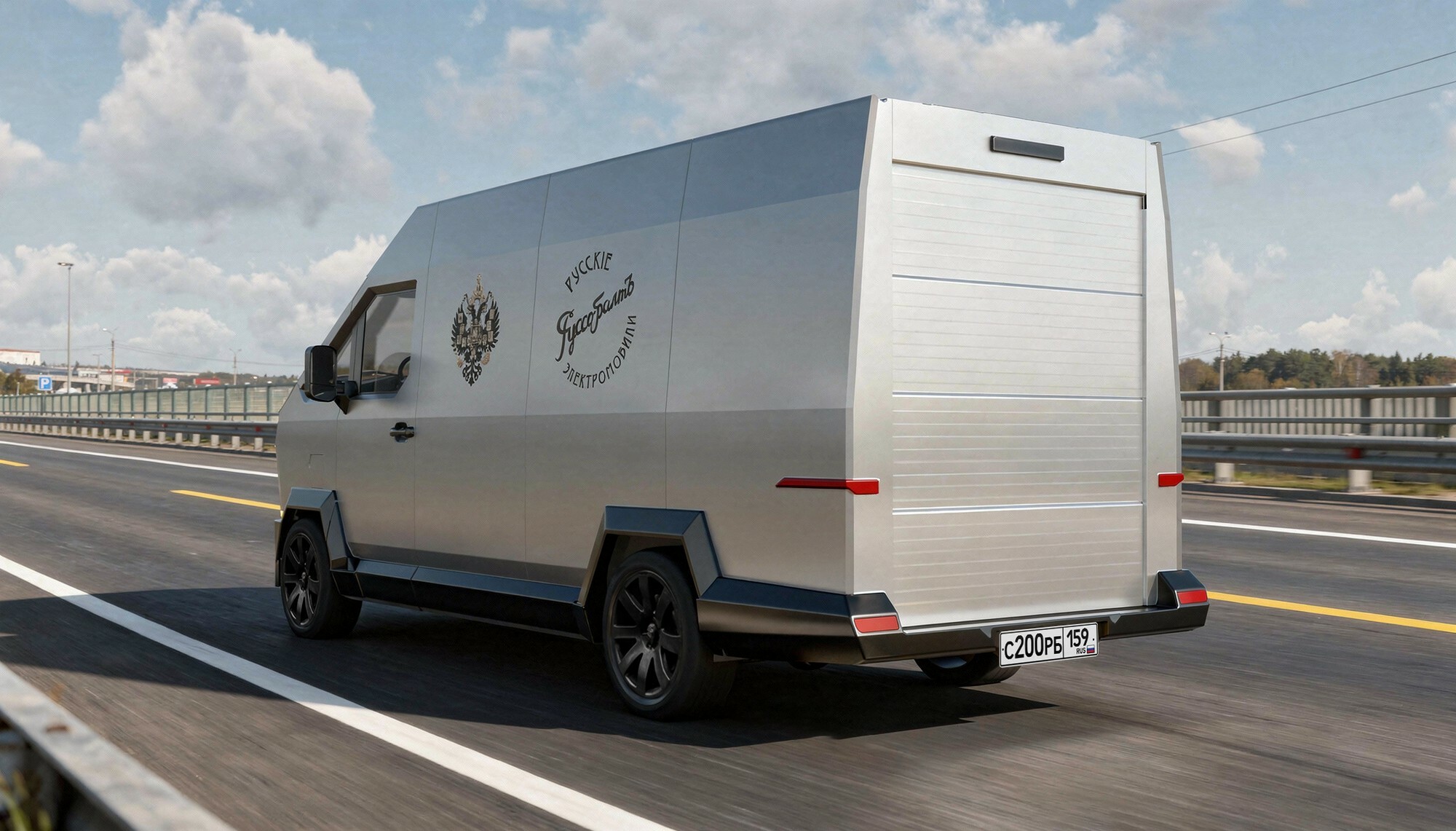
From its sharp creases to the flat windows and squared-off arches, the F200 borrows more than a few cues from the Cybertruck. Full-width LED lighting front and rear, plus a tailgate design that recalls the styling of Tesla’s electric truck bed cover, round out the visual nods.

While most vans of this size ride on a ladder-frame chassis, the F200 uses a monocoque chassis. This setup supports a payload of up to 1,000 kg (2,205 pounds), which appears to be in line with commercial expectations.

100-Year Warranty

 Tesla Never Made A Cybervan, So A Russian Startup Did It First

According to the Russian startup, the vehicle falls under the international L3H3 classification and measures 5,950 mm (234.3 inches) in length, 2,000 mm (78.7 inches) in width, and 2,550 mm (100.4 inches) in height, tall enough for most people to stand upright inside.

The standard build includes a 100-year body warranty for the stainless steel panels, which sounds a bit rich for a van that hasn’t hit the road yet in full production form.

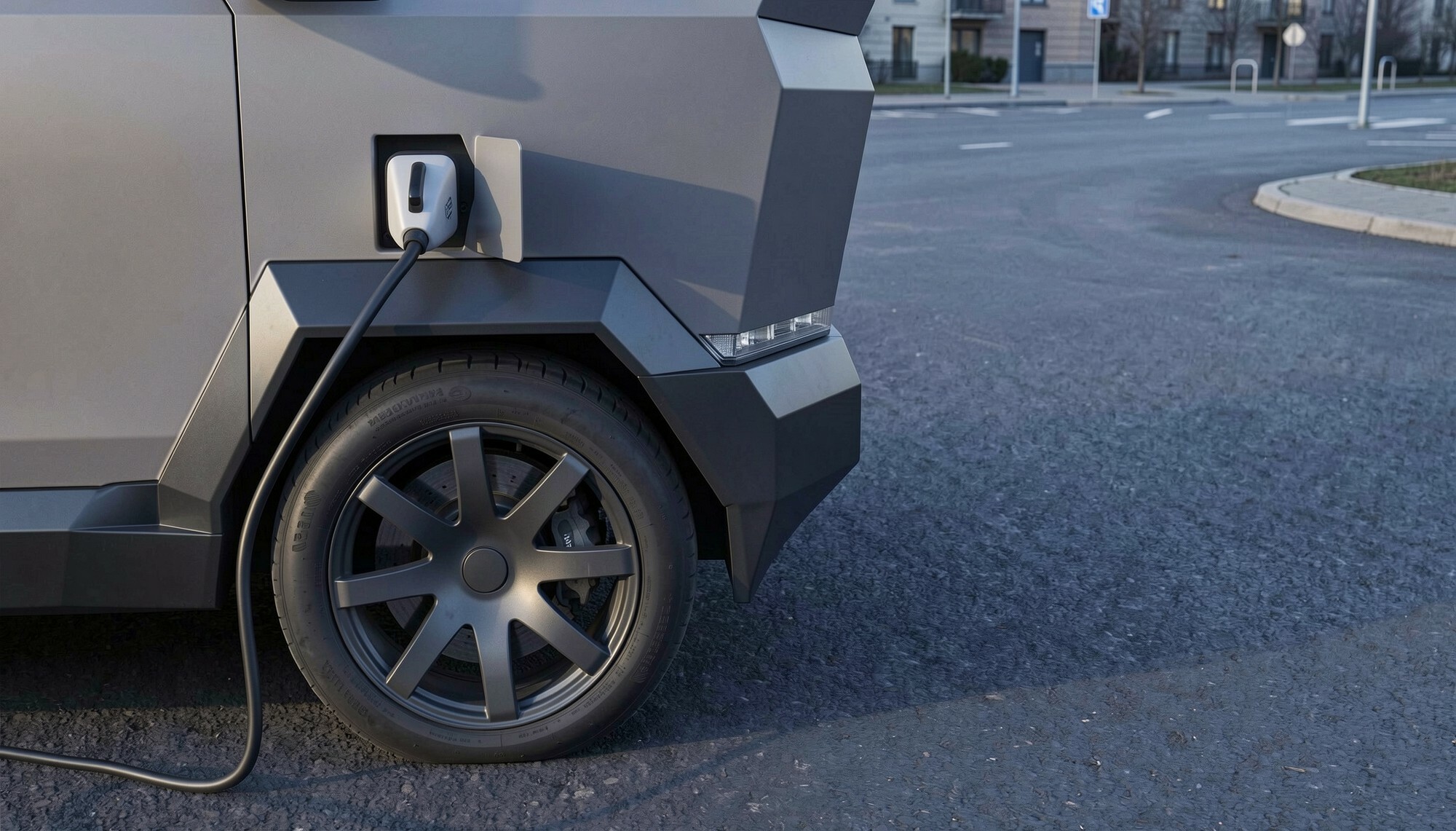
Power comes from a single electric motor with 200 hp sent to the front wheels. A 115 kWh battery pack provides a claimed range of 400 kilometers (249 miles), with DC fast charging supported via a port on the front fender.

How Much Does it Cost?

 Tesla Never Made A Cybervan, So A Russian Startup Did It First

Pricing is set at 6.5 million rubles, roughly $85,200 at current exchange rates. A refundable deposit of just 10,000 rubles (around $131) secures a place in the production queue, though the total planned volume hasn’t been disclosed.

More: Ukraine Turns A BMW 7-Series Into A Luxury Russia-Fighting Rocket Launcher

Standard equipment includes ABS, ESP, climate control, rear air suspension, and a 360-degree camera setup with live streaming capability. Virtually every surface that could be warmed, including seats, steering wheel, mirrors, even the windshield wipers, is heated. This is a vehicle built for Russian winters, after all.

Infotainment is handled by a 14-inch touchscreen, which displays vehicle settings and offers integrated entertainment from Russian platforms such as Rutube, VKvideo, and Yandex.

More to Come from Russo-Balt

 Tesla Never Made A Cybervan, So A Russian Startup Did It First

Interestingly, the team behind the F200 claims prior experience in manufacturing stainless steel water dispensers, and they plan to carry over the same material and fabrication expertise to the van. Production will be on a made-to-order basis.

A second model, the F400, is already in development. This one will feature a range-extending gas engine and all-wheel drive via dual electric motors, combining for a projected 400 horsepower. It will also add front air suspension, in addition to the rear air spring setup already included on the F200. Pricing details have yet to be announced.

\\\\\\\\\\\\

Russo-Balt

❌
❌