Normal view

There are new articles available, click to refresh the page.
Yesterday — 26 February 2026Main stream

Hyundai’s Chinese 2026 Elexio Gets So Much Right, And That’s The Frustrating Part | Review

PROS ›› Good tech, comfortable ride, better than EV5 CONS ›› Poor ADAS, pricey, inefficient, slow-charging

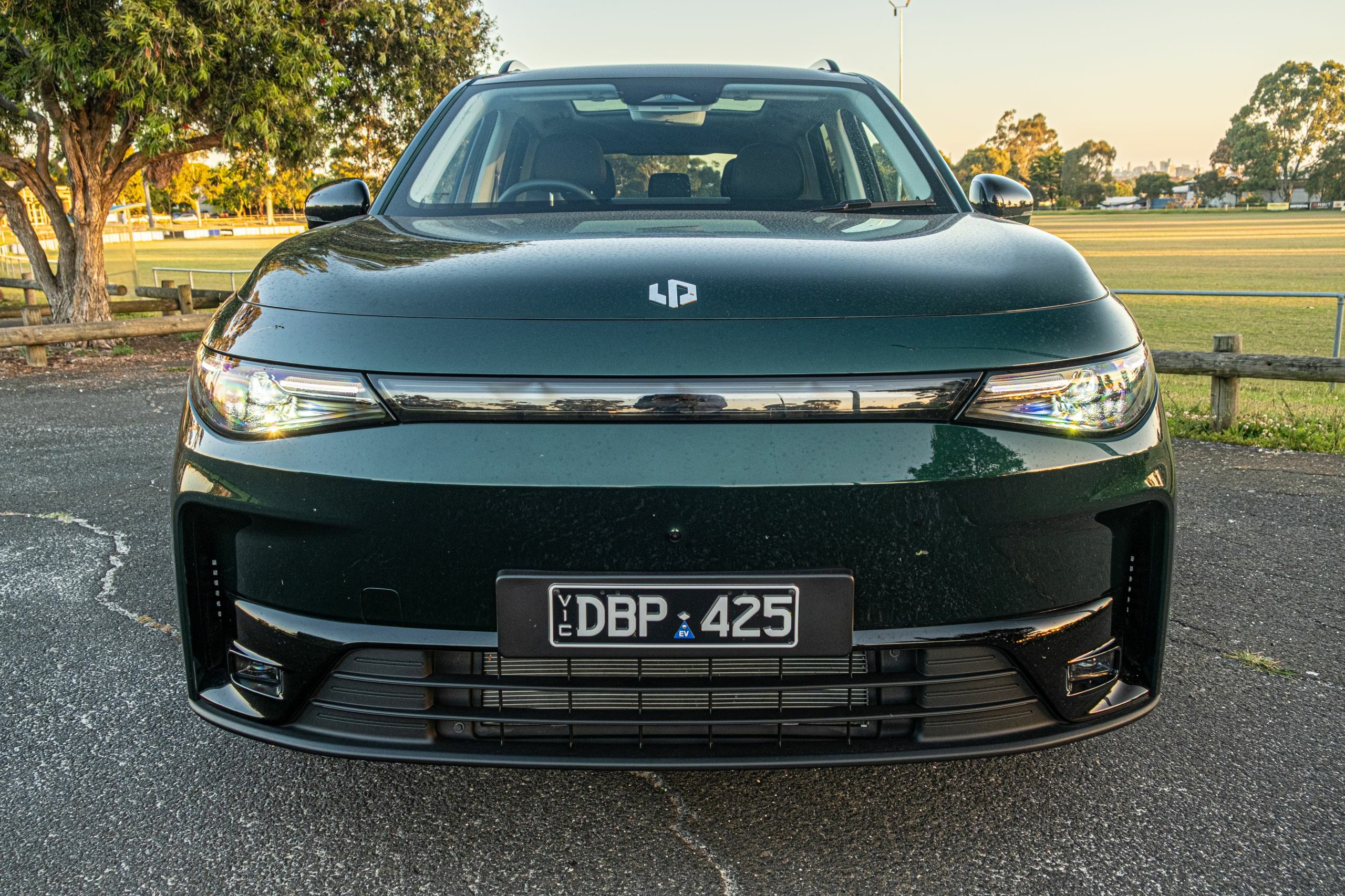
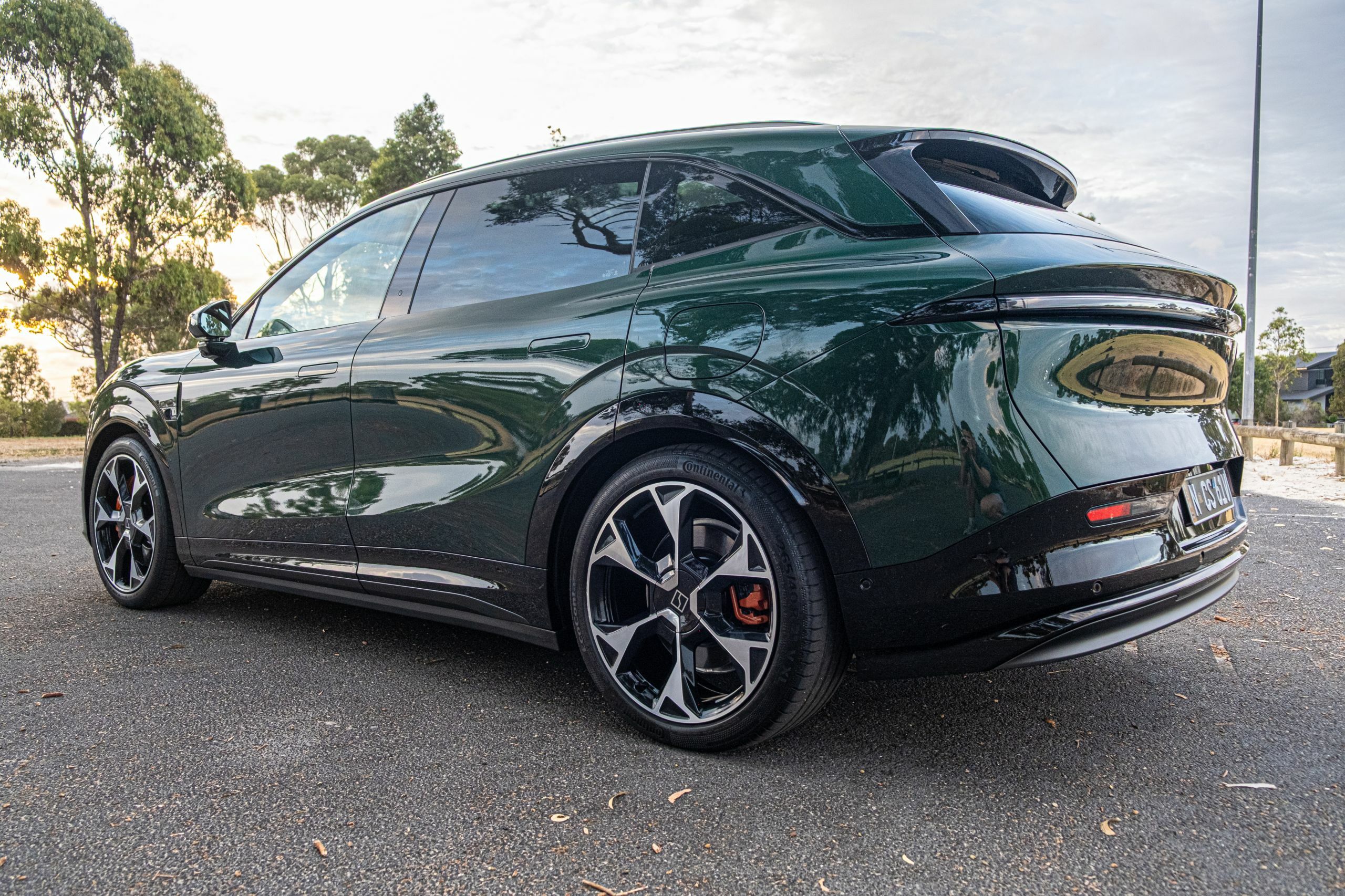
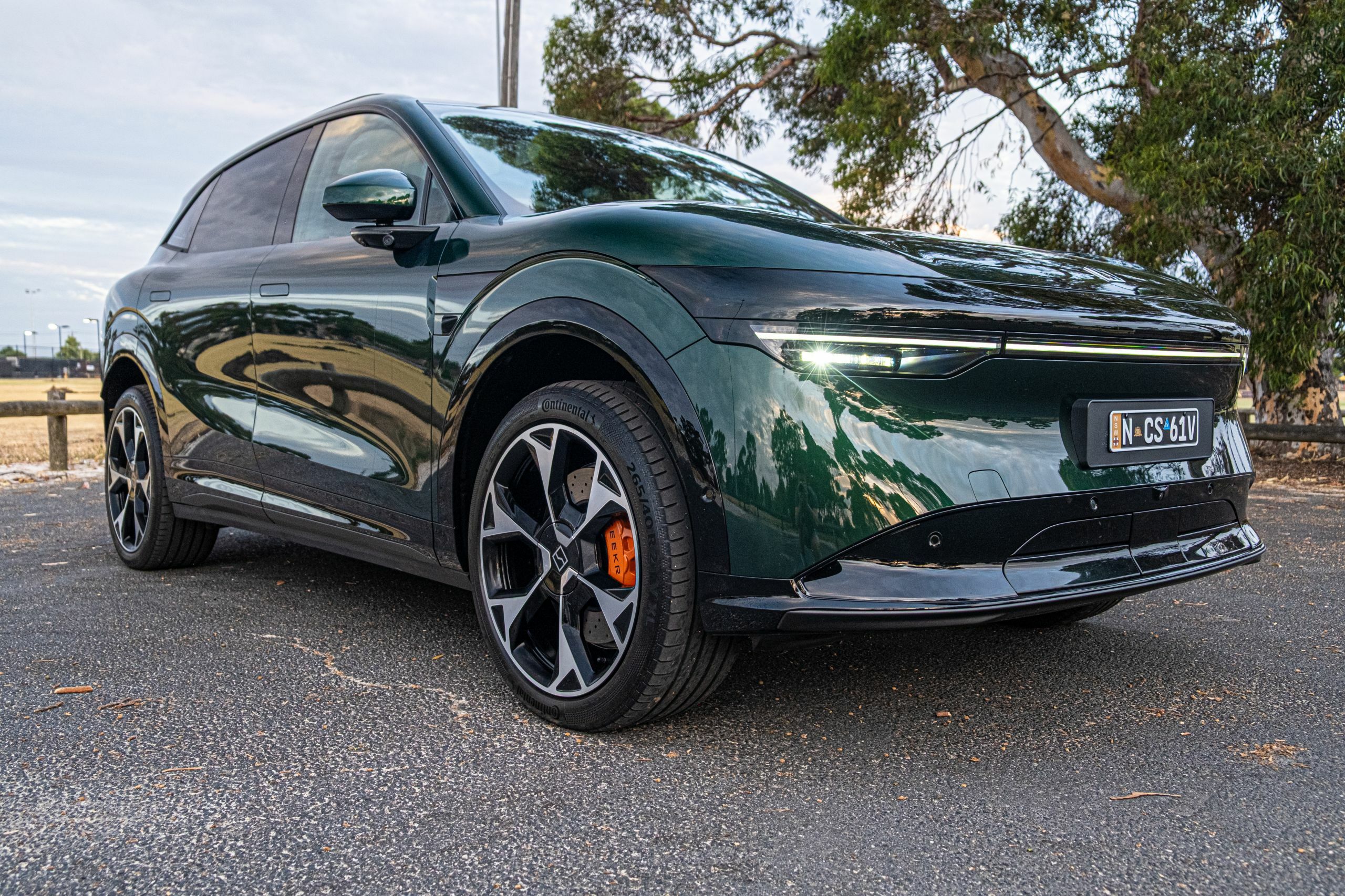
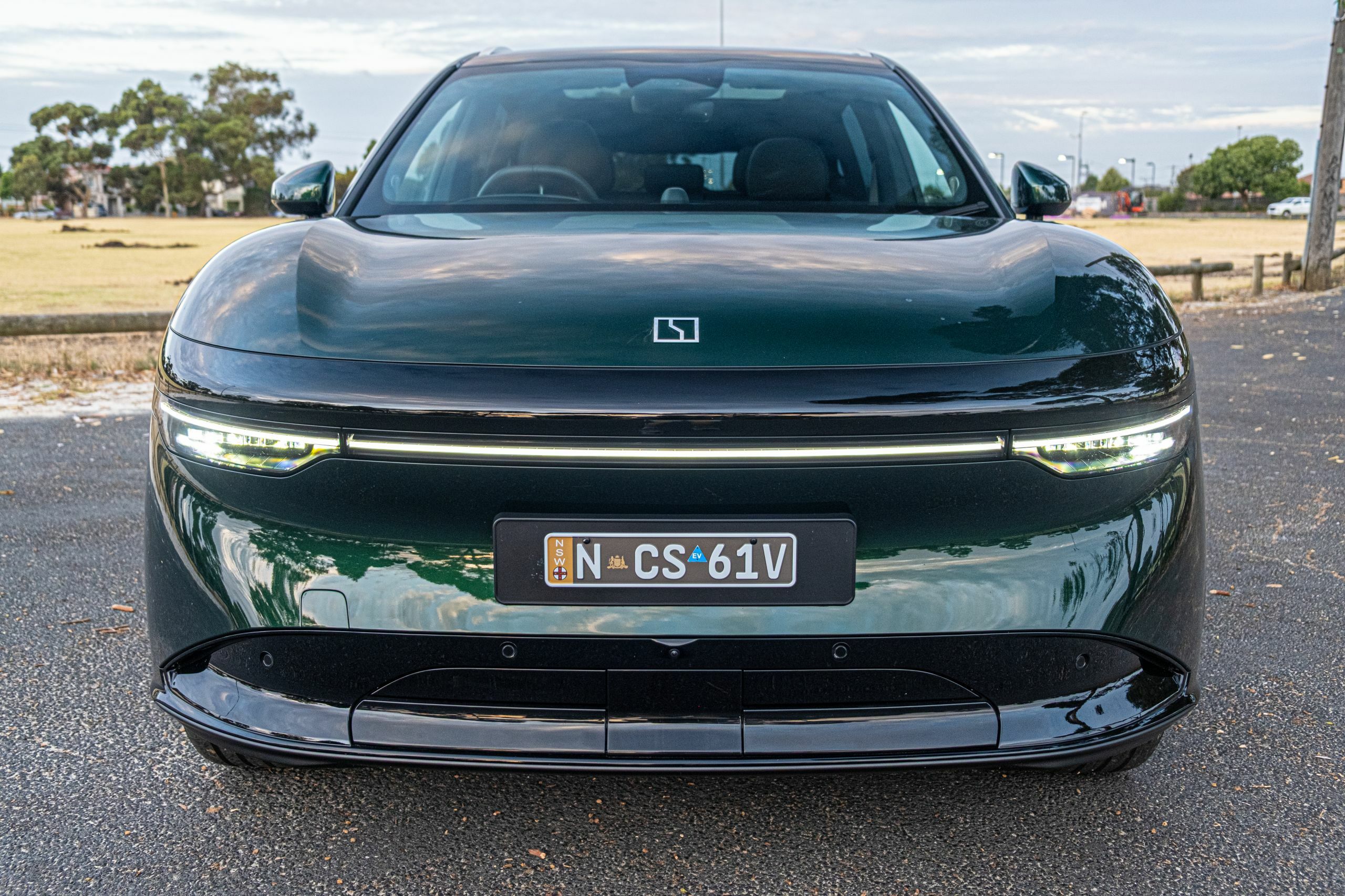
Electric vehicles make up just over 8 percent of new car sales in Australia, so they are hardly dominant. Yet the competitive noise has increased dramatically in recent years, thanks largely to a surge of new Chinese brands. Hyundai’s counterpunch is the Elexio, its latest EV and one aimed squarely at that fast-growing crowd.

The Elexio is unlike any other electric Hyundai so far. Crucially, it was not developed entirely in-house, but rather brought to life through its joint venture partnership with BAIC Motors.

Review: The 2026 Ioniq 9 Calligraphy’s Biggest Threat Is Hyundai Itself

This means it is built in China, tapping into the country’s vast manufacturing scale and efficiency, paired with the engineering experience and brand weight of a legacy player like Hyundai. When it was revealed last year, it looked set to remain a China-only model. Instead, it has now landed in Australia, and we were among the first to get behind the wheel earlier this month.

QUICK FACTS
› Model:2026 Hyundai Elexio Elite
› Starting Price:AU$61,990 ($44,000) as tested
› Dimensions:181.6 L x 73.8 W x 65.8 in H (4,615 x 1,875 x 1,673 mm)
› Wheelbase:108.2 in (2,750 mm)
› Curb Weight:2,105 kg (4,640 lbs)
› Powertrain:Single electric motor / 88.1 kWh battery
› Output:215 hp (160 kW) / 236 lb-ft (320 Nm)
› 0-62 mph~8.0 seconds
› Transmission:Single-speed
› Efficiency:19.5 kWh/100 km as tested
› On Sale:Now
SWIPE

According to Hyundai, the Elexio has been designed to neatly slot between the Kona EV and Ioniq 5 in its line-up, serving as an all-electric alternative to the Hyundai Tucson. It’s Hyundai’s answer to popular competitors like the Tesla Model Y, Kia EV5, BYD Sealion 7, and Xpeng G6, and this is reflected in the price.

Can It Compete On Price?

\\\\\\\\\\\\\\\\\\\\\\\\\\\\\\\\\\\\\\\\\\\\\\\\\\\\\\\\\\\\\\\\\\\

Hyundai Australia

Two versions will be offered: the base Elexio and the flagship Elexio Elite. Prices for the base version will start at AU$58,990 (US$41,900) before on-road costs, while the Elite will be priced from AU$61,990 (US$44,000). However, the Elite will be available for AU$59,990 (US$42,600), including all on-road costs, in a limited-time deal running until the end of March.

Hyundai is predicting big things for the Elexio and expects it to be its best-selling EV in Australia. Achieving this won’t be easy. The Kia EV6 undercuts the Elexio at AU$56,770 (US$40,300), the Tesla Model Y Premium is available from AU$58,900 (US$41,800), and the BYD Sealion 7 Premium is available from AU$54,990 (US$39,000). The superb Zeekr 7X also undercuts it at AU$57,900 (US$41,100).

Big Battery, Modest Charging Speeds

 Hyundai’s Chinese 2026 Elexio Gets So Much Right, And That’s The Frustrating Part | Review

So, what do you get for your money in the world of the Elexio? Like Hyundai’s Ioniq models, and unlike the Kia EV5, the Chinese-built Elexio uses the familiar E-GMP platform. However, it doesn’t have an 800-volt architecture like the Ioniqs, instead using a 400-volt system.

With this in mind, charging the battery pack 10-80 percent on a 150 kW charger, with peak speeds in the mid-120s, will take 38 minutes. This is slightly slower than the Kia EV5, which takes 36 minutes, but whereas it has a compact 64.2 kWh battery, the Hyundai has a much larger and more practical 88.1 kWh unit.

This battery powers a front-mounted electric motor with 160 kW (215 hp) and 310 Nm (236 lb-ft). Hyundai quotes a combined efficiency of 18.2 kWh/100 km, which is okay, but certainly not class-leading.

A Digital-First Cabin

\\\\\\\\\\\\\\\\\\\

Photos Brad Anderson/Carscoops

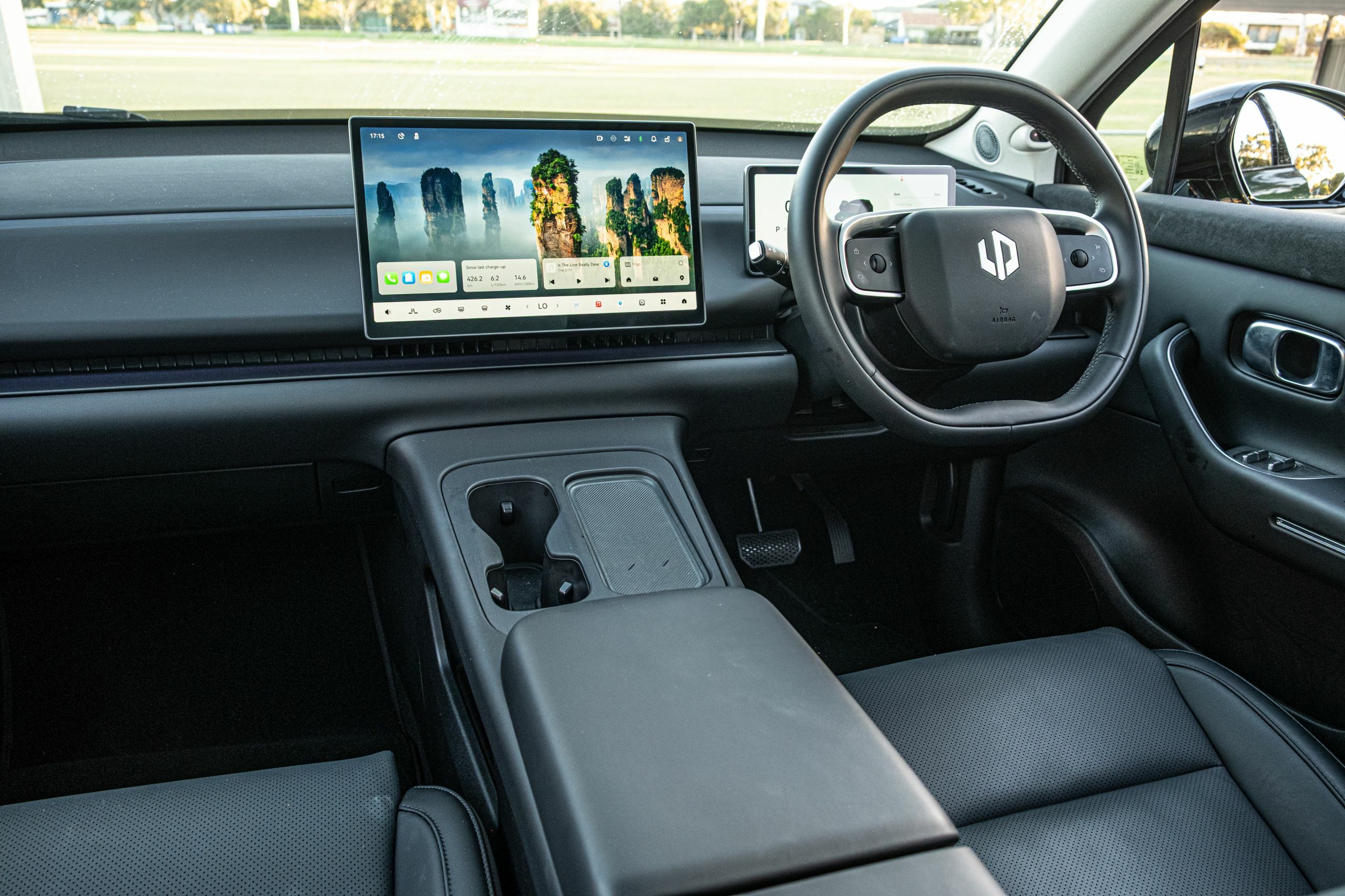
We only sampled the Elexio in flagship Elite trim, so first impressions came fully loaded. Stepping into the cabin for the first time, it is immediately clear this is not your typical Hyundai interior.

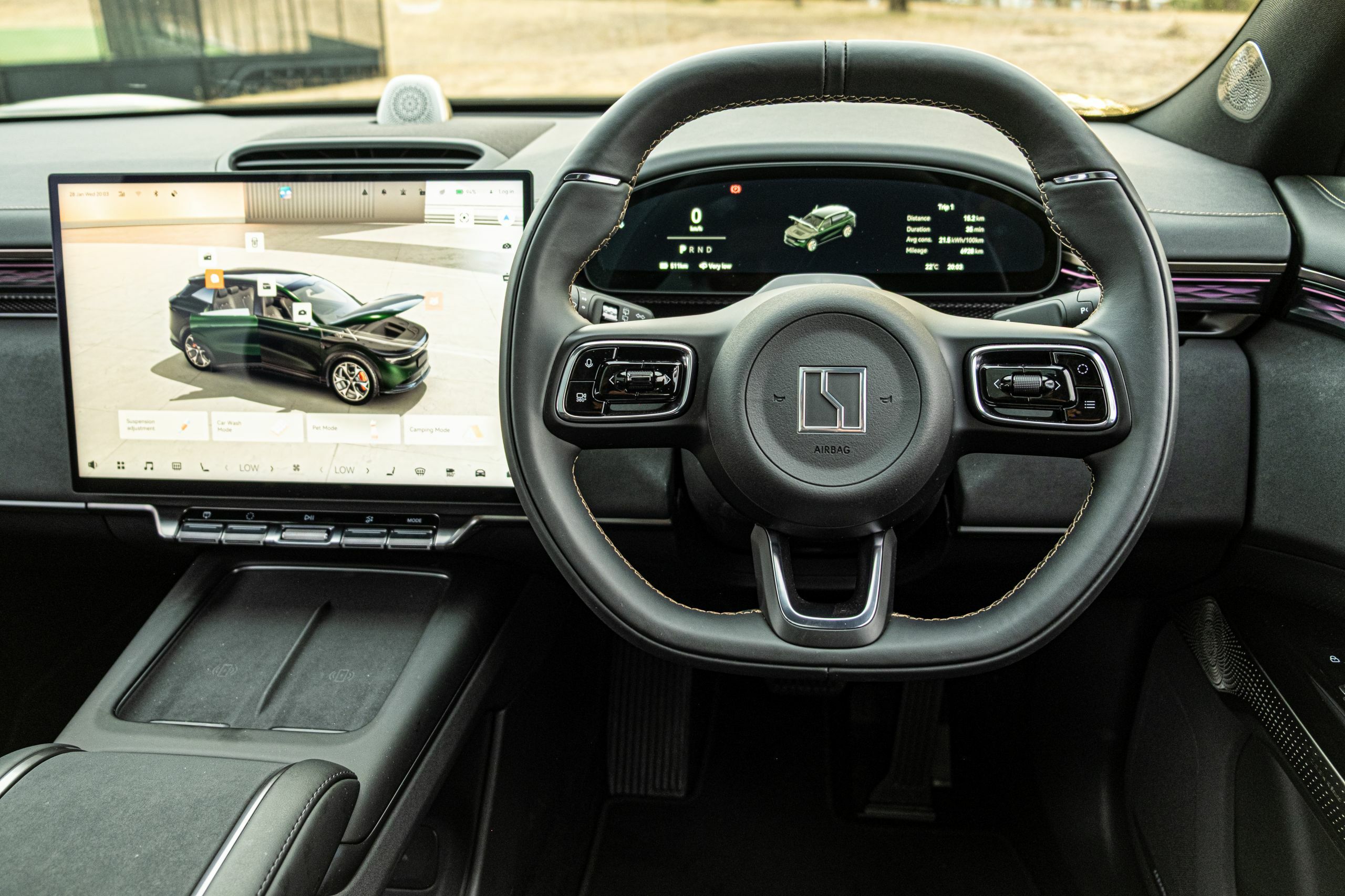
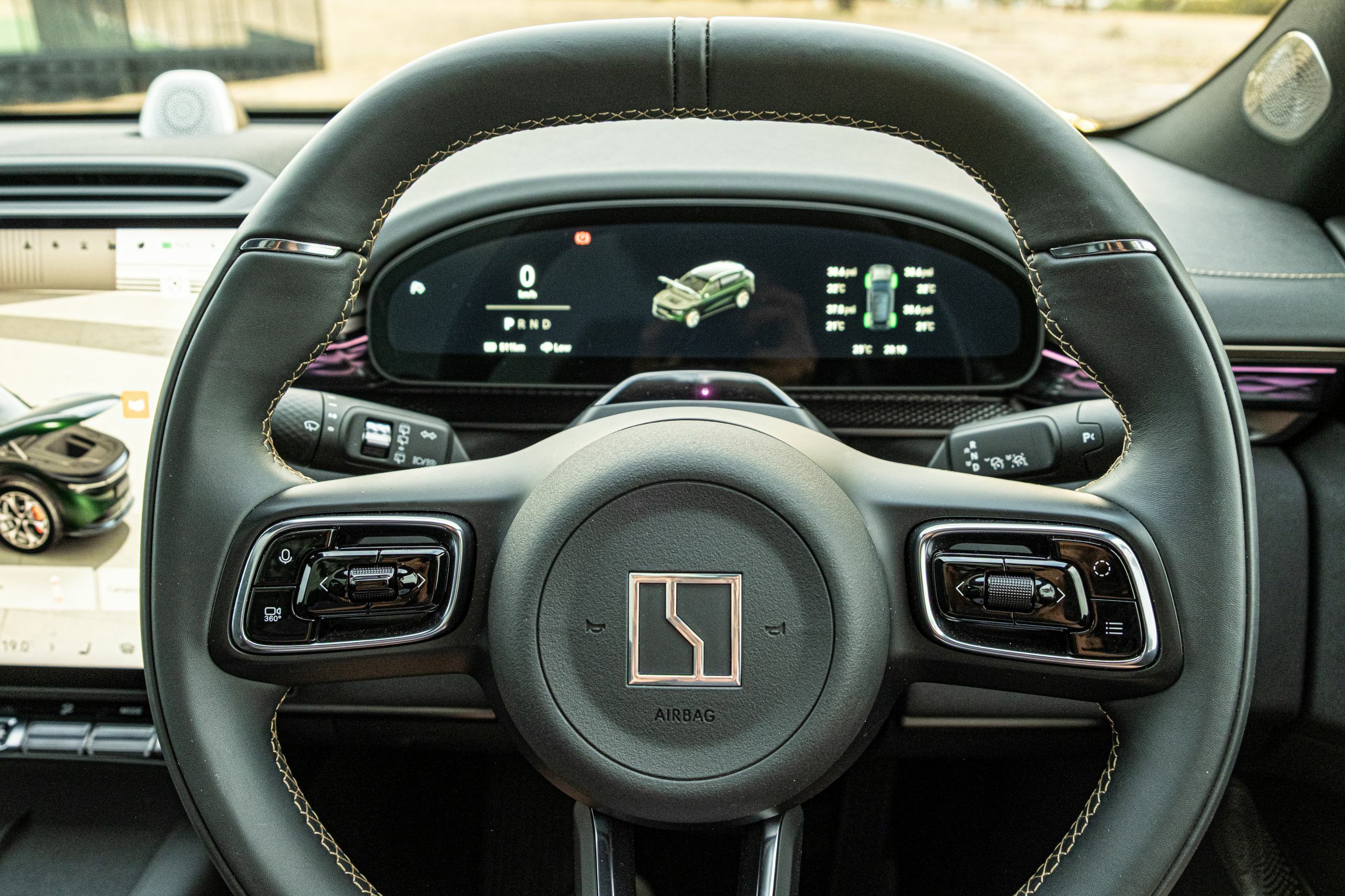
Dominating the interior is a massive widescreen 27-inch display, encompassing both the central infotainment display and a display for the passenger. This screen houses Hyundai’s new Connect-C infotainment system and runs on Android Automotive with a powerful Snapdragon 8295 processor and Unreal 3D graphics engine.

While there are several cars on sale in China with a similar passenger and infotainment screen, this is one of the first implementations of a display like this in a Western market. It looks great, providing excellent colors, clarity, and response. However, it’s not particularly practical to use, especially when you’re driving.

\\\\\\\\\\\\\\\\\\\\\

Photos Brad Anderson/Carscoops

I am quite tall with long arms, yet adjusting the climate controls or digging into vehicle settings on the move meant leaning forward and stretching almost to the limit. It should not feel like a light workout just to change the temperature. The more traditional screens in other current Hyundai models are much easier to reach, as are the tablet-like displays found in many of the Elexio’s rivals.

Read: Hyundai’s New EV Costs Over Twice As Much In Australia As In China

On the plus side, the new Connect-C system is good and is far more modern than Hyundai’s outgoing software. It has a much smartphone-like layout with convenient shortcuts on the driver’s side.

In a Hyundai first, a traditional gauge cluster has been replaced by a head-up display. In photos, it doesn’t look like a HUD at all, but rather a physical cluster positioned at the base of the windshield. In reality, it is a true head-up display, albeit it projects onto a small black area of the windshield, providing better contrast than HUDs that project onto normal glass.

The obvious downside of this is that if you chip or crack the windshield, you probably won’t be able to buy a generic HUD-compatible replacement, but rather need one from Hyundai with this black element.

Quality And Space

 Hyundai’s Chinese 2026 Elexio Gets So Much Right, And That’s The Frustrating Part | Review

The rest of the cabin is quite minimal, as many EVs are today. In terms of fit and finish, it feels on par with some Chinese rivals, like the BYD Sealion 7, and is certainly more premium than the Kia EV5. There’s soft-touch suede on the dashboard and door panels, as well as heated and ventilated front seats, and plenty of leather. Dual wireless chargers are also standard on the Elite.

Overall, space and comfort are good, whether that be in the front row or the second-row. While the Elexio only has a wheelbase of 2,750 mm (108.2 inches), 5 mm (0.1 inches) less than the Tucson and 250 mm (9.8 inches) less than the Ioniq 5, there’s still plenty of legroom for rear passengers, and that includes adults. Cargo space is decent, rated at 506 liters (17.8 cubic-feet) or 1,540 liters (54.3 cubic-feet) with the rear seats folded 60/40 flat.

Disappointingly, neither Elexio model has a panoramic glass roof, which is common in electric SUVs at this price point, nor a frunk, even though there’s plenty of space for one.

How Does It Drive?

\\\\\\\\\

Photos Brad Anderson/Carscoops

Driving the Elexio revealed that it is a solid performer, and it does some things well. However, it fails to stand out from the competition and could benefit from some tweaks to lift it to a new level.

As any EV should, the Elexio’s powertrain is smooth and quiet, providing more than enough grunt for everyday driving duties, whether that be in urban settings or on the highway.

Review: Why Kia’s New EV5 SUV Makes More Sense Than A Model Y

With 160 kW (215 hp) and 310 Nm (236 lb-ft), the Elexio has exactly the same power as the front-wheel drive Kia EV5. Crucially, it doesn’t suffer from the same horrible torque steer that the EV5 does. In fact, there’s no torque steer whatsoever, which is a great thing. However, like the EV5, the Elexio does love to spin up its inside front wheel should you get greedy with the throttle and play around with the traction control.

 Hyundai’s Chinese 2026 Elexio Gets So Much Right, And That’s The Frustrating Part | Review

Efficiency is not so good. After several stints behind the wheel of the Elexio, we averaged 19.5 kWh/100 km, which is quite poor, particularly given that we averaged 20.5 kWh/100 km in the Sealion 7 Performance, and it has an extra 230 kW (308 hp) and 380 Nm (280 lb-ft) of torque.

Like other Hyundai and Kia EVs, the Elexio has paddle shifters behind the steering wheel to adjust the level of brake regeneration, which is something every EV should have. I spent most of my time in the one pedal i-Pedal mode, with it bringing the SUV to a smooth and predictable stop every time. The transition between the mechanical brakes and the regen is also imperceptible, so kudos to Hyundai for that.

The brand says that, like most of the cars it sells in Australia, the Elexio has been specifically tuned for local roads by teams of engineers from South Korea. I was pleasantly surprised with the Elexio’s ride, finding it to be comfortable and softer than many other EVs, which can be too firm and harsh over bumps.

Software Still Finding Its Feet

\\\\\\\\\\\\\\

Photos Brad Anderson/Carscoops

In addition to tweaking the suspension for Australia, Hyundai insinuated during a press briefing that the Elexio’s advanced driver assistance system have also been set up for local conditions. Despite this, further refinements are needed.

During long highway jaunts, there were several instances when the lane-keeping assist and lane-centering functions failed to recognize clearly-marked lines, causing it to slowly drift into adjacent lanes. In addition, I experienced some slow ping-ponging between lane markings. This is odd as the dozens of other Hyundai and Kia models I’ve tested in recent years all have great lane-keeping systems, keeping you locked in the center of the lane on well-marked highways.

Review: 2026 Zeekr 7X Performance Is Proof That Tesla Isn’t The Benchmark Anymore

In addition, there was an instance where I had the adaptive cruise control enabled on a 100 km/h (62 mph) country road when suddenly, the Elexio suddenly braked to 75 km/h (47 mph) despite there being no object or car in front of me. I suspect the large semi-truck traveling in the opposite direction in the lane next to me fooled the system.

Like so many other new cars built in China, the Hyundai Elexio’s driver monitoring system is overactive, ringing the moment you yawn or take your eyes off the road. Additionally, turning it offer requires multiple steps through the menu, which is frustrating.

Verdict

\\\\\\\\\\\\\\\\

Photos Brad Anderson/Carscoops

The Hyundai Elexio is definitely better than the Kia EV5, which has quickly gained popularity in Australia and is the best-selling EV from a legacy brand in the local market. With this in mind, there’s a good chance that the Elexio should also sell well for Hyundai, and it’ll likely attract many shoppers who were previously interested in the Kona EV or Ioniq 5.

However, it may be prudent for buyers to exercise some patience before getting an Elexio. Earlier this year, Hyundai slashed prices of the Inster by AU$7,288 ($5,200), and reduced the Kona Electric by more than AU$13,000 ($9,200). If internal sales targets are missed, similar price adjustments for the Elexio would hardly be surprising.

Just as importantly, Hyundai’s latest EV still needs a few software refinements, particularly to its ADAS, before it feels like the clear choice in an increasingly crowded segment.
\\\\\\\\\\\\\\\\\\\\\\\\\\\\\\\\\\\\\\\\\\\\\\\\\\\\\\\\\\\\\\\\\\\\\\\\\\\\\\\\\

Photos Brad Anderson/Carscoops

Before yesterdayMain stream

The 2026 Leapmotor C10 REEV Fixes The Biggest EV Problem Only To Fail At The Basics | Review

PROS ›› Smooth powertrain, generous range, well-priced CONS ›› Tech gremlins, subpar AC, inconsistent ADAS

Range extenders are enjoying a bit of a renaissance at the moment. Early examples like the Chevrolet Bolt and BMW i3 gave the world a preview of what these powertrains were capable of, but they largely fell out of favor in the middle of the last decade as carmakers shifted their focus to fully electric models.

Review: Before You Buy A Small SUV, Look At Kia’s 2026 K4 Turbo Hatch First

Things have changed. Thanks in large part to several major Chinese manufacturers, range-extender EVs are becoming more common and are even being adopted by legacy brands like Ford and Hyundai. Last year, Leapmotor, Stellantis’ Chinese partner brand, joined the movement by adding a range-extender option to its mid-size C10 SUV, and we had the chance to live with it over the Christmas period.

QUICK FACTS
› Model:2026 Leapmotor C10 REEV Ultra Hybrid
› Price:AU$47,888 (US$33,500) as tested
› Dimensions (L x W x H):186.5 x 74.8 x 66.1 in (4,739 x 1,900 x 1,680 mm)
› Wheelbase:111.2 in (2,825 mm)
› Curb Weight:1,950 kg (4,299 lbs)
› Powertrain:1.5-liter four-cylinder / Single electric motor
› Output:212 hp (158 kW) / 236 lb-ft (320 Nm)
› 0-62 mph:8.5 seconds
› Transmission:Single speed
› Efficiency:14.5 kWh/100 km, 6.1 l/100 km as tested
› On Sale:Now
SWIPE

In markets where charging infrastructure is still patchy and long-distance driving is simply part of life, the range-extender idea holds up. You get the smooth, instant response of an EV without planning your schedule around charging stops.

On paper, the C10 REEV arrives at the right moment, pitching itself as sensible rather than compromised. In reality, while the powertrain delivers on that promise, the experience is undercut by a collection of nagging tech issues that chip away at its appeal.

What Changes With The REEV?

\\\\\\\\\\\

Photos Brad Anderson/Carscoops

The first Leapmotor I tested last year was the regular C10 EV, equipped with a 69.9 kWh battery and a rear-mounted electric motor with 215 hp and 236 lb-ft (320 Nm). The C10 REEV is quite a bit different.

Review: I Drove Stellantis’ Chinese Electric SUV That Rivals Tesla For Just $30K

Under the hood sits a 1.5-liter four-cylinder that never drives the wheels, serving solely as a generator to charge the battery pack. That battery is a 28.4 kWh unit powering a rear-mounted electric motor rated at 158 kW (212 hp) and 320 Nm (236 lb-ft) of torque.

Leapmotor says the C10 REEV can travel up to 1,150 km (715 miles) between top-ups and charges, average 15.2 kWh/100 km in electric operation, and has a quoted fuel consumption of 0.9 l/100 km (261 US mpg).

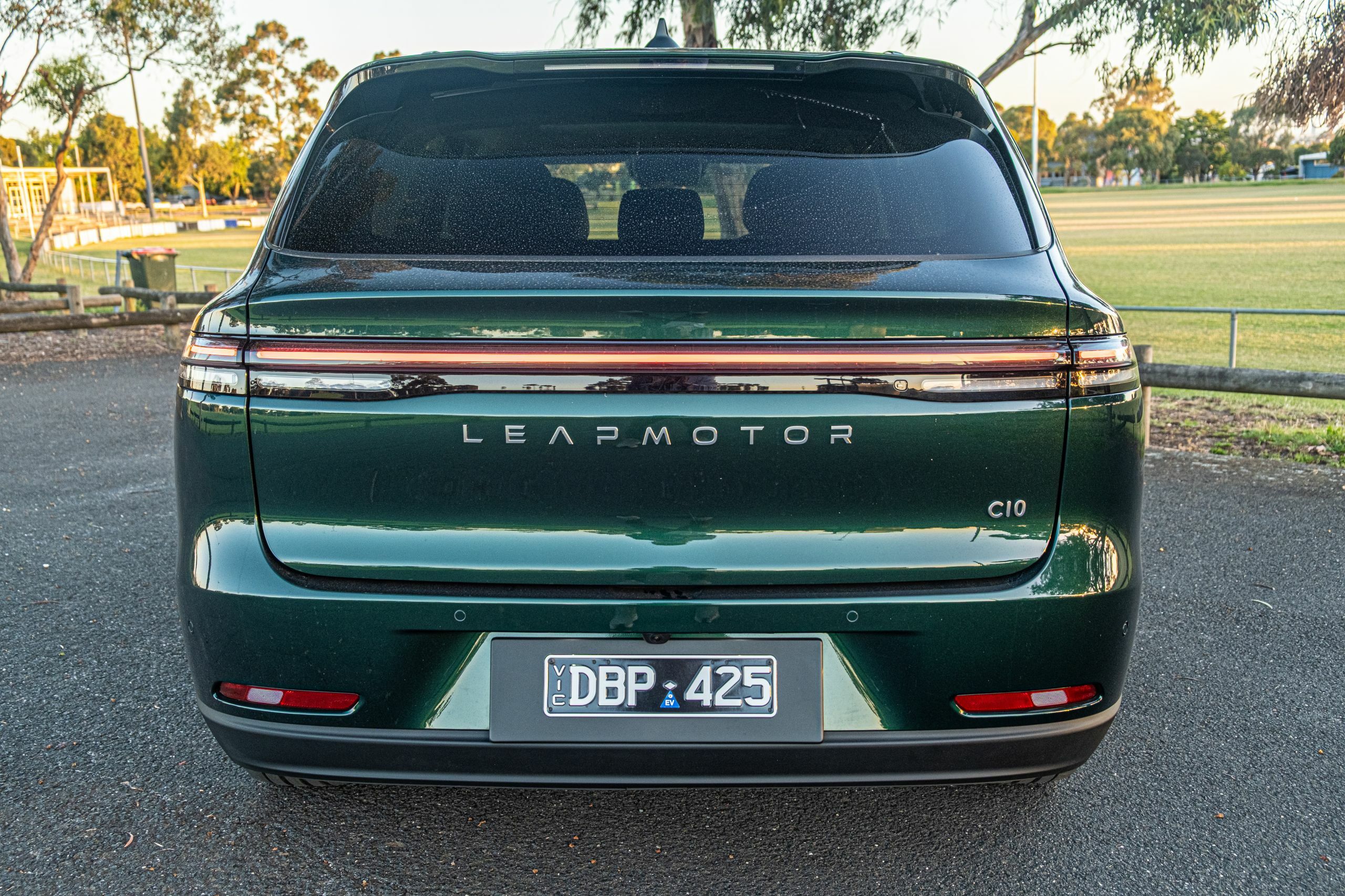
Visually, there’s nothing differentiating the C10 REEV from the EV. That means it looks as uninspiring as the EV, with not even the slightest bit of personality.

How’s The Interior?

\\\\\\\\\\\\

Photos Brad Anderson/Carscoops

In the cabin, it’s also very familiar. Leapmotor has done exactly what Tesla popularized with the Model 3 and Model Y, opting for an ultra-minimalist design that some people will love, but others will hate.

A 14.6-inch infotainment display sits at the center of the dash running on Leapmotor’s in-house operating system, which uses Android as its base. While we wouldn’t go as far as to describe the C10’s infotainment as good as Tesla’s, it’s surprisingly not far off.

The tablet-like design doesn’t require a steep learning curve to get used to, and the display is very responsive to the touch. Admittedly, some of the settings hidden in the menu are a little too comprehensive, and it can be difficult to find things while on the move. Fortunately, there is a swipe-down notification menu that can be configured with dozens of different toggles for important vehicle functions, ensuring they’re never more than a couple of touches away.

\\\\\\\\\\\\\\\\\

Photos Brad Anderson/Carscoops

Frustratingly, the display does not support smartphone mirroring, so there’s no Android Auto or Apple CarPlay, leaving me to place my phone in the cupholder for navigation. Additionally, the quality of the reversing camera is shocking and not up to modern standards. The infotainment system also needs 15 seconds to load after the car is turned on, by which time I’d often already reversed without the camera loading and started driving away.

All of the materials used feel pleasantly plush, particularly the soft-touch leather adorning the seats, door panels, dashboard, and center console. However, I found that the leather marked very easily, so while it looks nice, it doesn’t stay clean for very long.

Entering and exiting the C10 REEV also turned into a bigger hassle than it should have been. In the first C10 I tested, I easily synced my phone with it and used it as the key. When I tried to use the Leapmotor app on my phone to do the same with this C10, it refused to work. A bit of digging suggests this could have been because the VIN had already been assigned to another device. Apparently, resetting the infotainment system should have fixed it. It didn’t.

Do Small Annoyances Add Up?

 The 2026 Leapmotor C10 REEV Fixes The Biggest EV Problem Only To Fail At The Basics | Review

This left me with no choice but to use the silly keycard for my two weeks with the C10 REEV. Not only is a keycard inferior to a traditional key in every single way, but it also doesn’t have any buttons, meaning I had to tap the NFC logo on the driver’s side mirror every time I wanted to lock or unlock it. It doesn’t even have a proximity locking/unlocking function, so when unloading things out of the passenger side or the trunk, I’d have to walk back around to the driver’s mirror and tap it.

I get it, keycards are in fashion (thanks, Tesla…), but they are just not nice to use.

My issues didn’t stop here. The air conditioning is genuinely disappointing. With the temperature turned down to its lowest setting, the AC on, and the fan speed at full, the C10 would only blow out mildly cool air, equivalent to what most cars do with the AC turned off and just the fans running. In the Australian summer, that was very annoying.

Set those issues aside, and the cabin of the C10 REEV is a nice place to spend time. It’s spacious, and there’s plenty of room in the rear, too. Cargo space is also good, as it can swallow up to 546 liters (19.2 cubic feet) or 1,375 liters (48.5 cubic-feet) with the rear seats folded down.

Smooth Power

\\\\\\\\\\

Photos Brad Anderson/Carscoops

Out on the open road, I quickly grew quite fond of the range-extender powertrain, and actually preferred it to the more traditional full-EV version.

As the engine is only ever operating in the background to charge the battery, it doesn’t intrude on the driving experience at all. In fact, even when I had the Leapmotor in the mode that prioritizes the engine charging the battery, the four-cylinder barely ever revved to beyond 2,000 rpm, so it couldn’t be heard. Around town, it’ll happily sit at less than 1,200 rpm, remaining completely silent while the instant power and torque of the rear-mounted electric motor make the REEV drive just as smoothly as an EV.

I ended my two weeks with the C10 REEV averaging 14.5 kWh/100 km, while fuel consumption sat at 6.1 l/100 km (38.5 US mpg).

On The Road

 The 2026 Leapmotor C10 REEV Fixes The Biggest EV Problem Only To Fail At The Basics | Review

Admittedly, the Leapmotor isn’t particularly fun or engaging to drive. It takes 8.5 seconds to reach 100 km/h (62 mph) and isn’t the type of SUV that likes to be driven in a sporty manner. Drive it calmy, and it does the job just fine.

As I found in my first test of the all-electric C10, the driver assistance systems leave a lot to be desired. The SUV includes both adaptive cruise control and active lane centering, neither of which works well. Even if the adaptive cruise is set and the C10 detects a vehicle ahead, it’ll struggle to maintain a consistent distance from it, repeatedly accelerating and decelerating to hold position.

The lane centering also needs improvement. I spent hours on end sitting on well-marked highways during my time with the Leapmotor, and it’d consistently ping-pong between the lines. That’s unacceptable in this day and age.

 The 2026 Leapmotor C10 REEV Fixes The Biggest EV Problem Only To Fail At The Basics | Review

The C10 REEV also has several other overactive sensors, like the driver attention monitoring system and speed limit warnings. Fortunately, these can be easily disabled in the swipe-down menu, and I didn’t find them to be as intrusive as I did when I first tested the C10 six months ago.

Ride quality is good most of the time, but there were a few instances when it felt like I hit the bump stops after going over speed bumps a little too fast, which most cars would have easily dealt with. The steering is exceptionally light, particularly in the Comfort setting, but it can be configured to feel slightly firmer in Sport mode.

Verdict

\\\\\\\\\\\

Photos Brad Anderson/Carscoops

The Leapmotor C10 REEV has promise. The trick hybrid powertrain works well, combining all of the benefits of a traditional EV like smoothness and instant power, without any of the downsides like range anxiety, particularly in Australia, where the charging network is sub-par.

However, the overall experience of living with the C10 is marred by poorly calibrated safety systems and some tech gremlins that need to be fixed. If these systems can be improved with software updates, the C10 REEV would be a very tempting proposition.

\\\\\\\\\\\\\\\\\\\\\\\\\\\\\\\\\\\\\\\\\\\\\\\\\\\\\\\\\\\\\\\\\\\\\\\\\\\\\\

Photos Brad Anderson/Carscoops

2026 Zeekr 7X Performance Is Proof That Tesla Isn’t The Benchmark Anymore | Review

PROS ›› Interior, good tech, great value CONS ›› Inefficient, slow A/C, heavy

Electric car startups are everywhere these days, but most struggle to move beyond the hype. Zeekr is one of the rare exceptions. In just five years, Geely Group’s premium EV-focused brand has already rolled out a handful of genuinely impressive models and is making real progress with its battery tech.

Review: The 2026 Ioniq 9 Calligraphy’s Biggest Threat Is Another Hyundai

Initially, Zeekr’s models were sold only in China, but the company has since expanded quickly abroad. First came the smaller X, a compact SUV that shares its tech with the Volvo EX30 and Smart #1. Most recently, Zeekr launched the 7X in Australia. It’s been pitched as a Tesla Model Y rival, but can it really measure up to the world’s most popular EV?

QUICK FACTS
› Model:2026 Zeekr 7X Performance AWD
› Starting Price:AU$72,900 ($50,800) as tested
› Dimensions:4,787 mm (188.4 in.) Length

1,930 mm (75.9 in.) Width

1,650 mm (64.9 in.) Height

2,900 mm (114.1 in.) Wheelbase
› Curb Weight:2,385 kg (5,258 lbs)
› Powertrain:Dual electric motors / 100 kWh battery
› Output:637 hp (475 kW) / 524 lb-ft (710 Nm)
› 0-62 mph (100kmh)3.8 seconds
› Transmission:Single speed
› Efficiency:21.8 kWh/100 km
› On Sale:Now
SWIPE

After spending time living with the flagship 7X Performance AWD, we came away convinced. It doesn’t just keep up with Tesla’s best, it beats it in several areas, and in some cases, rivals EVs that cost two or even three times more. In short, it’s well worth your attention.

How Much Does It Cost?

\\\\\\\\\\

Photos Brad Anderson/Carscoops

Three different versions of the 7X are available. The range starts at AU$57,900 (equal to US$40,400 at current exchange rates) for the RWD, undercutting a Model Y Rear-Wheel Drive by AU$1,000 (US$700). Sitting in the middle of the 7X family is the Long Range RWD, priced at AU$63,900 (US$44,500), or AU$5,000 (US$3,500) less than the Model Y Long Range All-Wheel Drive.

Perched at the top of the line-up is the Performance AWD, starting at AU$72,900 (US$50,800), making it comparatively cheap compared to the AU$89,400 (US$62,300) Model Y Performance All-Wheel Drive.

So, what do you get for your money? The 7X Performance AWD uses a 100 kWh NMC battery and has electric motors at the front and rear, combining to produce a monstrous 475 kW (637 hp) and 710 Nm (524 lb-ft) of torque. Thanks to its advanced 800-volt architecture, it supports DC charging at up to 420 kW and AC charging at 22 kW.

What’s It Like Inside?

\\\\\\\\\\

Photos Brad Anderson/Carscoops

It’s also a certifiable tech-fest, and this is no more obvious than in the cabin. Unlike Tesla and some competitors like Xpeng, Zeekr hasn’t adopted the same ultra-minimalistic approach that appeals to some but, to us, is usually an exercise in penny-pinching.

After pressing a button on the B-pillar to open the driver’s door, I was immediately struck by the remarkable fit and finish of the 7X’s cabin. Not only does it feel more premium and way more interesting than a Model Y, but it also feels of a higher standard than cars from legacy rivals like Kia’s EV5, and even BMW and Audi. In fact, the 7X’s cabin feels almost as plush as the Lotus Eletre I tested last year, which also comes from Geely but costs three times as much.

\\\\\\\\\\\\\\\\\\

Photos Brad Anderson/Carscoops

A 16-inch infotainment display sits in the center of the dashboard and is brilliant. It’s among the snappiest I’ve ever used, thanks to the high-end Qualcomm processor, and is an absolute joy to use.

Review: New Zeekr X Got Me Questioning My Feelings For Volvo

Like so many other EVs, it has a smartphone-inspired setup with a swipe-down menu for shortcuts and notifications, as well as an in-depth settings menu. You don’t have to wait even a split second for the screen to load after sitting inside, and if your phone’s connected, Apple CarPlay or Android Auto will load instantaneously.

All the climate control settings are on the screen, and while auto scribes like ourselves often complain about this, it didn’t bother me in the 7X, as it’s easy to use, even on the move. However, I found it could take up to 5 minutes for the AC to start blasting really cold air on hot days.

What Else Makes The Cabin Stand Out?

 2026 Zeekr 7X Performance Is Proof That Tesla Isn’t The Benchmark Anymore | Review

The 13-inch digital instrument cluster and 36-inch head-up display are also superb, although the cluster offers very little scope for customization, which is a shame.

Zeekr’s designers and engineers were incredibly thoughtful when crafting the 7X’s cabin. There are beautiful knurled metal switches below the screen, metal speaker grilles on the pillars and door panels, and beautiful soft-touch materials across virtually every square-inch of the cabin, even along the lower parts of the door panels.

Elsewhere, there are hidden pockets on the door’s armrests, two 50-watt cooled wireless charging pads, and a gargantuan center console storage area. There are plenty of luxurious features too, including heated and ventilated seats, as well as massage functions for the front pews, which are among the best I’ve ever used. In the rear, there are even electronic sunshades that deploy at the press of a button, and hidden storage draws under the seats.

\\\\\\\\\\\\\\\\

Photos Brad Anderson/Carscoops

The 7X Long Range RWD and Performance AWD also include a 21-speaker audio system that’s incredibly adjustable and of great quality, although it didn’t sound quite as crisp as I would have liked. Zeekr has also added a panoramic glass roof, and unlike some rivals, it includes a folding shade. There’s even an interior camera on the B-pillar, which displays a live video to the infotainment screen, allowing drivers to keep a watchful eye on their kids at any time.

What About The Trick Doors?

Then there are the doors. As mentioned, they’re electric. From inside, you touch a button, and they will open, using sensors to determine if there’s an object nearby, automatically adjusting how far they’ll open. When entering, the doors can be pulled shut manually or by pressing the same button. The driver can even close the doors by stepping on the brake, just like a Rolls-Royce.

For the most part, these doors work well, although there were occasions when they didn’t open as wide as they could have, even if there was nothing blocking them. Fortunately, the electric functions can be disabled, and they can be used like manual doors.

 2026 Zeekr 7X Performance Is Proof That Tesla Isn’t The Benchmark Anymore | Review

The 7X also has adaptive Magic Carpet air suspension with Zeekr’s Continuous Damping Control system and five different ride heights, including one where it looks slammed to the ground, and one where it sits high enough for off-roading.

Visibility is good, though the rear window view is very limited. Given how much tech is found inside the 7X, it’s perhaps surprising that there isn’t a digital rearview mirror, similar to what sister brand Polestar uses. Storage space is great with 539 liters (19 cubic-feet) of cargo space, and 1,978 liters (69.8 cubic-feet) with the rear seats folded down. There’s also a 42-liter (1.4 cubic foot) frunk.

How Does It Drive?

\\\\\\\

Photos Brad Anderson/Carscoops

With a serious amount of power, it’s no surprise that the 7X Performance AWD feels absolutely ferocious in a straight line. Zeekr says it needs just 3.8 seconds to hit 100 km/h, (62 mph) and that’s a figure we were able to match. There’s no need to worry about the acceleration being capped as the battery drains either, as it’ll still run sub-4.0 second times even below 30 percent state of charge.

The ‘Performance’ name could easily lead you to think this is a focused, razor-sharp model like a BMW M or an Audi RS, but that’s not the case. Let me explain.

SUVs, particularly heavy electric ones that place too much emphasis on dynamic handling, often have compromised levels of comfort. Some owners may be willing to live with this for an occasional blast along a mountain road, but for the vast, vast majority of driving scenarios, luxury EVs like the 7X need to feel polished and comfortable. That’s exactly the feeling Zeekr has achieved.

 2026 Zeekr 7X Performance Is Proof That Tesla Isn’t The Benchmark Anymore | Review

If you throw the 7X aggressively into turns, it offers immense levels of grip, but can feel a little unsettled. Additionally, the front seats offer very little bolstering, so you can slide around while behind the wheel. However, drive it at 80 percent of its capabilities, or below, and it feels just about perfect.

First is the ride. The adaptive suspension offers Comfort, Standard, and Sport options. The first is very supple, but perhaps is a little too floaty. For most of my time with the 7X, I drove it with the ride in Standard mode, finding it remained soft over speed bumps, without bouncing around unnecessarily. Even in the stiffer Sport mode, it feels softer than some other heavy electric SUVs, like the Kia EV5.  

The steering also offers Comfort, Standard, and Sport settings. Regardless of which is selected, the steering remains sharp, even though it lacks communication like virtually all electronic steering systems on the market. Much to my surprise, I left it in Comfort most of the time, enjoying how light and direct the steering was.

\\\\\\\\\\\\

Photo Credits: Brad Anderson/Carscoops

Zeekr has also done a superb job of calibrating the brakes, and they feel completely natural, as if there isn’t any regen going on, even though there is. Of course, there is also a one-pedal driving mode, perfect for use in town. However, the one-pedal mode isn’t nearly as strong as some rivals, so unless you lift off the throttle far in advance before a stop, you’ll still need to gently apply the brakes. That’s no drama, as even when driven spiritedly, the big orange calipers feel up to the task.

Review: The Kia EV5 Makes More Sense Than A Tesla Model Y

Whereas the RWD and Long Range RWD models have 19-inch wheels, the Performance AWD sits on larger 21-inch forged units wrapped in Continental EcoContact7 tires. Grip is good, although there’s quite a bit of tire noise at highway speeds. We suspect the 19-inch wheels are quieter.

Is Zeekr’s ADAS As Polished As The Rest?

 2026 Zeekr 7X Performance Is Proof That Tesla Isn’t The Benchmark Anymore | Review

Zeekr’s ADAS system is also a good one. It’s enabled just like Autopilot on a Tesla, offering good radar cruise control functionality, as well as active lane centering. During multiple long highway stints, it always kept me in the center of my lane and even includes an automatic lane-change function that worked faultlessly.

However, there was also one time when the entire ADAS system was disabled as I hit a bump while crossing onto a bridge. But, for the most part, it works well.

Interestingly, Australian models use a Mobileye software stack for their ADAS, where in other markets there’s an Nvidia system instead. This system is also included in the recently updated 7X launched in China, which features a 900-volt platform, and it is expected to come to Australia next year. According to some reports, the Nvidia system is even better, but we will have to wait and see.

How Far Can It Go?

 2026 Zeekr 7X Performance Is Proof That Tesla Isn’t The Benchmark Anymore | Review

Zeekr says the 7X Performance AWD can travel up to 543 km (337 miles) on a single charge and quotes power consumption of 19.9 kWh/100 km. During my time with it, I averaged 21.8 kWh/100 km with an even mix of urban and highway driving.

That’s not great, but it is better than the 22.4 kWh/100 km I averaged in the Audi SQ6 e-tron, even though it has 95 kW (127 hp) less grunt than the Zeekr. Those seeking better efficiency would be wise to opt for either the RWD or Long Range RWD models with driving ranges of 480 km (298 miles) and 615 km (382 miles).

What’s The Verdict?

\\\\\\\\\\\\\

Photos Brad Anderson/Carscoops

The Zeekr 7X is superb in almost all areas. Its cabin is a key highlight: not only does it feel way more premium than a Tesla, but it also feels nicer than the excellent BYD Sealion 7, and many other German EVs, for that matter. Vehicles like the 7X have shattered the illusion that you need to buy something from a premium legacy brand, and to pay a hefty price, to get a high-quality vehicle.

While I haven’t had the chance to drive the RWD and Long Range RWD versions, I suspect that these will suit most buyers more than the Performance AWD. Regardless, all three have been competitively priced, offer amazing features, and once again prove that when it comes to EVs, the Chinese do it better than most.

\\\\\\\\\\\\\\\\\\\\\\\\\\\\\\\\\\\\\\\\\\\\\\\\\\\\\\\\\\\\\\\\\\\\\\\\\\\\\\\\\\\\\\\\\\\\\\\\\\\\\

Photos Brad Anderson/Carscoops

I Crashed Hyundai’s Massive N Festival In My French Hot Hatch, And It Was Glorious

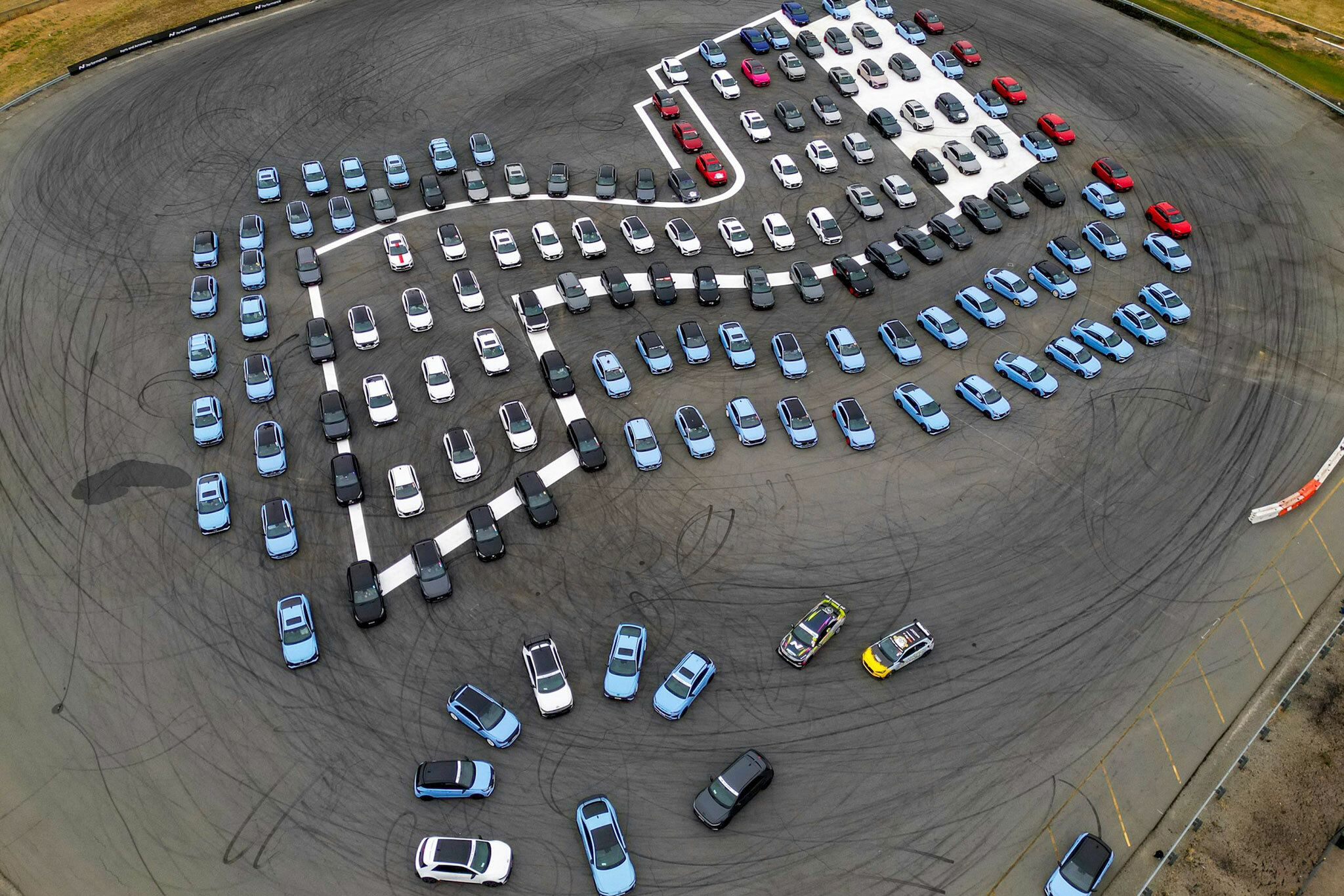
  • Hyundai’s N Festival in Australia drew more than 350 cars.
  • Entry was AU$60, including track time and instructor support.
  • Non-N owners can attend through the new Nvy Track Sessions.

Building a loyal enthusiast following from the ground up isn’t something carmakers typically pull off overnight. For Hyundai, a brand that wasn’t exactly on anyone’s radar for fun, driver-focused cars to begin with, establishing its N performance sub-brand was not just about creating engaging machines. It was about cultivating a culture, and that’s a far more elusive achievement.

Review: What’s It Like Living With The Hyundai Ioniq 5 N?

However, thanks to a host of owner-focused events, Hyundai Australia has done just that. There are now thousands of tightly-knit N owners across the country, helping the company’s creations become among the nation’s best-selling hot hatches. Not only that, but cars like the i20 N and i30 N have become genuine benchmarks in their respective segments.

In late November, the annual N Festival returned for its seventh iteration, but with a twist. Not only was the event open to N owners, but also to a select number of owners from other brands, so we decided to join in with a bright yellow Renault.

Nvy

\\\\\\\\\\\\\\\\\\\\\\\\\\\\\\\\\\\

Hyundai N Australia

The 2025 event was held at Winton Raceway, roughly two hours north of Melbourne. As interest in the N Festival has increased in recent years, it’s no longer just an event run over Saturday and Sunday, but for the first time, it was extended to a three-day event. For eager owners wanting to get onto the track, there’s no better event.

Read: I Flew To Germany To Conquer The Nurburgring; It Conquered Me Instead

More than 350 cars attended in December. To join in, all that was required was a AU$60 ($40) entrance fee. In return, owners get ample time on the track, a gift bag of N merchandise, and tutelage from experienced driving instructors. This makes it an absolute bargain, particularly since regular track days usually start at upwards of AU$300 ($200).

Newcomers Join the Action

 I Crashed Hyundai’s Massive N Festival In My French Hot Hatch, And It Was Glorious
My fiesty baguette

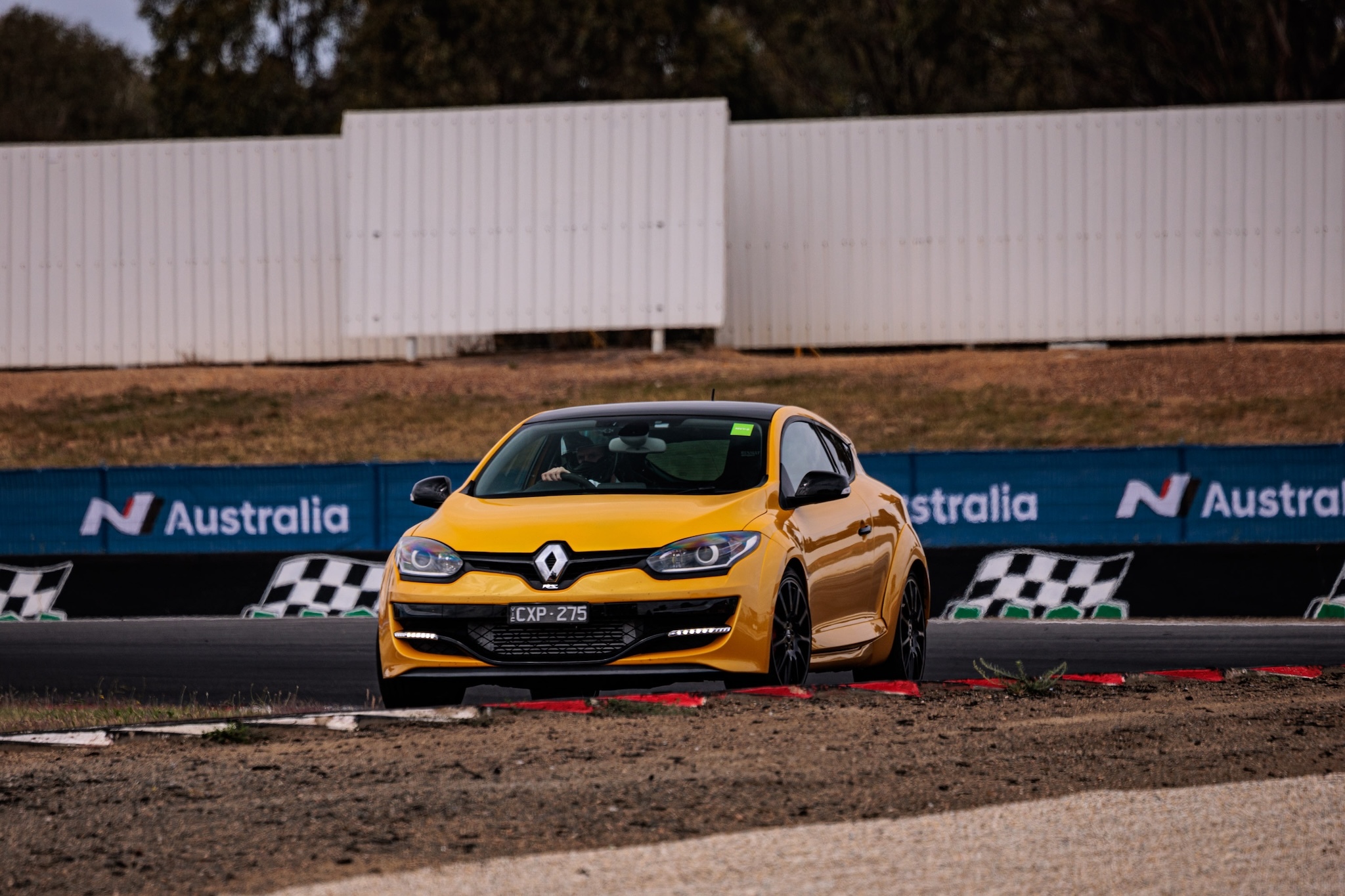
New to the 2025 N Festival were the ‘Nvy Track Sessions.’ These sessions were open to 20 non-N car owners each of the three days. To participate, you needed to receive an invitation from an N owner and to pay the same fee. I managed to secure a spot for my Renault Megane RS275.

On Friday, Saturday, and Sunday, participants were split into six groups of 20 cars, with one group for the non-N cars. Each group had five 15-minute sessions on the track, totaling 75 minutes across the day. For pretty much anyone not named Max Verstappen, that’s more than enough track time.

Read: Riding In The Ioniq 5 N At Hyundai Australia’s N Festival

While I’ve done plenty of track days in the past, this was the first one in my Renault. The chassis and brakes are standard (for now…), although I have had it fitted with sticky Continental SportContact7 road tires, and the engine modified with a new intake, blow-off valve, intercooler, downpipe, and tune. It’s good for 219 kW (294 hp) and 445 Nm (328 lb-ft) of torque at the wheels, a healthy amount for the 2.0-liter turbo.

\\\\\\\\\\\\\\

Hyundai N Australia

The temperatures were hot, pushing over 30° C (86° F) throughout my sessions, but my little French hot hatch performed flawlessly. There were some impressive cars in my sessions, like a new G80 BMW M3, an Audi RS5, a Porsche Cayman GT4, modified Toyota Supras, and a tuned Toyota GR Yaris, but I had no issue reeling each of them in and overtaking.

Review: The 2026 LBX Morizo RR Is A GR Corolla Disguised As A Lexus SUV

Just like the i30 N is considered among the best hot hatches on the market, the third-generation Megane RS275 was held in similarly high regard when it was launched. Honed on the Nurburgring, it felt right at home on the circuit, providing immense levels of grip, combined with superb stability under braking and great straight-line pace. Admittedly, my tires now look a little worse for wear.

Ns On The Track

 I Crashed Hyundai’s Massive N Festival In My French Hot Hatch, And It Was Glorious

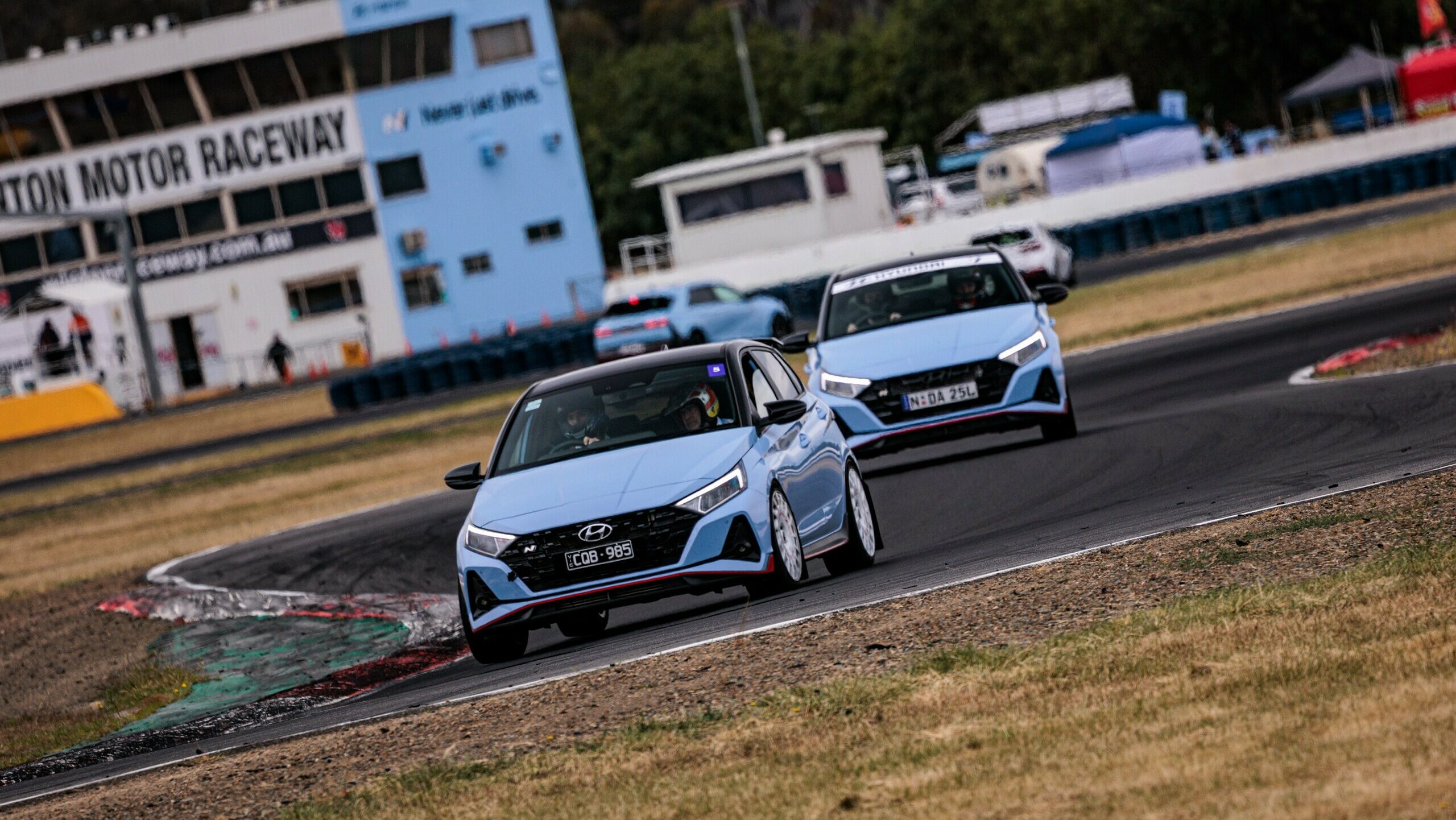
Of course, it was the Hyundais that were the real stars of the day. Hyundai Australia brought along a slew of press cars for journalists to test out. I managed to snag some seat time in each of the company’s current models, including the i20 N, i30 N hatch, i30 N Sedan, and the potent Ioniq 5 N.

Winton Raceway is quite a tight, short track, perfect for hot hatches like those from Hyundai rather than high-horsepower monsters. The pint-sized i20 N proved to be the perfect companion for the circuit.

While the i20 N only has a 1.6-liter turbocharged four-cylinder and is down more than 50 kW (67 hp) over the i30 N, it had no issue sticking with its bigger brothers on the circuit. It feels incredibly nimble and responsive, particularly around the circuit’s sweeping bends and tighter corners, often lifting one of its rear wheels as the front tires stick mercilessly to the track.

First Drive: 2026 Dodge Charger Sixpack Sounds Off, But Drives Better Than You Think

As standard, the i20 N comes with Pirelli P Zero NH tires, and they perform brilliantly on the track. As the day progressed, they did start to lose some grip, but importantly, they remained predictable despite the wear. The only issue I encountered was difficulties downshifting from 3rd to 2nd with the auto-rev match function enabled, something I also experienced at the N Festival back in 2022.

Extra Power, Extra Thrills

 I Crashed Hyundai’s Massive N Festival In My French Hot Hatch, And It Was Glorious

For those seeking superb on-track handling, combined with on-road comfort, and great straight-line speed, the i30 N hatch and i30 N Sedan remain among the best options on the market. While they may share a name, the i30 N Sedan has a longer wheelbase than the hatch and is based on a different chassis. In most of the world, it’s known as the Elantra.

Review: I Flew To Germany To Conquer The Nurburgring And It Conquered Me Instead

In a straight line, the i30 N hatch is a little sprightlier. While both cars have the same 2.0-liter turbocharged four-cylinder and are advertised with the same 206 kW (276 hp) and 392 Nm (289 lb-ft), the hatch’s boost pressure peaks at 17 psi, whereas it usually sits around 14 psi in the Sedan. This is because the sedan has Hyundai’s controversial ‘Octane Learning Mode’.

 I Crashed Hyundai’s Massive N Festival In My French Hot Hatch, And It Was Glorious

To enable the full 17 psi, you’ll have to either drive in 8th gear between 109-159 km/h (68 -99 mph) for 5 minutes or more, or drive for 5 minutes or more in 44th or 5th gear at 40-70% throttle between 40-120 km/h (25 -75 mph). Obviously, this isn’t achievable on a track. Many owners I spoke to have had their cars tuned to unlock full boost without having to do this procedure.

The duo also feels quite different through the turns. Both stick extraordinarily well, providing enough grip to warp your face. However, the hatch is noticeably stiffer and feels a little lighter. By comparison, the i30 N Sedan feels more stable, owing to the longer wheelbase, and is easier to find the limits in. On the track, we prefer the hatch, but on the road, it’s the Sedan that stands out.

What the Ioniq 5 N Does Best

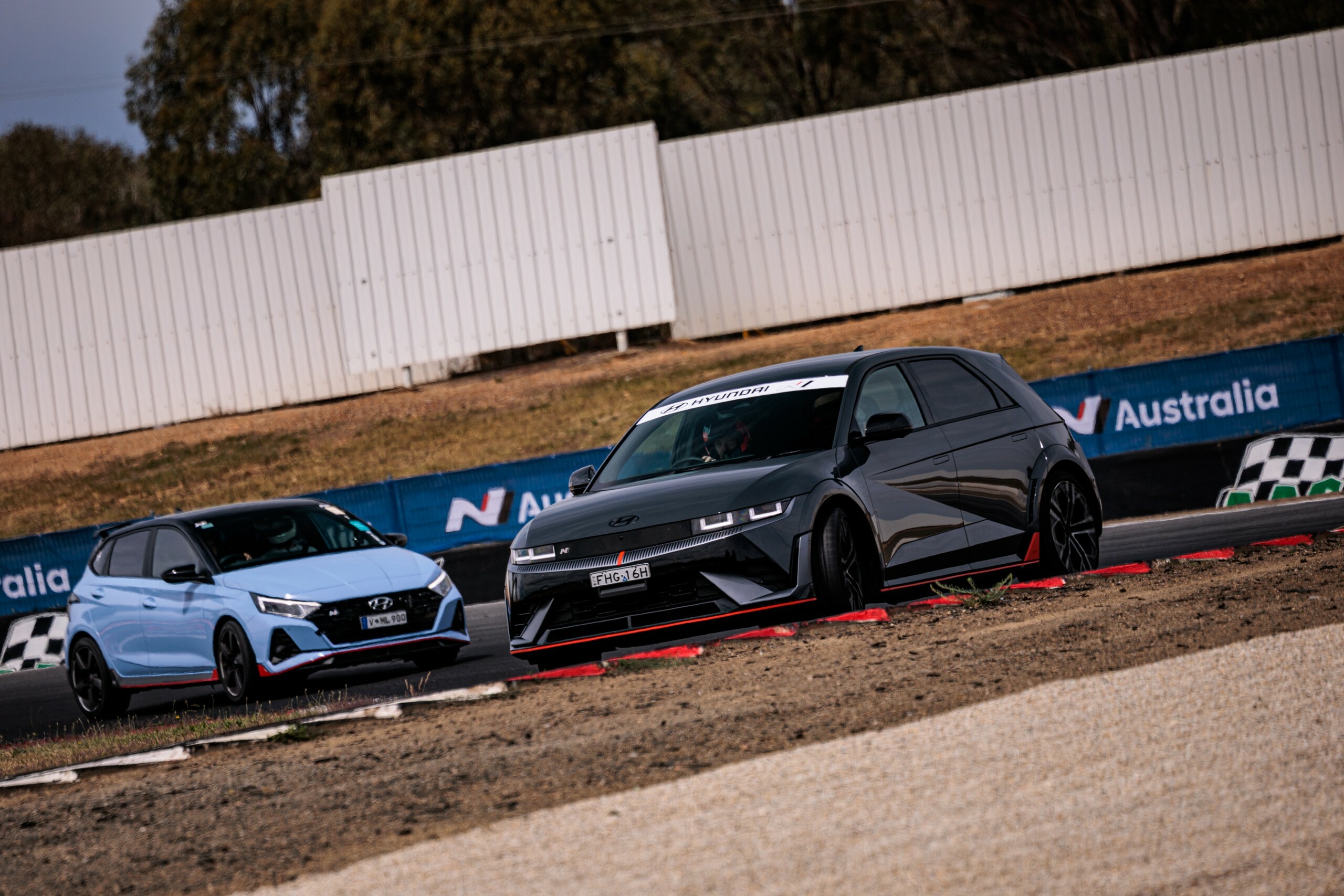
We also had the opportunity to do a few hot laps in Hyundai’s potent Ioniq 5 N. This is the performance car that has redefined what we thought was possible for an EV. Not only is it extraordinarily quick, but it’s also loads of fun to drive. It’s no surprise that Porsche and Lamborghini have benchmarked their EVs against it.

 I Crashed Hyundai’s Massive N Festival In My French Hot Hatch, And It Was Glorious

Obviously, the dual-motor powertrain makes the Ioniq 5 very quick in a straight line. However, because Winton’s straights are quite short, it doesn’t get much room to stretch its legs. Thankfully, it shines in other ways, particularly in its handling dynamics.

Review: The Hyundai Ioniq 5 N Is A Ballistic Missile That Redefines EVs

Thanks to some engineering trickery, it’s possible to shift the amount of power sent to the front and rear wheels. As such, the Ioniq 5 N can be driven effectively as a front-wheel-drive or rear-wheel-drive car. This means it is inherently more configurable and playful than Hyundai’s other N products. The downside? It’s electric, meaning it’s not so practical for track use unless a circuit has a DC fast charger.

Track Day Antics

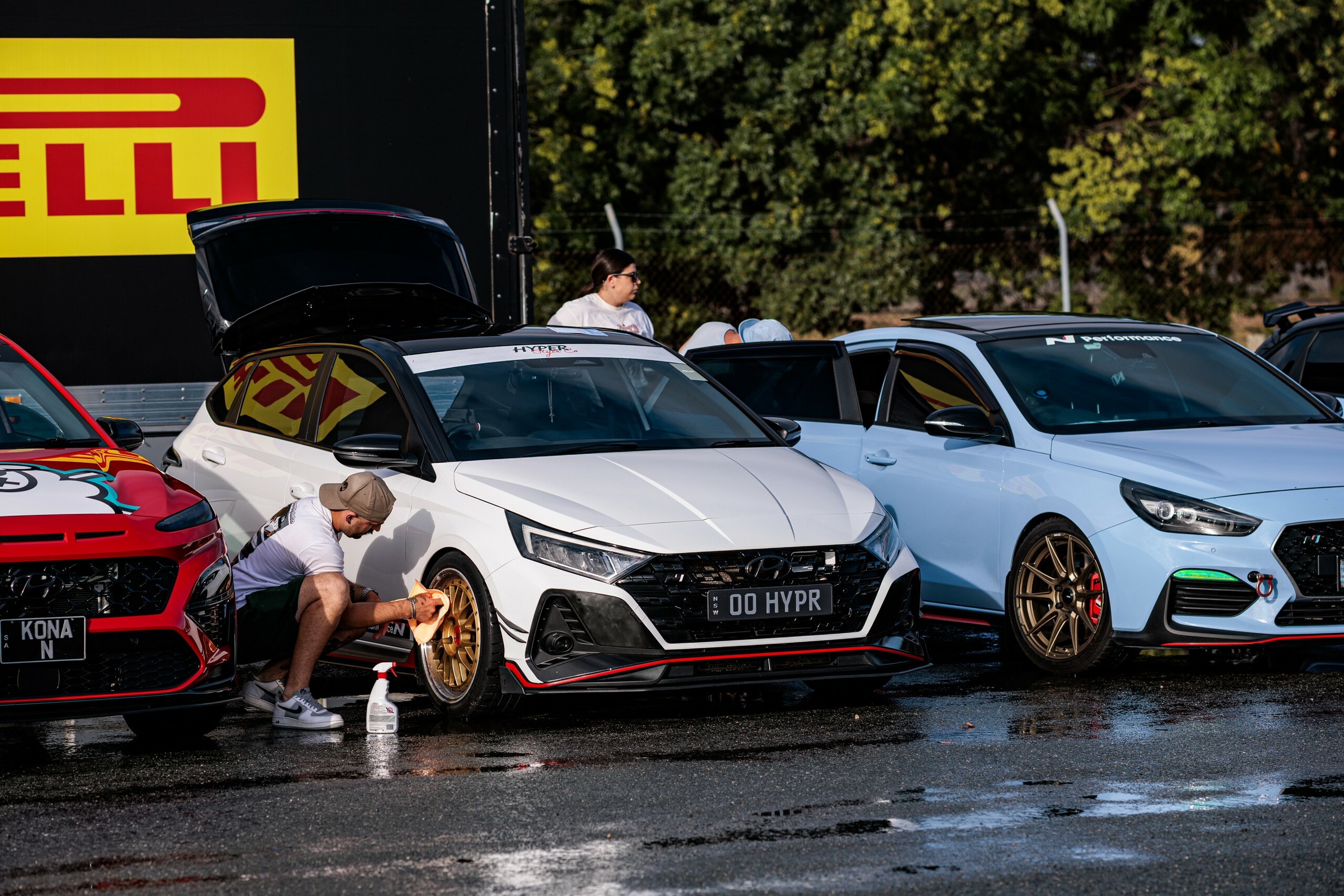
The 2025 N Festival didn’t just include dozens of track sessions. This year, owners were also able to participate in a series of head-to-head rolling races to see who owns the quicker car in a straight line. There was also a Show’N Shine and an organized drive through some of the circuit’s neighboring country roads.

Australia’s N Festival has established itself as one of the best events on Australia’s track day calendar, and it’s easy to see why. It’s affordable, well organized, and welcoming. I’m sure it convinced some non-N owners to call up their local Hyundai dealership and place an order. As for me, used Ns remain out of my price range, so I’ll be keeping my French hot hatch.

\\\\\\\\\\\\\\\\\\\\\\\\\\\\\\\\\\\\\\\\\\\\\\\\\\\\\\\\\\\\\\\\\\\\\\\\\\\\\\\\\\\\\\\\\\\\\\\\\\\\\\\\\\\\\\\\\\\\\\\\\\\\\\\\\\\\\\\\\\\\\\\\\\\\\\\\\\\\\\\\\\\\\\\\\\\\\\\\\\\\\\\\\\\\\\\\\\

Hyundai N Australia

Mitsubishi’s New 400HP Compact Comes From The Same Factory As Your iPhone

  • Mitsubishi’s next EV is based on the Foxtron Bria hatch.
  • Dual-motor flagship model is rated at 400 horsepower.
  • Testing of the new model is already underway in Australia.

If there were an award for the automaker with the least inspiring lineup, Mitsubishi might have a strong claim to it. But change is on the horizon. The Japanese brand is set to add some spark to its range with a new all-electric model, even if, as has become something of a pattern lately, the vehicle won’t be one of its own creations.

Read: Foxconn’s Pininfarina-Designed Model B Could Steal Tesla’s Thunder In The Small Segment

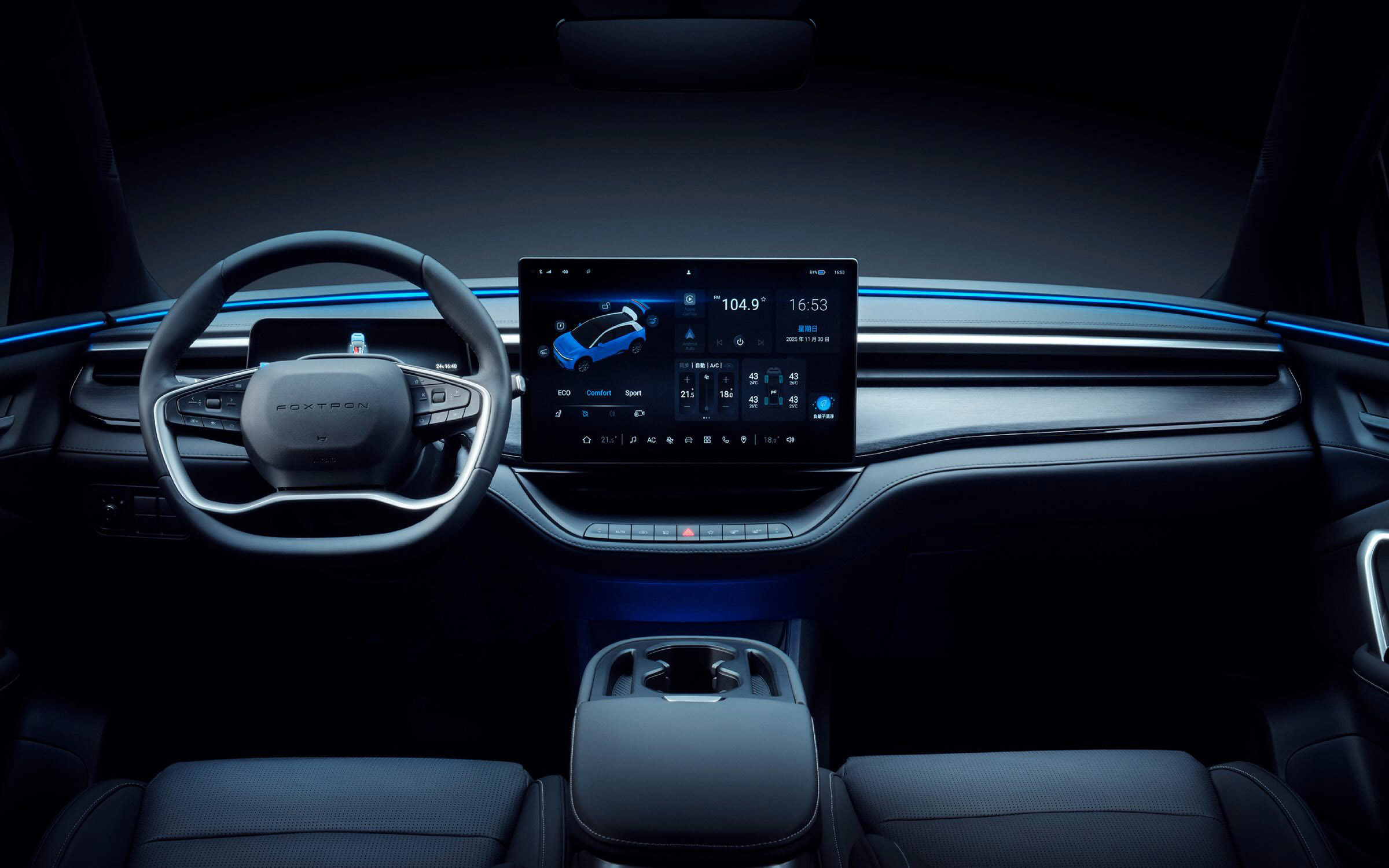
As covered previously, Mitsubishi has teamed up with Taiwanese contract manufacturer Foxconn, best known for assembling the iPhone. Together, they’ll introduce an electric hatchback based on Foxtron’s newly unveiled Bria designed by famed Italian studio Pininfarina.

That car, based on the striking Model B Concept, made its production debut in Taiwan and could bring a welcome dose of personality to Mitsubishi’s offerings.

Powering the Bria is a 57.5 kWh lithium-iron phosphate battery pack, and so far, three variants have been confirmed. Both the Elegant and Emerge models use a single 229 hp electric motor at the rear, allowing them to hit 100 km/h (62 mph) in 6.8 seconds.

For those wanting more punch, there’s the dual-motor Pioneer model. With all-wheel drive and a combined 400 hp, it cuts the sprint to 100 km/h down to just 3.9 seconds.

 Mitsubishi’s New 400HP Compact Comes From The Same Factory As Your iPhone

It’s unclear if the Mitsubishi version will retain the same specifications, but we suspect it will. A few months ago, I spotted a prototype of the Model B being tested in Melbourne, Australia, albeit without any Foxtron branding.

This is because the two companies are eyeing Australia as one of the car’s most important markets, and are believed to be fine-tuning the suspension for local road conditions.

The name of the Mitsubishi-branded EV hasn’t been confirmed, but recent trademark filings suggest a direction. According to Drive, the carmaker has secured rights in Australia for the names ‘ASX GT-e’ and ‘ASX VR-e’.

Golf Size

 Mitsubishi’s New 400HP Compact Comes From The Same Factory As Your iPhone

Dimensionally, the Bria measures 4,315 mm (169.8 inches) long, 1,885 mm (74.2 inches) wide, and 1,535 mm (60.4 inches) tall. That makes it slightly longer and wider than a Volkswagen Golf, and comparable in scale to the electric MG 4.

Considering this is Foxconn’s first production EV, the Bria makes a strong visual impression. It bears no resemblance to anything in Mitsubishi’s current stable, but that’s unlikely to be an issue. Mitsubishi has a long history with rebadged models, so it’d probably be happy to sell the Bria as is.

\\\\\\\\\\\

Support for Electric Vehicles

By: newenergy
31 March 2025 at 15:54

New Poll: American Voters Support Federal Investments in Electric Vehicles Broad, Bipartisan Support for EV Investments and Incentives that Lower Costs, Expand Access, and Help the U.S. Beat China in the Race for Auto Manufacturing WASHINGTON, D.C. – A new bipartisan national poll conducted by Meeting Street Insights and Hart Research finds broad public support …

The post Support for Electric Vehicles appeared first on Alternative Energy HQ.

❌
❌