Normal view

There are new articles available, click to refresh the page.
Before yesterdayMain stream

More Than Half Of Porsche’s Macan Sales Went To The One They’re Killing

  • Porsche Q1 deliveries fell 15 % to 60,991 units as product gaps hit hard.
  • Macan EV can’t yet fully replace outgoing combustion model’s sales volume.
  • 911 bucks the trend with 22 % demand upswing and more variants on the way.

Porsche isn’t having the best time right now. Fresh from admitting that operating profit plummeted 93 percent in 2025, the automaker has revealed that sales in the first quarter of this year sank 15 percent to 60,991 cars, down from 71,470 a year ago.

The company says it saw this coming due to the end of 718 production and Macan Electric sales settling down after the flurry of interest at last year’s debut. But there’s a problem looming ahead that could make things worse before they get better.

Related: Porsche Built The GT3 For The Track, Now It May Take It Somewhere Else

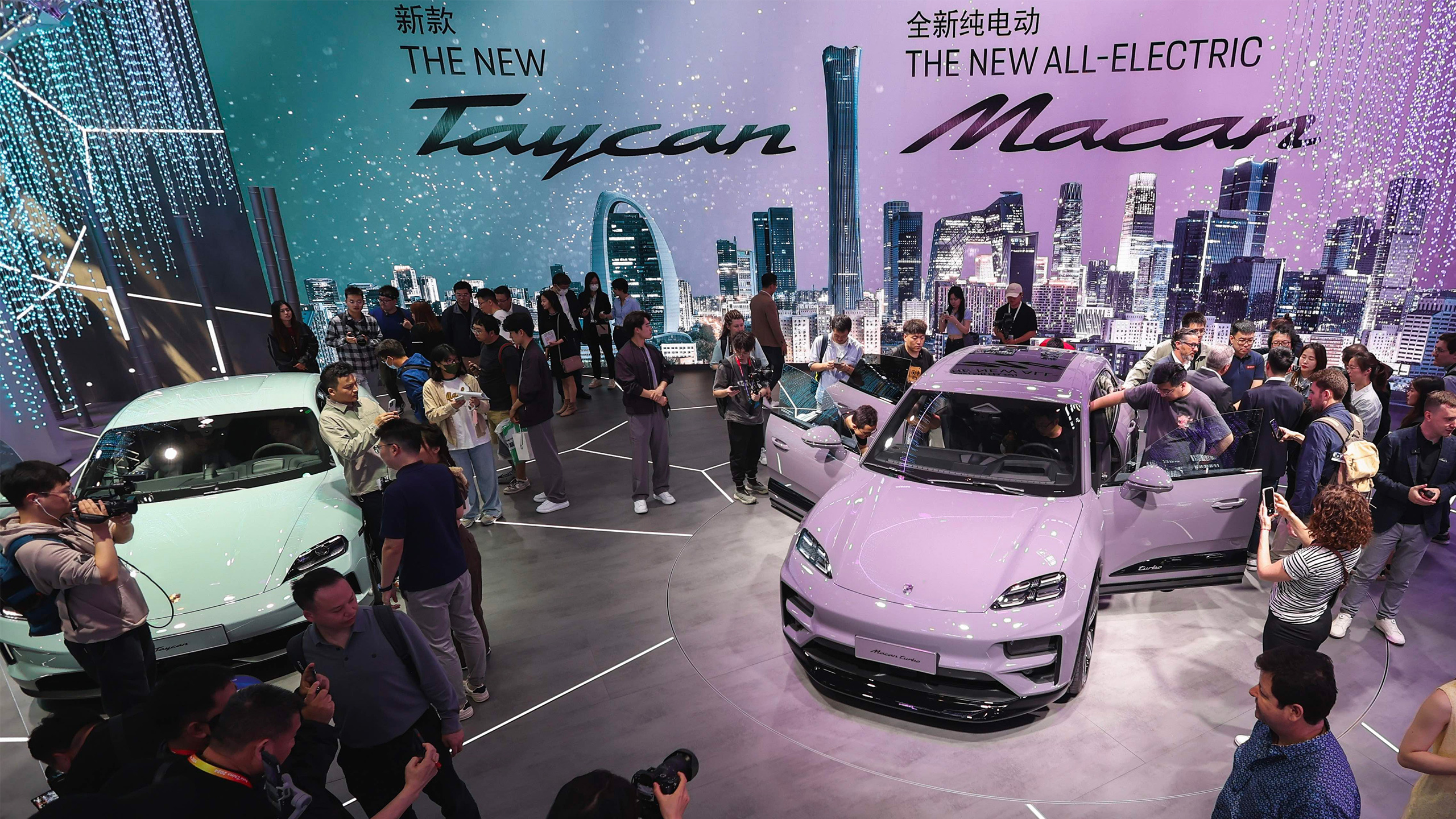
The biggest red flag sits right in the middle of Porsche’s lineup. The Macan, previously the brand’s best selling model, managed 18,209 deliveries, down 23 percent, but here’s the kicker. More than half of those, 10,130 units, were still combustion versions, while the electric version accounted for only 8,079, down a massive 43 percent from last year. With the ICE Macan heading for the exit this summer, and no replacement due for a couple of years, Porsche is about to lose its volume backbone.

911 Is Growing, But Nothing Else Is

Elsewhere, the Cayenne kept things relatively steady with 19,183 deliveries, down just 4 percent, and with Macan sales falling, the bigger SUV is now the most bought. And the 911 is out here ignoring the downturn entirely. Sales of the iconic sports car jumped 22 percent to 13,889 units, proving once again that heritage still sells, even when the broader market gets shaky.

But most Porsche models ended Q1 battered and bruised. The Taycan dropped 19 percent to 3,420 units, while the Panamera plunged 42 percent to 4,498 – due to a model transition, Porsche claims – particularly in China. The 718 range, now effectively retired, collapsed 60 percent to just 1,792 cars.

Porsche Q1 Sales By Model
Model20252026Change
Cayenne20,05519,183-4%
Macan total23,55518,209-23%
(of which Electric)14,1858,079-43%
91111,39013,88922%
Taycan4,2033,420-19%
Panamera7,7694,498-42%
718 Boxster/Cayman4,4981,792-60%
SWIPE

The regional picture doesn’t help much either. North America remained Porsche’s biggest market with 18,344 deliveries, though that’s down 11 percent, likely not helped by changing incentives and tariff pressures. Europe excluding Germany fell 18 percent to 14,710, while overseas markets dropped 20 percent to 12,640.

China Woes Worsen

China has been a problem for a while, and deliveries in the country sank 21 percent to 7,519 units as domestic brands tighten their grip on the premium space. Porsche says it’s focusing on value over volume there, but that’s often what companies say when volume disappears.

Put it all together and Porsche’s explanation about product timing only tells part of the story. Between a cooling EV market, rising competition, and the imminent loss of the ICE Macan, the next few quarters could get even more uncomfortable.

Porsche Q1 Sales By Region
Region20252026Change
Worldwide71,47060,991-15%
Germany7,4957,7784%
North America20,69818,344-11%
China9,4717,519-21%
Europe (excluding Germany)18,01714,710-18%
Overseas and Emerging Markets15,78912,640-20%
SWIPE

Porsche

China Isn’t Buying Porsches, But It Sure Loves Making Ones That Look Like Them

  • The Aistaland GT7 mirrors the looks of the Taycan Sport Turismo.
  • It rides on an 800-volt architecture offering up to three motors.
  • The new model is set for its full debut at April’s Beijing Auto Show.

Porsche took a heavy hit in China last year, with sales tumbling 26 percent from 56,887 units to 41,938, a drop steep enough to force significant dealership cuts. While it continues to sell some very compelling cars, the rise of local brands offering similarly styled models at much lower prices has chipped away at Porsche’s luster. With EVs like this entering the scene, it’s not hard to see why.

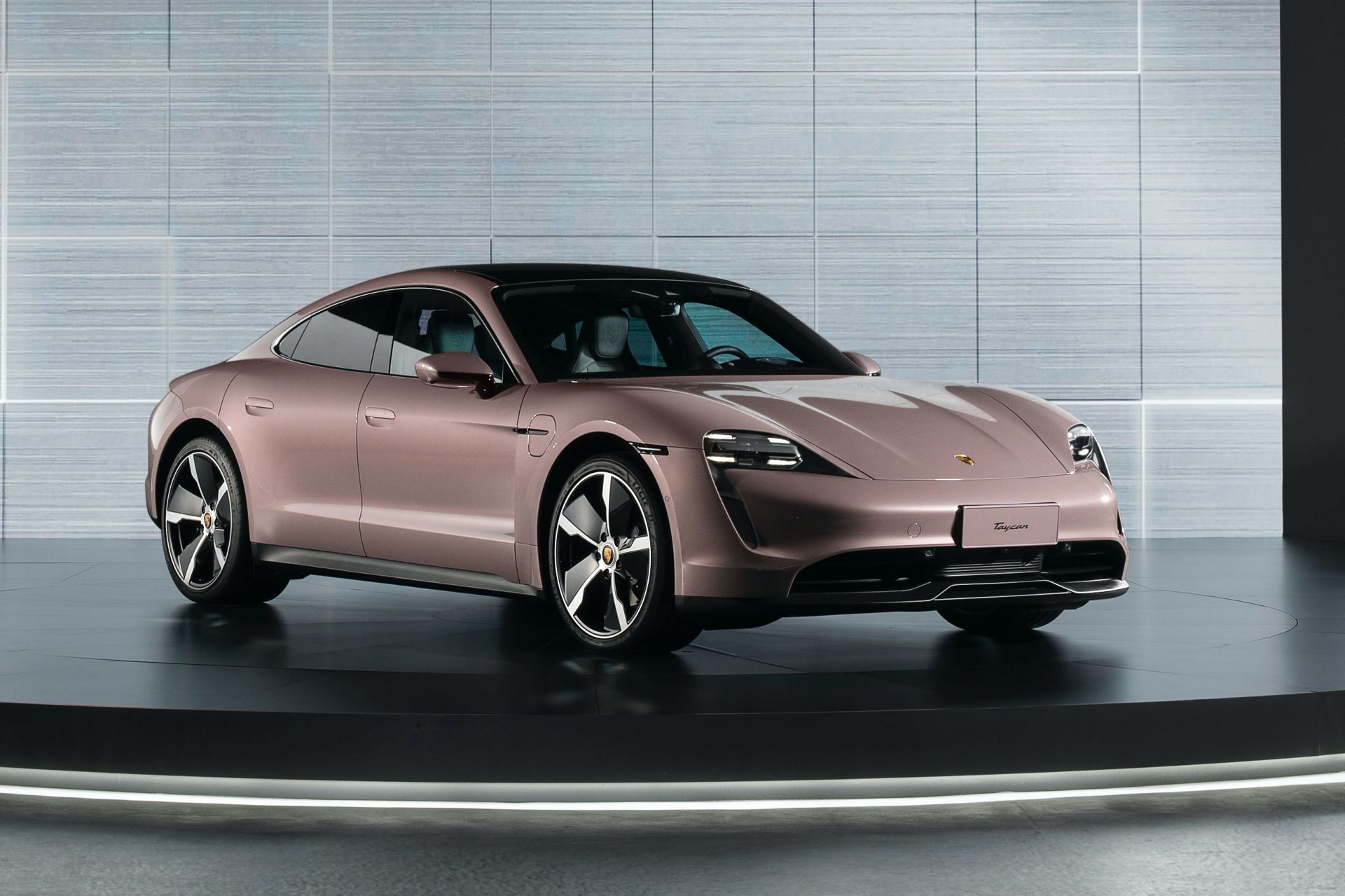
What you’re looking at is an all-electric estate that clearly draws inspiration from the Porsche Taycan Sport Turismo. And no, this isn’t another take on the Xiaomi SU7, the SAIC Z7 unveiled a couple of weeks ago, or the upcoming MG 07 from the same company, even if all of them wear their Taycan influences quite openly.

Read: Porsche Is Shutting Down A Third Of Its Dealerships In China

Instead, this EV is called the GT7 and comes from Aistaland, a newly formed brand backed by Huawei and GAC. It will join the HIMA alliance, which already includes Aito, Luxeed, Maextro, Shangjie, and Stelato. For whatever reason, Chinese brands seem to have developed a habit of using the number ‘7’ for their Taycan-style lookalikes.

European Design With Chinese Tech

\\\\\\\\\\\\\\\\

The GT7 will be unveiled in full next month, but at this stage, we know it’s 198.9 inches (5,050 mm) long, 77.9 inches (1,980 mm) wide, 57.9 inches (1,470 mm) tall, and rides on a 118.1-inch (3,000 mm) wheelbase. It uses an advanced 800-volt electrical architecture and will be available with up to three electric motors, one at the front axle and two at the rear.

There’s no word on how much power the GT7 will have, nor what kind of driving range it’ll hit the market with. But given that the Xiaomi SU7 delivers 664 hp in flagship dual-motor guise and 1,527 hp in the tri-motor SU7 Ultra, the GT7 will likely have output somewhere between those two models.

A Cut-Price Taycan

\\\\\\\\

Obviously, the GT7 doesn’t just echo the Porsche Taycan in the way it’s engineered; it leans heavily on it for visual inspiration too. Up front, things are kept relatively clean, with large teardrop-shaped headlights and a small black grille doing most of the work. From the side, it’s even more familiar, with matching door handle placement and a shoulder line that could easily pass for Stuttgart’s handiwork.

The resemblance continues at the rear, where a full-width LED light bar closely echoes the Taycan’s look. Aistaland also seems to have taken a cue from the latest Tesla Model Y, adding two cut-outs above the light bar that glow red and give off a faint jet-thruster vibe.

There’s still no sign of the interior, and pricing remains unknown. However, if it lands close to the Xiaomi SU7, which starts at 229,900 yuan ($33,400), and the Z7, expected to begin around the same point, it would sit dramatically below the Porsche. In China, the Taycan starts at 918,000 yuan ($126,000) for the sedan and 1,008,000 yuan ($138,000) for the Sport Turismo, making Porsche’s position in China even harder to defend.

\\\\\\\\\\\\\\\

A $103K Chinese Luxury Sedan Outsold The BMW 7, Panamera, And Maybach S-Class Combined

  • Sales of the Maextro S800 now exceed key German luxury rivals.
  • Domestic EV brands are winning buyers once loyal to foreign cars.
  • Porsche deliveries in China dropped 26 percent last year.

Most people outside China have probably never heard of the Maextro S800. Yet this large Chinese luxobarge has quietly begun outselling some very familiar names. In recent months, it has moved more units than the Porsche Panamera, BMW 7-Series, and Mercedes-Maybach S-Class combined in China.

Foreign automakers are all struggling to compete with homegrown competition in the Chinese market, not least of all, Porsche. The German sports car brand is at a problematic stage, experiencing one of the biggest drops in sales, both in China, and globally.

Read: Porsche Is Shutting Down A Third Of Its Dealerships In China

The number of deliveries in China fell by approximately 26 percent last year, Bloomberg reports. And, for all its territories in 2025, Porsche had supplied approximately 279,449 cars to customers all around the world. That’s 10 percent below the year prior.

Chinese Demand Wanes

\\\\\\\\\\\\\\

Maextro S800

For years, China had been Porsche’s single most important growth engine. Wealthy buyers were drawn in by the brand’s reputation for performance and status. That dynamic has shifted with the emergence of a new generation of consumers, who are more aware of the advantages of electric vehicles and the idea of electric propulsion.

Combine that with Chinese automaker’s unique grasp of how to cater to the wants and needs of the home market consumer, as well as the ability to consistently beat Western offerings on price and performance, and it’s little wonder why cars like the S800 are doing so well in a segment that was once rich with Germany’s finest.

Still, the rate at which Chinese automakers have been able to capitalize within the luxury automobile market is nothing short of alarming. Their model lines are competing head-on with long-established luxury brands throughout Europe and, in most instances, provide highly advanced digital and battery technology that buyers are seeking.

However, for consumers, local EV makers are viewed as a representation of innovation, rather than being compromised, especially when it comes to younger buyers.

Strong Local Offerings

\\\\\\\\\\\\\\\

Maextro S800

Brands like Huawei’s Maextro, Xiaomi, and BYD have gained market share in the luxury EV range. The S800, for instance, starts at the equivalent price of $103,000, which is around 40 percent cheaper than the Panamera.

Xiaomi’s SU7 EV, meanwhile, is not only quicker than the all-electric Taycan to 100 km/h (2.1 seconds vs 2.7 seconds), it has a higher top speed (350 km/h vs 270 km/h) and offers nearly double the horsepower and torque (1,548 PS / 1,770 Nm vs 884 PS / 890 Nm). And it does all that, while costing a third of the price of the Porsche.

Having expansive product offerings and high levels of domestic loyalty, such firms have started attracting clients who, not too long ago, would have only considered a car with a foreign badge as worthy.

But, in the case of Porsche, this change is a challenging fact. Prestige alone is no longer sufficient to ensure success. So much so that Bloomberg reports that Porsche is not only downsizing its dealer structure, but is also in the process of winding down its EV charging network.

Righting The Ship

 A $103K Chinese Luxury Sedan Outsold The BMW 7, Panamera, And Maybach S-Class Combined

Under the leadership of its new CEO, Michael Leiters, Porsche has started to re-evaluate its strategy. The company is leaning on its traditional strengths, focusing on relatively high-margin sports cars and SUVs and pushing a bit heavier on the full complexity electrification. The idea is not to compete on price with the domestic manufacturers of EVs but to shore up what makes the brand unique.

Leiters has told investors the company is looking to see margins improve, though modestly this year. These difficult times have tightened Porsche’s operations’ profit margins, and the company hopes for better cost control and a well-defined product strategy to stabilize performance. The approach is cautious optimism as opposed to quick promises of a turnaround.

China Still Remains Part Of The Plan

 A $103K Chinese Luxury Sedan Outsold The BMW 7, Panamera, And Maybach S-Class Combined

Even though Porsche are scaling back their presence in China, they’re not ready to throw in the towel just yet. “The needs of Chinese customers have fundamentally changed,” Porsche China President Alexander Pollich said. “We are a niche brand, a small-scale manufacturer that can hardly change the economic environment, nor reverse the overall market trend. What we can do is to truly examine ourselves and strengthen the core capabilities.”

Porsche will be launching the all-electric Cayenne in the near future and will also introduce more gasoline-powered and plug-in hybrid SUVs, with China-only models high on the agenda. To support this effort, the company is establishing an all-new development hub in Shanghai that will operate independently from Germany.

First on the agenda is designing a new infotainment system that can better match the unique demands of Chinese buyers, likely with native integration for the local apps many owners use daily, rather than relying on the global software stack developed in Germany. In a market that is evolving as quickly as China’s, that kind of local focus may prove just as important as performance or prestige.

 A $103K Chinese Luxury Sedan Outsold The BMW 7, Panamera, And Maybach S-Class Combined

SAIC Teases Another Porsche Lookalike, This Time With MG Badges

  • MG 07 teaser reveals styling clearly inspired by Porsche.
  • Fastback shape pairs Taycan style vents with Panamera tail.
  • SAIC’s Nebula platform will support EV and PHEV options.

The newly-released SAIC Z7 electric sedan and shooting brake already turned heads for looking suspiciously like Porsche’s Taycan models. Not “inspired by,” not “loosely referencing,” but very much in the same visual neighborhood. And it seems SAIC isn’t done visiting that neighborhood either.

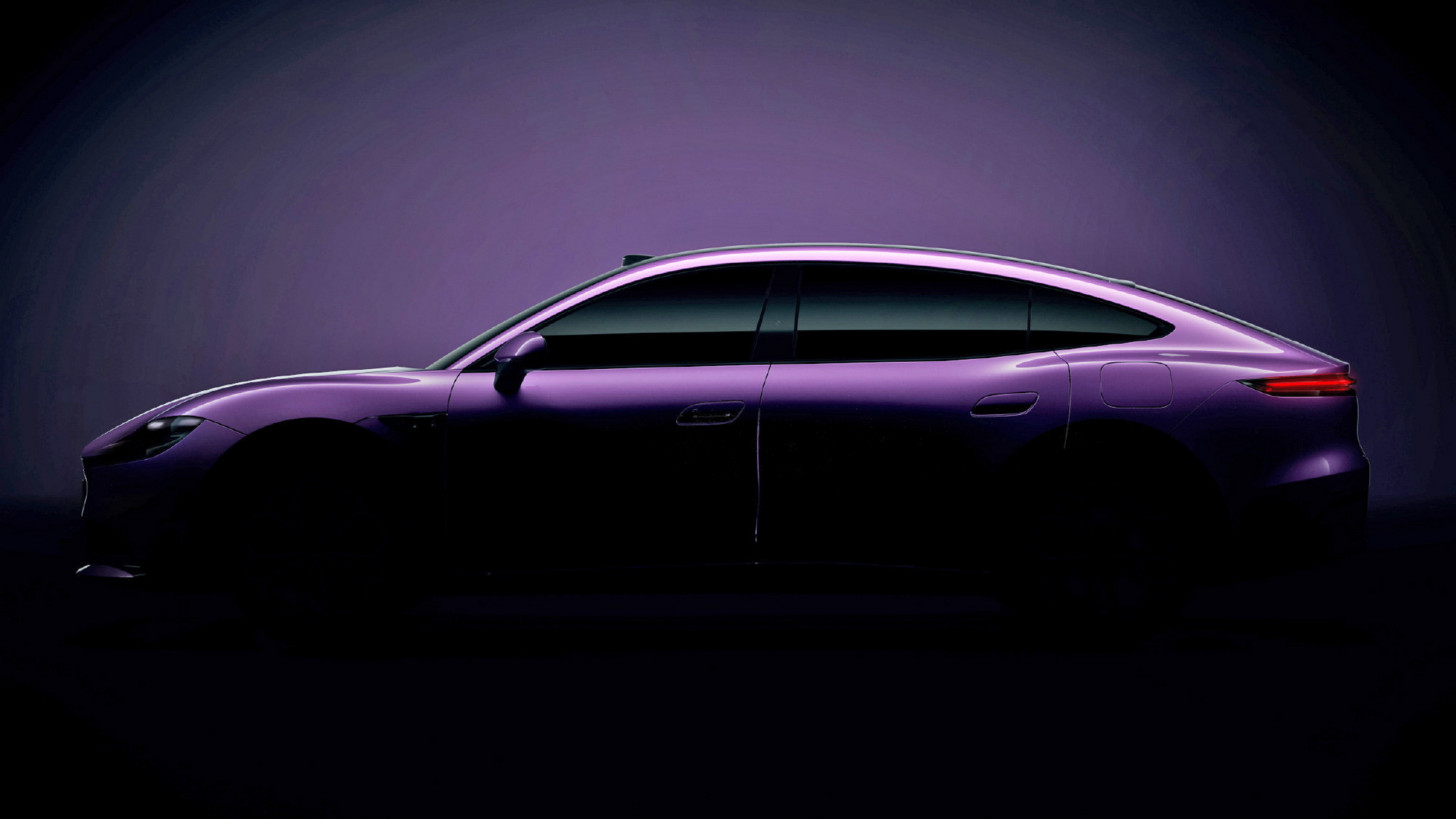
The upcoming MG 07 continues the theme, borrowing liberally from Porsche’s modern design language, with the rear in particular appearing to have spent quite a bit of time studying the view from Zuffenhausen.

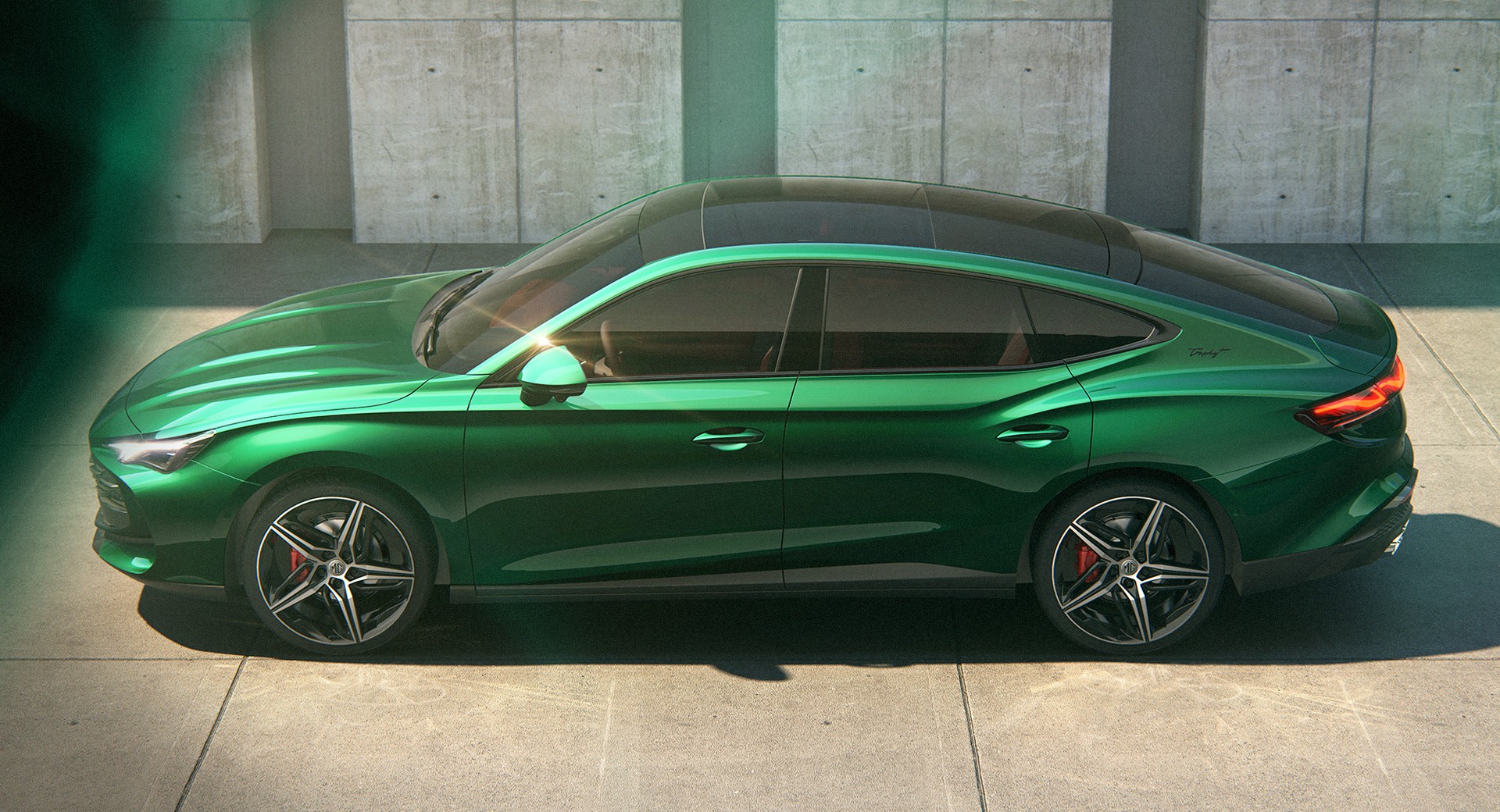
The teasers reveal a five-door fastback silhouette, reminiscent of the MG7 that was introduced in 2022. While the two models share a similar greenhouse, the MG 07 has cleaner surfacing, and semi-concealed door handles.

More: Chinese Brand Faces Backlash After SUV Ad Looks Suspiciously Familiar

MG’s designers have also borrowed a few cues from the Taycan, including the inlets behind the front fenders. They are paired with side gills reminiscent of the Avatr 06. The most Porsche-like element, though, is the rear, which looks like a blend of the Panamera and the Taycan. Pronounced shoulders flow into full-width LED taillights with clear lenses, positioned just above the MG emblem.

 SAIC Teases Another Porsche Lookalike, This Time With MG Badges
The upcoming MG 07 (above) compared to the existing MG7 (below).
 SAIC Teases Another Porsche Lookalike, This Time With MG Badges

From the profile view, the front end is only partly visible, but it hints at styling cues reminiscent of the Nissan Z and even a touch of Maserati. Expect it to follow the aggressive theme established by the MG7, likely toned down with a smaller grille. A roof-mounted LiDAR unit is also visible, suggesting the car will offer more advanced driver-assistance systems.

Despite the Porsche-inspired exterior, the cabin is expected to take a more localized approach. The MG 07 will likely feature a large central display running an infotainment system developed in collaboration with Oppo, rather than the Huawei-backed setup used in the SAIC Z7.

More: Spot The Differences, Then Save $150,000

Specifications remain under wraps for now, but Chinese media reports that the MG 07 will ride on SAIC’s Nebula platform. The architecture is expected to support both fully electric and plug-in hybrid powertrains. A slim battery pack may also incorporate semi-solid-state technology, which could help deliver a competitive driving range.

The MG 07 is expected to debut soon in China. Its competitors will likely include the Porsche-inspired Xiaomi SU7 and similarly sized sedans such as the BYD Seal, Zeekr 007, Luxeed S7, Deepal SL03, Leapmotor C01, and Tesla Model 3. The electrified fastback may also find its way into other markets later on, following the export path taken by the ICE-powered MG7.

\\\\\\\

SAIC MG / Weibo

Porsche’s Next Sedan Could Replace Both The Panamera And Taycan

  • Porsche may merge Panamera and Taycan into a single lineup.
  • A shared sedan line could cut costs but keep two platforms.
  • The successor would likely offer ICE PHEV and EV options.

Are two separate Porsche sedans one too many? It’s a fair question, especially as the performance luxury world adjusts to the slower, slightly messier reality of electrification. The answer may well be yes, as the Zuffenhausen brand is reportedly considering a consolidation of its lineup that would see the Panamera and Taycan folded into a single model line, without actually turning them into the same car.

The whole “merging without actually merging” idea comes down to platform strategy. Porsche could build a future sedan family that follows the same dual-track playbook already used by the Macan and Cayenne, where combustion and hybrid models sit on one architecture while fully electric versions use another.

More: Porsche’s Most Extreme Taycan Yet Exists For A Very Personal Reason

The news marks a fairly notable pivot from Porsche’s earlier line on the matter. Back in 2024, Kevin Giek, Vice President of the Taycan Product Line, described the Taycan as a “long-lasting” nameplate, putting it in the same durability bracket as the 911. He also made it clear that the facelifted model would not be the end of the road, with Porsche planning to keep evolving it over time.

 Porsche’s Next Sedan Could Replace Both The Panamera And Taycan
The current Porsche Panamera (top) and Taycan (bottom).

According to a report from Autocar, the rethink comes down largely to cost. Porsche recently took a €1.8 billion ($2.1 billion) write-down tied to delays in platform development, which tends to sharpen the pencils in Stuttgart rather quickly. Folding strategies together could help the company avoid the less appealing option of canceling one of the engineering programs outright just to balance the books.

Which One Will Survive?

We still do not know which badge Porsche might send to the great brochure archive in the sky, the Panamera or the Taycan. What we do know is which one buyers currently prefer. Last year the combustion-powered Panamera shifted 27,701 units, nearly 70 percent more than the 16,339 Taycans delivered in the same period. Taycan deliveries have dropped sharply over the past two years, a slide significant enough to make Porsche take a long look at its electrification plans.

 Porsche’s Next Sedan Could Replace Both The Panamera And Taycan
The 2026 Porsche Panamera’s interior.

The third-generation Panamera arrived in late 2023 riding on Porsche’s MSB architecture, and it is already penciled in for a mid-cycle refresh around 2027. The Taycan, meanwhile, first appeared in 2019 on the EV-dedicated J1 platform and received its facelift in 2024. Read between the lines and the likely scenario is fairly clear. Proper replacements for both sedans probably will not arrive until sometime after the end of the decade.

More: Porsche’s Panamera Is Crushing The Taycan EV, Now The 2028MY Wants To Squeeze Harder

What seems far more certain is the powertrain buffet. Whatever replaces today’s cars will almost certainly be offered with ICE, hybrid, and fully electric setups, giving buyers plenty of choice. Combustion-powered versions could sit on Porsche’s PPC architecture, while the EV variants would likely move to the newer SSP Sport platform. One sedan shape, several very different ways to make it go fast. Very Porsche, really.

What About The Design?

 Porsche’s Next Sedan Could Replace Both The Panamera And Taycan
Porsche Panamera 4 E-Hybrid

The two might occupy roughly the space and wear broadly similar shapes, but they go about it quite differently. The Taycan is the sportier-looking one, lower, tighter, and built with aerodynamics very much in mind. The Panamera, being the combustion car, stretches out a bit more. It is 89 mm (3.5 inches) longer, 44 mm (1.7 inches) taller, and rides on a wheelbase that is 50 mm (2 inches) longer.

More: Porsche Custom Builds Usually Stay One-Off, Not These Four

There are differences in body styles too. The Panamera can be had in long-wheelbase form for those who prefer their Porsche with a little extra rear legroom. The Taycan, meanwhile, branches out into Cross Turismo and Sport Turismo variants.

If Porsche does march toward a unified sedan line, some of those distinctions will probably have to shrink. Even so, the electric version could still wear its own visual identity, much like the new Cayenne Electric.

Whether the Taycan name ends up as a trim level or the Panamera simply absorbs its electric sibling altogether, the real takeaway sits higher up the strategy ladder. Porsche’s focus is no longer on pushing electrification at any cost, but on building a proper multi-energy lineup that gives buyers a choice.

 Porsche’s Next Sedan Could Replace Both The Panamera And Taycan
The 2026 Porsche Taycan’s cabin.

Porsche Custom Builds Usually Stay One-Off, Not These Four

  • Porsche marks 75 years in Australia with four bespoke models.
  • Each car mirrors landscapes from four Australian regions.
  • Customers can recreate the builds via Porsche’s configurator.

Porsche is marking 75 years in Australia with a quartet of bespoke models inspired by some of the country’s most recognizable landscapes. Consider it both a birthday celebration and a (costly) reminder that Porsche’s customization department can turn just about any idea into paint, leather, and expensive options.

Debuting at the Australian Grand Prix in Melbourne this weekend, the collection spans the Panamera, Taycan, Macan, and Cayenne, highlighting the customization possibilities offered by Porsche Exclusive Manufaktur and the Sonderwunsch program.

More: When Porsche’s New EV Concept Gets Dirty, It Needs A Deckhand, Not A Detailer

Interestingly, these are far from being strictly one-off specials. Customers can actually recreate the same specifications through Porsche’s official configurator, assuming they are willing to spend enough time clicking through options and, of course, paying for them.

Go North With The Panamera

\\\\\\\\\\\\\\\\\\\\\\\\

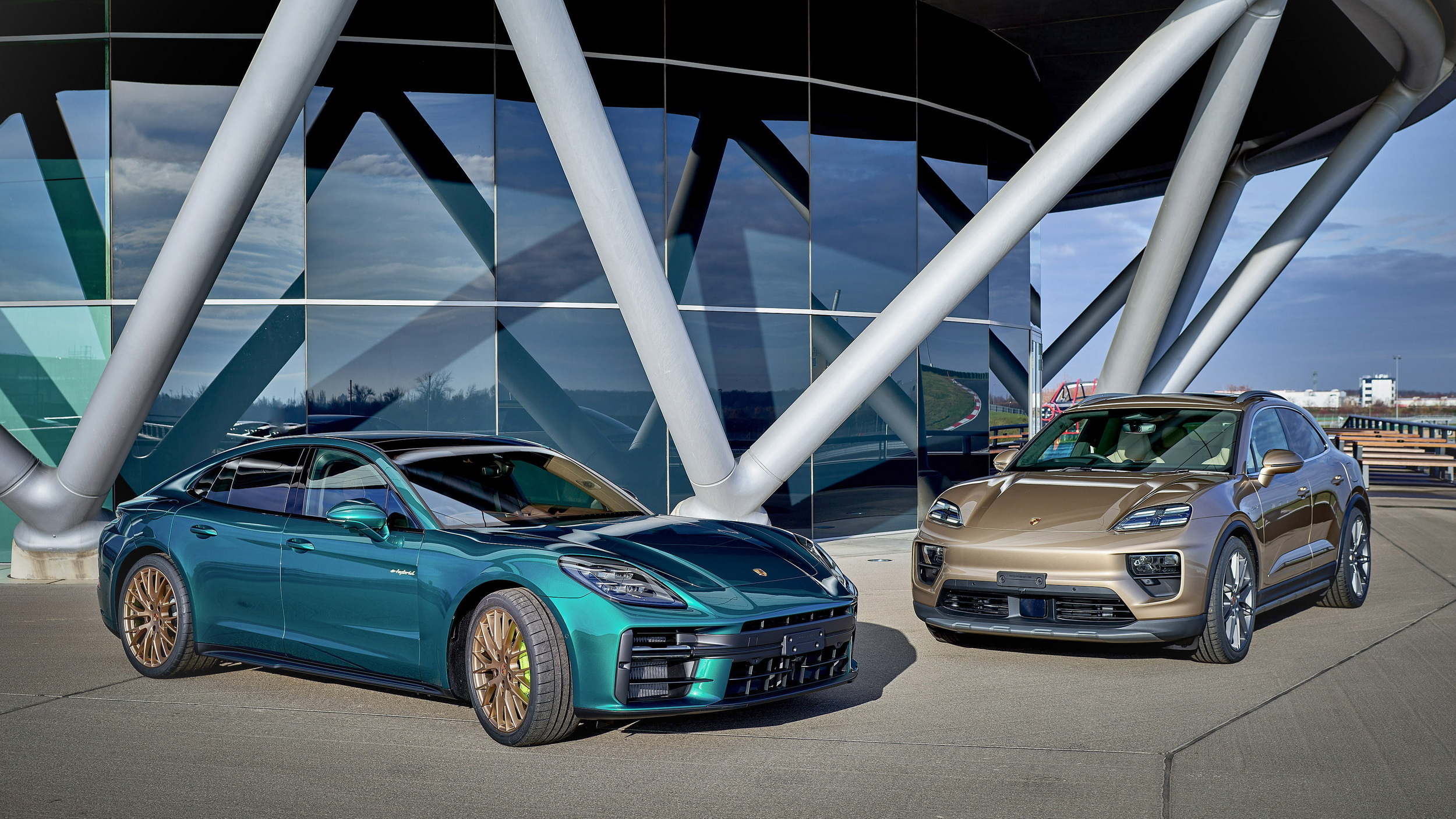
The first model is based on the Porsche Panamera 4 E-Hybrid, finished with a livery inspired by the rainforests of Queensland and the Northern Territory. The exterior wears Emerald Green Metallic paint, paired with Neodyme 21-inch wheels and bright Acid Green accents on the brake calipers and hybrid emblems.

More: Porsche’s Panamera Is Crushing The Taycan EV, Now The 2028MY Wants To Squeeze Harder

Inside, the Club leather upholstery comes in Espresso with Night Green stitching, Neodyme accents, and Eucalyptus wood trim. The sedan also receives illuminated scuff plates with “Go North” lettering, a matching key, and 75th anniversary floor mats. For added practicality, it is also fitted with the optional Porsche Performance roof box, just in case the rainforest theme inspires an actual road trip.

Go East With The Taycan

\\\\\\\\\\\\\\\\\\\

The second model is based on the electric Taycan 4S Cross Turismo. Drawing inspiration from the surf culture of Australia’s Pacific coast, places like Noosa, Byron Bay, Newcastle, and Sydney, it wears an Ipanema Blue Metallic finish. The high gloss black 21-inch alloy wheels feature Crayon aero blades meant to evoke coral formations, while the Glacier Iceblue daytime running lights mirror the irises of the Pacific Blue Eye fish.

More: Porsche’s Most Extreme Taycan Yet Exists For A Very Personal Reason

The beach theme continues inside the cabin, where a mix of Black and Crayon leather echoes what Porsche describes as “the warm sands and shade of Australia’s eastern beaches.” References to the sea show up in the Dark Night Blue leather seat inserts and the Speed Blue stitching. The EV is also fitted with a panoramic roof featuring Variable Light Control, aluminum roof rails, a bespoke key, and illuminated scuff plates.

Go West With The Cayenne

\\\\\\\\\\\\\\\\\\\

The first SUV of the group is based on the V8-powered Cayenne S and draws inspiration from the vast open spaces of Western Australia’s Outback, terrain that dates back around 4.4 billion years. The exterior is finished in Ipanema Brown Metallic, paired with white decals and silk gloss black 22-inch alloy wheels.

More: Porsche’s Mega SUV Drops EV Plan For V8 Power And An Audi Link

The model is fitted with the optional Off-Road package, which adds rock rails, skid plates, extra underbody protection, and even a compass mounted on the dashboard, presumably for when the road disappears altogether. It also gets aluminum roof rails carrying a roof box.

Inside, Black leather is paired with Bordeaux Red inserts meant to echo indigenous rock formations. Like the other special editions, it also receives unique floor mats, keys, and illuminated scuff plates.

Go South With The Macan

\\\\\\\\\\\\\\\\\\\\\\\\

The final car in the set is the fully electric Macan 4S, styled as a tribute to the southern coastlines of Victoria, South Australia, and Tasmania. Its Gold Bronze Metallic paint is meant to mirror the cliffs along the Great Ocean Road, while the 22-inch RS Spyder wheels, finished in Vesuvius Grey, nod to the region’s rugged stone formations.

More: A 92-Year-Old Bought His First Porsche, Now He’s Already Planning His Second

The electric SUV also gets the Off-Road Design package, which brings Vesuvius Grey skid plates into the mix. Glacier Blue accents appear in the Matrix LED headlights and along the taillight strip. Inside, the cabin references South Australia’s volcanic landscapes with Black and Chalk Beige leather, punctuated by orange highlights across the seat centers, seatbelts, door cards, and dashboard.

Curiously, Porsche Australia’s 75th anniversary collection arrives without a 911. Still, when the theme revolves around the four cardinal directions, the math rather limits your options.

 Porsche Custom Builds Usually Stay One-Off, Not These Four

Porsche Australia

❌
❌