Normal view

There are new articles available, click to refresh the page.
Before yesterdayMain stream

A Tesla Driver Appears To Nap At 62 MPH With Two Kids Reportedly In The Back

  • This Tesla driver was spotted sleeping while traveling at up to 62 mph.
  • According to a fellow motorist, two kids were sitting in the back seats.
  • It appears the driver’s sunglasses fooled the driver monitoring system.

Footage circulating online appears to show a woman behind the wheel of a Tesla Model Y traveling along the Trans-Canada Highway between Golden and Revelstoke, all while seemingly fast asleep. If accurate, the episode points to some worrying gaps in the vehicle’s driver-monitoring system.

Fellow Canadian motorist Carleigh King spotted the drowsy driver on Sunday afternoon. In the video, the woman’s head is slumped over, and she appears blissfully unaware that she’s snoozing at approximately 62 mph (100 km/h). It’s a terrifying watch, though far from the only time we’ve come across something like it.

Also: A $10 Ronaldo Doll Head Is Fooling Tesla So Drivers Can Doze Off

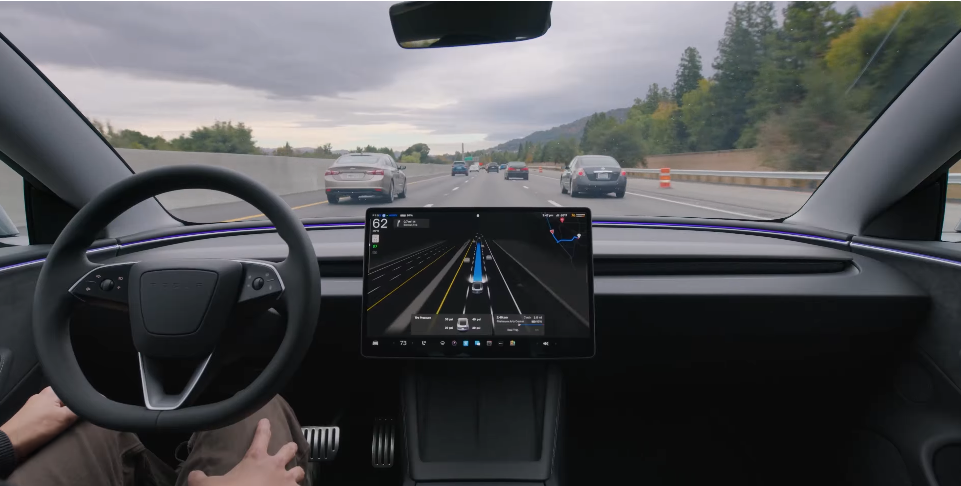
The Tesla in question is presumably fitted with Tesla’s Full Self-Driving (Supervised) package, which includes a driver-monitoring system. This setup uses the Model Y’s in-car camera to track the driver’s eye movements and torque sensors in the steering wheel to detect whether the driver is alert. However, as we’ve seen in the past, the camera system can be easily fooled by wearing sunglasses, like this driver did.

She Wasn’t Driving Alone…

Speaking with CBC, King says that, shockingly, the woman wasn’t driving by herself. In fact, there were reportedly two children sitting in the Tesla’s rear seats, meaning their lives were also in danger because of the driver’s slumber. It’s unclear how the driver circumvented the steering wheel’s torque sensors, but we do know that several companies sell cheap accessories to bypass them.

Watch: Viral Video Shows Older Tesla Driver And Passenger Both Asleep At Highway Speed

According to Cpl. Michael McLaughlin from the B.C. Highway Patrol, the driver could face some serious charges for her careless behavior.

“Anything from a simple violation ticket all the way up to criminal charges for dangerous operation of a motor vehicle,” he said. “There could also potentially be criminal charges related to negligence if there are children in the vehicle and those children are put at risk by the driver not supervising as the vehicle is traveling down the highway.”
 A Tesla Driver Appears To Nap At 62 MPH With Two Kids Reportedly In The Back

Lead Image: Castanet News

In 2020, Tesla Was Supposed To Have 1 Million Robotaxis. It Currently Has 20

  • Tesla’s current unsupervised fleet across the entire US is just 20 cars.
  • California regulators still block Tesla from running any unsupervised cars.
  • In the past 30 days, just 92 vehicles have been used in the robotaxi fleet.

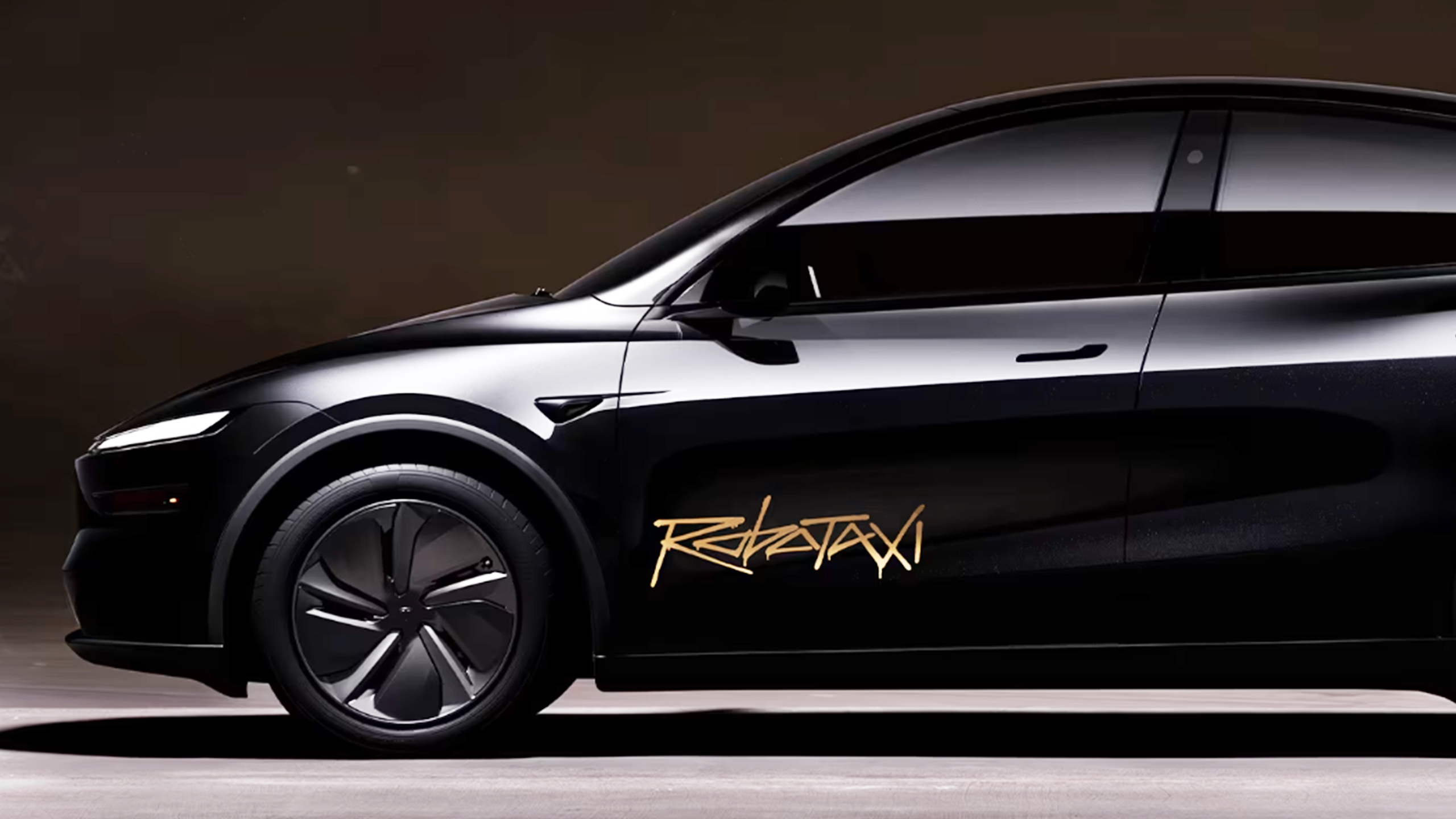
Back in October 2019, Tesla chief executive Elon Musk told investors the company would have more than a million robotaxis on the road within a year. Six years on, Tesla has not only missed that deadline by an embarrassing margin, the US fleet it actually runs is getting smaller.

The long-promised robotaxi service finally launched in Texas last year, starting in a fenced-off corner of Austin with safety drivers riding shotgun. It has since spread to Dallas, Houston, and the Bay Area in California, but the scale remains a rounding error next to Waymo, the company that has quietly built the lead Tesla keeps talking about.

Watch: Tesla Robotaxi Driver Caught Asleep Proves Humans Are Still The Weakest Link

Data from the Robotaxi Tracker service reveals that across the four regions, Tesla has had just 20 unsupervised vehicles in use during the past seven days. Of these, 14 are operating in Austin, 3 are in Dallas, and 3 are in Houston. Crucially, California regulations continue to prevent Tesla from operating a single unsupervised robotaxi in the state. It’s not as if there are loads of human-driven Tesla robotaxis in the Bay Area, either.

The total fleet peaked around December 2025 and January 2026 and has been in steady decline ever since.

A Shrinking Fleet

 In 2020, Tesla Was Supposed To Have 1 Million Robotaxis. It Currently Has 20

Electrek reports that over the past week, the total number of cars operating in Tesla’s total robotaxi fleet, including supervised and unsupervised cars, was just 34 vehicles. In April, there were 107 vehicles operating in the Bay Area fleet, but currently there are just 9. Those Bay Area cars were never true robotaxis to begin with, operating with safety drivers under California’s Transportation Charter-Party permit.

An analysis of activity over the past 30 days shows that just 92 vehicles in total were used by the robotaxi service across the country, of which 33 were operating unsupervised. Most of these, 52 to be precise, are in use across the Bay Area. It’s worth reiterating, however, that these vehicles in California are driven by people, just like a normal ride-hailing service.

Tesla hasn’t explained why its robotaxi fleet is shrinking, but it’s likely related to safety issues that the company is experiencing. As we revealed in January, vehicles operating in Tesla’s robotaxi fleet were involved in an incident every 55,000 miles, roughly four times the average number of miles driven by people.  

 In 2020, Tesla Was Supposed To Have 1 Million Robotaxis. It Currently Has 20

Tesla’s Robot Eyes Missed 14,575 Stickers, Sending Every Owner Back To The Dealer

  • Tesla is worried owners may overload their Model Ys due to a missing label.
  • The safety concern has been blamed on issues with a vision-scanning tool.
  • Impacted Model Y owners will be alerted to the recall from July 17.

Recalls usually come dressed up in regulatory language that hides how mundane the underlying problem is. This one is refreshingly honest about it. More than 14,000 examples of the 2025 and 2026 Tesla Model Y are being recalled in the United States, and unlike most Tesla recalls, an over-the-air update will not fix it.

The recall says Tesla noticed a vehicle with a missing certification label during a routine audit of its Fremont factory last month. It was soon discovered that an automated vision-scanning tool, which verifies the presence of a properly affixed certification label, wasn’t performing as it should have.

Read: Tesla’s First Model Y Price Hike In Two Years Skips The Cheapest Version

The certification label lists the vehicle’s weight specifications, the numbers owners check before loading cargo or hitching a trailer. Without it, drivers can exceed those limits without realizing it, and an overloaded Model Y brakes, handles, and crashes differently than the one Tesla engineered.

What’s The Fix?

 Tesla’s Robot Eyes Missed 14,575 Stickers, Sending Every Owner Back To The Dealer

A total of 14,575 vehicles are caught up in the recall. The list includes 2,697 Model Ys built between November 17, 2024, and February 24, 2025, covering the 2025 model year, plus another 11,878 examples produced from February 25, 2025, through April 21, 2026. It is a large pool of cars, but Tesla says it is not aware of any collisions, injuries, or fatalities tied to the missing sticker, which is about what you would expect from a label-related defect.

Tesla says it repaired the automated scanning tool on April 17 at its Fremont, California, factory and also began performing manual checks to ensure newly produced models have the correct certification label. In addition, the scanning tool at Tesla’s Gigafactory in Texas was also fixed on May 7.

Owners of impacted Model Ys will be alerted to the recall from July 17, and Tesla will inspect affected vehicles and attach the certification label as required.

 Tesla’s Robot Eyes Missed 14,575 Stickers, Sending Every Owner Back To The Dealer

Tesla’s First Model Y Price Hike In Two Years Skips The Cheapest Version

  • Prices for three versions of the Model Y have increased in the US.
  • Premium RWD, Premium AWD, and Performance trims are now pricier.
  • A stretched six-seat Model Y may soon arrive in American showrooms.

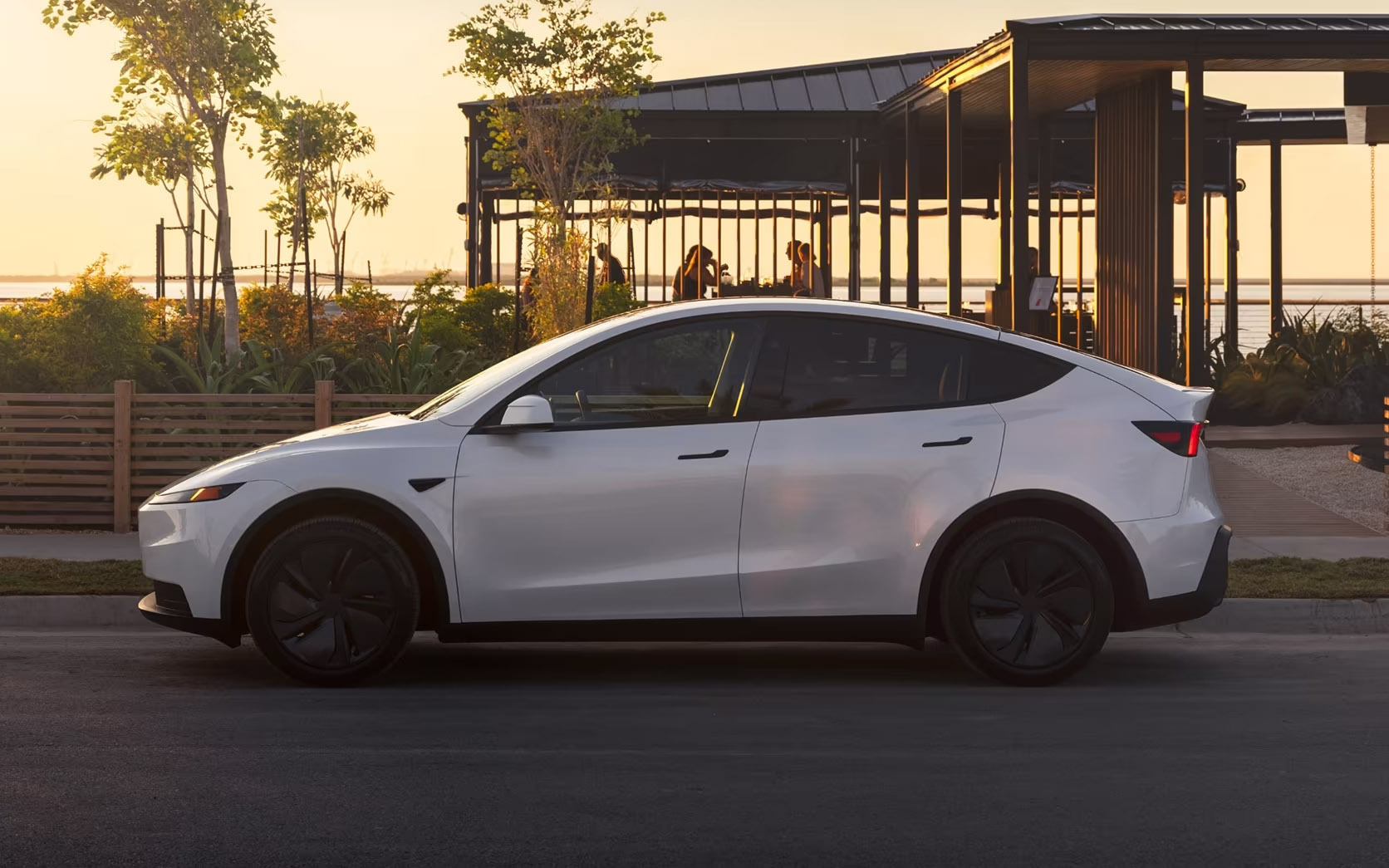
The Model Y still sits at the top of the American EV charts by a margin that borders on embarrassing for the rest of the industry. More than 357,000 found buyers last year, north of five times the volume of the Chevy Equinox EV, which finished 2025 as the best-selling non-Tesla EV. However, there’s some unwelcome news for those shopping for a new Model Y.

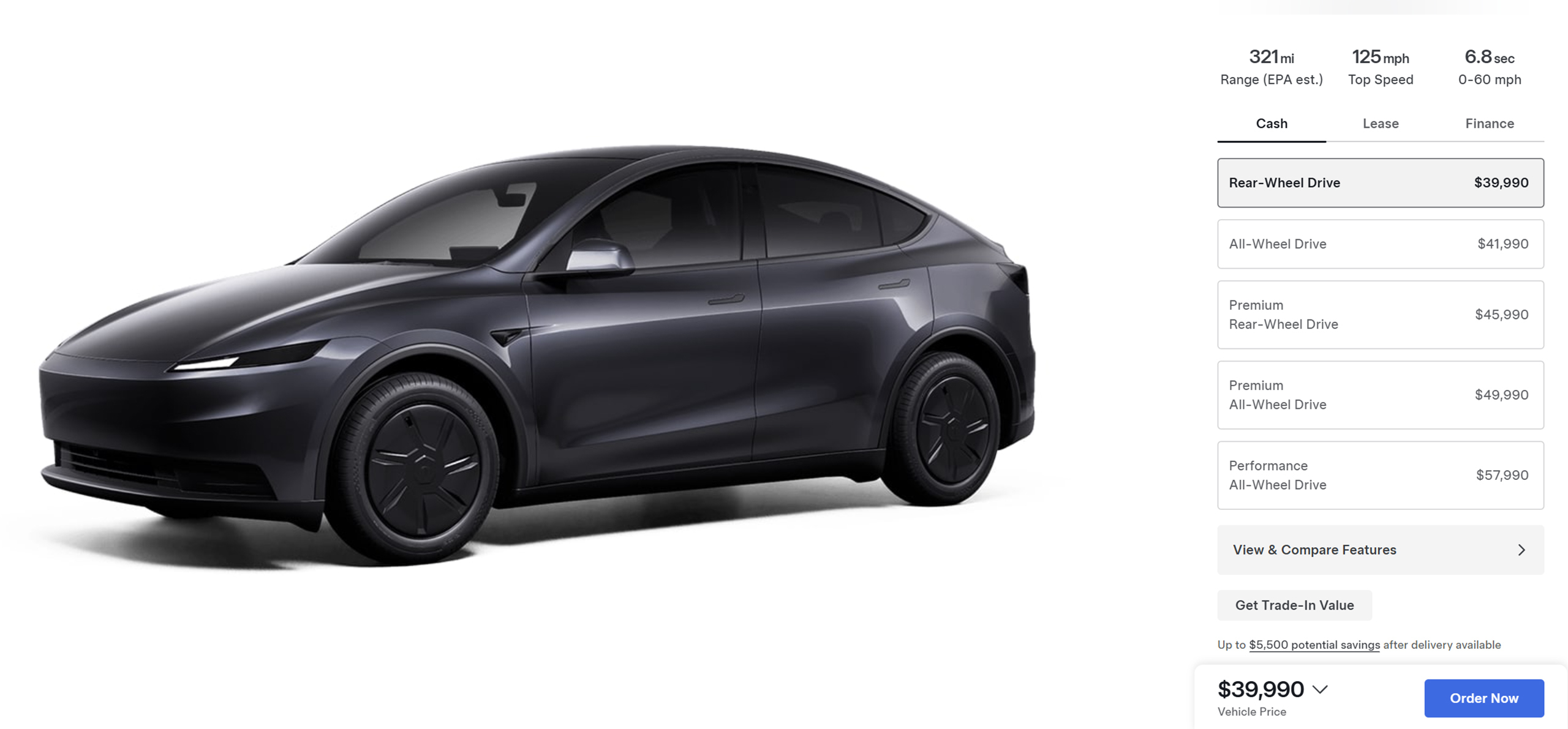
While the price hikes are relatively small, they may be enough to convince some to look elsewhere for their next EV. The entry-level Model Y RWD and AWD trims continue to start at $39,990 and $41,990 respectively, but the mid-range Premium RWD climbs $1,000 to $45,990, an increase of 2.2 percent.

Read: Tesla’s Model Y Just Became The First Vehicle To Pass America’s New Safety Tests

Tesla has applied the same $1,000 walk to the Premium AWD, which now lists at $48,990, while also bumping up the MSRP of the Model Y Performance from $57,490 to $57,990. All prices exclude delivery fees and local state taxes.

Getting Ready To Launch The Six-Seat Model Y L?

 Tesla’s First Model Y Price Hike In Two Years Skips The Cheapest Version

In typical Tesla fashion, the company has offered no explanation for the increases, and they have not been paired with the kind of model-year refresh other automakers usually point to when they tap the price tag. This is the first Model Y hike since 2024, which leaves the increases comfortably below the current 3.8 percent annual inflation rate.

The Model Y line-up may soon grow in the United States with the launch of the three-row Model Y L, first introduced in China and since added to the line-up in several other markets, including the UK and Australia. A prototype of the six-seat Model Y was recently spotted being tested on US roads, perhaps indicating that a local launch is imminent. If it does indeed land locally, prices will likely start just north of $50,000.

\\\\\\\

Tesla’s Best Color Returns From The Model S Grave, Free On One Trim Only

  • Tesla has dropped Deep Blue Metallic and introduced Marine Blue.
  • Frost Blue Metallic from the Model S is now available for the 3 and Y.
  • Sadly, Frost Blue Metallic is only offered for the Performance models.

Tesla has never been known for offering particularly exciting or flamboyant paint schemes, generally opting for subtlety over pizzazz. However, the Model 3 and Model Y have just been updated with two new shades of blue in the United States, and both look superb.

The first new color is dubbed Marine Blue, and it’s available for the Premium Rear-Wheel Drive and Premium All-Wheel Drive versions of the Model 3 and Model Y. Marine Blue is a deep shade that replaces Deep Blue Metallic, which was brighter and a little more eye-catching.

Read: Americans Pay $37K For The Cheapest Tesla, Canada Got A Chinese One For $29K

As before, those shopping on a budget and looking to buy the entry-level Rear-Wheel Drive or All-Wheel Drive versions of the Model 3 or Model Y don’t get this new color and still only have Stealth Grey, Pearl White Multi-Coat, and Diamond Black to choose from.

In the US, Marine Blue adds $1,000 to the price of applicable Model 3s and Model Ys. In Canada, it costs CA$1,300 (US$940).

Exclusive Performance Color

\\\\\\

The second new color introduced by Tesla is Frost Blue Metallic. It’s exclusive to the Model 3 Performance and Model Y Performance. This isn’t the first time this color has been offered by Tesla, as it was previously available on the Model S and Model X before those models were discontinued. Of all the colors that Tesla offers, Frost Blue Metallic might be our favorite, alongside Ultra Red.

What’s more, Frost Blue Metallic is a no-cost option in the US. It’s also been launched for the Model 3 Performance in Canada, though it’s not yet clear whether it will be added to the Model Y Performance locally.

\\\\\\\

Side By Side, The Rivian R2 And Model Y Look Like They’re From Different Planets

  • Rivian’s new entry-level electric SUV has a lot going for it.
  • The R2 is taller than a Model Y, but surprisingly, it’s also shorter.
  • Driving the R2 Performance are dual electric motors with 656 hp.

In a market where electric SUVs are starting to blur into one another, standing out is no longer optional. The Rivian R2 is a pivotal model for the brand, bringing its EV technology into a smaller, more affordable package. If Rivian wants to grow into a true volume manufacturer and challenge legacy players, the R2 needs to land with buyers.

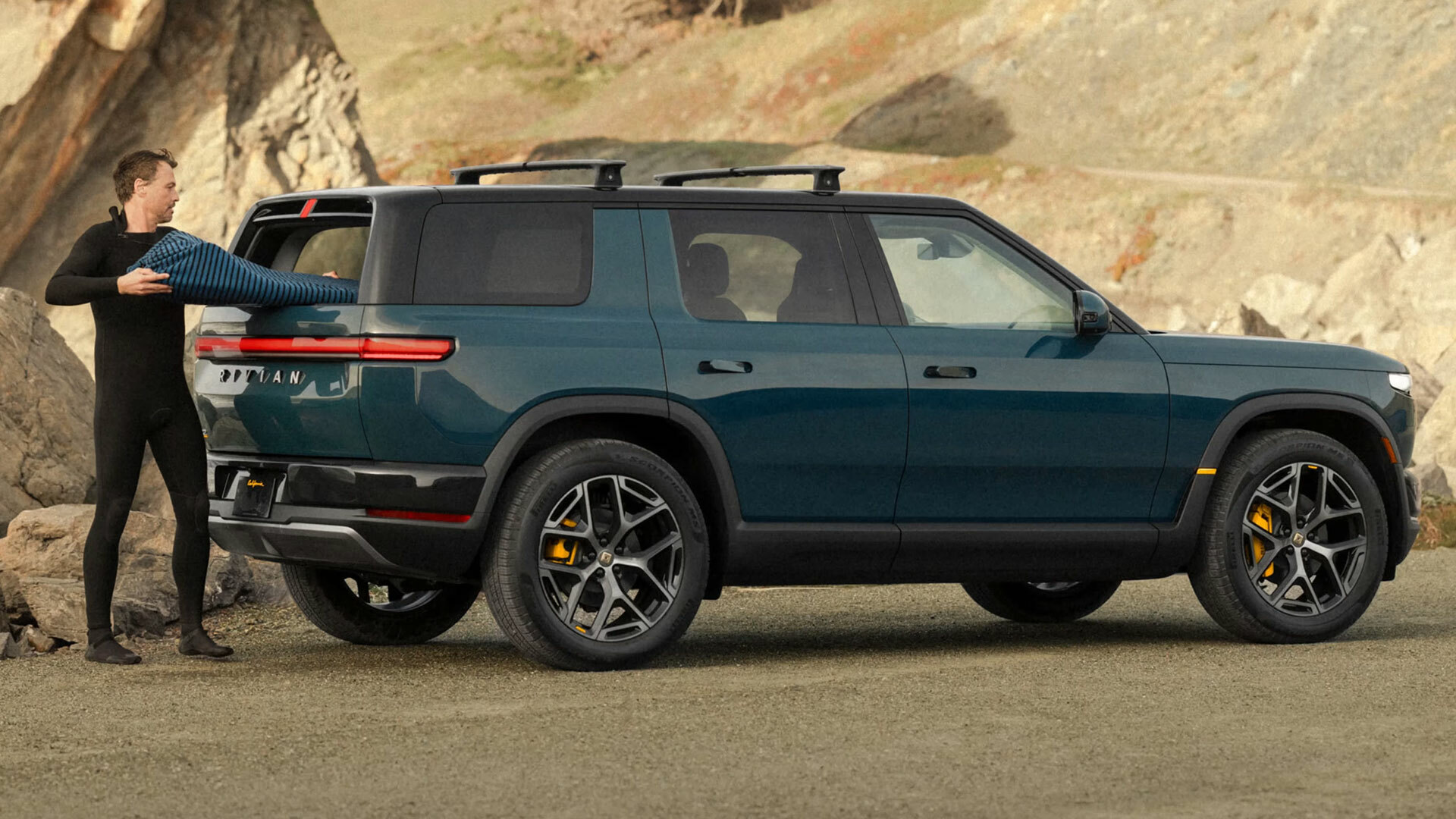
Its biggest hurdle is persuading shoppers to choose it over the Model Y, still America’s best-selling EV by a wide margin that even Tesla’s own Model 3 does not approach, let alone anything else. As these side-by-side photos of an R2 and a Model Y show, the pair have similar footprints but look absolutely nothing alike.

Read: Rivian R2 And Jeep Recon Solve The Same Problem, But Which One Solves It For You?

These photos, captured by Reddit user SciencesNotStudies at Rivian’s headquarters, show both vehicles charging next to each other. Whereas Tesla opted for a sleek profile in the Model Y, making it look like a bloated Model 3 rather than a traditional SUV, the Rivian R2 is very different. It’s boxier, stands taller, and is much more upright, looking just like the R1, albeit on a slightly smaller scale.

Interestingly, the Model Y is slightly longer than the R2, measuring 188.6 inches (4,790 mm) compared to the Rivian’s 185.9 inches (4,722 mm). The R2 is also slightly narrower at 75 inches (1,905 mm), versus 75.6 inches (1,920 mm) for the Tesla.

The biggest gap appears in height, with the R2 standing 66.9 inches (1,700 mm) tall compared to the Model Y’s 63.9 inches (1,624 mm). The Rivian’s wheelbase is also 1.8 inches longer, at 115.6 inches (2,935 mm) compared to 113.8 inches (2,890 mm) for the Tesla.

The ground clearance also differs dramatically between the pair. Like the R1, the R2 has been designed to be right at home off-roading, offering 9.6 inches (245 mm) of clearance compared to the Model Y’s 6.0 inches (152 mm).

What About Performance?

 Side By Side, The Rivian R2 And Model Y Look Like They’re From Different Planets

The first version of the R2 to be sold, the Performance Launch Edition, rocks a pair of electric motors delivering 656 hp and an 88.7 kWh battery pack, giving it slightly more power than the Model Y Performance with 618 hp and better range, 328 miles (528 km) compared to 306 miles (492 km). However, as the Tesla weighs less, it hits 60 mph (96 km/h) in 3.3 seconds compared to the R2’s 3.6 seconds.

Where The Numbers Stop Favoring Rivian

And then there’s pricing, which is not doing Rivian many favors on paper. The R2 Performance Launch Edition starts at $57,990, essentially mirroring the $57,490 Model Y Performance. However, step down to the mid-tier R2 Premium with 450 hp and all-wheel drive, and you’re still looking at $53,990, a noticeable jump over Tesla’s Model Y Premium AWD at $48,990.

Also: Rivian R2 Starts At $57,990, But Cheaper Versions Are Still Coming

Rivian has confirmed a base rear-wheel-drive R2 at $45,000, though that version will not arrive until 2027, which is a long wait. Tesla, meanwhile, already covers that ground with two RWD options, starting at $39,990 for the standard version and $44,990 for the Premium.

Although the R2 is Rivian’s answer to the Tesla Model Y, matching its sales volume will be a tall order. Like the R1, it appears to lean toward a more niche appeal and could end up competing more closely with models like the Jeep Recon.

\\\\\\\\\

Lead image Reddit / SciencesNotStudies

❌
❌