Reading view

There are new articles available, click to refresh the page.

New propulsion system could make tiny satellites both fast and fuel-efficient

MIT engineers are testing a new propulsion system that combines the power and speed of conventional chemical thrusters with the precision and fuel-efficiency of electrical thrusters. 

The system could enable the design of nimbler, more flexible small satellites, which could perform both fast, powerful maneuvers and slower, precise adjustments, depending on the mission and moment at hand.

The key to the new system is a special propellant that can power both chemical and electrical thrusters, which traditionally have required separate, bulky fuel sources. 

“If you can have chemical and electrical propulsion in one small package, it’s the best of both worlds,” says Amelia Bruno, a former postdoc in MIT’s Department of Aeronautics and Astronautics (AeroAstro). “This opens the door for small satellites to do even more science, more observations, and more interesting missions, all on a smaller and cheaper platform.” 

Bruno is the lead author of a study appearing this week in the Journal of Propulsion and Power showing that a type of “green monopropellant” originally developed by the U.S. Air Force for use in chemical propulsion in space can also effectively power tiny “electrospray” thrusters. Electrospray thrusters are dime-sized rockets that use electric fields to charge up a liquid propellant’s particles, which are then shot into space as a thrust-generating spray.

Electrospray thrusters are extremely fuel-efficient and can perform slow and precise maneuvers, such as pushing a small spacecraft bit by bit through a long, interplanetary journey. Chemical thrusters, in contrast, require a large fuel supply to perform short and fast bursts, for instance to quickly ascend and descend, or speed up and slow down. 

Now that the MIT group has found a propellant that can fuel both chemical and electrospray thrusters, they see big potential for small spacecraft. The team is working with NASA to launch the Green Propulsion Dual Mode mission — a briefcase-sized CubeSat that will carry a chemical thruster and four electrospray thrusters, all fueled by a single propellant tank. The mission will be the first to test such a two-in-one propulsion system for small spacecraft. If it is successful, Bruno says the mission could pave the way for small satellites to explore beyond Earth’s orbit. 

“We could send CubeSats to Mars, or the asteroid belt, where they could make the journey slowly, using electrospray thrusters,” says study co-author Paulo Lozano, the Miguel Alemán Velasco Professor of Aeronautics and Astronautics at MIT. “You could then use your chemical thrusters to quickly move to look at interesting features. You could have a lot more flexibility to do a lot more things.”

The study’s co-authors also include Matthew Corrado SM ’22, PhD ’26.

A sea of ions

Lozano’s group at MIT designs, fabricates, and tests electrospray thrusters for use in satellites that range from the size of a lunchbox to a small carry-on suitcase. Compared to conventional satellites, these microsatellites are significantly smaller and cheaper to launch into space.

But smaller spacecraft require smaller everything else, including propulsion systems. In that respect, electrospray thrusters are a good fit. The thrusters Lozano develops are about the size of a thumbnail. Each thruster sits atop a small reservoir of ionic liquid propellant. When the reservoir is connected to a battery, the battery supplies some amount of voltage that electrically charges a corresponding amount of ions in the liquid. The charged particles are then channeled out of the reservoir, through the thruster’s tips and into space as a thrust-inducing spray. 

Over the past decade, Lozano has tested many thruster designs, under varying conditions, and with various types of ionic liquid propellant — a fuel that is essentially made from salts that can remain in liquid form. 

“Ionic liquids are very stable and can even remain a liquid in space, which not a lot of materials can do,” Bruno says. “And it’s basically a sea of ions, which is why we base our technology around it, so we can pull those ions out into an electrospray.”

Bruno and Lozano have collaborated with the U.S. Air Force, which synthesized a new kind of ionic liquid propellant — the Advanced SpaceCraft Energetic Non-Toxic propellant (ASCENT) — which was being tested in chemical thrusters. Chemical thrusters are high-force propulsion systems typically associated with launching rockets and performing hard and fast maneuvers once in space. ASCENT was designed as a “green,” less toxic alternative to hydrazine, which has been the traditional fuel source for chemical propulsion and is extremely hazardous to handle. 

“ASCENT happens to be an ionic liquid mixture,” Bruno says. “And we said, hey, that’s the stuff we typically use. Theoretically, this should work. Let’s go figure out how.”

Spray and spin

In their new study, Bruno, Lozano, and Corrado tested the performance of electrospray thrusters that they fueled with ASCENT. Each thruster they used was attached to a small cube-shaped reservoir about the size of a Lego brick. They filled each reservoir with 1 gram of ASCENT, a liquid that has a viscosity similar to baby oil. They then attached a thruster to opposite sides of a CubeSat, which they set on a MagLev stand — a custom testbed that is designed to magnetically levitate a sample or device. The MagLev in Lozano’s lab is installed inside a large vacuum chamber, which the researchers can tune to mimic the conditions in space.

Over multiple experiments, the team remotely applied varying levels of voltage to activate the thrusters, which in turn produced a spray that spun the CubeSat around, like a floating, spinning top. The researchers measured the amount of thrust produced with each trial, and calculated ASCENT’s fuel efficiency as they ran the thrusters continuously over periods lasting up to 100 hours. 

In the end, they found that ASCENT was able to successfully fuel each electrospray thruster. What’s more, the propellant, which was originally intended for chemical propulsion, was just as efficient as other, conventional ionic liquids at propelling electric thrusters.

“Compared to our normal electrospray propellants, ASCENT can provide similar performance in terms of thrust,” Bruno says. “Now that we know our thrusters work with ASCENT, we can start thinking of all the ways we can make them even better.” 

Now that ASCENT has been proven to work in both chemical and electrical propulsion, she and Lozano say that a single tank of the fuel can be used to power both types of thrusters, all in a compact, two-in-one system that could fit within a small CubeSat. The team will test the idea with NASA’s Green Propulsion Dual Mode mission, which is scheduled to launch in November. 

“This will be the first time that a satellite will have a shared propellant tank,” says Lozano, who notes that in addition to long, exploratory interplanetary missions, small satellites equipped with both chemical and electrical propulsion could also be useful for missions closer to Earth, such as for weather and climate observations. 

“Say there’s a storm coming, and you’d want to deploy your constellation of small satellites to observe over one location,” he says. “You could choose to send them quickly or slowly depending on the nature of the observation. And the only way to do that is if you have two propulsion systems, which is now possible.”

This research is supported, in part, by NASA.
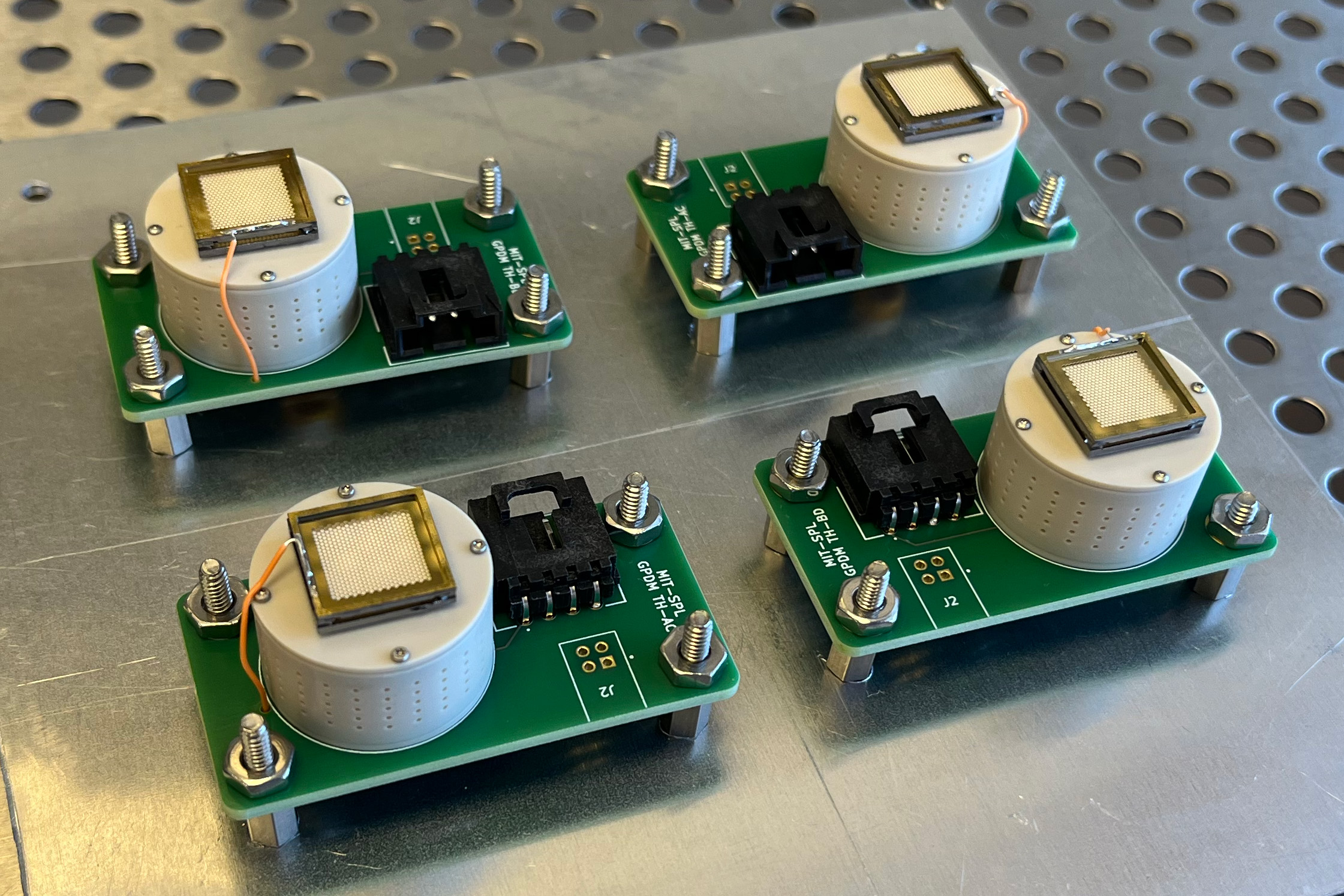
© Image: Amelia Bruno
These four flight unit electrospray thrusters were delivered by MIT Space Propulsion Laboratory to NASA for the upcoming Green Propulsion Dual Mode (GPDM) mission.

Driving American battery innovation forward

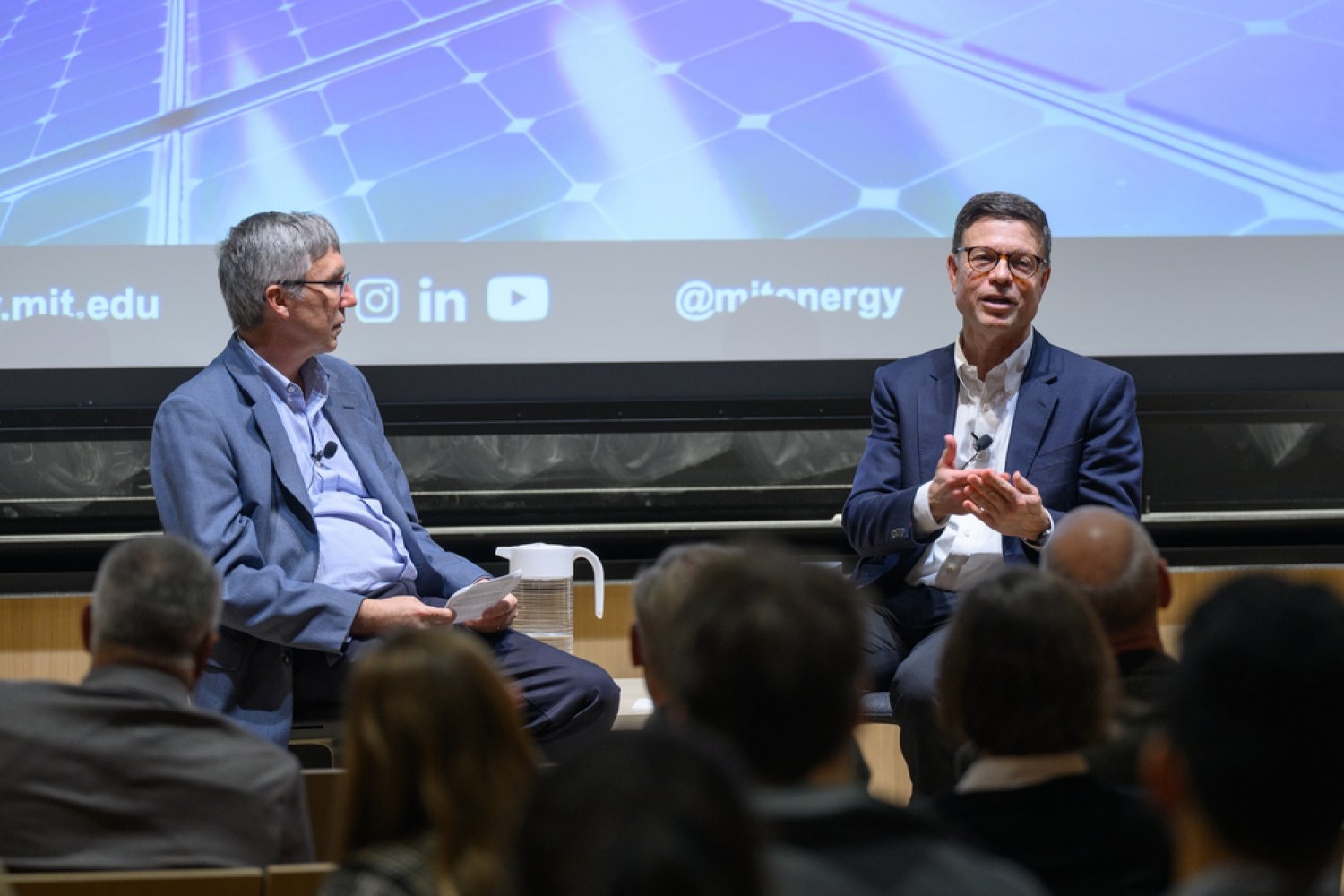
Advancements in battery innovation are transforming both mobility and energy systems alike, according to Kurt Kelty, vice president of battery, propulsion, and sustainability at General Motors (GM). At the MIT Energy Initiative (MITEI) Fall Colloquium, Kelty explored how GM is bringing next-generation battery technologies from lab to commercialization, driving American battery innovation forward. The colloquium is part of the ongoing MITEI Presents: Advancing the Energy Transition speaker series.

At GM, Kelty’s team is primarily focused on three things: first, improving affordability to get more electric vehicles (EVs) on the road. “How do you drive down the cost?” Kelty asked the audience. “It's the batteries. The batteries make up about 30 percent of the cost of the vehicle.” Second, his team strives to improve battery performance, including charging speed and energy density. Third, they are working on localizing the supply chain. “We've got to build up our resilience and our independence here in North America, so we're not relying on materials coming from China,” Kelty explained.

To aid their efforts, resources are being poured into the virtualization space, significantly cutting down on time dedicated to research and development. Now, Kelty’s team can do modeling up front using artificial intelligence, reducing what previously would have taken months to a couple of days.

“If you want to modify … the nickel content ever so slightly, we can very quickly model: ‘OK, how’s that going to affect the energy density? The safety? How’s that going to affect the charge capability?’” said Kelty. “We can look at that at the cell level, then the pack level, then the vehicle level.”

Kelty revealed that they have found a solution that addresses affordability, accessibility, and commercialization: lithium manganese-rich (LMR) batteries. Previously, the industry looked to reduce costs by lowering the amount of cobalt in batteries by adding greater amounts of nickel. These high-nickel batteries are in most cars on the road in the United States due to their high range. LMR batteries, though, take things a step further by reducing the amount of nickel and adding more manganese, which drives the cost of batteries down even further while maintaining range.

Lithium-iron-phosphate (LFP) batteries are the chemistry of choice in China, known for low cost, high cycle life, and high safety. With LMR batteries, the cost is comparable to LFP with a range that is closer to high-nickel. “That’s what’s really a breakthrough,” said Kelty.

LMR batteries are not new, but there have been challenges to adopting them, according to Kelty. “People knew about it, but they didn’t know how to commercialize it. They didn’t know how to make it work in an EV,” he explained. Now that GM has figured out commercialization, they will be the first to market these batteries in their EVs in 2028.

Kelty also expressed excitement over the use of vehicle-to-grid technologies in the future. Using a bidirectional charger with a two-way flow of energy, EVs could charge, but also send power from their batteries back to the electrical grid. This would allow customers to charge “their vehicles at night when the electricity prices are really low, and they can discharge it during the day when electricity rates are really high,” he said.

In addition to working in the transportation sector, GM is exploring ways to extend their battery expertise into applications in grid-scale energy storage. “It’s a big market right now, but it’s growing very quickly because of the data center growth,” said Kelty.

When looking to the future of battery manufacturing and EVs in the United States, Kelty remains optimistic: “we’ve got the technology here to make it happen. We’ve always had the innovation here. Now, we’re getting more and more of the manufacturing. We’re getting that all together. We’ve got just tremendous opportunity here that I’m hopeful we’re going to be able to take advantage of and really build a massive battery industry here.”

This speaker series highlights energy experts and leaders at the forefront of the scientific, technological, and policy solutions needed to transform our energy systems. Visit MITEI’s Events page for more information on this and additional events.

© Photo: Gretchen Ertl

Kurt Kelty (right), vice president of battery, propulsion, and sustainability at General Motors, joined MITEI's William Green at the 2025 MIT Energy Initiative Fall Colloquium. Kelty explained how GM is developing and commercializing next-generation battery technologies.

How artificial intelligence can help achieve a clean energy future

There is growing attention on the links between artificial intelligence and increased energy demands. But while the power-hungry data centers being built to support AI could potentially stress electricity grids, increase customer prices and service interruptions, and generally slow the transition to clean energy, the use of artificial intelligence can also help the energy transition.

For example, use of AI is reducing energy consumption and associated emissions in buildings, transportation, and industrial processes. In addition, AI is helping to optimize the design and siting of new wind and solar installations and energy storage facilities.

On electric power grids, using AI algorithms to control operations is helping to increase efficiency and reduce costs, integrate the growing share of renewables, and even predict when key equipment needs servicing to prevent failure and possible blackouts. AI can help grid planners schedule investments in generation, energy storage, and other infrastructure that will be needed in the future. AI is also helping researchers discover or design novel materials for nuclear reactors, batteries, and electrolyzers.

Researchers at MIT and elsewhere are actively investigating aspects of those and other opportunities for AI to support the clean energy transition. At its 2025 research conference, MITEI announced the Data Center Power Forum, a targeted research effort for MITEI member companies interested in addressing the challenges of data center power demand.

Controlling real-time operations

Customers generally rely on receiving a continuous supply of electricity, and grid operators get help from AI to make that happen — while optimizing the storage and distribution of energy from renewable sources at the same time.

But with more installation of solar and wind farms — both of which provide power in smaller amounts, and intermittently — and the growing threat of weather events and cyberattacks, ensuring reliability is getting more complicated. “That’s exactly where AI can come into the picture,” explains Anuradha Annaswamy, a senior research scientist in MIT’s Department of Mechanical Engineering and director of MIT’s Active-Adaptive Control Laboratory. “Essentially, you need to introduce a whole information infrastructure to supplement and complement the physical infrastructure.”

The electricity grid is a complex system that requires meticulous control on time scales ranging from decades all the way down to microseconds. The challenge can be traced to the basic laws of power physics: electricity supply must equal electricity demand at every instant, or generation can be interrupted. In past decades, grid operators generally assumed that generation was fixed — they could count on how much electricity each large power plant would produce — while demand varied over time in a fairly predictable way. As a result, operators could commission specific power plants to run as needed to meet demand the next day. If some outages occurred, specially designated units would start up as needed to make up the shortfall.

Today and in the future, that matching of supply and demand must still happen, even as the number of small, intermittent sources of generation grows and weather disturbances and other threats to the grid increase. AI algorithms provide a means of achieving the complex management of information needed to forecast within just a few hours which plants should run while also ensuring that the frequency, voltage, and other characteristics of the incoming power are as required for the grid to operate properly.

Moreover, AI can make possible new ways of increasing supply or decreasing demand at times when supplies on the grid run short. As Annaswamy points out, the battery in your electric vehicle (EV), as well as the one charged up by solar panels or wind turbines, can — when needed — serve as a source of extra power to be fed into the grid. And given real-time price signals, EV owners can choose to shift charging from a time when demand is peaking and prices are high to a time when demand and therefore prices are both lower. In addition, new smart thermostats can be set to allow the indoor temperature to drop or rise —  a range defined by the customer — when demand on the grid is peaking. And data centers themselves can be a source of demand flexibility: selected AI calculations could be delayed as needed to smooth out peaks in demand. Thus, AI can provide many opportunities to fine-tune both supply and demand as needed.

In addition, AI makes possible “predictive maintenance.” Any downtime is costly for the company and threatens shortages for the customers served. AI algorithms can collect key performance data during normal operation and, when readings veer off from that normal, the system can alert operators that something might be going wrong, giving them a chance to intervene. That capability prevents equipment failures, reduces the need for routine inspections, increases worker productivity, and extends the lifetime of key equipment.

Annaswamy stresses that “figuring out how to architect this new power grid with these AI components will require many different experts to come together.” She notes that electrical engineers, computer scientists, and energy economists “will have to rub shoulders with enlightened regulators and policymakers to make sure that this is not just an academic exercise, but will actually get implemented. All the different stakeholders have to learn from each other. And you need guarantees that nothing is going to fail. You can’t have blackouts.”

Using AI to help plan investments in infrastructure for the future

Grid companies constantly need to plan for expanding generation, transmission, storage, and more, and getting all the necessary infrastructure built and operating may take many years, in some cases more than a decade. So, they need to predict what infrastructure they’ll need to ensure reliability in the future. “It’s complicated because you have to forecast over a decade ahead of time what to build and where to build it,” says Deepjyoti Deka, a research scientist in MITEI.

One challenge with anticipating what will be needed is predicting how the future system will operate. “That’s becoming increasingly difficult,” says Deka, because more renewables are coming online and displacing traditional generators. In the past, operators could rely on “spinning reserves,” that is, generating capacity that’s not currently in use but could come online in a matter of minutes to meet any shortfall on the system. The presence of so many intermittent generators — wind and solar — means there’s now less stability and inertia built into the grid. Adding to the complication is that those intermittent generators can be built by various vendors, and grid planners may not have access to the physics-based equations that govern the operation of each piece of equipment at sufficiently fine time scales. “So, you probably don’t know exactly how it’s going to run,” says Deka.

And then there’s the weather. Determining the reliability of a proposed future energy system requires knowing what it’ll be up against in terms of weather. The future grid has to be reliable not only in everyday weather, but also during low-probability but high-risk events such as hurricanes, floods, and wildfires, all of which are becoming more and more frequent, notes Deka. AI can help by predicting such events and even tracking changes in weather patterns due to climate change.

Deka points out another, less-obvious benefit of the speed of AI analysis. Any infrastructure development plan must be reviewed and approved, often by several regulatory and other bodies. Traditionally, an applicant would develop a plan, analyze its impacts, and submit the plan to one set of reviewers. After making any requested changes and repeating the analysis, the applicant would resubmit a revised version to the reviewers to see if the new version was acceptable. AI tools can speed up the required analysis so the process moves along more quickly. Planners can even reduce the number of times a proposal is rejected by using large language models to search regulatory publications and summarize what’s important for a proposed infrastructure installation.

Harnessing AI to discover and exploit advanced materials needed for the energy transition

“Use of AI for materials development is booming right now,” says Ju Li, MIT’s Carl Richard Soderberg Professor of Power Engineering. He notes two main directions.

First, AI makes possible faster physics-based simulations at the atomic scale. The result is a better atomic-level understanding of how composition, processing, structure, and chemical reactivity relate to the performance of materials. That understanding provides design rules to help guide the development and discovery of novel materials for energy generation, storage, and conversion needed for a sustainable future energy system.

And second, AI can help guide experiments in real time as they take place in the lab. Li explains: “AI assists us in choosing the best experiment to do based on our previous experiments and — based on literature searches — makes hypotheses and suggests new experiments.”

He describes what happens in his own lab. Human scientists interact with a large language model, which then makes suggestions about what specific experiments to do next. The human researcher accepts or modifies the suggestion, and a robotic arm responds by setting up and performing the next step in the experimental sequence, synthesizing the material, testing the performance, and taking images of samples when appropriate. Based on a mix of literature knowledge, human intuition, and previous experimental results, AI thus coordinates active learning that balances the goals of reducing uncertainty with improving performance. And, as Li points out, “AI has read many more books and papers than any human can, and is thus naturally more interdisciplinary.”

The outcome, says Li, is both better design of experiments and speeding up the “work flow.” Traditionally, the process of developing new materials has required synthesizing the precursors, making the material, testing its performance and characterizing the structure, making adjustments, and repeating the same series of steps. AI guidance speeds up that process, “helping us to design critical, cheap experiments that can give us the maximum amount of information feedback,” says Li.

“Having this capability certainly will accelerate material discovery, and this may be the thing that can really help us in the clean energy transition,” he concludes. “AI [has the potential to] lubricate the material-discovery and optimization process, perhaps shortening it from decades, as in the past, to just a few years.” 

MITEI’s contributions

At MIT, researchers are working on various aspects of the opportunities described above. In projects supported by MITEI, teams are using AI to better model and predict disruptions in plasma flows inside fusion reactors — a necessity in achieving practical fusion power generation. Other MITEI-supported teams are using AI-powered tools to interpret regulations, climate data, and infrastructure maps in order to achieve faster, more adaptive electric grid planning. AI-guided development of advanced materials continues, with one MITEI project using AI to optimize solar cells and thermoelectric materials.

Other MITEI researchers are developing robots that can learn maintenance tasks based on human feedback, including physical intervention and verbal instructions. The goal is to reduce costs, improve safety, and accelerate the deployment of the renewable energy infrastructure. And MITEI-funded work continues on ways to reduce the energy demand of data centers, from designing more efficient computer chips and computing algorithms to rethinking the architectural design of the buildings, for example, to increase airflow so as to reduce the need for air conditioning.

In addition to providing leadership and funding for many research projects, MITEI acts as a convenor, bringing together interested parties to consider common problems and potential solutions. In May 2025, MITEI’s annual spring symposium — titled “AI and energy: Peril and promise” — brought together AI and energy experts from across academia, industry, government, and nonprofit organizations to explore AI as both a problem and a potential solution for the clean energy transition. At the close of the symposium, William H. Green, director of MITEI and Hoyt C. Hottel Professor in the MIT Department of Chemical Engineering, noted, “The challenge of meeting data center energy demand and of unlocking the potential benefits of AI to the energy transition is now a research priority for MITEI.”

© Image: Igor Borisenko/iStock

Researchers at MIT and elsewhere are investigating how AI can be harnessed to support the clean energy transition.

Burning things to make things

Around 80 percent of global energy production today comes from the combustion of fossil fuels. Combustion, or the process of converting stored chemical energy into thermal energy through burning, is vital for a variety of common activities including electricity generation, transportation, and domestic uses like heating and cooking — but it also yields a host of environmental consequences, contributing to air pollution and greenhouse gas emissions.

Sili Deng, the Doherty Chair in Ocean Utilization and associate professor of mechanical engineering at MIT, is leading research to drive the transition from the heavy dependence on fossil fuels to renewable energy with storage.

“I was first introduced to flame synthesis in my junior year in college,” Deng says. “I realized you can actually burn things to make things, [and] that was really fascinating.”

Deng says she ultimately picked combustion as a focus of her work because she likes the intellectual challenge the concept offers. “In combustion you have chemistry, and you have fluid mechanics. Each subject is very rich in science. This also has very strong engineering implications and applications.”

Deng’s research group targets three areas: building up fundamental knowledge on combustion processes and emissions; developing alternative fuels and metal combustion to replace fossil fuels; and synthesizing flame-based materials for catalysis and energy storage, which can bring down the cost of manufacturing battery materials.

One focus of the team has been on low-cost, low-emission manufacturing of cathode materials for lithium-ion batteries. Lithium-ion batteries play an increasingly critical role in transportation electrification (e.g., batteries for electric vehicles) and grid energy storage for electricity that is generated from renewable energy sources like wind and solar. Deng’s team has developed a technology they call flame-assisted spray pyrolysis, or FASP, which can help reduce the high manufacturing costs associated with cathode materials.

FASP is based on flame synthesis, a technology that dates back nearly 3,000 years. In ancient China, this was the primary way black ink materials were made. “[People burned] vegetables or woods, such that afterwards they can collect the solidified smoke,” Deng explains. “For our battery applications, we can try to fit in the same formula, but of course with new tweaks.”

The team is also interested in developing alternative fuels, including looking at the use of metals like aluminum to power rockets. “We’re interested in utilizing aluminum as a fuel for civil applications,” Deng says, because aluminum is abundant in the earth, cheap, and it’s available globally. “What we are trying to do is to understand [aluminum combustion] and be able to tailor its ignition and propagation properties.”

Among other accolades, Deng is a 2025 recipient of the Hiroshi Tsuji Early Career Researcher Award from the Combustion Institute, an award that recognizes excellence in fundamental or applied combustion science research.

© Photo: John Freidah/MIT MechE

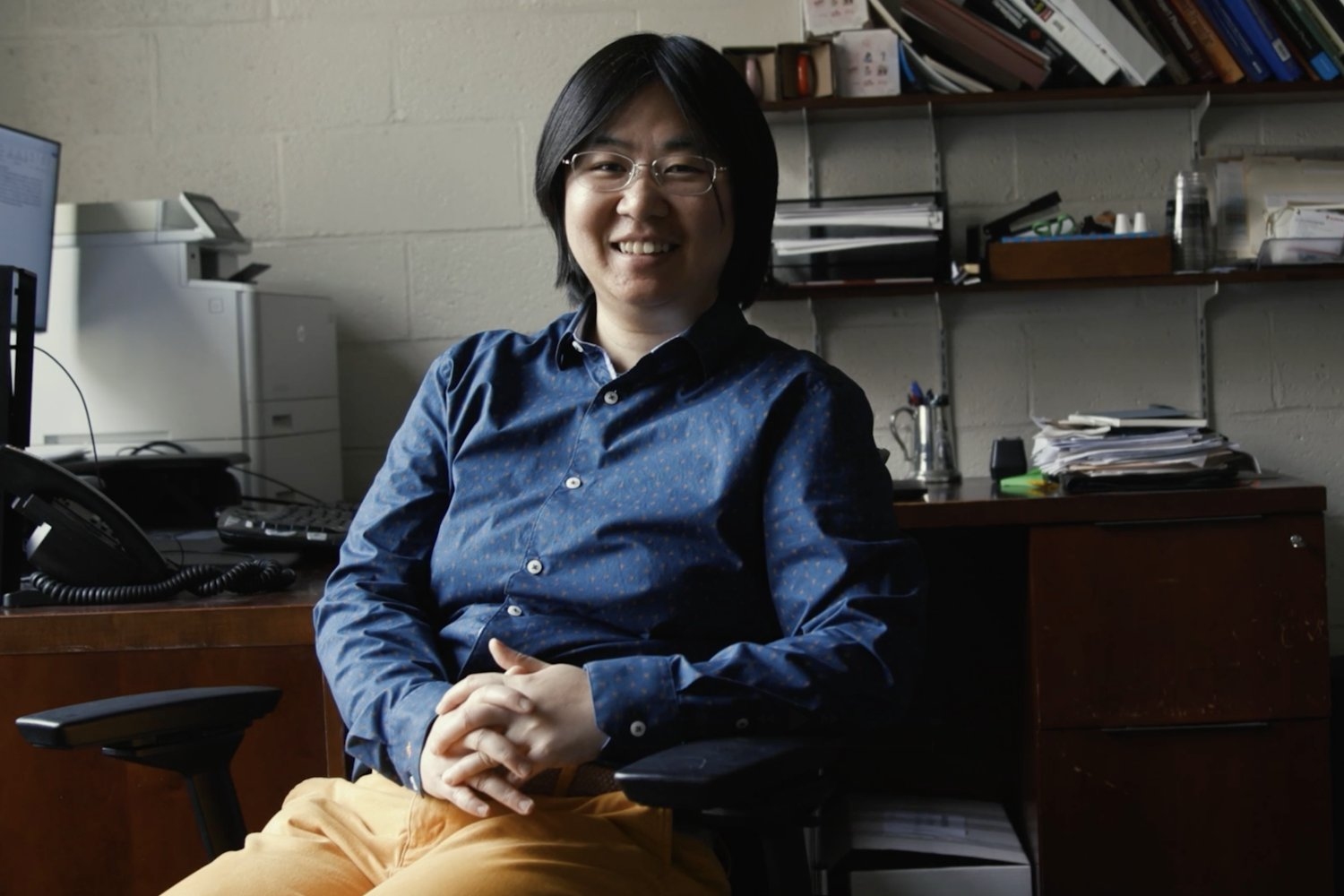
Associate Professor Sili Deng

Celebrating an academic-industry collaboration to advance vehicle technology

On May 6, MIT AgeLab’s Advanced Vehicle Technology (AVT) Consortium, part of the MIT Center for Transportation and Logistics, celebrated 10 years of its global academic-industry collaboration. AVT was founded with the aim of developing new data that contribute to automotive manufacturers, suppliers, and insurers’ real-world understanding of how drivers use and respond to increasingly sophisticated vehicle technologies, such as assistive and automated driving, while accelerating the applied insight needed to advance design and development. The celebration event brought together stakeholders from across the industry for a set of keynote addresses and panel discussions on critical topics significant to the industry and its future, including artificial intelligence, automotive technology, collision repair, consumer behavior, sustainability, vehicle safety policy, and global competitiveness.

Bryan Reimer, founder and co-director of the AVT Consortium, opened the event by remarking that over the decade AVT has collected hundreds of terabytes of data, presented and discussed research with its over 25 member organizations, supported members’ strategic and policy initiatives, published select outcomes, and built AVT into a global influencer with tremendous impact in the automotive industry. He noted that current opportunities and challenges for the industry include distracted driving, a lack of consumer trust and concerns around transparency in assistive and automated driving features, and high consumer expectations for vehicle technology, safety, and affordability. How will industry respond? Major players in attendance weighed in.

In a powerful exchange on vehicle safety regulation, John Bozzella, president and CEO of the Alliance for Automotive Innovation, and Mark Rosekind, former chief safety innovation officer of Zoox, former administrator of the National Highway Traffic Safety Administration, and former member of the National Transportation Safety Board, challenged industry and government to adopt a more strategic, data-driven, and collaborative approach to safety. They asserted that regulation must evolve alongside innovation, not lag behind it by decades. Appealing to the automakers in attendance, Bozzella cited the success of voluntary commitments on automatic emergency braking as a model for future progress. “That’s a way to do something important and impactful ahead of regulation.” They advocated for shared data platforms, anonymous reporting, and a common regulatory vision that sets safety baselines while allowing room for experimentation. The 40,000 annual road fatalities demand urgency — what’s needed is a move away from tactical fixes and toward a systemic safety strategy. “Safety delayed is safety denied,” Rosekind stated. “Tell me how you’re going to improve safety. Let’s be explicit.”

Drawing inspiration from aviation’s exemplary safety record, Kathy Abbott, chief scientific and technical advisor for the Federal Aviation Administration, pointed to a culture of rigorous regulation, continuous improvement, and cross-sectoral data sharing. Aviation’s model, built on highly trained personnel and strict predictability standards, contrasts sharply with the fragmented approach in the automotive industry. The keynote emphasized that a foundation of safety culture — one that recognizes that technological ability alone isn’t justification for deployment — must guide the auto industry forward. Just as aviation doesn’t equate absence of failure with success, vehicle safety must be measured holistically and proactively.

With assistive and automated driving top of mind in the industry, Pete Bigelow of Automotive News offered a pragmatic diagnosis. With companies like Ford and Volkswagen stepping back from full autonomy projects like Argo AI, the industry is now focused on Level 2 and 3 technologies, which refer to assisted and automated driving, respectively. Tesla, GM, and Mercedes are experimenting with subscription models for driver assistance systems, yet consumer confusion remains high. JD Power reports that many drivers do not grasp the differences between L2 and L2+, or whether these technologies offer safety or convenience features. Safety benefits have yet to manifest in reduced traffic deaths, which have risen by 20 percent since 2020. The recurring challenge: L3 systems demand that human drivers take over during technical difficulties, despite driver disengagement being their primary benefit, potentially worsening outcomes. Bigelow cited a quote from Bryan Reimer as one of the best he’s received in his career: “Level 3 systems are an engineer’s dream and a plaintiff attorney’s next yacht,” highlighting the legal and design complexity of systems that demand handoffs between machine and human.

In terms of the impact of AI on the automotive industry, Mauricio Muñoz, senior research engineer at AI Sweden, underscored that despite AI’s transformative potential, the automotive industry cannot rely on general AI megatrends to solve domain-specific challenges. While landmark achievements like AlphaFold demonstrate AI’s prowess, automotive applications require domain expertise, data sovereignty, and targeted collaboration. Energy constraints, data firewalls, and the high costs of AI infrastructure all pose limitations, making it critical that companies fund purpose-driven research that can reduce costs and improve implementation fidelity. Muñoz warned that while excitement abounds — with some predicting artificial superintelligence by 2028 — real progress demands organizational alignment and a deep understanding of the automotive context, not just computational power.

Turning the focus to consumers, a collision repair panel drawing Richard Billyeald from Thatcham Research, Hami Ebrahimi from Caliber Collision, and Mike Nelson from Nelson Law explored the unintended consequences of vehicle technology advances: spiraling repair costs, labor shortages, and a lack of repairability standards. Panelists warned that even minor repairs for advanced vehicles now require costly and complex sensor recalibrations — compounded by inconsistent manufacturer guidance and no clear consumer alerts when systems are out of calibration. The panel called for greater standardization, consumer education, and repair-friendly design. As insurance premiums climb and more people forgo insurance claims, the lack of coordination between automakers, regulators, and service providers threatens consumer safety and undermines trust. The group warned that until Level 2 systems function reliably and affordably, moving toward Level 3 autonomy is premature and risky.

While the repair panel emphasized today’s urgent challenges, other speakers looked to the future. Honda’s Ryan Harty, for example, highlighted the company’s aggressive push toward sustainability and safety. Honda aims for zero environmental impact and zero traffic fatalities, with plans to be 100 percent electric by 2040 and to lead in energy storage and clean power integration. The company has developed tools to coach young drivers and is investing in charging infrastructure, grid-aware battery usage, and green hydrogen storage. “What consumers buy in the market dictates what the manufacturers make,” Harty noted, underscoring the importance of aligning product strategy with user demand and environmental responsibility. He stressed that manufacturers can only decarbonize as fast as the industry allows, and emphasized the need to shift from cost-based to life-cycle-based product strategies.

Finally, a panel involving Laura Chace of ITS America, Jon Demerly of Qualcomm, Brad Stertz of Audi/VW Group, and Anant Thaker of Aptiv covered the near-, mid-, and long-term future of vehicle technology. Panelists emphasized that consumer expectations, infrastructure investment, and regulatory modernization must evolve together. Despite record bicycle fatality rates and persistent distracted driving, features like school bus detection and stop sign alerts remain underutilized due to skepticism and cost. Panelists stressed that we must design systems for proactive safety rather than reactive response. The slow integration of digital infrastructure — sensors, edge computing, data analytics — stems not only from technical hurdles, but procurement and policy challenges as well. 

Reimer concluded the event by urging industry leaders to re-center the consumer in all conversations — from affordability to maintenance and repair. With the rising costs of ownership, growing gaps in trust in technology, and misalignment between innovation and consumer value, the future of mobility depends on rebuilding trust and reshaping industry economics. He called for global collaboration, greater standardization, and transparent innovation that consumers can understand and afford. He highlighted that global competitiveness and public safety both hang in the balance. As Reimer noted, “success will come through partnerships” — between industry, academia, and government — that work toward shared investment, cultural change, and a collective willingness to prioritize the public good.

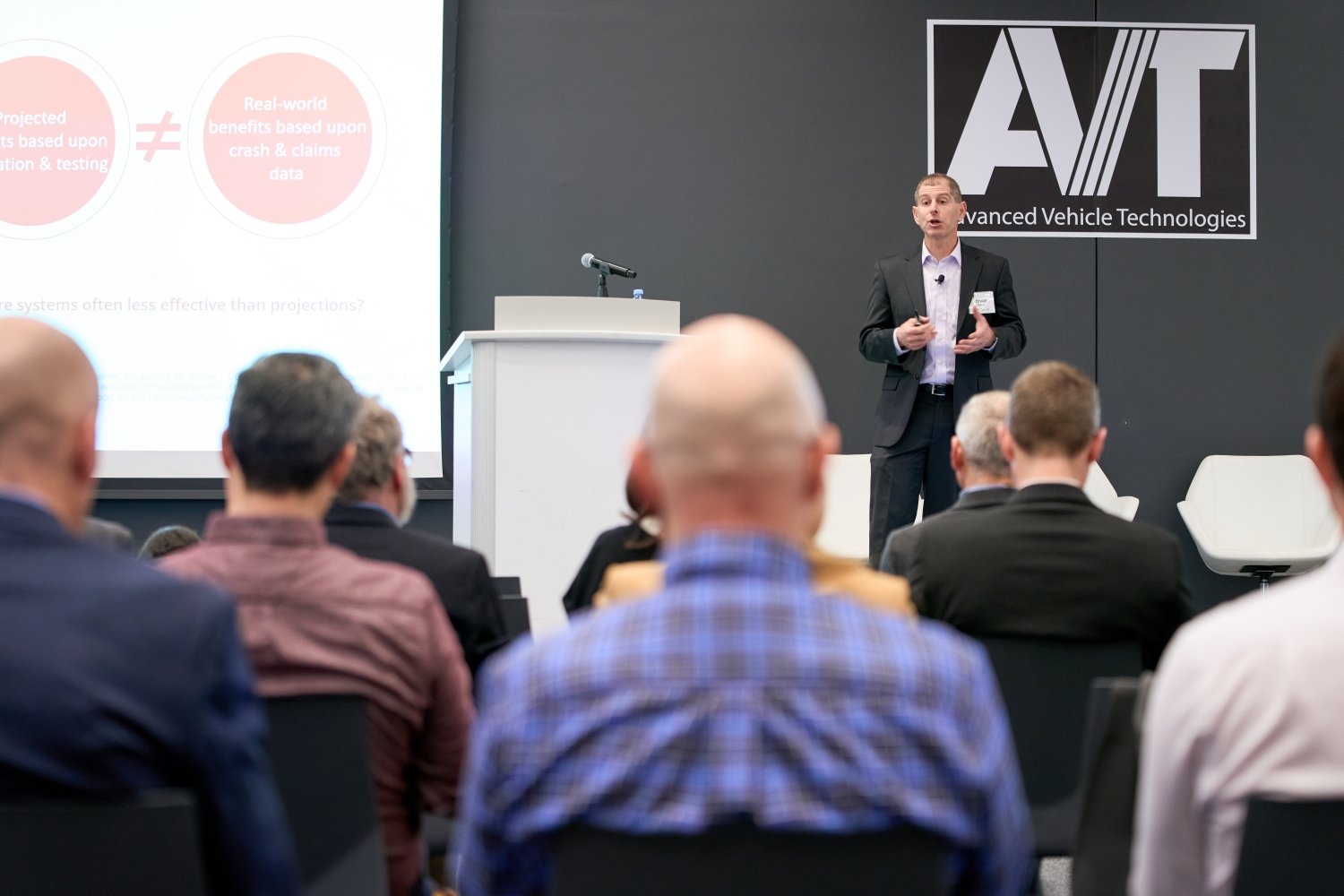
© Photo: Kelly Davidson Studio

Bryan Reimer, founder and co-director of the AVT Consortium, gives the opening remarks.

Driving innovation, from Silicon Valley to Detroit

Across a career’s worth of pioneering product designs, Doug Field’s work has shaped the experience of anyone who’s ever used a MacBook Air, ridden a Segway, or driven a Tesla Model 3.

But his newest project is his most ambitious yet: reinventing the Ford automobile, one of the past century’s most iconic pieces of technology.

As Ford’s chief electric vehicle (EV), digital, and design officer, Field is tasked with leading the development of the company’s electric vehicles, while making new software platforms central to all Ford models.

To bring Ford Motor Co. into that digital and electric future, Field effectively has to lead a fast-moving startup inside the legacy carmaker. “It is incredibly hard, figuring out how to do ‘startups’ within large organizations,” he concedes.

If anyone can pull it off, it’s likely to be Field. Ever since his time in MIT’s Leaders for Global Operations (then known as “Leaders in Manufacturing”) program studying organizational behavior and strategy, Field has been fixated on creating the conditions that foster innovation.

“The natural state of an organization is to make it harder and harder to do those things: to innovate, to have small teams, to go against the grain,” he says. To overcome those forces, Field has become a master practitioner of the art of curating diverse, talented teams and helping them flourish inside of big, complex companies.

“It’s one thing to make a creative environment where you can come up with big ideas,” he says. “It’s another to create an execution-focused environment to crank things out. I became intrigued with, and have been for the rest of my career, this question of how can you have both work together?”

Three decades after his first stint as a development engineer at Ford Motor Co., Field now has a chance to marry the manufacturing muscle of Ford with the bold approach that helped him rethink Apple’s laptops and craft Tesla’s Model 3 sedan. His task is nothing less than rethinking how cars are made and operated, from the bottom up.

“If it’s only creative or execution, you’re not going to change the world,” he says. “If you want to have a huge impact, you need people to change the course you’re on, and you need people to build it.”

A passion for design

From a young age, Field had a fascination with automobiles. “I was definitely into cars and transportation more generally,” he says. “I thought of cars as the place where technology and art and human design came together — cars were where all my interests intersected.”

With a mother who was an artist and musician and an engineer father, Field credits his parents’ influence for his lifelong interest in both the aesthetic and technical elements of product design. “I think that’s why I’m drawn to autos — there’s very much an aesthetic aspect to the product,” he says. 

After earning a degree in mechanical engineering from Purdue University, Field took a job at Ford in 1987. The big Detroit automakers of that era excelled at mass-producing cars, but weren’t necessarily set up to encourage or reward innovative thinking. Field chafed at the “overstructured and bureaucratic” operational culture he encountered.

The experience was frustrating at times, but also valuable and clarifying. He realized that he “wanted to work with fast-moving, technology-based businesses.”

“My interest in advancing technical problem-solving didn’t have a place in the auto industry” at the time, he says. “I knew I wanted to work with passionate people and create something that didn’t exist, in an environment where talent and innovation were prized, where irreverence was an asset and not a liability. When I read about Silicon Valley, I loved the way they talked about things.”

During that time, Field took two years off to enroll in MIT’s LGO program, where he deepened his technical skills and encountered ideas about manufacturing processes and team-driven innovation that would serve him well in the years ahead.

“Some of core skill sets that I developed there were really, really important,” he says, “in the context of production lines and production processes.” He studied systems engineering and the use of Monte Carlo simulations to model complex manufacturing environments. During his internship with aerospace manufacturer Pratt & Whitney, he worked on automated design in computer-aided design (CAD) systems, long before those techniques became standard practice.

Another powerful tool he picked up was the science of probability and statistics, under the tutelage of MIT Professor Alvin Drake in his legendary course 6.041/6.431 (Probabilistic Systems Analysis). Field would go on to apply those insights not only to production processes, but also to characterizing variability in people’s aptitudes, working styles, and talents, in the service of building better, more innovative teams. And studying organizational strategy catalyzed his career-long interest in “ways to look at innovation as an outcome, rather than a random spark of genius.”

“So many things I was lucky to be exposed to at MIT,” Field says, were “all building blocks, pieces of the puzzle, that helped me navigate through difficult situations later on.”

Learning while leading

After leaving Ford in 1993, Field worked at Johnson and Johnson Medical for three years in process development. There, he met Segway inventor Dean Kamen, who was working on a project called the iBOT, a gyroscopic powered wheelchair that could climb stairs.

When Kamen spun off Segway to develop a new personal mobility device using the same technology, Field became his first hire. He spent nearly a decade as the firm’s chief technology officer.

At Segway, Field’s interests in vehicles, technology, innovation, process, and human-centered design all came together.

“When I think about working now on electric cars, it was a real gift,” he says. The problems they tackled prefigured the ones he would grapple with later at Tesla and Ford. “Segway was very much a precursor to a modern EV. Completely software controlled, with higher-voltage batteries, redundant systems, traction control, brushless DC motors — it was basically a miniature Tesla in the year 2000.”

At Segway, Field assembled an “amazing” team of engineers and designers who were as passionate as he was about pushing the envelope. “Segway was the first place I was able to hand-pick every single person I worked with, define the culture, and define the mission.”

As he grew into this leadership role, he became equally engrossed with cracking another puzzle: “How do you prize people who don’t fit in?”

“Such a fundamental part of the fabric of Silicon Valley is the love of embracing talent over a traditional organization’s ways of measuring people,” he says. “If you want to innovate, you need to learn how to manage neurodivergence and a very different set of personalities than the people you find in large corporations.”

Field still keeps the base housing of a Segway in his office, as a reminder of what those kinds of teams — along with obsessive attention to detail — can achieve.

Before joining Apple in 2008, he showed that component, with its clean lines and every minuscule part in its place in one unified package, to his prospective new colleagues. “They were like, “OK, you’re one of us,’” he recalls.

He soon became vice president of hardware development for all Mac computers, leading the teams behind the MacBook Air and MacBook Pro and eventually overseeing more than 2,000 employees. “Making things really simple and really elegant, thinking about the product as an integrated whole, that really took me into Apple.”

The challenge of giving the MacBook Air its signature sleek and light profile is an example.

“The MacBook Air was the first high-volume consumer electronic product built out of a CNC-machined enclosure,” says Field. He worked with industrial design and technology teams to devise a way to make the laptop from one solid piece of aluminum and jettison two-thirds of the parts found in the iMac. “We had material cut away so that every single screw and piece of electronics sat down into it an integrated way. That’s how we got the product so small and slim.”

“When I interviewed with Jony Ive” — Apple’s legendary chief design officer — “he said your ability to zoom out and zoom in was the number one most important ability as a leader at Apple.” That meant zooming out to think about “the entire ethos of this product, and the way it will affect the world” and zooming all the way back in to obsess over, say, the physical shape of the laptop itself and what it feels like in a user’s hands.

“That thread of attention to detail, passion for product, design plus technology rolled directly into what I was doing at Tesla,” he says. When Field joined Tesla in 2013, he was drawn to the way the brash startup upended the approach to making cars. “Tesla was integrating digital technology into cars in a way nobody else was. They said, ‘We’re not a car company in Silicon Valley, we’re a Silicon Valley company and we happen to make cars.’”

Field assembled and led the team that produced the Model 3 sedan, Tesla’s most affordable vehicle, designed to have mass-market appeal.

That experience only reinforced the importance, and power, of zooming in and out as a designer — in a way that encompasses the bigger human resources picture.

“You have to have a broad sense of what you’re trying to accomplish and help people in the organization understand what it means to them,” he says. “You have to go across and understand operations enough to glue all of those (things) together — while still being great at and focused on something very, very deeply. That’s T-shaped leadership.”

He credits his time at LGO with providing the foundation for the “T-shaped leadership” he practices.

“An education like the one I got at MIT allowed me to keep moving that ‘T’, to focus really deep, learn a ton, teach as much as I can, and after something gets more mature, pull out and bed down into other areas where the organization needs to grow or where there’s a crisis.”

The power of marrying scale to a “startup mentality”

In 2018, Field returned to Apple as a vice president for special projects. “I left Tesla after Model 3 and Y started to ramp, as there were people better than me to run high-volume manufacturing,” he says. “I went back to Apple hoping what Tesla had learned would motivate Apple to get into a different market.”

That market was his early love: cars. Field quietly led a project to develop an electric vehicle at Apple for three years.

Then Ford CEO Jim Farley came calling. He persuaded Field to return to Ford in late 2021, partly by demonstrating how much things had changed since his first stint as the carmaker.

“Two things came through loud and clear,” Field says. “One was humility. ‘Our success is not assured.’” That attitude was strikingly different from Field’s early experience in Detroit, encountering managers who were resistant to change. “The other thing was urgency. Jim and Bill Ford said the exact same thing to me: ‘We have four or five years to completely remake this company.’”

“I said, ‘OK, if the top of company really believes that, then the auto industry may be ready for what I hope to offer.’”

So far, Field is energized and encouraged by the appetite for reinvention he’s encountered this time around at Ford.

“If you can combine what Ford does really well with what a Tesla or Rivian can do well, this is something to be reckoned with,” says Field. “Skunk works have become one of the fundamental tools of my career,” he says, using an industry term that describes a project pursued by a small, autonomous group of people within a larger organization.

Ford has been developing a new, lower-cost, software-enabled EV platform — running all of the car’s sensors and components from a central digital operating system — with a “skunk works” team for the past two years. The company plans to build new sedans, SUVs, and small pickups based on this new platform.

With other legacy carmakers like Volvo racing into the electric future and fierce competition from EV leaders Tesla and Rivian, Field and his colleagues have their work cut out for them.

If he succeeds, leveraging his decades of learning and leading from LGO to Silicon Valley, then his latest chapter could transform the way we all drive — and secure a spot for Ford at the front of the electric vehicle pack in the process.

“I’ve been lucky to feel over and over that what I’m doing right now — they are going to write a book about it,” say Field. “This is a big deal, for Ford and the U.S. auto industry, and for American industry, actually.”

© Photo courtesy of the Ford Motor Co.

“So many things I was lucky to be exposed to at MIT,” Doug Field says, were “all building blocks, pieces of the puzzle, that helped me navigate through difficult situations later on.”

Tackling the energy revolution, one sector at a time

As a major contributor to global carbon dioxide (CO2) emissions, the transportation sector has immense potential to advance decarbonization. However, a zero-emissions global supply chain requires re-imagining reliance on a heavy-duty trucking industry that emits 810,000 tons of CO2, or 6 percent of the United States’ greenhouse gas emissions, and consumes 29 billion gallons of diesel annually in the U.S. alone.

A new study by MIT researchers, presented at the recent American Society of Mechanical Engineers 2024 International Design Engineering Technical Conferences and Computers and Information in Engineering Conference, quantifies the impact of a zero-emission truck’s design range on its energy storage requirements and operational revenue. The multivariable model outlined in the paper allows fleet owners and operators to better understand the design choices that impact the economic feasibility of battery-electric and hydrogen fuel cell heavy-duty trucks for commercial application, equipping stakeholders to make informed fleet transition decisions.

“The whole issue [of decarbonizing trucking] is like a very big, messy pie. One of the things we can do, from an academic standpoint, is quantify some of those pieces of pie with modeling, based on information and experience we’ve learned from industry stakeholders,” says ZhiYi Liang, PhD student on the renewable hydrogen team at the MIT K. Lisa Yang Global Engineering and Research Center (GEAR) and lead author of the study. Co-authored by Bryony DuPont, visiting scholar at GEAR, and Amos Winter, the Germeshausen Professor in the MIT Department of Mechanical Engineering, the paper elucidates operational and socioeconomic factors that need to be considered in efforts to decarbonize heavy-duty vehicles (HDVs).

Operational and infrastructure challenges

The team’s model shows that a technical challenge lies in the amount of energy that needs to be stored on the truck to meet the range and towing performance needs of commercial trucking applications. Due to the high energy density and low cost of diesel, existing diesel drivetrains remain more competitive than alternative lithium battery-electric vehicle (Li-BEV) and hydrogen fuel-cell-electric vehicle (H2 FCEV) drivetrains. Although Li-BEV drivetrains have the highest energy efficiency of all three, they are limited to short-to-medium range routes (under 500 miles) with low freight capacity, due to the weight and volume of the onboard energy storage needed. In addition, the authors note that existing electric grid infrastructure will need significant upgrades to support large-scale deployment of Li-BEV HDVs.

While the hydrogen-powered drivetrain has a significant weight advantage that enables higher cargo capacity and routes over 750 miles, the current state of hydrogen fuel networks limits economic viability, especially once operational cost and projected revenue are taken into account. Deployment will most likely require government intervention in the form of incentives and subsidies to reduce the price of hydrogen by more than half, as well as continued investment by corporations to ensure a stable supply. Also, as H2-FCEVs are still a relatively new technology, the ongoing design of conformal onboard hydrogen storage systems — one of which is the subject of Liang’s PhD — is crucial to successful adoption into the HDV market.

The current efficiency of diesel systems is a result of technological developments and manufacturing processes established over many decades, a precedent that suggests similar strides can be made with alternative drivetrains. However, interactions with fleet owners, automotive manufacturers, and refueling network providers reveal another major hurdle in the way that each “slice of the pie” is interrelated — issues must be addressed simultaneously because of how they affect each other, from renewable fuel infrastructure to technological readiness and capital cost of new fleets, among other considerations. And first steps into an uncertain future, where no one sector is fully in control of potential outcomes, is inherently risky. 

“Besides infrastructure limitations, we only have prototypes [of alternative HDVs] for fleet operator use, so the cost of procuring them is high, which means there isn’t demand for automakers to build manufacturing lines up to a scale that would make them economical to produce,” says Liang, describing just one step of a vicious cycle that is difficult to disrupt, especially for industry stakeholders trying to be competitive in a free market. 

Quantifying a path to feasibility

“Folks in the industry know that some kind of energy transition needs to happen, but they may not necessarily know for certain what the most viable path forward is,” says Liang. Although there is no singular avenue to zero emissions, the new model provides a way to further quantify and assess at least one slice of pie to aid decision-making.

Other MIT-led efforts aimed at helping industry stakeholders navigate decarbonization include an interactive mapping tool developed by Danika MacDonell, Impact Fellow at the MIT Climate and Sustainability Consortium (MCSC); alongside Florian Allroggen, executive director of MITs Zero Impact Aviation Alliance; and undergraduate researchers Micah Borrero, Helena De Figueiredo Valente, and Brooke Bao. The MCSC’s Geospatial Decision Support Tool supports strategic decision-making for fleet operators by allowing them to visualize regional freight flow densities, costs, emissions, planned and available infrastructure, and relevant regulations and incentives by region.

While current limitations reveal the need for joint problem-solving across sectors, the authors believe that stakeholders are motivated and ready to tackle climate problems together. Once-competing businesses already appear to be embracing a culture shift toward collaboration, with the recent agreement between General Motors and Hyundai to explore “future collaboration across key strategic areas,” including clean energy. 

Liang believes that transitioning the transportation sector to zero emissions is just one part of an “energy revolution” that will require all sectors to work together, because “everything is connected. In order for the whole thing to make sense, we need to consider ourselves part of that pie, and the entire system needs to change,” says Liang. “You can’t make a revolution succeed by yourself.” 

The authors acknowledge the MIT Climate and Sustainability Consortium for connecting them with industry members in the HDV ecosystem; and the MIT K. Lisa Yang Global Engineering and Research Center and MIT Morningside Academy for Design for financial support.

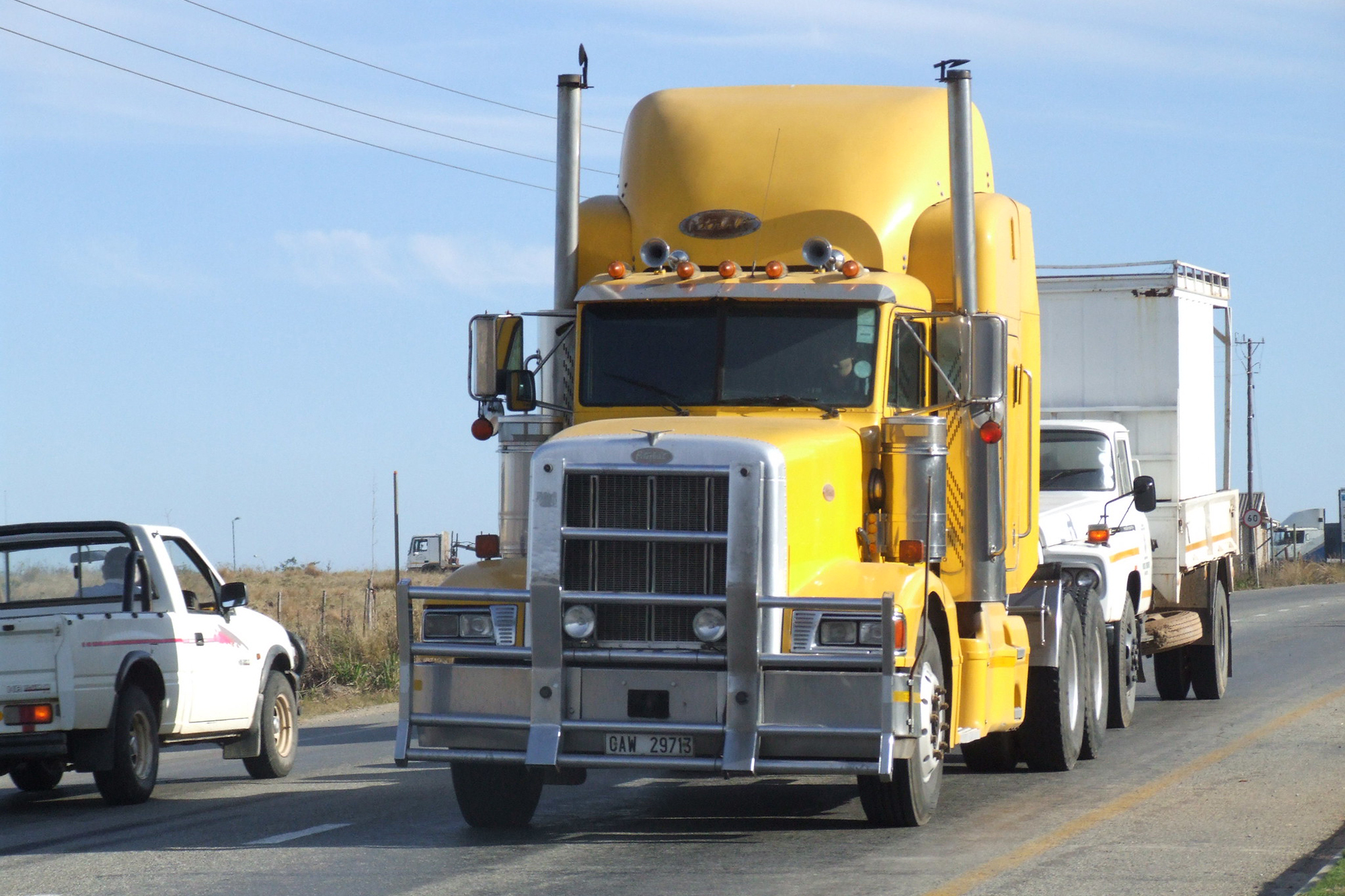
© Photo: Bob Adams/Flickr

A new study by MIT researchers quantifies the impact of a zero-emission truck’s design range on its energy storage requirements and operational revenue.
❌