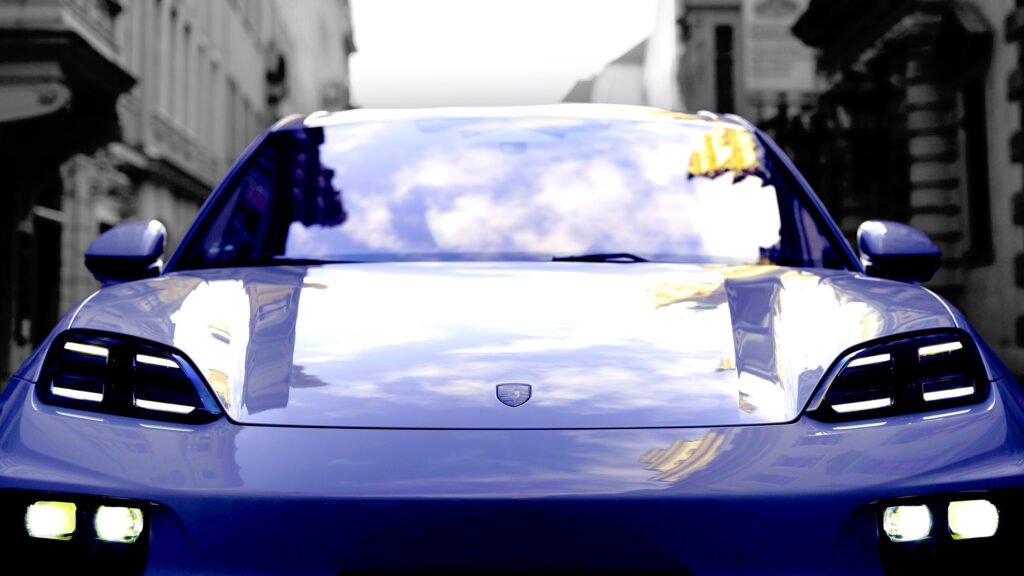
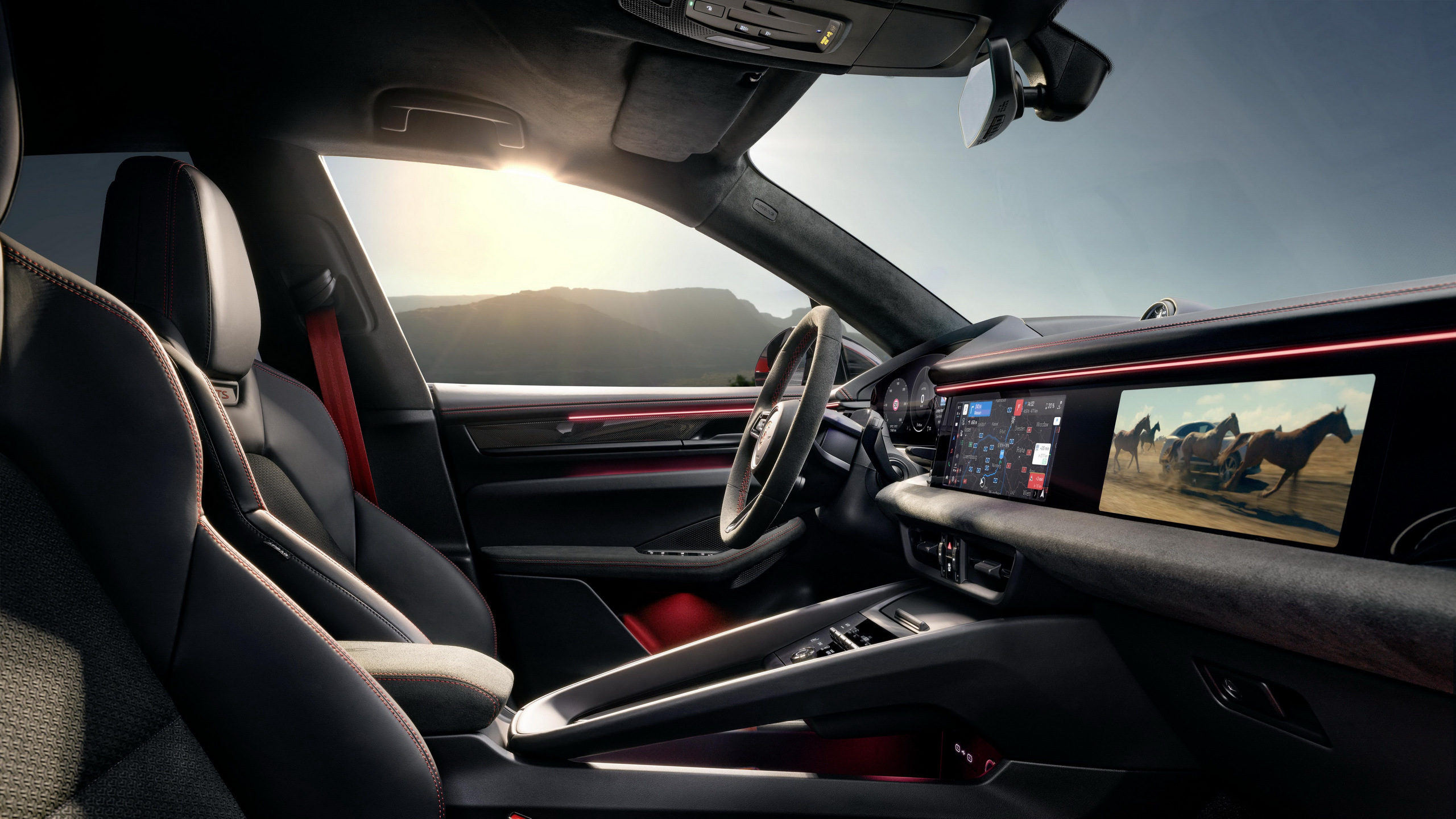
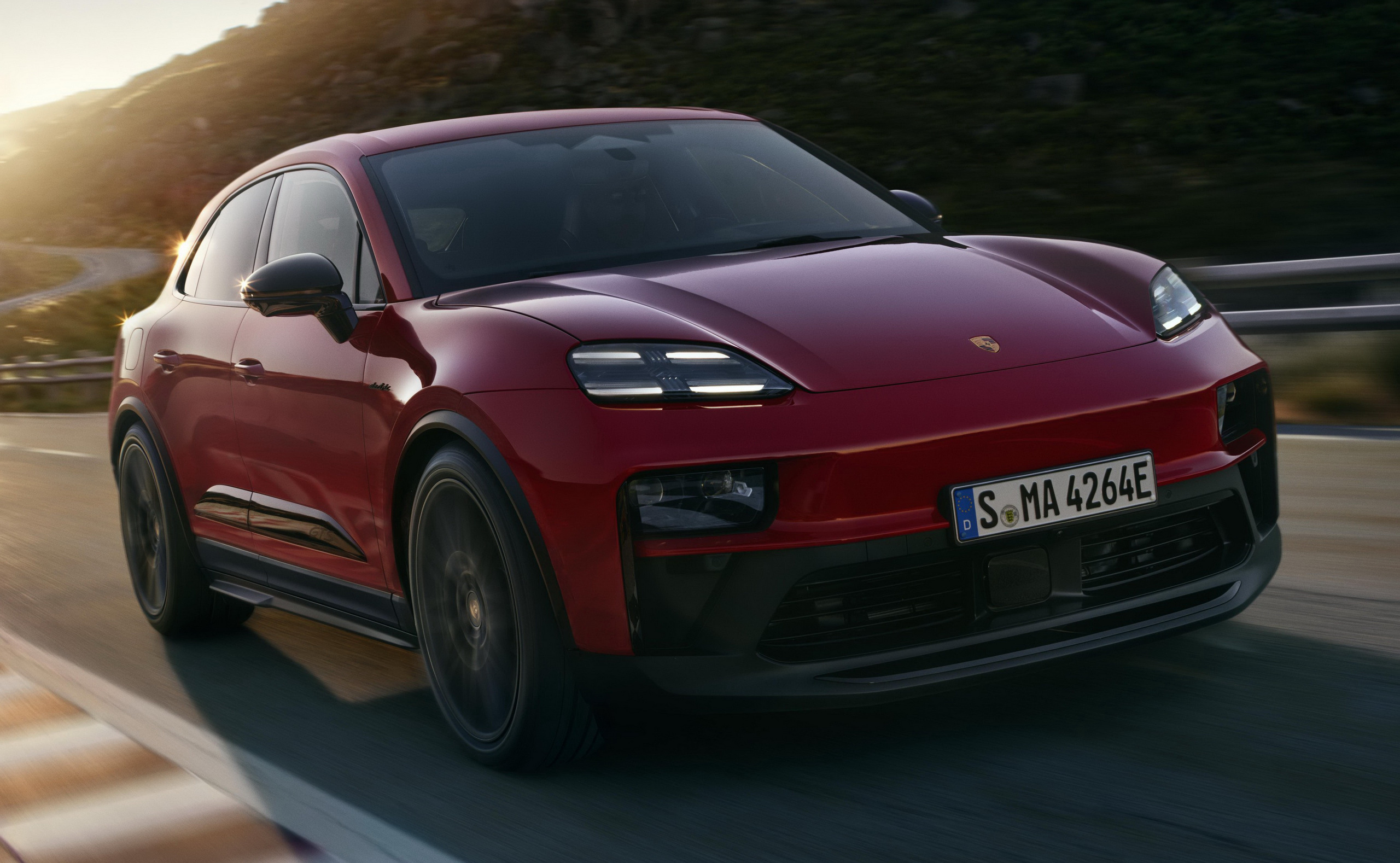
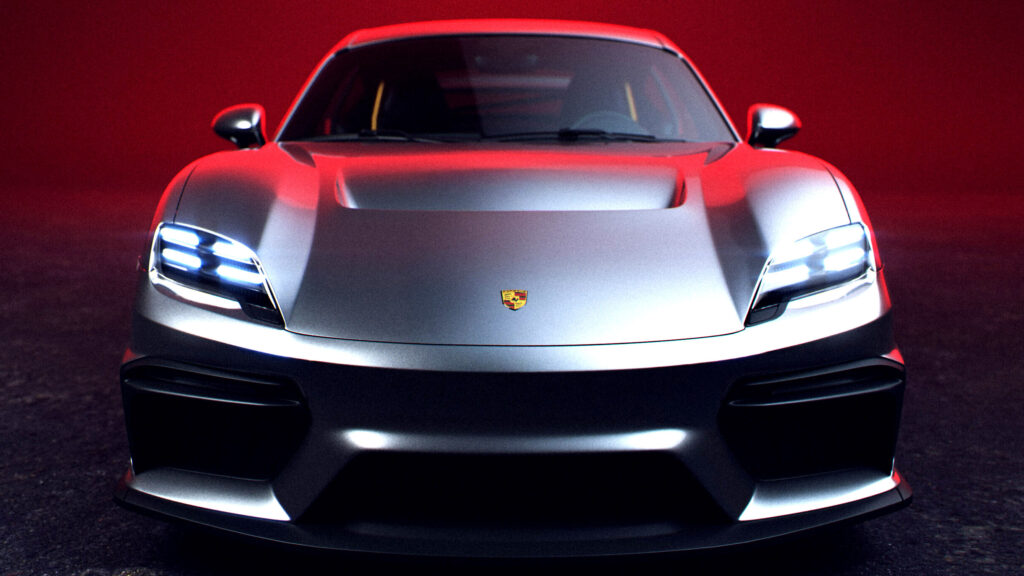
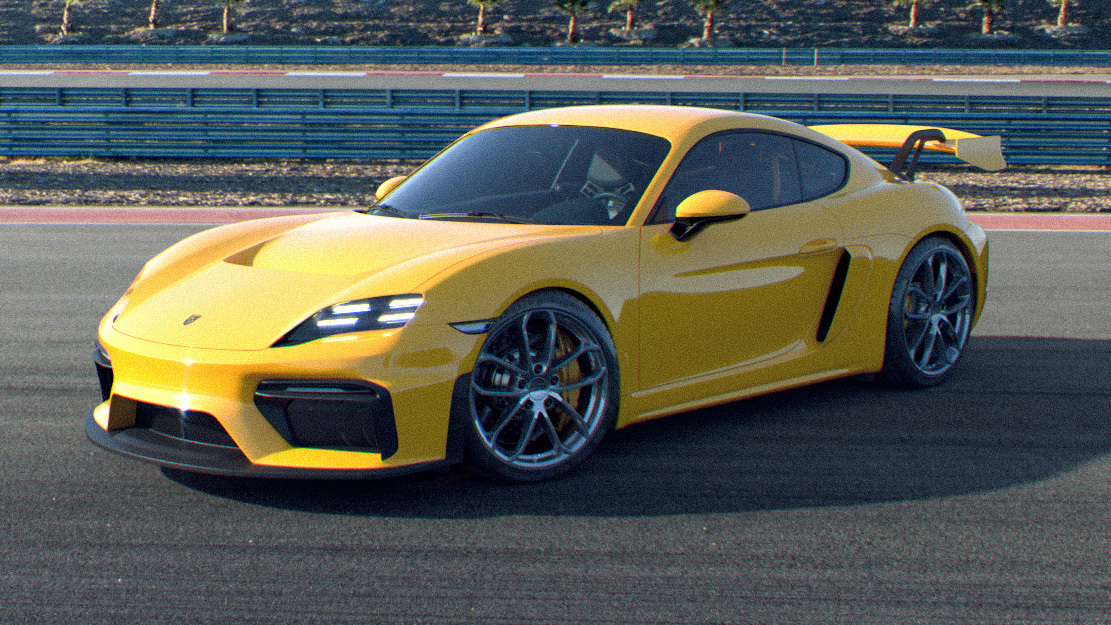
Porsche admits its EV-only Macan strategy was a misstep.
New gas-powered SUV will arrive before end of 2028.
Future 718s will offer gas, hybrid, and electric options.
Plenty of automakers are rethinking their electric vehicle strategies. Some names make it easy to shrug and say, well, they probably bit off more than they could chew. Stellantis, for instance, has struggled to steer its EV plans with any consistency. But it’s not just the usual suspects pulling U-turns.
On the other side of that coin, you’ll find Porsche, which, like Stellantis and other mainstream brands, is now backtracking hard on its EV plans. The brand’s former CEO just openly admitted that making the Macan an EV-only model was a mistake. Porsche has plans to fix its foible, too.
A Misstep in the Macan Playbook
Former CEO Oliver Blume, who stepped down at the start of 2026, revealed that making the next-generation Macan electric-only was a mistake. Speaking with Frankfurter Allgemeine Zeitung, Blume said, “We were wrong about the Macan,” reflecting on Porsche’s 2019 decision to retire the gas-powered Macan in favor of a fully electric model.
We were there when the EV launched in early 2024. While purists didn’t love it, plenty of folks figured that most Macan buyers cared more about the badge than the engine. But cooling demand for pricey luxury EVs and regulatory hurdles made the all-electric Macan a tougher sell than some expected. Blume acknowledged that hindsight is 20/20.
“Based on the data at the time, we would have made the same decision,” Blume said, “but the situation today is different. We are responding by adding combustion engines and hybrids.” Porsche now plans to reintroduce a gas-powered compact crossover but it won’t be called the Macan.
The Macan misstep isn’t the only one the brand is handling. Porsche also confirmed that future 718 sports cars, initially slated to go EV-only, will offer combustion and hybrid options.
It turns out that even one of the world’s most famous and focused brands can misread the market and industry to an almost embarrassing degree. In the end, we all just end up with more Porsches in more flavors and I can’t say I’m sad about that.
Porsche’s 1,019 hp Taycan Turbo GT failed to meet reserve price.
EV depreciation hit hard, echoing trends in luxury segments.
Faster than Plaid and SF90, yet buyers barely showed interest.
It’s far from unusual for high-performance models from Porsche’s exclusive GT division to appreciate in value the moment they leave the showroom. That’s been the case with the current 911 GT3 RS, and it’s often true for limited-run, motorsport-infused builds.
But the electric Taycan Turbo GT isn’t following that playbook. Despite its credentials, it seems to be moving in lockstep with the value drop seen across the wider Taycan range.
The standard Taycan, just like its corporate cousin from Audi, the e-tron GT, has taken a beating in resale value since launch. EVs in general depreciate faster than most combustion cars, but the Taycan has faced a particularly steep drop.
Earlier this week, a near-new Taycan Turbo GT went up for auction and came in a staggering $82,000 below its original MSRP before the bidding stopped.
A Bad Day for Taycan Values
Bring a Trailer
The high-performance sedan was listed for auction on Bring a Trailer by Gaudin Classic, a Porsche dealer in Nevada. Prior to the auction, it had never been sold to a private owner and had just 141 miles (227 km) on the clock. It is also equipped with the Weissach package that includes a fixed rear wing, no rear seats, and more pieces made from lightweight carbon fiber.
A look at the car’s window sticker reveals it has an MSRP of $238,300, bolstered by nearly $10,000 in additional options. Among them is a $2,950 Shade Green Metallic paint finish, $1,380 satin black wheels, and $1,760 race-tex-finished inner door-sill guards. As Taycans go, this one ticks every box, but the final bid landed at just $167,000.
Harsh Market Reality
According to the seller, bidding came close to meeting the reserve, and they plan to negotiate with the top bidder to see if a deal can still be made. Whether or not it sells, the takeaway is as clear as ever. That’s a brutal level of depreciation for a car that hasn’t even gone through its first full charge cycle.
For as impressive as the Taycan Turbo GT is, there may not be many buyers eager to spend that much on a track-focused electric sedan that, for most owners, will likely never see a circuit. The Weissach package also means it has two fewer seats than some 911s, so it’s not exactly practical either.
What Makes This EV Special?
To be fair, the specs are hard to argue with. The Taycan Turbo GT uses dual electric motors to deliver 1,019 hp with launch control, peaking at 1,092 hp in two-second bursts.
Earlier this year, MotorTrend launched the Weissach model to 60 mph (96 km/h) in just 1.89 seconds using a one-foot rollout, making it the quickest car the publication has ever tested in its 76-year history.
Without rollout, the time comes to 2.1 seconds, beating the Tesla Model S Plaid, Ferrari SF90 Stradale Assetto Fiorano, and even the Lucid Air Sapphire.
Next Porsche 718 lineup will reportedly include gas variants.
Platform re-engineering won’t be limited to flagship versions.
EV and ICE dynamic parity poses major engineering challenges.
The future of Porsche’s mid-engined sports cars is taking a more complex turn than originally planned. While the next generation of the 718 Boxster and Cayman was initially envisioned as fully electric, market realities have led Porsche to pivot.
Just a few months ago, the brand confirmed that combustion engines would still feature in the flagship variants of the upcoming models. Now, it appears that internal combustion won’t be reserved solely for top-tier versions.
Sources within Porsche’s Weissach engineering center suggest the company is actively reworking its EV-specific PPE architecture to support gasoline powertrains. This would give the 718 range a true dual-path approach, blending electric innovation with combustion familiarity.
According to Autocar, the reverse-engineering won’t be limited to successors of the Cayman GT4 RS and Boxster Spyder. The internal combustion option is expected to extend across a broader portion of the next-generation lineup, which is slated to debut later this decade.
Platform Revisions In Motion
The strategy centers on extracting maximum efficiency and scalability from shared components across the 718 lineup. According to the report, it marks “one of the most radical drivetrain reversals in Porsche’s history.”
Porsche’s combustion-powered future isn’t limited to the 718 either. A new gasoline version of Macan is in the works and will be sold alongside the existing fully electric model. Both the Panamera and Cayenne are set to retain their combustion engines as well, leaving the Taycan as the brand’s only EV-exclusive offering
Porsche isn’t alone in navigating the complications of reversing from EV-only plans. Stellantis faced a similar challenge when it reworked the Fiat 500’s electric platform to accommodate a mild-hybrid variant. But for performance cars, the stakes are higher. Matching the dynamic character of ICE and EV models presents a far tougher engineering puzzle.
One major issue is structural: the PPE platform relies on the battery pack as a load-bearing element. Without it, rigidity takes a hit. Porsche engineers have responded by designing a new floor structure, along with significant changes to the rear. That includes a redesigned bulkhead and subframe to house the mid-mounted engine and gearbox.
Baldauf
Furthermore, engineers have to figure out the right packaging for the fuel tank, fuel lines, and exhaust, which are not present in the electric variants.
When it comes to powertrains, Porsche has a few options on the table. One is an upgraded version of the naturally aspirated 4.0-liter flat-six that previously featured in the GTS, GT4, GT4 RS, and Spyder variants. Although this engine was reportedly on the chopping block, it might be reengineered to meet Euro 7 emissions standards.
There’s also speculation around a different solution. Earlier reports pointed to a more compact T-Hybrid system lifted from the updated 992.2 GTS. That setup combines a twin-turbo 3.6-liter flat-six with an electric motor, creating a potential bridge between combustion and electrification.
Porsche engineers were blown away by the Hyundai Ioniq 5 N’s fun driving character.
N Grin Boost, virtual shifts, and synthetic sounds made a big impression.
German brand may add similar features to its electric 718 due in 2027.
Porsche engineers are not exactly easy to impress. These are the people who spend their days perfecting GT3s and wringing every last drop of magic from flat-six engines and setting Nurburgring lap records.
So when two of the brand’s most senior engineering bosses drove the Hyundai Ioniq 5 N and came away buzzing like teenagers leaving an arcade, you know something interesting is happening in the electric-car world.
Frank Moser, Porsche’s vice president in charge of the 718 and 911 lines, admitted to Australia’s Drive that he has driven the Ioniq 5 N “several times” and called it an “eye-opening” experience.
Moser even dragged along Andreas Preuninger, the legendary head of Porsche GT cars, whose blood type is probably 98 RON premium, and definitely not amps.
From Skeptic to Convert?
Preuninger was not exactly enthusiastic at first. According to Moser, he grumbled, “I don’t want any of that electric stuff” when the idea was floated. But once they climbed inside and Moser pressed the Hyundai’s N Grin Boostbutton, the GT boss instantly turned into a believer.
“He was ‘wow’” Moser said, describing the moment Hyundai’s punchiest EV unleashed its full 641 hp ( 650 PS / 478 kW) and 568 lb-ft (770 Nm). “We learnt a lot from that car,” Moser told Australia’s Drive. “That’s why we decided to have a deeper look.”
It was not just the acceleration that snagged Porsche’s attention. The Ioniq 5 N’s signature party tricks, including its virtual gearshifts and synthesized powertrain noises, have Porsche seriously considering similar features for its upcoming electric 718 sports car.
Can Sound Create Soul?
Hyundai calls these systems N e-shift and N Active Sound+, and they replicate the snap of a dual-clutch gearbox and offer a selection of digital engine noises (most of them pretty lame, in my experience).
It is the kind of thing EV purists roll their eyes at, but performance engineers instantly understand. It makes the car feel alive and the driver connected to the driving experience.
“This is the way,” Moser said of the synthesized features, while making clear that Porsche wouldn’t force them on drivers.
“The customer could decide if he wants to drive in complete silent mode, or he wants to be part of the game, feeling the virtual sounds of a flat six and the virtual gear shifts,” Moser said. “That would be the direction for the future.”
Tuning the Future
Our money’s on it being part of a Sport Chrono-type option package that’ll add at least $2,000 to the bill of the new electric Porsche 718 Boxster and Cayman.
The first 718 EV arrives in early 2027, and Moser promises it will be “really lightweight for an electric car,” though he declined to reveal an exact or even ballpark weight figure.
One thing is clear: Hyundai has just influenced one of the world’s most respected sports-car makers. Who could have imagined that happening 20 years ago?
New Porsche Cayenne Turbo Electric tips the scales at 5,831 pounds.
Flagship electric SUV even outweighs the mighty Ford F-150 Raptor.
Compared to the Rivian R1S Quad Motor, the Cayenne seems light.
While we’re not convinced there were many Porsche customers clamoring for a high-powered electric SUV, there’s no denying that the new Cayenne Electric boasts some impressive figures, chief among them, the fact that it’s the most powerful series production model ever built in Zuffenhausen.
In Turbo guise, the Cayenne Electric produces a staggering 1,139 horsepower and sprints from 0 to 62 mph (100 km/h) in just 2.5 seconds.
That puts it squarely in hypercar territory, yet this is a full-size luxury SUV, complete with every comfort you could possibly need or not need. Porsche also claims it can cover up to 488 miles (785 km) on a single charge when driven in urban conditions.
Still, like many high-performance EVs, the Cayenne Electric’s greatest strength is matched by a significant drawback. Weight remains the elephant in the room, and in this case, it’s a glaringly heavy one.
How Heavy Is Too Heavy?
A look at the technical breakdown for the Cayenne Turbo Electric shows a curb weight of 5,831 lbs (2,645 kg) according to the DIN standard, or 5,997 lbs (2,720 kg) under the latest EU Directive, which factors in a 165-lb (75-kg) driver.
That makes this the heaviest road-going Porsche ever produced. Unless the engineers in Stuttgart have performed some kind of chassis sorcery, hiding that mass will be a serious challenge.
For context, consider the new hybrid BMW M5, a car already heavily criticized, even mocked, for its bulk. The sedan tips the scales at 5,390 lbs (2,444 kg), while the M5 Touring version edges up to 5,530 lbs (2,508 kg). The Cayenne Turbo Electric surpasses both with room to spare.
It also outweighs the Ford F-150 Raptor, which comes in at 5,710 lbs (2,590 kg), and is not far behind the Raptor R at 5,950 lbs (2,698 kg). Even standard versions of the F-150, such as the V8-powered Regular Cab at 4,948 lbs (2,245 kg) and the SuperCrew at 5,038 lbs (2,285 kg), appear relatively light in comparison.
The new all-electric Cayenne is also roughly on par with the Hyundai Ioniq 9, which weighs between 5,523 lbs (2,505 kg) and 5,908 lbs (2,680 kg) depending on the specification. However, it’s worth noting that the Ioniq 9 is a three-row SUV and is longer and wider than the Porsche.
Heavy, But Not the Heaviest
That said, the Cayenne isn’t quite as weighty as the Rivian R1S Quad Motor, which reaches an astonishing 6,824 lbs (3,169 kg). Despite that, the Rivian’s 1,025 horsepower still falls short of the Porsche’s output.
The launch of the Cayenne Electric comes at an interesting time for the Porsche brand. Not too long ago, it had been planning to only sell the future Cayman and Boxster models with electric powertrains and had been planning a flagship seven-seat SUV, codenamed the K1, to be also sold exclusively as an EV.
Those plans have now shifted. Porsche has confirmed that all of these future models will be re-engineered to accommodate combustion power as well.
Porsche reveals ’26 Cayenne Electric and Cayenne Turbo Electric.
Base car makes up to 435 hp, Turbo kicks out a massive 1,139 hp.
Adaptive air suspension is standard, inductive charging optional.
The original Cayenne supercharged Porsche’s sales, and 23 years later, the third-generation car is still the brand’s best-seller. But now the nameplate is heading into new territory with the launch of the 2026 Cayenne Electric, a battery-powered twist on the formula using lessons learned from the smaller Macan EV.
This isn’t just an electrified version of the familiar Cayenne. The new electric models ride on an entirely different platform, a version of the PPE architecture used in the Macan Electric, but stretched 5.1 inches (130 mm) to give a 119-inch (3,020 mm) wheelbase.
That wheelbase is also longer than the combustion Cayenne’s by the same amount, resulting in a healthy increase in rear legroom for passengers.
But enough about what the ruler says. Does the Cayenne Electric rule over its ICE brother when the light turns green? Damn right, it does.
There are two flavors at launch: the Cayenne Electric and the mighty Cayenne Turbo Electric. Both are all-wheel-drive, both are loaded with tech, and both are clearly designed to make you question why you ever cared about cylinders.
Most Powerful Porsche Ever
Let’s start with the showstopper. The $163,000 (plus $2,350 dest) Cayenne Turbo Electric’s dual-motor powertrain generates 844 hp (857 PS / 630 kW) in normal driving, but the Push-to-Pass boost, activated by a button on the steering wheel, throws in an additional 173 hp (177 PS / 130 kW) for 10 seconds at a time.
And the madness doesn’t end there, because with Launch Control activated, you can unleash up to 850 kW, which translates to 1,139 hp (1,155 PS) and 1,106 lb-ft (1,500 Nm) of torque.
Porsche says its most powerful production car ever goes zero to 60 mph (97 kmh) in 2.4 seconds – versus 3.1 seconds for the fastest combustion Cayenne, the Turbo GT – and gobbles up the standing quarter-mile in 9.9 seconds. Top speed? An ample 162 mph (260 km/h). Welcome to Porsche’s new performance reality.
The ‘regular’ $109,000 Cayenne Electric is plenty slower, but hardly tame. It produces 402 hp (408 PS / 300 kW) in normal driving and up to 435 hp (441 PS / 324 kW) when Launch Control is engaged. That output, and the 615 lb-ft (834 Nm) that goes with it, delivers you to 60 mph in 4.5 seconds and a top speed of 143 mph (230 km/h).
Brakes Optional
Both trims also deliver serious energy recuperation, with braking that can feed up to 600 kW back into the battery. Porsche claims that about 97 percent of routine braking situations never need to involve the physical brakes, though you can still opt for PCCB carbon rotors if you feel inclined.
Adaptive air suspension with Porsche Active Suspension Management is standard, and the Turbo adds a torque-vectoring rear differential. Both variants can be optioned with rear-axle steering and Porsche Active Ride, using active anti-roll bars, as on the Taycan, is also available.
The new 113 kWh battery pack is the heart of both models and is 13 kWh bigger than the one in the Macan Electric. Thanks to 800-volt architecture and improved cooling, the Cayenne Electric can charge at up to 400 kW under ideal conditions. A jump from 10 to 80 percent takes less than 16 minutes.
Porsche is also introducing optional inductive charging, becoming the first automaker to offer the tech on an EV in the US. Pull into your garage, park over the floor pad, and the SUV starts charging by itself at up to 11 kW.
Like A Scaled-Up Macan Electric
On the styling front, Porsche resisted the temptation to reinvent the Cayenne silhouette too radically. Instead, it sharpened it, bringing in some tricks from the Macan EV. The bonnet sits lower, the headlights are slimmer, the body lines crisper, and the doors feature frameless glass.
Out back, a 3D-effect light bar and illuminated Porsche lettering add nighttime pizzazz. Turbo Electric models get extra contrasting bits in a color called Turbonite, which sounds like something a Marvel villain would wear.
The Cayenne Electric’s new shape isn’t just for show. A drag coefficient of 0.25 makes it one of the most slippery SUVs in its class. Hidden aero flaps, a smart roof spoiler, and trick aero blades help it slice through the air and squeeze out more range. Porsche says the system constantly adjusts to changing speeds and loads, adding grip when needed and cutting drag when it’s not.
And if you’re more interested in cutting through rock trails than cutting through the air, an Off-Road Design package brings different front and rear bumpers to improve the approach and departure angles.
Inside, rear passengers get more legroom and electric seat adjustment as standard, interior surface heating, and a panoramic roof that uses liquid-crystal tech to alter its opacity.
Then there’s the digital experience. The new Flow Display stretches across the dash with two large OLED screens for gauge cluster and infotainment duties. A 14.9-inch passenger display is optional.
There’s also an epic 87-inch head-up display with augmented reality guidance available, a new AI-driven Voice Pilot, and an upgraded app system with streaming and gaming baked in. That’s a lot of tech, but at least Porsche kept physical buttons for things like climate and volume.
A Long Wait
US deliveries of the 2026 Cayenne Electric start in late summer 2026, by which time we’ll be able to fill in blanks that include those all-important EPA range figures and maybe confirmation of the rumored mid-ranking Cayenne S with around 592 hp (600 PS / 441 kW), designed to bridge the gap between the two launch models. We’re also expecting to see the GTS badge appear at some point, as it has recently on the Macan Electric.
But don’t worry, if you’re a committed ICE fan, the combustion and plug-in hybrid versions of the Cayenne aren’t going anywhere, as they will live on well into the 2030s.
All the pictures above show the Cayenne Turbo Electric. The images in the gallery below are of the regular Cayenne Electric.

 Login
Login