❌

Reading view

There are new articles available, click to refresh the page.

Meet the January 2027 Cultivators

Since 2013, Farm Foundation’s Cultivators Program has connected outstanding undergraduate and graduate students with leaders working across agriculture. As Farm Foundation’s first Next Generation Program, it gives students the opportunity to share their research, build professional relationships, and contribute to discussions about the industry’s biggest opportunities and challenges.

Selected twice each year, Cultivators participate in Farm Foundation’s Round Table alongside business leaders, policymakers, researchers, producers, and innovators. The program helps students connect their academic work to real-world agricultural issues while developing their leadership and communication skills.

The eight Cultivators below will join Farm Foundation’s next Round Table meeting, taking place January 12–15, 2027, in Jacksonville, Florida. With the theme “Innovation, Consolidation, and the Future of Agribusiness,” the meeting will give students the opportunity to share their research and join discussions with leaders from across agriculture.

Faith Aiya
School: University of Florida
Major: Food and Resource Economics

Faith Aiya is originally from Edo State, Nigeria, and is a fourth-year Ph.D. candidate in Food and Resource Economics at the University of Florida, specializing in consumer and behavioral economics. Her research examines consumer preferences and decision-making in agricultural markets, with implications for agribusiness marketing and policy.

Faith currently serves as Vice President of the UF Graduate Student Council and previously served as Director of Graduate Student Affairs in UF Student Government. Her accomplishments include winning the 2025 AAEA Graduate Student Case Study Competition, placing third in the 2025 IFAMA Global Venture Building Challenge, and receiving several notable scholarships. She has presented her research at national and international conferences. Following graduation, Faith hopes to pursue a career in academia or applied research, contributing to agricultural marketing research, teaching, and student development.

Kylie Bedel
School: Kansas State University
Major: Agricultural Economics

Kylie Bedel of Evansville, Indiana, is pursuing a master’s degree in agricultural economics at Kansas State University. Her research examines how rail and barge freight rates influence grain movements from the Midwest to New Orleans and corn and soybean exports through the port.

She serves as social chair for the Graduate Students of Agricultural Economics Club, leadership co-chair for the Interdisciplinary Graduate Student Beef Group, and a fellow in the Risk Management Center. Kylie also captained K-State’s world championship team in the International Food and Agribusiness Management Association Case Study Competition. After graduation, she plans to pursue a career in marketing and sales with a railroad or barge company, combining her interest in transportation with helping customers meet their shipping needs.

Thaddeus Bergschneider
School: University of Illinois at Urbana-Champaign
Major: Agricultural and Consumer Economics

Thaddeus Bergschneider is studying Agricultural and Consumer Economics at the University of Illinois at Urbana-Champaign as a James Scholar and will graduate in 2028. He interned with John Deere on the Production & Precision Ag Go-to-Market team in 2026 and will intern with the Investor Relations team in 2027. Previously, he served as the 2024–2025 National FFA President, delivering speeches to audiences exceeding 50,000 people and co-chairing the National FFA Board of Directors.

Thad grew up on his family’s row-crop and livestock operation in central Illinois, where they farm corn and soybeans and raise 200 head of feeder cattle. In addition to his career interest in agricultural finance and capital allocation, Thad enjoys reading behavioral economics, history, and Berkshire Hathaway Shareholder Letters.

Brandon Estevez
School: North Carolina State University
Major: Agricultural Business Management

Brandon Estevez is a first-year student at North Carolina State University from Raleigh, North Carolina. He is majoring in Agricultural Business Management in the College of Agricultural and Life Sciences, with a GIS minor.

A Broughton High School graduate, he is affiliated with NC State’s Center for Geospatial Analytics and contributes mapping support to Engineers Without Borders community projects.

Brandon previously served as Director of the National 4-H Geospatial Leadership Team and worked extensively in education with Extension agents and 4-H youth development professionals while in high school. Bilingual in English and Spanish, Brandon plans to earn a Ph.D. in geospatial analytics and pursue a federal career with USDA ERS, USGS, or NGA, using spatial data to strengthen agriculture and education.

Kaya Mitchell
School: Fort Valley State University
Major: Plant Biotechnology

Kaya Mitchell is from Memphis, Tennessee, and is pursuing a master’s degree in Plant Biotechnology at Fort Valley State University. Kaya earned a bachelor’s degree in Agricultural Sciences with a concentration in Environmental Science from Tennessee State University, graduating magna cum laude. Kaya’s research focuses on cold response in Rhizoma peanut to support more cold-hardy and sustainable forage systems.

Kaya has earned third-place awards in oral research presentations at the 2026 ARD Research Symposium and MANRRS40 National Conference. Kaya serves as Head of the Speaker Series Committee for FVSU MANRRS and is a member of Alpha Kappa Alpha Sorority, Incorporated; C.U.B.S. (Comforting Uplifting Brothers and Sisters); and the SFI/PLT Canada Green Mentorship Program. Kaya’s goal is to combine a background in Environmental Science with studies in Plant Biotechnology to advance agricultural innovation and develop sustainable solutions to environmental and agricultural challenges.

Renzo Negrini
School: University of Minnesota
Major: Land and Atmospheric Science; minor in Integrative Leadership

Renzo Negrini, from São Paulo, Brazil, is a Ph.D. researcher in Land and Atmospheric Science at the University of Minnesota, specializing in precision agriculture and pursuing a minor in Integrative Leadership. As Director Assistant of the university’s Precision Agriculture Center, he works with farmers, researchers, and industry partners to apply on-farm experimentation, remote sensing, and data science to improve nutrient management, farm profitability, and resource efficiency.

An FFAR Fellow, Renzo was named among the world’s top 10 graduate students in precision agriculture by the International Society of Precision Agriculture in 2024. He has also received the University of Minnesota’s President’s Leadership and Service Award and Systemwide Sustainability Impact Award and contributes to teaching and student mentorship.

He aspires to lead across agribusiness and the public sector, combining scientific expertise, business strategy, and public policy to advance sustainable agriculture and shape food systems globally.

Josie Shreve
School: West Virginia State University
Major: Agribusiness and Economics

Josie Shreve is studying Agribusiness and Economics at West Virginia State University (WVSU). Josie’s long-term goal is to become an elite farmer and eventually establish a biodiesel refinery, producing renewable fuel from self-grown oilseed crops.

Josie is passionate about finding sustainable ways to support and improve life through renewable energy, innovative agricultural practices, and responsible stewardship of natural resources. Agriculture has been a central part of Josie’s upbringing, shaping both values and ambitions. This deep connection to the land continues to inspire Josie to pursue solutions that benefit both people and the environment. Josie takes pride in sharing an appreciation for nature and sustainable agriculture with others whenever the opportunity arises.

Caden Wade
School: Michigan State University
Major: Biosystems Engineering

Caden Wade is an NSF GRFP-funded Ph.D. student studying Biosystems Engineering at Michigan State University, with research focusing on the development of plasma-activated water technologies and applications in agriculture. Caden’s passion for agriculture began in Wheatland, Wyoming, after learning about the depleting Ogallala aquifer and its effects on local irrigation and farm productivity.

Caden completed a bachelor’s degree in Crop and Soil Sciences at Michigan State, becoming a Goldwater Scholar and a College of Ag Fellow, and enrolled in graduate school to further research into irrigation technologies and fertilizer developments. Caden serves as Secretary on the department’s Graduate Student Advisory Board and as the Graduate Student Representative for the ASABE Young Professionals Committee. After earning a Ph.D., Caden hopes to apply this experience in industry through internal fertilization technology or chemistry research and development.

The post Meet the January 2027 Cultivators appeared first on Farm Foundation.

2026 Agricultural Scholars Wrap Up Their Year with Capstone Projects in Washington, D.C.

The USDA ERS/Farm Foundation Agricultural Scholars finished their year-long program with a week in Washington, D.C., where they presented their capstone projects, participated in the WASDE lockup and met with agricultural research and policy leaders. 

Offered in collaboration with the USDA Economic Research Service (ERS), Farm Foundation’s fully funded, 12-month Agricultural Scholars Program helps graduate students gain practical experience in agricultural economics and policy. Each Scholar works with an experienced ERS economist and participates in conferences, Farm Foundation leadership experiences and visits with government agencies and agricultural businesses. 

Since its launch in 2020, the program has served 75 participants through 2026. The Washington trip was the final opportunity for this year’s Scholars to come together, share their research and learn from professionals across agriculture. 

The 2026 Scholars are: 

  • Eric Belleville, The Ohio State University, Department of Agricultural, Environmental, and Development Economics 
  • Hence Duncan, Oklahoma State University 
  • Elizabeth Dworkin, Iowa State University 
  • Parthu Kalva, University of Illinois Urbana-Champaign 
  • Asa Dolbow Vann, Purdue University 

Presenting Their Capstone Research 

The capstone presentations were a key part of the Washington trip. Scholars presented their projects to USDA ERS economists, sharing their research and explaining its relevance to agriculture. 

The presentations brought together a year of mentorship and learning while giving Scholars experience discussing their work with a professional audience. Communicating research is an important skill as they prepare for careers in agricultural economics, policy and related fields.

Inside the WASDE Lockup 

Another highlight was participation in the World Agricultural Supply and Demand Estimates (WASDE) lockup. USDA’s monthly report provides agricultural supply and demand forecasts used by producers, businesses and policymakers to understand commodity markets. 

Scholars saw the secure process surrounding the report’s preparation and release, gaining a closer look at how USDA protects market-sensitive information before publication. 

Farm Tours and Policy Meetings 

The week included a tour of Corteva’s Chesapeake Farms, a 3,300-acre research and demonstration farm along a tributary of the Chesapeake Bay. Scholars learned about corn and soybean research, wildlife and habitat management, and farming practices that protect the surrounding watershed. 

On Capitol Hill, they met with Karl Anderson, Mike Schmidt and Brandon Honeycutt of the Senate Agriculture Committee, as well as Josie Montoney of the House Agriculture Committee. 

They also met with Sara Neagu-Reed of the International Fresh Produce Association, Brian Glenn of the American Farm Bureau Federation and BGR Group’s Kellie Adesina, a Farm Foundation board member. These conversations offered perspectives on agricultural policy and the work of congressional staff, agricultural organizations, and government relations professionals. 

At USDA, meetings with ERS leaders Kelly Maguire and Michele Esch, as well as Dr. Scott Hutchins, Under Secretary for Research, Education, and Economics, introduced Scholars to agricultural research leadership within the department. 

The Scholars also met with Rebecca Nemec, Stephanie Morris and Abigail Edwards from USDA’s Office of the Chief Economist to learn more about the office’s work and how economic analysis informs public decisions. 

The Washington trip closed out the year with experience presenting research and learning how it is used. Through their capstone projects, the WASDE lockup and conversations throughout the week, Scholars built professional relationships and gained a better understanding of the work they may pursue after graduate school. 

Learn more about Farm Foundation’s Agricultural Scholars Program.

The post 2026 Agricultural Scholars Wrap Up Their Year with Capstone Projects in Washington, D.C. appeared first on Farm Foundation.

Farming in the Age of AI: Recording Now Available

On October 13, 2026, Farm Foundation hosted “Farming in the Age of AI,” a virtual Forum exploring how emerging artificial intelligence technologies were being applied in agriculture. The conversation examined where AI was delivering measurable value, where adoption remained challenging, and how these tools might shape the future of farm management.

The Forum featured:

  • Dan Maycock, Co-Founder, Dataplai
  • Tim Marquis, Senior Product Manager, Precision Ag Analytics, John Deere
  • Alex Echols, Program Strategist, Agriculture, Campbell Foundation
  • John Dawes, Executive Director and Co-Founder, The Commons.

Participants discussed AI’s opportunities and limitations, along with the policy, workforce, and data considerations influencing its integration into U.S. agriculture. The discussion explored what was needed to turn technological advances into practical value for producers and the broader food system.

Missed the Forum? Watch the recording and explore the presentation slides.

The post Farming in the Age of AI: Recording Now Available appeared first on Farm Foundation.

2027 Farm Foundation Awards Nominations

Who is making a difference in food and agriculture today?

Nominations are now open for the 2027 Farm Foundation Awards, recognizing the people, organizations, and ideas creating meaningful impact across the food and agriculture sectors.

In June 2026, we celebrated Dr. Andrew Muhammad with the R.J. Hildreth Public Policy Award, Dr. Mya O. Price with the Emerging Leader Award, and Joel Harris with the Innovator of the Year Award. Agribusiness Management, 7th Edition, by Jay Akridge, John Foltz, Elizabeth A. Yeager, Brady E. Brewer, and Trey Malone were recognized as the Farm Foundation Book of the Year.

Who should we recognize next?

Now is your opportunity to recognize them. Nominations are open in five categories: 
R.J. Hildreth Public Policy Award 
Transformational Leadership Award 
Innovator of the Year Award 
Emerging Leader Award 
Farm Foundation Book of the Year Award 

Anyone may submit a nomination, including a self-nomination. Award recipients will be recognized in person at the Farm Foundation Round Table meeting in Toronto, Canada, in June 2027.

Know someone whose work deserves to be recognized? Tell us their story. 
Nominations close December 11, 2026.

Learn more about the award criteria and submit a nomination

The post 2027 Farm Foundation Awards Nominations appeared first on Farm Foundation.

In Memory of Todd Price

Dear Friends,

It is with great sadness that I share the news that Todd Price, Farm Foundation’s Vice President of Operations, passed away unexpectedly yesterday.

Anyone who had the pleasure of working with or knowing Todd knows what a tremendous loss this is for Farm Foundation and for all of us who called him a colleague and friend.

Todd joined Farm Foundation nearly six years ago. Having grown up on a farm in Iowa, he brought with him a deep love of agriculture and a genuine belief in its future. That passion was evident in everything he did here.

Perhaps nowhere is Todd’s impact more visible than at the Farm Foundation

Campus in Libertyville. Todd believed deeply in creating a place where people could come together, learn from one another, exchange ideas and see agricultural solutions put into practice. The Campus as we know it today exists in large part because of his vision, determination and extraordinary commitment to bringing it to life.

Alongside his wife, Laura, and their daughter, Cassidy, Todd spent countless evenings and weekends restoring the farmhouse and barn, developing the Innovation and Education Center, and planning and planting the demonstration fields. His presence is everywhere—from the fields to the farmhouse, the barn and every corner of the Campus.

And once the Campus was built, Todd made it a place people wanted to experience. He was just as willing to talk with visitors about an innovative agricultural practice as he was to give a tractor tour, lead a walk through the fields, move tables and chairs before an event, or tackle whatever else needed to be done. No job was beneath him, and no detail was too small if it helped Farm Foundation fulfill its mission.

Todd believed deeply in Farm Foundation’s work and in the importance of bringing people together to strengthen the future of agriculture. We are better because of his work, his vision and the care he put into this place and its people.

Todd’s absence will be deeply felt.

As more information about services and opportunities to honor Todd becomes available, we will share it. For now, please join me in remembering Todd, in holding Laura, Cassidy and all those who loved him close in our thoughts, and in recognizing the remarkable legacy he leaves at Farm Foundation.

Sincerely,

Cheri De Jong
Board Chair, Farm Foundation

The post In Memory of Todd Price appeared first on Farm Foundation.

A New Look for Farm Foundation, Built for What’s Ahead

Farm Foundation has a new look—and it reflects an organization moving forward.

Today, we’re excited to introduce a new Farm Foundation brand and website designed to better tell the story of who we are, what we do, and the role we play in the future of food and agriculture.

Our look may be new, but our purpose remains the same: bringing people together to better understand the issues shaping food and agriculture and turn ideas into action.

A Brand Built Around Connection

Agriculture’s biggest challenges can’t be solved alone.

Progress happens when farmers, researchers, business leaders, policymakers, students, and communities have opportunities to learn from one another, challenge assumptions, build relationships, and put promising ideas to work.

That has long been at the heart of Farm Foundation.

Our new brand gives that work a clearer, more contemporary identity—one that reflects the connections we create across disciplines, geographies, generations, and perspectives.

It also gives us a stronger platform for telling the stories of the people who make this work possible.

More Than a New Logo

You’ll see a new Farm Foundation logo, colors, typography, photography, and other visual elements across our website, programs, events, publications, and communications.

But this work was about much more than changing how Farm Foundation looks.

It was an opportunity to sharpen how we talk about what we do.

Across our programs, Farm Foundation is helping develop the next generation of leaders, supporting farmers and agricultural professionals, exploring emerging ideas, connecting research with real-world experience, and creating opportunities for people throughout food and agriculture to learn from one another.

Our new brand brings those pieces together under one clearer Farm Foundation story.

A Website Designed to Help You Explore

Along with our new brand, we’re launching a completely redesigned FarmFoundation.org.

The new site makes it easier to discover Farm Foundation’s work, explore programs and events, learn about the people and organizations in our network, and find ways to get involved.

Whether you’re discovering Farm Foundation for the first time or have been part of this community for decades, we hope the site gives you a better sense of not only what we do—but why it matters.

And this is only the beginning. The new website gives us a platform that can continue to grow alongside our programs, partnerships, campus, and community.

Rooted in Our History. Ready for What’s Next.

Farm Foundation has evolved many times throughout its history as agriculture—and the world around it—has changed.

This is another step in that evolution.

Our new brand honors the credibility, independence, and collaborative spirit that have defined Farm Foundation while giving us a fresh way to carry that work forward.

There are enormous questions ahead for food and agriculture. There are also extraordinary people working to answer them.

Farm Foundation will continue creating the connections that help move those ideas forward.

Welcome to the new Farm Foundation.

The post A New Look for Farm Foundation, Built for What’s Ahead appeared first on Farm Foundation.

Nominations Now Open for Farm Foundation’s 2027 Next Generation Programs

Nominations are now closed for both programs.

Nominations are now open for two of Farm Foundation’s flagship Next Generation programs: the January 2027 Cultivators Program and the 2027 Agricultural Scholars Program. Both programs connect promising students with agricultural leaders, researchers, and decision-makers while giving them opportunities to take their work beyond the classroom.

Faculty, advisors, and university staff have an important role to play. Even if you aren’t the person who can officially submit a nomination, you may be the first to recognize a student who would thrive in one of these programs. We encourage you to share these opportunities with students and colleagues and help ensure outstanding emerging leaders are considered.

Nominations for both programs are open September 1 through October 13, 2026.

January 2027 Cultivators Program

The Cultivators Program gives undergraduate and graduate students the opportunity to step beyond the classroom and into conversations shaping the future of agriculture.

Selected Cultivators will attend the Farm Foundation Round Table meeting in Jacksonville, Florida, January 11–15, 2027, where they will present original research to an audience of approximately 200 senior leaders from across the food and agriculture sector.

Beyond presenting their work, Cultivators gain firsthand exposure to industry conversations, build their professional networks, and engage with leaders whose decisions influence agriculture and the food system.

Students must be nominated by a dean, director, or department chair. Self-nominations are not accepted.

Learn more about the Cultivators Program and nomination process

2027 Agricultural Scholars Program

For graduate students interested in the intersection of agricultural research, economics, and public policy, the Agricultural Scholars Program offers a year-long professional development experience.

Over 12 months, selected Scholars are paired with an economist from the USDA Economic Research Service (ERS), providing an opportunity to learn from experts working at the intersection of research and agricultural policy. Scholars also participate in Farm Foundation events and experiences in locations including Washington, D.C., Toronto, and Philadelphia, expanding their networks while learning how research can inform real-world decisions.

The program is fully funded and designed for graduate students studying agricultural economics or related fields. Applicants must be U.S. citizens enrolled at an accredited North American university and must be nominated by their dean or department head.

Learn more about the Agricultural Scholars Program and nomination process

Help Us Find the Next Generation of Agricultural Leaders

Great candidates are often identified because a professor, advisor, dean, or colleague recognized their potential and encouraged them to pursue an opportunity.

If you know a student whose research, curiosity, and leadership potential deserve a bigger stage, now is the time to put these programs on their radar—and, if you are eligible to nominate them, put their name forward.

Nominations for the January 2027 Cultivators Program and the 2027 Agricultural Scholars Program close October 13, 2026.

Help us get the next generation of agricultural leaders in the room.

The post Nominations Now Open for Farm Foundation’s 2027 Next Generation Programs appeared first on Farm Foundation.

Inside Food & Ag: Corn – from Ancient Grass to Global Powerhouse

You’ve driven past cornfields. You’ve eaten corn. But did you know corn is older than the pyramids and is grown on every continent except Antarctica? 

Join Farm Foundation for Inside Food & Ag: Corn – from Ancient Grass to Global Powerhouse and discover the fascinating story behind the crop that’s all around us. Through living demonstrations, surprising facts, and an interactive food demonstration, you’ll gain a deeper understanding of one of the world’s most important crops. 

Thursday, September 24 | 2–6 p.m. 
Farm Foundation Campus, Libertyville, IL 

Registration is $25 per person and includes an engaging educational program, interactive demonstrations, and light appetizers and beverages. 

You’ll never look at your dinner plate the same again. 

Register today: https://farmfoundation.swoogo.com/aglab2026

The post Inside Food & Ag: Corn – from Ancient Grass to Global Powerhouse appeared first on Farm Foundation.

More than 670 Americans Applied to Join FarmPath

More Than 670 Americans Applied to Join First FarmPath Cohort as Demand Signals Urgent Need for New Pathways into Farming

Farm Foundation launches first FarmPath cohort on May 20 with support from The Mosaic Company Foundation for Sustainable Food Systems and the PepsiCo Foundation.

Libertyville, IL – May 20, 2026 – Farm Foundation today announced the official launch of the first FarmPath cohort, welcoming more than 550 aspiring and beginning farmers from across the United States into the national, multi-year program designed to help build the next generation of American agriculture.

Originally created with a goal of enrolling 300 participants, FarmPath received overwhelming interest from more than 670 applicants representing 48 states, signaling a strong national demand for accessible pathways into farming and agricultural entrepreneurship.

FarmPath is a program of Farm Foundation supported by The Mosaic Company Foundation for Sustainable Food Systems and the PepsiCo Foundation. Designed to help meet the needs of the next generation in agriculture, the program equips participants with practical agronomic and business education, mentorship, professional networks, and long-term support designed to help them navigate the realities of modern agriculture.

“What we saw through this application process was both inspiring and revealing,” said Todd Van Hoose, Farm Foundation Interim President & CEO. “People across the country are deeply interested in farming and building a future in agriculture, but many are struggling to find clear pathways, trusted guidance, and systems designed to help them succeed. The response to FarmPath sends a powerful message: the interest is there, and the need is real.”

Applicants reflected a broad cross-section of emerging agriculture in America, including individuals from multigenerational farm families looking to diversify existing operations, urban and community growers seeking to scale, career changers pursuing farming later in life, and early-stage operators searching for stronger business and market knowledge.

The applicant pool also highlighted broader shifts happening across American agriculture, including growing interest in regenerative production practices, regional food systems, diversified farm models, and local food entrepreneurship.

“The overwhelming interest in FarmPath highlights both the opportunity and the gap facing the next generation of farmers,” said Ann Steensland, Executive Director of The Mosaic Company Foundation for Sustainable Food Systems. “There is real momentum, but also real need for practical training, trusted guidance, and systems designed to help new farmers reach their full potential. FarmPath is helping to close that gap.”  

“Supporting the next generation of farmers is essential to building a more sustainable food system,” said Monica Bauer, Senior Vice President, Social Impact, PepsiCo, and President, PepsiCo Foundation. “Farmers are at the heart of our communities and play a vital role in local economies. The overwhelming response to the first FarmPath cohort underscores both the demand for opportunity and the potential of this next generation to shape the future of agriculture. We’re proud to support programs like FarmPath that expand access to the tools, knowledge, and networks farmers need to succeed and help strengthen the agricultural communities that grow the crops at the core of our products.”

FarmPath was designed to go beyond teaching production skills alone. The three-year pathway helps participants better understand the systems, markets, business planning, and strategic decision-making required to succeed in today’s agricultural landscape.

Year One participants will take part in monthly virtual learning modules focused on business management, operations, sustainability, relationship-building, and market development while gaining access to Farm Foundation’s national network across food and agriculture. Select participants will later advance into years two and three for deeper mentorship, business planning support, and implementation funding of up to $10,000.

Farm Foundation leaders say the launch of the first cohort is only the beginning of a broader national conversation about the future of farming in America and the barriers many aspiring producers continue to face.

“Behind every application was a story,” said Tim Brennan, Farm Foundation’s Vice President of Programs and Strategic Direction. “Some applicants grew up on farms and want to carry on a family legacy in a changing economy. Others are entering agriculture for the first time because they believe deeply in food production, stewardship, and community. Together, they paint a picture of a generation ready to engage in agriculture if pathways are visible, practical, and achievable.”

Over the coming months, Farm Foundation and its partners will continue sharing insights and stories emerging from the inaugural cohort to help deepen understanding around the future of farming, barriers to entry, and the evolving needs of next-generation producers.

Applications for the current FarmPath cohort are now closed.

About Farm Foundation

Farm Foundation is an independent, nonpartisan organization invested in building a vibrant future for food and agriculture. We bring together people with diverse perspectives to exchange ideas, spark collaboration, and turn insight into action. Our Campus in Libertyville, Illinois is a living, breathing space where learning, connection, and practical solutions come to life, helping move food and agriculture forward, together. Farmfoundation.org

About The Mosaic Company Foundation for Sustainable Food Systems

The Mosaic Company Foundation for Sustainable Food Systems supports transformational investments in food and nutrition security, sustainable agricultural productivity, and community development in the United States, India, and Brazil. The Foundation is funded through contributions from The Mosaic Company.

About the PepsiCo Foundation

The PepsiCo Foundation, the philanthropic arm of PepsiCo, works to support positive change for people and the planet by expanding access to essential resources that help meet immediate needs and unlock pathways to opportunity. Guided by PepsiCo Positive (pep+), our philanthropic investments focus on four key areas: food access, safe water access, farming, and workforce development. Through collaboration with nonprofits, community organizations and global partners, the Foundation works to strengthen food systems, support farmers, expand access to nutritious food and safe water, and advance workforce development to build lasting economic resilience. Learn more at www.pepsicofoundation.com. Follow us on LinkedIn.

Media Contact:
Jordyn Landberg
Director of Marketing and Communications, Farm Foundation
jordyn@farmfoundation.org

The post More than 670 Americans Applied to Join FarmPath appeared first on Farm Foundation.

From Cornfields to Consumer Products: How Biotechnology Could Create New Opportunities for Farmers 

When most people think about biotechnology, they often think about medicine or science labs. But during our most recent Forum, leaders from across agriculture, manufacturing, research, and policy explored a different reality: biotechnology is increasingly becoming part of the future of farming itself. 

And in many ways, that future is already here. 

The conversation centered on the growing “bioeconomy,” a term used to describe products and industries powered by biological resources and life science innovation. While that may sound technical, the real-world applications are surprisingly familiar. 

Paper products. Household cleaners. Clothing fibers. Food ingredients. Renewable fuels. Packaging materials. Even alternatives to plastics and industrial chemicals. 

Many of these products can now be created using agricultural feedstocks and advanced fermentation technologies, opening the door to entirely new markets for farmers and rural communities. 

Agriculture’s Expanding Role 

Biotechnology is increasingly being viewed as a solution to some of the world’s biggest challenges, including food security, climate resilience, health, and sustainable manufacturing. 

For decades, agriculture has largely focused on producing food, feed, and fuel. But biotechnology is rapidly expanding what crops and agricultural byproducts can become. 

One topic discussed throughout the Forum was precision fermentation, a process that uses feedstocks like corn sugar, soy glycerol, sorghum, sugar beets, and sugar cane to create products through fermentation. In simple terms, plant materials are placed into fermentation systems where microorganisms produce ingredients and materials that can later be used in consumer goods and manufacturing.  

The products created through these systems can range from natural food dyes and personal care products to polymers designed to replace petroleum-based plastics. Speakers noted that many major companies have already been using fermentation technologies in parts of their product portfolios for years.  

For agriculture, that means crops may increasingly serve as the foundation for industries far beyond traditional commodity markets. 

A Growing Consumer Market 

Consumer awareness around plant-based and bio-based products is also growing. 

Research shared during the forum showed that 67% of consumers say they use plant-based products monthly, while 86% say they are likely to include plant-based products in the next three months.  

Importantly, panelists emphasized that these products are not limited to food. Consumers are already encountering bio-based materials in: 

  • disposable food service ware  
  • household cleaning products  
  • paper goods  
  • clothing and textiles  
  • personal care products  

Speakers also noted that consumers increasingly view agriculture more favorably when they understand the role farmers play in producing these materials and products.  

Why the Midwest Matters 

The Midwest is particularly well-positioned to play a major role in the bioeconomy because of its strong agricultural production and existing infrastructure. 

Illinois, Indiana, and Nebraska were repeatedly highlighted during the discussion as regions likely to see continued growth in biomanufacturing and fermentation technologies. Biomass and agricultural feedstocks are often processed close to where they are produced because transportation can be expensive and inefficient.  

Panelists also discussed how biotechnology could help strengthen rural economies by creating additional demand for agricultural products while supporting domestic manufacturing and reducing reliance on imported materials. 

At a time when farmers continue to face rising input costs and economic uncertainty, many speakers described biotechnology as an opportunity to diversify markets and create additional value streams tied to agriculture. 

The Biggest Barrier: Infrastructure 

Despite the enthusiasm surrounding biotechnology, one challenge surfaced repeatedly throughout the forum: the United States lacks enough infrastructure to scale many of these technologies. 

One speaker compared the process to baking cookies: 

  • The lab stage is like baking in a home kitchen  
  • Pilot facilities are like a larger commercial kitchen  
  • Demonstration facilities represent scaling for broader production  
  • Full manufacturing is the equivalent of getting products onto grocery store shelves  

The problem, panelists explained, is that many technologies struggle to move beyond the pilot stage because building manufacturing infrastructure is expensive and complex.  

The Integrated Fermentation and Biomanufacturing (IFAB) initiative was highlighted as one effort working to address this gap. Federally and state-funded investments are helping build shared infrastructure, including fermentation tanks and pilot facilities, so companies do not each need to independently build costly manufacturing systems from scratch. 

Several speakers stressed the need for additional investment in pilot facilities, demonstration infrastructure, feedstock processing, and manufacturing systems to help promising technologies successfully reach commercial scale. 

Without that investment, some companies may continue moving operations overseas to countries with lower costs and stronger infrastructure support. 

Research and Policy Will Shape the Future 

The conversation also focused heavily on the role of research and public policy in determining whether the United States can remain competitive in the growing bioeconomy. 

Panelists discussed federal initiatives supporting biomanufacturing, renewable fuels, and rural infrastructure, along with state-level investments designed to position regions like Illinois as leaders in agricultural innovation.  

At the same time, concerns were raised about declining agricultural research funding and increasing global competition from countries like China and Brazil. 

Several speakers emphasized that continued investment in agricultural research, crop science, and biotechnology will be critical to improving yields, increasing efficiency, and developing sustainable solutions that can meet future demand without dramatically expanding agricultural land use.  

Building Public Trust & Understanding 

Throughout the discussion, panelists repeatedly returned to one final theme: public trust and understanding matter. 

Many consumers still do not fully understand what biotechnology is, how bio-based products are made, or how they fit into everyday life. Speakers stressed the importance of transparency and communication that helps people connect these technologies to practical outcomes, whether that means safer manufacturing jobs, more sustainable materials, or new opportunities for farmers and rural communities. 

The post From Cornfields to Consumer Products: How Biotechnology Could Create New Opportunities for Farmers  appeared first on Farm Foundation.

Farm Foundation appoints Todd Van Hoose as Interim President & CEO

Farm Foundation today announced the appointment of Todd Van Hoose as Interim President & CEO. Todd recently completed his first three-year term on the Farm Foundation Board of Directors following a decades-long career across food and agriculture, including serving as President and CEO of the Farm Credit Council.


“Todd has been a strong advocate for the food and agricultural sector for decades,” said Cheri De Jong, Farm Foundation Board Chair. “He is a thoughtful and steady leader who will guide Farm Foundation in the months ahead and support the continued momentum of our work.”  

Shari Rogge-Fidler has resigned from her role as President & CEO of Farm Foundation. We thank her for her contributions and wish her well. 

“I’m honored to step into the role of Interim President & CEO,” said Todd Van Hoose. “I’ve had the privilege of working alongside Farm Foundation through my time on the Board and have seen firsthand the strength of this team and its mission. I look forward to supporting the organization as we continue building on that foundation.”  

Farm Foundation remains focused on its role as a trusted place where people from across food and agriculture come together to exchange ideas, build connections, and turn insight into action. With a strong team, an engaged community, and a clear sense of purpose, Farm Foundation is well positioned to build on its momentum and expand its impact in the months and years ahead.  

The post Farm Foundation appoints Todd Van Hoose as Interim President & CEO appeared first on Farm Foundation.

FarmPath Seeks 300 New and Aspiring Farmers for Free, National Program

Applications are now open for FarmPath, a national, multi-year program designed to make farming more accessible and achievable for aspiring and beginning farmers across the United States.

The program is supported by The Mosaic Company Foundation for Sustainable Food Systems and The PepsiCo Foundation whose investments reflect a shared focus on helping to strengthen the next generation of farmers and build a more resilient food system.

FarmPath is grounded in a simple reality: as many U.S. farmers approach retirement, the sector needs a new generation of skilled producers. Yet beginning farmers often face barriers including limited access to land, capital, business planning skills, agronomic knowledge, and mentorship.

By investing in these new farmers, FarmPath helps support stronger rural, urban, and suburban economies, strengthens food security, and builds a more diverse and resilient agricultural community.

The free, three-year program provides practical education in best practices for resilient agriculture and farm management, access to experienced mentors, and connection to a national network of professionals working across food and agriculture. FarmPath integrates training in production skills with in-depth instruction on the systems, markets, and decisions that shape long-term success.

“American agriculture is entering a new era, with generational shifts, growing interest in diversification, and new market opportunities, including regenerative production and regional food systems,” said Shari Rogge-Fidler, President and CEO of Farm Foundation. “Through structured business training, mentorship, professional networks, and up to $10,000 in implementation funding, FarmPath is Farm Foundation’s direct investment in a new generation of farmers prepared to meet this moment in American agriculture.”

The Mosaic Company executes its mission to help the world grow the food it needs by delivering critical crop nutrient products to customers in 40 countries around the globe. The company is committed to advancing global food security through coordinated action and strong collaboration with partners and stakeholders. For over two decades, The Mosaic Company Foundation for Sustainable Food Systems has partnered with local organizations, farmers and communities in the U.S., Brazil and India to identify and maximize their potential, emphasizing sustainability, resilience, and entrepreneurship.

“We’re excited to support a program that puts practical, farmer‑focused learning front and center. Our work with young and smallholder farmers in India and Brazil shows that when farmers build skills, confidence, and resilience in the face of a changing landscape, they’re better equipped to thrive long term.” Ben Pratt, president of The Mosaic Company Foundation for Sustainable Food Systems.

As one of the world’s leading food and beverage companies, PepsiCo’s business is rooted in agriculture with more than 50 crops and ingredients sourced from over 60 countries. To help support the farmers that grow these crops, the PepsiCo Foundation has worked alongside Farm Foundation through previous partnerships including Field to Future. Now, to continue helping farmers thrive, the PepsiCo Foundation is building on previous work with Farm Foundation through FarmPath.

Monica Bauer, SVP Social Impact, PepsiCo, said, “As the backbone of our communities, farmers play a vital role in driving local economies and helping families access nutritious and affordable food. Alongside Farm Foundation, we’re excited to support the next generation of farmers who will continue to help strengthen food systems for generations to come. Together, we can help expand access to the resources needed to support long-term success for new farmers.”

How to Apply

FarmPath is open to participants from a wide range of backgrounds, including farm-raised innovators, urban and community growers, career changers, those curious about farming as a career path, and early-stage farmers seeking to diversify or strengthen their operations. The program includes a flexible virtual learning model and an online peer community designed to accommodate various schedules nationwide.

Applications are open through March 23, 2026. This application cycle is the only entry point into the current three-year program. Up to 300 participants will be selected for Year One, with competitive progression into Years Two and Three. Participants must complete Year One to be eligible for advancement.

Additional information, eligibility details, and the application are available at FarmPath.org


About the Partners

The Mosaic Company Foundation for Sustainable Food Systems supports well-defined, transformational investments in food and nutrition security, sustainable agricultural productivity growth, and community development located in India, Brazil, and the United States. The Foundation is a tax-exempt private foundation described in section 501(c)(3) of the Internal Revenue Code. The Foundation is funded through contributions from The Mosaic Company.

The PepsiCo Foundation, the philanthropic arm of PepsiCo, invests in the essential elements of a sustainable food system with a mission to support thriving communities. Working with non-profits and experts around the globe, we’re focused on helping communities obtain access to food security, safe water and workforce development opportunities. We strive for tangible impact in the places where we live and work—collaborating with industry peers, local and international organizations, and our employees to affect large-scale change on the issues that matter to us and are of global importance. Learn more at www.pepsicofoundation.com. Follow us on LinkedIn.

The post FarmPath Seeks 300 New and Aspiring Farmers for Free, National Program appeared first on Farm Foundation.

Announcing the Farm Foundation January 2026 Cultivators and 2026 Agricultural Scholars Cohorts

Farm Foundation announces two new cohorts that reflect its continued investment in developing future leaders across food, agriculture, and agricultural policy. The January 2026 Cultivators cohort and the 2026 USDA Economic Research Service (ERS) Agricultural Scholars cohort represent students from institutions nationwide who will engage with Farm Foundation programs in distinct yet complementary ways.

The Cultivator Program provides an exclusive opportunity for outstanding undergraduate and graduate students in agriculture to engage directly with senior leaders and policy discussions shaping the future of the food and agriculture system. Cultivators attend the Round Table and present their research alongside industry, government, and nonprofit executives.

Farm Foundation offers two Cultivators cohorts each year, with each cohort aligned to one of the organization’s biannual Round Table meetings. The January 2026 Cultivators cohort will participate in the Farm Foundation Round Table held January 14–16, 2026, in El Paso, Texas.

January 2026 Cultivators Cohort

Through the Cultivator Program, participants gain exposure to high-level dialogue on emerging agricultural issues while building professional networks with leaders across the public and private sectors.

Learn more about the Cultivator Program


2026 USDA Economic Research Service Agricultural Scholars

Farm Foundation, in collaboration with the U.S. Department of Agriculture’s Economic Research Service (ERS), also announces the 2026 Agricultural Scholars cohort. This fully funded, 12-month professional development program is designed for graduate students pursuing agricultural economics or related agricultural policy fields.

The Agricultural Scholars Program provides immersive, hands-on exposure to applied policy and economic analysis. Scholars work closely with ERS senior analysts while developing a deeper understanding of agricultural policy, commodity markets, agricultural finance, and related disciplines.

Scholar Experience

During the program year, Scholars will:

  • Partner with an ERS senior analyst for year-long mentorship
  • Conduct and present capstone research to ERS economists and receive expert feedback
  • Participate in Farm Foundation Forums held virtually throughout the year
  • Engage with senior leaders across agribusiness, government, and trade associations

Scholars will also attend several flagship events, including:

  • Farm Foundation Round Table – January 14–16, 2026 (El Paso, TX)
  • USDA Agricultural Outlook Forum – February 19–20, 2026
  • AAEA Annual Meeting – July 26–28, 2026 (Kansas City, MO)
  • WASDE/Capstone Trip – October/November 2026 (Washington, D.C.), including visits to USDA, Capitol Hill, agribusinesses, and commodity groups

2026 Agricultural Scholars Cohort

The Agricultural Scholars Program seeks to deepen participants’ understanding of production agriculture, agribusiness, and government, strengthening the pipeline of future agricultural economists and policy leaders.

Learn more about the Agricultural Scholars Program and individual profiles

The post Announcing the Farm Foundation January 2026 Cultivators and 2026 Agricultural Scholars Cohorts appeared first on Farm Foundation.

Finding Common Ground in a Divided World

Farm Foundation is pleased to share the release of Finding Common Ground in a Divided World; a global collaborative paper developed through the Global Forum on Farm Policy and Innovation (GFFPI).

Designed as a catalyst for conversation, this paper brings together diverse perspectives on agricultural sustainability and policy. It was intentionally crafted to frame key issues ahead of a series of dialogues held in October 2025 and later refined to incorporate the key insights that emerged from those discussions. The result is a forward-looking vision of how the global agriculture community can build stronger collaboration, drive innovation, and foster more coherent agricultural policy across agrifood systems.


Authors & Organizational Affiliation

Section 1 — Common Ground

  • Emmanuelle Mikosz — Director General, Forum for the Future of Agriculture (EU)
  • Tyler McCann — Managing Director, Canadian Agri-Policy Institute (Canada)
  • Katie McRobert — Executive Director, Australian Farm Institute (Australia)
  • Shari Rogge-Fidler — President & CEO, Farm Foundation (United States)

Section 2 — Deep Dives

  • Michael Robertson, Andy Hall, Rohan Nelson — Commonwealth Scientific and Industrial Research Organisation (CSIRO – Australia)
  • Gail Tavill — Chief Sustainability Officer, OSI Group (United States)
  • Dr. Tassos Haniotis — Special Advisor for Sustainable Productivity, Forum for the Future of Agriculture (EU); Senior Guest Research Scholar, International Institute for Applied Systems Analysis (IIASA)
  • Vivian Hoffmann — Senior Research Fellow, International Food Policy Research Institute (IFPRI); Associate Professor, Carleton University, Department of Economics and School of Public Policy and Administration

Section 3 — What We Learned

  • GFFPI Leadership Team, and
  • Dr. Sunghun Lim — Agricultural Economics Fellow, Farm Foundation

About GFFPI 

The Global Forum on Farm Policy and Innovation (GFFPI) is a collaborative platform formed by four leading independent agricultural institutes from Australia, Canada, the European Union, and the United States. The partnership uses evidence-based insights and emerging research to fuel dialogue, unlock new thinking, and identify opportunities to advance sustainable agriculture globally. 

Founding organizations: 

  • Farm Foundation 

The post Finding Common Ground in a Divided World appeared first on Farm Foundation.

Shaping a Resilient Future for Food and Agriculture

On May 20, 2025, Farm Foundation brought together leaders from across the agriculture sector at our Innovation and Education Campus (IEC) in Libertyville, Illinois, for a critical conversation about the future of our food and agriculture system.

Kicking off the day were two U.S. Secretaries of Agriculture, one Democrat, one Republican, who set the tone for a nonpartisan dialogue grounded in collaboration. Together, farmers, agribusiness leaders, researchers, and policymakers explored how to strengthen the U.S. food and ag system beyond today’s challenges and into the future.

“Farm Foundation has a long-standing reputation for bringing people together in a way that’s increasingly rare—across party lines, across sectors, and across perspectives. The Summit was a testament to that strength. It created a safe, neutral, and balanced environment where real, collaborative conversations could happen, and more importantly, where those conversations are leading to tangible outcomes for the future of food and agriculture.”
Mike Johanns, former U.S. Secretary of Agriculture

The Summit defined what resilience in food and agriculture truly means:

A resilient food and agriculture system has the ability to produce food, even in the midst of changes and shocks, that sustains the planet and all people through access to safe, affordable, nutritious, and culturally relevant food.

From this shared vision came three key areas for continued collaboration:

1. Creating a policy innovation sandbox to explore new approaches to food and agriculture policy at the local, state, national, and global levels.

2. Advancing rural communities that are vibrant, thriving, and connected to opportunity.

3. Evolving the agricultural extension network to better serve today’s diverse, technology-driven, and rapidly changing sector.

The Summit was not just a conversation; it was a starting point for action. The resulting paper, Toward a Resilient Food and Agriculture Future, authored by Farm Foundation’s Agricultural Economic Fellow Dr. Sunghun Lim, captures the Summit’s insights and lays out a framework for the work ahead.

“The challenges facing agriculture today are deeply interconnected. The Summit was not just about identifying problems, it was about building momentum for actionable solutions,” said Dr. Sunghun Lim.

Now, we invite you to join us in taking the next steps. As we’ve done for the past 90 years, Farm Foundation will continue to organize thought partners and use our think tank/do tank model to drive progress in these three focus areas, sparking ideas and putting them into practice to create real impact.

The Innovation and Education Campus is a gathering place for these vital conversations. A space where anyone in the sector can host meetings, events, and trainings that help shape the future of food and agriculture.

Download the Executive Summary
Read the Full Report
Learn more about hosting an event at the IEC
Watch the video highlighting scenes from the Summit

Join us as we continue this work. Together we can create a more resilient future for food and agriculture.

The post Shaping a Resilient Future for Food and Agriculture appeared first on Farm Foundation.

Farm Foundation Celebrates Board Leadership Transition and a Bold Future for Agriculture

In July, Farm Foundation celebrated the leadership of outgoing Board Chair, Dan Basse, President of AgResource, and welcomed its new Chair, Cheri De Jong, Owner of AgriVision Farm Management.

“As I conclude my time as Board Chair, I want to express my sincere appreciation to the Farm Foundation team, my fellow board members, and all our partners who are committed to advancing agriculture. It has been an honor to help guide this organization through a time of growth and evolution. I’m excited to welcome Cheri De Jong as our new Board Chair. Cheri’s deep industry expertise and thoughtful leadership will serve Farm Foundation well as it continues to drive meaningful change across the food and agriculture system.” — Dan Basse, Outgoing Board Chair, Farm Foundation

Dan Basse passes the gavel to Cheri De Jong at Farm Foundation’s annual meeting in Spokane, Washington.

Cheri steps into her role as Chair after serving as a board member since 2019 and will lead the organization as it works towards its 95th year of working across the food and ag value chain.

“I’m honored to step into the role of Board Chair at such a pivotal time for Farm Foundation. This organization has a rich legacy and a bold vision for the future of agriculture. I look forward to working alongside the board, staff, and partners to foster innovation, strengthen collaboration, and accelerate practical solutions that benefit farmers, communities, and the broader food system.” — Cheri De Jong, Incoming Board Chair, Farm Foundation

Farm Foundation also celebrated outgoing board members George Hoffman, Former President/CEO at Restaurant Services, Inc. and Mike Torrey, CEO of Torrey Advisory Group and welcomed new members Kelly Adesina, Director, Global Government Affairs at The Kraft Heinz Company, Karen Carr, Partner, Food & Drug Practice Lead, AgTech Industry Lead at ArentFox Schiff, Jayson Lusk, Vice President and Dean of Agricultural Sciences and Natural Resources at Oklahoma State University, Regents Professor in Agricultural Economics and Matt Moreland, Partner at Moreland Farms at the organization’s annual meeting in Spokane, Washington. David Gilmore, Independent Advisor, was elected as Vice Chair.

“I’m incredibly grateful to Dan Basse for his passionate and dedicated leadership during his time as Board Chair. He has poured his heart, insight, and energy into advancing Farm Foundation’s mission, leaving a lasting impact on our work and our community. Dan and all our outgoing board members have helped shape a strong foundation for the work ahead,” said Shari Rogge-Fidler, President and CEO of Farm Foundation. “I’m equally excited to welcome Cheri De Jong as our new Board Chair, along with the new board members joining us. Their energy, insights, and commitment to the future of agriculture will help us continue building momentum as we grow our impact across the food and ag system.”

The post Farm Foundation Celebrates Board Leadership Transition and a Bold Future for Agriculture appeared first on Farm Foundation.

Spotlight on the 2025 CAFE Cohort: Discovering Opportunities in Food and Ag 

Farm Foundation is proud to announce the second cohort of students selected for the Careers in Ag and Food Exploration (CAFE) Student Workshop. This immersive program offers undergraduate students from 1890 land-grant institutions an exclusive opportunity to dive into the diverse and evolving world of agriculture and food systems. 

Held at North Carolina A&T State University, the CAFE Workshop equips students with professional development tools, career exploration experiences, and networking connections that extend well beyond the classroom. Over the course of the program, participants engage in hands-on sessions and thought-provoking conversations with leaders across the agri-food value chain—helping them better understand the range of impactful careers available in this vital sector. 

“We are thrilled to welcome this talented group of students to the CAFE Student Workshop,” said Jenna Wicks, program manager at Farm Foundation. “The food and agriculture sector offers a wide range of career opportunities, and we are committed to helping the next generation explore these possibilities.” 

The CAFE Student Workshop is made possible through support from the SAPLINGS (System Approach to Promote Learning and Innovation for the Next GenerationS) grant—an initiative led in collaboration with North Carolina A&T and funded by an $18.1 million award from the USDA National Institute of Food and Agriculture. 

We are honored to recognize the 2025 CAFE cohort: 

  • Randall Gary, South Carolina State University 
  • Jeronee Hinton, University of Arkansas at Pine Bluff 
  • Gary Jarvis, North Carolina A&T State University 
  • William Johnson, Tuskegee University 
  • Sahara McMillan, Virginia State University 
  • Jerricah Robinson, University of Arkansas at Pine Bluff 
  • Cameron Shellman, Fort Valley State University 
  • Jayla Silver, Tennessee State University 
  • Markayla Watts, Tuskegee University 

These students represent a promising future across a variety of industries—bringing curiosity, passion, and a desire to grow.  

To learn more about the CAFE Student Workshop, visit: farmfoundation.org/cafe-student-workshop 

The post Spotlight on the 2025 CAFE Cohort: Discovering Opportunities in Food and Ag  appeared first on Farm Foundation.

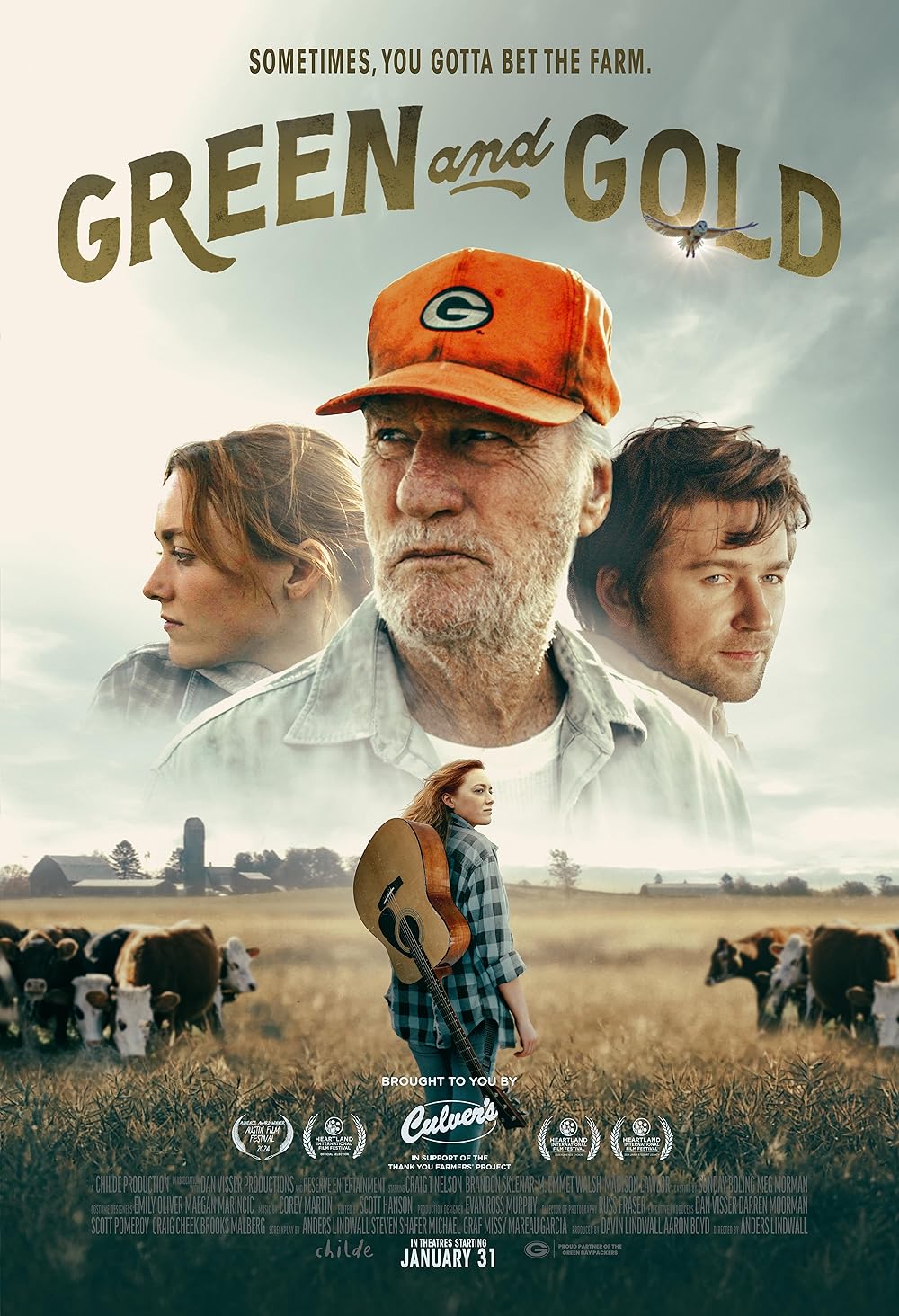
Green and Gold: A New Way to Support Farm Family Wellness Alliance 

At Farm Foundation, we work every day to ensure a more resilient future for agriculture. One of the most pressing issues facing our farm families today is something often left unspoken: mental health. That’s why we’re thrilled to partner with Culver’s on a special initiative to bring awareness, resources, and support to farmers across the country.

Through this campaign, Culver’s will donate $1 for every early digital purchase and rental of the new movie Green and Gold (up to $100,000) to benefit the Farm Family Wellness Alliance, Farmer Angel Network, and FFA. These funds will go directly toward expanding access to vital services that help farm families manage stress, connect with one another, and navigate challenges with the support of a caring community. 

“From significant weather events to an uncertain economy, our farmers need our help,” said Tim Brennan, Vice President of Programs and Strategic Impact at Farm Foundation. “The funds raised through Culver’s Green and Gold campaign will help ensure that farm families know there are resources and a community available to support them during tough times.” 

About Farm Family Wellness Alliance 

Launched by Farm Foundation in 2020 in response to the devastating derecho storms in Iowa, the Farm Family Wellness Alliance was created to provide immediate and ongoing emotional and mental health support to those affected. In 2024, Farm Foundation expanded access nationwide to allow all members of farm families over the age of 16 to participate in the program. 

Among FFWA’s key offerings is TogetherAll—a secure, monitored, online peer support community where farmers can share their experiences, listen to others, and find encouragement in knowing they are not alone. 

About the Film: “Green and Gold” 

Created in partnership with Culver’s, Green and Gold tells a heartfelt story that reflects the real-life challenges and resilience of American farmers. The film aligns with Culver’s deep-rooted support of agriculture through its Thank You Farmers® Project and showcases the vital contributions of farmers to our food system and environment. 

Green and Gold is now available for early digital purchase on Amazon Prime Video, iTunes, Apple TV, Fandango at Home, and Google Play.

To learn more or to watch the film, visit: www.greenandgoldmovie.com 

The post Green and Gold: A New Way to Support Farm Family Wellness Alliance  appeared first on Farm Foundation.

Farm Foundation Announces 2025 Award Recipients

Farm Foundation has announced the recipients of its prestigious 2025 awards, recognizing outstanding individuals dedicated to addressing critical issues in food and agriculture. The honorees exemplify Farm Foundation’s work of fostering innovation, leadership, and thoughtful public policy dialogue.

The recipients of the 2025 Farm Foundation Awards are:

Innovator of the Year: Robbie Dye, CEO, and Tyler Speer, COO, co-founders of Our Farms.
Emerging Leader Award: Dr. Shandrea Stallworth, Senior Agronomist and Global Resource, Small and Medium-sized Enterprises, Regenerative Agriculture, Nestlé Purina North America.
RJ Hildreth Public Policy Award: Dr. Keith H. Coble, Vice President for the Division of Agriculture, Forestry, and Veterinary Medicine, Mississippi State University.
Book of the Year: Land Rich, Cash Poor by Brian Reisinger, award-winning writer, rural policy expert, speaker, and consultant.

“We received a remarkable range of inspiring nominations this year, and these four honorees stood out for their exceptional contributions,” said Tim Brennan, vice president of programs and strategic impact at Farm Foundation. “Their dedication to tackling critical issues in food and agriculture is vital to improving our food system.”

The awards ceremony will take place during the July 2025 Farm Foundation Round Table meeting in Spokane, Washington.

2024 recipients of Farm Foundation Awards include Dr. Jayson Lusk of Oklahoma State University; Dr. Robert Fraley, former executive vice president and chief technology officer at Monsanto Company; Dr. Yangxuan Liu of the University of Georgia; and Dr. Stephen Adejoro of the Livestock Industry Foundation for Africa.

For more information about the recipients and the Farm Foundation Awards, visit: https://www.farmfoundation.org/programs/farmfoundationawards/

The post Farm Foundation Announces 2025 Award Recipients appeared first on Farm Foundation.

Farm Foundation Announces 2025 Young Agri-Food Leaders Cohort

Farm Foundation is pleased to announce the 2025 cohort of its Young Agri-Food Leaders Program. This initiative engages emerging leaders aged 25-40 in the food and agribusiness sectors through a yearlong series of interactive learning and networking experiences, aiming to deepen their understanding of the food and agriculture value chain. The program also fosters the development of a robust network among peers in business, farming, and government.

Now in its fifth year, the Young Agri-Food Leaders Program offers participants sponsorship to attend events, engage in virtual discussions, and access exclusive learning and networking opportunities. Each participant is paired with a senior agri-food mentor to support their career growth and development. Additionally, members of the cohort have the opportunity to participate in various Farm Foundation programs, including attending at least one Farm Foundation Round Table meeting.

The 2025 Young Agri-Food Leaders are:

Mary Akinyuwa
Biochemist and Molecular Biologist, Corteva Agriscience
Mary is dedicated to sustainable agriculture and global food security. At Corteva Agriscience, she investigates the mechanisms of pesticides to ensure their long-term efficacy and accessibility for growers worldwide.

Molly Grotjan
Supply Management Specialist, John Deere
Molly supports John Deere’s Construction & Forestry Division as a Supply Management Specialist. She is also pursuing an MBA in Strategy and Marketing at Northwestern University’s Kellogg School of Management.

Amy Jancewicz
President, CropVue Technologies
As President of CropVue Technologies, Amy leads global business development, operational excellence, and innovation in AgTech, aiming to enhance sustainability and efficiency in agriculture for the benefit of growers and society.

Zachary McGee
Senior Director of Live Operations, Simmons Foods
Zach oversees poultry grow-out operations for one of the largest poultry processing plants in the United States at Simmons Foods Inc. He manages 119 team members, processes 17 million pounds of chicken weekly, and oversees 200 contract poultry farmers in Arkansas and Oklahoma.

Emily Miller
Senior Consulting Operations Manager, Rodale Institute
Emily leads operations for Rodale Institute’s Consulting team, supporting farmers globally in transitioning to regenerative and organic practices. She earned a BA in Economics from Barnard College of Columbia University and is currently pursuing an MS in Sustainability Management from American University’s Kogod School of Business.

Mikayla Mooney
Partner, Ag Startup Engine
Mikayla is a Venture Partner at Ag Startup Engine, where she plays a key role in building and leading the organization’s third fund. Her journey in ag tech began at 19 when she founded KinoSol, a company that developed solar-powered food dehydrators for farmers in developing regions.

Jessi Roesch
Founder & CEO, Downland
Jessi is the founder of Downland, a fintech startup dedicated to ensuring farmland remains in agriculture to feed future generations. With a background spanning finance, operations, and human health, she brings a unique perspective to the intersection of land stewardship, food systems, and business strategy.

Amy Tannhauser
Sustainability Manager, OSI Group
Amy is the Corporate Sustainability Manager at OSI Group. She collaborates with internal teams and customers to implement carbon reduction projects and sustainability initiatives, driving progress toward science-based targets.

For more information about each Young Agri-Food Leader and the program, visit Farm Foundation’s Young Agri-Food Leaders page.

The post Farm Foundation Announces 2025 Young Agri-Food Leaders Cohort appeared first on Farm Foundation.

❌