❌

Reading view

There are new articles available, click to refresh the page.

The Curse Of Fisker Continues As Karma Reboots Their Delayed Gyesera
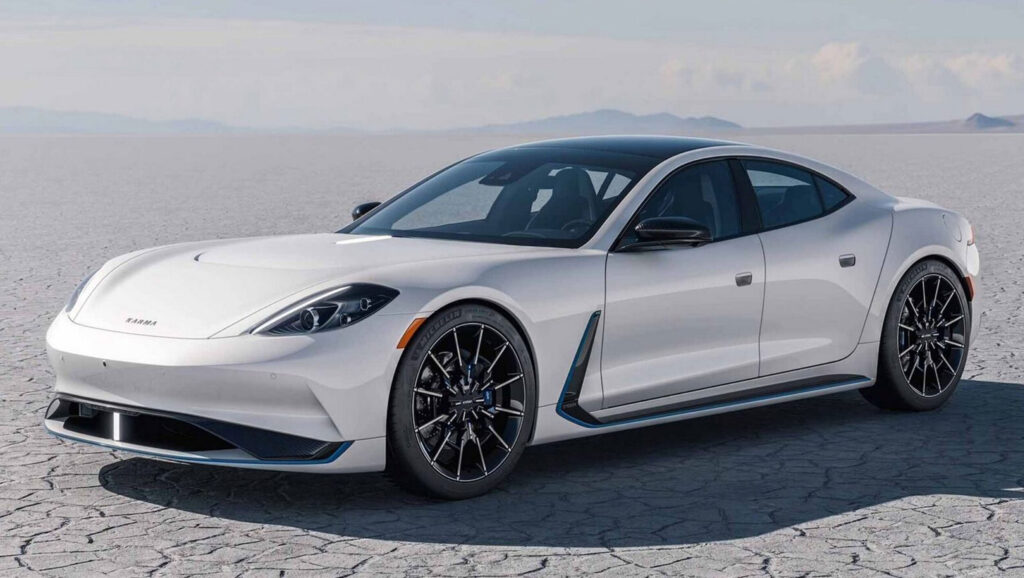
  • Karma is gearing up to launch their overdue Gyesera sedan.
  • It was supposed to be fully electric, but is now range-extended.
  • Car is set to arrive in December and cost a laughable $139,995.

We haven’t heard much from Karma Automotive lately, but the brand didn’t quietly slip into the night. Quite the opposite as they’re returning to Monterey Car Week with the 2027 Gyesera Grand Coupe.

The model was originally announced in 2024 and was intended to be a fully electric vehicle with a 120 kWh battery pack, 590 hp (440 kW / 598 PS), and over 250 miles (402 km) of range. The car was supposed to be launched in late 2024 or early 2025, but that clearly never happened.

More: Karma Gyesera Evolves The Fisker Karma Legacy With 590-HP Electric GT

Now, the Gyesera has been rebooted as a range-extended vehicle. The model – which traces its roots back to the ill-fated Fisker Karma launched in 2011 – promises to combine exclusivity with a razor-sharp design as well as “luxurious refinement for four passengers.”

The car features an undisclosed engine, a 28.1 kWh battery pack, and an electric motor. This gives the Gyesera a claimed output of 566 hp (422 kW / 574 PS) and 546 lb-ft (739 Nm) of torque. Buyers can expect to accelerate from 0-60 mph (0-96 km/h) in less than 3.7 seconds, before hitting a top speed of 146 mph (235 km/h). The company went on to say the model will have an electric-only range of 80 miles (129 km) and an overall range of up to 380 miles (612 km).

That’s a slight improvement from the Revero, which had 536 hp (400 kW / 543 PS) and a 0-60 mph (0-96 km/h) time of 4.5 seconds. The model also had a shorter overall range of 360 miles (579 km).

\\\\\\

Additional details are limited, but the 2027 Gyesera features a lightly revised design with exposed carbon fiber, updated rear badging, and the company’s new “Target Lighting” philosophy. We can also see a ventilated hood as well as 21- and 22-inch wheels.

Karma didn’t say much about the interior, but it’s essentially an updated version of the Revero. Highlights include a 12.3-inch digital instrument cluster, a 10.1-inch infotainment system, and individual rear seats that are separated by a full-length center console. The car also comes equipped with Bridge of Weir leather, a JL Audio system, and a wireless smartphone charger that is inconveniently hidden in the center console.

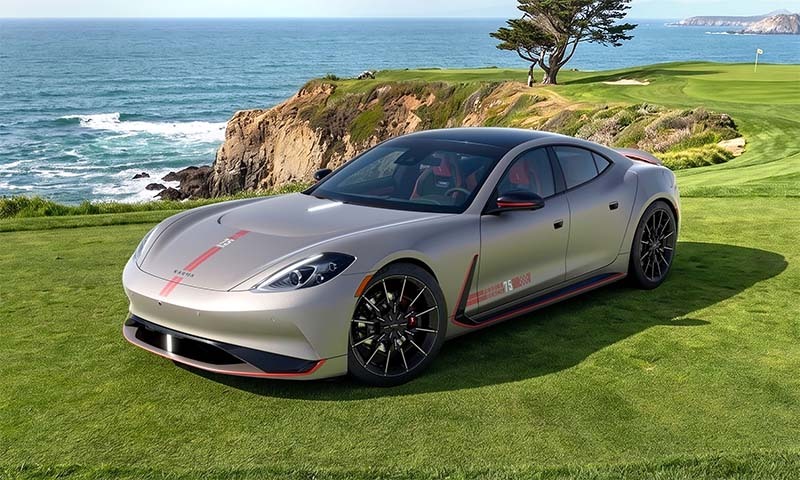
In honor of the 75th Pebble Beach Concours d’Elegance, Karma will introduce a Gyesera in a “PB75” livery that features an Electrum Gold exterior with Stellar Red stripes. They’ll be joined by black 22-inch wheels in front of red brake calipers. Inside, there will be black and red leather seats as well as platinum accents.
 The Curse Of Fisker Continues As Karma Reboots Their Delayed Gyesera

If everything goes according to plan, the Gyesera will arrive at dealerships this December and start at $139,995.

Besides the Gyesera, Karma is bringing along the Amaris GT and Kaveya. The former is “expected” to arrive in the fourth quarter of 2027, while the latter is penciled in for the first quarter of 2028.

Assuming the 1,000 hp (746 kW / 1,014 PS) Kaveya isn’t vaporware, it will cost around $400,000. Of course, that’s a big if, as Karma originally said the entry-level variant would arrive in the fourth quarter of 2025.
\\\\\\\\\\\\\

New Lucid Gravity GT-S Puts 1,070 HP In A Three-Row Family SUV

  • The Lucid Gravity GT-S now delivers 1,070 hp from more powerful motors.
  • A slew of blue accents on the exterior and interior make it stand out.
  • Prices for the flagship Gravity GT-S kick off at $125,900, excluding delivery.

Lucid may have just delayed plans for a cheaper, mass-market model, but that doesn’t mean the EV manufacturer wants to let its current range go stale. Enter the Gravity GT-S, a new high-performance flagship SUV that follows in the footsteps of the Air Sapphire.

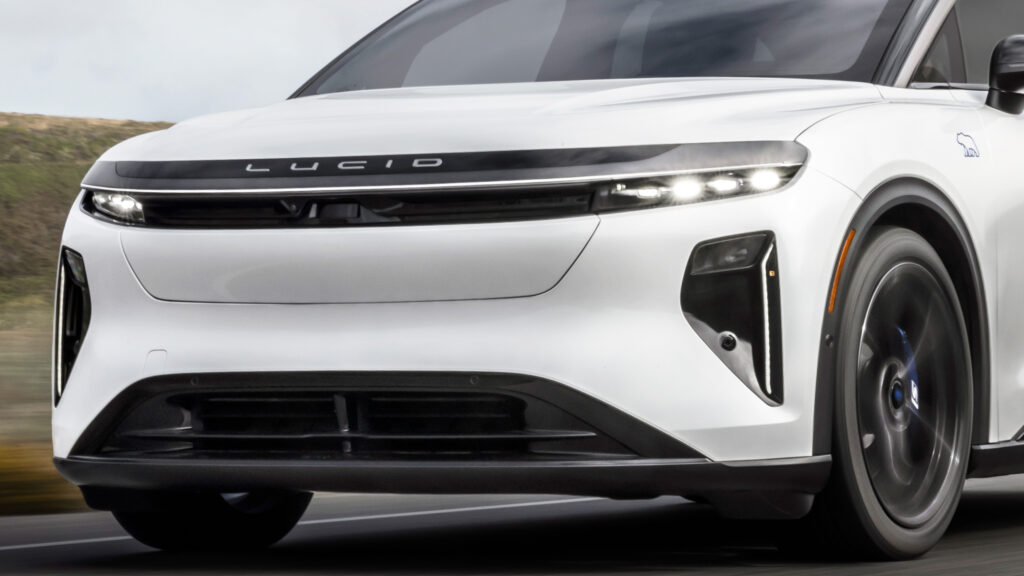
Premiering at Monterey Car Week, the perfect location for a high-end, high-priced vehicle like this, the Gravity GT-S doesn’t look much different than the standard model, retaining most of the SUV’s subtle and sophisticated lines, while introducing just a few design tweaks.

Read: After Less Than A Year, This Lucid Gravity Lost Over $30,000

Chief among the changes are several blue exterior accents, including the brake calipers. The blue touches continue into the cabin of the Gravity GT-S, with blue stitching and piping on the steering wheel, door armrests, and front center armrest, as well as blue seat belts. The Lucid Bear has also been embossed onto the front seat headrests.

Performance is what really sets the Gravity GT-S apart from lesser models in the line-up. Thanks to upgraded motors, it now delivers 1,070 hp, the type of power which was once reserved for million-dollar hypercars, but is now becoming far more accessible thanks to high-end EVs like this.

How Quick Is It?

\\\\\\\

Lucid hasn’t quoted any weight figures for the Gravity GT-S, but notes the all-wheel drive traction allows it to hit 60 mph (96 km/h) in just 3.1 seconds. No quarter-mile time has been released, but given how quickly the Air Sapphire can power down the drag strip, expect to see the Gravity GT-S return times in the mid-9-second range, if not a little quicker.

Working alongside the upgraded powertrain is Lucid’s Dynamic Handling Package, now installed as standard. This upgrade includes independent rear-wheel drive and adaptive three-chamber air suspension, which automatically adjusts the ride height based on vehicle speed.

\\\\\\\\\\\

While Lucid says it’s opened orders for the Gravity GT-S, with prices starting from $125,900 excluding tax, title, license, options, and destination and delivery fees, it has failed to mention when customers can expect to take delivery. The only option will be a Tahoe leather interior, priced at $1,300.

“With Lucid Gravity GT-S, we’ve created a more expressive and exhilarating interpretation of the Gravity SUV,” Lucid chief creative officer Derek Jenkins said. “It combines extraordinary performance with the comfort, space, and versatility that define Gravity, delivering an exceptional experience for our customers that is uniquely Lucid.”

\\\\\\\

Acura Built A Sharp Sports Coupe Just To Sell You An SUV

  • Acura launches new design language with the Nexera Vision.
  • The concept is a two-seater sportscar with butterfly doors.
  • New lighting signature will be used on the next RDX Hybrid.

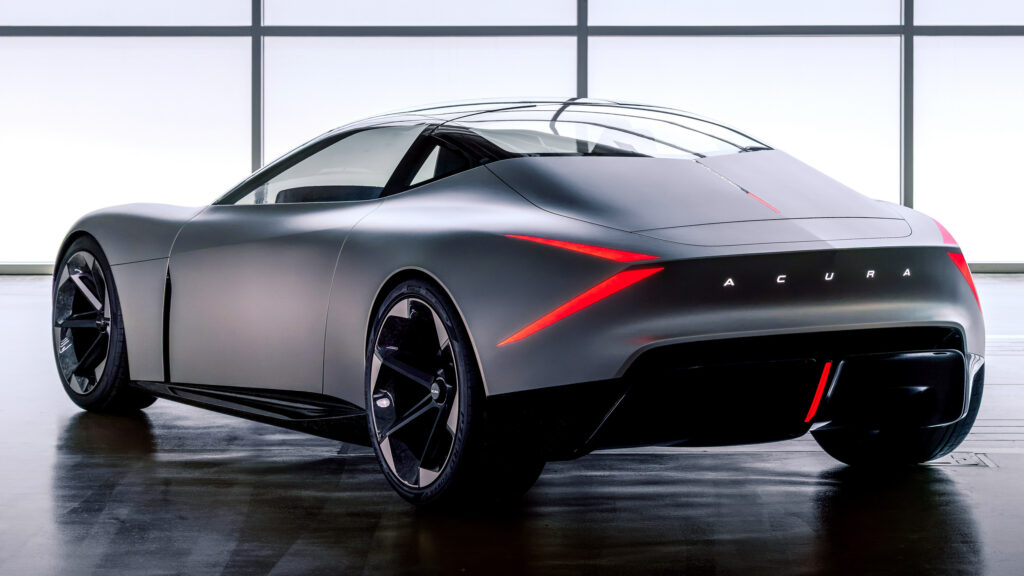
Acura is celebrating its 40th anniversary at Monterey Car Week with a sharp two-seat sports car named the Nexera Vision. The bad news arrives fast, as the concept isn’t headed for a showroom. Instead, it previews where the brand’s design is going, and its influence will surface on future products including the upcoming RDX Hybrid SUV.

The concept plants itself with an aggressive stance, a long hood falling away toward a low, sharp nose. Its bodywork wears a Matte Titanium finish that puts the clean surfacing along the profile on full display, and that surfacing owes its tension to a generous dash-to-axle ratio,

More: Acura Plans A Bigger SUV Than The MDX And Is Calling It The XL

The exterior’s headline act is the new phantom lighting signature, with LED headlights and taillights that stay hidden until they’re switched on. The V-shaped units draw from the Acura emblem and will reach production vehicles soon, beginning with the next-gen RDX Hybrid. Acura fans have already seen these lights on the recent Acura Hybrid SUV Prototype, which previews the production RDX.

\\\\\\

Acura

The rest of the exterior keeps pace with large dual-hinge butterfly doors, an aerodynamic greenhouse, air channels on the nose, an active rear spoiler and a forged carbon bodykit. The six-spoke 22-inch center-lock wheels use a 3D directional design and pair a matte anodized finish with forged carbon inserts and Brembo carbon-ceramic brakes.

More: Acura’s 1980s Retro Dealership Is A Better Ad Than Anything It’s Running Now

The interior was designed to be futuristic, minimalist, and sustainable. Rather than lean on screens, Acura went with a curved digital instrument cluster behind the yoke-shaped steering wheel. The goal was to eliminate distractions, evoking memories of the Honda S2000.

\\\\

To reach the lowest possible seating position, the bucket seats are fixed to the floor, so the driver moves the steering wheel and pedal box instead. The cabin runs a black-and-white theme with pink accents. On materials, Acura used CircuLeather upholstery that claims a lower carbon footprint, plus Alcantara made from post-consumer recycled polyester, recycled aluminum, and forged carbon details.

The concept came out of the Acura Design California studio in Los Angeles. Yasutake Tsuchida, Acura Creative Director and Vice President of Auto Design, who oversaw the project, said:

“Our goal with this new design direction is to define Acura performance through disciplined proportions, sculpted form and the seamless integration of advanced technology, creating an expression that is both progressive and authentic to the brand.”

More: Acura Is Going All-In On Hybrids, Honda Is Keeping Gas Cars Affordable

Tsuchida added that the Nexera Vision “sets the course for the next generation of Acura design, and we are committed to evolving that direction with clarity, consistency and purpose across future Acura products.”

Acura shared nothing about what powers the concept. The packaging, though, hints at a fully electric powertrain.

More: Honda Took A $16 Billion Bath On EVs, So Now Wants More EVs On A Platform That Can Switch Sides

The Acura Nexera Vision makes its public debut at The Quail on August 14, then appears at the Pebble Beach Concours d’Elegance Concept Lawn on August 16.

\\\\\\

Acura

The company doesn’t mention plans to turn the concept into a production car, though it says that elements of its exterior and interior will reach the future Acura lineup soon. A warm public reaction could still push it toward development.

The Nexera Vision continues a line of two-door sports car concepts from Acura, including the HSC (Honda Sports Concept) from 2004, the Acura Advanced Sports Car Concept from 2007, and the NSX Concept from 2012, which evolved into the hybrid production supercar of the same name.

\\\\\\\\\\\\\\\\\\\\\\\\

Acura

Cadillac Built One Celestiq For A Person Who Dislikes Chrome

  • Cadillac has unveiled the 2027 Celestiq Night Test.
  • It sports a midnight blue exterior and a two-tone cabin.
  • Ultra-luxury EV has all-wheel drive and 655 hp.

Cadillac began Celestiq deliveries last summer, and the ultra-luxury sedan has been slowly trickling into the hands of wealthy buyers. One of the latest to be hand-built in Michigan is this moody 2027 model known as the Night Test.

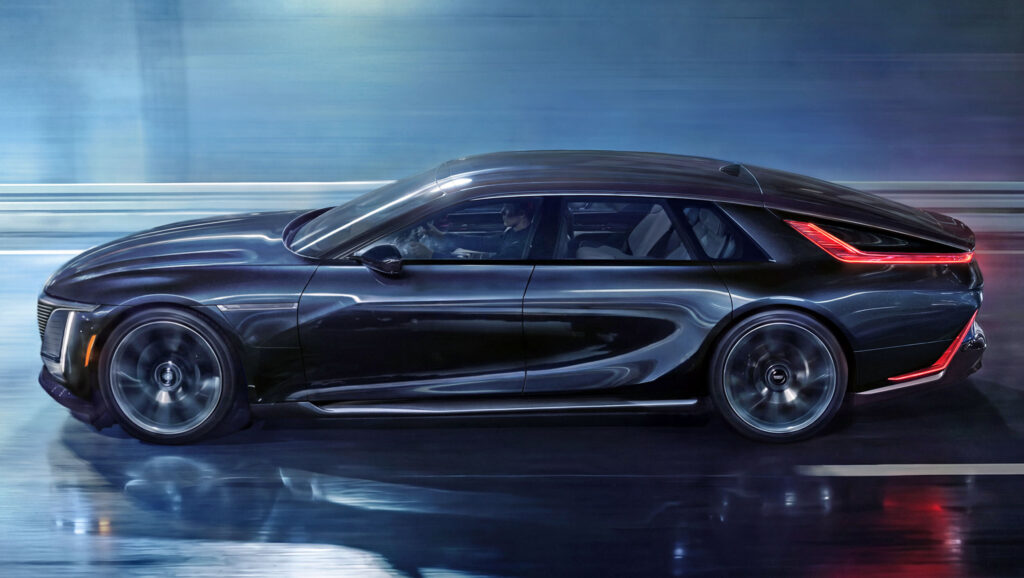
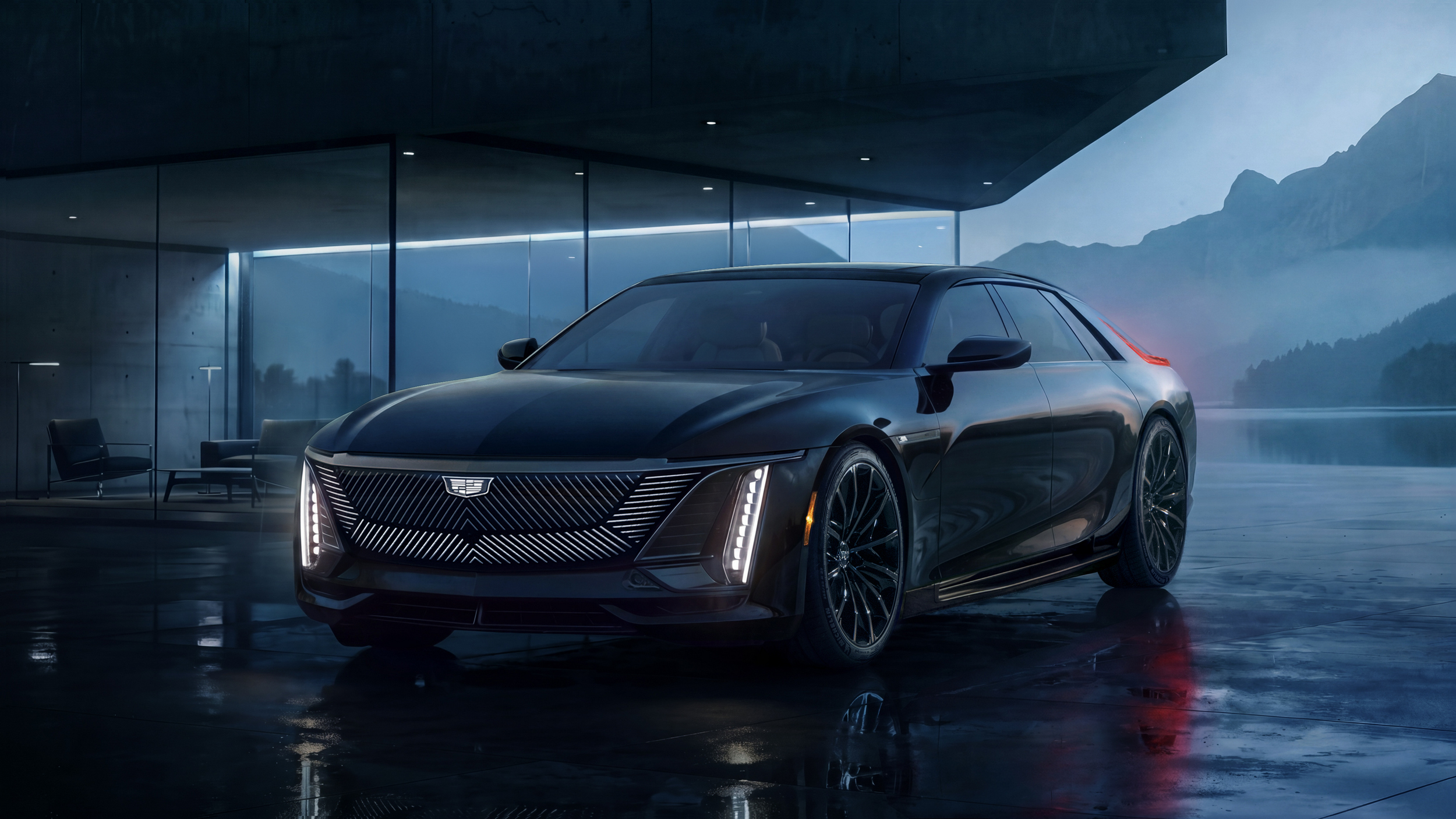
The specially commissioned Celestiq draws inspiration from Cadillac’s race cars and wears a midnight blue exterior with two-tone wheels sporting a dark finish. The model also trades its usual brightwork for subdued, low-contrast accents.

More: Cadillac Delivers Another Celestiq As The Brand Looks Beyond EVs

 Cadillac Built One Celestiq For A Person Who Dislikes Chrome

The dark and moody styling continues inside, where you’ll find black and white seats with contrasting vertical accents in the center. We can also see metallic door trim as well as carbon fiber on the center console. They’re joined by a familiar panoramic glass roof and two individual rear seats.

Cadillac said the “one-of-one example demonstrates how a bespoke vehicle can embody a singular creative vision, with every visual and tactile detail contributing to a disciplined, unmistakable atmosphere.” They added the Night Test “evokes moments of solitude when perfection is its own reward.”

\\

The resulting design looks pretty classy, and it should, as the car likely cost around $400,000. As a refresher, the Celestiq has a 111 kWh battery pack that feeds a dual-motor all-wheel drive system developing 655 hp (488 kW / 664 PS) and 646 lb-ft (875 Nm) of torque. This enables the 217.2-inch (5,517 mm) long car to accelerate from 0-60 mph (0-96 km/h) in 3.7 seconds and travel around 303 miles (488 km) on a single charge.

Putting the electric powertrain aside, the Celestiq sports a 55-inch pillar-to-pillar display, an 11-inch Front Command Center, and an 8-inch Rear Command Center. Customers will also find two 12.6-inch rear passenger displays as well as the Super Cruise semi-autonomous driving system.

\\\\\

Jaguar’s Type 01 EV Interior Looks Like A ’70s Concept That Reached Production

  • Jaguar reveals the interior design of the production Type 01.
  • Cabin features a central spine, hidden tech, and retro cues.
  • Full reveal of the four-seater GT takes place on October 6.

Jaguar has released the first official images of the Type 01 interior, ahead of the model’s debut on October 6. The four-seater cabin of this electric GT runs on straight lines, concealed compartments, and retro-inspired shapes and colorways, along with “hidden-until-needed technology” that carries over the same minimalist and divisive design language Jaguar used on the exterior. Love it or hate it, the cabin commits to the same idea.

More: Jaguar’s 1,000-HP Answer To Bentley Looks Nothing Like The Jaguar You Knew

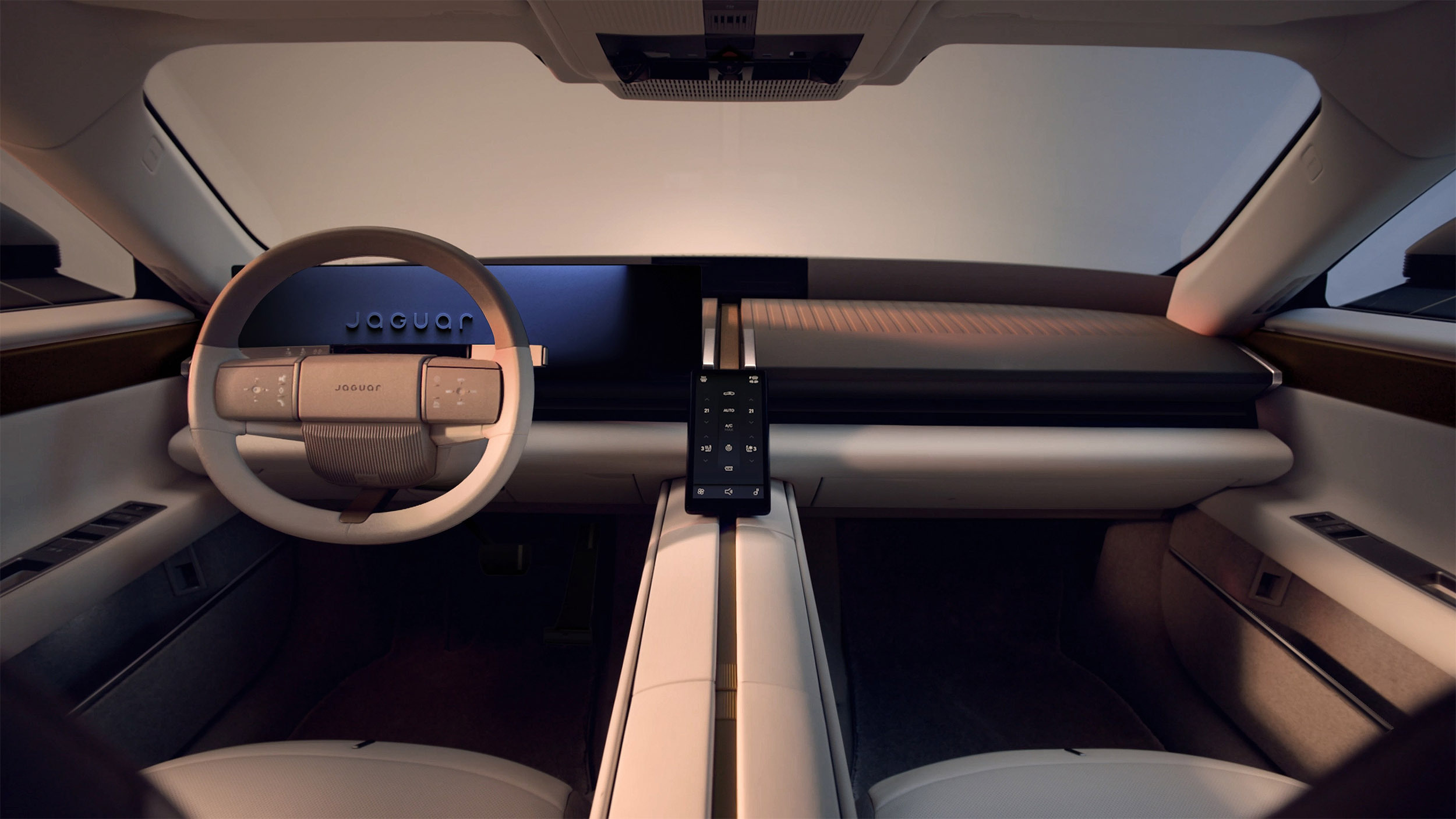
The production interior traces directly back to the Type 00 concept, with the wilder details reined in for the real world. Jaguar held onto the central spine, which cuts the cabin into two halves and locks capacity at four occupants. The automaker describes an interior that “shrinks around the driver with a low seating position that cossets and inspires confidence,” which is a lot of words for a snug cockpit.

The Screens, Or Lack Of Them

 Jaguar’s Type 01 EV Interior Looks Like A ’70s Concept That Reached Production

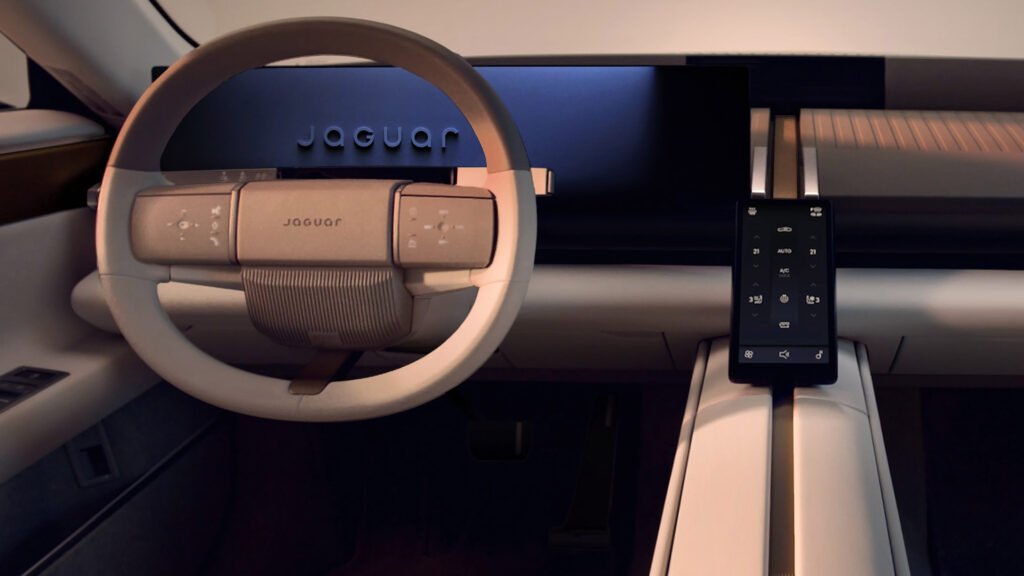
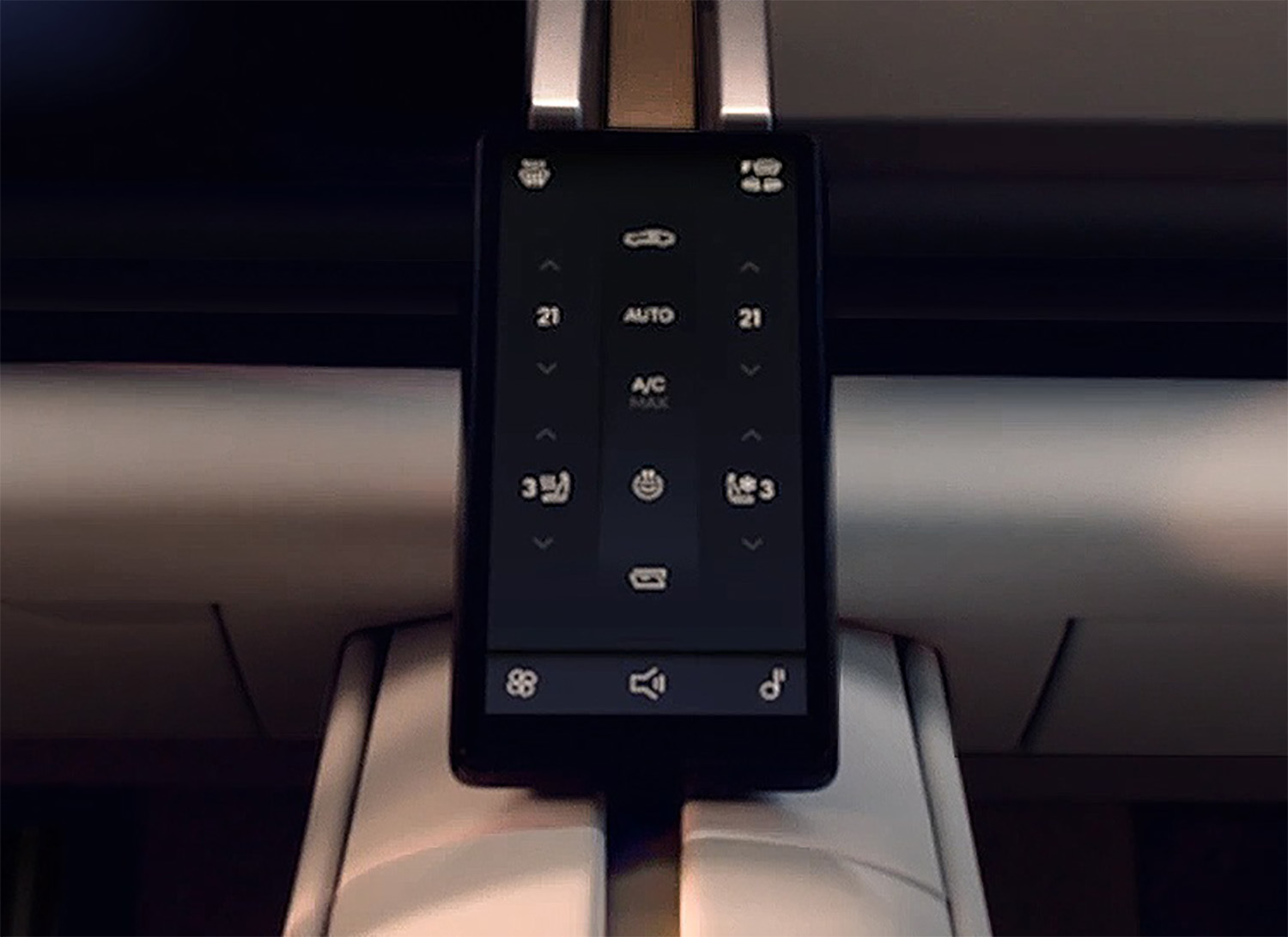
The driver faces a large digital instrument cluster that stands in for the traditional infotainment screen missing from the center stack, and it covers everything from speed to navigation. Jaguar has skipped a separate display for the front passenger as well. Backing up the cluster is a mirror-replacing screen called the “ClearSight Rear View Display,” set at the base of the windscreen, plus a small smartphone-style touchscreen that pokes out of the center console. That touchscreen holds the climate and media controls, and what look like haptic buttons sit on either side of the two-spoke steering wheel’s central hub, home to the new Jaguar logo.

More: Jaguar’s 1,000 HP Type 01 Is Chasing Bentley Money And Influencers On Monaco’s Streets

Screens aren’t the only thing Jaguar kept to a minimum, at least by today’s standards. Physical buttons are nearly absent, with only the window switches visible in these photos.

Hidden Compartments And Surprise Touches

 Jaguar’s Type 01 EV Interior Looks Like A ’70s Concept That Reached Production

Jaguar said the vehicle has “concealed compartments, hidden-until-needed technologies and unexpected moments of color,” which hints that occupants might be met with a few surprises. The large center console should hide storage cubbies as well. Shots from other angles show a floating center tunnel, a panoramic sunroof and ambient lighting strips along the doors. The production model does without a rear windscreen, following the example of the Avatr 12 and Polestar 4.

A ’70s Palette Reworked

\\\\\\\\

Jaguar

The color palette draws from “travertine stone and the rich textures of artisan textiles,” giving off ’70s concept car vibes. Cream and brown upholstery meets brass accents on the central spine, while the door cards carry embedded Jaguar leapers. Linear graphics visually merge the hood and the dashboard for a retro-futuristic feel, with the same motif echoed on the steering wheel.

Thomas Holden, Jaguar’s Chief Interior Designer, said:

“Our holistic design philosophy translates the vehicle’s exterior presence into a distinctive interior architecture. In contrast to the horizontal interior design norm, we emphasise its dramatic longitudinal nature through the central spine – an architectural statement that creates four individual spaces. With authentic materials, technology on demand and reductive flowing surfaces, Type 01 presents unmistakable drama and theatre that will define the modern luxury automotive interior of the future.”.

The Hardware Underneath

\\\\

Jaguar / Instagram

The production GT rides on a brand-new EV-dedicated Jaguar Electric Architecture (JEA). The company is targeting a range beyond 400 miles (644 km) on the EPA cycle, or 700 km (435 miles) on the WLTP cycle, from a 120 kWh battery pack, and output north of 986 hp (735 kW / 1,000 PS) from an AWD tri-motor setup. Jaguar has also confirmed 959 lb-ft of torque.

More: Jaguar Benchmarked Its Electric GT Against One Classic Above All Others

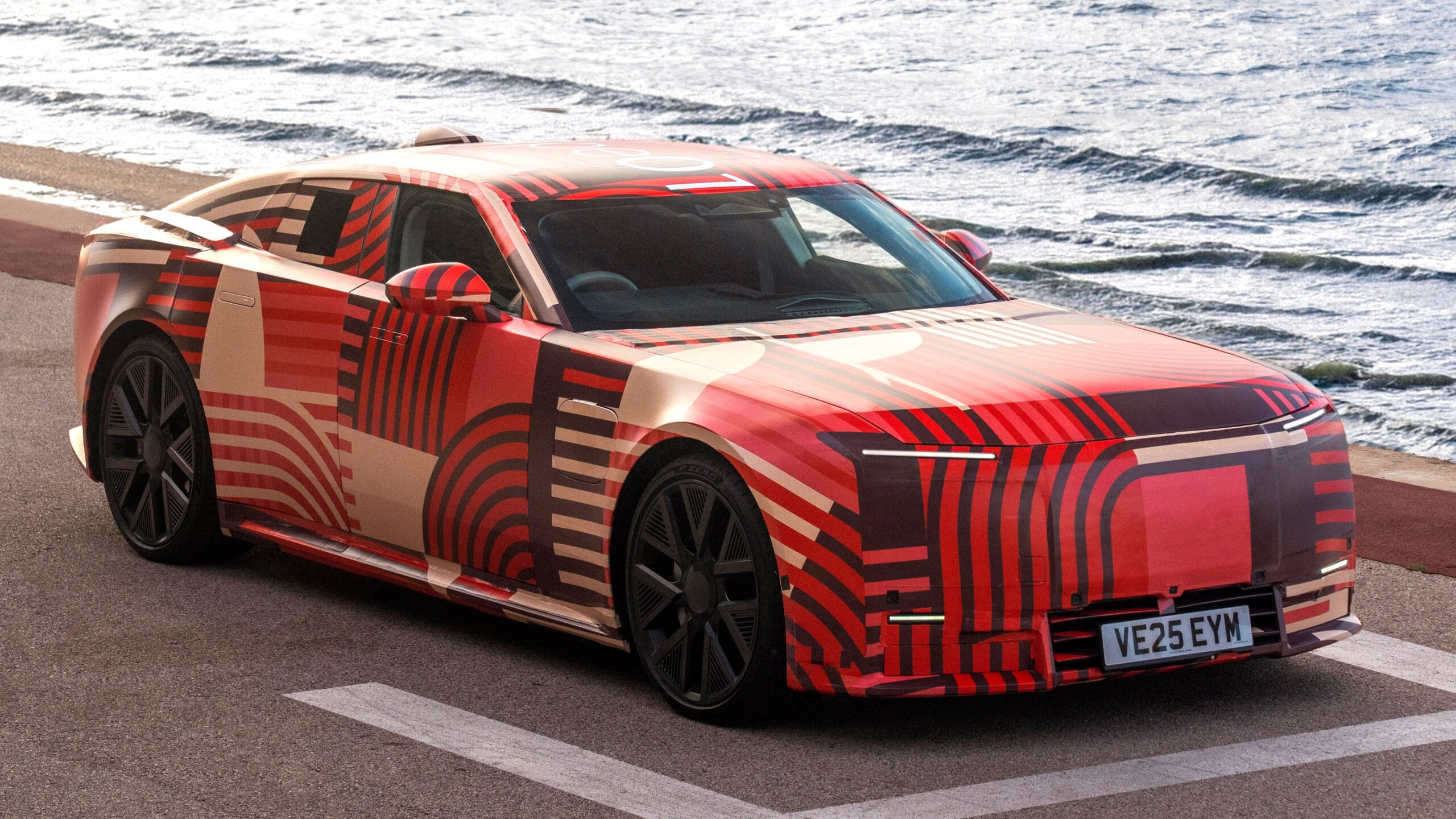
The Jaguar Type 01 prototype will appear at Pebble Beach Concours on August 16 wearing a new camouflage wrap. The full reveal of the production EV is set for October 6 in New York.

 Jaguar’s Type 01 EV Interior Looks Like A ’70s Concept That Reached Production
The Jaguar Type 01 prototype with an earlier wrap.

Cadillac Will Charge You $55K To Make Sure Nobody Else Has Your Escalade IQ

  • GM’s luxury brand is expanding their Curated by Cadillac program.
  • Customization service paves the way for unique Escalade IQs.
  • Model offers over 160 exterior colors as well as 44 interior designs.

Cadillac has embraced customization and there’s no better example of that than Cadillac House. Located at the heart of the Warren Tech Center in Michigan, the building is where customers can go to commission their ultra-luxury Celestiq.

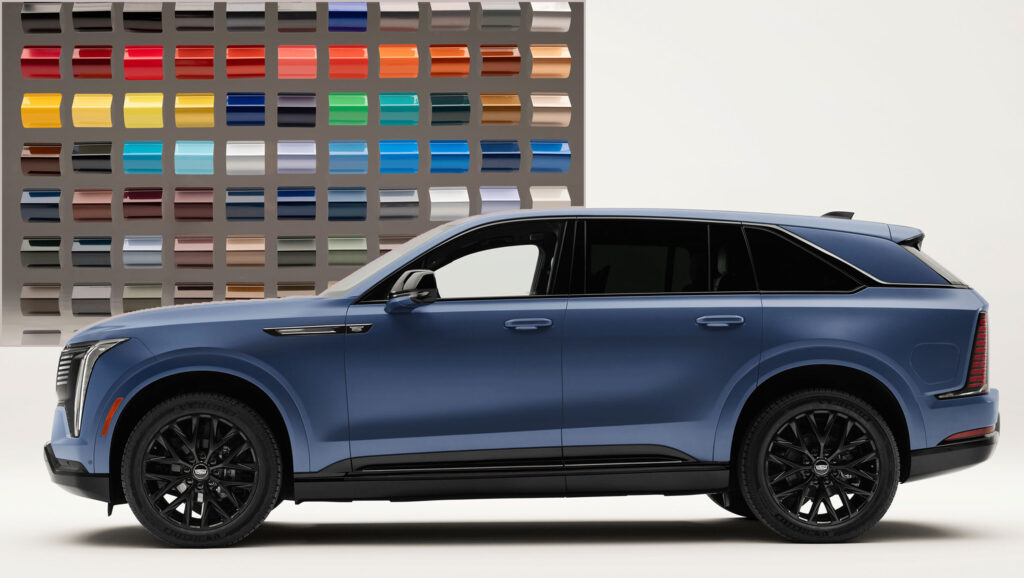
Once inside, buyers work with Celestiq designers as well as a personal concierge to craft a one-of-a-kind vehicle. As part of the visit, they’ll browse a “magic wall,” which houses automated panels that open to reveal a host of vehicle options. This includes dozens of paint colors, numerous upholstery options, an assortment of trims, and a handful of metal accent colors.

More: We Visit Cadillac House, Home Of The Celestiq

Last year, the Celestiq commissioning process inspired a new Curated by Cadillac program. It launched with the CT5-V Blackwing and is now expanding to the Escalade IQ.

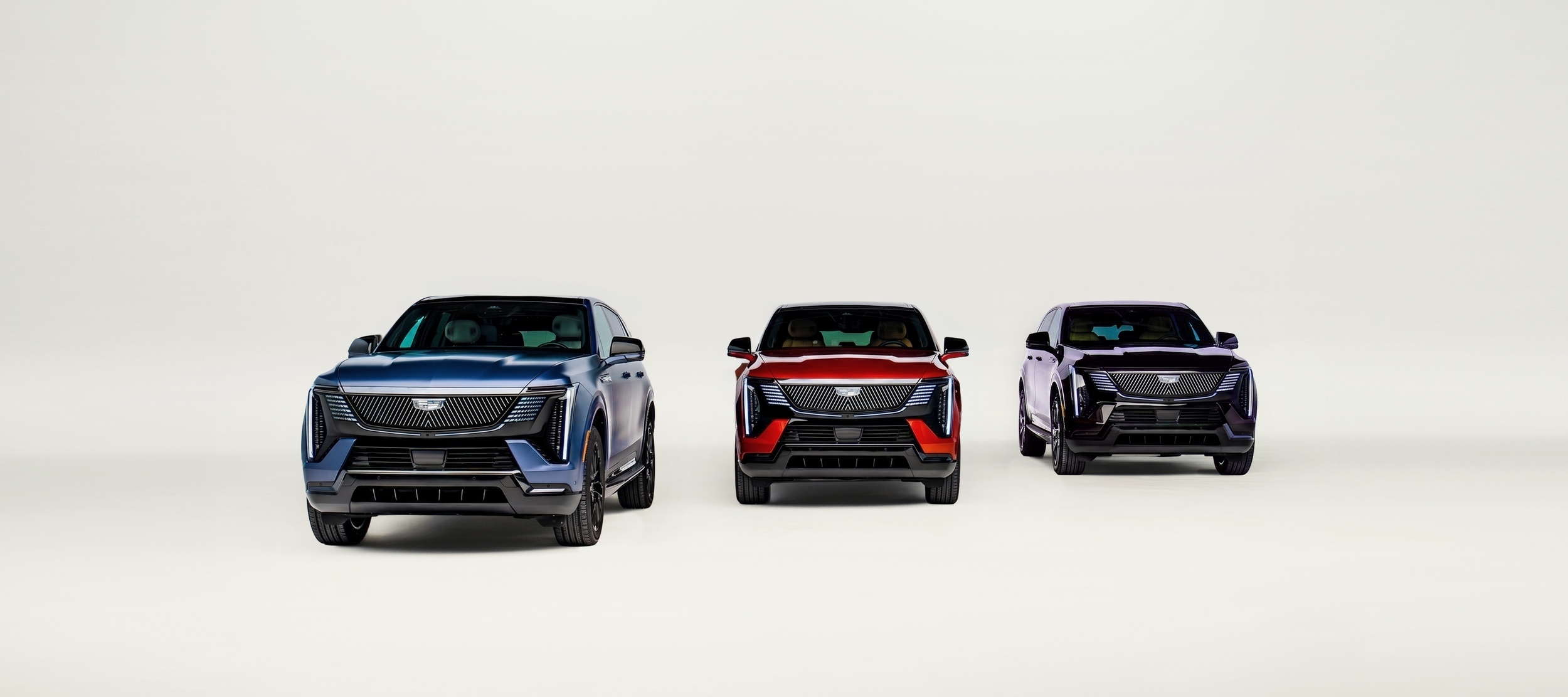
Designed to set a “new standard in customized luxury,” the Curated by Cadillac Escalade IQ will offer customers more than 160 premium exterior colors and finishes. This includes everything from your typical solids and metallics to tri-coat paint jobs as well as matte and frost finishes.

While the $150,600 Escalade IQ Premium Luxury only offers three interior colors, the Curated by Cadillac version offers up to 44. This appears to include an assortment of two-tone designs including red and black as well as white and tan.

Given the wealth of options, customers and dealers will be supported by a dedicated design concierge. They’ll guide you through the customization process and inform you of your options. As part of this experience, buyers can expect “guided configurator sessions.”

Each vehicle will be hand-built at the Artisan Center in Warren, instead of the nearby Factory Zero. The models will be hand-painted, feature unique VINs, and come equipped with a serialized builder’s badge.

Unsurprisingly, this level of craftsmanship doesn’t come cheap as the Curated by Cadillac package costs $54,995 on top of the price of the Escalade IQ. This means buyers should expect to shell out more than $185,000 and well-equipped models could easily top $215,000.

 Cadillac Will Charge You $55K To Make Sure Nobody Else Has Your Escalade IQ

The Curated by Cadillac Escalade IQ will be offered in “ultra-low” numbers in the United States and Canada. Deliveries are expected to begin in the second half of 2027 and a concept will debut at Monterey Car Week on August 14.

As a refresher, Cadillac’s flagship electric SUV has a 205 kWh battery pack that feeds a dual-motor all-wheel-drive system developing up to 750 hp (559 kW / 760 PS) and 785 lb-ft (1,063 Nm) of torque. This enables the model to accelerate from 0-60 mph (0-96 km/h) in 4.7 seconds and travel up to 465 miles on electricity alone.

\\\\\\

McMurtry’s $1.3 Million Fan Car Debuts At Monterey With 1,000 HP And 3G Of Grip

  • The Spéirling PURE makes 1,000 hp and 2,000 kg of standstill downforce.
  • Production car adds a bigger battery, wider cockpit, new fans, and 95% new parts.
  • Only 100 will be built, with deliveries starting later this year from $1.3 million.

We’re all living in a golden era of supercars and hypercars, but almost all of them use the same ingredients. Tons of power, typically some power adders like turbos or superchargers, active aero, trick suspension bits, and a price tag so high it becomes part of the experience. Even electric hypercars are a thing now, and they have their own fancy feats. None seem to be as raw, smart, and rule-breaking as this: the McMurtry Spéirling PURE. Now, it’s about to make its public debut at Monterey.

Read: McMurtry Sperling Crushes Hockenheim Record, Beats Mercedes-AMG One By 14.1 Seconds

The secret is hidden underneath. Twin fans and a sealing skirt create a low-pressure zone beneath the car, generating up to 2,000 kg (4,400 lb) of downforce from zero mph. Unlike a conventional wing, the system doesn’t need speed to work. The Spéirling can arrive at a corner already carrying race-car levels of grip.

\\\

That advantage was demonstrated at Laguna Seca in 2024, when a non-professional driver set an outright EV lap record with a 1:18.413. He wasn’t chasing a record. He was simply participating in a 10-minute demonstration while running just 50 percent power and downforce. The very first flying lap time was 6.3 seconds quicker than the production-car record set by a Czinger 21C.

Fan cars are not new. The Chaparral 2J and Brabham BT46B explored the idea decades ago. McMurtry has simply developed it into a modern, customer-ready track car. Prototype versions have also set records at Goodwood and the Top Gear Test Track, while one demonstrated enough suction to drive upside down.

\\\

The production PURE gets 95 percent new components, including a larger 100-kWh battery, new Helix motors, an upgraded gearbox, improved cooling, and a more durable fan system. It produces 1,000 bhp (746 kW), reaches 60 mph in 1.55 seconds, and tops out at 190 mph (305 km/h). It weighs approximately 1,350 kg (2,980 lb) and can generate 3g in both cornering and braking.

McMurtry says the PURE can be operated by a driver and a competent friend or technician rather than a full race team. That’s important because the car costs £995,000 or $1.3 million before taxes, shipping, and options. Only 100 examples will be built.

The Spéirling PURE will appear at The Quail on August 14 before heading to Laguna Seca on August 15. Let’s hope somebody gives it another chance to set a record without even trying.

\\\

Photos: McMurtry

❌