
Normal view

There are new articles available, click to refresh the page.
Before yesterdayVehicles

Toyota And Isuzu’s New Hydrogen Truck Solves The Problem Refrigerated Delivery EVs Can’t

  • Isuzu and Toyota are building Japan’s first hydrogen light-duty truck.
  • The fuel cell hardware is Toyota’s, the chassis is Isuzu’s Elf EV.
  • Toyota’s next fuel cell system delivers 20% better efficiency than before.

Hydrogen mobility might not be moving forward as quickly as expected in passenger cars, but it still has clear promise in the commercial space. The latest move comes from Isuzu and Toyota, which have teamed up to develop Japan’s first mass-produced light-duty fuel-cell electric truck, expected to reach the road within the next two years.

This won’t be a ground-up rethink. Instead, it rides on the familiar ladder-frame chassis of the Isuzu Elf EV. The electric Elf, known globally as the N-Series, arrived in 2023 with modular 20 kWh battery packs, scaling from 40 to 180 kWh depending on spec.

More: A Gullwing Door Hides The Coziest Room On Wheels

The real story sits under the skin. Toyota’s upcoming third-generation fuel-cell system takes center stage here, bringing a claimed 20% improvement in efficiency over the current setup. It is also expected to last longer and cope better with hard use, which matters when your daily routine involves stop-start urban logistics or hauling refrigerated goods across a city.

Why Hydrogen?
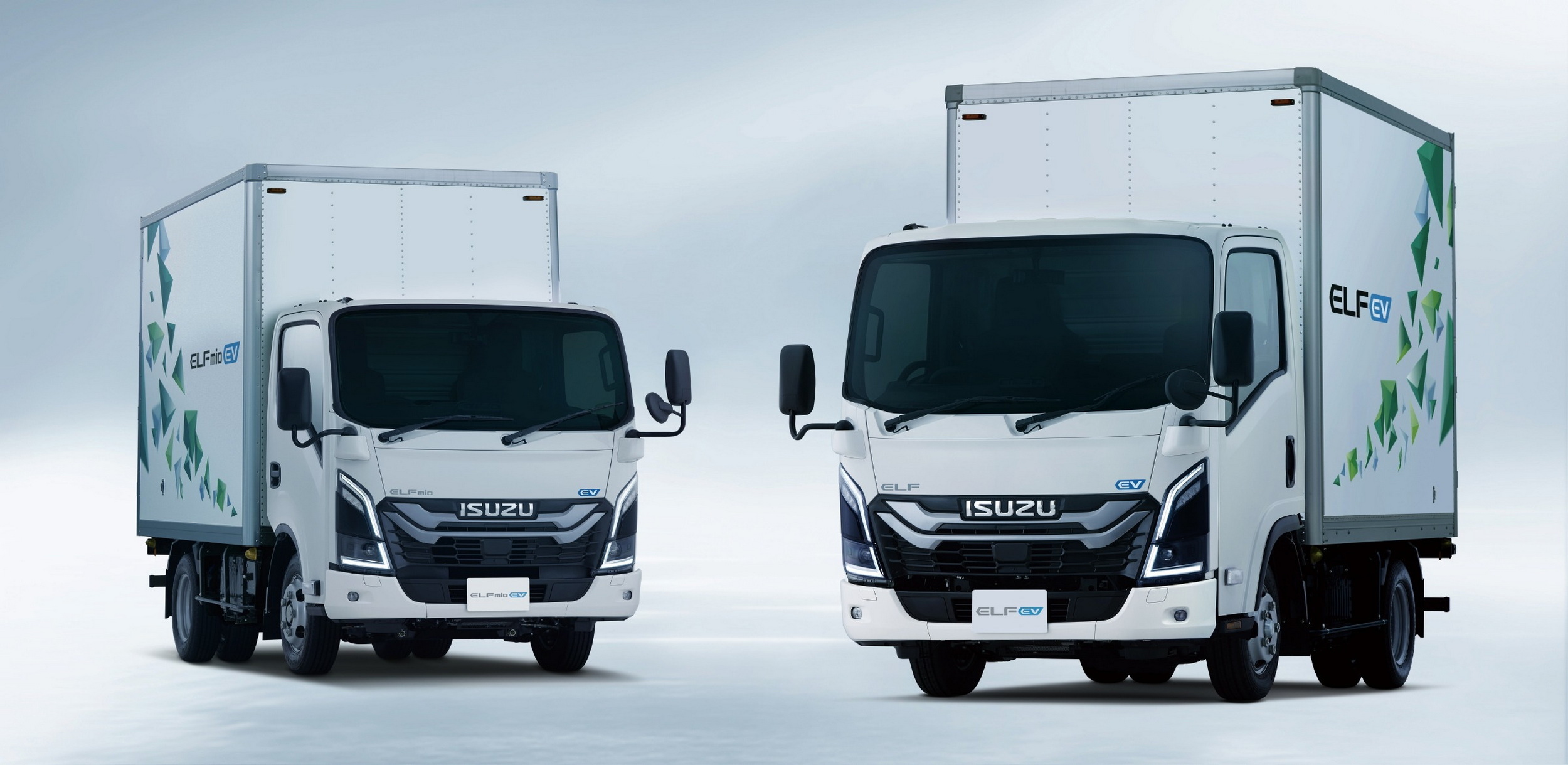
 Toyota And Isuzu’s New Hydrogen Truck Solves The Problem Refrigerated Delivery EVs Can’t

One of the primary drivers behind this FCEV project is the inherent limitation of battery-electric trucks in certain commercial roles. Light-duty trucks used for supermarket and convenience store deliveries often require heavy refrigeration equipment that drains battery power quickly. Furthermore, the long charging times associated with large battery packs can disrupt tight delivery schedules.

More: BMW iX5 Hydrogen Teased With 385 Miles Of Range

Hydrogen refueling, which takes roughly the same amount of time as diesel, offers a more seamless transition for fleet operators, while offering an extended driving range. At the same time, an FCEV truck produces much fewer vibrations and noise compared to a diesel-powered equivalent, while having zero CO2 emissions.

Reducing Costs Is The Key

 Toyota And Isuzu’s New Hydrogen Truck Solves The Problem Refrigerated Delivery EVs Can’t

The sticking point remains cost. Fuel-cell vehicles are still expensive, and hydrogen infrastructure is far from widespread. Isuzu and Toyota say the answer lies in smarter engineering, from optimizing the vehicle structure to rethinking manufacturing processes, alongside continued development of the fuel-cell system itself.

More: The Honda CR-V e:FCEV Is Living On Borrowed Time

Production of the light-duty fuel cell truck is scheduled to start in the Japanese fiscal year 2027, which ends on March 30, 2028.

This isn’t the first time the two companies have worked together on hydrogen. Isuzu and Toyota are already collaborating on the ERGA FCV, an urban flat-floor bus with hydrogen tanks integrated on its roof structure.

\\\\\\

Updated: EPA Seeks to Expand Fuel Scope of Clean School Bus Program

By: Ryan Gray
20 February 2026 at 01:29

The U.S. Environmental Protection Agency is issuing a request for information from school bus industry stakeholders as it seeks to add biodiesel, renewable diesel (RD) and liquefied natural gas (LNG) as funding options to a revised Clean School Bus Program.

EPA also said it will not be awarding funds for the 2024 CSB Rebate Program. “EPA thanks applicants for their interest and encourages them to apply for the new grant program,” EPA said in a press release Thursday. “The agency will provide more details on the 2026 grants and eligibility requirements in the near future through a Notice of Funding Opportunity.”

In a follow-up email sent by School Transportation News asking for clarification on foregoing the 2024 rebate awards and if those same applications would be recycled, EPA referred to its original statement.

Meanwhile, Thursday’s RFI also mentions hydrogen as an eligible fuel listed by the Investing in Infrastructure and Jobs Act, which created the five-year, $5 billion fund. But there are currently no hydrogen school buses in production. The same goes for liquefied natural gas, which differs from propane. The IIJA also mentions CNG, which won a handful of awards, but manufacturers don’t currently produce that fuel option, either.

Diesel-powered school buses do exist in large numbers nationwide, estimated at about 80 percent of the national fleet of approximately 450,000 vehicles. Many operate with biodiesel blended with regular diesel. The RFI specifically states EPA seeks information on B20, or 20 percent biofuel blend with diesel.

Renewable diesel, or RD, is different from biodiesel as the former is produced by a hydrotreating process, making it a hydrocarbon fuel. Because it is otherwise nearly identical to petroleum diesel, RD is a drop-in fuel alternative that diesel engine manufacturers certify for use in their engines without voiding warranties. But RD is more expensive than petroleum diesel except in California, Oregon, New Mexico and Washington, where Low Carbon Fuel Standard credits are at play.

Electric school buses are not a focus of the RFI because EPA said it has sufficient information on its infrastructure, availability and performance.

EPA added electric school buses have accounted for 90 percent of Clean School Bus Program awards to date, and the next funding round should target other allowed alternative fuels “to allow for the maximum number of affordable bus choices to fit school districts’ specific needs.”

What’s in the RFI?

EPA is asking the current availability and anticipated purchasing within the next year to five years of biodiesel, RD, E85 flex fuel, CNG, LNG, propane or any other biofuel and if those school buses are fueled at the school district facility, an offsite private fueling station, or an offsite public station. EPA also wants to know about fuel supplier arrangements.
Specifically for biodiesel and RD, EPA is asking for details on how the blends or drop-in fuels are used.

It requests information on fueling system components, pricing, construction and installation requirements, performance, domestic content, and other practical considerations.

The RFI also states EPA wants information on how it can further safeguard taxpayer dollars. The agency completed an internal review to assess financial management practices and said it uncovered inconsistent documentation, incomplete adherence to reporting an award conditions, improper or premature drawdowns of funds, and insufficient internal controls by certain awardees, including for profit recipients.

EPA said it is “evaluating additional safeguards and conditions for for-profit entities,” which includes audits of financial statements and conflict of interest policies. It is also considering verification tools or documentation to ensure appropriate bus usage and routes before funds are disbursed; milestone-based payment structures, reimbursement-only models, or phased disbursement mechanisms tied to verified delivery to reduce risk and improve accountability; and enforcement mechanisms such as repayment obligations or clawback provisions in cases of nonperformance, noncompliance, or misuse of funds.

The Clean School Bus Program is set to expire at the end of the current fiscal year, which would require the remaining $2 billion that has yet to be awarded needing to rollout over the next six months.

Public comments are due within 45 days of EPA publishing the RFI in the Federal Register. A webinar is scheduled for March 3.


Related: EPA ‘Revamping’ Clean School Bus Program
Related: Engine, Truck Manufacturers Support EPA Easing Derate of SCR Diesel Emissions Controls
Related: Deploying Electric School Buses in Rural and Suburban Districts

The post Updated: EPA Seeks to Expand Fuel Scope of Clean School Bus Program appeared first on School Transportation News.

Redefining Renewable Energy: A Critical Push to Optimize Hydroelectric Power Efficiency

By: newenergy
26 November 2024 at 23:35

Hydroelectric energy is the “backbone of clean power,” but an urgent need to improve efficiencies is driving engineers to explore a whirlwind of options Among alternative energy solutions, wind, solar, and hydrogen capture the majority of attention. Yet the combined output from these sources pales in comparison to that of hydroelectric power. Producing more than …

The post Redefining Renewable Energy: A Critical Push to Optimize Hydroelectric Power Efficiency appeared first on Alternative Energy HQ.

Fueling the Future: Unlocking Low-Cost Green Hydrogen

By: newenergy
28 August 2024 at 18:03

Current methods used to process hydrogen into a usable fuel are cost-prohibitive, but several new innovations are promising to open the door to cost-competitive green hydrogen. Hydrogen is well positioned to be the fuel of the future. However, a commercially viable transition to green hydrogen – the environmentally friendly version of the fuel – seems …

The post Fueling the Future: Unlocking Low-Cost Green Hydrogen appeared first on Alternative Energy HQ.

❌
❌