Normal view

There are new articles available, click to refresh the page.
Before yesterdayMain stream

Japan Just Dealt BYD A Massive EV Blow

  • Japan cut subsidies for the Chinese EV maker to just 150,000 yen.
  • New rules now favor EVs using locally produced battery packs.
  • Toyota and Nissan models still qualify for far higher incentives.

Electric vehicles make up less than 2 percent of new car sales in Japan, yet that didn’t stop Chinese EV giant BYD from unveiling an all-electric Kei car last year, aiming to make inroads into the local market. However, the company has just been dealt a serious blow.

It has been revealed that the Japanese government has slashed subsidies for BYD by more than half, reducing them to just 150,000 yen, or about $936. Previously, incentives for BYD models ranged between 350,000 yen ($2,000) and 400,000 yen ($2,500).

Read: BYD Surprises Japan With A Tiny EV Ready To Take On The Kei Giants

The reason is quite simple. Japan is revising its EV subsidy scheme to benefit vehicles that use locally manufactured battery packs. Obviously, BYD’s cars use Chinese-made batteries. Thus, it seems more like a measure to protect the Japanese car industry from the burgeoning Chinese brand, which was the world’s sixth-largest car manufacturer last year.

Japanese EVs Get A Big Boost

\\\\\

BYD Racco

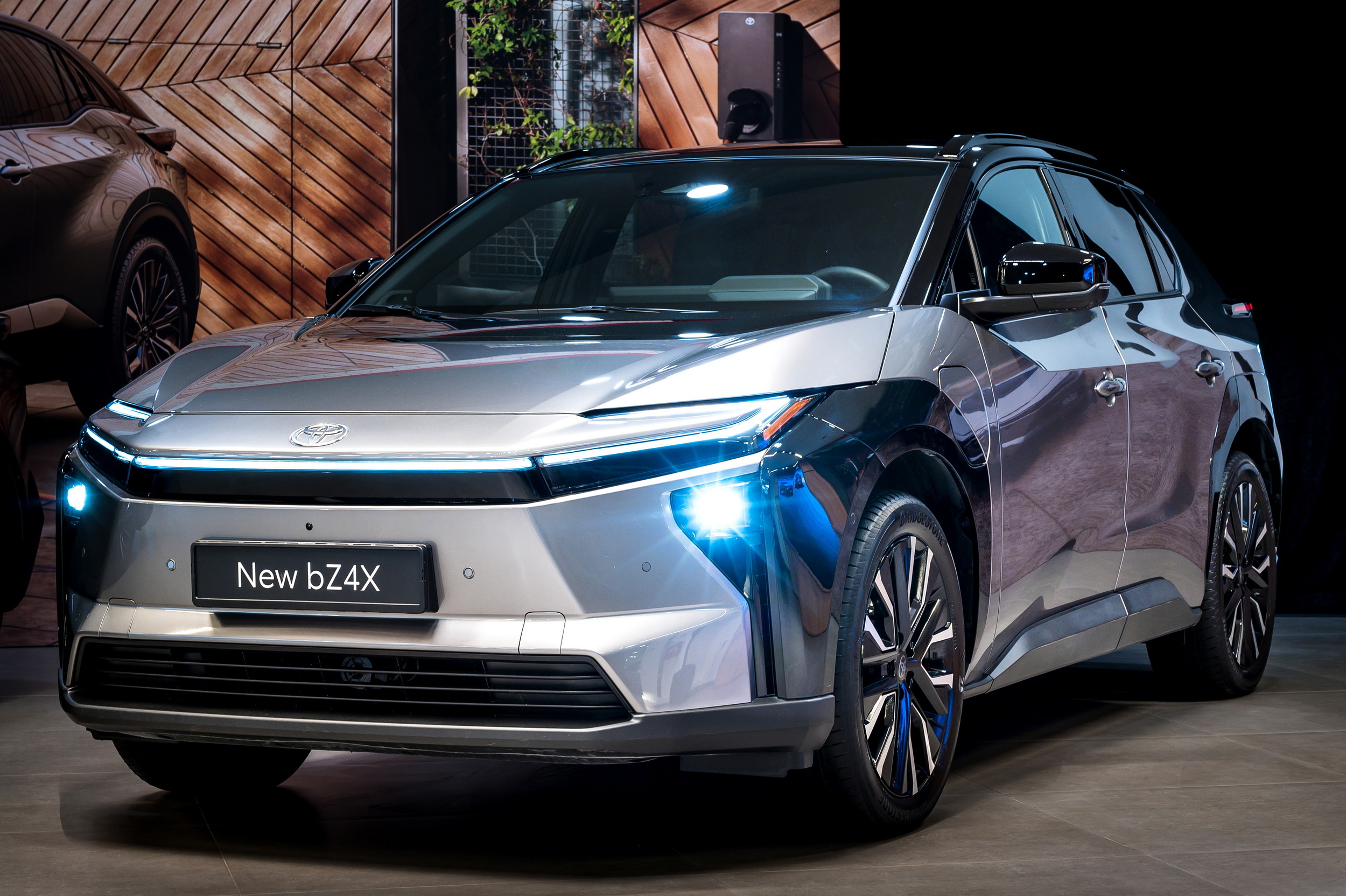
As part of a change to the subsidy program, the Toyota bZ4X will continue to be offered with the highest possible subsidy of 1.3 million yen ($8,100). The Nissan Ariya had been available with a 1.29 million yen ($8,075) subsidy, although this will be cut to 1 million yen ($6,200) in 2027.

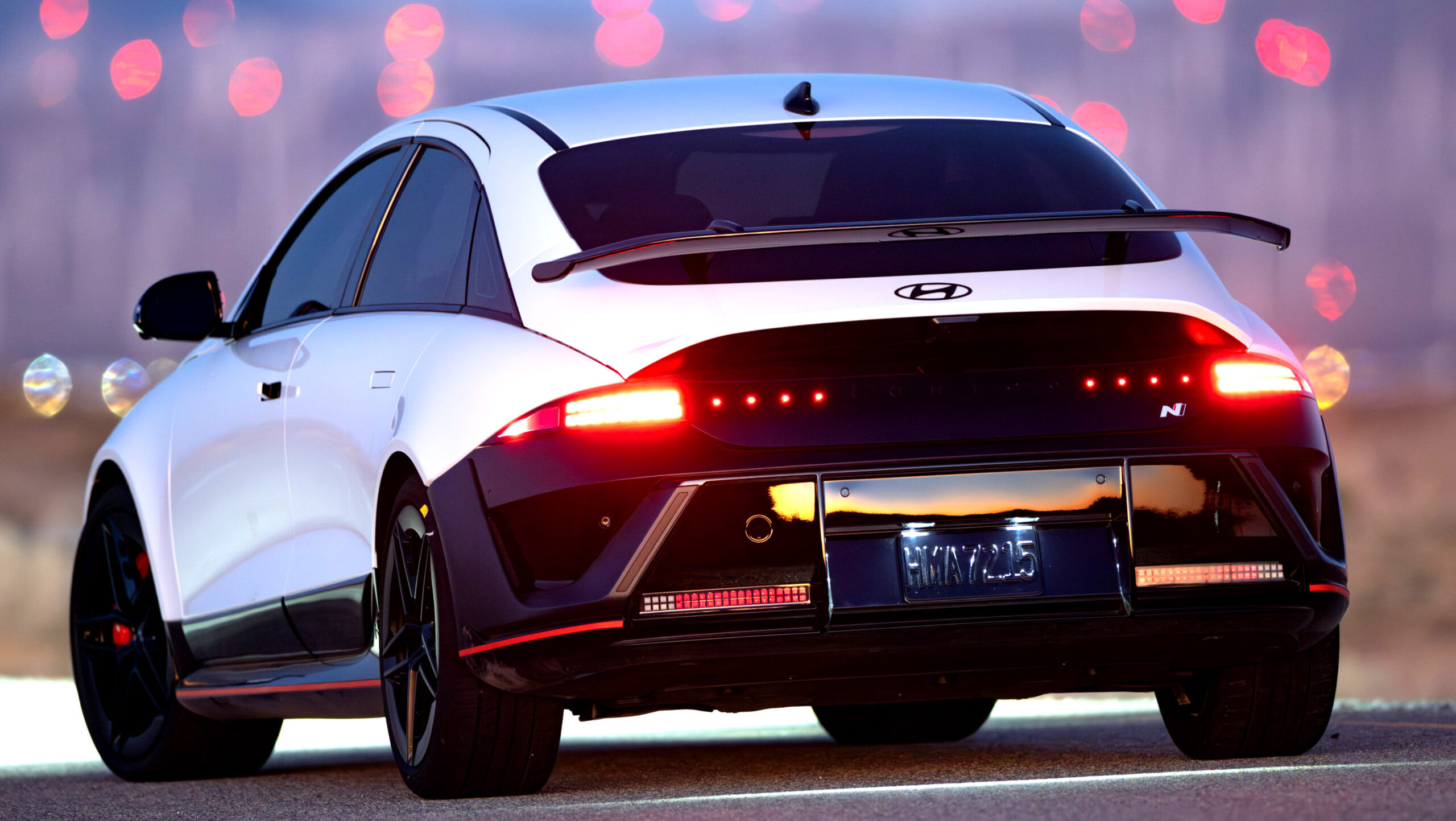
Interestingly, it’s not just Japanese brands that get generous government assistance. Earlier this month, Tesla’s subsidies were increased by 400,000 to 1.27 million yen ($7,900), likely due to the fact that it uses Panasonic batteries. Audi also saw a recent increase of 320,000 yen ($2,000) up to just over 1 million yen ($6,200) for its EVs. Similarly, subsidies for some of Hyundai’s EVs have been boosted this month.
 Japan Just Dealt BYD A Massive EV Blow

As noted by Nikkei Asia, not all of these subsidy increases will remain in effect. From next January, subsidies for brands including Audi and Hyundai will be cut, although their extent remains unclear. Prior to the most recent round of cuts, BYD said it was already at a disadvantage.

“We’re at an overwhelming disadvantage,” the boss of its Japan unit, Atsuki Tofukuji said. “The gap [with companies like Toyota Motor] has grown to up to nearly 1 million yen. We can’t compete with 350,000 yen.”
 Japan Just Dealt BYD A Massive EV Blow

Porsche Once Fought Audi Over A Shared Platform, Now It Wants More Of Them

  • Porsche’s new CEO met with Audi’s leadership within days of taking the role.
  • Next Audi TT will be an EV based on the next-generation 718 Boxster platform.
  • Porsche is targeting up to 10 percent margins by using more Audi architectures.

Porsche and Audi have collaborated numerous times over the decades, but the relationship has often been fraught as engineers and executives butted heads over shared goals. Now, the two car companies are planning to deepen their ties, not just to cut costs but also to help ensure their survival.

The two companies are under increased pressure from declining demand, tariffs, and product strategy mistakes. Porsche has had a particularly trying time after backing away from its plan to target 80 percent EV sales by 2030, and amid a collapse in demand for its models in China.

Read: Porsche Profit Crash Suddenly Makes A New Sports Car Above The 911 Likely

Industry veteran Michael Leiters was recently named as Porsche’s new chief executive, and according to Auto News, he traveled to Audi’s headquarters to meet with boss Gernot Döllner within days. According to Leiters, “Audi is a key partner for us,” noting that “we want to leverage shared potential even more.”

More Shared Platforms

 Porsche Once Fought Audi Over A Shared Platform, Now It Wants More Of Them
Michael Leiters

Porsche is aiming to restore margins to as much as 10 percent as it shifts its focus back to combustion-powered vehicles, and hopes to do so by using more Audi platforms and parts. For example, the next-generation Macan – which will include ICE models – will share the same Premium Platform Combustion (PPC) architecture as the Audi Q5. Porsche also still has plans for an SUV to sit above the Cayenne, currently known as the K1, which itself will be derived from the upcoming Audi Q9.

The future of Porsche’s planned electric 718 Boxster and Cayman models is also important for Audi. While Porsche has backed away from its initial plans to sell these models as EVs only, switching to a multi-energy plan with combustion engines included, they’ll offer the platform for the next-generation Audi TT. The new TT will be sold exclusively as an EV with batteries placed behind the driver to allow for a lower seating position and mid-engined driving dynamics.

German Frictions

Porsche and Audi worked together on the Premium Platform Electric (PPE) underpinnings used by models like the Macan Electric, A6 e-tron, and Q6 e-tron, but according to reports, there was fierce internal rivalry between the companies and disputes over development leadership, forcing VW boss Oliver Blume to step in and act as mediator. Neither Porsche nor Audi can afford to have disputes like these moving forward.

\\\\\\

A New 912-HP Audi Sat Unsold For Months And The Price Finally Cracked

  • The 2025 Audi RS e-tron GT Performance starts at $170,500.
  • A new 13-mile example in Las Vegas is listed $54,005 under MSRP.
  • Listings nationwide show multiple cars already priced below sticker.

The new Audi RS e-tron GT Performance is a road-going rocket ship, blending hypercar-level acceleration with genuine long-distance comfort. It delivers extraordinary pace alongside impressive Grand Touring ability, yet like the model it replaces, it’s already shedding value quickly in the US. That makes now a surprisingly sensible moment to snag yourself a bargain.

The RS e-tron GT starts at $170,500, though that figure climbs past $180,000 once a few options are added. With 912 hp and 757 lb-ft (1,027 Nm) of torque available, that pricing isn’t outlandish on paper, but the market is clearly suggesting it’s too steep for a luxury EV.

Read: 2025 Audi e-tron GT Is $19,000 Pricier But Much Faster This Year

A quick scan of current classifieds shows dozens of 2025 and 2026 RS e-tron GT models listed across the United States, many showing minimal or delivery mileage and asking prices already below MSRP. The cheapest example we found is a lightly used 2025 model with 1,930 miles (3,106 km) listed by Audi Beverly Hills.

Prices Are Going Down, Down, Down

\\\\\\\\\\\\\\\\\

Audi Beverly Hills

That listing doesn’t specify the original MSRP, but with the $5,900 forged carbon package included, it would have cost at least $180,000 new. It’s now listed at just $123,993.

If you’re shopping for a new one, it’s worth checking out a 2025 model listed at Audi Las Vegas for $124,590, down from an MSRP of $178,595. It has just 13 miles (21 km) on the clock, essentially delivery mileage, and has already shed $54,005 in value without ever being registered. The gods of depreciation have clearly taken a liking to this electric Audi.

\\\\\\\\\

Audi Las Vegas

Despite the upgrades to the refreshed RS e-tron GT, it’s likely going to suffer the same fate as the original model, plummeting in value the moment it’s driven off the showroom floor. Some examples of the pre-facelift RS e-tron GT, which offers up to 637 hp and 612 lb-ft (830 Nm), have asking prices under the $50,000 mark, and the facelifted model is trending in that direction.

\\\\\\\\\

Audi Beverly Hills

China Rewrites What An Audi SUV Should Look Like

  • The flagship E7X has a sizeable 109.3 kWh battery pack.
  • AUDI will sell the SUV in both single- and dual-motor guises.
  • Pricing details will be announced at April’s Beijing Auto Show.

While some of the electric SUVs that Audi sells in Western markets already feel a little outdated compared to the competition, the carmaker has shown that, in China, it can build an EV that feels as if it’s been dropped off from the future. We’re, of course, talking about the E7X, previewed late last year but only just officially launched.

To bring this model to life, the German marque leaned on its partnership with SAIC through the dedicated AUDI brand, which debuted the E5 Sportback last year. Like that model, the E7X bears little resemblance to any Audi sold elsewhere. While pricing details have yet to be announced, it’s a safe bet it will be cheaper than many European alternatives.

Read: This AUDI Is What Happens When A German Brand Asks China What It Should Be

The E7X is a big thing, stretching 198.7 inches (5,049 mm) long, 78.6 inches (1,997 mm) wide, and 67.3 inches (1,710 mm) tall, with a 120.4-inch (3,060 mm) wheelbase. As AUDI was under no obligation to follow traditional design cues in its development, there’s no single-frame grille in sight, just a collection of elements intended to appeal to Chinese buyers.

Chief among these touches is the front fascia, dominated by hundreds of tiny LEDs that replace a traditional grille. The side profile is also quite striking, with sharp lines, flush door handles, and cameras instead of traditional wing mirrors. Just like the front, the rear also sports some wild wraparound LEDs.

Sports Car Levels Of Power

\\\\\\\\\\\

It’s not just the design of the E7X that distinguishes it from typical Audi models, as its underpinnings are also distinct. All models will use CATL battery cells, with 100 kWh and 109.3 kWh packs being available. Depending on the battery pack and electric motor configuration, the SUV’s range will vary between 382 miles (615 km) and 466 miles (751 km).

The base model will be driven by a rear-mounted electric motor producing a hefty 402 hp. Sitting above it will be a dual-motor version delivering 671 hp. This dual-motor version will hit 62 mph (100 km/h) in just 3.97 seconds.

While AUDI has released a slew of new images of the E7X and more details about its powertrain, it’s yet to unveil the interior. Thankfully, we won’t have to wait long to see it in full, as the E7X will be displayed at next month’s Beijing Auto Show.

\\\\\\\

Audi Is Finally Building The SUV US Dealers Wanted, With A Rivian Surprise Coming Next

  • Audi will launch the Q9 flagship SUV and A2 e-tron EV this year.
  • The first Audi with a Rivian-sourced architecture will arrive in 2028.
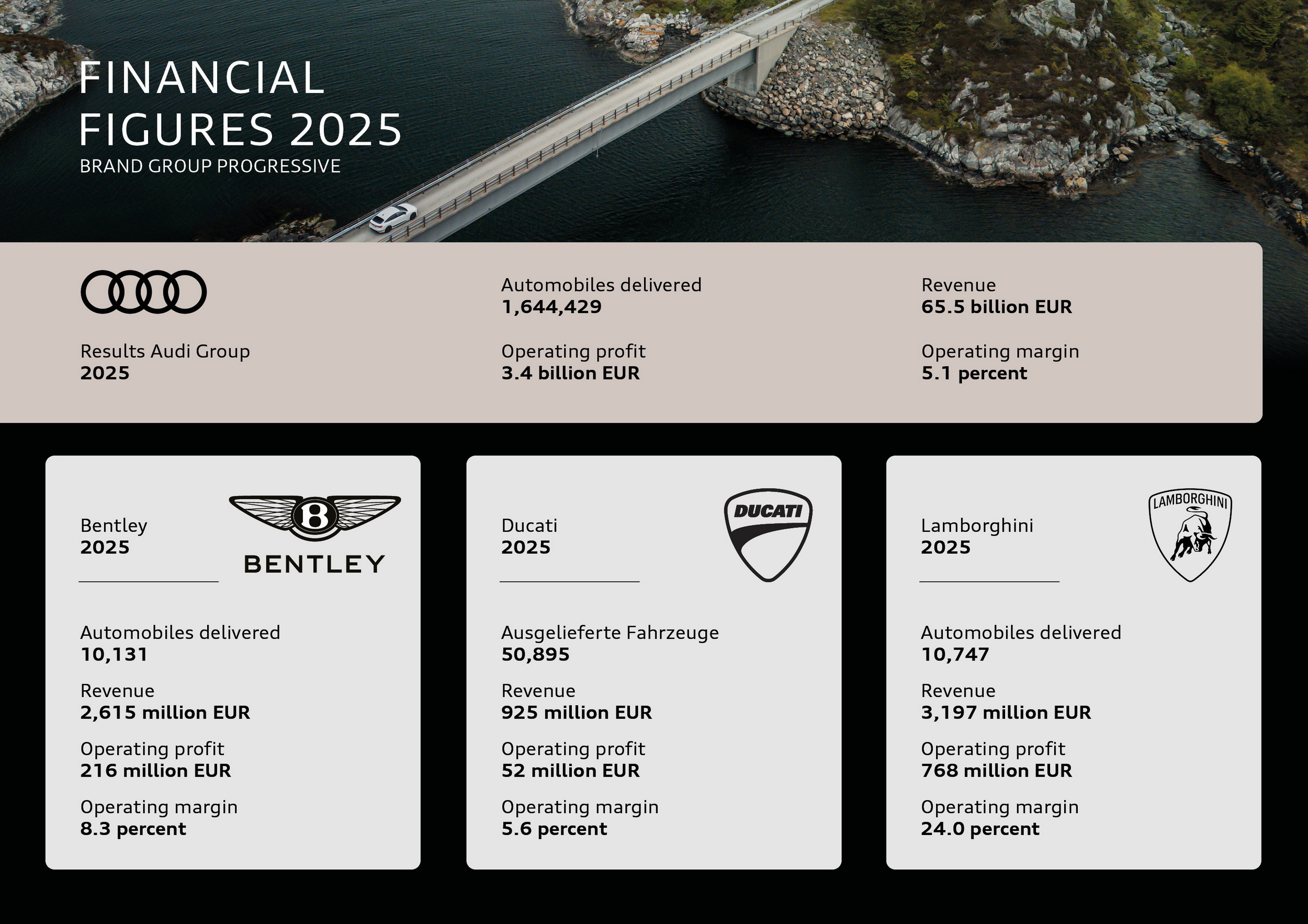
  • The brand sold 1,623,551 vehicles in 2025, including 223,032 EVs.

Audi is finally stepping into a part of the market it has long circled but never fully committed to. In 2026, that changes with the arrival of the Q9, a proper flagship SUV aimed squarely at the heavyweight class. At the other end of the lineup, the brand is also revisiting a familiar idea, confirming a new entry-level EV that brings back the A2 name.

Speaking at the 2026 Annual Media Conference, CEO Gernot Dollner pointed to both arrivals as key pieces of Audi’s next move. “The new Audi Q9 strengthens our position in the US and defines the top of our portfolio. And with the A2 e-tron, we are bringing a highly efficient entry point into electric mobility to market in fall 2026, a clear statement on efficiency.”

More: This Is The SUV Audi Dealers Think America’s Soccer Moms Actually Want

For years, Audi’s North American dealers have been asking for something bigger and more imposing than the Q7. It sells well enough, but it does not quite deliver the size, presence, or third-row space that full-size SUV buyers in the US expect. The Q9 is intended to close that gap, arriving alongside a next-generation Q7, with both models confirmed for a 2026 debut.

 Audi Is Finally Building The SUV US Dealers Wanted, With A Rivian Surprise Coming Next

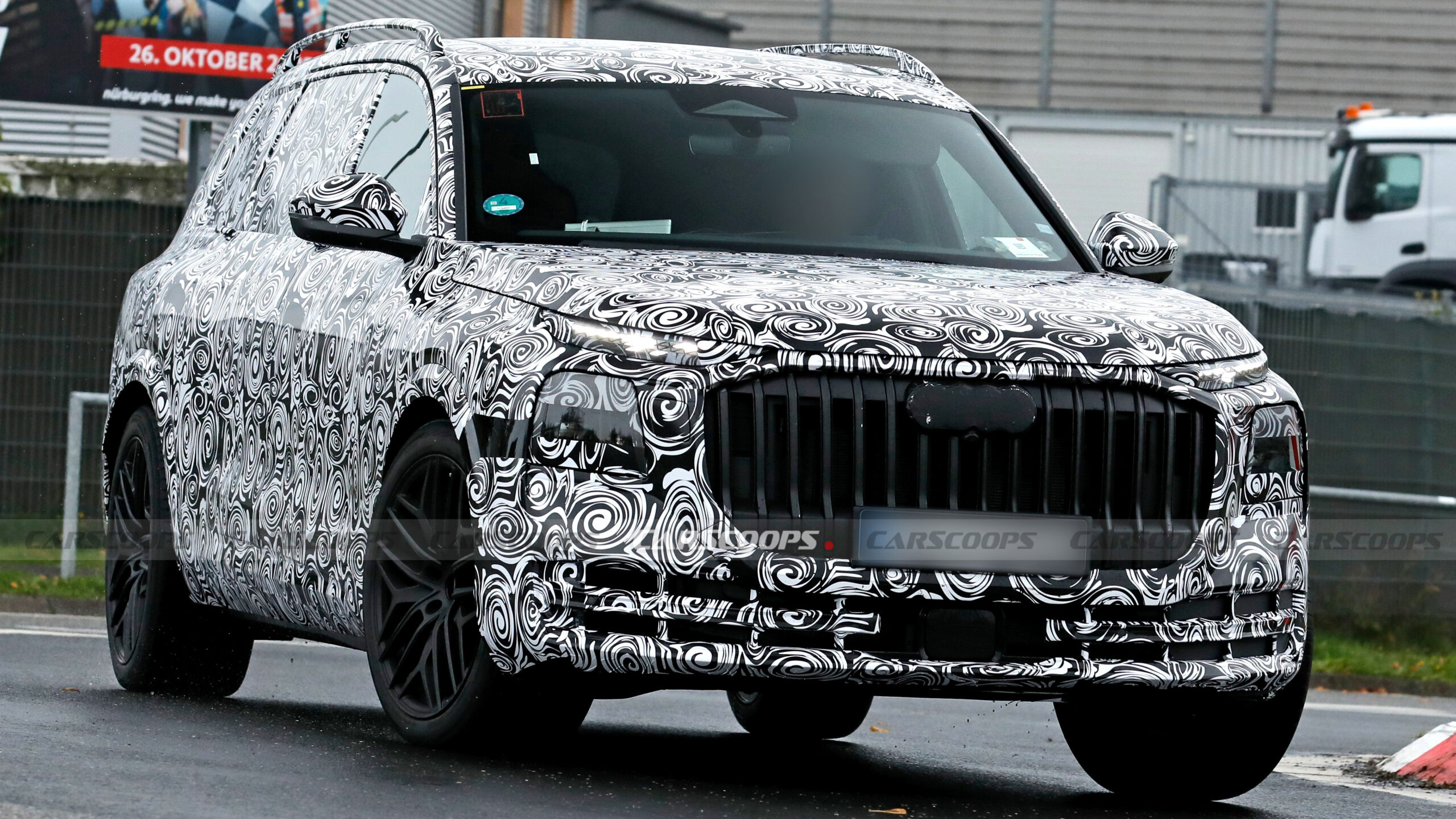
Audi Q9 | Photo: Baldauf

Audi has yet to show the Q9 in any official form, but spy shots have already done most of the talking. What they reveal is a big, upright SUV with split LED headlights, a wide grille, pronounced shoulders, and the expected three-row layout. It’s aimed directly at the BMW X7 and Mercedes GLS, and it looks ready for that fight.

The large SUV will ride on a stretched version of the Premium Platform Combustion (PPC) architecture, which supports both traditional engines and hybrid setups. The range is expected to go beyond the usual trims, with an SQ9 packing V8 power and a range-topping Horch version rivaling Maybach’s offering.

Entry-Level EV And Rivian Partnership

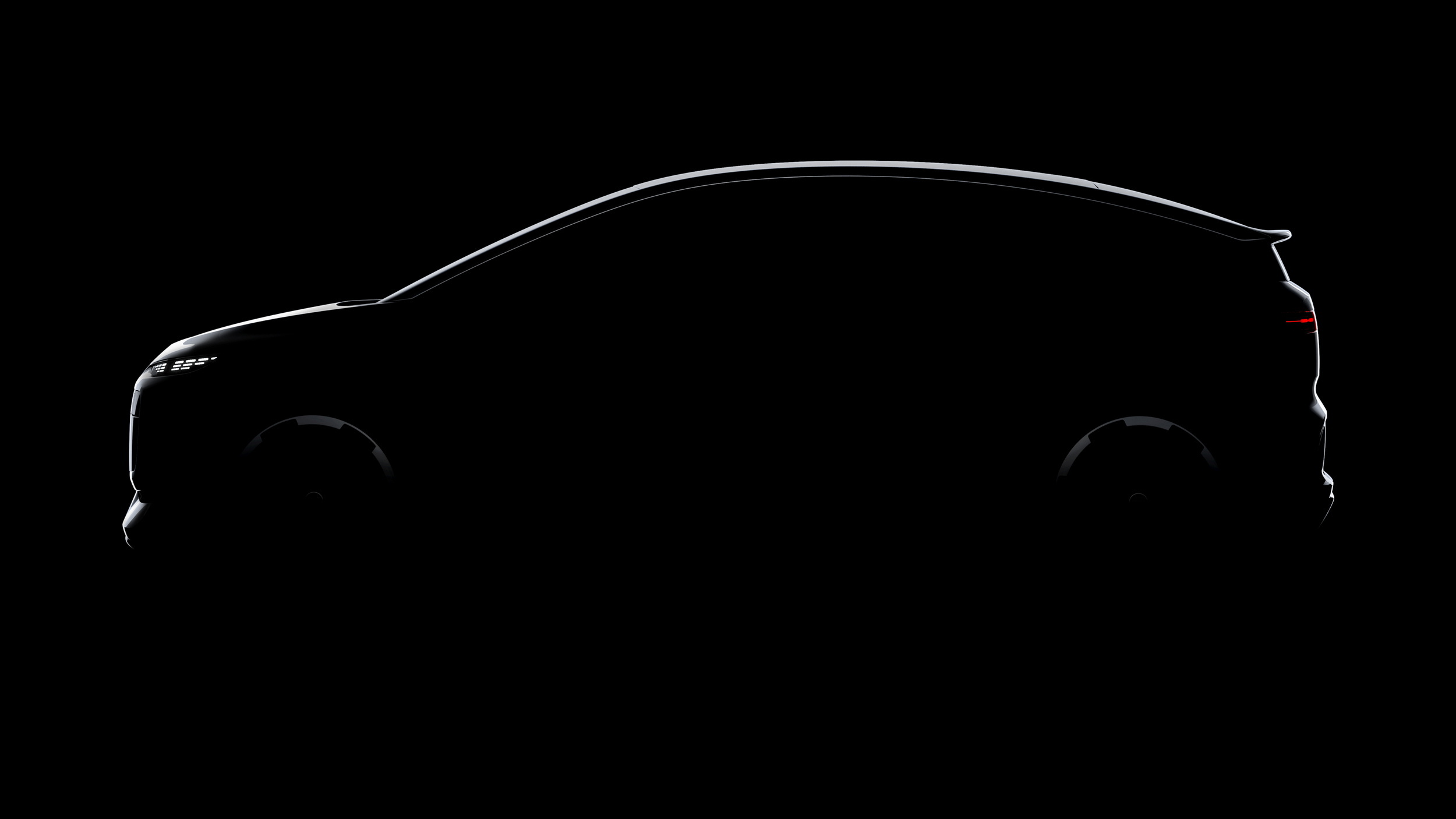
While the Q9 will grab most of the attention in the US, Audi has something very different lined up for Europe. The A2 e-tron, previewed in an official teaser, returns as a compact entry-level EV. It is scheduled to debut in fall 2026 and will ride on VW Group’s familiar MEB architecture.

More: Audi Confirms The A2 Is Back, Prays It’ll Sell This Time

Audi is also casting an eye further ahead with its Rivian partnership. The first model to use the new E/E architecture from the RV Tech joint venture is due in 2028, and it is widely expected to take the shape of a high-end off-roader, targeting the Mercedes-Benz G-Class and Land Rover Defender.

 Audi Is Finally Building The SUV US Dealers Wanted, With A Rivian Surprise Coming Next

Audi A2 E-Tron

Zoom out to the bigger picture, and Audi knows where the pressure is coming from. China, in particular, is forcing a rethink, and not just for Audi but for Germany’s auto industry as a whole.

“The industry, and Germany as a whole, needs to reinvent itself,” said Dollner. “Today, the US and China are driving the major technology trends, while Germany and Europe have fallen behind. Innovation for customers must therefore become the top priority again.”

Still, the CEO believes that Audi’s ambitious targets for the future are achievable: “Our growth targets through 2030 are both realistic and ambitious – and we are squarely aligning our position in our core regions of Europe, the US, and China to achieve them.”

A Challenging Year

 Audi Is Finally Building The SUV US Dealers Wanted, With A Rivian Surprise Coming Next

Audi delivered 1,623,551 vehicles in 2025, a modest 2.9 percent decline compared to 2024. Even so, its EV push is gaining traction, with battery-electric deliveries jumping 36% to 223,032 units. Much of that growth came from the Q6 e-tron (84,000 units) and the A6 e-tron (37,000 units).

More: Volkswagen To Slash 50,000 Jobs After Profits Fell Off A Cliff

The Audi Group, which includes the Audi, Bentley, Ducati, and Lamborghini brands, brought in €65.5 billion ($75.5 billion) in revenue for 2025, up 1.5% year over year. Profit, however, moved in the opposite direction. Operating profit fell 13.6% to €3.37 billion ($3.88 billion), and margins slipped to 5.1% from 6%. So, more money coming in, but less of it sticking.

A large part of that pressure came from US tariffs, which carved €1.2 billion ($1.38 billion) out of the bottom line. Even so, net cash flow improved by 11.4% to €3.422 million ($3.95 million).

“We ended a challenging year with robust finances,” said Audi CFO Jürgen Rittersberger. ” The key now is to seize all operational and financial opportunities to make Audi more efficient, competitive, and profitable.”

For 2026, Audi predicts a revenue between €63-68 billion ($72.7-78.4 billion) and an improved operating margin of 6-8%.

 Audi Is Finally Building The SUV US Dealers Wanted, With A Rivian Surprise Coming Next
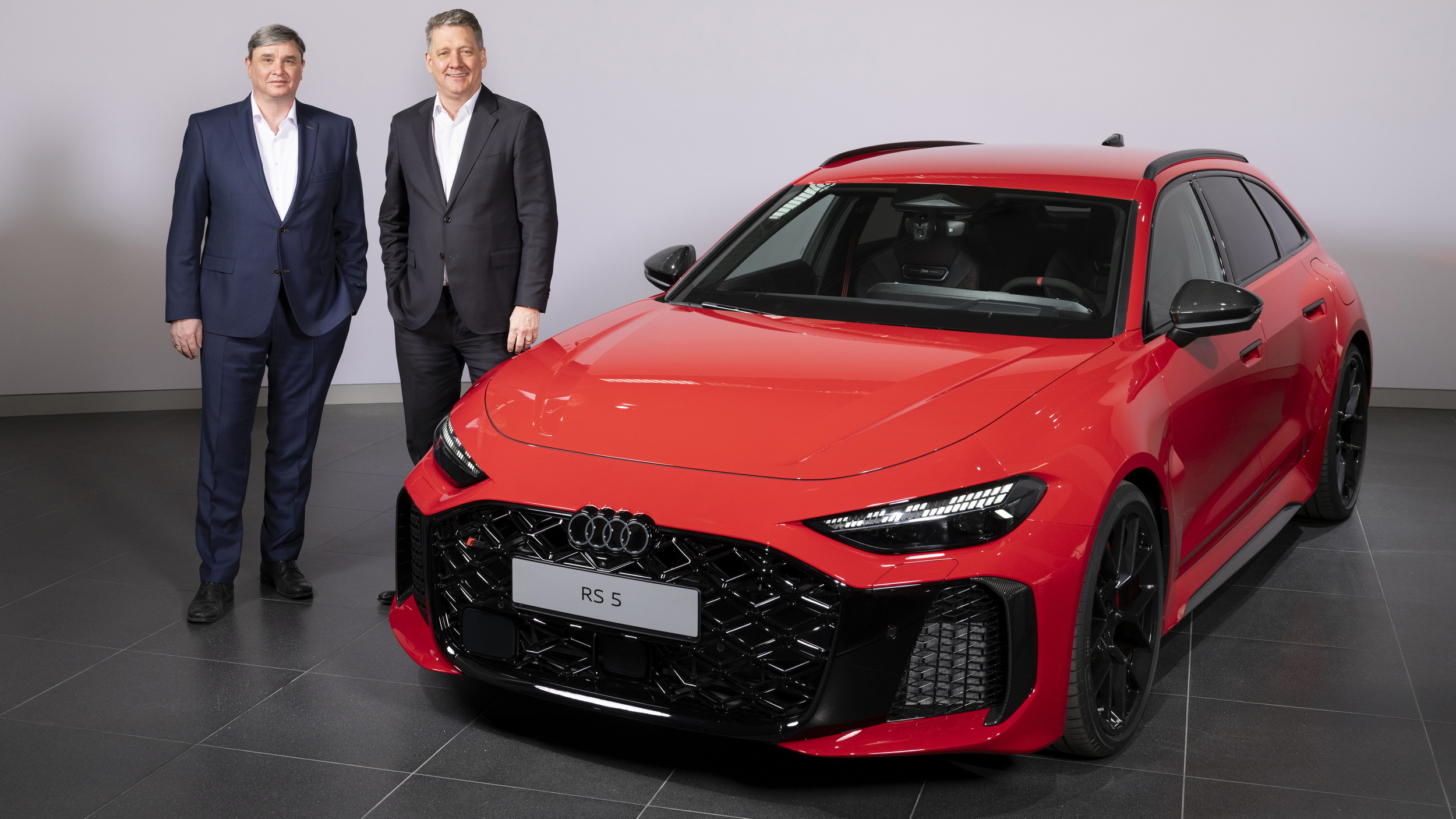
CFO Jurgen Rittersberger and CEO Gernot Döllner with the new Audi RS 5 Avant.

Audi Boss Says Electric Sports Coupe Will Arrive In 2027

  • The road-going Concept C rides on the PPE platform.
  • Just three years pass from idea to production.
  • Its batteries mimic a mid-engined sports car layout.

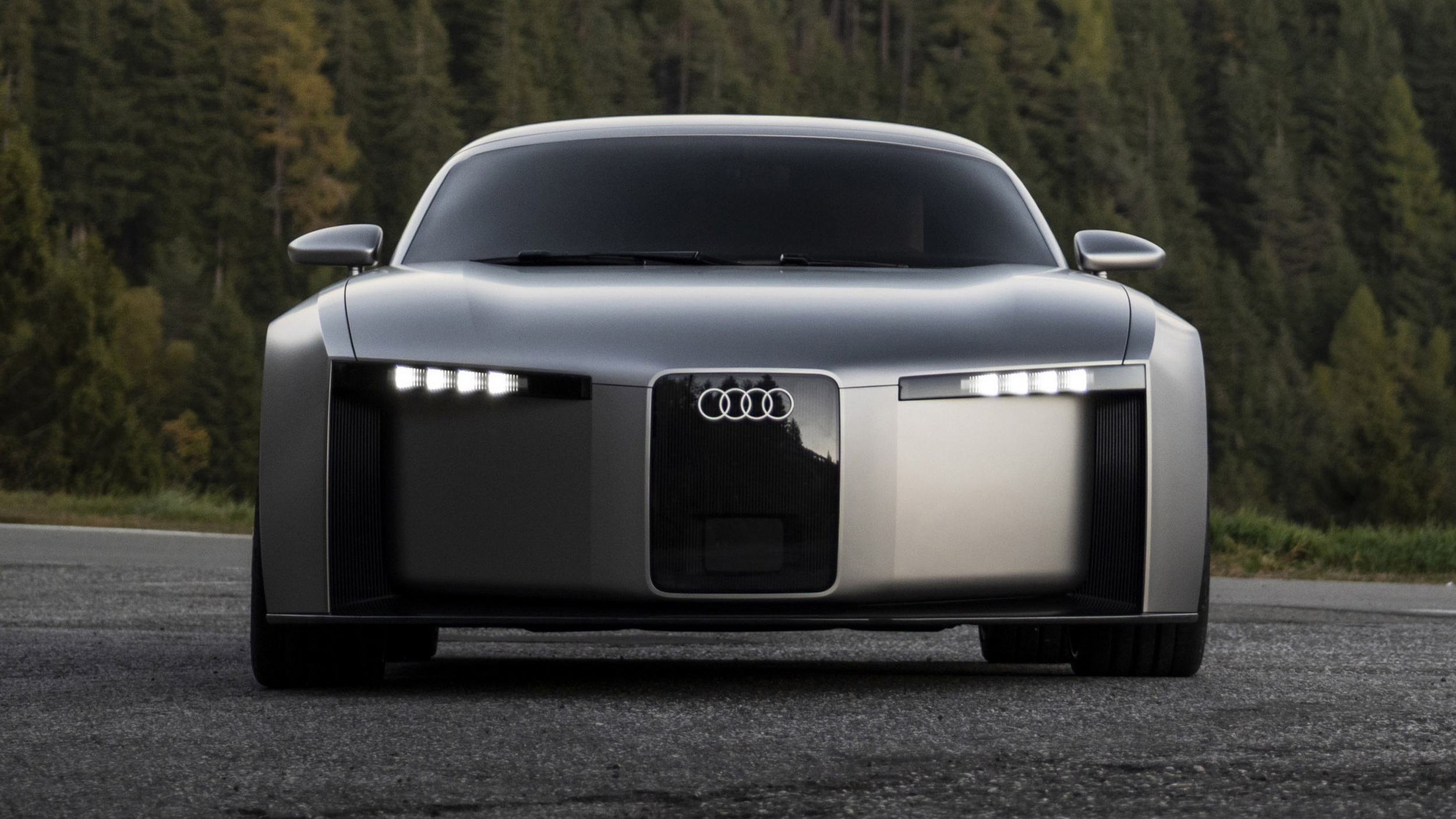
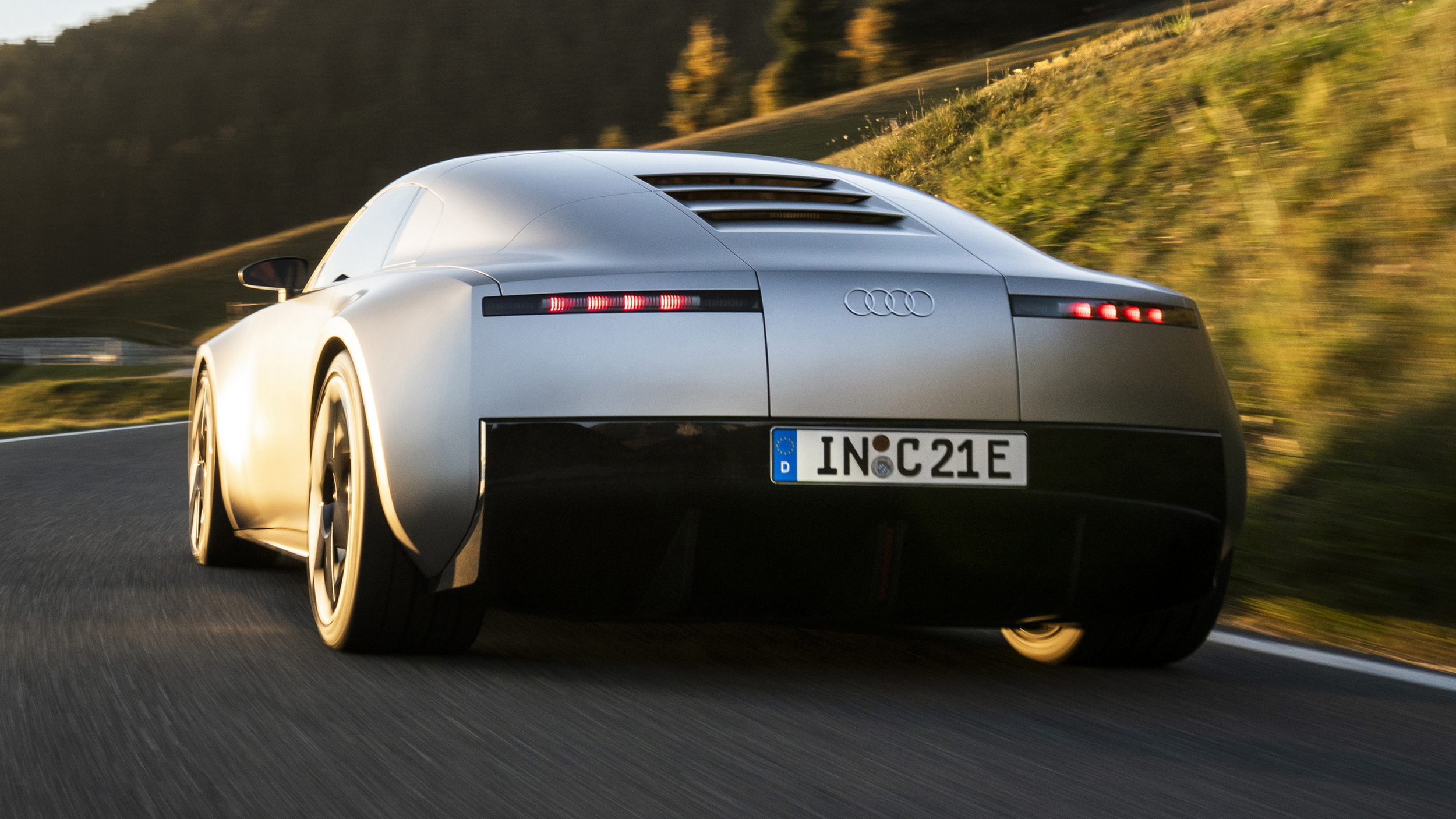
The recent Audi Concept C is not just a glimpse at the brand’s latest design direction. It is also headed for production as the long-awaited TT successor. And it will get there quickly, within just two years, as Audi leans hard into what it calls its “China speed” development playbook.

Following the cancellation of the TT, as well as the mid-engined R8, Audi no longer has a two-door sports car in its line-up, which makes the Concept C all the more important. From the time it was sketched out as an initial idea to when it hits production it will have been just three years, representing a much quicker development cycle than traditional Audi models.

Read: The Concept C Is So Close To Production Audi Got It Street Legal

“Whenever we present a new concept, that will always be a serious product,” Audi chief executive Gernot Döllner told GoAuto at the recent launch of the new RS5. “The first proof point to our strategy is the Concept C. We presented that last September, and within two years, we will have it in the market.”

 Audi Boss Says Electric Sports Coupe Will Arrive In 2027

Porsche Underpinnings

Audi will build the road-going version on an updated take of the VW Group’s Premium Platform Electric, or PPE, architecture. That is the same hardware developed for the next-generation 718 Cayman and 718 Boxster.

Also: Porsche’s New CEO Might Bury The Cayman, Boxster EVs Before They Even Launch

There have been some questions about the future of the electric 718s, with a recent report indicating they could be axed entirely. However, according to Car Sales, Dollner told Audi staff in an internal letter that “the delivery of the platform by Porsche is not in doubt,” adding that work on the Concept C is proceeding “in good collaboration between Team Porsche and Team Audi.”

Details about the Concept C’s powertrain are limited, but it will be an EV. All signs point towards it having battery cells split between the cabin and the rear axle, allowing Audi to mimic the handling dynamics of a traditional mid-engined sports car.

\\\\\\\\\\\\\

China Speed

Helping to bring the car to life is the company’s new ‘China speed’ philosophy. It is ditching layered committees in favor of ‘project houses,’ encompassing design, engineering, manufacturing, procurement, supplier relations, quality, and validation staff under a single roof with one leader and direct access to the board.

“We (have) completely adapted that to our processes in Germany,” Dollner revealed. “Not so far in the future, we will prove that we are able to react as fast as we do in China – but in European programs.”

“Project houses are absolutely necessary if we want to be this fast,” he added. “You cut out committees. You have this speedy decision process with very fast involvement with the board. I am having spontaneous project meetings every week. The key to fast projects is in the early phase – the alignment between design, engineering and testing teams… to set up a stable project that can be validated in a very short timeframe.” 

 Audi Boss Says Electric Sports Coupe Will Arrive In 2027
❌
❌