Normal view

There are new articles available, click to refresh the page.
Today — 9 June 2026Main stream

BMW Found 145 New iX3s Whose Body Panels Can Buzz And Shock You While Charging

  • Owners of the new BMW iX3 could get an electric shock while charging their EV.
  • The iX3 is also being recalled for possible issues with the side airbags.
  • One of the recalls impacts 4,843 iX3s globally, including 1,071 in Germany.

The second-generation BMW iX3 has been well received by most, marking a serious step up from its predecessor and delivering the kind of driving range usually reserved for Chinese EVs. But the launch hasn’t gone off without a hitch. Two recalls have already been issued for the electric SUV in Germany, and one of them sounds genuinely unpleasant.

The first recall landed at the end of May and covers 145 vehicles built between November 25, 2025, and February 20, 2026. According to BMW, these iX3 models carry an onboard charger, the component that converts AC power to DC, that may be faulty. The defect could leave the SUV’s body panels buzzing with electricity while the car is plugged in.

Read: BMW Adds A 395-Mile Base iX3 And A Black Package For Summer

BMW says it isn’t aware of any injuries so far, but it admits owners could get a nasty shock if they touch the car at the wrong moment. The fix is straightforward enough, as the onboard chargers on affected models will be swapped out, whether or not they actually turn out to be defective. With high-voltage EVs, better safe than sorry. All told, the recall covers 145 cars worldwide, 28 of which are in Germany.

Dangerous Airbags

\\\\\\\

Then a few days later, on June 1, a second recall followed. This time, BMW says the side airbags may not have been bolted in to spec. The concern is twofold: the airbag might not deploy properly in a crash, and the gas generator could shift out of position and strike occupants.

The affected iX3s were built between December 18, 2025, and May 8, 2026. It’s the bigger of the two campaigns, covering 4,843 vehicles worldwide, including 1,071 in Germany. As with the charger issue, there are no known accidents or injuries tied to the airbag fault.

In this case, BMW says it will inspect the screws that hold the side airbags in place and, if necessary, resolve any issues.

\\\\\\\
Before yesterdayMain stream

VW Ruled China For 25 Years, Now Young Buyers Call It Their Parents’ Car

  • VW’s China boss admits young buyers now see it as a brand for parents.
  • German market share in China fell from 26 percent to 16 percent since 2019.
  • BYD overtook VW in 2024, and Geely pushed it to third the year after.

For more than two decades, a German badge in China was shorthand for arrival. That equation no longer holds. China remains one of the most important markets for German automakers. The trouble is they are now struggling to compete with local rivals who have captured the hearts and minds of young buyers.

The boss of VW in China, Robert Cisek, admitted that the rapid change in China’s car market has been “beyond imagination,” and means that now, “some younger customers perceive us as the brand for the parents.” For more than 25 years, VW was the best-selling carmaker in China, but was overtaken by BYD in 2024, and dropped to third in 2025 behind Geely.

Read: China Is Getting A Jetta SUV For Less Than A Used Corolla Costs In America

Automotive consultant Felipe Munoz says German brands “didn’t see this big change coming, and they didn’t see the speed at which it came.” While overall new car sales in China continue to climb, the market share of German brands slipped from 26 percent in 2019 to 16 percent in 2025, when they sold 3.9 million vehicles.

Germans Race To Compete

 VW Ruled China For 25 Years, Now Young Buyers Call It Their Parents’ Car
VW ID. Unyx 09

In times gone by, companies like VW could sell their vehicles in China thanks to their build quality, high-end materials, and strong reputations. However, this is no longer enough, Reuters reports.

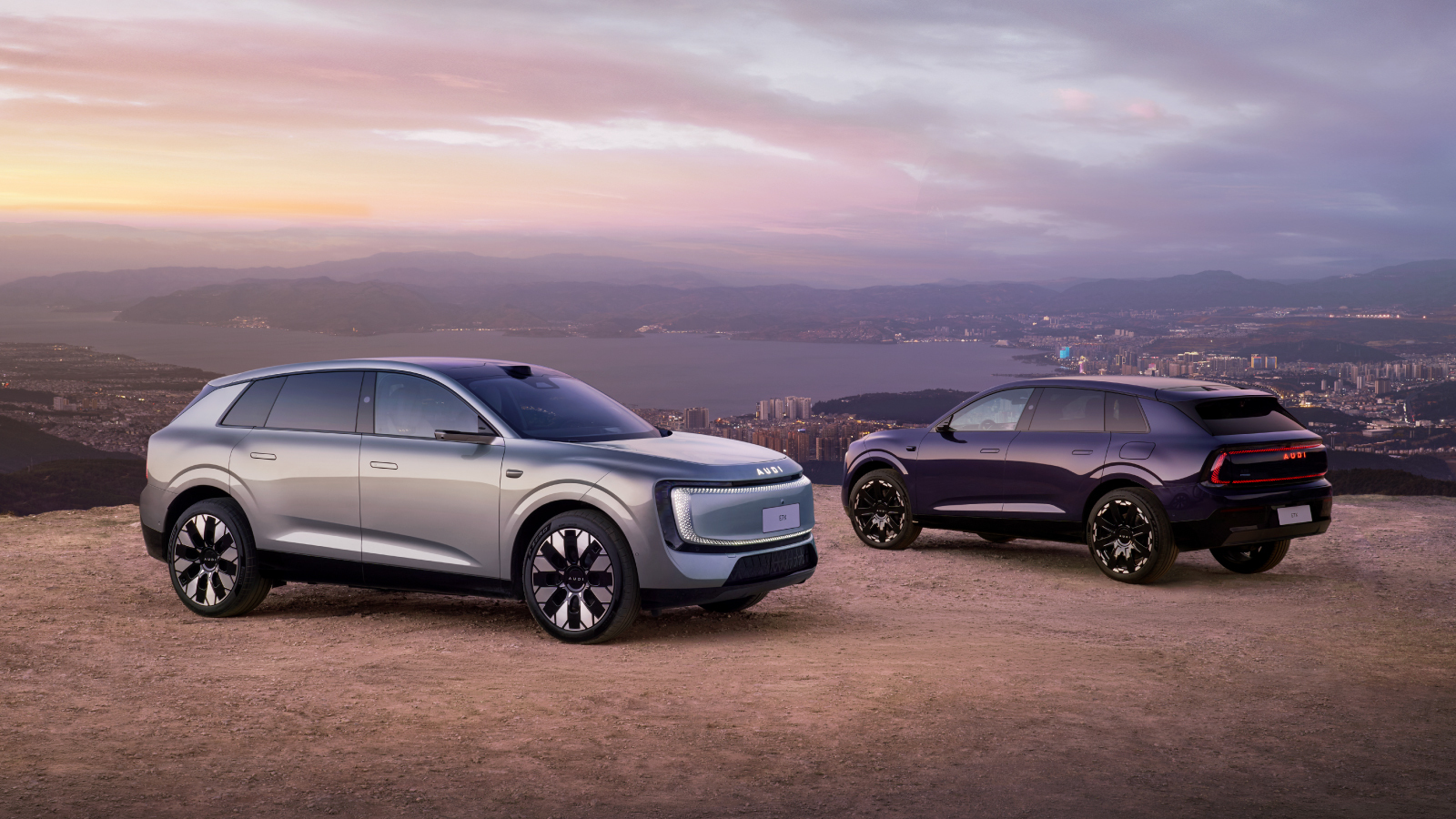
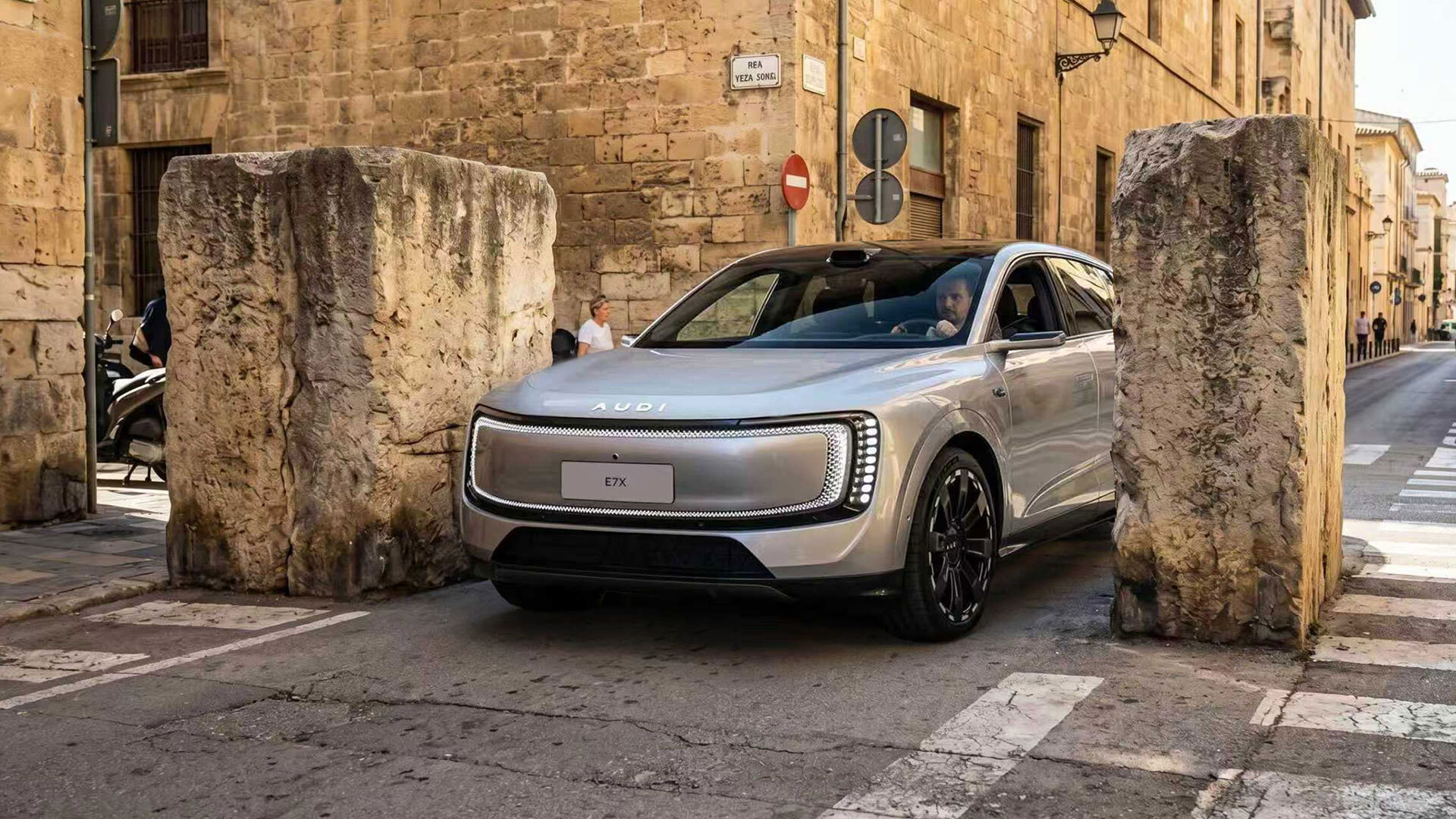
To try and claw back some ground, the Volkswagen Group will launch 20 new-energy vehicles in China this year, including several battery-electric models, plug-in hybrids, and EVs. Many of these new models were recently unveiled at the Beijing Auto Show, including the ID. Aura T6, which was built in partnership with FAW, the ID. Unyx 09, created alongside Xpeng, and the all-electric AUDI E7X from the firm’s SAIC joint venture.

It remains to be seen if vehicles like these will be enough. According to a recent survey from AlixPartners, young buyers in China are more likely to avoid German cars, despite the ‘Made in Germany’ tagline holding strong appeal in many other countries.

 VW Ruled China For 25 Years, Now Young Buyers Call It Their Parents’ Car

Honda Couldn’t Give Away Its Electric SUV In Europe, So Now It’s Killing It

  • Honda is withdrawing the e:Ny1 SUV from most European markets.
  • Global EV plans, including the Sony Afeela, have been canceled.
  • A new Super-N hatchback will arrive in Europe and the UK in July.

Honda is preparing to pull the plug on its only fully electric model currently sold in Europe. As part of a rethink of its EV strategy, the automaker will take the e:Ny1 off sale just three years after it arrived. That sounds abrupt, and it is. This is not a full EV retreat, though. The new Super-N hatchback is waiting in the wings, set to step in where the e:Ny1 leaves off, even if it targets a very different slice of the market.

A product of Honda’s joint venture with Dongfeng, the e:Ny1 arrived in Europe in mid-2023 as the electric counterpart to the local-spec HR-V. It looks closely related to the hybrid crossover, but its roots trace back to China, where it has been sold as the e:NS1 and e:NP1 since 2022.

More: Honda’s 1.2 Million-Car China Peak Is Now A 720,000-Car Retreat

As reported by German newspaper Handelsblatt, the e:Ny1 has already disappeared from configurators in several major markets, including Germany, Italy, and Spain. The SUV remains available to order in France and Austria, but Honda is reportedly directing remaining stock toward the UK and Nordic regions, where demand has been stronger.

The model struggled to gain ground against newer, more affordable rivals from both European and Chinese brands. Even after a price cut in Germany from €47,590 ($56,100) to €38,990 ($46,000), Honda managed to sell just 105 units of the e:Ny1 last year.

\\\\\\\\\\\\\

The e:Ny1 rides on the “e:N Architecture F” platform and uses a single electric motor producing 201 hp (150 kW / 204 PS). A 68.8 kWh battery delivers a WLTP range of 412 km (256 miles). Compared with the EU-spec HR-V, it features a redesigned front end with a charging port integrated into the grille, clear taillights, and a 15.1-inch portrait touchscreen inside.

Honda Takes A Step Back

This European scale-back mirrors a wider global pivot. Honda recently confirmed it has canceled several planned EVs intended for North America, including the Acura RSX, the 0 Series Saloon and SUV, and the Afeela sedan and SUV from the Sony Honda Mobility joint venture.

More: Honda Plans To Sell 3,000 Rebadged Chinese EVs As The New Insight In Japan

Despite the gloomy outlook for its larger EVs, Honda isn’t pulling the plug entirely. The Super-N will reach UK and Europe shortly after its initial roll-out in Japan. The pint-sized electric hatchback draws inspiration from the Honda City Turbo II, pairing a sporty body kit with a 94 hp motor. Pricing is expected to start below £20,000 (€23,000 / $27,100), aiming to attract buyers with a more accessible entry point and a distinct character.

The rest of Honda’s European lineup is exclusively available with self-charging hybrid and plug-in hybrid powertrains, as all ICE-only offerings were phased out in late 2022.

 Honda Couldn’t Give Away Its Electric SUV In Europe, So Now It’s Killing It
Honda Super-N
❌
❌