A child care provider and toddler look out the window at Rise for Baby and Family in Keene, N.H. A new analysis of federal data found the gender pay gap between women and men widened last year. (Photo by Maya Mitchell/New Hampshire Bulletin)
The earnings gap between men and women slightly widened last year, according to a new analysis published Thursday.
The left-leaning Economic Policy Institute calculated women last year earned 18.6% less than men per hour on average. That’s up slightly from 2024, when the wage gap narrowed slightly to 18%.
The wage analysis, which examines several federal data sets and independent research papers, controls for race, ethnicity, education, age, marital status and geography.
The findings were published ahead of Equal Pay Day on March 26, a symbolic date marking how far into 2026 women would have to work on top of their 2025 hours to match what men earned in 2025.
The new analysis found the wage gap is smallest among lower-wage workers, in part because minimum wages create a uniform wage floor. But women are paid less than men across all education levels — women with a graduate degree on average earn less than men with only a college degree, it said.
The analysis found the widest wage gap among Black and Hispanic women: Black women are paid only 68.3% of white men’s median wages. That’s a gap of $9.87 per hour — translating to roughly $20,500 lower annual earnings for a full-time worker.
The institute says women earn less because of occupational differences, societal norms and the devaluation of women’s work.
The organization suggests states enact pay transparency laws, mandate employers provide paid family and medical leave, raise the minimum wage, fund universal child care and remove laws that make it harder to join labor unions. But conservative lawmakers and private employers argue that many of those policies would lead to reduced workforces or higher prices.
“Closing pay gaps by gender and by race and ethnicity will require policy solutions on multiple fronts,” the report said. “Although attacks on gender and racial equity continue at the federal level, state lawmakers can and must take steps to address the gender wage gap.”
This story was originally produced by Stateline, which is part of States Newsroom, a nonprofit news network which includes Wisconsin Examiner, and is supported by grants and a coalition of donors as a 501c(3) public charity.
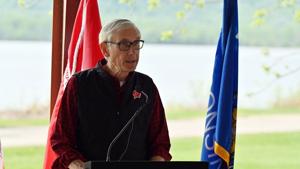
Gov. Tony Evers vetoed a slate of GOP bills Friday. Evers speaks during final State of the State address in February 2026. (Photo by Baylor Spears/Wisconsin Examiner)
Gov. Tony Evers vetoed Republican bills Friday that would have limited state agencies’ rulemaking abilities, prohibited “rights of nature ordinances,” eliminated “race-based” programs within the University of Wisconsin system and allowed for telehealth care providers with licenses from out of state to practice in Wisconsin.
Bills to limit rulemaking rejected
A set of bills that sought to limit agencies’ rulemaking abilities were also vetoed. Republican lawmakers introduced the legislation, called the “Red Tape Reset,” alongside the Wisconsin Institute for Law and Liberty, a conservative legal advocacy group.
SB 275 would have required agency scope statements, which are necessary to start the rulemaking process, from being used for one proposed rule and would have set a six-month expiration period for the use of a scope statement for an emergency rule.
SB 276 would have allowed those who have challenged the validity of an administrative rule to receive attorney fees and costs if a court declares a rule invalid.
SB 277 would have implemented a seven years expiration date on all administrative rules unless a rule is adopted again through an agency process.
SB 289 would have required agencies to make cuts to offset the cost associated with new regulations.
The bills were introduced in light of recent decisions by the Wisconsin Supreme Court that have limited lawmakers’ ability to oversee the rulemaking process, including by blocking rules indefinitely.
“The Legislature asks me, in effect, to undo this decision, enabling the Legislature to go right back to indefinitely obstructing the People’s Work and returning state government to inaction, delays and gridlock,” Evers said in his veto message for SB276. “I decline to do so.”
Rights of Nature prohibition
Evers also vetoed SB 420, which would have prohibited local governments from passing ordinances protecting the rights of nature. GOP lawmakers introduced the measure after Green Bay and Milwaukee pursued symbolic ordinances meant to protect the rights of bodies of water to be kept clean. It is a concept that originates from provisions in constitutions of some South American countries and Native American tribes such as Wisconsin’s Ho-Chunk Nation.
Evers said that he objected to lawmakers “continued efforts to restrict and preempt local control across our state” and GOP lawmakers’ failure to acknowledge that “climate change is affecting our Wisconsin way of life…” and efforts to “make it even harder for Wisconsin to respond to and mitigate the effects of our changing climate.”
“I have always believed the state should be a partner in — and not an obstacle to — the important work our local partners do every day,” Evers said. “ I trust our local governments and the Tribal Nations of Wisconsin to know best how to address environmental concerns within their communities and how to protect the natural resources that are vital to local health, economies and quality of life.”
UW free speech penalties
SB 498 would have barred UW campuses from being able to prohibit speakers from campus and prohibited the establishment of “free speech zones” among other actions. Republican lawmakers supportive of the bill said the goal was to protect free speech and academic expression.
Violations of the provisions in the bill could have resulted in financial penalties including a two-year tuition freeze for more than one penalty on a campus within a five-year period.
The UW system already implements a policy that establishes its commitment to freedom of speech and expression along with some accountability measures including conduct and due process mechanisms to address violations.
This was the second iteration of the bill. The idea was first developed by Republicans after a controversial survey of UW campuses, which had an average response rate of 12.5%, found that a majority of students who responded said they were afraid to express views on certain issues in class.
Lawmakers introduced the proposal this legislative session just six days after the assassination of right-wing activist Charlie Kirk, saying it was just one example of conservatives having their voices silenced on college campuses.
Evers said in his veto message that he disagrees with lawmakers’ attempts to interfere in the day-to-day operation of the state’s higher education system.
“Students, faculty and staff across university and technical college campuses in Wisconsin continue to discuss diverse ideas and perspectives, engage in thoughtful and difficult discussions with each other, grapple with complex issues and challenges, navigate conversations with people who have different experiences and backgrounds, and hear from other students, as well as faculty and staff, who have viewpoints from across the political spectrum,” Evers said. “I have no doubt this will continue to be the case on our campuses — as it should — so long as Republican lawmakers remain unable to inflict their radical and purely ideological agenda on higher education institutions across Wisconsin through legislative efforts like this.”
Evers also vetoed SB 652, which sought to eliminate “race-based” programs offered through the state’s higher education system, including the minority teacher loan program and minority undergraduate grants, by refocusing the programs to focus on “disadvantaged” students. The bill defined the term “disadvantaged” as applying to people who have “experienced any unfavorable economic, familial, geographic, physical or other personal hardship.”
Evers said he objected to lawmakers trying to create “new censorship rules that are designed to police language on our higher education campuses and ultimately prevent our state’s higher education institutions from acknowledging students come to our college campuses with unique and diverse backgrounds, experiences, and needs.”
The bill is part of GOP lawmakers’ attempts to eliminate diversity, equity and inclusion efforts throughout the state.
Another bill related to the UW system, SB 532, was also vetoed. It would have prohibited UW institutions from charging students additional fees for exclusively online courses.
“If lawmakers sincerely cared about the soaring costs of higher education for students on Wisconsin campuses, they would have approved any number of the countless measures and investments I have proposed over my tenure to ensure the University of Wisconsin System can survive and thrive without having to frequently rely on raising tuition or increasing various fees for students and families,” Evers said.
GOP health care bill vetoed
SB 214 would have allowed out-of-state health care providers to provide telehealth care services in Wisconsin if they possess a credential as a health care provider issued by another state.
Lawmakers who supported the bill said it would help Wisconsin by increasing the number of health care providers able to help Wisconsinites. Evers said in his veto message, however, that he was concerned about allowing providers to practice in Wisconsin if they are licensed in another state that has lower standards.
“[The bill] fails to address the fundamental concern I have that out-of-state licensing requirements may not be as rigorous and thorough as the standards we have in Wisconsin,” Evers said. “I object to having out-of-state health care providers potentially bypass the high standards we have for instate licensed health care providers to protect patients and families.”
The U.S. Department of Health and Human Services is arguing that 13 states requiring insurers to cover abortion are in violation of federal law. (Photo by Shauneen Miranda/States Newsroom)
The U.S. Department of Health and Human Services on Thursday announced an investigation into 13 states that require health insurance plans to cover abortion care.
In a news release, the agency said the investigation is based on allegations that the states are coercing health care entities to provide coverage of abortion “contrary to conscience” and in violation of a federal law known as the Weldon Amendment.
“OCR launches these investigations to address certain states’ alleged disregard of, or confusion about, compliance with the Weldon Amendment,” said Paula Stannard, director of the HHS Office for Civil Rights in a statement. “Under the Weldon Amendment, health care entities, such as health insurance issuers and health plans, are protected from state discrimination for not paying for, or providing coverage of, abortion contrary to conscience. Period.”
But reproductive rights advocates say it is a tactic to make abortion harder to access in states that have fortified protections.
“At a time when abortion care is getting harder and harder to access, we are deeply concerned that the few states that have taken steps to protect access are now under attack,” said Katie O’Connor, senior director of federal abortion policy at the National Women’s Law Center, in a written statement. “These investigations also follow a familiar pattern from the administration: attacking states that the president views as political threats.”
Earlier this year, HHS’ Office for Civil Rights clarified the Trump administration would interpret the Weldon Amendment to allow employers and insurance plan sponsors to opt out of covering or paying for abortions because of their personal beliefs, contradicting the Biden administration’s interpretation. The agency sent a letter to top officials in Illinois in January, alleging violations of the Weldon Amendment and the Coats-Snowe Amendment. The latter prohibits governments from discriminating against health care entities as it relates to abortion training or participation.
The agency did not specify the states being investigated, but the Washington Post reports that states with abortion-related coverage requirements are: California, Colorado, Delaware, Illinois, Maine, Maryland, Massachusetts, Minnesota, New Jersey, New York, Oregon, Vermont and Washington, which all have Democratic governors except for Vermont.
States defended their laws and criticized the probe as political, following the announcement.
“Donald Trump’s latest ‘investigation’ is nothing but a fishing expedition wasting taxpayers’ money,” said New Jersey Gov. Mikie Sherrill, the New Jersey Monitor reported.
The Vermont Department of Financial Regulation said it is reviewing the federal government’s notice and working with other state agencies to prepare a response.
“DFR does not believe that it has unlawfully coerced or discriminated against any insurer related to the coverage of abortions as outlined in the (federal government’s) request,” Commissioner Kaj Samsom told the VT Digger. “We stand firmly behind the law in question and the protections and choice it provides Vermonters.”
The Heritage Foundation floated the proposal to withhold Medicaid funding for states in violation of the Weldon Amendment in its controversial presidential administration blueprint Project 2025, which President Donald Trump disavowed during his campaign.
This story was originally produced by News From The States, which is part of States Newsroom, a nonprofit news network which includes Wisconsin Examiner, and is supported by grants and a coalition of donors as a 501c(3) public charity.
A clinic in Salem, Oregon, where lawmakers approved $7.5 million for 12 Planned Parenthood health centers in the state after a tax break and spending cut bill signed by President Donald Trump in July cut off federal reimbursements for one year. (Photo by Mia Maldonado/Oregon Capital Chronicle)
Visits for contraception and cancer screenings at Planned Parenthood clinics have dropped by double-digits after Congress passed a bill cutting off Medicaid funding to certain reproductive health care providers last year, according to a new Democratic congressional report.
Between July 1 and the end of December, the report said emergency contraception distribution fell 10%, oral contraception distribution fell 27%, and IUD insertions fell 10%.
Republican members of the House and Senate passed a sweeping budget reconciliation bill in July that included a one-year provision barring clinics from receiving federal Medicaid reimbursement if they offered abortion services and billed Medicaid more than $800,000 in fiscal year 2023. The rule largely affected Planned Parenthood because of the high dollar amount, but some large independent clinics were also affected, such as Maine Family Planning and Health Imperatives in Massachusetts.
Since July, Planned Parenthood reported 20 clinics were forced to close because of the cuts. That was in addition to numerous clinics that had to close after the loss of Title X funds and other factors, bringing the total to 51 last year. The report said nearly 75% of those closures were in rural, medically underserved areas. About half were in the Midwest, including Indiana, Michigan and Ohio, affecting about 25,000 patients.
“Almost all, 48 of 51, that closed between January and December offered primary care, and nearly half were in primary care shortage areas,” the report said.
In recent months, the decline in services grew. The report also notes there were 20% fewer visits for birth control pills in November, and a drop of 36% for intrauterine devices in December, the steepest decline out of all services measured. Some clinics have reported dropping their IUD offerings because it is a costly birth control device to obtain that was normally covered by Medicaid, but it is also the most popular and preferred form of birth control.
The number of visits for breast cancer screening exams fell by 25% in December, according to the report, and testing for sexually transmitted infections fell 11% in November, both of which could result in delayed treatment that increases overall health care costs.
Twelve states have committed their own funding to help address the gap from federal Medicaid cuts, amounting to about $300 million, according to the report. That includes California, Colorado, Connecticut, Hawaii, Illinois, Massachusetts, Maine, Nevada, New Jersey, New Mexico, New York, Oregon, and Washington. But advocates for Planned Parenthood say it still leaves a significant shortfall, because health centers nationwide provided an estimated $700 million in care annually to Medicaid patients before the law went into effect.
U.S. Sen. Ron Wyden, a Democrat who represents Oregon and a ranking member of the Senate Finance Committee, said at Thursday’s press conference that he will vigorously oppose any reconciliation efforts to make the cuts permanent.
“We’re here to tell people who are opposing access to health care for women, no way. It’s not going to happen on my watch at the Finance Committee, period. Not going to happen,” Wyden said.
Federal law already prohibits providers from using federal dollars to pay for abortion care, with limited exceptions. Medicaid dollars paid for all of the other types of care that clinics provide, including contraception, testing and treatment for sexually transmitted infections, and screenings for breast and cervical cancer. Maine Family Planning also provided primary care services to about 1,000 patients statewide, but had to halt that program in October because of the cuts.
“The report makes clear that it actually costs money to see all these Planned Parenthood offices or providers close, and once they’re closed, it’s not as though you can just bring them back up,” said U.S. Sen. Mazie Hirono, a Democrat who represents Hawaii, at a news conference Thursday morning. “But once they’re closed, people still need this kind of care, and so they’re going to go to other providers, or they will go without — which results in undiagnosed illnesses and health care needs.”
Planned Parenthood Federation of America and two of its affiliates sued to block the law, but the effort was unsuccessful. Republicans in Congress have signaled a goal of extending the cuts and making them permanent, as outlined in the Republican Study Committee’s framework for the next budget reconciliation bill, released in January.
A coalition of major anti-abortion advocacy organizations, including Live Action, Heritage Action, National Right to Life and Susan B. Anthony Pro-Life America, signed a letter sent to House Republican leadership urging them to immediately begin the reconciliation process and make the cuts permanent.
“Since the enactment of the 2025 reconciliation law, multiple abortion businesses have already closed facilities or scaled back operations, demonstrating the measurable impact of the defunding provision,” the letter said.
This story was originally produced by News From The States, which is part of States Newsroom, a nonprofit news network which includes Wisconsin Examiner, and is supported by grants and a coalition of donors as a 501c(3) public charity.
TransAlta’s coal-fired power plant in Centralia, Wash., is among the facilities that received emergency orders from the U.S. Department of Energy blocking them from being retired. (Photo by the Washington Department of Ecology via Washington State Standard)
In an unprecedented use of federal authority, President Donald Trump’s administration has invoked emergency powers to force a series of retiring coal plants to stay open.
Utilities, states and grid operators have said the aging plants are expensive, in bad repair and no longer needed to meet regional energy needs. But Trump’s efforts to save the dwindling coal industry have forced plant operators to continue investing in the facilities — a move that some consumer advocates fear could mean billions of dollars in added costs for customers in dozens of states.
Trump has long positioned himself as a champion of coal, making it a centerpiece of his “energy dominance” agenda. The emergency orders issued by his administration claim that the grid is at risk of energy shortfalls, and the coal plants are needed to ensure a reliable power supply.
But state officials in many places affected by the orders say that’s not true.
“Rather than allowing the realities on the ground, the regulators and the utilities to make rational decisions about how to meet energy needs, we have the Trump administration trying to do Soviet-style central planning to push an ideological agenda that will drive costs to customers,” said Will Toor, executive director of the Colorado Energy Office.
Under Trump, the U.S. Department of Energy has issued emergency orders to block the retirements of coal plants in Colorado, Indiana, Michigan and Washington state. Secretary of Energy Chris Wright has claimed that the power demands in various regions require the plants to stay operational.
Observers expect similar orders to be issued for most, if not all, of the dozens of coal-fired units slated for retirement during the remainder of Trump’s term. Utilities subject to the orders have said they will increase costs for ratepayers, and argue those costs should be borne by the multistate region to which they provide power, rather than just their local customers.
Despite their costs, three of the five plants being blocked from retirement haven’t produced electricity since the emergency orders went into effect, either because they need extensive repairs or because power demands have been met without them.
Section 202(c) of the Federal Power Act gives the secretary broad authority to take temporary control of the U.S. electricity system during emergency situations. Until now, that authority had only been invoked during wartime or natural disasters. All of the Trump administration’s orders were issued before the war with Iran. Consumer advocates say Trump’s use of the act to overturn long-planned facility retirements is unprecedented, and likely illegal.
State officials, utilities and environmental groups have challenged all of the orders.
While such emergency orders can be issued only for 90-day periods, Wright has repeatedly renewed the orders before they expire.
The Department of Energy did not respond to a Stateline interview request.
Keeping coal online
Last May, Wright issued the first emergency order to prevent the shutdown of the J.H. Campbell Generating Plant in Michigan, just days before it was scheduled to retire. The plant has remained open since then, accruing $135 million in net costs through December. Consumers Energy, the utility operating the plant, is seeking to charge ratepayers in 11 states to recoup those costs.
Michigan Democratic Attorney General Dana Nessel has appealed the order, while a coalition of environmental groups has filed a lawsuit seeking to overturn it, arguing that the feds have failed to demonstrate a true emergency. That case is currently in the D.C. Circuit Court of Appeals awaiting oral arguments, which may take place in May.
State leaders in Colorado have appealed an order to keep a plant there open, while Washington state Attorney General Nick Brown, a Democrat, has sued the federal agency. Environmental groups have filed a lawsuit challenging the order in Indiana. Energy analysts say the Michigan case will likely be resolved first, and is expected to have major implications for the emergency orders elsewhere.
Douglas Jester, a former state energy official in Michigan, noted that Consumers Energy has had to pay extra to bring back staff, establish new delivery contracts for coal and catch up on maintenance. Jester now serves as managing partner at 5 Lakes Energy, a clean energy consulting group.
In his emergency order, Wright said the plant was needed to ensure energy reliability and reduce the risk of blackouts. His agency, in a statement issued last month, said the coal plants kept open by the emergency orders helped keep the power system online during Winter Storm Fern.
Coal industry leaders have made a similar argument, saying that growing energy demands require more baseload power, as opposed to intermittent renewables such as wind and solar.
The emergency orders are “very much needed,” said Emily Arthun, CEO of the American Coal Council, an industry trade group, “so that we can continue to have the energy just for our day-to-day lives,” said Emily Arthun, CEO of the American Coal Council, an industry trade group. “Coal plants, baseload plants, are critical to the well-being of our grid. Coal is needed at critical moments for energy.”
Some labor unions have also praised the orders as beneficial to their workforce.
But state leaders and consumer advocates argue that utilities and regulators have already completed detailed plans to replace the power the aging coal plants provided, through a mix of renewables, natural gas plants and battery storage.
It costs a lot of money to make sure that an old, decrepit coal plant is available to operate.
– Michael Lenoff, senior attorney at Earthjustice
“If you were to believe the Department of Energy, you would believe that more than half the country is experiencing an emergency around the clock,” said Michael Lenoff, senior attorney at Earthjustice, an environmental group that is suing the Trump administration to overturn the orders. “It costs a lot of money to make sure that an old, decrepit coal plant is available to operate.”
Lenoff and other environmental advocates have said the coal plants ran during the winter storm because the government forced them to, not because the grid needed them to meet power demands.
Even as his administration has declared an energy shortage emergency, Trump has tried to block new renewable projects from being built, including several offshore wind farms that East Coast states are relying on to meet their power demands.
Meanwhile, the administration has also authorized power generators to export electricity to Mexico and Canada, which may happen only when regulators have determined the U.S. has sufficient energy supply to meet its own needs.
“How can you authorize the export of energy to Canada from a Western market that you just declared is in an emergency status with shortages?” said Tyson Slocum, energy program director at Public Citizen, a consumer advocacy nonprofit. “It’s complete incoherence.”
Aging plants
Three of the five plants being blocked from retirement have yet to even produce electricity since the emergency orders went into effect.
The plant in Colorado suffered a failure in a steam valve that was not repaired because it was on the verge of retiring. The federal order has forced the Tri-State Generation and Transmission Association to invest in repairing the plant, and the costs to keep the plant operational could reach $80 million a year even if it never produces power, said Toor, with the Colorado Energy Office.
“It’s very unlikely to actually operate even with this order,” he said.
Tri-State and the other utilities that own the plant have requested a rehearing of the emergency order, saying that keeping the plant open will be costly for their ratepayers.
In Indiana, one of the two plants targeted by the feds has suffered mechanical failures that would require extensive repairs.
“(The order) doesn’t even make sense because it’s not even really open,” said Ben Inskeep, program director at the Citizens Action Coalition, an Indiana-based consumer advocacy group. “You don’t want to throw good money after a plant you’re about to retire.”
Unlike the Democratic-led states subject to the other orders, Indiana’s leaders have welcomed the federal intervention. Republican Gov. Mike Braun issued his own executive order soon after the Department of Energy announcement directing state officials to evaluate ways to extend the life of the state’s remaining coal plants.
Meanwhile, the TransAlta Centralia coal plant in Washington state, while remaining in operational mode, has not supplied power to the grid since January, as the state’s energy needs have been met by more affordable sources elsewhere.
Democratic state Sen. Marko Liias sponsored a bill, signed into law earlier this month, that rolls back tax and regulatory exemptions that were granted to TransAlta under a 2011 agreement to gradually phase out the plant. The compliance burden will make it economically infeasible for the plant to operate again, he said.
“It’s crystal clear to the market that we’re not going backwards, we’re slamming the door and nailing it shut,” Liias said.
Consumer costs
While some states have pushed to close coal plants due to climate goals and pollution concerns, market forces have largely driven the coal industry’s decline. According to a 2025 analysis by the financial advisory firm Lazard, electricity from coal-fired power plants costs an average of $122 per megawatt-hour. That same amount of power can be produced for $78 from natural gas plants, $61 from onshore wind and $58 from utility-scale solar.
Some energy analysts say Trump’s efforts to keep fossil fuel-powered plants open could become very costly to ratepayers. A report published by Grid Strategies LLC, a consulting firm, found that as many as 90 aging plants could be subject to similar emergency orders during the remainder of Trump’s term. The analysis found that keeping those plants open could cost ratepayers anywhere from $3 billion to $6 billion a year.
“What the Department of Energy is doing is picking losers, the uneconomical plants that the utilities, the regulators, everybody involved agreed need to retire and be replaced with something cheaper and more efficient,” said Michael Goggin, who authored the report, which was commissioned on behalf of Earthjustice and other environmental groups.
Meanwhile, some consumer advocates say the orders have created chaos for utilities and energy planners. The operators of plants scheduled for retirement in the coming years no longer know if it’s safe to cancel their coal contracts, transition their workforce or defer maintenance on their facilities. And financiers may be wary of investing in new, cheaper energy projects that could be sidelined by orders to keep coal online.
“The administration has made clear that they’re not going to allow a coal-fired power plant to retire, regardless of whether or not it’s absurdly expensive to operate, whether it’s contaminating soil, air and water in that community, they literally don’t care,” said Slocum, of Public Citizen.
This story was originally produced by Stateline, which is part of States Newsroom, a nonprofit news network which includes Wisconsin Examiner, and is supported by grants and a coalition of donors as a 501c(3) public charity.
The Adams County Correctional Center houses more than 2,000 detainees. (Google Earth photo)
ICE raids have been taking place at an unprecedented scale in big cities all over, including in the South. Texas and Louisiana house more ICE detainees than any other state.
Mississippi also plays a special part in immigration enforcement.
Over the next few months, States Newsroom will partner with Mississippi Today and The New York Times to report on and publish stories about one of the largest ICE detention centers in the nation – the Adams County Correctional Center in Natchez, Miss.
Although Mississippi has one of the smallest immigrant populations, Adams Correctional Center is the second largest ICE detention facility in the country, housing more than 2,000 detainees.
Little is known about the facility, which is located in a remote county of about 30,000 people in southwestern Mississippi.
The federal government limits access to ICE detention centers. They aren’t inspected as often as state prisons. Only immediate family members and attorneys are allowed to visit detainees. And because the Adams County facilityis owned and run by a private, for-profit company, CoreCivic, it isn’t covered by public records laws, and taxpayers don’t get to see what happens inside.
Reporting from Mississippi Today and The New York Times will inform you about the facility – from what it’s like inside, to how it impacts the local economy.
If you know something about the detention center, if you know someone who works there or is detained there, or want us to find out something about it for readers, please contact Mukta Joshi, who is reporting on the facility for Mississippi Today and The New York Times.
Your name or any part of your submission will not be used without contacting you first. Contact Mukta through this form, or at mukta.joshi@nytimes.com, or anonymously through Signal @mmj.2178.
This story was originally produced by News From The States, which is part of States Newsroom, a nonprofit news network which includes Wisconsin Examiner, and is supported by grants and a coalition of donors as a 501c(3) public charity.
A courtroom and a judge's gavel. (Getty Images creative)
The Wisconsin State Senate did not vote on the “Justice for All Act” before it concluded regular work this week, likely punting the court staffing concerns addressed in the bill to the next legislative session.
The Wisconsin Examiner’s Criminal Justice Reporting Project shines a light on incarceration, law enforcement and criminal justice issues with support from the Public Welfare Foundation.
In an interview with the Wisconsin Examiner on Wednesday, Rep. David Steffen (R-Howard) said that this issue didn’t get enough attention in the latest state budget process.
“We have criminals who will not be prosecuted, we have innocent individuals who will remain in jails and property taxpayers will be picking up a massive tab associated with this inaction,” said Steffen, one of the bill’s authors.
Steffen said that the issue will have to be addressed in the next budget process, in 2027, though the work done and awareness raised on this issue will make those discussions easier.
The “Justice for All Act,” or Assembly Bill 514, was introduced in October and passed the Assembly last month. It involves additional criminal justice system positions that would help address backlogs of court cases in Wisconsin. These include additional judges, assistant prosecutors and public defenders, court reporters and public defender support staff for the 2027-2029 and 2029-2031 bienniums.
Steffen said he thinks that if the bill had gone before the Senate, it would have passed. However, it didn’t reach the needed threshold of support from Republicans, he said. That threshold of GOP support is also known as the unwritten “rule of 17” which means obtaining the votes of 17 Republicans or an all-GOP majority to pass any bill through the Senate. (Senate Majority Leader Devin LeMahieu, who announced Thursday he is stepping down, drew criticism for allowing bills on sports betting and funding for the University of Wisconsin athletic department to come to the floor and pass on a bipartisan basis without garnering 17 Republican votes.)
Steffen said he’d heard that, as he understood it, some senators were concerned about handling this large of an expenditure outside of the budget process. However, Steffen called this “unfortunate, and likely more of a punt than a real reason.” He said exceptions are routinely made for important matters facing the state.
In an interview with the Examiner on Wednesday, Sen. LaTonya Johnson (D-Milwaukee) said that at some point, Milwaukee County “is going to have to file a lawsuit to recoup some of the money that they’re spending on our criminal justice system.”
“We’re forced to come to the state to beg for resources that they should be voluntarily giving us, and they have the nerve to tell us no,” Johnson said.
Will the new positions be delayed?
The bill would provide authority for some of the new positions beginning in July 2027, while for others, it would be the summer of 2028 or 2029.
A staff member from Steffen’s office told the Examiner that if the proposal is taken up next session, Steffen would not expect the timing of the positions related to the judges and court reporters to be affected. However, Steffen would anticipate that the other positions in the bill — positions related to assistant district attorneys, assistant public defenders and public defender support staff — would be pushed back by a year.
Steffen expects the same timing would apply if the measure is introduced as a standalone bill, like the Justice for All Act, or through the state budget.
Next time, how will Milwaukee fare?
An amendment to the Justice for All bill stripped additional public defender and public defender support staff positions for Milwaukee from the bill, the Examiner reported last month. The bill still held additional prosecutor positions for Milwaukee.
“In order for me to get the support I needed in the Assembly, it was necessary for me to hold back those public defender positions in Milwaukee County,” Steffen said.
Steffen said that next year, he hopes to include the public defender positions for Milwaukee that were in the original version of the bill he crafted.
Sen. LaTonya Johnson said that the motivation to cut those Milwaukee positions out stemmed from a conflict involving the district attorney’s office, public defender’s office and Enough is Enough, a court watch group, the Examiner reported last month. Rep. Bob Donovan (R-Greenfield) criticized the public defenders, who said the court watchdog group was operating as an extension of the district attorney’s office.
Steffen said that some in the Assembly had concerns that were particularly about Milwaukee public defenders “displaying a lack of attention on the core responsibilities of defending the indigent versus some of their comments and actions against community watchdog groups who were in Milwaukee County.” Asked if this was about what the public defender’s office put out regarding Enough is Enough and that controversy, Steffen said that was correct.
Steffen said some lawmakers took issue with what the defenders’ letter represented, that more time was being spent “worried about some retirees sitting there in the courtroom than they were focusing on defending the rights of the accused.”
Steffen said he was very interested in working with the state public defender’s office to address the issue, but “we were unable to do so” before the end of the session. He said that the removal of the Milwaukee positions wasn’t a barrier to the bill going up for a vote on Tuesday.
Johnson opposes the idea that the Milwaukee positions shouldn’t have been included due to the controversy involving public defenders and Enough is Enough and said it speaks of overreach. She also argued that if the public defenders were honest about how they felt in the letter, they did their job.
Johnson said she and her Milwaukee colleagues weren’t supportive of the Justice for All Act because of the removal of the Milwaukee public defense positions.
Johnson said she spoke with one of the bill authors about why the bill wasn’t on the floor of the Senate on Tuesday. She said that he highly doubted “that Milwaukee would be a part of that process even next year, because if it was, then they would have people who would be unwilling to support it in the Senate.” Johnson hopes that when legislators return, Republicans will no longer hold the Senate majority.
In Milwaukee County, the backlog of unresolved felony-related matters is more than 10,000, as of Oct. 13, Wisconsin Watch reported.
“How do you remove public defender support and staff support from the largest county in the entire state?” Johnson said.
What was the conflict involving the court watch group?
Regional manager Angel Johnson and deputy regional manager Paige Styler of the public defenders’ office signed a letter sent to judges in Milwaukee County Circuit Court’s criminal division, the Milwaukee Journal Sentinel reported.
The letter alleged that Enough is Enough “functions more as an extension of the DA’s office” and that the group’s activities and formation have been closely coordinated with the DA’s office, the Journal Sentinel reported. It argued that “Enough is Enough” shouldn’t be seen as an independent, grassroots organization.
Johnson and Styler asked judges to consider that context when evaluating impact statements or the presence of the group in court, the Journal Sentinel reported. The group’s president called the public defenders’ allegations “false, exaggerated and without merit.”
The letter highlighted Assistant District Attorney Joy Hammond and retired Assistant District Attorney Thomas Potter, who public defenders said “reviewed, drafted, and edited letters for Enough is Enough addressed to the judiciary,” according to the Journal Sentinel.
Public defenders claimed that emails obtained from a public records request outline extensive meetings between the DA’s office and Enough is Enough, the Journal Sentinel reported. In a memo to a judge, Lovern described the emails public defenders received as “mostly logistical in nature” and nothing “nefarious,” according to the Journal Sentinel.
Public defenders call for more positions
The lack of a vote on the bill creates uncertainty for the Wisconsin State Public Defender’s Office, according to a spokesperson for the office.
“We’re still hopeful that we can obtain the resources we need in the next state budget, but without the Justice for All Act in place as a bipartisan consensus to build from, the path forward is significantly less clear,” the spokesperson told the Examiner in an email.
In a press release on Tuesday, the Wisconsin State Public Defender’s Office argued that “lawmakers cut short a lifeline for Wisconsin’s overburdened public defense system” by not putting the bill on the calendar.
“Our attorneys are drowning, and it’s Wisconsinites who pay the price when constitutional rights are treated as an optional expense,” State Public Defender Jennifer Bias said.
The public defenders said that public defenders and Wisconsinites who rely on them will have to wait almost a year and a half for the next budget cycle to offer another chance at relief.
The Justice for All Act would have given public defenders an additional 18 attorney positions and 35 support staff positions in the next budget biennium, the agency’s largest staffing increase since 2009, the public defenders said.
The public defenders argued that these resources would have allowed the agency to confront growing case delays brought on by prosecutors charging more crimes and by “an explosion of digital evidence in criminal cases.”
In a press release in January, the public defender’s office said that criminal cases in Wisconsin have become increasingly complex over the past two decades — that cases once involving a few police reports now regularly involve hundreds of hours of body camera footage and thousands of pages of digital records.
A lack of sufficient support staff forces public defenders to take on “vast amounts of extra work outside the courtroom,” the agency said in January, adding that in its Stevens Point region, 30 attorneys covering 13 counties share only one paralegal.
According to Bias’s testimony in January, the lack of support staff positions is a consistent reason attorneys give for leaving the public defender’s office. While an attorney shortage makes it difficult to fill attorney roles quickly, the agency has very little trouble finding qualified support staff, she testified.
In testimony on the bill, Bias said the agency recently had a case in which police misidentified a suspect. The client had been sitting in jail for six months by the time the attorney was able to review the bodycam footage and see that the video didn’t show the client. She said the client was released but had already lost a job and housing.
There is an old story from the Mediterranean about an elderly man planting an olive tree. A passerby asks why he would plant something that takes decades to bear fruit. The man replies: “Because my children will need the olives.”
Transmission lines are much the same.
Across southwest Wisconsin, communities are hearing about the MariBell Transmission Project, a proposed high-voltage transmission line that would connect Marion, Minnesota, to Bell Center, Wisconsin. The project is part of an effort to strengthen the electric grid across the Upper Midwest.
When people first hear about a transmission project, the natural questions are: Why do we need it? And is it safe?
We can answer both.
Transmission Is Planned Generations Ahead
Transmission lines are not built for today’s electricity needs. They are planned decades ahead for our children’s future.
Much of the infrastructure we rely on today was planned decades ago. Engineers studied population growth and future electricity demand long before many of the businesses and technologies we rely on today even existed.
Regional grid operators like MISO (Midcontinent Independent System Operator) are responsible for conducting these long-range studies. From that work comes the Long Range Transmission Plan, which identifies major grid upgrades needed to maintain reliability across the region. The MariBell project is part of that effort.
Once a project appears on a planning map, it often takes 10 to 15 years before construction begins. Environmental studies, landowner discussions, engineering design, and regulatory approvals are all requirements for this long-term investment.
In other words, transmission is built for the future long before it arrives.
The Backbone of a Reliable Economy
Electricity demand across the Midwest is growing again.
Manufacturing is expanding. We’re electrifying our homes and transportation. At the same time, older power plants are retiring, and new energy sources are coming online across the region.
Transmission connects it all, allowing electricity to travel long distances, balancing supply and demand across states, and ensuring reliability during extreme weather or periods of high demand. It also allows new power generation, from solar to nuclear, to connect to the grid and reach the communities that need it.
Addressing the EMF Question
Another common concern raised during transmission discussions is electromagnetic fields, or EMF.
EMFs are produced whenever electricity flows through a wire, not just transmission lines. Household wiring, appliances, power tools, and TVs also create EMFs.
Because this issue has raised questions for decades, it has been studied extensively. Research conducted by the National Institutes of Health, the World Health Organization, and the National Cancer Institute has examined EMF exposure for more than 40 years.
The consistent scientific finding is that EMF from power lines has not been shown to cause adverse health effects from the levels of exposure typically experienced by the public.
Transmission lines are also designed to naturally reduce exposure. The height of structures and the distance they are placed from homes are both meant to take advantage of the fact that EMF levels drop rapidly the farther you move away from a line. In many cases, household appliances can expose people to stronger EMF levels at a very close range.
That doesn’t mean concerns should be dismissed. But decades of research provide strong reassurance that transmission infrastructure operates safely within established guidelines.
Thinking Like the Man With the Olive Tree
The conversation around the MariBell project is in its early stages. Maps show both proposed and optional corridors, and the final route will be determined through regulatory review and public input.
Those conversations matter. Communities deserve transparency, and landowners deserve to be heard.
The grid we rely on today exists because previous generations believed in planning for the future. They built the infrastructure that powers today’s homes, hospitals, farms, and businesses.
They planted the olive trees.
Now it’s our turn.
Transmission projects like MariBell are not just about meeting today’s electricity needs. They are about ensuring that our children inherit an infrastructure strong enough to support their future.
If we want them to enjoy the harvest, we have to start planting now.
(The Center Square) – Wisconsin Gov. Tony Evers vetoed a set of three University of Wisconsin-related bills Friday that included free speech protections on campus, a block of additional online course fees and a bill that would change minority programs…
(The Center Square) – Wisconsin Gov. Tony Evers vetoed a set of four bills dubbed the red tape reset on Friday that would have cut down on the 165,000 restrictions currently in state law.
(The Center Square) - Wisconsin collected 8.8% less in taxes and fees in February than it did the year before, a $90 million drop in general purpose revenue.
State Rep. Lisa Subeck, D-Madison, this month introduced legislation requiring crisis pregnancy centers to obtain permission from clients before sharing their sensitive health information.
Crisis pregnancy centers (CPCs), also known as unregulated pregnancy centers or pregnancy resource centers, provide some services for pregnant people but largely aim to dissuade clients from choosing abortion care. Importantly, most CPCs are not licensed medical facilities and are intentionally vague about their inability and unwillingness to provide abortions or make referrals. They attract clients with targeted advertising that promises free pregnancy testing, ultrasounds and options counseling.
Without the restrictions proposed by Subeck and more like it, Wisconsinites will continue to be victimized by this industry.
Since CPCs are not medical providers and do not charge for services,they are not subject to the same consumer protection laws and licensing requirements, including the Health Insurance Portability and Accountability Act, or HIPAA.
Without confidentiality protections, CPCs are not required to protect sensitive client information and may misuse private client data with no accountability. Subeck’s bill would help close this loophole and ensure that client information is secure.
While this legislation would be a step in the right direction, privacy is just one of many instances in which CPCs violate medical ethics.
With the funding they receive from faith-based organizations, anti-abortion advocacy groups and taxpayer dollars, CPCs may present themselves in ways that resemble medical settings. Staff and volunteers may wear white coats, visit with clients in exam rooms and adopt language used by clinicians. But many of their services fail to meet evidence-based standards of care.
For example, CPCs have been reported to overestimate gestational age to convince clients they are too far along in pregnancy to legally access abortion. They also readily share medically inaccurate information about abortion.
CPCs across Wisconsin claim that abortion can lead to depression, substance abuse, nightmares, and future fertility issues. Major medical organizations say there is no evidence that abortion leads to mental illness or negative impacts on future fertility. In fact, research suggests that denying people abortion care is associated with worse outcomes to their long-term health and well-being.
Many CPC websites list “abortion reversal” as a service. This involves taking progesterone to “reverse” the effects of mifepristone, the first medicine used in medication abortion. University of California-Davis researchers attempted to test the effectiveness of this treatment, but the study was stopped early due to ethical and safety concerns. The American College of Obstetricians and Gynecologists has determined that abortion reversal is “not supported by science.”
Despite their questionable practices, CPCs in Wisconsin continue to benefit from public funding, and some state legislators want them to receive even more. In 2023, Sen. Robert Quinn, R-Birchwood, proposed legislation that would give $1 million a year to Choose Life Wisconsin, a statewide network of CPCs.
Funds raised through Choose Life license plates are also directed to CPCs. Meanwhile, some of Wisconsin’s legislative Republicans have not supported measures that would benefit pregnant people and new parents. Assembly Speaker Robin Vos, R-Rochester, repeatedly blocked proposals to expand postpartum Medicaid coverage, calling it “an expansion of welfare,” until the Assembly this session finally sent the bill to Gov. Tony Evers’ desk.
In Wisconsin, legitimate providers of abortion care must navigate a litany of restrictions. Targeted Regulation of Abortion Providers, or TRAP laws, are widely criticized by medical groups and exist only to make obtaining and providing abortion care harder. Yet CPCs are free to operate under limited regulations while they enjoy our tax dollars.
In other states, efforts to regulate CPCs have failed on the grounds that these organizations are protected under the First Amendment. But these centers are a growing public health risk, and protecting people’s health and safety should take priority. This is especially important as the network of CPCs continues to grow. In Wisconsin, there are just five clinics that provide abortion care, compared to an estimated 60 CPCs.
When pregnant people reach out for support, they deserve to be met with compassion, honesty and the opportunity to consider all of their options. The ongoing failure of our lawmakers to regulate these facilities is an affront to evidence-based sexual and reproductive healthcare. It is time that Wisconsin’s lawmakers uphold respect and humanity, not deception and manipulation.
Layne Donovan was born and raised in Wisconsin and holds a degree from Barnard College. She has studied the history of abortion in the United States, and currently works in reproductive health, rights, and justice.
Guest commentaries reflect the views of their authors and are independent of the nonpartisan, in-depth reporting produced by Wisconsin Watch’s newsroom staff. Want to join the Wisconversion? See our guidelines for submissions.
His impact is seen everywhere on South Cesar E. Chavez Drive. From the street signs and murals bearing his name to a life-sized statue in the parking lot of Nuevo Mercado El Rey — Cesar Chavez was revered by many on Milwaukee’s South Side.
A sign for the Cesar E. Chavez Business Improvement District hangs on a lamp post. (Jonathan Aguilar / Milwaukee Neighborhood News Service / CatchLight Local)
A street sign for South Cesar E. Chavez Drive. (Jonathan Aguilar / Milwaukee Neighborhood News Service / CatchLight Local)
Sun shines on a bus stop at South Cesar E. Chavez Drive and West National Avenue. (Jonathan Aguilar / Milwaukee Neighborhood News Service / CatchLight Local)
That’s what made news of sexual abuse allegations so shocking. Many today see union activist and civil rights leader Chavez, who died in 1993, in a new light after a bombshell New York Times article published Wednesday — as a sexual predator.
The story detailed allegations of sexual abuse and grooming of women and girls as young as 12.
Reaction across Milwaukee has been swift.
The city’s Cesar Chavez Day celebrations were canceled.
And the Marcus Center for the Performing Arts shut down a student contest and event honoring him.
Ald. JoCasta Zamarripa and others have begun discussions about potentially renaming Cesar E. Chavez Drive, a stretch of South 16th Street from West Greenfield to West Pierce.
A man walks along South Cesar E. Chavez Drive. (Jonathan Aguilar / Milwaukee Neighborhood News Service / CatchLight Local)
A couple walks past a mural of Cesar Chavez on the side of a building at 1037 S. Cesar E. Chavez Drive. (Jonathan Aguilar / Milwaukee Neighborhood News Service / CatchLight Local)
What the Chavez Drive business community is saying
Olivia Villarreal, the wife and business partner of El Rey co-founder Ernesto Villarreal, said she was devastated to see the news reports about Chavez.
“Makes me just cry hearing these developments,” she said.
Villarreal said her father came to the U.S. as a bracero, working the cotton fields in Texas and Alabama. Her husband’s dad came to California from Mexico to pick fruit. Both came to the country in the 1950s.
“They saw what the labor movement did and lived it,” she said.
The movement, which Chavez became the face of, impacted millions, she said.
She said the statue of Chavez that stands on the western edge of their parking lot in a small plaza, does not belong to El Rey, although the store has been maintaining it. It was commissioned by Journey House and paid for by donations.
Villarreal said her understanding is that members of the Cesar E. Chavez Business Improvement District will meet and decide the future of the statue and discuss the renaming of the street.
She said she’s open to the BID’s suggestion of taking down the statue and also changing the name of the street.
The Chavez Drive BID issued a statement calling for accountability and thoughtful action.
“Cesar E. Chavez has long been recognized as a symbol of labor rights, dignity and collective organizing for farmworkers and Latino communities,” it read. “At the same time, we recognize that history is not one-dimensional. It requires us to confront the full scope of a person’s legacy, including the parts that are in contradiction to what we have known.”
The BID board of directors is actively examining next steps, according to the statement.
‘Get rid of everything’
Elena Rosales, who works at Agencia de Viajes Mexico, 1016 S. Cesar E. Chavez Drive, said she was shocked when she heard the news about Chavez.
“Get rid of everything, take the statue down, change the street,” she said.
As a woman, she said, she’s on the side of the victims. Still, she acknowledged, with Chavez long dead, we’ll never hear his side.
“He’s not here to defend himself,” Rosales said.
Maria Romo, a manager at Reliable Staffing Solutions, 1215 S. Cesar E. Chavez Drive, said that although she thinks the voices of the victims should be heard, she doesn’t think changing the name of the street will help much.
“They’ve already been harmed. What will changing the name of the street do to change that?” she said.
‘Why now?’
Alma Flores, owner of Nuevo Imagen, a beauty shop at 1219 S. Cesar E. Chavez Drive, said she doesn’t think that the street should be renamed or that Chavez’s legacy should be forgotten.
“He did so much for the agricultural workers,” she said. “What will they do, remove his name from everywhere? Because it’s all over.”
Flores said she questions some of the allegations against him and wonders why they took so long to become public.
“I don’t understand. Why now when everyone celebrates him,” she said.
Fernando Barajas, manager of Taqueria Los Comales, 1306 S. Cesar E. Chavez Drive, said he has mixed feelings about the sexual abuse allegations against Chavez.
“He’s been dead for so long,” said Barajas, who’s worked at the restaurant for nearly 23 years. “We all have different points of view.”
Barajas, a former farmworker in California in the ’80s and ’90s, said that Chavez did a lot of good for people. Still, he said, he understands the severity of what he’s being accused of and understands if people want to take action as a result.
“If the people want the name of the street to change, that’s fine,” Barajas said.
What residents are saying
Juan Salazar, a former farmworker, also has mixed feelings about Chavez.
Juan Salazar looks at a statue of Cesar Chavez in front of Nuevo Mercado El Rey. (Jonathan Aguilar / Milwaukee Neighborhood News Service / CatchLight Local)
“That’s the first thing people go to nowadays, the worst parts, not the good parts,” said Salazar while walking along Cesar E. Chavez Drive on Thursday morning.
He admits the news about Chavez left him at a loss for words but wants more investigation into the allegations before changes are made.
A mural of Dolores Huerta is seen on the side of a building at 1247 S. César E. Chávez Drive. (Jonathan Aguilar / Milwaukee Neighborhood News Service / CatchLight Local)
Nyia Luna is a local artist who painted a mural of Dolores Huerta on Cesar E. Chavez Drive with her mentor Girl Mobb.
Huerta co-founded the National Farm Workers Association with Chavez and went public Wednesday as one of his victims.
Luna said she painted a mural of Huerta because she knew of Huerta’s huge role in the farm workers movement.
“Not many of my counterparts in high school did,” she said.
She called the news about Chavez a tragedy, and said she’s glad that Huerta and the others were able to share their stories.
“Brings light to what goes on behind closed doors to a lot of women,” Luna said.
Many other residents who were asked about Chavez on Thursday said they had seen the headlines on social media about him but were not fully aware of the allegations or didn’t want to share their stories publicly.
What Milwaukee leaders are saying
County Supervisor Juan Miguel Martinez, who represents the South Side, wrote on Facebook that he had no problem saying goodbye to Chavez’s legacy and condemning him for his actions.
“Too often, men of status abuse their power and use it for heinous acts towards women, and especially toward defenseless children,” he wrote.
He wants Cesar E. Chavez Drive to be renamed in honor of Huerta.
Zamarripa, who represents a section of the South Side, said she’s devastated about the news on Chavez.
“We know community leaders who marched with him, and the devastation is so real,” she said.
She issued a statement in solidarity with his alleged victims on Wednesday.
“These women carried enormous pain for decades because they feared that speaking the truth would cost the movement everything they had sacrificed to build. That is an impossible burden, and they should never have had to carry it,” she wrote.
Zamarripa said the legacy of the farmworker movement belongs to the people, while saying she will be part of a broader conversation about renaming the street that bears his name.
“I am committed to being part of that discussion in the coming weeks,” she said. “To any survivor who is carrying something heavy today: You are believed, and you are not alone.”
Zamarripa said she and other stakeholders, including representatives of the Cesar E. Chavez BID, will meet soon to discuss next steps.
“We want to get input from a wide cross-section of people,” she said. “But I am heartbroken.”
A statue of Cesar Chavez in front of Nuevo Mercado El Rey, 916 S. Cesar E. Chavez Drive. (Jonathan Aguilar / Milwaukee Neighborhood News Service / CatchLight Local)
Jonathan Aguilar is a visual journalist at Milwaukee Neighborhood News Service who is supported through a partnership between CatchLight Local and Report for America.
The Versiti Blood Center of Wisconsin is experiencing a major decline in organ donors while waitlists for patients in need of transplants grow.
There are 1,450 Wisconsin patients awaiting an organ transplant, but there’s been a 350% increase in the number of people removing themselves from the Wisconsin donor registry, according to Colleen McCarthy, vice president of organ and tissue donation at Versiti.
“Organ donation is built on public trust, and we are losing it,” McCarthy said. “There is much national news with misinformation that creates fear in people.”
McCarthy wants people to understand that an organ donation specialist’s role includes supporting families, medically managing donated organs, allocating them based on priority and offering public education.
Especially on misconceptions.
Some people worry that their life won’t be saved if they become an organ donor or that they’re too old to donate one.
“We make every effort to save a life,” McCarthy said. “The oldest organ donor in the United States is 96 years old, so we evaluate all ages regardless of medical history.”
McCarthy emphasizes that if you have multiple health conditions like diabetes, hepatitis C or HIV, there are other organs in the body that can be safe for a transplant.
“There’s very few rule-outs in organ donation,” she said. “We just have to make sure that those organs are matched with the right recipient.”
Navigating life without a kidney
Versiti Blood Center of Wisconsin is in need of kidneys, livers, hearts, lungs and other organs to save lives.
“The kidney is the organ in most need,” McCarthy said.
Among the patients waiting for a kidney transplant is Kelly Norlander, who has known since she was a teenager that she’d be in need of a kidney one day.
“It’s never easy when you know it’s coming, but I was able to wrap my head around it and process it all,” she said.
Norlander has a genetic condition called polycystic kidney disease, which causes continuous growth of cysts in the kidney.
She was put on the transplant list two years ago and has been receiving dialysis treatments three times a week for four hours each day for the past year and a half.
Dialysis is a process that filters toxins from the body when kidneys stop working.
Although Norlander works full time remotely, she’s stuck bringing her computer to dialysis with her most days.
“Dialysis feels like a part-time job within itself,” Norlander said. “The longer dialysis is, the harder the transplant will be on your body.”
“I hope people think about Kelly and the others who are waiting on a transplant,” McCarthy said. “We understand that donating is a personal choice, but I think people need to spend some time thinking about getting accurate information on organ donation.”
Norlander’s father passed away seven years ago from the same condition because he didn’t qualify for a transplant.
Norlander also wants people to consider the life-saving impact they can have by becoming an organ donor.
“You’re not just saving one life, you’re saving several,” she said.
Keeping a consistent blood supply
The harsh winter, including the most recent blizzard, is causing residents to donate less blood this year, which has led to a blood supply shortage for Versiti.
According to Versiti, 11 of its donor centers and six mobile drives were canceled on Monday. Versiti was hoping to schedule 450 appointments to make up for the ones that were canceled.
Versiti is also trying to prepare for the warmer seasons, as sometimes the supply can drop during good weather, too.
“It doesn’t take much to disrupt the supply,” said Lauren Patzman, recovery services supervisor at Versiti. “When people are traveling and getting ready to go somewhere for spring break or the holidays, those are the times we see declines in donations.”
Throughout the year, Versiti relies heavily on high school students, as many of their schools host blood drives. But when school is out, finding volunteers becomes harder.
Patzman said the organization attends festivals and local events during the summer to spread awareness about blood, organ and eye donation. However, sometimes it’s hard to utilize its mobile bus because people aren’t always prepared to give blood.
“It’s hot, people are walking around all day and may not be hydrated or had a good breakfast beforehand,” Patzman said.
The organization is urging more residents to donate blood to prevent another shortage.
It’s in need of all donated blood types, especially donors with a rare blood type called Ro.
According to Versiti Research Blood Institute, Ro blood is found only within 4% of donors and is often given to sickle cell patients. Many sickle cell patients in Milwaukee require blood transfusions every three to four weeks and need over 60 red blood cell units each year.
Other individuals, including burn victims, cancer patients, a mother giving birth and more can receive donated blood.
Patzman said the organization tries to keep three to five days of blood supply available to share with hospitals.
“If and when a blood shortage happens, hospitals do have to make difficult decisions that may include delaying surgeries and adjusting treatments,” she said.
Taking next steps with a quick visit
Patzman reminds individuals there’s always room to put donating blood on your to-do list.
“People don’t realize how easy it is to just walk in and out within an hour, and it’s not as scary as people think it is,” Patzman said. “Blood is perishable and it has a shelf life.”
If you are interested in donating blood, click here to enter your ZIP code to find nearby donor centers or mobile drives.
To become an organ, tissue and eye donor, click here for more details.
Port Washington officials are limiting construction hours at the massive data center campus being built in the city following complaints from residents who live near the site.
A Marquette University political science professor says U.S. Attorney General Pam Bondi reappointing Brad Schimel to lead the Eastern District attorney's office in Milwaukee is part of a wider strategy from the Trump Administration and is legally questionable.
Wisconsin Attorney General Josh Kaul joined a coalition of two dozen states over the EPA's decision to repeal the scientific basis for controlling pollution that’s heating up the planet.
When a crime is committed against someone without legal status in the U.S., it can open a pathway to a green card for the victim. But it comes at the cost of proving your abuse.

 Login
Login