Reading view

There are new articles available, click to refresh the page.

Kia’s 2026 EV9 Earth Gets The Hard Part Right And Stumbles On The Obvious One | Review
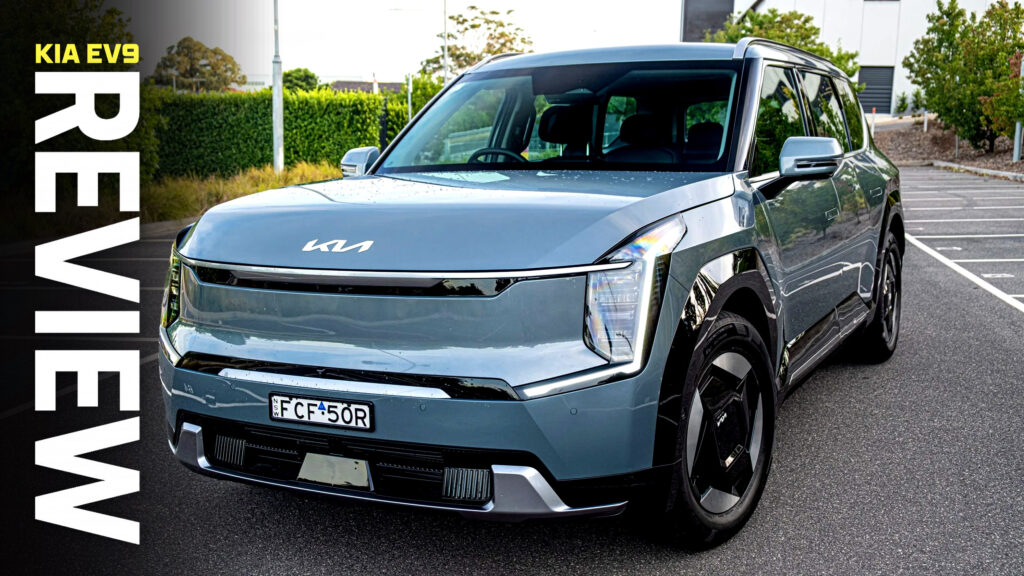
PROS ›› Great power, extremely spacious, refined CONS ›› Ioniq 9 is more luxurious, expensive, inefficient

Kia’s EV9 arrived in Australia two years ago as the first fully electric SUV with three rows, and it didn’t try to blend in. The styling leaned hard into concept car territory, all sharp edges and presence, and it marked a turning point for the Korean brand as it pushed further upmarket. Locally, it wasn’t just another launch. It felt like a statement piece, and arguably the most important model Kia had put its name on in years.

In the two years since its launch, the segment hasn’t exactly exploded into life. Australia’s three-row EV space is still oddly thin, with only the Volvo EX90 and the sorted Hyundai Ioniq 9 joining the conversation so far. There’s also the looming arrival of the seven-seat Tesla Model Y L, which technically has three rows, in the same way a folding chair technically counts as living room furniture.

Review: The 2026 Ioniq 9 Calligraphy’s Biggest Threat Is Hyundai Itself

The question is, two years on, does the EV9 still hold the same appeal it had when it first launched, or has it been overshadowed by some of the newer competition? We spent a week with the mid-range Kia EV9 Earth to see where it now stands.

QUICK FACTS
› Model:2026 Kia EV9 Earth
› Starting Price:AU$119,273 ($84,231)
› Dimensions:197.2 L x 78 W x 69.1 in H (5,010 x 1,980 x 1,755 mm)
› Wheelbase:122 in wheelbase (3,100 mm)
› Curb Weight:2,552 kg (5,626 lbs)
› Powertrain:Dual electric motors / 99.8 kWh battery
› Output:380 hp (283 kW) / 516 lb-ft (700 Nm)
› 0-62 mph6.0 seconds
› Transmission:Single speed
› Efficiency:23 kWh/100 km as tested
› On Sale:Now
SWIPE

Local prices for the EV9 have remained steady since the model’s introduction. While this is a good thing, it still remains pricey. The range starts with the Air, priced from AU$106,404 ($75,100) when factoring in all the on-road costs and fees, while the Earth we lived with kicks off from AU$119,273 ($84,231).

Then there’s the performance-focused GT, set to arrive shortly and expected to start just shy of AU$150,000 ($106,000). At that point, you’re not just shopping for a big electric SUV. You’re making a fairly serious financial statement.

\\\\\\\\\\

Photos Brad Anderson/Carscoops

There’s a lot to like about the mid-range EV9 Earth on paper. It uses the same powertrain as the GT-Line, meaning there’s a 99.8 kWh battery pack and a pair of electric motors boasting 283 kW (380 hp) and 700 Nm (516 lb-ft) of torque. By comparison, the base model has a smaller 76.1 kWh pack and just a single, rear-mounted electric motor.

Kia quotes a solid driving range of 512 km (318 miles) in the EV9 Earth, the most of any model, as well as a 0-100 km/h (0-62 mph) time of 6.0 seconds. This is down from the GT-Line’s 5.3-second time and likely has to do with some electronic trickery, given it has the same powertrain.

Spacious, Functional, But A Bit Drab Interior

\\\\\\\\\\\

Photos Brad Anderson/Carscoops

Given the large footprint of the EV9, it should come as no surprise that the interior is absolutely vast. It’s a proper seven-seater – or six-seater when configured with the captain’s chairs – yet you quickly get used to the size of it.

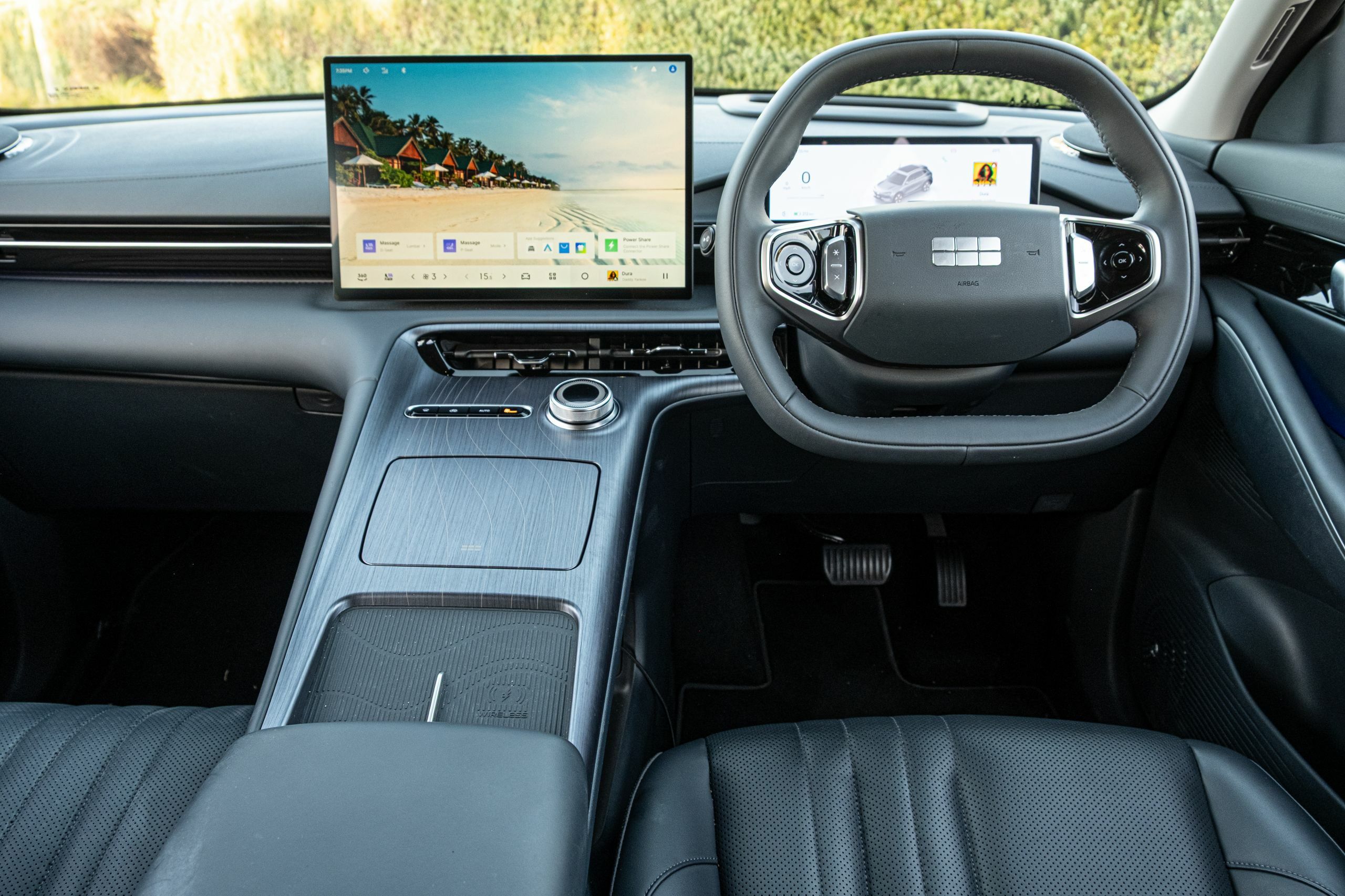
Like other EV9 variants, as well as many other Kia EVs, the dashboard is dominated by a 12.3-inch infotainment display, a 5-inch climate control panel, and a 12.3-inch digital gauge cluster.

The implementation of the climate control screen leaves a little to be desired. It’s sandwiched between the two larger displays and is completely blocked by the rim of the steering wheel. Fortunately, Kia has included physical switches for the temperature and fan speed further down on the dash, so I very rarely had to use the screen to make adjustments. Even still, we’d prefer a narrow, horizontal display below the air vents for the climate settings.

\\\\\\\\\\\\

Photos Brad Anderson/Carscoops

Just a few months ago, we drove the Hyundai Ioniq 9, a vehicle that shares its underpinnings with the EV9. Australia only gets that model in flagship Calligraphy guise, priced from AU$128,413 ($90,700), and while it’s more expensive than the EV9 Earth, the interior feels far plusher.

This isn’t to say the cabin of the EV9 is a disappointment. In fact, it’s very nice. But, whereas Hyundai has used a host of different colors, materials, and shapes in the Ioniq 9, the cabin of the EV9 is rather drab, offered exclusively with black artificial leather. There are no metal accents, or even faux metal parts, and instead just a bunch of leather (which isn’t particularly soft), small pieces of fabric on the dashboard and door panels, and plenty of black plastic. We’d expect more at this price point.

Functionally, the interior is great. Wireless Apple CarPlay and Android Auto come standard, although the Earth misses out on the head-up display of the GT-Line. It also does without Parking Collision Avoidance Assist – Forward, Kia’s relaxation seats, dual sunroof, rear privacy glass, small cube LED headlights, alloy sport pedals, premium door scuff panels, second-row sun blinds, and a 14-speaker Meridian sound system. Instead, it makes do with an 8-speaker system that’s adequate, but not particularly inspiring.

\\\\\\\\\\\\\\\\\\\\\\\\

Photos Brad Anderson/Carscoops

There’s no knocking the space or comfort on offer, however. The front seats are great, as are the ultra-soft headrests. There are also plenty of charging ports, as well as heated and ventilated functions for the front seats.

Similarly, the second-row is incredibly spacious with ample legroom and headroom, even in the middle seat. Thanks to the upright roofline, there’s even plenty of headroom at the rear and slightly more than in the Ioniq 9. Cargo space is also good, with 828 liters (29.2 cubic feet) if the third row is folded down, and 2,318 liters (81.8 cubic feet) if the second- and third-row seats are folded away.

A GT Badge Isn’t Needed For Performance
 Kia’s 2026 EV9 Earth Gets The Hard Part Right And Stumbles On The Obvious One | Review

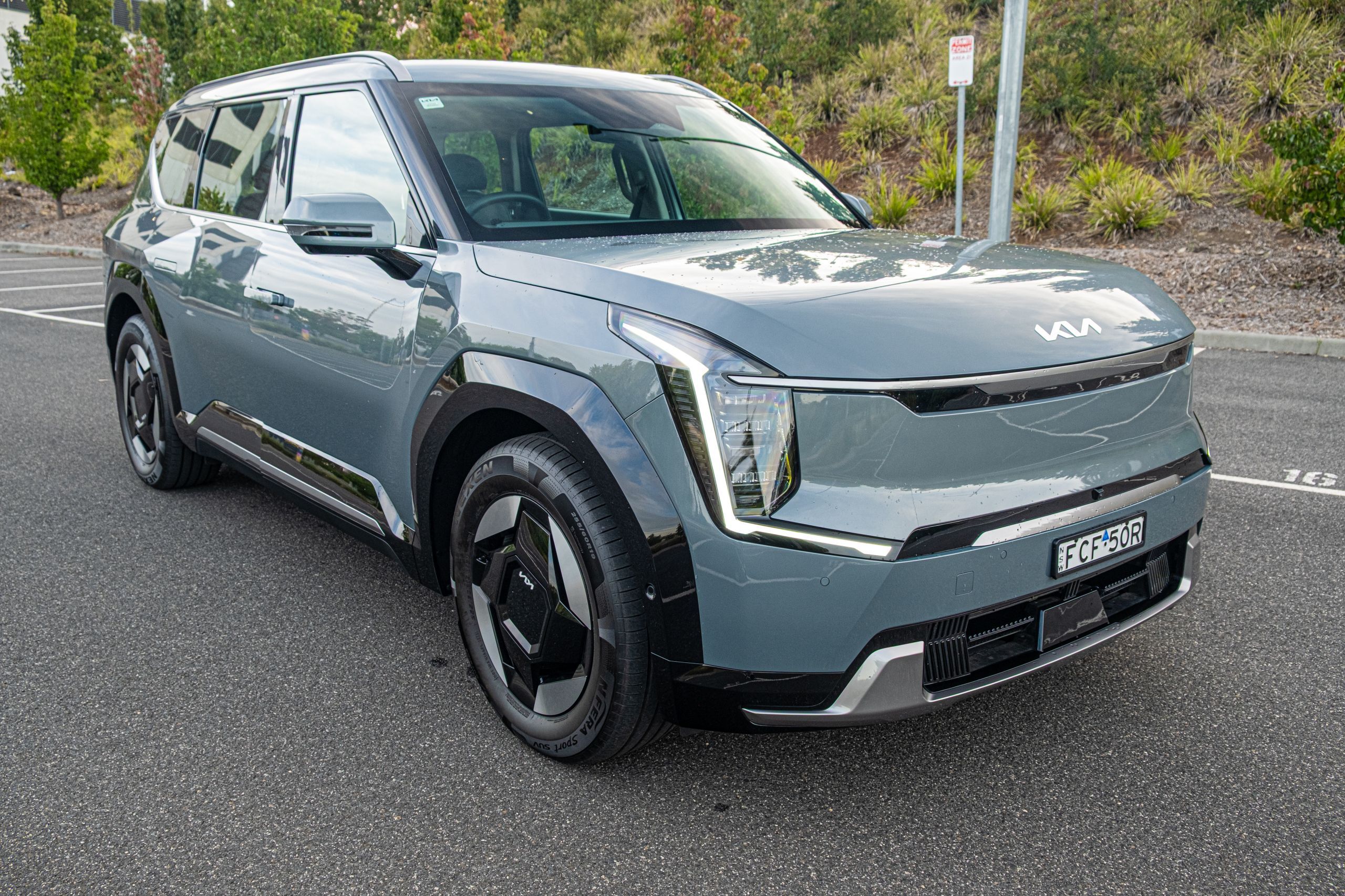
While the Kia EV9 Earth isn’t marketed as a sporty SUV, unlike the GT-Line and GT models, it certainly has a sporty edge to it.

Unlike the Ioniq 9 Calligraphy, which has more power than all EV9 models bar the flagship GT, the EV9 doesn’t waft down the road quite the same. Instead, it rides noticeably firmer and has a more dynamic edge to it. This isn’t to say it feels like an out-and-out performance car, because it doesn’t, but it’s clear Kia’s engineers were eager to create something that driving enthusiasts like ourselves would appreciate.

It’s very common for big EVs to ride quite firmly – hardly a surprise given how heavy they can be. While the EV9 does lean towards firmness rather than suppleness, even in Earth configuration, it still remains comfortable and soaks up bumps nicely, almost as well as a high-priced European rival.

\\\\\\\\\\\

Photos Brad Anderson/Carscoops

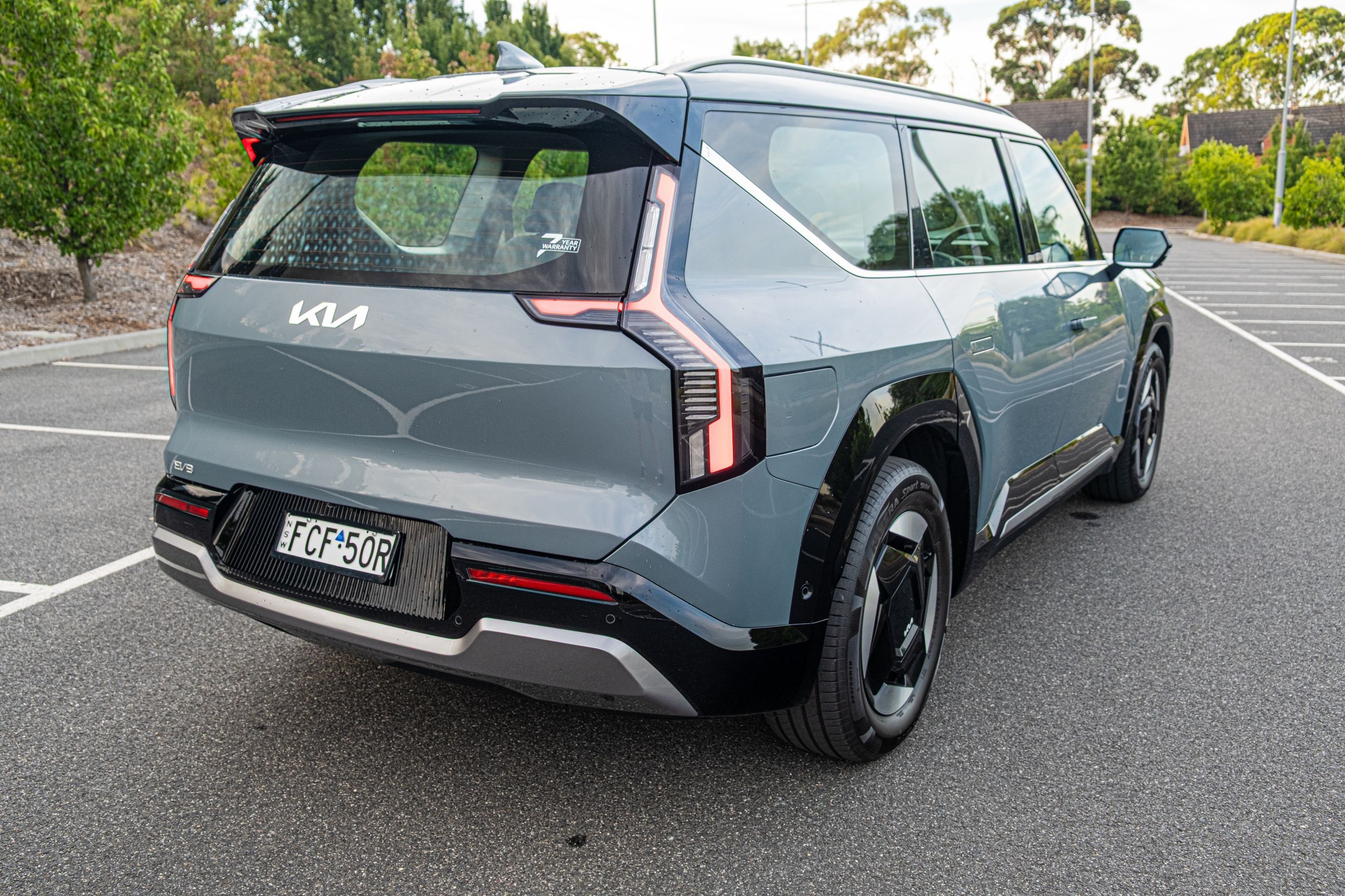
Thanks to the suspension setup, the EV9 handles surprisingly well and offers a tremendous amount of grip given its size. The Nexen tires aren’t the most premium option, given the SUV’s hefty price tag. By comparison, the GT-Line rocks Continental rubber. Kia has done a commendable job of keeping the cabin quiet, eliminating any excessive tire or wind noise, even though the EV9 has a front area like a semi-truck.

Read: 2026 Kia EV9 GT Is A Family Hauler With Fake Gear Shifts That Hits 60 In 4.3 Seconds

The steering has a nice weight, even though it’s largely devoid of feel. Similarly, the brakes have been well-tuned, and there’s no noticeable crossover between the regenerative braking and the mechanical units. Like other Hyundai and Kia EVs, the regen can be adjusted on the fly with the paddle shifters.
 Kia’s 2026 EV9 Earth Gets The Hard Part Right And Stumbles On The Obvious One | Review

Annoyances with the EV9 are few and far between, although the driver monitoring system is a little overactive, beeping and flashing even if you just take your gaze away from the road for a moment, even if that’s just to look in the mirrors. In addition, the multimedia shortcut buttons, incorporated into the dash with haptic buttons similar to what’s found in the Nissan Ariya, are very hard to use on the move.

The EV9’s 800-volt electrical architecture means the battery pack can be charged from 10-80 percent in just 24 minutes, which is impressive given the 99.8 kWh pack is quite sizeable. Yes, there are some Chinese brands that have pushed charging speeds to new levels in recent years, but the EV9 is more than adequate in this department.

In news that won’t surprise you, efficiency leaves a little to be desired. Kia quotes 22.3 kWh/100 km, but we ended up averaging 23 kWh/100 km, and that was driving almost exclusively in the Eco mode, always in one-pedal driving on a mix of urban roads and highways.

Verdict

\\\\\\\\\\\\\\\\

Photos Brad Anderson/Carscoops

The Kia EV9 has been a relatively strong performer for the brand ever since it was launched. In Australia, 269 examples were sold last year, and while that was down 50 percent from the year prior, it did outsell the Volvo EX90, which shifted 209 units. In the US, sales have been in freefall since the $7,500 federal EV tax credit was scrapped, and in 2025, 15,051 were sold, down from 22,017 the year prior.

Should Kia be panicking? Probably not. The market for all-electric, three-row SUVs will never be huge, and a drop in demand doesn’t mean the EV9 has somehow become less appealing since its introduction. Indeed, it is just as good now as it ever was.

However, not only does it have to deal with competition from within the Kia stable, such as from the Sorento and the Telluride, but shoppers also need to be convinced to buy it over the Hyundai Ioniq 9 which is better, even if it costs a little more. Like so many other EVs, it will likely remain most appealing to those only interested in owning an electric vehicle, not necessarily a spacious seven-seat SUV that provides the best value for money. If you’re still after that, Kia’s hybrid alternatives might be a better option.
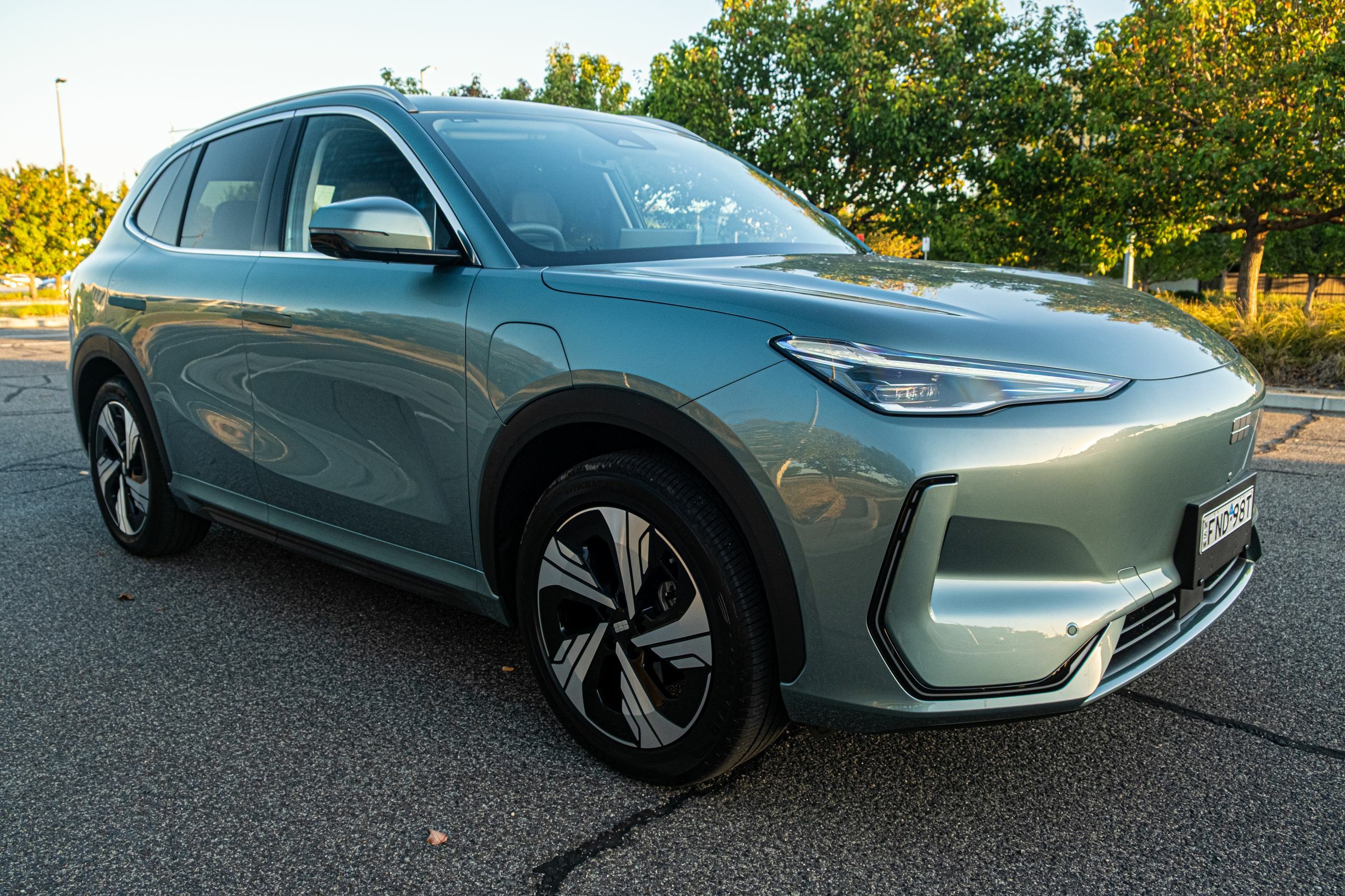
\\\\\\\\\\\\\\\\\\\\\\\\\\\\\\\\\\\\\\\\\\\\\\\\\\\\\\\\\\\\\\\\\\\\\\\\\\\\\\\\\\\\\\\\\

Photos Brad Anderson/Carscoops

Two Things Bother Us About The 2026 Geely EX5, But The Price Tag Kills Both | Review

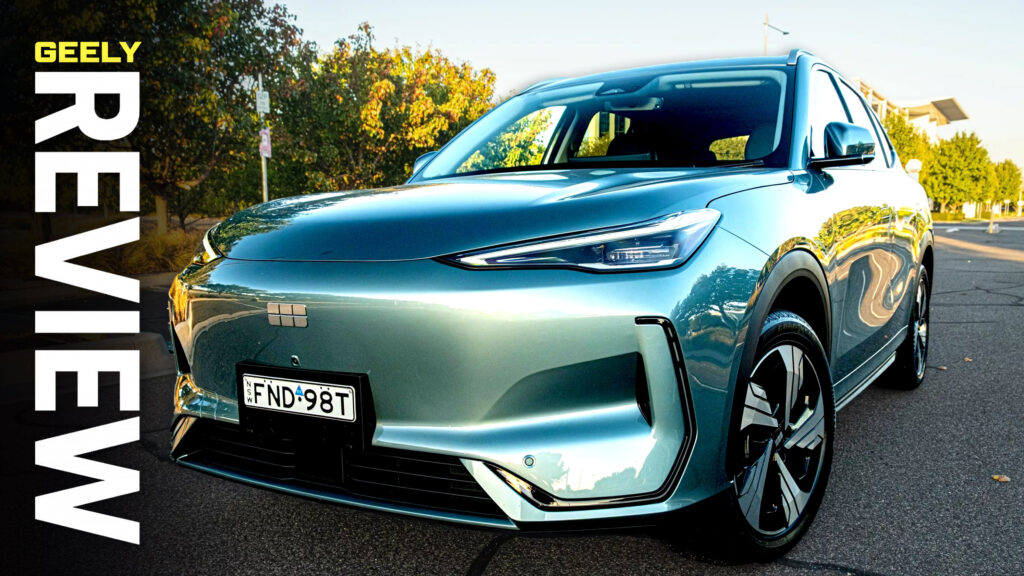
PROS ›› Sleek looks, cheap, efficient, comfortable ride CONS ›› Annoying safety tech, smallish trunk, not fun to drive

The all-electric SUV space has transformed at a remarkable pace in recent years, shifting from niche curiosity to mainstream battleground. Over the past five years in particular, growth has been rapid, driven in no small part by a surge of ambitious entrants from China.

If you’re a Carscoops regular, you’ll no doubt be familiar with all of the new and compelling EVs coming out of the People’s Republic. It’s bad news for those living in the US, as none of them are available, but across Europe, Asia Pacific, and elsewhere, these EVs have forced legacy carmakers to up their game and cut prices, which is great news for consumers.

Read: Geely’s Swimming Defender Wants Land Rover’s Lunch

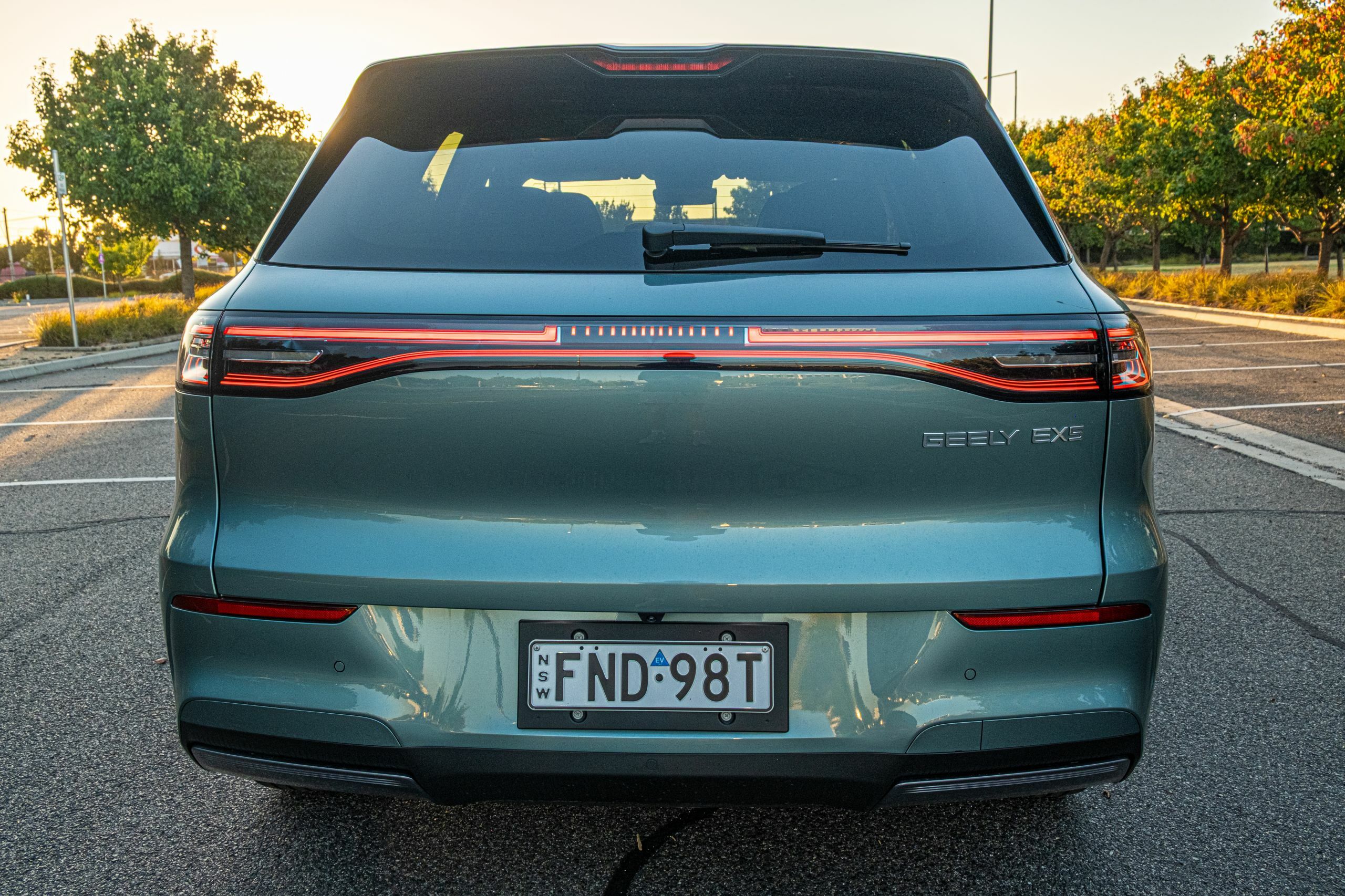
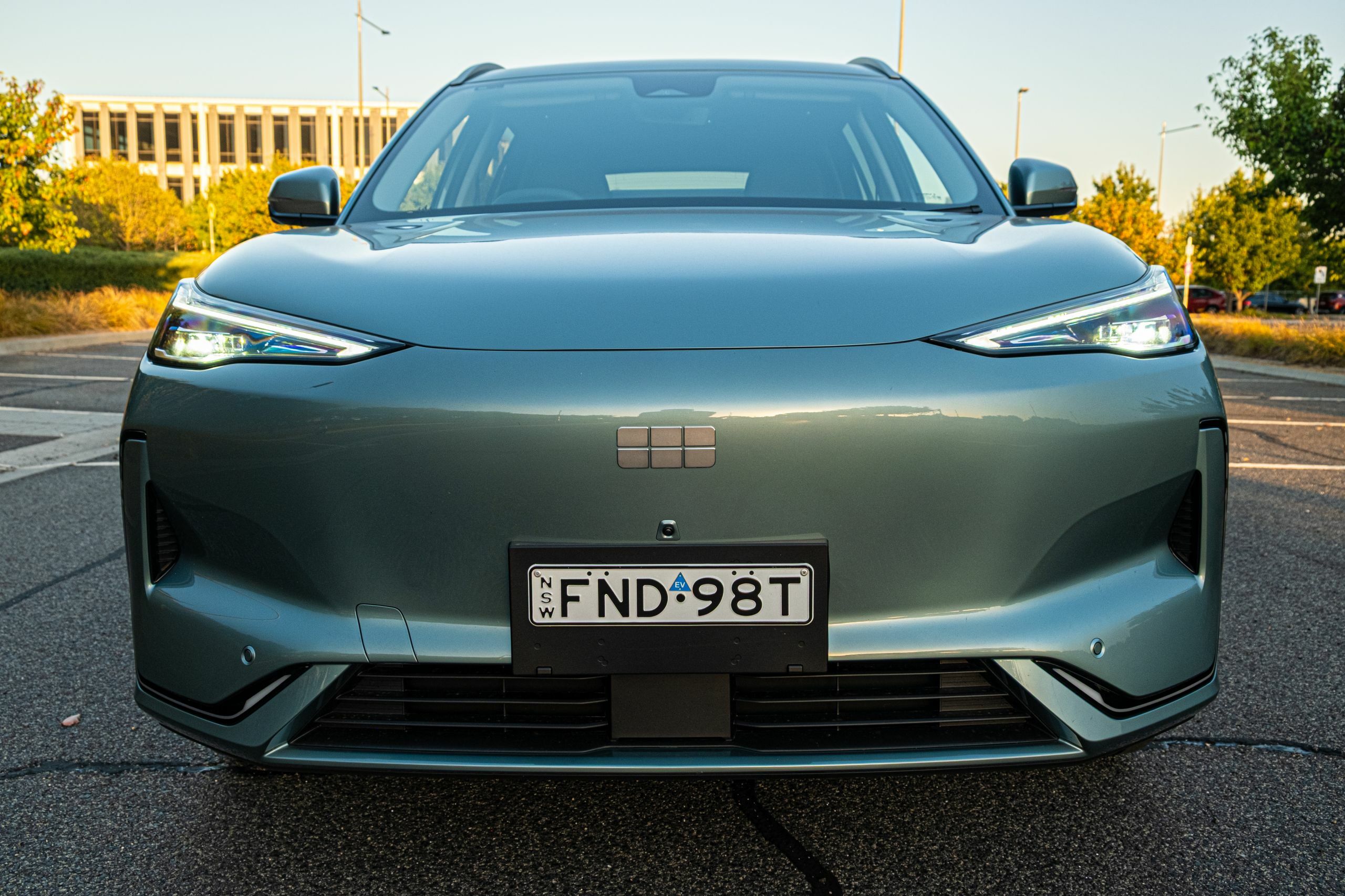
One of the country’s key players is the Geely Group, which continues to expand the reach of its core brand alongside a portfolio that includes Lotus, Volvo, Polestar, and Zeekr. In markets such as Australia, its most significant new EV is the Geely EX5, aimed squarely at the Tesla Model Y and competing Chinese models like the Xpeng G6 and BYD Sealion 7. It may not turn many heads or deliver an especially engaging drive, but it does tick loads of boxes.

QUICK FACTS
› Model:2026 Geely EX5 Inspire
› Starting Price:AU$45,990 ($32,500)
› Dimensions:181.7 L x 74.8 W x 65.7 in H (4,615 x 1,901 x 1,670 mm)
› Wheelbase:108.3 in (2,750 mm)
› Curb Weight:1,765 kg (3,212 lbs)*
› Powertrain:60.2 kWh battery / single electric motor
› Output:215 hp (160 kW) / 236 lb-ft (320 Nm)
› 0-62 mph6.9 seconds*
› Transmission:Single-speed
› Efficiency:16.2 kWh/100 km*
› On Sale:Now
SWIPE

*Manufacturer

\\\\\\\

Photos Brad Anderson/Carscoops

What Do You Get For Your Money?

Two versions of the Geely EX5 are currently available in Australia – the Complete and the Inspire. Last month, we lived with the flagship Inspire for a week. Prices start at AU$41,990 ($29,600) for the Complete and rise to AU$45,990 ($32,500) for the Inspire, which translates to AU$50,061 ($35,300) when factoring in on-road costs.

Neither the Complete nor the Inspire offers any optional extras. All customers must choose from one of six available paint finishes and two available interior colors.

The EX5 is slightly smaller than a Tesla Model Y and BYD Sealion 7, but it’s also considerably cheaper. The new Model Y Premium Rear-Wheel Drive starts at AU$58,900 ($41,600), a difference of AU$16,910 ($12,000), while the larger Sealion 7 kicks off from AU$54,990 ($38,800). The EX5 also undercuts the Xpeng G6, starting at AU$54,800 ($38,700), and the Leapmotor C10, priced from AU$47,990 ($33,900).

 Two Things Bother Us About The 2026 Geely EX5, But The Price Tag Kills Both | Review

The EX5 is based on Geely’s GEA architecture and features a compact 60.2 kWh lithium-iron phosphate battery pack with a single electric motor driving the front wheels. Both versions deliver the same 160 kW (215 hp) and 320 Nm (236 lb-ft) of torque.

Due to the small battery pack, the 430 km (267 miles) quoted range of the Complete and the 410 km (255 miles) driving range of the Inspire aren’t all that impressive, but the EX5 does promise to be pretty efficient, averaging as low as 15.8 kWh/100 km.

A Sleek Cabin

\\\\\\\\\\\\\\

Photos Brad Anderson/Carscoops

I stepped into my week with the EX5 just after handing back the keys to Geely’s new Starray EM-i plug-in hybrid. From behind the wheel, the two look and almost feel the same, which is certainly no bad thing.

The EX5’s basic dashboard, steering wheel, door panels, and floating center console are all virtually identical to the Starray. While it’d be nice to have a little more differentiation between the two models, I can’t imagine there’ll be any EX5 buyers not completely satisfied with the fit and finish of the cabin.

Perched in the center of the dashboard is a 15.4-inch infotainment display using Geely’s Flyme OS. It’s an excellent system, using a snappy processor and having logical and easy-to-understand menus. I especially liked the ability to customize which functions remained fixed to the taskbar at the base of the screen, such as temperature controls, fan speed, and seat adjustments.

 Two Things Bother Us About The 2026 Geely EX5, But The Price Tag Kills Both | Review

A large 10.2-inch digital cluster is also used. Just like in the Starray EM-i, only the right side of it can be configured to display things like your media and trip functions. The rest of the screen remains unconfigurable.

Review: The 2026 Geely Starray EM-i Undercuts RAV4 By $5K And Feels Twice The Price

Our tester had the available black interior finish, and it felt more premium than the price tag would suggest. There are some areas with piano black plastic, including the steering wheel and parts of the door panels, but Geely hasn’t gone overboard with them. Found on the floating center console are climate-control shortcuts and a configurable scroll wheel.

The Good And The Bad

\\\\\\\\\\\\\\\\\\\\\\\\\

Photos Brad Anderson/Carscoops

Sliding into the driver’s seat for the first time, I was relieved that the faux leather felt very real and was beautifully soft to the touch. However, I was disappointed that, like in the Starray, there is no ability to adjust the lumbar support. This is an odd exclusion, particularly given that Geely has gone to the trouble of fitting ventilated, heated, and massaging front seats.

Speaking of the massage seats, they are superb and remarkably forceful, unlike most other cars in this price range with massage seats.

When launched, the EX5 only included wireless Apple CarPlay, but no Android Auto connectivity. Thankfully, our test car benefited from a software update just before we collected it, adding wireless Android Auto, which worked seamlessly. The Inspire also comes standard with a panoramic sunroof and a solid 16-speaker audio system.

Externally, the EX5 looks quite small, but much to my surprise, there’s plenty of room for adults in the second-row, including plenty of legroom and headroom. However, it seems Geely has robbed some cargo volume to make the rear seats as spacious as they are.

As such, there’s just 302 liters (10.6 cubic feet) of space in the rear, although this does increase to 410 liters (14.5 cubic feet) if you include the generous under-floor storage area. Fold the seats down, and you’re looking at 1,877 liters (66.2 cubic feet), or about 200 liters (7 cubic feet) less than the Starray.

Smooth And Sharp

\\\\\\\\\\\\\

Photos Brad Anderson/Carscoops

Spend any amount of time behind the wheel of the EX5, and it’s obvious that it feels just as polished as some of the more expensive competition.

As an EV like this should, it’s quiet on the open road, but it does have an especially loud pedestrian warning hum when driving at lower speeds. Figures of 160 kW (215 hp) and 320 Nm (236 lb-ft) are largely par for the course for a vehicle like this, and just so happen to be identical to the recently-launched Hyundai Elexio.

Review: Hyundai’s Chinese 2026 Elexio Gets So Much Right, And That’s The Frustrating Part

Power feels absolutely adequate. Were this a combustion-powered SUV, it may feel a little underpowered, but as all of the grunt is available the moment you stab the throttle, the EX5 gets going surprisingly well. Indeed, it can hit 100 km/h (62 mph) in 6.9 seconds, which is very respectable. Geely has also done a good job of ironing out any hints of torque steer under hard acceleration.

 Two Things Bother Us About The 2026 Geely EX5, But The Price Tag Kills Both | Review

Efficiency is also good. I averaged 16.2 kWh/100 km during my time with it, a lot better than I recently averaged in the larger and admittedly heavier Hyundai Elexio.

The ride also feels polished and plush, and that’s not something that can be said about many EVs. Given these vehicles have heavy battery packs in the floor, carmakers often give them quite harsh suspension setups. That’s not the case here as the EX5 eases over bumps smoothly and comfortably. Similarly, the steering is light and direct with several different settings to tweak the weighting.

What Could Be Improved?

\\\\\\\\\\\\\

Photos Brad Anderson/Carscoops

Just like we found in the Starray, most of the frustrations with driving the EX5 can be traced back to overzealous safety systems, like the speed limit warning and the driver monitoring system. In the more expensive Zeekr 7X, also from the Geely Group, these systems can be easily and quickly disengaged by swiping down from the top of the central screen and pressing on the large shortcut settings. Additionally, they stay off, even after you’ve left the car.

Things aren’t so easy in the EX5, as you have to dive into the menu in a process that can take 10-15 seconds. Whenever I would get ready to drive off, I’d have to disable them. It’d be nice to see Geely tap some of Zeekr’s UX engineers on the shoulder for some advice on how to incorporate similar shortcut toggles.

Is the EX5 particularly fun or engaging to drive? No, as it simply doesn’t have the performance or suspension setup to thrill, but it handles well, thanks in large part to the fact that it’s relatively light.

Shortly after we returned the keys to our 2025 model, Geely presented the 2026 EX5 in Australia, complete with a slightly larger 68.39 kWh battery, but retaining the same 160 kW (215 hp) front-mounted motor. In the future, we’d like to see Geely broaden the EX5’s appeal further, perhaps by launching a more powerful all-wheel drive version.

 Two Things Bother Us About The 2026 Geely EX5, But The Price Tag Kills Both | Review

Verdict

As it stands, the Geely EX5 is a very solid choice for those in the market for an all-electric, mid-sized SUV. While it’d be nice for some of the safety systems to be calibrated more accurately, the minor niggles they have aren’t a deal-breaker.

For growing families, the EX5 could prove to be a little too small, so it would be best suited to couples and those with young children. It’s well-priced, reasonably efficient, and comfortable to drive daily. However, even though the model we drove is known as the EX5 Inspired, it felt a little uninspired and isn’t the type of vehicle that tugs at the heartstrings, as is the case with a number of alternatives.

\\\\\\\\\\\\\\\\\\\\\\\\\\\\\\\\\\\\\\\\\\\\\\\\\\\\\\\\\\\\\\\\\\\\\\\\\\\\\\\\

Photos Brad Anderson/Carscoops

BMW’s Most Traditional Sedan Becomes Its Most Futuristic Yet With New i3

  • BMW’s i3 brings Neue Klasse platform and design to the all-new 3-Series sedan.
  • 800-volt tech brings 440-mile range, blistering charging, and 463 hp via dual motors.
  • Cabin goes full sci-fi with pillar-to-pillar head-up display and angled touchscreen.

It’s over a decade since the original i3 hatch arrived to kick-start BMW’s electric journey. That quirky little compact is long gone, but now the i3 badge is back on another, very different EV that’s even more important. The new i3 is the first electric 3-Series offered outside of China and everything from the way it looks, to the way it’s powered, to the way drives, is all new.

Also: The Next ICE 3-Series Shares BMW’s Future Look, But Not The Same Foundations

Petrol fans will have to wait a few more months for their new G50 3-Series, a gas-powered range of sedans that looks very much like this one but rides on an updated version of today’s CLAR platform. Today, we only get to meet the NA0-code electric version, based around BMW’s Neue Klasse EV architecture, but much of what we’re learning about the design and the interior will also apply to the ICE car.

Longer, Wider, Lower, Hotter

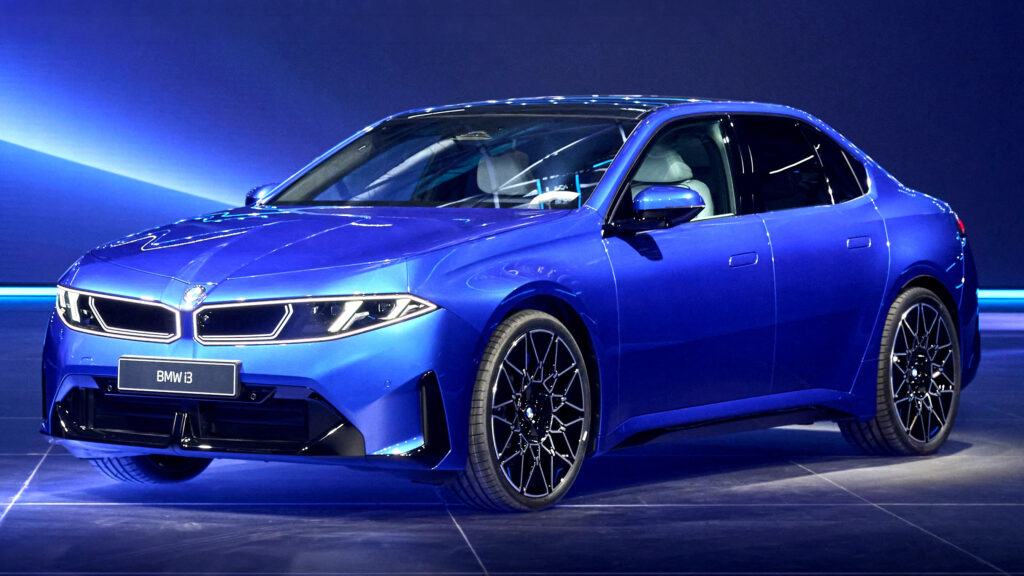
From the outside, the new i3 looks like a careful balancing act between familiar and futuristic. It’s not quite as lean as the various concepts that have previewed the look over the past few years, but it’s fresh, modern and has a kind of angular solidity that reminds us of the 1990s E36 with some E46 curves thrown in.

The front end gets the brand’s new visor face, along with a grille and lighting setup blended into one, as previously seen on the i3’s SUV brother, the iX3. And the side view reveals cleaner, unfussy surfaces with flush door handles and muscular swollen fenders even on the mid-ranking xDrive 50 launch model. Plus there’s a new assertive take on the classic Hofmeister C-pillar kink.

\\\\\\\\\\\\\\\\\\

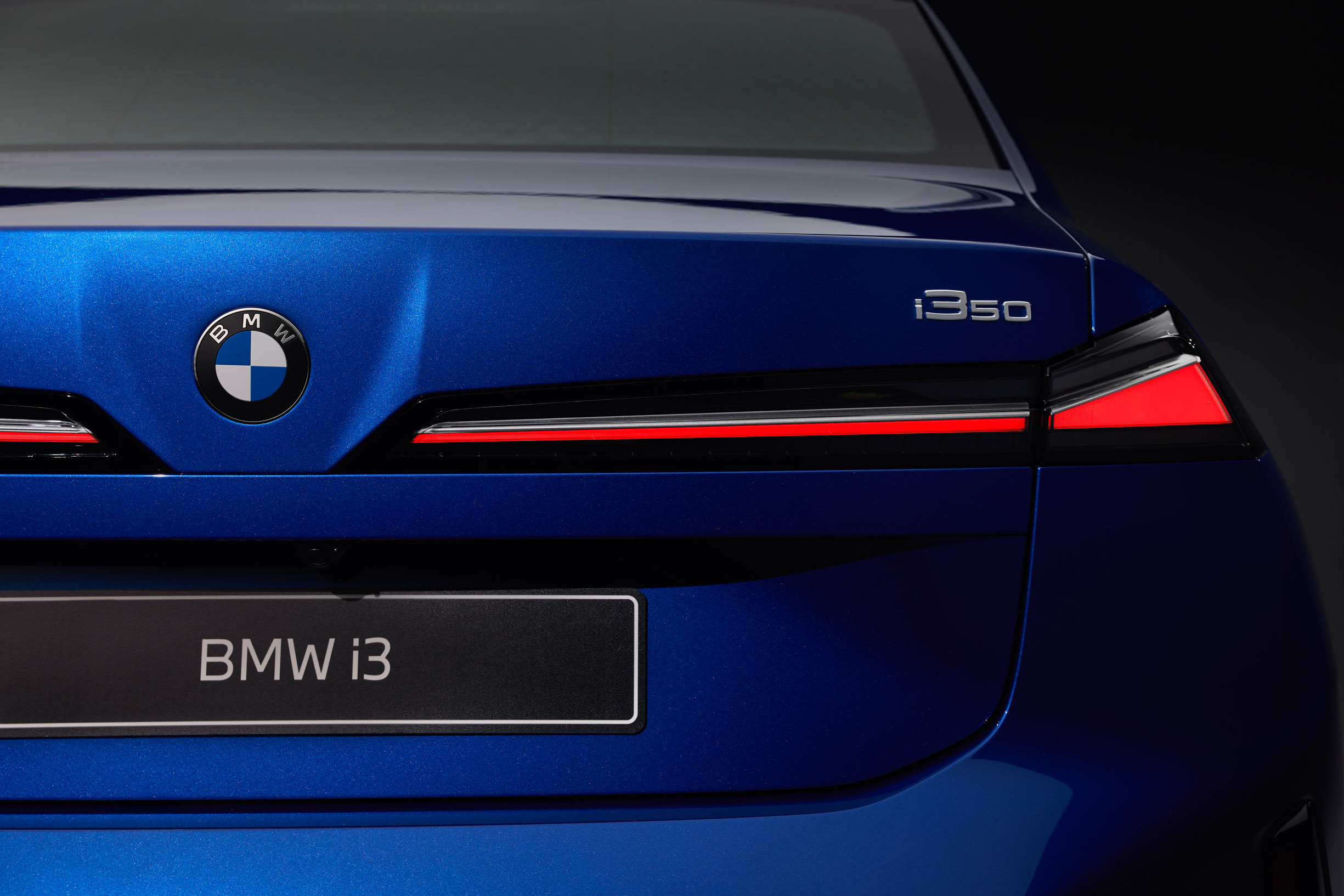
At the rear, the lights stay horizontal and reach into the shoulders and across the trunk lid to emphasize width. And you’ve probably noticed the strong new paint option. It’s called M Le Castellet Blue metallic, and is sure to be a massive hit. What doesn’t stand out as much from these images is that the 187.4-inch (4,760 mm) i3 is 1.8-inches (47 mm) longer, 1.5 inches (37 mm) wider, and 1.4 inches (36 mm) taller than the current gas-powered 3-Series in 330i xDrive form.

The 114.1-inch (2,898 mm) wheelbase is also 1.9 inches (47 mm) longer than the MY26 G20’s, although it still mostly retains traditional rear-drive sedan proportions. We say mostly, because the short distance between the front wheel-well opening and the driver’s door is a clue that there’s something very different going on under the hood.

2027 BMW i3 vs 2026 3-Series Sedan
DimensionNew i3330i xDriveDifference
Length187.4 in (4,760 mm)185.6 in (4,713 mm)+1.8 in (47 mm)
Width73.4 in (1,864 mm)71.9 in (1,827 mm)+1.5 in (37 mm)
Height58.3 in (1,481 mm)56.9 in (1,445 mm)+1.4 in (36 mm)
Wheelbase114.1 in (2,898 mm)112.2 in (2,851 mm)+1.9 in (47 mm)
Track (F)63.2 in (1,605 mm)61.9 in (1,573 mm)+1.3 in (32 mm)
Track (R)63.5 in (1,613 mm)62.4 in (1,587 mm)+1.1 in (26 mm)
SWIPE

Panoramic Dashboard

Inside, BMW seems determined to make the i3 feel like a concept car that accidentally made production. The cabin, which again borrows heavily from the iX3 SUV, features a wraparound-effect dashboard that runs into the door panels, large glass areas, and a standard panoramic roof, all of which should ensure life onboard feels less cave-like than in too many current cars.

The iX3’s controversial four-spoke steering wheel makes an appearance, and the central display is angled toward the driver, which is a nice reminder that somebody in Munich has been paying attention to 3-Series history.

\\\\\\\\\\\\\\\\

The seats also sound promising, with even the standard chairs said to offer decent support as well as comfort, while optional multifunction seats and M Sport seats add extra lateral stick and a bit more theater. There are multiple interior themes, from leather-like materials to more upscale hides, and BMW says that buyers at the other end of the grade structure get cloth upholstery made from recycled fabrics, part of an i3 sustainability push that resulted in recycled materials being used for the wheels, bumpers and more.

Practicality hasn’t been ignored, either. The center console includes storage, wireless charging, and proper physical buttons for important stuff like the parking brake and hazards. But we’d like to see a few more non-digital buttons for other regularly-used functions, a philosophy VW is now employing on its newest EVs.

Infotainment And Tech

 BMW’s Most Traditional Sedan Becomes Its Most Futuristic Yet With New i3

Now for the part where the i3 goes full spaceship. BMW’s new Panoramic IDrive combines a pillar-to-pillar lower windshield display, a massive 17.9-inch central infotainment screen, an optional 3D head-up display, and a new multifunction steering wheel with illuminated controls that only appear when needed.

That’s a lot, but BMW insists it’s all meant to reduce distraction rather than create it. Key information sits in the driver’s line of sight, while the central screen handles the rest. Widgets can apparently be dragged and dropped between displays, which sounds a bit like setting up your phone’s home screen, so should be intuitive. Voice control gets a major upgrade, too, using Amazon Alexa+ tech for more conversational responses and better access to cloud services.

BMW also says up to seven users can store their own profiles through a BMW ID, with settings for displays, seats, media, and more. So yes, your car now knows your name, your favorite songs, and probably your preferred ambient lighting color.

Powertrain

 BMW’s Most Traditional Sedan Becomes Its Most Futuristic Yet With New i3

Underneath all the flashy design language and digital fireworks, the hardware is deadly serious. For now we’re only getting details on one model, the i3 50 xDrive, whose spec closely mirrors that of the iX3 xDrive50. That means dual motors, one on each axle, good for a combined 463 hp (469 PS / 345 kW) and 476 lb-ft (645 Nm) of torque.

You’ll no doubt be pleased to hear that the rear axle does most of the heavy lifting with an electrically excited synchronous motor, while the front gets an asynchronous motor to help with traction and overall efficiency. BMW says this combo cuts energy losses, reduces weight, and lowers manufacturing costs compared with the old setup.

Related: BMW Confirms i3 Touring To Help Make Wagons Great Again

\\\\\\\\\\\\\

More importantly, BMW keeps talking about how this car should drive. The new Heart of Joy control system manages drive, brakes, some steering functions, and recuperation, and supposedly reacts 10 times faster than previous systems. It sounds overly tech but BMW says it makes the car feel sharper, more predictable, and more natural on the move. There’s also a new five-link rear axle, standard stroke-dependent dampers, anti-roll bars with highly preloaded bearings, and an optional adaptive suspension setup.

Battery, Range, Charging

 BMW’s Most Traditional Sedan Becomes Its Most Futuristic Yet With New i3

The i3 uses BMW’s sixth-generation eDrive setup, with an 800-volt architecture, cylindrical battery cells, and cell-to-pack construction. That means better energy density, flatter packaging, and up to an excellent 440 EPA miles (708 km) or 559 WLTP ones (900 km) on its preliminary test numbers. DC fast charging tops out at 400 kW, which is seriously punchy, allowing you at add 249 miles (400 km) in just 10 minutes.

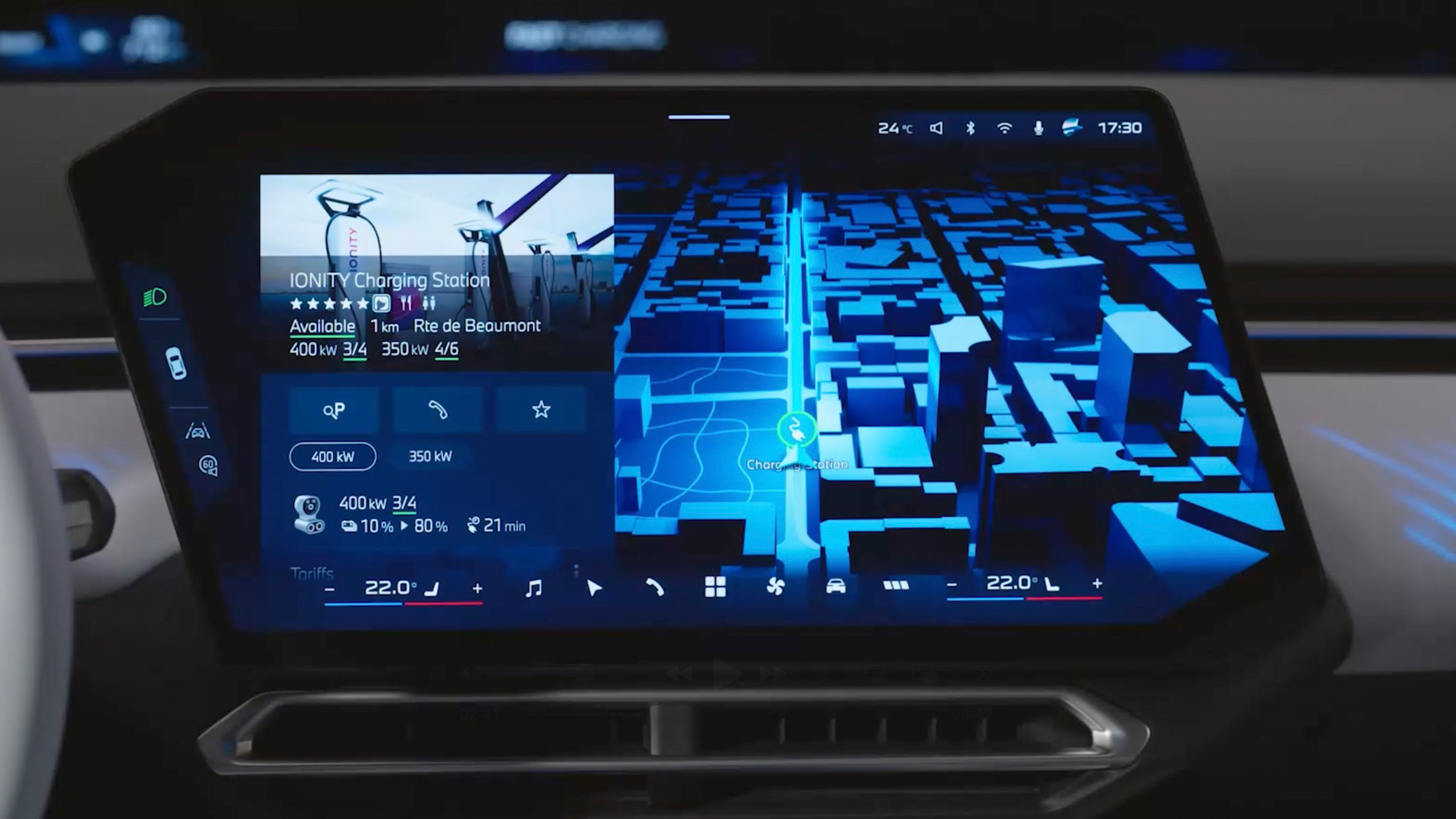
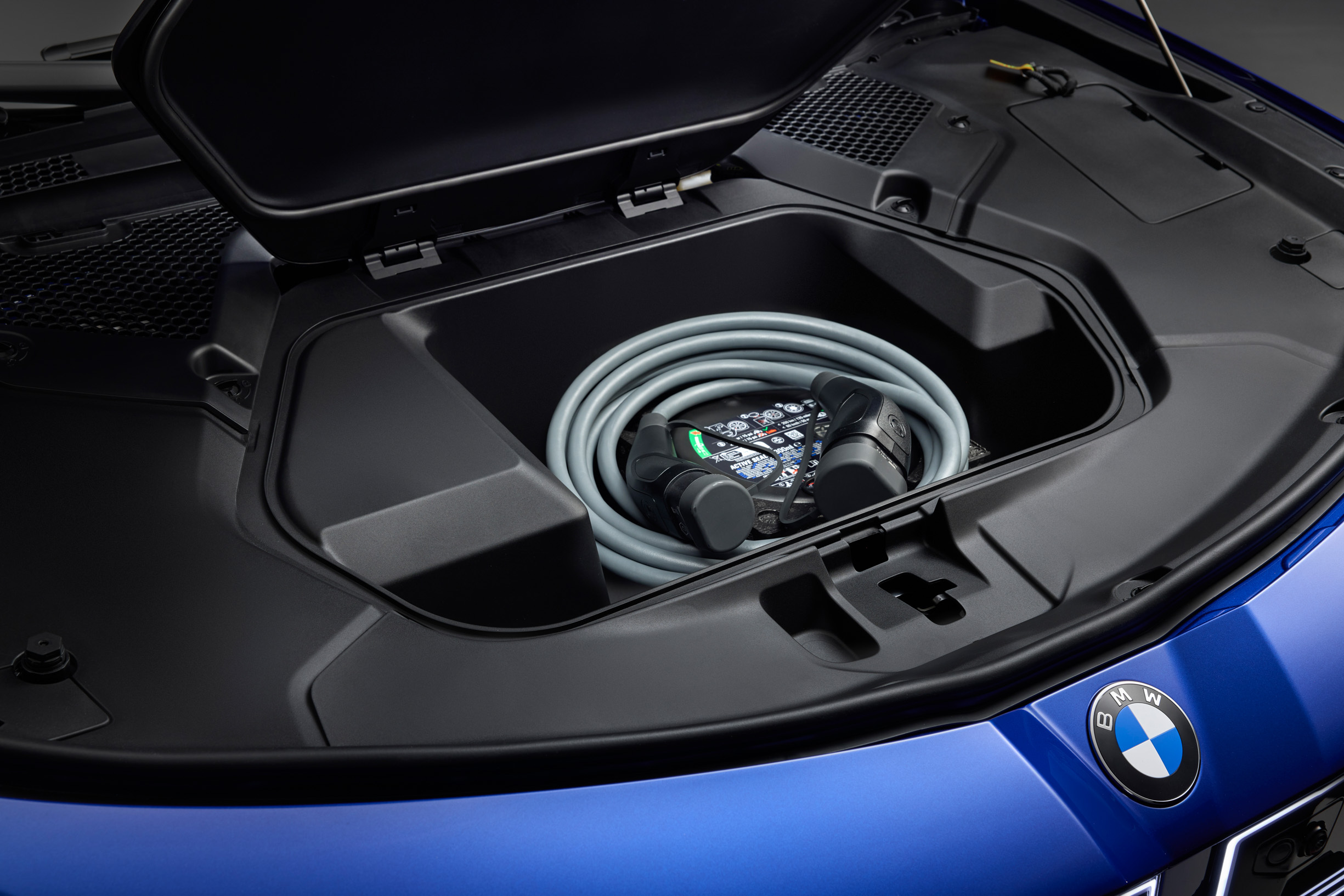
And like any self-respecting modern EV, the i3 gets bidirectional charging, so it can power appliances, help run a house, or send energy back to the grid. The charging flap even opens automatically when the car figures out you’re approaching a charger, and closes again by itself once you’ve finished charging. BMW’s route planning also factors in charging stops, station availability, costs, and nearby amenities. And in case wondering, yes, there’s a small frunk for a charging cable, but not much else.

When Can I Get One?

\\\\\\\

Production of the i3 starts in Munich in August, with first deliveries of MY27 cars beginning this fall. It’s one of the most important launches in BMW’s next wave, and not just because it’s electric. It’s also the first true EV version of one of the brand’s core nameplates, which gives it a lot more symbolic weight than your average new model reveal.

Related: BMW’s New Electric M3 Misses Gas So Much, It’s Borrowing A V10’s Sound

And the rollout doesn’t end here. More affordable single-motor models, plus more powerful M Performance ones, will follow, as will Touring wagons and combustion versions of the same. BMW is even working on the first ever electric M3. The 3-Series has never undergone such a radical transformation, and this eighth-generation car is bound to generate hate as well as love. Which side are you on?

\\\\\\\\\\\\\\\\

BMW

BMW’s Most Traditional Sedan Becomes Its Most Futuristic Yet With New i3

  • BMW’s i3 brings Neue Klasse platform and design to the all-new 3-Series sedan.
  • 800-volt tech brings 440-mile range, blistering charging, and 463 hp via dual motors.
  • Cabin goes full sci-fi with pillar-to-pillar head-up display and angled touchscreen.

It’s over a decade since the original i3 hatch arrived to kick-start BMW’s electric journey. That quirky little compact is long gone, but now the i3 badge is back on another, very different EV that’s even more important. The new i3 is the first electric 3-Series offered outside of China and everything from the way it looks, to the way it’s powered, to the way drives, is all new.

Also: The Next ICE 3-Series Shares BMW’s Future Look, But Not The Same Foundations

Petrol fans will have to wait a few more months for their new G50 3-Series, a gas-powered range of sedans that looks very much like this one but rides on an updated version of today’s CLAR platform. Today, we only get to meet the NA0-code electric version, based around BMW’s Neue Klasse EV architecture, but much of what we’re learning about the design and the interior will also apply to the ICE car.

Longer, Wider, Lower, Hotter

From the outside, the new i3 looks like a careful balancing act between familiar and futuristic. It’s not quite as lean as the various concepts that have previewed the look over the past few years, but it’s fresh, modern and has a kind of angular solidity that reminds us of the 1990s E36 with some E46 curves thrown in.

The front end gets the brand’s new visor face, along with a grille and lighting setup blended into one, as previously seen on the i3’s SUV brother, the iX3. And the side view reveals cleaner, unfussy surfaces with flush door handles and muscular swollen fenders even on the mid-ranking xDrive 50 launch model. Plus there’s a new assertive take on the classic Hofmeister C-pillar kink.

\\\\\\\\\\\\\\\\\\

At the rear, the lights stay horizontal and reach into the shoulders and across the trunk lid to emphasize width. And you’ve probably noticed the strong new paint option. It’s called M Le Castellet Blue metallic, and is sure to be a massive hit. What doesn’t stand out as much from these images is that the 187.4-inch (4,760 mm) i3 is 1.8-inches (47 mm) longer, 1.5 inches (37 mm) wider, and 1.4 inches (36 mm) taller than the current gas-powered 3-Series in 330i xDrive form.

The 114.1-inch (2,898 mm) wheelbase is also 1.9 inches (47 mm) longer than the MY26 G20’s, although it still mostly retains traditional rear-drive sedan proportions. We say mostly, because the short distance between the front wheel-well opening and the driver’s door is a clue that there’s something very different going on under the hood.

2027 BMW i3 vs 2026 3-Series Sedan
DimensionNew i3330i xDriveDifference
Length187.4 in (4,760 mm)185.6 in (4,713 mm)+1.8 in (47 mm)
Width73.4 in (1,864 mm)71.9 in (1,827 mm)+1.5 in (37 mm)
Height58.3 in (1,481 mm)56.9 in (1,445 mm)+1.4 in (36 mm)
Wheelbase114.1 in (2,898 mm)112.2 in (2,851 mm)+1.9 in (47 mm)
Track (F)63.2 in (1,605 mm)61.9 in (1,573 mm)+1.3 in (32 mm)
Track (R)63.5 in (1,613 mm)62.4 in (1,587 mm)+1.1 in (26 mm)
SWIPE

Panoramic Dashboard

Inside, BMW seems determined to make the i3 feel like a concept car that accidentally made production. The cabin, which again borrows heavily from the iX3 SUV, features a wraparound-effect dashboard that runs into the door panels, large glass areas, and a standard panoramic roof, all of which should ensure life onboard feels less cave-like than in too many current cars.

The iX3’s controversial four-spoke steering wheel makes an appearance, and the central display is angled toward the driver, which is a nice reminder that somebody in Munich has been paying attention to 3-Series history.

\\\\\\\\\\\\\\\\

The seats also sound promising, with even the standard chairs said to offer decent support as well as comfort, while optional multifunction seats and M Sport seats add extra lateral stick and a bit more theater. There are multiple interior themes, from leather-like materials to more upscale hides, and BMW says that buyers at the other end of the grade structure get cloth upholstery made from recycled fabrics, part of an i3 sustainability push that resulted in recycled materials being used for the wheels, bumpers and more.

Practicality hasn’t been ignored, either. The center console includes storage, wireless charging, and proper physical buttons for important stuff like the parking brake and hazards. But we’d like to see a few more non-digital buttons for other regularly-used functions, a philosophy VW is now employing on its newest EVs.

Infotainment And Tech

 BMW’s Most Traditional Sedan Becomes Its Most Futuristic Yet With New i3

Now for the part where the i3 goes full spaceship. BMW’s new Panoramic IDrive combines a pillar-to-pillar lower windshield display, a massive 17.9-inch central infotainment screen, an optional 3D head-up display, and a new multifunction steering wheel with illuminated controls that only appear when needed.

That’s a lot, but BMW insists it’s all meant to reduce distraction rather than create it. Key information sits in the driver’s line of sight, while the central screen handles the rest. Widgets can apparently be dragged and dropped between displays, which sounds a bit like setting up your phone’s home screen, so should be intuitive. Voice control gets a major upgrade, too, using Amazon Alexa+ tech for more conversational responses and better access to cloud services.

BMW also says up to seven users can store their own profiles through a BMW ID, with settings for displays, seats, media, and more. So yes, your car now knows your name, your favorite songs, and probably your preferred ambient lighting color.

Powertrain

 BMW’s Most Traditional Sedan Becomes Its Most Futuristic Yet With New i3

Underneath all the flashy design language and digital fireworks, the hardware is deadly serious. For now we’re only getting details on one model, the i3 50 xDrive, whose spec closely mirrors that of the iX3 xDrive50. That means dual motors, one on each axle, good for a combined 463 hp (469 PS / 345 kW) and 476 lb-ft (645 Nm) of torque.

You’ll no doubt be pleased to hear that the rear axle does most of the heavy lifting with an electrically excited synchronous motor, while the front gets an asynchronous motor to help with traction and overall efficiency. BMW says this combo cuts energy losses, reduces weight, and lowers manufacturing costs compared with the old setup.

Related: BMW Confirms i3 Touring To Help Make Wagons Great Again

\\\\\\\\\\\\\

More importantly, BMW keeps talking about how this car should drive. The new Heart of Joy control system manages drive, brakes, some steering functions, and recuperation, and supposedly reacts 10 times faster than previous systems. It sounds overly tech but BMW says it makes the car feel sharper, more predictable, and more natural on the move. There’s also a new five-link rear axle, standard stroke-dependent dampers, anti-roll bars with highly preloaded bearings, and an optional adaptive suspension setup.

Battery, Range, Charging

 BMW’s Most Traditional Sedan Becomes Its Most Futuristic Yet With New i3

The i3 uses BMW’s sixth-generation eDrive setup, with an 800-volt architecture, cylindrical battery cells, and cell-to-pack construction. That means better energy density, flatter packaging, and up to an excellent 440 EPA miles (708 km) or 559 WLTP ones (900 km) on its preliminary test numbers. DC fast charging tops out at 400 kW, which is seriously punchy, allowing you at add 249 miles (400 km) in just 10 minutes.

And like any self-respecting modern EV, the i3 gets bidirectional charging, so it can power appliances, help run a house, or send energy back to the grid. The charging flap even opens automatically when the car figures out you’re approaching a charger, and closes again by itself once you’ve finished charging. BMW’s route planning also factors in charging stops, station availability, costs, and nearby amenities. And in case wondering, yes, there’s a small frunk for a charging cable, but not much else.

When Can I Get One?

\\\\\\\

Production of the i3 starts in Munich in August, with first deliveries of MY27 cars beginning this fall. It’s one of the most important launches in BMW’s next wave, and not just because it’s electric. It’s also the first true EV version of one of the brand’s core nameplates, which gives it a lot more symbolic weight than your average new model reveal.

Related: BMW’s New Electric M3 Misses Gas So Much, It’s Borrowing A V10’s Sound

And the rollout doesn’t end here. More affordable single-motor models, plus more powerful M Performance ones, will follow, as will Touring wagons and combustion versions of the same. BMW is even working on the first ever electric M3. The 3-Series has never undergone such a radical transformation, and this eighth-generation car is bound to generate hate as well as love. Which side are you on?

\\\\\\\\\\\\\\\\

BMW

This 1,111-HP Lucid Air Lost More Than A Third Of A Typical Pennsylvania Home’s Price

  • The Air Dream Edition Performance carried a hefty $170,500 MSRP.
  • After 22,000 miles, the depreciation works out to nearly $5 per mile.
  • Despite that, the luxury EV still sprints to 60 mph in just 2.5 seconds.

Luxury EVs have developed a nasty reputation for losing value at a frightening rate over the past few years, especially in the upper end of the market. However, you may be surprised to learn just how much this Lucid Air has depreciated since it was delivered in March of 2022.

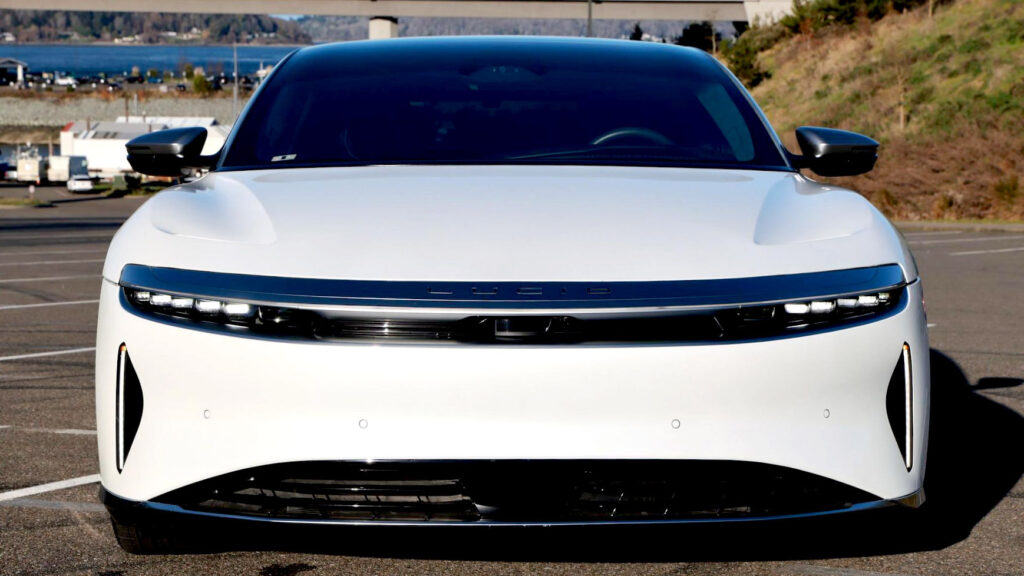
The Air you’re looking at is the Dream Edition Performance, which was introduced as the flagship iteration of the all-electric sedan. With the exception of the almighty Sapphire, it’s the highest-powered version of the Air that’s been sold, thumping out a ridiculous 1,111 hp and 1,025 lb-ft of torque.

Read: Lucid Owner Gets A $50,000 Lesson On Depreciation

A look at the window sticker reveals the original owner paid $170,500 for the car. Given the performance it offers, the sleek exterior styling, and the upmarket interior, that’s not an unreasonable amount of money. But, after being driven 22,000 miles (35,000 km) over the past four years, the car’s value has plummeted, recently selling for $67,067 in Cars & Bids.

A Six Figure EV Bargain

\\\\\\\

Cars & Bids

The result is a staggering $103,433 wiped off the price. Spread across the 22,000 miles it covered, that works out to just under $5 lost for every mile driven.

For a sense of scale, that drop would cover a substantial chunk of a home in some US states. Bankrate data puts the median house price at about $282,400 in Alabama, $255,300 in Arkansas, $285,600 in Illinois, $230,600 in Iowa, $301,000 in Pennsylvania, and $249,300 in Michigan, to name a few. In other words, the money lost on this one car equals well over a third of a typical home in those places.

While it’s hard not to feel bad for the original owner, it’s nice to see a car as good as the Air becoming more accessible. The listing reveals the performance sedan has been fastidiously maintained over the past four years, and has had several parts replaced and numerous recall campaigns completed.

\\\\\\\\\

Cars & Bids

Off the line, the Air Dream Edition Performance can hit 60 mph (96 km/h) in just 2.5 seconds and storm down the quarter-mile in 9.9 seconds. Thanks to the sizeable 118 kWh battery pack, it can also travel up to 451 miles on a charge when equipped with the 21-inch wheels like this one.

Then there’s the cabin. While the Air may often be compared to the Tesla Model S, its interior is more luxurious and better equipped. Key features include Nappa full-grain leather upholstery, heated and ventilated front massage seats, a 34-inch infotainment and gauge cluster display, and a 21-speaker sound system. This Air also includes the Santa Monica interior trim, combining dark blue and light cream-colored leather.

Bad news for the first owner, great news for the next one. So the question is, would you buy a used Lucid Air knowing just how quickly these things depreciate?

\\\\\\\

Cars & Bids

❌