❌

Reading view

There are new articles available, click to refresh the page.

Honda Is Working On Tech That’ll Let You Charge Your EV Wirelessly As You Drive
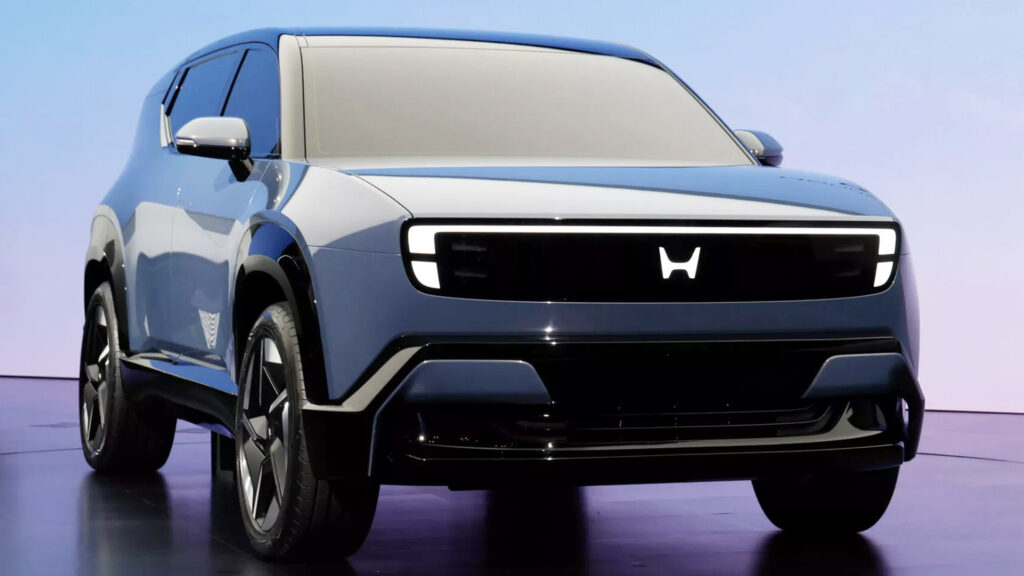
  • Honda has become the latest carmaker to venture into wireless charging technologies.
  • The Japanese brand has partnered with Taisei Group to make it happen.
  • Next year, Honda will start testing its charging tech on public roads in Japan.

In recent years, car and EV battery manufacturers have rolled out technologies that can top up an EV’s battery at once-inconceivable speeds. BYD’s Flash Charging system, for example, delivers up to 1,500 kW of power and charges an EV from 10-97% in just 9 minutes, making it almost as convenient to charge as it would be to fill up a combustion-powered car at a gas station. Honda is adopting a different approach.

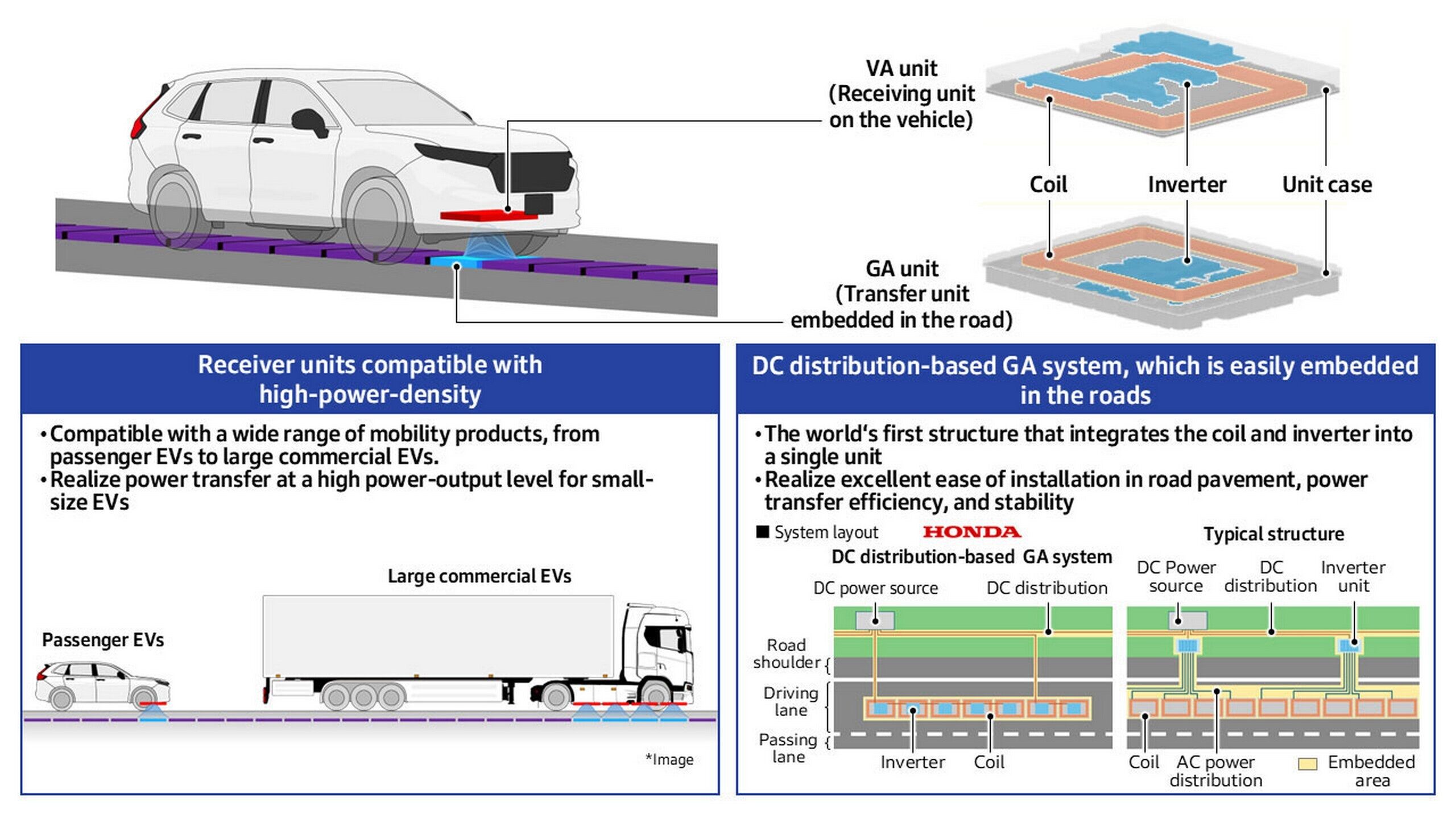
The Japanese brand, working alongside the Taisei Group, has unveiled what they call a wireless power transfer road system, or WPT road system. It lets an EV be charged wirelessly as it drives, meaning annoying charger cables and adapters could be a thing of the past.

Read: Honda Took A $16 Billion Bath On EVs, So Now Wants More EVs On A Platform That Can Switch Sides

The idea of roads that wirelessly charge EVs isn’t a new idea. Stellantis showcased its idea of a road that charges EVs back in 2021, an Israeli start-up unveiled a functional wireless charging road in 2023, and we know Hyundai is also working on the same technology. Honda hasn’t broken new ground with its system, but having a car brand as massive as it investing in this system may encourage rivals to do the same, prompting new advancements and perhaps eventually making such trick tech commercially viable.
 Honda Is Working On Tech That’ll Let You Charge Your EV Wirelessly As You Drive

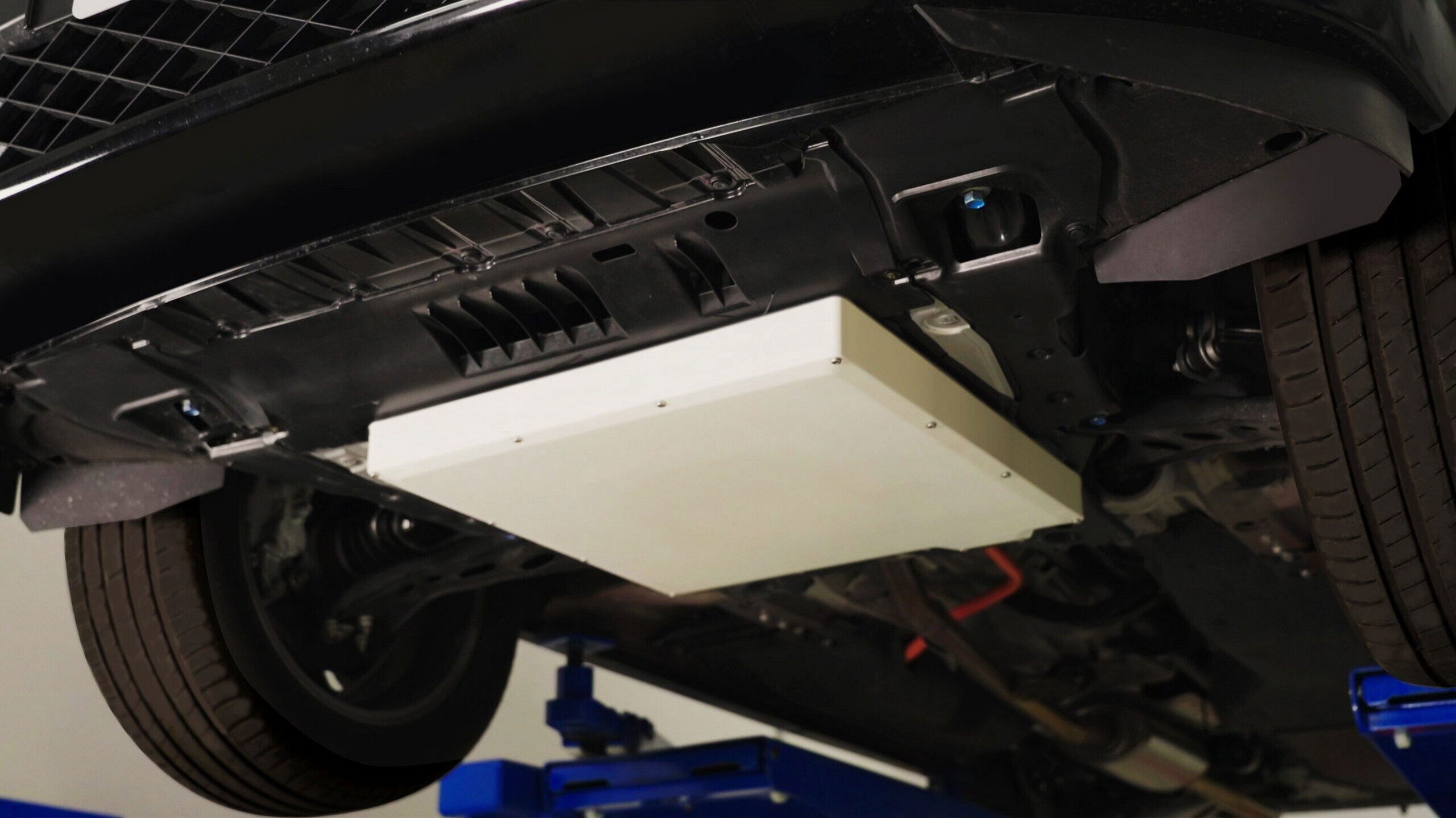
Honda’s system uses a high-power-density receiver/transmitter positioned under a vehicle and charging equipment from Taisei embedded into the road. It recieves power from electrical boxes positioned nearby. Honda has already started practical testing of the technology, but hasn’t provided any details as to how much energy can flow from the road to the car, or how much the battery could be charged.

Unfortunately, it doesn’t appear that wireless charging roads like those being worked on will replace traditional charging any time soon. Honda itself says supplying power to EVs while they are in motion will simply reduce how often owners have to charge their cars at home or at public charging stations.
 Honda Is Working On Tech That’ll Let You Charge Your EV Wirelessly As You Drive

Honda’s initial focus is on commercial vehicles. Later this year, it will start building a new road with Taisei where the strength and durability of the surface will be tested. Large commercial vehicles will then start to use the road, and it’ll be upgraded to deliver power outputs of up to 150 kW.

According to Honda, it is “striving to realize carbon neutrality by 2050 and offer the joy and freedom of mobility to more people around the world.” It believes technology like this will help encourage the widespread adoption of EVs. After testing on private roads concludes, Honda will begin testing on public roads in Japan from 2027 onwards.
\\\\\\\\\\

Suzuki’s Smallest EV Is A Kei Car With A Sub-$10k Price Tag

  • The Suzuki eSky debuts in Japan with factory styling packages.
  • It offers 193 miles (310 km) of range from a 26 kWh battery.
  • The EV starts at under $10k if you account for local subsidies.

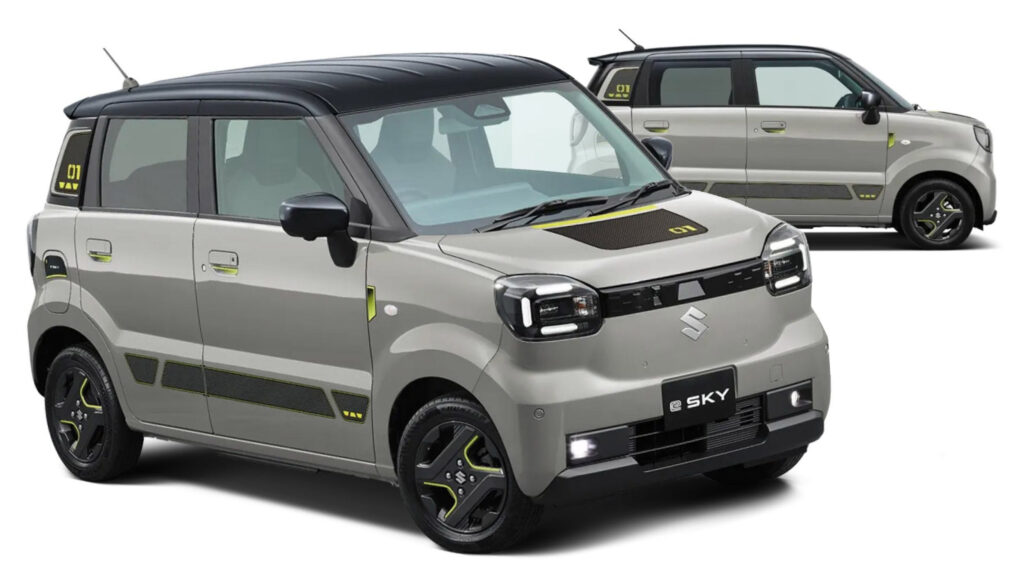
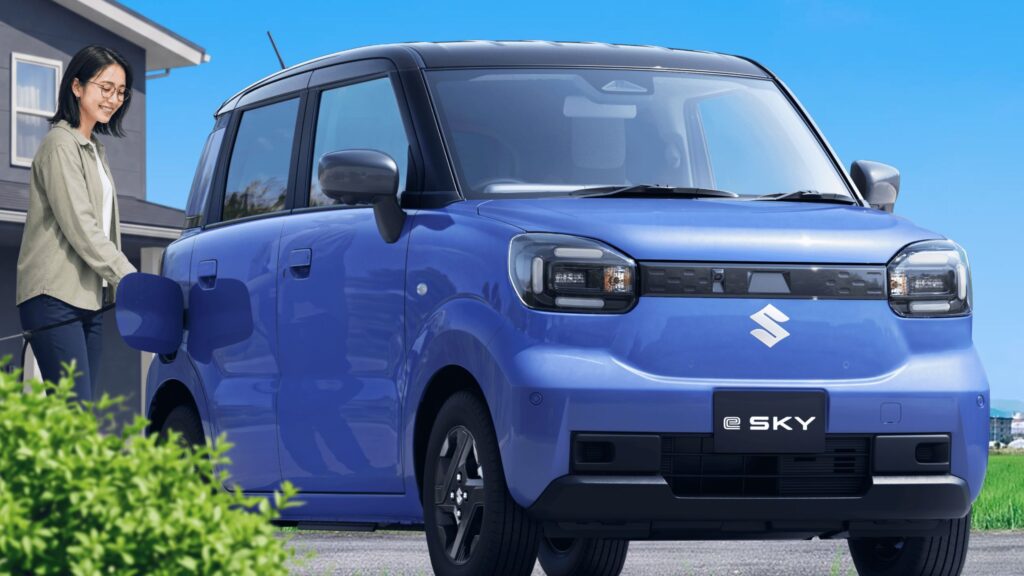
Suzuki has introduced its first fully electric passenger kei car in Japan ahead of its market launch in Europe and the UK. The all-new Suzuki eSky brings an impressive range for the size of its battery, aided by its lightweight design and efficient e-Axle. More importantly local EV subsidies lower the starting price of the pint-sized hatchback to ¥1,552,000 ($9,800).

The eSky was revealed in August 2026 as an evolution of the Vision e-Sky from 2025. The kei car retains the five-door silhouette and compact footprint of the concept, but its lighting units and bumpers have been redesigned for production, as with the wheels, door handles, and mirror caps.

More: Think You Know The Suzuki Alto? There Are Five Different Versions On Sale Right Now

The four-seater cabin is focused on practicality with various storage solutions and a tray on the dashboard. The driver has access to a digital instrument cluster, a 10.1-inch infotainment on the flagship trim, and a separate panel for climate controls.

\\\\\\\\\\\\

Suzuki eSky Mild Sporty Package

For owners who want to personalize the EV, Suzuki offers a range of optional accessories. The catalogue includes a pair of styling packages with colorful accents, a recyclable floor mat made entirely of polyester, and various charging items.

The Mild Sporty package adds pink, blue, and gray decals on the bodywork alongside white mirror caps, while the Neo Future package opts for a yellow and black theme. Both are combined with matching stickers for the dashboard and LED fog lights. Those who want something more subtle could get the quarter garnish in eight different colors. Suzuki is also offering three playful decals for the tailgate.

\\\\\\\\\\\\\

Suzuki eSky Neo Future Package

The eSky rides on the Heartect e platform and comes fitted with Suzuki’s new e-Axle (electric motor, inverter, and reduction unit) powering the front wheels. The electric motor is capable of producing 94 hp (70 kW / 95 PS) but the output of the Japanese-spec model will most likely be limited to 63 hp (47 kW / 64 PS) in order to comply with kei car regulations.

More: Suzuki Confirms Light Range Extender Setup Alongside More Efficient Hybrids

The floor-mounted 26 kWh lithium iron phosphate (LFP) battery pack promises a WLTC range of 193 miles (310 km), and has 50 kW DC charging capabilities.

\\\\\\\\\\\\\\\\\\\\\\\

Suzuki eSky

The Suzuki eSky will reach Japanese dealers on November 16 with the company setting a sales target of 1,000 units per month. The entry-level A trim starts at ¥2,120,000 ($13,400), while the flagship X grade climbs to ¥2,790,000 ($17,600). Still, buyers are eligible for a local government subsidy of up to ¥568,000 ($3,600), which lowers the entry point to ¥1,552,000 ($9,800).

More: Suzuki’s Decade-Old $6,500 Hatch Loses A Cylinder To Chase Mileage

As for the optional catalogue, the Mild Sporty styling kit costs ¥103,840 ($660), the Neo Future kit ¥116,160 ($730), and the eco-friendly floor mats are listed for ¥28,600 ($180).

Suzuki’s smallest EV yet will also be exported to Europe and the UK, starting in 2027. There it will join the eVitara, and compete with Europe’s A-Segment EVs such as the Renault Twingo, Dacia Spring EV, Nissan Pixo, Fiat 500, and VW ID. Up!.

\\\\\\\\\\\\\\\\\\\\\\\\\\\

Suzuki eSky

Suzuki’s New Electric Kei Car Squeezes 193 Miles From A Really Tiny Battery

  • The Suzuki e Sky is a new electric kei car for Japan.
  • The model has a targeted range of 310 km (193 miles).
  • It is also expected to be sold in Europe and the UK.

Suzuki has released the first official images and details of the e Sky, the production version of the Vision e-Sky concept, and not much got lost on the way from the show stand. It goes on sale in Japan this autumn, with mainland Europe and the UK expected to follow in 2027.

That makes it Suzuki’s third production EV, arriving behind the e Vitara subcompact SUV and the e Every kei van. It’s also the company’s first entry in Japan’s fast-growing light passenger EV segment.

More: Suzuki’s $8,400 Kei Van Still Has Crank Windows, But It Also Has A Manual

According to Suzuki, the goal is to help drivers make the switch from ICE vehicles to EVs. The e Sky was developed as a light vehicle for everyday use, offering a comfortable ride, smooth acceleration, and a quiet cabin.

Concept Car, Minus The Show-Stand Extras

 Suzuki’s New Electric Kei Car Squeezes 193 Miles From A Really Tiny Battery
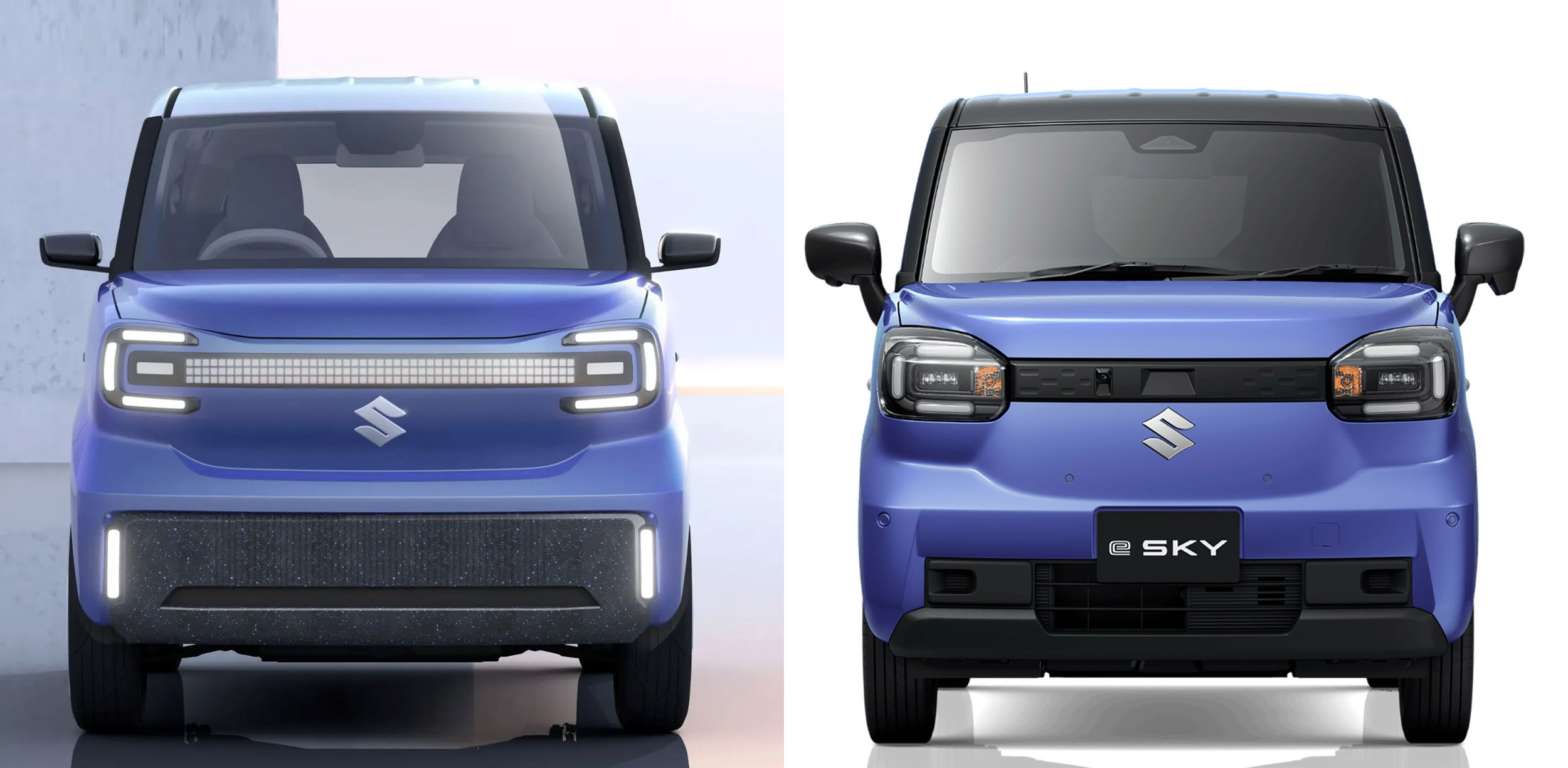
The Vision e-Sky concept (left) compared to the production Suzuki e Sky (right).

Visually, the small hatchback looks like an evolution of the concept from 2025, although several features have been toned down. The front end adopts larger LED headlights with a tinted background, and the illuminated grille gave way to a black trim piece. The revised Suzuki emblem sits on the sculpted nose, and the bumper incorporates a single cooling intake.

More: This $7,700 Suzuki Just Got A New Face And Over 66 MPG

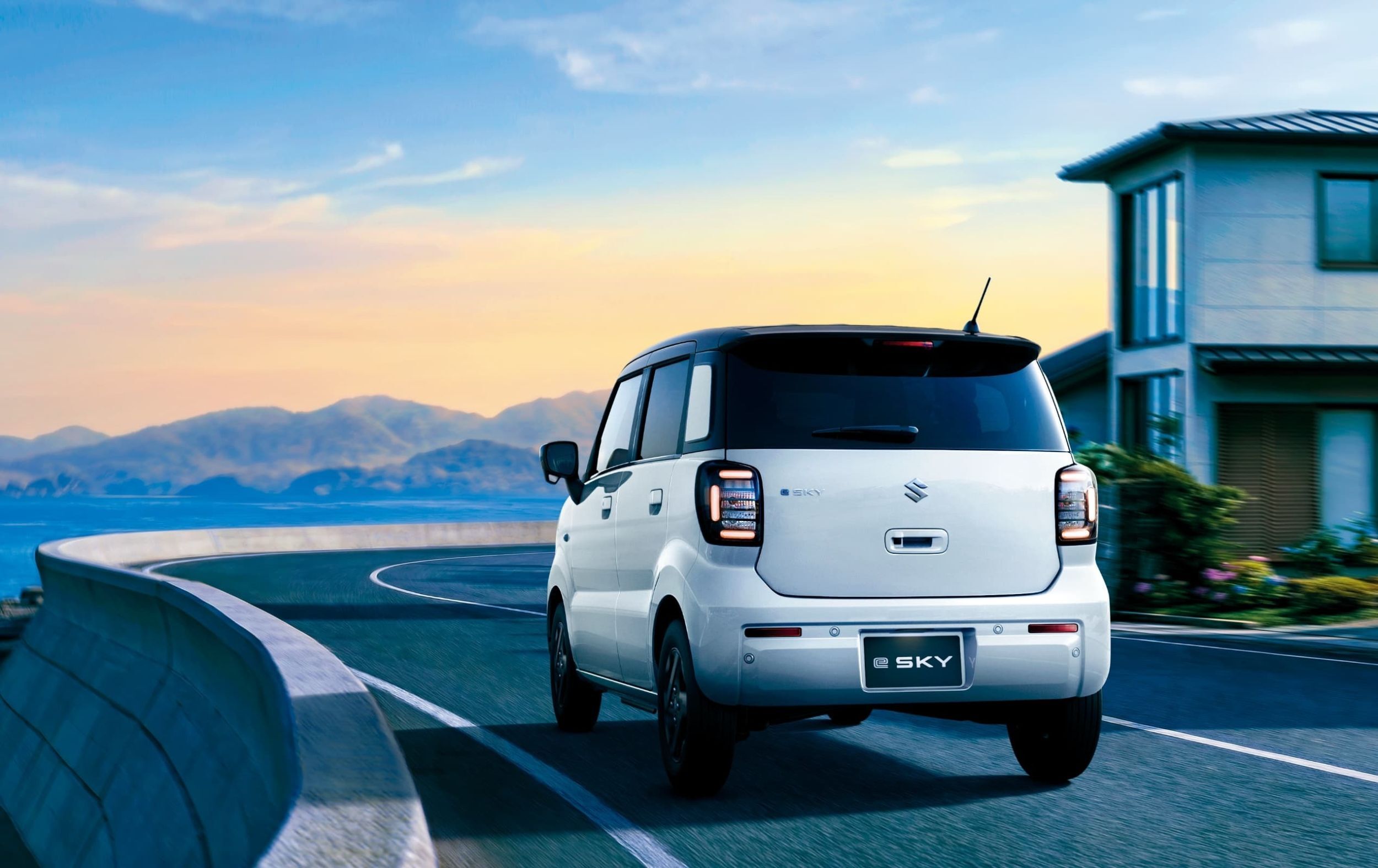
The profile stays true to the concept, although the EV gets smaller wheels, larger mirrors, and conventional door handles reminiscent of the Suzuki Alto. Still, the EV retains the floating roof and the body-colored trim on the C-pillar. At the back, changes are focused on the bulkier LED taillights, the visible tailgate handle, and the body-colored cladding on the rear bumper.

Naturally, the model complies with kei car regulations in terms of footprint, reportedly measuring 3,395 mm (133.7 inches) long, 1,475 mm (58.1 inches) wide, and 1,625 mm (64.0 inches) tall, with a 2,460 mm (96.9 inches) wheelbase.

Inside, The Budget Speaks Up

\\\\

The dashboard layout is familiar, but the pale materials, futuristic detailing and ambient lighting of the concept have been replaced by choices made with a calculator nearby. The centerpiece is the 10.1-inch infotainment display, combined with a digital instrument cluster, a traditional auto gear shifter and a dedicated panel for climate controls.

More: Suzuki’s Quirky Crossover Hides More Than A Fresh Face

Other features include a practical tray on the passenger side of the dashboard, heated seats and steering wheel, an electronic parking brake, and a heat pump paired with an electric air heater for efficiency during the Japanese winter. As with most kei cars the e Sky has a four-seater cabin with a small boot.

Small Battery, Surprising Number

\\\\\\\\

The new model rides on the Heartect e architecture, designed for urban EVs. According to Japanese media, it is powered by a front e-Axle integrating the electric motor, inverter, and gears. Suzuki has yet to announce the output, but the maximum permissible figure for kei cars is 63 hp (47 kW / 64 PS).

More: Suzuki’s Old Swift Sport Made 138 HP. The New One Makes A Splitter

Energy is reportedly stored in a 26 kWh lithium iron phosphate battery mounted under the floor. Despite its small capacity, the targeted range is 310 km (193 miles), which is significantly higher compared to other Japanese kei cars but slightly less than BYD’s Racco, which offers up to 199 miles (320 km). However, the latter achieves that with a much bigger 35.84 kWh battery.

The impressive range figure was achieved thanks to aerodynamics, improved motor efficiency and weight reduction, with the EV tipping the scales at 1,030 kg (2,271 lbs).

 Suzuki’s New Electric Kei Car Squeezes 193 Miles From A Really Tiny Battery

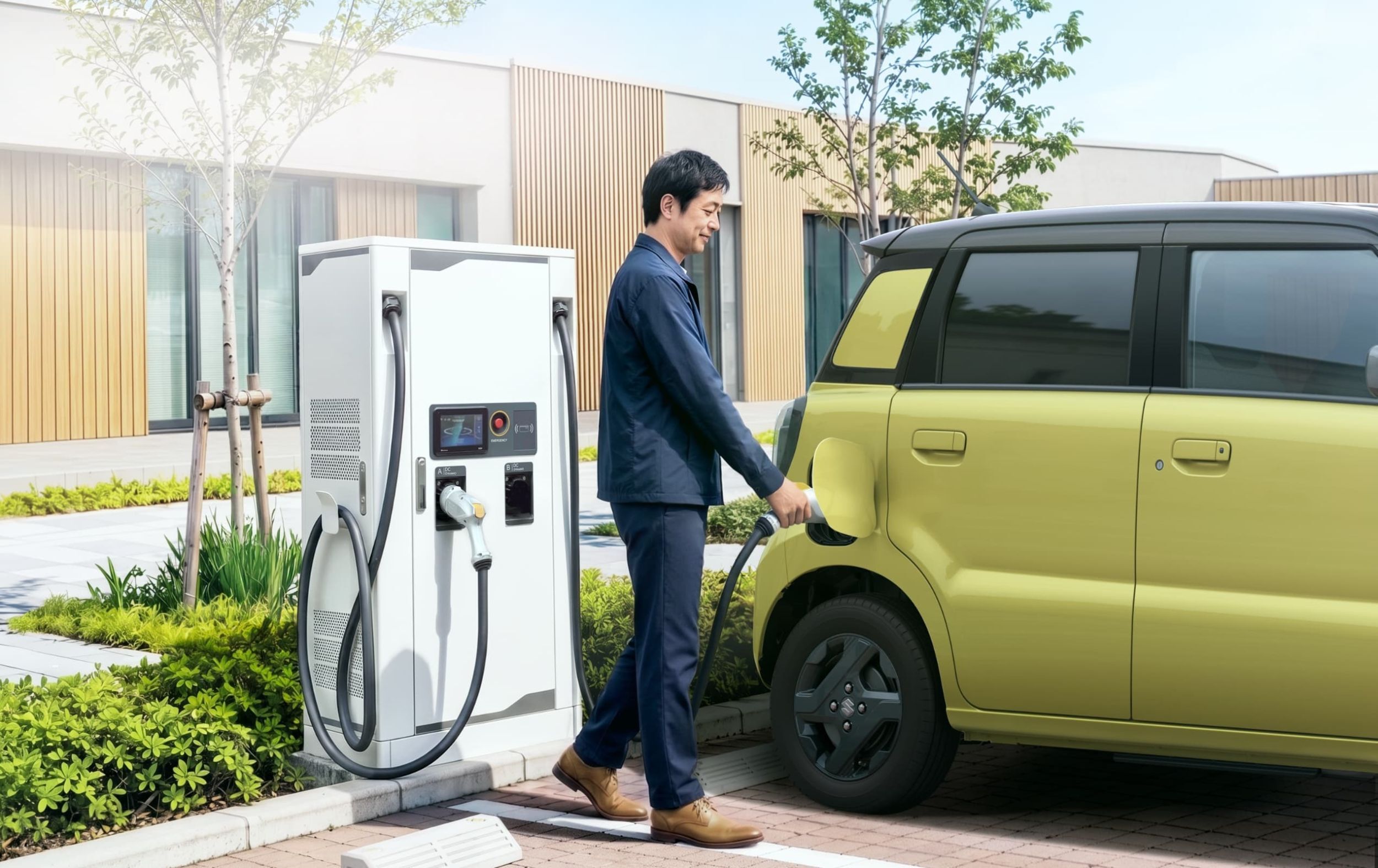
A full charge is expected to take 8 hours via a standard home outlet, or in 4.5 hours from a 6 kW wallbox. The EV is also compatible with 50 kW DC fast charging, replenishing 80% capacity in 25 minutes, while supporting Vehicle-to-Home (V2H) functionality with an AC 100v/1500W power outlet for external devices.

Not Exclusive To Japan

The e Sky reaches the Japanese market in autumn 2026, where it will face the Nissan Sakura, the Mitsubishi eK X EV, the Honda N-One e and the BYD Racco.

More: BYD’s Kei EV Has The Lowest Sticker In Japan And The Highest Price On The Road

Its home market won’t have it to itself, however, since exports to Europe and the UK begin in 2027. Rivals there include the Renault Twingo E-Tech, the upcoming Dacia Spring, and the production version of the VW ID.Every1 concept.

 Suzuki’s New Electric Kei Car Squeezes 193 Miles From A Really Tiny Battery

Suzuki

❌