❌

Reading view

There are new articles available, click to refresh the page.

Can Pixels Beat Nostalgia? We Compared Nissan’s New Sub-€20k EV To Its Renault Twin Up Close
  • We checked the Nissan Pixo and Renault Twingo twins up close.
  • Pixelated Japanese styling can’t match Renault’s retro charm.
  • Both share an 81 hp electric motor and a 27.5 kWh battery pack.

The race for affordable urban EVs in Europe has entered high gear, with local automakers trying their best to compete with Chinese imports. Renault revisited the Twingo’s winning formula with its latest A-Segment hatchback, which spawned the closely-related Nissan Pixo and the new Dacia Spring EV.

In addition to the common chassis, battery, and powertrain, the Renault and the Nissan share most of their exterior and interior components. The Dacia is more clearly differentiated. During a recent visit to the Athens Motor Show in Greece, I got the chance to check out the French and Japanese twins up close, examining the efforts of the respective design teams to set them apart.

More: Nissan’s New Entry-Level EV Pixelates The Renault Twingo

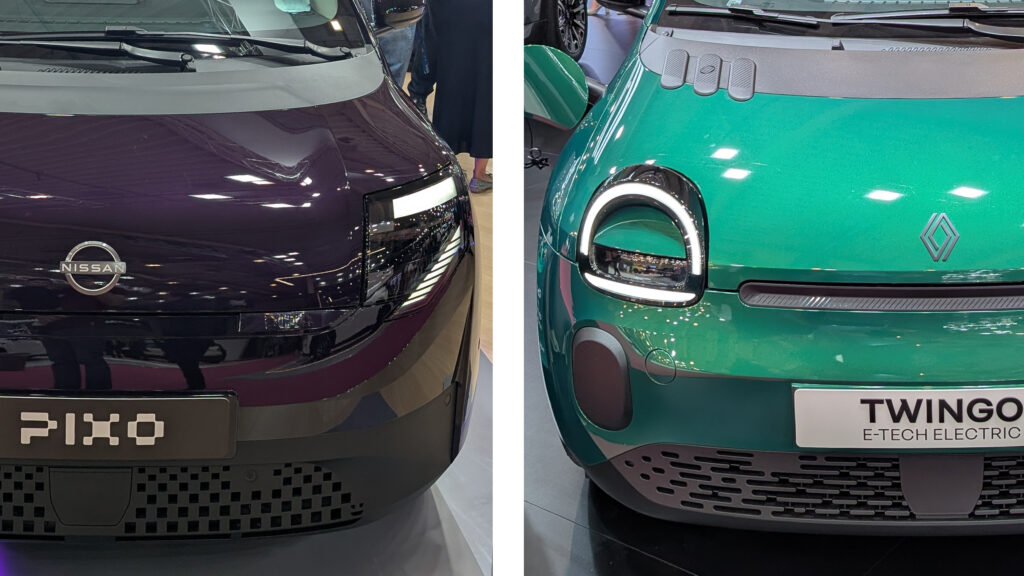
Before we dive deep into the differences, it is important to acknowledge that the iconic styling of the Renault Twingo E-Tech effectively made a potential rebadging kind of pointless. For this reason, the Nissan Pixo introduces a bunch of redesigned body panels, trying to mask the inevitable similarities.

Pixelated VS Frog-eyed Face
 Can Pixels Beat Nostalgia? We Compared Nissan’s New Sub-€20k EV To Its Renault Twin Up Close

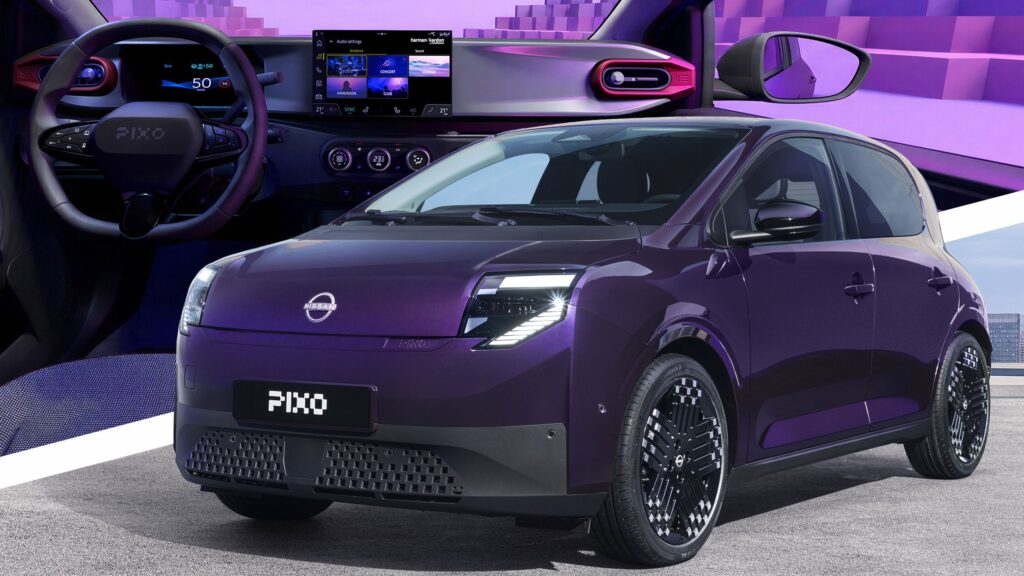
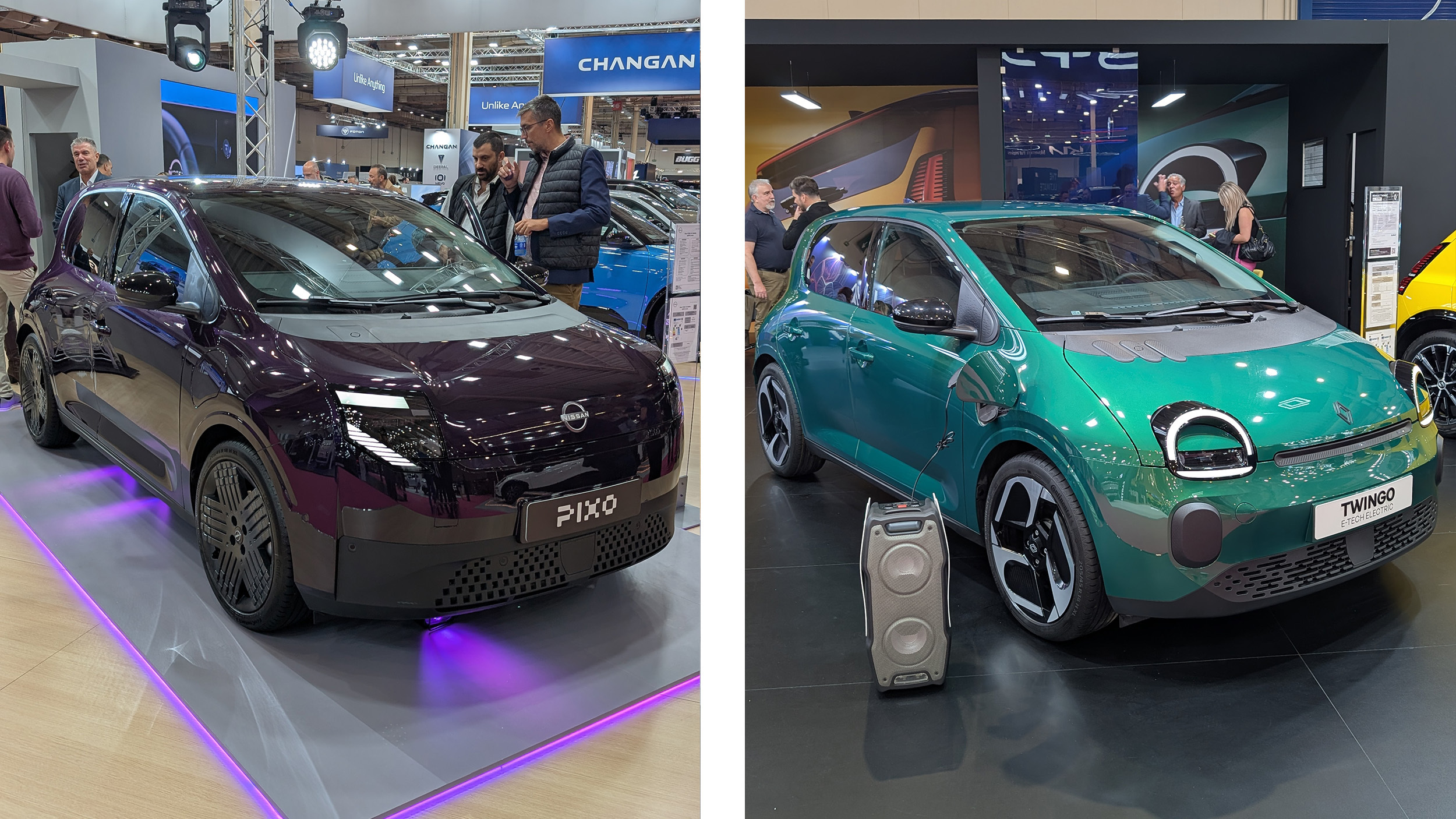
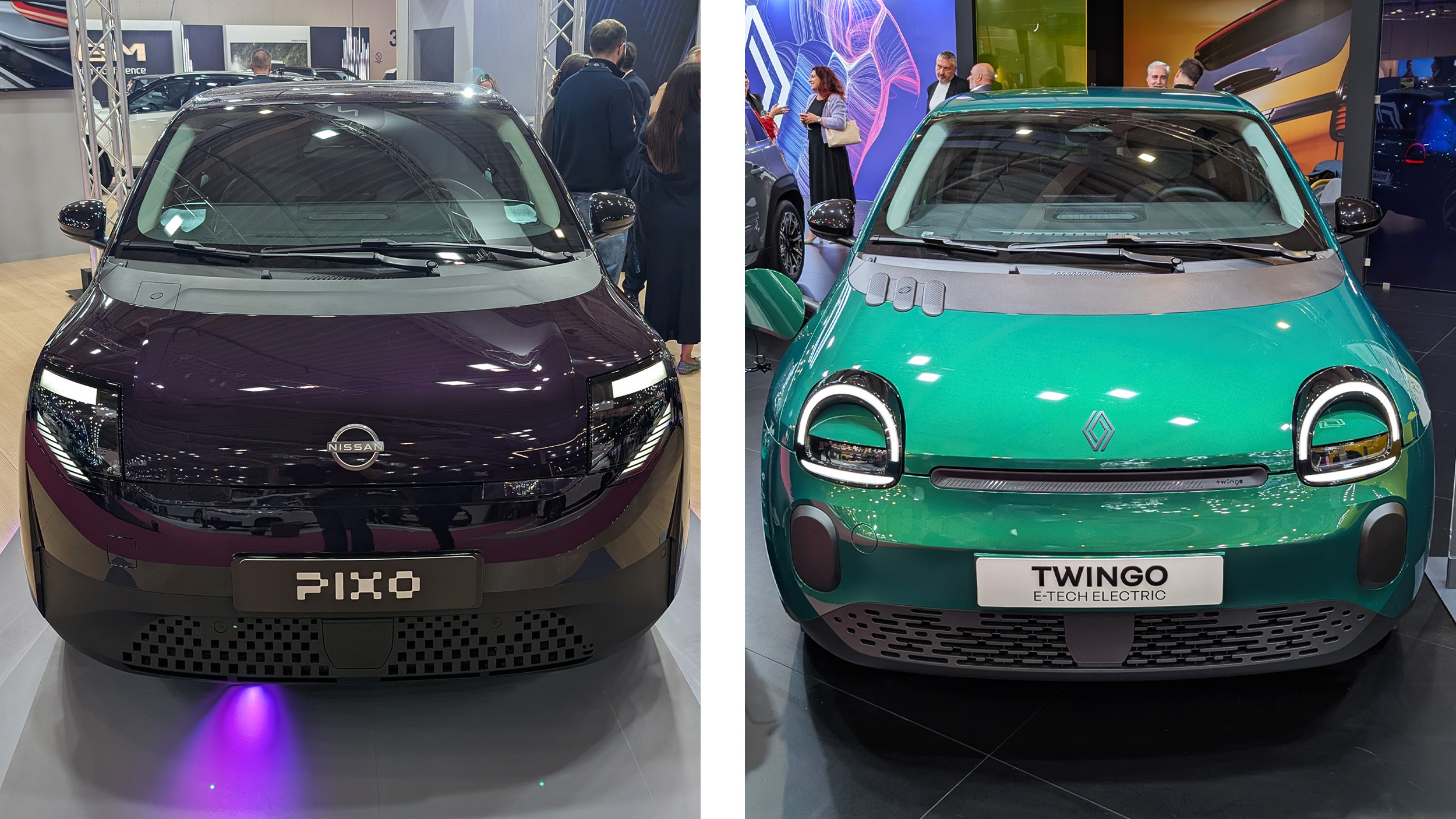
The first thing Nissan did was to swap the frog-eyed happy-to-meet-you face of the Twingo for a more upright nose. This required new moldings for the bumper, hood, and front fenders. Still, the most notable feature is the squared-off headlights with pixelated LED graphics flanking the grille-less nose. It also has rectangular plastic cladding around the lower bumper intake and a simple access cover on the hood instead of the Twingo’s triple-slot design.

Review: Stellantis Gave Citroen C3 And Fiat Grande Panda The Same Bones, But Not The Same Soul

The profile is shared between the two models, with the exception of the alloy wheels, which measure up to 18 inches in the flagship trims. Nissan has also promised to offer special colors, including the pictured Wonder Purple shade. The restyled bumpers account for the slight size difference, with the Nissan measuring 3,796 mm (149.4 in) or 7 mm (0.3 in) longer than the Renault.
 Can Pixels Beat Nostalgia? We Compared Nissan’s New Sub-€20k EV To Its Renault Twin Up Close

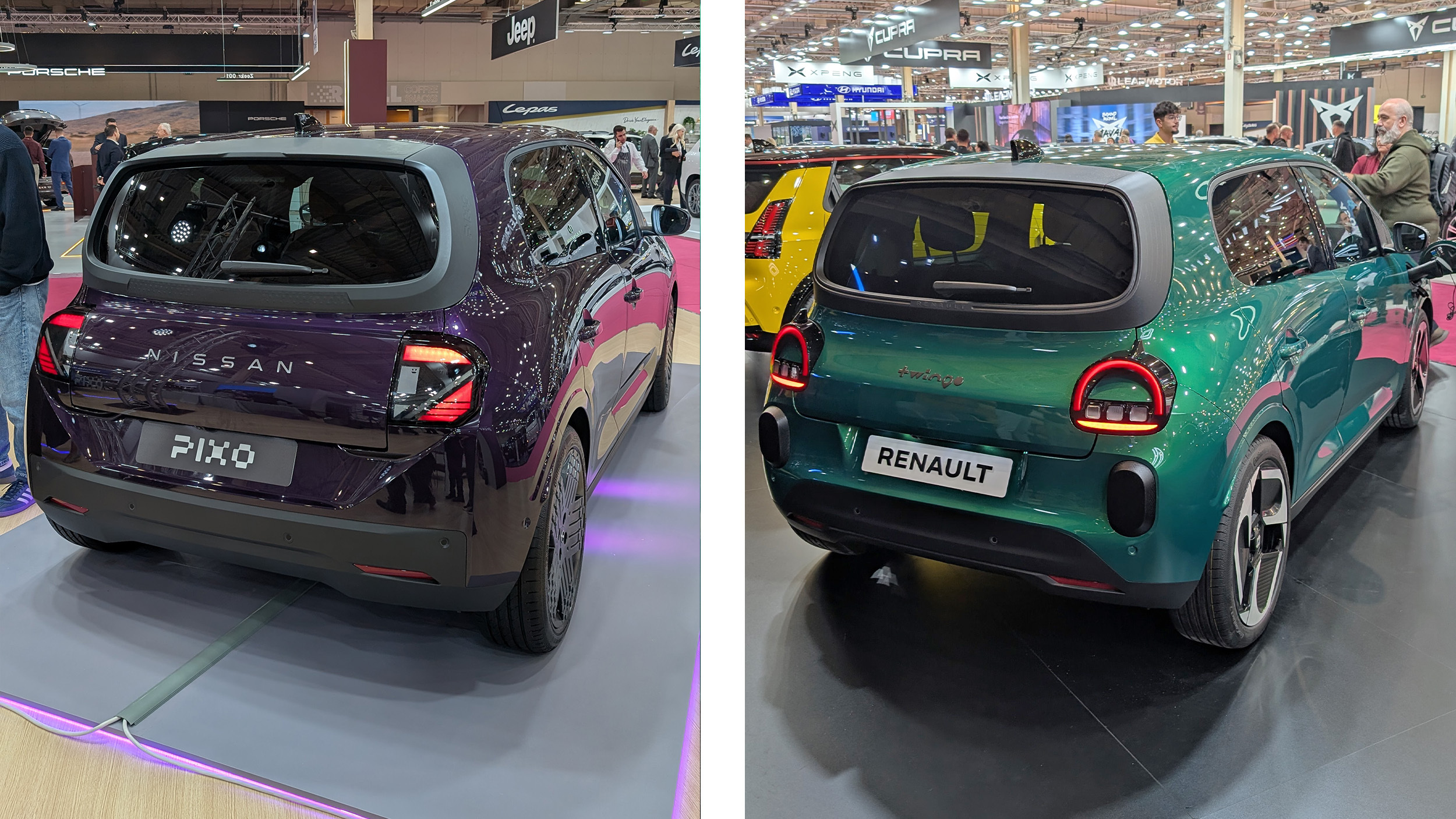
At the back, the rebadging is more obvious despite Nissan’s best efforts and clever references to the K12 generation of the Nissan Micra from 2002. The Twingo’s unique rear glass is hard to ignore, though the plastic garnish around it is different, with textured details and Pixo lettering printed on the side.

More: Are We Entering A New Era Of Badge Engineering?

The squared-off taillights mirror the styling language of the headlights, while integrating a smiley face into their clusters. Those are joined by a Nissan-specific tailgate and rear bumper. The latter lacks the bumper guards of the Twingo, sporting a sculpted license plate holder and simpler cladding.

Identical And Spacious Interior
 Can Pixels Beat Nostalgia? We Compared Nissan’s New Sub-€20k EV To Its Renault Twin Up Close

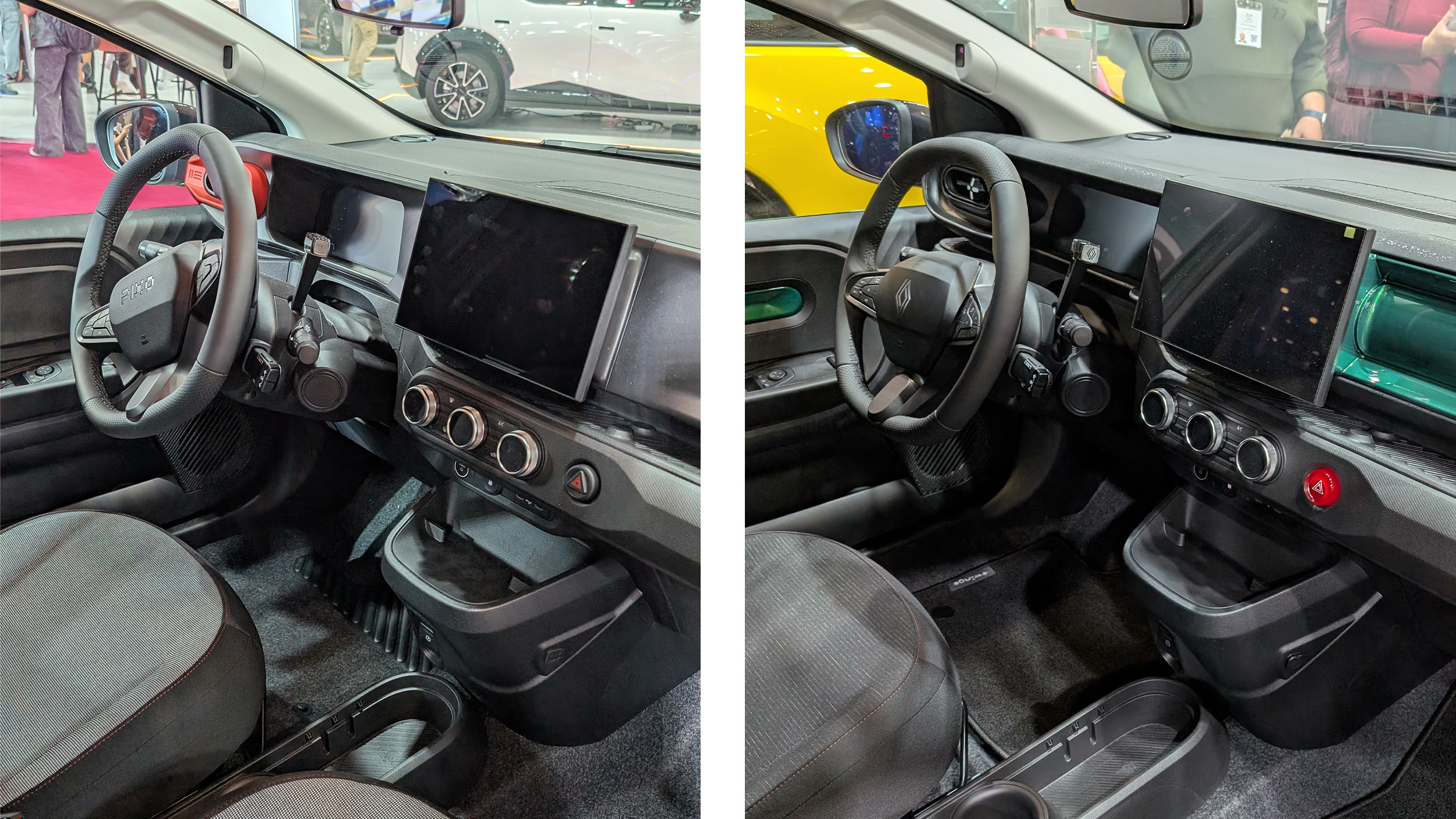
The interior is largely the same, with differences being limited to certain trim pieces and Easter Eggs. Both EVs have a 7-inch digital instrument cluster and a 10-inch infotainment display with Google built-in. They also share all of the physical controls, switches, stalks, and storage solutions. Still, the Twingo has more colorful accents on the door cards and the dashboard, with the Pixo focusing on the garnish around the climate vents.

More: New Dacia Spring EV Flees From China And Pays The Price

Despite their compact footprint, the models have spacious interiors thanks to their 2,492 mm (98.1 in) wheelbase and the packaging of the EV-dedicated AmpR Small architecture. I was impressed by the ample legroom aided by the rear seats that slide by 170 mm (6.7 in), while being able to recline and fold.

The official cargo capacity rating is up to 360 lt (12.7 cubic feet) in the Renault and up to 356 lt (12.6 cubic feet) in the Nissan. Furthermore, the models have 19 lt (0.7 cubic feet) and 18 lt (0.6 cubic feet) of in-cabin storage, respectively.

Specs, Price, And Rivals
 Can Pixels Beat Nostalgia? We Compared Nissan’s New Sub-€20k EV To Its Renault Twin Up Close

Both models share the same 81 hp (60 kW / 82 PS) front-mounted electric motor and a 27.5 kWh Lithium Iron Phosphate (LFP) battery pack offering 161 miles (259 km) of WLTP range and 50 kW DC charging capability.

More: Nissan’s Smallest Hatch Is Back And It’s Unrecognizable

While Nissan has yet to announce pricing for the Pixo, we can only assume it will be pretty close to its French twin following the example of the larger Renault 5 E-Tech and Nissan Micra siblings. The Renault Twingo E-Tech currently starts from €19,490 ($21,900) in Greece, but the entry figure can drop to €14,990 ($16,800) when you account for the €3,000 ($3,400) state subsidy and the €1,500 ($1,700) scrappage bonus.

The Nissan Pixo and the Renault Twingo E-Tech are manufactured at the Novo Mesto plant in Slovenia, alongside the new Dacia Spring EV. The urban hatchbacks were designed for European and UK markets, targeting budget-friendly rivals such as the Leapmotor T03, the BYD Dolphin Surf, as well as the upcoming VW ID. Up! and Kia EV1. Another threat for the EV siblings is the future Citroen 2CV revival, which is expected to be even cheaper thanks to complying with Europe’s upcoming e-car regulations.
\\\\\\\\

Photos: Thanos Pappas for CarScoops

Chinese Will Build Cars In North America In 2-3 Years, Nissan Boss Warns

  • China automakers will set up Mexico factories within three years, Nissan America’s Chairman predicts.
  • Christian Meunier says Nissan is cutting costs, plans to send China-built cars to Mexico to meet the push.
  • China brands will sell in US eventually, but not for at least five years, Meunier suggested to Auto News.

America rolled out the red carpet for China president Xi Jinping last week, though Chinese cars on US roads remains a firm red line. But a senior Nissan executive is warning that Chinese automakers will start building cars on the continent in as little as two years despite US senators’ determination to keep them at bay.

Nissan America’s Chairman Christian Meunier predicts that Chinese automakers will be building cars in Mexico, just hours from the US border, within three years.

Related: US Lawmakers Push For A Permanent Ban On Chinese Cars

“We have a very aggressive plan in Mexico, especially to get the cost down for us to be able to compete with the Chinese when they get localized,” Meunier told guests at Nissan’s HQ in Yokohama, Japan. “It will happen probably in the next two to three years, so we need to be ready,” Auto News reports him saying.

Like Bill Ford and Ford’s CEO, Jim Farley, Meunier is convinced that Chinese brands will eventually find their way onto US streets. He thinks that won’t happen for at least five years though, which gives existing US brands a little time to prepare for a battle on home turf.

Build Local To Escape Tariffs

 Chinese Will Build Cars In North America In 2-3 Years, Nissan Boss Warns

But most of those brands also operate south of the border, where Chinese cars are already sold, albeit hampered by a 50 percent tariff. The Mexican market is going to be even tougher once cars are built locally, and prices are pushed even lower without tariffs in place. Legacy brands are going to have to push theirs down to compete.

“Cost competitiveness is going to be the rule of the game in the next five years,” Meunier said, claiming that Western and Japanese brands haven’t worked hard enough in recent years to reduce costs. He described Nissan’s current supply and cost setup as being “not good enough to compete head to head with the BYDs of this world.”

Fight Fire With Fire

 Chinese Will Build Cars In North America In 2-3 Years, Nissan Boss Warns

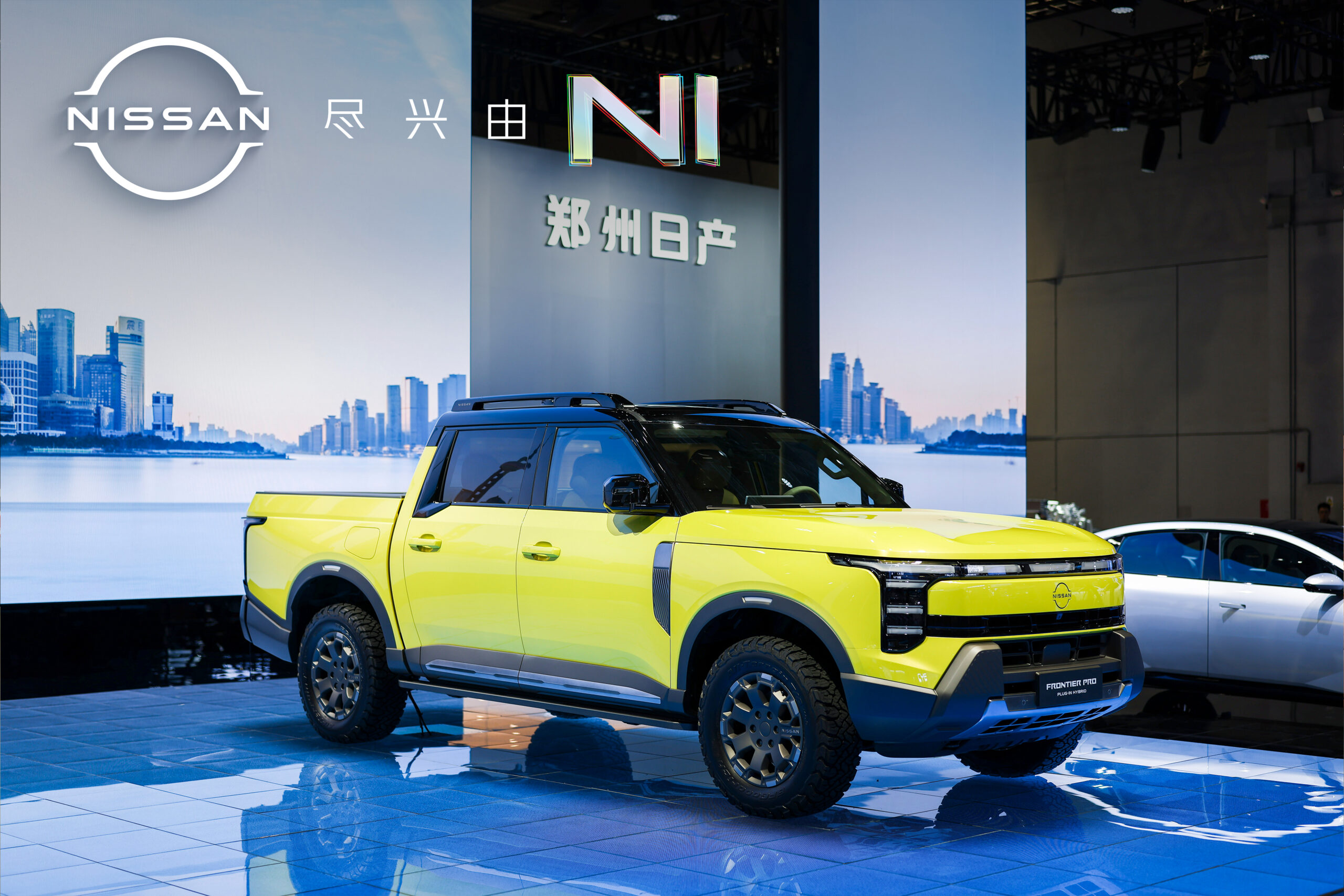
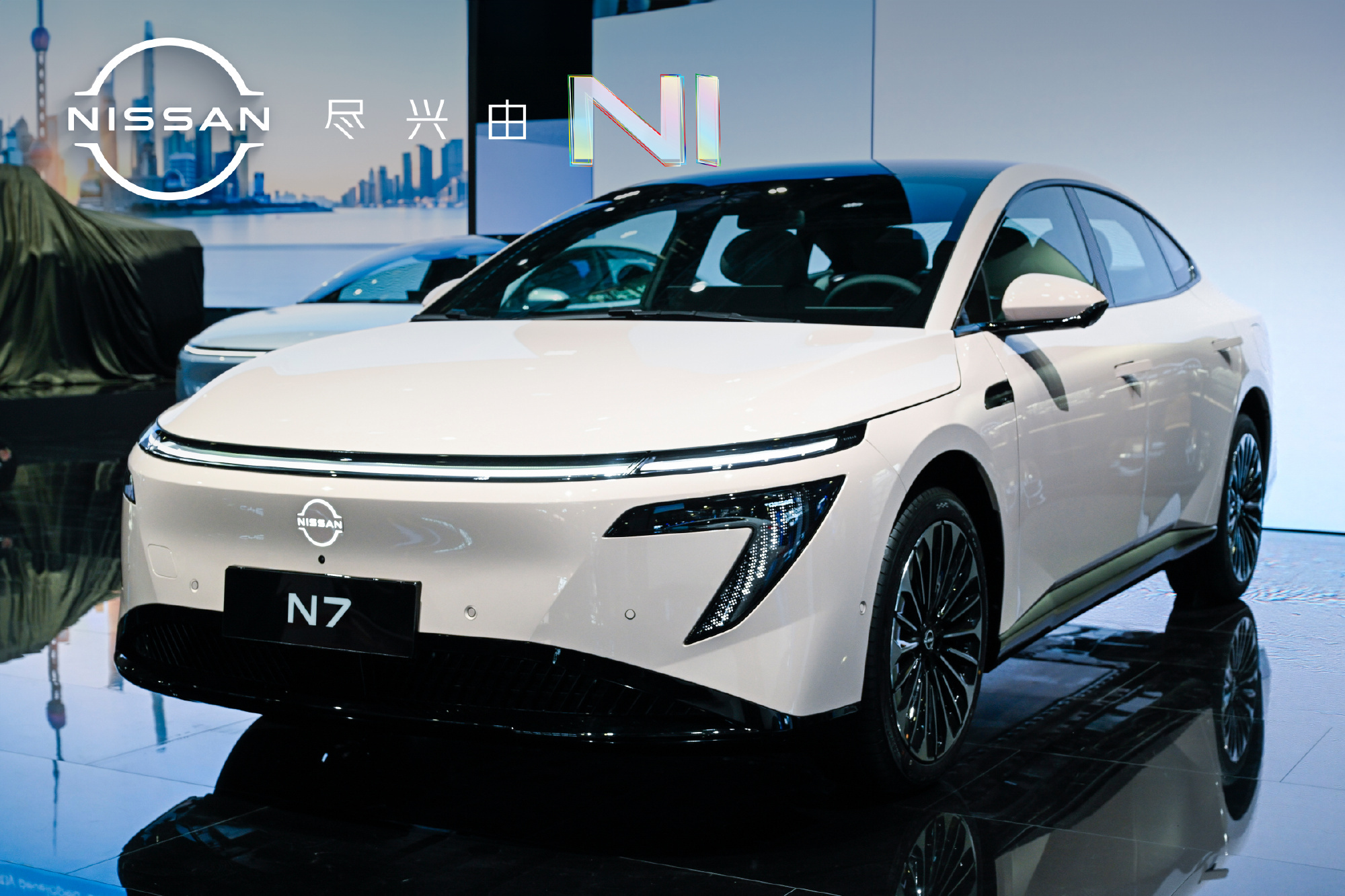
But Meunier says Nissan has another weapon in its arsenal besides simply trimming fat, one that will help it keep pace with the Chinese. It plans to give China’s automakers a taste of their own medicine by selling China-built models in Mexico. The Frontier Pro pickup (above) is now being launched in the country, and availability will expand to Latin America this year, Auto News reports. The N7 electric sedan (bottom pic) will also soon land in the region from China to tap into a boom in EV sales.

“We’re taking advantage of the opportunity to have a Chinese developed product compete with Chinese manufacturers in Latin America, because it’s clearly a big, fast invasion that is happening,” Meunier said.

Europe Shows What Could Happen

Meunier’s warning comes less than two weeks after Hyundai CEO Jose Munoz raised the alarm over the prospect of Chinese cars disrupting the US market. Munoz said that without safeguards in place, the US could end up like the UK or Europe, where one in every 10 cars sold is Chinese, a share that is only growing.

Big tariffs on Chinese cars currently keep them out of the US, but senators are currently trying to introduce legislation to permanently ban them. At the same time, President Trump has said he is open to the idea of Chinese brands opening car plants inside US borders.

 Chinese Will Build Cars In North America In 2-3 Years, Nissan Boss Warns

Nissan

Nissan’s New Entry-Level EV Pixelates The Renault Twingo

  • Nissan revives the Pixo badge for an affordable urban EV.
  • It is a twin to the Renault Twingo with Nissan styling cues.
  • It makes 81 hp and offers a 161-mile (259 km) WLTP range.

Nissan is dusting off an old nameplate for a new urban EV. The Nissan Pixo is a twin to the Renault Twingo E-Tech and a sibling to the Dacia Spring EV, featuring pixelated styling and modern technology. The model will be sold in Europe and the UK, serving as an entry point in the lineup positioned under the R5-based Nissan Micra.

Measuring 3,796 mm (149.4 in) long, the Nissan Pixo is only 7 mm (0.3 in) longer than the Renault Twingo, while sharing the 2,492 mm (98.1 in) wheelbase. The greenhouse, roof structure, and most of the profile are identical to the Renault, with Nissan designers focusing their efforts on the front and rear ends.

More: Renault Shipped 100 Frog-Eyed Twingos To The UK Purely So You Can Stare At Them

The Pixo swaps the curves and frog-style headlights of the Twingo for a boxier grille-less nose. The squared-off headlights with diagonal LED graphics are inspired by pixels, while the front bumper adopts clean surfacing with plastic cladding around the central intake.

\\\\\\\\\\\\\\\\\\\\\\\\\\\\\\\\\\\\\\\\\

Setting aside the front fenders and the futuristic alloy wheels, the profile doesn’t hide its Renault roots. However the rear end gains redesigned taillights and a simpler tailgate, which are slightly reminiscent of the Nissan Micra K12 from the ’00s. These are joined by Nissan-specific cladding on the rear bumper and Pixo lettering on the plastic trim around the rear windshield. Finally, the color palette gains the fresh Wonder Purple and Gear Blue shades.

More: New Dacia Spring EV Flees From China And Pays The Price

Inside, the dashboard, the steering wheel, and the digital cockpit with Gemini integration are derived from the Renault twin. The same applies to the reclining and foldable rear seats adding practicality points to the urban EV. Nissan brags about the 356 lt (12.6 cubic feet) cargo capacity including the 50 lt (1.8 cubic feet) compartment for charging cables, and the extra 18 lt (0.6 cubic feet) of in-cabin storage. Furthermore there are 23 Easter eggs for owners to discover.

\\\\\\\\\\\\\\\\\\\\\\\\\\\\\\\\\\\\\\\\\\\\\\\

Under the skin, the Pixo is identical to the Renault Twingo and the Dacia Spring. A front-mounted electric motor is good for 81 hp (60 kW / 82 PS), while a 27.5 kWh Lithium Iron Phosphate (LFP) battery delivers a WLTP range of 161 miles (259 km). The EV is compatible with 50 kW DC charging, replenishing the battery from 15-80% in 28 minutes.

More: The Nissan Micra is Back And It’s Unrecognizable

The Nissan Pixo will go on sale in Europe and the UK, with production taking place at the Novo Mesto factory in Slovenia alongside the closely-related Renault Twingo and Dacia Spring. Pricing and pre-order information will be announced from December 2026 onwards. However, judging from the Renault, the entry-level EV from Nissan will most likely start from under €20,000 ($22,800).

Hardcore Nissan fans might remember that the original Pixo which was sold in Europe between 2009 and 2013, was also a rebadged urban hatchback. However, this one was based on the Suzuki Alto and came fitted with a 1.0-liter gasoline engine.

\\\\\\\\\\\

Nissan

Nissan Kicks Heads To Europe With Hybrid Power Alongside Two New EVs

  • The Nissan Kicks e-Power will be sold in Europe, the UK, and Turkey.
  • Production will take place at Nissan’s Sunderland plant in the UK.
  • It will be joined by the new Pixo EV and the next-gen Juke EV.

Nissan has announced that the Kicks e-Power will become available in Europe, the UK, and Turkey, with production taking place at the Sunderland Plant in England. The automaker has also confirmed two new EVs for European markets – the Pixo urban hatchback and the next-generation Juke.

The current Nissan Kicks was introduced in 2024 in North America, with the Kicks e-Power arriving in 2026 in Japan. Naturally, European customers will gain access to the electrified version, in line with the region’s strict emission regulations and strong hybrid demand.

Review: The 2026 Nissan Kicks Isn’t Bad, It’s Just Surrounded By Good Choices

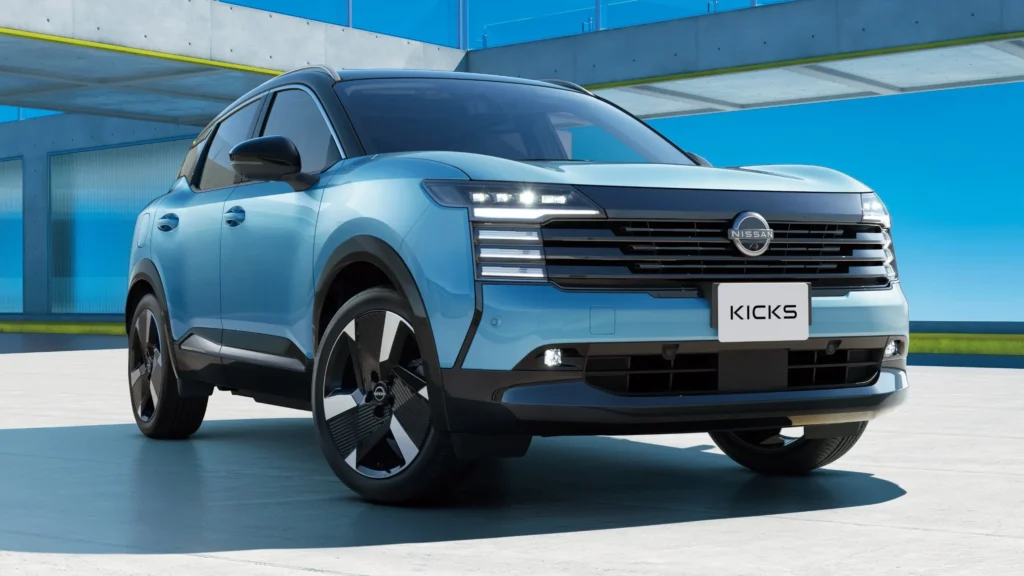
Measuring 4,365 mm (171.85 in) long, the Kicks will be one of Europe’s biggest B-SUVs, being longer even than its cousin, the Juke that stretches to 4,210 mm (165.8 in) long. Direct rivals include the Toyota C-HR, the Hyundai Kona, and the VW T-Roc, which are also available with self-charging hybrid powertrains.

\\\\\\\\\\\\\\

Nissan Kicks (Japan)

Nissan didn’t share the detailed specifications of the EU-spec Kicks, but we expect it to be similar – if not identical – to the Japanese version. The subcompact crossover features Nissan’s third-gen e-Power hybrid technology, with an electric motor moving the wheels and a combustion engine acting as a generator.

More: Nissan’s Old Kicks Returns, And It Drives Like An EV Without Ever Plugging In

In Japan, the Kicks e-Power is fitted with a 1.4-liter three-cylinder gasoline engine with 97 hp (72 kW / 98 PS), a front-mounted electric motor generating 141 hp (105 kW / 143 PS), an optional rear-mounted electric motor contributing another 67 hp (50 kW / 68 PS), and a lithium-ion battery. It remains to be seen whether Europe will get both the FWD and AWD (e-4ORCE) powertrain options, as well as the adventurous Rock Creek trim.

Production In The UK

\\\\

Nissan Sunderland facilities

The EU-spec Kicks e-Power will be manufactured in Sunderland alongside the Juke, Qashqai, and Leaf, following a £170 million ($229 million) investment. The plant celebrates its 40th anniversary this year, and has built a total of 12 million vehicles since the first Nissan Bluebird rolled off the assembly line back in 1986.

More: This Is How Nissan Copied China To Slash Development Times In Half

The UK factory will be the fourth production location for the second-gen Kicks, which is currently made in Japan, Mexico, and Brazil. A facelifted version of the first-gen Kicks with hybrid power still survives in some regions, like Thailand. Since the debut of the original in 2016, Nissan has sold over 1.8 million units in more than 70 countries.

Two New EVs

\\\\\\\\\\\\\

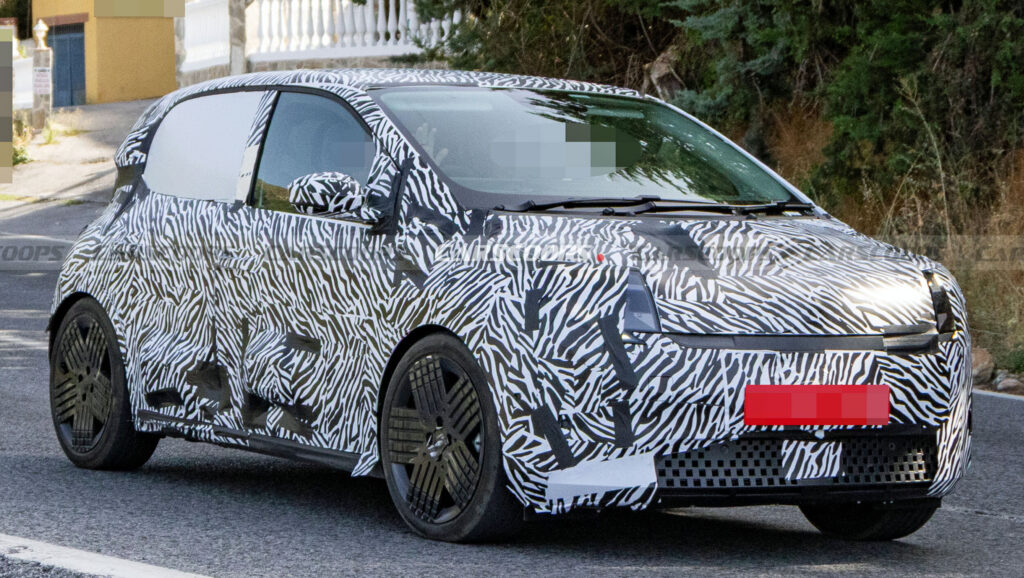
A camouflaged prototype of the new Nissan Pixo | Photos: SH Proshots

Besides the European arrival of the Kicks, Nissan has also confirmed that a new electric city car will be unveiled next week. The model will adopt the Pixo nameplate and will serve as a twin to the Renault Twingo and the Dacia Spring, albeit with Nissan-specific styling.

More: Nissan’s Strangest-Looking SUV Just Got Stranger, And It’s Going Electric To Prove It

Last but not least, Nissan said that the all-new third generation of the Juke will also be manufactured in Sunderland starting in 2027, migrating to a fully electric powertrain. This explains why the automaker brought the Kicks e-Power to Europe, offering a hybrid alternative to the upcoming zero-emission Juke.

Massimiliano Messina, Chairperson of Nissan AMIEO Region, said: “Electrification with choice is what European customers want, and the introduction of Kicks will further demonstrate how Nissan has options for all.”

\\\\

Nissan Juke EV

Nissan Waves To The Renault Twingo With New Entry-Level EV

  • The Nissan Wave has been spied ahead of a launch next year.
  • Hatchback is a lightly revised version of the Renault Twingo.
  • Model sports a more traditional design and should be affordable.

Nissan launched the redesigned Micra last year and a report, in January, suggested it could be followed by an even smaller EV known as the Wave. Spy photographers have now snapped the model and it’s a lightly revised version of the Renault Twingo.

Dressed in heavy camouflage, the Wave has a revised front end that trades circular lighting units for squared off ones with an angular lower accent. The latter appear to be part of a C-shaped daytime running light signature.

More: New Nissan Wave Could Bring Back A Cult Era Of Retro JDM Cars

Elsewhere, we can see a wider central bar as well as a revamped intake with a cube-like design. They’re accompanied by a more traditional hood and a lower sensor pod that is covered by camo.

The profile appears to carryover virtually untouched, but we can expect restyled wheels that are unique to Nissan. They’ll likely have an aerodynamically optimized design to maximize range.

\\\\\

SHProshots

Continuing around back, there’s a no-nonsense rear end that adopts more traditional taillights. The bumperettes have also been ditched, resulting in a cleaner, more modern design.

Spy photographers didn’t get much of a look inside, but we can see a curved upper dashboard as well as a freestanding infotainment system. This suggests the cabin will follow in the footsteps of the Twingo, which has a 7-inch digital instrument cluster and a 10-inch infotainment system.

 Nissan Waves To The Renault Twingo With New Entry-Level EV

SHProshots

Motivation will likely be provided by a familiar 27.5 kWh battery pack, which feeds an electric motor developing 80 hp (60 kW / 82 PS) and 129 lb-ft (175 Nm) of torque. This enables the Twingo to accelerate from 0-62 mph (0-100 km/h) in 12.1 seconds, before hitting a top speed of 81 mph (130 km/h).

While the electric city car won’t be winning any races, it should have a WLTP range of up to 163 miles (263 km). The model should also cost around €19,500 ($22,595) like its Renault counterpart.

\\\\\\\\

SHProshots

A Solar Sunroof For EVs Is Ready For Mass Production, Just Don’t Expect Miracles

  • Reports tied a solar roof option to two of BYD’s models.
  • Several brands have tested solar roofs, Nissan among them.
  • Nissan says its Ariya concept panels can add up to 14 miles a day.

Every EV engineer on the planet is currently chasing the same goal, which is more range without more battery, and the answers keep arriving from unexpected corners of the industry. The latest one comes from a Chinese glass supplier in the form of a solar glass sunroof that its maker says is finished, validated and ready for mass production.

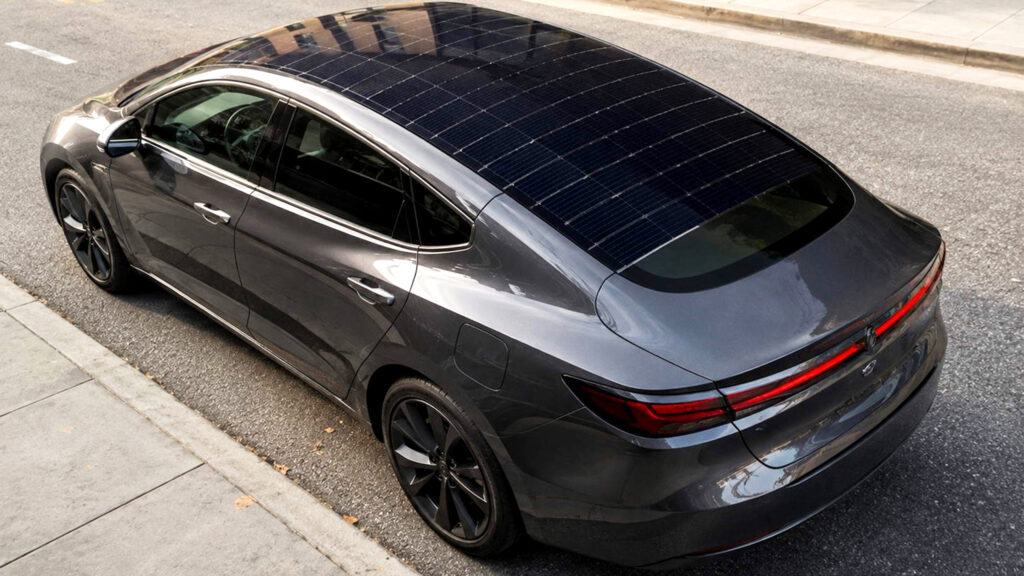
The company is Fuyao Group, one of the largest automotive glass producers on earth, counting Ford, General Motors, Subaru, Tesla and the VW Group among its customers. That client list matters more than the technology demo itself, because Fuyao isn’t some startup trying to buy its way in with a novelty. It has laminated solar cells directly into automotive glass, and the image the company put out shows a car with cells covering the entire roof panel and spilling down across a large section of the rear window.

Read: Nissan’s Ariya Concept Can Add 14 Miles A Day, But Only If The Sun Plays Nice

Fuyao’s current production facilities in Yangxia and Hefei have a combined annual production capacity of 3 million sets of glass for the auto industry, and this is increasing this year. There’s no word on how many solar glass roofs it plans to produce, but it all hinges on carmakers actually deciding it’s worth the investment to use a technology like this.

A Reported $1,190 Option

According to PV Magazine, reports from China earlier this year suggested that Fuyao was working with BYD and that the solar glass sunroof would be offered as an option on the Han and Tang models, priced at approximately 8,000 yuan ($1,190). However, there has been no confirmation from either brand that this is the case.

 A Solar Sunroof For EVs Is Ready For Mass Production, Just Don’t Expect Miracles
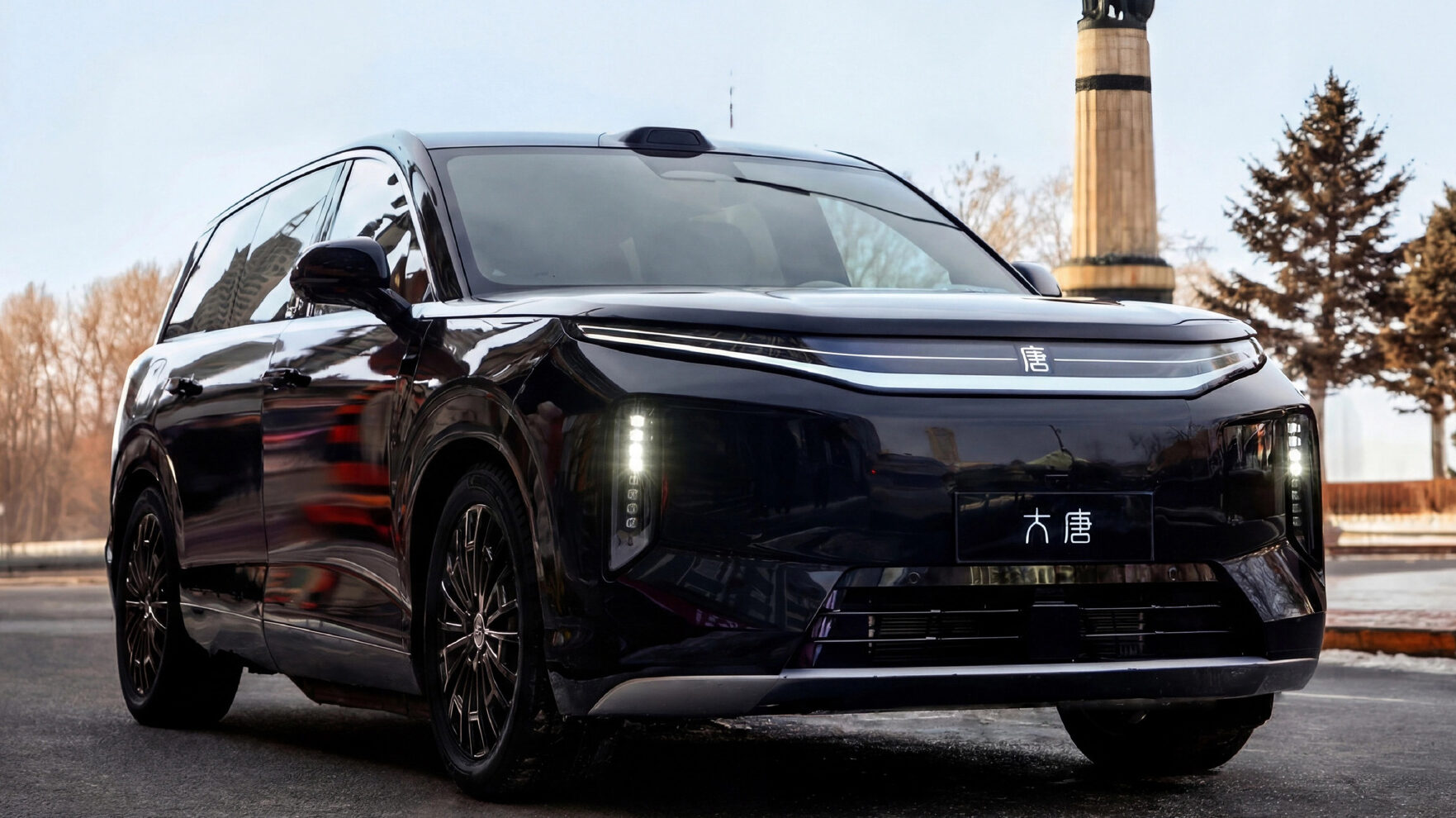
BYD Tang

Given how quickly current BYDs can charge thanks to the firm’s 1,500 kW Flash Charging network, there’s little need for its vehicles to also use solar panels to capture enough energy for just a few extra miles a day.

Nissan Has Created Its Own Solar Roof

Fuyao is far from the only company interested in solar glass roof panels. Earlier this year, two Nissan engineers created a special Ariya that uses solar panels across the roof, tailgate, and hood.

Under clear skies, Nissan says the panels can gather enough energy for up to 14.3 miles (23 km) of additional range in a single day. Spread across a full calendar year, that averages out to roughly 6.3 miles (10.2 km) daily in London, 11.7 miles (18.9 km) in New Delhi, 13.2 miles (21.2 km) in Dubai and 10.9 miles (17.6 km) in Barcelona. The gains shrink once you’re actually moving, though. On a two-hour, 50-mile (80 km) drive, the panels collected 0.5 kWh, good for another 1.8 miles (3 km).

While this doesn’t sound like a lot, Nissan says its analysis showed that commuters who typically drive 3,728 miles (6,000 km) per year could reduce their annual charging-station visits from 23 to just 8 if they drove an EV with solar cells like this.

❌