❌

Normal view

There are new articles available, click to refresh the page.
Before yesterdayVehicles

The GAC Aion V Looks Odd But Is Incredible Value | Review

PROS ›› Well-priced, plush interior, has a fridge, efficient
CONS ›› Little brand value, unusual design

If you walked up to someone on the street and asked them what a GAC Aion V was, most would give you a blank stare. Those brave enough to answer might think it’s a fancy new washing machine, while others may guess it’s the name of an advanced hot-water system. It’s actually an electric SUV, and it’s launched in several markets, eager to shake up the EV establishment.

On paper, the Aion V seems almost too good to be true. This SUV promises space and comfort to match a Tesla Model Y, all while costing significantly less, having more impressive features, and being backed by one of China’s oldest and largest car manufacturers.

However, as we’ve seen with many other new cars from China, the specification sheet only tells part of the story. Building a compelling electric SUV isn’t easy. Has GAC managed to create one with the Aion V? The answer is a resounding yes.

QUICK FACTS
› Model:2026 GAC Aion V
› Starting Price:AU$44,590 (US$31,100) plus on-road costs
› Dimensions:181.2 x 72.9 W x 66.3 in H (4,605 x 1,854 x 1,686 mm)
› Wheelbase:109.2 in (2,775 mm)
› Curb Weight:1,880 kg (4,104 lbs)
› Powertrain:Single electric motor / 75 kWh battery
› Output:201 hp (150 kW) / 155 lb-ft (210 Nm)
› 0-62 mph7.9 seconds
› Transmission:Single speed
› Efficiency:14.8 kWh/100 km
› On Sale:Now
SWIPE
\\\\\\\\\\\\\\\\\\

Photos Brad Anderson/Carscoops

Two versions of the Aion V are sold in Australia. The entry-level Aion V Premium kicks off the range, priced from AU$42,590 (US$29,700) before fees, while sitting at the top of the family is the Aion V Luxury, which we recently drove, priced at AU$44,590 (US$31,000) before fees.

The Aion V is actually in its second generation, with this model first introduced in China in mid-2024. It’s underpinned by GAC’s AEP 3.0 platform, also used by the China-exclusive Toyota bZ3X. Several different battery packs are available depending on the region. These include a 62 kWh lithium-ion pack from CATL, a slightly larger 64.5-kWh LFP battery, a 75-kWH LFP, and a 90-kWh NMC battery. All versions sold in Australia come standard with the 75 kWh pack, directing power through a single front-mounted electric motor with 150 kW (201 hp) and 210 Nm (155 lb-ft)of torque.

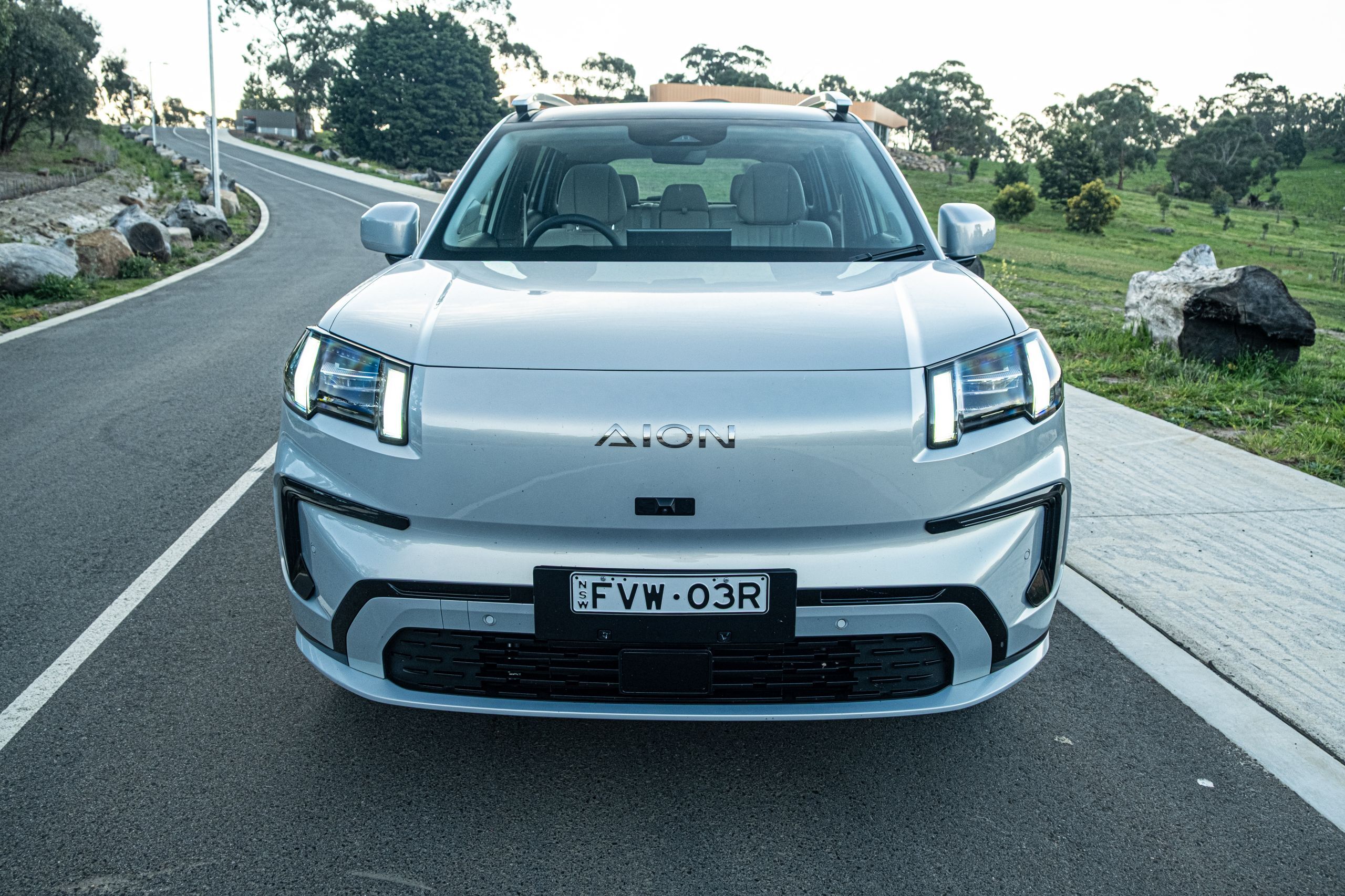
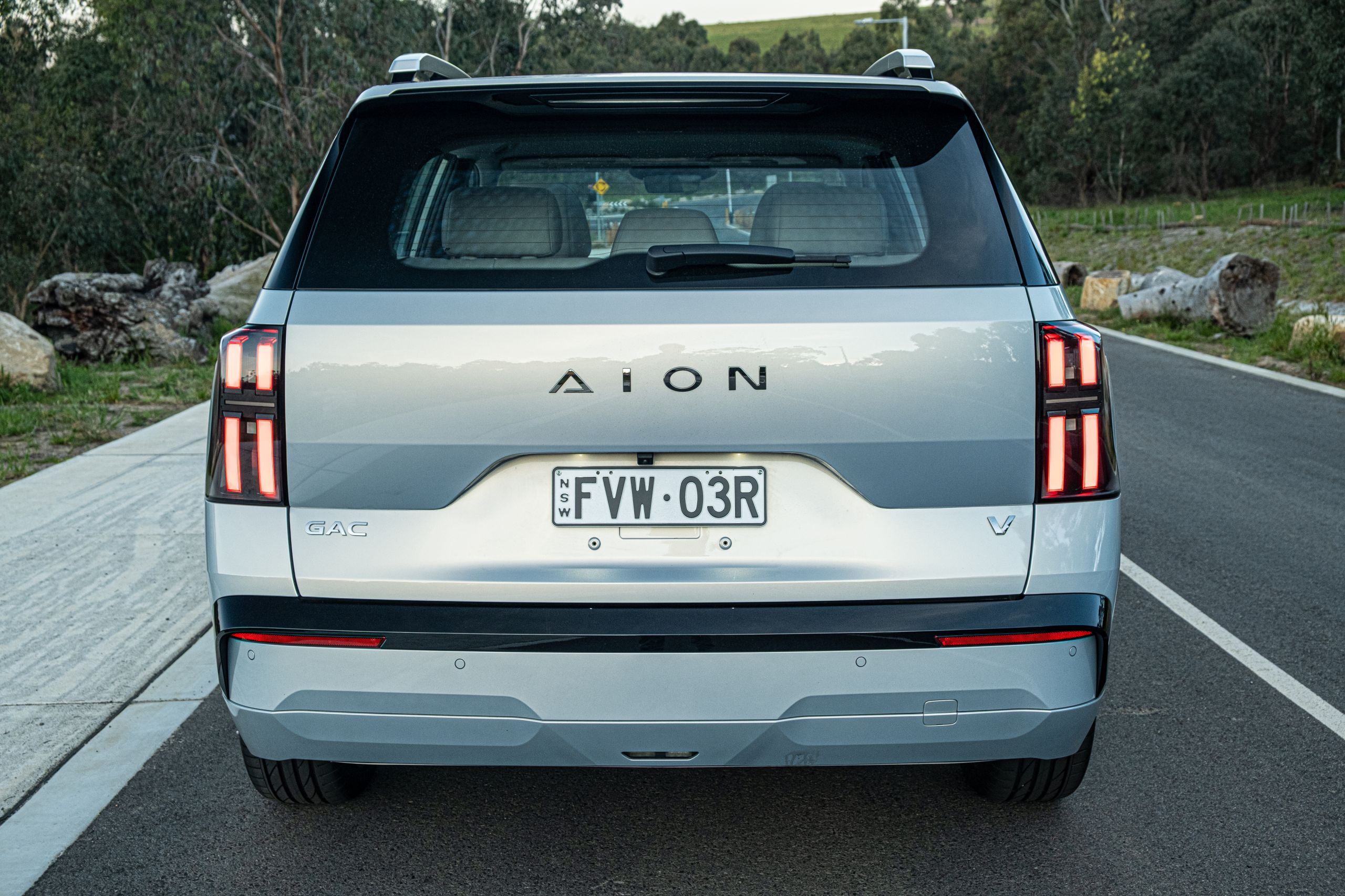
Although Chinese car brands have shown they can build cars at almost unthinkable price points, not all of them have figured out how to build a vehicle that’s nice to look at. As we experienced earlier this year with the Emzoom, M8 PHEV, and Aion UT, the Aion V isn’t exactly the most stylish SUV. It’s boxy, but not necessarily in a good way, and has a rather unusual stance on the road. Look past the odd design and peek inside the cabin, and you’ll understand where the Aion V starts to make a whole lot of sense.

Luxury On A Budget

\\\\\\\\\\\\\\\\\\\\\\\\\\\\\\\\\\\\\\\\\\

Photos Brad Anderson/Carscoops

The interior of the Aion V doesn’t compute with an SUV that costs less than AU$45,000 (US$31,400), or roughly the same as a Toyota Corolla ZR, which is now almost a decade old. It feels so well put together, and so premium, that you could easily be fooled into thinking you were sitting in a vehicle costing upwards of AU$70,000 (US$48,900).

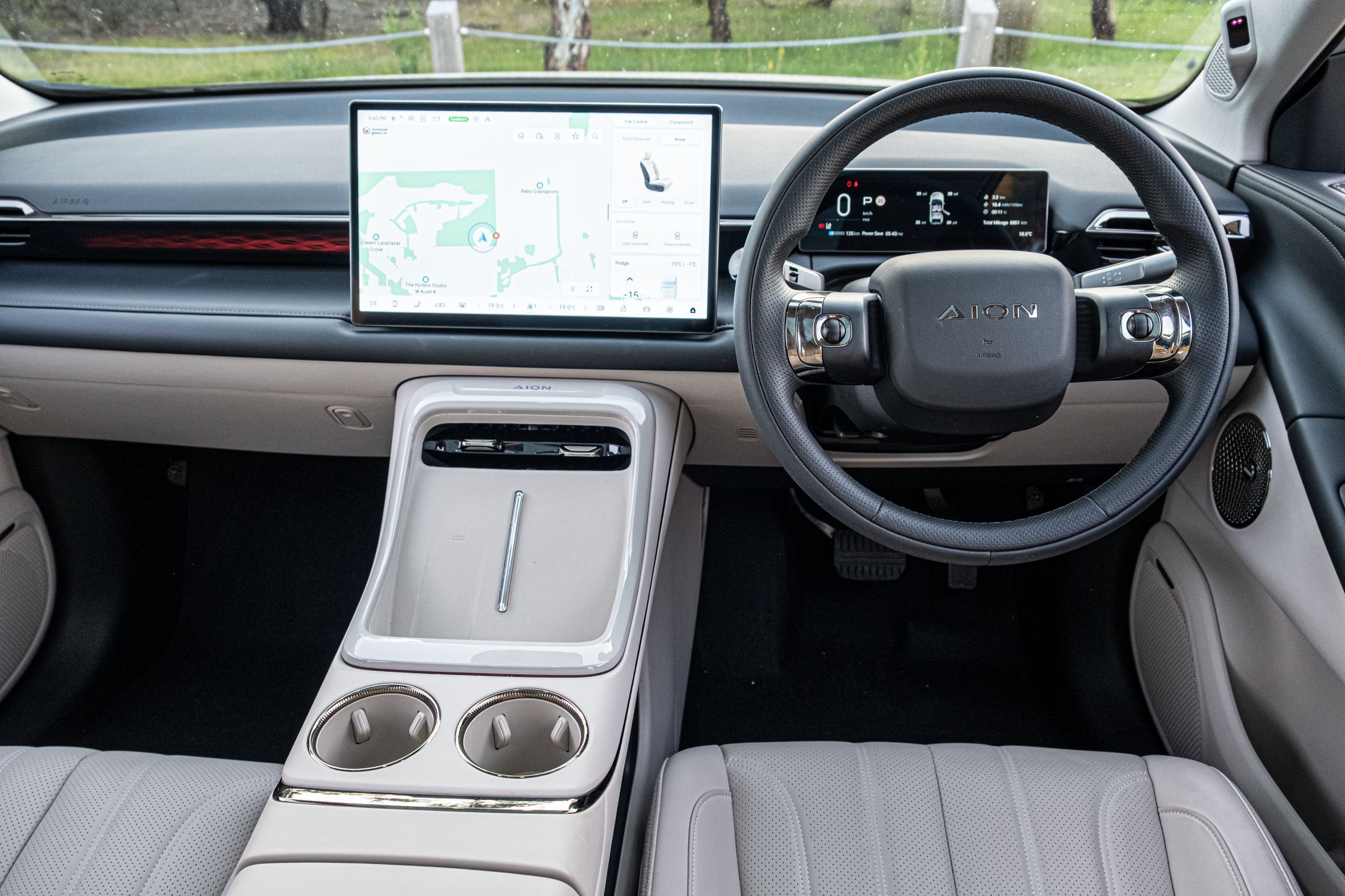
Obviously, the 14.6-inch infotainment display is what immediately catches the eye. It’s crisp and snappy, housing all important vehicle controls, including the climate functions. We hate screens used to adjust temperature and fan speed as much as anyone, but at least the Aion V has a shortcut menu locked at the bottom of the screen with these controls, making them a little easier to access while on the move.
 The GAC Aion V Looks Odd But Is Incredible Value | Review

The Aion V also comes standard with an 8.8-inch digital instrument cluster and a two-spoke steering wheel. In Luxury guise, the EV also comes standard with genuine leather seats that feel exceptionally premium. Better yet, both front seats include superb massage functions that work absolutely brilliantly. Unlike so many massaging seats where you can only feel a tiny pulse in your back, the Aion V’s seats deliver a surprisingly realistic feel, as if tiny fists are being firmly pressed into your back. Usually, this is something you’ll only find in cars worth six figures.

Review: China’s 2026 GAC Aion UT Is A Budget EV That Doesn’t Feel Cheap

Perhaps the single biggest party piece of the Aion V’s cabin is the fridge. Housed between the front seats where you’d ordinarily find the center console, it’s 6.6 liters and proved hugely beneficial in hot weather, keeping my drink bottle cool. It’s not just a fridge either. The temperature can be adjusted to as low as 5 degrees Fahrenheit (-15 degrees Celsius), so it doubles as a freezer. What’s more, the temperature can be increased to up to 122 degrees Fahrenheit (50 degrees Celsius) should you want to keep drinks or food warm.

\\\\\\\\\\\\\\\\\\\\\\\\\\\

Photos Brad Anderson/Carscoops

All important interior surfaces feel very premium. These include the two-tone door panels with diamond stitching, the soft-touch dashboard, and the felt used for the wireless smartphone charger.

The positives continue in the rear. While the Aion V’s 2,775-mm (109.2-inch) wheelbase isn’t huge, it feels certifiably palatial in the second row. There’s plenty of headroom and legroom for adults to sit comfortably in the back. The Luxury model even includes a fold-out table on the back of the front passenger seat. Add in a panoramic glass roof with a sliding cover – unlike a Tesla – and you get a cabin that feels beautifully executed.

This Is No Sporty SUV, And That’s Okay
 The GAC Aion V Looks Odd But Is Incredible Value | Review

Unlike a Tesla Model Y, which even in its simplest form has a sporty edge to it, there’s nothing sporty about the Aion V. That’s not to say it isn’t a lovely place to spend time, as it is.

Figures of 150 kW (201 hp) and 210 Nm (155 lb-ft) are par for the course for front-wheel drive EVs like this, matching figures like the Hyundai Elexio and Kia EV5, but down slightly on the Geely EX5 with its 160 kW (215 hp) and 320 Nm (236 lb-ft).

Torque steer is kept to a minimum, although there is a hint of it if you pin the throttle in Sport mode. I spent most of the week with the Aion V driving around in Power Save mode as it’s the only mode that enabled one-pedal driving. This let me average just 14.8 kWh/100 km across more than 300 km (186 miles) of driving, meaning it is very possible to meet GAC’s WLTP-claimed driving range of 510 km (317 miles).

\\\\\\\\\\\\\\\\\\\

Photos Brad Anderson/Carscoops

The lack of one-pedal driving in Sport or Comfort modes is disappointing, as is the lack of paddle shifters to make on-the-fly adjustments to the regenerative braking. This isn’t a big deal, but it is something that prospective buyers should be aware of.

Steering feel is good. Unlike some EVs, the Aion V’s steering isn’t so light that a strong gust of wind through an open window could turn the wheel. Instead, it’s nicely weighted, although it doesn’t do a good job of transmitting feedback from the road, so it can be a little difficult to determine what the front tires are up to.

GAC has also done a good job of calibrating the suspension. The Aion UT I tested earlier this year rode more like a premium German sedan than a cheap, electric hatchback, and it’s much the same as the V. Owing to the SUV’s larger size, it is a little firmer than the UT, but it never crashes over potholes or speed bumps, and instead rides over them gracefully and quietly.
 The GAC Aion V Looks Odd But Is Incredible Value | Review

Charging speeds are solid. GAC says the Aion V supports charging speeds of up to 180 kW, meaning the battery can be charged from 10-80 percent in roughly 24 minutes. While a base Tesla Model Y can charge at up to 250 kW, it costs roughly AU$13,000 (US$9,000) more than the Aion V. More direct rivals like the Geely EX5 and Hyundai Elexio have DC charging speeds capped at just 100 kW and 150 kW, respectively.

It’s not all sunshine and rainbows, though. My biggest gripe with the Aion V is its safety systems, which are an all-too-common theme among Chinese EVs. First is the driver-monitoring system, which is as hyperactive as a kid that’s just eaten a whole bag of M&Ms. Glance away from the road for a split second and it’ll start complaining, triggering an annoying ring until you look back at the road.

Similarly, the speed monitoring immediately alerts you even if you’re just momentarily 1 km/h over the speed limit. While these features are becoming more common, not just on cars from China but elsewhere in Asia, Europe, and the US, some brands have made it simple to disengage these alerts with conveniently placed shortcuts on the touchscreen. That’s not the case with the Aion V, as you have to dive into several menus to disable them every time you go for a drive.

\\\\\\\\\\\\\

Photos Brad Anderson/Carscoops

Verdict

The GAC Aion V is very impressive, especially given the price and all of the equipment on offer. I have no doubt the exterior design will put off some in the market for an electric SUV, but if you can look past some of the odd styling, it’s a well-rounded proposition.

For a vehicle costing less than AU$50,000 (US$34,900), the interior is the obvious highlight. It’s stylish, well-made, plush, and loaded with features. Combine a calming driving experience with great efficiency, and you get a mid-size electric SUV that’ll leave some legacy brands scratching their heads.
\\\\\\\\\\\\\\\\\\\\\\\\\\\\\\\\\\\\\\\\\\\\\\\\\\\\\\\\\\\\\\\\\\\\\\\\\\\\\\\\\\\\\\\\\\\\\\\\\\\\\\\\\\\\\\\\\\\\\\\\\\\\\\\\

Photos Brad Anderson/Carscoops

Mitsubishi’s Taiwanese EV Has More Grunt Than The Most Powerful Evo Ever

  • The ASX VR-e GSR has two electric motors that combine for 459 horsepower.
  • This all-wheel-drive version can sprint to 62 mph (100 km/h) in just 3.9 seconds.
  • Mitsubishi will also sell three different rear-wheel-drive versions of the ASX VR-e.

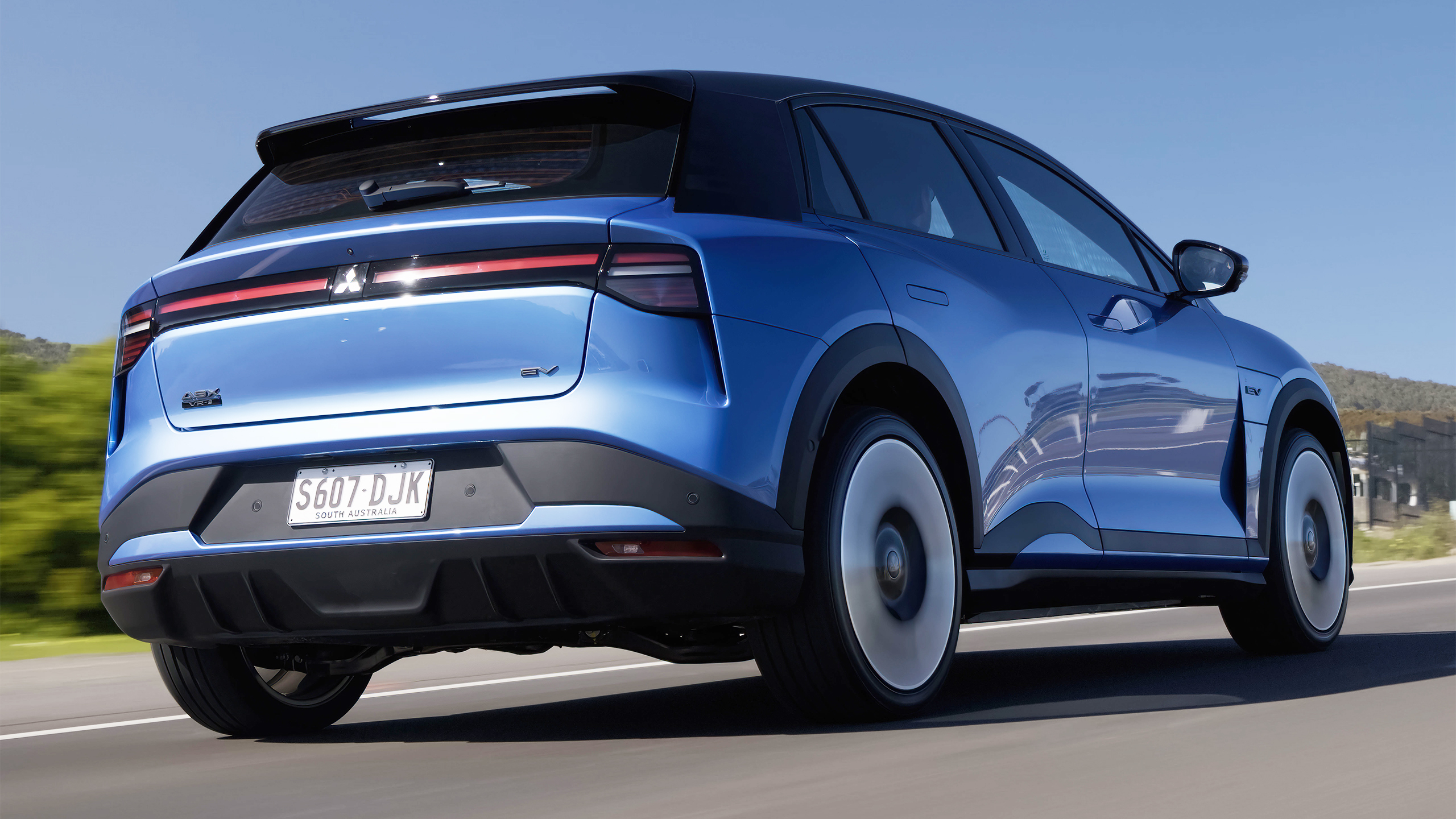
It’s no secret that Mitsubishi has lagged behind its competitors in the electric vehicle space. Rather than go it alone and develop and build a bespoke EV from the ground up, it has instead tapped Taiwanese manufacturer Foxconn and launched a rebranded version of its Foxtron Bria. This new Mitsubishi, badged the ASX VR-e and initially launching in Australia, is unlike any other vehicle from the Japanese brand.

The highlight is obviously the powertrain. All versions of the ASX VR-e will use the same 57.7-kWh lithium-ion battery, which is relatively small in the current EV space. The LS, Aspire, and Exceed will all pair this battery with a single rear-mounted electric motor delivering 229 horsepower (171 kW) and 258 pound-feet (350 Nm) of torque. Those figures are enough to send it to 62 mph (100 km/h) in a respectable 6.8 seconds.

Read: An All-New Mitsubishi Outlander May Launch In 2028

Power-hungry buyers will be pleased to hear Mitsubishi has them covered. The flagship GSR model combines the standard car’s rear-mounted motor with one at the front, lifting combined output to a frankly staggering 459 hp (342 kW) and 516 lb-ft (700 Nm) of torque. To put that into perspective, that’s more than the craziest Mitsubishi Lancer Evo ever built, the UK-only Evo X FQ-440 MR with its 440 hp and 412 lb-ft (559 Nm). While the new ASX VR-e may not appeal to all the same enthusiasts who love the legendary Evo, it has plenty of performance to thrill, hitting 62 mph (100 km/h) in 3.9 seconds.

Mitsubishi says all four versions will include Eco, Comfort, and Sport models, and in the GSR, the Sport model will automatically adjust the power delivery between 50/50 and 30/70 front-to-rear.

 Mitsubishi’s Taiwanese EV Has More Grunt Than The Most Powerful Evo Ever

All-important range details remain a mystery, but given the small pack, prospective owners shouldn’t expect figures much beyond 248 miles (400 km). While it’s hard to argue with the performance on offer, charging is below par. Mitsubishi says DC fast charging is capped at just 134 kW while AC charging is limited to 6.6 kW.

As the ASX VR-e’s design is lifted directly from the Foxtron Bria, which was styled by Pininfarina, it obviously looks different from any other Mitsubishi to come before it. That’s hardly a criticism, as the Japanese brand hasn’t built a beautiful car for years. We wouldn’t go as far as to say the ASX VR-e is beautiful, but it’s certainly stylish and has a European flavor to it.

What About The Cabin?

 Mitsubishi’s Taiwanese EV Has More Grunt Than The Most Powerful Evo Ever

The cabin features a 15.6-inch central infotainment display, a 9.2-inch digital driver display, and a sporty steering wheel. Other key features include configurable ambient lighting, a Surround View Monitor, leather or cloth seats depending on configuration, and autonomous parking.

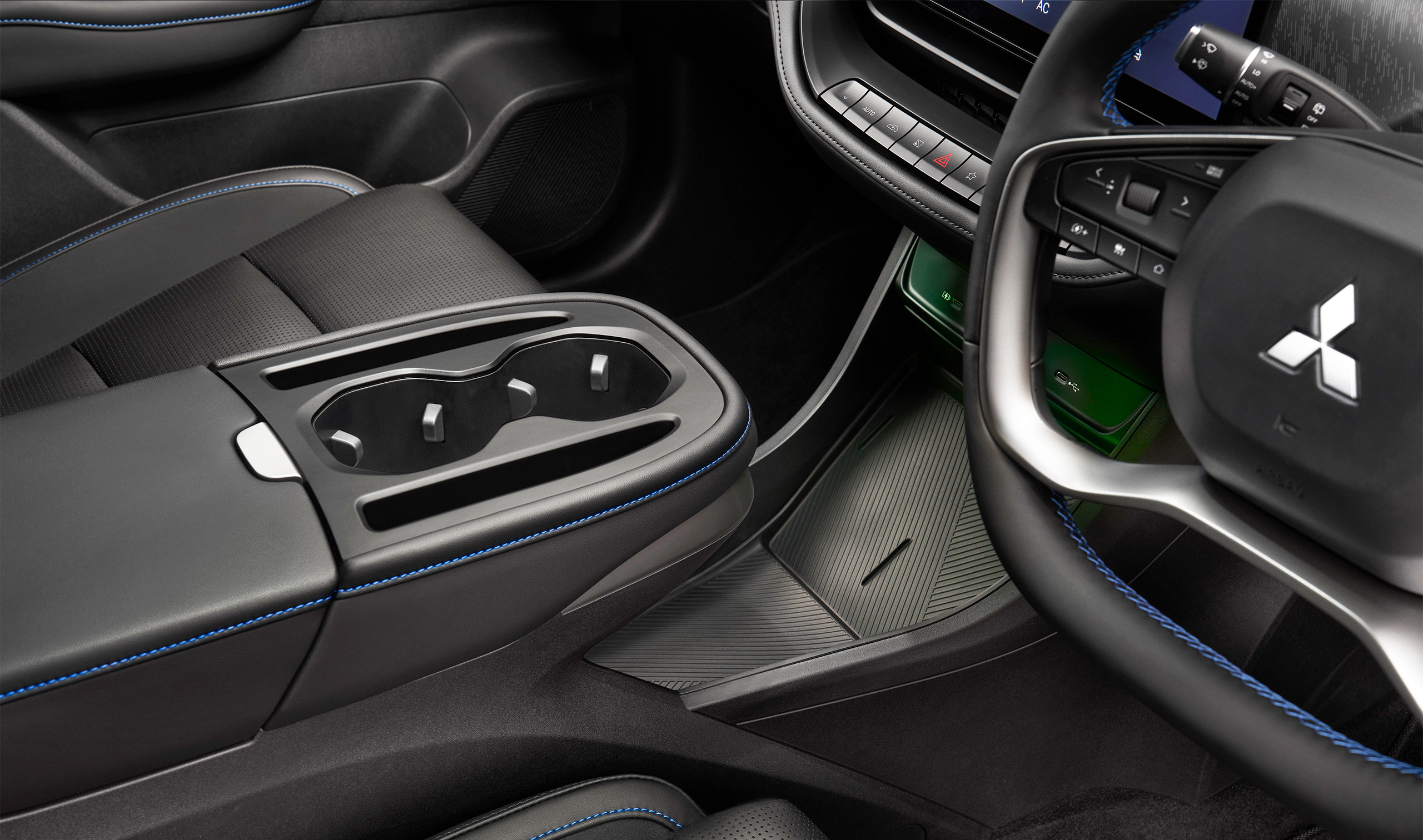
Mitsubishi has also confirmed the Exceed and GSR models will ship as standard with a panoramic glass roof, electric tailgate, and 12-speaker audio system. The cabin won’t be particularly flamboyant as it’ll only be available in grey or black with blue stitching.

While some customers will no doubt be wary of buying a Mitsubishi that’s really an EV from a Taiwanese brand with no history of building cars, the ASX VR-e will be delivered with a 5-year / 100,000 km (62,000-mile) warranty. This warranty can be extended to 10 years / 200,000 km (124,000 miles) if all scheduled services are completed at a Mitsubishi dealership. Regardless of servicing, the battery pack is warrantied for eight years or 160,000 km (99,400 miles). Prices will be announced later this year as the EV starts to arrive at dealerships.

\\\\\\\\\\\\

BYD Says ‘Hacker’ Tapped Into Shark 6 Wiring As Aussie Documentary Slammed As Hit Piece

  • As it turns out, the documentary gave a “hacker” two weeks to work on a Shark 6.
  • BYD says he installed an untrusted third-party application into the infotainment system.
  • The documentary failed to acknowledge the security concerns about all new cars, not just BYDs.

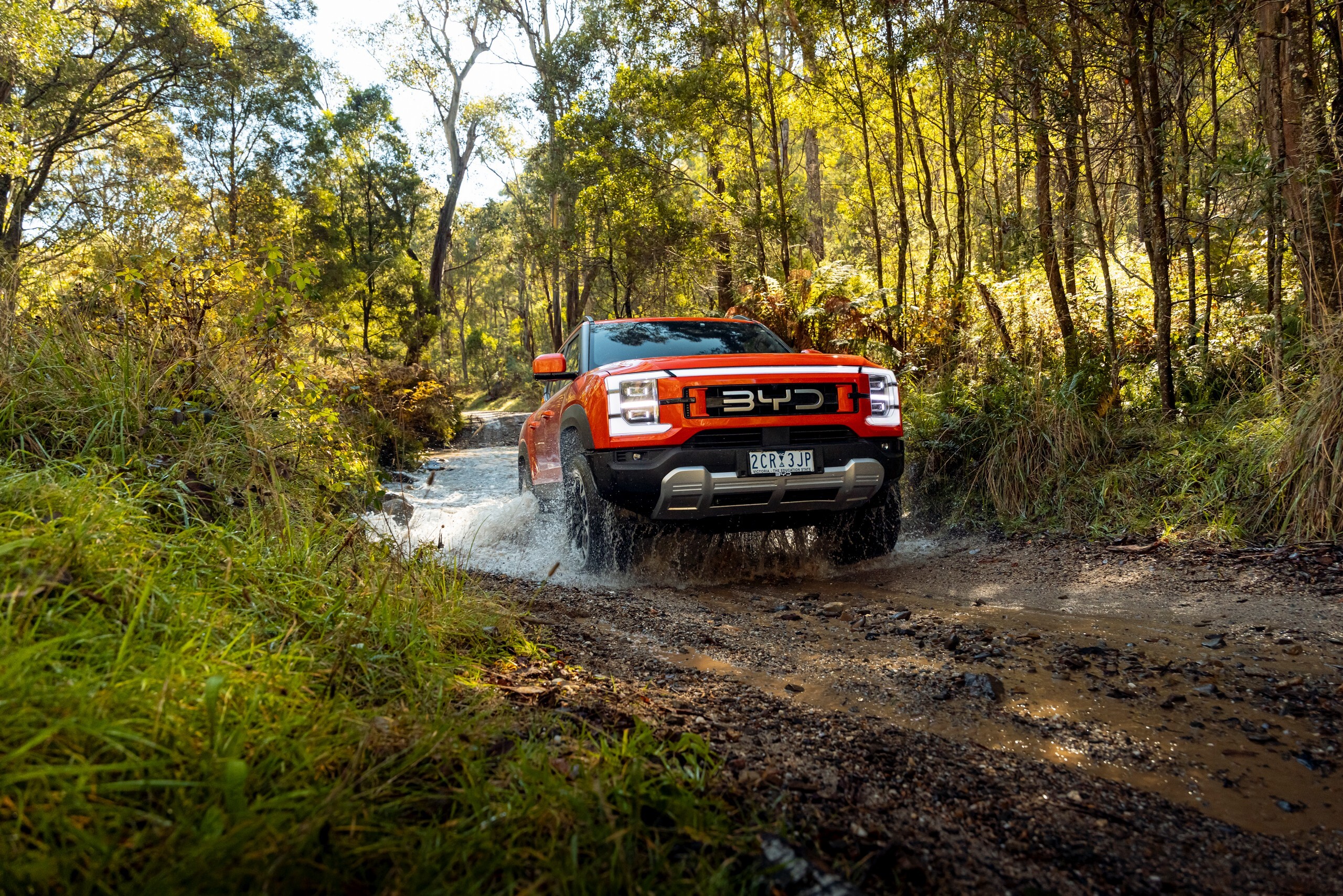
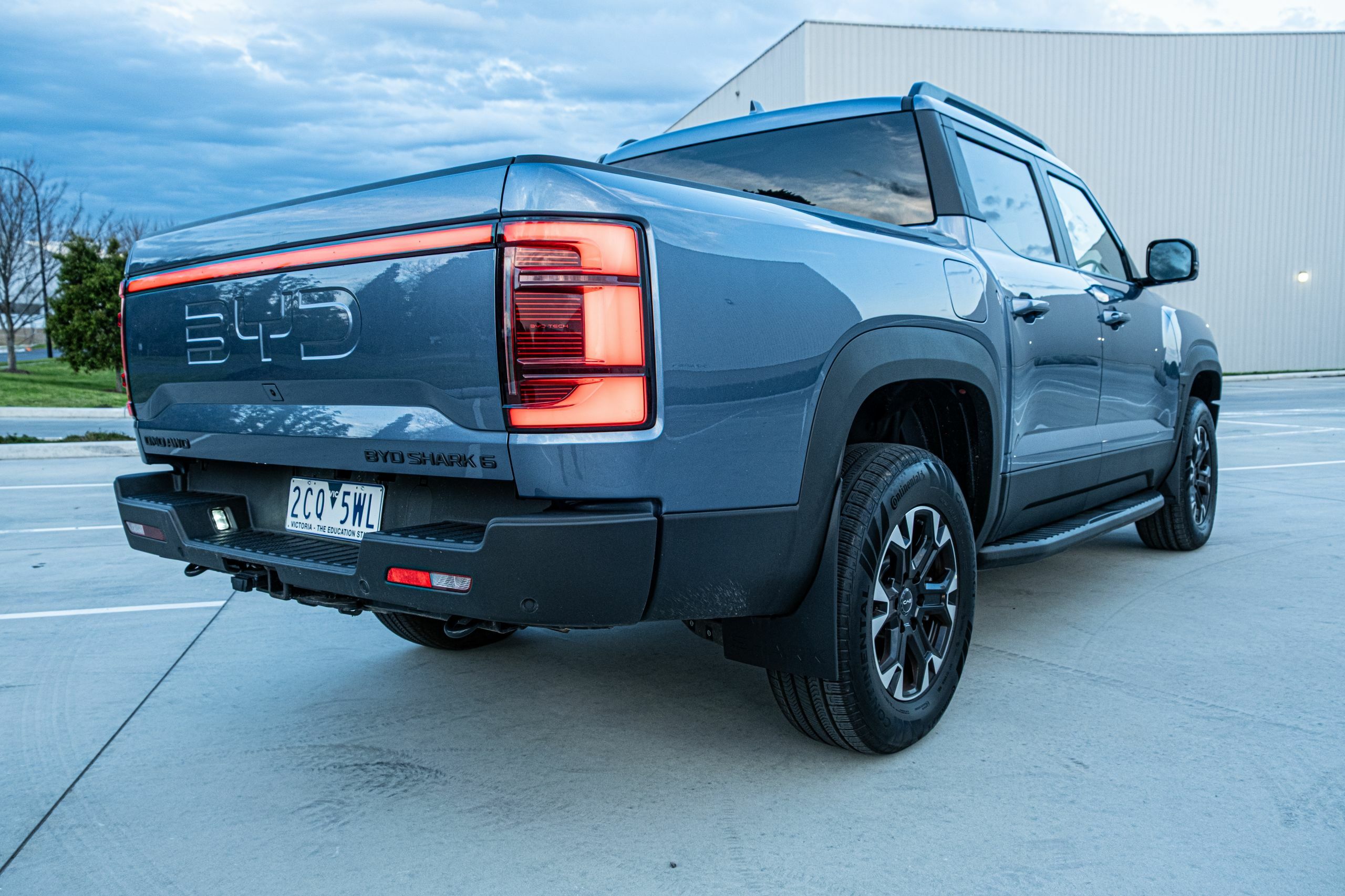
BYD has quickly responded to cybersecurity concerns about the popular Shark 6 pickup truck following the release of an Australian documentary, which revealed how easily it could be hacked. The Chinese brand has also clarified how a hacker gained control of the plug-in hybrid’s headlights and windshield wipers.

As part of the ABC’s Four Corners program, cybersecurity expert Dan Hreszczuk was given a Shark 6 for two weeks and was able to listen in to the interior microphones, take control of the door locks, and mess with the Shark 6’s audio. To avoid giving any other hackers any bad ideas, details about how Hreszczuk hacked into the BYD weren’t disclosed.

Read: A Hacker Took Control Of A BYD For TV, But Should You Be Worried?

BYD says it’s found out how he did it. To hack into the truck’s infotainment system, it says he breached the Android Debug Bridge (ADB) with a special tool and installed an untrusted third-party application. BYD was able to replicate this vulnerability in its own testing but says for a hacker to gain access to a vehicle’s location data and microphone, the driver must accept a permission prompt that will be displayed on the screen, something the documentary didn’t disclose.

To address this vulnerability, BYD says it’s working on an over-the-air software update that will remove the pathway used to enable the ADB, which is ordinarily disabled. It hasn’t said when this update will be ready, but says if similar vulnerabilities are found in its other models, they too will get the new software.

 BYD Says ‘Hacker’ Tapped Into Shark 6 Wiring As Aussie Documentary Slammed As Hit Piece

What The Documentary Didn’t Tell You

Then there’s the matter of the headlights and windshield wipers. In the Four Corners program, the hacker was shown remotely turning on the wipers and then turning off the headlights as the Shark 6 was being driven at night. According to BYD, gaining control of these functions required far more than installing some third-party software.

It says the hacker tapped into the vehicle’s wiring and accessed the internal CAN bus, which obviously isn’t something a hacker sitting behind a computer screen can do. Hreszczuk confirmed in a blog post that he spliced into the Shark 6’s wiring and installed a low-cost Raspberry Pi computer, something that could be replicated on plenty of other new cars.

To minimize the chance of any would-be hackers using an OBD device to gain access to critical vehicle functions, BYD says it has implemented new security measures for the OBD interface. Now, it will require physical isolation and device authentication.

 BYD Says ‘Hacker’ Tapped Into Shark 6 Wiring As Aussie Documentary Slammed As Hit Piece
Brad Anderson/Carscoops

Mazda Is Working On A New Midsize Pickup

  • Mazda confirms a next-gen BT-50 pickup is under development.
  • It could feature sharper styling based on shared underpinnings.
  • The new midsize truck is expected to hit the road around 2028.

The Mazda BT-50 might not be as popular as its Toyota Hilux and Ford Ranger rivals, but it remains an important model for the Japanese automaker. The increased competition in the midsize pickup segment has prompted Mazda to consider a new generation, set to arrive over the next couple of years.

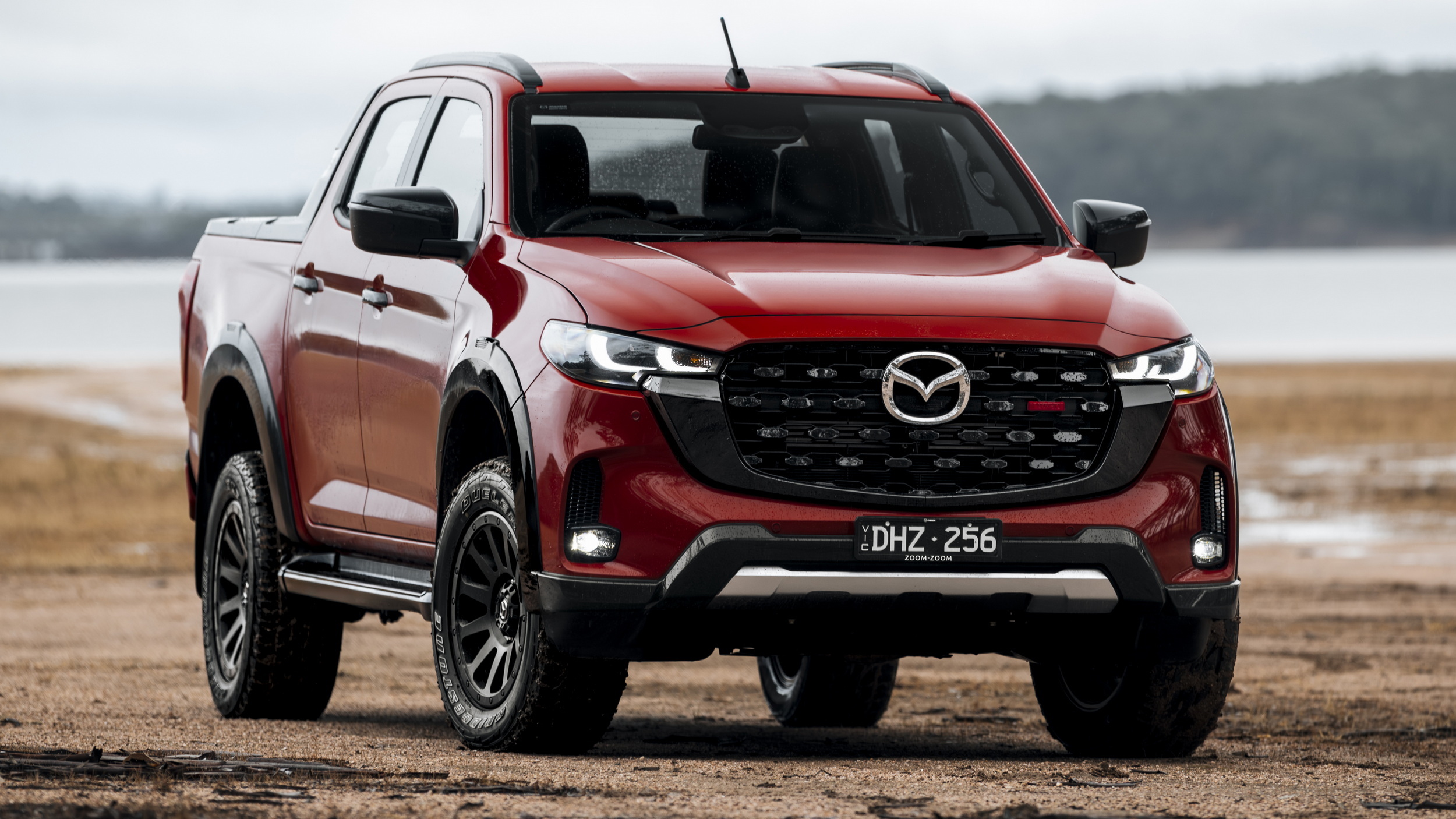
The third generation of the Mazda BT-50 was introduced in 2020, with a mid-lifecycle update following in late 2024. The model is based on the ladder-frame underpinnings of the Isuzu D-Max, with Mazda-specific styling inside-out and is currently offered with non-electrified turbodiesel powertrain options.

More: Mazda Pickup Gets Its Thunder Back, As A New Boss Steps In

Our colleagues at CarsGuide spoke to Vinesh Bhindi, Mazda Australia’s managing director, who confirmed that a new generation of the BT-50 is under development. The high-ranking official didn’t get into details about the specifications, but confirmed it will likely hit the road around 2028.

 Mazda Is Working On A New Midsize Pickup
The current Mazda BT-50 is based on the Isuzu D-Max.

The same publication spoke to Eiji Kimoto, Mazda’s chief designer, who was responsible for the styling of the current BT-50. When asked about the upcoming pickup, Kimoto said: “I am not allowed to speak much about the future product, but I can tell you, please look forward to it”.

More: Bare-Bones Mazda BT-50 Grows Stronger And More Capable

Since Mazda doesn’t have enough R&D resources to develop a pickup on its own, the next BT-50 will likely be the result of a partnership. After all, the first two generations were paired with the Ford Ranger, while the third one migrated to the Isuzu platform.

Collaborative Effort

 Mazda Is Working On A New Midsize Pickup

Illustrations: Thanos Pappas / CarScoops

Mazda could continue the partnership with Isuzu, developing the new model alongside the new generation of the D-Max. Another option would be to broaden its collaboration with Chinese automaker Changan, following the 6e sedan and CX-6e SUV projects.

More: Mazda Poised To Build More Chinese-Based EVs

Changan already offers a pickup in the form of the Hunter K50 with a revolutionary range-extender powertrain. However, this one is based on the ladder-frame chassis of the diesel-powered Changan Hunter which has already spawned several siblings from Stellantis brands in South America including the Peugeot Landtrek, the Fiat Titano, the Ram 1200, and Ram Dakota.

Sharp Looks And Upmarket Interior

 Mazda Is Working On A New Midsize Pickup

Illustrations: Thanos Pappas / CarScoops

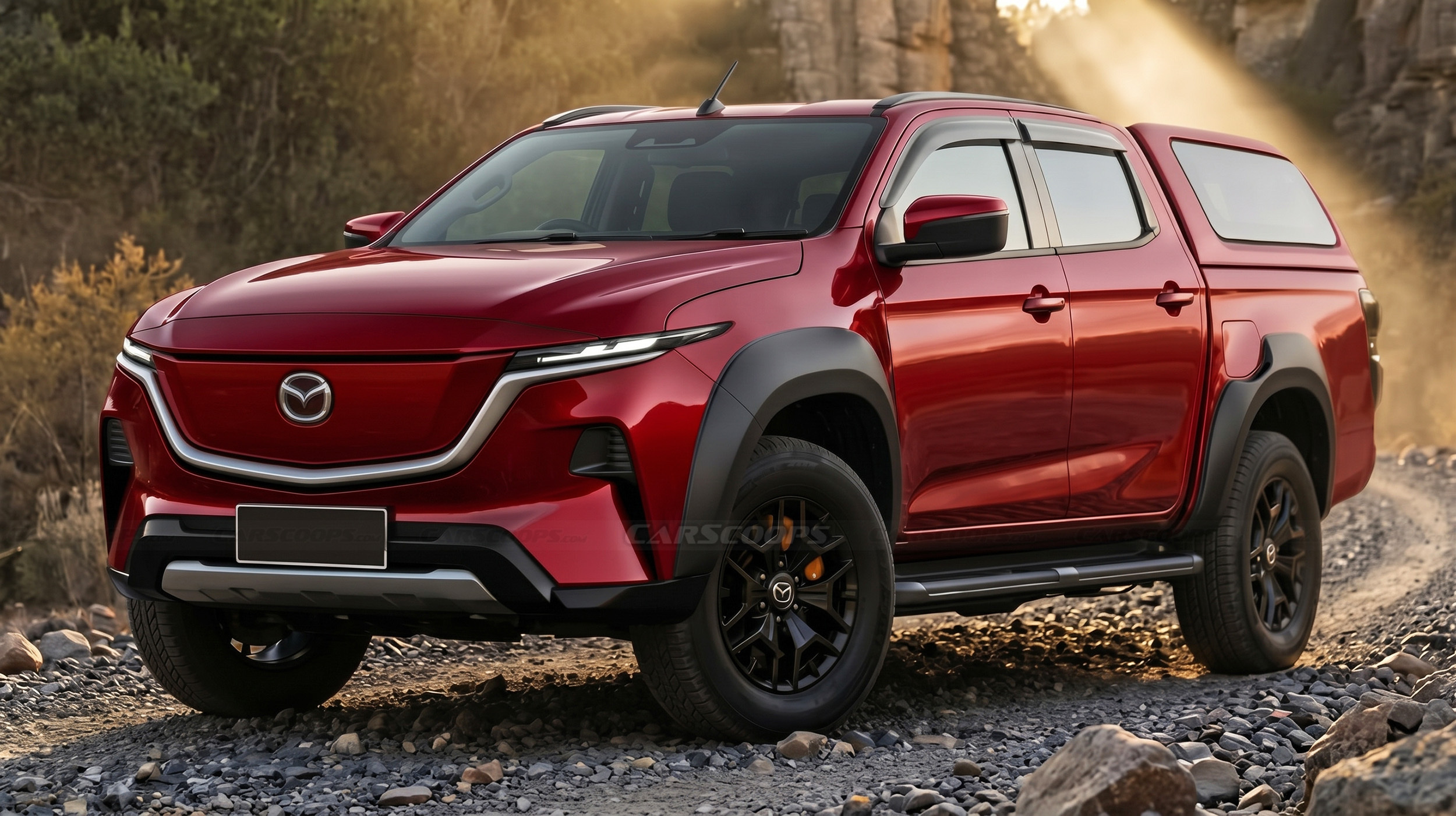
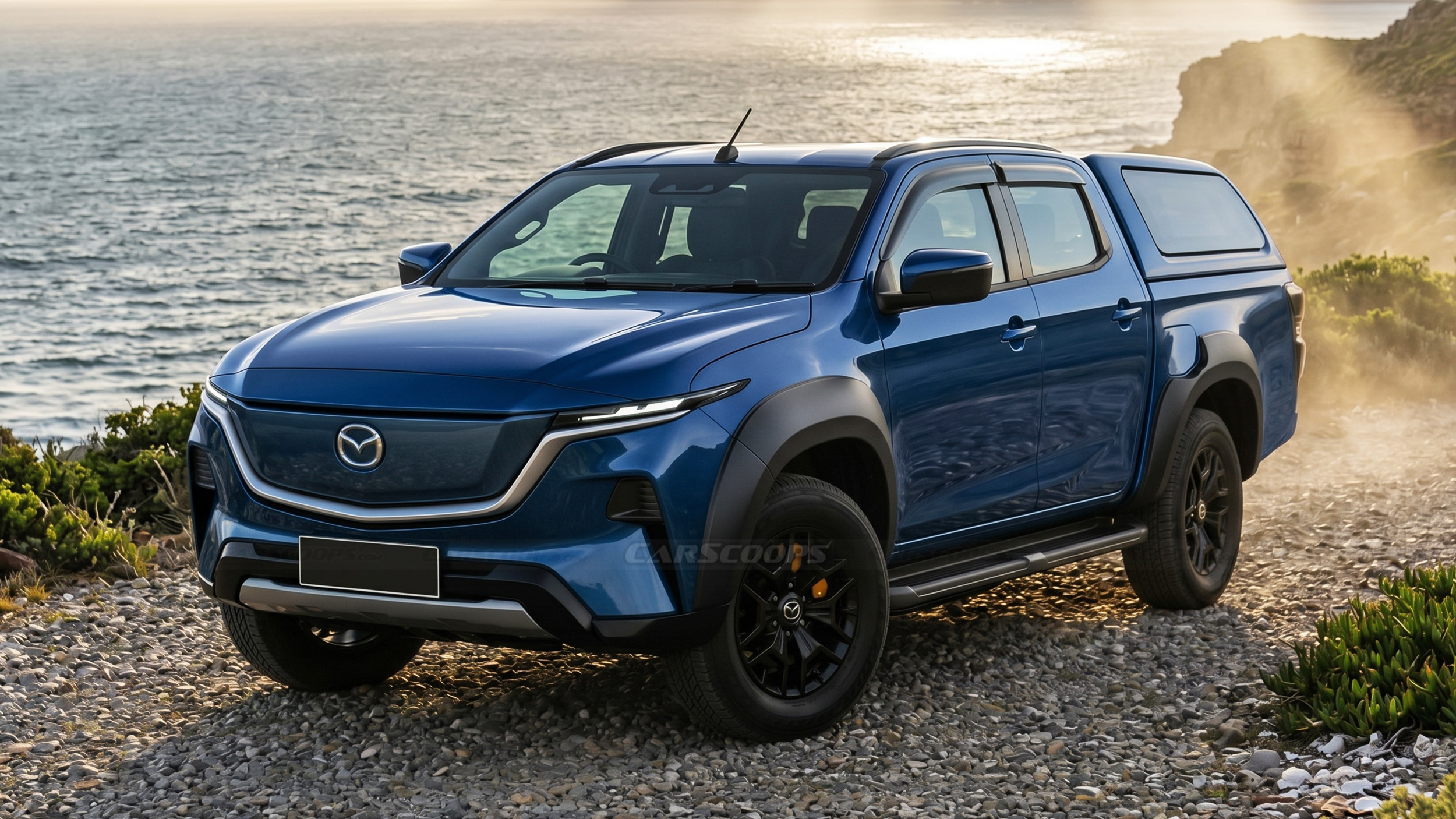
In any case, the next Mazda BT-50 is expected to adopt the brand’s updated styling language with sharp LEDs and sculpted details. In our speculative rendering we used the proportions of the Isuzu D-Max as a base, infusing elements from the Mazda CX-6e alongside wide fender extensions and a rear canopy.

We also expect Mazda to give its truck a more premium interior, in line with the upmarket move of its entire lineup. This could help the next BT-50 stand out in a crowded segment, targeting a specific kind of buyer. As with most midsize pickups in Australia, the model could continue offering rugged trims like the Thunder alongside a selection of optional accessories for off-road enthusiasts.

What About The Powertrain?

Back in 2025, the Mazda Australia boss said there won’t be a fully electric variant of the BT-50 in the foreseeable future, despite the availability of the closely-related Isuzu D-Max EV. He also didn’t perceive PHEV pickups as a threat, adding that diesel powertrains will probably stick around. Still, the local Managing Director admitted they will let the market pinpoint if there’s demand for electrified trucks and consider the options.

Reading between the lines, Mazda could offer some sort of electrified powertrain options for the next BT-50. If it sticks to the partnership with Isuzu they will likely use a mild-hybrid diesel, while the Changan route would probably result in a range-extender option. That would allow the pickup to fulfil market demand while complying with tightening emission regulations and potentially expanding its scope to markets outside Australia.

 Mazda Is Working On A New Midsize Pickup
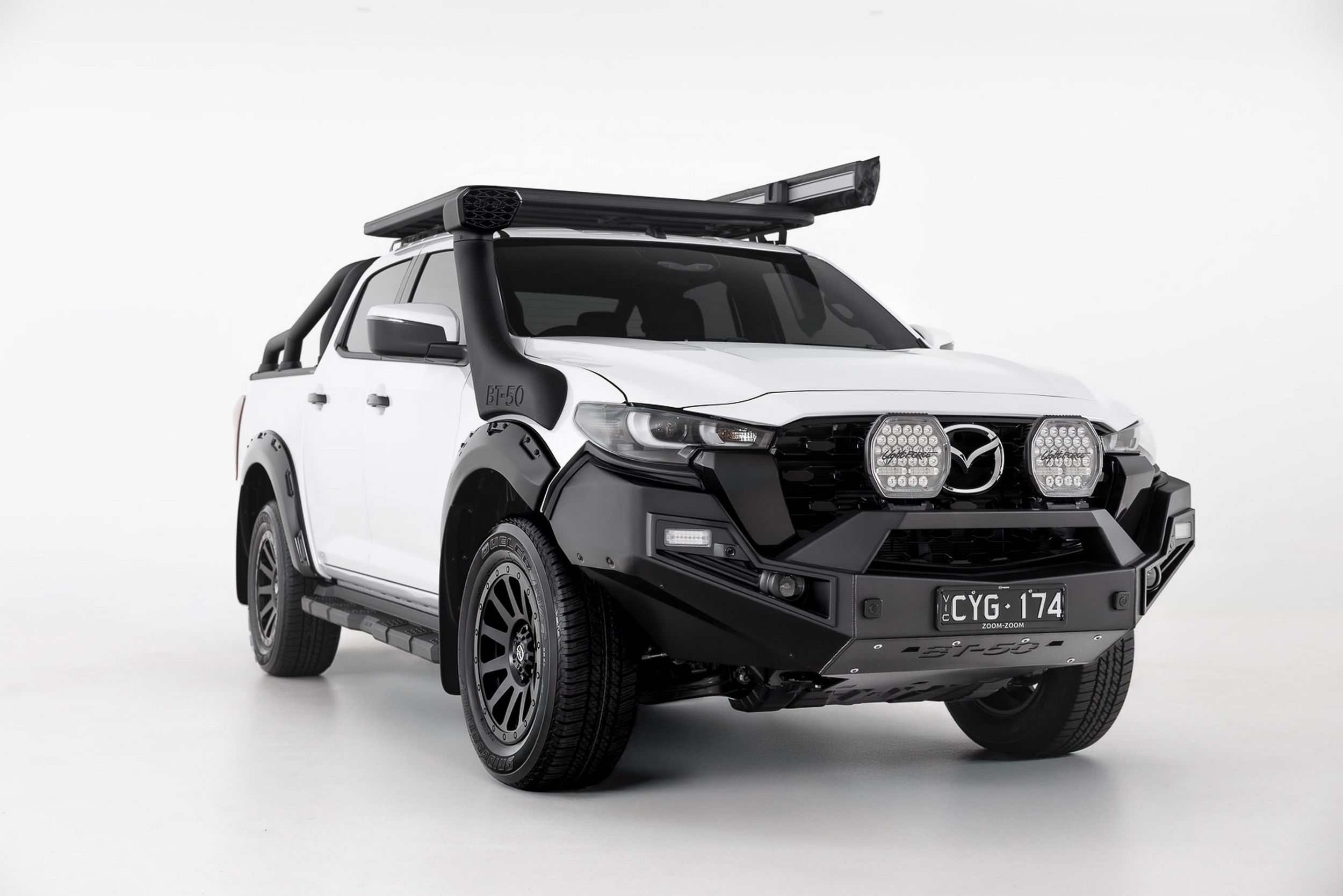
A heavily accessorized example of the Mazda BT-50 in Australia.

It Has An Odd Name, But The Deepal S07 Surprises | Review

PROS ›› Stands out, affordable, efficient
CONS ›› No brand recognition, slow, average range

A few years ago, Australians looking for a mid-size, all-electric SUV had very few options. Now, there’s never been more, and it seems as though a new option arrives every few months.

The Tesla Model Y still moves more units than any of the competition. Still, other models, including the Kia EV5, Hyundai Elexio, BYD Sealion 7, GAC Aion V, and Zeekr 7C, have opened up many options for buyers. Deepal is one of the newer Chinese automakers to launch locally and, backed by Changan, its S07 aims to upset the establishment.

Read: This Chinese SUV Is Like A Cut-Price Xiaomi YU7, Except For What’s Under The Hood

Sporting a coupe-inspired exterior, premium features, and an interior that feels genuinely considered, it seems promising. But is this enough to pull buyers away from the names they already trust? We recently spent a week living with the Deepal S07 to find out.

QUICK FACTS
› Model:2026 Deepal S07
› Starting Price:AU$47,990 (US$34,400)
› Dimensions:187 x 75.9 W x 63.9 in H (4,750 x 1,930 x 1,625 mm)
› Wheelbase:114.1 in (2,900 mm)
› Curb Weight:2,073 kg (4,570 lbs)
› Powertrain:79 kWh battery / single rear motor
› Output:214 hp (160 kW) / 236 lb-ft (320 Nm)
› 0-62 mph7.9 seconds
› Transmission:Single speed
› Efficiency:17.8 kWh/100 km
› On Sale:Now
SWIPE
\\\\\\\\\\

Photos Brad Anderson/Carscoops

Sold in a single configuration and offered with either 19- or 20-inch wheels, the S07 is currently available from AU$47,990 (US$34,400), including all on-road costs, or roughly AU$10,000 (US$7,200) less than when it initially launched locally in early 2025. This is very competitive, making the Deepal AU$2,000 (US$1,400) cheaper than a base Kia EV5, and more than AU$15,000 (US$10,800) less than a Tesla Model Y.

For a brand that has absolutely no heritage in Australia, nailing price is extremely important, so Deepal has at least done a good job in that regard.

The S07 has a 79.97 kWh ternary lithium battery pack, driving a rear-mounted electric motor with 160 kW (214 hp) and 320 Nm (236 lb-ft) of torque, roughly on par with other electric SUVs in this segment. One crucial area where the S07 lags the competition is charging, with a peak DC rate of just 92 kW, meaning it takes 35 minutes to charge from 30 to 80 percent. AC charging peaks at 11 kW. Notably, the S07 includes a 3.3 kW vehicle-to-load function, which is a nice addition.

\\\\\\\\\\\\\\\\\\\\\\\\\\\\\\

Photos Brad Anderson/Carscoops

Changan designed the S07 at its facility in Turin, Italy, and it stands out from much of the competition thanks to the coupe-SUV roofline and sporty lights. By comparison, the interior is typical of many current electric SUVs from China. For what it lacks in originality, it makes up for it with its material choices.

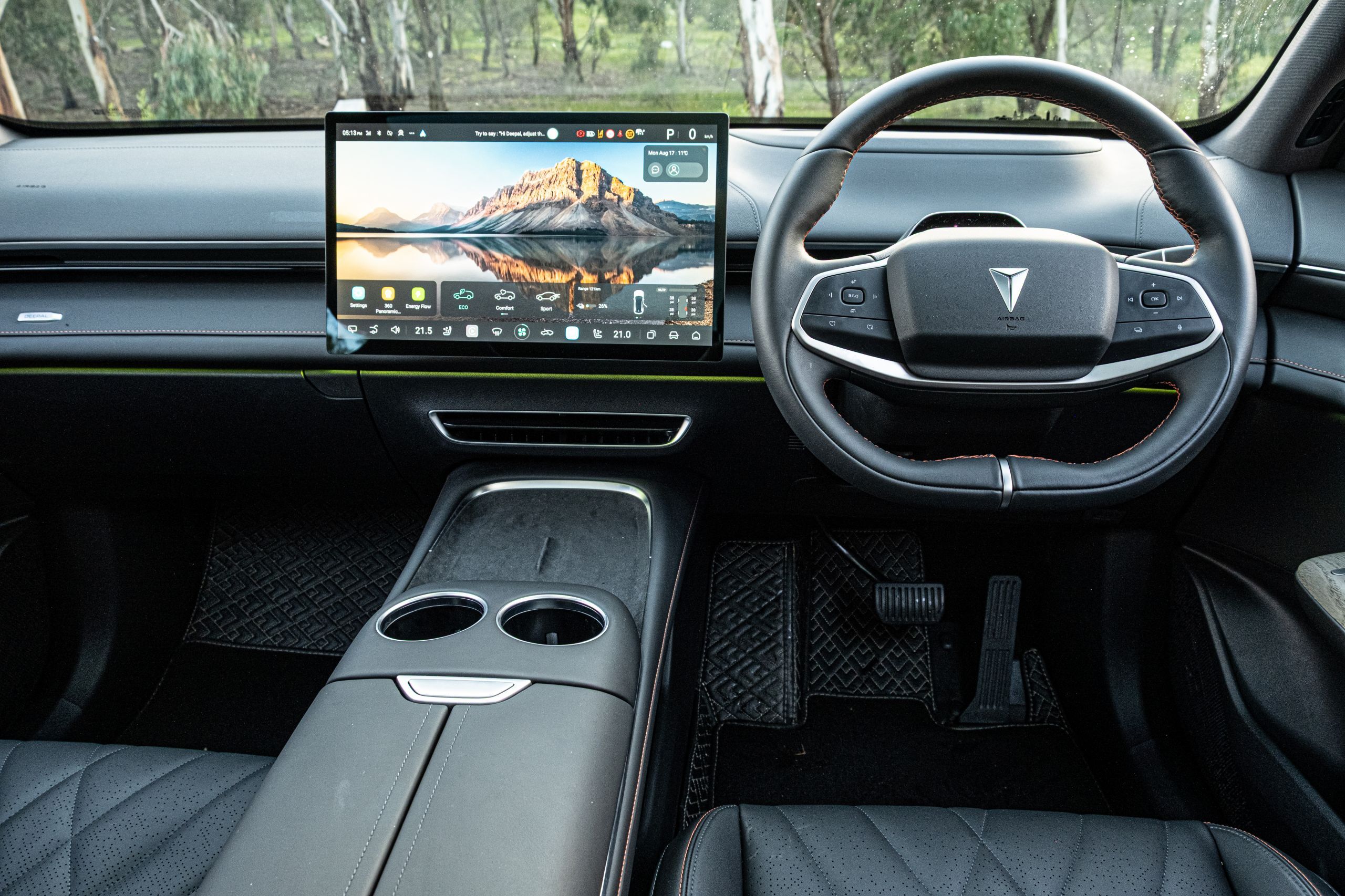
A 15.6-inch central infotainment display comes standard across the range and supports wireless Apple CarPlay and Android Auto. Like a Tesla Model Y, but unlike many of its competitors, the S07 doesn’t feature a separate digital instrument cluster, which is unfortunate. It somewhat makes up for this with a large, augmented-reality head-up display, but I would prefer a cluster.

The party piece of the S07’s cabin is that the central screen can sit centered or be angled toward the driver or passenger. It may only sound like a small thing, but it’s a great idea. After driving the Deepal for a week with the screen directed at me, it felt odd to step into another car with the screen centered. Several BYD’s have screens that can be positioned in portrait and landscape modes, but Deepal’s idea is better.

\\\\\\\\\\\\\\\

Photos Brad Anderson/Carscoops

Diving deeper into the screen reveals a tablet-like software package that’s easy to navigate, if a little overwhelming because of all the different controls and settings. The graphics are clear, and the responsiveness is excellent. Swipe down from the top, and you can configure several shortcut controls. You can also operate the climate control through the screen. It works okay, but I often had trouble turning the different vents on and off, as well as directing the air.

An annoying AI-powered voice assistant is also featured, greeting the driver every time they sit inside. Thankfully, you can turn it off.

The driving position is good, although it’d be nice if the seat could be lowered and there were more steering wheel adjustments. Soft-touch synthetic black leather adorns most interior parts, including the wheel, seats, center console, dashboard, and door panels, giving the cabin a premium feel. At the same time, the orange contrast stitching added some sporty flair. Our tester also had the same synthetic leather on the floor mats, which felt a little cheap.

 It Has An Odd Name, But The Deepal S07 Surprises | Review

At the rear, there’s enough space to fit two large adults with ease, plus separate climate controls and toggles to move the front passenger seat forward and back. Practicality is respectable, but far from class-leading. With the rear seats upright, you can fit 445 liters (15.7 cubic feet) in the rear, or 1,385 liters (48.9 cubic feet) with the seats folded down.

Smooth But Soulless

There’s a lot to like about the S07, although there are certainly elements that could be improved.

When the S07 first launched, it drew fierce criticism for feeling unfinished and having poorly calibrated safety systems. Several software updates over the past year have improved things, and they seem to have mostly worked.

When I first stepped into the Deepal, I was relieved to see that the overzealous driver monitoring system can be easily disabled through the swipe-down menu and, importantly, it remains off even after the S07 is turned off and switched back on. When I did use it, I found it overbearing, frequently telling me I was distracted no matter how focused I actually was.

\\\\\\\\\

Photos Brad Anderson/Carscoops

The S07 isn’t particularly quick, not that you’d expect, given it has a single motor. It takes about 7.9 seconds to reach 100 km/h (62 mph), and although this won’t get your heart pumping, it’s more than adequate for everyday driving.

Read: Avatr 07 Revealed As Yet Another Chinese EV Looking To Shock Tesla Model Y

The rear-wheel-drive setup also means the S07 avoids the torque steer found in some front-wheel-drive competition, like the Kia EV5 and Hyundai Elexio. The lighter front end also gives the S07 a pointy, direct feel when turning, while staying surprisingly flat through sweeping corners and tight hairpins.

The level of regenerative braking is highly customizable, which is welcome, but what’s not so welcome is the lack of a one-pedal driving mode, which seems like a silly exclusion in this day and age. Compounding that, the transition from regen to the mechanical brakes isn’t as smooth as it could be. It also doesn’t use steering wheel paddles for regen adjustments on the fly.

 It Has An Odd Name, But The Deepal S07 Surprises | Review

Ride comfort is good, and the S07 walks the fine line between sportiness and plushness well, quickly responding to imperfections in the road without sending too many thumps into the cabin. I think it could be a little softer, but that’s really clutching at straws. 

Deepal quotes a combined efficiency of 18.6 kWh/100 km and says the S07 gets up to 475 km of range, roughly on par with similarly priced competition. I averaged 17.8 kWh/100 km, so that claimed range is certainly achievable in the real world. It’s just a shame that using a public DC fast charger gets a little annoying given the slow peak speeds.

The automated driving functions need further improvement. While things like adaptive cruise control and lane-centering work relatively well, the S07 often hugs freeway lane lines rather than sitting in the center of a lane.

\\\\\\\\\\\\\\\\\\\

Photos Brad Anderson/Carscoops

Verdict

The Deepal S07 isn’t the best vehicle in the class, but at the current price point, it is a compelling package. Buyers eager for an EV that makes a statement on the road will find that in the S07, particularly in bright colors like Cosmic Yellow or Sunset Orange.

Sales data in Australia shows the S07 is performing reasonably well, with 522 examples sold through the end of June, making it more popular than something like a Leapmotor C10 and roughly on par with the Hyundai Elexio, although well down from the more than 3,000 Kia EV5s sold over the same time. For now, it’s not the best choice in the market, but it’s a solid option if you want something a little different. You’ll just have to live with the fact that you’ll be telling people you drive a Deepal.

\\\\\\\\\\\\\\\\\\\\\\\\\\\\\\\\\\\\\\\\\\\\\\\\\\\\\\\\\\\\\\\\\\\\\\\\\\\\\\\\\\\\\\\\\\\\\\\\\

Photos Brad Anderson/Carscoops

Bronco Basecamp Breaks Out Of China And Heads Down Under

  • The Ford Bronco Basecamp is coming to Australia and New Zealand.
  • Model arrives next year with a range-extended powertrain and pop-up roof.
  • Crossover could have a combined output of 416 hp and 442 lb-ft of torque.

Nearly a decade after wrapping up production in Australia, Ford has announced big plans for the land down under. As part of an event, the company announced plans to “double coverage of the Australian vehicle market to over 60% within three years.” The automaker is also aiming for “over 90% of its volume sold to be all-new or significantly refreshed by the end of 2030.”

The centerpiece of this plan is to bring the Bronco Basecamp to Australia and New Zealand in the second half of 2027. The model launched in China last year and targets a “new breed of outdoor enthusiasts.”

More: Ford’s Electrified Bronco Arrives In China With A Pop Up Roof Surprise

Ford didn’t say much about the local variant, but confirmed it will have a “super hybrid extended-range electrified powertrain.” It consists of two electric motors, a 49 kWh battery pack, and a turbocharged 1.5-liter engine that acts exclusively as a generator.

The company said this will deliver the smooth and responsive driving dynamics of an electric vehicle, but with a range of 497 – 559 miles (800 – 900 km). It also goes without saying, you can simply fill up with gas and be back on your way.

\\\\\\\\\\\\\\

Ford didn’t talk numbers, but the Bronco Basecamp starts at ¥229,800 ($34,245 USD / $47,565 AUD) in China and features a combined output of 416 hp (310 kW / 421 PS) and 442 lb-ft (600 Nm) of torque. The model also has a CLTC electric-only range of 137 miles (220 km).

While Ford didn’t say much about the vehicle, they noted it’s built for adventure and would make the perfect camping companion. When it’s time to go to sleep, all the seats fold down and an inflatable mattress can be placed on top of them to create a bed.

When morning comes, the rear swing gate has a “Wild Kitchen” with a fold-down table. The model even has Pro Power Onboard, which enables owners to access up to 6.6 kW of juice to power equipment such as coffee makers, cooktops, and lights.

The upscale Bronco Basecamp Outer Banks goes even further as it has an electric pop top that rises at the touch of a button to increase headroom, such as when camping. The Outer Banks also has a 7.5-liter center console compartment that can be warmed or chilled.

Besides the Bronco Basecamp, Ford announced the electric Transit City will arrive in November for $50,000 AUD ($36,100 USD). Around the same time, the Mustang Dark Horse T8-Spec will land at dealers. The automaker also announced the local launch of Ford Pro, which will be supported by a new seven-year, unlimited kilometer warranty for commercial customers who exclusively rely on Ford dealerships for servicing.

\\\\\\\\\\\\\\

Zeekr’s 7GT Shooting Brake Is China’s 671-HP Case Against SUVs

PROS ›› Premium feel, spacious, quick, good range
CONS ›› Obtrusive TC, price unknown, heavy

Most legacy brands gave up building wagons and Shooting Brake models years ago, no doubt realizing that most new-car buyers are only interested in an SUV. As a company that’s barely five years old, you’d expect Zeekr to do the same, focusing purely on the segments of the luxury market where sales are the strongest.

The 7GT, also badged as the 007 GT in China, proves that Zeekr is willing to take risks and offer a competitor to the Porsche Taycan Sport Turismo, a vehicle which itself hasn’t exactly been selling well. Based on the 007 sedan from a few years ago, it’s perhaps Zeekr’s most promising new model.

Review: We Drifted Zeekr’s Lineup On Ice, And The Cheapest One Surprised Us

Sales of the 7GT have been ongoing in China since last year, and it’ll soon launch in Australia and Europe as well. We recently had the opportunity to drive it on the track and in the snow to see whether it’s a legitimate rival to the Germans and whether it should be considered over other existing Zeekr models, like the 7X SUV.

QUICK FACTS
› Model:2027 Zeekr 7GT
› Starting Price:AU$TBC
› Dimensions:189.6 x 75.1 W x 57.3 in H (4,817 x 1,910 x 1,456 mm)
› Wheelbase:114.1 in (2,8900 mm)
› Curb Weight:2,285 kg (5,037 lbs) in Europe-spec
› Powertrain:75 – 103 kWh battery / RWD and AWD
› Output:671 hp (500 kW) / 516 lb-ft (700 Nm)
› 0-62 mph3.5 seconds (0-100 km/h)
› Transmission:Single speed
› Efficiency:TBC
› On Sale:Now
SWIPE
\\\\\\\\\\\

Photos Brad Anderson/Carscoops

Zeekr has been toying with the idea of bringing the 7GT to Australia since at least early 2025, showcasing it at car shows to gauge local appetite for the model. Prices have yet to be confirmed, but it’s expected to land at showrooms by the end of this year, or in early 2027.

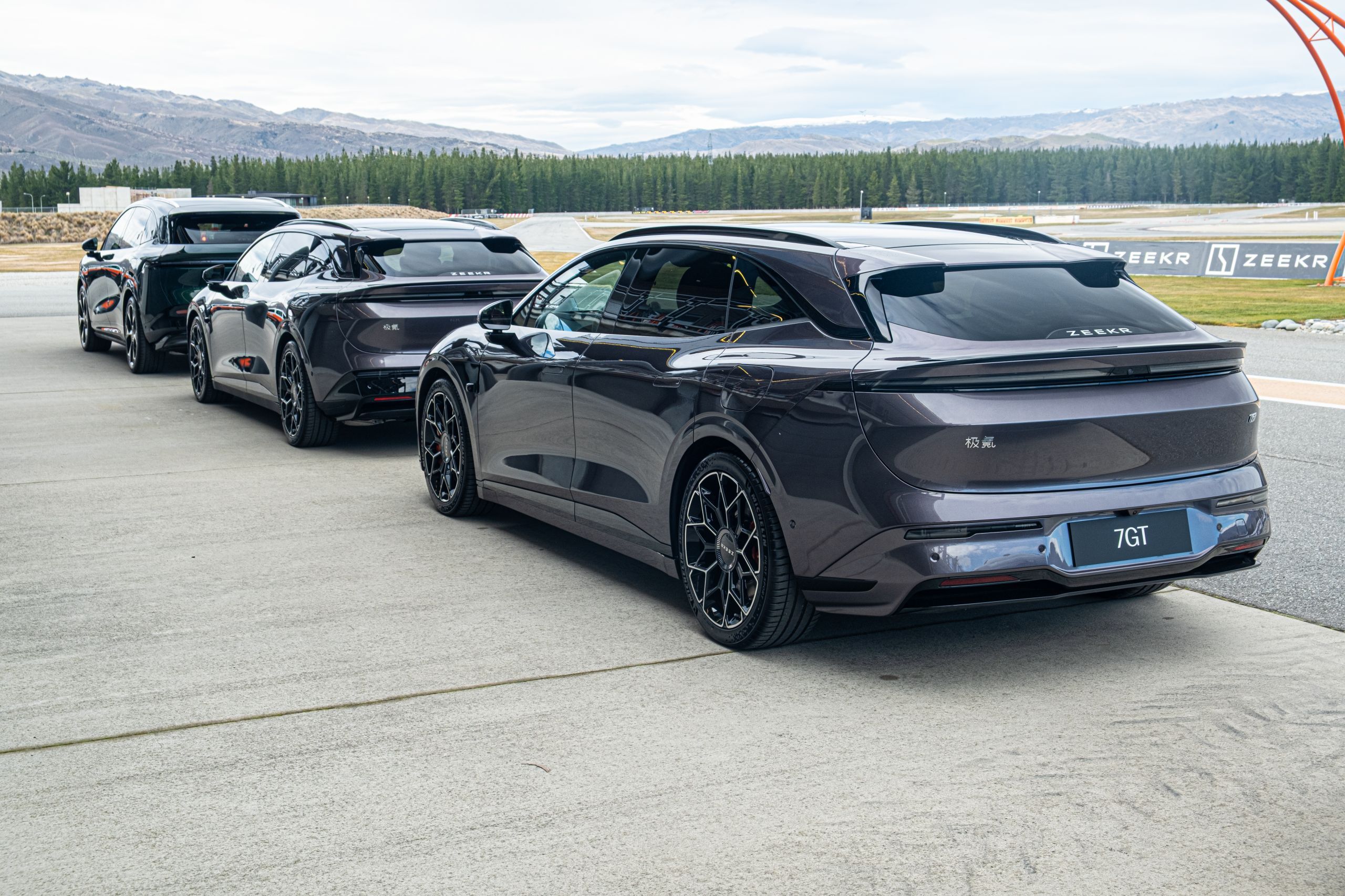
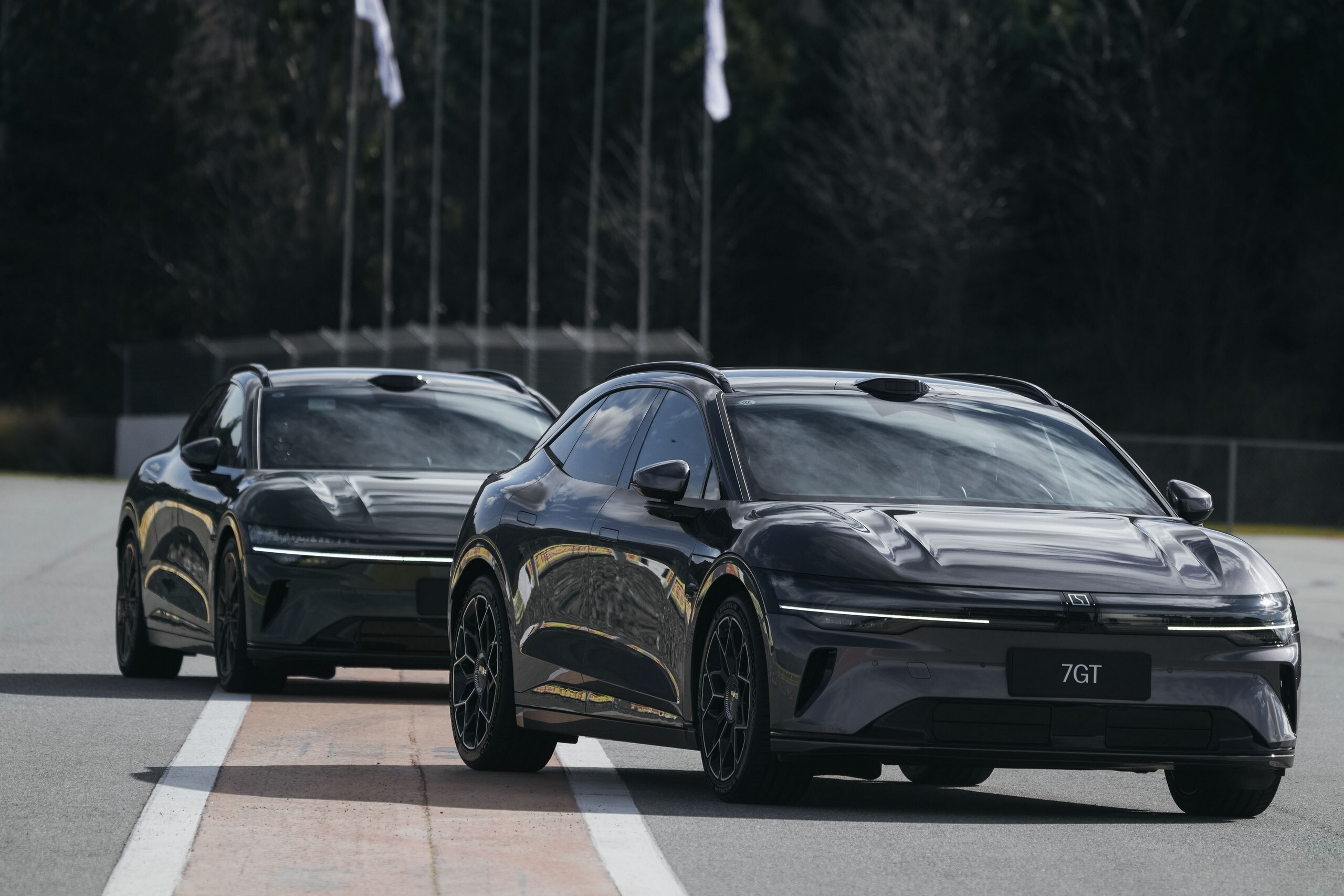
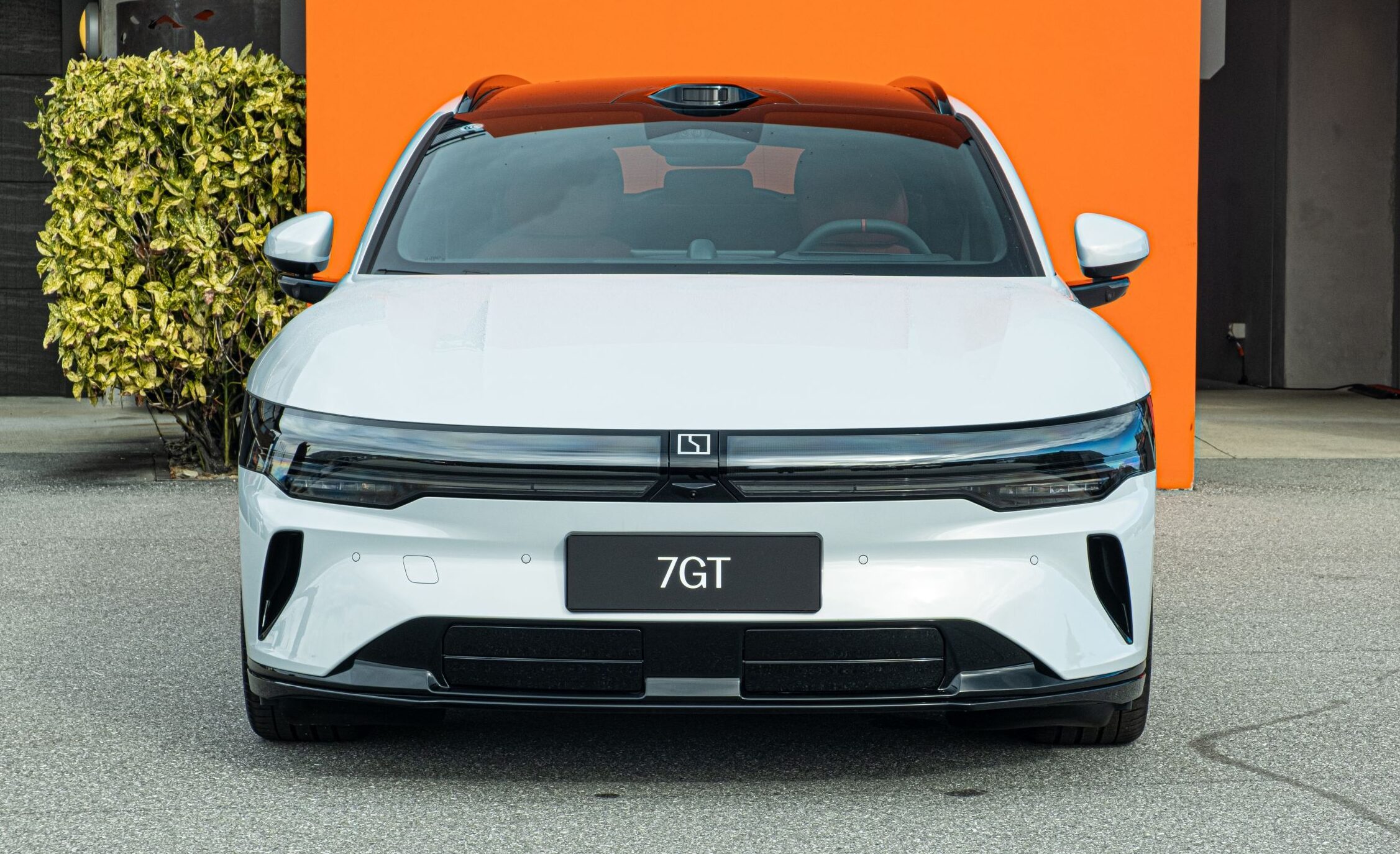
Visually, the front end shares much in common with the larger 7X, sporting a similar black band that incorporates a light bar and the main headlamps. Obviously, the extended roof, sloping rear window, and sharp D-pillars are the highlight, giving the 7GT an unmistakable presence when viewed in person.

Final specifications for Australia are still being ironed out, but the range is tipped to consist of three versions, and a potential fourth. Sitting at the base of the range will be a rear-wheel-drive model with a 75 kWh battery, 370 kW (496 hp) of power, and capable of hitting 100 km/h (62 mph) in a solid 4.8 seconds, all while covering as much as 702 km (436 miles) on a charge under the CLTC cycle. Sold alongside it will be a long-range rear-wheel-drive model with the same motor, paired with a larger 103 kWh pack.

 Zeekr’s 7GT Shooting Brake Is China’s 671-HP Case Against SUVs

Sitting at the top of the 7GT family will be a dual-motor, all-wheel-drive model pairing the 103 kWh battery with two electric motors producing 500 kW (671 hp), up slightly from the 475 kW (637 hp) promised for the European-spec model. We drove the rear-wheel-drive and all-wheel-drive models. At a later date, the 7GT may become available Down Under with the recently announced FR-Line performance kit, which adds orange brake calipers and increases power up to an astonishing 585 kW (784 hp).

Models equipped with the 75 kWh ShenDun Golden Battery can charge from 10-80 percent in 10.5 minutes, while those with the more advanced 103 kWh CATL Qilin battery charge from 10-80 percent in 10 minutes flat.

Oozing Luxury

\\\\\\\\\\\\\\\\\\

Photos Brad Anderson/Carscoops

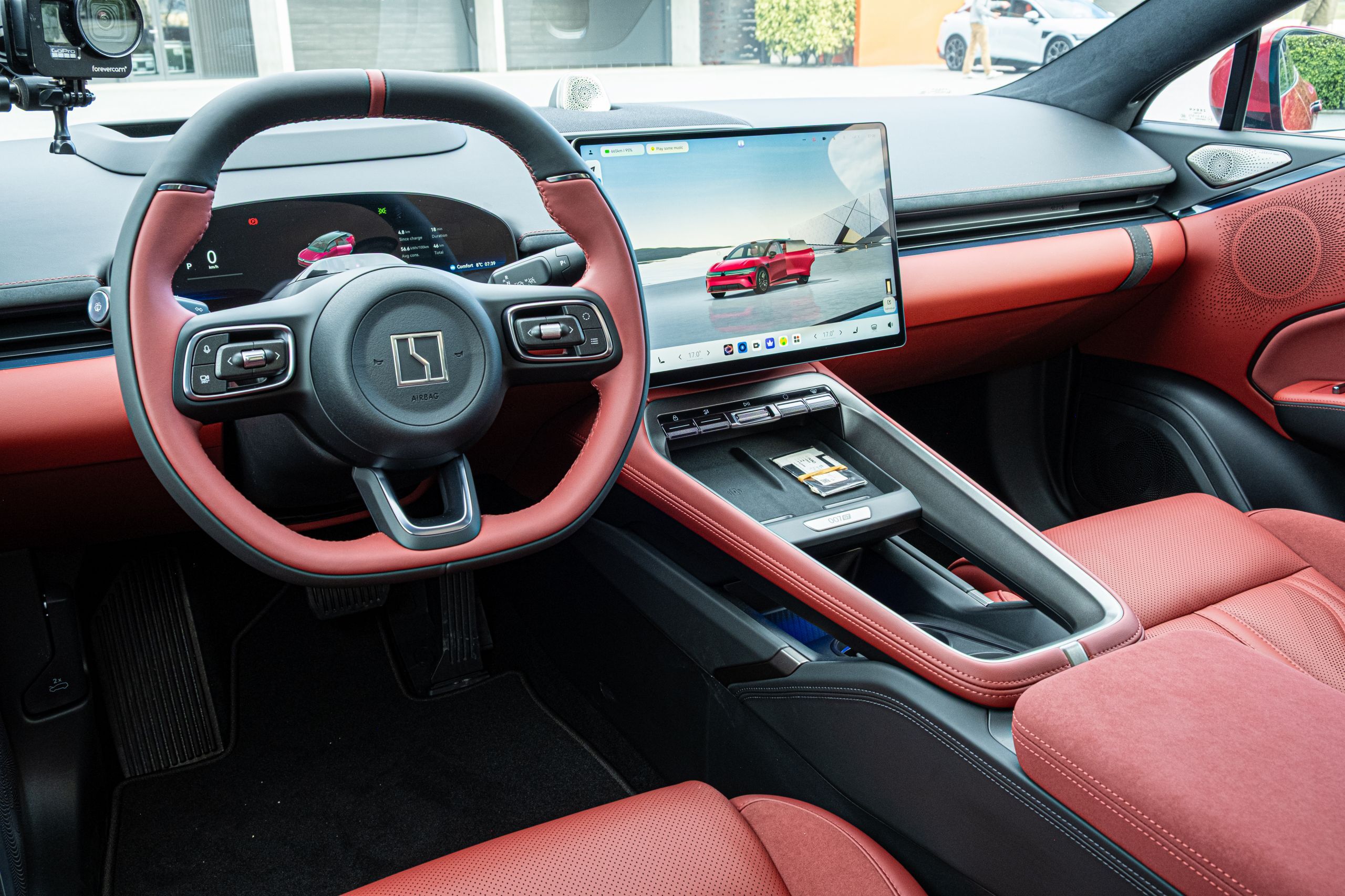
As we’ve discovered in other Zeekr models, the cabin of the 7GT feels more premium than lots of the established competition, including models from BMW and even the Audi S5 Avant we tested earlier this year.

While the 7GT could simply be considered a Shooting Brake version of the regular 007 sedan, which won’t be sold in Australia or Europe, Zeekr actually took some lessons learned from that car and applied them to the 7GT. After finding out from Chinese buyers that the 7GT was overly reliant on the touchscreen and lacked enough physical buttons, Zeekr has added plenty of physical switchgear to the 7GT.

For example, there are shortcut buttons and a volume roller dial positioned directly below the central touchscreen. The 7GT also gets the same excellent steering wheel as the 7X, rather than the 007’s wheel, which is borrowed from the smaller X and comes with some odd physical buttons and switches.

 Zeekr’s 7GT Shooting Brake Is China’s 671-HP Case Against SUVs

Obviously, much of the cabin is dominated by the 13.02-inch central infotainment display. As with the 7X and other Zeekr models, the carmaker’s software is excellent, largely mimicking Tesla’s in overall layout and operation. Those accustomed to driving new cars won’t have any trouble getting to grips with the detailed settings and menus, although others may find it a little overwhelming at first.

Positioned in front of the driver is a separate 15.4-inch display with a curved design that feels classy, although customization options for this screen are somewhat limited. The 7GT also comes standard with a 35.5-inch augmented reality head-up display.

The central tunnel houses two wireless smartphone charging pads, large storage cubbies, two cupholders, and a spacious center console. High-quality touches found throughout include the metal speaker grilles, the soft-touch leather across the door panels, dashboard, and seats, and the Alcantara-trimmed headliner. It feels fitting of a car worth well in excess of AU$100,000 (US$71,800), and the 7GT is expected to cost quite a bit less than that.

\\\\\\\\\\\\\\\\\\\\\\\\\

Photos Zeekr Australia

Other key features include 14-way power-adjustable front seats with heated, ventilated, and massaging functions. There’s also a heated steering wheel and acoustic glass, as well as a thumping audio system and a panoramic glass roof.

Viewed from the outside, you’d think that space in the rear of the 7GT would be incredibly limited, given how low the roof seems to sit. You can imagine my surprise when I slid my 6’2” frame into the rear and found I had roughly one inch of headroom, which is better than some SUVs out there and much better than something like the Audi S5 Avant. There’s also loads of legroom thanks to the 2,925 mm (115.1-inch) wheelbase.

In terms of practicality, the 7GT includes a ski hatch and 645 liters (22.7 cubic feet) of cargo space with the rear seats in position, or 1,737 liters (61.3 cubic feet) with them folded flat. That’s comparable to some SUVs so, clearly, the 7GT is not a vehicle that suffers from not being one of them.

How Does It Drive?

 Zeekr’s 7GT Shooting Brake Is China’s 671-HP Case Against SUVs

As development of the Australian-spec model is still ongoing, Zeekr shipped several left-hand-drive examples for us to test. While the steering wheel was on the opposite side, we were told everything else about the cars we tested was identical to the models that will be sold locally.

With a headline figure of 500 kW (671 hp) in the dual-motor, all-wheel drive 7GT, it’d be easy to confuse the EV as being a track-focused weapon in the same vein as the Hyundai Ioniq 6 N. But, as we learned while lapping the new Zeekr and completing tight, twisty Gymkhana setups, the track likely won’t be where the 7GT most excels.

RWD First

Our first experience was behind the wheel of a bright pink, rear-wheel-drive model on a Gymkhana course, designed to test the car’s low- and mid-speed dynamics. Immediately, the rear-wheel-drive model, with its 370 kW (496 hp), felt more than quick enough for fun.

\\\\\\\\\\\\\\\\

Photos Brad Anderson/Carscoops

Local weight figures have yet to be confirmed, but the 7GT will obviously weigh north of 2,200 kg (4,850 lbs). It does a good job of carrying its weight, though, even as we punished the tires. The suspension feels more road- than track-focused, which is a good thing, soaking up bumps well and feeling quite plush, all while keeping the 7GT locked to the pavement. Of course, a road test will be needed to see just how comfortable Zeekr’s latest car is, but initial impressions are good.

Holding the 7GT back is the traction control system. Zeekr didn’t want us to adjust or turn it off, so we kept it on. Attempting to accelerate out of corners with the TC on can be a little frustrating, as it clamps down on power even when you’re pointed straight ahead. Interestingly, the stability control allows a little bit of slip at the rear axle without issue; it’s just under power that the traction control is too obtrusive.

Our time in the rear-wheel drive 7GT also included several high-speed lane changes, similar to a moose test at around 90 km/h (56 mph). The car performed exceptionally well in this environment, responding to aggressive steering inputs without understeer.

 Zeekr’s 7GT Shooting Brake Is China’s 671-HP Case Against SUVs

Later in the afternoon, we had the opportunity to test the all-wheel drive 7GT on the track, following a 7X Performance pace car. Our track experience consisted of a single warm-up lap and two hot laps, though they were more like ‘warm’ laps, as we were unable to push the 7GT beyond about 80 percent of its capabilities.

As we discovered during the Gymkhana sessions, the 7GT has a neutral balance through most turns, although it can be pushed into controllable understeer if you’re a little too greedy on the entrance to a corner. With 500 kW (671 hp) on tap, the 7GT then picks up speed at a startling rate when pulling out of a turn.

However, the traction control once again proved to be annoying on the track, cutting power when accelerating out of turns. The front-end of the all-wheel drive model also isn’t quite as reactive as the RWD.

\\\\\\\\\\\\\\\\\\\\\\\\\\\\\\\\\\\\\\\\\\\\\\\\\\\\\\\\\\\\\\\\\\\\\\

Photos Zeekr Australia

The steering feel is good, and it’s easy to place the 7GT at speed. It’s also a piece of cake to control should the rear end want to get involved. Similarly, the brakes proved more than capable of a couple of reasonably quick laps, although we did hear some other journalists report a bit of fade.

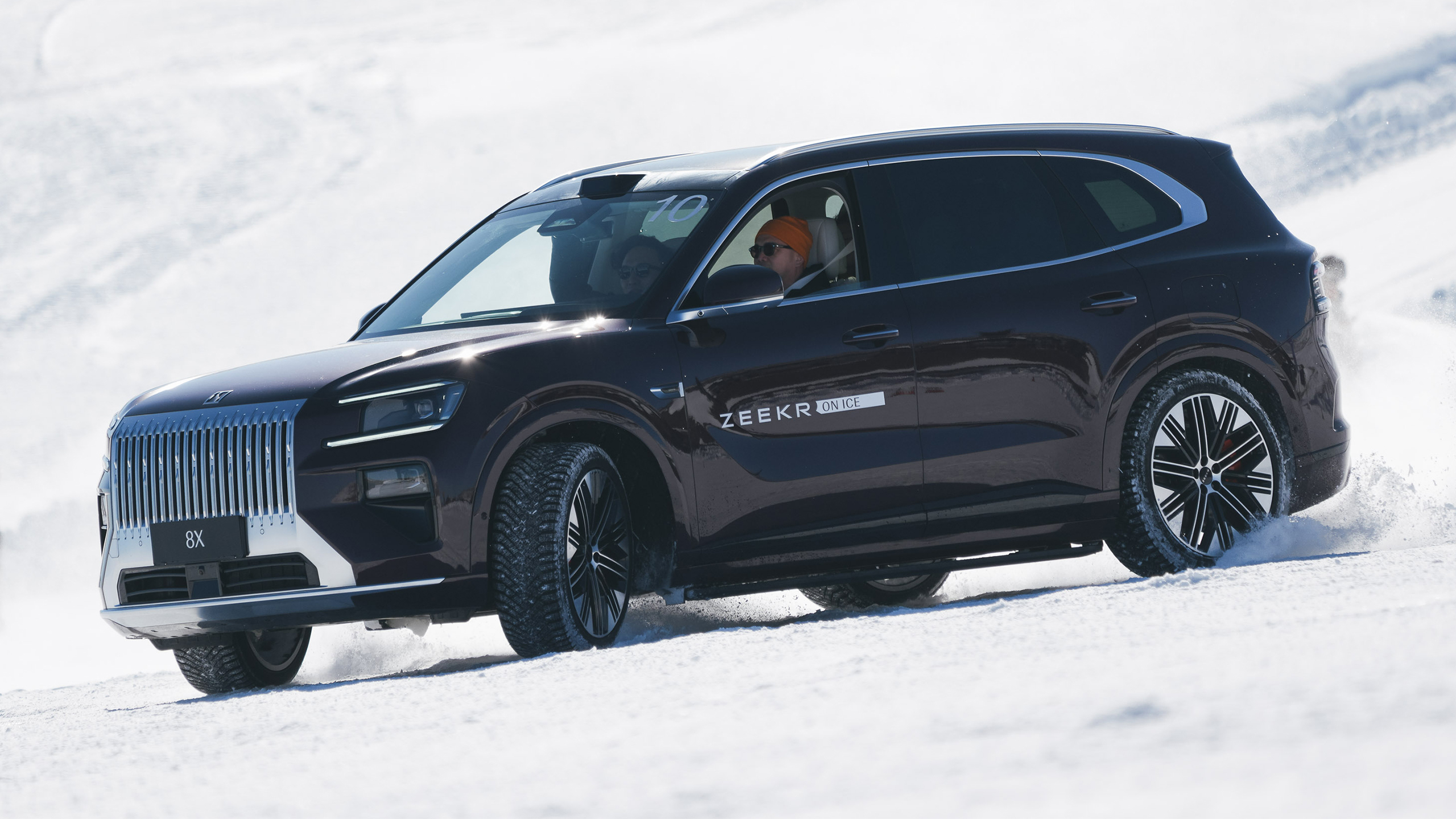
The following day, we also had the chance to drive the all-wheel-drive 7GT on snow and ice, alongside other Zeekr models like the X, 7X, 8X, 9X, and 001 FR. Finally, we were given the go-ahead to turn off the traction control on the sleek Shooting Brake completely, and it proved to be an utter joy to drift around.

\\\\\\\\\\\\\\\

Photos Zeekr Australia

Unlike other Zeekr models we sampled, the 7GT felt quite rear-biased on the snow. Turning the wheel and pinning the throttle was enough to kick out the tail, and subtle pressure on the accelerator pedal allowed for some lovely drifts. Here’s hoping the 7GT delivers a similar feeling on the street or on the track if the traction and stability control systems are disabled.

The all-wheel-drive model Australia will get is expected to hit 100 km/h (62 mph) in about 3.5 seconds. Sadly, we didn’t get the opportunity to test this, but we have little reason to doubt it’ll be achievable in the real world. Cars like the Tesla Model 3 Performance and Hyundai Ioniq 6 N are a little faster, but anything under 4 seconds is definitely real quick.

Verdict

The Zeekr 7GT probably won’t be a huge seller, and almost certainly won’t sell in the same volumes as the larger 7X, but based on the first drive, it seems worthy of all the same praise handed out to its SUV sibling. Like the 7X, the build quality of the 7GT is excellent, as is the technology it’s been loaded with.

I think Zeekr has also nailed the design, creating an estate that looks incredibly sleek yet remains spacious inside, so it will absolutely work as a family car. Importantly, prospective buyers shouldn’t be talked out of a Porsche Taycan, Audi RS e-tron GT, or Hyundai Ioniq 6 N because they think the 7GT will be a phenomenal on-track performer. It does well enough on the track, but we think it’ll feel even better on the road, and hopefully won’t have to wait too long to test it where owners will likely spend most, if not all, of their time behind the Chinese shooting brake’s wheel.

\\\\\\\\\\\\\\\\\\\\\\\\\\\\\\\\

Photos Zeekr Australia

China’s Most Famous Brand Might Sell A Million-Dollar Sedan In Australia

  • Hongqi will launch in Australia during the first half of 2027.
  • Three SUVs lead the charge, including one range-extender model.
  • Its flagship Guoli sedan costs the equivalent of AU$1.5 million in China.

Australia’s new car market has been flooded with new entrants from China in recent years, and soon, yet another brand could start selling its models locally. This one is Hongqi, the marque Mao Zedong favored and the default choice for ferrying Chinese politicians and dignitaries. Now it wants Australian buyers, and one model in its lineup carries a price that makes a Rolls-Royce Phantom look like a bargain.

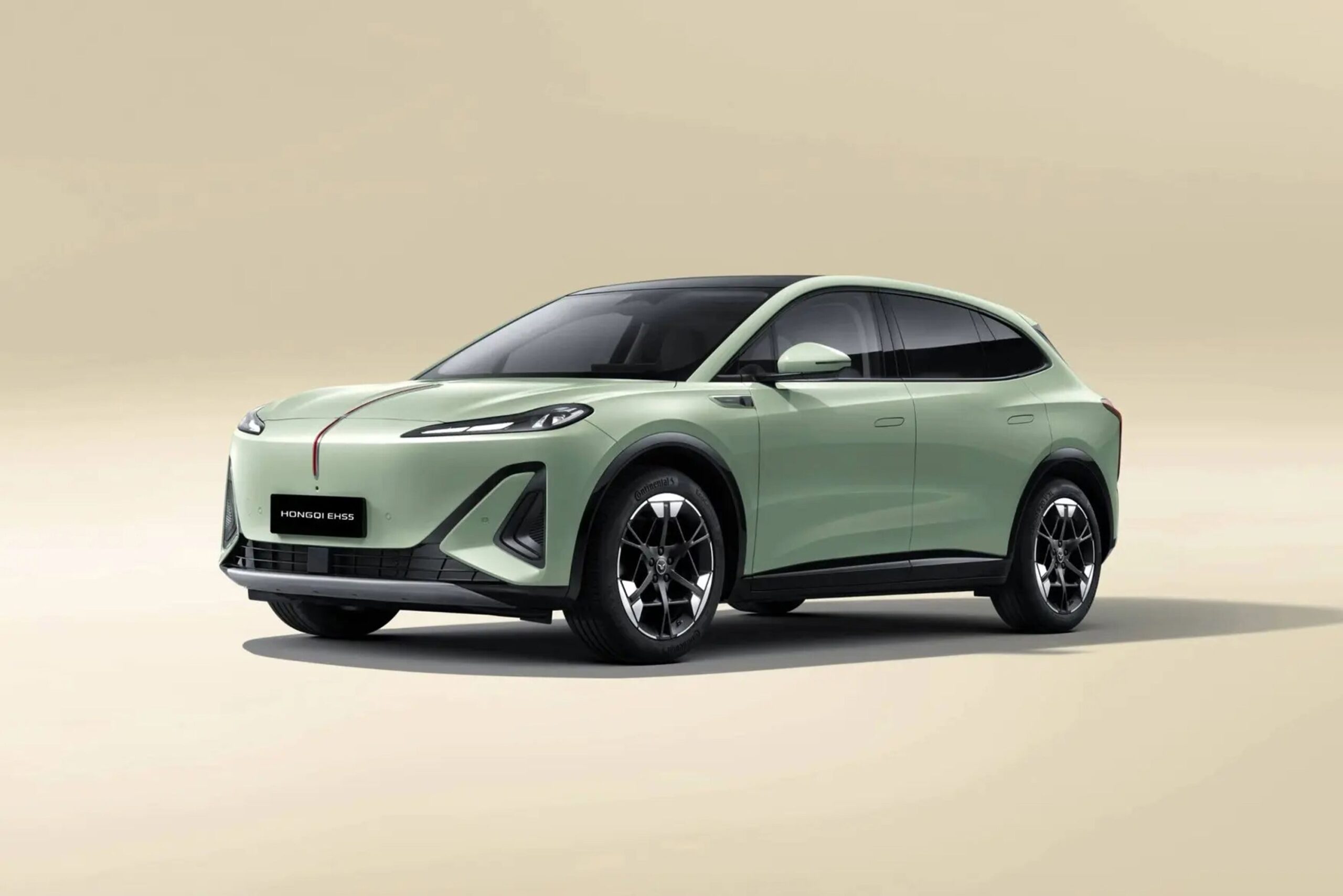
A trio of SUVs from Hongqi will be the brand’s first models available locally, with sales expected to begin in the first half of 2027. These will include the all-electric E-HS9 SUV and the electric, mid-size EHS5, as well as a third smaller model to launch as a range-extender. Local pricing details for these models haven’t been confirmed, but they’ll likely be priced to rival models from Denza and Zeekr, the luxury arms of BYD and Geely.

Read: Mao’s Old Limo Brand Is Now Outselling Rolls-Royce In China Two To One

There’s plenty of local demand for premium vehicles in these segments, so Hongqi has many potential customers to tap. However, if the brand also decides to import its high-end ‘Golden Sunflower’ series of models in Australia, it’s hard to imagine how they could sell in any significant numbers.

More Luxury Could Come

 China’s Most Famous Brand Might Sell A Million-Dollar Sedan In Australia
Hongqi EHS5

In China, the most expensive version of the Guoli, a retro-styled luxury sedan, starts at the equivalent of AU$1.5 million (US$1.07 million), making it one of the nation’s most expensive new cars and positioning it well above most other luxury cars built in the People’s Republic. Speaking with Drive, a Hongqi insider appeared hopeful the Golden Sunflower series models would launch locally, but stopped short of confirming it.

\\\\\\

Hongqi Guoli

“Will the Sunflower series come to Australia? Look, I would love to see it, just because it’ll be something different on the road,” they said. “Yes, the styling is going to be a little bit different – but we do have other models that are available to us. Hongqi in China is going to be developing 13 brand-new models in the space of the next two and a bit years, so we do have a raft of other models that we can have access to.”

Strong demand Down Under for models from brands like Denza and Zeekr shows that many locals are willing to pay premium prices for higher-end cars from China. However, we’d be astonished if there were many millionaires or billionaires tempted out of a Rolls-Royce Phantom by a Hongqi Guoli in Australia. Doesn’t have quite the same ring to it, does it?

\\\\\

We Drifted Zeekr’s Lineup On Ice, And The Cheapest One Surprised Us

PROS ›› Luxurious, extremely powerful, bold looks
CONS ›› No brand cache, unknown prices, heavy

We’ve seen several Chinese car brands come and go over the past few years, failing to crack the ultra-competitive market in their home country or overseas. It’s a cut-throat industry, and new brands have to nail the performance, safety, technology, and practicality requirements of car buyers, all while delivering at a price point that most Western legacy brands couldn’t dream of matching.

Among those Chinese brands that appear to have proper staying power is Zeekr. The company was founded just five years ago as one of Geely’s EV- and plug-in-hybrid-focused luxury brands, and has already made aggressive expansions outside China into countries across Europe, Asia, Australia, and New Zealand.

Review: 2026 Zeekr 7X Performance Is Proof That Tesla Isn’t The Benchmark Anymore

Earlier this year, we spent a few days with the superb Zeekr 7X, finding it to be not only a real Tesla Model Y rival but also a legitimate competitor to the BMW iX3, all at a far lower price. For as impressive as the 7X is, Zeekr has several even more enticing products just around the corner, and we recently put a handful of them to the test, on snow and ice, no less.

\\\\\\\\

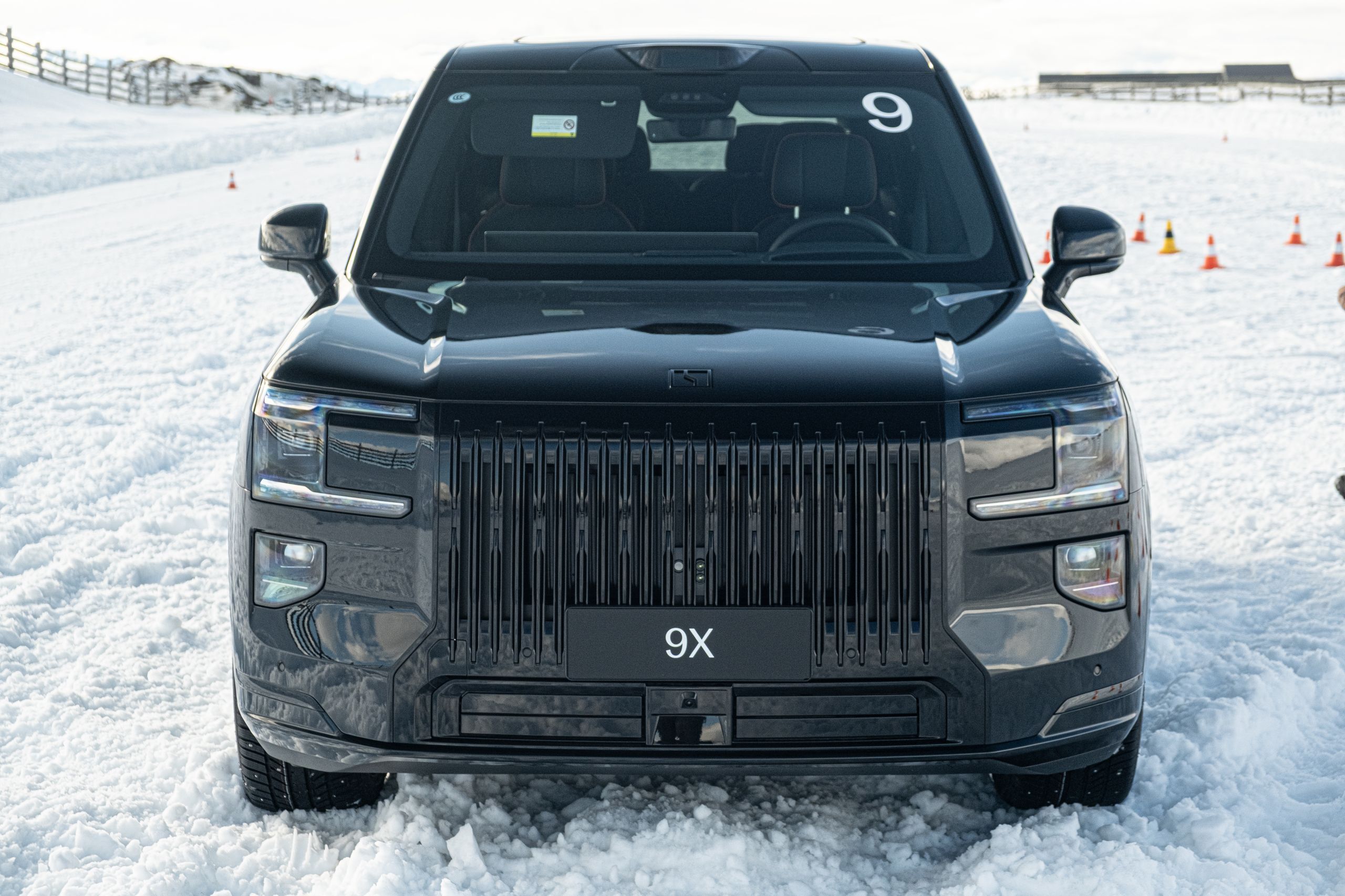
The focus of this preview was to get behind the wheel of the Zeekr 8X and 9X, two uber-luxurious SUVs that will land in Australia next year. Aimed at the BMW X5 and BMW X7, respectively, they both have the potential to shake up the luxury SUV market. We also spent some time behind the wheel of the smaller Zeekr X, the new 7GT shooting brake, and the brand’s wild 001 FR.

Zeekr 8X

Due to time constraints, we didn’t get to drive the 8X, but we did get an up-close look at it and thoroughly explored the interior. It became immediately apparent that legacy brands like BMW, Mercedes-Benz, and Audi should be worried.

 We Drifted Zeekr’s Lineup On Ice, And The Cheapest One Surprised Us

Measuring in at 5,100 mm (200.8 inches) long, 1,998 mm (78.7 inches) wide, and standing 1,780 mm (70.1 inches) tall with a 3,069 mm (120.8-inch) wheelbase, the 8X is roughly 170 mm (6.7 inches) longer than an X5 and has 94 mm (3.7 inches) extra length between the wheels. It’s pretty big then, and it’s available with two or three rows of seats.

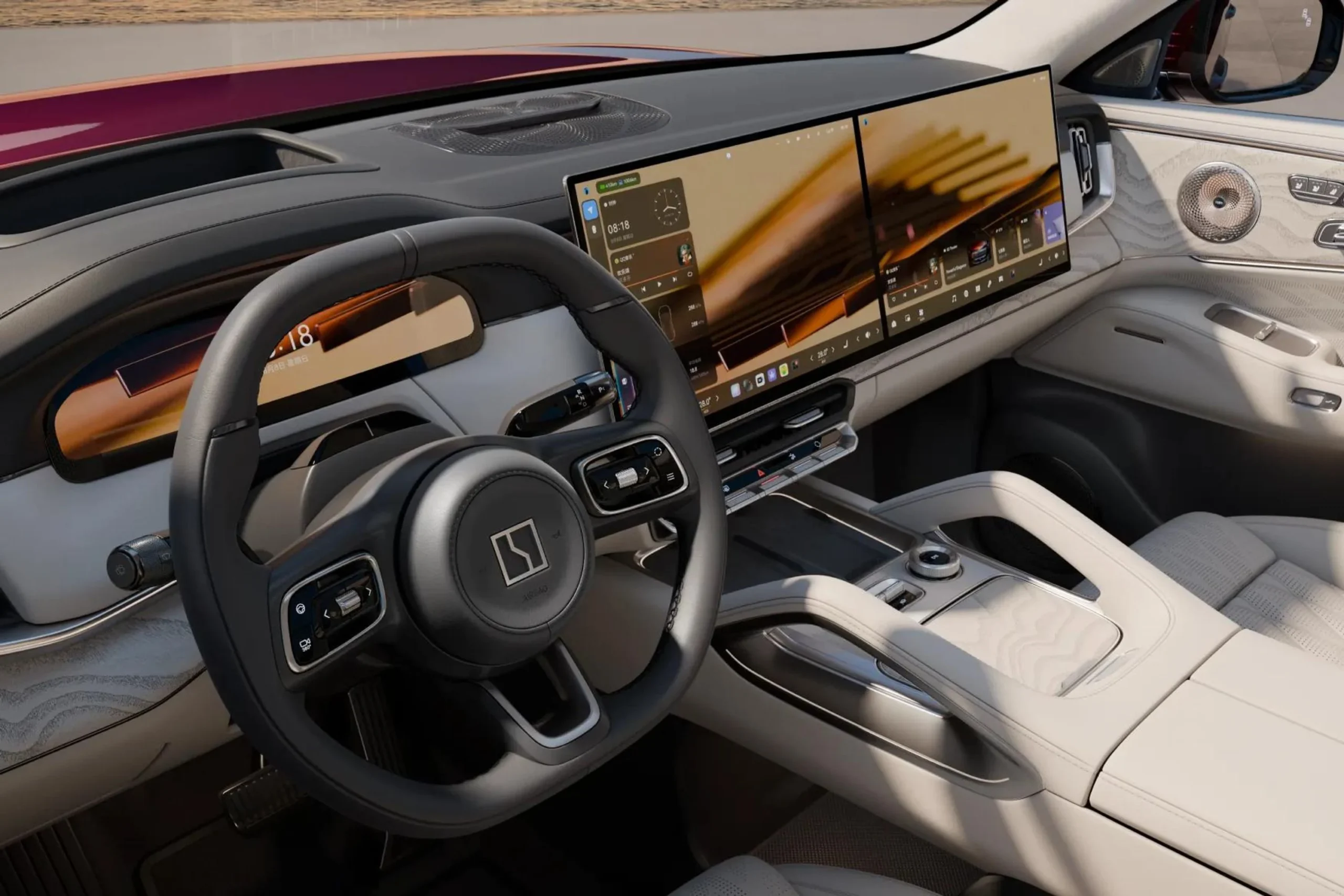
I’ve said it before, and I’ll say it again – Chinese brands have shattered the illusion that you need to pay premium money to get a high-class, luxurious interior. Zeekr says it wants to combine BMW’s luxury with Tesla’s technology. In the case of the 8X we experienced, it’s noticeably more luxurious than any X5, with premium leather surfaces, plenty of metallic touches, a suede headliner, and massive dual screens across the dashboard. In China, car buyers love having a big screen for the front-seat passenger, although we’re not convinced Australian buyers will be quite as receptive. The premium feel continues into the rear with plush seats, tables folding out from the front seats, and Mercedes-style seat adjustments on the doors.

\\\\\\\\\\\\\\\\\\

Then there’s the performance. Local specifications haven’t been confirmed, but in China, the 8X uses a 2.0-liter turbocharged four-cylinder engine paired with either two or three electric motors. The dual-motor version delivers 660 kW (885 hp), while the tri-motor has 1,030 kW (1,381 hp) and 1,410 Nm (1,039 lb-ft) of torque, and offers 55 kWh and 70 kWh batteries.

The Chinese Cullinan

\\\\\\\\\\\\\

Photos Brad Anderson/Carscoops and Zeekr Australia

The Zeekr 9X takes things to another level entirely. It’s absolutely massive, measuring 5,239 mm (206.2 inches) long and featuring a 3,169 mm (124.7-inch) wheelbase. In Ningbo, China, where Zeekr is based, it’s been nicknamed the ‘Hangzhou Bay Cullinan,’ and since launching in late 2025, more than 62,000 examples have been sold. Not only will it soon land in Australia, but it’s also heading to Europe.

Like the 8X, the 9X uses Zeekr’s advanced new 900-volt electrical architecture. It is also available with 55-kWh or 70-kWh batteries and is configured as standard with a 2.0-liter turbo and either two or three electric motors. The example we drove was the tri-motor version, delivering a hypercar-rivaling 1,030 kW (1,381 hp) and 1,410 Nm (1,039 lb-ft) of torque. Zeekr isn’t saying whether or not Australia will get this version, but in Europe, power has been capped at 660 kW (897 hp), so something similar may be done Down Under.

 We Drifted Zeekr’s Lineup On Ice, And The Cheapest One Surprised Us

While I did drive the 9X in the snow, it was only for a few minutes, and objectively, it’s difficult to comment on how it performs based on that. On first impressions, it doesn’t feel too big, nor does it feel overpowered. We’re eagerly awaiting its local arrival to give it a proper test. For now, I can say it feels surprisingly dynamic given its size and weight, is happy to kick out its tail, and is easy to hold powerslides with.

Beyond the driving, or lack thereof, the 9X feels absolutely deserving of its nickname. It feels more special inside than an X7 and is more akin to a Mercedes-Maybach GLS in fit, finish, and choice of materials. As one industry colleague told me, it even seems to out-Cullinan a Cullinan, and that’s high praise. Whether or not it’ll stand the test of time like a Rolls-Royce remains another question, of course.

\\\\\\\\\\\\\\\\

Photos Brad Anderson/Carscoops and Zeekr Australia

The front half of the cabin is great, with a digital instrument cluster and a central infotainment screen as standard, although it is also offered in China with a passenger display. Taking lessons from the 007 sedan, which was almost entirely devoid of physical buttons, Zeekr has ensured that all subsequent models, including the 9X, have plenty of real switches, dials, and knobs.

The second row is the standout, featuring a pair of massive captain’s chairs similar to those in Zeekr’s 009 minivan. With heating, ventilation, and massaging functions, the 9X has them all, and the seats can even spin around 180 degrees.

Drifting On Snow

While I’ve driven on snow before on ski trips and the like, I’ve never had the opportunity to push EVs and plug-in hybrids with supercar power to their limits on snow and ice before. All the cars we tested were equipped with studded winter tires, but, as you’d imagine, they were all happy to kick out their tails with a healthy dose of throttle.

\\\\\\\\\\\\\\\

Photos Brad Anderson/Carscoops

I spent a good part of the session on snow behind the wheel of the refreshed 2026 Zeekr X, the company’s entry-level SUV. In all-wheel-drive configuration, it uses a 66 kWh NMC battery and has a pair of electric motors with 365 kW (489 hp) and 573 Nm (423 lb-ft) of torque. On the road, it can apparently hit 100 km/h (62 mph) in just 3.7 seconds.

While I wasn’t able to put the straight-line acceleration to the test, I was able to explore the X’s dynamics through a series of oversteer exercises and slaloms that were set up for us. Typically, the X doesn’t let owners completely turn off the traction and stability control systems, but the ones we tested had been tweaked to shut them down.

 We Drifted Zeekr’s Lineup On Ice, And The Cheapest One Surprised Us

Yanking hard on the steering wheel and pinning the accelerator is enough to send the X into easily controlled drifts. Much to my surprise, while enjoying some sideways action in the X, I never yearned for driving something with a combustion engine.

The Zeekr 7GT is one of the company’s most exciting new models. In July, it and the BMW iX3 became the first two cars to earn five-star safety ratings under Euro NCAP’s overhauled testing procedures. While we spent plenty of time driving it, we can’t yet comment on how it feels. Another Zeekr product I can comment on is the 001 FR.

Hypercar Power In A Sedan

 We Drifted Zeekr’s Lineup On Ice, And The Cheapest One Surprised Us

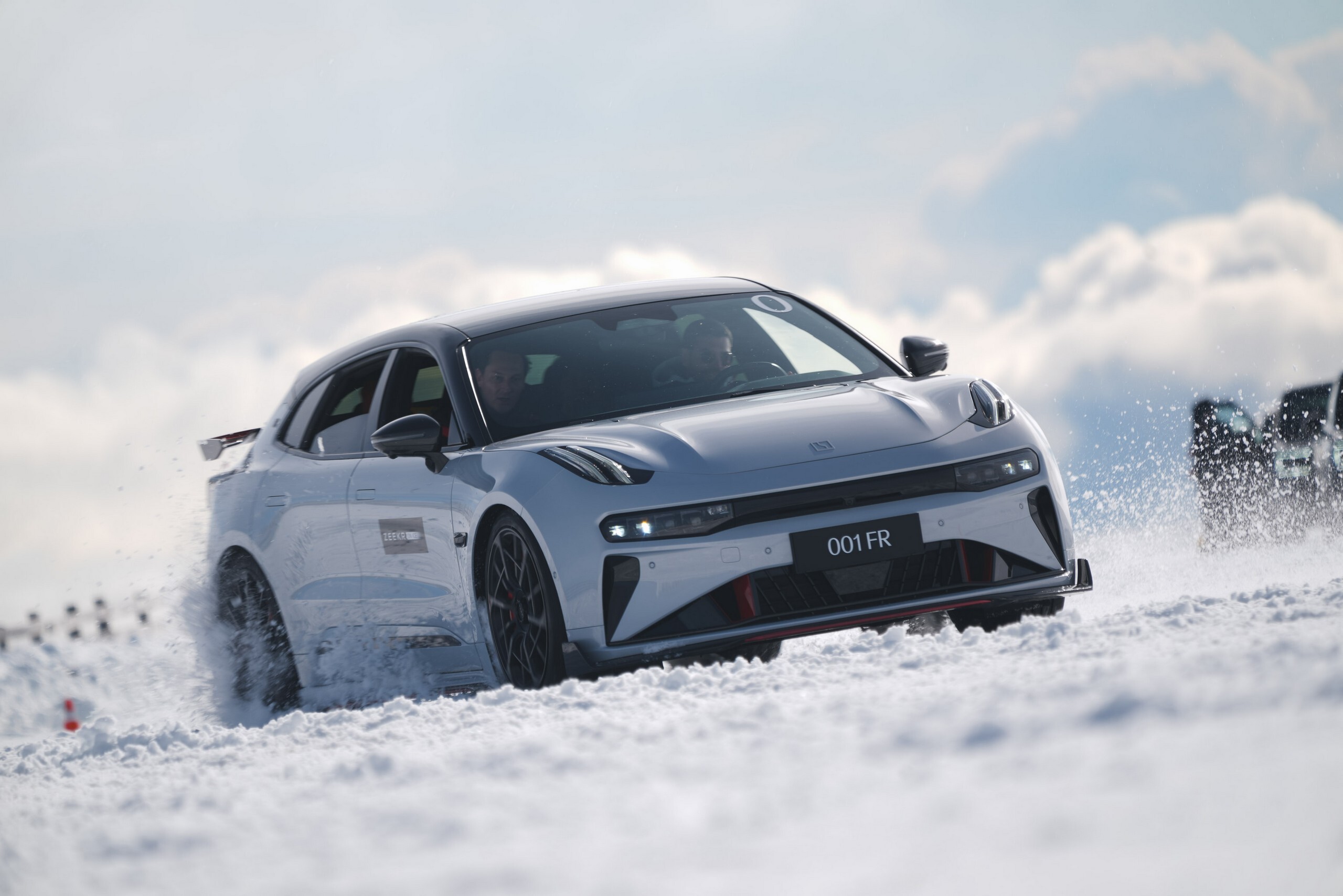
The 001 was Zeekr’s first model, a sleek shooting brake originally designed for the Lynk & Co brand but later adapted for Zeekr. Because of this, it’s at odds with the designs of other Zeekr models, instead sporting the design language of Lynk & Co. In FR guise, it’s an animal.

The car is fitted with a 100 kWh CATL battery and has four electric motors, combining to produce 1,248 hp that’s enough to send it to 62 mph (100 km/h) in just 2.02 seconds. It could be considered Zeekr’s answer to the Tesla Model S Plaid, though it’s arguably even more track-focused, with a host of carbon-fiber parts and huge AP Racing brakes.

Despite its extraordinary power, the 001 FR doesn’t feel intimidating, at least not on snow. It’s far more rear-biased than the likes of the X, 8X, and 9X, only requiring small throttle inputs to kick out the tail and hold slides.

Final Thoughts

\\\\\\\\\\\\

Zeekr Australia

Regardless of how you may feel about the age of electrification, there’s no denying we are living in very exciting times for the auto industry. In America, the EV evolution led to the creation of exciting firms like Rivian and Lucid, both of which have proven that a brand doesn’t need a century of history to develop, manufacture, and sell class-leading vehicles.

The same thing has happened in China. Thanks to huge investments from conglomerates like Geely and Chery, as well as juggernauts like BYD, the era of high-performance, ultra-luxurious vehicles being attainable only by the rich is long gone. Zeekr is still in its infancy, and there’s no telling where it’ll be in a decade, or two, or three decades. What it’s been able to build in the last five years is impressive, and vehicles like the 8X and 9X suggest the future is bright.

Whether Zeekr can attract Western buyers from established premium brands remains to be seen. In the segments where the 8X and 9X will compete, buyers of vehicles from rival brands like BMW, Mercedes, Audi, Land Rover, Bentley, and Rolls-Royce are fiercely loyal to what they know. If Zeekr can get prices right and deliver good after-sales service, there’s little stopping it from achieving the same success it’s enjoying in China elsewhere.

\\\\\\\\\\\\\\\\\\\\\\\\\\\\\\\\\\\\\\\\\\\\\\\\\\\\\\\\\\\\\\\\\\\\\\\\\\\\\\\\\\\\\\\

Zeekr Australia

Support for Electric Vehicles

By: newenergy
31 March 2025 at 15:54

New Poll: American Voters Support Federal Investments in Electric Vehicles Broad, Bipartisan Support for EV Investments and Incentives that Lower Costs, Expand Access, and Help the U.S. Beat China in the Race for Auto Manufacturing WASHINGTON, D.C. – A new bipartisan national poll conducted by Meeting Street Insights and Hart Research finds broad public support …

The post Support for Electric Vehicles appeared first on Alternative Energy HQ.

❌
❌