The PSC required Alliant file a revised version of its application by 4 p.m. Friday. The agency is now reviewing the new version to analyze the redactions and justifications from the utility before moving forward.
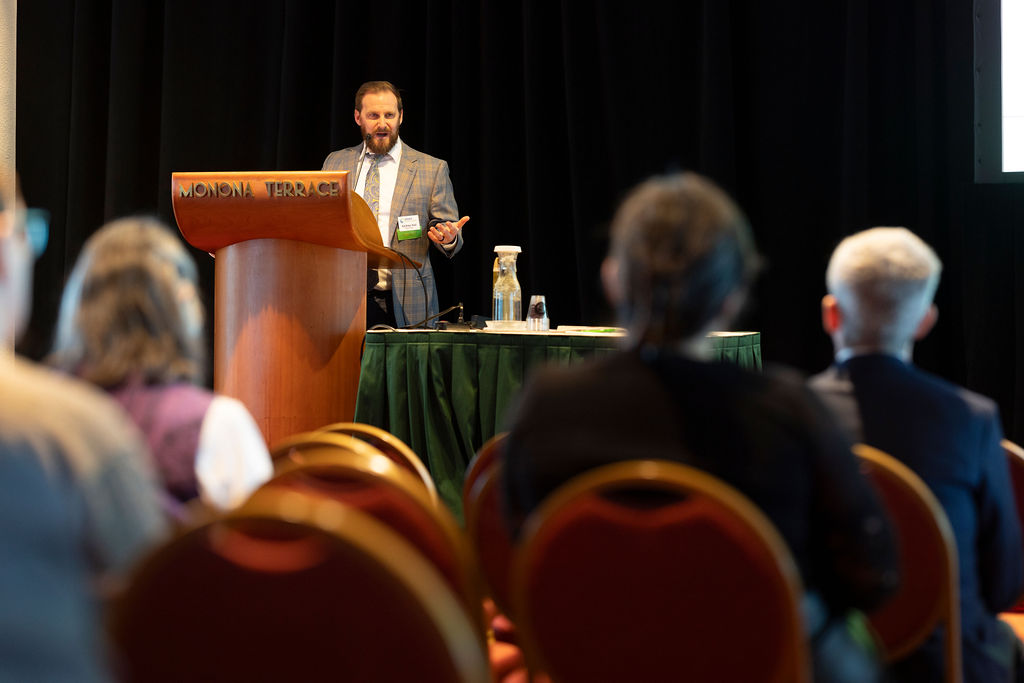
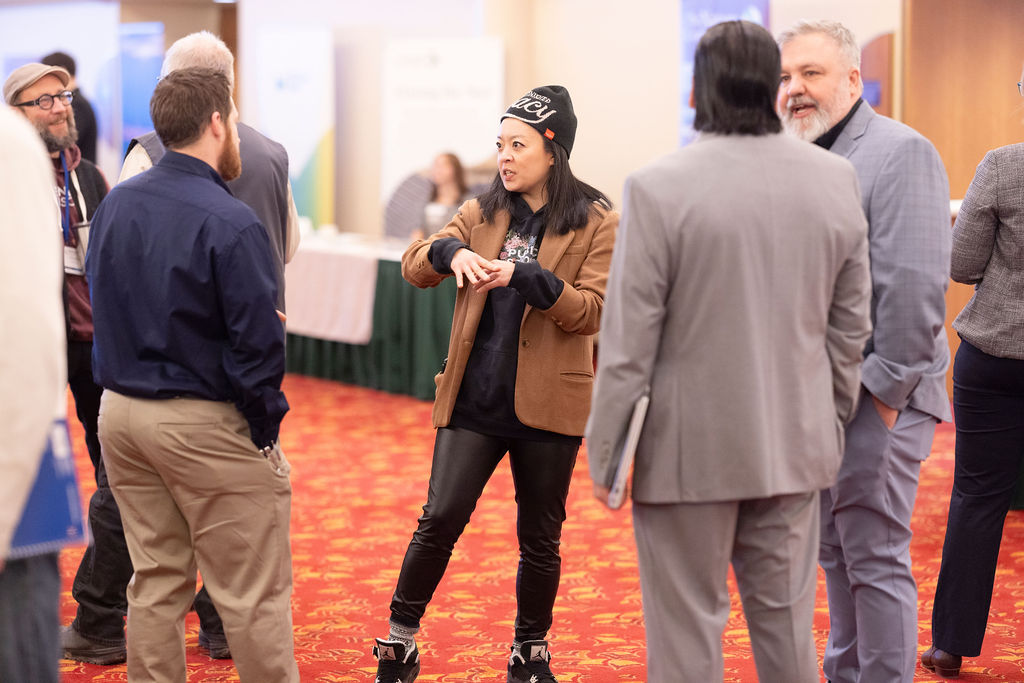
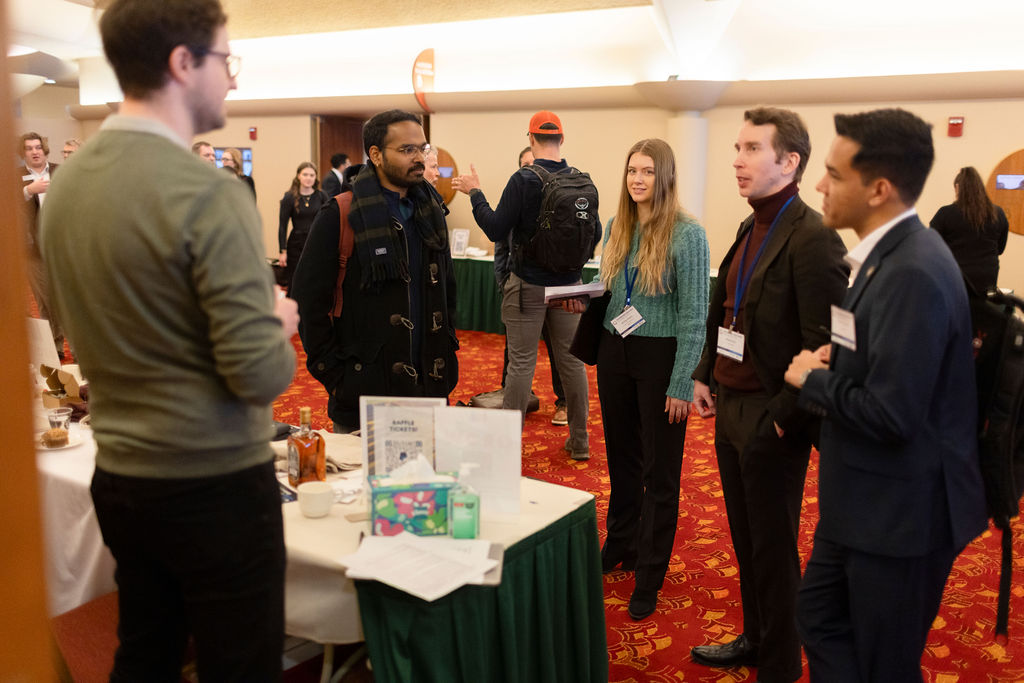
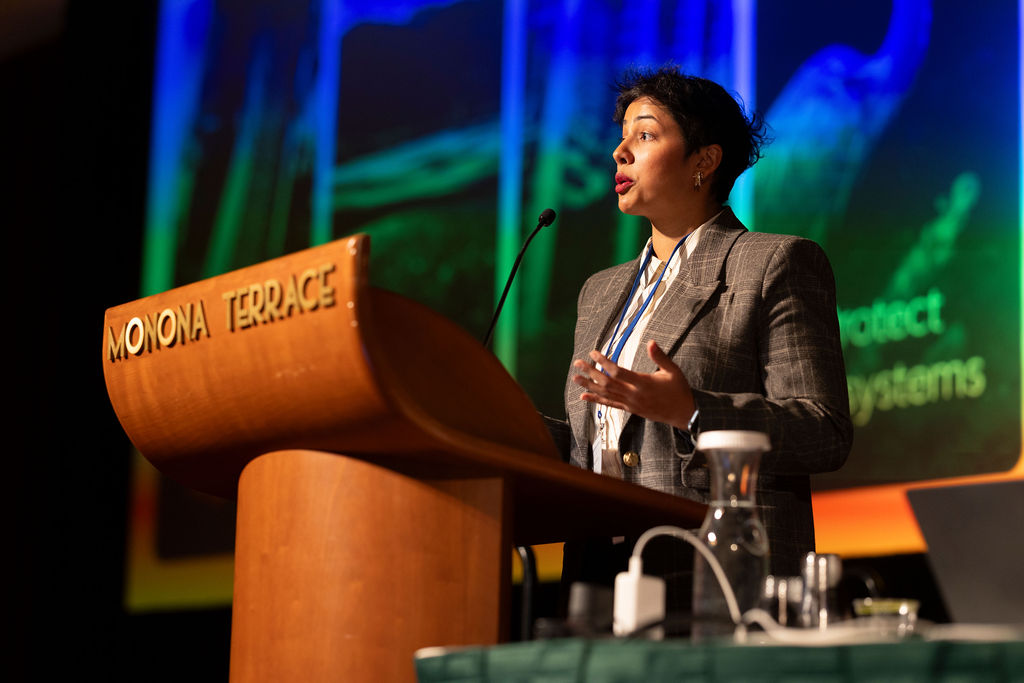
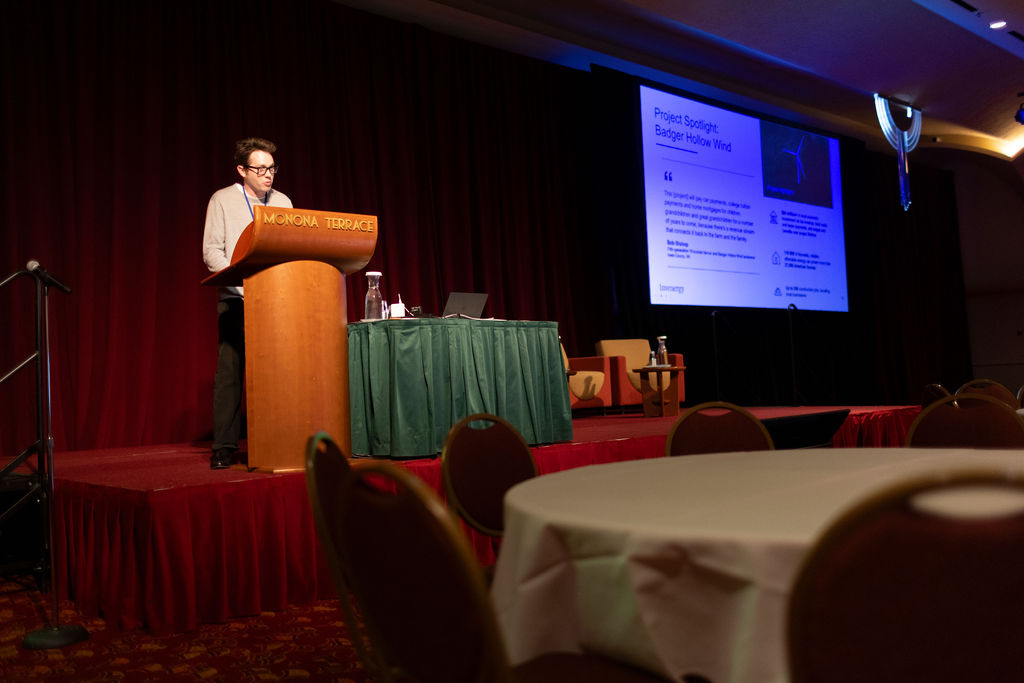
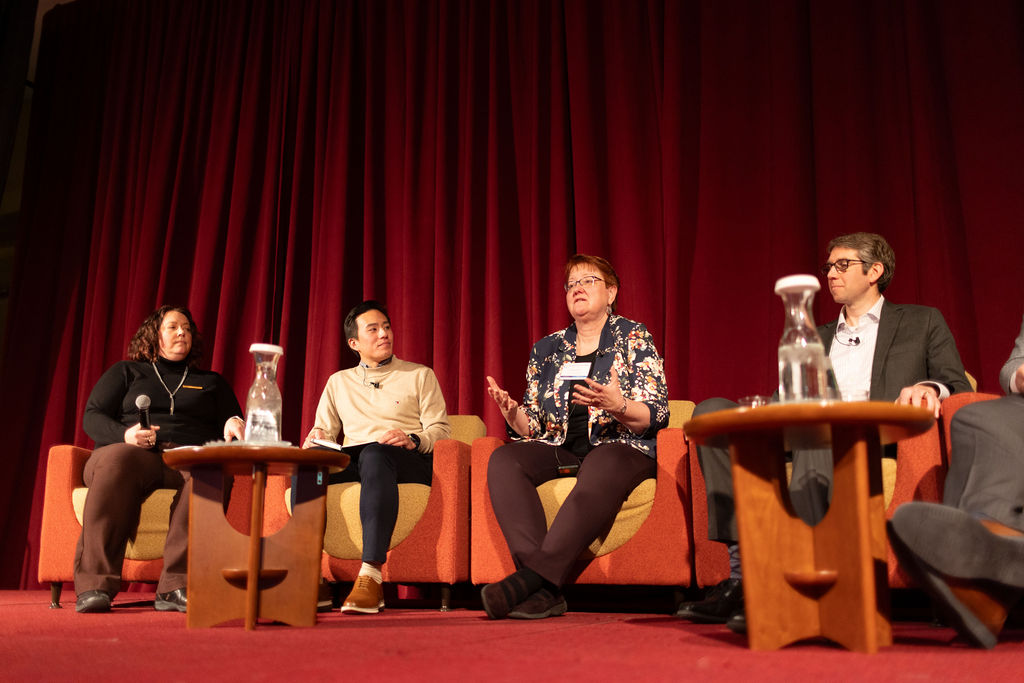
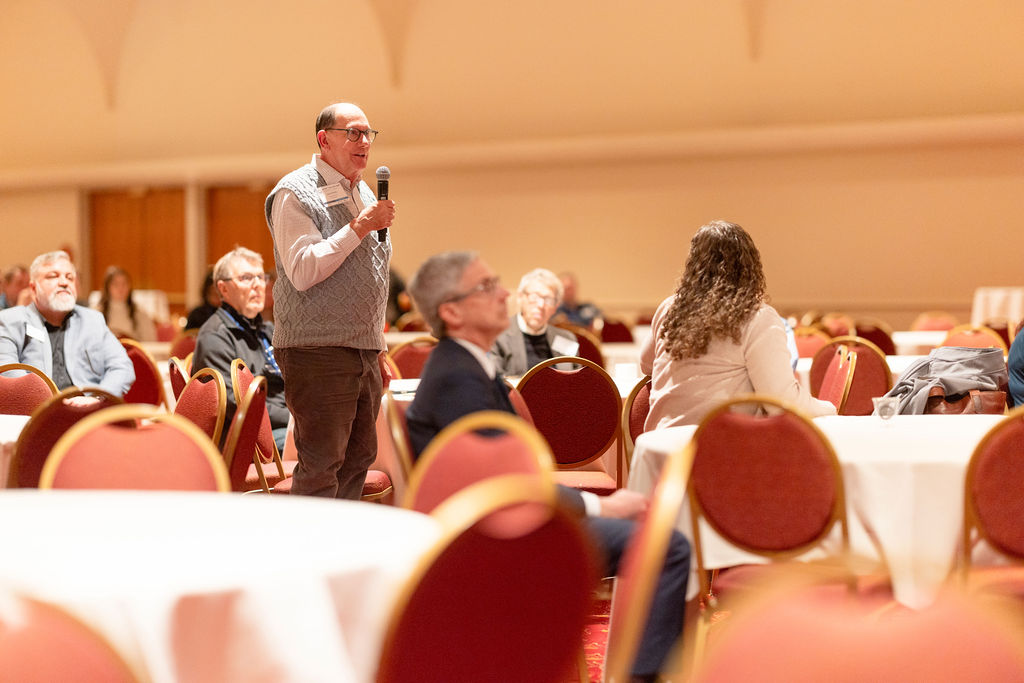
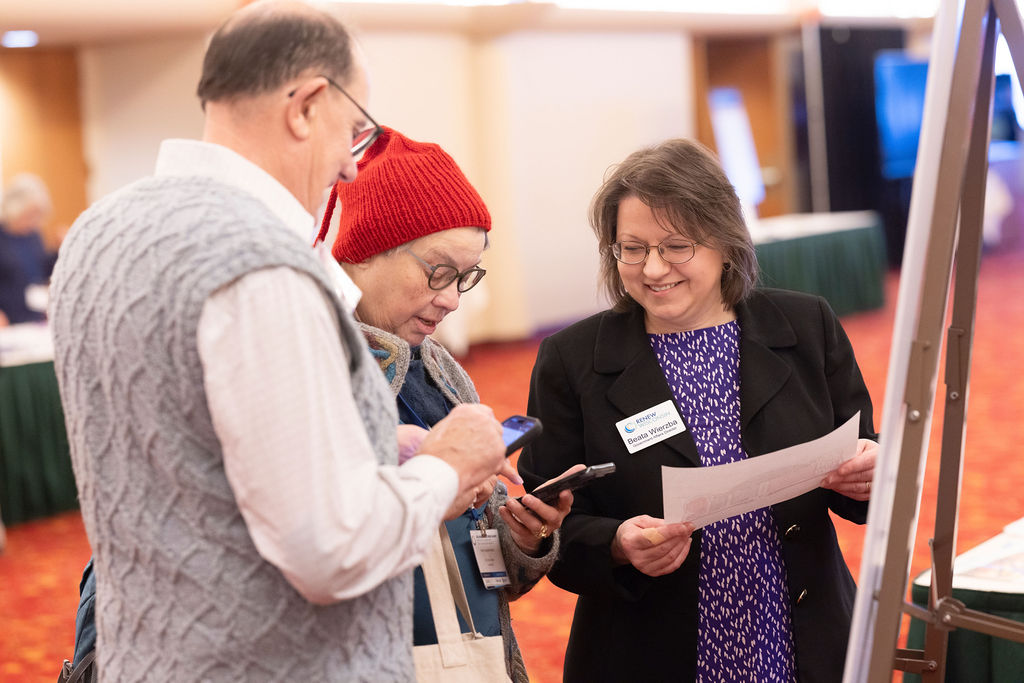
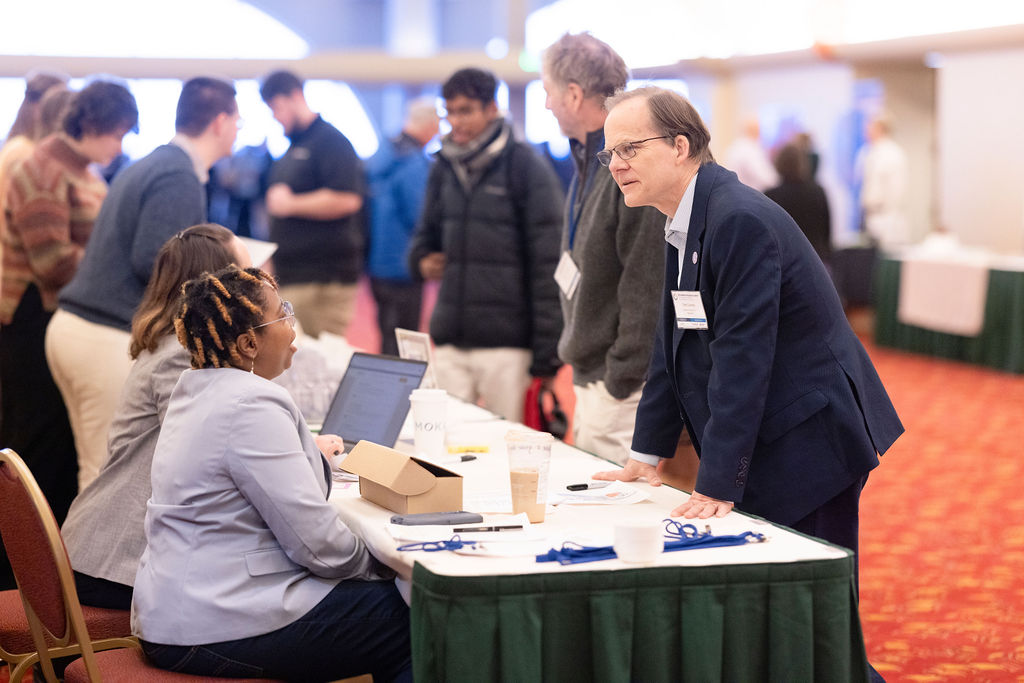
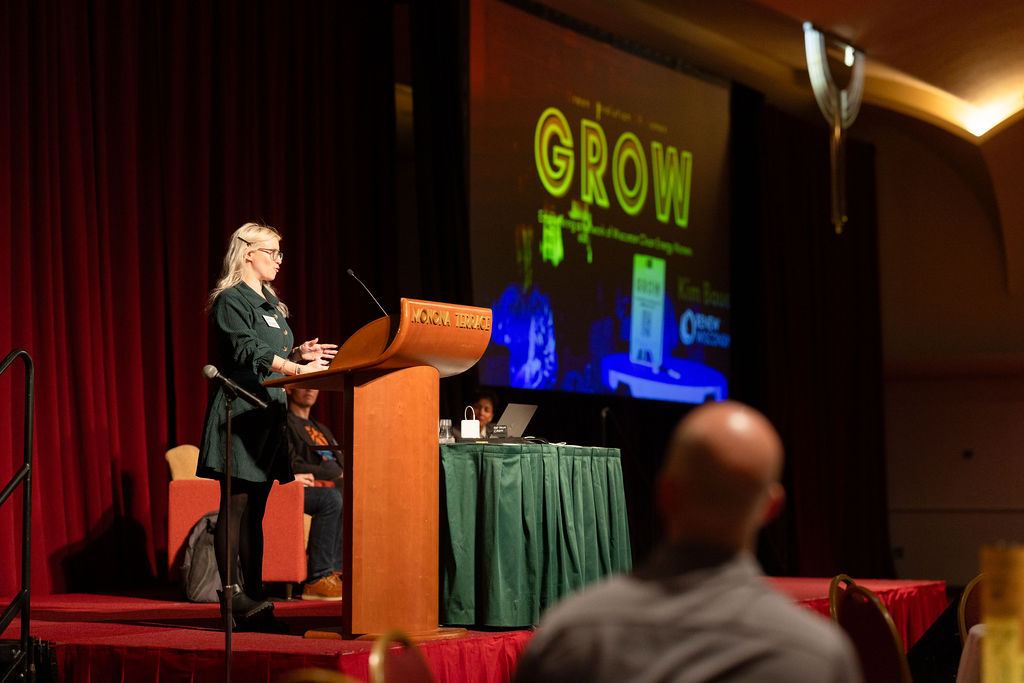
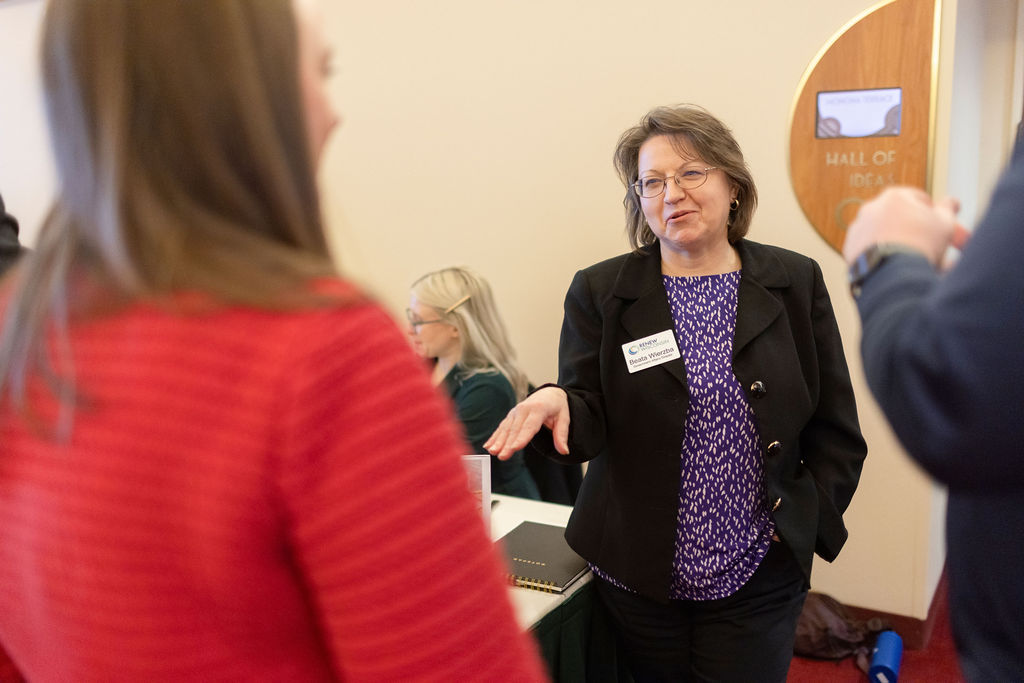
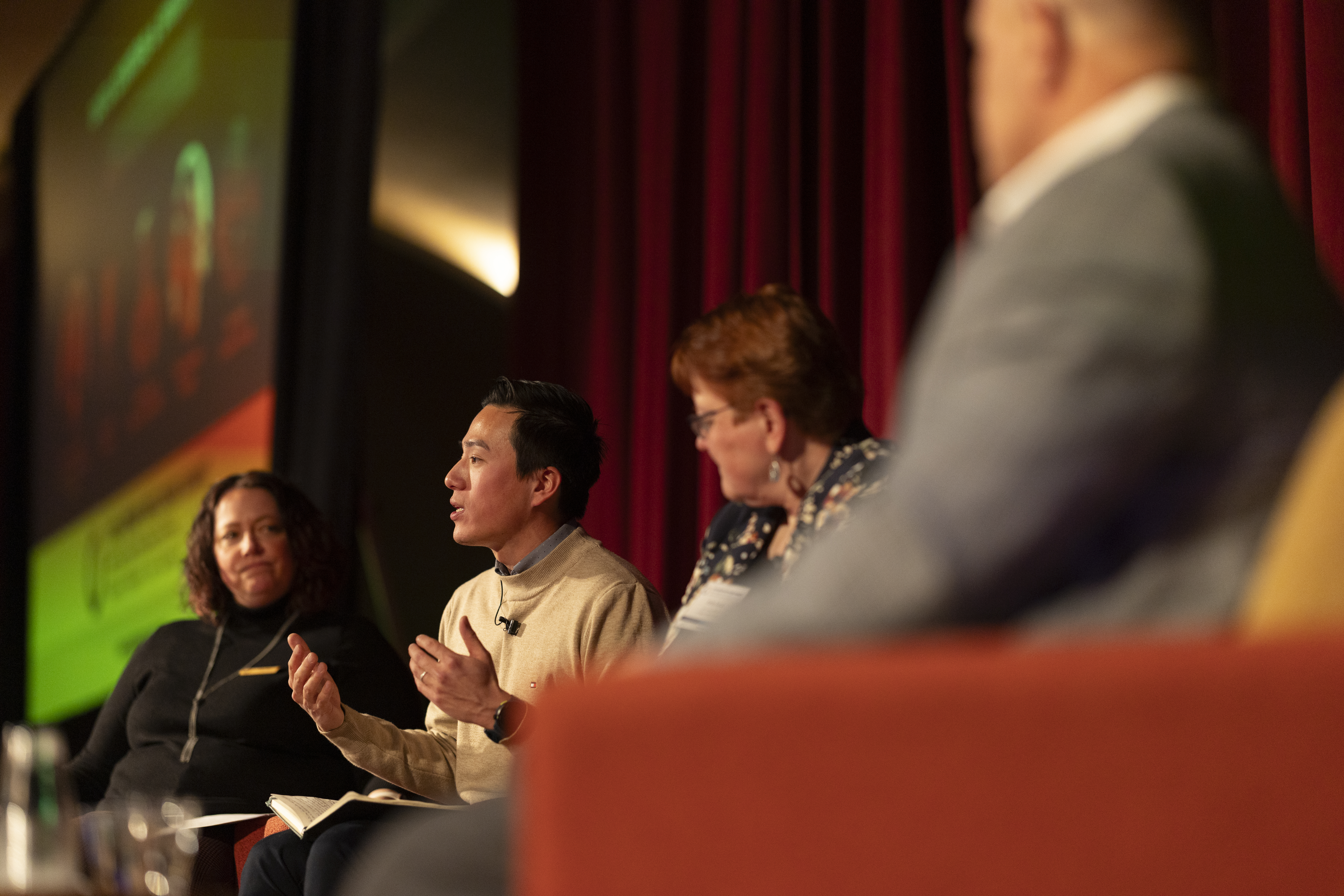
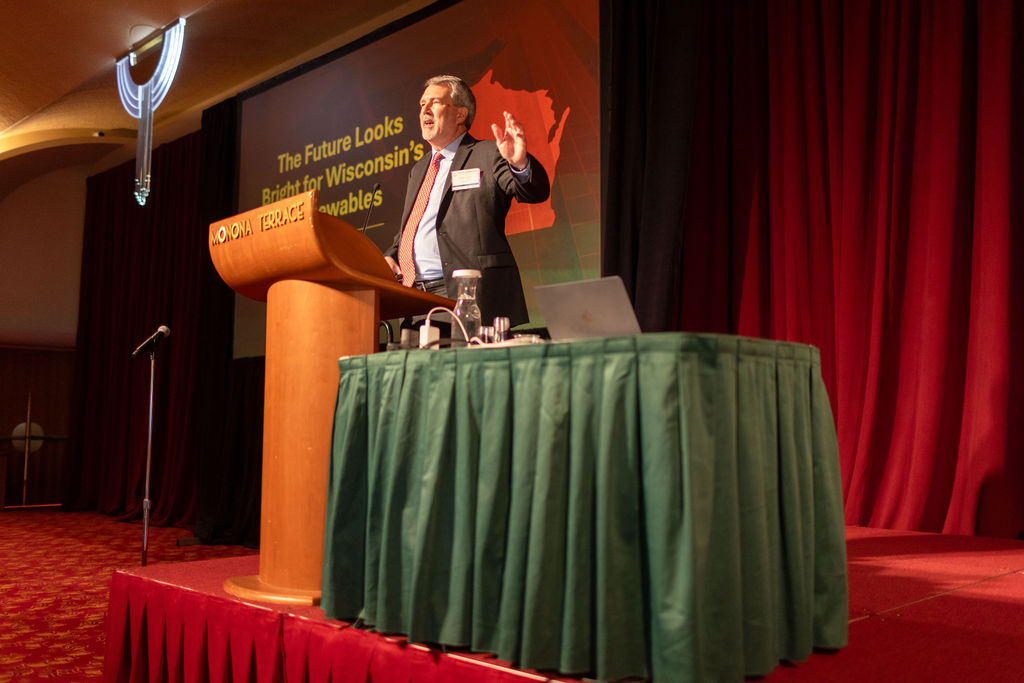
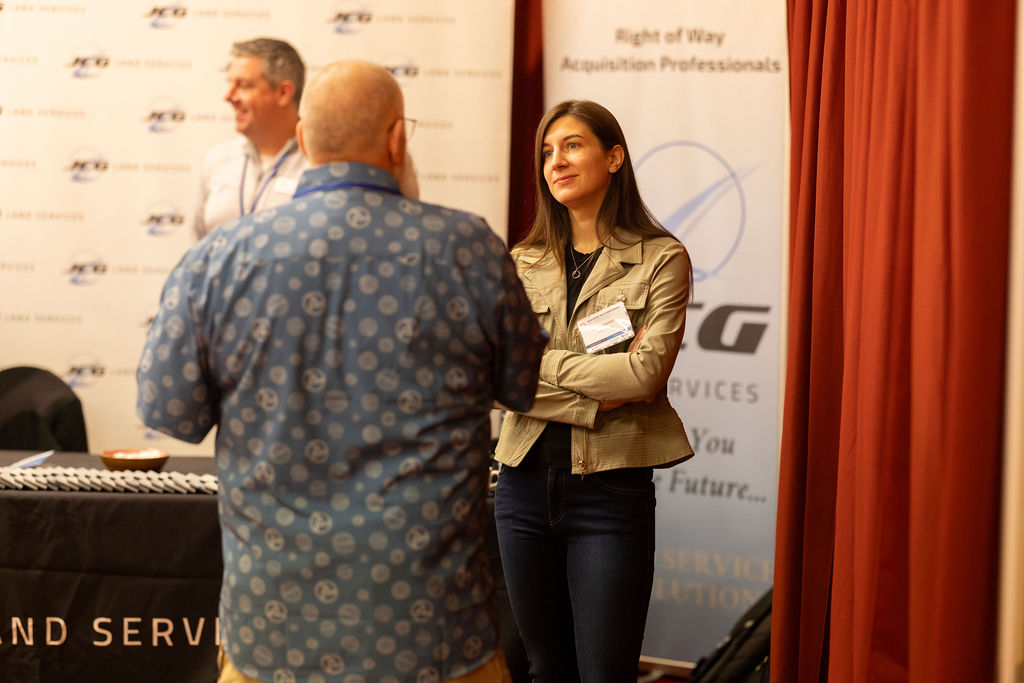
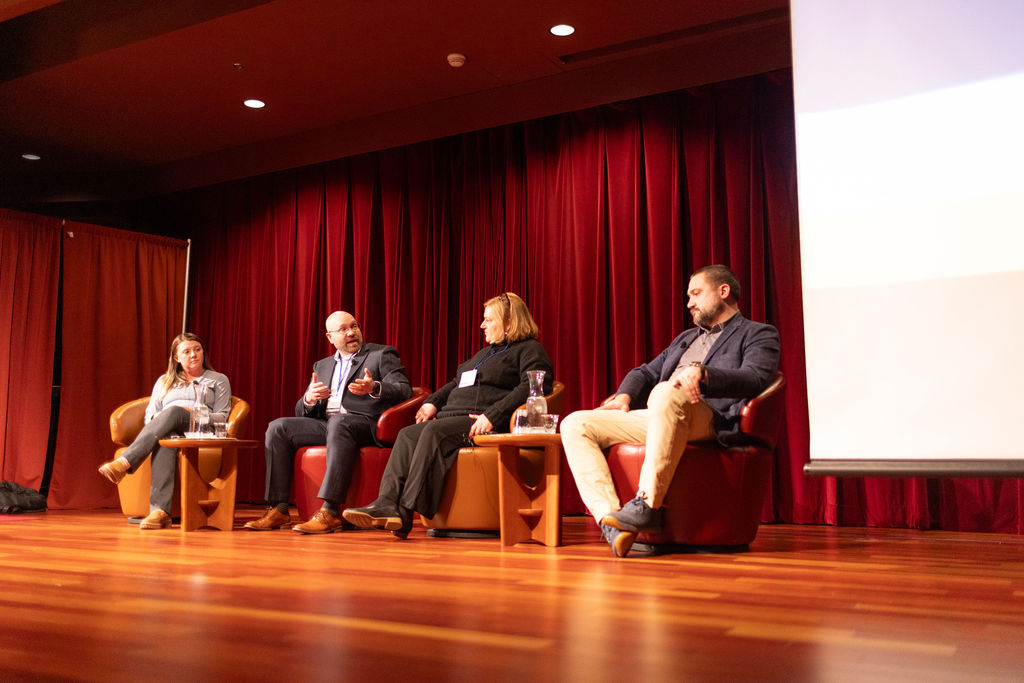
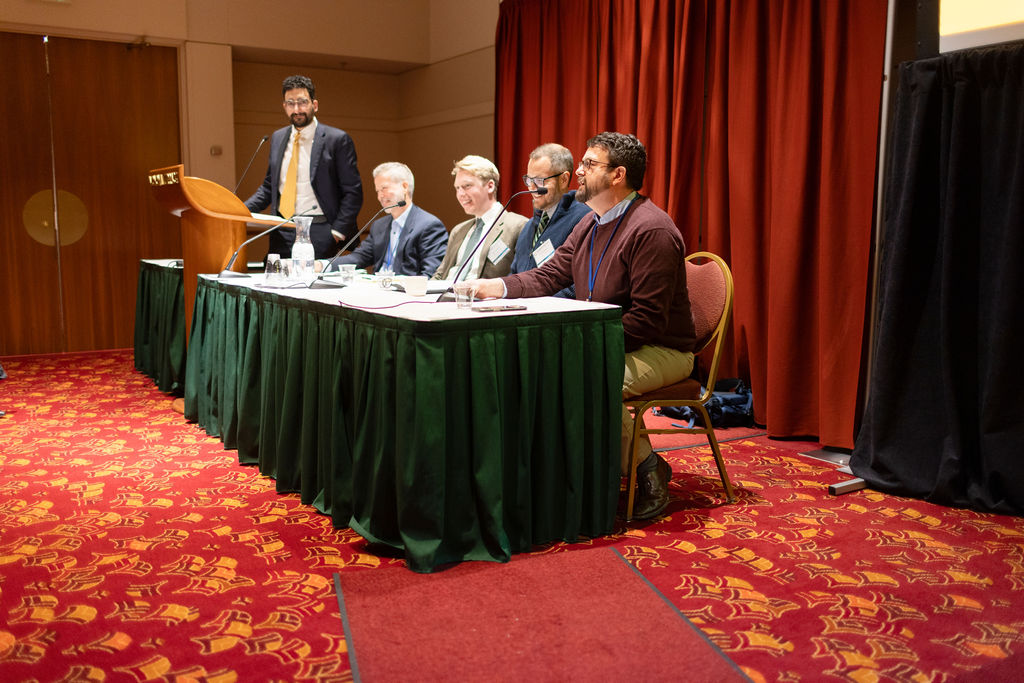
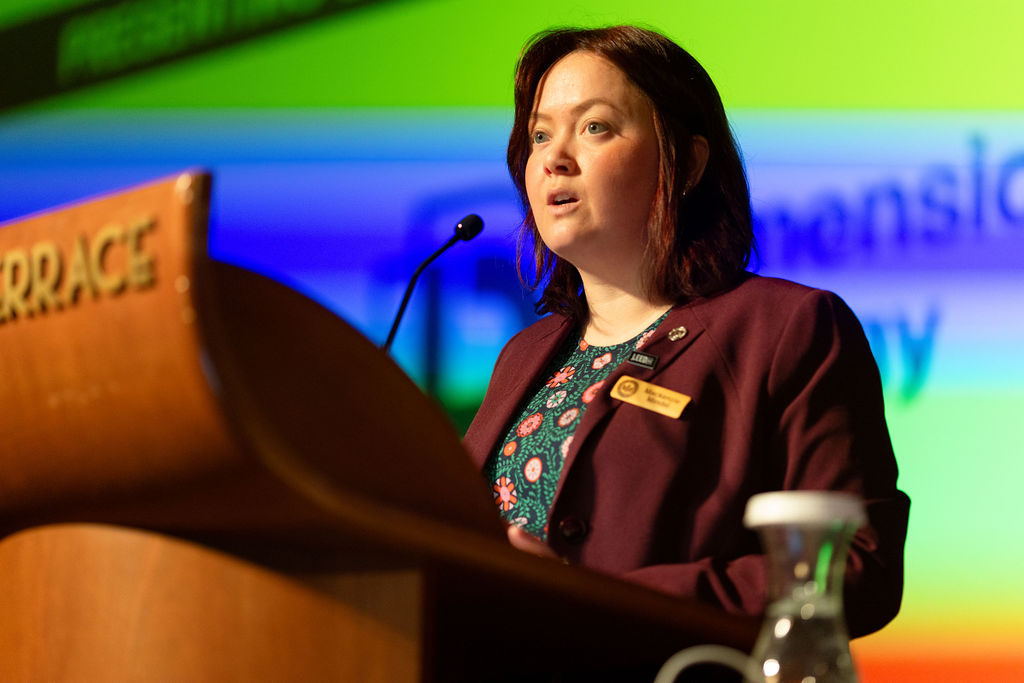
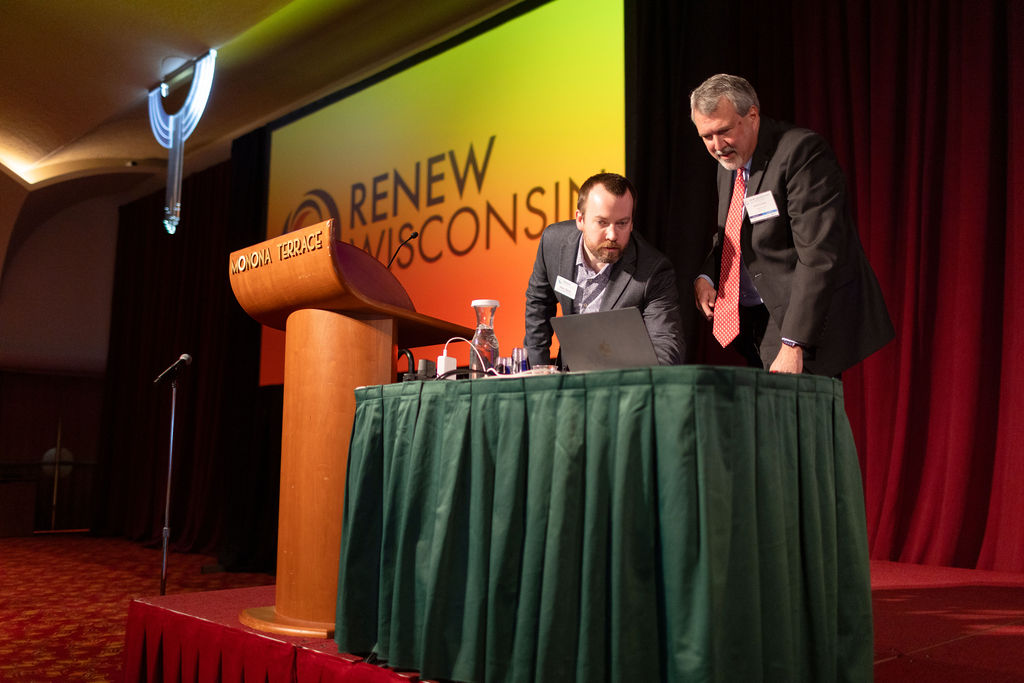
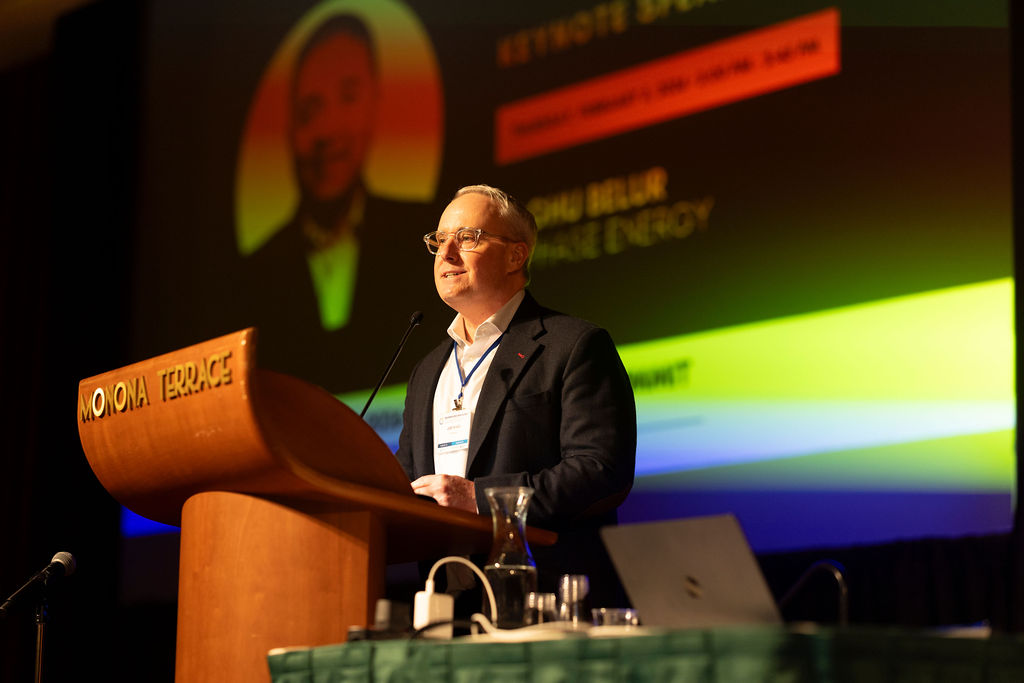
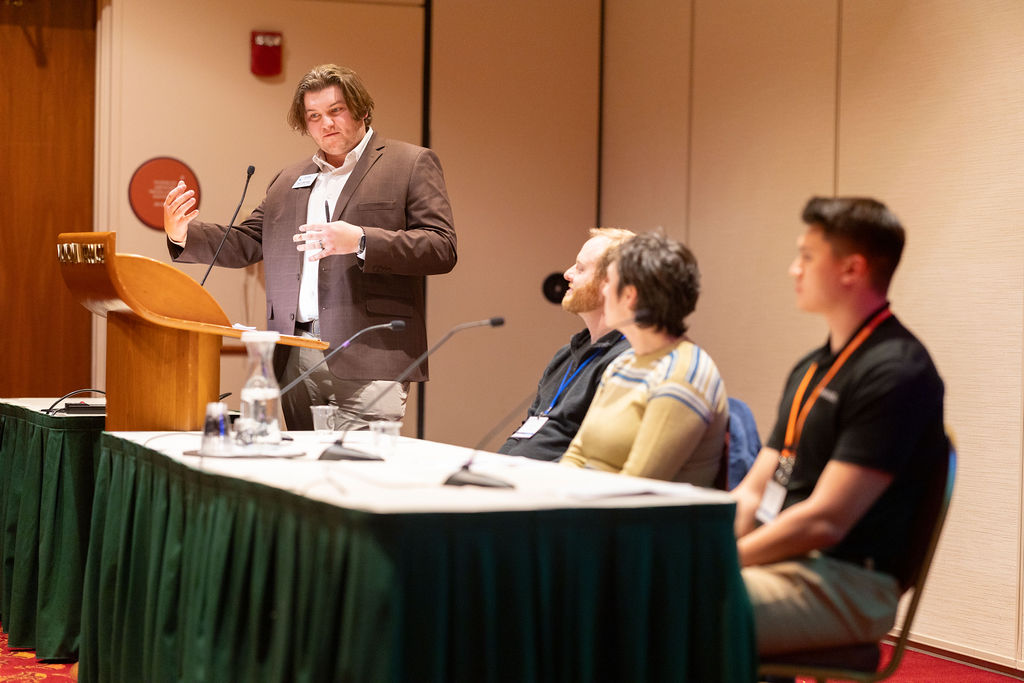
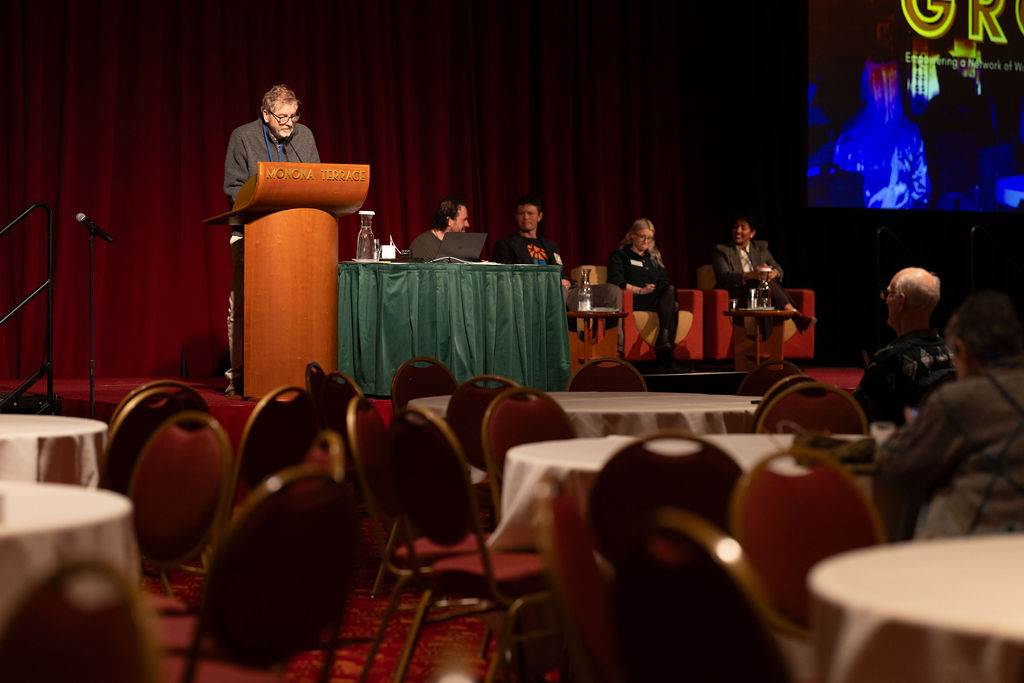
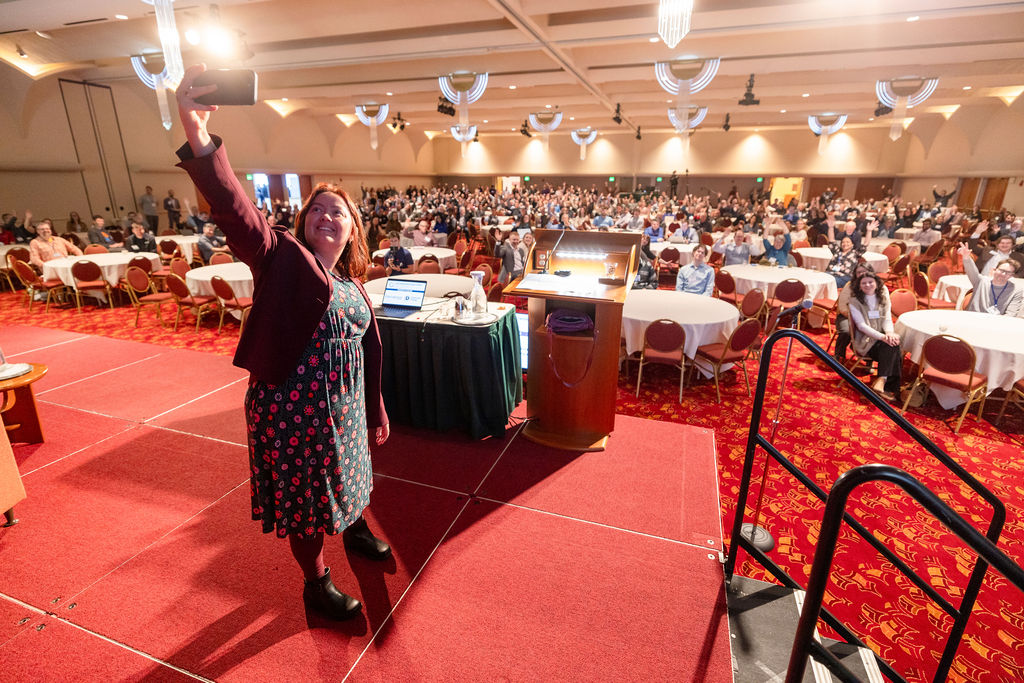
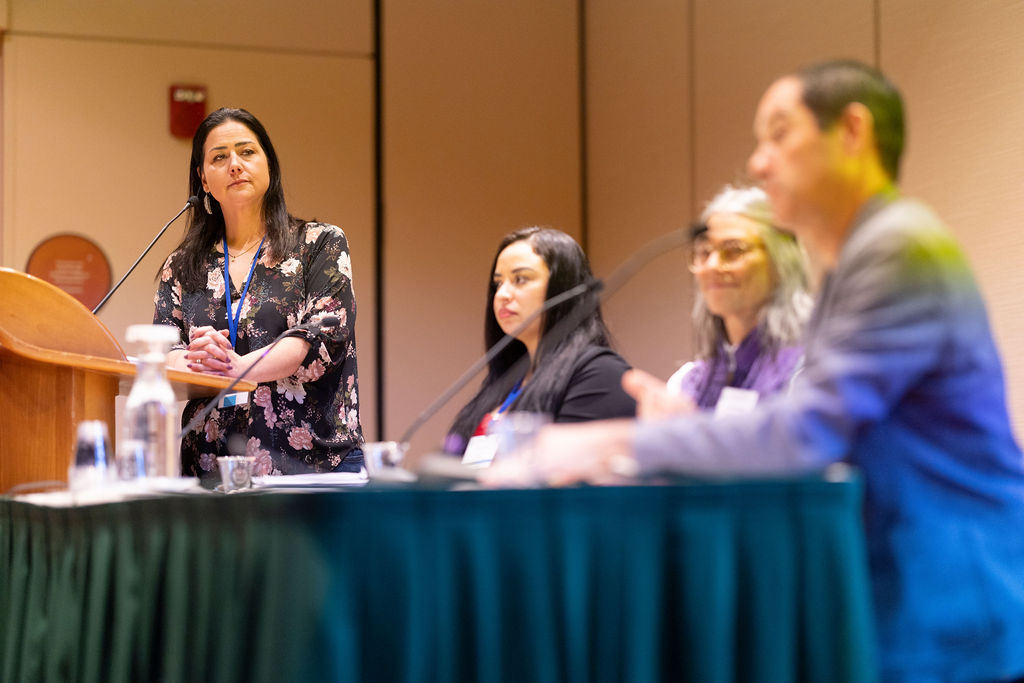
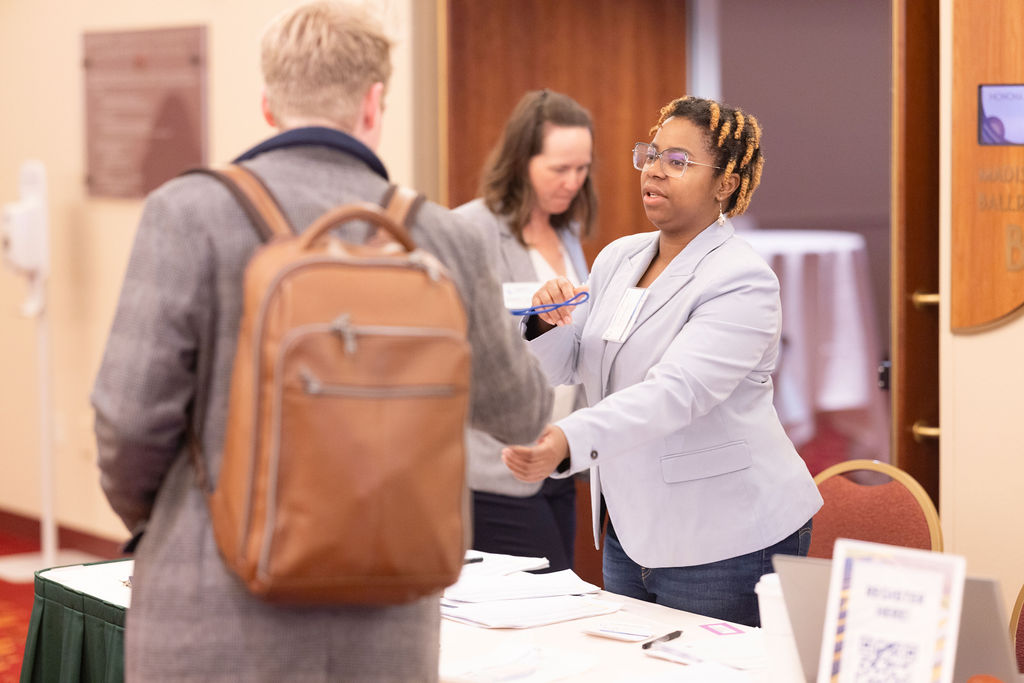
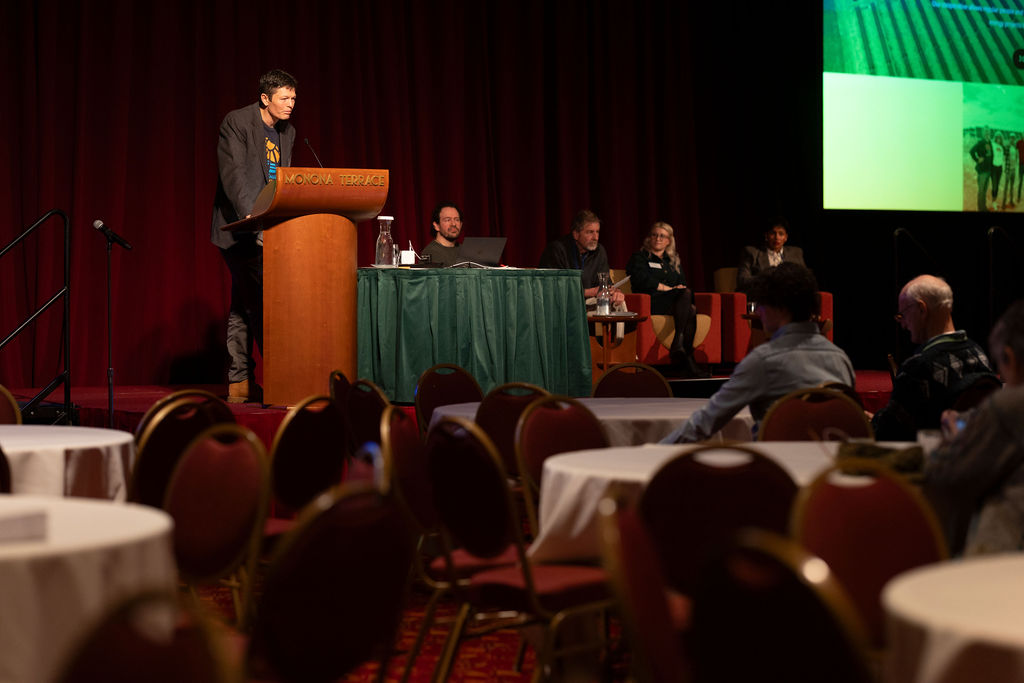
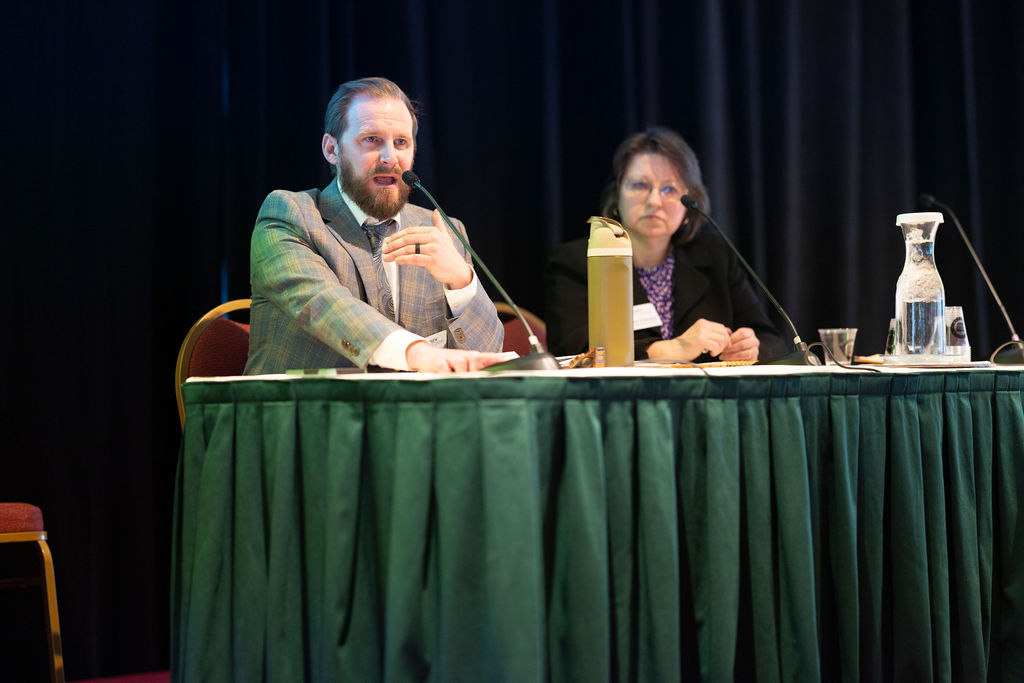
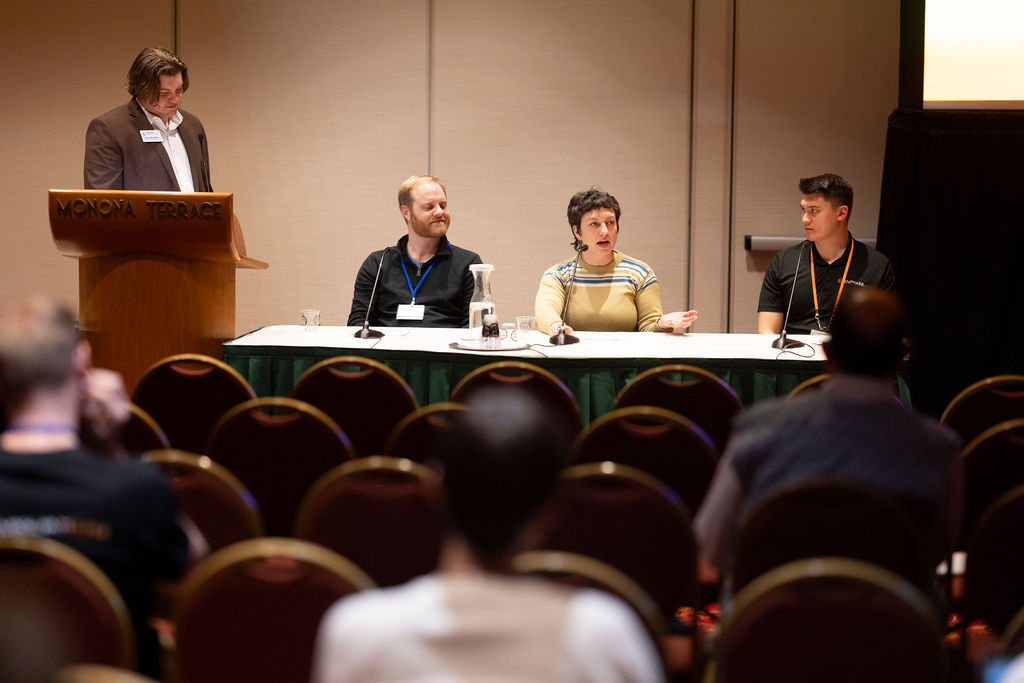
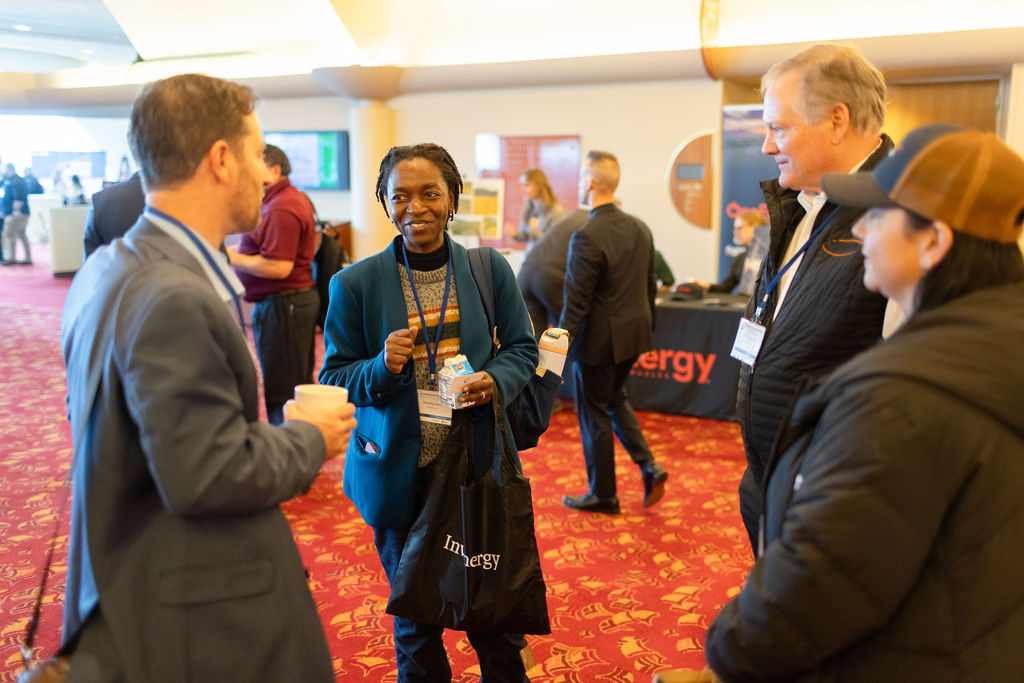
On Thursday, February 5, 2026, RENEW held our 15th annual RENEW Wisconsin Summit, presented by Invenergy and Dimension Energy. More than 600 Attendees from across the country joined us to discuss policy, legislation, and the future of energy, and how we will use clean energy to make Wisconsin more resilient! It’s hard to believe this event has been going on for so long, but it serves as proof that our industry is a resilient one.
This year, we made some small changes to our Summit, and we were happy to hear that most of them went unnoticed. That’s what we had hoped for! What changed, you ask? For the most part, we cut back on things that felt excessive, like the overall amount of food and some similar small parts of the Summit. Though we are all about clean energy, we also understand the importance of reducing waste in everything we do. Besides that, we did what we do every year — we focused on programming that we felt best represented current events so that we could have timely conversations about our industry, however difficult.
We certainly did have some interesting conversations this year, as well as a couple that might have been difficult or uncomfortable for some. That said, we hope you walked away from our programming with a stronger idea of the energy issues facing us in 2026 and some ideas of how we can address them. It’s our hope that the Summit serves as a launching pad for the remainder of the year. If our sessions on data centers, nuclear power, community benefits of utility-scale renewables, financing, or any of the others spurred an idea, we’d love to hear it. Together, we can turn these ideas into action as we continue to build a more resilient Wisconsin by expanding renewable energy.
And finally, we’d like to share some gratitude. The RENEW Wisconsin Summit comes together through the tireless efforts of our staff, board, volunteers, the many speakers who join us, our generous sponsors, and even our many attendees. The collective effort of the renewable energy industry is what makes this event so special, at least we certainly consider it special. It’s our hope that this event means something to all of you as well, because we’re doing it again. We admittedly don’t have many of the details worked out just yet for the 16th RENEW Wisconsin Summit, but we do know that we’ll be back on February 4, 2027. We hope you’ll join us then!
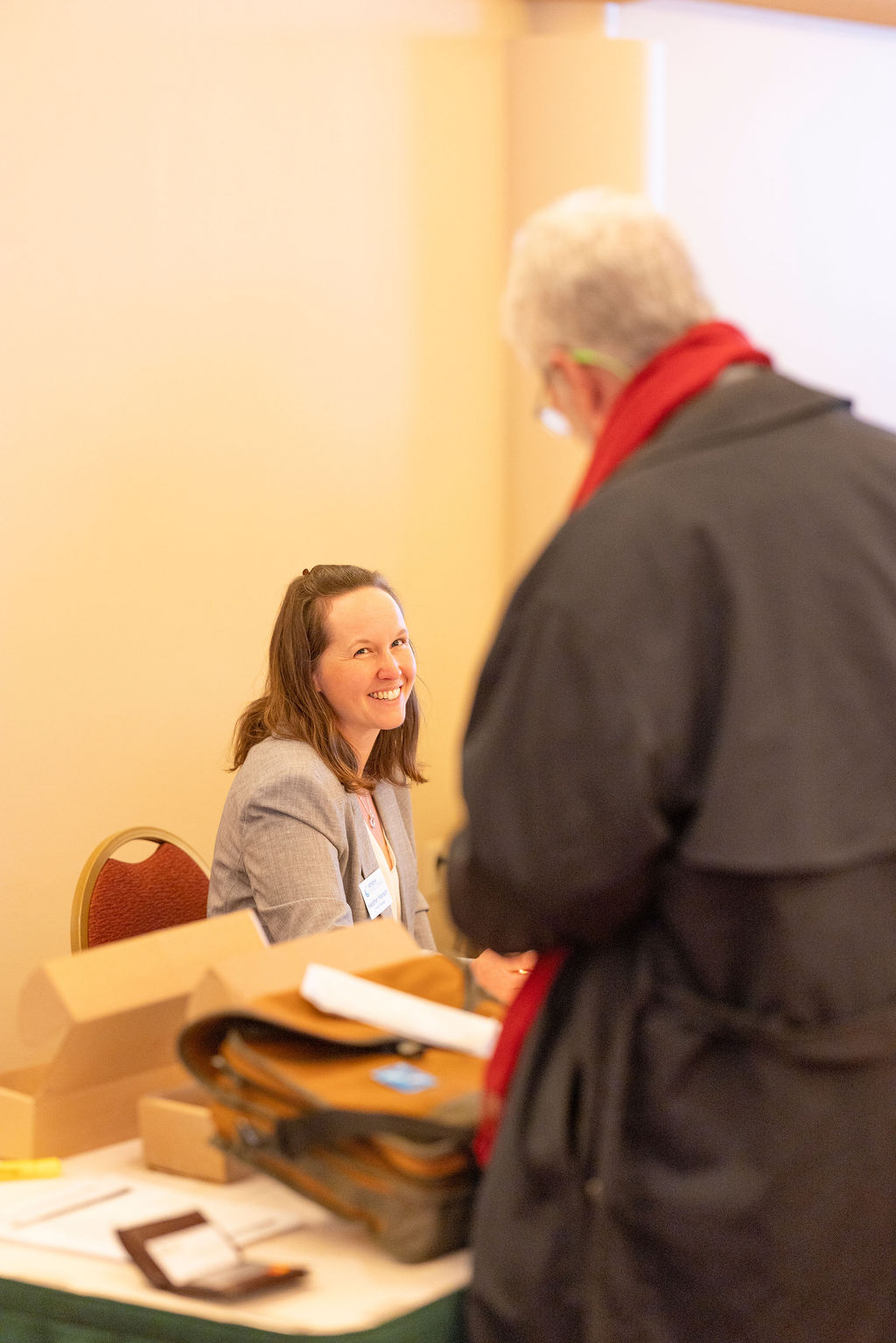
I know I already said “and finally,” but I do have one more thing. Below is a gallery of photos from the event. We know that photos don’t quite do it justice. We promise to have session recordings available within the next couple of weeks. Thanks again to everyone, you all make the yearly effort worth it!
The Bad River in Mellen, south of the Bad River Band's reservation. (Henry Redman | Wisconsin Examiner)
A coalition of Wisconsin environmental advocacy groups filed a lawsuit Monday challenging an administrative law judge’s decision to uphold the Department of Natural Resource’s permit approval to reroute the Enbridge Line 5 oil pipeline across northern Wisconsin.
The petition, filed in Iron County Circuit Court by Clean Wisconsin and Midwest Environmental Advocates on behalf of the Sierra Club, 350 Wisconsin and the League of Women Voters of Wisconsin, argues that the administrative law judge ignored extensive evidence that the pipeline reroute will damage local waterways.
A similar lawsuit has also been filed by the Bad River Band of Lake Superior Chippewa. The tribe for years has fought against the pipeline, which currently runs across its land. The reroute is happening because a federal judge previously ruled the pipeline must be moved off tribal land, but the tribe argues the new proposed route will continue to harm its water resources.
The administrative judge upheld the DNR’s permit decision after six weeks of hearings last year. The petitions from the environmental groups and the tribe move the case from the administrative legal process to the state’s court system. Separately, a challenge has been made against the U.S. Army Corps of Engineers’ Line 5 permit decisions.
“We are more committed than ever to protecting Wisconsin’s waters from the irreversible harm this project threatens to cause. We believe the administrative ruling incorrectly decided critical legal and factual issues, and we are confident that our efforts to hold DNR and Enbridge accountable to Wisconsin’s environmental laws will ultimately be vindicated,” MEA Senior Staff Attorney Rob Lee said in a statement.
Since its creation in 1979, the Federal Emergency Management Agency has been charged with protecting communities from natural disasters. Central to that mission is curtailing serious flooding, the most prevalent and severe weather threat to people and property across all 50 states.
That objective, though, is impeded by an old and obscure federal regulation — overseen and enforced by FEMA itself — that is actually making flooding worse.
That result was felt in December, when a powerful storm hit the Pacific Northwest. Flooding along Washington’s Nooksack and Skokomish rivers destroyed homes and inundated roads, prompting evacuations and the declaration of a state of emergency. Some losses may have been alleviated, experts assert, had planned flood mitigation work along these same rivers’ banks not experienced significant delays and cancellations as a direct result of the rule’s powerful reach, which extends nationwide.
Here in Wisconsin in the past year, watershed conservationists in Walworth and Ashland counties — located in the state’s south-central and northern regions — were forced to abandon two water quality and flood mitigation projects in local streams after discovering they would be subject to the regulation.
Known within FEMA as the “no-rise” rule, the directive prohibits any earth-moving activity in low-lying, flood-prone areas if water levels during a storm would rise above what was present before the construction started. In other words, any project — defined as “development” by the agency — must not increase the volume of water in flood-prone areas by any amount.
The rule, written in 1976 as a feature of the National Flood Insurance Program (NFIP), and described in detail for the first time by Circle of Blue, was enacted with good intentions to restrict development in floodplains. Its initial focus was population centers: Even an incremental increase in the volume of water that might overflow into a street or neighborhood can have perilous effects on basements, utilities, infrastructure, and human lives.
At the time it was enacted, restoring floodplains and watersheds was a novel pursuit. A half century later, these efforts are recognized for their environmental and human benefits. But as the no-rise rule is currently written and interpreted, “development” is an all-encompassing term that pertains equally to the paving of a new downtown road, as it does to the restoration of wetlands in a remote field. In the eyes of FEMA, a project to address pollution or flooding in a stream is held to the same “no-rise” standards as the construction of a new building.
FEMA’s enforcement of the rule is producing unintended effects. Meeting the “no-rise” standards, project managers say, adds tens of thousands of dollars to project costs and causes years of delay. As a result, land planners — from small nonprofits to federal agencies — routinely abandon efforts to improve water quality and restore watersheds before they even hit the ground.
By barring “development” in floodplains, the no-rise rule allows for the degradation of habitat, lowering of water quality and flooding to persist and worsen.
Viewed broadly, the rule’s compounding outcomes could not be felt at a more consequential time for the nation’s waters. The Trump administration is eliminating environmental safeguards, scaling back protections for the majority of the country’s wetlands and proposing limits on states’ power to issue water quality reviews.
Bipartisan lawmakers have developed legislation in both the U.S. House and Senate to amend FEMA’s no-rise rule in order to remove barriers to restore floodplains and watersheds. The agency has worked with legislators in writing these proposed policies, but did not respond to Circle of Blue when asked for a comment.
“It was never an NFIP goal to see rivers and floodplains restored, which might be why these policies are so antiquated,” says Jennifer Western Hauser, a policy liaison at Wisconsin Wetlands Association. “We understand now that restoring floodplains can reduce flood risks and damage, so it’s long overdue to restore common sense.”
Tall bluffs extend over Barre Mills, Wisconsin, where the “no-rise” rule is impeding water restoration efforts. (Christian Thorsberg / Circle of Blue)
A case in point in Wisconsin’s Driftless Area
Addressing risks and recovery in flood-prone areas is an exhaustive undertaking. FEMA invests tens of millions of dollars each year in projects to reduce threats where storms are likely to hit.
But the agency spends significantly more in their aftermath. Since its launch in 1968, the agency’s National Flood Insurance Program has fulfilled north of $88 billion in property damage claims.
The economic realities and the extreme human cost of floods mean that flood control remains a heavily regulated effort codified within dozens of federal statutes, mandates and supplemental acts. Among this tangle of federal regulation is the no-rise rule that is producing unwelcome effects in rural regions, where efforts to reduce flood risks and improve the quality of long-polluted waters are routinely stymied. The dairy farms and modest homesteads that mark the snowy fields of Barre Mills, Wisconsin, offer a case in point.
The small unincorporated community recalls a typical Midwestern landscape, save for the towering bluffs and rocky cliffs that wreathe around it, rising hundreds of feet. This unique stretch of southwestern Wisconsin, part of a wider region known as the Driftless Area, was left untouched by heavy ice sheets and retreating glaciers during the most recent Ice Age. Cold-water streams, waterfalls and deeply carved river valleys abound as a result. Both the Mississippi and Wisconsin rivers flow through La Crosse County.
But when managed unsustainably, this steep terrain can accelerate watershed degradation. In rural Barre Mills, a legacy of tilling, deforestation and livestock grazing atop tall bluffs has left the town’s low-lying areas with floodwaters polluted with fast-moving farm runoff.
Bostwick Creek. (Christian Thorsberg / Circle of Blue)
Bostwick Creek, which stretches for 13 miles through 30,000 acres of woods and farms, is one prime example.
The creek’s final four miles are severely impaired. Destructive storms and flooding, fueled by a changing climate, have exacerbated the erosion of its vulnerable banks. Non-point pollution from local farms has poured into the channel. Since 2014, the waterway has held unsafe concentrations of phosphorus, fecal matter and suspended solids.
These unwanted pollutants are not contained to just the creek. The Wisconsin DNR has issued fish consumption advisories after detecting high concentrations of forever chemicals in the La Crosse River, into which Bostwick flows. Duckweed and green algae, a side effect of nutrient spillage, has inundated downriver marshlands.
The county has identified the creek’s water quality woes as a high-priority issue. From a conservation approach, its restoration portends to follow a straightforward plan of soil stabilization and the addition of new vegetation, which will make its floodplain more durable. Local farmers have even pledged crucial support for the effort, agreeing to give up precious land and private fishing access and commit to no-tilling practices near its banks.
But FEMA’s “no-rise” rule is throwing a wrench in the entire operation. Creek restoration requires navigating a mountain of costly and time-consuming engineering, modeling, mapping, and permitting requirements that “seems to end up in a drawer, if anyone even looks at them at all,” says Jacob Schweitzer, La Crosse County’s lead watershed planner.
The rule has delayed the creek’s restoration by months and added roughly $8,000 in expenses so far.
Jacob Schweitzer, La Crosse County’s lead watershed planner, stands along the banks of Bostwick Creek. (Christian Thorsberg / Circle of Blue)
Floodzones AE, floodways and maps
FEMA reaches its conclusions about development projects in rural valleys, like the one drained by Bostwick Creek, after three stages of formal consideration.
First, the agency defines the valley as a floodplain, which is broadly defined as an area that is susceptible to being inundated by water during a storm. Second, FEMA designates land directly adjacent to Bostwick Creek with the more specific distinction of being a “Floodzone AE,” which is identified as a “high-risk” area within a floodplain. And third, within Floodzones AE are other pockets of land called regulatory floodways — the highest-risk area within a floodplain to flooding.
Herein lies the culprit and its burdensome penalty.
All “development” done inside regulatory floodways, whether related to construction or conservation, is subject to the “no-rise” rule. Failure to comply with the regulation, Schweitzer says, would result in the entire county’s population losing access to federal flood insurance.
Adding to the frustration is the agency’s lethargy in upkeeping current records. Most flood zones were set decades ago when FEMA drew its inaugural set of flood maps for the NFIP. But these landscapes have changed vastly over the past half-century, and most of these maps and designations no longer reflect today’s terrain. Despite this, the agency does not systematically work to ensure its digital records match the risks or non-risks present on the ground.
“It’s a long, complicated and political process,” says Brandon Parsons, director of river restoration at American Rivers. “Landowners and farmers living on thousand-acre ranches, with nobody in sight, might have to pay $50,000 to go through this conditional process with FEMA to restore banks on their own land.”
The final downstream stretch of Bostwick Creek. (Christian Thorsberg / Circle of Blue)
The responsibility of updating maps thus falls on project planners, who must demonstrate that their work will follow the “no-rise” requirements. At Bostwick Creek, original flood maps have not been touched since 1982. Months of work to bring these maps up to date, Schweitzer says, has cost thousands of dollars, all to prove that the water level will remain unchanged.
“Restoration work in zone AEs is frequently avoided,” Western Hauser adds. “That can only lead us to untenable conclusions. If zone AEs are degraded, they’ll remain degraded, or get worse because no one will work on them.”
The Floodplain Enhancement and Recovery Act
On a blustery December afternoon, Jacob Schweitzer navigates shin-deep snow near a chicken farm along the Bostwick, where more than 50 feet of sediment has fallen into the creek in just the past few years. Further downstream, fallen trees zig-zag and soils slump into the channel.
Hardly a dozen farmhouses fill the view, and yet the project is held to the same standards as the construction of a new office building along the Milwaukee River in downtown Milwaukee.
The valley through which the Bostwick flows is dotted with few buildings. (Christian Thorsberg / Circle of Blue)
Policy experts agree that a significant amount of restoration work can be unlocked if FEMA regulations are updated with more nuance. This winter, a pair of bipartisan bills have been introduced on Capitol Hill to remedy this sticking point.
Senate Bill 1564 — the Floodplain Enhancement and Recovery Act, authored by Sens. Patty Murray, D-Washington, and Steve Daines, R-Montana — and a companion House bill, co-authored by Wisconsin Rep. Bryan Steil, a Republican, would add a definition of “ecosystem restoration” to the NFIP, differentiating it from other forms of development. States and communities would have the flexibility to allow up to a one-foot rise in a regulatory floodway’s water level, so long as no nearby insurable infrastructure is affected.
“In other words, we’re talking about less-developed areas,” Western Hauser says. “We’re talking about areas upstream of development, where you might want to get your river working in tandem with your floodway.”
Barre Mills is the exact kind of community where this legal nuance could make a big difference for water quality. If the act becomes a law, FEMA would have 180 days to develop guidance for how communities can work in compliance with this new rule. The agency would also be obligated to collaborate with natural resources agencies when drafting these directions.
Floodplain managers, conservation groups, insurers, and tribes across the country continue to voice their support for the legislation. Supporters say its passage is most likely if it is attached to a larger congressional package.
“Bureaucratic red tape should not stall common sense restoration projects,” Rep. Steil said in a statement. “The Floodplain Enhancement and Recovery Act eases administrative burdens and empowers Wisconsin communities to make our waterways healthier, strengthen our resilience to floods, and enhance ecosystems across the nation.”
Marathon Petroleum Company’s Salt Lake City Refinery in Salt Lake City on Jan. 3, 2024. (Photo by Spenser Heaps for Utah News Dispatch)
A coalition of public health and environmental groups filed a suit Wednesday challenging the Trump administration’s recent finding that the Environmental Protection Agency could not regulate climate-warming greenhouse gases.
EPA Administrator Lee Zeldin and President Donald Trump announced last week the administration was finalizing a repeal of the 2009 endangerment finding, which declared the agency could regulate greenhouse gas emissions, particularly from vehicle emissions, because climate change posed a danger to human health.
The 17 groups who jointly filed the suit Wednesday include the American Public Health Association, Clean Wisconsin, Union of Concerned Scientists, Earthjustice and Natural Resources Defense Council.
‘Required by law to protect us’
Their two-page filing in the U.S. Court of Appeals for the D.C. Circuit does not detail any of the groups’ legal arguments against the repeal, but lawyers and officials for the groups said the EPA was legally bound, under the Clean Air Act, to protect people from greenhouse gas emissions.
“They are required by law to protect us from air pollution that endangers public health and welfare,” Dr. Georges C. Benjamin, the CEO of the American Public Health Association, said on a video call with reporters. “And that includes greenhouse gases that are driving climate change.”
The law requires challenges to new nationwide agency actions on emissions to be filed in the D.C. Circuit.
In an email, EPA press secretary Brigit Hirsch said the agency had reviewed the endangerment finding, the Clean Air Act and related court decisions, including “robust analysis” of recent Supreme Court decisions. The agency concluded it did not have authority to regulate greenhouse gas emissions.
“Unlike our predecessors, the Trump EPA is committed to following the law exactly as it is written and as Congress intended—not as others might wish it to be,” Hirsch said.
“In the absence of such authority, the Endangerment Finding is not valid, and EPA cannot retain the regulations that resulted from it,” she continued. “EPA is bound by the laws established by Congress, including under the CAA. Congress never intended to give EPA authority to impose GHG regulations for cars and trucks.”
Emissions are pollutants, opponents say
But the groups said the EPA’s reasoning ignored that the agency has long regulated emissions as part of its mandate to protect clear air. The omission of the term “greenhouse gases” in the Clean Air Act is “a manufactured problem” by opponents of regulation, Hana Vizcarra, a senior attorney at Earthjustice, said.
“The Clean Air Act was intended to cover air pollutants, full stop. Air pollutants include greenhouse gases,” she said. “This argument that Congress needs to do something different to be able to regulate greenhouse gases… it’s just a way to avoid the issue and avoid regulation.”
The matter is “settled law,” the groups said, as federal courts have affirmed and reaffirmed the EPA’s power to regulate emissions.
A 2007 U.S. Supreme Court case established that the Clean Air Act “was unambiguous” in authorizing the EPA to regulate greenhouse gases as pollutants, Meredith Hankins, a senior attorney at NRDC, said.
That decision led to the EPA’s so-called endangerment finding two years later, during President Barack Obama’s first year in office.
Attorneys general likely to weigh in
Wednesday’s challenge will likely be consolidated with other challenges, including those from “blue-state attorneys general,” Hankins said.
In the announcement last week, Trump said the endangerment finding, and the tailpipe emissions standards that relied on it, had dragged down the automotive sector and the broader economy nationwide.
The administration has said the move will save Americans more than $1 trillion by reducing regulations.
The repeal’s opponents, though, said Wednesday that projection ignored more than $100 billion in additional costs American drivers would see if fuel efficiency standards are relaxed or the enormous public health costs from worsened air quality and increased climate risks.
Protesters rally in downtown Milwaukee in May 2021 to show support for Palestinians living in Gaza. A bill to define antisemitism will go before the Wisconsin Assembly for a vote Tuesday. Supporters say it's necessary to differentiate between criticism of Israeli policy and anti-Jewish hate, but critics say it would conflate political speech with antisemitism. (Photo by Isiah Holmes/Wisconsin Examiner)
The Wisconsin Assembly will vote Tuesday on a bill that would define antisemitism and that has prompted deep divisions — including among Jewish leaders, who are found among both the supporters and opponents of the measure.
Proponents of the legislation contend it is needed to take a stand against a surge in antisemitic actions, on college campuses as well as in other contexts.
Critics, however, argue that the bill would criminalize political speech critical of Israeli actions, most recently in the ongoing conflict in Gaza — which has also divided the Jewish community.
The bill would codify in Wisconsin law a definition of antisemitism that was adopted by the International Holocaust Remembrance Alliance in 2016.
Thedefinition states: “Antisemitism is a certain perception of Jews, which may be expressed as hatred toward Jews. Rhetorical and physical manifestations of antisemitism are directed toward Jewish or non-Jewish individuals and/or their property, toward Jewish community institutions and religious facilities.”
The IHRA has also published a list of bullet points as “contemporary examples of antisemitism in public life, the media, schools, the workplace, and in the religious sphere…”
The legislation,AB 446, requires local and state governmental agencies to consider the IHRA definition “including its examples” when investigating allegations of racial, religious or ethnic discrimination. Its Senate companion isSB 445.
The definition would also be used to determine “enhanced criminal penalties for criminal offenses” if a defendant is found to target a victim “because of the victim’s or group of victims’ actual or perceived race, religion, color, or national origin.”
The bill “doesn’t create any new criminal penalty or compel any legal proceeding to be initiated,” testified its Assembly author, Rep. Ron Tusler (R-Harrison), at public hearings on the measure. “Rather, it provides a standard to be used in evaluating whether an alleged criminal act as provided for under current law was motivated by antisemitism.”
Both the IHRA’s examples and the bill’s criminal penalty language have become key points of criticism for the legislation’s opponents, however. Rabbis have testified both in favor of the legislation and against it.
“Nothing about this bill would prevent me, or anyone else, from rebuking Israel for its actions when conscience demands it,” said Rabbi Noah Chertkoff, who serves a congregation in the Milwaukee suburb of Fox Point, testifying in support of the bill at its Jan. 28 state Senate hearing.
At the same hearing, Rabbi Dena Feingold, the retired leader of a Kenosha congregation, called the IHRA definition “highly controversial and problematic in a number of respects” in her opposition testimony.
“It is far from universally accepted within the Jewish community, and many scholars and leaders have outright rejected it,” Feingold said.
The number of examples offered by the IHRA treating “anti-Israel rhetoric as antisemitism gives the impression that anti-Israel critics and protesters are by far the most likely sources of antisemitism in America,” Feingold added. “On the contrary, I believe that racists and white nationalists are the largest sources of antisemitism in this country.”
The legislation’s sponsor list is heavily Republican. A handful of Democrats in both chambers have signed on, but some have subsequently withdrawn their support.
At both the Assembly public hearing in October and the state Senate hearing in January, witnesses supporting the bill described increased antisemitic violence and actions, particularly since the massacre of more than 1,200 people in an attack on a music festival in Israel by the Palestinian political and military group Hamas on Oct. 7, 2023.
Ari Friedman, executive director of the Jewish Security Network, said at the January hearing that an audit by the Milwaukee Jewish Federation’s Jewish Community Relations Council found a 192% increase in antisemitic incidents in Wisconsin and similarly a national escalation in anti-Jewish hate crimes, according to the FBI.
The legislation “is not about suppressing free speech or political disagreement. Those rights are fundamental,” Friedman said. “But when expression crosses into harassment, intimidation and threats of violence directed at people because they are Jewish, it ceases to be abstract debate and becomes a public safety issue.”
The IHRA’s definition of antisemitism “explicitly does not criminalize speech,” testified the Jewish Community Relations Council’s chair, Jill Plavnick. “It provides clarity; helping schools, workplaces and courts recognize when hate crosses the line into discrimination.”
But Hannah Rosenthal, a former CEO of the Milwaukee Jewish Federation who served as a special envoy on global antisemitism during the Obama administration and also led the national Jewish Council for Public Affairs, testified in opposition to the bill in January, describing it as part of a Trump administration push to target critics of the administration’s Middle East policy.
She said the White House appears intent on using the IHRA definition of antisemitism “to identify individuals or organizations that disagree with the administration’s goal to fight any pro-Palestinian efforts as part of a Hamas network, and therefore antisemitic or even a terrorist.”
The IHRA definition “does include some very important examples of antisemitism,” Rosenthal testified. “But it is silent on conspiracy theories, the great replacement theory, white nationalism, Christian nationalism, deicide, blaming Jews for funding opposition efforts, and the like.”
(The “great replacement theory” is a conspiracy theory that “Jews and some Western elites are conspiring to replace white Americans and Europeans with people of non-European descent,” explained Rodney Coates, a Miami University professor, in a2024 article for The Conversation.)
Advocates have pointed to language stating that the bill may not be construed to infringe on constitutional rights under the First Amendment or to conflict with federal or state antidiscrimination laws.
“It affirms that nothing in this bill may be used to infringe on free expression,” Chertkoff testified.
But Amanda Merkwae, advocacy director of the American Civil Liberties Union of Wisconsin, said that the bill incorporates the IHRA definition and its examples into Wisconsin’s antidiscrimination law — making what she called the “First Amendment savings clause” meaningless.
“Although the ACLU of Wisconsin appreciates the sentiment expressed by this provision, it cannot override the bill’s plain terms,” Merkwae said.
Taycheedah Correctional Institution , a women's prison in Wisconsin.| Photo courtesy Wisconsin Department of Corrections
In the Wisconsin prison system, incarcerated mothers still lack a program that would allow physical custody of their children, a year after a court ruling affirmed that a state law requires the Department of Corrections to take steps to bring together incarcerated moms and babies. The ACLU is suing to try to force the issue.
The Wisconsin Examiner’s Criminal Justice Reporting Project shines a light on incarceration, law enforcement and criminal justice issues with support from the Public Welfare Foundation.
Wisconsin statute 301.049 calls for a “mother-young child care program” allowing women to retain the physical custody of their children during participation in the program. It says a woman entering the program must either be pregnant or have a child less than a year old.
Alyssa Puphal and Natasha Curtin-Weber are plaintiffs in the case against the Wisconsin Department of Corrections (DOC), and are represented by the American Civil Liberties Union of Wisconsin and Quarles & Brady LLP.
While a judge sided with the plaintiffs last year, they are attempting to re-open the case, saying the DOC has not implemented the program required by law.
“At this moment, each and every woman in DOC’s physical custody with a baby under one year old sleeps apart from her child every single night,” the Feb. 4 filing stated.
Nine states have prison nursery programs, and a few others are considering or developing a program, Stateline reported in January.
According to Wisconsin Public Radio, DOC communications director Beth Hardtke wrote in an email that because the Legislature turned down a budget request from Gov. Tony Evers to expand earned release to allow mothers to spend more time with their children outside of prison, the department is now being required to expand the mother-child program to include incarcerated mothers despite a lack of additional funding and of statutory changes that would allow more incarcerated women to take part.
DOC had previously argued that it was meeting the requirements of the 1991 statute by facilitating contact between babies and mothers on probation, extended supervision and parole. But a year ago, in February 2025, Dane County Circuit Court Judge Stephen Elkhe disagreed, ordering DOC to provide a mother-child program inside Wisconsin prisons.
“Reforming the criminal justice system to make our communities safer is a key priority of (Gov. Tony Evers’) administration and that includes corrections reforms such as a mother-young child program for incarcerated women,” Hardtke wrote, according to WPR.
The ACLU motion called for remedial sanctions to get the agency to comply with the court order, including a daily fine for each day the contempt of court continues. The organization asked that the money from the fines be set aside to support the mother-child program, and claimed that a growing fine would ensure resources for the program.
“With each month that passes, Defendants’ failure to act violates state law and violates the Writ,” the motion stated.
When the lawsuit was filed in June 2024, Puphal had already given birth while incarcerated, while Curtin-Weber was pregnant. As of the filing of the lawsuit, their requests to participate in the mother-young program were refused or had not been responded to, according to a complaint published online by the ACLU.
Puphal and Curtin-Weber were released on extended supervision last year, according to online DOC records.
The state law enacted in 1991 states that the department shall provide the program for females who are prisoners or on probation, extended supervision or parole and who would participate as an alternative to revocation.
When a person is released from prison to supervision, they must follow certain rules. If their supervision is revoked, the person will either be returned to court for sentencing or transported to a correctional institution.
The department contended that it was in line with the law and that the word “or” in the statute indicated the agency could either provide the program for incarcerated mothers or for mothers on supervision.
DOC argued that it had a mother-child program for women on probation, extended supervision or parole who are pregnant or have a child under the age of one, and that it didn’t have to offer the program to incarcerated mothers. Wisconsin’s state budget includes $198,000 for a mother-young child program.
Ehlke sided with the plaintiffs. He said they had established a clear right to be included in the class of people the department must consider for the mother-child program.
The ACLU motion on Feb. 4 stated that the court had ordered the department to establish the program “forthwith,” or without delay, and moved to reopen the case, arguing there has been “no meaningful progress” since that order despite three meetings between department representatives and counsel for the plaintiffs.
“To avoid another year of excuses — or worse, another 35 years — Plaintiffs ask the Court to reopen this case for the purposes of enforcing the Court’s Writ,” the motion stated.
The plaintiffs’ filing includes a letter and a list of questions sent to the Department of Corrections in December. It states that the Ostara Initiative offered to create a mother-young child care program for DOC at no cost to the agency in April 2024 and has continued to approach the agency. It described the Ostara Initiative as “a credible non-profit that DOC has already partnered with for other services.”
The Examiner reached out to the Department of Corrections for a response to the plaintiffs’ filing, and also asked if the claims about Ostara were correct and if the department is planning to partner with Ostara on the program. Hardtke wrote that it is the department’s practice not to comment on ongoing litigation.
A telephone scheduling conference in the case is scheduled for March 2.
A child rests among signs at Milwaukee climate march. (Photo by Isiah Holmes)
The federal administration’s decision to rescind the Environmental Protection Agency’s Endangerment Finding may sound technical. In reality, it targets the legal foundation that has allowed the United States to regulate climate pollution for more than a decade. For Wisconsin, the move introduces new uncertainty just as communities, farmers and businesses invest in cleaner energy, efficiency and more resilient infrastructure.
The 2009 Endangerment Finding concluded that greenhouse gases threaten public health and welfare. Courts have upheld that determination repeatedly. Eliminating or weakening it does not change the science behind climate change, but it could reshape how power plants, vehicles and industrial facilities are regulated. That shift carries consequences for states already dealing with smoky summers, heavier rainfall and rising infrastructure costs.
Wisconsin’s clean energy economy has expanded steadily, often without much attention. Renewable projects now generate enough electricity to power about 560,000 homes. Roughly 75,000 residents work in clean energy fields, and more than 350 Wisconsin companies supply technologies or services that reduce energy use or emissions. Together, these efforts reflect a broader reality: climate progress here tends to be practical and locally driven because it lowers costs and strengthens communities.
Examples are visible across the state. School districts and municipal buildings are cutting operating expenses through efficiency upgrades supported by Focus on Energy programs. Tribal and low-income households are receiving targeted weatherization investments that improve comfort and reduce utility bills. Builders and manufacturers are adopting higher performance standards to reduce long-term risk.
Federal rollbacks do not automatically halt these efforts, but they complicate financing and planning. Investors and local governments rely on predictable rules. When national standards shift, projects that once appeared viable can stall.
Some of the clearest examples are unfolding in rural Wisconsin. The SolarShare Wisconsin Cooperative is expanding community-owned solar projects that keep energy dollars circulating locally while pairing installations with pollinator habitat or sheep grazing. Hidden Springs Creamery installed a 50-kilowatt solar system to power its creamery and farm operations while continuing to produce artisanal cheeses. These projects reflect a simple idea gaining traction across the state: build it here, power it here, prosper here.
Wisconsin’s dairy sector has also become a testing ground for methane reduction strategies. Anaerobic digesters, renewable natural gas systems and advanced manure management technologies are already operating throughout the state. They reduce emissions while improving water quality and creating new revenue streams for farmers. If federal climate incentives weaken, fewer of these projects may move forward, leaving producers to absorb more risk and potentially slowing innovation that began here.
At the same time, new pressures are emerging from the rapid growth of artificial intelligence and large-scale data centers. Utilities are proposing infrastructure expansions to meet rising electricity demand, raising questions about cost allocation, water use and oversight. Small businesses, tribes, farmers and rural communities are organizing around siting decisions that affect farmland and ratepayers.
This week, the Power Wisconsin Forward campaign, supported by the Clean Economy Coalition of Wisconsin and more than 50 partner organizations, urged the Public Service Commission to ensure that data center costs do not shift onto ordinary customers. The debate highlights a broader reality. Wisconsin’s energy landscape is changing quickly even as federal climate policy moves in the opposite direction.
It would be misleading to suggest Wisconsin’s political environment has become less polarized. Recent legislative sessions show deep divisions and limited consensus on climate priorities. That context makes federal rollbacks more consequential. Without consistent national guardrails, states rely more heavily on local initiatives and market forces, which can advance progress but unevenly.
Legal challenges to the EPA decision are likely, but outcomes remain uncertain. In the meantime, utilities, farmers and local governments must make decisions without clear signals from Washington.
The practical question facing Wisconsin is not whether federal politics will shift. It is whether the state continues investing in projects that already deliver measurable results. Efficiency upgrades lower utility bills. Community solar keeps energy spending local. Methane reduction technologies help farms manage waste while improving soil and water conditions.
In a politically diverse state, climate progress rarely looks dramatic. It often appears as quieter momentum built through local partnerships and incremental gains. The federal rollback raises real risks, but it does not erase the infrastructure or collaboration already underway.
What happens next will be shaped less by national rhetoric and more by decisions made at the Public Service Commission, in county zoning meetings and on working farms across Wisconsin.
A sign protesting Enbridge Line 5 in Michigan. (Laina G. Stebbins | Michigan Advance)
On Friday, an administrative law judge upheld a permit issued by the Wisconsin Department of Natural Resources last year to allow the Canadian oil company Enbridge to build 41 miles of new pipeline in northern Wisconsin. The current rerouted path for Enbridge’s Line 5 would mean that although the pipeline would avoid the Bad River Band of Lake Superior Chippewa reservation, it would still go through the Bad River’s watershed.
The judge’s decision is likely to be appealed, and the Bad River Band is continuing to challenge the pipeline project in federal court. But the approval of the DNR’s permit came as a blow to environmental advocates working alongside the Band to challenge Line 5.
Evan Feinauer, an attorney with Clean Wisconsin, said that “despite this ruling, the evidence presented during the hearing remains undeniable: Enbridge’s Line 5 reroute poses significant long-term risks to wetlands, waterways, and treaty-protected resources in northern Wisconsin.” Feinauer said in a statement that “experts testified that the DNR underestimated ecological impacts, relied on an inadequate monitoring plan, and overlooked Enbridge’s troubling history of environmental violations. This decision does not erase those facts.”
John Petroskey, a senior attorney with Earthjustice, also said that the judge’s decision ignored “strong evidence that the DNR broke the law when it approved the Line 5 reroute.” Petroskey added, “Enbridge’s project threatens permanent damage to the Band’s treaty-protected water, plants, and medicines, all for the enrichment of a foreign oil pipeline company. The Band will continue to fight to protect their interests and halt construction.”
Rob Lee, senior staff attorney for Midwest Environmental Advocates, said that while the decision was disappointing, “it does not diminish our resolve or end our responsibility to protect Wisconsin’s waters from the irreversible harm this project threatens to cause.” Lee continued, “the record in this case is clear, and our work is far from over. Based on the significant legal issues presented and the strength of the record, we believe there is a strong basis for appellate review, and we are considering all appropriate next steps.”
Other environmental groups and tribal allies expressed that they remain determined to keep fighting Line 5. “Ultimately, this doesn’t change the fact that Line 5 must be shut down to protect the Great Lakes and our climate,” said Elizabeth Ward, chapter director of the Sierra Club – Wisconsin. Debta Cronmiller, executive director of the League of Women Voters of Wisconsin, said that standing up to Line 5 is in line with the group’s values of protecting sensitive environments, reducing greenhouse gas emissions, advancing renewable energy and supporting tribal rights.
“Every effort to oppose the construction of new pipeline infrastructure builds power in the broader movement to end our reliance on dirty fossil fuels,” said Emily Park, co-executive director of 350 Wisconsin. “Instead of facilitating more carbon emissions, we should be investing in renewable energy, sustainable transportation, and technologies that will help us transition to a clean energy future.”
Environmental groups and the Bad River Band are pushing for Line 5 to be shut down, with a court-imposed deadline for their case set in June. The reroute project would involve blasting and horizontal drilling through at least 186 waterways and 101 acres of high-quality wetlands which drain into Lake Superior.
A produce cooler at Willy Street Co-op in Madison, Wisconsin. The Evers administration and a large group of advocates are calling on the Legislature to put $69 million more into the Wisconsin FoodShare program to cover new administrative expenses. (Photo by Erik Gunn/Wisconsin Examiner)
Advocates are urging state lawmakers to help Wisconsin absorb new administrative costs as a result of federal changes to the nation’s primary food assistance program.
Changes made to Supplemental Nutrition Aid Program (SNAP) benefits in the mega bill signed by President Donald Trump last year will add $69.2 million to the cost of Wisconsin’s FoodShare program in the current two-year budget, according to the Wisconsin Department of Health Services. The agency administers the FoodShare program.
The federal mega bill, which Trump signed on July 4, cut taxes along with spending on some federal programs, including SNAP.
Aletter from 165 participating groups asks legislators “to take immediate action to provide funding for these changes. Additional delays in providing this funding will put Wisconsin taxpayers at risk of paying for increased costs and will negatively impact communities, businesses, and SNAP recipients across Wisconsin.”
The coalition of social service, food industry and advocacy organizations held a press conference Wednesday to call for the added state support.
“At an average of $6 per person per day, SNAP supports nearly 700,000 Wisconsinites, and also supports local economies with each dollar in SNAP benefits, generating between $1.50 and $1.80 in economic activity,” said Jackie Anderson, executive director of Feeding Wisconsin.
The press conference coincided with a lobbying day for the Wisconsin Cheesemakers Association, one of the coalition members
“FoodShare brings more than a billion dollars of spending power into our state every year, and a large share of that is returned to Wisconsin producers, and in particular, dairy producers, that flows not only through grocery stores, but back through cheese plants and into dairy farms like the one my family owns,” said Andy Hatch, the owner of Uplands Cheese in Dodgeville and the cheesemakers’ association’s policy chair.
“This is a bipartisan issue” — one that the association’s members, Republicans and Democrats alike, “have all agreed on,” Hatch added. “Our core mission is to feed people and to support our communities, rural and urban, and is why we’ve come together with people across the state to ask our lawmakers to fund the requested $69 million and make sure that there is not a disruption to FoodShare.”
The request includes funding to add administrative staff to avoid errors in the state’s operation of the program. Among the changes to SNAP is a penalty that would require states to pick up some of the benefit costs if their errors exceed 6%. State officials have said that could cost Wisconsin up to $205 million.
The $69 million that the state has estimated it will require to implement those changes was not included in the 2025-27 state budget. Gov. Tony Evers’s office said he had told lawmakers about the need last August, and Evers highlighted the coalition’s call in a statement Thursday.
“Because of President Trump’s so-called ‘Big Beautiful Bill,’ Wisconsin taxpayers will already be on the hook for over a quarter of a billion dollars in new costs in future budgets,” Evers said.
“And if we don’t get the resources we’ve been asking for in order to keep our FoodShare error rate low, Wisconsinites could have to pay hundreds of millions even more in penalty fees each year,” he added. “That just cannot happen—it will cripple future state budgets. This funding is critical, and the Legislature must get this done.”
The request includes $16.1 million to add staff in order to ensure that FoodShare is administered accurately. The new federal law requires states with SNAP error rates exceeding 6% to cover from 5% to 15% of the benefit costs starting in October 2027.
Wisconsin’s error rate in 2024 was 4.47%, the state health department said in anews release in August. The error rate flags instances when recipients get too much or too little SNAP aid or the state makes other mistakes in the program.
“However, rates naturally fluctuate, and even more so when the federal government changes program policies and standards with virtually no notice and is inconsistent with its definition of an error,” the health department release stated.
If the error rate rises and requires Wisconsin to start paying some of the benefit costs, that could cost the state up to $205 million a year, according to the Wisconsin DHS.
To hold down the state’s “historically low error rate while implementing the other provisions” in the federal law and to maintain quality control in administering FoodShare, the state and Wisconsin counties combined will need to add 56 employees, according to the health department.
The new federal law also increases the state’s share of administrative costs for SNAP from 50% to 75%, starting Oct. 1, 2026. That will cost the state an additional $32.4 million.
In addition, the law expanded work requirements for people who receive SNAP, which the Wisconsin DHS estimates would affect about 43,700 Wisconsin FoodShare recipients.
The new requirements affect anyone ages 18 to 64 without a child under 14 at home, including parents with children ages 14 to 17, who were previously exempt from work requirements. Previously work requirements applied to adults age 54 or younger without any children under 18 at home.
The state has estimated it would need an additional $20.7 million to increase participation in the FoodShare employment and training program for recipients who have work requirements and aren’t working already.
Reno Wright, public policy and advocacy director at the Hunger Task Force in Milwaukee, said more than 40% of FoodShare recipients are children, with about one in four Wisconsin children living in a household that uses FoodShare sometime during the year.
“Research shows that SNAP reduces child poverty by nearly 30% and is linked to long-term health and educational outcomes, but those outcomes depend on a system that functions efficiently,” Wright said. The funding sought for the program “ensures that the department has the staffing and the infrastructure needed to prevent delays and disruptions as new federal requirements take effect.”
There is not a stand-alone bill in the Legislature currently for the additional funding, but advocates hope an amendment could be added to another piece of legislation that would fund SNAP.
Thirty-four states, including Wisconsin, allow for the marriage of a child under age 18, and 16 states have bans, according to counts by groupsseeking to ban the practice.
Wisconsin allows a person who is at least 16 but under 18 to obtain a marriage license with permission of a parent or guardian.
A bill pending in the Legislature would eliminate that exception and require all people be 18 to marry. Co-sponsors have been added to the bill as recently as Feb. 9, but no hearings are scheduled.
Democrats sponsoring the bill say they want to stop men from marrying girls. No groups have registered to lobby for or against the bill.
This fact brief is responsive to conversations such as this one.
Photos of flooded streets in Milwaukee during the August 2025 storm. (Photo courtesy of Anne Tuchelski)
Disaster relief for six Wisconsin counties inundated by historic flooding back in August has again been denied by the federal government. It’s the second time that Waukesha, Ozaukee, Washington, Grant, Milwaukee, Door and Grant counties have been denied assistance from the Trump administration since the floods drowned parks, damaged homes and trapped people in their cars in the middle of the night.
This latest denial was in response to an appeal filed by Gov. Tony Evers in November, after the first denial came from the Federal Emergency Management Agency (FEMA). At the time, Evers stressed that the extreme storms had left over $26.5 million in disaster costs.
In a statement Monday, Evers called the new denial “completely unsatisfactory,” saying that the Trump administration had again denied the relief for Wisconsin “without any explanation” and calling for the decision to be reversed. “Wisconsinites have been hard at work to build back from these historic flooding events, but folks are not out of the woods yet,” said Evers. “Efforts to rebuild will cost tens of millions of taxpayer dollars that local communities will be on the hook for, and it’s really disappointing to see our federal leadership turn their backs on Wisconsin, our families, and our communities in our time of need. We will continue to advocate to the Trump Administration and our federal partners that Wisconsin needs these resources to rebuild and recover, and we will continue to do what we can to support our local partners however we can in the meantime.”
FEMA’s letter to Evers said that assistance “is not warranted,” but does not otherwise explain the rationale for the denial.
Evers declared a state of emergency on Aug. 11, as communities across Wisconsin picked themselves up from the storms. A ceaseless downpour began on Aug. 9, though the extent of the flooding wasn’t apparent to many until after the sun went down. In Milwaukee County, the Wisconsin State Fair had to close early as people fled the grounds in waist-high water. People who traveled the roads that evening found themselves trapped by floodwaters, requiring rescue from local authorities and neighbors.
Swaths of Hart Park in Wauwatosa were left underwater, and the storm’s aftermath left neighborhoods strewn with downed trees and abandoned vehicles. Flooding also challenged emergency response in Waukesha County, though no injuries or missing persons reports had been received by the sheriff’s department. In Milwaukee, reports of people missing from homeless encampments emerged in the days after the floods.
Milwaukee County Executive David Crowley called the denial for disaster relief “deeply disappointing” in a statement Monday. “My administration has worked to rebuild and recover after last summer’s historic storms and flooding,” said Crowley. “Without federal assistance, the financial burden of these public infrastructure repairs falls to local governments to cover. Communities rely on intergovernmental partnerships in times of crisis, and this decision by the Trump administration erodes that public trust. To move forward, my administration will continue working with the State of Wisconsin, our municipalities, and community partners to identify responsible funding solutions to rebuild our roads, bridges, parks, and public buildings. Our residents should not be forced to shoulder the full cost of disasters beyond their control, and we will continue advocating for the resources our community deserves.”
Leaders from the other counties, most of them Republican-leaning, that were denied disaster relief have not commented. The executives for Door, Washington, and Ozaukee counties could not be reached and Robert Keeney, the county board chairman for Grant County, refused to comment on the denial.
Hillary Mintz, public information officer for Waukesha County, told Wisconsin Examiner that the county was disappointed by the denial. Although Mintz expressed gratitude that federal assistance for individual residents was approved by the Trump Administration, she explained that the county had estimated in the fall that an additional $300,000 in public repairs would also be needed. Mintz said that Waukesha County is working out how to plug that gap, but that its needs may not be as severe as some communities in Milwaukee, which are still dealing with storm damage.
This article has been updated with comment from Waukesha County.
Milwaukee's Fire and Police Commission (FPC) holds a public hearing on facial recognition technology used by the Milwaukee Police Department. (Photo by Isiah Holmes/Wisconsin Examiner)
A years-long debate over the use of facial recognition software by the Milwaukee Police Department (MPD) came to a head at a contentious Thursday meeting of the city’s Fire and Police Commission (FPC) attended by more than 60 local residents. Over the course of questioning, stretching late into the evening hours, commissioners learned from MPD leadership that the department had continued using facial recognition software, even as a draft policy to put guardrails on the technology was still being developed outside of the FPC’s control.
By meeting’s end, FPC vice chairwoman Bree Spencer expressed a desire for the commission to consider finding some way to push for a pause to MPD’s use of facial recognition software, though the FPC itself did not take any immediate formal action. Less than 24 hours later, MPD Chief Jeffrey Norman announced that the department would ban the use of facial recognition technology, and discontinue its efforts to acquire permanent access to the technology.
The Wisconsin Examiner’s Criminal Justice Reporting Project shines a light on incarceration, law enforcement and criminal justice issues with support from the Public Welfare Foundation.
During the Thursday meeting, Norman and his staff were grilled by FPC commissioners after hours of impassioned public testimony. The sweltering meeting room was packed almost shoulder-to-shoulder, with every seat taken and people standing along the wall in spaces not already taken by the local news station’s bulky cameras. Many others waited in the hallway, as an overflow room had not been set up.
One by one, local residents expressed a variety of grievances about facial recognition. Some decried MPD’s prior use of software without disclosure to the public or FPC, while others expressed fears about how the technology could be used against Milwaukeeans by what many called an authoritarian federal government.
Paul Smith, a member of the Oneida Nation who serves on Milwaukee’s Equal Rights Commission, was the first to speak. Smith described how his relatives had been among the first to come down from the Oneida reservation to Milwaukee seeking factory work. “We are also people who have to carry two IDs all the time,” said Smith. He suggested that facial recognition and other camera technologies are methods the government uses to track people it considers enemies.
“I live in fear every day,” said Smith, describing how his heart rate accelerates when he drives out of Milwaukee County. Smith added that facial recognition technology is unreliable. “My dad can use my phone because his face looks like mine,” he said. “These cameras don’t work and they punish people, and there’s no presumption of innocence when you’re being watched all the time.”
Nadiyah Johnson, founder and CEO of the Milky Way Tech Hub, highlighted the notoriously high error rates facial recognition software has for people of color. Johnson said that federal tests have shown false positive rates as much as 10 to 100 times higher for Black people. “I’m sure that we all can understand why that would be a problem for the city of Milwaukee,” said Johnson. She added that “guardrails do not fix the core problem.”
When surveillance infrastructure is created, Johnson said, the scope of who is targeted expands. She and other community members who spoke brought up Flock license plate reader cameras which, like facial recognition, are AI-powered and a top concern for many who attended Thursday night’s FPC meeting. Flock has attracted criticism for being used for vague or unlawful reasons by police, and for leaving some feeds exposed on the open internet. “This is not a future concern, this is already happening nationally,” said Johnson. “The public cannot meaningfully consent to systems we can not see, audit, or challenge.”
The Milwaukee Police Administration Building downtown. A surveillance van, or “critical response vehicle” is in the background. (Photo | Isiah Holmes)
Amanda Merkwae, advocacy director for the American Civil Liberties Union of Wisconsin, recounted her attempts to learn more about MPD’s use of facial recognition by filing open records requests. After waiting five months and threatening to sue, the ACLU was sent a response that the MPD does not track requests made for use of facial recognition in individual investigations. When the city’s IT department ran an email search, the term “facial recognition” appeared in 196,688 emails from 2020-2025.
When the ACLU narrowed the request to 16 cases which MPD cited in presentations to city commissions, they found that “in a handful of those cases” which had been “hand picked” by MPD for those presentations, “the police reports did not mention [Facial Recognition Technology] at all,” Merkwae told the FPC. “In conversations with some defense attorneys, it appears that [Facial Recognition Technology] use was not turned over to the defense in discovery in some cases,” said Merkwae. “In cases where attorneys filed pre-trial motions to get insight into the notoriously racially biased [Facial Recognition Technology] algorithms, they hit a brick wall because that information is proprietary.”
In its presentations to city officials, MPD had said that facial recognition helped identify suspects in cases including sexual assault and shooting investigations.
Much of the public testimony Thursday focused on the potential for surveillance technologies to harm democracy. Speakers focused on the immigration crackdown in Minnesota, where thousands of people have been arrested and two people killed by federal agents. Videos posted online show immigration agents taking pictures of protesters, legal observers and vehicles, using facial recognition technology to identify detainees, and taunting members of the public by saying their pictures were going to be uploaded to a database of domestic terrorists. An immigrants’ rights group recently discovered what it describes as a watchlist of immigration attorneys created by ICE.
Milwaukee’s Fire and Police Commission (FPC) holds a public hearing on facial recognition technology used by the Milwaukee Police Department. (Photo by Isiah Holmes/Wisconsin Examiner)
Taleavia Cole and her husband Caliph Muab-El have experienced police surveillance after protesting the killing of Cole’s brother Alvin. Several of Cole’s family members, their lawyers and dozens of others were placed on a list created by the Wauwatosa Police Department. The list, which also included a Wisconsin Examiner reporter, was shared with numerous state, local, and federal agencies and was also referred to by police as a “target list”.
Muab-El said Black and brown communities have been used as test subjects for surveillance and militarized policing. This is how he views MPD’s deal with the data company Biometrica, which has offered to trade 2.5 million jail and booking photos from Milwaukee for MPD to have access to facial recognition software.
“We’re talking about people,” said Muab-El. “And when we’re talking about people, we need to focus on the things that are most important for people to thrive in circumstances like this. Everything in our society and our community has been gutted from us almost. The resources are very scarce already…To institute something like this that will exacerbate the circumstances of our already falling and broken-in-pieces communities is definitely an attack on justice on our people.”
He stressed that “anybody can be misidentified at any time,” and that the city will not be able to prevent federal agencies from accessing the data it collects using facial recognition software. “No one is safe,” said Muab-El. “Bystanders who believe in justice and the cause of people, these people are going to become more vulnerable. These attacks are going to become more prevalent…They’re going to become more intense.”
Cole recounted her own experiences of being placed on the target list, and her belief that even her family’s phone calls were being monitored. “So whose side are you on is the real question, because someday it could be your family member,” she said. “And next thing you know, they want to know what you know, what you’re saying, what you’re doing. Like you’re a criminal, like you’re nobody.”
Testimony went on for several hours, pausing for a presentation on facial recognition technology from the New York University Law School Policing Project. The presenters said that while facial recognition can assist law enforcement investigations, the technology also carries serious constitutional and civil risks. Whether a city or town uses facial recognition software should be a decision made by the entire community, the presenters said, adding that having guardrails to prevent abuse of the technology is important.
Milwaukee Police Chief Jeffrey Norman. (Photo by Isiah Holmes/Wisconsin Examiner)
Late in the meeting, after many people had left, Chief Norman and MPD staff provided an update and took questions from the FPC. Norman said a draft policy his department’s use of facial recognition technology had not yet been finalized, and that he was “slow walking” the process to get as much input as possible. He stressed that facial recognition software is used to develop leads, and cannot be used as the sole basis for establishing probable cause for an arrest. The department had also begun logging uses of facial recognition, but those records only captured uses since 2024.
Under sharp questioning from FPC Commissioner Krissie Fung the commission learned that MPD had continued using facial recognition technology even as the drafting of a policy was ongoing. Some sort of of a draft policy — described by Fung as a “draft of a draft of a draft” — appeared to have been viewed by at least some members of the city’s common council, but not the FPC.
Although several commissioners expressed concerns about facial recognition technology and MPD’s deal with Biometrica, the FPC’s power to do anything about it is limited, since the Republican-controlled Legislature had worked to eliminate the FPC’s policy-making powers for the Milwaukee police. The debate over the use of facial recognition software in Milwaukee had gone on since last year, with members of the public speaking against its adoption consistently and in great numbers. Spencer, the FPC’s vice-chairwoman, said that the public shouldn’t have to attend more meetings to say the same things, and that her own trust in the department on the issue had eroded.
A Milwaukee police squad car in front of the Municipal Court downtown. (Photo | Isiah Holmes)
In a statement issued Friday, Heather Hough, Norman’s chief of staff, said the police department understands “the public concern, particularly in light of national circumstances…Despite our belief that this is useful technology…we recognize that public trust is far more valuable.” Hough’s statement continued, “therefore, effective immediately, Chief (Jeffrey) Norman will issue a department directive banning the use of facial recognition for all members.”
Hough said that MPD will continue work on creating a policy, but will not use facial recognition technology until that process is complete. While MPD appeared to be responding to the public outcry, the Milwaukee Police Association (the department’s union) said in a statement that it was “deeply concerned and disappointed” by the decision to restrict facial recognition technology. The police association was also irked by recent restrictions on vehicle pursuits saying that both policy shifts do not “eliminate crime or danger,” but instead “risks shifting that danger onto Milwaukee residents and the officers sworn to protect them.”
The union’s statement described facial recognition as “an investigative tool that can assist detectives in generating leads in violent crime cases. It does not replace traditional police work or serve as a basis for arrest without further investigation. When used responsibly and with appropriate safeguards, this technology can help identify violent offenders, support victims, and improve case clearance rates.”
Wisconsin’s Public Service Commission typically operates far from the spotlight, quietly regulating the utilities most residents only notice when the lights go out. But a wave of proposed energy-intensive data centers in Wisconsin is fueling wider public interest in the agency’s work.
“These are the three most important people in state government that nobody has ever heard of,” said Tom Content, executive director of the state Citizens Utility Board. “They are setting the state’s policy for its energy future.”
With six new data centers planned or under construction in Wisconsin, the commission must now decide how — or whether — Wisconsinites should pay to keep them running.
Balancing utility and ratepayer interests
The agency — more than a century old and among the first of its kind in the country — oversees Wisconsin’s utilities, both public and investor-owned. It balances two sometimes conflicting goals: the financial stability of utilities, without which the state’s grid could fall into disrepair, and fair treatment of utility customers. The commission’s roughly $39 million budget for the 2027 fiscal year primarily comes from fees paid by utilities, which pass those costs on to their customers.
The PSC isn’t always the decision maker on energy policy. State lawmakers can write rules for utilities for the PSC to enforce. But when state law leaves room for interpretation, the PSC is left to decide.
Most utilities under the PSC’s authority are municipal water and sewer services — the Milwaukee Water Works, for instance.
But many of the PSC’s highest-stakes decisions center on investor-owned utilities. Private gas and electrical utilities don’t compete for customers. As “regulated monopolies,” each is the sole provider in its portion of the state. The PSC acts as the regulator, approving rate hikes, bond issues and major construction projects.
The PSC also approves utilities’ “return on equity” — a profit margin factored into ratepayers’ bills. In Wisconsin, that rate typically runs around 10%.
Powering the data center boom
The PSC lacks a direct say in data center construction. But because data centers demand vast amounts of electricity, it decides how to distribute the costs of new infrastructure needed to power data centers.
The commission approved the construction of We Energies natural gas plants in Oak Creek in Milwaukee County and the town of Paris in Kenosha County in May 2025.
Both plants are part of We Energies’ more than $2 billion plan to expand its natural gas generation capacity to meet surging electricity demand largely driven by data centers. Planned data centers in Mount Pleasant and Port Washington alone are projected to expand service area electricity demand by 40% between 2026 and 2030.
Wisconsin has no precedent for handling such a surge in demand for electricity.
Now the commission is considering a We Energies proposal for a new payment structure for “very large customers” that could set the standard for allocating the costs of building and operating power plants needed to meet data center demands.
“Our proposed data center rate is considered by many people to be the gold standard, and one that could be a model for what others across the country use,” We Energies spokesperson Brendan Conway wrote in an email to Wisconsin Watch.
Barbed wire fence surrounds the former site of the We Energies Power Plant on Nov. 13, 2025, in Pleasant Prairie, Wis. It’s among several obsolete power plants Wisconsin ratepayers are still paying for, making some skeptical about a planned generation build out to meet expect energy demands of a data center boom. (Joe Timmerman / Wisconsin Watch)
The Sierra Club is among several advocacy groups involved in the We Energies case as an “intervenor,” meaning it can question the utility and provide expert witnesses.
“What the PSC requires them to do will likely influence future decisions on large customer rates, which is why it’s so important that we get this right this time around,” said Cassie Steiner, a senior campaign coordinator with the Sierra Club’s Wisconsin chapter.
The PSC is also weighing an Alliant Energy proposal to establish a payment structure for Meta’s planned data center in Beaver Dam. Some critics argue Alliant Energy should propose a framework covering all data center customers rather than a one-off agreement.
At the heart of the debate: Should Wisconsin’s residential and industrial customers cover any of the costs of powering new data centers?
To answer that question, the PSC holds proceedings in which utilities and intervenors trade questions and answers about the risks and rewards of a utility’s proposal. The commission collects up to $542,000 from utilities to help intervenors pay attorneys and expert witnesses; utilities cover their own expenses. Utility customers ultimately pay for both sides through their electricity bills.
Not all intervenors are critics. Microsoft and data center developer Vantage have intervened in the We Energies case. The proposed payment structure reflects negotiations between the three companies that took place before We Energies filed its case before the PSC.
Utilities generally work closely with data center developers. Four of Wisconsin’s investor-owned utilities, including We Energies’ parent company, are founding members of the state’s Data Center Coalition, which says it aims “to ensure our state’s significant growth in data center development translates into sustainable economic benefits.” A data center boom is good business for utilities because they earn a return on any new infrastructure they build.
High-demand customers like Microsoft can also intervene and provide key data to inform PSC decisions.
In the We Energies case, details about Microsoft’s projected energy use for its southeast Wisconsin facilities are protected by an order that limits access to the PSC and other parties in the case.
The PSC needs the data to judge whether proposed arrangements — like granting data centers 100 megawatts of free electricity if they exceed the supply agreed to in their contracts — properly balance the interests of utilities and the public. Microsoft successfully moved to shield that information from public disclosure on the grounds that it could give competitors a window into their operations.
“Load forecasts are sensitive because they give competitors information about our business outlook and investment decisions,” a Microsoft spokesperson told Wisconsin Watch.
The sun sets as construction continues at Microsoft’s data center project on Nov. 13, 2025, in Mount Pleasant, Wis. (Joe Timmerman / Wisconsin Watch)
Alliant’s one-off payment structure case is subject to even greater access restrictions: Entire pages of the proposed contract between Alliant subsidiary Wisconsin Power and Light and Meta are redacted.
As the PSC considers the two cases, customers are still being billed in the same manner as large industrial customers — a payment structure not built for such high electricity demands. Critics of the We Energies proposal agree some alternative is needed.
“They would be better off recognizing that there are some potential harms to other customers even with the proposal they have out there,” said Brett Korte, a staff attorney with the advocacy group Clean Wisconsin.
In written testimony, We Energies Vice President and Treasurer Tony Reese wrote that the new payment structure must leave non-data center customers “no worse off” than under the status quo.
Parties that disagree with a PSC outcome can appeal in court. One such challenge reached the Wisconsin Supreme Court in 2005, when the justices upheld the commission’s approval of a coal plant expansion in Oak Creek.
The commissioners
Unlike state Supreme Court justices, PSC commissioners are not elected. Governors appoint them to staggered six-year terms, subject to Senate confirmation. Gov. Tony Evers appointed all three current commissioners. Chairwoman Summer Strand has served on the commission since 2023; commissioners Kristy Nieto and Marcus Hawkins took their seats in 2024.
The commissioners are supported by a full-time staff of researchers, auditors, attorneys, accountants and a range of other specialists to inform their decisions. Nieto and Hawkins previously worked on the PSC’s staff.
Former commissioners occasionally land jobs with the utilities they once regulated. Six months after stepping down from the PSC in February 2024, commissioner Rebecca Valcq took a job with Alliant Energy — the parent company of Wisconsin Power and Light, which provides electricity for much of central and southern Wisconsin. She became the company’s president in 2025.
Moves like Valcq’s have drawn concerns from watchdogs about utilities’ influence over the agency built to regulate them. Wisconsin law bars ex-commissioners from testifying before the PSC for a year after leaving. State Rep. Amanda Nedweski, R-Pleasant Prairie, wants to extend that window, proposing a three-year “cooling off period” before ex-commissioners can take executive roles with utilities, enforced by the Wisconsin Ethics Commission.
“Historically, good-government reforms that rein in the influence of special interests tend to draw bipartisan support,” Nedweski wrote in an email — though she said she hasn’t yet secured any Democratic co-sponsors.
What’s next?
The PSC is set to hold its next hearing in the We Energies case on Tuesday, with room for residents and interest groups to weigh in.
Hanging over the finer details of the proposal is a larger question: What risks will ratepayers bear if the data center boom later goes bust?
“Of course no company is too big to fail,” Reese wrote last month. “But in the very unlikely event that a customer as massive and financially stable as Microsoft becomes unable to meet its financial obligations,” his company’s proposal promises “adequate protection” to the utility and customers.
“Making sure our customers aren’t stuck paying data centers’ costs is at the foundation of our customer protection plan,” We Energies spokesman Conway told Wisconsin Watch.
Considering that Wisconsin ratepayers still owe nearly $1 billion on “stranded assets” — power plants that have been shut down due to obsolescence — critics of the data center proposals are skeptical.
Will the utility’s proposed guardrails hold up in a worst case scenario? That’s now up to the PSC.
Wisconsin Watch is a nonprofit, nonpartisan newsroom. Subscribe to our newsletters for original stories and our Friday news roundup.
A cheesehead placed at the Minneapolis memorial of Green Bay native Alex Pretti, who was killed by federal agents Jan. 24. (Henry Redman | Wisconsin Examiner)
BALDWIN — Hours after White House border czar Tom Homan announced Wednesday morning that the Trump administration would be pulling 700 immigration agents out of Minnesota, agents crossed the St. Croix River to conduct a number of raids in the Twin Cities exurban communities of Hudson and Baldwin, Wisconsin.
Those operations included the arrest of immigrants at the St. Croix County Courthouse in Hudson and a Mexican restaurant in Baldwin. In prior weeks federal immigration agents have regularly crossed the river, arresting people working at small manufacturing operations and gas stations, ranging as far east as Eau Claire.
While Wisconsin has seen an increase in immigration enforcement since President Donald Trump took office last year — as well some high profile cases such as the arrest of a migrant at the Milwaukee County Courthouse that sparked the federal felony charges against former Judge Hannah Dugan — the level of ICE action in the state has been lower than in the neighboring states of Illinois and Minnesota, where the Department of Homeland Security launched massive operations targeting migrants in Chicago and Minneapolis/St. Paul.
Ben Nelson, a St. Paul resident who serves as the pastor of Zion Lutheran Church in Woodville and works as a coach on the track team at Baldwin-Woodville High School, said that when students returned to classes after winter break, as many as 50 households in the school district had seen at least one parent taken by federal agents.
On Wednesday, several ICE agents arrived at the St. Croix County Courthouse and went inside to arrest immigrants who were in the building for court hearings.
Agents also raided Rancho Loco Mexican restaurant in Baldwin, where four members of the staff were arrested.
“Within the last 48 hours, we probably had another 10 people taken from Baldwin,” Kimberly Solberg, a Baldwin resident who has been involved in local support networks, said Wednesday evening. “We are a small town, but they’re still doing the raids here, taking two, three, five, eight people at a time.”
In the shadow of the Minnesota crackdown
Since ICE increased its Minnesota presence in December, these Wisconsin communities have been living in the shadow of the chaos caused by the immigration enforcement surge across the border. Residents work, shop and get their health care in Minnesota — including at the Veterans Affairs hospital where Green Bay native Alex Pretti worked before he was killed by federal agents Jan. 24.
While the presence of ICE in the Twin Cities has galvanized resistance in the largely blue urban area, the operations in western Wisconsin are deeply dividing residents in a solidly Republican county.
“The vitriol is so so thick, and the divide is so deep that people on one side, in the local minority, who are trying to do what they can to protect their neighbors, to support their neighbors, or just call for calmness and peace — which even calling for empathy, calmness and peace is radical leftist nonsense at this point,” Solberg said. “They’re terrified. People speak in code, there’s like signals, winks and nods. Everybody tiptoes around to suss out whether or not the person they’re talking to is safe because they’re so scared of how people react.”
Main Street in Baldwin, Wisconsin. (Henry Redman | Wisconsin Examiner)
Nelson, the Woodville track coach and pastor, said the lack of trust in the community is affecting how people are responding.
“There’s some really just strong opinions … it’s sort of difficult to know who you can trust, because there is a significant amount of people who believe that ICE is operating lawfully and doing the right thing, and will support them in those efforts,” Nelson said. “So honestly, I think we’re just still figuring it out as we go, figuring out how to speak and what we can do.”
Some networks that are helping western Wisconsin’s current immigrant communities were established when Hmong and Vietnamese refugees first arrived in the region after the Vietnam War, according to River Falls resident Ellie Richards.
“There is a caring community here who is trying to provide the support we feel like these wonderful souls need,” Richards said. “We view them as an asset to our community. None of us feel the least bit threatened by their presence, despite what the federal government may try to tell us.”
But the best way to respond has been unclear because of the political divide in the rural communities and the fact that there are fewer people nearby to rush to the scene when immigration agents are conducting an arrest.
About 50 people braved sub-zero temperatures Jan. 28 to hold a candlelight vigil at Windmill Park in Baldwin for Alex Pretti and Renee Good. (Henry Redman | Wisconsin Examiner)
On the evening of Jan. 28, about 50 residents of Baldwin met in sub-zero temperatures at a park to hold a candlelight vigil for Pretti and Renee Good. Residents of the small rural community lamented that ICE’s presence in St. Croix County has caused immigrant-owned businesses to close — including the local Mexican grocery store, Thai and Indian restaurants.
Other area residents have been driving across the border to join Minnesota’s protests against the federal immigration enforcement crackdown.
‘We don’t have the numbers and support’
In the Twin Cities, the presence of ICE agents often sparks an immediate response from neighbors who come outside to observe and make noise in an effort to deter an arrest. In rural Wisconsin communities, there are often fewer people in the immediate area who can respond in the same way.
Even when responders arrive on the scene, they often don’t have enough people to feel comfortable standing up to the federal agents.
“We don’t have the numbers and support, at least not in any way organized like they do in the Cities,” Solberg said. “None of the whistles, none of the honking or shouting. It’s intimidating, because if you don’t have a big group, we’ve all seen the videos of the attitude of some of these ICE agents, specifically that video where the agent tells the protester, ‘You raise your voice, I’ll erase your voice.’ It’s very clear that there’s an attitude that if you resist us in any way, we will come after you, whether we legally can or not.”
St. Croix residents have joined group chats on encryption apps such as Signal and taken observer training offered by Twin Cities-based immigrant advocacy groups in Hudson and River Falls. But often, immigrants are arrested and swept away by federal agents before help can arrive, meaning that the support networks are largely left to help families handle the effects afterwards.
Neighbors are bringing groceries to families staying home out of fear of arrest and providing rides to undocumented immigrants, who are legally barred from obtaining Wisconsin driver’s licenses. Residents say they are providing this type of help to immigrants whether they have legal status to be in this country or not, because of ICE’s history of arresting people based on their appearance.
Strained relationship with local police
The presence of ICE in the community is straining the relationship between residents and local law enforcement. Several residents have complained that the Baldwin Police Department is at the scene when ICE conducts operations in the community. The St. Croix County Sheriff’s Department is not a participant in ICE’s 287(g) program granting deputies some civil immigration authority and the department policy states that victims and witnesses of crimes will not be turned in to federal authorities. But the policy states that the department can notify ICE about undocumented immigrants who are held in the county jail for other crimes.
Solberg, who said she comes from a law enforcement family, said the perceived assistance local cops are giving ICE is harming their relationship with the community.
“I have personally seen, with my own eyes, I have seen Baldwin P.D. conferencing, standing with ICE immediately prior to ICE raiding an apartment complex,” she said. “I want to give police every benefit of the doubt, because I’ve lived in places that have bad police, and Baldwin police is very community oriented, but also I’m not going to be willfully blind when so many people are saying that they have personally seen Baldwin P.D. working with ICE, assisting in detention, assisting in action, actively assisting in actions.”
“The worst is it’s the perception, the perception in the community, for sure, across the board, among the ICE supporters and the ICE detractors, the perception in the community is that all the P.D. is working with ICE,” she continued. “Which, for people who are scared, who are legal migrants or possibly illegal immigrants, the police are supposed to be there to protect the community, and those entire groups of people do not feel safe with the law enforcement.”
But Baldwin Police Chief Kevin Moore denied that his officers were cooperating with federal agents.
“I am concerned that members of the immigrant community may feel hesitant to report crimes or contact law enforcement due to perceptions about immigration enforcement,” he said in an email. “That concern is taken seriously. The Baldwin Police Department is committed to serving everyone in our community, and we want residents to know that contacting our department for help does not place them at risk of immigration enforcement. As a small, community-focused department, our officers live and work in and around Baldwin and care deeply about the trust of the people we serve. While we occasionally encounter federal agents in the course of routine patrol or unrelated law enforcement activity, as we do with many agencies, these encounters are unplanned and do not reflect coordinated operations or cooperation related to immigration enforcement. Our intent is to maintain open communication with community members, address concerns directly, and ensure that Baldwin remains a safe place for everyone who lives, works, or visits here.”
This article was originally published by Votebeat, a nonprofit news organization covering local election administration and voting access.
When President Donald Trump pressured state and local officials to intervene in his behalf in the 2020 election, it wasn’t a matter of abstract constitutional theory for the people running elections. It was armed protests outside offices, threats against their families, subpoenas for voter data, and months of uncertainty about whether doing their jobs would land them in legal jeopardy.
Now, Trump says he wants Republicans to “nationalize the voting” and “take over the voting in at least 15 places,” language that evokes the pressure campaigns he and allies mounted during that contentious 2020 period.
Trump’s 2020 effort ultimately stalled when even some Republicans refused to take steps they believed were unlawful. And his call to nationalize voting this week prompted pushback from some GOP members of Congress and other Republican figures.
Senate Majority Leader John Thune said Trump’s proposal raised constitutional concerns, and he warned that nationalizing elections could make them more susceptible to cybersecurity attacks. Rep. Don Bacon of Nebraska was more blunt, saying he has long opposed federal control of elections. “I’ll oppose this now as well,” he wrote on X.
On Tuesday, White House press secretary Karoline Leavitt said Trump’s comments referred to his support for federal legislation commonly called the SAVE Act.
Election officials say the lesson of 2020 was not that the system is invulnerable, but that it can be strained in ways that cause lasting damage long before courts step in. While it’s unclear whether Trump’s latest demands — and possible future actions— would lead to the same level of disruption, legal experts say some of the backstops that ultimately stopped him last time are now weaker, leaving election officials to absorb even more pressure.
Memories of 2020 shape the response
Kathy Bernier, a Republican former Wisconsin lawmaker and Chippewa County clerk, was the chair of the state Senate’s election committee following the 2020 election and repeatedly pushed back on Trump’s claims of widespread fraud. As Republicans launched a prolonged review of the results, Bernier criticized the effort publicly, saying Wisconsin’s elections were secure and that “no one should falsely accuse election officials of cheating.”
She faced extensive backlash, including calls for her resignation, and Bernier said the dispute escalated to the point that she carried a gun for protection. She ultimately left the Legislature, a decision that she said wasn’t politically motivated.
Then-state Sen. Kathy Bernier, R-Chippewa Falls, speaks during a media briefing on growing threats to election professionals in Wisconsin, held at the Wisconsin State Capitol on Dec. 13, 2021. (Coburn Dukehart / Wisconsin Watch)
A key takeaway from the 2020 election for election officials, Bernier told Votebeat, was the importance of radical transparency — not just following the rules, but showing people, in real time, that the rules are being followed “to a T.”
“When there’s a paper jam,” she said, “announce it.”
Still, she said, officials also learned the limits of that approach. After she tried to boost election confidence across Wisconsin, she came to a blunt conclusion: “There’s nothing you can do with ‘I don’t believe you.’”
In the years that followed, Bernier said, a bigger danger than Trump himself were the “charlatans” who took his words and turned them into a business model, spreading conspiracy theories for profit. The misinformation and disinformation those people spread, Bernier said, continue to resonate among the conspiratorial segments of the GOP.
Stephen Richer, a Republican who became recorder in Maricopa County, Arizona, shortly after the 2020 election, had similar advice: Follow the law, tell the truth and consult attorneys, national associations and state associations before making key decisions because “the likelihood that they are dealing with your jurisdiction alone is limited.”
Georgia Secretary of State Brad Raffensperger is among the Republicans who prominently resisted Trump’s calls to overturn the 2020 election. He and his wife received death threats and were assigned a protective team by the state. He declined an interview with Votebeat, but in a statement this week, he urged lawmakers to improve state election administration “rather than rehashing the same outdated claims or worse — moving to federalize a core function of state government.”
Pennsylvania Secretary of State Al Schmidt, another Republican who pushed back on Trump’s baseless allegations of widespread fraud following the 2020 election and faced similar retaliation, told Votebeat that the state’s elections are freer and fairer than ever before and that the Constitution stops Trump from unilaterally nationalizing elections.
The Michigan Department of State, similarly, said this was a settled constitutional matter.
On the other hand, Michigan Republicans have asked the U.S. Justice Department for increased federal involvement in elections in the state, calling for monitors — not atypical in American elections — as well as “oversight,” although GOP leaders didn’t elaborate on what that would mean.
Richer, who lost his reelection bid for recorder in 2024 to another Republican, said Trump’s comments, combined with similar calls for federal involvement, suggest the Republican Party is drifting from its traditional commitment to federalism and local control. He also pointed to increased legislation at the federal level seeking to standardize elections, which has received little pushback from the Republican Party. That’s despite Republicans criticizing an earlier Democratic legislative effort as federal overreach.
“Clearly the federal government is going to do things that it’s never done before,” he said. “The FBI going in and taking materials from an election that happened over five years ago is unprecedented, so maybe we’re destined for additional unprecedented actions.”
Election officials and courts the most significant ‘line of defense’
One of the key reasons that Trump failed in his efforts to delay and then overturn the 2020 election was the “men and women of principle” in his administration, said David Becker, an election lawyer who leads the nonprofit Center for Election Innovation & Research. Becker, a former Justice Department official, said the experience offered an uncomfortable lesson: Those internal guardrails existed because individuals chose to enforce them — and there is less reason to assume they would be there again.
“That line of defense is largely gone,” Becker said, because “the primary and perhaps only qualification for being hired by this administration — particularly in those key roles in the Justice Department and Department of Homeland Security — is loyalty to this man.”
With fewer internal checks, Becker said, the second and most important line of defense this election cycle is courts and state and local election officials. Courts have already stymied many of the election policies Trump has tried to carry out via executive order, and “election officials are holding firm.” But he cautioned that court challenges take time — time in which “untold damage” can be done to erode public trust and to the officials caught in the middle.
That gap between what Trump can say and what he can actually do is where the risk now lies, said Justin Levitt, an election law professor at Loyola Marymount University who advised President Joe Biden’s administration on democracy and voting rights. Levitt said Trump does not have the legal or operational authority to unilaterally nationalize elections, even if he were inclined to cross legal boundaries.
He contrasted the president’s ability to control elections with ICE’s use of force in Democratic-run cities. In immigration enforcement, Levitt said, Congress has given the executive branch authority that can be exercised aggressively or improperly, even when courts later find those actions unlawful. In those cases, Levitt said, the president has “his finger on a switch” — the practical ability to act first and answer questions later. “No such switch exists” in elections, said Levitt.
But with fewer administration officials pushing back on Trump’s claims compared with his first term, Levitt said election officials can expect Trump’s messaging to get “much, much, much worse this year,” and for those claims to be given more oxygen by the rest of the federal government.
“It’s up to us to choose to believe him or not,” he added. Obedience in advance isn’t required, and treating Trump’s claims as commands would grant him authority he does not have, Levitt said, adding, “We have agency in this.”
Alexander Shur is a reporter for Votebeat based in Wisconsin. Votebeat staff contributed to this story. Contact Shur at ashur@votebeat.org.
Votebeat is a nonprofit news organization covering local election integrity and voting access. Sign up for their newsletters here.
Democratic lawmakers gathered with a handful of veterans after the meeting to criticize the delay and call for Republican lawmakers to advance the bill. (Photo by Baylor Spears/Wisconsin Examiner)
A bill that would provide funding to a program that helps identify the remains of missing-in-action service members is in limbo after an Assembly committee put off a vote Wednesday due to concerns by Republican lawmakers that Gov. Tony Evers would use his partial veto on the measure.
The University of Wisconsin Missing-In-Action (MIA) Recovery and Identification project, which was started in 2015 at the state’s flagship campus, works to further the recovery and identification of missing-in-action American service members. Those working on the project include researchers, students, veterans, alumni and volunteers who conduct research, recovery and biological identification. The program is partnered with the federal Defense POW/MIA Accounting Agency (DPAA) on the work and has acted as a model for DPAA, which now partners with more than 50 other academic and nonprofit institutions to work on MIA identifications.
AB 641, coauthored by Rep. Christine Sinicki (D-Milwaukee) and Senate Minority Leader Dianne Hesselbein (D-Middleton), would appropriate $500,000 in each year of the 2025-27 fiscal biennium for the UW MIA Recovery Project. The purpose of the funds would be to allow the program to prioritize recovering and identifying service members from Wisconsin, according to written testimony from Hesselbein.
According to the program, there are around 82,000 missing-in-action American service members with 1,500 of those coming from Wisconsin. According to the UW MIA program, of those from Wisconsin, approximately 1,300 were lost during World War II, over 160 were lost in the Korean War, 26 are missing from the Vietnam War and one service member is missing as the result of other Cold War-era operations.
The Assembly Veterans and Military Affairs committee was scheduled to vote Wednesday on the bill, setting it up for a vote on the Assembly floor. However, committee chair Rep. William Penterman (R-Hustisford) announced at the start of the committee that it had been removed from the calendar.
Sinicki thanked Penterman for his efforts but said she was disappointed with the entire Assembly Republican caucus because the bill is not being taken up.
“Many of you on this committee have come to me praising this program and tell me it’s got to get done, but once again that is so disingenuous — you are showing these military families just how disingenuous your support of this bill is,” Sinicki said during the committee meeting.
Sinicki said lawmakers were choosing once again to not “give these families the closure that they’re so desperately seeking” and that the “money requested is a drop in the bucket compared to the return that these families are going to get.” Wisconsin currently has a projected budget surplus of over $2 billion.
Penterman told the Wisconsin Examiner after the meeting the bill “just wasn’t ready for primetime” and said there are concerns in the Assembly Republican caucus related to what would happen if it makes it to Gov. Tony Evers’ desk.
“I mean, it spends money, so it gives the governor the option to line-item veto things, so he’s shown time to time again that he’s willing to take that to the extreme, so there’s concerns there,” Penterman said.
Penterman said the pause on the vote Wednesday “doesn’t mean it’s not going anywhere for the rest of the session.”
Penterman also brushed off Sinicki’s accusation that the bill was removed from the calendar at the request of Assembly Speaker Robin Vos (R-Rochester).
“There’s been concerns. My job as chair is to listen to concerns of members on both sides… I’d rather give it more time than rush it,” Penterman said.
Republican lawmakers have worked hard to try to get around Evers’ partial veto powers for the last several years, taking additional steps to try to prevent such action including passing bills without funding attached during the budget cycle. Under Wisconsin state law, the executive partial veto power, which is one of the strongest in the nation, can only be used on appropriation bills.
Evers proposed dedicating the same amount to the program that is specified in the current bill in his 2025-27 state budget, but Republican lawmakers rejected that proposal.
Evers’ spokesperson Britt Cudaback said in an email to the Examiner that there is “virtually no basis for such a concern” and it’s “an absolutely bogus excuse.” She noted Evers’ previous support for the effort as well as email exchanges between Penterman’s office and Evers’ office, which were shared with the Examiner.
On Jan. 29, the day the bill received a public hearing, Penterman emailed Evers’ office asking for assurances that Evers would not use his partial veto power on the bill before he would schedule a committee vote.
On Feb. 2, two days before the committee was to vote, Zach Madden, Evers’ legislative affairs director, confirmed in an email to Penterman that Evers would not use his partial veto power on the bill as long as it remained in its original form.
“As you may recall, the Governor has been extremely supportive of the program and has proposed funding the UW Missing-in-Action Recovery and Identification Project in the last three of his biennial budgets,” Madden wrote. “It has been your Republican colleagues on the Joint Committee on Finance that have removed it each time. We would need to review any amendments to the bill to extend this same commitment if there were to be any changes from what was originally proposed.”
Cudaback said on Wednesday that “it seems Republicans simply don’t want to fund a program that helps identify and recover the remains of Wisconsin veterans who are missing in action, and that’s no one’s fault but their own.”
Democratic lawmakers gathered with a handful of veterans after the meeting to criticize the delay and call for Republican lawmakers to advance the bill. They stood in front of the POW/MIA Chair of Honor, a permanently empty, dedicated seat to represent service members who never returned, in the rotunda of the Wisconsin State Capitol.
Sinicki said at the press conference that Vos is to blame for the bill being pulled from the calendar. She called for people who live in districts represented by Republicans to call their legislators and “tell them to stand up to Robin Vos.”
“[Vos] is the one and only person holding up this bill, and it’s because of his crazy hatred for our UW system. That is the only reason why he’s holding this bill,” Sinicki said. “It is time for him to put that hatred aside and do what’s right for our military families.”
Republican lawmakers have criticized the UW system for an array of reasons, including its spending, and sought to cut the UW budget in recent years. Vos, the state’s longest-serving Assembly speaker, has also been at the center of a number of bipartisan bills being blocked this session, including one to provide Medicaid coverage to postpartum mothers and to expand health insurance coverage of breast cancer screenings for at-risk women. His office did not respond to a request for comment from the Examiner by the time of publication.
Rep. Maureen McCarville (D-DeForest) spoke about her late uncle who died serving in the south Pacific in World War II. She said his remains were identified and returned seven decades after his death.
“I can’t say enough how much this project means to families out there… We need to fund this so that every other family can have that same closure,” McCarville said. “There are no words to express how disappointed I am sitting on the vets committee knowing that the chair of that committee, who is also an active service member, allowed this to be pulled from his agenda.”
Wisconsin VFW Adjutant Adam Wallace quoted the Soldier’s Creed, which says “never leave a fallen comrade,” and said the bill would help ensure this promise is kept.
“We as a state have the opportunity to advance this piece of legislation, but unfortunately, petty politics and backroom politics has led to this being off the floor, and we are tired of the games,” Wallace said. “These games have real consequences. Every day, every year, every legislative session this does not pass is one next of kin or family member who can’t bring that closure.”
Sinicki told the Examiner that the concerns about a partial veto are “an excuse they’re using to cover their butts.” She said barring some change, she thinks this is likely the end of the line for the bill this session.
“I would find it hard to believe that they would do anything at this point,” she said.
Chief Inspector Megan Williamson processes absentee ballots at the Hawthorne Library on Madison's East Side on Election Day Nov. 8, 2022. A voting bill introduced by Wisconsin Republican Congressman Bryan Steil would put new restrictions on how absentee ballots are handled as well as make other changes that voting rights advocates contend would increase barriers for voters.. (Photo by Henry Redman/Wisconsin Examiner)
Legislation proposed Friday by Wisconsin Republican U.S. Rep. Bryan Steil would require voters in every state to present a photo ID for a federal election, require states to verify that anyone registering to vote in a federal election is a U.S. citizen, and require paper ballots in all federal elections.
The bill also would put sharp restrictions on a person’s ability to collect ballots on behalf of other people. It would ban universal voting by mail and ranked choice voting in federal elections.
Apress release from Steil’s office states that the bill — dubbed the “Make Elections Great Again Act” — consists of “baseline requirements in place for state election administration.”
U.S. Rep. Bryan Steil (R-Janesville)
“Americans should be confident their elections are being run with integrity — including commonsense voter ID requirements, clean voter rolls, and citizenship verification,” Steil, who represents Wisconsin’s 1st Congressional District and chairs the U.S. House Committee on House Administration, said in a statement. The bill would “improve voter confidence, bolster election integrity, and make it easy to vote, but hard to cheat.”
“The MEGA Act is a crucial step toward restoring trust in our democratic process and delivers long-overdue, common sense reforms that voters across our state and nation expect,” Wisconsin Republican Party Chairman Brian Schimming said in a statement.
But voting rights advocates said provisions in the legislation would increase needless barriers for voters, and that the legislation itself undermines trust in an election system that is already secure.
Wisconsin Democracy Campaign Executive Director Nick Ramos. (Wisconsin Examiner photo)
“The MEGA Act is a seriously problematic piece of anti-voter legislation. It will disenfranchise millions of voters across the country,” said Nick Ramos, executive director of the Wisconsin Democracy Campaign.
“This is a sweeping federal takeover of election administration,” said Samuel Liebert, Wisconsin state director for All Voting Is Local.
Provisions in the bill highlight claims that have been made by various activists and groups about voter fraud that election experts have argued are unsubstantiated.
The bill requires every state to make an agreement to share information with the U.S. attorney general about “evidence of potential fraud” in the state’s elections for federal office, including voting or attempts to vote by ineligible people. States without such an agreement would not be allowed to use federal funds from the Help America Vote Act of 2002 to administer their elections.
Liebert said under that provision and others, the U.S. attorney general could claw back federal funds on technical or even subjective grounds. “That puts local clerks at risk of losing the very resources needed to run secure elections,” he said, “leading to fewer poll workers, longer lines, and slower results.”
The bill requires a prospective voter to provide documentary proof of citizenship to register and a photo ID to vote, including by absentee ballot. That could block a number of eligible voters from casting ballots, he said, including the elderly, students, married women with name changes, rural voters, voters with disabilities and low-income voters lacking easy access to passports or certified birth certificates.
Samuel Liebet, Wisconsin state director for All Voting Is Local
“There is no evidence this is needed: Noncitizen voting is already illegal and extraordinarily rare,” Liebert said.
The bill includes new restrictions on voting by mail in federal elections.
It would outlaw universal voting by mail — a practice that is in place in eight states and the District of Columbia, according to the National Conference of State Legislatures. In addition, it would require mail-in ballot envelopes to include a postal bar code for tracking.
Absentee ballots would be required to arrive by the time the polls close in order to be counted, except for overseas voters and voters in the military. Currently some states allow absentee ballots to be counted if they have been postmarked by Election Day and arrive within a set number of days afterward.
Mail-in ballots could not be counted until after the polls close under the bill. In 13 states, counting mail-in ballots can start ahead of Election Day under their current laws. Among the rest, some, including Wisconsin, allow counting to start before the polls close, while others don’t allow them to be counted until after the polls close. In Wisconsin, efforts to allow the counting of mail-in ballots to begin before Election Day have so far not succeeded.
The bill would claw back federal funds from states that don’t follow its requirements for handling mail ballots.
Language in the bill also prevents people from distributing, ordering, requesting, delivering or possessing more than four ballots for a federal election, and requires that the ballot they’re handling must be associated with the individual, a family member or a person for whom the individual is a caregiver.
The aim is to outlaw “ballot harvesting,” Steil said in his press release.
A 2020report by the Brennan Center for Justice at New York University said attacks on ballot collection by calling it “ballot harvesting” have conflated two practices — illegal tampering with absentee ballots, and the benign practice of helping voters who need help in casting and returning an absentee ballot.
“Some voters need this assistance in order to cast a ballot,” the Brennan Center report states.
In the MEGA Act, “The limits on possession and return of mail ballots — including felony penalties — would make it harder for caregivers, family members, and community members to help voters who need assistance,” Liebert said. “This is especially concerning for voters with disabilities, older voters, and voters living in rural or tribal communities.”
The bill requires all states to verify the eligibility of voters to take part in federal elections every 30 days “through the use of all verification resources available to the State,” including the federal Systematic Alien Verification for Entitlements system maintained by the Department of Homeland Security.
In the course of those monthly checks, states must remove any duplicate registrations and any voters not eligible because of a criminal conviction, death, change of residence or because they’re identified as a noncitizen by the SAVE system.
The databases the bill prescribes are prone to errors, however, Liebert said, which “dramatically increases the risk of eligible voters being wrongly removed.”
Another provision gives private citizens the right to sue election officials whom they allege have allowed noncitizens to vote. That would create “a chilling effect that prioritizes risk avoidance over voter access,” Liebert added.
Liebert said the net effect of the bill would be a virtual federal takeover of the state’s role in administering elections.
“It strips states and local election officials of flexibility and imposes one-size-fits-all rules that don’t reflect how elections actually work on the ground — especially in a state like Wisconsin with decentralized administration,” he said.
“This bill is premised on the false idea that our elections are fundamentally broken,” Liebert said. “Election officials — including in Wisconsin — have shown again and again that elections are secure. Codifying suspicion into law doesn’t strengthen democracy; it undermines public confidence and puts election workers in harm’s way.”
Lincoln Hills, the troubled youth detention facility, ended court-ordered monitoring Wednesday. | Photo courtesy Wisconsin Department of Corrections
On Wednesday, U.S. District Judge James Peterson ended mandated oversight of the Lincoln Hills and Copper Lake youth prisons. A court-mandated monitoring program for the juvenile detention facilities found them to be in “substantial compliance” with reforms sought in a 2018 class action settlement, marking a new chapter in their troubled history.
Teresa Abreu, the court-appointed monitor, praised the progress both facilities have made in the latest report. “This accomplishment reflects years of deliberate and meaningful reform, including the elimination of OC spray, the removal of punitive room confinement, the reduction of restraint usage and confinement in general, the use of MANDT, the implementation of a robust behavior management system and programming efforts to reduce idleness, and a strong emphasis on staff wellness.”
The Wisconsin Examiner’s Criminal Justice Reporting Project shines a light on incarceration, law enforcement and criminal justice issues with support from the Public Welfare Foundation.
For years, the Lincoln Hills School for Boys and the Copper Lake School for Girls were notorious among the nation’s largest juvenile prisons. Children and teens incarcerated there, most of them from Milwaukee, described being subjected to pepper spray, solitary confinement, and man-handling by guards. Guards also reported experiencing violence and injuries caused by incarcerated youth.
Those reports culminated in a lawsuit filed in 2017 by the American Civil Liberties Union of Wisconsin, the Juvenile Law Center, and the Milwaukee-based law firm Quarles & Brady LLP over conditions in both corrections facilities. A settlement agreement was eventually reached, and included a consent decree which mandated that policies, practices, and conditions improve at Lincoln Hills and Copper Lake, while also appointing a monitor to ensure that the facilities came into compliance with the settlement.
“When we started this lawsuit in 2017, the use of pepper spray on children, solitary confinement, shackling, and strip searches were rampant at Lincoln Hills and Copper Lake,” Tim Muth, staff attorney at the ACLU of Wisconsin said in a statement. “Today, those practices have been eliminated or significantly restricted at the facilities, and the reforms codified into binding regulations.”
Gov. Tony Evers praised the facilities’ progress. “This has been a goal a decade in the making, and it’s tremendous to be able to celebrate the completion of reforms at Lincoln Hills and Copper Lake schools today…This is a win for our state, a win for youth in our care, and a win for those who dedicate their time and energy to supporting the needed advancement of our justice system.”
Abreu’s most recent assessment noted that the overall climate, safety and culture at Lincoln Hills and Copper Lake had seen “a demonstrable improvement,” but stressed that sustaining reforms to the facilities “must remain a top priority, not just to protect youth and staff but also to ensure continued compliance with the Consent Decree, which has now been codified by the Wisconsin Administrative Code.”
Kate Burdick, senior attorney at the Juvenile Law Center, commended Lincoln Hills and Copper Lake as being a “far cry from where we started” in a statement. “Yet we know that no child should grow up in prison — even an improved one. Across Wisconsin, the focus should be on building up alternatives to incarceration that support young people and help them thrive at home and in their own communities.”
Today there are 112 youth incarcerated by the Wisconsin Department of Corrections according to the most recent population report. That number includes 71 boys at Lincoln Hills and 22 girls at Copper Lake. While improvements have been made to both facilities, plans to eventually close the two prisons have been stalled by years of legislative debate and local pushback from communities that don’t want new juvenile prisons built in their backyards.
In 2024, Lincoln Hills was engulfed by a new wave of controversy after a staff member died from injuries he’d received during an assault. One of the involved teens, 18-year-old Rian Nyblom, pleaded guilty last year, and a trial for 17-year-old Javarius Hurd has been delayed. Hurd pleaded guilty to homicide and battery charges, but has argued that he was not responsible due to mental illness
Abreu stressed in her monitoring report more improvements are needed at Lincoln Hills and Copper Lake. “Despite this progress, critical work remains,” the monitor wrote. “The Defendants must establish a comprehensive, long-term strategy for youth who are not suited for a juvenile correctional setting. As the Monitor has consistently advised, greater emphasis must be placed on transferring youth from [Lincoln Hills and Copper Lake] to more appropriate placements or diverting them from confinement altogether. The opening of new facilities should not result in increased incarceration; rather, it should advance the vision of placing youth closer to home and ultimately closing [Lincoln Hills and Copper Lake].”
On July 4th, in the towns and counties of rural western Wisconsin, there were celebrations like on any other Independence Day: grilling bratwurst, drinking Leinenkugel’s, fireworks showering high in the summer night.
That very same day, a thousand miles away in Washington, DC, HR1— also known as the “One Big Beautiful Bill Act” (OBBBA) — was signed into law. Yet for people here, the passage of the bill was a mere blip in the national headlines. It was not apparent that it would become an economic earthquake, triggering a tsunami of devastating after-effects soon to crash down on our rural communities.
The massive tax cut and spending bill is the most dramatic restructuring of federal budget priorities in six decades. The president called the OBBBA his “greatest victory” and the “most popular bill ever signed.” The White House issued only a scant 237-word press release summarizing the 900-page law; the substance of the law itself was barely mentioned. When it was enacted, nearly two-thirds of Americans said they knew “little or nothing” about what was in the bill.
When asked about his support of the bill, my own representative from Wisconsin’s 3rd Congressional District, Derrick Van Orden, dismissed any suggestion that the White House had influenced his vote. “The president of the United States didn’t give us an assignment. We’re not a bunch of little bitches around here, OK? I’m a member of Congress, I represent almost 800,000 Wisconsinites.”
The OBBBA permanently extends the 2017 tax cuts and locks in a historic upward transfer of wealth. The top 1% of households receive an average tax cut of $66,000. Working families earning $53,000 or less get a tax cut of just $325. Roughly $1 trillion dollars will flow to the richest households over the next decade, while Medicaid, nutrition assistance, and health coverage are drastically scaled back, pushing 15 million people off insurance.
‘I want to be part of a strategy, something that’s actually effective’
Last August, 70 of us gathered on a Saturday in Woodville, Wisconsin, population 1,400, with the understanding that something consequential was happening in our nation, yet struggling to figure out how we can respond. We filled a community center on Main Street for six hours: teachers, farmers, retirees, retail workers, students, small business owners. People brought notebooks and coffee. The windows were open. Ceiling fans spun slowly overhead.
“I’m tired of complaining, feeling like a victim, worried about what’s going to happen next,” one of our members put it plainly. “I want to be part of a strategy, something that’s actually effective.”
I organize with Grassroots Organizing Western Wisconsin (GROWW). Our work has always started from a simple question: How does power move in the places we live? Since the organization began, our focus has been on local issues like housing, agriculture and rural broadband. But, at that meeting in Woodville, we were trying to name what was happening: how the political chaos in our federal government was flowing down to our families, counties, schools, cities, hospitals, town boards. And, most importantly, what we could actually do about it.
GROWW members Joan Pougiales, Allison Wilder, Stephanie May, Abi Micheau, Ryan Jones, Abe Smith, Jennifer McKanna, and Tina Lee | Photo courtesy GROWW
That day in Woodville we made a plan. It did not involve protest or messaging. Our organizing has never been about reacting the fastest or shouting the loudest. Power is built methodically: identifying who makes decisions, who feels the consequences, and where solidarity can be established and strengthened before a harm is normalized and written off as inevitable. That is why we started with listening.
“Most Americans don’t realize how dramatically state and local governments — which most directly affect their daily lives — are about to change.”
– Eric Schnurer, public policy consultant
During the following three months we sat down face to face with nearly 100 local leaders across four counties. We met in offices, conference rooms and coffee shops. We spoke with school superintendents, sheriffs, county administrators, hospital executives, clergy, elected officials, business owners. We asked the same questions over and over: what were people experiencing in their jobs, what pressures were they under, what was keeping them up at night?
Many people we spoke with were overwhelmed by the effort required to stay focused on their jobs: the to-do lists, budgets, hiring, planning. One program director told us her job was mostly “putting out fires.” When we asked how they were reacting to federal policy changes, most people didn’t have much to say. Unless it was affecting them today, they didn’t have the luxury to worry about it.
Each conversation made clear how county governments in rural Wisconsin are lifelines, not faceless bureaucracies. They plow snow, run elections, maintain roads, administer BadgerCare and SNAP, respond to mental health crises, operate nursing homes, and answer 911 calls. And they are already stretched thin.
Funding was the issue mentioned the most. A county administrator walked us through the elaborate gymnastics required to balance a county budget under state-imposed levy limits that make raising revenue nearly impossible: wheel taxes, bond sales, consolidating services. One-time fixes layered on top of structural gaps. Again, it came back to resources. Not culture wars, not ideology. Money.
Delaying the pain
What surprised us most was what we did not hear. Despite anxiety about shrinking budgets, very few people mentioned the One Big Beautiful Bill. It had not yet made a mark on their daily work. That is not accidental. The new law is designed to delay the pain, disperse responsibility, and conceal the damage out of public view until it feels inevitable.
We decided to look into the law’s ramifications. We did our own research, and what we learned is that rural and small-town communities in western Wisconsin are in for a slow-motion fiscal disaster, and that regular people will be the ones who pay the price.
Starting in 2027, the federal government is scheduled to cut its share of SNAP administrative costs in half. In counties like Dunn, that shift could mean hundreds of thousands of dollars in new local costs. A smaller administrative budget means fewer staff, which means slower processing, higher error rates, and federal penalties that reduce funding even further. The OBBBA seems designed to trigger countless downward spirals that degrade programs until they can be declared broken.
The repercussions for Medicaid follow the same pattern. At Golden Age Manor, the beloved county-run nursing home in Amery, where most of the services are Medicaid funded, even modest reimbursement cuts will translate into tens or hundreds of thousands of dollars lost each year. At the same time, more uninsured residents will still need care.
Across our counties, more than 10,000 people rely on ACA Marketplace coverage for their health insurance. Since federal tax credits expired at the end of 2025, families face premium increases averaging around $1,600 a year. Some will pay far more. Many will drop coverage altogether. When they do, costs will shift to county-funded behavioral health systems and other services already operating at the limits of their resources.
One sheriff described what that will look like in practice: “When someone is in a mental health crisis, our deputies already spend hours driving them across the state because there are no beds here,” he said. “If people lose coverage, those crises do not go away. They show up as 911 calls.”
We must act before the tsunami arrives
A tsunami is set in motion by a distant earthquake that no one feels. Life happens on shore while energy gathers fiercely far out at sea. Only a seismograph sounds the alarm. Once the wave arrives, entire cities are engulfed, communities washed out to sea. Trump’s massive tax cut and spending law was that earthquake. We have decided to act before the wave arrives.
Local governments will be forced to navigate what policy expert Eric Schnurer described as “fiscal and operational crises,” but few people will be able to connect what happens to a bill passed last year. “Most Americans don’t realize how dramatically state and local governments — which most directly affect their daily lives — are about to change.”
This fight will not be won by politicians, consultants, or pollsters. It will be won by regular people who have decided to build a movement town by town, county by county, state by state.
County budget hearings were held in November. They often happen with no public comment, gaveled in and gaveled out in a matter of minutes. Last year we showed up and filled the rooms. We brought letters we had drafted, breaking down projected budget impacts county by county. We delivered testimony from the podium. Our goal was not to blame our county leaders, but to signal our alignment with them.
After one hearing, a county administrator, a self-identified fiscal conservative, met with us and said, “Every point you raised in your letter was correct. Our county government has to brace for what’s coming, and you made that clear to everyone in the room.”
The people who will be hit hardest
We know our county boards are not responsible for causing this disaster, yet they will be forced to deal with it, while we, the residents, will be the ones who feel the cuts most deeply. Our members of Congress who voted “yes” for this bill are the ones responsible for this mess.
Letters and testimony are not enough. What we need is power. For regular people like us, there is but one path to power: organizing. That means we have to talk to those who will be most affected, inviting them to see their personal stake in this fight. The single parent in River Falls, juggling two part-time jobs and relying on SNAP to keep food on the table. The kid with asthma in Boyceville, whose parents rely on ACA coverage, now at risk of losing access to care. The retired farmer outside Balsam Lake, whose wife’s long-term care at Golden Age Manor nursing home is covered through Medicaid.
Our long game is to begin the conversation about what it will take for Congress to repeal the so-called One Big Beautiful Bill Act. The path to repeal will be fraught with political roadblocks and fiercely opposed by the corporate class, which has been true for every consequential victory working people have ever won in this country. Repealing the law must become a defining issue in every political conversation in America – at dinner tables, at bus stops, and on Reddit threads – starting now and continuing until the law is gone.
While showering billionaires with tax benefits, the OBBBA also massively expands the machinery of repression. It quadrupled the budget of ICE, expanding its force by 10,000 agents
Cracks are already beginning to form. Earlier this month, Rep. Van Orden, along with 17 other Republicans in the House of Representatives, backpedaled on his support of the OBBBA by voting to extend ACA tax credits (more than 30,000 people are expected to lose health insurance in Van Orden’s district). However, the opposition stiffens. Shortly after the vote, in a disciplinary move, Americans For Prosperity announced it was pausing support for those who defected.
Cutting services, expanding the machinery of repression
As I write, immigration agents are spilling into western Wisconsin from Minneapolis, swarming small towns and rural communities across the region. They are driving unmarked vehicles with out-of-state plates. Some members of our organization have built rapid response networks in solidarity with immigrant-led groups. Meanwhile, our neighbors are being terrorized, taken from their homes, and families are being ripped apart. Some local Mexican restaurants and grocery stores have closed their doors. Just sixty miles west, in Minneapolis, two American citizens have been killed by ICE agents.
This is not a coincidence. While showering billionaires with tax benefits, the OBBBA also massively expands the machinery of repression. It quadrupled the budget of ICE, expanding its force by 10,000 agents and thereby transforming the agency into one larger than most national militaries. On one hand, the administration subjects us to the cruel spectacle of paramilitary raids, disappearances and death. On the other, the administration dismantles the social safety nets that keep people alive, then redistributes public resources to the wealthiest few. A loud disruptive culture war creates a smokescreen for a quiet methodical class war.
The fight for Congress to repeal the OBBBA will be a David versus Goliath fight. It is a fight about whether the super-rich will be able to bleed us dry and starve our local institutions. Whether our neighbors will die as wealth is extracted from above. Whether daily life for a majority of Americans will be defined by relentless top-down class war.
This fight will not be won by politicians, consultants, or pollsters. It will be won by regular people who have decided to build a movement town by town, county by county, state by state. The ramifications of the OBBBA are so wide and deep that a new political coalition will be necessary, one big enough to include anyone who isn’t a billionaire. Republicans, Democrats, independents, libertarians, socialists, and people who’ve lost faith in politics altogether. White people, brown people, Black people, young people, old people. The poor, the working class, the middle class.
An unwavering commitment to big tent politics and multiracial solidarity is how we defeat the divide-and-conquer tactics this administration relies upon. Building trust and power across differences. Not reinforcing divides through purity tests or theoretical debate. Listening for common ground and shared humanity. Seeing every person as a potential ally, not an enemy to defeat. We must organize, strategize and mobilize until regular Americans have won the freedom to make ends meet, live with dignity, and have a voice in the decisions that affect us.

 Login
Login