Normal view

There are new articles available, click to refresh the page.
Today — 9 June 2026Main stream

BMW Found 145 New iX3s Whose Body Panels Can Buzz And Shock You While Charging

  • Owners of the new BMW iX3 could get an electric shock while charging their EV.
  • The iX3 is also being recalled for possible issues with the side airbags.
  • One of the recalls impacts 4,843 iX3s globally, including 1,071 in Germany.

The second-generation BMW iX3 has been well received by most, marking a serious step up from its predecessor and delivering the kind of driving range usually reserved for Chinese EVs. But the launch hasn’t gone off without a hitch. Two recalls have already been issued for the electric SUV in Germany, and one of them sounds genuinely unpleasant.

The first recall landed at the end of May and covers 145 vehicles built between November 25, 2025, and February 20, 2026. According to BMW, these iX3 models carry an onboard charger, the component that converts AC power to DC, that may be faulty. The defect could leave the SUV’s body panels buzzing with electricity while the car is plugged in.

Read: BMW Adds A 395-Mile Base iX3 And A Black Package For Summer

BMW says it isn’t aware of any injuries so far, but it admits owners could get a nasty shock if they touch the car at the wrong moment. The fix is straightforward enough, as the onboard chargers on affected models will be swapped out, whether or not they actually turn out to be defective. With high-voltage EVs, better safe than sorry. All told, the recall covers 145 cars worldwide, 28 of which are in Germany.

Dangerous Airbags

\\\\\\\

Then a few days later, on June 1, a second recall followed. This time, BMW says the side airbags may not have been bolted in to spec. The concern is twofold: the airbag might not deploy properly in a crash, and the gas generator could shift out of position and strike occupants.

The affected iX3s were built between December 18, 2025, and May 8, 2026. It’s the bigger of the two campaigns, covering 4,843 vehicles worldwide, including 1,071 in Germany. As with the charger issue, there are no known accidents or injuries tied to the airbag fault.

In this case, BMW says it will inspect the screws that hold the side airbags in place and, if necessary, resolve any issues.

\\\\\\\
Before yesterdayMain stream

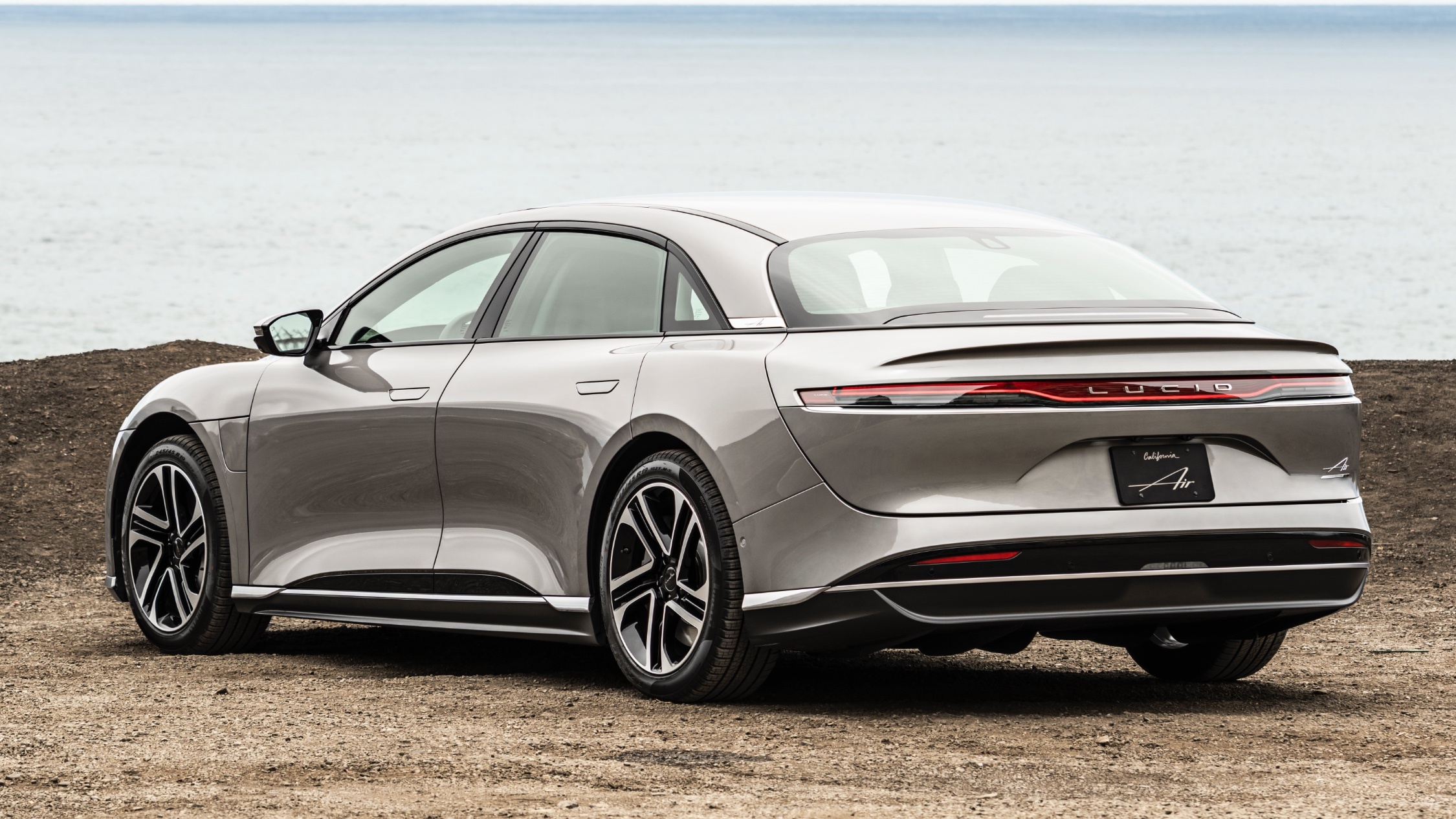
The Lucid Air Can Lose Power Mid-Drive, But The Fix Only Comes After It Does

  • Lucid is recalling a total of 2,039 vehicles built over 14 months.
  • The Gen 4 inverter used in the Air Pure RWD can trigger a loss of power.
  • The issues were first prevalent across Air models used by a fleet operator.

Lucid has been in the news for all the wrong reasons in recent weeks. Not only has it been forced to buy back an Air from popular YouTuber Jason Fenske due to a dizzying array of faults, but it was also recently forced to recall vehicles with half-shaft bolts that may not have been properly secured. It’s now been prompted to issue yet another recall, once again for the Air.

As with April’s recall, this one is also limited to the Air Pure RWD models. The electric car manufacturer says these vehicles have its Gen 4 inverters, which may experience signal interruptions and module failures due to damage from friction between internal connectors.

Read: Lucid’s Fix For Losing Drive Power Is A Notification That You’re About To Lose Drive Power

If the connectors sustain damage, it could cause a complete loss of power, as it’ll prevent the inverter from converting DC power into the AC power needed to operate the motor. This is obviously a safety issue, particularly if the failure occurs while driving.

A total of 2,039 vehicles are involved in this recall. All of them were manufactured between September 13, 2023, and December 12, 2024.

OTA Update Before Replacements

 The Lucid Air Can Lose Power Mid-Drive, But The Fix Only Comes After It Does

Lucid first noticed inverter failures in March 2025, in cars run by a US fleet operator. The early assumption was that fleet use explained it, since those vehicles pile on miles far quicker than privately owned ones. That theory did not hold. Failures soon turned up in non-fleet Air Pure RWD cars too, and by March 2026, the company had logged 55 of them.

Rather than immediately replacing all inverters, Lucid will roll out an over-the-air software update that detects potential failures and triggers a warning on the instrument cluster, which must be cleared by a dealer. Vehicles that receive this warning will be eligible for inverter replacement. Owners of vehicles who don’t receive this warning won’t be eligible for a replacement.

 The Lucid Air Can Lose Power Mid-Drive, But The Fix Only Comes After It Does

Tesla’s Robot Eyes Missed 14,575 Stickers, Sending Every Owner Back To The Dealer

  • Tesla is worried owners may overload their Model Ys due to a missing label.
  • The safety concern has been blamed on issues with a vision-scanning tool.
  • Impacted Model Y owners will be alerted to the recall from July 17.

Recalls usually come dressed up in regulatory language that hides how mundane the underlying problem is. This one is refreshingly honest about it. More than 14,000 examples of the 2025 and 2026 Tesla Model Y are being recalled in the United States, and unlike most Tesla recalls, an over-the-air update will not fix it.

The recall says Tesla noticed a vehicle with a missing certification label during a routine audit of its Fremont factory last month. It was soon discovered that an automated vision-scanning tool, which verifies the presence of a properly affixed certification label, wasn’t performing as it should have.

Read: Tesla’s First Model Y Price Hike In Two Years Skips The Cheapest Version

The certification label lists the vehicle’s weight specifications, the numbers owners check before loading cargo or hitching a trailer. Without it, drivers can exceed those limits without realizing it, and an overloaded Model Y brakes, handles, and crashes differently than the one Tesla engineered.

What’s The Fix?

 Tesla’s Robot Eyes Missed 14,575 Stickers, Sending Every Owner Back To The Dealer

A total of 14,575 vehicles are caught up in the recall. The list includes 2,697 Model Ys built between November 17, 2024, and February 24, 2025, covering the 2025 model year, plus another 11,878 examples produced from February 25, 2025, through April 21, 2026. It is a large pool of cars, but Tesla says it is not aware of any collisions, injuries, or fatalities tied to the missing sticker, which is about what you would expect from a label-related defect.

Tesla says it repaired the automated scanning tool on April 17 at its Fremont, California, factory and also began performing manual checks to ensure newly produced models have the correct certification label. In addition, the scanning tool at Tesla’s Gigafactory in Texas was also fixed on May 7.

Owners of impacted Model Ys will be alerted to the recall from July 17, and Tesla will inspect affected vehicles and attach the certification label as required.

 Tesla’s Robot Eyes Missed 14,575 Stickers, Sending Every Owner Back To The Dealer

Thailand Sues Volvo Over Two EX30 Fires, One Of Which Burned A Ranger

  • Many Thai owners don’t want battery replacements, but full refunds.
  • A total of 1,668 Volvo EX30s are involved in the battery recall in Thailand.
  • Last week, a white EX30 caught fire while charging at the owner’s home.

The trouble with a recall is that it only works if the fix arrives before the thing you were trying to prevent. Three months after Volvo pulled more than 40,000 electric EX30s worldwide over a battery fire risk, Thailand’s consumer protection authority has sued the automaker following two local fires.

Earlier this week, the Office of the Consumer Protection Board (OCPB) met with officials from Volvo following two high-profile fires involving the electric crossover. The first fire occurred around March 25 in Bangkok, while the second occurred on May 15, when an EX30 was plugged in and charging at the owner’s home. The fire quickly spread to a Ford Ranger parked next to the Volvo and also damaged the building.

Read: Volvo Pulls 40,000 EVs Back For Costly Battery Replacement

According to the recall Volvo issued in February, both EX30s that caught fire in Thailand had been charged beyond the 70 percent limit Volvo had recommended as a temporary safety measure. This explanation hasn’t satisfied local authorities, who have filed a civil suit and are seeking damages and refunds for owners.

A total of 1,668 EX30s in Thailand are impacted by the recall. Volvo says replacement battery packs have recently arrived in the country from China and will be installed in customers’ cars from May 22. The OCPB isn’t happy that it took three months for these batteries to arrive after the recall was announced and has asked Volvo how it intends to compensate those owners who’ve been unable to use their vehicles normally over this period.

Owners Want Refunds

 Thailand Sues Volvo Over Two EX30 Fires, One Of Which Burned A Ranger
Facebook/Tomm Chairat

Speaking with Reuters, a local EX30 owner, Tanchanok Nowsuwan, has suggested that most owners don’t want a battery replacement, and instead want a full refund. The EX30 recall impacts both Single-Motor Extended Range and Twin-Motor Performance models.

In a statement issued online, Volvo Car Thailand noted that it will take approximately 3 days to replace the battery packs on each affected model.

“Volvo Car Thailand would like to express our sincere concern regarding the two recent fire incidents involving Volvo EX30 vehicles,” it wrote. “We have closely monitored and thoroughly investigated each case and have promptly provided appropriate support and remediation to those affected.”

\\\\\\\\\

Tesla Is Recalling All 173 Cheap Cybertrucks Because Their Wheels Can Fall Off

  • The issue stems from cracking around brake rotor stud holes under load.
  • Only rear-wheel-drive units with base 18-inch wheels are affected.
  • Some serviced EVs may also carry the same potentially faulty parts.

The owners of 173 Cybertruck RWDs have a new problem to worry about. Tesla has issued a recall on the short-lived budget variant after discovering the wheels can come off while driving, which ranks somewhere near the top of the list of things you definitely do not want your vehicle to do.

Tesla says that on-road disturbances and cornering forces can cause cracking around the stud holes in the brake rotors. If that happens, the entire wheel stud may separate from the hub. The company is not aware of any crashes or injuries tied to the issue, though it has logged three related warranty claims.

Read: His Cybertruck Made It to 100,000 Lyft Miles Before Sending A $7,200 Reminder

A total of 173 models built between March 21, 2024, and November 25, 2025, are included in the recall. Only Cybertruck RWD versions with the base 18-inch wheels are affected, not those fitted with the optional 20-inch setup.

Tesla first identified a potential problem in August of last year, when pre-production testing revealed some cracking in the brake rotors, even though all studs remained intact at the time. Further investigation, along with field reports, showed the issue was more serious than initially thought.

Not only did Cybertruck RWD models leave the factory with the defect, but some Tesla service centers were also using the potentially faulty brake rotors, so vehicles that have had their brakes replaced may also suffer from the same issue.

What’s The Fix?

 Tesla Is Recalling All 173 Cheap Cybertrucks Because Their Wheels Can Fall Off

While the recall notice lists vehicles produced from March 21, 2024, Tesla says it only began building Cybertruck RWD models with 18-inch wheels on August 28, 2025. Production ended less than three months later, on November 5, with the company citing limited demand for the variant.

Owners can expect notification from Tesla after June 20. They will be asked to bring their trucks to a service center, where technicians will replace the front and rear brake rotors, hubs, and lug nuts with updated, more durable components.

\\\\\

Wagoneer S And Charger Daytona Buyers Paid For More Screen, Now It Just Goes Blank

  • Over 20,000 EVs were just recalled due to blank instrument clusters.
  • Affected models include the Jeep Wagoneer S and Dodge Charger Daytona.
  • The issue could hide critical warnings like brake, ESC, and tire pressure alerts.

The shift to more screens in cars was supposed to be the wave of the future. We could customize them, enjoy cute little animations, and pack more info into them than anyone could dream of doing with an analog gauge cluster. Of course, an old-school mechanical cluster can’t disappear for no obvious reason during a drive. Over 20,000 Stellantis vehicles with a digital cluster might have just that happen, so the automaker is issuing a new recall.

According to documents put together by Stellantis and filed with the NHTSA, the issue potentially exists in 100 percent of the 20,271 affected vehicles built from March of 2024 through November 2025. 11,743 are Jeep Wagoneer S EVs, and the other 8,528 are Dodge Charger Daytonas.

Read: Stellantis Faces Third Recall As Jeep Hybrid Engines Keep Failing

Stellantis says it met internally about the issue on March 10, 2026 and worked with its FCA engineering team to understand what was happening through the end of that month and into April. On April 16, it decided to issue the recall but not simply because the gauge cluster was going dark. No, instead, it’s doing this because when the cluster goes dark it can no longer alert the driver to certain information.

 Wagoneer S And Charger Daytona Buyers Paid For More Screen, Now It Just Goes Blank

Federal Motor Vehicle Safety Standards require that a car can alert a driver to issues with systems like the ABS, TPMS, ESC, and more. When the panel in a Jeep Wagoneer S or Dodge Charger Daytona takes a nap, it can’t tell the driver if there are issues with these key systems. As a result, Stellantis must recall the cars and fix the issue.

Notably, the automaker stopped well short of describing exactly what causes the panel to blank out in the first place. It appears that it’s entirely software-related, as the ‘remedy’ is quoted as “software,” in the filing. Dealers will simply update the cluster software, and that should prevent them from taking a break while the driver is driving.

 Wagoneer S And Charger Daytona Buyers Paid For More Screen, Now It Just Goes Blank

❌
❌