❌

Reading view

There are new articles available, click to refresh the page.

EPA Opens $180 Million in 2026 Diesel Emissions Reduction Act Grants 

By: Ryan Gray

With the return of the Clean School Bus Program reportedly still one month away, the U.S. Environmental Protection Agency (EPA) is accepting applications for approximately $180 million through the 2026 Diesel Emissions Reduction Act (DERA) national grant competition.

Eligible projects include school bus replacements powered by battery-electric, diesel, gasoline and propane as well as after-treatment retrofits and engine upgrades. The DERA funding also covers other diesel vehicles and equipment.

EPA announced the national grants on Sept. 24. Applications are due through Grants.gov by 11:59 p.m. Eastern on Jan. 22, 2027. Selection notifications are anticipated in May, with awards expected in July.

According to the Notice of Funding Opportunity, the national competition combines approximately $65 million from fiscal 2024, $62 million from fiscal 2025, and $53 million from fiscal 2026. Final awards depend on funding availability, application quality and agency priorities. EPA said it expects to award 120 entities, with the maximum amount of each award set at $12 million. No minimum dollar amount was provided.

School Bus Eligibility and DERA Funding Limits

Eligible DERA applicants include public school districts responsible for student transportation that own or operate diesel fleets, other qualifying government agencies and certain nonprofits. For-profit school bus contractors cannot apply directly but may receive support through programs administered by eligible grant recipients, including rebates.

Diesel, alternative-fuel and electric school bus replacements are eligible, subject to program requirements. For selected school bus replacement projects, federal funding is limited to 25 percent, 35 percent or 45 percent of eligible vehicle costs, depending on certified nitrogen oxides emissions. Electric replacements fall under the 45 percent limit, but charging equipment including is ineligible. EPA said charging equipment includes chargers/EVSE, electrical panels or service upgrades, wiring and conduit, design and engineering, electricity, and stationary battery storage.

Existing school buses must be operational, have at least three years of remaining life, and have been owned and operated by the participating fleet owner during the two years before the upgrade. They generally must have accumulated at least 7,000 miles annually during those years.

Replacement projects generally require scrapping or permanently disabling the old bus within 90 days after the replacement becomes operational, with limited EPA-approved alternatives.

National program webinars are scheduled for Oct. 13, Oct. 28 and Nov. 12. Questions about the competition are due Nov. 24.

DERA State Funding and Oct. 1 Webinar

Separately, EPA said last week it anticipates approximately $27 million in DERA state funding for fiscal 2025 and another $27 million for fiscal 2026 — approximately $54 million combined, subject to appropriations.

That funding is allocated by formula rather than through the national competition. Participating states and territories will receive both fiscal years’ funding in one grant to support state-administered grants and rebates. School buses are eligible.

States that match their federal base allocation with qualifying nonfederal funding can receive an additional federal incentive equal to 50 percent of that base allocation.

EPA held an Oct. 1 webinar that provided an overview of the state program. State and territorial notices of intent to participate are due Oct. 8, with final allocations scheduled for Oct. 15. Application packages are due Nov. 19.

Those deadlines apply to participating states and territories, according to EPA. School districts seeking state-administered funding should follow their state agency’s grant or rebate process.

Article written with the assistance of AI and EPA documents.


Related: Federal Grants Provide Opportunities for School Transportation Emergency Training
Related: Engine, Truck Manufacturers Support EPA Easing Derate of SCR Diesel Emissions Controls
Related: Report Highlights Shift in Federal Policy from EVs to Conventional Fuels

The post EPA Opens $180 Million in 2026 Diesel Emissions Reduction Act Grants  appeared first on School Transportation News.
Updated: Vehicle Idling Reduction Requires Data-Centric Approach

While routing and infrastructure shape fuel use at a macro level, vehicle idling represents one of the most immediate and controllable sources of waste.

Most districts have idling policies that meet or exceed state requirements, with exceptions for extreme weather. Historically, however, enforcement has been inconsistent due to a lack of data.

Telematics has changed that. School districts can now track idling time by vehicle, route, and driver, making it possible to identify patterns and enforce policies more effectively.

Data-driven approaches to idling typically combine policy enforcement with education and route optimization. Rather than treating idling as a disciplinary issue, district leaders use data to identify root causes and adjust operations accordingly.

“Idling is the clearest example of a problem that was previously invisible and is now entirely measurable,” said Craig Berndt, Geotab business segment manager of people transportation. “Most districts have an idling policy. Very few, until recently, had any way to know whether it was being followed.”

Berndt noted the emerging standard across many of the school districts with which Geotab works is a two- to five-minute engine-on idle limit. It can be longer in extreme weather conditions.

“Some states have regulatory requirements that align with this,” he said. “But the policy itself only has value if it’s enforced, and enforcement requires data.”

Complicating matters is H.R. 9317, which was introduced to Congress in June. Known as the BUSES Act, short for Buses Utilizing Safety and Environmental Standards, it would amend the Clean Air Act to prohibit state and local governments from enforcing engine idling restrictions on over the road buses and school buses if the engine idles for less than 15 minutes. It would also ban lawsuits filed against school bus owners or operators for alleged idling violations. The House Energy and Commerce Committee advanced the BUSES Act on Wednesday.

Still, Berndt noted telematics enables automatic idling alerts: A notification to a supervisor when a bus has been idling beyond the threshold, with location, driver and duration.

“This shifts enforcement from reactive, a complaint from a principal about exhaust near the front entrance, to proactive. And it creates an accountability loop that changes behavior over time,” he said. “Drivers who know their idle time is visible tend to idle less, not because of punitive pressure but because the visibility makes the issue concrete rather than abstract.”

Berndt noted the cost case is straightforward: A diesel school bus burns approximately 0.8 gallons per hour at idle.

“For a 100-bus fleet idling an average of 30 excess minutes per day, that’s 40 gallons per day in waste, $80 to $120 at current prices every operating day of the year,” he said. “With telematics-driven enforcement, districts routinely cut excess idle time by 30 to 50 percent.”

Beyond fuel, the idling conversation matters for public perception in ways that are becoming more acute, noted Berndt.

“School communities are increasingly attentive to emissions around buildings and bus queues, and districts that can demonstrate they’re actively managing and measuring this are in a much better position when parents or advocacy groups raise the issue,” he said.


Related: State School Bus Idling Rules & Regulations
Related: Green Bus Resources
Related: Data, Routing Analytics for Fuel Efficiency


St. Louis (Missouri) Public Schools supports school bus and vehicle contractor Zum’s idling policy, and Zum’s engine‑on/engine‑off data helps them enforce it, said Transportation Director Kacy L. Davis.

While Zum does not publicly state its idling policy, the company limits unnecessary school bus idling and trains drivers to minimize idle time by using routing technology to reduce waiting and fuel consumption. Meanwhile, The Missouri Department of Natural Resources encourages school districts to adopt anti-idling policies for school buses. Several counties including St. Louis and the Kansas City Ozone Maintenance Area restrict bus idling to 15 minutes in any 60-minute period to maintain passenger comfort.

“Reducing idling lowers fuel costs, improves air quality around schools and reduces engine wear,” he added. “Together, these tools give us a clear picture of how routing decisions affect fuel use, maintenance, and overall operational efficiency.”

SLPS also is preparing to launch a 30‑bus electric fleet in the 2027–2028 school year through the EPA Clean School Bus Program as part of the district’s broader Future Ready initiative to modernize operations and improve the student transportation experience.

The post Updated: Vehicle Idling Reduction Requires Data-Centric Approach appeared first on School Transportation News.
For most US drivers, EVs offer emissions benefits and cost savings

Despite regional variability in climate, electricity sources, congestion, and the wide variation in individual driving patterns, electric vehicles generate less greenhouse gas emissions and do not cost more than comparable gas-powered vehicles for drivers and vehicle fleet owners in most parts of the United States, according to a new study by MIT researchers.

The team’s approach captures many key factors that contribute to regional and individual differences in the life-cycle emissions and ownership cost of electric vehicles, including meteorological data, the distance and duration of trips, and fuel prices.

To paint a fuller picture of emissions and costs than was previously available, the researchers sourced data from thousands of U.S. zip codes and drilled down to the level of individual drivers within those locations. Their study considers time-averaged fuel prices so as not to be overly influenced by fluctuations in prices at any one point in time. They finalized their analysis at the end of 2024 and early 2025.

Their results indicate that a person’s driving behaviors can matter as much as regional factors like the local electricity mix when it comes to the emissions savings of an electric vehicle, compared to a similar gas-powered vehicle. In most locations, a battery-electric vehicle reduces emissions between 40 and 60 percent, with larger impacts in urban areas. 

They also found that colder climates do not reduce overall emission benefits as much as some media reports assume.

The researchers utilized this detailed analysis to update a public tool they previously developed, carboncounter.com, which enables individuals to compare the life-cycle emissions and total ownership costs of nearly any car on the market. A new version of carboncounter.com is also being released today.

“There are a lot of statements being thrown around, like that electric vehicles don’t reduce emissions very much in cool climates, and we wanted to analyze these factors systematically and evaluate these statements against one another simultaneously. Rather than simply asking, ‘Are EVs better?’, this paper helps answer ‘better for whom, and under what conditions?’” says Marco Miotti PhD ’20, a senior researcher at ETH Zurich who completed this research while a graduate student in the Institute for Data, Systems, and Society (IDSS) at MIT. 

He is joined on the paper by senior author Jessika Trancik, a professor in IDSS. The research appears today in Environmental Research Letters.

A holistic approach

Many prior studies that compare emissions and costs of electric vehicles (EVs) to combustion-engine vehicles cover a few factors, like the amount of renewable energy in the grid and how gas prices impact affordability, Miotti says.

“To our knowledge, there have been few efforts so far that bring all these factors together. But if someone wants to buy a car and have a better understanding of the factors that affect emissions and costs, this holistic approach is important,” he adds.

The researchers focused on two types of EVs: battery-electric vehicles, which only operate on electricity, and plug-in hybrid electric vehicles, which also have a combustion engine that works in tandem with the battery to optimize fuel savings.

The team expanded and improved a set of previously developed vehicle cost and emissions models to incorporate a wider variety of factors and data types.

For instance, they refined an existing model that estimates energy use and gas mileage so it could capture more nuances of local climate variability. 

“But the real effort was not just in extending these different models, but in bringing together all these different data and making them work with the models in a consistent manner,” Miotti says.

The team sourced data on a wide variety of factors for each U.S. zip code, such as typical drive cycles, the amount of traffic, local gas and electricity prices, makeup of the regional electricity mix, meteorological profiles, and more. They used statistical approaches to amalgamate different types of data. 

For example, the team used a probabilistic matching technique to combine data on how often people drive, which was drawn from nationwide travel surveys, with more detailed GPS data that includes factors like drivers’ acceleration patterns and the distance they usually drive on each day of the week.

The researchers designed their analysis to focus on the spatial picture of emissions and costs, based on U.S. zip codes, while simultaneously considering the impact of the size and features of each specific vehicle model.

“At the end of the day, it’s the vehicle and fleet owners who make decisions about vehicle purchases. So, we wanted to make sure to consider their wide-ranging individual perspectives rather than simply performing a region-by-region comparison,” says Trancik.

Lower emissions, comparable costs

In the end, their modeling framework revealed that all factors they analyzed matter about equally in determining emissions-reduction potential of EVs compared to internal combustion vehicles. 

EVs reduce emissions the most in areas with a cleaner electricity mix, denser traffic, higher annual travel distances, and a mild climate, in decreasing order of importance. In each area, emission reductions increase for drivers who drive more often, drive larger vehicles, and are more frequently stuck in traffic. 

In a colder area like North Dakota, fuel economy of battery-electric vehicles might be reduced by as much as 50 percent on a particularly frigid night, but the effect on annual emission benefits is minimal. 

“We even did a sensitivity study to see if the range is reduced in very cold climates, and we found that, even in the most unfavorable conditions, EVs still reduce emissions by a substantial amount,” Miotti says.

On the cost side, the models show that, in most places across the U.S., EVs are competitive with comparable combustion-engine vehicles in terms of lifetime ownership cost, even without clean vehicle tax credits. And in areas where electricity is relatively affordable, battery-electric vehicles tend to cost less than their plug-in hybrid or combustion-engine counterparts.

In the future, the researchers want to expand this analysis to include a temporal dimension, so the framework also considers how changes in vehicle, fuel, and electricity prices affect emissions and costs over time. 

“While we found that the electricity mix is a big driver of the spatial variation in emissions savings of EVs, the electricity grid is decarbonizing everywhere. As that happens, emissions savings across space will become more homogenous for EVs, but the differences across one driver to another will remain,” Miotti says.

They could also use the framework to explore regions outside the United States or incorporate data on hybrid-electric vehicles that cannot be plugged in.

This work was funded, in part, by the MIT Martin Family Society of Fellows for Sustainability.

© Credit: iStock

A new MIT study finds that despite regional differences in climate, electricity sources, traffic, and driving patterns, electric vehicles produce fewer greenhouse gas emissions — and cost no more to own — than comparable gas-powered cars for most U.S drivers.

Study shows making hydrogen with soda cans and seawater is scalable and sustainable

Hydrogen has the potential to be a climate-friendly fuel since it doesn’t release carbon dioxide when used as an energy source. Currently, however, most methods for producing hydrogen involve fossil fuels, making hydrogen less of a “green” fuel over its entire life cycle.

A new process developed by MIT engineers could significantly shrink the carbon footprint associated with making hydrogen.

Last year, the team reported that they could produce hydrogen gas by combining seawater, recycled soda cans, and caffeine. The question then was whether the benchtop process could be applied at an industrial scale, and at what environmental cost.

Now, the researchers have carried out a “cradle-to-grave” life cycle assessment, taking into account every step in the process at an industrial scale. For instance, the team calculated the carbon emissions associated with acquiring and processing aluminum, reacting it with seawater to produce hydrogen, and transporting the fuel to gas stations, where drivers could tap into hydrogen tanks to power engines or fuel cell cars. They found that, from end to end, the new process could generate a fraction of the carbon emissions that is associated with conventional hydrogen production.

In a study appearing today in Cell Reports Sustainability, the team reports that for every kilogram of hydrogen produced, the process would generate 1.45 kilograms of carbon dioxide over its entire life cycle. In comparison, fossil-fuel-based processes emit 11 kilograms of carbon dioxide per kilogram of hydrogen generated.

The low-carbon footprint is on par with other proposed “green hydrogen” technologies, such as those powered by solar and wind energy.

“We’re in the ballpark of green hydrogen,” says lead author Aly Kombargi PhD ’25, who graduated this spring from MIT with a doctorate in mechanical engineering. “This work highlights aluminum’s potential as a clean energy source and offers a scalable pathway for low-emission hydrogen deployment in transportation and remote energy systems.”

The study’s MIT co-authors are Brooke Bao, Enoch Ellis, and professor of mechanical engineering Douglas Hart.

Gas bubble

Dropping an aluminum can in water won’t normally cause much of a chemical reaction. That’s because when aluminum is exposed to oxygen, it instantly forms a shield-like layer. Without this layer, aluminum exists in its pure form and can readily react when mixed with water. The reaction that occurs involves aluminum atoms that efficiently break up molecules of water, producing aluminum oxide and pure hydrogen. And it doesn’t take much of the metal to bubble up a significant amount of the gas.

“One of the main benefits of using aluminum is the energy density per unit volume,” Kombargi says. “With a very small amount of aluminum fuel, you can conceivably supply much of the power for a hydrogen-fueled vehicle.”

Last year, he and Hart developed a recipe for aluminum-based hydrogen production. They found they could puncture aluminum’s natural shield by treating it with a small amount of gallium-indium, which is a rare-metal alloy that effectively scrubs aluminum into its pure form. The researchers then mixed pellets of pure aluminum with seawater and observed that the reaction produced pure hydrogen. What’s more, the salt in the water helped to precipitate gallium-indium, which the team could subsequently recover and reuse to generate more hydrogen, in a cost-saving, sustainable cycle.

“We were explaining the science of this process in conferences, and the questions we would get were, ‘How much does this cost?’ and, ‘What’s its carbon footprint?’” Kombargi says. “So we wanted to look at the process in a comprehensive way.”

A sustainable cycle

For their new study, Kombargi and his colleagues carried out a life cycle assessment to estimate the environmental impact of aluminum-based hydrogen production, at every step of the process, from sourcing the aluminum to transporting the hydrogen after production. They set out to calculate the amount of carbon associated with generating 1 kilogram of hydrogen — an amount that they chose as a practical, consumer-level illustration.

“With a hydrogen fuel cell car using 1 kilogram of hydrogen, you can go between 60 to 100 kilometers, depending on the efficiency of the fuel cell,” Kombargi notes.

They performed the analysis using Earthster — an online life cycle assessment tool that draws data from a large repository of products and processes and their associated carbon emissions. The team considered a number of scenarios to produce hydrogen using aluminum, from starting with “primary” aluminum mined from the Earth, versus “secondary” aluminum that is recycled from soda cans and other products, and using various methods to transport the aluminum and hydrogen.

After running life cycle assessments for about a dozen scenarios, the team identified one scenario with the lowest carbon footprint. This scenario centers on recycled aluminum — a source that saves a significant amount of emissions compared with mining aluminum — and seawater — a natural resource that also saves money by recovering gallium-indium. They found that this scenario, from start to finish, would generate about 1.45 kilograms of carbon dioxide for every kilogram of hydrogen produced. The cost of the fuel produced, they calculated, would be about $9 per kilogram, which is comparable to the price of hydrogen that would be generated with other green technologies such as wind and solar energy.

The researchers envision that if the low-carbon process were ramped up to a commercial scale, it would look something like this: The production chain would start with scrap aluminum sourced from a recycling center. The aluminum would be shredded into pellets and treated with gallium-indium. Then, drivers could transport the pretreated pellets as aluminum “fuel,” rather than directly transporting hydrogen, which is potentially volatile. The pellets would be transported to a fuel station that ideally would be situated near a source of seawater, which could then be mixed with the aluminum, on demand, to produce hydrogen. A consumer could then directly pump the gas into a car with either an internal combustion engine or a fuel cell.

The entire process does produce an aluminum-based byproduct, boehmite, which is a mineral that is commonly used in fabricating semiconductors, electronic elements, and a number of industrial products. Kombargi says that if this byproduct were recovered after hydrogen production, it could be sold to manufacturers, further bringing down the cost of the process as a whole.

“There are a lot of things to consider,” Kombargi says. “But the process works, which is the most exciting part. And we show that it can be environmentally sustainable.”

The group is continuing to develop the process. They recently designed a small reactor, about the size of a water bottle, that takes in aluminum pellets and seawater to generate hydrogen, enough to power an electric bike for several hours. They previously demonstrated that the process can produce enough hydrogen to fuel a small car. The team is also exploring underwater applications, and are designing a hydrogen reactor that would take in surrounding seawater to power a small boat or underwater vehicle.

This research was supported, in part, by the MIT Portugal Program.

© Credit: Courtesy of the researchers

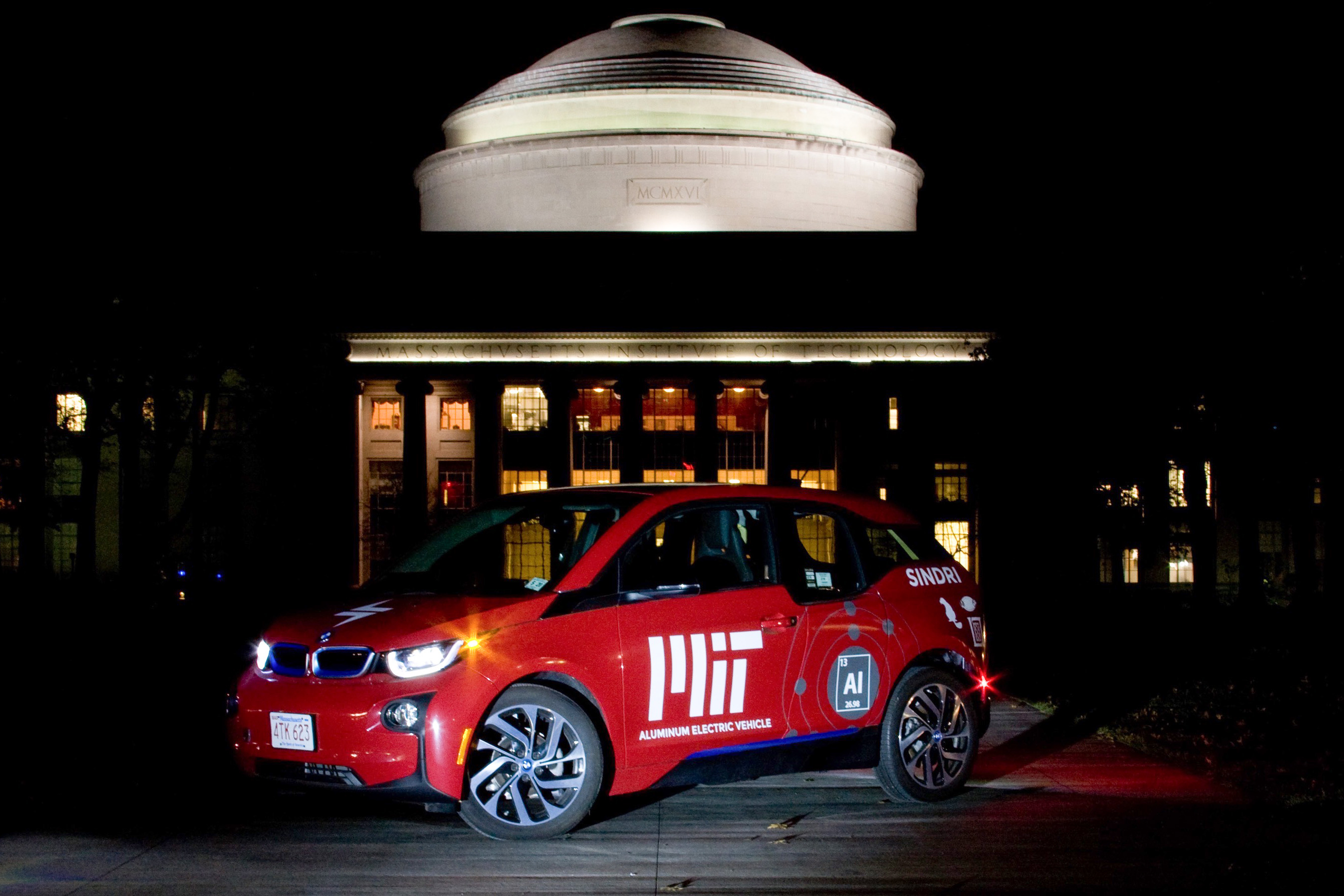
MIT engineers have developed a new aluminum-based process to produce hydrogen gas, that they are testing on a variety of applications, including an aluminum-powered electric vehicle, pictured here.

Support for Electric Vehicles

By: newenergy

New Poll: American Voters Support Federal Investments in Electric Vehicles Broad, Bipartisan Support for EV Investments and Incentives that Lower Costs, Expand Access, and Help the U.S. Beat China in the Race for Auto Manufacturing WASHINGTON, D.C. – A new bipartisan national poll conducted by Meeting Street Insights and Hart Research finds broad public support …

The post Support for Electric Vehicles appeared first on Alternative Energy HQ.

Trump EPA takes aim at Biden emissions regulations

White House under President TrumpThe Trump Administration is looking to roll back stricter emissions standards put in place by the Biden administration covering both light-duty passenger cars and heavy-duty commercial trucks. The EPA said Wednesday in a press release that it was targeting greenhouse-gas emissions standards for model years 2027-2032, as well as rules further...
Tackling the energy revolution, one sector at a time

As a major contributor to global carbon dioxide (CO2) emissions, the transportation sector has immense potential to advance decarbonization. However, a zero-emissions global supply chain requires re-imagining reliance on a heavy-duty trucking industry that emits 810,000 tons of CO2, or 6 percent of the United States’ greenhouse gas emissions, and consumes 29 billion gallons of diesel annually in the U.S. alone.

A new study by MIT researchers, presented at the recent American Society of Mechanical Engineers 2024 International Design Engineering Technical Conferences and Computers and Information in Engineering Conference, quantifies the impact of a zero-emission truck’s design range on its energy storage requirements and operational revenue. The multivariable model outlined in the paper allows fleet owners and operators to better understand the design choices that impact the economic feasibility of battery-electric and hydrogen fuel cell heavy-duty trucks for commercial application, equipping stakeholders to make informed fleet transition decisions.

“The whole issue [of decarbonizing trucking] is like a very big, messy pie. One of the things we can do, from an academic standpoint, is quantify some of those pieces of pie with modeling, based on information and experience we’ve learned from industry stakeholders,” says ZhiYi Liang, PhD student on the renewable hydrogen team at the MIT K. Lisa Yang Global Engineering and Research Center (GEAR) and lead author of the study. Co-authored by Bryony DuPont, visiting scholar at GEAR, and Amos Winter, the Germeshausen Professor in the MIT Department of Mechanical Engineering, the paper elucidates operational and socioeconomic factors that need to be considered in efforts to decarbonize heavy-duty vehicles (HDVs).

Operational and infrastructure challenges

The team’s model shows that a technical challenge lies in the amount of energy that needs to be stored on the truck to meet the range and towing performance needs of commercial trucking applications. Due to the high energy density and low cost of diesel, existing diesel drivetrains remain more competitive than alternative lithium battery-electric vehicle (Li-BEV) and hydrogen fuel-cell-electric vehicle (H2 FCEV) drivetrains. Although Li-BEV drivetrains have the highest energy efficiency of all three, they are limited to short-to-medium range routes (under 500 miles) with low freight capacity, due to the weight and volume of the onboard energy storage needed. In addition, the authors note that existing electric grid infrastructure will need significant upgrades to support large-scale deployment of Li-BEV HDVs.

While the hydrogen-powered drivetrain has a significant weight advantage that enables higher cargo capacity and routes over 750 miles, the current state of hydrogen fuel networks limits economic viability, especially once operational cost and projected revenue are taken into account. Deployment will most likely require government intervention in the form of incentives and subsidies to reduce the price of hydrogen by more than half, as well as continued investment by corporations to ensure a stable supply. Also, as H2-FCEVs are still a relatively new technology, the ongoing design of conformal onboard hydrogen storage systems — one of which is the subject of Liang’s PhD — is crucial to successful adoption into the HDV market.

The current efficiency of diesel systems is a result of technological developments and manufacturing processes established over many decades, a precedent that suggests similar strides can be made with alternative drivetrains. However, interactions with fleet owners, automotive manufacturers, and refueling network providers reveal another major hurdle in the way that each “slice of the pie” is interrelated — issues must be addressed simultaneously because of how they affect each other, from renewable fuel infrastructure to technological readiness and capital cost of new fleets, among other considerations. And first steps into an uncertain future, where no one sector is fully in control of potential outcomes, is inherently risky. 

“Besides infrastructure limitations, we only have prototypes [of alternative HDVs] for fleet operator use, so the cost of procuring them is high, which means there isn’t demand for automakers to build manufacturing lines up to a scale that would make them economical to produce,” says Liang, describing just one step of a vicious cycle that is difficult to disrupt, especially for industry stakeholders trying to be competitive in a free market. 

Quantifying a path to feasibility

“Folks in the industry know that some kind of energy transition needs to happen, but they may not necessarily know for certain what the most viable path forward is,” says Liang. Although there is no singular avenue to zero emissions, the new model provides a way to further quantify and assess at least one slice of pie to aid decision-making.

Other MIT-led efforts aimed at helping industry stakeholders navigate decarbonization include an interactive mapping tool developed by Danika MacDonell, Impact Fellow at the MIT Climate and Sustainability Consortium (MCSC); alongside Florian Allroggen, executive director of MITs Zero Impact Aviation Alliance; and undergraduate researchers Micah Borrero, Helena De Figueiredo Valente, and Brooke Bao. The MCSC’s Geospatial Decision Support Tool supports strategic decision-making for fleet operators by allowing them to visualize regional freight flow densities, costs, emissions, planned and available infrastructure, and relevant regulations and incentives by region.

While current limitations reveal the need for joint problem-solving across sectors, the authors believe that stakeholders are motivated and ready to tackle climate problems together. Once-competing businesses already appear to be embracing a culture shift toward collaboration, with the recent agreement between General Motors and Hyundai to explore “future collaboration across key strategic areas,” including clean energy. 

Liang believes that transitioning the transportation sector to zero emissions is just one part of an “energy revolution” that will require all sectors to work together, because “everything is connected. In order for the whole thing to make sense, we need to consider ourselves part of that pie, and the entire system needs to change,” says Liang. “You can’t make a revolution succeed by yourself.” 

The authors acknowledge the MIT Climate and Sustainability Consortium for connecting them with industry members in the HDV ecosystem; and the MIT K. Lisa Yang Global Engineering and Research Center and MIT Morningside Academy for Design for financial support.

© Photo: Bob Adams/Flickr

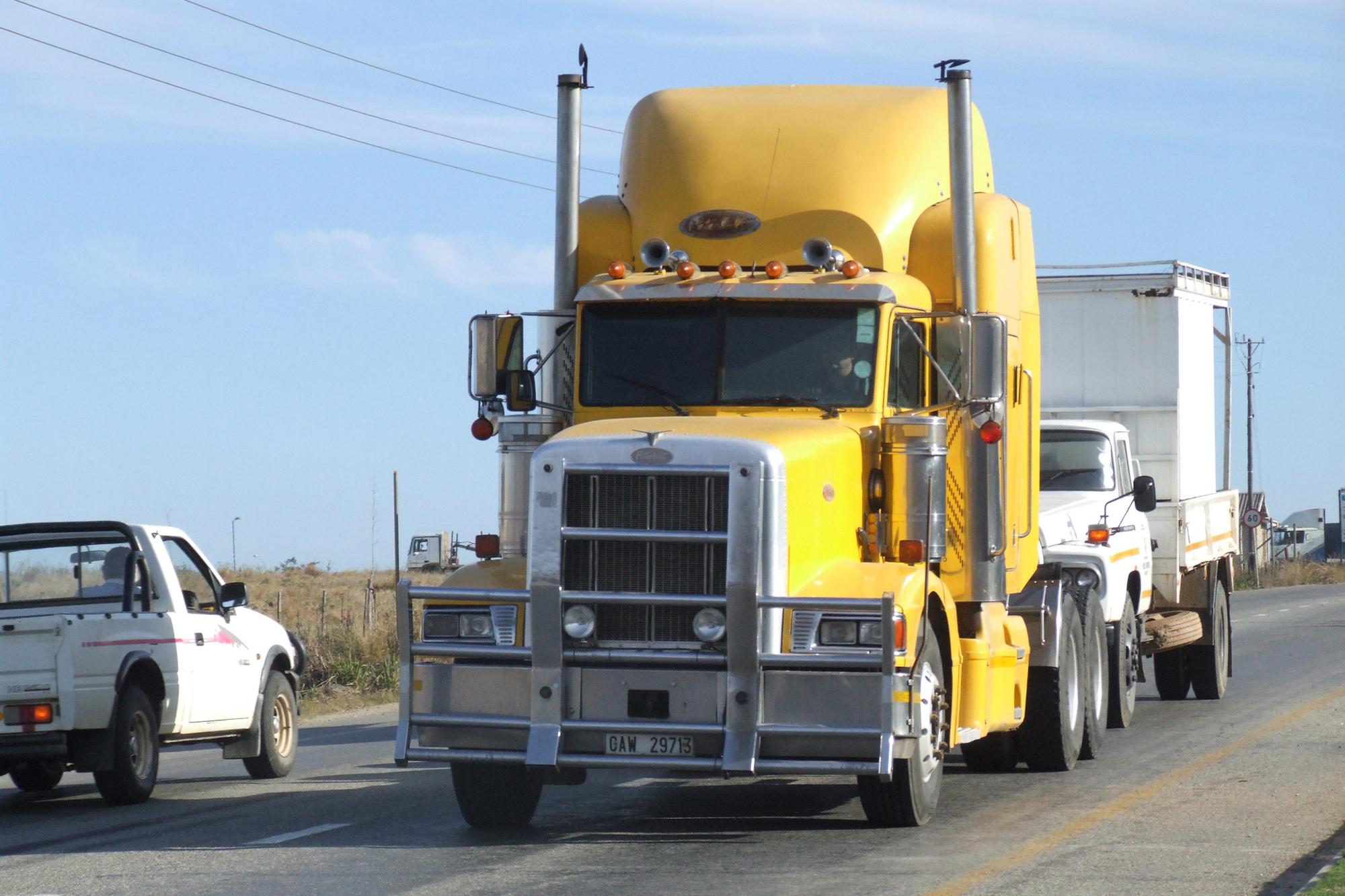
A new study by MIT researchers quantifies the impact of a zero-emission truck’s design range on its energy storage requirements and operational revenue.

MIT students combat climate anxiety through extracurricular teams

Climate anxiety affects nearly half of young people aged 16-25. Students like second-year Rachel Mohammed find hope and inspiration through her involvement in innovative climate solutions, working alongside peers who share her determination. “I’ve met so many people at MIT who are dedicated to finding climate solutions in ways that I had never imagined, dreamed of, or heard of. That is what keeps me going, and I’m doing my part,” she says.

Hydrogen-fueled engines

Hydrogen offers the potential for zero or near-zero emissions, with the ability to reduce greenhouse gases and pollution by 29 percent. However, the hydrogen industry faces many challenges related to storage solutions and costs.

Mohammed leads the hydrogen team on MIT’s Electric Vehicle Team (EVT), which is dedicated to harnessing hydrogen power to build a cleaner, more sustainable future. EVT is one of several student-led build teams at the Edgerton Center focused on innovative climate solutions. Since its founding in 1992, the Edgerton Center has been a hub for MIT students to bring their ideas to life.

Hydrogen is mostly used in large vehicles like trucks and planes because it requires a lot of storage space. EVT is building their second iteration of a motorcycle based on what Mohammed calls a “goofy hypothesis” that you can use hydrogen to power a small vehicle. The team employs a hydrogen fuel cell system, which generates electricity by combining hydrogen with oxygen. However, the technology faces challenges, particularly in storage, which EVT is tackling with innovative designs for smaller vehicles.

Presenting at the 2024 World Hydrogen Summit reaffirmed Mohammed’s confidence in this project. “I often encounter skepticism, with people saying it’s not practical. Seeing others actively working on similar initiatives made me realize that we can do it too,” Mohammed says.

The team’s first successful track test last October allowed them to evaluate the real-world performance of their hydrogen-powered motorcycle, marking a crucial step in proving the feasibility and efficiency of their design.

MIT’s Sustainable Engine Team (SET), founded by junior Charles Yong, uses the combustion method to generate energy with hydrogen. This is a promising technology route for high-power-density applications, like aviation, but Yong believes it hasn’t received enough attention. Yong explains, “In the hydrogen power industry, startups choose fuel cell routes instead of combustion because gas turbine industry giants are 50 years ahead. However, these giants are moving very slowly toward hydrogen due to its not-yet-fully-developed infrastructure. Working under the Edgerton Center allows us to take risks and explore advanced tech directions to demonstrate that hydrogen combustion can be readily available.”

Both EVT and SET are publishing their research and providing detailed instructions for anyone interested in replicating their results.

Running on sunshine

The Solar Electric Vehicle Team powers a car built from scratch with 100 percent solar energy.

The team’s single-occupancy car Nimbus won the American Solar Challenge two years in a row. This year, the team pushed boundaries further with Gemini, a multiple-occupancy vehicle that challenges conventional perceptions of solar-powered cars.

Senior Andre Greene explains, “the challenge comes from minimizing how much energy you waste because you work with such little energy. It’s like the equivalent power of a toaster.”

Gemini looks more like a regular car and less like a “spaceship,” as NBC’s 1st Look affectionately called Nimbus. “It more resembles what a fully solar-powered car could look like versus the single-seaters. You don’t see a lot of single-seater cars on the market, so it’s opening people’s minds,” says rising junior Tessa Uviedo, team captain.

All-electric since 2013

The MIT Motorsports team switched to an all-electric powertrain in 2013. Captain Eric Zhou takes inspiration from China, the world’s largest market for electric vehicles. “In China, there is a large government push towards electric, but there are also five or six big companies almost as large as Tesla size, building out these electric vehicles. The competition drives the majority of vehicles in China to become electric.”

The team is also switching to four-wheel drive and regenerative braking next year, which reduces the amount of energy needed to run. “This is more efficient and better for power consumption because the torque from the motors is applied straight to the tires. It’s more efficient than having a rear motor that must transfer torque to both rear tires. Also, you’re taking advantage of all four tires in terms of producing grip, while you can only rely on the back tires in a rear-wheel-drive car,” Zhou says.

Zhou adds that Motorsports wants to help prepare students for the electric vehicle industry. “A large majority of upperclassmen on the team have worked, or are working, at Tesla or Rivian.”

Former Motorsports powertrain lead Levi Gershon ’23, SM ’24 recently founded CRABI Robotics — a fully autonomous marine robotic system designed to conduct in-transit cleaning of marine vessels by removing biofouling, increasing vessels’ fuel efficiency.

An Indigenous approach to sustainable rockets

First Nations Launch, the all-Indigenous student rocket team, recently won the Grand Prize in the 2024 NASA First Nations Launch High-Power Rocket Competition. Using Indigenous methodologies, this team considers the environment in the materials and methods they employ.

“The environmental impact is always something that we consider when we’re making design decisions and operational decisions. We’ve thought about things like biodegradable composites and parachutes,” says rising junior Hailey Polson, team captain. “Aerospace has been a very wasteful industry in the past. There are huge leaps and bounds being made with forward progress in regard to reusable rockets, which is definitely lowering the environmental impact.”

Collecting climate change data with autonomous boats

Arcturus, the recent first-place winner in design at the 16th Annual RoboBoat Competition, is developing autonomous surface vehicles that can greatly aid in marine research. “The ocean is one of our greatest resources to combat climate change; thus, the accessibility of data will help scientists understand climate patterns and predict future trends. This can help people learn how to prepare for potential disasters and how to reduce each of our carbon footprints,” says Arcturus captain and rising junior Amy Shi.

“We are hoping to expand our outreach efforts to incorporate more sustainability-related programs. This can include more interactions with local students to introduce them to how engineering can make a positive impact in the climate space or other similar programs,” Shi says.

Shi emphasizes that hope is a crucial force in the battle against climate change. “There are great steps being taken every day to combat this seemingly impending doom we call the climate crisis. It’s important to not give up hope, because this hope is what’s driving the leaps and bounds of innovation happening in the climate community. The mainstream media mostly reports on the negatives, but the truth is there is a lot of positive climate news every day. Being more intentional about where you seek your climate news can really help subside this feeling of doom about our planet.”

© Photo: Adam Glanzman

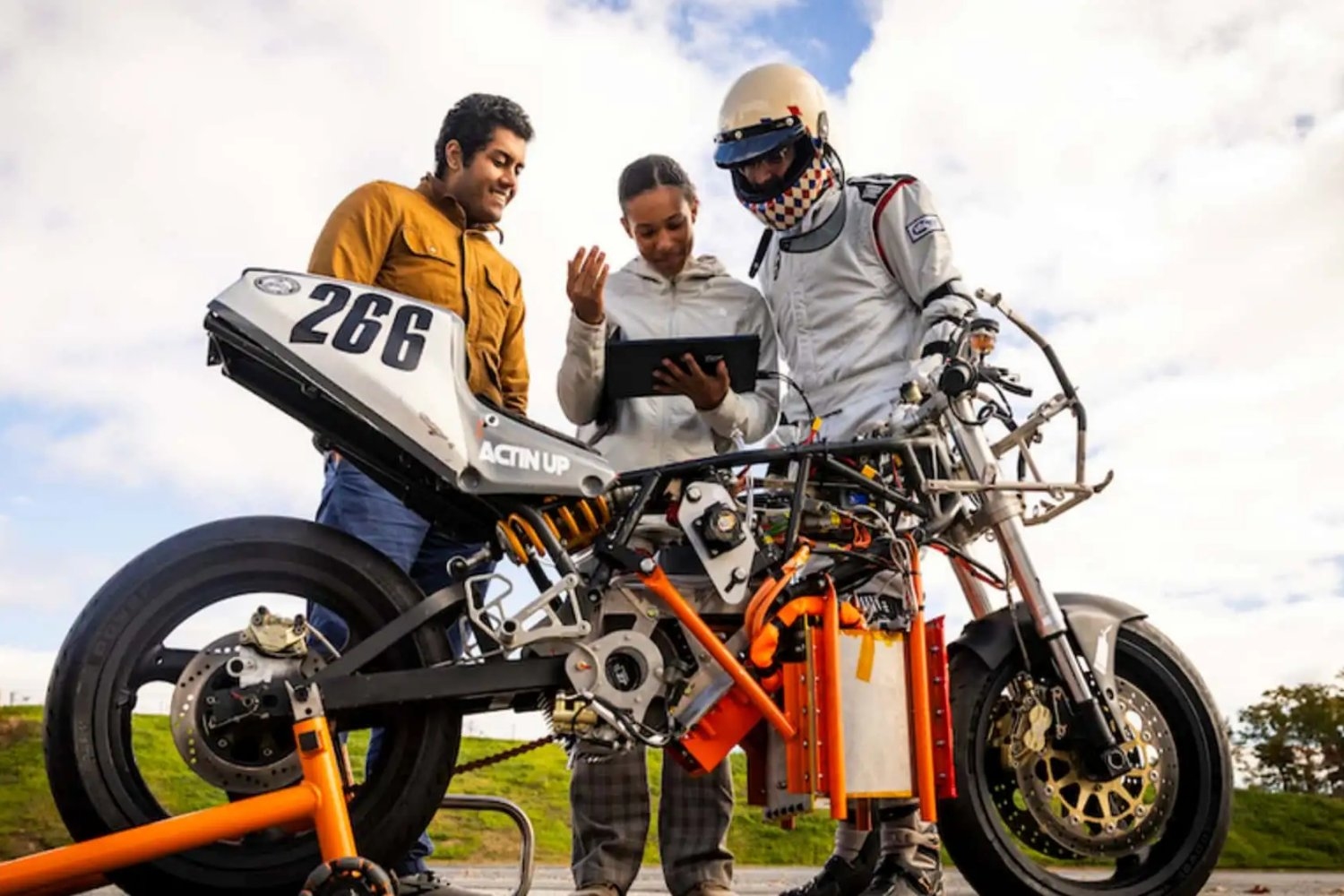
Electric Vehicle Team members (from left to right) Anand John, Rachel Mohammed, and Aditya Mehrotra '22, SM '24 monitor their bike’s performance, battery levels, and hydrogen tank levels to estimate the vehicle’s range.
❌