Land is one of the most competitive resources of energy transition Utility-scale solar farms require big, flat, unshaded areas-exactly what others may want for farming, housing and preserving habitat. In heavily populated countries, this debate can delay or halt projects well before they start. Floating photovoltaics (FPV), also known as floating solar or “floatovoltaics” provide …
Lithium-ion batteries are the leading choice in today’s electric vehicle and battery energy storage system industries, but they contain a number of critical minerals — including lithium, cobalt, nickel, and graphite — that are considered essential for economic and national security reasons, and therefore vulnerable to supply chain disruptions. As renewable energy, electrified infrastructure, and high-power digital technologies continue to grow, there is an increasing need for energy storage systems that are low-cost, resource-abundant, and capable of fast charging and discharging.
That need, among other reasons, has motivated a group of researchers — based at MIT and led by Ju Li, the Carl Richard Soderberg Professor of Power Engineering in the departments of Nuclear Science and Engineering (NSE) and Materials Science and Engineering — to develop complementary energy storage solutions.
The team is looking, in particular, at sodium-metal batteries, which offer several attractive features. Sodium is about 1,000 times more abundant than lithium and, pound for pound, about one-hundredth the cost. A key challenge, however, is that sodium metal is highly reactive, making it difficult for these batteries to achieve both long-term stability and fast cycling.
A new paper in the journal Joule — written by 15 members of the MIT team and published online this week — shows how this dilemma can be addressed by finding the right electrolyte for this battery system.
Electrolytes behaving badly
An electrolyte is one of three main components of a battery, along with the negative electrode (the anode) and the positive electrode (the cathode). The electrolyte acts like the “blood” of the battery, allowing electrically charged ions to move between the two electrodes. “The electrolyte is supposed to just transmit those ions,” explains Li. “It’s supposed to be an ion conductor.” But unfortunately, most electrolytes get involved in unwanted chemical reactions with the electrodes, which can greatly undermine battery stability.
The consequences of these “side reactions” can be severe, says Weiyin Chen, a postdoc in NSE and one of four lead authors of the Joule paper. Insoluble compounds produced during the reactions can build up on the electrodes, creating a barrier that blocks ion transport and can eventually cause the battery to fail.
Until recently, Chen says, no electrolyte used in sodium-metal batteries was fully stable against these unwanted reactions at both the anode and cathode, even though such stability is essential for rechargeable batteries to achieve a long cycle life. An initial breakthrough occurred in 2021, when the Li group and their collaborators identified a “sulfonamide” molecule — consisting of sulfur, oxygen, and nitrogen atoms — that, when used as a solvent, “is magically stable at both electrodes in lithium batteries,” according to Li. This molecule is known as DMTMSA.
Building on that discovery, Li and his colleagues set out to see if related molecules could improve sodium batteries. The goal was not only to maintain stability, but also to enable fast charging and discharging. If charging is too slow, it could take all night to recharge, and if discharging is too slow, the battery cannot deliver much power when needed.
How did the solvent cross the road?
Chen explains the idea with an analogy: Suppose you need to cross a street jam-packed with pedestrians, much like ions traveling from one electrode to another. “You can move more quickly through the crowd with a small backpack that is snug against your body, rather than dragging a bulky suitcase on wheels,” Chen says.
A similar situation occurs in batteries: When sodium ions are surrounded by smaller solvents, they can move faster than when they are surrounded by larger, bulkier solvents. Faster ion transport enables more-rapid charging and discharging. The team’s goal, accordingly, was to identify solvent molecules that are small enough to improve ion transport while still maintaining electrolyte stability.
There is, however, a complicating factor — a trade-off to be addressed: Faster ion transport often comes at the expense of electrolyte stability. Many highly conductive electrolytes react more easily with the electrodes, shortening battery life. Fortunately for their plan, Li says, “reducing the size of solvents provides a new pathway to overcome this trade-off.”
The question then becomes how to find a smaller solvent that has other desirable properties. The idea they adopted is to look for molecules that are “congeneric,” says Li, “meaning that they belong to a similar family and are molecularly similar.” In particular, they searched for molecules related to DMTMSA, hoping to find candidates that were smaller but could retain the stability that made DMTMSA so promising.
Chia-Wei Hsu, an MIT PhD student in materials science and engineering, created an AI-guided algorithm, which designed 100,000 candidate molecules on his computer within 24 hours. Hsu then narrowed down the pool to 200 candidates by applying a set of technical criteria — including similarity in shape to DMTMSA and comparable electronic properties. Twenty-seven representative candidates covering the full range of possibilities were selected for experimental tests.
“We tested them all under the same conditions to make it a fair, head-to-head competition,” Chen says. A clear winner emerged, a solvent called DMFSA, which was both the smallest and the best.
Small is beautiful
This work, claims Jinhyuk Lee, an associate professor of materials engineering at McGill University who is not part of the study, “addresses one of the most persistent challenges in battery research: improving battery performance at high charging and discharging rates without sacrificing long-term stability. By carefully tailoring the size of solvent molecules, the authors demonstrate a new design strategy that could enable lower-cost, higher performance batteries.”
The group is not done. A new search is underway to find an even better solvent. This time, the approach is similar, but DMFSA (rather than the larger DMTMSA molecule) serves as the starting point. Chen believes the new solvents they are uncovering could eventually lead to rechargeable sodium-metal batteries that combine low-cost, abundant materials with fast charging and high-power performance, opening the door to broader energy storage applications.
The overriding goal of this work, the authors emphasize, is not only to advance sodium batteries. It’s also to introduce a new approach to electrolyte design that uses solvent size and molecular similarity as the key guideposts. Viewing the research in this light, sodium-metal batteries serve as a model system for demonstrating a more general design principle.
“Because the concept is broadly applicable,” Lee comments, “its impact could extend well beyond sodium batteries and influence the design of a wide range of future energy storage technologies.”
This work was supported, in part, by a National Research Foundation of Korea grant funded by the government of Korea government, as well as U.S. National Science Foundation graduate research fellowship. The characterization equipment used in this project is partly from the MIT.nano Characterization Facilities.
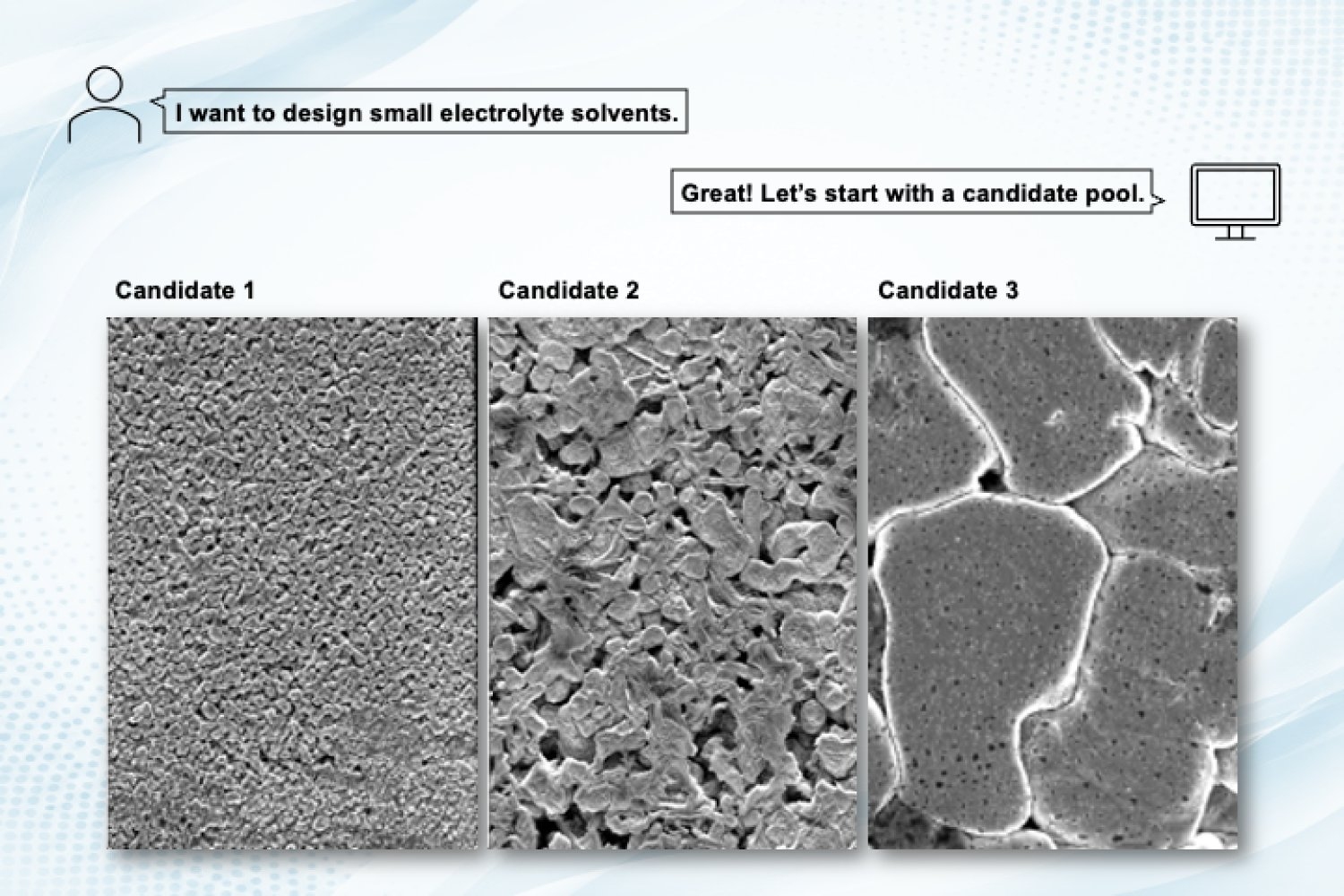
A machine-learning-guided pipeline enables researchers to generate solvent candidate pools on demand, narrow the selections down, and experimentally test the most promising electrolyte recipes. These scanning electron microscopy images show the morphology of sodium-metal deposits obtained from three different electrolyte candidates.
Washington, D.C. – The Trump administration has voluntarily dismissed its own appeal in a lawsuit challenging Donald Trump’s executive order banning wind project development in the United States. This effectively ends the unlawful, sweeping ban on wind power. Attorneys General from 17 states and Washington, D.C. challenged this executive order last year. Public interest groups …
Despite regional variability in climate, electricity sources, congestion, and the wide variation in individual driving patterns, electric vehicles generate less greenhouse gas emissions and do not cost more than comparable gas-powered vehicles for drivers and vehicle fleet owners in most parts of the United States, according to a new study by MIT researchers.
The team’s approach captures many key factors that contribute to regional and individual differences in the life-cycle emissions and ownership cost of electric vehicles, including meteorological data, the distance and duration of trips, and fuel prices.
To paint a fuller picture of emissions and costs than was previously available, the researchers sourced data from thousands of U.S. zip codes and drilled down to the level of individual drivers within those locations. Their study considers time-averaged fuel prices so as not to be overly influenced by fluctuations in prices at any one point in time. They finalized their analysis at the end of 2024 and early 2025.
Their results indicate that a person’s driving behaviors can matter as much as regional factors like the local electricity mix when it comes to the emissions savings of an electric vehicle, compared to a similar gas-powered vehicle. In most locations, a battery-electric vehicle reduces emissions between 40 and 60 percent, with larger impacts in urban areas.
They also found that colder climates do not reduce overall emission benefits as much as some media reports assume.
The researchers utilized this detailed analysis to update a public tool they previously developed, carboncounter.com, which enables individuals to compare the life-cycle emissions and total ownership costs of nearly any car on the market. A new version of carboncounter.com is also being released today.
“There are a lot of statements being thrown around, like that electric vehicles don’t reduce emissions very much in cool climates, and we wanted to analyze these factors systematically and evaluate these statements against one another simultaneously. Rather than simply asking, ‘Are EVs better?’, this paper helps answer ‘better for whom, and under what conditions?’” says Marco Miotti PhD ’20, a senior researcher at ETH Zurich who completed this research while a graduate student in the Institute for Data, Systems, and Society (IDSS) at MIT.
Many prior studies that compare emissions and costs of electric vehicles (EVs) to combustion-engine vehicles cover a few factors, like the amount of renewable energy in the grid and how gas prices impact affordability, Miotti says.
“To our knowledge, there have been few efforts so far that bring all these factors together. But if someone wants to buy a car and have a better understanding of the factors that affect emissions and costs, this holistic approach is important,” he adds.
The researchers focused on two types of EVs: battery-electric vehicles, which only operate on electricity, and plug-in hybrid electric vehicles, which also have a combustion engine that works in tandem with the battery to optimize fuel savings.
The team expanded and improved a set of previously developed vehicle cost and emissions models to incorporate a wider variety of factors and data types.
For instance, they refined an existing model that estimates energy use and gas mileage so it could capture more nuances of local climate variability.
“But the real effort was not just in extending these different models, but in bringing together all these different data and making them work with the models in a consistent manner,” Miotti says.
The team sourced data on a wide variety of factors for each U.S. zip code, such as typical drive cycles, the amount of traffic, local gas and electricity prices, makeup of the regional electricity mix, meteorological profiles, and more. They used statistical approaches to amalgamate different types of data.
For example, the team used a probabilistic matching technique to combine data on how often people drive, which was drawn from nationwide travel surveys, with more detailed GPS data that includes factors like drivers’ acceleration patterns and the distance they usually drive on each day of the week.
The researchers designed their analysis to focus on the spatial picture of emissions and costs, based on U.S. zip codes, while simultaneously considering the impact of the size and features of each specific vehicle model.
“At the end of the day, it’s the vehicle and fleet owners who make decisions about vehicle purchases. So, we wanted to make sure to consider their wide-ranging individual perspectives rather than simply performing a region-by-region comparison,” says Trancik.
Lower emissions, comparable costs
In the end, their modeling framework revealed that all factors they analyzed matter about equally in determining emissions-reduction potential of EVs compared to internal combustion vehicles.
EVs reduce emissions the most in areas with a cleaner electricity mix, denser traffic, higher annual travel distances, and a mild climate, in decreasing order of importance. In each area, emission reductions increase for drivers who drive more often, drive larger vehicles, and are more frequently stuck in traffic.
In a colder area like North Dakota, fuel economy of battery-electric vehicles might be reduced by as much as 50 percent on a particularly frigid night, but the effect on annual emission benefits is minimal.
“We even did a sensitivity study to see if the range is reduced in very cold climates, and we found that, even in the most unfavorable conditions, EVs still reduce emissions by a substantial amount,” Miotti says.
On the cost side, the models show that, in most places across the U.S., EVs are competitive with comparable combustion-engine vehicles in terms of lifetime ownership cost, even without clean vehicle tax credits. And in areas where electricity is relatively affordable, battery-electric vehicles tend to cost less than their plug-in hybrid or combustion-engine counterparts.
In the future, the researchers want to expand this analysis to include a temporal dimension, so the framework also considers how changes in vehicle, fuel, and electricity prices affect emissions and costs over time.
“While we found that the electricity mix is a big driver of the spatial variation in emissions savings of EVs, the electricity grid is decarbonizing everywhere. As that happens, emissions savings across space will become more homogenous for EVs, but the differences across one driver to another will remain,” Miotti says.
They could also use the framework to explore regions outside the United States or incorporate data on hybrid-electric vehicles that cannot be plugged in.
This work was funded, in part, by the MIT Martin Family Society of Fellows for Sustainability.
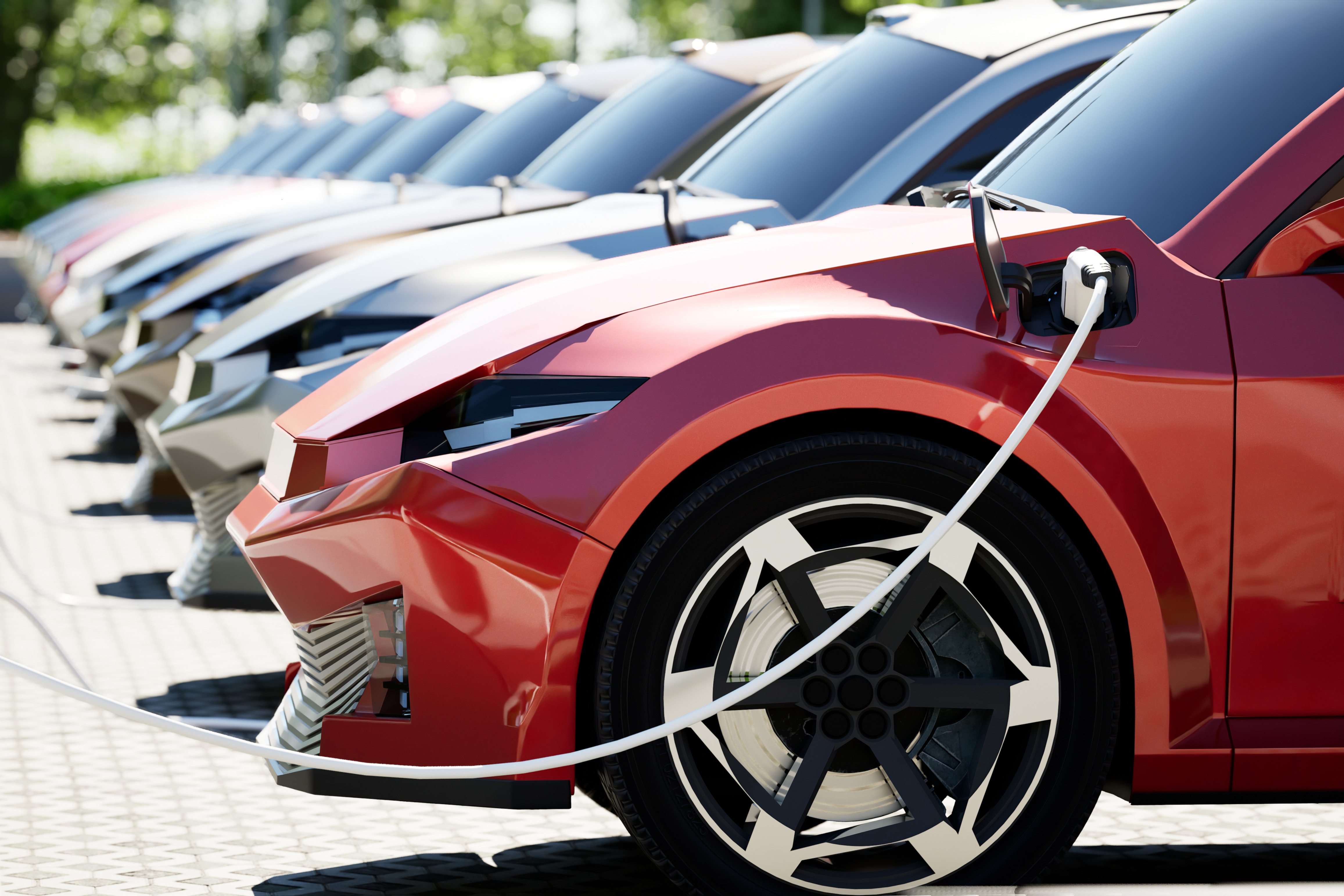
A new MIT study finds that despite regional differences in climate, electricity sources, traffic, and driving patterns, electric vehicles produce fewer greenhouse gas emissions — and cost no more to own — than comparable gas-powered cars for most U.S drivers.
With the rise of power-hungry applications like AI and data centers, it’s critical that the performance of renewable energy sources keeps pace. Researchers in the University of Saskatchewan’s (USask) Department of Chemistry are exploring ways to improve the efficiency of a promising new type of solar cell made from perovskite crystals. Perovskites are a group …
January 28, 2025 – At a time when the administration claims the U.S. is facing a nationwide energy emergency and consumers are increasingly concerned about rising electricity costs, its efforts to stop five large offshore wind projects under construction along the Atlantic Coast could cost consumers billions of dollars and keep much-needed new electricity off …
Driving R&D Excellence in Refining Low Carbon Products: Unlocking Brazil’s Untapped Biomass Potential The global refining and petrochemicals landscape is undergoing a fundamental transformation. What was once a linear, fossil-centric value chain is rapidly shifting toward a diversified ecosystem built on low carbon products. This shift is no longer driven solely by compliance pressures—it is …
By: Britt Burt, Senior VP of Research for the Power industry A new round of headlines has revived an old storyline about the United States “bringing coal back.” As an expert of nearly four decades, I can confidently say that this interpretation misses what is actually happening on the grid. Coal is not gaining ground …
Tribal utility, localities, and consumer and environmental groups argue tax guidance illegally hurts renewable energy. WASHINGTON, D.C. (Dec. 18, 2025) – A broad array of groups with strong interests in clean and affordable energy sued the IRS and Treasury Department over new rules for tax credits that unfairly and illegally discriminate against wind and solar …
Boston, MA – Last night, the U.S. District Court for the District of Massachusetts ruled that Donald Trump’s executive order banning wind projects in the United States was unlawful and vacated the order. Donald Trump issued an executive order on the first day of his administration that paused all leasing, permitting and approvals for wind projects, killing tens of …
Advancements in battery innovation are transforming both mobility and energy systems alike, according to Kurt Kelty, vice president of battery, propulsion, and sustainability at General Motors (GM). At the MIT Energy Initiative (MITEI) Fall Colloquium, Kelty explored how GM is bringing next-generation battery technologies from lab to commercialization, driving American battery innovation forward. The colloquium is part of the ongoing MITEI Presents: Advancing the Energy Transition speaker series.
At GM, Kelty’s team is primarily focused on three things: first, improving affordability to get more electric vehicles (EVs) on the road. “How do you drive down the cost?” Kelty asked the audience. “It's the batteries. The batteries make up about 30 percent of the cost of the vehicle.” Second, his team strives to improve battery performance, including charging speed and energy density. Third, they are working on localizing the supply chain. “We've got to build up our resilience and our independence here in North America, so we're not relying on materials coming from China,” Kelty explained.
To aid their efforts, resources are being poured into the virtualization space, significantly cutting down on time dedicated to research and development. Now, Kelty’s team can do modeling up front using artificial intelligence, reducing what previously would have taken months to a couple of days.
“If you want to modify … the nickel content ever so slightly, we can very quickly model: ‘OK, how’s that going to affect the energy density? The safety? How’s that going to affect the charge capability?’” said Kelty. “We can look at that at the cell level, then the pack level, then the vehicle level.”
Kelty revealed that they have found a solution that addresses affordability, accessibility, and commercialization: lithium manganese-rich (LMR) batteries. Previously, the industry looked to reduce costs by lowering the amount of cobalt in batteries by adding greater amounts of nickel. These high-nickel batteries are in most cars on the road in the United States due to their high range. LMR batteries, though, take things a step further by reducing the amount of nickel and adding more manganese, which drives the cost of batteries down even further while maintaining range.
Lithium-iron-phosphate (LFP) batteries are the chemistry of choice in China, known for low cost, high cycle life, and high safety. With LMR batteries, the cost is comparable to LFP with a range that is closer to high-nickel. “That’s what’s really a breakthrough,” said Kelty.
LMR batteries are not new, but there have been challenges to adopting them, according to Kelty. “People knew about it, but they didn’t know how to commercialize it. They didn’t know how to make it work in an EV,” he explained. Now that GM has figured out commercialization, they will be the first to market these batteries in their EVs in 2028.
Kelty also expressed excitement over the use of vehicle-to-grid technologies in the future. Using a bidirectional charger with a two-way flow of energy, EVs could charge, but also send power from their batteries back to the electrical grid. This would allow customers to charge “their vehicles at night when the electricity prices are really low, and they can discharge it during the day when electricity rates are really high,” he said.
In addition to working in the transportation sector, GM is exploring ways to extend their battery expertise into applications in grid-scale energy storage. “It’s a big market right now, but it’s growing very quickly because of the data center growth,” said Kelty.
When looking to the future of battery manufacturing and EVs in the United States, Kelty remains optimistic: “we’ve got the technology here to make it happen. We’ve always had the innovation here. Now, we’re getting more and more of the manufacturing. We’re getting that all together. We’ve got just tremendous opportunity here that I’m hopeful we’re going to be able to take advantage of and really build a massive battery industry here.”
This speaker series highlights energy experts and leaders at the forefront of the scientific, technological, and policy solutions needed to transform our energy systems. Visit MITEI’s Events page for more information on this and additional events.
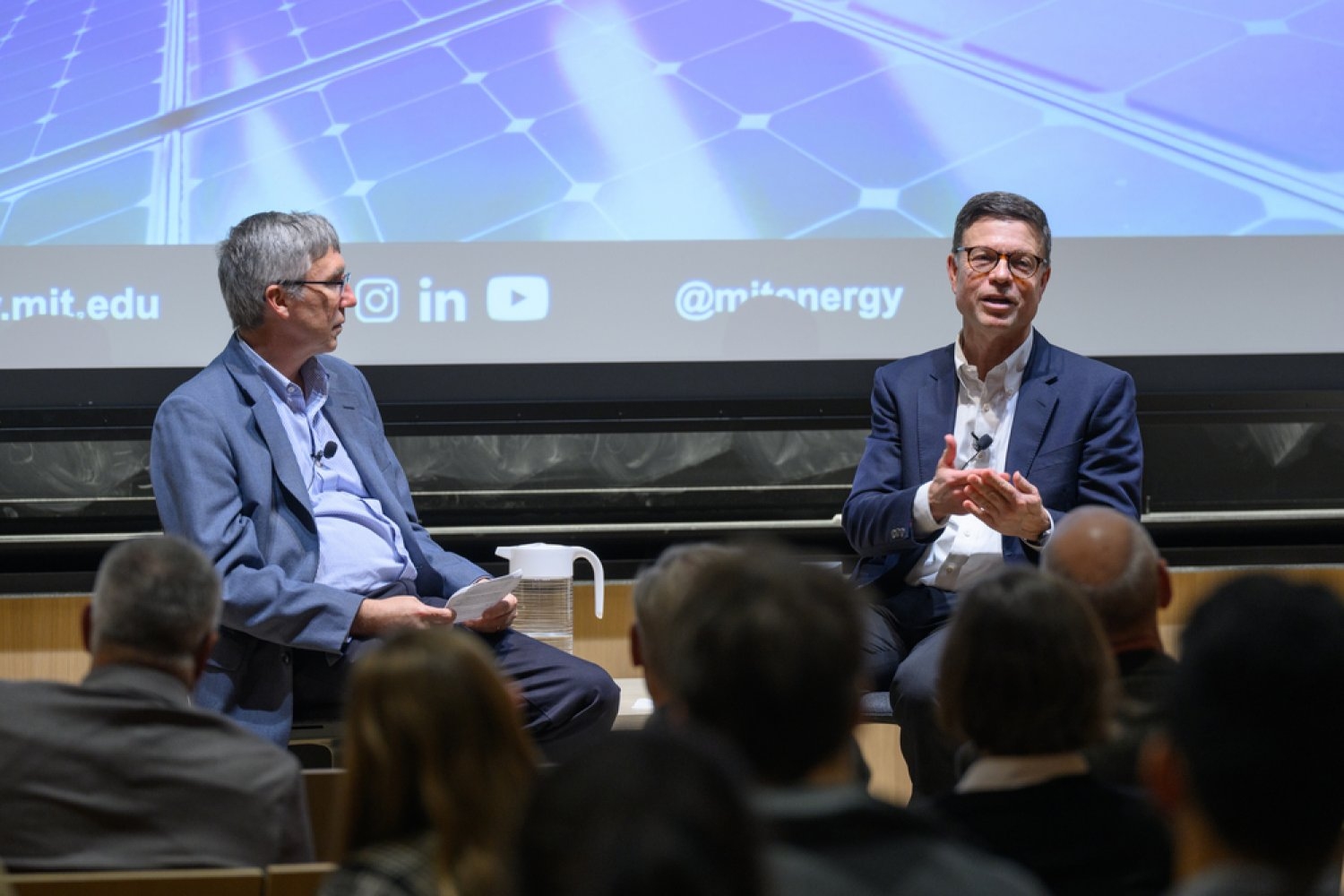
Kurt Kelty (right), vice president of battery, propulsion, and sustainability at General Motors, joined MITEI's William Green at the 2025 MIT Energy Initiative Fall Colloquium. Kelty explained how GM is developing and commercializing next-generation battery technologies.
There is growing attention on the links between artificial intelligence and increased energy demands. But while the power-hungry data centers being built to support AI could potentially stress electricity grids, increase customer prices and service interruptions, and generally slow the transition to clean energy, the use of artificial intelligence can also help the energy transition.
For example, use of AI is reducing energy consumption and associated emissions in buildings, transportation, and industrial processes. In addition, AI is helping to optimize the design and siting of new wind and solar installations and energy storage facilities.
On electric power grids, using AI algorithms to control operations is helping to increase efficiency and reduce costs, integrate the growing share of renewables, and even predict when key equipment needs servicing to prevent failure and possible blackouts. AI can help grid planners schedule investments in generation, energy storage, and other infrastructure that will be needed in the future. AI is also helping researchers discover or design novel materials for nuclear reactors, batteries, and electrolyzers.
Researchers at MIT and elsewhere are actively investigating aspects of those and other opportunities for AI to support the clean energy transition. At its 2025 research conference, MITEI announced the Data Center Power Forum, a targeted research effort for MITEI member companies interested in addressing the challenges of data center power demand.
Controlling real-time operations
Customers generally rely on receiving a continuous supply of electricity, and grid operators get help from AI to make that happen — while optimizing the storage and distribution of energy from renewable sources at the same time.
But with more installation of solar and wind farms — both of which provide power in smaller amounts, and intermittently — and the growing threat of weather events and cyberattacks, ensuring reliability is getting more complicated. “That’s exactly where AI can come into the picture,” explains Anuradha Annaswamy, a senior research scientist in MIT’s Department of Mechanical Engineering and director of MIT’s Active-Adaptive Control Laboratory. “Essentially, you need to introduce a whole information infrastructure to supplement and complement the physical infrastructure.”
The electricity grid is a complex system that requires meticulous control on time scales ranging from decades all the way down to microseconds. The challenge can be traced to the basic laws of power physics: electricity supply must equal electricity demand at every instant, or generation can be interrupted. In past decades, grid operators generally assumed that generation was fixed — they could count on how much electricity each large power plant would produce — while demand varied over time in a fairly predictable way. As a result, operators could commission specific power plants to run as needed to meet demand the next day. If some outages occurred, specially designated units would start up as needed to make up the shortfall.
Today and in the future, that matching of supply and demand must still happen, even as the number of small, intermittent sources of generation grows and weather disturbances and other threats to the grid increase. AI algorithms provide a means of achieving the complex management of information needed to forecast within just a few hours which plants should run while also ensuring that the frequency, voltage, and other characteristics of the incoming power are as required for the grid to operate properly.
Moreover, AI can make possible new ways of increasing supply or decreasing demand at times when supplies on the grid run short. As Annaswamy points out, the battery in your electric vehicle (EV), as well as the one charged up by solar panels or wind turbines, can — when needed — serve as a source of extra power to be fed into the grid. And given real-time price signals, EV owners can choose to shift charging from a time when demand is peaking and prices are high to a time when demand and therefore prices are both lower. In addition, new smart thermostats can be set to allow the indoor temperature to drop or rise — a range defined by the customer — when demand on the grid is peaking. And data centers themselves can be a source of demand flexibility: selected AI calculations could be delayed as needed to smooth out peaks in demand. Thus, AI can provide many opportunities to fine-tune both supply and demand as needed.
In addition, AI makes possible “predictive maintenance.” Any downtime is costly for the company and threatens shortages for the customers served. AI algorithms can collect key performance data during normal operation and, when readings veer off from that normal, the system can alert operators that something might be going wrong, giving them a chance to intervene. That capability prevents equipment failures, reduces the need for routine inspections, increases worker productivity, and extends the lifetime of key equipment.
Annaswamy stresses that“figuring out how to architect this new power grid with these AI components will require many different experts to come together.” She notes that electrical engineers, computer scientists, and energy economists “will have to rub shoulders with enlightened regulators and policymakers to make sure that this is not just an academic exercise, but will actually get implemented. All the different stakeholders have to learn from each other. And you need guarantees that nothing is going to fail. You can’t have blackouts.”
Using AI to help plan investments in infrastructure for the future
Grid companies constantly need to plan for expanding generation, transmission, storage, and more, and getting all the necessary infrastructure built and operating may take many years, in some cases more than a decade. So, they need to predict what infrastructure they’ll need to ensure reliability in the future. “It’s complicated because you have to forecast over a decade ahead of time what to build and where to build it,” says Deepjyoti Deka, a research scientist in MITEI.
One challenge with anticipating what will be needed is predicting how the future system will operate. “That’s becoming increasingly difficult,” says Deka, because more renewables are coming online and displacing traditional generators. In the past, operators could rely on “spinning reserves,” that is, generating capacity that’s not currently in use but could come online in a matter of minutes to meet any shortfall on the system. The presence of so many intermittent generators — wind and solar — means there’s now less stability and inertia built into the grid. Adding to the complication is that those intermittent generators can be built by various vendors, and grid planners may not have access to the physics-based equations that govern the operation of each piece of equipment at sufficiently fine time scales. “So, you probably don’t know exactly how it’s going to run,” says Deka.
And then there’s the weather. Determining the reliability of a proposed future energy system requires knowing what it’ll be up against in terms of weather. The future grid has to be reliable not only in everyday weather, but also during low-probability but high-risk events such as hurricanes, floods, and wildfires, all of which are becoming more and more frequent, notes Deka. AI can help by predicting such events and even tracking changes in weather patterns due to climate change.
Deka points out another, less-obvious benefit of the speed of AI analysis. Any infrastructure development plan must be reviewed and approved, often by several regulatory and other bodies. Traditionally, an applicant would develop a plan, analyze its impacts, and submit the plan to one set of reviewers. After making any requested changes and repeating the analysis, the applicant would resubmit a revised version to the reviewers to see if the new version was acceptable. AI tools can speed up the required analysis so the process moves along more quickly. Planners can even reduce the number of times a proposal is rejected by using large language models to search regulatory publications and summarize what’s important for a proposed infrastructure installation.
Harnessing AI to discover and exploit advanced materials needed for the energy transition
“Use of AI for materials development is booming right now,” says Ju Li, MIT’s Carl Richard Soderberg Professor of Power Engineering. He notes two main directions.
First, AI makes possible faster physics-based simulations at the atomic scale. The result is a better atomic-level understanding of how composition, processing, structure, and chemical reactivity relate to the performance of materials. That understanding provides design rules to help guide the development and discovery of novel materials for energy generation, storage, and conversion needed for a sustainable future energy system.
And second, AI can help guide experiments in real time as they take place in the lab. Li explains: “AI assists us in choosing the best experiment to do based on our previous experiments and — based on literature searches — makes hypotheses and suggests new experiments.”
He describes what happens in his own lab. Human scientists interact with a large language model, which then makes suggestions about what specific experiments to do next. The human researcher accepts or modifies the suggestion, and a robotic arm responds by setting up and performing the next step in the experimental sequence, synthesizing the material, testing the performance, and taking images of samples when appropriate. Based on a mix of literature knowledge, human intuition, and previous experimental results, AI thus coordinates active learning that balances the goals of reducing uncertainty with improving performance. And, as Li points out, “AI has read many more books and papers than any human can, and is thus naturally more interdisciplinary.”
The outcome, says Li, is both better design of experiments and speeding up the “work flow.” Traditionally, the process of developing new materials has required synthesizing the precursors, making the material, testing its performance and characterizing the structure, making adjustments, and repeating the same series of steps. AI guidance speeds up that process, “helping us to design critical, cheap experiments that can give us the maximum amount of information feedback,” says Li.
“Having this capability certainly will accelerate material discovery, and this may be the thing that can really help us in the clean energy transition,” he concludes. “AI [has the potential to] lubricate the material-discovery and optimization process, perhaps shortening it from decades, as in the past, to just a few years.”
MITEI’s contributions
At MIT, researchers are working on various aspects of the opportunities described above. In projects supported by MITEI, teams are using AI to better model and predict disruptions in plasma flows inside fusion reactors — a necessity in achieving practical fusion power generation. Other MITEI-supported teams are using AI-powered tools to interpret regulations, climate data, and infrastructure maps in order to achieve faster, more adaptive electric grid planning. AI-guided development of advanced materials continues, with one MITEI project using AI to optimize solar cells and thermoelectric materials.
Other MITEI researchers are developing robots that can learn maintenance tasks based on human feedback, including physical intervention and verbal instructions. The goal is to reduce costs, improve safety, and accelerate the deployment of the renewable energy infrastructure. And MITEI-funded work continues on ways to reduce the energy demand of data centers, from designing more efficient computer chips and computing algorithms to rethinking the architectural design of the buildings, for example, to increase airflow so as to reduce the need for air conditioning.
In addition to providing leadership and funding for many research projects, MITEI acts as a convenor, bringing together interested parties to consider common problems and potential solutions. In May 2025, MITEI’s annual spring symposium — titled “AI and energy: Peril and promise” — brought together AI and energy experts from across academia, industry, government, and nonprofit organizations to explore AI as both a problem and a potential solution for the clean energy transition. At the close of the symposium, William H. Green, director of MITEI and Hoyt C. Hottel Professor in the MIT Department of Chemical Engineering, noted, “The challenge of meeting data center energy demand and of unlocking the potential benefits of AI to the energy transition is now a research priority for MITEI.”
We rely on batteries now more than ever, from our phones and laptops to electric vehicles. But the ones powering today’s technologies aren’t without their shortcomings. They can be expensive, flammable, and they rely on increasingly in-demand materials that must be mined and processed. Researchers at Western University are working on a new type of …
BOGOTÁ, NOV. 12, 2025 – Atlas Renewable Energy, a leading international provider of renewable energy solutions, officially inaugurated the Shangri-La solar project, located in Ibagué, Tolima. It marks the start of operations of its first project in the country. Shangri-La has an installed capacity of 201 MWp, representing a decisive step in the expansion of …
New tariffs and a federal leasing freeze compound cost pressures and regulatory challenges, limiting growth prospects. Houston, 12 Nov. 2025: The US offshore wind pipeline contracted sharply over the past year, falling to 23 projects from 45, as developers face a closing window for tax credits, a freeze on federal leasing and new trade frictions, …
Around 80 percent of global energy production today comes from the combustion of fossil fuels. Combustion, or the process of converting stored chemical energy into thermal energy through burning, is vital for a variety of common activities including electricity generation, transportation, and domestic uses like heating and cooking — but it also yields a host of environmental consequences, contributing to air pollution and greenhouse gas emissions.
Sili Deng, the Doherty Chair in Ocean Utilization and associate professor of mechanical engineering at MIT, is leading research to drive the transition from the heavy dependence on fossil fuels to renewable energy with storage.
“I was first introduced to flame synthesis in my junior year in college,” Deng says. “I realized you can actually burn things to make things, [and] that was really fascinating.”
Deng says she ultimately picked combustion as a focus of her work because she likes the intellectual challenge the concept offers. “In combustion you have chemistry, and you have fluid mechanics. Each subject is very rich in science. This also has very strong engineering implications and applications.”
Deng’s research group targets three areas: building up fundamental knowledge on combustion processes and emissions; developing alternative fuels and metal combustion to replace fossil fuels; and synthesizing flame-based materials for catalysis and energy storage, which can bring down the cost of manufacturing battery materials.
One focus of the team has been on low-cost, low-emission manufacturing of cathode materials for lithium-ion batteries. Lithium-ion batteries play an increasingly critical role in transportation electrification (e.g., batteries for electric vehicles) and grid energy storage for electricity that is generated from renewable energy sources like wind and solar. Deng’s team has developed a technology they call flame-assisted spray pyrolysis, or FASP, which can help reduce the high manufacturing costs associated with cathode materials.
FASP is based on flame synthesis, a technology that dates back nearly 3,000 years. In ancient China, this was the primary way black ink materials were made. “[People burned] vegetables or woods, such that afterwards they can collect the solidified smoke,” Deng explains. “For our battery applications, we can try to fit in the same formula, but of course with new tweaks.”
The team is also interested in developing alternative fuels, including looking at the use of metals like aluminum to power rockets. “We’re interested in utilizing aluminum as a fuel for civil applications,” Deng says, because aluminum is abundant in the earth, cheap, and it’s available globally. “What we are trying to do is to understand [aluminum combustion] and be able to tailor its ignition and propagation properties.”
Among other accolades, Deng is a 2025 recipient of the Hiroshi Tsuji Early Career Researcher Award from the Combustion Institute, an award that recognizes excellence in fundamental or applied combustion science research.
As more homes in the UK move away from gas heating systems, the need for a sustainable but effective method of heating and providing hot water for the home has become paramount. Heat pumps are rapidly emerging as a lead player in the game of decarbonised energy systems. But they are more than just efficient …
WHAT YOU NEED TO KNOW: California’s demand for zero-emission vehicles (ZEVs) is surging despite federal attempts to derail the Golden State’s pursuit of a 100% clean energy future. A record 29.1% of all new cars purchased in Q3 of 2025 were ZEVs. SACRAMENTO — Today, Governor Gavin Newsom announced that Californians purchased 124,755 zero-emission vehicles (ZEVs) in the third …
Stop-work orders for wind undercut investor confidence in financing all energy projects, including nuclear September 3, 2025 – The administration’s energy dominance agenda will fail, done in by collapsing investor confidence, unless the White House stops issuing stop-work orders for offshore wind. Undercutting these projects, each of which has billions of private investment dollars committed …
New heat-transfer system targets HVAC’s biggest inefficiencies, delivering up to 10x the performance without refrigerants, pumps, or significant energy input. When it comes to building a sustainable energy future, there are two sides to the equation: generation and demand. While most of the attention has been placed on producing more clean power, there’s an equally …

 Login