❌

Reading view

There are new articles available, click to refresh the page.

BYD’s Atto 8 Charges In Less Time Than You’ll Spend Scrolling Netflix Tonight
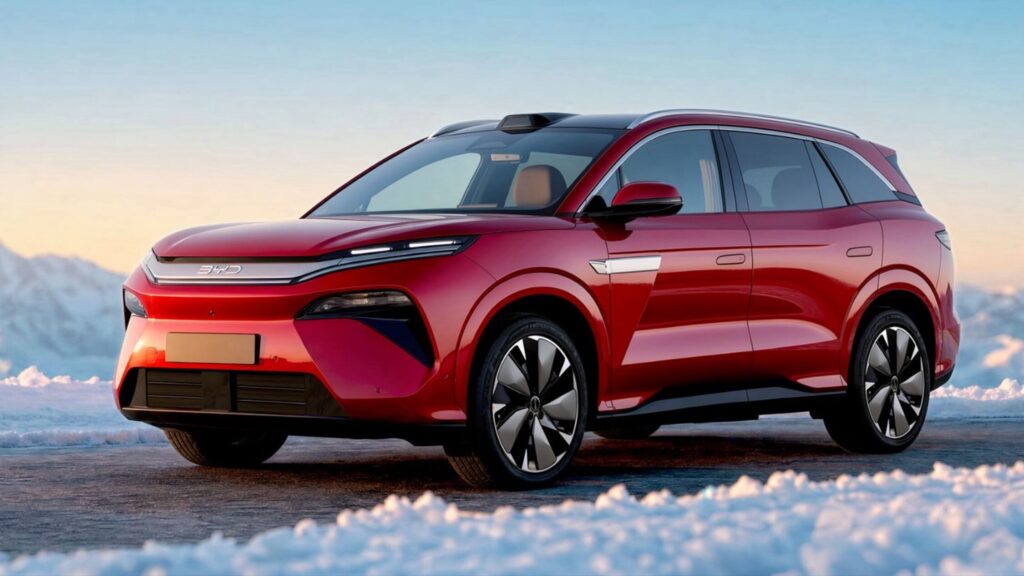
  • BYD’s electric Atto SUV charges faster than any rival – with the right charger.
  • The 115-kWh Blade battery can charge from 10% to 70% in five minutes.
  • Most potent version makes 764 hp and gives a 374-mile WLTP electric range.

Fast electric SUVs are nothing new. But BYD’s new Atto 8 is fast in a straight line and at the charging station. You might even spend less time topping up the battery than you would pumping gas into a combustion SUV and paying for it.

The Atto 8 made its European debut at this week’s Paris Motor Show, and on the stand, it doesn’t look particularly groundbreaking. Sure, it’s BYD’s first three-row vehicle for Europe, where it will take on the new Skodq Peaq. But the design, a predictable mashup of existing BYD styling cues, is entirely forgettable.

Review: The BYD Seal 6 Is A Perfectly Adequate EV Sedan, But That’s About It

It’s a different story under the skin. The Atto 8 is powered by BYD’s second generation Blade battery, and the generous 115 kWh capacity is actually the least interesting thing about it. Because the real story is the Atto 8’s ability to charge that huge battery from 10-97 percent full in only nine minutes.

And you can cut that almost in half by settling on a 10% to 70% fill, pulling the plug before the charge rate slows for the final push. Even in chilly (-30 C) weather, a 20-97 percent charge is done in 12 minutes. That compares with a 10% to 80% fill time of 28 minutes for the new Skoda Peaq.

BYD’s Flash Charging technology makes those feats possible, but only if you can find a Flash charger. The automaker is still building the infrastructure, so they’re few and far between right now, although BYD says 3,000 Flash stations will be live across Europe by the end of 2027.

Choose 456 HP Or 764 HP
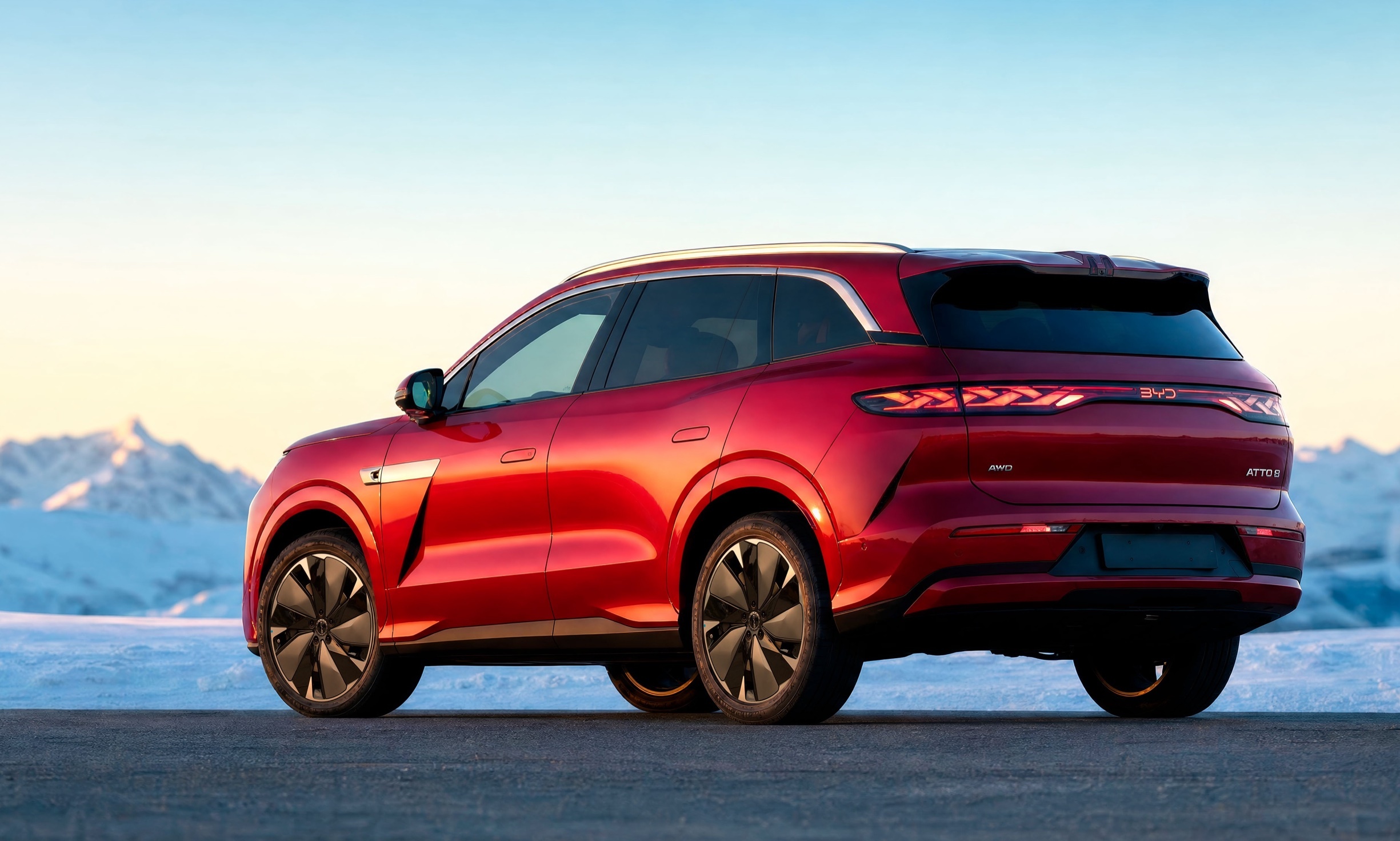
 BYD’s Atto 8 Charges In Less Time Than You’ll Spend Scrolling Netflix Tonight

Both versions of the 198-inch (5 m) SUV get the same battery and charging capabilities, but not the same powertrain. The entry level Design comes with a 456 hp (462 PS / 340 kW) electric motor and rear-wheel drive. That might sound like a solid number of horses, but the weight of the huge battery means zero to 62 mph takes a leisurely 8 seconds.

Atto 8 Excellence adds a second motor, boosting overall output to 764 hp (775 PS / 570 kW), and chopping the sprint time to 4.6 seconds. But it also chops the available range. The RWD 8 can over a respectable 405 miles (652 km) on a fill, and the dual-motor SUV, a less impressive 374 miles (602 km).

26-Inch Head-Up Display
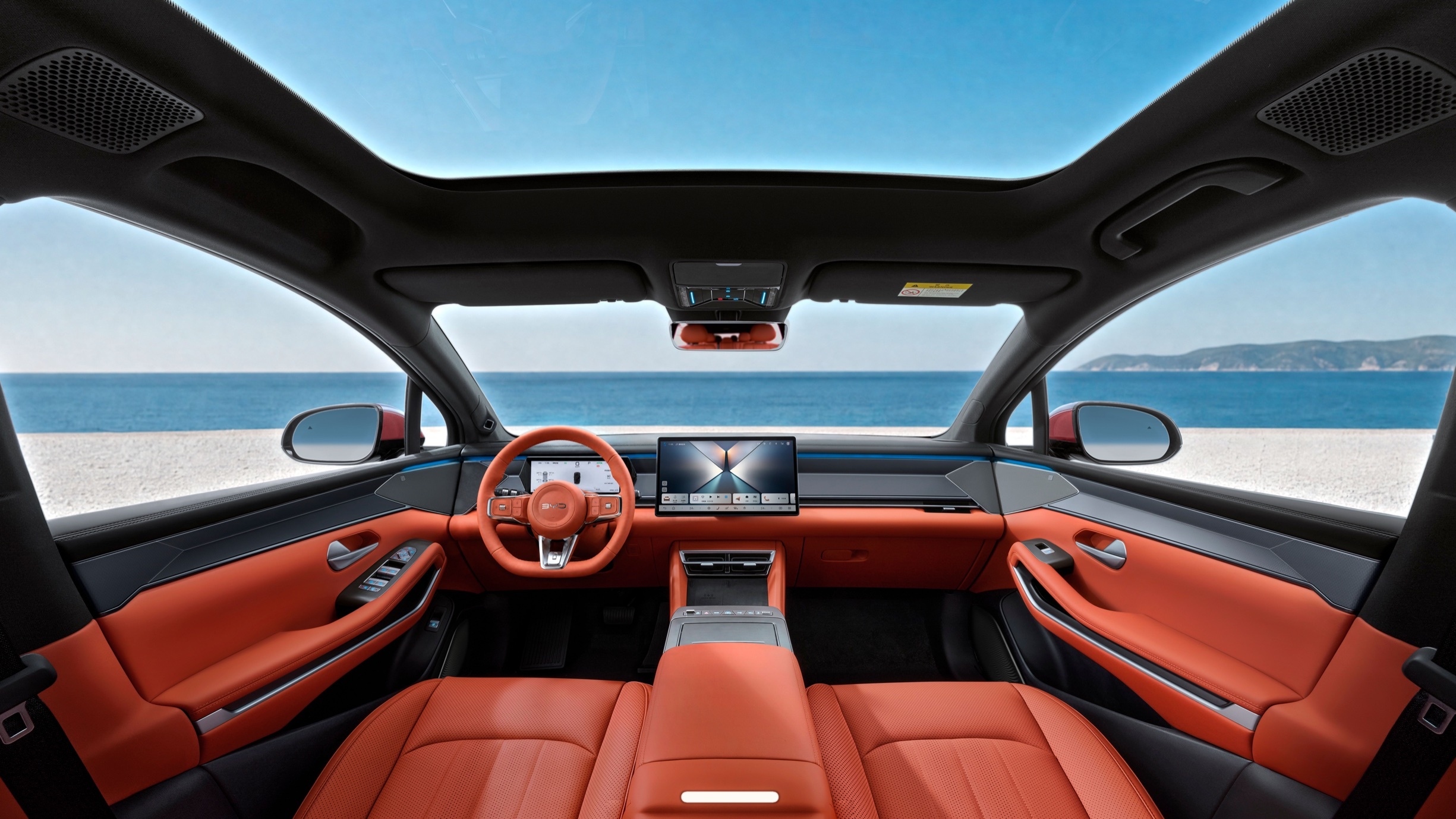
 BYD’s Atto 8 Charges In Less Time Than You’ll Spend Scrolling Netflix Tonight

The Atto 8’s flagship status in BYD’s lineup means it comes loaded with standard equipment, including a panoramic glass roof, a 26-inch head-up display, and heating, ventilation and massage functions for both the front seats, and the outer pair in the middle row. Both models get dual 50W smartphone chargers, and Excellence models attempt to justify their name with a refrigerator.

Will it also be excellent value? We’ll find out later this year, closer to the spring 2027 on-sale date, by which time BYD might have plumbed in a few more Flash chargers.

\\\\\

BYD

BYD Says ‘Hacker’ Tapped Into Shark 6 Wiring As Aussie Documentary Slammed As Hit Piece

  • As it turns out, the documentary gave a “hacker” two weeks to work on a Shark 6.
  • BYD says he installed an untrusted third-party application into the infotainment system.
  • The documentary failed to acknowledge the security concerns about all new cars, not just BYDs.

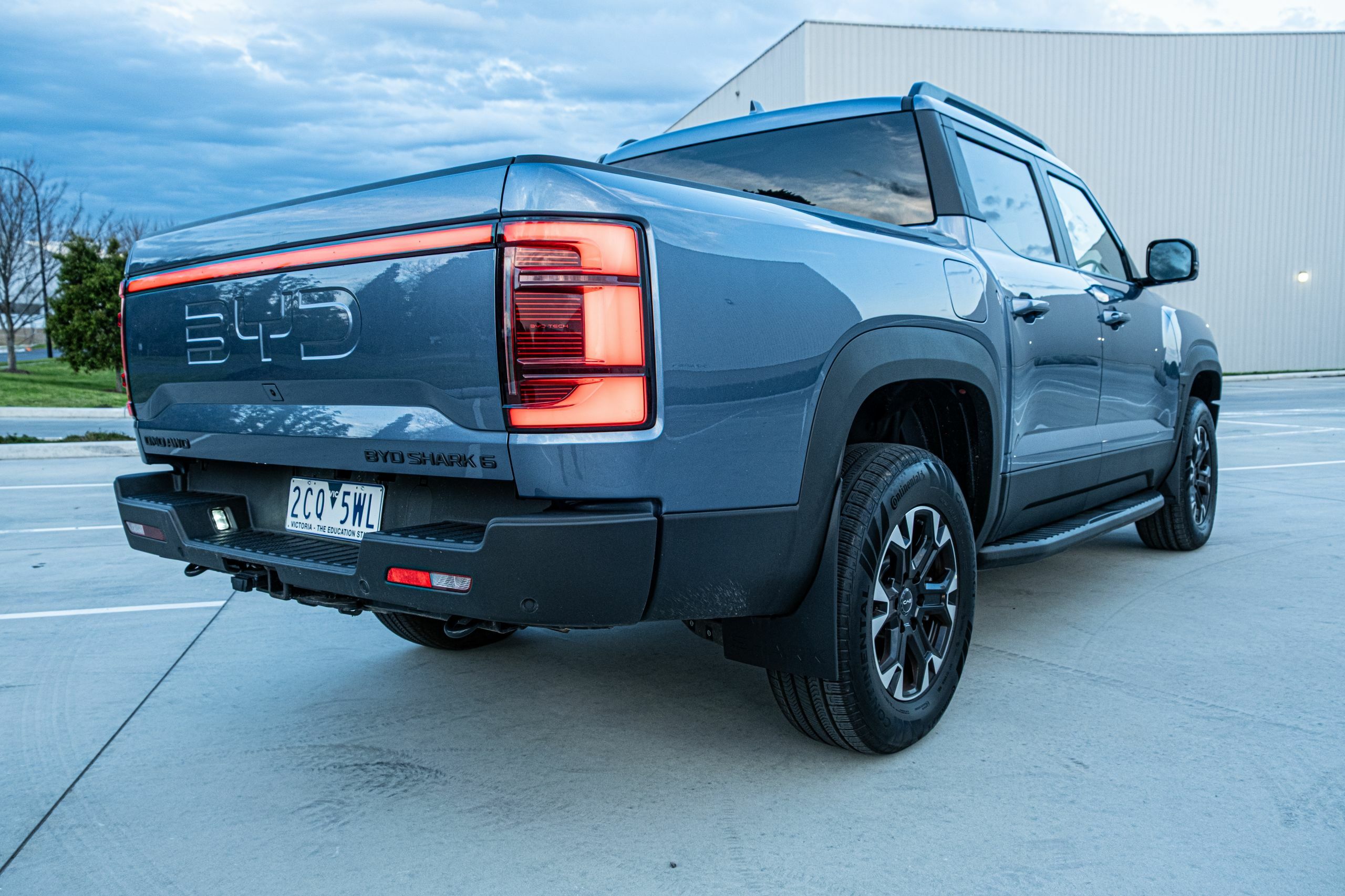
BYD has quickly responded to cybersecurity concerns about the popular Shark 6 pickup truck following the release of an Australian documentary, which revealed how easily it could be hacked. The Chinese brand has also clarified how a hacker gained control of the plug-in hybrid’s headlights and windshield wipers.

As part of the ABC’s Four Corners program, cybersecurity expert Dan Hreszczuk was given a Shark 6 for two weeks and was able to listen in to the interior microphones, take control of the door locks, and mess with the Shark 6’s audio. To avoid giving any other hackers any bad ideas, details about how Hreszczuk hacked into the BYD weren’t disclosed.

Read: A Hacker Took Control Of A BYD For TV, But Should You Be Worried?

BYD says it’s found out how he did it. To hack into the truck’s infotainment system, it says he breached the Android Debug Bridge (ADB) with a special tool and installed an untrusted third-party application. BYD was able to replicate this vulnerability in its own testing but says for a hacker to gain access to a vehicle’s location data and microphone, the driver must accept a permission prompt that will be displayed on the screen, something the documentary didn’t disclose.

To address this vulnerability, BYD says it’s working on an over-the-air software update that will remove the pathway used to enable the ADB, which is ordinarily disabled. It hasn’t said when this update will be ready, but says if similar vulnerabilities are found in its other models, they too will get the new software.

 BYD Says ‘Hacker’ Tapped Into Shark 6 Wiring As Aussie Documentary Slammed As Hit Piece

What The Documentary Didn’t Tell You

Then there’s the matter of the headlights and windshield wipers. In the Four Corners program, the hacker was shown remotely turning on the wipers and then turning off the headlights as the Shark 6 was being driven at night. According to BYD, gaining control of these functions required far more than installing some third-party software.

It says the hacker tapped into the vehicle’s wiring and accessed the internal CAN bus, which obviously isn’t something a hacker sitting behind a computer screen can do. Hreszczuk confirmed in a blog post that he spliced into the Shark 6’s wiring and installed a low-cost Raspberry Pi computer, something that could be replicated on plenty of other new cars.

To minimize the chance of any would-be hackers using an OBD device to gain access to critical vehicle functions, BYD says it has implemented new security measures for the OBD interface. Now, it will require physical isolation and device authentication.

 BYD Says ‘Hacker’ Tapped Into Shark 6 Wiring As Aussie Documentary Slammed As Hit Piece
Brad Anderson/Carscoops

BYD’s Flagship Sedan Is Coming For The Rolls-Royce Phantom

  • YangWang’s new all-electric model will include coach doors like a Rolls-Royce.
  • It’s possible the new sedan will be BYD’s first car with solid-state batteries.
  • The model features advanced LiDAR sensor and BYD’s latest autonomous driving system.

BYD’s luxury-focused Yangwang brand is about to welcome a new model, and it’s poised to push the brand even further upmarket. Evidently, BYD is no longer satisfied with taking over the mass market, snatching sales from legacy rivals like Toyota, Honda, Mazda, Ford, and others, but it now also wants to convince Rolls-Royce, Bentley, and Mercedes-Maybach shoppers to buy Chinese.

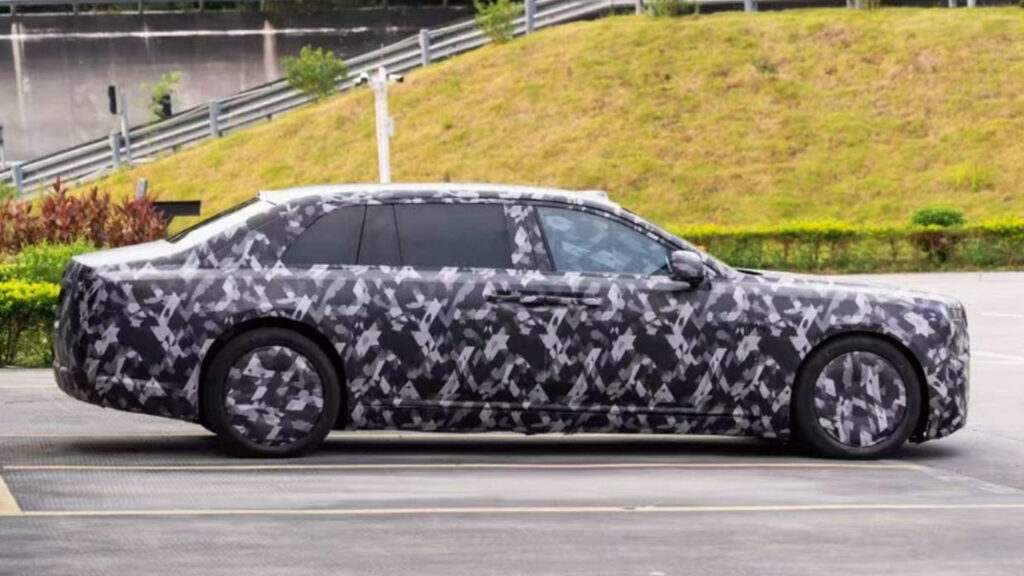
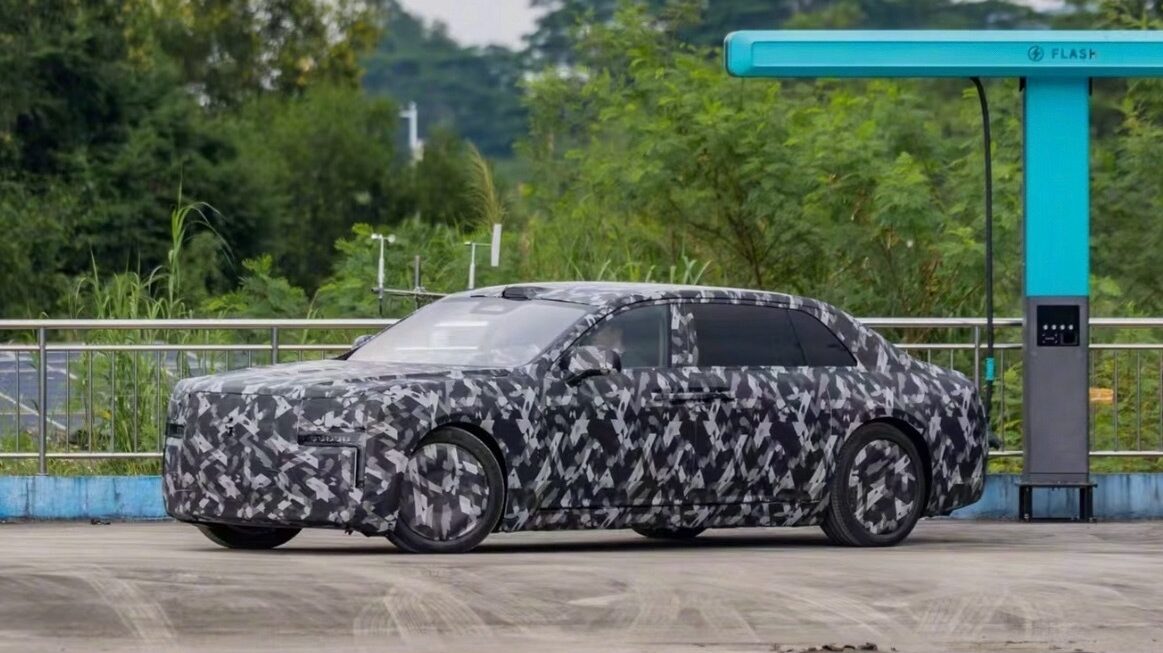
The new uber-luxury sedan has been previewed through images of a heavily disguised prototype at a mystery testing facility. Much like a Rolls-Royce Phantom, the new YangWang model is big and imposing, giving it an air of exclusivity most Chinese car manufacturers have so far failed to achieve.

Read: BYD Flash-Charged Its Luxury EV Over 350 Times In A Week Covering Nearly 19,000 Miles, Then Checked The Battery

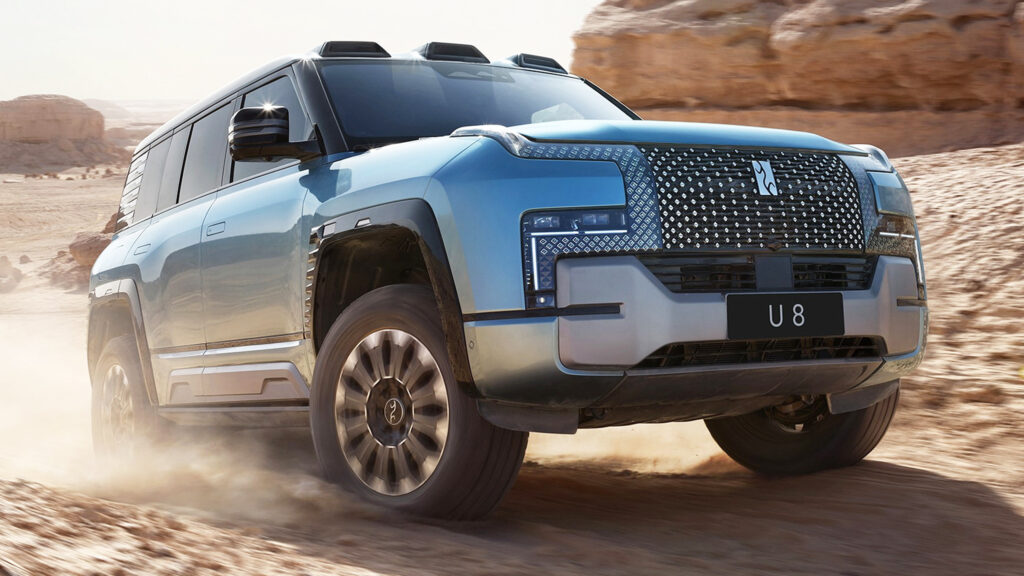
Despite the camouflage, we can see the front end will feature a large upright grille and headlights similar in shape to YangWang’s current U8 SUV. Set within these headlights are cubed-shaped crystals, hinting at just how serious the brand is about making this sedan feel special, even by European standards.

Coach Doors, Just Like A Rolls-Royce

 BYD’s Flagship Sedan Is Coming For The Rolls-Royce Phantom
Sugar Design/Weibo

Viewed from the side, the car’s wheelbase appears absolutely massive, although it’s hard to say if it’ll be as long as the extended-wheelbase Rolls-Royce Phantom. Nevertheless, we can see it rocks one obvious Rolls-Royce-inspired feature, namely coach doors at the rear. It also features large windows behind the C-pillars, suggesting it will focus heavily on maximizing comfort and luxury in the second row.

The new YangWang also rocks a LiDAR sensor above the windshield and is expected to use the company’s advanced DiPilot 600 semi-autonomous driving system.

\\\\\\

Unlike a Rolls-Royce Phantom, YangWang’s next luxury sedan is tipped to be sold exclusively as an EV. According to CarNewsChina, it could be one of the most advanced EVs on the market, potentially launching as BYD’s first model with solid-state batteries.

In September, BYD executive vice president Stella Li confirmed the brand would launch its first solid-state-battery-powered EV in 2027. Given that the technology has yet to be commercialized at scale and will therefore be quite expensive, debuting it in a flagship luxury model like this one makes perfect sense.

\\\\\

BYD Could Soon Be Building EVs And Batteries In Europe

  • BYD will start large-scale production in Hungary before the end of the year.
  • Existing and underutilized factories in Spain, France, and Italy are under consideration.
  • BYD is also looking to establish a battery plant in Europe in the future.

Having established itself as the largest car manufacturer in China, BYD is looking to conquer overseas markets. This includes Europe, where it believes it will need four factories as part of a significant local expansion that threatens to shake up the industry and will no doubt leave legacy rivals trembling with fear.

Current advisor for BYD’s European operations, and former Fiat Chrysler executive Alfredo Altavilla, revealed earlier this week that BYD wants to establish three vehicle assembly plants in Europe, in addition to a site dedicated to assembling batteries for EVs.

Read: BYD’s New Electric Semi For Europe Beats Tesla In Almost Every Metric

BYD has just finished building a factory in Szeged, Hungary, and has kicked off trial production. Altavilla says the brand has already started speaking with car manufacturers and governments in Spain, France, and Italy for other sites, as it’s looking to potentially acquire underutilized factories instead of building all-new ones.

 BYD Could Soon Be Building EVs And Batteries In Europe

“Over the longer term, we will need three ​assembly plants ​and one ⁠battery plant,” Altavilla revealed to Reuters. “Obviously, this is not something that will ​happen overnight. However, it is ​clear ⁠that, to achieve the volume targets we have in mind, while at the ⁠same ​time complying with European ​regulations, that is what we will need.”

Altavilla said BYD wants to decide on the location of a second manufacturing site by the end of the year. It will then need to decide whether it prioritizes a third manufacturing plant or a local battery plant.

Surging Overseas Demand

 BYD Could Soon Be Building EVs And Batteries In Europe

BYD’s site in Hungary will have the capacity to produce up to 200,000 vehicles annually, with current plans calling for large-scale production to commence in either November or December. In 2024, BYD announced plans for a plant capable of building 150,000 vehicles annually in Manisa, Turkey, originally hoping to start production in late 2026. However, work at this site has been put on indefinite hold.

The automaker is focusing on overseas markets as sales in China decline. This year, BYD sales in its home market have fallen 32.7 percent to 1.505 million. By comparison, overseas deliveries have soared, and the brand expects to end 2026 having sold between 1.9 million and 2.0 million vehicles internationally.

\\\\\\\\

BYD’s New Electric Semi For Europe Beats Tesla In Almost Every Metric

  • BYD debuts the ETT44 electric heavy-duty tractor in Hannover.
  • It packs up to 1,006 hp and a massive 651 kWh Blade battery.
  • 1.5 Megawatt charging adds 248 miles of range in 20 minutes.

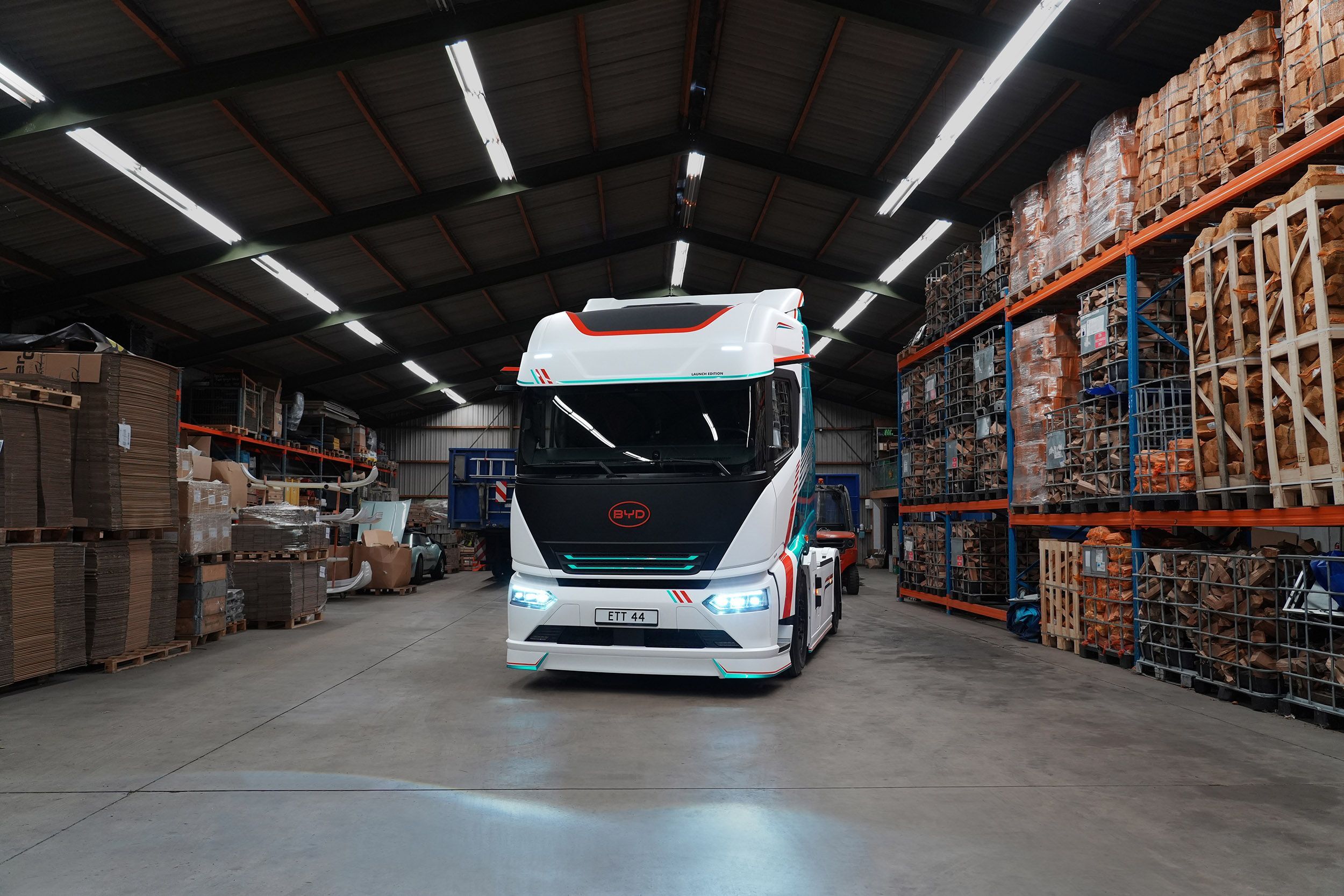
Chinese automotive giant BYD has made headlines at the IAA Transportation 2026 in Hannover with the premiere of its new commercial flagship vehicle. The ETT 44 is a fully electric heavy-duty tractor designed for Europe’s long-haul transport sector bringing loads of power, a massive battery pack and ultra-fast charging.

Visually, the ETT 44 shares the upright cab-over design with the existing ETH 20, ETH 28, and ETH 8 heavy-duty rigs, and comes standard with a high-roof sleeper cab layout. The launch edition is distinguished by aero add-ons on the front bumper, side skirts, above the windshield, and on the roof, alongside a custom grille and a special livery.

More: Chinese Brands Are Building 90,000 Cars In Europe. In Ten Years, Make That 1.5 Million

The interior boasts a digital instrument cluster, a 12.8-inch infotainment display, and large screens for the mirror-replacing cameras. We can also see an array of physical controls, a car-like gear knob, multiple cup holders, storage compartments, and a radio. Behind the seats is a bed for the driver. The ETT 44 rides on air suspension and comes equipped with an extensive ADAS suite.

\\\\\

BYD

Under the skin, the specs beat the European-market Tesla Semi, which was also introduced at the same event. BYD’s 4×2 electric tractor is powered by a single electric motor generating up to 1,006 hp (750 kW / 1,020 PS). It is available with two LFP BYD Blade battery options with capacities of 434 kWh and 651 kWh, with advertised range figures of 400 km (249 miles) and 600 km (373 miles) respectively.

More: BYD Flash-Charged Its Luxury EV Over 350 Times In A Week Covering Nearly 19,000 Miles, Then Checked The Battery

The base version has a maximum charging rate of 950 kW, which increases to an impressive 1,500 kW in the long-range variant. This means that both models can charge from 20-80% in as little as 20 minutes when connected to a compatible MCS charger. For comparison, the EU-market Tesla Semi has a 550 km (342-mile) range and supports charging speeds of up to 800 kW.

Weight Figures

\\\\\\

BYD

The BYD ETT 44 measures 6,400 mm (252.0 in) long, 2,530 mm (99.6 in) wide, and 3,820 mm (150.4 in), tall with a 3,800 mm (149.6 in) wheelbase. This footprint is similar to other European heavy-duty tractors such as the Mercedes-Benz eActros 600, Man eTGX, Scania 45 R Electric, and DAF XF Electric.

More: Half Of British Drivers Would Now Buy A Chinese Brand They Couldn’t Name 3 Years Ago

Its curb weight ranges between 10,950-11,140 kg (24,141-24,560 lbs) with a gross weight rating of 20 tons (44,092 lbs) and a gross combination weight of 44 tons (97,003 lbs) as dictated by European regulations. BYD says that the model would be capable of a gross combination weight of 65 tons (143,300 lbs).

Notably, even the capped gross figure is higher than the Tesla Semi, which maxes out at 40 tons (80,000 lbs), although it has a lighter curb weight of 9,100 kg (20,062 lbs).

BYD has yet to announce pricing for the ETT 44, which is expected to hit European roads in the coming months. However, the company has already confirmed a standard 10-year or 1.2 million km (750,000-mile) warranty for the battery pack, offering peace of mind to future owners.

 BYD’s New Electric Semi For Europe Beats Tesla In Almost Every Metric

BYD

BYD Flash-Charged Its Luxury EV Over 350 Times In A Week Covering Nearly 19,000 Miles, Then Checked The Battery

  • The Yangwang U7 makes 1,287 hp from motors on both axles.
  • BYD says the test car was pulled at random from a showroom floor.
  • Daily temperatures during the run topped 97 degrees Fahrenheit.

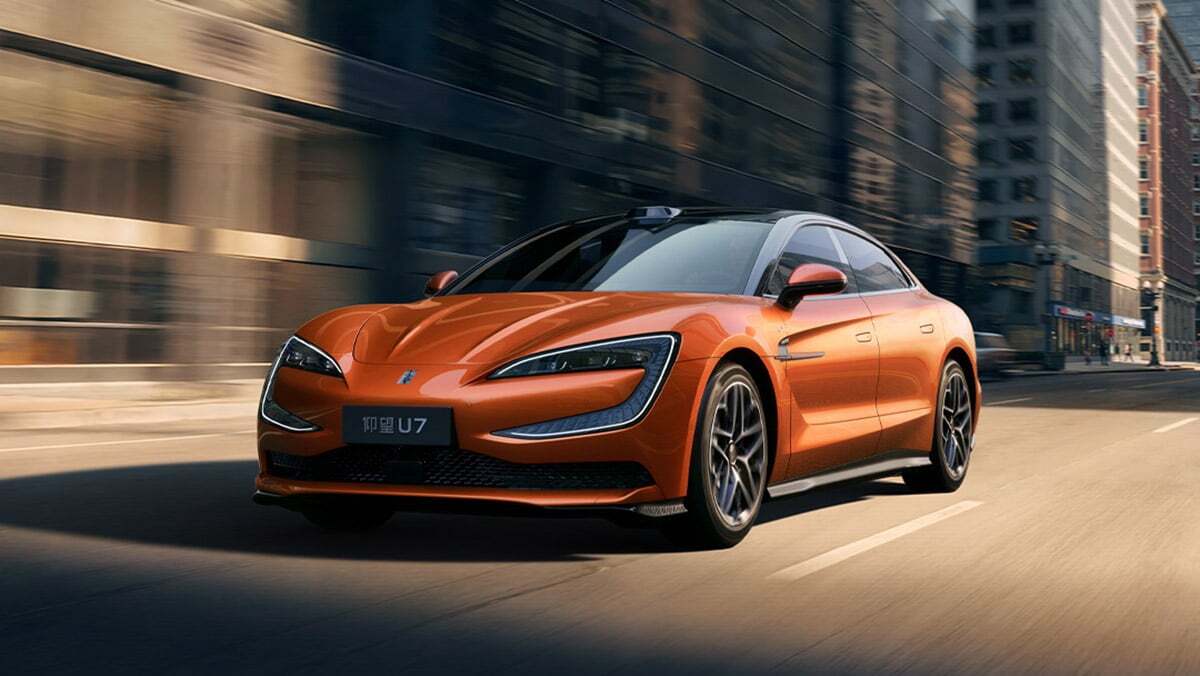
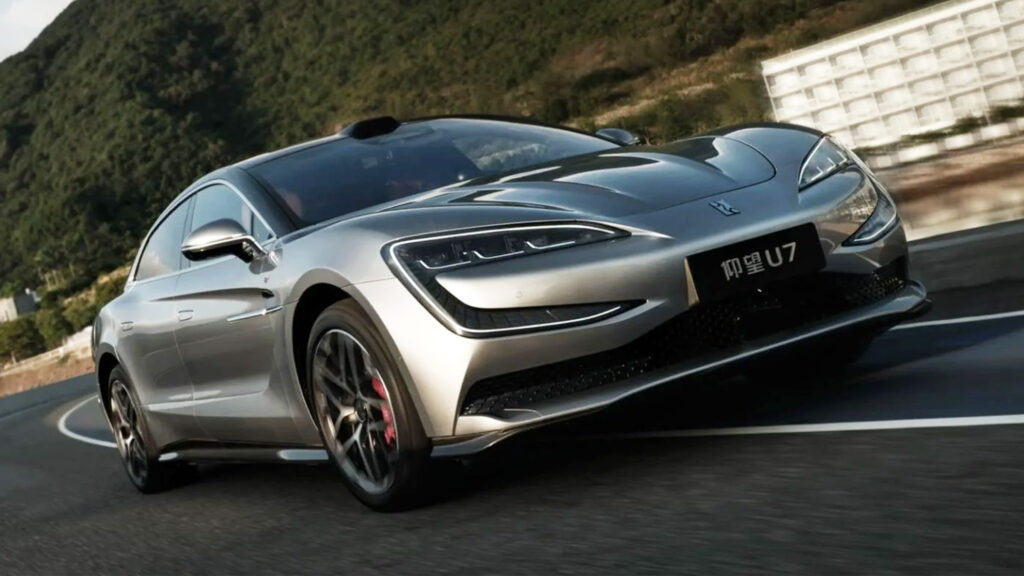
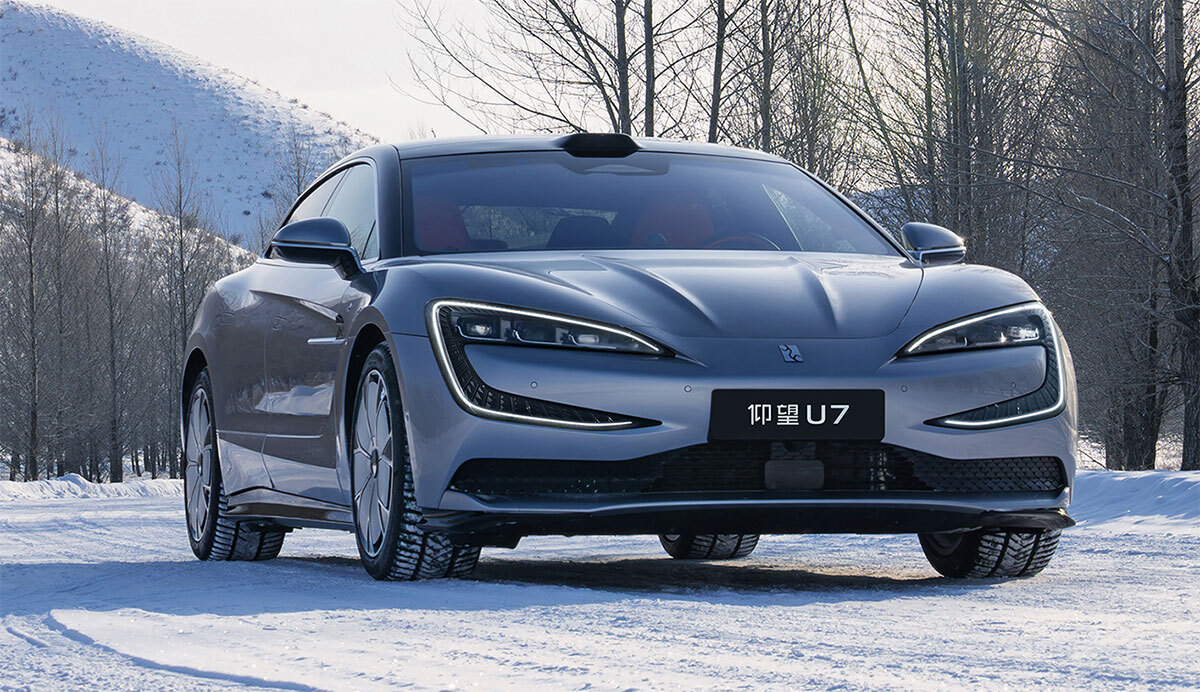
The ultra-luxurious U7 sedan from Yangwang has already been updated, barely a year after its market launch, and BYD is boasting about how comprehensive its testing regime has been and how well the new Blade Battery 2.0 performs.

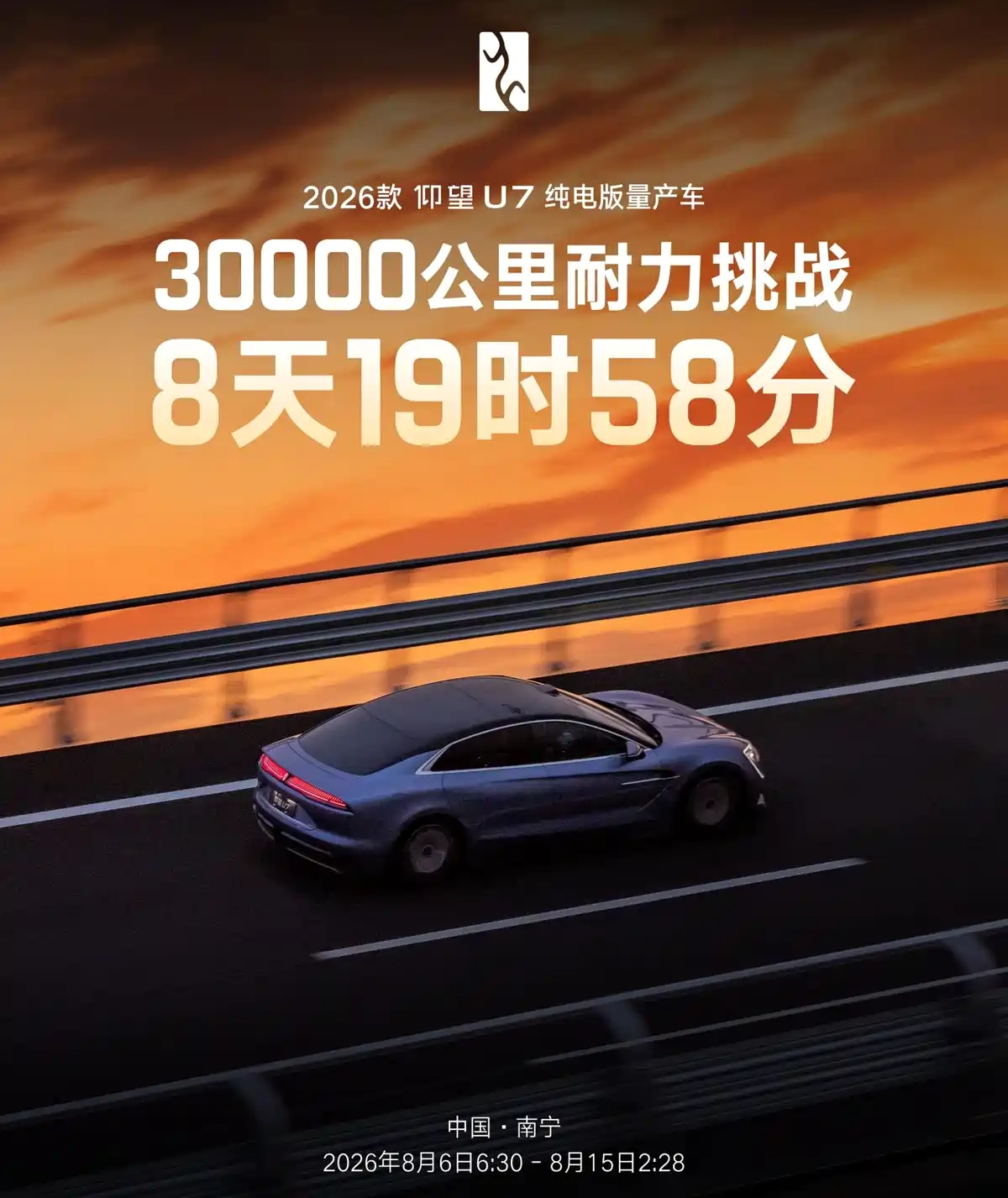
To wrap up testing of the Yangwang U7, which has a starting price of around $95,400 in China, BYD says it randomly selected a U7 from one of its stores and spent 8 days, 19 hours, and 58 minutes driving it 18,600 miles (30,000 km), cruising at an eye-watering average speed of 149 mph (240 km/h). This test isn’t dissimilar to the tests Mercedes-AMG performed last year with its GT XX Concept. In that case, the German EV was driven 24,901 miles (40,075 km) in 7 days, 13 hours, and 24 minutes.

Read: Richard Hammond Once Crashed A Rimac, Now Trusted With BYD’s 2,978 HP Hypercar

 BYD Flash-Charged Its Luxury EV Over 350 Times In A Week Covering Nearly 19,000 Miles, Then Checked The Battery

BYD conducted the test in Nanning, where average daily temperatures exceeded 36°C (97°F) and relative humidity reached as high as 80 percent. The air conditioning was also set to 24°C (75°F) throughout the endurance run.

Beyond the test demonstrating how well the U7 can perform at high speeds and over long distances, BYD also wanted to ensure the battery would hold up. It says the U7 used was flash-charged more than 350 times. At the end of the test, the battery had retained 98.7 percent of its capacity.

 BYD Flash-Charged Its Luxury EV Over 350 Times In A Week Covering Nearly 19,000 Miles, Then Checked The Battery

This was far from the only test Yangwang conducted for the updated U7. It says it has been testing 758 vehicles across the country, cumulatively covering more than 6.5 million miles (10.49 million kilometers).

The Yangwang U7 was first unveiled in early 2024 and hit the Chinese market roughly 12 months ago. Less than six months after the first deliveries started, it was revealed that Yangwang was preparing to update it, equipping it with new 135.5 kWh and 150 kWh battery packs.

Both versions of the electric U7 have 644 hp electric motors at the front and rear axles, combining to deliver 1,287 hp. The 135.5 kWh version has a CLTC driving range of 497 miles (800 km), while the 150 kWh model can travel up to 625 miles (1,006 km) on a charge. A plug-in hybrid version with a 52.4 kWh battery and 1,341 hp is also available.

 BYD Flash-Charged Its Luxury EV Over 350 Times In A Week Covering Nearly 19,000 Miles, Then Checked The Battery

Sources: BYD, Carnewschina, Autohome

Chinese Brands Are Building 90,000 Cars In Europe. In Ten Years, Make That 1.5 Million

  • Around 90,000 cars from Chinese brands will be built in Europe this year.
  • European lawmakers are looking for ways to boost domestic manufacturing.
  • Spain has emerged as the hotbed for Chinese car production in Europe.

The European expansion of Chinese car manufacturers is in its early stages, and already, local production is growing rapidly. Within the next decade, as many as 1.5 million vehicles from Chinese brands could be built in Europe annually.

This year, Chinese brands like BYD, Leapmotor, and Chery are expected to manufacture approximately 90,000 of these vehicles in Europe, either in new factories or existing ones that have been underutilized. Global Mobility expects this figure to grow to 1 million units annually by 2030 and 1.5 million by 2035.

Read: The Chinese Brand That Didn’t Exist In Britain A Year Ago Just Outsold Honda And Mazda Combined

However, lawmakers in Europe are eager to ensure that brands don’t exclusively rely on Chinese parts when building new vehicles, and instead work with local suppliers. They’re doing this through the Industrial Accelerator Act (IAA), which aims to strengthen Europe’s industrial base and boost domestic manufacturing.

Chinese, But With European Parts

 Chinese Brands Are Building 90,000 Cars In Europe. In Ten Years, Make That 1.5 Million
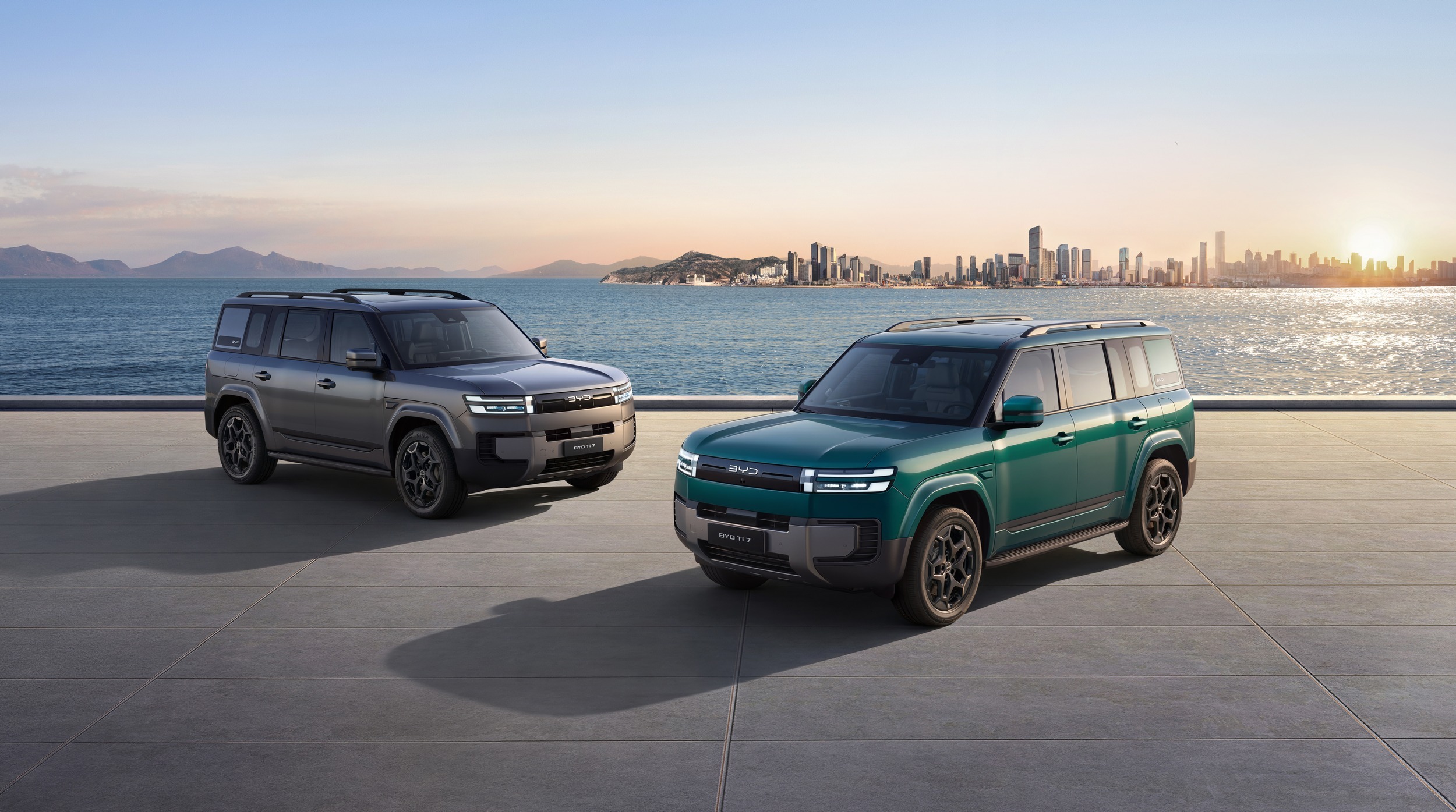
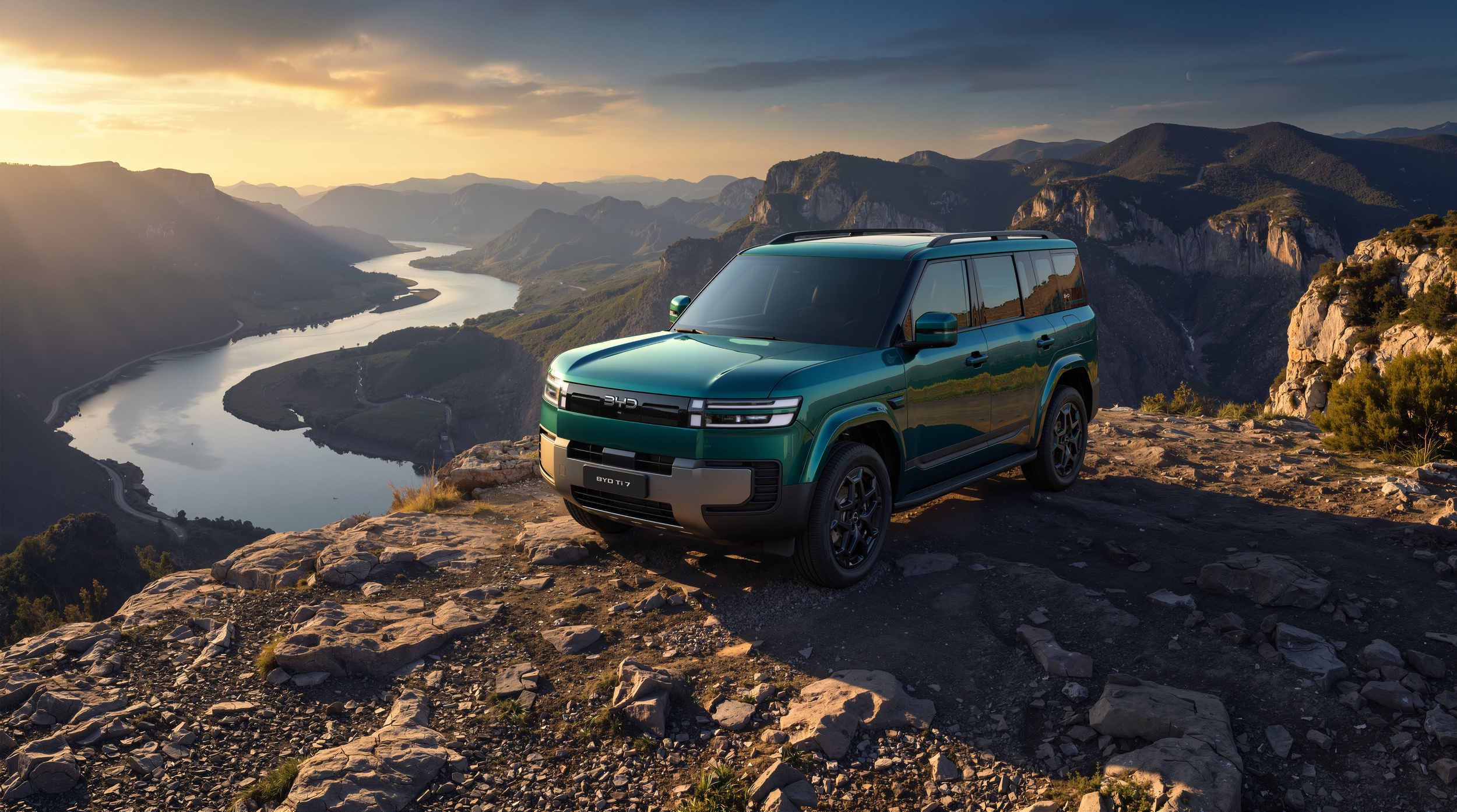
BYD Ti7

Details are still being ironed out, but the act is expected to introduce quotas for European parts to be used in vehicles manufactured across the continent. Without this act, “the main risk is that China will open pure assembly plants for Chinese components in the EU – with minimal economic added value for the Europeans,” economist Sander Tordoir said.

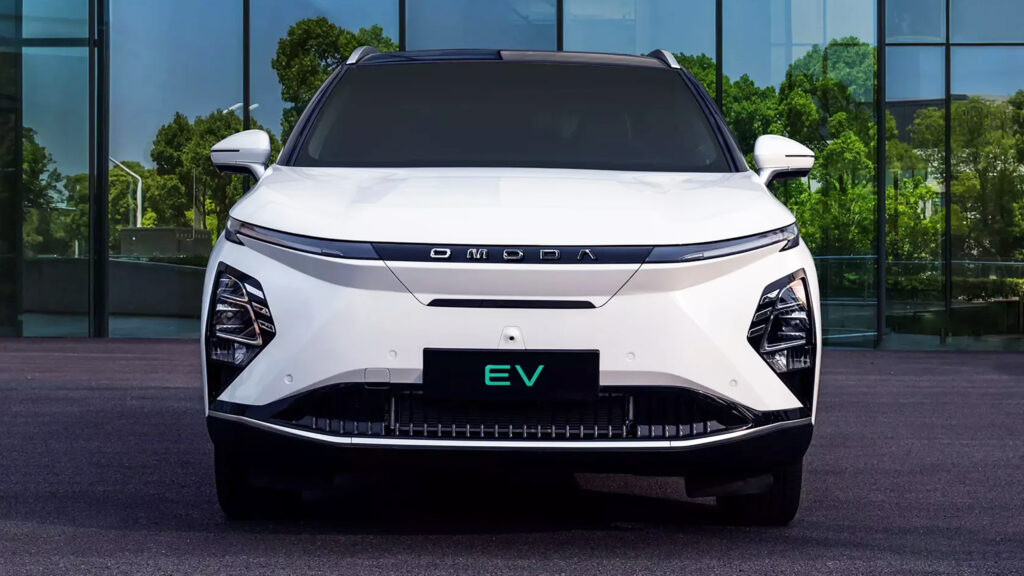
BYD will soon start production of its cars in Hungary and is also looking to add a plant in Spain to its local portfolio. In addition, several Jaecoo and Omoda vehicles are being built in Spain, and soon, Leapmotor will also start building EVs at the Stellantis site in Zaragoza. Geely will also manufacture vehicles in Valencia through a partnership with Ford.

 Chinese Brands Are Building 90,000 Cars In Europe. In Ten Years, Make That 1.5 Million
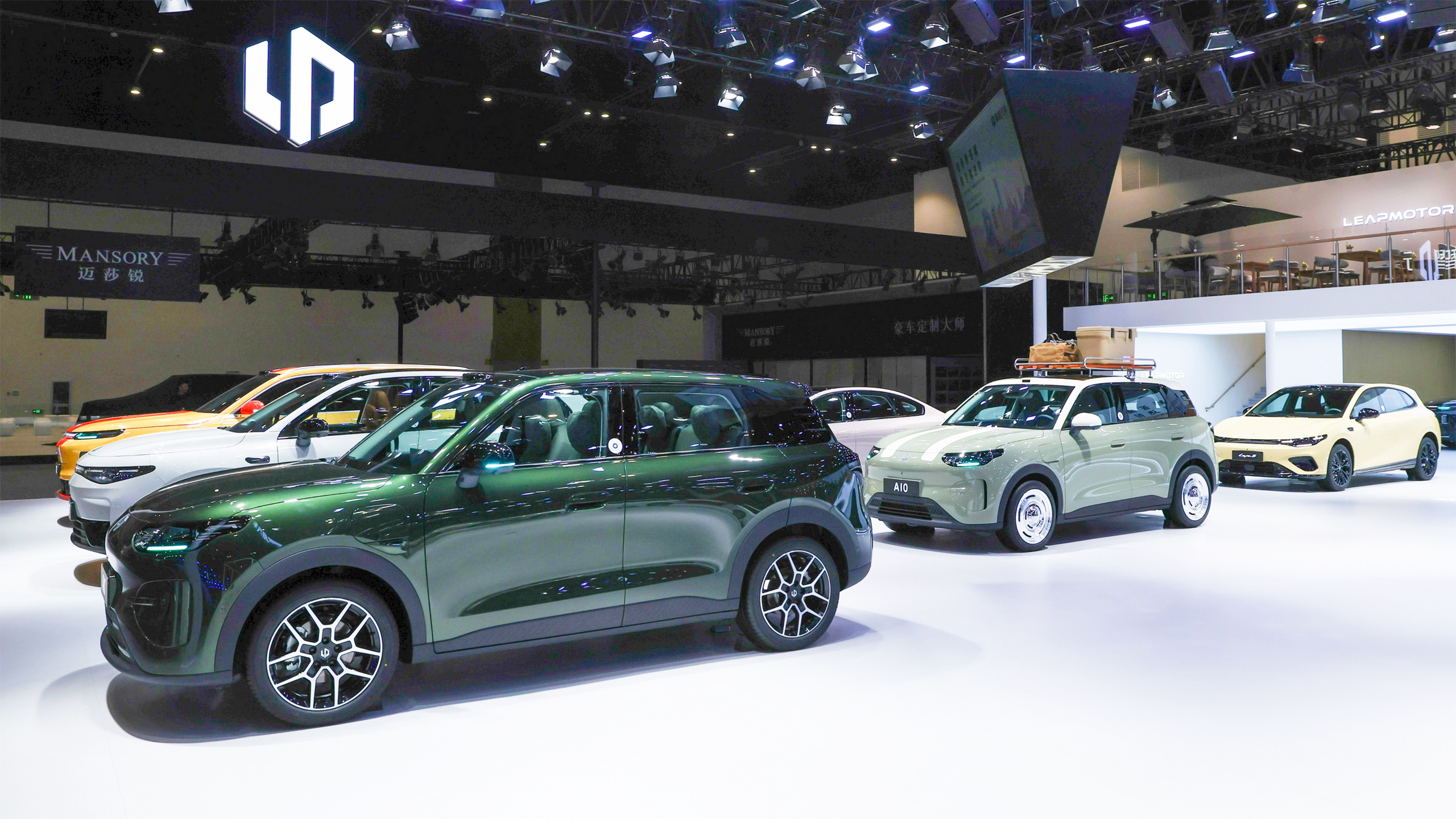
Leapmotor

The key reason Chinese brands are building locally is to avoid paying hefty import tariffs. However, if the IAA enforces car companies to increase their reliance on European suppliers and manufacture more components locally, brands like BYD, which have a high degree of vertical integration, will have to consider if the investments are worthwhile.

“Because, to be considered ‘Made in Europe,’ large parts of the components, including the battery, would then have to be manufactured locally,” Gregor Williams from the Rhodium Group think tank told Automobilwoche.

 Chinese Brands Are Building 90,000 Cars In Europe. In Ten Years, Make That 1.5 Million
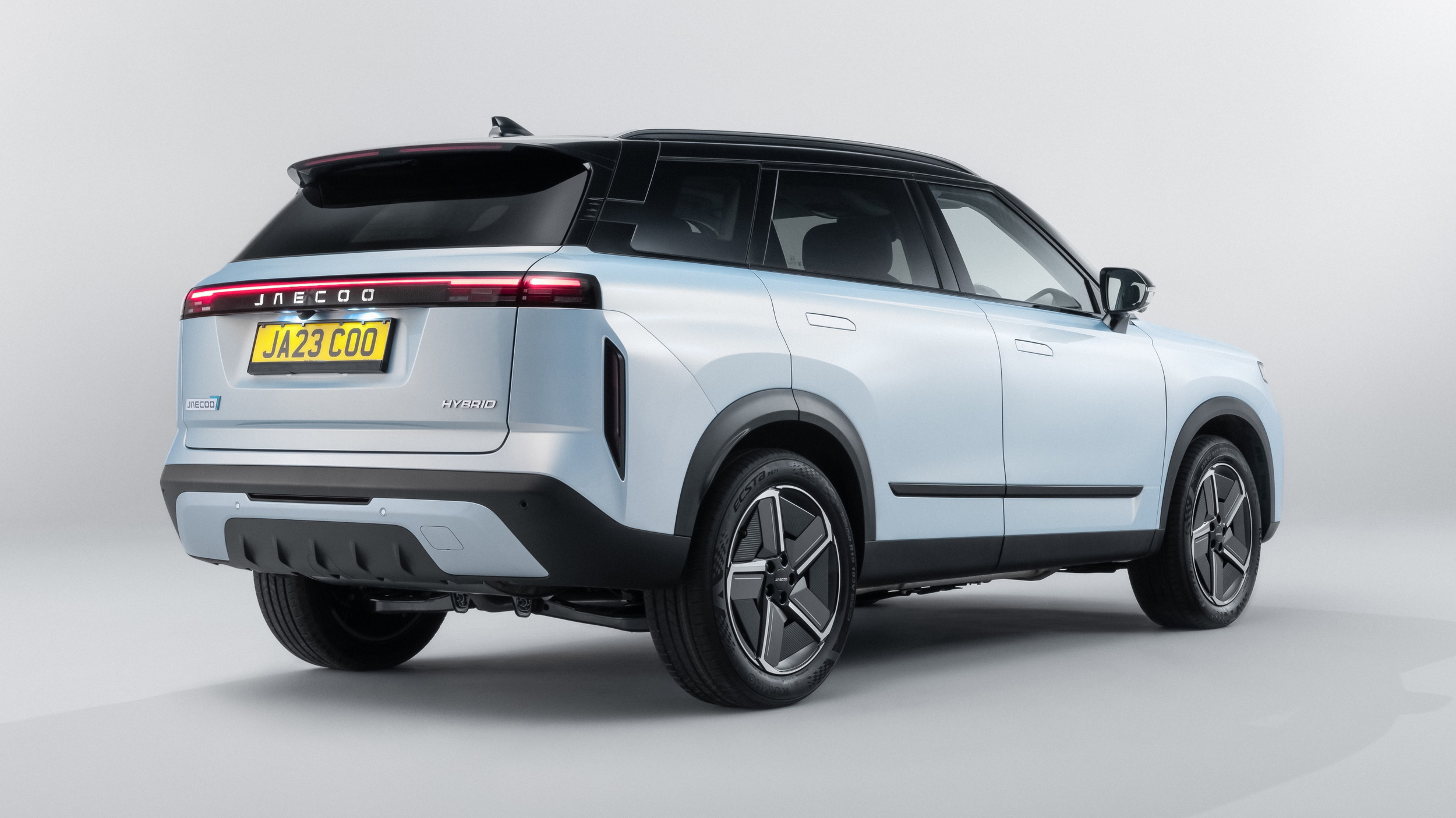
Jaecoo 7

A Solar Sunroof For EVs Is Ready For Mass Production, Just Don’t Expect Miracles

  • Reports tied a solar roof option to two of BYD’s models.
  • Several brands have tested solar roofs, Nissan among them.
  • Nissan says its Ariya concept panels can add up to 14 miles a day.

Every EV engineer on the planet is currently chasing the same goal, which is more range without more battery, and the answers keep arriving from unexpected corners of the industry. The latest one comes from a Chinese glass supplier in the form of a solar glass sunroof that its maker says is finished, validated and ready for mass production.

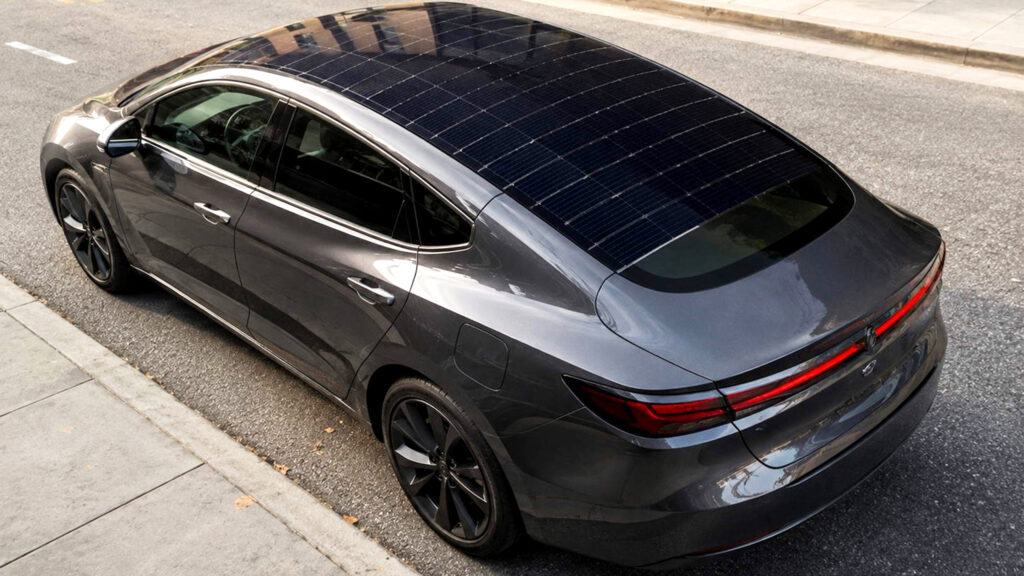
The company is Fuyao Group, one of the largest automotive glass producers on earth, counting Ford, General Motors, Subaru, Tesla and the VW Group among its customers. That client list matters more than the technology demo itself, because Fuyao isn’t some startup trying to buy its way in with a novelty. It has laminated solar cells directly into automotive glass, and the image the company put out shows a car with cells covering the entire roof panel and spilling down across a large section of the rear window.

Read: Nissan’s Ariya Concept Can Add 14 Miles A Day, But Only If The Sun Plays Nice

Fuyao’s current production facilities in Yangxia and Hefei have a combined annual production capacity of 3 million sets of glass for the auto industry, and this is increasing this year. There’s no word on how many solar glass roofs it plans to produce, but it all hinges on carmakers actually deciding it’s worth the investment to use a technology like this.

A Reported $1,190 Option

According to PV Magazine, reports from China earlier this year suggested that Fuyao was working with BYD and that the solar glass sunroof would be offered as an option on the Han and Tang models, priced at approximately 8,000 yuan ($1,190). However, there has been no confirmation from either brand that this is the case.

 A Solar Sunroof For EVs Is Ready For Mass Production, Just Don’t Expect Miracles
BYD Tang

Given how quickly current BYDs can charge thanks to the firm’s 1,500 kW Flash Charging network, there’s little need for its vehicles to also use solar panels to capture enough energy for just a few extra miles a day.

Nissan Has Created Its Own Solar Roof

Fuyao is far from the only company interested in solar glass roof panels. Earlier this year, two Nissan engineers created a special Ariya that uses solar panels across the roof, tailgate, and hood.

Under clear skies, Nissan says the panels can gather enough energy for up to 14.3 miles (23 km) of additional range in a single day. Spread across a full calendar year, that averages out to roughly 6.3 miles (10.2 km) daily in London, 11.7 miles (18.9 km) in New Delhi, 13.2 miles (21.2 km) in Dubai and 10.9 miles (17.6 km) in Barcelona. The gains shrink once you’re actually moving, though. On a two-hour, 50-mile (80 km) drive, the panels collected 0.5 kWh, good for another 1.8 miles (3 km).

While this doesn’t sound like a lot, Nissan says its analysis showed that commuters who typically drive 3,728 miles (6,000 km) per year could reduce their annual charging-station visits from 23 to just 8 if they drove an EV with solar cells like this.

BYD’s New UK Flash Chargers Do In 9 Minutes What Most EV Rivals Do In An Hour

  • BYD will introduce 300 Flash Charging stations in the UK over the next year.
  • Technology can charge a new EV battery from 10-97 percent in just 9 minutes.
  • The first eligible model to be sold in the UK will be the powerful Denza Z9 GT.

Owning an EV in the UK is about to become much more convenient. In the coming weeks, BYD will introduce its first Flash Charging stations in the country, dramatically reducing charging times and potentially convincing many to make the jump and purchase their first electric car.

Unveiled earlier this year, BYD’s Flash Charging stations have already been deployed en masse across China and are now rolling out in Europe. Each charger includes two connectors, and when one is in use, peak charging speeds of 1,500 kW can be achieved. When both connectors are being used by two vehicles, each plug can supply up to 1,000 kW.

More: BYD Says Five-Minute Charging Adds 310 Miles, BMW Says Read The Fine Print

Charging speeds are extraordinary. It takes just five minutes to charge a battery pack from 10-70 percent, and a mere nine minutes to charge from 10-97 percent. Even in freezing temperatures of -30°C (-22°F), a 20-97 percent charge takes just 12 minutes.

To get an idea on how far ahead of the pack that is, Tesla’s UK Supercharger network runs V2 units at 150 kW and V3 and V4 units at 250 kW. On a 250 kW post, a Model 3 needs around 25 to 30 minutes to go from 10 to 80 percent, or 15 minutes to pick up roughly 170 miles (274 km) of range. V5 hardware is coming and will reach 500 kW, assuming your car can actually take it. That is still a third of what BYD is quoting.

World-Leading Battery Tech

The secret to these extraordinary charging speeds is the batteries. Each Flash Charger uses two on-site storage batteries, each with a capacity of 185 kWh. The energy from these batteries is then transferred to the vehicle. The storage batteries are charged and topped up via the grid at speeds of up to 560 kW.

\\\\\\\\

BYD plans to install 300 Flash Charging stations across the UK over the next 12 months, focusing on BYD and Denza dealerships as well as motorway service stations and existing charging hubs. The brand’s first model to support 1,500 kW charging is the Denza Z9 GT. BYD’s latest-generation plug-in hybrid models with the Blade Battery 2.0 also support ultra-fast DC charging, starting with the D9 MPV.

Read: An Oil Giant Is Ripping Out Its Gas Pumps To Install BYD’s 1,500kW Flash Chargers

Charging prices have not yet been announced. BYD says that owners of compatible vehicles will qualify for preferential electricity rates “that will be considerably lower than prevailing ultra-rapid charging retail prices” across the country. EVs from other brands will also be able to use the chargers, although they will have to pay more.

 BYD’s New UK Flash Chargers Do In 9 Minutes What Most EV Rivals Do In An Hour
❌