Health care, property taxes expected to be part of Evers' State of the State


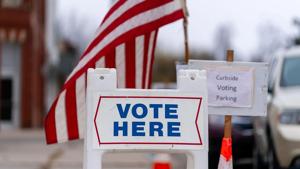
There’s an election in Wisconsin on Tuesday, but don’t be alarmed if that comes as a surprise — in most places there isn’t much, if anything, on the ballot.
The Feb. 17 spring primary seeks to narrow down any contests where there are more than two candidates competing for a single seat ahead of the April 7 spring general election. With no statewide primaries on the ballot, voters will be tasked with narrowing down municipal, judicial and school board elections.
Voters can see what’s on their ballot by visiting myvote.wi.gov and entering their address.
The biggest statewide race this spring, the Wisconsin Supreme Court election, features only two candidates, appellate court judges Maria Lazar and Chris Taylor, so they won’t be on the primary ballot Tuesday. There are also dozens of school district property tax referendums on the April 7 ballot, but none on the primary ballot.
In Madison, voters will vote in the Dane County Circuit Court judge Branch 1 primary, choosing two candidates to contend on April 7 to replace current Wisconsin Supreme Court Justice Susan Crawford. In Green Bay, residents will narrow down candidates for city council if their district includes more than two candidates. There are no primary elections in the city of Milwaukee, but neighboring municipalities may have elections.
Polls are open Tuesday from 7 a.m. until 8 p.m. Voters can register at the polls.

Wisconsin Watch is a nonprofit, nonpartisan newsroom. Subscribe to our newsletters for original stories and our Friday news roundup.
There’s a primary election in Wisconsin on Tuesday. See what’s on your ballot. is a post from Wisconsin Watch, a non-profit investigative news site covering Wisconsin since 2009. Please consider making a contribution to support our journalism.

For over a decade, Milwaukee residents and civil rights figures protested racial segregation in Milwaukee Public Schools.
Students protested alongside local leaders including Alderwoman Vel Phillips and Father James Groppi.
Activists organized citywide school boycotts, with churches hosting ‘freedom schools’ to teach students amid the protests.
For years, families fought against intact busing, which maintained existing segregation in Milwaukee Public Schools.
A year of protests against school segregation wasn’t enough to sway Milwaukee Public Schools to integrate. So in 1965, Milwaukee attorney and National Association for the Advancement of Colored People (NAACP) leader Lloyd Barbee filed a lawsuit against the district, arguing it intentionally took action to keep schools segregated.
Racially restrictive covenants and redlining already legally maintained neighborhood segregation in the city, University of Wisconsin-Milwaukee urban studies professor Anne Bonds said.
“In a dynamic where you have a deeply segregated landscape and a housing landscape that’s been produced by design … the schools that children would attend in their racially segregated neighborhoods would reflect the patterns of racial segregation that exist,” Bonds said.
After 10 years of fighting, federal Judge John Reynolds ruled on Jan. 19, 1976, that Milwaukee Public Schools needed to take action to desegregate schools. But how did they get there?
U.S. Supreme Court case Shelley v. Kraemer rules that racially restrictive covenants could no longer be enforced, but the practice continues in metropolitan Milwaukee into the 1960s. University of Wisconsin- Milwaukee professor Derek Handley says covenants were not ruled illegal until 1968 with the Fair Housing Act.
Lloyd Barbee, president of the Wisconsin chapter of the NAACP, makes an official call to the state superintendent and Milwaukee Public Schools to desegregate schools.
MPS School Board President Lorraine M. Radtke establishes the committee “for the express purpose of providing a dispassionate and objective study for all the problems in this area,” she tells the Milwaukee Journal.
NAACP and the Congress of Racial Equality (CORE) stage protests at three schools: Twelfth Street School, 20th Street School and Sherman School. A CORE and NAACP leaflet said intact busing — the practice of busing entire classes of students and teachers from overcrowded or remodeled schools into other schools without integrating them into the general school population — was “blatantly discriminatory.”
Lloyd Barbee serves as chairman, accompanied by civil rights, labor, social, religious and political groups and leaders including Ald. Vel Phillips and Father James Groppi. MUSIC starts planning a school boycott.
MUSIC organizes 32 freedom schools, where a mix of university professors, artists, musicians, professional teachers and individuals with professional training hold classes for a day.
Barbee files Amos et al. v. Board of School Directors of the city of Milwaukee on behalf of 41 Black and white students, arguing that MPS intentionally maintained segregation in schools. The district argues that, while its schools might be segregated, it was due to the segregated neighborhoods of Milwaukee and not from intentional action of the school board.
For over three days, thousands of students boycott Milwaukee Public Schools and return to freedom schools organized around the city.
MUSIC holds daily protests at the school out of concern that the school enrollment will be heavily Black students. Protesters chain themselves to construction equipment, hold all-night vigils and march from the school to the MPS Central Office.
MUSIC opens three different freedom schools for students in its third school boycott. “The selective boycott gives us a chance to do a quality job in real compensatory education,” Barbee said.
The Academy for Educational Development studies Milwaukee Public Schools for a year. The report finds that the district should reduce racial isolation but also says neither integration nor special educational efforts alone will solve problems with poor education for Black students.
Renovations at Hawley Road School (now Hawley Environmental School) are set to start in February. As a result, predominately white students will be bused to MacDowell School, which was 50% Black, under the district’s intact busing program. Nearly 100 angry parents attend an informational meeting about the changes. Some raise concerns about crime, while others believe the move is an attempt at racial integration. Nine parents are charged with violating state attendance laws by refusing to let their children be bused to MacDowell.
Though Black students are bused to white schools, races are still segregated in different classes. School board member Robert G. Wegmann visits Cass Street School and sees students segregated even in the cafeteria, with “a row of white, a row of Black,” he tells the Milwaukee Journal.
White enrollment at Riverside High School drops from 70% in 1971 to 40% in 1974. Without the transfer policy, the Milwaukee Journal reports white enrollment will drop to 36% during the upcoming school year.
In addition to Riverside, the plan targets Washington High School, Custer High School, Steuben Middle School, Edison Junior High School, Kosciuszko Middle School, Wright Junior High School, Muir Middle School and South Division High School. The plan would create school-community committees at all schools, including Riverside. The board anticipates regulating transfers of students from outside neighborhoods.
Known for his work opening magnet schools and managing integration plans in Toledo, Ohio, McMurrin leads the district through the bulk of its integration plans in the late 1970s.
After a lengthy legal battle, Reynolds says MPS must develop a plan to desegregate its schools. “I have concluded that segregation exists in the Milwaukee public schools and that this segregation was intentionally created and maintained by the defendants,” Reynolds says.
Milwaukee Public Schools decides to drop its plan to turn North Division High School into a magnet school after the Coalition to Save North Division takes legal action and reaches an out-of-court settlement.
Fourth Street School, later renamed after former Prime Minister of Israel Golda Meir, was a predominately Black school until the district turns it into a magnet elementary school.
About 1,300 students stage a walkout at about 10 schools, sponsored by the Organization of Organizations (Triple O) and Blacks for Two Way Integration. The Milwaukee Public School Board asks its attorney to investigate whether the district can prosecute students for disruption and promoting truancy, and cuts off $70,000 in funding for the Social Development Commission (SDC), which funded Triple O.
The school, renamed Rufus King High School for the College Bound, is rebranded in an attempt to integrate the predominately Black school.
Residents quickly begin protesting out of concern that district integration plans are unfairly placing the burden of segregation on Black students. Students, residents and civil rights organizers form the Coalition to Save North Division.
Last month marked the 50-year anniversary of Reynolds’ desegregation order.
Today, MPS still faces many of the challenges the order sought to address, including the achievement gap between Black and white students and ongoing segregation.
The district’s 10-year Long-Range Facilities Master Plan stated that a major area of challenge was imbalance of resources and inconsistent quality between schools.
Since the start of her tenure, MPS Superintendent Brenda Casselius has said she plans to work with other sectors to address ongoing segregation and that bridging the achievement gap is one of her top priorities.
How residents and civil rights activists pushed Milwaukee Public Schools to desegregate is a post from Wisconsin Watch, a non-profit investigative news site covering Wisconsin since 2009. Please consider making a contribution to support our journalism.

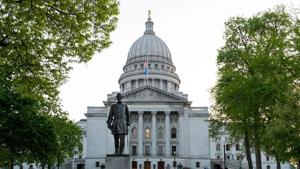
It’s the last year of Wisconsin Gov. Tony Evers’ final term, and activity at the Capitol since January reflects much of how the last eight years have gone with the Republican Legislature.
GOP lawmakers continue to send conservative bills to Evers’ desk for a likely veto. such as a proposal to allow people to seek legal action for injuries from gender transition procedures when they were a minor. Evers in January called for Assembly Speaker Robin Vos, R-Rochester, to allow a bipartisan bill that would extend postpartum Medicaid to new moms to “finally” reach the governor’s desk, while Vos last week told reporters it wouldn’t advance.
As the political world turns to who might be Wisconsin’s next governor, Evers and Republicans are attempting to negotiate a tax cut in the wake of a projected $2.4 billion state surplus reported in January. The last time there was an open governor’s seat the state faced a multibillion-dollar deficit. Surpluses have been a regular feature of the last eight years of split government.
“There have been plenty of times in the last eight years where we have had a disagreement and we had a public argument with Gov. Evers,” Vos said last week. “I think there’s a long list of things where I think he’s just wrong on the issue. But on this one, considering the fact that he came out and sincerely said he wants to do something on property taxes. We feel the same. I don’t know why we wouldn’t negotiate in good faith to try to find something that can actually get across the finish line.”
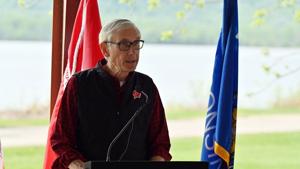
Evers, who is not seeking reelection in 2026, will give his final State of the State address before the Legislature at 7 p.m. on Tuesday. Part of Evers’ legacy during his two terms as governor is his navigation of split government and the oftentimes contentious relationship between his administration and the legislative branch.
Asked to reflect on his own legacy, Evers highlighted for Wisconsin Watch three specific achievements: a deal that kept the Brewers in Milwaukee through 2050, a shared revenue deal that boosted state support for local municipalities and the replacement of heavily gerrymandered GOP maps with “fair maps.” But he also criticized the often contentious relationship with the Legislature.
“There’s something wrong when lawmakers are spending more time thinking of new and creative ways to circumvent the governor and the executive branch than working to address pressing challenges facing our state. So, for the last seven years, we’ve been hard at work to restore the separation of powers and hold the Legislature accountable to the will of the people that elected us,” Evers said in a statement to Wisconsin Watch. “My promise to the people of Wisconsin was — and is — that I will always work to do the right thing and get things done. Now, today, thanks in part to the fair maps we enacted, we’re seeing more collaboration and more compromise than seven years ago, and I believe most Wisconsinites would say that is a good thing because that is how government is supposed to work. So, while we haven’t agreed on 100 percent of the issues 100 percent of the time, I’m proud of the good bipartisan work we’ve accomplished together over the last seven years.”
Evers’ defeat of Republican Gov. Scott Walker in 2018 marked a change in the Legislature’s relationship with the governor’s office. For eight years prior, a Republican governor and Legislature meant conservative ideas — slashing the power of public sector unions, strict voter ID, concealed carry, corporate tax cuts — became law with ease. Evers, a moderate Democrat, became a check on that power.
In the weeks before Evers officially took office, Walker and the Republican-led Senate and Assembly enacted laws in the lame duck session limiting the power of the incoming Democratic administration.
Since then, and despite Evers’ frequent calls for bipartisanship, the governor and legislative Republicans have been engaged in a yearslong tug-of-war over their powers. It’s a relationship that has been marked by court cases, record-breaking numbers of gubernatorial vetoes and the Legislature advancing numerous constitutional amendments that don’t need Evers’ signature. While Evers has served as a check on far right legislation, Republicans have shrugged at Evers’ calls for special sessions on Democratic issues such as abortion rights and gun safety.
“I think the most telling was the 2020 COVID experience,” said Barry Burden, director of the Elections Research Center and political science professor at the University of Wisconsin-Madison. “The state was facing a bunch of crises that year. … There were so many things the state needed to address and there was not a single bill passed in the Legislature and sent to his desk that year. Instead, the two branches were mostly pointing fingers at each other.”
Despite the partisan battles, every other year a compromise between the two sides has brought the biennial state budget across the finish line on schedule and with billions of dollars in unspent tax revenue that has shored up the state’s fiscal health.
“The governor is open to meeting with anybody to try and get things done,” said Rep. Christine Sinicki, D-Milwaukee, who was first elected to the Assembly in 1998.
His easygoing demeanor has helped that relationship with the Legislature, Sinicki said. Republicans seem to recognize that, too.
“When you talk to Gov. Evers, you realize he’s sincere,” Senate Majority Leader Devin LeMahieu, R-Oostburg, told the audience at a recent WisPolitics event. “I think he’s a sincere person, but (there’s) obviously a lot of things we don’t necessarily agree on.”
Several power disputes between Evers and the Legislature have ended up before the Wisconsin Supreme Court, which transitioned from a conservative to liberal majority during Evers’ two terms. They include:
Sen. Chris Kapenga, R-Delafield, is leading a constitutional amendment to prevent the governor from using veto powers to increase taxes or fees.
“The state Supreme Court has given the executive branch unprecedented power,” Kapenga said in a statement to Wisconsin Watch. “Nowhere is this more apparent than in the use of the partial veto pen.”
One of the other significant disagreements of the Evers era that reached the Supreme Court has been the oversight of administrative rules, or policy changes sought by executive agencies like the Department of Natural Resources.
Republicans have long criticized these policies as red tape for Wisconsin businesses. The 2018 lame duck legislation gave the Legislature the ability to delay the implementation of policies from state agencies, such as a ban on conversion therapy or updating surface water quality standards.
Evers sued the Legislature on the issue. In 2025, the Supreme Court’s liberal majority last summer ruled that a key legislative committee that oversees administrative rules could not block the Evers administration’s policies from going into effect. The Legislature is essentially in an advisory role now, said Rep. Adam Neylon, R-Pewaukee, one of the co-chairs of the Joint Committee on Review of Administrative Rules.
“I think that people are expecting more from an executive role or from the governor and it’s in some ways disrupted the balance of the co-equal branches of government,” Neylon said. “I think, especially a lot of the court decisions upholding the 400-year veto or Evers v. Marklein, which took away our oversight of the rulemaking process, I think we’re in an era now that the power has been slowly drifting into the executive and I think real people do feel that.”
The balance of power is a legitimate concern for the Legislature to have, but Republicans prior to the Supreme Court’s decision asserted control over the process in ways that often negatively affected public health issues, said Sen. Kelda Roys, D-Madison, one of the Democrats running for governor and a member of the administrative rules committee.
“The most important legacy is the court decision, Evers v. Marklein, that says, basically, the Legislature can’t be judge, jury and executioner,” Roys said.
Whether the partisan battles of split government continue depends on where Wisconsin voters take the state during the 2026 elections later this year. Evers’ departure leaves an open governor’s race. New legislative maps and Democratic gains in both chambers in 2024 set up real competition for control of the Legislature in 2026.
A unified government with one-party control of the executive and legislative branches could bring a burst of new laws starting in 2027, Burden said.
But more split government conflicts are also possible, and none of the candidates for governor appears as interested in bipartisan negotiations as Evers, Burden said. Republican U.S. Rep. Tom Tiffany cleared the GOP primary field in January. Seven major Democrats are running for governor, including Roys, former Lt. Gov. Mandela Barnes, former Department of Administration Secretary Joel Brennan, Milwaukee County Executive David Crowley, Madison state Rep. Francesca Hong, former Wisconsin Economic Development Corp. CEO Missy Hughes and Lt. Gov. Sara Rodriguez.
“He has a more conciliatory tone, I think, than Democrats would like to see,” Burden said. “So if we get divided government again next year in some form, whether it’s a Tiffany governorship or a Democratic governorship and the Legislature at least partly divided, I think the kind of stalemate that we’ve seen will continue and the option to go to the courts or to use constitutional amendments to get around the governor will still be a popular method.”

Wisconsin Watch is a nonprofit, nonpartisan newsroom. Subscribe to our newsletters for original stories and our Friday news roundup.
As Tony Evers delivers his final State of the State, he remains crosswise with the GOP Legislature is a post from Wisconsin Watch, a non-profit investigative news site covering Wisconsin since 2009. Please consider making a contribution to support our journalism.
Those recovering from addiction have a difficult time finding stable employment and keeping it. Apricity Contract Packaging offers "a safe environment" — one where every person is pursuing sobriety.
The post Work, recovery and second chances on a Wisconsin manufacturing floor appeared first on WPR.
The program serves children under court protection in Marathon County and aims to improve outcomes by reducing time in foster care, strengthening stability and helping young victims feel safer throughout legal proceedings.
The post New court advocacy model for child victims emerges in central Wisconsin appeared first on WPR.
Matt Thums of Weston will head to Cortina, Italy, to skip for Team USA’s 2026 Paralympic wheelchair curling.
The post A Wausau area local will lead Team USA’s wheelchair curling in the 2026 Paralympics appeared first on WPR.
Marquette was one of 41 colleges named in a recent report that alleges the schools encourage low-income families to take out Parent PLUS loans while they at the same time offer financial aid to upper-income students.
The post Marquette University accused of pushing lower-income families toward risky loans appeared first on WPR.
Michael Clayville and Erin Lesser of Appleton attended the ceremony in LA, where their group Alarm Will Sound won for their recording of Donnacha Dennehy’s “Land of Winter.”
The post Wisconsin musicians celebrate Grammy win for chamber orchestra performance appeared first on WPR.
A Wisconsin bar is giving new meaning to serving drinks on ice.
The post ‘Only in Wisconsin’: Lake Winnebago’s first legal bar opens for sturgeon spearing season appeared first on WPR.
A Muskego man has been found not guilty of disorderly conduct after he wrote "Remember Jan. 6" on the sidewalk outside of his local post office last year.
The post Judge finds Muskego man who wrote ‘Jan. 6’ on sidewalk not guilty of disorderly conduct appeared first on WPR.
Kenosha County Xavier Solis admitted he used artificial intelligence for "research" before he was reprimanded by a judge earlier this month over his AI use, newly released court transcripts reveal.
The post Transcripts: Kenosha DA said he used AI for research before judge sanctioned him appeared first on WPR.
A traveler from out of state stopped in Madison on Friday, Feb. 6 and later tested positive for measles, according to officials at Public Health Madison & Dane County.
The post New measles case identified in out-of-state traveler who visited Madison appeared first on WPR.

A picture sits at a memorial to Alex Pretti on Jan. 25, 2026 in Minneapolis, Minnesota. (Photo by Scott Olson/Getty Images)
The FBI formally notified Minnesota officials on Friday that it would not grant them access to evidence from the investigation into the killing of Alex Pretti by federal immigration agents in Minneapolis, the state Bureau of Criminal Apprehension said on Monday.
The BCA has historically investigated shootings by law enforcement officials but has been blocked from participating in the investigations of federal immigration agents killing two Americans and shooting a Venezuelan national in three separate incidents in Minneapolis in January during “Operation Metro Surge.”
“While this lack of cooperation is concerning and unprecedented, the BCA is committed to thorough, independent and transparent investigations of these incidents, even if hampered by a lack of access to key information and evidence,” BCA Superintendent Drew Evans said in a statement.
When U.S. Immigration and Customs Enforcement agent Jonathan Ross shot and killed Renee Good in her car on Jan. 7, BCA agents were on the scene collecting evidence as part of a joint investigation with the FBI. Then the U.S. Attorney’s Office “reversed course” and decided the investigation would be led solely by the FBI, Evans said at the time.
A week later, an ICE agent shot Julio Sosa-Celis, a Venezuelan national, in the leg after a car chase with a different individual, whom agents had confused for someone else. The BCA were again on the scene then in north Minneapolis and collected evidence but the FBI told the BCA it would not share any results of its initial investigation.
A little over a week after that, a U.S. Border Patrol agent and a Customs and Border Protection officer shot and killed Alex Pretti on Jan. 24 as he was observing federal immigration agents in south Minneapolis. BCA agents responded at the request of the city of Minneapolis but were blocked from accessing the scene by personnel with the U.S. Department of Homeland Security despite having a judicial warrant.
In all three incidents, Department of Homeland Security officials made extraordinary statements about the victims. Homeland Security Secretary Kristi Noem described Good and Pretti as domestic terrorists within hours of their killings.
Homeland Security, in an official release, initially said Sosa-Celis and another man, Alfredo Aljorna, violently assaulted an officer leading the agent to fire a defensive shot. The Department of Justice has since dropped felony assault charges against the two men and is instead investigating two ICE officers for lying about the incident.
Public outrage over the Pretti killing appeared to pressure the Trump administration to consider allowing state officials to cooperate on the investigation. The Star Tribune reported that the BCA and FBI were close to announcing a deal on a joint investigation. Then the Trump administration pulled back, apparently because of a leak about the deal, Gov. Tim Walz said on Thursday.
Democratic leaders say the lack of local participation on independent investigations into the shootings compromises public trust.
In the Pretti killing, the Department of Homeland Security initially said it would take the lead on the investigation — essentially investigating itself — before the FBI took over. The U.S. Department of Justice has opened a civil rights investigation into the killing.
The lack of cooperation with the state also hinders local prosecutors in weighing whether criminal charges against the agents are warranted, leading Hennepin County Attorney Mary Moriarty and Minnesota Attorney General Keith Ellison to begin collecting evidence themselves with the BCA.
The BCA is requesting anyone with information about the shootings of Pretti, Good or Sosa-Celis to contact them at 651-793-7000 or by email at bca.tips@state.mn.us.
This story was originally produced by Minnesota Reformer, which is part of States Newsroom, a nonprofit news network which includes Wisconsin Examiner, and is supported by grants and a coalition of donors as a 501c(3) public charity.

Tristan Wright, founder and president of Lost Boy Cider, stands near his production line on Feb. 6, 2026, in Alexandria, Virginia. (Photo by Ashley Murray/States Newsroom)
WASHINGTON — Aluminum cans rolling off Virginia cider maker Tristan Wright’s production line cost more because of increased tariffs on aluminum.
Minnesota baby product inventor and seller Beth Benike ran out of inventory and lost income for months last year when President Donald Trump sparked a trade war with China.
Maryland dog apparel producer Barton O’Brien pulled the plug on a new line of Irish-style fisherman sweaters. Importing from his manufacturers in India became unfeasible.
Pennsylvania glass and ceramic decorator Walt Rowen worries about his tariff bill each time he replenishes stock.
“If there’s one thing that’s universal in business, no matter what you’re doing, it’s that stability and calmness create a positive market,” said Rowen, a third-generation owner of Susquehanna Glass Company in eastern Pennsylvania.
But many small business owners feel anything but calm since Trump began his whiplash trade policy shortly upon starting his second term. And now they are waiting on the U.S. Supreme Court, which has been mulling since November what was supposed to be an expedited opinion on whether large shares of the president’s unilateral emergency tariffs are legal.
The Supreme Court is not scheduled to release opinions again until Feb. 20.
In a tariff impact survey to roughly 3,000 small business members from June to November 2025, the advocacy group Main Street Alliance found that 81.5% indicated they may raise prices to offset tariff costs, 41.7% reported they would delay business expansion and 31.5% said employee layoffs were likely if tariff rates remained unchanged.
The U.S. Chamber of Commerce estimated as of August that Trump’s tariff policies will cost America’s roughly 236,000 small businesses about $200 billion annually.
Tariffs are taxes paid by U.S. importers to U.S. Customs and Border Protection on goods purchased from abroad.
Trump began using the novel approach of imposing tariffs under the International Emergency Economic Powers Act, or IEEPA, just over a year ago.
As the first president to use the 1970s emergency statute to trigger import taxes, Trump slapped duties in February 2025 on products from Canada, Mexico and China, pointing to a crisis of illicit fentanyl smuggling.
He next targeted global imports in April with a universal 10% import tax, adding varying “reciprocal” tariffs on goods from numerous trading partners — all due to his declared emergency on trade deficits.
A handful of small business owners, led by a New York-based wine and spirits importer, sued and won in two lower courts.
Trump appealed to the Supreme Court and was granted an expedited case.
The justices grilled the government and lawyers for the small businesses in early November on whether the president legally used the statute — which does not include the word tariffs — and if his presidential power extends to unilaterally upending trade policy.
The arguments attracted rare appearances in the courtroom from Treasury Secretary Scott Bessent and other Cabinet members.
The case outcome will only apply to the import taxes the president imposed under his declared emergencies. Sectoral tariffs on imports on metals, critical minerals and pharmaceuticals, put in place by Trump because of national security concerns or unfair trade practices, will remain.
“We’ve been waiting on it. Nobody’s sure what really is going to happen — are they going to decide one way or another, and then what will happen?” Rowen said.
Rowen’s company, among other things, sandblasts and laser engraves glassware, mugs and tumblers found in winery tasting rooms, on restaurant tables and in university gift shops.
“If they decide that the president’s policies are legal, then we’re stuck where we’re at. Potentially, he might become emboldened to do even more. If they decide that (he) can’t then what happens? What happens to all the money that’s already been set aside?” Rowen asked.
The Trump administration hails the tariffs as a windfall for the country. He’s promised the customs duties collected from U.S. businesses and other importers will, in part, help the country crawl out of its nearly $39 trillion debt.
Trump has also said tariffs will bring factories back to U.S. soil, provide for $2,000 dividend checks to taxpayers and even offset the cost of child care.
The import taxes pulled in $195 billion in 2025, up from $77 billion in 2024.
So far for fiscal year 2026, which began Oct. 1, the government has earned about $118 billion in tariffs, according to the U.S. Treasury monthly statement through Jan 31, though the report does not delineate between emergency and sectoral tariffs.
The nonpartisan Congressional Budget Office estimates roughly 41% of tariffs collected last year were due to those imposed under IEEPA. The office projects if tariffs are left in place, revenue will jump to $418 billion in 2026 — exceeding corporate income tax receipts for the first time since the 1930s, a high-water mark for levies on imports.
Wright, founder and president of Lost Boy Cider in Alexandria, Virginia, said the administration is “literally banking the future of the country on the tariffs.”
“They don’t have another way of getting us out of this debt situation (and) you can point all the fingers you want over the last couple of decades,” he said.
While Wright has not had to directly pay tariffs, he’s shelled out more and more money for the aluminum cans that hold his specialty cider. China is, by far, the world’s largest aluminum producer.
“We work with a lot of people that purchase internationally because they can’t get the products here. And I understand it. You know, some point in five, 10,15 years from now, maybe we have 16 aluminum plants in the country. But you don’t just snap your fingers and, like, create an aluminum plant,” Wright told States Newsroom during an interview at his cidery.
Economists argue that while tariffs have raised revenue, they hurt the economy by shrinking business growth and reducing consumers’ purchasing power.
“You can’t do partial accounting. How much additional income growth and business income growth did you not get because of the tariffs?” Wayne Weingarden, an economist with the pro-growth Pacific Research Institute, told States Newsroom.
“If you wanted to raise taxes, there are ways of doing it that would be less obstructive to the economy than imposing tariffs,” he said.
The Tax Foundation estimates the president’s tariffs will cost households roughly $1,300 in 2026.
“If you have $100 to spend on groceries every week and the price of coffee goes up by like $5, your grocery budget doesn’t magically increase to $105 to pay for the higher coffee price. Instead, you’re forced to make trade-offs. If I want to buy the coffee, then that means I have $5 less to spend,” said Erica York, vice president of federal tax policy for the think tank, which advocates for business growth.
O’Brien, owner of the Annapolis, Maryland-based Baydog company, said he boosted his inventory of woven collars manufactured in India and dog harnesses from China to get ahead of the tariff costs.
“I have been forced, as a business owner, to borrow money and tie up all that cash in product,” he said.
“If I look at other dog harness manufacturers, the prices have gone up everywhere. We have chosen not to raise prices, but to take that money out of our own pocket. So instead of everybody paying five bucks more for a dog harness, basically everyone at Baydog makes less money, myself included,” he said in an interview with States Newsroom.
Benike, who owns 15 patents for specialty baby products including silicone dining trays with attachments for toys and sippy cups, said she had to lay off her brother and forfeit her own paycheck last year.
The owner of Busy Baby told States Newsroom in an early February interview that she delayed a shipping container of her product from China’s Guangdong province, in case the Supreme Court ruled Trump’s emergency tariffs were illegal.
“I was holding off on shipping it until that decision was made, because the difference would have been $40,000 for me,” she said.
She had to pull the trigger in mid-January as the Supreme Court continued deliberating and she began running out of product.
“I have a container that should be sitting at the port. It should be clearing customs, hopefully, like as we speak, so I’ll have a tariff bill to pay,” Benike said.
The following day she emailed to say she didn’t realize Trump had lowered the fentanyl emergency tariff on China last year during negotiations.
“So my final tariff ended up being 10% less than I expected. YAY!” she wrote.
Shawn Phetteplace, national campaigns director for Main Street Alliance, said the advocacy organization is preparing to help its network of small business members if the Supreme Court strikes down the emergency tariffs.
“My understanding is that the things that can be done to get people’s money back is either some type of class action lawsuit, so that it forces customs and government to essentially refund the dollars,” Phetteplace said in an interview with States Newsroom. “But that process will take quite a bit of time. The other option is for individual businesses to sue the government and to recoup those costs.”
O’Brien said of the delay, “The Supreme Court has proven they can issue decisions very quickly when they want to. Every day that goes by, they’re making the mess bigger.”
In a response to States Newsroom, White House spokesperson Taylor Rogers said in an emailed statement, “President Trump promised to bring prosperity back to Main Street with an America First agenda that benefits every small business, just as he did in his first term.”
“In addition to slashing regulations and lowering energy costs, the Trump administration signed the largest Working Families Tax Cut in history to unleash unprecedented growth for small businesses with a permanent 20% tax deduction and full expensing of equipment investments,” according to Rogers’ statement.

Oak Bluff Natural Area in Door County, which was protected by the Door County Land Trust using Knowles-Nelson Stewardship funds in 2023. (Photo by Kay McKinley)
The Wisconsin Legislature’s Joint Finance Committee voted to advance a Republican bill that would reauthorize the Warren Knowles-Gaylord Nelson Stewardship program with additional amendments Monday.
The bill, SB 685, passed the committee with 11 Republican votes. Rep. Tip McGuire (D-Kenosha), Rep. Deb Andraca (D-Whitefish Bay) and Sen. LaTonya Johnson (D-Milwaukee) voted against advancing the bill. In conjunction with SB 316, the bill would continue the program for an additional two years, but in a limited form.
“When we start to dismantle programs that have been in place for 30 years that were built on bipartisanship, I start to seriously have my doubts,” Andraca said. She added that Republican lawmakers were willing to kill a popular program because of a state Supreme Court decision that removed their ability to anonymously veto particular projects.
For many years, Wisconsin lawmakers exercised control over the Knowles-Nelson program through the Joint Finance Committee as members could anonymously object to any project and have it held up for an indeterminate time. That ended last year after the state Supreme Court ruled 6-1 that anonymous objections were unconstitutional. Conservative Justice Rebecca Bradley wrote for the majority that the statutes “encroach upon the governor’s constitutional mandate to execute the law.”
“This is not the best that you could do. This is the best that you chose to do,” Andraca said. “Killing a popular bipartisan program out of spite does not make a great bumper sticker, but it does make it a whole lot easier for your constituents to know where you stand on conservation.”
The program is currently authorized at $33 million annually. The GOP bill will continue the program at a funding level of $28.25 million and limit land acquisitions for the two-year reauthorization period.
The Assembly passed its versions of the bills on a 53-44 party-line vote in January.
The Senate Financial Institutions and Sporting Heritage Committee approved changes to the bills on Friday. The recent amendments in the Senate mean the bills will need to pass a vote in both houses of the Legislature. The Senate plans to meet for a floor session on Wednesday.
One recent change to the bill eliminates a requirement that land-acquisition grants to nonprofit conservation organizations only be used for land south of U.S. Highway 8. Another change specifies that provisions related to minor land acquisitions will only be effective in 2026-27 and 2027-28. Under the bill, the department will only be able to make “minor land acquisitions,” defined as parcels of land that are five acres or less in size and would improve access to hunting, fishing or trapping opportunities, or are contiguous to land already owned by the state.
During the two-year period, the DNR would need to conduct a survey of all of the land that has been acquired under the stewardship program including an inventory of all land acquired with money. It would also have to report proposed project boundaries and land acquisition priorities for the next two to five years and proposed changes.
Another change in the amendments prohibits the DNR from acquiring land in 2026-27 and 2027-28 if it would result in more than 35% of the total acreage in a municipality being owned by the state, city, village, town or federal government, unless the municipality adopted a resolution approving the acquisition. That provision does not consider county-owned land in a given municipality.
Democrats wanted a more robust investment in the program. Sen. Jodi Habush Sinykin (D-Whitefish Bay) proposed a bill that would dedicate $72 million to the stewardship program and Gov. Tony Evers called for over $100 million for it in his budget.
The program, initially created in 1989, has allowed for state borrowing and spending for state land acquisition and for grants to local governments and nonprofit conservation organizations with the goal of preserving wildlife habitat and expanding outdoor recreation opportunities throughout Wisconsin. It has traditionally had bipartisan support and has been reauthorized several times throughout its history, including last in 2021.
The program’s funds will run out on June 30, 2026 if a reauthorization bill is not signed into law.
Bill coauthors Rep. Tony Kurtz (R-Wonewoc) and Sen. Patrick Testin (R-Stevens Point), who are both members of the budget committee, were critical of Democrats.
Kurtz said he supports conservation and said the bill had been “hijacked” by politics, including blaming the state Supreme Court decision for the current situation. He also preemptively blamed Democratic lawmakers for the potential end to the program.
Kurtz said he “wasn’t crazy” about the process, but asked the Legislative Fiscal Bureau what percentage of projects were approved under the program even with the anonymous objector process in place. An LFB staffer said 93% submitted to JFC were approved.
“93% that was submitted to the Joint Finance were approved — 93% — so basically, we’re bickering over 7% that you didn’t like,” Kurtz said.
Kurtz said there could also be other opportunities to acquire land by passing other bills.
“If there’s a piece of land that comes up next to Devil’s Lake, and the DNR wants to buy it, and they come to me and say, ‘Hey, Rep. Kurtz, we didn’t get the money in this authorization, but this is an opportunity that we can expand Devil’s Lake’ — I will be the first one to jump on that bill, because I know how important it is,” Kurtz said. “So when people say that it’s only $28.25 [million] they need to start thinking outside the box… If this fails, this is on the doorsteps of the Democrats in the state of Wisconsin, period, and I will sing that every day, 24/7, 365,” Kurtz said.
Johnson pushed back on Kurtz’s comment, noting that Republican lawmakers currently hold the majority in the state Senate and Assembly.
“[That] ultimately means that you can do whatever you want,” Johnson said, adding that she was confused by the Republican lawmakers trying to pass blame to Democrats.
Rep. Mark Born (R-Beaver Dam) commented that Evers will need to sign the bills for them to become law.
“This notion that this is somehow going to kill the program. That’s not accurate. We’re trying to save it because there are those of us up here who value conservation,” Testin said.
GET THE MORNING HEADLINES.

Friends and family members hold posters of missing and murdered Indigenous Women and Girls at the 1th annual event commemorating MMIW/R in Duluth, Minnesota on Feb. 14, 2026. | Photo by Frank Zufall/Wisconsin Examiner

Local officials from Duluth, Minnesota and Superior, Wisconsin spoke to the crowd gathered for the 11th annual Memorial March for Missing and Murdered Indigenous Women and Relatives (MMIWR) on Valentine’s Day in Duluth.
The movement to address the scourge of missing and murdered Indigenous women and girls started in Canada 35 years ago on Valentine’s Day. Later, missing and murdered men and relatives were added.
Held at the American Indian Community Housing Organization (AICHO), the event featured proclamations from both the cities.
Duluth’s proclamation noted that Native American women face murder rates 10 times the national average and that the “Minnesota MMIWR Task force reports that indigenous women, girls and two-spirit people are more likely to experience violence, be murdered or go missing compared to other demographic groups in Minnesota.”

Superior Mayor Jim Paine said because his wife and daughters are Alaskan natives, he is personally invested in addressing the issue of missing and murdered Indigenous women.
He described attending the State of The Tribes address by Nicole Boyd, chair of the Red Cliff Band of Lake Superior Chippewa at the Wisconsin State Capitol on Feb. 10.
“The only time she broke down in that speech, the only time she wavered at all, was talking about Native women and girls and the fact that too many of them are missing, too many of them have been murdered, and the mission to save them, to protect them, to remember them,” he said.
Paine added, “We’re doing a lot more this year than last, but that work continues today, and every single day of the year, obviously, like you, the Native women in my life are the most important part of my life, I am deeply grateful for everything that they do for me, and I would do anything to protect them, like all of you, and that means on days like today, we have to speak as loudly and as clearly that the Native women that are in our lives, that are here. We love you. We will protect you. We will do anything for you. To the Native women that are missing, we will never stop looking for you, and to those that have truly been lost or have walked on, we will remember and protect and treat your legacy and memory with the safety that you didn’t have in life.”
Jada Williams, a member of the Leech Lake Band of Lake Superior Chippewa in Minnesota, talked about the alleged failure of the Minneapolis Police Department (MPD) to investigate the death of her niece, Allison Lussier, a member of the Red Lake Band of Lake Superior Chippewa in Minnesota, whose body was discovered in February 2024 in her apartment. No death investigation was conducted, Williams said, even though Lussier had contacted the police to report abuse by her boyfriend.

“If you know Allison’s story, you know this, MPD saw an indigenous woman,” said Williams. “They saw drug paraphernalia in her apartment and around her body, a staged scene. And instead of following their own protocol, a supervisor intentionally called off the crime scene. … That one decision destroyed every piece of evidence that could have brought justice to her name.” According to Williams, community members reported that her niece’s killer bragged about her murder. Because of Williams’ activism, the Minneapolis City Council has requested an independent investigation of the case.
“Who is going to fight for you if we do not stand together?” Williams asked the crowd. “We are less than 2% of the population. We cannot afford to be divided. We must stand as one.”
Rene Goodrich. organizer of the event, noted the official Minnesota Missing and Murdered Indigenous Relatives (MMIR) office in Minnesota, founded in 2019, the only state office in America officially focused on the issue, served 25 families in 2025 and was involved in eight new cases, including four that were resolved in the Duluth area with three being safely found.
Goodrich also noted the state’s MMIR office has a reward fund, up to $10,000 per person, that was inspired by a city of Duluth reward fund, the first in the nation, called Gaagige Mikwendaagoziwag or “They will be remembered forever.”
Late in the meeting, relatives and friends held posters and said the names of missing or murdered people, including Sheila St. Clair, missing since 2015, Nevah Kingbird, missing since 2021 and Peter Martin, missing since 2024. Others held symbolic red dresses.

After a drum dance, about 100 people gathered on the street with posters, banners and dresses and marched to the Building for Women where the marchers released tobacco they were carrying into a sacred fire, a tradition for seeking a blessing.
GET THE MORNING HEADLINES.

Taycheedah Correctional Institution , a women's prison in Wisconsin.| Photo courtesy Wisconsin Department of Corrections
In the Wisconsin prison system, incarcerated mothers still lack a program that would allow physical custody of their children, a year after a court ruling affirmed that a state law requires the Department of Corrections to take steps to bring together incarcerated moms and babies. The ACLU is suing to try to force the issue.

Wisconsin statute 301.049 calls for a “mother-young child care program” allowing women to retain the physical custody of their children during participation in the program. It says a woman entering the program must either be pregnant or have a child less than a year old.
Alyssa Puphal and Natasha Curtin-Weber are plaintiffs in the case against the Wisconsin Department of Corrections (DOC), and are represented by the American Civil Liberties Union of Wisconsin and Quarles & Brady LLP.
While a judge sided with the plaintiffs last year, they are attempting to re-open the case, saying the DOC has not implemented the program required by law.
“At this moment, each and every woman in DOC’s physical custody with a baby under one year old sleeps apart from her child every single night,” the Feb. 4 filing stated.
Nine states have prison nursery programs, and a few others are considering or developing a program, Stateline reported in January.
According to Wisconsin Public Radio, DOC communications director Beth Hardtke wrote in an email that because the Legislature turned down a budget request from Gov. Tony Evers to expand earned release to allow mothers to spend more time with their children outside of prison, the department is now being required to expand the mother-child program to include incarcerated mothers despite a lack of additional funding and of statutory changes that would allow more incarcerated women to take part.
DOC had previously argued that it was meeting the requirements of the 1991 statute by facilitating contact between babies and mothers on probation, extended supervision and parole. But a year ago, in February 2025, Dane County Circuit Court Judge Stephen Elkhe disagreed, ordering DOC to provide a mother-child program inside Wisconsin prisons.
“Reforming the criminal justice system to make our communities safer is a key priority of (Gov. Tony Evers’) administration and that includes corrections reforms such as a mother-young child program for incarcerated women,” Hardtke wrote, according to WPR.
The ACLU motion called for remedial sanctions to get the agency to comply with the court order, including a daily fine for each day the contempt of court continues. The organization asked that the money from the fines be set aside to support the mother-child program, and claimed that a growing fine would ensure resources for the program.
“With each month that passes, Defendants’ failure to act violates state law and violates the Writ,” the motion stated.
When the lawsuit was filed in June 2024, Puphal had already given birth while incarcerated, while Curtin-Weber was pregnant. As of the filing of the lawsuit, their requests to participate in the mother-young program were refused or had not been responded to, according to a complaint published online by the ACLU.
Puphal and Curtin-Weber were released on extended supervision last year, according to online DOC records.
The state law enacted in 1991 states that the department shall provide the program for females who are prisoners or on probation, extended supervision or parole and who would participate as an alternative to revocation.
When a person is released from prison to supervision, they must follow certain rules. If their supervision is revoked, the person will either be returned to court for sentencing or transported to a correctional institution.
The department contended that it was in line with the law and that the word “or” in the statute indicated the agency could either provide the program for incarcerated mothers or for mothers on supervision.
DOC argued that it had a mother-child program for women on probation, extended supervision or parole who are pregnant or have a child under the age of one, and that it didn’t have to offer the program to incarcerated mothers. Wisconsin’s state budget includes $198,000 for a mother-young child program.
Ehlke sided with the plaintiffs. He said they had established a clear right to be included in the class of people the department must consider for the mother-child program.
The ACLU motion on Feb. 4 stated that the court had ordered the department to establish the program “forthwith,” or without delay, and moved to reopen the case, arguing there has been “no meaningful progress” since that order despite three meetings between department representatives and counsel for the plaintiffs.
“To avoid another year of excuses — or worse, another 35 years — Plaintiffs ask the Court to reopen this case for the purposes of enforcing the Court’s Writ,” the motion stated.
The plaintiffs’ filing includes a letter and a list of questions sent to the Department of Corrections in December. It states that the Ostara Initiative offered to create a mother-young child care program for DOC at no cost to the agency in April 2024 and has continued to approach the agency. It described the Ostara Initiative as “a credible non-profit that DOC has already partnered with for other services.”
The Examiner reached out to the Department of Corrections for a response to the plaintiffs’ filing, and also asked if the claims about Ostara were correct and if the department is planning to partner with Ostara on the program. Hardtke wrote that it is the department’s practice not to comment on ongoing litigation.
A telephone scheduling conference in the case is scheduled for March 2.
GET THE MORNING HEADLINES.

A child rests among signs at Milwaukee climate march. (Photo by Isiah Holmes)
The federal administration’s decision to rescind the Environmental Protection Agency’s Endangerment Finding may sound technical. In reality, it targets the legal foundation that has allowed the United States to regulate climate pollution for more than a decade. For Wisconsin, the move introduces new uncertainty just as communities, farmers and businesses invest in cleaner energy, efficiency and more resilient infrastructure.
The 2009 Endangerment Finding concluded that greenhouse gases threaten public health and welfare. Courts have upheld that determination repeatedly. Eliminating or weakening it does not change the science behind climate change, but it could reshape how power plants, vehicles and industrial facilities are regulated. That shift carries consequences for states already dealing with smoky summers, heavier rainfall and rising infrastructure costs.
Wisconsin’s clean energy economy has expanded steadily, often without much attention. Renewable projects now generate enough electricity to power about 560,000 homes. Roughly 75,000 residents work in clean energy fields, and more than 350 Wisconsin companies supply technologies or services that reduce energy use or emissions. Together, these efforts reflect a broader reality: climate progress here tends to be practical and locally driven because it lowers costs and strengthens communities.
Examples are visible across the state. School districts and municipal buildings are cutting operating expenses through efficiency upgrades supported by Focus on Energy programs. Tribal and low-income households are receiving targeted weatherization investments that improve comfort and reduce utility bills. Builders and manufacturers are adopting higher performance standards to reduce long-term risk.
Federal rollbacks do not automatically halt these efforts, but they complicate financing and planning. Investors and local governments rely on predictable rules. When national standards shift, projects that once appeared viable can stall.
Some of the clearest examples are unfolding in rural Wisconsin. The SolarShare Wisconsin Cooperative is expanding community-owned solar projects that keep energy dollars circulating locally while pairing installations with pollinator habitat or sheep grazing. Hidden Springs Creamery installed a 50-kilowatt solar system to power its creamery and farm operations while continuing to produce artisanal cheeses. These projects reflect a simple idea gaining traction across the state: build it here, power it here, prosper here.
Wisconsin’s dairy sector has also become a testing ground for methane reduction strategies. Anaerobic digesters, renewable natural gas systems and advanced manure management technologies are already operating throughout the state. They reduce emissions while improving water quality and creating new revenue streams for farmers. If federal climate incentives weaken, fewer of these projects may move forward, leaving producers to absorb more risk and potentially slowing innovation that began here.
At the same time, new pressures are emerging from the rapid growth of artificial intelligence and large-scale data centers. Utilities are proposing infrastructure expansions to meet rising electricity demand, raising questions about cost allocation, water use and oversight. Small businesses, tribes, farmers and rural communities are organizing around siting decisions that affect farmland and ratepayers.
This week, the Power Wisconsin Forward campaign, supported by the Clean Economy Coalition of Wisconsin and more than 50 partner organizations, urged the Public Service Commission to ensure that data center costs do not shift onto ordinary customers. The debate highlights a broader reality. Wisconsin’s energy landscape is changing quickly even as federal climate policy moves in the opposite direction.
It would be misleading to suggest Wisconsin’s political environment has become less polarized. Recent legislative sessions show deep divisions and limited consensus on climate priorities. That context makes federal rollbacks more consequential. Without consistent national guardrails, states rely more heavily on local initiatives and market forces, which can advance progress but unevenly.
Legal challenges to the EPA decision are likely, but outcomes remain uncertain. In the meantime, utilities, farmers and local governments must make decisions without clear signals from Washington.
The practical question facing Wisconsin is not whether federal politics will shift. It is whether the state continues investing in projects that already deliver measurable results. Efficiency upgrades lower utility bills. Community solar keeps energy spending local. Methane reduction technologies help farms manage waste while improving soil and water conditions.
In a politically diverse state, climate progress rarely looks dramatic. It often appears as quieter momentum built through local partnerships and incremental gains. The federal rollback raises real risks, but it does not erase the infrastructure or collaboration already underway.
What happens next will be shaped less by national rhetoric and more by decisions made at the Public Service Commission, in county zoning meetings and on working farms across Wisconsin.
GET THE MORNING HEADLINES.
Time is running out for efforts to keep WisconsinEye — Wisconsin's version of C-SPAN — on the air.
The post Lawmakers at odds about funding WisconsinEye, putting its future in question appeared first on WPR.