❌

Reading view

There are new articles available, click to refresh the page.

Russia’s EV Market Share Is Now Higher Than The U.S. Thanks To Fuel Shortages
  • Demand for EVs in Russia has driven up prices and depleted inventory.
  • It comes as fuel stocks run low in the country after Ukrainian attacks, and lower-grade fuel has caused issues.
  • Russia’s EV demand has come suddenly, and charging infrastructure is still lacking.

Russian car buyers are driving up demand for EVs as Ukrainian attacks on fuel facilities increase. It’s a jarring adoption process for many, as cheap fuel has helped stave off the development of electric vehicle charging infrastructure, leading to a bizarre cyclical effect for some drivers who have switched a fuel queue for a charger queue.

The number of new EVs on Russian roads has jumped this year. In 2025, between January and August, the number of electric and hybrid cars sold amounted to 43,000. Figures from the Russian Ministry of Industry and Trade indicate that for the same period this year, that number has nearly doubled, with 83,000 electric and hybrid cars sold. EVs have jumped in popularity so much that the adoption rate is almost as high as in the U.S.

Read: Russia Is Selling Bootleg BMWs Built With Leftover Parts From $153,000

The shift towards EVs in Russia has been heavily influenced by Ukraine’s attacks on oil refineries, making both petrol and diesel scarce. Last Friday, The New York Times reported that only 46% of gas stations had stocks to sell, with just half of the stations in the capital city able to dispense petrol. In other major cities, that figure is reported as low as just 27%.

The Russian government has reacted to the mounting queues for gas by allowing lower-quality gasoline and diesel to be sold in the market. However, the side effect of this is that some cars have reacted badly to the fuel and are breaking down. More modern machines can’t handle the lower grade of gas.

A Chicken And Egg Situation
 Russia’s EV Market Share Is Now Higher Than The U.S. Thanks To Fuel Shortages
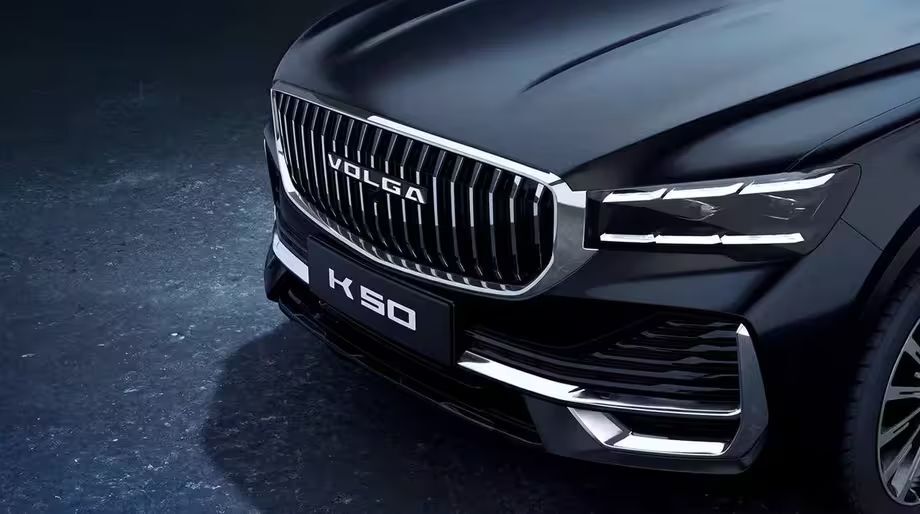
Volga K50

When most of the world’s legacy automakers exited the Russian market due to pressure from the West over Russia’s invasion of Ukraine, thousands of dealerships and local assembly plants were left bare. Capitalizing on this drastic reduction in competition and sudden upturn in manufacturing capacity, Chinese manufacturers have since swooped in to fill the void.

Sergei Tselikov, a Russian auto industry expert, told The New York Times that he quickly bought a GWM Ora 03 GT after he saw drivers having to queue for hours to get fuel. But even though he acted quickly, the sudden demand for EVs meant that the price had already increased by $2,000.

Now, many EV dealerships have been cleared out of their inventory, while second-hand EV listings are few and far between. The other resultant effect that the EV boom has had has, perhaps ironically, been an increase in wait times at public EV chargers. The very buyers who wanted to avoid waiting in long lines for fuel may now be caught in similar (albeit shorter) queues waiting to recharge.

In addition to fuel, which has been relatively plentiful and cheap up until now, another reason why Russia’s EV network is lacking is down to the geography of the country. Large cities lie many miles from each other, and the demand just wasn’t there to set up a proper charging network. The story is slightly different in the Capital, which has seen the number of EV chargers rise from 1,5000 in 2022 to 8,000 today, thanks to government incentives.

But the demand for Russian EVs will likely continue and follow similar trends around the world thanks to a different conflict: the Iran war. Sales of electric cars in more than 90 countries have risen this year and, globally, EVs are on track to account for a record 29 percent of all new car purchases in 2026.
 Russia’s EV Market Share Is Now Higher Than The U.S. Thanks To Fuel Shortages
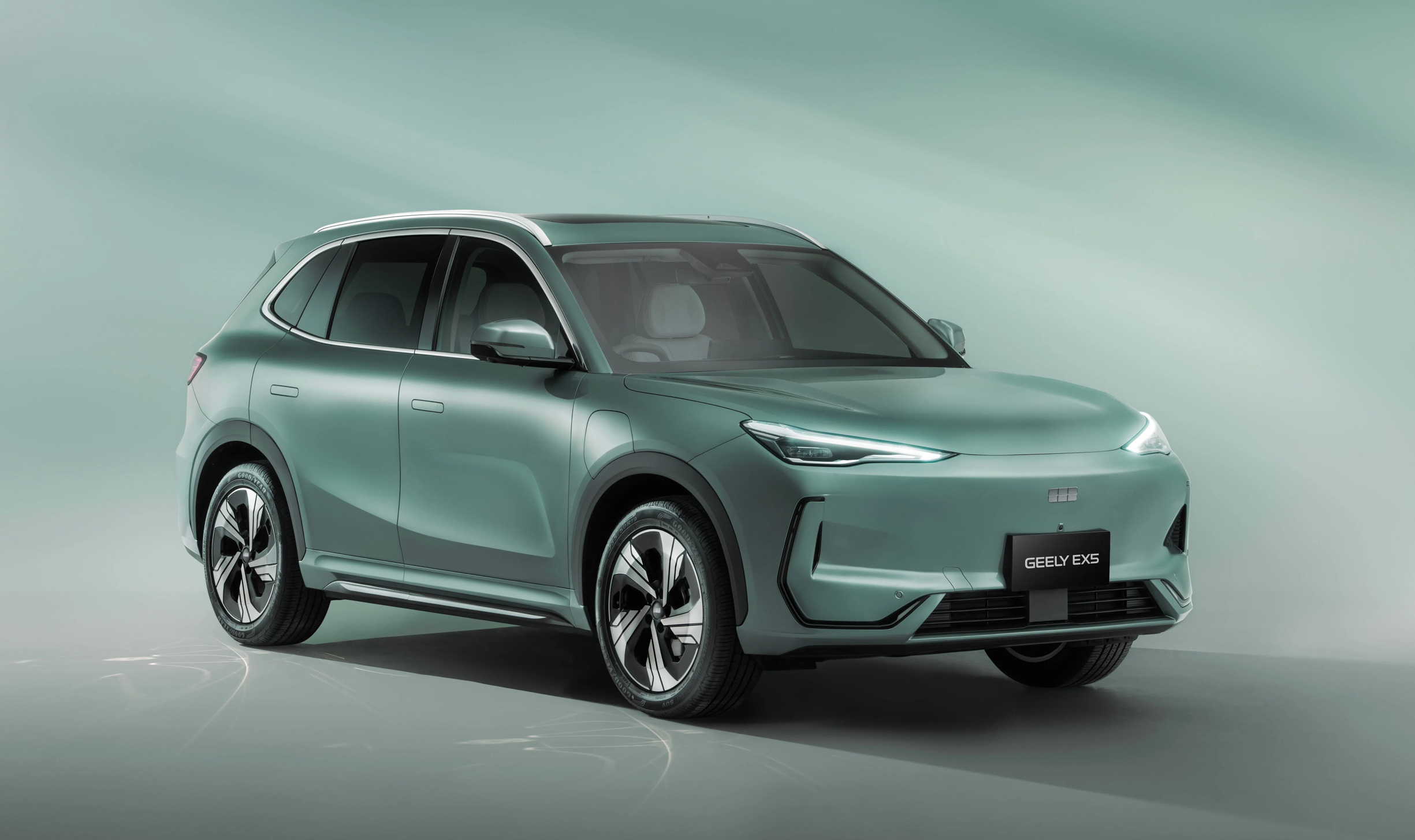
Geely EX5

Chinese Cars Have Taken Over The UK, But They Could Be Hit With Tariffs

  • The UK could tariff cars from China to avoid EU retaliation.
  • Chinese car sales have surged in the UK, in particular for the Jaecoo 7.
  • Last month, Jaecoo’s ‘Temu Range Rover’ was the nation’s best-seller.

Demand for Chinese electric vehicles continues to surge across the UK, but this near-unrelenting growth could soon slow to a crawl. According to a new report, the UK may follow in the footsteps of the European Union and impose tariffs on EVs from China.

The push for tariffs is being led by the EU. Officials have reportedly told British ministers that unless the country hits Chinese vehicles with tariffs, then the UK could be cut out from the ‘Made in Europe’ scheme. If this were to happen, it would make it much more expensive for British car manufacturers to sell vehicles into the EU.

Read: Half Of British Drivers Would Now Buy A Chinese Brand They Couldn’t Name 3 Years Ago

The Sunday Times reports that UK business secretary Jonathan Reynolds has started drafting a package for tariffs in the lead-up to a summit being held between the UK and EU next month. Up until this point, the country has been reluctant to impose tariffs, but as sales of Chinese vehicles have surged, it appears they are now getting ready to act.

Jaecoo Tops Sales Charts

 Chinese Cars Have Taken Over The UK, But They Could Be Hit With Tariffs
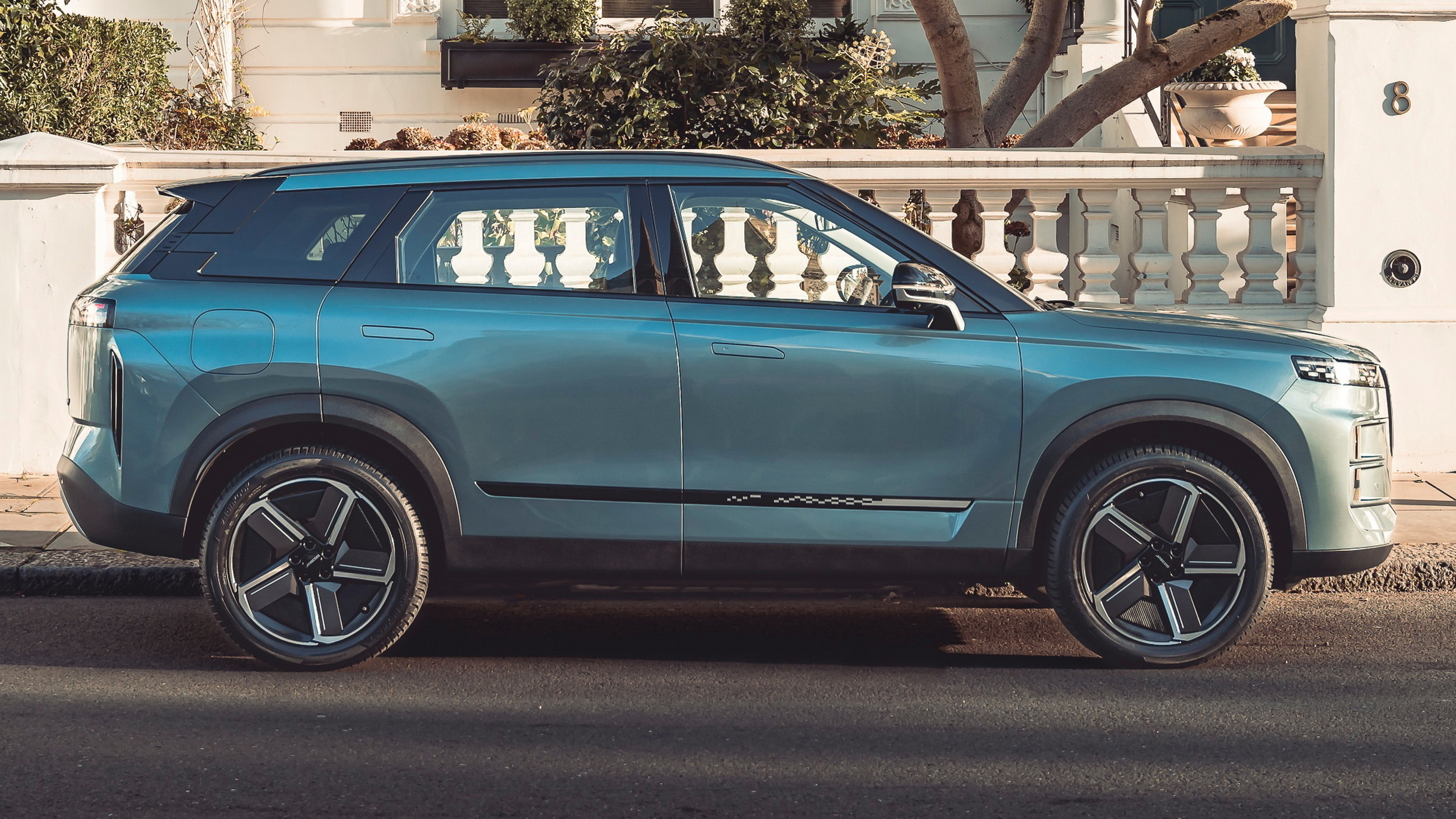
Jaecoo 7

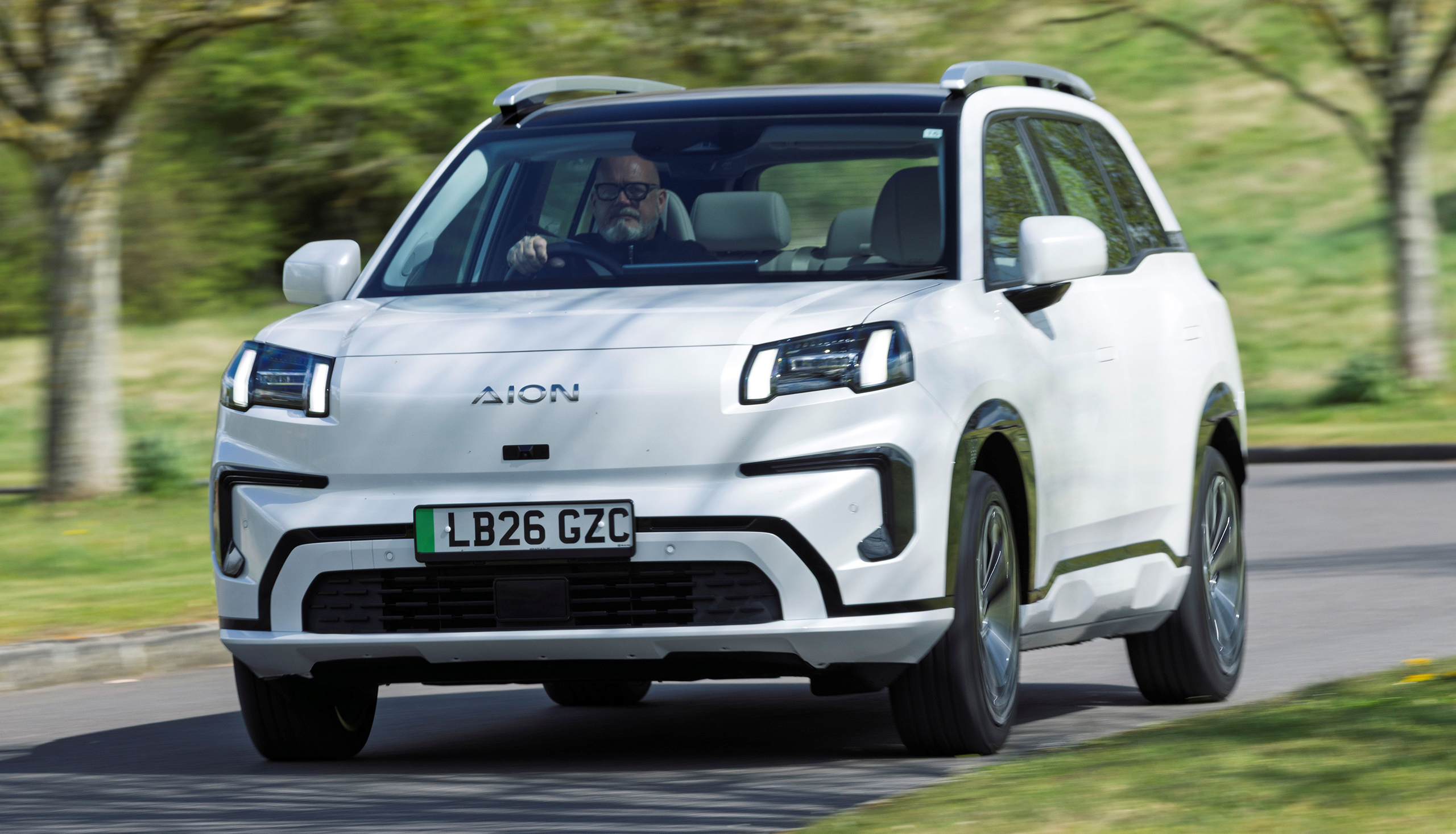
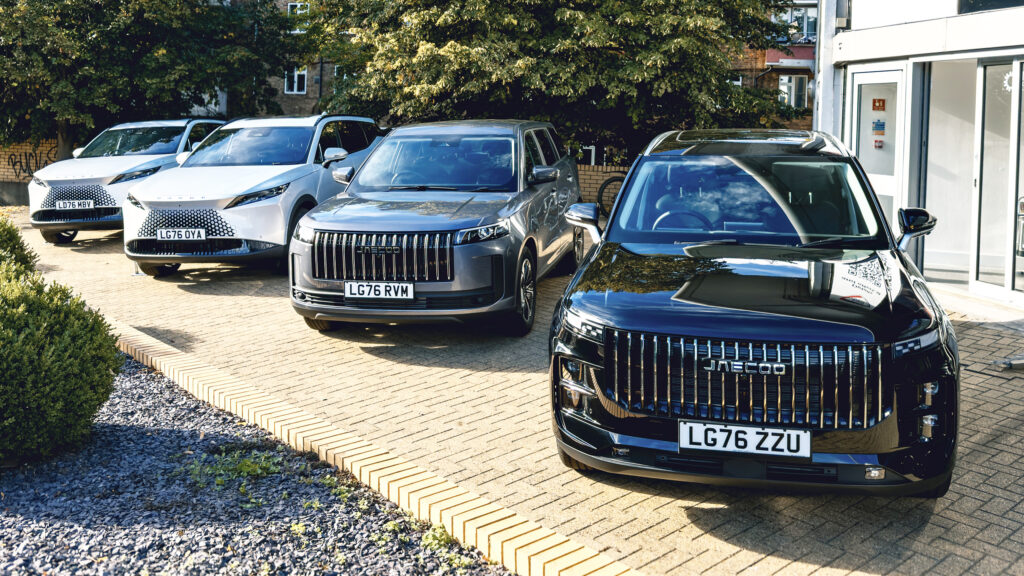
A look at recent sales data shows just how much demand there is for Chinese cars in the UK. In September, almost a quarter of all new cars sold in the UK came from China. The nation’s best-seller was the Jaecoo 7 with an extraordinary 10,812 sold last month, allowing it to even outsell the Tesla Model 3.

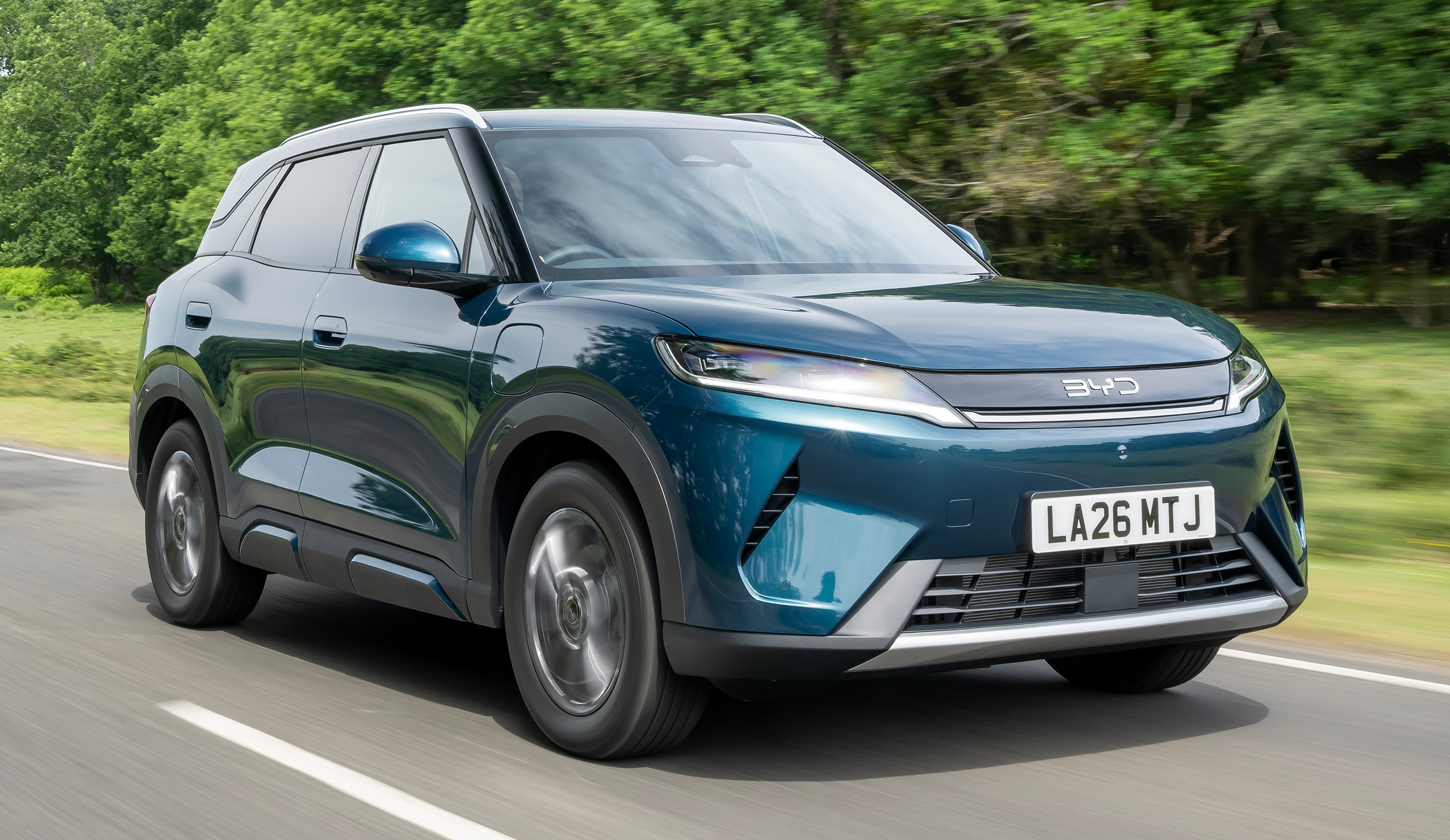
The Jaecoo 7, often referred to as a ‘Temu Range Rover,’ is sold in the UK with a 1.6-liter turbocharged petrol engine and a 1.5-liter plug-in hybrid. September was the second month this year that it has been a best-seller in the UK. It’s unclear if the UK is weighing up tariffs against combustion-powered models from China, but it’d be wise to do so if it really wants to stop brands like Chery, BYD, and others from taking over local roads.

 Chinese Cars Have Taken Over The UK, But They Could Be Hit With Tariffs

In the EU, EVs from China face tariffs of as much as 45 percent. Chinese brands quickly shifted their focus from EVs to plug-in hybrids after these tariffs were instated. Lawmakers in the bloc are now said to be weighing up the possibility of extending the tariffs to also include hybrids.

It appears British lawmakers are taking threats from the EU seriously. Last week, the Society of Motor Manufacturers and Traders indicated the Made in Europe rules threaten British car production. If this latest report is true, it seems the UK is about to choose sides, and in siding with Europe, it may turn its back on China.

 Chinese Cars Have Taken Over The UK, But They Could Be Hit With Tariffs

Electrify America Allows Companies To Own And Brand EV Charging Stations

  • The Powered by Electrify America program provides EV chargers tailored for businesses.
  • Electrify America handles construction, technology, maintenance, and backend support.
  • The white-label network now includes nearly 600 chargers at more than 100 stations.

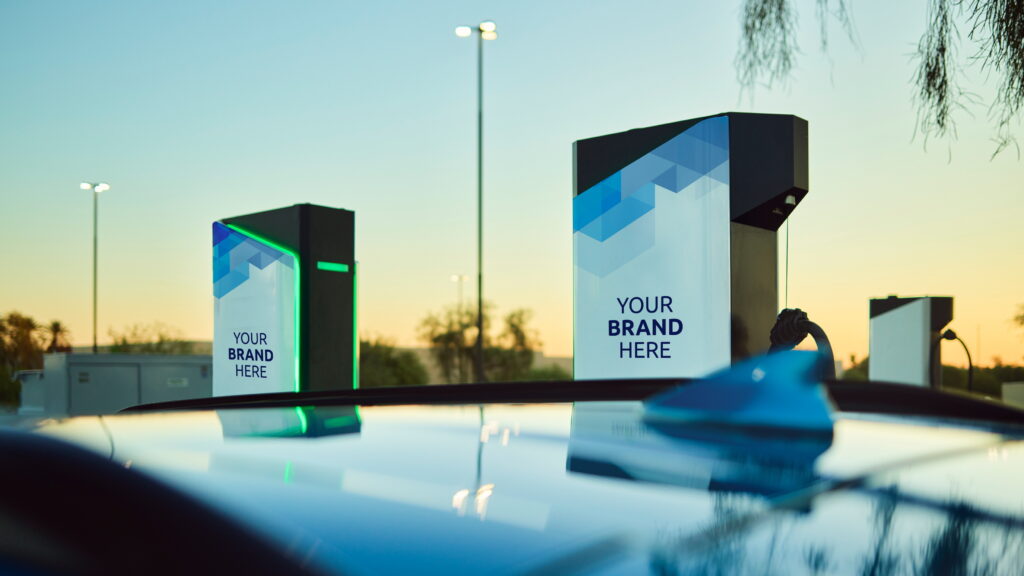
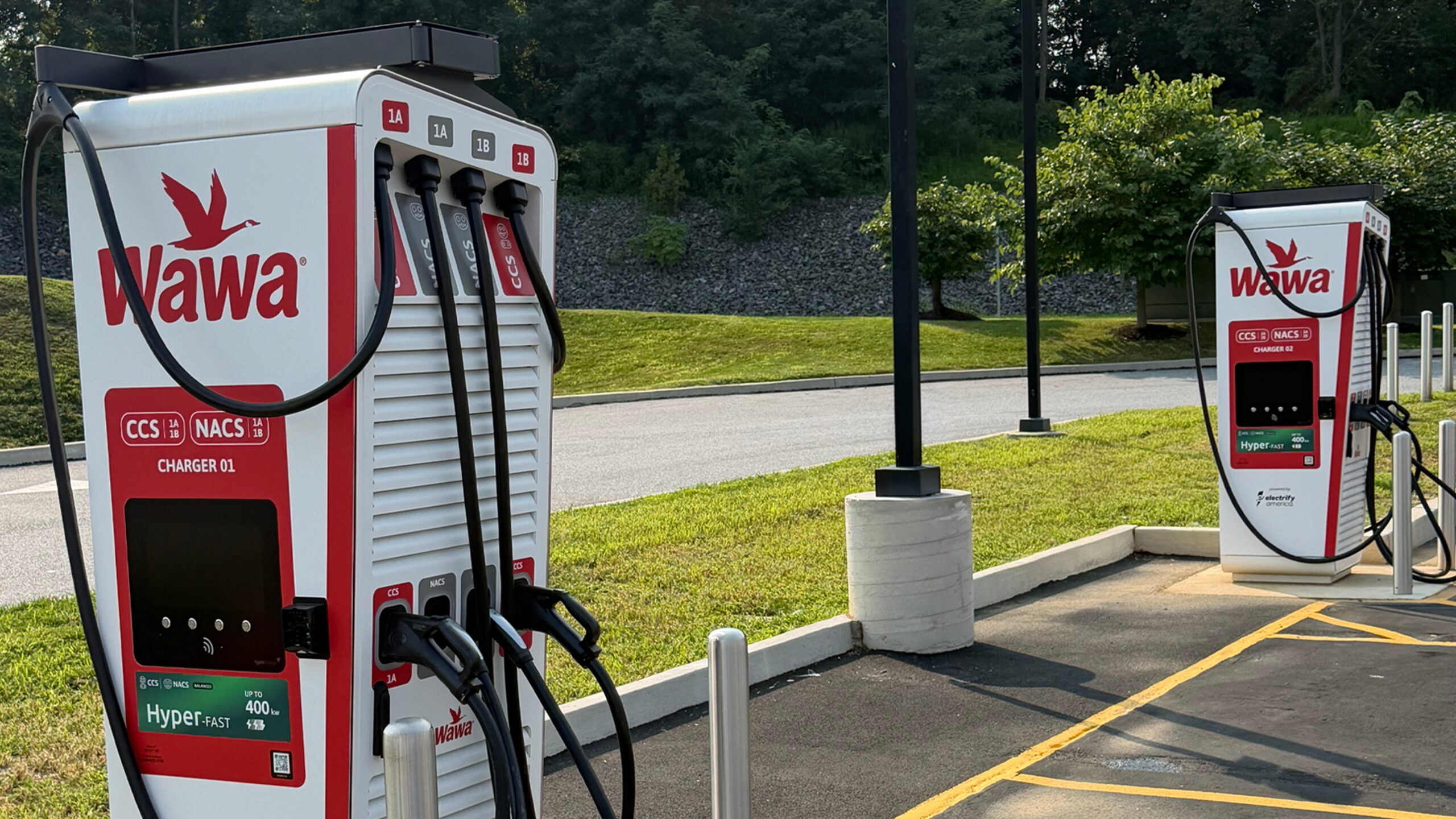
Electrify America is one of the biggest names in EV charging, but it increasingly seems less concerned if you know you’re using its technology. The company is pushing its white-label charging business, which lets retailers slap their own names on chargers while Electrify America does much of the difficult work behind the scenes. Costco and Wawa are already among the companies using it.

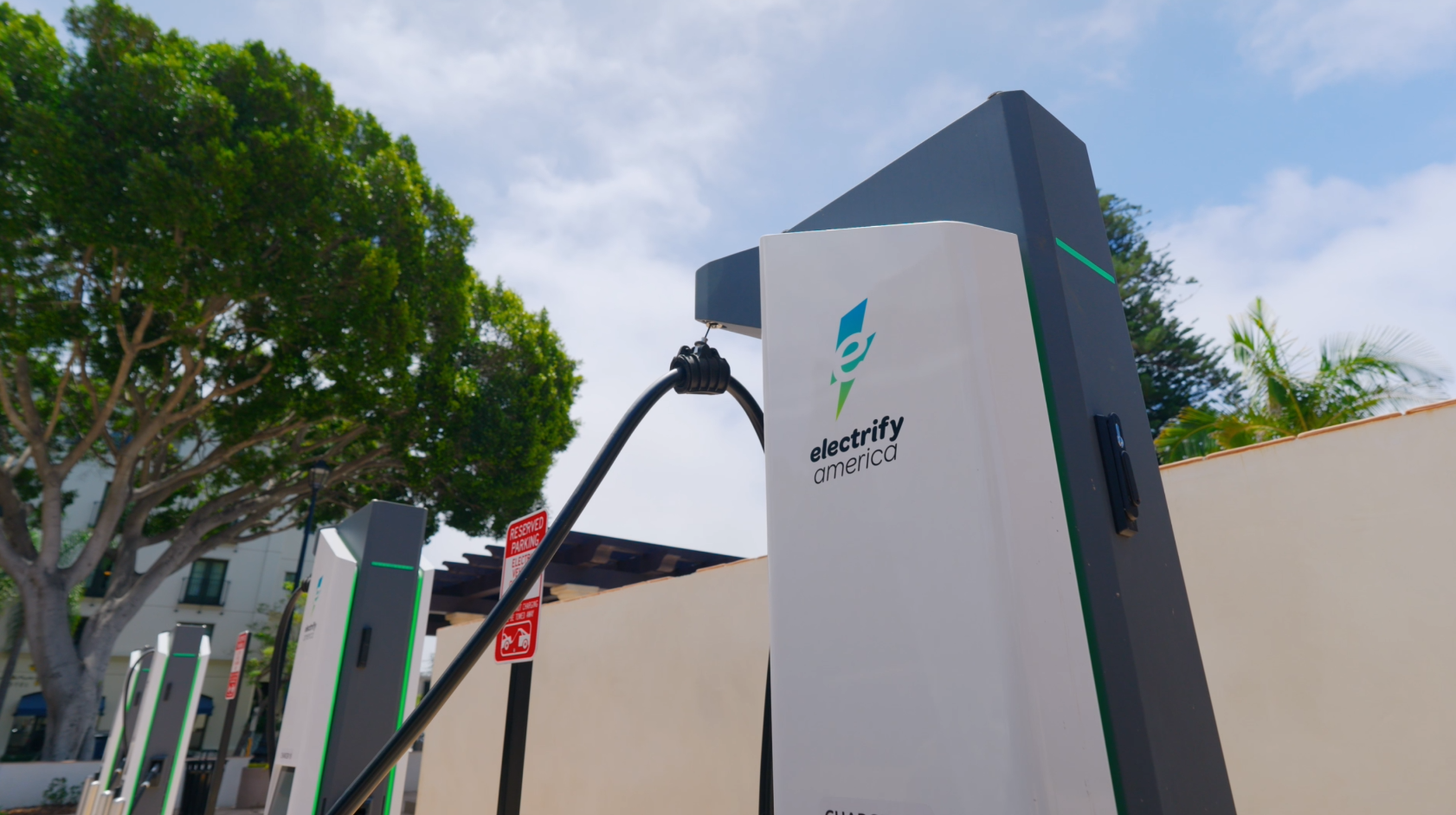
Called Powered by Electrify America, the program isn’t actually new. It launched in 2020 but has quietly grown to more than 100 stations with nearly 600 chargers. That’s still small compared with Electrify America’s own network of more than 5,600 chargers at over 1,080 stations, but it points toward an interesting future for public charging.

Read: Massachusetts Got $64M In EV Station Funding, But There’s Not A Charger In Sight

Instead of simply hosting an Electrify America station in its parking lot, a retailer can effectively create its own charging network. The business owns the equipment and gets control over the branding, pricing, and site design. It can also incorporate charging into its own loyalty programs and access data about station usage, charging sessions, and customer behavior.

Electrify America, meanwhile, can handle much of the ugly stuff customers never see. That includes site feasibility, permitting, construction, commissioning, and ongoing maintenance. Its current hardware supports charging rates of up to 350 kW, while the company says its infrastructure is being prepared to support the NACS/J3400 connector.

 Electrify America Allows Companies To Own And Brand EV Charging Stations

There are some obvious attractions for retailers. A gas station customer might spend five minutes filling a tank and leave. Electrify America says a typical charging session lasts 20 to 30 minutes. That’s a much longer period of time where a customer could be inclined to spend more at the retailer than they would otherwise be.

More importantly, retailers don’t necessarily have to hand that relationship over to a charging company. They can set their own prices, wrap the equipment in their own branding, and potentially use charging to strengthen existing membership or loyalty programs. That’s particularly interesting for a company such as Costco, where membership is already central to the business.

Electrify America gets to sell its infrastructure and expertise, retailers get their own charging networks, and drivers hopefully get a more uniform and consistent charging experience across more brands and stations. That’s something EV owners in America have been demanding for quite some time now.

 Electrify America Allows Companies To Own And Brand EV Charging Stations

Photos: Electrify America

Tesla Starts New Semi Deliveries, But Won’t Say How Many

  • Tesla says new Semi deliveries are beginning this week.
  • The truck offers claimed ranges of 325 or 500 miles.
  • Tesla didn’t disclose pricing or current production rates.

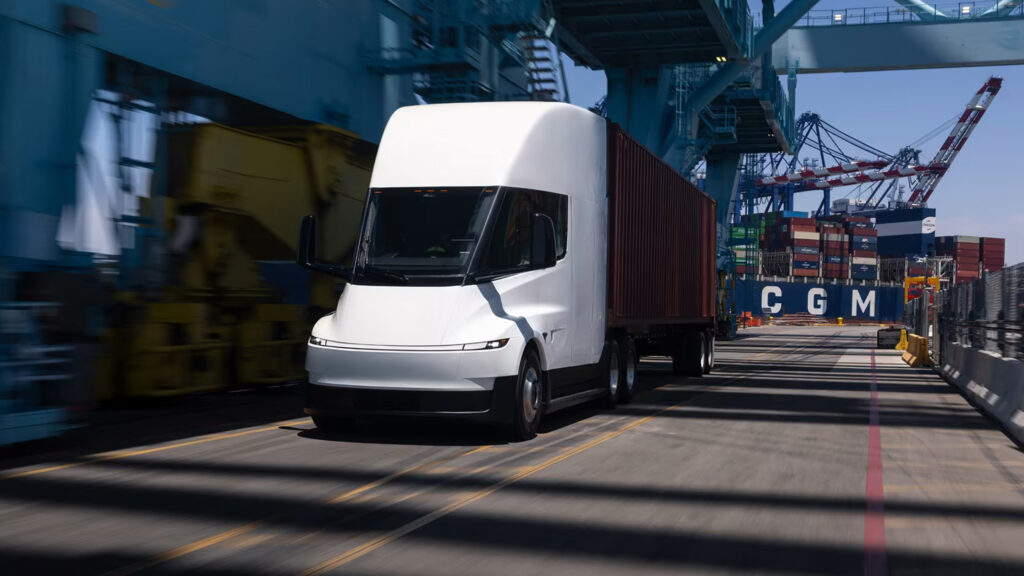
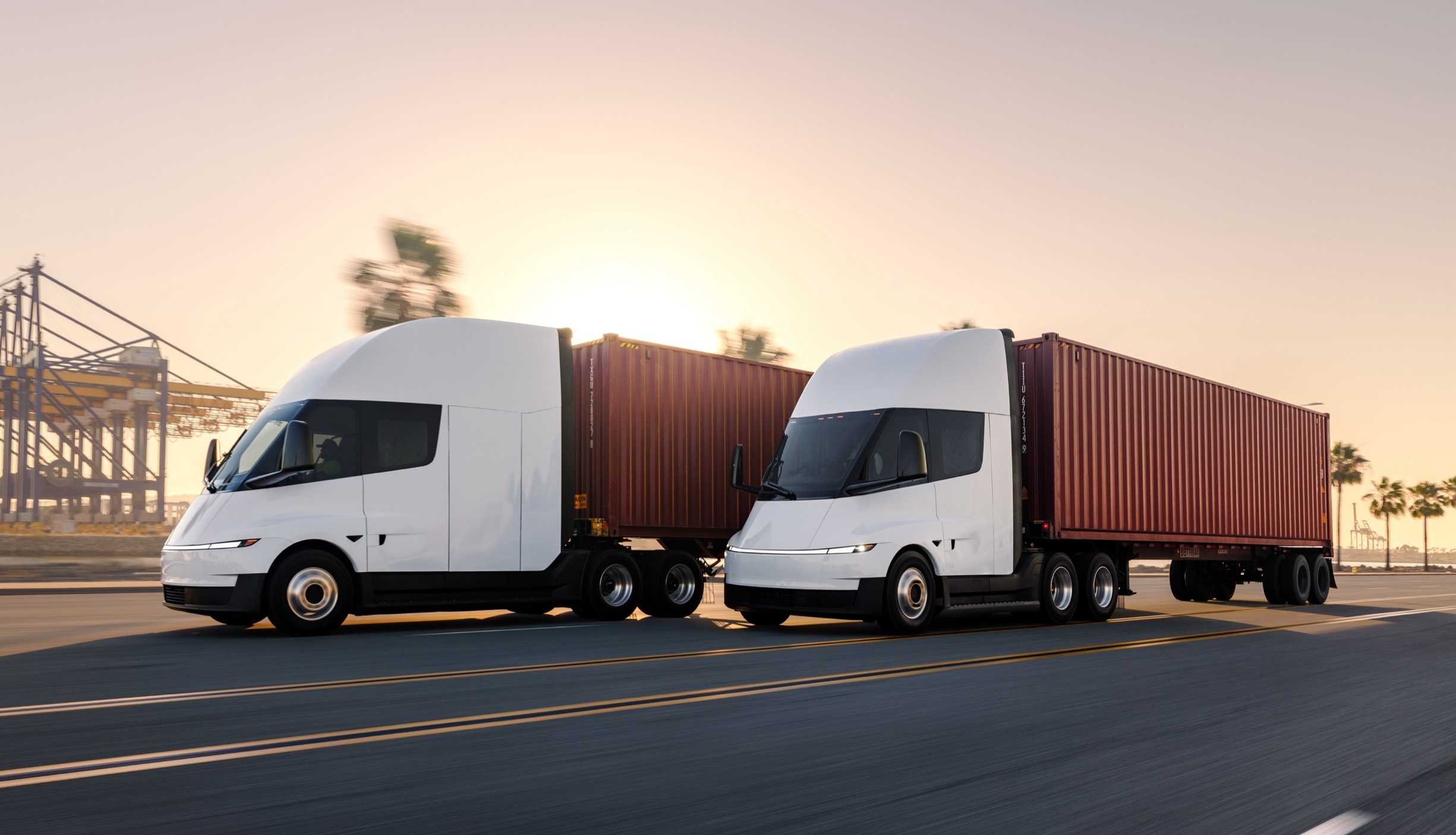
Almost a decade ago, Tesla unveiled the Semi as its answer to diesel-powered trucking. PepsiCo took delivery of the first trucks in 2022, but the rollout remained limited. The first Semi didn’t roll off Tesla’s new high-volume production line until this April. Now deliveries from its dedicated Nevada factory are beginning, and the question is how many trucks it can actually put on the road.

At an event Thursday night in Sparks, Nevada, Tesla presented trucks wearing the logos of PepsiCo, DHL, and US Foods. Executives said deliveries to an initial group of customers were beginning, Reuters reports. Tesla didn’t disclose a price, a current production rate, or a delivery target for the year. It reiterated that the plant is intended to build 50,000 Semis annually, but gave no date for reaching that level.

More: Tesla Just Set A Date For The Semi’s European Debut

It’s a real step forward, though hardly the Semi’s first delivery. PepsiCo began receiving trucks in late 2022, three years after Tesla originally expected production to start. The difference now is the dedicated factory, which is supposed to take the Semi beyond the limited rollout seen so far. Tesla said in April that the first truck had come off its high-volume line. Its July shareholder update, however, described Semi production as beginning in 2026 and dropped an earlier forecast for volume production this year.

Tesla claims the loaded long-range Semi can cover 500 miles (805 km) on a charge, while a standard-range version is rated for 325 miles (523 km). Dan Priestley, Tesla’s director of Semi truck engineering, said customers had validated the 500-mile figure in use. The company’s Semi page lists energy consumption of 1.7 kWh per mile. That’s an impressive figure considering the size and weight of the vehicle.

 Tesla Starts New Semi Deliveries, But Won’t Say How Many

The good news for Tesla is that despite apparent delays, there’s still demand. The same report says a shipper coalition placed an order for 2,500 Semis this week, while freight technology company Einride announced plans last month to add 500 Semis to its fleet. Orders and factory capacity sound great. Deliveries will be the one figure that shows whether Tesla can finally make good on the Semi’s long-delayed rollout.

 Tesla Starts New Semi Deliveries, But Won’t Say How Many

Photos: Tesla

Your Next EV From Porsche Might Have A Recycled Battery

  • Porsche is using recycled lithium, nickel, cobalt, and manganese in batteries.
  • Vehicles using cells made with recycled materials are already being tested.
  • Porsche and partners will be able to produce these new battery cells from 2028.

Porsche has cut back some of its planned electric vehicle investments in recent months, but that doesn’t mean the German brand isn’t still interested in pushing the industry forward. For the first time, it has produced battery cells using recycled cathode active material, a major development in its efforts to establish a closed-loop circular economy for high-voltage batteries.

Working with German recycling firm cylib, Porsche has created battery cells using nothing but recycled battery raw materials from its own high-voltage cells. Through the pilot program, Porsche has been recovering the raw materials of end-of-life high-voltage batteries and processing them into new cells for test vehicles, and is now ensuring these cells can withstand the rigors of being in a car.

Read: Mercedes’ New Battery Plant Can Recycle 96% Of Raw Materials

Porsche’s ongoing collaboration with cylib has seen it recycling its batteries using a water-based process since May. The raw material recovered during this process will be available to Porsche and partner companies to produce new battery cells in 2028.

Coming To A Porsche EV Soon?

\\\\

The automaker isn’t yet putting a date on when recycled battery cells could be used in its production vehicles, but acknowledges that “in the future, battery raw materials recycled in Europe could be used in high-voltage batteries for Porsche vehicles.”

 Your Next EV From Porsche Might Have A Recycled Battery

Key materials recovered in the recycling process and used to manufacture new battery cells include lithium, nickel, cobalt, and manganese. This means newly produced cells are made entirely from recycled active materials.

“With battery cells made entirely from recycled raw materials such as lithium and cobalt, we have achieved an important technological milestone,” member of the executive board for procurement at Porsche, Joachim Scharnagl said. “This innovation is a key step in advancing both circular economy principles and raw material resilience, always with the ambition of optimizing progress, quality and resource efficiency.”

 Your Next EV From Porsche Might Have A Recycled Battery

Trial Starts Over Claims Tesla Allowed Racial Discrimination At Californian Plant

  • A lawsuit claims Tesla turned a blind eye to complaints of racial discrimination.
  • It’s claimed that Black workers have had to deal with racial slurs and offensive graffiti.
  • Superior Court Judge Peter Borkon will determine if Tesla is liable for civil rights violations.

A trial involving Tesla has just started in California, some four years after the electric car manufacturer was sued by the California Civil Rights Department for allegedly allowing racial discrimination against black workers at its Fremont factory.

Rather than a typical jury trial, state Superior Court Judge Peter Borkon ordered a bench trial. This means that he alone will determine if Tesla violated local civil rights laws, rather than a jury made up of members of the public.

Read: Tesla Settles Potentially Costly Lawsuit Over Autopilot Death

The lawsuit, filed in February 2022, asserted that Black workers at the company’s site in Fremont, California, have been segregated to the lowest level of the workforce and “discriminated against in job assignments, discipline, pay, and promotion.” It has also been alleged that Tesla has turned a blind eye to years of complaints from Black workers who’ve had to endure racial slurs and seen racist writing and graffiti in common areas, including swastikas and other hate symbols.

 Trial Starts Over Claims Tesla Allowed Racial Discrimination At Californian Plant

The director of the California Civil Rights Department says the agency wants to hold Tesla accountable. Tesla has vehemently denied the accusations and, in late 2022, countersued the agency, alleging it had violated laws by filing the suit without seeking public comment or giving the car manufacturer time to settle.

 Trial Starts Over Claims Tesla Allowed Racial Discrimination At Californian Plant

California does not have a cap on the damages that a court can award to workers affected by workplace discrimination, so if Judge Borkon rules for the plaintiffs, Tesla may be forced to cough up a serious amount of money.

This isn’t the only lawsuit that Tesla is dealing with, related to the Fremont factory. In 2023, the US Equal Employment Opportunity Commission filed a lawsuit against Tesla in federal court, also alleging that starting in 2015, Black employees had been subjected to racial slurs. This separate lawsuit also claims Tesla has failed to investigate complaints of racial conduct and even fired or retaliated against those workers who reported being harassed.

 Trial Starts Over Claims Tesla Allowed Racial Discrimination At Californian Plant

After Trump Blasted Ford, GM Goes All-In On The US For Its Next-Gen Batteries

  • GM is working alongside a Denver firm for energy storage system batteries.
  • Low-cost sodium-ion batteries will help GM establish a large local supply chain.
  • GM believes it can leapfrog some of the battery technologies in China.

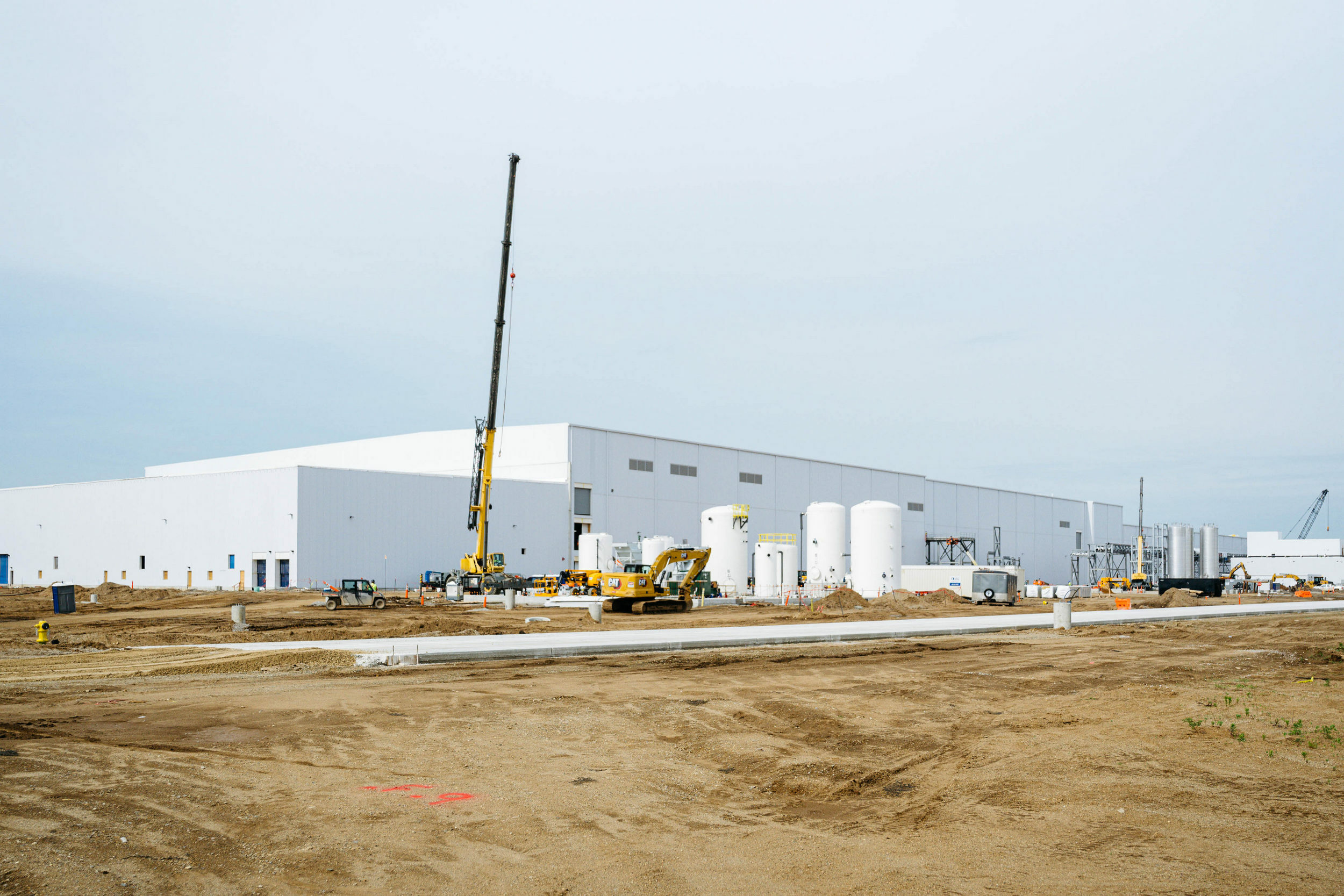
Days after the Trump administration slammed Ford for cozying up to Chinese companies, including battery manufacturer CATL, crosstown rival General Motors says it’s working to ensure its next generation of battery cells are backed by a strong domestic supply chain, rather than one that relies on overseas sources.

A key area of GM’s local battery focus is on cells that’ll be used for energy storage systems, including data centers, other businesses, and homes. According to vice president of battery and sustainability at GM, Kurt Kelty, “We’re developing a supply chain such that, two years from now, three years from now, it will be domestic.”

Read: GM’s Fourth US Battery Plant Just Stopped Being A GM Plant

A company spokesperson added to CNBC that GM will prioritize local production of battery cells for its forthcoming electric vehicles.

The federal government has criticized Ford for licensing battery technology from CATL, which it will use for energy storage systems. By comparison, GM is working with Denver firm Peak Energy on advanced sodium-ion battery cells for energy storage.

 After Trump Blasted Ford, GM Goes All-In On The US For Its Next-Gen Batteries

CNBC notes this deal will let GM reduce its reliance on China for materials including lithium and ferrous sulfate, instead sourcing materials more prevalent in the US, including sodium derived from soda ash. These new battery cells created with Peak Energy could be deployed as soon as 2029.

“It’s a really good story, because you’ve got the resources [in the U.S.] that you can keep it totally domestic,” Kelty said. “It’s going to take some time to build this industry up, but the potential for sodium-ion is just much greater than LFP.”

Kelty is so optimistic about the future of sodium-ion battery cells that he believes pursuing them can allow GM to leapfrog some of the most advanced battery technologies coming out of China.

 After Trump Blasted Ford, GM Goes All-In On The US For Its Next-Gen Batteries

Trump Administration Blasts Ford For Its Business Dealings With China

  • Transportation Secretary Sean P. Duffy has criticized recent Ford business deals.
  • Duffy criticized Ford’s battery licensing deal with Chinese giant CATL.
  • Ford says the Trump administration is simply trying to capture headlines.

The Trump administration isn’t pleased with Ford’s close ties to certain Chinese companies, prompting a fierce rebuke from Ford, which continues to tout itself as “the most American automaker.” The tit-for-tat comes just before a meeting between US President Donald Trump and Chinese President Xi Jinping later this month.

In a letter to Ford chief executive Jim Farley dated September 3 and recently made public, Transportation Secretary Sean P. Duffy expressed “profound concern” about the “strategic trajectory of Ford,” claiming the historic brand is “actively intertwining its future with Chinese state-backed enterprises.”

Read: Ford Is Partnering With The Chinese Automakers It’s Fighting To Keep Out Of America

Ford’s relationship with Chinese battery manufacturer CATL appears to have rubbed the Trump administration the wrong way. The licensing deal, first signed in 2023, would have allowed Ford to manufacture EV batteries using CATL’s chemistry. Still, a recent decline in demand for EVs in the US prompted Ford to start assembling lithium-iron phosphate cells using CATL tech for energy storage systems.

 Trump Administration Blasts Ford For Its Business Dealings With China

“The prioritization of imported Chinese technical expertise and operational know-how – even in a scaled-back capacity – challenges the spirit of American national and economic security and supply-chain independence policies,” Duffy wrote.

The transportation secretary also took issue with Ford’s recent deal with Geely in Spain, saying it “helps strategic adversaries secure a vital foothold in Western markets.” The letter also addressed ongoing talks between Ford and BYD to share hybrid vehicle components.

“When a company intentionally chooses to deepen operational dependencies on strategic competitors, it fails to act as the reliable partner the American public and this DOT require,” Duffy added.

 Trump Administration Blasts Ford For Its Business Dealings With China

Ford Responds

It didn’t take long for Ford to respond. The company described Duffy’s letter as “a wrongheaded attempt to capture headlines at the expense of a company that has done more for American manufacturing than virtually any other in the nation’s history.”

“BlueOval Battery Park Michigan in Marshall is a Ford-owned and Ford-operated facility representing billions of dollars in investment and approximately 1,700 new American jobs,” Ford’s statement reads, noting “it is producing batteries in Michigan, with American workers, for Ford vehicles also built in America.”

 Trump Administration Blasts Ford For Its Business Dealings With China
Ford BlueOval Battery Park

BMW Just Sold Its 2 Millionth EV, And Europe Wants Plenty More Even If America Doesn’t

  • BMW has delivered 2 million fully electric cars around the world.
  • Europe’s surging EV market is giving the new iX3 real momentum.
  • Electric sales are falling in America though BMW sales are rising.

BMW’s electric adventure has officially passed a big milestone. Almost 13 years after the original i3 arrived, the company has handed over its two millionth fully electric vehicle. And one of the factors making that possible is that EV sales are currently going gangbusters in one specific region.

The landmark two-millionth car was an i5 M60 xDrive built in Dingolfing and delivered to a customer in Spain. Add plug-in hybrids and BMW Group says it’s shifted around 3.5 million electrified vehicles since 2013, while more than one in four of its global sales during the first half of 2026 had some form of electric propulsion.

Related: BMW Thinks Drivers Under 45 Are Done Poking Buttons. Other Brands Disagree

Things are moving particularly quickly in Europe. BMW’s European BEV sales jumped 38 percent during the second quarter to 81,445 cars. Fully electric models represented roughly 28 percent of BMW’s European sales during 2026’s first half.

That’s not happening in isolation. Almost 1.5 million BEVs were registered across Europe through July, up 30 percent year over year. July alone saw electric cars grab 35 percent of the French market and 29 percent in Germany. Denmark, meanwhile, hit 80 percent, Reuters reports.

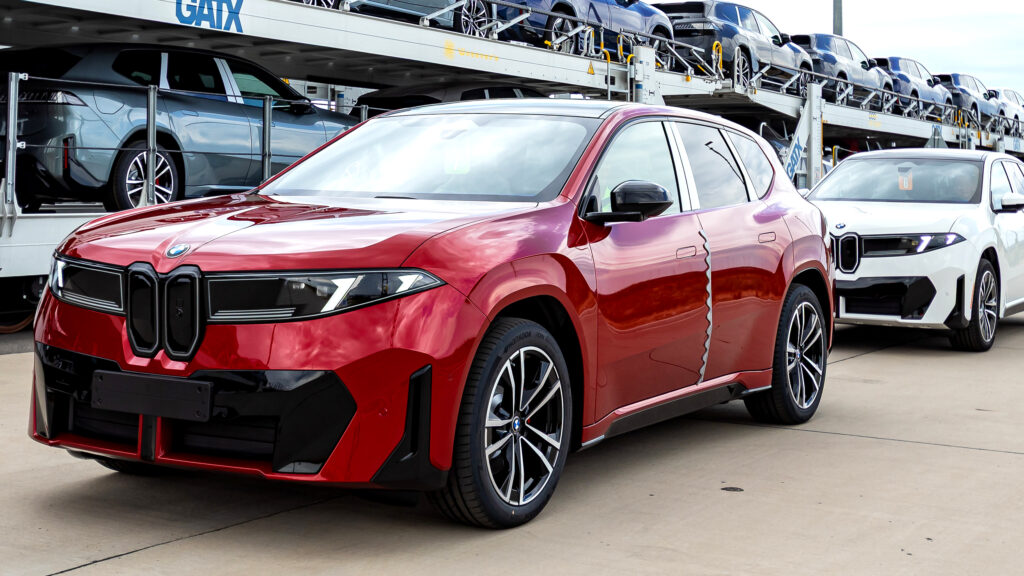
BMW’s new iX3 appears well placed to seize the opportunity. The automaker says it’s approaching 100,000 orders, and since its unveiling, one in three electric BMWs ordered in Europe has been an iX3. And half of European X3-family orders are already for the electric version, which admittedly looks miles better than its ICE brother inside and out.

Growing Family

 BMW Just Sold Its 2 Millionth EV, And Europe Wants Plenty More Even If America Doesn’t

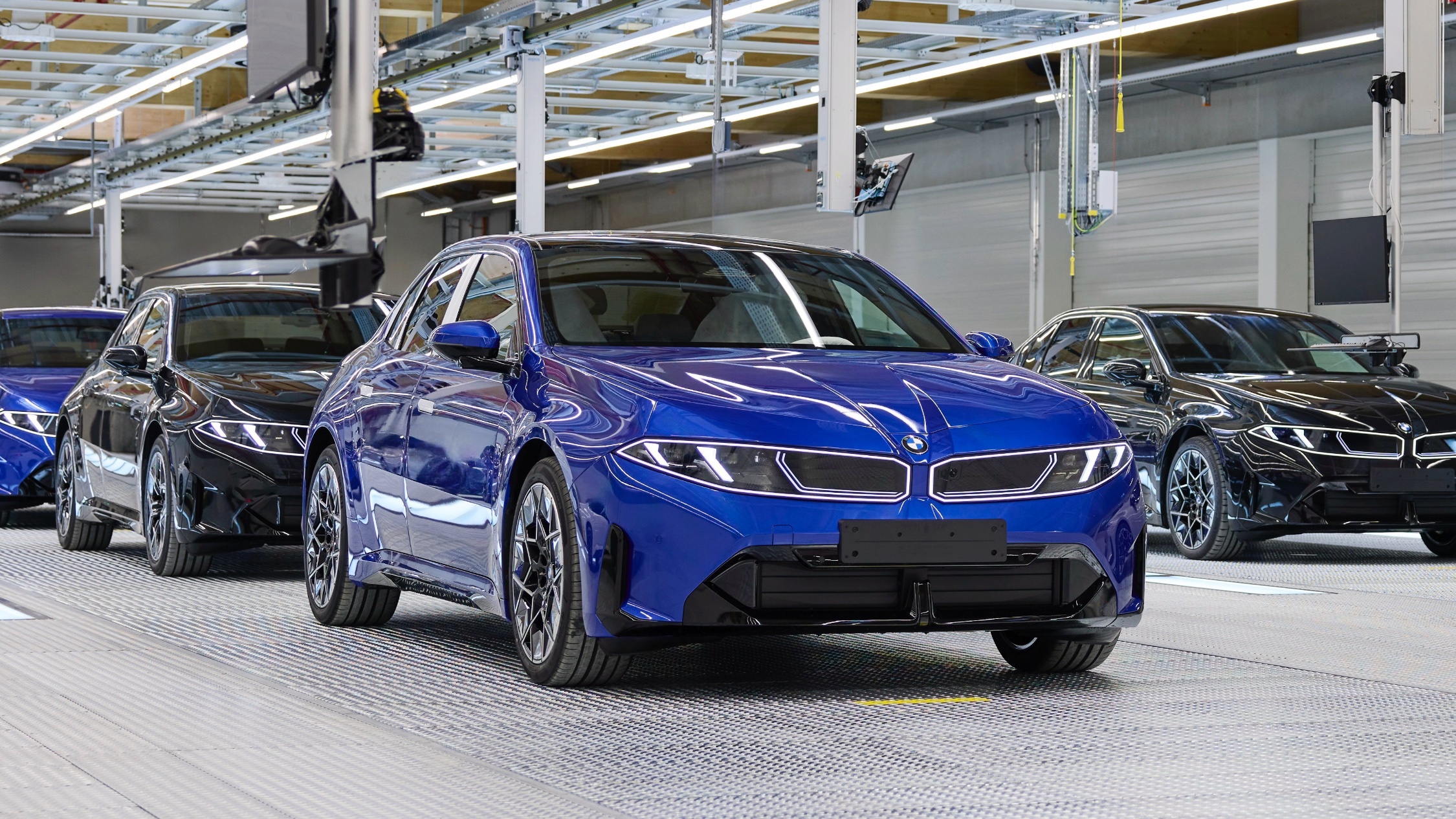
The Neue Klasse family is expanding, too. Series production of the new electric i3 3-series began in Munich this month, with BMW reporting strong early demand ahead of its market launch. And the new X5 has an electric variant for the first time that will be in showrooms in spring 2027.

But cross the Atlantic and the EV party suddenly gets quieter. US electric sales across the industry fell more than 20 percent year over year in the second quarter following the removal of federal tax incentives, leaving EVs with around a 6 percent share of the market.

No Love For iX

 BMW Just Sold Its 2 Millionth EV, And Europe Wants Plenty More Even If America Doesn’t

BMW’s own figures show that while North American sales of PHEV vehicles grew 22.9 percent in Q2, sales of electrified (EV and hybrid) vehicles tanked to the tune of -18.1 percent, revealing just how bad demand for EVs is now that US tax credits have gone. Sales of the iX electric SUV, for example, are down almost 50 percent year-to-date, official automaker figures say, though a recent facelift and price cut might help going forward. And Cox Automotive suggests BMW’s overall EV sales in the US are down 56 percent year-to-date. Ouch.

The arrival at BMW showrooms in September of the confident Neue Klasse iX3, whose fresh design will also help improve BMW EVs sales, no doubt. As will the iX5 we mentioned previously (pictured below). But the electric story is still going to be very different from one side of the Atlantic to the other.

 BMW Just Sold Its 2 Millionth EV, And Europe Wants Plenty More Even If America Doesn’t

BMW

❌