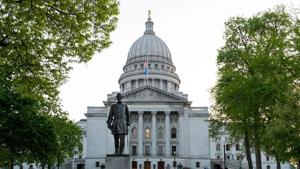
(The Center Square) – Fanatics Markets prediction market is live in Wisconsin, something that one of the sponsors of a Wisconsin sports wagering bill warned colleagues about before the = bill was delayed reaching an Assembly vote in November.
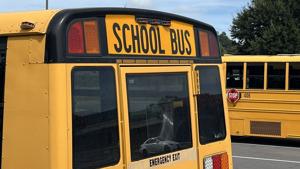
(The Center Square) – A plan to add cameras to school bus stop signs is moving at the Wisconsin Capitol, where Sen. Rob Hutton’s, R-Waukesha County, legislation received a hearing in the Assembly.
(The Center Square) – One policy analyst is calling the first year of results from Wisconsin reading screeners for students through third grade “troubling” as “more than a third of young students are falling behind."
U.S. Immigration and Customs Enforcement will move its Milwaukee processing operations from a downtown building owned by the Milwaukee School of Engineering to a site on the Northwest Side, an ICE spokesperson said in an email to NNS.
A spokesperson for the General Services Administration, the real estate arm of the federal government, said the GSA “remains focused on supporting this administration’s goal of optimizing the federal footprint, and providing the best workplaces for our federal agencies to meet their mission,” the spokesperson wrote in a statement to NNS.
Students and others protest in front of the U.S. Immigration and Customs Enforcement building leased from the Milwaukee School of Engineering on Oct. 31, 2025. The protests have taken place every Friday at 9 a.m. (Jonathan Aguilar / Milwaukee Neighborhood News Service / CatchLight Local)
Demonstrators have been calling on the university to cut ties with the agency.
MSOE officials say the university inherited the federal lease when it purchased the building in 2023 and does not have the legal authority to remove ICE.
Alan Madry, professor emeritus at Marquette University Law School, said there is no question the federal government has eminent domain authority in such situations.
The federal government has the legal power to take or use property for public purposes even if a private landowner or local government objects.
A ‘phased’ transition
In a statement to NNS, ICE said the transition “will follow a phased approach to ensure a smooth and efficient process” and that the agency “remains committed to maintaining continuity of operations as the office becomes fully operational.”
Processing centers are typically used to conduct interviews and sometimes hold people for the short term rather than overnight detention.
The ICE spokesperson did not provide a timeline for the move, but said the new location at 11925 W. Lake Park Drive will operate as a processing center, not a detention facility.
In a statement, Jeremy McGovern, spokesperson for the Milwaukee Department of Neighborhood Services, said the city has no additional inspections scheduled for the Lake Park Drive site and that the certificate of occupancy is already in place.
Because the federal government is not subject to local zoning and permit requirements, McGovern said, the city cannot determine when the site becomes active and has limited knowledge about the federal timeline.
Protests continue
Noah Dinan, left, and Steve Szymanski protest in front of the building used by U.S. Immigration and Customs Enforcement on Oct. 31, 2025. (Jonathan Aguilar / Milwaukee Neighborhood News Service / CatchLight Local)
The university says it intends to use the Knapp Street building for academic purposes once ICE leaves. But Noah Dinan, a sophomore studying software engineering at the school, said the lack of clarity about the move raises troubling possibilities.
The transition could take years, or ICE could expand its Milwaukee operations rather than relocate, said Dinan, who is a member of the university’s chapter of the Young Democratic Socialists of America.
The organization has circulated petitions, contacted alumni and joined the weekly Friday protests.
Dinan also pointed to the financial incentives of leasing to ICE.
According to the General Services Administration’s September 2025 lease inventory, the federal government is paying the university about $2.1 million per year to occupy the Knapp Street site through April 2028.
Despite the news that ICE has plans to transition from Knapp Street to its new property, Dinan said he and other students plan to continue protesting.
“Our campaign is one of sanctuary,” Dinan said.
Jonathan Aguilar is a visual journalist at Milwaukee Neighborhood News Service who is supported through a partnership between CatchLight Local and Report for America.
SUPREME COSTS: This is the second in a series of articles about how Wisconsin chooses its judges.
Wisconsin’s Supreme Court justices were concerned.
For the first time, a campaign for a high court seat had topped $5 million in spending, driven by negative television advertising that had rarely before been part of this state’s judicial races. They feared it could happen again.
That’s why all seven justices — conservatives as well as liberals — signed a 2007 letter to Democratic Gov. Jim Doyle and the Legislature, calling for “realistic, meaningful public financing for Supreme Court elections” to protect the court’s reputation against “the risk … that the public may inaccurately perceive a justice as beholden to individuals or groups that contribute to his or her campaign.”
It took two tries — and two more big-spending high court elections — before a Democratic-led Legislature and Doyle enacted a public financing law in 2009. But it lasted for just one Supreme Court campaign before a Republican-controlled Legislature and GOP Gov. Scott Walker repealed it in 2011.
The justices still had their own chance to protect the court’s reputation, by strengthening the rules for when they would have to step aside from cases involving their financial backers. Instead, they adopted what might be one of the nation’s most lax recusal rules for campaign donations.
Three of the conservative justices who had signed the 2007 letter were part of the 4-3 majority that enacted a 2010 recusal rule largely written by the major business organization that was pumping millions of dollars into conservative high court campaigns.
The stories behind that shift in recusal rules, the short-lived venture in public financing of high court races and the campaign finance laws that followed help explain how Wisconsin Supreme Court campaign spending exploded this spring to a national record of $114.2 million — almost 20 times the cost of that first big-money election 18 years earlier. That total doesn’t include billionaire Elon Musk’s controversial $30.3 million effort to hand out checks to conservative voters.
Yet the history of public financing and attempts to tighten recusal rules also offer hope for those still trying to stop the trend of ever more expensive judicial races.
Checking a box for reform
Public financing responds to a central concern that current and former justices and others voice about multimillion-dollar Supreme Court elections — the perception that big donors are buying justices who will rule in those donors’ favor when their cases reach the court.
“Why do people think this is a good use of their money? What do they think they are getting from this court?” Justice Brian Hagedorn asked about big donors in an August interview with Milwaukee’s WISN-TV. “It is in many respects a vote of no-confidence in this court — that this court is not going to be a place that’s just going to apply the law, at least all seven of us.”
Advocates of public financing believe voters and taxpayers should be a candidate’s biggest donors. Candidate campaigns receive grants from state or local governments while agreeing to limits on spending and on how much they accept from individual and organizational donors.
That wasn’t a new idea in Wisconsin in 2007. A public financing system already had been in effect for 30 years for candidates for all state offices, including Supreme Court justices.
The Wisconsin Election Campaign Fund grew out of the U.S. Supreme Court’s 1976 Buckley v. Valeo decision, which held that limits on campaign spending violated the First Amendment’s guarantees of freedom of speech — unless candidates voluntarily agreed to limit their spending in exchange for public financing.
The Legislature responded by enacting the nation’s most comprehensive public financing law. Taxpayers decided how much the state campaign finance fund should receive each year, by checking a box on their income tax returns to designate $1 of their taxes for public financing.
That system “worked extremely well for over a decade,” according to a 2002 analysis by the nonpartisan campaign finance watchdog Wisconsin Democracy Campaign. “The vast majority of candidates in both parties accepted public financing and ran campaigns under spending limits.”
However, the system declined for several reasons, the Democracy Campaign report found. In 1986, the Legislature stopped adjusting maximum campaign grants for inflation, leaving them frozen at that year’s levels. Also, even though the $1 checkoff didn’t increase any individual’s taxes, taxpayer interest waned, as participation fell from a peak of 19.7% in 1979 to 5% in 2002.
The third factor, according to the Democracy Campaign, was another side effect of Buckley v. Valeo, which ended limits on “issue ads” that aren’t coordinated with candidates and that don’t explicitly tell viewers to vote for or against a specific candidate. Such ads started popping up in Wisconsin elections as early as 1996. Candidates balked at spending limits when they knew they might have to respond to unlimited negative advertising by outside groups, the Democracy Campaign wrote.
Diane Sykes (Wisconsin Supreme Court file photo)
Nonetheless, the 2000 Wisconsin Supreme Court candidates, then-Milwaukee County Judge Diane Sykes and then-Milwaukee Municipal Judge Louis Butler, still used public financing in their campaigns. After Sykes won, one of her advisers complained that the spending limits “killed the drama of a truly exciting matchup.” However, the candidates themselves attributed the drama-free race to their own commitment to civility, with Butler reflecting that “media coverage … didn’t come because we weren’t being nasty to one another.”
That would change after the conservative Sykes became a federal appeals court judge and Doyle appointed the liberal Butler to replace her. Incensed by a product liability decision written by Butler, the state’s largest business group, Wisconsin Manufacturers and Commerce, started spending millions of dollars to elect conservatives to the high court.
In the first WMC-funded campaign in 2007, now-Justice Annette Ziegler defeated liberal attorney Linda Clifford at a cost more than four times the previous record of $1.4 million. The high price tag and flood of negative advertising spurred calls for reform.
Doyle proposed more extensive public financing for Supreme Court campaigns. Ziegler and Butler joined the rest of their colleagues in backing the concept, without signing on to the specifics of Doyle’s proposal. The bill passed in the Democratic-led Senate but died in committee in the Republican-controlled Assembly.
Louis Butler (Wisconsin Supreme Court file photo)
Just as the justices feared, Butler’s 2008 bid for a full term sparked an even more expensive and mean-spirited contest than Ziegler’s 2007 race. Conservative Michael Gableman defeated Butler, the court’s first Black justice, in a $6 million campaign that drew accusations of racist and misleading advertising.
Diane Diel, then president of the State Bar of Wisconsin, warned lawmakers that “the infusion of such large amounts into a judicial campaign poses a threat to both judicial neutrality and public trust in the justice system.”
The Democratic-controlled Legislature passed a public financing bill, and Doyle signed it into law as the Impartial Justice Act in 2009. Abiding by the new law, both 2011 Supreme Court candidates, conservative Justice David Prosser and liberal challenger JoAnne Kloppenburg, accepted state grants and held to spending limits.
But the candidates’ treasuries accounted for less than a quarter of the $5.9 million spent in a campaign supercharged by controversy over Republican legislation that stripped most public-sector workers of nearly all collective bargaining rights. Anticipating that legal challenges eventually would reach the high court, conservative interests outspent unions on issue ads, $2.7 million to $1.6 million, in a race so close that Prosser won only after a recount.
Prosser’s victory maintained the conservative court majority that later upheld the bargaining legislation known as Act 10. Meanwhile, the GOP-led Legislature and Walker repealed the Impartial Justice Act and dismantled the Wisconsin Election Campaign Fund shortly after the spring 2011 election.
Back to public cash?
State Sen. Kelda Roys, D-Madison, is now drafting a bill to revive the Impartial Justice Act, which she calls “really important to preserving judicial integrity.”
Roys, who is running for governor, said one major difference in her proposal will be the size of the campaign grants. She’s considering amounts 10 times higher than what she called the “laughably low” original grants of $100,000 for primary candidates and $300,000 for general election candidates. Grants of $1 million in the primary and $3 million in the general election would exceed the campaign treasuries of any high court candidate before the 2023 race, which at the time set a national spending record of $50.4 million.
“It can’t be joke money or nobody will do it,” Roys said.
North Carolina’s first-in-the-nation system of paying for state supreme and appellate court campaigns met the same fate as Wisconsin’s original Impartial Justice Act in 2013, after Republicans won control of that state’s legislative and executive branches. That leaves New Mexico as the only state funding judicial campaigns with taxpayer dollars.
Instead of setting specific grant levels, New Mexico uses a formula based on the number of registered voters eligible to vote in each partisan primary or general election and on whether the election is contested or uncontested, with limited individual donations supplementing public grants. With no primary contests and four general election candidates for two contested seats, the state fund provided $1.1 million of the $1.2 million spent in 2022, up slightly from 2020, according to the Brennan Center for Justice at New York University.
Of the other 13 states that offer public campaign financing for at least some elections, 11 appoint high court justices; Michigan’s system applies only to gubernatorial races; and Minnesota’s system excludes Supreme Court candidates.
Both the Wisconsin Democracy Campaign and the Brennan Center advocate for public financing.
Conflict over conflicts of interest
Public financing doesn’t stop special interests from spending big on “issue ads” or through independent expenditures on ads that clearly state who they favor or oppose.
That outside spending has exceeded the cash spent directly by the candidates in 10 of the last 12 contested Supreme Court campaigns — by ratios as high as 4 to 1 in 2008 and 3 to 1 in 2011.
The only exceptions were two elections in which liberal incumbents trounced conservative circuit judges: then-Chief Justice Shirley Abrahamson in 2009 and then-Justice Ann Walsh Bradley in 2015.
In Wisconsin’s first two multimillion-dollar Supreme Court contests, WMC’s political action committee (PAC) spent $2.2 million on issue ads backing Ziegler in 2007 and $1.8 million on issue ads backing Gableman in 2008, according to Wisconsin Democracy Campaign estimates.
That triggered disputes over whether those two justices should step away from cases involving WMC. Ziegler refused to recuse herself from one 2007 case in which WMC had filed a friend-of-the-court brief, but a month later recused from another case brought partly by the Wisconsin Realtors Association, which had directly contributed the then-maximum $8,625 to her campaign.
Wisconsin Supreme Court Chief Justice Annette Ziegler hears arguments in a case at the State Capitol in Madison, Wis., on Dec. 1, 2022. (Coburn Dukehart / Wisconsin Watch)
Over the next two years, justices fielded four petitions asking them to clarify recusal rules. The League of Women Voters of Wisconsin and former Justice William Bablitch urged the court to set thresholds for when donations or outside spending by a litigant or attorney would require a justice to recuse. Conversely, WMC and the Realtors Association called for rules that would not require justices to recuse based only on how much a litigant or attorney had spent supporting their campaigns.
While the Wisconsin justices considered those petitions, the U.S. Supreme Court weighed in on a case in which coal company CEO Don Blankenship had spent $3 million supporting candidate Brent Benjamin’s 2004 West Virginia Supreme Court campaign — more than all of Benjamin’s other backers combined. Benjamin narrowly won and cast the deciding vote to overturn a $50 million judgment against Blankenship’s company after refusing to recuse himself.
In their 5-4 decision tossing the state court’s ruling, the federal justices held that the circumstances were so extreme that they created “a serious risk of actual bias” that required Benjamin to recuse. However, Justice Anthony Kennedy’s 2009 opinion added that few other cases would likely meet the same standard.
Against that background, the Wisconsin Supreme Court voted in 2010 to deny the LWV and Bablitch petitions and adopt verbatim the WMC and Realtors Association rules recommendations. Conservative Justices Patience Roggensack, Gableman, Prosser and Ziegler backed the new rules, while liberals Abrahamson and Bradley and moderate Justice Patrick Crooks dissented.
“Neither Justice Ziegler nor any other justice recused from this rulemaking process, despite the financial backing they had received from the parties requesting the rules,” the University of Wisconsin Law School’s State Democracy Research Initiative recounted in a report.
Explaining the new rules, the court majority argued that disqualifying judges based on legal campaign donations “would create the impression that receipt of a contribution automatically impairs a judge’s integrity.”
Also, because Supreme Court justices aren’t replaced when they recuse, the majority wrote, “involuntary recusal … has greater policy implications” than in lower courts because it changes how many and which justices are deciding a case. On Wisconsin’s closely divided seven-member high court, the withdrawal of a single justice from the majority bloc can often create a 3-3 deadlock.
Nonetheless, the State Democracy Research Initiative called the Wisconsin rules “unusual.” Former Justice Janine Geske agreed the change was a step backward.
By contrast, several states and the American Bar Association’s Model Code of Judicial Conduct “require judges to recuse when a party or a party’s lawyer have contributed more than a specific amount to a judge’s campaign,” according to the State Democracy Research Initiative. A few other states call for recusal based on campaign contributions but don’t set a specific dollar limit. And most states leave recusal up to judges but don’t exclude contributions as a reason to do so.
Both recusal rules and outside campaign spending were in the spotlight again in 2015.
A case before the high court turned on a state law barring independent expenditure groups and issue ad organizations from coordinating with candidates’ campaigns. Act 10 had triggered an unprecedented recall against Walker. After the Republican governor’s victory in that 2012 recall election, several district attorneys jointly opened what was supposed to be a secret John Doe investigation into whether his campaign had illegally coordinated with groups that funded issue ads supporting him.
Some of the same organizations under scrutiny had also spent millions on issue ads in support of four conservative justices. But Prosser and Gableman refused to recuse themselves from the case challenging the probe.
Howard Schweber, professor emeritus of political science and legal studies at the University of Wisconsin-Madison, called the conservative justices’ decision not to recuse “a truly shocking situation.” By contrast, Ann Walsh Bradley recused herself because her son worked with one of the attorneys involved.
With its four-member conservative majority intact, the high court ruled the prohibition on coordinating with issue ad groups was unconstitutional, ending the investigation of Walker. Legislative Republicans promptly wrote the court’s decision into a 2015 campaign finance law, which Walker signed.
At the time, Wisconsin and Florida were the only states that allowed issue ads to be coordinated with a candidate’s campaign, said Jay Heck, executive director of the government reform group Common Cause Wisconsin. Weak coordination rules like Wisconsin’s “effectively allow wealthy special interests to bankroll candidates,” sidestepping limits on direct donations to campaigns and opening the door to “corruption and the appearance of corruption,” said Elizabeth Shimek, senior legal counsel for campaign finance at the Campaign Legal Center.
Strike two for recusal reform
Concern about Wisconsin’s lax recusal standards would only grow. In 2017, 54 retired judges — including Geske and Butler — petitioned the high court to toughen recusal rules.
When the 2010 rules were adopted, the petition noted, the majority contended that direct donations were too small to influence justices because the 2009 Impartial Justice Act had sliced contribution caps from $10,000 for individuals and $8,650 for political action committees to $1,000 for each. But the 2015 campaign finance law boosted the donation limits to $20,000 for individuals and $18,000 for PACs.
Similarly, the petition said, the 2010 majority had argued that judicial candidates couldn’t be held responsible for groups making independent expenditures and running issue ads because at the time they were legally barred from coordinating with those groups. But the coordination rules for issue ads also had changed with the 2015 law and the John Doe decision that preceded it.
The retired judges asked for a rule that would require litigants and their attorneys to disclose their contributions to the judges hearing their cases at each level. Supreme Court justices would be required to recuse if they received contributions or benefited from outside spending of more than $10,000, with lower amounts for lower court judges.
And to address the high court majority’s concern about recusal leaving the bench short, the retired judges called for a constitutional amendment that would allow Court of Appeals judges to sit in for justices who recuse themselves.
But the Supreme Court rejected the petition on a 5-2 vote along ideological lines. Most of the conservative justices in the majority said they trusted judges to decide when to recuse, while Justice Rebecca Bradley argued that required recusal would disenfranchise the voters who elected a justice.
The Wisconsin Supreme Court hearing room is seen Sept. 7, 2023, at the State Capitol in Madison, Wis. (Andy Manis for Wisconsin Watch)
The issue could come up again now that liberal Jill Karofsky is chief justice. Speaking at a WisPolitics event in October, she said she is committed to holding an “open” and “transparent” hearing about establishing new recusal rules for the court.
State law sets recusal standards for some conflicts of interest, but not campaign contributions, according to the State Democracy Research Initiative.
The Brennan Center still advocates nationwide for the kind of recusal rules that the retired judges supported, said Douglas Keith, deputy director of the center’s judiciary program. However, Keith added that he wasn’t aware of any state that requires litigants to disclose contributions in court.
Another Brennan Center recommendation urges independent review of recusal motions. As of 2016, Wisconsin was one of 35 states that allow high court justices to decide whether to recuse themselves, while Michigan was among the 15 states where someone else rules on recusal, according to the center’s most recent report on that question.
Power shift prompts recusal reversal
Efforts to redraw legislative and congressional districts in this decade have spurred new recusal controversies — and turned the tables on which party backs recusal.
When Republicans took full control of the executive and legislative branches after the 2010 elections, they drew maps that guaranteed their party a comfortable majority in both the Assembly and Senate, even if state voters were split 50-50, in what experts called one of the nation’s most extreme examples of gerrymandering.
A decade later, Democratic Gov. Tony Evers clashed with legislative Republicans over how to redraw the maps after the 2020 Census, throwing the issue into the courts. With virtually no legal precedent, justices voted 4-3 to accept the GOP argument that court-approved maps should change as little as possible from the 2011 gerrymander.
Political parties are covering an increasing share of Wisconsin Supreme Court campaign expenses
Total Wisconsin Supreme Court campaign expense paid by Democratic and Republican parties, 2007-2025
All candidate expenses
Democratic party expenses
Republican party expenses
Liberal candidate
Conservative candidate
*2025 data not including related $30.3 million petition drive.
**Graphic only includes main liberal and conservative candidate.
***Includes both contributions to candidates and independent expenditures.
Sources: Wisconsin Democracy Campaign and OpenSecrets
Graphic by Hongyu Liu
Liberal Janet Protasiewicz, then a Milwaukee County judge, called those 2021 maps “rigged” during her successful 2023 high court race. Shortly after Protasiewicz took office, flipping the court to a liberal majority, voting rights groups filed suit to overturn the legislative maps.
Citing Protasiewicz’s previous comments and her heavy Democratic financial support — which amounted to 59% of her campaign treasury — Republicans demanded that she recuse from the redistricting case. However, neither state law nor judicial rules require judges to recuse because of their statements, as long as they have not specifically promised to rule in a certain way, the State Democracy Research Initiative noted.
Also, the $9.9 million Democratic contribution to Protasiewicz was proportionately less than the $2.6 million that the conservative Alliance for Reform dropped on issue ads supporting Rebecca Bradley in 2016, the State Democracy Research Initiative’s report pointed out. Bradley didn’t recuse when an alliance leader was a party to the original redistricting litigation.
Wisconsin Supreme Court candidate and Dane County Circuit Judge Susan Crawford, center, stands among Wisconsin Supreme Court Justices Ann Walsh Bradley, from left, Janet Protasiewicz, Rebecca Dallet and Jill Karofsky while speaking to the press following a Supreme Court debate against Waukesha County Circuit Judge Brad Schimel on March 12, 2025, at the Lubar Center at Marquette University Law School’s Eckstein Hall in Milwaukee. (Joe Timmerman / Wisconsin Watch)
Protasiewicz didn’t recuse either when justices voted 4-3 along ideological lines to reverse the least-change doctrine and order new maps.
But Protasiewicz declined to participate in one of the liberal-led court’s three otherwise unanimous rulings rejecting challenges to the 2021 congressional maps. Two more challenges are still pending.
If the issue reaches the high court again, the panel will include new Justice Susan Crawford, whose campaign last spring received $11.8 million from Democrats while Republicans were pumping $9.7 million into her conservative opponent Brad Schimel’s race.
Shining light on dark money
Although donations to parties and party donations to candidates are unlimited under the 2015 campaign finance law, they are publicly disclosed, along with the parties’ donors’ names. Issue ad and independent expenditure groups also aren’t limited in how much they take in or spend. And issue ad groups don’t have to report either donations or spending, a practice known as “dark money” for its lack of transparency.
Roys and Rep. Amaad Rivera-Wagner, D-Green Bay, are working separately on campaign finance legislation that would set limits on donations to those organizations and require issue ad groups to disclose their donors, as parties and independent expenditure committees already do. Roys said her bill would focus specifically on judicial elections, while Rivera-Wagner’s bill would apply to all elections.
“Wisconsin is becoming the centerpiece for billionaires trying to influence elections,” Rivera-Wagner said. “This is just unacceptable.”
Both Roys and Rivera-Wagner said they would like to go further, but could be limited by the U.S. Supreme Court’s Citizens United decision, which removed limits on corporate and union spending on issue ads and independent expenditures, and by the GOP legislative majority’s support for Wisconsin’s 2015 campaign finance law. Another federal court case, SpeechNow.org v. FEC, struck down federal limits on donations to PACs.
In that legal environment, holding down spending on Supreme Court campaigns could remain challenging as long as Wisconsin remains among the 22 states that elect justices.
Next: Should Supreme Court justices be appointed?
Wisconsin Watch reporter Brittany Carloni contributed to this report.
Wisconsin Watch is a nonprofit, nonpartisan newsroom. Subscribe to our newsletters for original stories and our Friday news roundup.
For Wisconsin residents who love winter, the arrival of cold and snow has been an early Christmas gift. But if you are heading out to one of Wisconsin's more than 15,000 lakes to ice fish, snowmobile or skate, experts have some advice to stay safe.
A shift in the Trump administration’s stance toward Afghan refugees has shaken members of Wisconsin’s Afghan community, following months of renewed uncertainty about their status in the United States.
The latest federal data shows sales of milk beverages turned around in 2024, increasing by 358 million pounds or just under 1 percentage point from the previous year.
Gableman argued Protasiewicz shouldn't participate because, as a Supreme Court candidate in 2022, she issued a press release calling his investigation "disgraceful."
About 36 percent of Wisconsin’s youngest students are below the 25th percentile for reading, according to the Department of Public Instruction’s first literacy screening.
The projects will introduce a mix of internet technology to unserved areas: about 76 percent fiber, 10 percent fixed wireless, and 14 percent satellite.
Fincantieri Marinette Marine laid off nearly 100 workers on Wednesday, about a week after the U.S. Navy announced it was canceling much of a multi-billion dollar order for ships that would have been built in Wisconsin.
A settlement is pending in the state’s case against a Marinette manufacturer of firefighting foam over alleged violations of the state’s spills law for failing to report PFAS contamination.
A look back at the most popular charts, articles, data insights, and more from Our World in Data in 2025.<br><br><a href="https://ourworldindata.org/top-of-the-charts-2025"><img src="https://ourworldindata.org/cdn-cgi/imagedelivery/qLq-8BTgXU8yG0N6HnOy8g/ddab06f1-a4f4-4b0f-24e2-c376b650a600/w=1024"/></a>
WASHINGTON, D.C.—Growth Energy today joined liquid fuels groups representing ethanol producers, oil refiners, fuel marketers, travel plazas, truck stops and convenience store retailers to express the need for long-term policy certainty across the transportation fuel sector. In a letter to President Donald Trump, the organizations urged policymakers to advance legislation in support of a stable, efficient fuels marketplace.
“Legislation allowing the year-round, nationwide sale of E15 would improve fungibility and substantially reduce many of the complexities that arise for our industries as we operate in a national marketplace,” the organizations wrote.
The letter urges the White House to support legislative action providing lasting certainty to this issue and reforming the Small Refinery Exemption (SRE) program.
“The current SRE structure has encouraged a system of winners and losers that distorts the marketplace, creates instability, and ultimately, hurts consumers,” the organizations wrote. “A more consistent and narrowly applied SRE structure would create a far more predictable regulatory environment.”
Other liquid fuels groups on the letter included the American Petroleum Institute, National Association of Convenience Stores, NATSO, Representing America’s Travel Centers and Truck Stops, Renewable Fuels Association, and SIGMA: America’s Leading Fuel Marketers.
Driving over 1,000 miles across multiple states and meeting with over a dozen customers, BraunAbility gathered feedback from operators, bus drivers, fleet managers and transportation directors in the public and school transport space on what they want to see in an updated lift.
The result was on display at the Transporting Students with Disabilities and Special Needs Conference in Frisco, Texas, Trade Show. BraunAbility’s Dual Parallel Arm Lift Refresh, available on Century and Millennium Series Lifts, updates a product that has seen changes since 2005.
Reed Christiansen, commercial product manager for the company, explained that in 2019 they conducted a survey to customers to understand exactly what they need.
“We tried to learn and understand their challenges and opportunities [were] to improve the lift,” Christiansen said, adding that while COVID-19 slowed down the process, they were able to learn and understand the updates needed to improve the passenger experience. These updates an auto-tite system to reduce drift and rattling, a new user-friendly hand pendant, an onboard diagnostics panel for obstruction alerts, new curved vertical channels and rounded parallel arm covers and a center line platform market to support easier and more symmetrical loading.
“This is a product that hadn’t changed in a long time,” Christiansen added. “It lasts a long time, and so that can also lead us to be not as urgent in updating the product, because from a life cycle perspective, it’s continuing to do very well, and customers are happy with it. We built a really good product in 2005 and designed a really good update then, but it was time to review that. We just want to continue to innovate and challenge ourselves and give the customers what they’re looking for.”
Colton Walle, the area sales manager for the company responsible for completing the customer survey, said after five or six customer visits he started to see a trend in features that were asked for.
Lift Sentinel by BraunAbility is the yellow bar that atomically deploys to ensure safety around the lift opening. It was on display at the 2025 TSD Trade Show.
Additionally, the company announced a new product that will be a standard feature on all Century and Millennium lifts. The Lift Sentinel is a guard that automatically deploys at the front of the lift to prevent someone from entering the open area when the lift is deployed. It bolts onto any model-year 2005 or newer lift.
“This is an enhanced security feature to make our operators and passengers more comfortable as they’re loading and unloading passengers,” Christiansen said.
The Lift Sentinel will be available for pre-orders in January, and the DPA Lift Refresh is expected to be available in the second quarter of next year.
A Moncks Corner school bus driver is behind bars after being arrested in connection with an Internet Crimes Against Children (ICAC) investigation, reported Live 5 News.
Allan Bladorn, 39, was reportedly taken into custody Nov. 20, after Berkeley County investigators identified him as a suspect during an undercover online operation. The Berkeley County Sheriff’s Office arrested Bladorn and placed a hold on him until he was transferred to Chesterfield County the following day.
According to the news report, authorities confirmed that Bladorn was employed as a public-school bus driver with the Berkeley County School District at the time of his arrest. Investigators seized his cellphone, which will undergo forensic analysis as part of the ongoing case.
Bladorn is currently being held at the Chesterfield County Detention Center, where he awaits a bond hearing. The sheriff’s office stated that the investigation remains active, and that additional charges may be filed as evidence continues to be reviewed.
A Biden-era protection for reproductive and gender affirming health care information was upended by a federal judge in Texas in June. Despite several lawsuits, key privacy rules for medical records remain, but some experts say they aren’t sufficient. (Photo by Dave Whitney / Getty Images)
The four lawsuits at the center of a Republican-led effort to ensure law enforcement can access reproductive health records are now mostly resolved, after attorneys for Texas Attorney General Ken Paxton agreed last week to dismiss the last remaining suit challenging the legality of a foundational health privacy rule.
Paxton filed the lawsuit in September 2024 arguing that Democratic President Joe Biden’s administration illegally created a rule under the Health Insurance Portability and Accountability Act barring certain reproductive health care information from being disclosed if a procedure such as abortion was obtained in a state where it is legal.
The federal HIPAA law is meant to protect patient information generally, especially when that information travels between providers. It contains exceptions for information that can be disclosed to investigators, who can subpoena records from other states.
Ashley Kurzweil, senior policy analyst for reproductive health and rights at the National Partnership for Women & Families, said the dual threat that Paxton’s lawsuit presented was alarming on a much wider scale than just reproductive health care, so it is a relief that the case is dismissed. Overturning key privacy protections from 2000 that formed the basis of the Biden-era rule could have thrown the entire health care system into chaos, she said.
“We are thrilled that the 2000 privacy rule is still in effect. It is hugely important that it is still in place,” Kurzweil said. “However, (it) provides insufficient safeguards for reproductive health care information when it comes to the broader landscape of increased criminalization risk that people are facing.”
The 2024 rule specifically relating to reproductive and gender-affirming health care information was nullified in June by U.S. District Judge Matthew Kacsmaryk. His ruling came in a Texas-based case filed by a clinician in a small town who said the rule created a conflict with her responsibility to report child abuse, because she considers abortion and gender-affirming health care to be child abuse.
Without those 2024 protections, doctors can choose whether to report patients to law enforcement, Kurzeil said, and some might also be discouraged from offering reproductive health care altogether to minimize legal risks.
States Newsroom reported more than 400 people were charged with pregnancy-related crimes in the two years after the U.S. Supreme Court’s Dobbs decision, according to data from the nonprofit Pregnancy Justice.
One of those people was Brittany Watts, an Ohio woman who went to the hospital with miscarriage complications and waited for hours without receiving help. After miscarrying at home and returning to the hospital, staff called the police, accusing her of abuse of a corpse. A grand jury declined to indict her, and Watts is now suing the hospital.
In nine of the 400 cases, pregnant people were accused of researching or attempting to obtain an abortion.
Advocacy group dropped effort to appeal Texas ruling
The case before Kacsmaryk is the only one of the four that resulted in a ruling. Although it was filed in the last few months of the Biden administration, the bulk of the case was litigated under Republican President Donald Trump’s Department of Justice.
Repealing the rule was a directive in Project 2025, the conservative blueprint published by the Heritage Foundation. Several prominent anti-abortion organizations were part of the panel that drafted Project 2025, and many of the people involved in writing the 900-page document now work for the Trump administration.
Democracy Forward, a nonprofit legal organization, represented Doctors for America and the cities of Columbus, Ohio, and Madison, Wisconsin, in an attempt to intervene in the case because they did not expect the government to defend the rule. If they were allowed to intervene, they could appeal Kacsmaryk’s opinion striking down the rule regardless of the Trump administration’s decision.
Their attempts were denied by Kacsmaryk, and while the organization did initially appeal that decision, the attorneys dropped the effort in September, saying in a court filing that “the resources of the parties and the courts would be best conserved by dismissing this appeal.”
In a statement to States Newsroom, a spokesperson for Democracy Forward said they will continue to pursue every tool available to defend reproductive rights from political interference and anti-abortion extremists.
The other two cases are in Missouri and Tennessee, where Republican attorneys general also challenged the 2024 reproductive health care-specific rule. The Missouri case was dismissed in September, because Kacsmaryk’s decision had a nationwide effect, and the Tennessee attorney general asked the court to dismiss their case for the same reason. The judge in that case has not yet granted the motion.
Shield laws help, but federal backstop would address more situations
Texas and Louisiana have recently launched investigations into out-of-state doctors who, through telehealth, prescribed and mailed abortion medication to patients in their states where abortion is outlawed.
Texas officials have repeatedly investigated and attempted to prosecute people for either leaving the state to seek abortion care or for prescribing abortion medication from a different state. At the end of October, a New York judge dismissed a civil case brought by Paxton seeking $100,000 in damages from a provider the AG said prescribed abortion pills to a woman in the Dallas area, according to The Texas Tribune. Officials in Louisiana attempted to extradite the same New York doctor on criminal charges related to an abortion medication prescription for a pregnant minor. That case was also rejected.
Those attempts were some of the first that tested shield laws implemented by 18 states, including New York. Four others have executive orders from Democratic governors saying they won’t comply with extradition requests for investigations into reproductive health care.
Texas has also passed a law allowing people to seek at least $100,000 in damages if someone they impregnated or someone they’re related to received abortion pills by mail from another state. That law took effect Thursday, Dec. 4.
Kurzweil said those shield laws are a vital help to patients seeking care, but the addition of a federal protective rule would be ideal.
“The two in tandem would be much more fulsome and would address gaps that come up,” she said.
This story was originally produced by News From The States, which is part of States Newsroom, a nonprofit news network which includes Wisconsin Examiner, and is supported by grants and a coalition of donors as a 501c(3) public charity.

 Login
Login