Reading view

There are new articles available, click to refresh the page.

Disputes over clean energy may doom Wisconsin data center bills

An aerial view of a large industrial complex next to a pond and surrounding construction areas at sunset, with orange light along the horizon under a cloudy sky.
Reading Time: 6 minutes

A debate playing out in Wisconsin underscores just how challenging it is for U.S. states to set policies governing data centers, even as tech giants speed ahead with plans to build the energy-gobbling computing facilities.

Wisconsin’s state legislators are eager to pass a law that prevents the data center boom from spiking households’ energy bills. The problem is, Democrats and Republicans have starkly different visions for what that measure should look like — especially when it comes to rules around hyperscalers’ renewable energy use.

Republican state legislators this month introduced a bill that orders utility regulators to ensure that regular customers do not pay any costs of constructing the electric infrastructure needed to serve data centers. It also requires data centers to recycle the water used to cool servers and to restore the site if construction isn’t completed.

Those are key protections sought by decision-makers across the political spectrum as opposition to data centers in Wisconsin and beyond reaches a fever pitch.

But the bill will likely be doomed by a ​“poison pill,” as consumer advocates and manufacturing industry sources describe it, that says all renewable energy used to power data centers must be built on-site.

Republican lawmakers argue this provision is necessary to prevent new solar farms and transmission lines from sprawling across the state.

“Sometimes these data centers attempt to say that they are environmentally friendly by saying we’re going to have all renewable electricity, but that requires lots of transmission from other places, either around the state or around the region,” said state Assembly Speaker Robin Vos, a Republican, at a press conference. ​“So this bill actually says that if you are going to do renewable energy, and we would encourage them to do that, it has to be done on-site.”

This effectively means that data centers would have to rely largely on fossil fuels, given the limited size of their sites and the relative paucity of renewable energy in the state thus far.

Gov. Tony Evers and his fellow Democrats in the state Legislature are unlikely to agree to this scenario, Wisconsin consumer and clean energy advocates say.

Democrats introduced their own data center bill late last year, some of which aligns closely with the Republican measure: The Democratic bill would similarly block utilities from shifting data center costs onto residents, by creating a separate billing class for very large energy customers. It would require that data centers pay an annual fee to fund public benefits such as energy upgrades for low-income households and to support the state’s green bank.

But that proposal may also prove impossible to pass, advocates say, because of its mandate that data centers get 70% of their energy from renewables in order to qualify for state tax breaks and a requirement that workers constructing and overhauling data centers be paid a prevailing wage for the area. This labor provision is deeply polarizing in Wisconsin. Former Republican Gov. Scott Walker and lawmakers in his party famously repealed the state’s prevailing wage law for public construction projects in 2017, and multiple Democratic efforts to reinstate it have failed.

The result of the political division around renewables and other issues is that Wisconsin may accomplish little around data center regulation in the near term.

“If we could combine the two and make it a better bill, that would be ideal,” said Beata Wierzba, government affairs director for the nonprofit clean energy advocacy group Renew Wisconsin. ​“It’s hard to see where this will go ultimately. I don’t foresee the Democratic bill passing, and I also don’t know how the governor can sign the Republican bill.”

Urgent need

Wisconsin’s consumer and clean energy advocates are frustrated about the absence of promising legislation at a time when they say regulation of data centers is badly needed. The environmental advocacy group Clean Wisconsin has received thousands of signatures on a petition calling for a moratorium on data center approvals until a comprehensive state plan is in place.

At least five new major data centers are planned in the state, which is considered attractive for the industry because of its ample fresh water and open land, skilled workers, robust electric grid, and generous tax breaks. The Wisconsin Policy Forum estimated that data centers will drive the state’s peak electricity demand to 17.1 gigawatts by 2030, up from 14.6 gigawatts in 2024.

Absent special treatment for data centers, utilities will pass the costs on to customers for the new power needed to meet the rising demand.

Two Wisconsin utilities — We Energies and Alliant Energy — are proposing special tariffs that would determine the rates they charge data centers. Allowing utilities in the same state to have different policies for serving data centers could lead to these projects being located wherever utilities offer them the cheapest rates and result in a patchwork of regulations and protections, consumer advocates argue. They say legislation should be passed soon, to standardize the process and enshrine protections statewide before utilities move forward on their own.

Some of Wisconsin’s neighbors have already taken that step, said Tom Content, executive director of Wisconsin’s Citizens Utility Board, a consumer advocacy group.

He pointed to Minnesota, where a law passed in June mandates that data centers and other customers be placed in separate categories for utility billing, eliminating the risk of data center costs being passed on to residents. The Minnesota law also protects customers from paying for ​“stranded costs” if a data center doesn’t end up needing the infrastructure that was built to serve it.

Ohio, by contrast, provides a cautionary tale, Content said. After state regulators enshrined provisions that protected customers of the utility AEP Ohio from data center costs, developers simply looked elsewhere in the state.

“Much of the data center demand in Ohio shifted to a different utility where no such protections were in place,” Content said. ​“We’re in a race to the bottom. Wisconsin needs a statewide framework to help guide data center development and ensure customers who aren’t tech companies don’t pick up the tab for these massive projects.

Clean energy quandary

Limiting clean energy construction to data center sites could be especially problematic as data center developers often demand renewable energy to meet their own sustainability goals.

For example, the Lighthouse data center — being developed by OpenAI, Oracle and Vantage near Milwaukee — will subsidize 179 megawatts of new wind generation, 1,266 megawatts of new solar generation and 505 megawatts of new battery storage capacity, according to testimony from one of the developers in the We Energies tariff proceeding.

But Lighthouse covers 672 acres. It takes about 5 to 7 acres of land to generate 1 megawatt of solar energy, meaning the whole campus would have room for only about a tenth of the solar the developers promise.

We Energies is already developing the renewable generation intended to serve that data center, a utility spokesperson said, but the numbers show how future clean energy could be stymied by the on-site requirement.

“It’s unclear why lawmakers would want to discriminate against the two cheapest ways to produce energy in our state at a time when energy bills are already on the rise,” said Chelsea Chandler, the climate, energy and air program director at Clean Wisconsin.

Renew Wisconsin’s Wierzba said the Democrats’ 70% renewable energy mandate for receiving tax breaks could likewise be problematic for tech firms.

“We want data centers to use renewable energy, and companies I’m aware of prefer that,” she said. ​“The way the Republican bill addresses that is negative and would deter that possibility. But the Democratic bill almost goes too far — 70%. That’s a prescribed amount, too much of a hook and not enough carrot.”

Alex Beld, Renew Wisconsin’s communications director, said the Republican bill might have a hope of passing if the poison pill about on-site renewable energy were removed.

“I don’t know if there’s a will on the Republican side to remove that piece,” he said. ​“One thing is obvious: No matter what side of the political aisle you’re on, there are concerns about the rapid development of these data centers. Some kind of legislation should be put forward that will pass.”

Bryan Rogers, environmental director of the Milwaukee community organization Walnut Way Conservation Corp, said elected officials shouldn’t be afraid to demand more of data centers, including more public benefit payments.

“We know what the data centers want and how fast they want it,” he said. ​“We can extract more concessions from data centers. They should be paying not just their full way — bringing their own energy, covering transmission, generation. We also know there are going to be social impacts, public health, environmental impacts. Someone has to be responsible for that.”

Utility representatives expressed less urgency around legislation.

William Skewes, executive director of the Wisconsin Utilities Association, said the trade group ​“appreciates and agrees with the desire by policymakers and customers to make sure they’re not paying for costs that they did not cause.”

But, he said, the state’s utility regulators already do ​“a very thorough job reviewing cases and making sure that doesn’t happen. Wisconsin utilities are aligned in the view that data centers must pay their full share of costs.”

If Wisconsin legislators do manage to pass data center legislation this session, it will head to the desk of Evers. The governor is a longtime advocate for renewables, creating the state’s first clean energy plan in 2022, and he has expressed support for attracting more data centers to Wisconsin.

“I personally believe that we need to make sure that we’re creating jobs for the future in the state of Wisconsin,” Evers said at a press conference, according to the Milwaukee Journal Sentinel. ​“But we have to balance that with my belief that we have to keep climate change in check. I think that can happen.”

A version of this article was first published by Canary Media.

Disputes over clean energy may doom Wisconsin data center bills is a post from Wisconsin Watch, a non-profit investigative news site covering Wisconsin since 2009. Please consider making a contribution to support our journalism.

Trump administration pauses major East Coast offshore wind projects

Wind turbines generate electricity at the Block Island Wind Farm on July 7, 2022, near Block Island, Rhode Island. The first commercial offshore wind farm in the United States is located in the Atlantic Ocean 3.8 miles from Block Island, Rhode Island. The five-turbine, 30 MW project was developed by Deepwater Wind and began operations in December, 2016. (Photo by John Moore/Getty Images)

Wind turbines generate electricity at the Block Island Wind Farm on July 7, 2022, near Block Island, Rhode Island. The first commercial offshore wind farm in the United States is located in the Atlantic Ocean 3.8 miles from Block Island, Rhode Island. The five-turbine, 30 MW project was developed by Deepwater Wind and began operations in December, 2016. (Photo by John Moore/Getty Images)

WASHINGTON — President Donald Trump’s administration said Monday it’s halting leases for five large-scale offshore wind projects under construction along the East Coast due to national security risks.

The Interior Department paused the projects — off the coasts of Rhode Island, Connecticut, Massachusetts, Virginia and New York — due to analysis from reports that have “long found that the movement of massive turbine blades and the highly reflective towers create radar interference,” which poses a national security risk, according to a department release.

“Today’s action addresses emerging national security risks, including the rapid evolution of the relevant adversary technologies, and the vulnerabilities created by large-scale offshore wind projects with proximity near our east coast population centers,” Interior Secretary Doug Burgum said in a statement alongside the announcement. 

The Interior Department said “the clutter caused by offshore wind projects obscures legitimate moving targets and generates false targets in the vicinity of the wind projects.” 

The department said leases for Vineyard Wind 1, off Massachusetts; Revolution Wind, off Rhode Island and Connecticut; Coastal Virginia Offshore Wind; along with Sunrise Wind and Empire Wind 1, off New York, have been paused “effective immediately.” 

The department noted that the pause would give it, the Defense Department and other agencies “time to work with leaseholders and state partners to assess the possibility of mitigating the national security risks posed by these projects.” 

The moves are part of the administration’s continued attacks against the renewable energy source, which have spilled into courts. A federal judge found this month that Trump’s January order halting permits for offshore wind projects was unlawful. 

‘Desperate rerun’ 

The action drew swift backlash from major environmental advocacy groups and Democratic officials. 

Ted Kelly, director and lead counsel for U.S. clean energy at Environmental Defense Fund, said in a Monday statement the administration is “again unlawfully blocking clean, affordable energy.”

The administration has “baselessly and unlawfully attacked wind energy with delays, freezes and cancellations, while propping up aging, expensive coal plants that barely work and pollute our air,” Kelly added.

Kate Sinding Daly, senior vice president for law and policy at the Conservation Law Foundation, described the move as a “desperate rerun of the Trump administration’s failed attempt to kill offshore wind — an effort the courts have already rejected.” 

She added that many of the projects had already won approvals through “rigorous review” and court challenges.

“Trying again to halt these projects tramples on the rule of law, threatens jobs, and deliberately sabotages a critical industry that strengthens, not weakens, America’s energy security,” she said. 

U.S. Senate Minority Leader Chuck Schumer also weighed in, saying in a Monday social media post Trump was “trying AGAIN to kill thousands of good-paying union jobs and raise your electricity bill.”  

The New York Democrat said he’s “been fighting Trump’s war against offshore wind — a war that threatens American jobs and American energy” and vowed to continue fighting “to make sure these projects, the thousands of jobs they create, and the energy they provide can continue.” 

Rhode Island lawmakers slam pause 

Lawmakers in Rhode Island were also quick to blast the administration’s effort, which affects the Revolution Wind project off its own coast. 

Members of Climate Action Rhode Island show their support for the South Coast Wind project outside Portsmouth Middle School on July 23, 2025. The Rhode Island Energy Facility Siting Board held a hearing on SouthCoast Wind’s cable burial plan that night. (Photo by Laura Paton/Rhode Island Current)
Members of Climate Action Rhode Island show their support for the South Coast Wind project outside Portsmouth Middle School in Portsmouth, Rhode Island, on July 23, 2025. The Rhode Island Energy Facility Siting Board held a hearing on SouthCoast Wind’s cable burial plan that night. (Photo by Laura Paton/Rhode Island Current)

Rep. Seth Magaziner said that “at a time when working people in Rhode Island are struggling with high costs on everything, Trump should not be canceling energy projects that are nearly ready to deliver reliable power to the grid at below-market rates and help lower costs.” 

The Rhode Island Democrat rebuked the administration’s claims that Revolution Wind and the other offshore wind projects present national security concerns as “unfounded,” noting that “the Department of Defense thoroughly reviewed and signed off on this project during the permitting and approval process.” 

Rhode Island Democratic Sen. Sheldon Whitehouse said in a statement Monday that Revolution Wind “was long ago thoroughly vetted and fully permitted by the federal government, and that review included any potential national security questions.” 

Whitehouse, the ranking member of the Senate Environment and Public Works Committee, said the move “looks more like the kind of vindictive harassment we have come to expect from the Trump administration than anything legitimate.” 

“This is President Donald ‘Stop Work’ Trump trying to keep affordable, clean energy off the grid, without a care about how many working people have to lose their jobs to keep his fossil fuel billionaires happy,” he said. 

In a statement Monday, Sen. Jack Reed noted that amid an increase in energy prices, policymakers should be promoting new energy sources.

“Trump’s repeated attacks on offshore wind are holding our nation back, increasing energy bills, and hurting our economy,” the Rhode Island Democrat said. 

How artificial intelligence can help achieve a clean energy future

There is growing attention on the links between artificial intelligence and increased energy demands. But while the power-hungry data centers being built to support AI could potentially stress electricity grids, increase customer prices and service interruptions, and generally slow the transition to clean energy, the use of artificial intelligence can also help the energy transition.

For example, use of AI is reducing energy consumption and associated emissions in buildings, transportation, and industrial processes. In addition, AI is helping to optimize the design and siting of new wind and solar installations and energy storage facilities.

On electric power grids, using AI algorithms to control operations is helping to increase efficiency and reduce costs, integrate the growing share of renewables, and even predict when key equipment needs servicing to prevent failure and possible blackouts. AI can help grid planners schedule investments in generation, energy storage, and other infrastructure that will be needed in the future. AI is also helping researchers discover or design novel materials for nuclear reactors, batteries, and electrolyzers.

Researchers at MIT and elsewhere are actively investigating aspects of those and other opportunities for AI to support the clean energy transition. At its 2025 research conference, MITEI announced the Data Center Power Forum, a targeted research effort for MITEI member companies interested in addressing the challenges of data center power demand.

Controlling real-time operations

Customers generally rely on receiving a continuous supply of electricity, and grid operators get help from AI to make that happen — while optimizing the storage and distribution of energy from renewable sources at the same time.

But with more installation of solar and wind farms — both of which provide power in smaller amounts, and intermittently — and the growing threat of weather events and cyberattacks, ensuring reliability is getting more complicated. “That’s exactly where AI can come into the picture,” explains Anuradha Annaswamy, a senior research scientist in MIT’s Department of Mechanical Engineering and director of MIT’s Active-Adaptive Control Laboratory. “Essentially, you need to introduce a whole information infrastructure to supplement and complement the physical infrastructure.”

The electricity grid is a complex system that requires meticulous control on time scales ranging from decades all the way down to microseconds. The challenge can be traced to the basic laws of power physics: electricity supply must equal electricity demand at every instant, or generation can be interrupted. In past decades, grid operators generally assumed that generation was fixed — they could count on how much electricity each large power plant would produce — while demand varied over time in a fairly predictable way. As a result, operators could commission specific power plants to run as needed to meet demand the next day. If some outages occurred, specially designated units would start up as needed to make up the shortfall.

Today and in the future, that matching of supply and demand must still happen, even as the number of small, intermittent sources of generation grows and weather disturbances and other threats to the grid increase. AI algorithms provide a means of achieving the complex management of information needed to forecast within just a few hours which plants should run while also ensuring that the frequency, voltage, and other characteristics of the incoming power are as required for the grid to operate properly.

Moreover, AI can make possible new ways of increasing supply or decreasing demand at times when supplies on the grid run short. As Annaswamy points out, the battery in your electric vehicle (EV), as well as the one charged up by solar panels or wind turbines, can — when needed — serve as a source of extra power to be fed into the grid. And given real-time price signals, EV owners can choose to shift charging from a time when demand is peaking and prices are high to a time when demand and therefore prices are both lower. In addition, new smart thermostats can be set to allow the indoor temperature to drop or rise —  a range defined by the customer — when demand on the grid is peaking. And data centers themselves can be a source of demand flexibility: selected AI calculations could be delayed as needed to smooth out peaks in demand. Thus, AI can provide many opportunities to fine-tune both supply and demand as needed.

In addition, AI makes possible “predictive maintenance.” Any downtime is costly for the company and threatens shortages for the customers served. AI algorithms can collect key performance data during normal operation and, when readings veer off from that normal, the system can alert operators that something might be going wrong, giving them a chance to intervene. That capability prevents equipment failures, reduces the need for routine inspections, increases worker productivity, and extends the lifetime of key equipment.

Annaswamy stresses that “figuring out how to architect this new power grid with these AI components will require many different experts to come together.” She notes that electrical engineers, computer scientists, and energy economists “will have to rub shoulders with enlightened regulators and policymakers to make sure that this is not just an academic exercise, but will actually get implemented. All the different stakeholders have to learn from each other. And you need guarantees that nothing is going to fail. You can’t have blackouts.”

Using AI to help plan investments in infrastructure for the future

Grid companies constantly need to plan for expanding generation, transmission, storage, and more, and getting all the necessary infrastructure built and operating may take many years, in some cases more than a decade. So, they need to predict what infrastructure they’ll need to ensure reliability in the future. “It’s complicated because you have to forecast over a decade ahead of time what to build and where to build it,” says Deepjyoti Deka, a research scientist in MITEI.

One challenge with anticipating what will be needed is predicting how the future system will operate. “That’s becoming increasingly difficult,” says Deka, because more renewables are coming online and displacing traditional generators. In the past, operators could rely on “spinning reserves,” that is, generating capacity that’s not currently in use but could come online in a matter of minutes to meet any shortfall on the system. The presence of so many intermittent generators — wind and solar — means there’s now less stability and inertia built into the grid. Adding to the complication is that those intermittent generators can be built by various vendors, and grid planners may not have access to the physics-based equations that govern the operation of each piece of equipment at sufficiently fine time scales. “So, you probably don’t know exactly how it’s going to run,” says Deka.

And then there’s the weather. Determining the reliability of a proposed future energy system requires knowing what it’ll be up against in terms of weather. The future grid has to be reliable not only in everyday weather, but also during low-probability but high-risk events such as hurricanes, floods, and wildfires, all of which are becoming more and more frequent, notes Deka. AI can help by predicting such events and even tracking changes in weather patterns due to climate change.

Deka points out another, less-obvious benefit of the speed of AI analysis. Any infrastructure development plan must be reviewed and approved, often by several regulatory and other bodies. Traditionally, an applicant would develop a plan, analyze its impacts, and submit the plan to one set of reviewers. After making any requested changes and repeating the analysis, the applicant would resubmit a revised version to the reviewers to see if the new version was acceptable. AI tools can speed up the required analysis so the process moves along more quickly. Planners can even reduce the number of times a proposal is rejected by using large language models to search regulatory publications and summarize what’s important for a proposed infrastructure installation.

Harnessing AI to discover and exploit advanced materials needed for the energy transition

“Use of AI for materials development is booming right now,” says Ju Li, MIT’s Carl Richard Soderberg Professor of Power Engineering. He notes two main directions.

First, AI makes possible faster physics-based simulations at the atomic scale. The result is a better atomic-level understanding of how composition, processing, structure, and chemical reactivity relate to the performance of materials. That understanding provides design rules to help guide the development and discovery of novel materials for energy generation, storage, and conversion needed for a sustainable future energy system.

And second, AI can help guide experiments in real time as they take place in the lab. Li explains: “AI assists us in choosing the best experiment to do based on our previous experiments and — based on literature searches — makes hypotheses and suggests new experiments.”

He describes what happens in his own lab. Human scientists interact with a large language model, which then makes suggestions about what specific experiments to do next. The human researcher accepts or modifies the suggestion, and a robotic arm responds by setting up and performing the next step in the experimental sequence, synthesizing the material, testing the performance, and taking images of samples when appropriate. Based on a mix of literature knowledge, human intuition, and previous experimental results, AI thus coordinates active learning that balances the goals of reducing uncertainty with improving performance. And, as Li points out, “AI has read many more books and papers than any human can, and is thus naturally more interdisciplinary.”

The outcome, says Li, is both better design of experiments and speeding up the “work flow.” Traditionally, the process of developing new materials has required synthesizing the precursors, making the material, testing its performance and characterizing the structure, making adjustments, and repeating the same series of steps. AI guidance speeds up that process, “helping us to design critical, cheap experiments that can give us the maximum amount of information feedback,” says Li.

“Having this capability certainly will accelerate material discovery, and this may be the thing that can really help us in the clean energy transition,” he concludes. “AI [has the potential to] lubricate the material-discovery and optimization process, perhaps shortening it from decades, as in the past, to just a few years.” 

MITEI’s contributions

At MIT, researchers are working on various aspects of the opportunities described above. In projects supported by MITEI, teams are using AI to better model and predict disruptions in plasma flows inside fusion reactors — a necessity in achieving practical fusion power generation. Other MITEI-supported teams are using AI-powered tools to interpret regulations, climate data, and infrastructure maps in order to achieve faster, more adaptive electric grid planning. AI-guided development of advanced materials continues, with one MITEI project using AI to optimize solar cells and thermoelectric materials.

Other MITEI researchers are developing robots that can learn maintenance tasks based on human feedback, including physical intervention and verbal instructions. The goal is to reduce costs, improve safety, and accelerate the deployment of the renewable energy infrastructure. And MITEI-funded work continues on ways to reduce the energy demand of data centers, from designing more efficient computer chips and computing algorithms to rethinking the architectural design of the buildings, for example, to increase airflow so as to reduce the need for air conditioning.

In addition to providing leadership and funding for many research projects, MITEI acts as a convenor, bringing together interested parties to consider common problems and potential solutions. In May 2025, MITEI’s annual spring symposium — titled “AI and energy: Peril and promise” — brought together AI and energy experts from across academia, industry, government, and nonprofit organizations to explore AI as both a problem and a potential solution for the clean energy transition. At the close of the symposium, William H. Green, director of MITEI and Hoyt C. Hottel Professor in the MIT Department of Chemical Engineering, noted, “The challenge of meeting data center energy demand and of unlocking the potential benefits of AI to the energy transition is now a research priority for MITEI.”

© Image: Igor Borisenko/iStock

Researchers at MIT and elsewhere are investigating how AI can be harnessed to support the clean energy transition.

Atlas Renewable Energy inaugurated Shangri-La solar park in Colombia

By: newenergy

BOGOTÁ, NOV. 12, 2025 – Atlas Renewable Energy, a leading international provider of renewable energy solutions, officially inaugurated the Shangri-La solar project, located in Ibagué, Tolima. It marks the start of operations of its first project in the country. Shangri-La has an installed capacity of 201 MWp, representing a decisive step in the expansion of …

The post Atlas Renewable Energy inaugurated Shangri-La solar park in Colombia appeared first on Alternative Energy HQ.

Burning things to make things

Around 80 percent of global energy production today comes from the combustion of fossil fuels. Combustion, or the process of converting stored chemical energy into thermal energy through burning, is vital for a variety of common activities including electricity generation, transportation, and domestic uses like heating and cooking — but it also yields a host of environmental consequences, contributing to air pollution and greenhouse gas emissions.

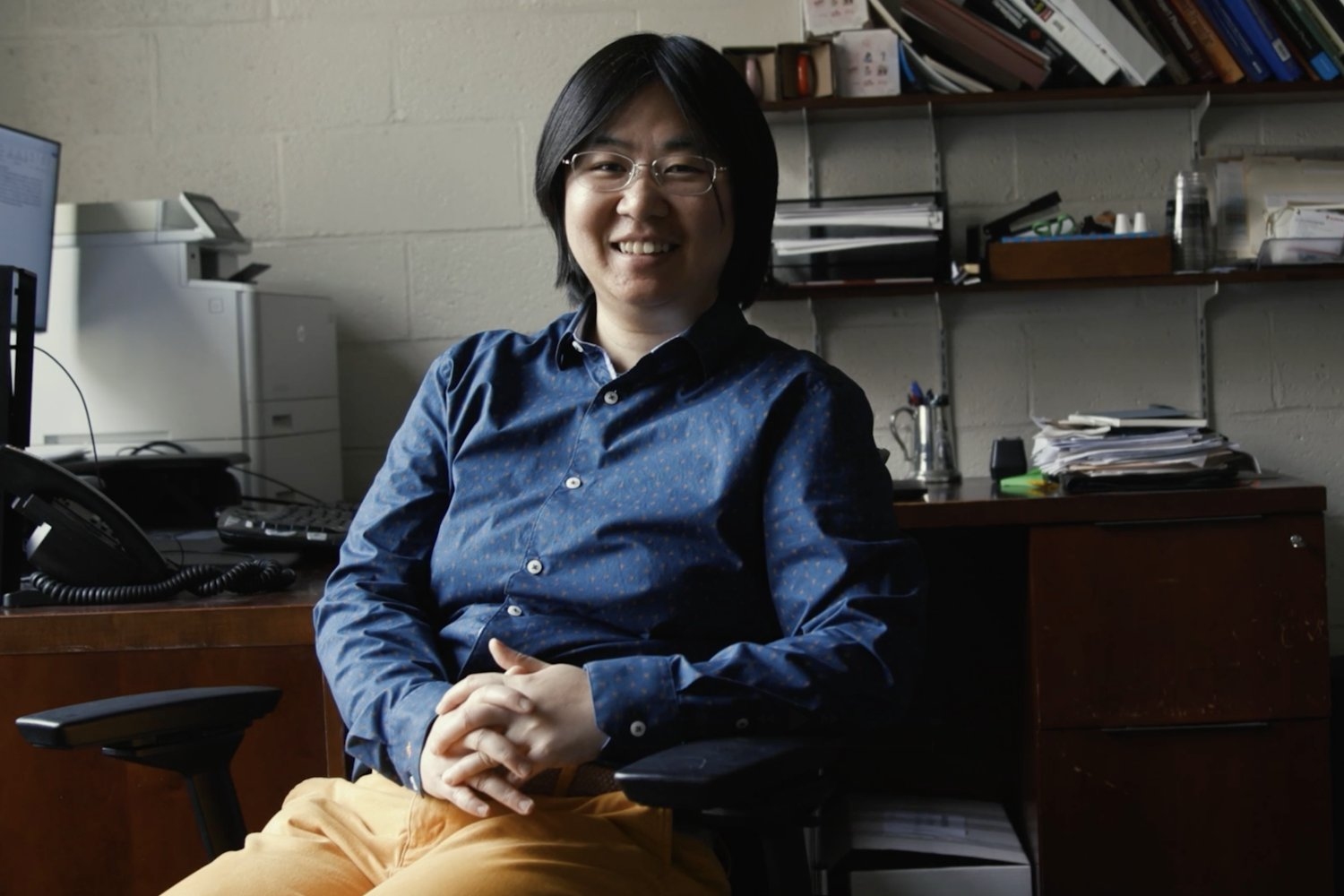
Sili Deng, the Doherty Chair in Ocean Utilization and associate professor of mechanical engineering at MIT, is leading research to drive the transition from the heavy dependence on fossil fuels to renewable energy with storage.

“I was first introduced to flame synthesis in my junior year in college,” Deng says. “I realized you can actually burn things to make things, [and] that was really fascinating.”

Deng says she ultimately picked combustion as a focus of her work because she likes the intellectual challenge the concept offers. “In combustion you have chemistry, and you have fluid mechanics. Each subject is very rich in science. This also has very strong engineering implications and applications.”

Deng’s research group targets three areas: building up fundamental knowledge on combustion processes and emissions; developing alternative fuels and metal combustion to replace fossil fuels; and synthesizing flame-based materials for catalysis and energy storage, which can bring down the cost of manufacturing battery materials.

One focus of the team has been on low-cost, low-emission manufacturing of cathode materials for lithium-ion batteries. Lithium-ion batteries play an increasingly critical role in transportation electrification (e.g., batteries for electric vehicles) and grid energy storage for electricity that is generated from renewable energy sources like wind and solar. Deng’s team has developed a technology they call flame-assisted spray pyrolysis, or FASP, which can help reduce the high manufacturing costs associated with cathode materials.

FASP is based on flame synthesis, a technology that dates back nearly 3,000 years. In ancient China, this was the primary way black ink materials were made. “[People burned] vegetables or woods, such that afterwards they can collect the solidified smoke,” Deng explains. “For our battery applications, we can try to fit in the same formula, but of course with new tweaks.”

The team is also interested in developing alternative fuels, including looking at the use of metals like aluminum to power rockets. “We’re interested in utilizing aluminum as a fuel for civil applications,” Deng says, because aluminum is abundant in the earth, cheap, and it’s available globally. “What we are trying to do is to understand [aluminum combustion] and be able to tailor its ignition and propagation properties.”

Among other accolades, Deng is a 2025 recipient of the Hiroshi Tsuji Early Career Researcher Award from the Combustion Institute, an award that recognizes excellence in fundamental or applied combustion science research.

© Photo: John Freidah/MIT MechE

Associate Professor Sili Deng

How Heat Pumps Fit Into the Future Grid

By: newenergy

As more homes in the UK move away from gas heating systems, the need for a sustainable but effective method of heating and providing hot water for the home has become paramount. Heat pumps are rapidly emerging as a lead player in the game of decarbonised energy systems. But they are more than just efficient …

The post How Heat Pumps Fit Into the Future Grid appeared first on Alternative Energy HQ.

Transforming boating, with solar power

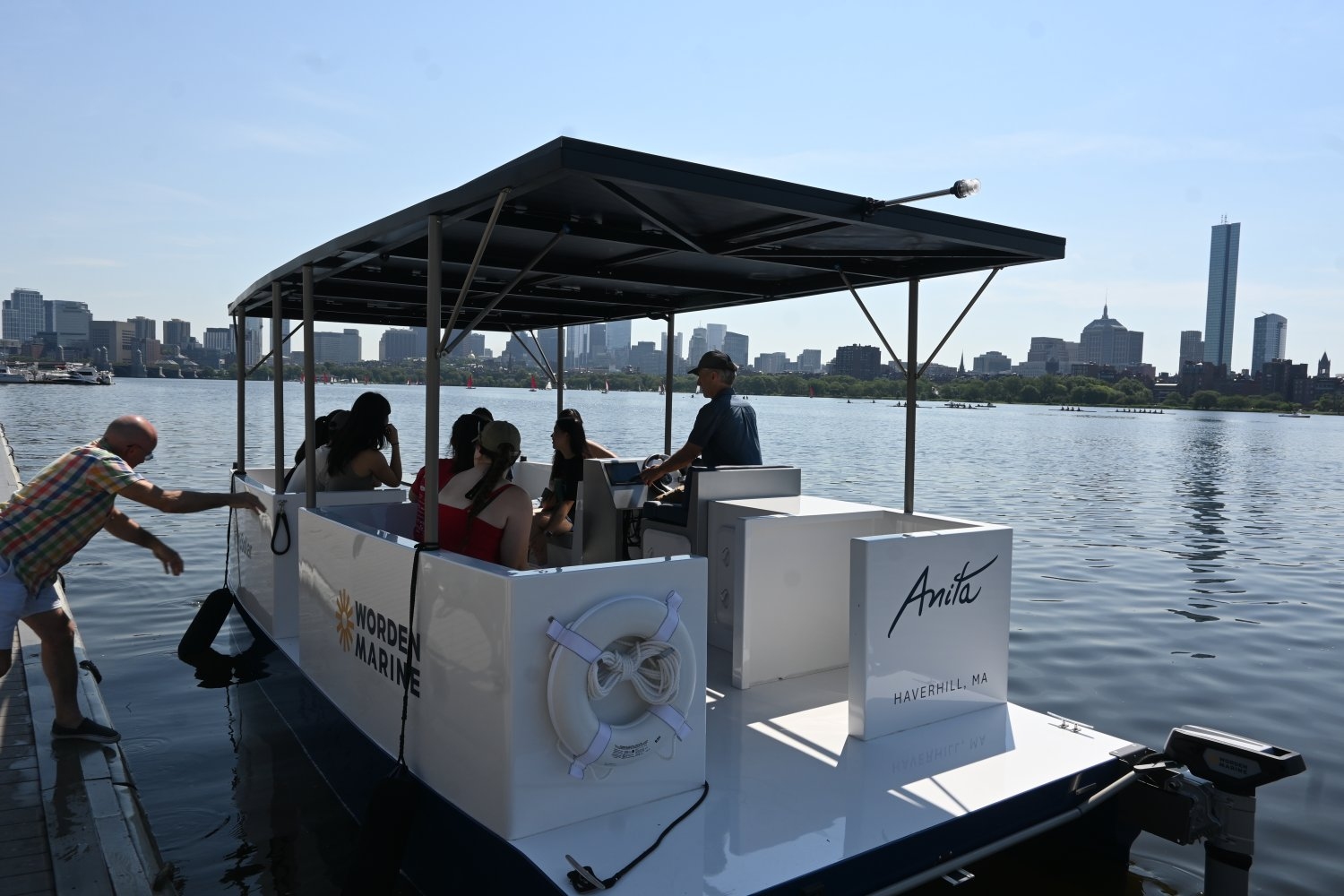
The MIT Sailing Pavilion hosted an altogether different marine vessel recently: a prototype of a solar electric boat developed by James Worden ’89, the founder of the MIT Solar Electric Vehicle Team (SEVT). Worden visited the pavilion on a sizzling, sunny day in late July to offer students from the SEVT, the MIT Edgerton Center, MIT Sea Grant, and the broader community an inside look at the Anita, named for his late wife.

Worden’s fascination with solar power began at age 10, when he picked up a solar chip at a “hippy-like” conference in his hometown of Arlington, Massachusetts. “My eyes just lit up,” he says. He built his first solar electric vehicle in high school, fashioned out of cardboard and wood (taking first place at the 1984 Massachusetts Science Fair), and continued his journey at MIT, founding SEVT in 1986. It was through SEVT that he met his wife and lifelong business partner, Anita Rajan Worden ’90. Together, they founded two companies in the solar electric and hybrid vehicles space, and in 2022 launched a solar electric boat company.

On the Charles River, Worden took visitors for short rides on Anita, including a group of current SEVT students who peppered him with questions. The 20-foot pontoon boat, just 12 feet wide and 7 feet tall, is made of carbon fiber composites, single crystalline solar photovoltaic cells, and lithium iron phosphate battery cells. Ultimately, Worden envisions the prototype could have applications as mini-ferry boats and water taxis.

With warmth and humor, he drew parallels between the boat’s components and mechanics and those of the solar cars the students are building. “It’s fun! If you think about all the stuff you guys are doing, it’s all the same stuff,” he told them, “optimizing all the different systems and making them work.” He also explained the design considerations unique to boating applications, like refining the hull shape for efficiency and maneuverability in variable water and wind conditions, and the critical importance of protecting wiring and controls from open water and condensate.

“Seeing Anita in all its glory was super cool,” says Nicole Lin, vice captain of SEVT. “When I first saw it, I could immediately map the different parts of the solar car to its marine counterparts, which was astonishing to see how far I’ve come as an engineer with SEVT. James also explained the boat using solar car terms, as he drew on his experience with solar cars for his solar boats. It blew my mind to see the engineering we learned with SEVT in action.”

Over the years, the Wordens have been avid supporters of SEVT and the Edgerton Center, so the visit was, in part, a way to pay it forward to MIT. “There’s a lot of connections,” he says. He’s still awed by the fact that Harold “Doc” Edgerton, upon learning about his interest in building solar cars, carved out a lab space for him to use in Building 20 — as a first-year student. And a few years ago, as Worden became interested in marine vessels, he tapped Sea Grant Education Administrator Drew Bennett for a 90-minute whiteboard lecture, “MIT fire-hose style,” on hydrodynamics. “It was awesome!” he says.

© Photo: Sarah Foote

A group of visitors sets off from the dock for a cruise around the Charles River. The Anita weighs about 2,800 pounds and can accommodate six passengers at a time.

Trump Spreads Desperate Lies to Deflect Blame for High Energy Prices

By: newenergy

Renewable Energy is Not Causing Energy Cost Spikes, Coal is Washington, D.C. – Today, Donald Trump published on Truth Social that “Any State that has built and relied on WINDMILLS and SOLAR for power are seeing RECORD BREAKING INCREASES IN ELECTRICITY AND ENERGY COSTS.” This is false.   Energy Innovation reported that “states with the largest increases in wind and …

The post Trump Spreads Desperate Lies to Deflect Blame for High Energy Prices appeared first on Alternative Energy HQ.

Jessika Trancik named director of the Sociotechnical Systems Research Center

Jessika Trancik, a professor in MIT’s Institute for Data, Systems, and Society, has been named the new director of the Sociotechnical Systems Research Center (SSRC), effective July 1. The SSRC convenes and supports researchers focused on problems and solutions at the intersection of technology and its societal impacts.

Trancik conducts research on technology innovation and energy systems. At the Trancik Lab, she and her team develop methods drawing on engineering knowledge, data science, and policy analysis. Their work examines the pace and drivers of technological change, helping identify where innovation is occurring most rapidly, how emerging technologies stack up against existing systems, and which performance thresholds matter most for real-world impact. Her models have been used to inform government innovation policy and have been applied across a wide range of industries.

“Professor Trancik’s deep expertise in the societal implications of technology, and her commitment to developing impactful solutions across industries, make her an excellent fit to lead SSRC,” says Maria C. Yang, interim dean of engineering and William E. Leonhard (1940) Professor of Mechanical Engineering.

Much of Trancik’s research focuses on the domain of energy systems, and establishing methods for energy technology evaluation, including of their costs, performance, and environmental impacts. She covers a wide range of energy services — including electricity, transportation, heating, and industrial processes. Her research has applications in solar and wind energy, energy storage, low-carbon fuels, electric vehicles, and nuclear fission. Trancik is also known for her research on extreme events in renewable energy availability.

A prolific researcher, Trancik has helped measure progress and inform the development of solar photovoltaics, batteries, electric vehicle charging infrastructure, and other low-carbon technologies — and anticipate future trends. One of her widely cited contributions includes quantifying learning rates and identifying where targeted investments can most effectively accelerate innovation. These tools have been used by U.S. federal agencies, international organizations, and the private sector to shape energy R&D portfolios, climate policy, and infrastructure planning.

Trancik is committed to engaging and informing the public on energy consumption. She and her team developed the app carboncounter.com, which helps users choose cars with low costs and low environmental impacts.

As an educator, Trancik teaches courses for students across MIT’s five schools and the MIT Schwarzman College of Computing.

“The question guiding my teaching and research is how do we solve big societal challenges with technology, and how can we be more deliberate in developing and supporting technologies to get us there?” Trancik said in an article about course IDS.521/IDS.065 (Energy Systems for Climate Change Mitigation).

Trancik received her undergraduate degree in materials science and engineering from Cornell University. As a Rhodes Scholar, she completed her PhD in materials science at the University of Oxford. She subsequently worked for the United Nations in Geneva, Switzerland, and the Earth Institute at Columbia University. After serving as an Omidyar Research Fellow at the Santa Fe Institute, she joined MIT in 2010 as a faculty member.

Trancik succeeds Fotini Christia, the Ford International Professor of Social Sciences in the Department of Political Science and director of IDSS, who previously served as director of SSRC.

Professor Jessika Trancik conducts research on technology innovation and energy systems.

Rooftop panels, EV chargers, and smart thermostats could chip in to boost power grid resilience

There’s a lot of untapped potential in our homes and vehicles that could be harnessed to reinforce local power grids and make them more resilient to unforeseen outages, a new study shows.

In response to a cyber attack or natural disaster, a backup network of decentralized devices — such as residential solar panels, batteries, electric vehicles, heat pumps, and water heaters — could restore electricity or relieve stress on the grid, MIT engineers say.

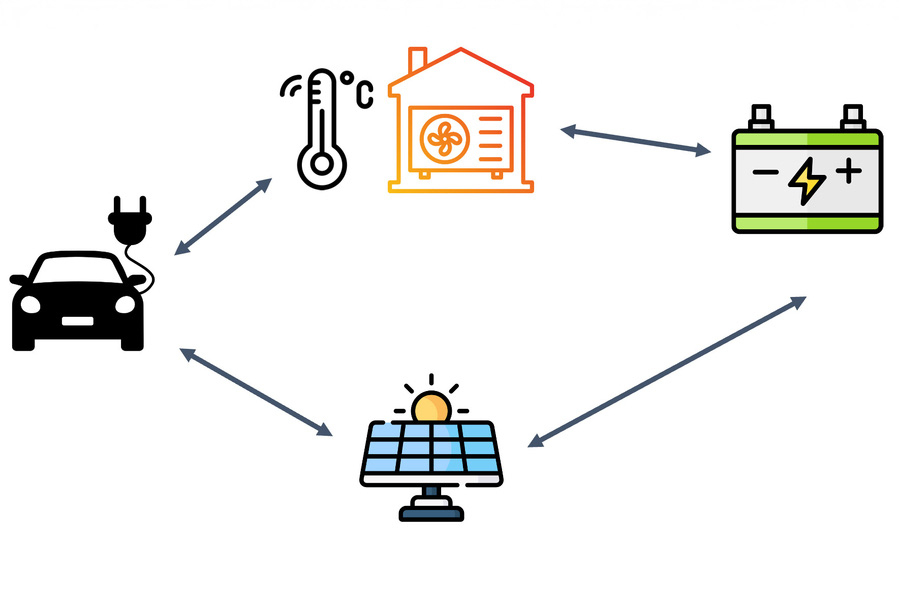
Such devices are “grid-edge” resources found close to the consumer rather than near central power plants, substations, or transmission lines. Grid-edge devices can independently generate, store, or tune their consumption of power. In their study, the research team shows how such devices could one day be called upon to either pump power into the grid, or rebalance it by dialing down or delaying their power use.

In a paper appearing this week in the Proceedings of the National Academy of Sciences, the engineers present a blueprint for how grid-edge devices could reinforce the power grid through a “local electricity market.” Owners of grid-edge devices could subscribe to a regional market and essentially loan out their device to be part of a microgrid or a local network of on-call energy resources.

In the event that the main power grid is compromised, an algorithm developed by the researchers would kick in for each local electricity market, to quickly determine which devices in the network are trustworthy. The algorithm would then identify the combination of trustworthy devices that would most effectively mitigate the power failure, by either pumping power into the grid or reducing the power they draw from it, by an amount that the algorithm would calculate and communicate to the relevant subscribers. The subscribers could then be compensated through the market, depending on their participation.

The team illustrated this new framework through a number of grid attack scenarios, in which they considered failures at different levels of a power grid, from various sources such as a cyber attack or a natural disaster. Applying their algorithm, they showed that various networks of grid-edge devices were able to dissolve the various attacks.

The results demonstrate that grid-edge devices such as rooftop solar panels, EV chargers, batteries, and smart thermostats (for HVAC devices or heat pumps) could be tapped to stabilize the power grid in the event of an attack.

“All these small devices can do their little bit in terms of adjusting their consumption,” says study co-author Anu Annaswamy, a research scientist in MIT’s Department of Mechanical Engineering. “If we can harness our smart dishwashers, rooftop panels, and EVs, and put our combined shoulders to the wheel, we can really have a resilient grid.”

The study’s MIT co-authors include lead author Vineet Nair and John Williams, along with collaborators from multiple institutions including the Indian Institute of Technology, the National Renewable Energy Laboratory, and elsewhere.

Power boost

The team’s study is an extension of their broader work in adaptive control theory and designing systems to automatically adapt to changing conditions. Annaswamy, who leads the Active-Adaptive Control Laboratory at MIT, explores ways to boost the reliability of renewable energy sources such as solar power.

“These renewables come with a strong temporal signature, in that we know for sure the sun will set every day, so the solar power will go away,” Annaswamy says. “How do you make up for the shortfall?”

The researchers found the answer could lie in the many grid-edge devices that consumers are increasingly installing in their own homes.

“There are lots of distributed energy resources that are coming up now, closer to the customer rather than near large power plants, and it’s mainly because of individual efforts to decarbonize,” Nair says. “So you have all this capability at the grid edge. Surely we should be able to put them to good use.”

While considering ways to deal with drops in energy from the normal operation of renewable sources, the team also began to look into other causes of power dips, such as from cyber attacks. They wondered, in these malicious instances, whether and how the same grid-edge devices could step in to stabilize the grid following an unforeseen, targeted attack.

Attack mode

In their new work, Annaswamy, Nair, and their colleagues developed a framework for incorporating grid-edge devices, and in particular, internet-of-things (IoT) devices, in a way that would support the larger grid in the event of an attack or disruption. IoT devices are physical objects that contain sensors and software that connect to the internet.

For their new framework, named EUREICA (Efficient, Ultra-REsilient, IoT-Coordinated Assets), the researchers start with the assumption that one day, most grid-edge devices will also be IoT devices, enabling rooftop panels, EV chargers, and smart thermostats to wirelessly connect to a larger network of similarly independent and distributed devices. 

The team envisions that for a given region, such as a community of 1,000 homes, there exists a certain number of IoT devices that could potentially be enlisted in the region’s local network, or microgrid. Such a network would be managed by an operator, who would be able to communicate with operators of other nearby microgrids.

If the main power grid is compromised or attacked, operators would run the researchers’ decision-making algorithm to determine trustworthy devices within the network that can pitch in to help mitigate the attack.

The team tested the algorithm on a number of scenarios, such as a cyber attack in which all smart thermostats made by a certain manufacturer are hacked to raise their setpoints simultaneously to a degree that dramatically alters a region’s energy load and destabilizes the grid. The researchers also considered attacks and weather events that would shut off the transmission of energy at various levels and nodes throughout a power grid.

“In our attacks we consider between 5 and 40 percent of the power being lost. We assume some nodes are attacked, and some are still available and have some IoT resources, whether a battery with energy available or an EV or HVAC device that’s controllable,” Nair explains. “So, our algorithm decides which of those houses can step in to either provide extra power generation to inject into the grid or reduce their demand to meet the shortfall.”

In every scenario that they tested, the team found that the algorithm was able to successfully restabilize the grid and mitigate the attack or power failure. They acknowledge that to put in place such a network of grid-edge devices will require buy-in from customers, policymakers, and local officials, as well as innovations such as advanced power inverters that enable EVs to inject power back into the grid.

“This is just the first of many steps that have to happen in quick succession for this idea of local electricity markets to be implemented and expanded upon,” Annaswamy says. “But we believe it’s a good start.”

This work was supported, in part, by the U.S. Department of Energy and the MIT Energy Initiative.

© Credit: Courtesy of the researchers

An example of the different types of IoT devices, physical objects that contain sensors and software that connect to the internet, that are coordinated to increase power grid resilience.

Tackling the energy revolution, one sector at a time

As a major contributor to global carbon dioxide (CO2) emissions, the transportation sector has immense potential to advance decarbonization. However, a zero-emissions global supply chain requires re-imagining reliance on a heavy-duty trucking industry that emits 810,000 tons of CO2, or 6 percent of the United States’ greenhouse gas emissions, and consumes 29 billion gallons of diesel annually in the U.S. alone.

A new study by MIT researchers, presented at the recent American Society of Mechanical Engineers 2024 International Design Engineering Technical Conferences and Computers and Information in Engineering Conference, quantifies the impact of a zero-emission truck’s design range on its energy storage requirements and operational revenue. The multivariable model outlined in the paper allows fleet owners and operators to better understand the design choices that impact the economic feasibility of battery-electric and hydrogen fuel cell heavy-duty trucks for commercial application, equipping stakeholders to make informed fleet transition decisions.

“The whole issue [of decarbonizing trucking] is like a very big, messy pie. One of the things we can do, from an academic standpoint, is quantify some of those pieces of pie with modeling, based on information and experience we’ve learned from industry stakeholders,” says ZhiYi Liang, PhD student on the renewable hydrogen team at the MIT K. Lisa Yang Global Engineering and Research Center (GEAR) and lead author of the study. Co-authored by Bryony DuPont, visiting scholar at GEAR, and Amos Winter, the Germeshausen Professor in the MIT Department of Mechanical Engineering, the paper elucidates operational and socioeconomic factors that need to be considered in efforts to decarbonize heavy-duty vehicles (HDVs).

Operational and infrastructure challenges

The team’s model shows that a technical challenge lies in the amount of energy that needs to be stored on the truck to meet the range and towing performance needs of commercial trucking applications. Due to the high energy density and low cost of diesel, existing diesel drivetrains remain more competitive than alternative lithium battery-electric vehicle (Li-BEV) and hydrogen fuel-cell-electric vehicle (H2 FCEV) drivetrains. Although Li-BEV drivetrains have the highest energy efficiency of all three, they are limited to short-to-medium range routes (under 500 miles) with low freight capacity, due to the weight and volume of the onboard energy storage needed. In addition, the authors note that existing electric grid infrastructure will need significant upgrades to support large-scale deployment of Li-BEV HDVs.

While the hydrogen-powered drivetrain has a significant weight advantage that enables higher cargo capacity and routes over 750 miles, the current state of hydrogen fuel networks limits economic viability, especially once operational cost and projected revenue are taken into account. Deployment will most likely require government intervention in the form of incentives and subsidies to reduce the price of hydrogen by more than half, as well as continued investment by corporations to ensure a stable supply. Also, as H2-FCEVs are still a relatively new technology, the ongoing design of conformal onboard hydrogen storage systems — one of which is the subject of Liang’s PhD — is crucial to successful adoption into the HDV market.

The current efficiency of diesel systems is a result of technological developments and manufacturing processes established over many decades, a precedent that suggests similar strides can be made with alternative drivetrains. However, interactions with fleet owners, automotive manufacturers, and refueling network providers reveal another major hurdle in the way that each “slice of the pie” is interrelated — issues must be addressed simultaneously because of how they affect each other, from renewable fuel infrastructure to technological readiness and capital cost of new fleets, among other considerations. And first steps into an uncertain future, where no one sector is fully in control of potential outcomes, is inherently risky. 

“Besides infrastructure limitations, we only have prototypes [of alternative HDVs] for fleet operator use, so the cost of procuring them is high, which means there isn’t demand for automakers to build manufacturing lines up to a scale that would make them economical to produce,” says Liang, describing just one step of a vicious cycle that is difficult to disrupt, especially for industry stakeholders trying to be competitive in a free market. 

Quantifying a path to feasibility

“Folks in the industry know that some kind of energy transition needs to happen, but they may not necessarily know for certain what the most viable path forward is,” says Liang. Although there is no singular avenue to zero emissions, the new model provides a way to further quantify and assess at least one slice of pie to aid decision-making.

Other MIT-led efforts aimed at helping industry stakeholders navigate decarbonization include an interactive mapping tool developed by Danika MacDonell, Impact Fellow at the MIT Climate and Sustainability Consortium (MCSC); alongside Florian Allroggen, executive director of MITs Zero Impact Aviation Alliance; and undergraduate researchers Micah Borrero, Helena De Figueiredo Valente, and Brooke Bao. The MCSC’s Geospatial Decision Support Tool supports strategic decision-making for fleet operators by allowing them to visualize regional freight flow densities, costs, emissions, planned and available infrastructure, and relevant regulations and incentives by region.

While current limitations reveal the need for joint problem-solving across sectors, the authors believe that stakeholders are motivated and ready to tackle climate problems together. Once-competing businesses already appear to be embracing a culture shift toward collaboration, with the recent agreement between General Motors and Hyundai to explore “future collaboration across key strategic areas,” including clean energy. 

Liang believes that transitioning the transportation sector to zero emissions is just one part of an “energy revolution” that will require all sectors to work together, because “everything is connected. In order for the whole thing to make sense, we need to consider ourselves part of that pie, and the entire system needs to change,” says Liang. “You can’t make a revolution succeed by yourself.” 

The authors acknowledge the MIT Climate and Sustainability Consortium for connecting them with industry members in the HDV ecosystem; and the MIT K. Lisa Yang Global Engineering and Research Center and MIT Morningside Academy for Design for financial support.

© Photo: Bob Adams/Flickr

A new study by MIT researchers quantifies the impact of a zero-emission truck’s design range on its energy storage requirements and operational revenue.
❌