Reading view

There are new articles available, click to refresh the page.

New Mazda 6e Costs Over Twice As Much In The UK Than In China
  • The Mazda6e will be available exclusively with a 78 kWh battery.
  • Power is provided by a rear-mounted motor with 254 hp.
  • It shares a platform with China’s Changan Deepal SL03 sedan.

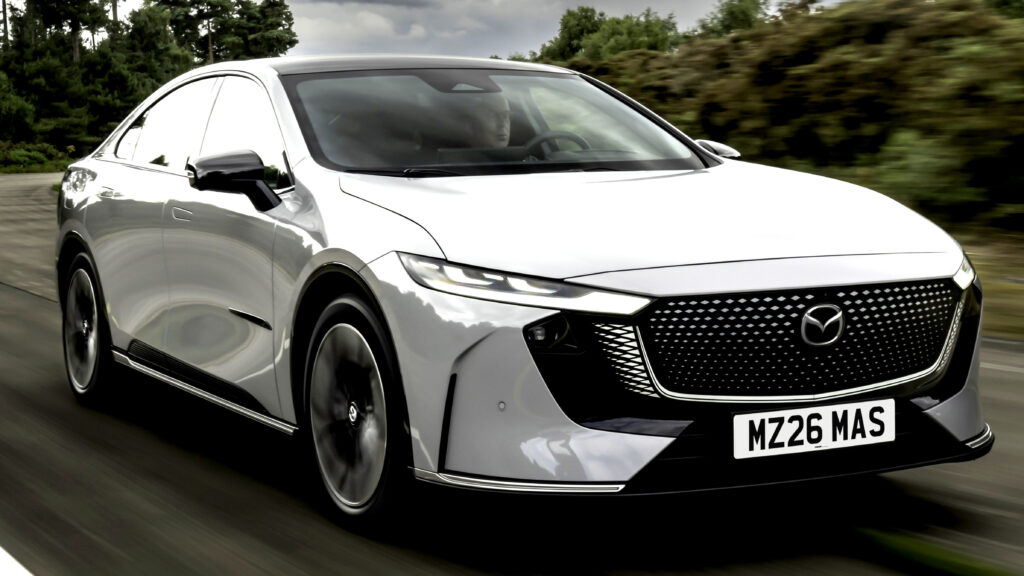
Mazda has taken its time getting into the EV game, aside from the underwhelming and slow-selling MX-30. But now, it finally has a compelling electric sedan in the lineup in the form of the new 6e, which has just landed in the UK. There’s a bit of sticker shock, though, especially when you compare it to pricing in China, where it’s built and sold as the EZ-6 alongside the EZ-60 SUV.

A single electric powertrain setup will be offered for UK buyers, though shoppers can choose between two trim levels. The entry-level version, dubbed the Takumi, is priced at £38,995 (around $53,200 at today’s exchange rates), landing just shy of the €44,900 (US$53,400) starting price in Germany.

Read: Mazda’s Sportier 6e Sedan Launches With A Price Tag That Feels Like A Typo

On the surface,this pricing doesn’t seem too far off the mark. An entry-level Tesla Model 3 starts at £37,990 ($51,900) in the UK, and the Mazda wants to be positioned as a slightly more premium offering. Even so, the UK price tag looks far less compelling when held up against what customers in China are paying.

Twice The Price, Same Car

\\\\\\\\\\\\\\\\\\\\\\

In the People’s Republic, where the 6e is built, the entry-level model starts at 159,800 yuan (£16,900 / $23,100), and the flagship model at 181,800 yuan (£19,300 / $26,300). By comparison, UK buyers are being asked to pay more than twice the price for the same vehicle. Specifically, 2.3 times more.

This discrepancy may come as a shock to many buyers, but it’s not without precedent, as it’s common for EVs built and sold in China to be far cheaper there than they are in overseas markets.

However, keep in mind that, that, unlike mainland Europe, the UK doesn’t impose specific tariffs on Chinese cars. There’s just the standard 10 percent import duty, plus a 20 percent VAT on all new vehicles, no matter where they’re made. That tax is included in the advertised price, unlike in the US.

\\\\\\\\\\\\\\\\\\\\\\\\\

Battery and Charging Basics

Both trim levels of the 6e sold in the UK come with a 78 kWh lithium-ion phosphate battery, offering a solid driving range of 348 miles (560 km) and the ability to charge from 10-80 percent in 24 minutes.

The 6e doesn’t promise to be a particularly spritely performer, however, as the rear-mounted electric motor is only good for 254 hp and 214 lb-ft (290 Nm) of torque, meaning the sedan needs 7.9 seconds to hit 62 mph (100 km/h).

The higher-end Takumi Plus starts at £39,995 ($54,600) and adds more upscale finishes, including tan Nappa leather, titanium-look accents, synthetic suede upholstery, and a panoramic glass roof.

Despite appearances, the Mazda6e isn’t a purely in-house creation from Hiroshima. It’s based on the Changan Deepal SL03 (also known as the L07), sharing its platform and much of its core engineering with the Chinese model.
\\\\\\\\\\\\\\\\\\\\

Waymo’s Ready For One Of Europe’s Busiest Cities, But Is The City Ready?

  • Waymo plans to launch paid UK robotaxi service as soon as September.
  • Mapping London streets now using Jaguar I-Pace vehicles with drivers.
  • Cars equipped with radar, lidar, and cameras to capture road data.

Londoners may soon find themselves riding in the front seat of the future, as Waymo prepares to bring its fully autonomous robotaxis to the streets of the UK. The self-driving tech firm has announced plans to launch in London, taking advantage of new regulations that will permit robotaxis to operate in the city starting in the second half of this year.

Waymo’s UK rollout comes even as scrutiny builds back home. This week, the NHTSA opened an investigation after one of the company’s robotaxis struck a child near an elementary school in Santa Monica, California, during drop-off hours.

Read: People Get Paid $24 Just To Walk Up And Shut A Robotaxi Door

London’s Local Transport Minister Lilian Greenwood has confirmed that Waymo, which is owned by Google-parent Alphabet, will launch a pilot service in April, before launching in full as early as September.

 Waymo’s Ready For One Of Europe’s Busiest Cities, But Is The City Ready?

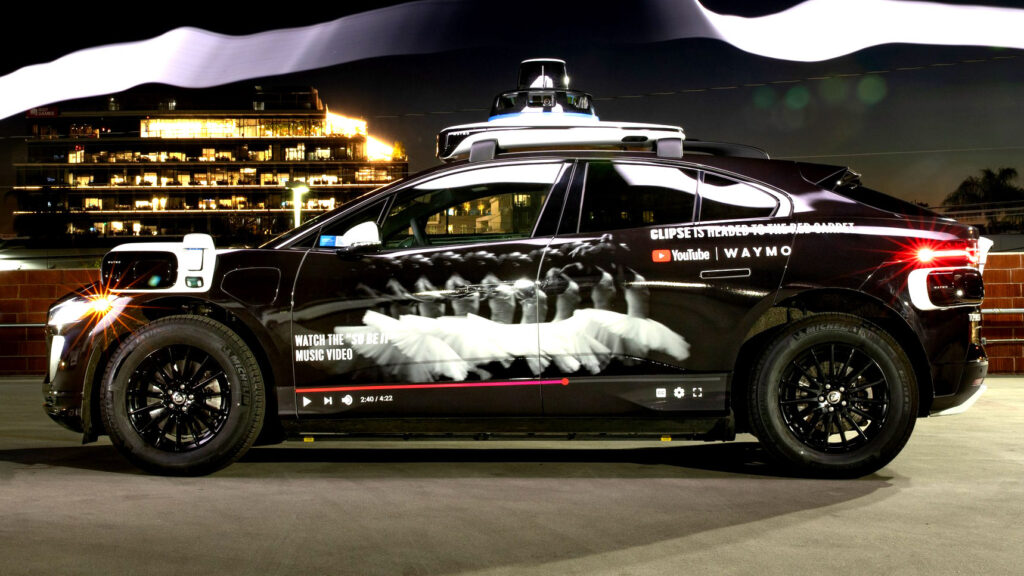
To ensure the robotaxis can handle the intricacies of London’s roads, several of its vehicles are already being tested with a safety driver behind the wheel, helping map the city’s streets.

These test vehicles typically operate 24 hours a day, 7 days a week, and are driven in select London boroughs, including Camden, Hackney, Hammersmith and Fulham, Lewisham, Newham, and the City of Westminster.

Data Collection Meets Cybersecurity Requirements

Waymo says it’s currently gathering data across the widest possible range of London streets, using the advanced cameras, lidar, and radar fitted to the Jaguar I-Pace models.

Read: Waymo’s New “Ojaj” Robotaxi Crashed Into Parked Cars, But It Wasn’t Driving Itself

In a statement to the BBC, Minister Greenwood emphasized that all Waymo robotaxis will be subject to strict safety criteria before they’re allowed on the road. This includes resilience against cyber attacks and secure software protocols to protect against hacking.

 Waymo’s Ready For One Of Europe’s Busiest Cities, But Is The City Ready?

Once the vehicles have sufficiently mapped London’s roads and meet all regulatory standards, users will be able to request a ride through the Waymo app. The service is expected to carry a “premium” price point, with fares adjusted upward during periods of high demand, though exact pricing has not yet been announced.

Growing Competition

Waymo isn’t the only company eyeing the capital. Both Uber and Lyft have expressed interest in launching robotaxi services in London once the legal framework allows. With regulators clearing a path for autonomous vehicles, the city is shaping up to be a key battleground for the next phase of ride-hailing innovation.

 Waymo’s Ready For One Of Europe’s Busiest Cities, But Is The City Ready?

EVs Outsold Gas Cars In Europe For The First Time, But It’s Complicated

  • Hybrids topped Europe’s powertrain sales with 4.5 million units.
  • Plug-in hybrids overtook diesel with a 33.4 percent sales increase.
  • In December, BEVs outsold gas cars for the first time in Europe.

Electrified vehicles are no longer playing second fiddle in Europe’s car market. Sales of battery-electric, plug-in hybrid, and traditional hybrid models climbed sharply across the continent last year, while demand for gasoline and diesel vehicles continued to shrink.

Read: One in 10 New Cars Sold in Europe Last Month Was Chinese

The shift picked up real momentum in December, when BEV sales pulled ahead of gas-powered cars for the first time in the European Union, even as policymakers were making plans to ease emissions regulations.

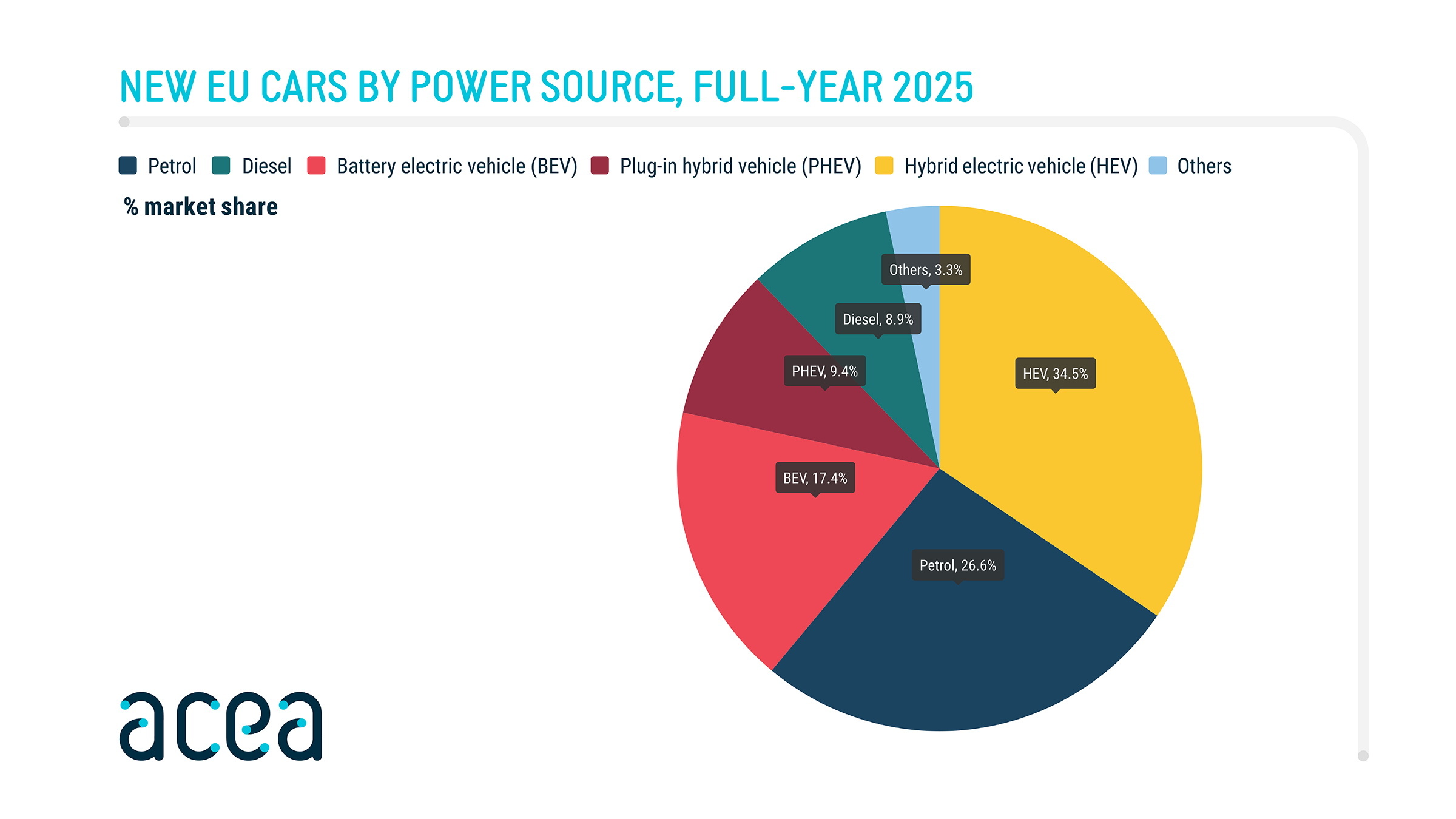
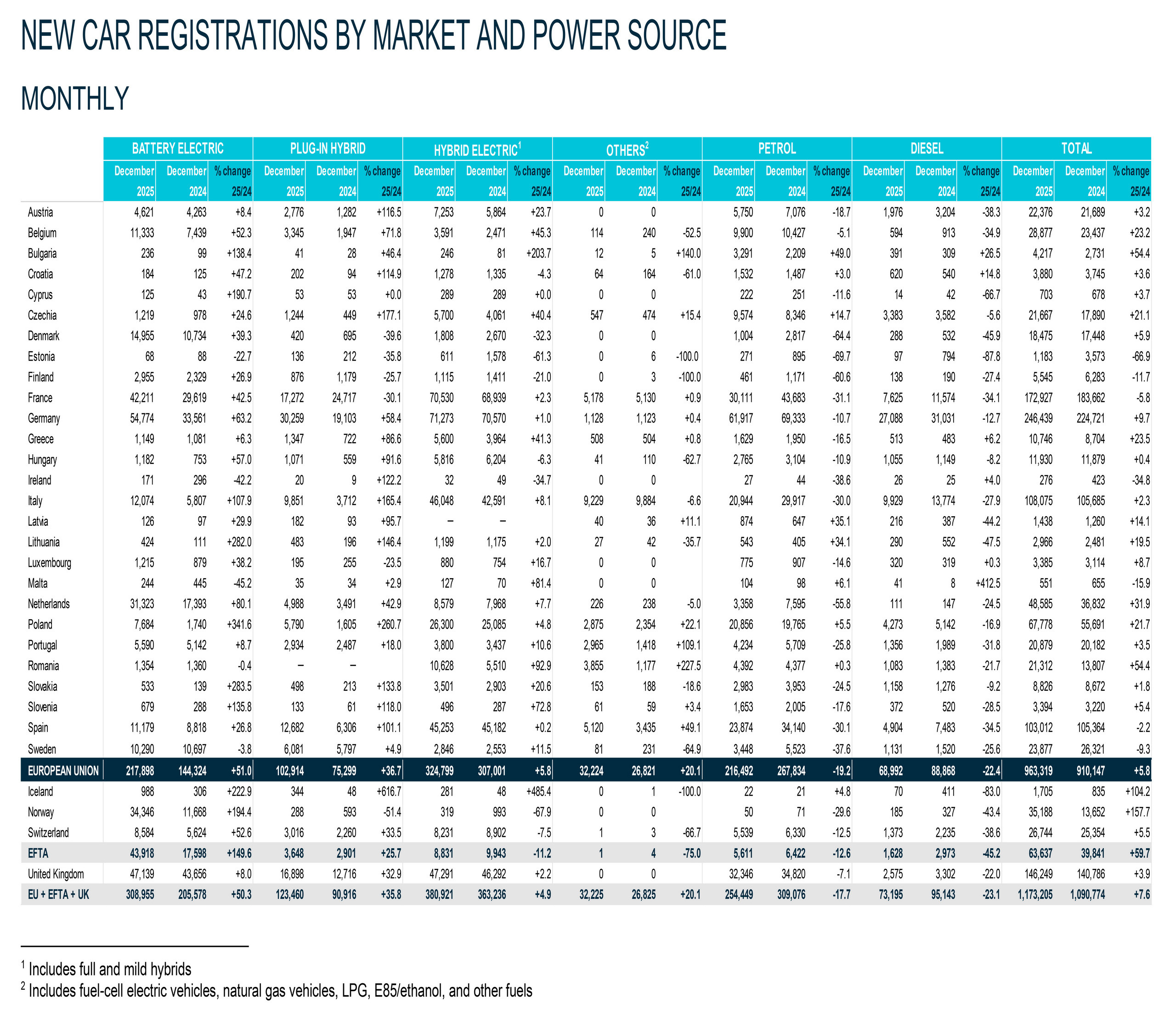
That month, BEVs accounted for 22.6 percent of the market, slipping just ahead of petrol cars at 22.5 percent. Hybrids held the largest share overall at 33.7 percent, followed by plug-in hybrids with 10.7 percent. Diesel fell further to 7.2 percent, while alternatives like LPG closed the list at 3.3 percent.

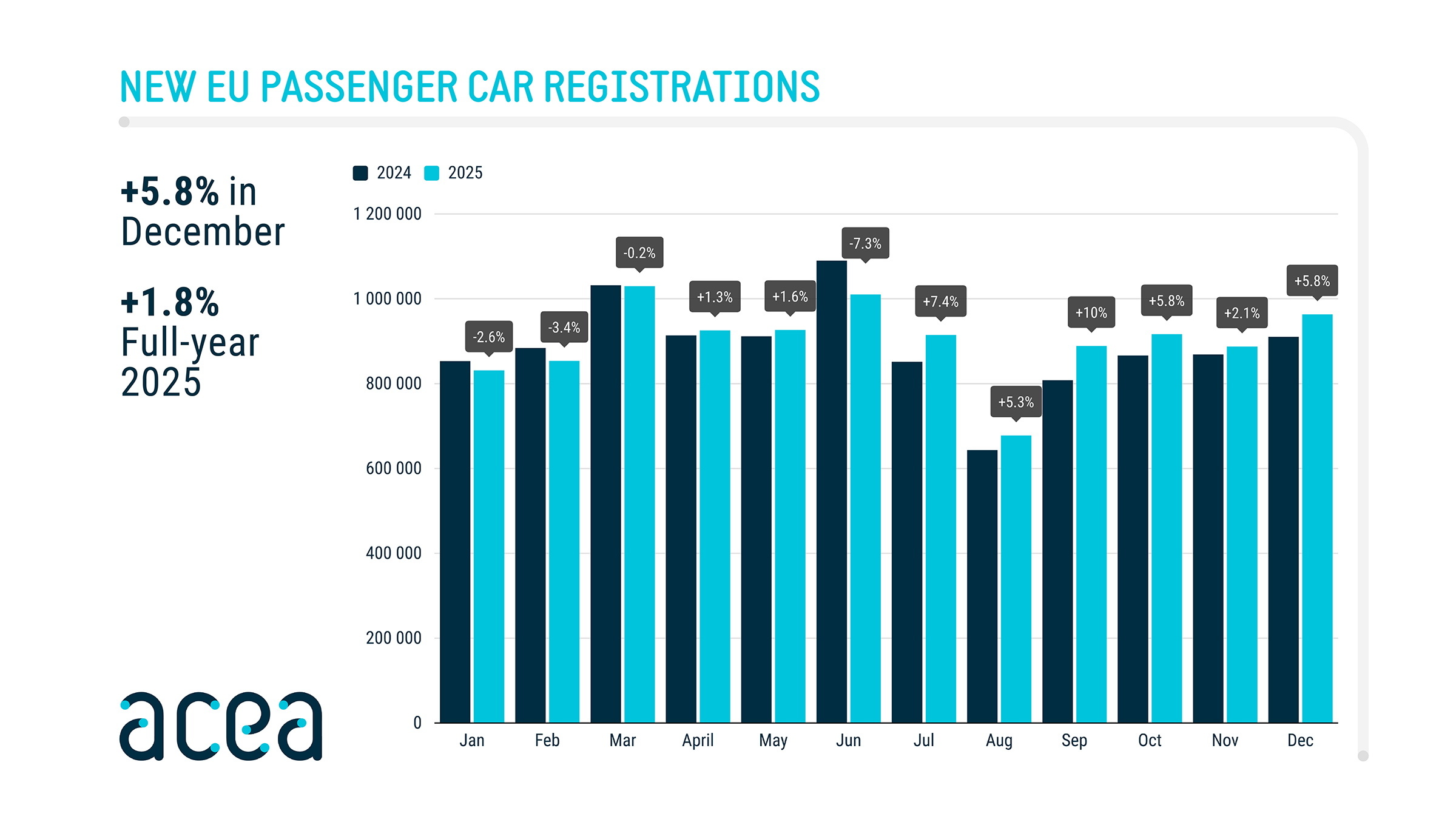
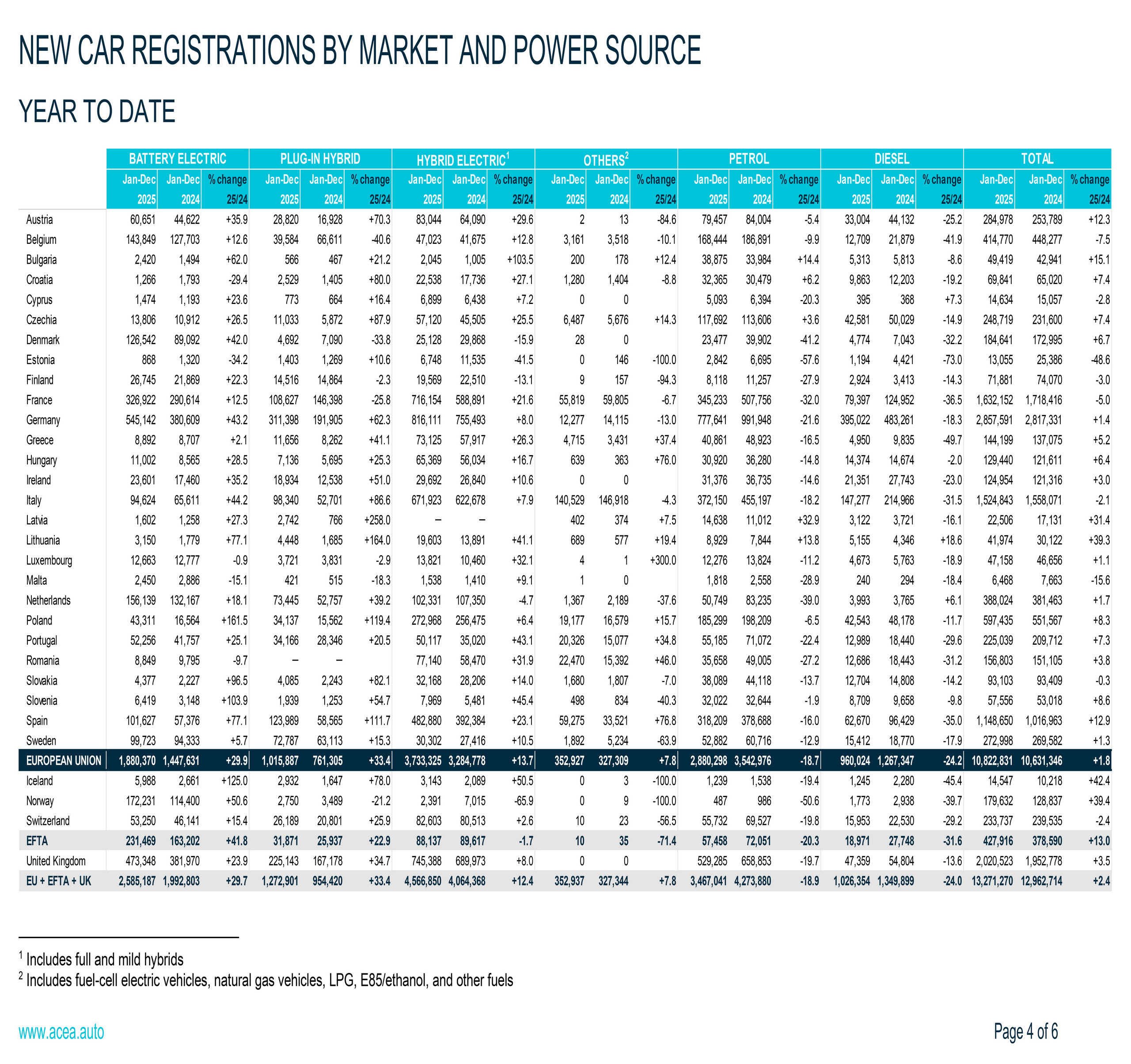
Across the European Union, the UK, and members of the European Free Trade Association, including Iceland, Norway, and Switzerland, a total of 13,271,270 new vehicles were sold throughout 2025. That marks a modest but notable 2.4 percent uptick from the previous year. Within that total, BEVs accounted for 2,585,187 sales, a significant 29.7 percent increase over the 1.9 million sold in 2024.

Hybrids Lead the Charge

 EVs Outsold Gas Cars In Europe For The First Time, But It’s Complicated

Despite the BEV surge, traditional hybrids took the crown as the continent’s best-selling powertrain last year. A total of 4,566,850 hybrids were sold, reflecting a 12.4 percent increase and pushing them past gasoline-powered cars for the first time.

In 2024, petrol models held a narrow lead with 4,273,880 units sold, but in 2025, that number dropped sharply by 18.9 percent to 3,467,041.

Similarly, demand for diesel cars fell by a considerable 24 percent, down from 1,349,899 to just 1,026,354 units. This allowed plug-in hybrids to overtake diesels, selling a total of 1,272,901, or a 33.4 percent rise from 2024.

December’s numbers laid bare the speed of change. BEV registrations soared to 308,955, up 50.3 percent compared to the same month a year earlier. That was enough to edge out gasoline car sales, which declined 17.7 percent to 254,449. Diesel models also slumped in December, with sales falling 23.1 percent to 73,195.

As in the January-December period, hybrids remained the most popular powertrain choice in December, with sales reaching 380,921, up 4.9 percent. Demand for plug-in hybrids also rose 35.8 percent to 123,460.

The Story Behind the Numbers

 EVs Outsold Gas Cars In Europe For The First Time, But It’s Complicated

While it’s easy to conclude that EVs outsold gas-powered cars entirely in December, that’s not entirely true. These figures from the European Automobile Manufacturers’ Association include full and mild hybrids in the ‘hybrid electric’ category, which led the industry in sales.

The vast majority of full hybrid and mild hybrids on sale use gas-powered combustion engines, whether that’s to drive the wheels, charge the battery pack, or a combination of both, so it would perhaps be more accurate to lump together hybrid electric and gas-powered vehicles into the same category. If that were the case, they would come out well ahead of BEVs.

 EVs Outsold Gas Cars In Europe For The First Time, But It’s Complicated
 EVs Outsold Gas Cars In Europe For The First Time, But It’s Complicated
 EVs Outsold Gas Cars In Europe For The First Time, But It’s Complicated
 EVs Outsold Gas Cars In Europe For The First Time, But It’s Complicated

What Jeep’s UK Boss Said About The Defender Might Hint At Wrangler’s Future

  • Jeep dropped the Wrangler in Europe over new regulations.
  • Jeep’s UK chief says a new version could arrive down the line.
  • He hopes the SUV can follow the path of Land Rover’s Defender.

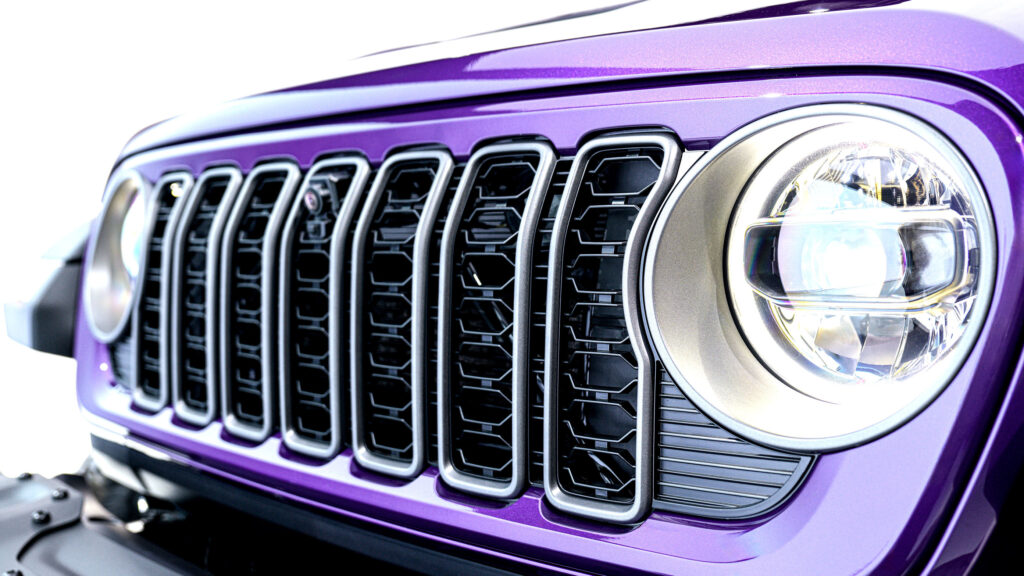
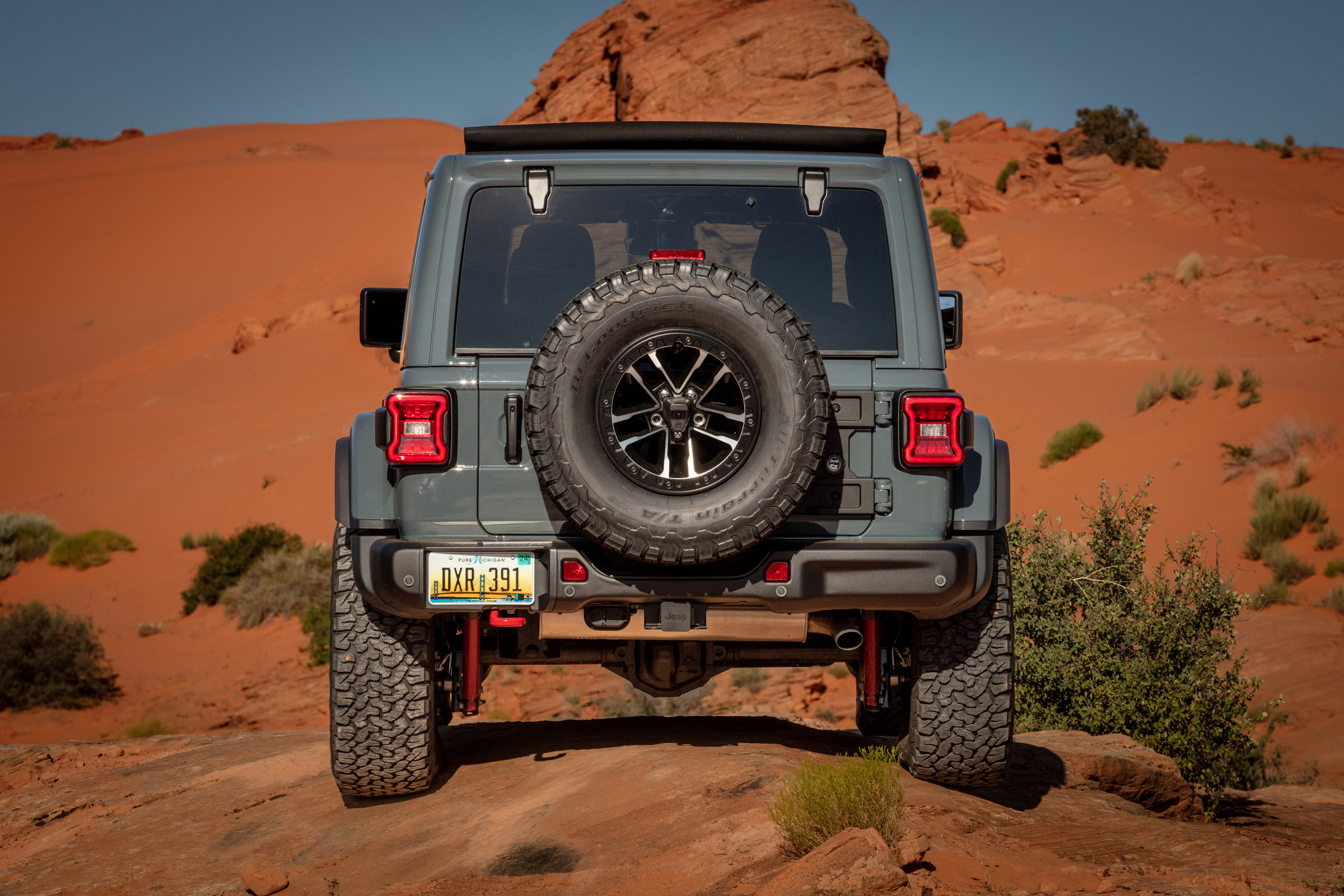
European buyers might soon get another shot at the Jeep Wrangler, after the model was recently discontinued across the continent. You’ll still find it at dealerships through the first half of 2026, but only what’s left in stock. After that, buyers will have to wait for Jeep to introduce the next-generation model.

More: Stellantis Quietly Kills Its Plug-In Hybrids In America

Jeep recently stopped taking new orders the current Wrangler in Europe, including the UK, because it no longer complies with updated GSR2 safety regulations. These require modern driver-assistance and monitoring systems, which the Wrangler lacks, along with updated cybersecurity protections.

On top of that, emissions played a role in its departure. The turbocharged 2.0-liter GME-T4 inline-four used in European models emits up to 269 grams of CO₂ per kilometer, putting it in the same category as some high-performance V8 SUVs. The fact that Jeep discontinued all hybrid variants in the US, probably didn’t help either.

It may be gone for now, but it won’t be gone forever.

Next Chapter in Sight

 What Jeep’s UK Boss Said About The Defender Might Hint At Wrangler’s Future
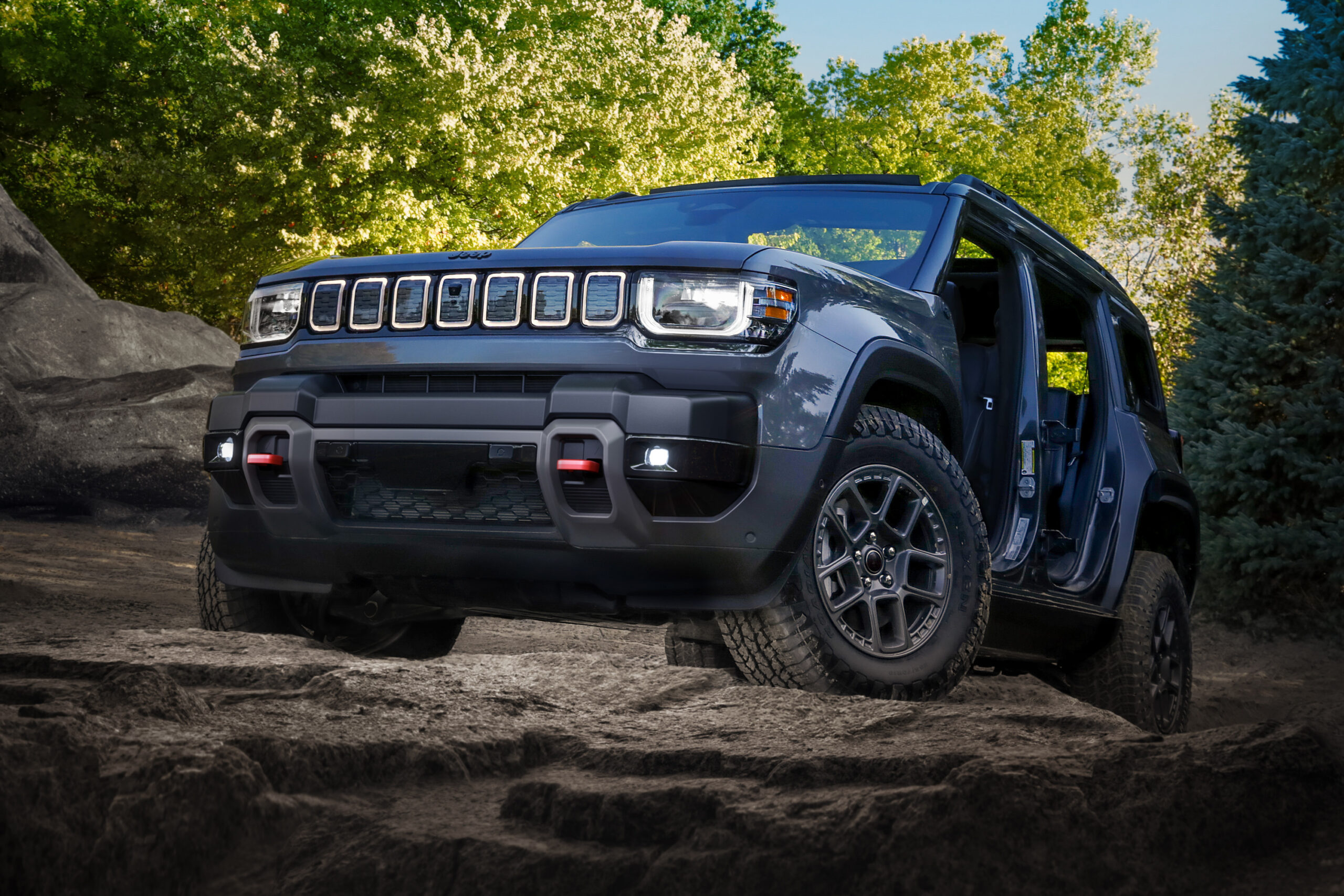
For now, the Wrangler will be replaced by the Recon in Europe

According to Jeep UK managing director Kris Cholmondeley, the current model has been “a victim of regulation” and he is confident there will be “another incarnation down the line.”

“I’ve had chats with the head of Europe and the head of the global team,” Cholmondeley told Auto Express. “I think we’re all aligned that we’d like to see it back – that’s what I would say. What and when? I don’t know. I honestly don’t know if it could come back as plug-in hybrid or full-electric. I just know the brand; it’s got such heritage, it seems silly to lose that.”

 What Jeep’s UK Boss Said About The Defender Might Hint At Wrangler’s Future

Lessons from the Defender

Although limited details are known about the next-generation Wrangler, it will almost certainly lean heavily on electrification with plug-in hybrid versions, and perhaps even an EV. Cholmondeley is hopeful that Jeep can replicate what Land Rover has done with the new Defender, making a future generation of the Wrangler more refined, while still retaining the off-roading abilities that have made it so iconic.

“Look at [the Land Rover] Defender,” he said. “If you can take something like a Wrangler and have a little bit of refinement, but still keep its personality, you see the hundreds [of sales] going to thousands, don’t you?”

Read: Jeep’s New Special Edition Looks Like It Borrowed A Bronco’s Sunday Best

While the Wrangler is one of Jeep’s most iconic models, the British director said the brand can retain an important presence in Europe, even without it in its range.

“Wrangler has been an enduring icon, but it has always been niche. That’s lovely for the heart – [but] in terms of the ongoing viability, a good brand can die by being too niche and not having a broader commercial appeal,” he told Autocar.

“Our job is to protect the core and the spirit and broaden the appeal. So I love Wrangler and everything it stands for, but I also love Avenger and Compass. They’ve got all that Jeep DNA running through them, but they’ve got much broader appeal.”

\\\\\\\

One In Ten Cars Sold In The UK Now Comes From China

  • Chinese brands sold over 200,000 new cars in the UK in 2025.
  • MG led UK sales among Chinese carmakers, followed by BYD.
  • Japanese automakers lost market share across the same period.

Once treated as curiosities or written off entirely, Chinese cars have quietly secured a firm foothold in the UK’s market. By the end of 2025, vehicles imported from the Far East are expected to make up around 10 percent of all new car sales in the country. The days when Chinese models were casually dismissed by Western buyers now seem increasingly out of step with reality.

Read: Europe Tried To Block Chinese Cars But Ended Up Helping Them Instead

A new report from The Guardian, citing European EV analyst Matthias Schmidt, estimates that once the final sales numbers for 2025 are in, Chinese brands will have sold more than 200,000 new vehicles in the UK.

MG and BYD Drive the Surge

 One In Ten Cars Sold In The UK Now Comes From China

The lion’s share of that success comes from three names in particular: MG, BYD, and Chery. Meanwhile, as Chinese manufacturers have gained ground, demand for Japanese cars has noticeably slipped.

MG continues to lead the pack by a wide margin. It sold over 70,000 cars in 2025, keeping pace with its strong performance from the previous year. BYD has also stepped up in a significant way, increasing its UK sales from fewer than 9,000 in 2024 to more than 40,000 this year. Their presence on British roads is no longer novel.

Several other Chinese brands posted significant gains during the year as well. Jaecoo sold over 20,000 vehicles, while Omoda came close to that same figure. Chery, Polestar, and Leapmotor have also continued to find traction with UK buyers, though on a somewhat smaller scale.

At the same time, Japanese brands have seen their market share in the UK slip by nearly a full percentage point over the past twelve months. The decline isn’t dramatic, but it is measurable, and it mirrors trends playing out across the continent.

Why Tariffs Didn’t Slow Things Down

 One In Ten Cars Sold In The UK Now Comes From China

As The Guardian reported, Chinese car sales have risen across the European continent despite the imposition of steep tariffs. In an effort to protect domestic manufacturers, European lawmakers introduced these measures late last year, targeting EVs produced in China. However, the tariffs do not apply to hybrid or internal combustion models, and sales of those have surged accordingly.

The UK, now outside the EU, has proven especially receptive to these brands. With no major domestic carmakers remaining, the market is wide open.

“With no genuine domestic volume brands for UK consumers to choose from, UK consumers crucially can no longer participate in what is known as patriotic purchasing,” said analyst Matthias Schmidt. “In Germany and France, half of each country’s new-car market is effectively in the control of domestic brands. While in China, we now also see that two-thirds of the market is accounted for by domestic brands.”

 One In Ten Cars Sold In The UK Now Comes From China

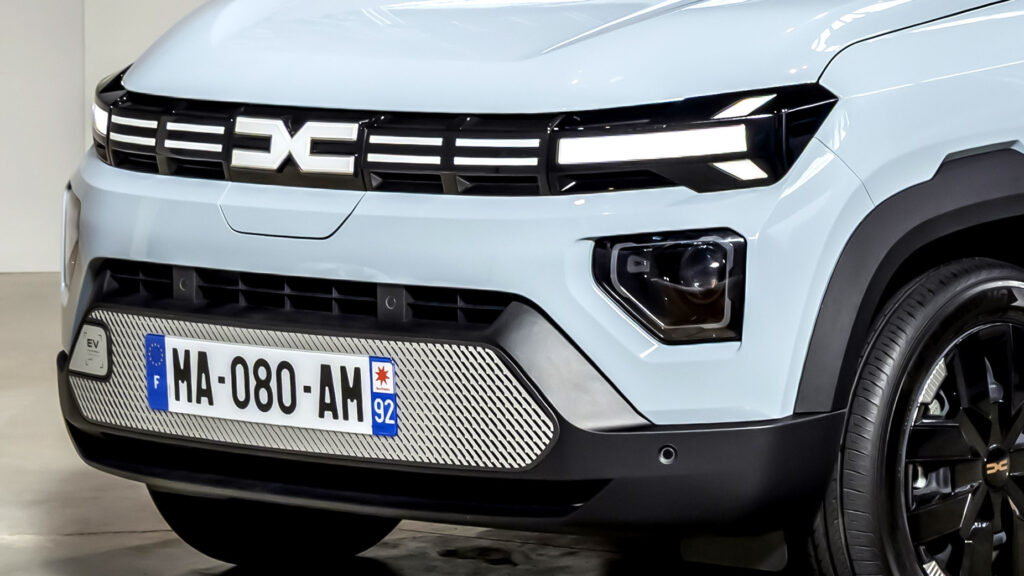
UK’s Cheapest EV Is Made In China, But Doesn’t Wear A Chinese Badge

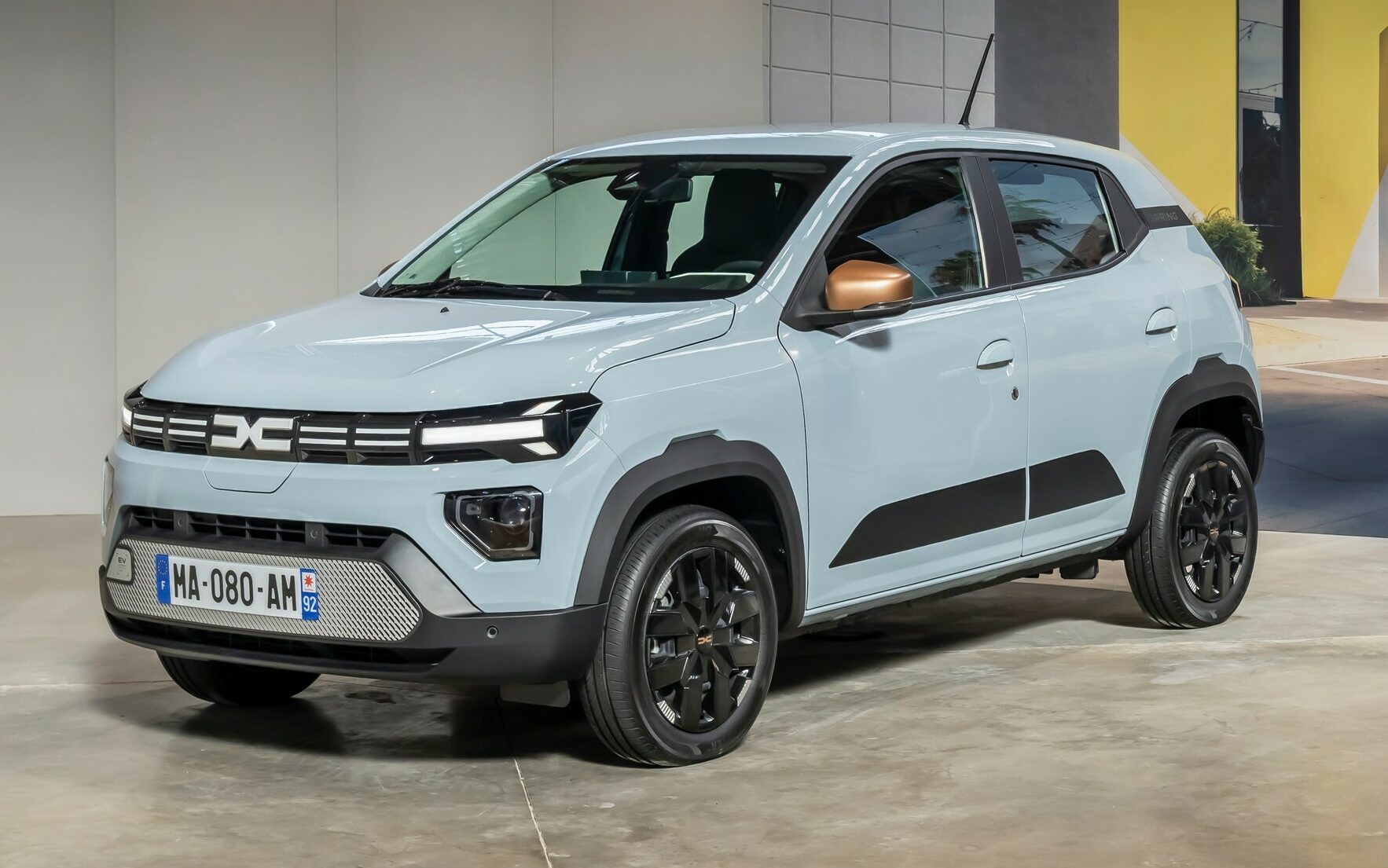
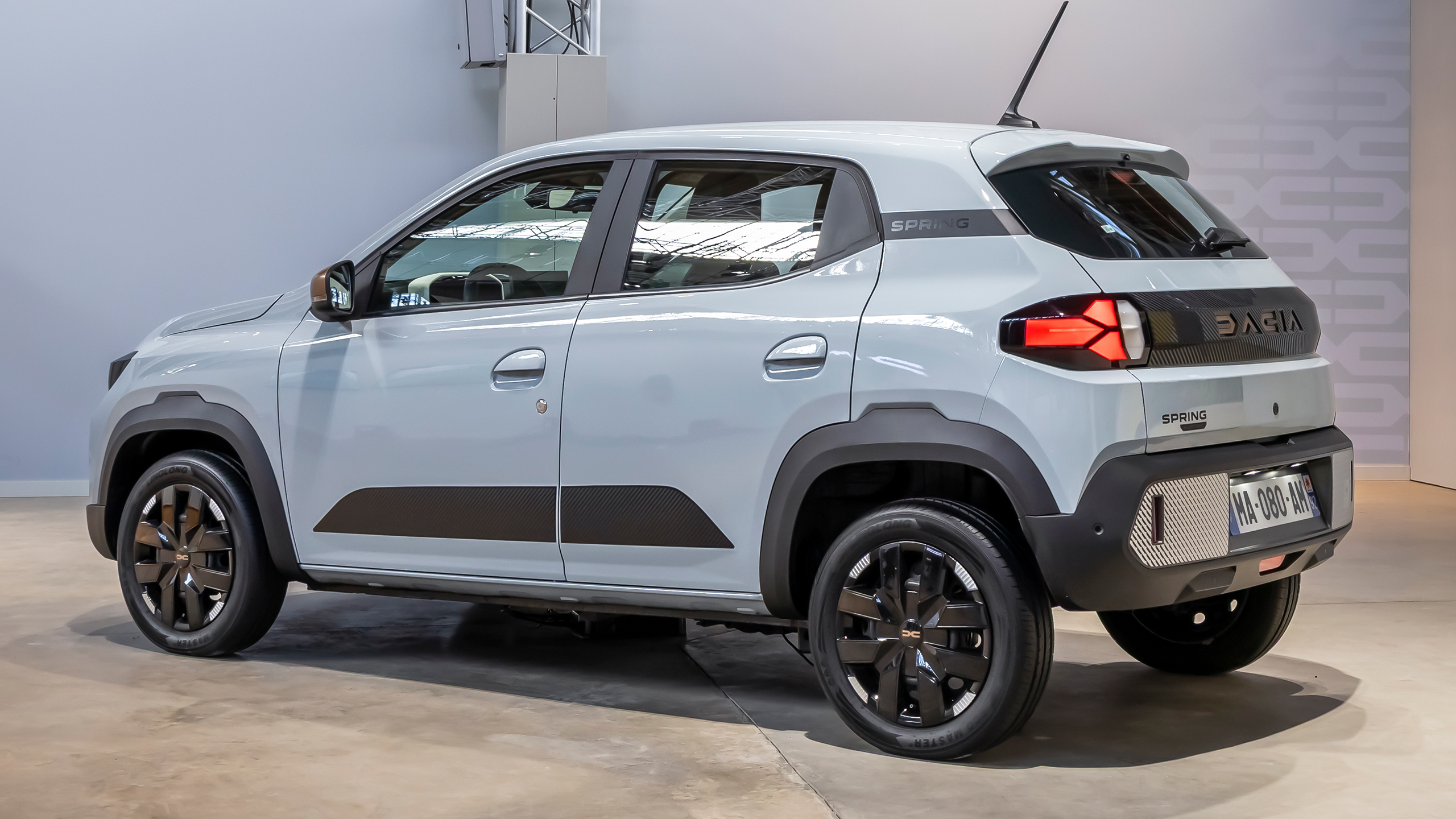
  • British prices for the 2026 Dacia Spring start as low as £12,240.
  • Dacia is offering a £3,750 grant to undercut its Chinese rivals.
  • Two versions of the Spring are on offer with 70 hp and 100 hp.

We’ve become quite accustomed to hearing about impossibly cheap EVs coming out of China, easily undercutting those from Europe, the US, Japan, and elsewhere.

The Dacia Spring fits that mould in one sense, as it’s built in China, but it arrives wearing a European badge and undercutting everything else on the market. It’s the cheapest EV currently on sale in the UK, thanks to the new £3,750 ‘Dacia Electric Car Grant’.

Read: Dacia’s EV Tortoise Just Got A Hare Transplant

For the freshly updated 2026 model, the Dacia Spring starts at just £12,240 ($16,415 at current exchange rates) including all on-road charges.

 UK’s Cheapest EV Is Made In China, But Doesn’t Wear A Chinese Badge

That makes it cheaper than the long-reigning Dacia Sandero, which has typically held the title of Britain’s most affordable car, unless you count outliers like the Citroën Ami quadricycle. Even the Leapmotor T03, another low-cost Chinese EV, can’t quite match it on price, starting from £15,995 ($21,400).

In the UK, the high-riding hatchback with the crossover aesthetics is offered in two forms: the Expression Electric 70 and the Extreme Electric 100. The total, on-the-road price for the base model technically starts at £15,990 ($21,400), while the flagship model starts at £16,990 ($22,800).

However, both are available with Dacia’s £3,750 ($5,000) grant, bringing the prices down to £12,240 ($16,415) and £13,240 ($17,700), respectively.

What’s New For 2026?

 UK’s Cheapest EV Is Made In China, But Doesn’t Wear A Chinese Badge

Several important upgrades have been made to the Spring for 2026. For example, Dacia has revised the chassis, suspension, and brakes, aiming to make the EV “feel more secure, more composed, and more capable across a wider range of everyday situations.”

Additionally, both models now include a new 24.3 kWh lithium-ion phosphate battery.

Both the Expression Electric 70 and Extreme Electric 100 feature single electric motors, but as their names suggest, the base model is capped at 70 hp while the range-topper delivers 100 hp.

This version also includes copper-accented styling, electric rear windows, a larger 10.1-inch infotainment display with wireless Apple CarPlay and Android Auto, and a vehicle-to-load function. Both models can travel up to 140 miles on a charge.

\\\\\\\\\\\

Jaguar Rolls Out Its Future In A New Color Right After Firing The Man Behind It

  • Jaguar’s Type 00 concept returns in London finished in matte red paint.
  • British brand will unveil a dramatic four-door production EV next year.
  • The production EV promises 430 miles of range and ultra-fast charging.

This time last year, Jaguar revealed the wild Type 00 concept, the first look at its all-electric future and a statement of intent to compete with Bentley and Rolls-Royce.

As development of the production version continues, a matte red example of the concept has been spotted on London’s streets, marking the marque’s 90th anniversary and coinciding with the unexpected departure of its longtime design chief, the figure behind the brand’s polarizing rebrand.

The Type 00 was originally shown in Miami Pink and London Blue during the official launch. Earlier this year, the model was dressed in a French Ultramarine livery and made a surprise appearance during the Paris Fashion Week.

Read: Jaguar’s Future GT Has No Rear Window And No Patience For Cargo

The company has now unveiled a fourth color variation, London Red with a matte finish, as the concept makes its arrival in the UK capital. The new shade draws inspiration from the redbrick Victorian architecture of Kensington, one of London’s most recognizable neighborhoods.

\\\\\

Jaguar

The freshly repainted concept was photographed alongside a classic 1935 Jaguar SS outside the Chancery Rosewood Hotel.

For those wondering, no other changes have been made to the concept’s exterior. It still rides on the same 23-inch alloy wheels, while the minimalist cabin remains finished in white and gray upholstery accented by ambient lighting.

Photos shared by Jaguar UK Director Santino Pietrosanti on LinkedIn show the Type 00 parked alongside some exotic company, including a Bugatti Chiron, Rolls-Royce Cullinan Black Badge, Ferrari F8 Tributo, and Lamborghini Aventador SVJ.

\\\\\\

Santino Pietrosanti / LinkedIn

The brand’s rebrand has been met with mixed reactions. Its ad campaign, oddly enough, featured no cars at all, leaving many scratching their heads. It was also rather odd that it initially showcased the Type 00 in a bright shade of pink, which didn’t do the car any favors.

Still, under London’s gray winter light, the matte red finish lends the concept a sense of gravitas. Out in the open, it naturally draws attention, albeit that’s not really surprising for a concept car. Much like the Tesla Cybertruck, its unconventional form challenges expectations so completely that people can’t decide whether they admire it or despise it. There seems to be little middle ground.

The Road Car

 Jaguar Rolls Out Its Future In A New Color Right After Firing The Man Behind It

Prototypes of the production version suggest Jaguar plans to stay faithful to the concept’s striking proportions. The roadgoing model will, however, take a more practical shape with four doors and a longer wheelbase, built on the company’s new Jaguar Electrical Architecture platform.

More: Jaguar’s Future GT Has No Rear Window And No Patience For Cargo

As per recent reports, the EV should have a driving range of up to 430 miles (692 km) and support fast charging, adding 200 miles (322 km) of range in just 15 minutes.

Only time will tell if those who would ordinarily shop for a Bentley or Rolls-Royce will be willing to spend their money on a vehicle that looks as controversial as this.

JLR Design Chief Axed

In separate news, it has been confirmed that Jaguar Land Rover design boss Gerry McGovern has departed from the brand. No official reason has been given for this high-profile departure, but it comes shortly after former chief financial officer at Tata, PB Balaji, was named as JLR’s new chief executive.

Citing insider sources, Autocar India reports that McGovern was “escorted out of the office” on Monday, with his contract being terminated with immediate effect. The man behind Jaguar’s relaunch has spend over two decades at JLR, being responsible for successful models including the new Land Rover Defender.

According to business economics professor at the University of Birmingham, David Bailey, McGovern’s exit marks a “symbolic end of an era.” He told The Guardian that it may also be a sign that Tata wants to exert more control over the British company.

Thanos Pappas contributed to this story.

Plug-In Hybrid And EV Drivers Face Pay-Per-Mile Tax In The UK

  • EVs to be taxed 3p per mile in the UK starting April 2028.
  • PHEV owners to pay 1.5p per mile to offset lost fuel taxes.
  • Grants extended to 2030, with the £50k luxury threshold raised.

The UK government has just detonated a policy bomb under Britain’s electric-car market. Hidden inside the Chancellor’s Budget announcement is confirmation that both EVs and hybrids will face a new per-mile road charge, marking the first time electric motoring will stop being a tax-free ride.

After years of looking for a replacement for fuel duty as petrol and diesel sales decline, the Treasury has finally shown its hand.

Related: Your Green Plug-in Hybrid Is An Eco Sham, Study Finds

Britain is officially preparing to tax EVs for every mile they travel, shifting them into the same revenue-raising category as combustion cars even as it still claims to support the transition to cleaner transport.

How Will It Work?

Drivers of fully-electric cars will pay 3 p ($0.40) per mile and plug-in drivers are to be stung with a 1.5 p ($0.20) charge.

A driver covering up to 8,500 miles (13,700 km) will end up with a bill of around £255 ($336), the BBC reports, which is still roughly half of what a combustion-car driver would pay in fuel duty to drive the same distance.

The Office for Budget Responsibility (OBR) estimates the plan would bring in £1.1 billion ($1.45 billion) in its first year, a figure which could virtually double two years later, depending on how EV sales go. The trouble is, their take-up is expected to be hit by the introduction of this very scheme.

When and How?

 Plug-In Hybrid And EV Drivers Face Pay-Per-Mile Tax In The UK

The Budget didn’t include all the fine print. Important details such as how the number of miles driven will be accurately logged, comes later. But mileage-based charging is definitely coming, scheduled to kick in from April 2028.

Some US states, including Oregon, already have mileage-based charging schemes, as does New Zealand.

To soften the blow and keep drivers interested in EVs, the UK government is simultaneously raising the price threshold for the “expensive car supplement” on its VED from £40,000 to £50,000 ($53-66k) starting April 2026. That means a Tesla Model Y or Kia EV6 owner won’t be hit by punitive road-tax surcharges quite as quickly as before.

In other words: here’s a little carrot before we get to the pay-per-mile stick. Ministers will also extend the EV grant scheme – which offers subsidies of up to £3,750 ($4,950) – all the way to 2029-30, costing it around £300 million ($395 million) per year.

 Plug-In Hybrid And EV Drivers Face Pay-Per-Mile Tax In The UK

BYD Sold Nearly Three Times As Many Cars As Tesla In Europe

  • Chinese automakers now hold 6.8% of total European new car sales.
  • BYD’s European sales jumped 206.8% in October compared to 2024.
  • Tesla’s sales plunged 48.5% in October to just 6,964 vehicles.

Chinese carmakers continue to accelerate their presence across Europe, steadily carving out a larger slice of the market. Once regarded as niche entrants, they now account for a 6.8 percent share of total European sales in October, with powerhouses like SAIC and BYD leading the charge while Tesla’s momentum falters.

Chinese Brands Gain Ground

In that month alone, around 75,000 vehicles from Chinese brands were sold across the European Union, the UK, and EFTA nations, which include Iceland, Liechtenstein, Norway, and Switzerland.

SAIC enjoyed a particularly strong month, with sales soaring from 17,552 in October last year to 23,860 this October. Across the January-October period, its sales have also risen 26.6 percent from 197,686 to 250,250 units.

Read: BYD’s European Expansion Is About to Explode

BYD is also enjoying a surge in demand and has almost triple Tesla’s sales. In October, the company sold a total of 17,470 vehicles across the region, a 206.8 percent rise from 5,695 last October. Year-to-date, its sales have increased by a monumental 285 percent, from 35,949 to 138,390 units.

Tesla’s Bloodbath

 BYD Sold Nearly Three Times As Many Cars As Tesla In Europe

Things are not looking so pretty for Tesla. In October, its European sales slipped 48.5 percent from 13,519 units in the same month last year to just 6,964 in 2025. That means it fell even behind Porsche, which itself recorded a 26 percent sales decline but still usurped Tesla with 7,653 sales. Through the first ten months of the year, the American brand’s local sales have fallen 29.6 percent to 180,688.

Of the new cars sold by Chinese brands across the region in October, 36 percent were battery-electric vehicles. Of these, the small BYD Dolphin was the best-seller.

EU + EFTA + UK New Car Sales
 BYD Sold Nearly Three Times As Many Cars As Tesla In Europe

Europe Sales Rise

Across Europe, new car registrations have edged up 1.4 percent, with battery-electric vehicles now holding a 16.4 percent share.

In the first ten months of 2025, 1,473,447 new battery-electric cars were registered across the EU. This growth owes much to the four largest markets, including Germany (+39.4%), Belgium (+10.6%), the Netherlands (+6.6%), and France (+5.3%), which together make up 62 percent of the total. In October alone, year-on-year battery-electric registrations rose by 38.6 percent.

Hybrid-electric cars continue to dominate as the most popular powertrain, holding a 34.6 percent share of the market. Between January and October 2025, registrations reached 3,109,362 units, led by Spain (+27.1%), France (+26.3%), Germany (+10.3%), and Italy (+8.9%).

 BYD Sold Nearly Three Times As Many Cars As Tesla In Europe

Plug-in hybrids are also on the upswing, totaling 819,201 registrations, a 43.2 percent increase over last year. Demand has been especially strong in Spain (+109.6%), Italy (+76.5%), and Germany (+63.4%). Plug-in hybrids now represent 9.1 percent of all EU registrations, up from 7 percent a year ago.

Petrol-powered cars still hold 27.4 percent of the market, though their share has dropped from 34 percent last year as combustion sales continue to contract. Through October, petrol registrations fell 18.3 percent across major markets, with France down 32.3 percent, Germany 22.5 percent, Italy 16.9 percent, and Spain 13.7 percent.

Diesel continues its downward trend too, shrinking by 24.5 percent to a 9.2 percent market share.

 BYD Sold Nearly Three Times As Many Cars As Tesla In Europe

EV Drivers Could Soon Pay Per Mile After UK Realizes Roads Don’t Pave Themselves

  • Britain may soon announce new EV mileage fees in this month’s budget.
  • EV drivers’ annual running costs could rise by about £240 under the plan.
  • They’ll still pay less than ICE owners spending roughly £600 on fuel duty.

Electric car owners in the UK may soon find their zero-emissions glow dimmed slightly by the Labour government. Chancellor Rachel Reeves is reportedly preparing a pay-per-mile tax for EVs to help plug the giant hole left by declining fuel duty receipts.

Related: UK Brings Back EV Discounts But Only If You Don’t Spend Too Much

With more drivers ditching petrol pumps for charging cables, the Treasury suddenly finds itself missing billions in the “please drive somewhere so we can tax you for it” department.

The reported figure being floated? Around 3 pence ($0.04) per mile, which at 8,000 miles (12,900 km) a year would equate to a £240 ($315) bill. T

he government is expected to argue that while UK EV drivers might be disappointed by the new charge, they’ll still get a better deal than drivers of petrol and diesel-engined vehicles who pay around £600 ($784) per year in fuel duty.

But there’s no doubt the news first reported by The Daily Telegraph, if true – and these kinds of stories are usually leaked from within government – will be another blow to EV drivers, who from this year have been forced to pay the annual Vehicle Excise Duty previously only payable by petrol and diesel drivers.

Factor in that £195 ($255) annual VED bill, and an EV owner covering 8k miles a year could be asked to pay £435 more to drive their car in 2028, when the scheme is alleged to go live, than they did in 2024.

On the positive side, the new Labour government did introduce grants of up to £3,750 for buyers of new electric cars three years after the previous government axed the original scheme.

 EV Drivers Could Soon Pay Per Mile After UK Realizes Roads Don’t Pave Themselves
Kia

It’s not clear how such a scheme would be monitored; reports suggest that it would be up to drivers to volunteer their own mileage estimate figures for the coming year, rather than the government electronically tracking them. If they were later found to have driven more or fewer miles than estimated, they could either get a rebate or a bill.

EV drivers aren’t the only ones left dismayed by the still-unofficial news. The UK’s Society of Motor Manufacturers and Traders (SMMT) said it recognized the need for a rethink over vehicle taxation.

However, it described pay-per-mile as “entirely the wrong measure at the wrong time,” one that would end up “deterring consumers and further undermining industry’s ability to meet ZEV mandate targets, with significant ramifications for perceptions of the UK as a place to invest.”

 EV Drivers Could Soon Pay Per Mile After UK Realizes Roads Don’t Pave Themselves
❌