Reading view

There are new articles available, click to refresh the page.

Nissan Pulls The Plug On The Most Affordable Leaf. For Now
  • Nissan planned a $25,360 Leaf S for the US market.
  • The entry-level model has been delayed indefinitely.
  • It was set to use a smaller 52 kWh battery pack.

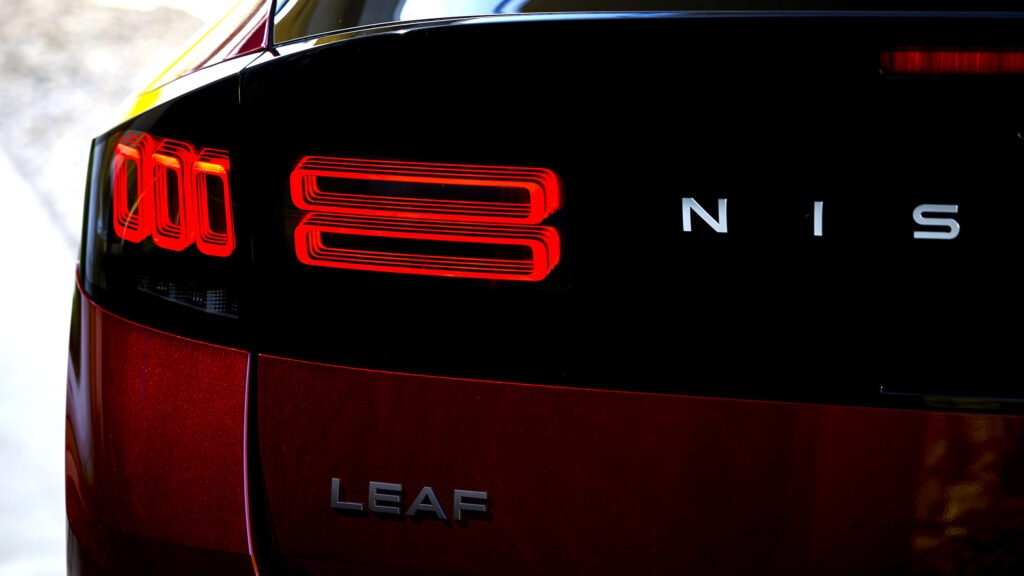
In September last year, Nissan revealed it was preparing a new cut-price version of the 2026 Leaf for the US, known simply as the Leaf S. The announcement signaled a renewed push toward true entry-level electric mobility. This model was expected to start at just $25,360, significantly undercutting the competition and bringing an affordable EV within reach of many more buyers.

Sadly, this model is nowhere to be seen and may have been dropped entirely. Last week, Nissan confirmed that the entry-level Leaf S will not launch this year as originally planned. While it said the car has not been canceled, at least not at this stage, there is no guarantee it will ever see the light of day.

Read: Nissan Beats Tesla To $25K EV Musk Said Would Never Happen

“Nissan continually evaluates market trends, customer preferences, and the evolving EV landscape to ensure we are focusing our resources where they create the most value,” Nissan US director of product communications Dominic Vizor told InsideEVs. “As part of that process, we have decided not to introduce the smaller‑battery variant of the 2026 Nissan LEAF in the U.S. this model year.”

Vizor added that Nissan remains “committed to delivering the right products at the right time,” adding that it “will continue to assess future battery configurations based on customer demand and segment needs.”

\\\\\\\\

The Nissan Leaf S was supposed to launch with a 52 kWh battery pack, significantly smaller than the 75 kWh pack of other models. No range figure was announced, but it would likely have fallen to the low 200s, which would be enough for some but would no doubt fall short of those planning longer journeys. Existing Leaf models have a driving range of 288-303 miles (463-487 km).

Although Nissan didn’t pinpoint a specific reason for the Leaf S’s delay, beyond mentioning broad market trends and the “evolving EV landscape,” likely impacting the model’s financial viability are the import tariffs it would be subject to due to its Japanese origins.

\\\\\\\\\

Forget Ford’s Hype, The $30,000 EV Is Already Here

  • Ford is making a big fuss about their upcoming $30k EV.
  • Affordable options already exist and can be bought now.

Ford is preparing to launch a $30,000 electric truck, and the steady drumbeat of promotion is starting to wear a little thin. Earlier this month, the Blue Oval released three glorified blog posts about the affordable mid-size pickup and a 14 minute video, which was approximately 10 minutes too long.

Before that, the company talked about failure and Henry Ford’s ill-fated stints at the Detroit Automobile Company and the Henry Ford Company. The automaker then said they’re pursuing similar bold efforts as it “works to design and assemble affordable electric vehicles.”

More: Ford’s ‘Model T Movement’ Is A New $30,000 Electric Pickup

 Forget Ford’s Hype, The $30,000 EV Is Already Here
Ford teased what appears to be an early sketch of the upcoming EV truck.

The thing is that $30,000 electric vehicles already exist and can be bought today. While the upcoming model will be notable for being a mid-size truck that introduces some new techniques and technology, it might not be as revolutionary as Ford would have you believe.

The Blue Oval will likely continue trickling out trivial details for months to come, but shoppers could easily head to their nearest Chevy dealer and snag an Equinox EV. While the model starts at $34,995, the company is offering $6,500 in incentives, and this lowers the price of entry to $28,495 before factoring in the $1,800 destination fee.

\\\\\\\\\

The bowtie brand also recently brought back the Bolt, which starts at $27,600 and has a $1,395 destination fee. This means you can get an electric hatchback with 262 miles (422 km) of range for $28,995.

Chevrolet isn’t alone as the redesigned Nissan Leaf starts at $29,990 before a $1,495 destination charge. It will eventually be joined by an even more affordable variant that has a smaller battery pack and a less powerful electric motor.

All three of these vehicles are available now, although they lack a truck bed. Ford is banking on the latter being a big differentiator, although early teaser images suggest this won’t be your typical pickup as the company is focusing on range and efficiency.

\\\\\\\\\\\\\

Tesla Faces A Reckoning As This New SUV Outsold The Model Y Two To One

  • Chinese tech giant sold 37,869 YU7s in the first month of the year.
  • Geely placed two strong sellers in the national top five chart.
  • VW posted several top sellers despite the wider market slowdown.

January tested the resilience of China’s auto market, exposing fault lines for some brands while spotlighting the rare breakout success. Many domestic manufacturers reported sales declines, with BYD among the most notable names to feel the squeeze. Yet even in a cooling climate, certain models found remarkable momentum. None more so than the Xiaomi YU7.

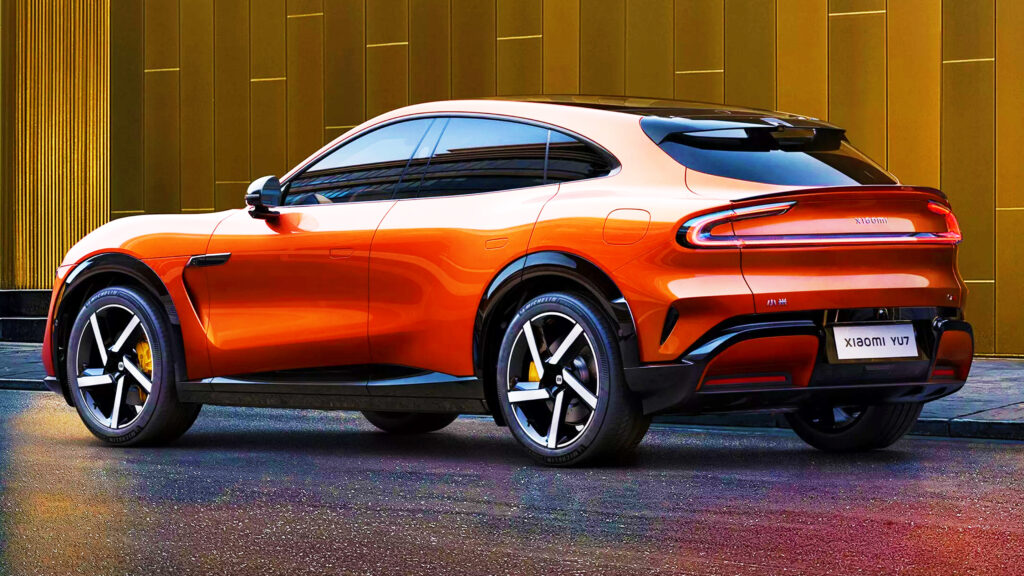
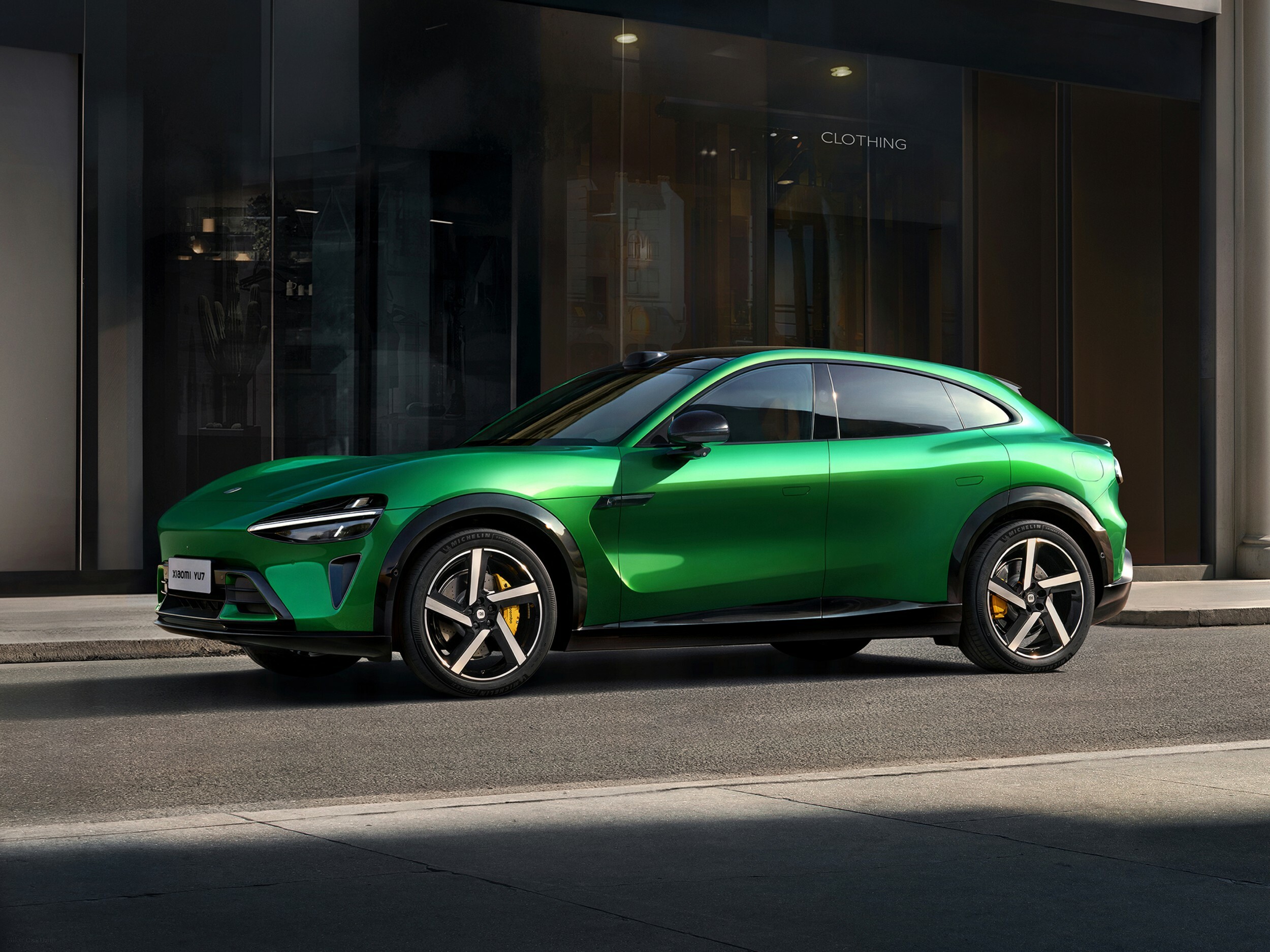
The all electric SUV, positioned as a rival to the Tesla Model Y and styled with more than a passing resemblance to the Ferrari Purosangue, was the best-selling new vehicle in China last month.

Read: This Ferrari SUV Lookalike From China Makes More Power Than The Real One

According to figures shared by Autohome, it moved 37,869 units, comfortably ahead of the Geely Boyue L in second place with 34,176 sales. The Geely Geome Xingyuan followed with 29,007, while the Aito M7 secured fourth with 26,454 units.

 Tesla Faces A Reckoning As This New SUV Outsold The Model Y Two To One

The presence of two Geely models in the top 5 best-sellers reflects a strong month for the group, with sales up 1 percent year-on-year to more than 270,000 units. The M7 from Aito, backed by Huawei and Seres, also surged in popularity, as did other models from the brand, helping it deliver more than 40,000 vehicles, a surge of over 80 percent from January 2025.

Sales of the YU7 in China have remained strong in recent months. December saw 39,089 units sold, making it the third best selling new car in China at the time. That figure represented a clear rise from November’s 33,729 and October’s 33,662.

It has also moved decisively ahead of the Tesla Model Y, selling more than twice as many units. The Model Y ranked only 20th last month, with 16,845 sales, a result that would have seemed unlikely not long ago. In fact, it was China’s best-selling model in December.

Familiar Names Climb The Charts

 Tesla Faces A Reckoning As This New SUV Outsold The Model Y Two To One
VW Sagitar

Perhaps the biggest surprises came from Volkswagen. It ranked fifth in China’s top 20 best-selling cars last month, led by the Sagitar with 25,316 units sold. VW also sold 23,481 Lavidas, 21,330 Tiguan Ls, 20,799 Passats, and 19,306 Magotans. In addition, the Nissan Slyphy sold 24,209 units, indicating that not all hope is lost for legacy carmakers in the country.

Things weren’t so rosy for BYD. It sold 205,518 vehicles in China last month across its brands, a significant decline from the 300,538 in January 2025. Only one of its models entered the top 20, the Fang Cheng Bao Ti7, which ranked 18th with 17,116 units sold.

China New Car Retail Sales January 2026
RankModelUnits
1Xiaomi YU737,869
2Geely Boyue L34,176
3Geely Geome Xingyuan29,007
4Aito M726,454
5Volkswagen Sagitar25,316
6Nissan Sylphy24,209
7Geely Xingyue L23,815
8Volkswagen Lavida23,481
9Volkswagen Tiguan L21,330
10Volkswagen Passat20,799
11Toyota Corolla20,188
12Volkswagen Magotan19,306
13Geely Xingrui19,027
14Honda CR-V18,900
15Toyota Frontlander18,629
16Nio ES817,645
17Toyota Camry17,426
18Fang Cheng Bao Ti717,116
19Li Auto i616,883
20Tesla Model Y16,845
SWIPE

Sources: Autohome, Carnewschina

Nissan’s Ariya Concept Can Add 14 Miles A Day, But Only If The Sun Plays Nice

  • Nissan has introduced a “solar‑powered” Ariya concept.
  • Its panels can provide up to 14.3 miles of range per day.
  • This could reduce charging frequency by up to 65 percent.

Cars spend a lot of time outside and that presents a big opportunity for electric vehicles equipped with solar panels. A number of automakers have explored the idea and Nissan is revisiting it with an Ariya concept.

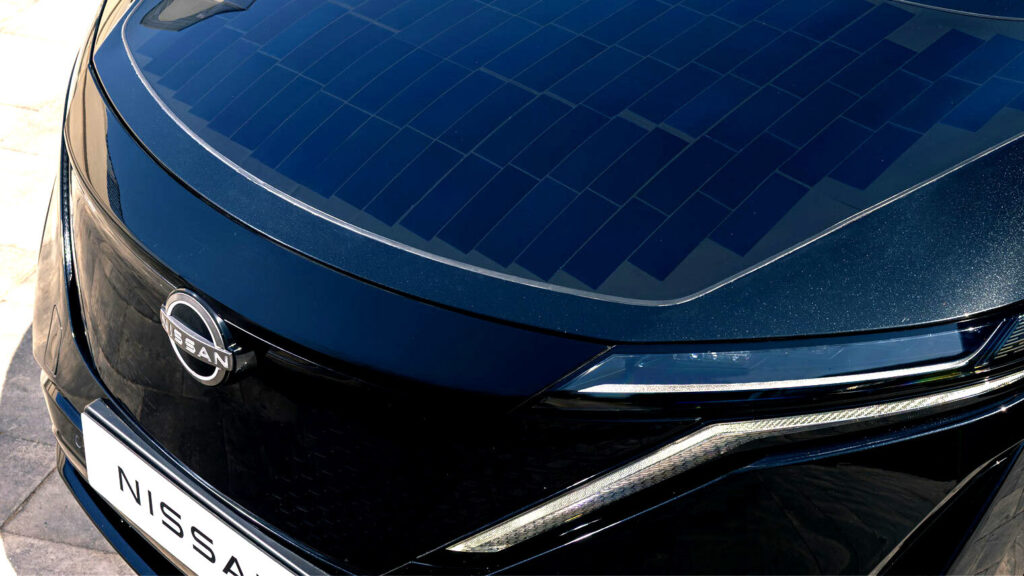
Designed to celebrate Clean Energy Day, the crossover has photovoltaic panels on the hood, roof, and liftgate. These span a combined area of 40.9 square feet (3.8 square meters) and convert sunlight into DC power.

More: Nissan Turns Sunlight Into Free Miles With Its Smart EV Upgrade

This energy is fed into the Ariya’s battery pack and Nissan said real-world testing showed the panels can add up to 14.3 miles (23 km) of range on a sunny day. That might not sound like much, but the average American travels less than 40 miles (64 km) per day.

However, location matters a lot and the range can vary significantly. Nissan says year‑round averages could range from as little as 6.3 miles (10.2 km) per day in London to 13.2 miles (21.2 km) per day in Dubai. Even if you park in a garage, a two-hour drive on a sunny day could add up to 1.9 miles (3 km) of range.

While these aren’t life altering numbers, the automaker said the added range could enable drivers to reduce their charging frequency between 35 and 65 percent. The solar panels also help out in areas where charging infrastructure is limited.

The concept was created in partnership with Lightyear and Nissan’s Shunsuke Shigemoto said, “By exploring how vehicles can generate their own renewable energy, we are opening the door to new opportunities for customers – greater freedom, reduced charging dependency, and a cleaner future. This concept is not just a technical milestone; it’s a vision of how Nissan intends to lead the next phase of electric mobility.”

\\\\\\\\
❌