Festival headliner, “Afterglow,” is a documentary about a group of parkour athletes from Beloit that explores trauma, belonging and the power of movement.
Reading Time: 8minutesClick here to read highlights from the story
Wisconsinites have called or texted the 988 Suicide and Crisis Lifeline more than 345,000 times since it launched in July 2022.
States including Illinois and Minnesota have implemented telecommunications fees on phone bills that fund 988 in their states.
Other states have allocated long-term funding through budget appropriations or by introducing legislation to fine AI companies when their chatbots fail to refer people in crisis to mental health resources.
Wisconsin officials say the line’s growth surpassed all projections they had, and the organization that coordinates the service is continuously recruiting counselors.
Despite bipartisan support for the lifeline, lawmakers have failed to enact a permanent long-term funding mechanism for it.
Every year, millions of people in crisis dial three numbers — not 911, but 988, the national suicide and crisis lifeline. People like Cadence Van Beek, who used the lifeline as a sophomore at Melrose-Mindoro High School in Melrose.
During a mental health crisis, Van Beek worried she would be placed on a waitlist or hurried through the process. Instead, a counselor patiently helped her de-escalate her feelings. At the end, she informed Van Beek about local resources in Jackson County.
“It didn’t feel rushed … She took her time with me, and she was very kind – just a kind soul,” she said.
Van Beek’s conversation is one of over 345,000 texts or calls to the state lifeline since its launch in July 2022. A recent JAMA study found that in the first two and a half years, suicides among 15- to 34-year-olds were 11% lower than expected, corresponding to nearly 4,400 fewer deaths.
Yet despite the line’s proven success and increased demand, long-term funding remains uncertain. Unlike other states, Wisconsin has not passed legislation to permanently fund the service. And Wisconsin trails most states in the share of calls answered in-state.
In May, Van Beek visited the state Capitol and presented lawmakers with a solution: Fund 988 like 911.
Since 2009, Wisconsinites have paid a telecommunications fee on their phone bills for 911, currently 75 cents per month. Twelve states, including Illinois and Minnesota, have enacted a 988 fee to fund the service.
Illinois and Minnesota had in-state response rates of 90% in July — compared with Wisconsin’s 81%. The rest of the calls are routed to a national backup center, which can mean less knowledge of local resources and longer wait times.
Cadence Van Beek presents her 988 funding recommendation at the state Capitol in Madison with the Office of Children’s Mental Health in May 2026. (Courtesy of Cadence Van Beek)
When Van Beek visited Madison with the Wisconsin Office of Children’s Mental Health, she set up a posterboard with her research and told legislators her peers rely on 988.
“988 has always kind of been a given,” she told Wisconsin Watch. “We always kind of assume that it’ll be there … The possibility that there might not be enough counselors on the line because of funding for 988 and funding for those counselors just makes me a little worried.”
State struggles to keep up with increased demand
Family Services of Northeast Wisconsin operates Wisconsin’s 988 line. Senior Vice President Tana Koss said the crisis team planned for a moderate to high level of calls when the three-digit number was launched in 2022.
“Still, Wisconsin has blown all numbers out of the water and continues to … The demand from Wisconsinites for this service has surpassed every model of projection that was available to us,” Koss said.
Family Services is still recruiting counselors to keep up with the need. Koss attributes the increase to lingering mental health effects from the COVID-19 pandemic and the lifeline’s accessibility. She celebrates more people using the service, which she views as a reflection of reduced stigma.
Even though Family Services of Northeast Wisconsin is located in Green Bay, the state’s 988 Suicide and Crisis Lifeline counselors work remotely from home offices across the state. (Courtesy of Family Services)
Wisconsin received over 11,200 calls in July alone – and responded to just over 9,000 of them in-state. Only eight states had the same or worse in-state response than Wisconsin.
“The longer a person waits on the line, the more likely they are to disengage … When you’re in queue, our primary center gets an opportunity to answer. If we’re not able to, then our backup center gets an opportunity to answer. And then, if they’re not able to, it goes to national backup,” Koss said. “So the sooner in that process you can have the staff available, the more likely you are to engage that caller.”
Still, the state has improved its answer rate over the past few months — growing from 74% in January to 81% in July as demand increased.
“Purely from the administration of the service … we want (the answer rate) to get to 90%, and had the growth not gone up even a little bit more than anticipated, we would have been there.” Koss said.
So, should Wisconsin officials enact a 988 fee, a recurring appropriation or even consider legislation that Ohio and Illinois lawmakers have introduced to fine AI companies for failing to address suicidal ideation? Koss doesn’t care, as long as it means Wisconsin won’t have to depend on federal funding or the state’s biennial budget cycle.
“I’m not personally attached to any route,” she said. “I think the request that I would have and advocate for is sustainability over the long haul because what we’re projecting is this growth hasn’t stopped.”
The case for state funding
Every two years, the National Alliance on Mental Illness’s Wisconsin chapter pushes for 988 funding in the state budget, said Julia Polk, the group’s advocacy coordinator. Last year, Gov. Tony Evers’ budget recommended $12.2 million for the lifeline, but lawmakers approved $7 million.
“What we would love to see is that we can educate our legislators on why 988 is so important and why it’s important to fund it long term, and get them in the next state budget to say, ‘we’re going to permanently fund this,” Polk said.
Polk also said delays from the Trump administration in making grants available are part of why advocates want to secure reliable state funding for the lifeline.
“It’s a lot of us and other advocates, and the 988 Lifeline and the state government having to just trust and hope that those grants will become available,” she said.
Family Services of Northeast Wisconsin operates the 988 Suicide and Crisis Lifeline for the entire state of Wisconsin. The organization is based in Green Bay but employs remote counselors throughout the state who respond to 988 calls, text messages and chats. (Astrid Code / Wisconsin Watch)
Waiting for confirmation on an anticipated federal grant last year left officials fearing the funds had disappeared. In response, state Rep. Ben Franklin, R-De Pere, and state Sen. Jesse James, R-Thorp, authored a bill that would have required the state to provide grants to agencies that administer the 988 Lifeline.
“988 has proven to be highly effective and used frequently amongst Wisconsinites and is a vital service we should be funding,” Franklin said during a committee hearing on the bill in June 2025.
However, the bill included no funding attached. It failed to pass in the Senate and did not come up for a vote in the Assembly.
The federal government announced a grant funding opportunity in January and provided Family Services about $4.5 million per year for the next three years, according to Koss. But that still leaves a gap, since the state needs $12.2 million per year to fund the service.
Officials included $7 million for the lifeline in the 2025-27 biennial budget, but Koss said Family Services needs the next budget to match that. She knows a $6.195 million deficit is coming in 2028.
“We didn’t slow down with recruitment, but administratively, it’s stressful when you have these delays on giant parts of the funding,” Koss said.
Franklin’s Democratic opponent in the November election, Brandy Tollefson, is a De Pere School Board member. The issue is personal to her, and not just because she hears about the youth mental health crisis from school social workers, counselors and teachers.
“I myself went through the experience of having my stepbrother die by suicide years ago, so I know what happens to a family when this happens and the impact it has on families,” Tollefson said. “I fully support working with any Democrat or Republican who wants to get this permanently funded.”
Tollefson echoed other Democrats’ criticisms that Assembly Bill 303 lacked the critical funding needed to ensure 988 would get financial support. Franklin did not respond to requests for comment in time for publication.
“There was a lot missing from it to make it a bipartisan bill that people could get behind, because the details just weren’t there,” Tollefson said.
Connecting with younger generations
Megan Zimmerman, NAMI Fox Valley’s outreach program director, educates local schools about mental health and promotes 988. She said many people hesitate to call 988 because they fear emergency services will get involved, but in reality, law enforcement or emergency services respond to only 0.4% of callers in Wisconsin. Counselors resolved the other 99.6% of calls by providing support, coping strategies and resources.
“Even outside of 988, I think when someone expresses that they have suicidal ideation – like they’re having thoughts about it – I think that scares people,” Zimmerman said. “They almost immediately triage to like, ‘OK, this person needs to be hospitalized.’”
Zimmerman noted the person who calls 988 doesn’t have to be the one who is in crisis, as she often calls 988 with her clients.
“If I can get an individual to agree to have that conversation on the phone with someone, and I’m there to support them in whatever way they need, that is just as good of an outcome as telling them to go home and call it themselves, which they may or may not follow through on,” she said.
Cards used to spread awareness about the 988 Suicide and Crisis Lifeline are seen at the Family Services of Northeast Wisconsin’s office in Green Bay, Wis., on Sept. 3, 2026. (Astrid Code / Wisconsin Watch)
Van Beek, who always considered herself the “therapist friend,” often recommends 988 to peers who confide in her. Once, when a friend shared distressing details about her home life, Van Beek quickly realized she wasn’t equipped to handle the conversation.
“I just realized I’m a high school kid, and I can’t take this on,” Van Beek said. “I don’t have the knowledge to help you get to where you need to be with the situation. So that’s an instance where I recommended calling or texting 988 and just going through with that. And she did.”
The 24/7 chat feature, introduced in 2024, particularly appeals to her generation and was helpful when she had to use it.
“Gen Z in general, we’ve always been behind a screen,” Van Beek said. “988 gives youth the option to text it, and I always have liked that, because talking or maybe even going in person can be overwhelming for youth, and I can personally relate to that.”
Amid increasing reports of generative AI enabling suicides, proposed legislation in Illinois would fine AI companies for not addressing suicidal ideation and deposit the money into a 988 trust fund. Companies under the legislation would face a penalty of up to $15,000 per day if they don’t refer users to crisis services like 988 when they express thoughts of self-harm.
Zimmerman said the chat feature of 988 has led her to encourage students to message the lifeline instead of an AI companion.
“Every suicide prevention presentation I give, especially in a school, I just always stress (that) I know it’s easy to bring up ChatGPT or your Claude or your Gemini or whatever it is, and start essentially texting or chatting that feature,” Zimmerman said. “But I always really encourage people to instead think about 988 … because then you’re getting a real live human being.”
Having graduated as president of her high school’s Raise Your Voice mental health advocacy club, Van Beek recently began studying psychology at the University of Wisconsin-Whitewater, where she wants to continue raising awareness about mental health.
“The events that I participate in, whether it’s through NAMI or NAMIWalks — the mental health walk that we do — it has never felt like a chore to me,” Van Beek said. “I’ve always felt like that’s my purpose.”
Wisconsin will get between $219 million and $313 million to spend on mental health measures for children from a national settlement with Meta, the owner of Facebook and Instagram. (Getty Images)
Wisconsin lawmakers who have sought to address child safety online told the Wisconsin Examiner on Thursday that a settlement worth up to $17.1 billion between the owner of Facebook and Instagram and most states in the U.S. is a win, but that it leaves a lot to be done to protect kids.
Wisconsin was one of 47 states involved in a lawsuit, filed in 2023 against Meta, that alleged that the social media giant purposely designed its platforms with addictive features, knew it was exposing children to serious mental harms and intentionally misled the public about the safety of those platforms.
Wisconsin is set to receive between $219 million and $313 million from the settlement, depending on whether other social media companies agree to the terms. The company in its settlement did not admit to wrongdoing.
For years, concerns about the safety of children online and efforts to protect their mental and physical health have been bubbling up. Wisconsin has adopted laws to ban cellphones during class time and recently expanded its Wisconsin’s Internet Crimes Against Children Task Force.
Rep. Lindee Brill (R-Sheboygan Falls) and Rep. Renuka Mayadev (D-Madison) were part of a group of lawmakers tasked with studying ways the state could protect children online during the 2025-26 legislative session. The task force resulted in an array of proposed bills aimed at addressing the issue, though many — including barring addictive features online for young users, age verification requirements, prohibition against chatbots for children without safety features and mental health warning on social media — did not become law.
“It’s unfortunate that it got to the point that we’ve seen children lose their lives, go through mental health situations,” Brill said. “I believe these platforms understood what they were doing was damaging to children, so while it’s a win, it’s unfortunate that we had to reach a settlement to get this taken care of when this wasn’t addressed previously.”
Mayadev said Meta “capitulated” with the settlement and that “it’s about time” something was done.
“Young people are feeling more than ever lonely, have had increased suicide ideation, have had more anxiety and eating disorders. We’ve just seen the tremendous detrimental effects of social media,” Mayadev said.
Both lawmakers said that the settlement is just a start.
During a Wednesday press conference, Wisconsin Attorney General Josh Kaul said the settlement is the largest Big Tech settlement in the history of the country and the largest state consumer protection settlement since the settlements with Big Tobacco in the 1990s.
According to the New York Times, the Meta settlement’s base cost will be $12 billion, but an additional $5 billion will be paid by Meta if other social media companies also agree to pay in $5 billion. The company has also agreed to the two-hour limit on screen time for children, though it could be decreased to a one-hour limit if other companies agree to the same.
Kaul said the next step is to determine where the funding should go.
“What I’m going to be doing is everything I can to put these funds toward keeping kids safe in Wisconsin,” Kaul said. The funds, he added, could go towards initiatives such as crisis intervention services, after-school programming and digital wellness use and mental health programming.
Brill noted that while the settlement seems like a lot of money, it is only a small portion of what the multi-trillion dollar company brings in each year.
“I don’t think we can put a worth on the number of children and the damage it’s caused, so while we should celebrate it, I think it’s a cautious celebration because there’s so much work to do and so much loss that came in the meantime,” Brill said.
Brill and Mayadev said they’d both like lawmakers to be involved in conversations over where the funds are allocated.
Kaul said the most important piece of the settlement is the sweeping safety changes Meta has agreed to make to its platforms.
“I hope they can set a new standard for the entire industry so that kids who are using social media can stay safe and remain healthy as they’re online,” Kaul said.
Changes include stronger age verification of users between the ages of 13 and 17, mandatory pauses at 15 minutes, 60 minutes and 90 minutes, limiting screen time for teenagers up to 17 for two hours a day, restrictions on access at night and an elimination of push notifications during school hours.
“We’re gonna see stronger, more friendly, user-friendly parental controls in place as well, so parents are going to be able more easily to play a larger role in limiting their kids’ use of these platforms,” Kaul said. Beauty filters — which distort a user’s face in real time to change its shape or add makeup — will also be limited.
Brill said she thinks a key part of the settlement is that the company appears to be keeping “parents in the driver’s seat .” She said she will be interested to see whether the other companies agree, however. Some of the work, she said, will be continuing to push for state-level laws that can address the issue, which she described as nonpartisan. Brill does not face a challenger in her bid for reelection this year.
“I met some of the families who have had things happen with their children, and it’s absolutely devastating, and it doesn’t matter which way your house votes; it affects everybody,” Brill said. “We’re just seeing the mental health of our state and our children, being so affected by this, so my hope is we can make a smart decision with [the settlement funds], and that we can, as a Legislature, continue to move forward and introduce great legislation to a governor’s desk that’s willing to work with us on it.”
Mayadev said she doesn’t think the settlement’s guardrails are sufficient.
“Why would we trust the company who has put our children in harm’s way to come up with the solution to protect them?” she said. “No parent — and I’m a parent — should feel like ‘OK, well now let me just hand over the phone and the social media apps because Meta and the other big tech CEOs are gonna care for my children.’”
Mayadev said that ideally regulations on companies would be put in place on a federal level. She said legislation would ensure it is the company’s obligation to make sure platforms are safe rather than burdening parents. She said that “children are bright” and can likely find ways around some of the changes that are being discussed.
“At the federal level, we need our congressional folks to act because then we’d have uniform guardrails, guidelines for everybody in the United States to adhere to and to protect children,” Mayadev said. “If Congress continues not to act, we’re going to have to do it at the state level, and then what the problem with that is, it’s piecemeal. What we do is different than Minnesota, which is different than Michigan or Ohio.”
Baldwin says the Trump administration isn't working fast enough to restore an option for LGBTQ+ youth calling into the suicide and crisis prevention hotline.
Investigative reporting found that mental competency evaluations in felony cases have roughly doubled since 2013, straining resources for the state criminal justice system.
At Farm Foundation, we work every day to ensure a more resilient future for agriculture. One of the most pressing issues facing our farm families today is something often left unspoken: mental health. That’s why we’re thrilled to partner with Culver’s on a special initiative to bring awareness, resources, and support to farmers across the country.
Through this campaign, Culver’swill donate $1 for every early digital purchase and rental of the new movie Green and Gold (up to $100,000) to benefit the Farm Family Wellness Alliance, Farmer Angel Network, and FFA. These funds will go directly toward expanding access to vital services that help farm families manage stress, connect with one another, and navigate challenges with the support of a caring community.
“From significant weather events to an uncertain economy, our farmers need our help,” said Tim Brennan, Vice President of Programs and Strategic Impact at Farm Foundation. “The funds raised through Culver’s Green and Gold campaign will help ensure that farm families know there are resources and a community available to support them during tough times.”
About Farm Family Wellness Alliance
Launched by Farm Foundation in 2020 in response to the devastating derecho storms in Iowa, the Farm Family Wellness Alliance was created to provide immediate and ongoing emotional and mental health support to those affected. In 2024, Farm Foundation expanded access nationwide to allow all members of farm families over the age of 16 to participate in the program.
Among FFWA’s key offerings is TogetherAll—a secure, monitored, online peer support community where farmers can share their experiences, listen to others, and find encouragement in knowing they are not alone.
About the Film: “Green and Gold”
Created in partnership with Culver’s, Green and Goldtells a heartfelt story that reflects the real-life challenges and resilience of American farmers. The film aligns with Culver’s deep-rooted support of agriculture through its Thank You Farmers® Project and showcases the vital contributions of farmers to our food system and environment.
Green and Gold is now available for early digital purchase on Amazon Prime Video, iTunes, Apple TV, Fandango at Home, and Google Play.
Farm Foundation is honored to announce a generous gift from Riley Boschma in support of the Farm Family Wellness Alliance, a national initiative dedicated to providing mental health resources to farmers and their families. This meaningful contribution honors the memory of Riley’s husband, Jimmy Boschma, a respected farmer whose life was tragically impacted by the challenges of mental health.
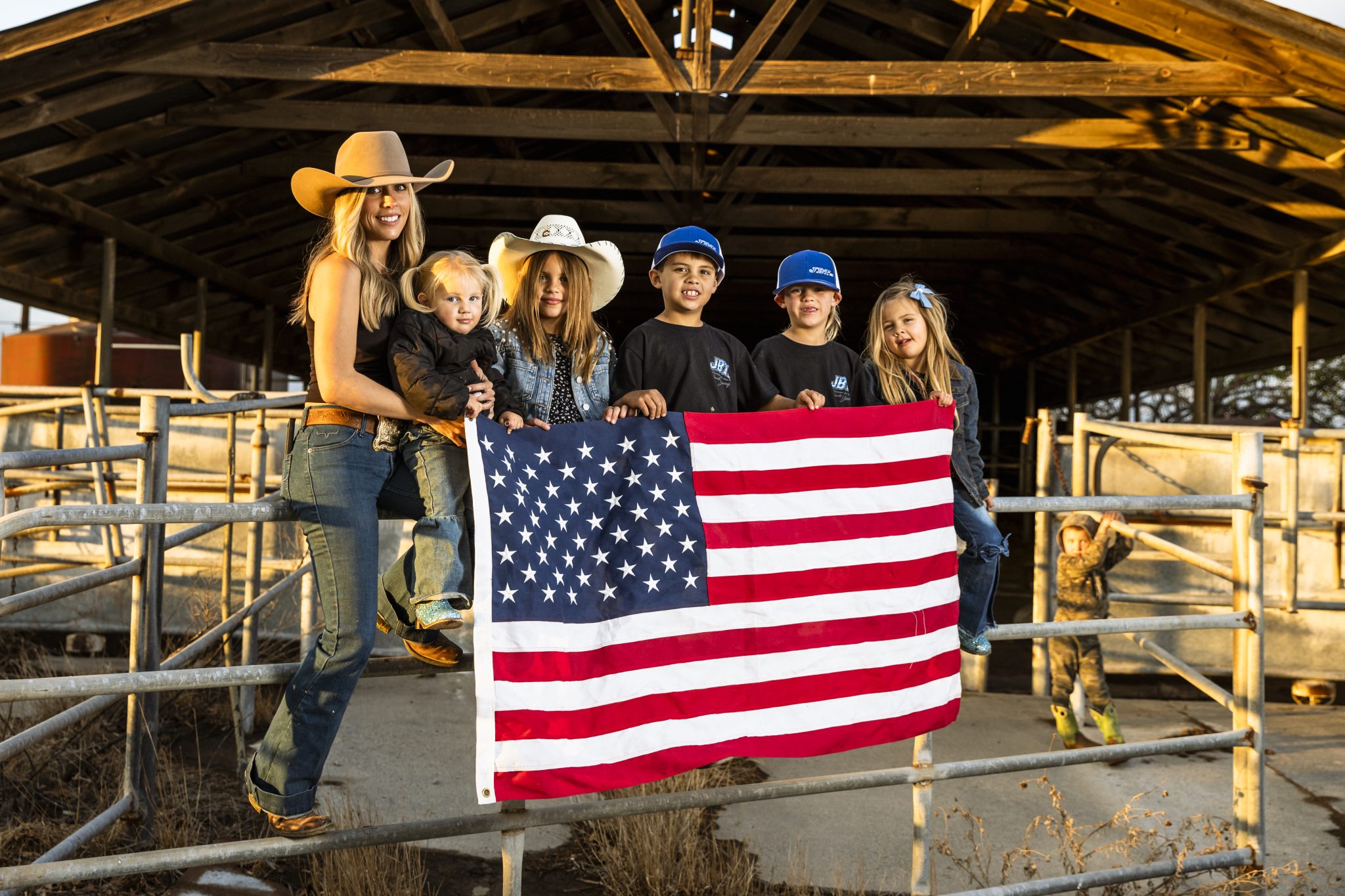
Riley has been rooted in agriculture for generations, embodying the resilience and dedication that define the farming community. Yet, like so many in the industry, they have experienced firsthand the immense pressures that come with farming. In 2024, their beloved Jimmy lost his struggle to maintain mental health, leaving behind a grieving wife and five young children determined to turn their loss into hope for others. In response to their personal loss, Riley has committed to supporting mental health awareness and access to resources for farm families nationwide.
“Our family understands the struggles that so many in agriculture face, and we want Jimmy’s story to raise awareness and be a beacon of hope, encouraging others to seek help when they need it. Asking for help is a sign of strength, not weakness—it does not define who you are, but rather shows your courage to keep going,” said Riley Boschma. “Through this gift, we hope to ensure that farm families have access to the mental health support they need and to reduce the stigma that prevents many from seeking help.”
The Farm Family Wellness Alliance, an initiative of Farm Foundation in partnership with most major agricultural organizations in the US, including 4H, American Farmer Bureau Federation, FFA, Farmers Union, and others, provides farm families with free, confidential access to mental health support through an online peer-to-peer community, professional resources, and crisis intervention services. Since its national launch in 2024, the program has expanded to serve farmers and agricultural communities across 47 states, offering a safe space for connection and healing through TogetherAll, an online mental health support community exclusively for American farm family members aged 16 and above.
“The generosity of Riley Boschma and her children will have a lasting impact on the lives of so many in agriculture,” said Shari Rogge-Fidler, CEO of Farm Foundation. “This gift not only honors Jimmy’s legacy but also strengthens our ability to reach more farm families with critical mental health resources. We are grateful for their commitment to creating meaningful change in the industry.”
Farmers are the backbone of our nation, yet they often carry an invisible burden. As economic pressures, unpredictable weather, and the weight of legacy continue to challenge those in agriculture, access to mental health support is more vital than ever. Riley’s contribution underscores the urgent need for expanded resources in rural communities and serves as a call to action for others to invest in the well-being of those who feed the nation. Learn more about the Boschma farm at www.boschmafarms.org
Climate anxiety affects nearly half of young people aged 16-25. Students like second-year Rachel Mohammed find hope and inspiration through her involvement in innovative climate solutions, working alongside peers who share her determination. “I’ve met so many people at MIT who are dedicated to finding climate solutions in ways that I had never imagined, dreamed of, or heard of. That is what keeps me going, and I’m doing my part,” she says.
Hydrogen-fueled engines
Hydrogen offers the potential for zero or near-zero emissions, with the ability to reduce greenhouse gases and pollution by 29 percent. However, the hydrogen industry faces many challenges related to storage solutions and costs.
Mohammed leads the hydrogen team on MIT’s Electric Vehicle Team (EVT), which is dedicated to harnessing hydrogen power to build a cleaner, more sustainable future. EVT is one of several student-led build teams at the Edgerton Center focused on innovative climate solutions. Since its founding in 1992, the Edgerton Center has been a hub for MIT students to bring their ideas to life.
Hydrogen is mostly used in large vehicles like trucks and planes because it requires a lot of storage space. EVT is building their second iteration of a motorcycle based on what Mohammed calls a “goofy hypothesis” that you can use hydrogen to power a small vehicle. The team employs a hydrogen fuel cell system, which generates electricity by combining hydrogen with oxygen. However, the technology faces challenges, particularly in storage, which EVT is tackling with innovative designs for smaller vehicles.
Presenting at the 2024 World Hydrogen Summit reaffirmed Mohammed’s confidence in this project. “I often encounter skepticism, with people saying it’s not practical. Seeing others actively working on similar initiatives made me realize that we can do it too,” Mohammed says.
The team’s first successful track test last October allowed them to evaluate the real-world performance of their hydrogen-powered motorcycle, marking a crucial step in proving the feasibility and efficiency of their design.
MIT’s Sustainable Engine Team (SET), founded by junior Charles Yong, uses the combustion method to generate energy with hydrogen. This is a promising technology route for high-power-density applications, like aviation, but Yong believes it hasn’t received enough attention. Yong explains, “In the hydrogen power industry, startups choose fuel cell routes instead of combustion because gas turbine industry giants are 50 years ahead. However, these giants are moving very slowly toward hydrogen due to its not-yet-fully-developed infrastructure. Working under the Edgerton Center allows us to take risks and explore advanced tech directions to demonstrate that hydrogen combustion can be readily available.”
Both EVT and SET are publishing their research and providing detailed instructions for anyone interested in replicating their results.
The team’s single-occupancy car Nimbus won the American Solar Challenge two years in a row. This year, the team pushed boundaries further with Gemini, a multiple-occupancy vehicle that challenges conventional perceptions of solar-powered cars.
Senior Andre Greene explains, “the challenge comes from minimizing how much energy you waste because you work with such little energy. It’s like the equivalent power of a toaster.”
Gemini looks more like a regular car and less like a “spaceship,” as NBC’s 1st Look affectionately called Nimbus. “It more resembles what a fully solar-powered car could look like versus the single-seaters. You don’t see a lot of single-seater cars on the market, so it’s opening people’s minds,” says rising junior Tessa Uviedo, team captain.
All-electric since 2013
The MIT Motorsports team switched to an all-electric powertrain in 2013. Captain Eric Zhou takes inspiration from China, the world’s largest market for electric vehicles. “In China, there is a large government push towards electric, but there are also five or six big companies almost as large as Tesla size, building out these electric vehicles. The competition drives the majority of vehicles in China to become electric.”
The team is also switching to four-wheel drive and regenerative braking next year, which reduces the amount of energy needed to run. “This is more efficient and better for power consumption because the torque from the motors is applied straight to the tires. It’s more efficient than having a rear motor that must transfer torque to both rear tires. Also, you’re taking advantage of all four tires in terms of producing grip, while you can only rely on the back tires in a rear-wheel-drive car,” Zhou says.
Zhou adds that Motorsports wants to help prepare students for the electric vehicle industry. “A large majority of upperclassmen on the team have worked, or are working, at Tesla or Rivian.”
Former Motorsports powertrain lead Levi Gershon ’23, SM ’24 recently founded CRABI Robotics — a fully autonomous marine robotic system designed to conduct in-transit cleaning of marine vessels by removing biofouling, increasing vessels’ fuel efficiency.
“The environmental impact is always something that we consider when we’re making design decisions and operational decisions. We’ve thought about things like biodegradable composites and parachutes,” says rising junior Hailey Polson, team captain. “Aerospace has been a very wasteful industry in the past. There are huge leaps and bounds being made with forward progress in regard to reusable rockets, which is definitely lowering the environmental impact.”
Collecting climate change data with autonomous boats
Arcturus, the recent first-place winner in design at the 16th Annual RoboBoat Competition, is developing autonomous surface vehicles that can greatly aid in marine research. “The ocean is one of our greatest resources to combat climate change; thus, the accessibility of data will help scientists understand climate patterns and predict future trends. This can help people learn how to prepare for potential disasters and how to reduce each of our carbon footprints,” says Arcturus captain and rising junior Amy Shi.
“We are hoping to expand our outreach efforts to incorporate more sustainability-related programs. This can include more interactions with local students to introduce them to how engineering can make a positive impact in the climate space or other similar programs,” Shi says.
Shi emphasizes that hope is a crucial force in the battle against climate change. “There are great steps being taken every day to combat this seemingly impending doom we call the climate crisis. It’s important to not give up hope, because this hope is what’s driving the leaps and bounds of innovation happening in the climate community. The mainstream media mostly reports on the negatives, but the truth is there is a lot of positive climate news every day. Being more intentional about where you seek your climate news can really help subside this feeling of doom about our planet.”
Electric Vehicle Team members (from left to right) Anand John, Rachel Mohammed, and Aditya Mehrotra '22, SM '24 monitor their bike’s performance, battery levels, and hydrogen tank levels to estimate the vehicle’s range.

 Login
Login