Normal view

There are new articles available, click to refresh the page.
Yesterday — 26 February 2026Main stream

Who Needs Subscriptions When Ford Charges You Nearly $500 To Use The Frunk

  • Ford claims most Mach-E owners barely use the frunk.
  • Several standard features have been dropped for 2026.
  • The EV also gains new physical door handles at the rear.

Ford has given the Mustang Mach-E a light reshuffle for 2026, and one change jumps out immediately. The front trunk is no longer standard kit. If you want a frunk now, you will have to tick a box and pay for the privilege. And it’s a pretty expensive one at that.

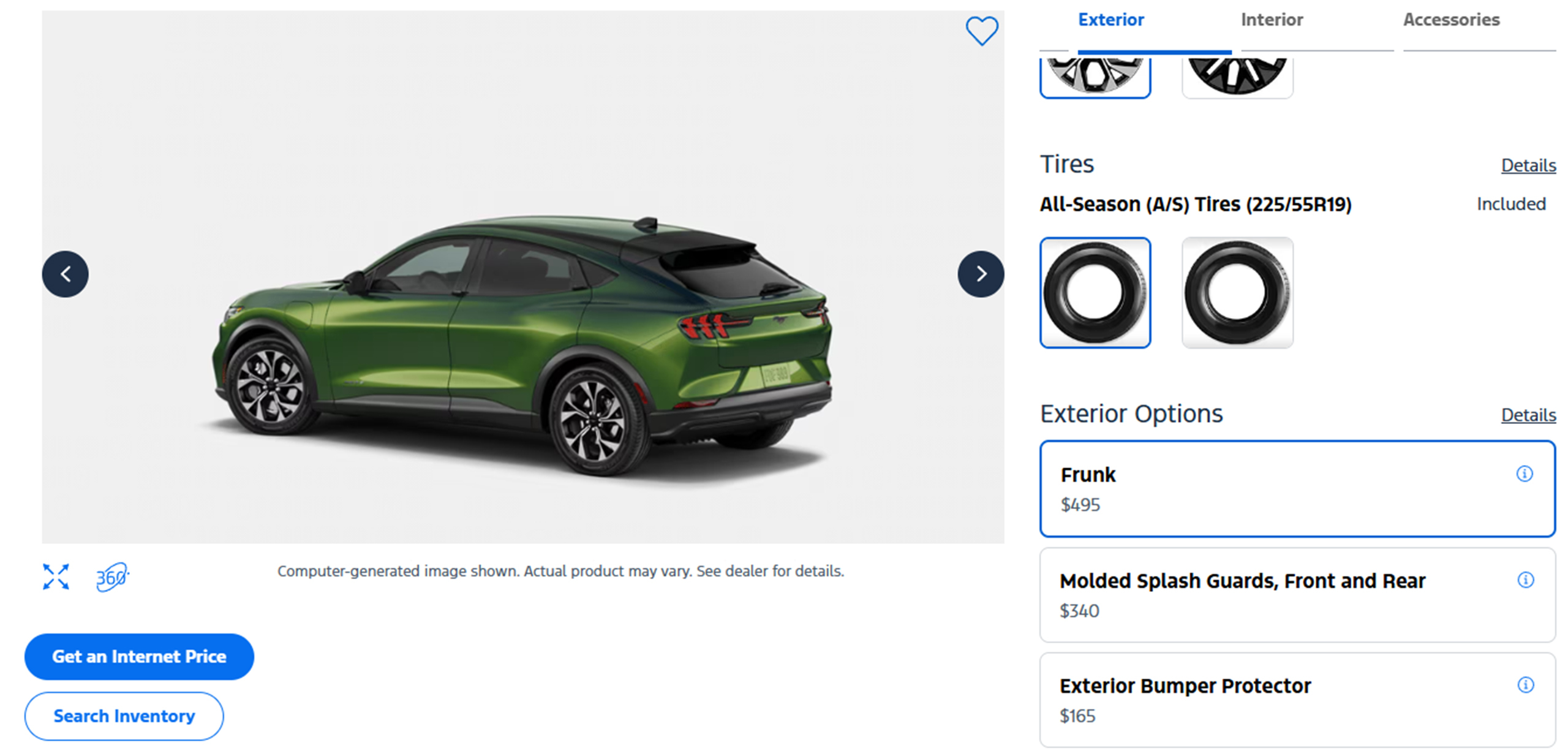
First noticed by Ford Authority, the updated online configurator reveals that the frunk is now a $495 option across the entire model line-up. While there are plenty of EVs out there that don’t have a frunk at all, this is the first time we’ve heard of one being offered as an optional extra. It may also be the first instance of a once-standard frunk becoming a paid add-on.

Read: Mustang Mach-E Owners Will Need A Fix Before Nightfall Becomes A Problem

Ford says the decision was driven by customer behavior. Not many owners were using the frunk in the first place, or so the company claims. Removing it as standard helps cut costs, and the company insists those savings are being passed on.

To be fair, as we reported back in December, the Mach-E GT is almost $1,000 cheaper for 2026 than it was last year. The entry-level car, however, still starts at $37,795, which suggests the savings have not been distributed equally.

What Else Is Missing?
 Who Needs Subscriptions When Ford Charges You Nearly $500 To Use The Frunk

There are a few more trims to the lineup for 2026. For example, the front-seat map pockets have quietly disappeared, presumably in the name of saving a few pennies per car. The Mach-E Rally also parts ways with its standard rear spoiler and graphics, both now shuffled onto the options sheet. And if you were fond of the Bronze Appearance Package, it has been shown the door as well.

It is not all subtraction, though. Ford has made one practical addition at the back, fitting the rear doors with the same small grab handles used up front. You still have to press a button to pop the door open, because this is 2026, but at least there is now something physical to grab once it releases.

However, given how much bad press electronic door handles had over the past year, as well as regulatory changes in other markets, it’s possible Ford may eventually have to revert to more traditional door handles. We will see how long the current setup lasts.
\\\\\\\\\\\\\\\\

Before yesterdayMain stream

Tesla Still Rules EV Satisfaction, Though One Rival Just Caught Up

  • EV owner satisfaction has reached an all-time high.
  • Best models come from Tesla, BMW, and Cadillac.
  • Most EV owners would consider getting another one.

Electric vehicles have come a long way in the past few years, and the progress is finally showing up where it matters most: in owner satisfaction. According to the latest data, these steady gains in technology and infrastructure are translating into record-high approval from drivers.

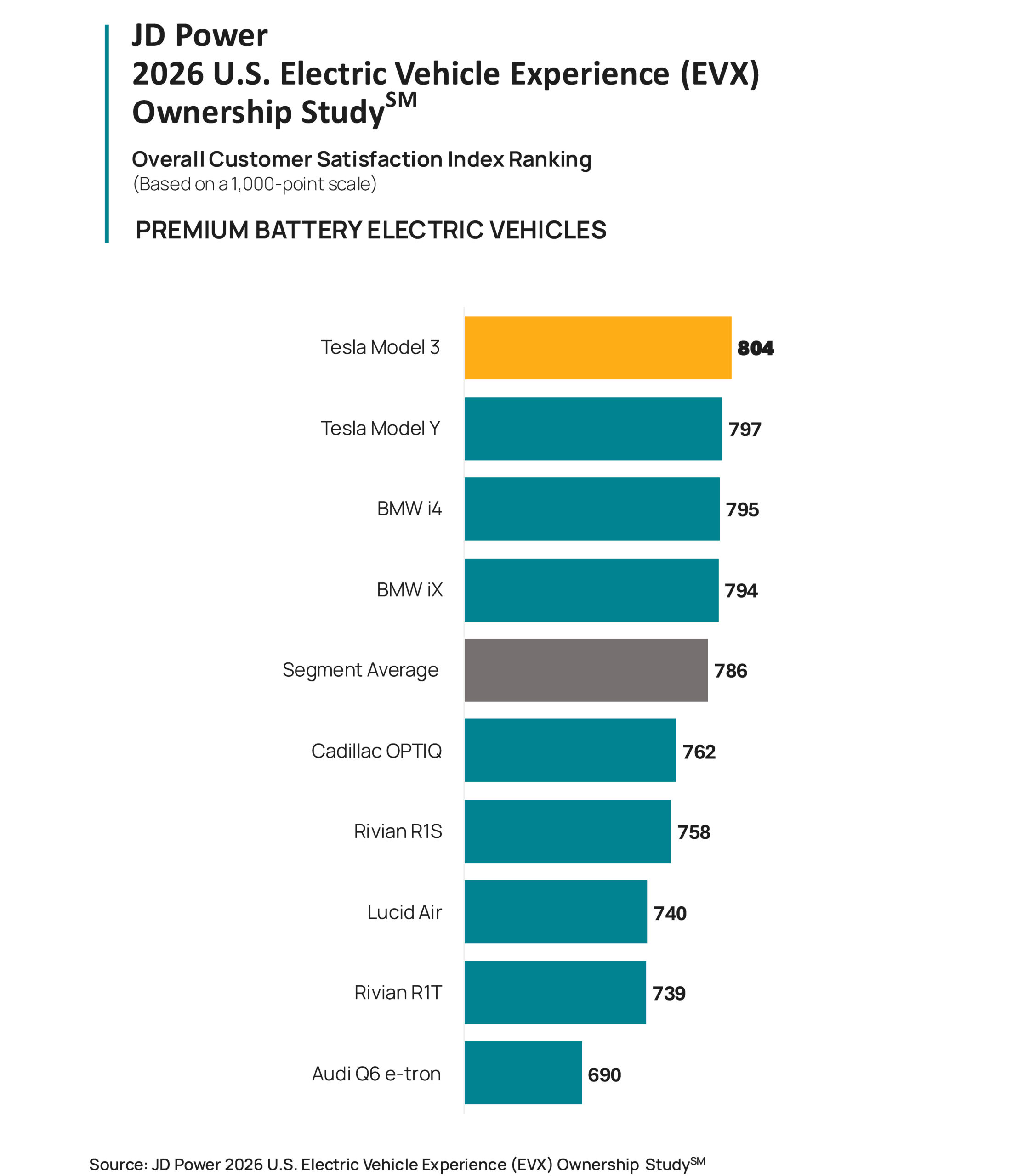
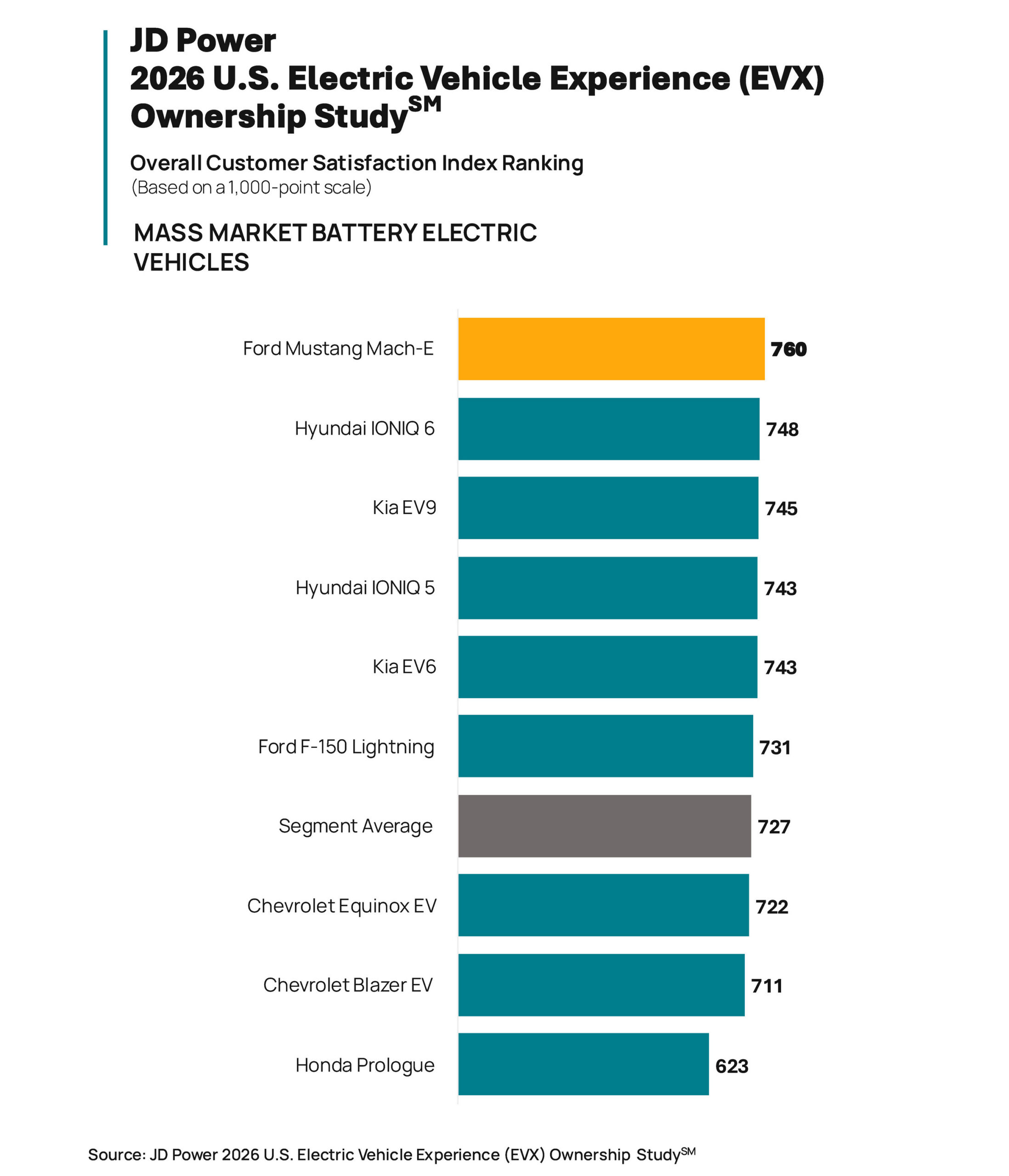
That’s the verdict from JD Power’s 2026 U.S. Electric Vehicle Experience Ownership Study, which found premium EV satisfaction climbed from 756 points last year to 789 in 2026. Mainstream EVs also improved two points to hit 727 out of 1,000.

More: A Third of Americans Are Priced Out Of New Cars, And It’s Getting Worse

The highest rated premium EVs were the Tesla Model 3 (804), Tesla Model Y (797), and BMW i4 (795). On the flip side, the new Audi Q6 e-tron came in dead last at 690. It placed well below the Lucid Air (740) and Rivian R1T (739).

 Tesla Still Rules EV Satisfaction, Though One Rival Just Caught Up

Segment Standouts And Stragglers

On the mass market side of the equation, the Ford Mustang Mach-E took top honors with a score of 760. The electric pony car was followed by the Hyundai Ioniq 6 (748) and Kia EV9 (745). Interestingly, the two lowest rated EVs were the Chevrolet Blazer EV (711) and Honda Prologue (623). That’s a huge point spread considering both models are built by GM and have a lot in common.

Of course, things aren’t completely straightforward as the study examined ten different factors. This includes the “accuracy of stated battery range, availability of public charging stations, battery range, cost of ownership, driving enjoyment, ease of charging at home, interior and exterior styling, safety and technology features, service experience, and vehicle quality and reliability.”

Encouragingly, 96 percent of EV owners said they would consider buying or leasing another one and the study also found quality has improved. That’s especially true of premium EVs, which had 15.9 fewer problems per 100 vehicles compared to last year. This brought the total down to 75 and JD Power said this was driven by noise improvements as well as fewer problems with driver assistance technology.

 Tesla Still Rules EV Satisfaction, Though One Rival Just Caught Up

Is Charging Still A Concern?

The study also found that EV drivers are becoming more satisfied with public charging. Scores climbed by over 100 points and this is being attributed to growing charging infrastructure as well as the opening of Tesla’s Supercharger network to other automakers.

Last but not least, EV drivers are more satisfied than those with plug-in hybrids. Premium EVs scored 114 points higher than their PHEV rivals, while mainstream electric vehicles had a 117 point advantage. Part of this can be chalked up to the cost of ownership as plug-in hybrid drivers have to deal with a more complex powertrain that involves gas and electricity.

In a statement, JD Power’s Brent Gruber said “Improvements in battery technology, charging infrastructure and overall vehicle performance have driven customer satisfaction to its highest level ever. What’s more, the vast majority of current EV owners say they will consider purchasing another EV for their next vehicle, regardless of whether they benefited from the now-expired federal tax credit.”

 Tesla Still Rules EV Satisfaction, Though One Rival Just Caught Up

Ford Admits Its EV Division Will Keep Burning Billions For Years

  • Ford’s Model e division lost $4.48 billion again last year.
  • Total EV losses now exceed $16 billion in just four years.
  • Breakeven for Model e may not arrive until 2029.

Ford has never been shy about making big, attention-grabbing bets. Sometimes they pay off, sometimes they don’t. In early 2022, the company announced it was splitting its automaking operations into two distinct branches: Ford Blue, handling traditional combustion vehicles, and Ford Model e, dedicated to EVs. At the time, it sounded like a smart move, especially with EV demand climbing fast.

That optimism, however, hasn’t quite paid off. Fast forward four years, and Ford’s huge investments in EVs have come back to bite it. In its latest financial results, the automaker disclosed that the Model e division posted a staggering $4.48 billion loss in 2025. Worse, those losses are expected to continue mounting, even after canceling several planned EV projects.

Read: Ford Got The Loan And Built The EV Battery Plant. Now Everything’s Falling Apart

Earlier this week, Ford revealed its electric car business will likely lose between $4 billion and $4.5 billion this year, and will continue to lose money through at least 2027 and 2028.

Speaking on a conference call following the earnings report, Ford CFO Sherry House stated the company is not aiming for a breakeven point for the Model e brand until “around 2029.”

Tallying The Fallout

 Ford Admits Its EV Division Will Keep Burning Billions For Years

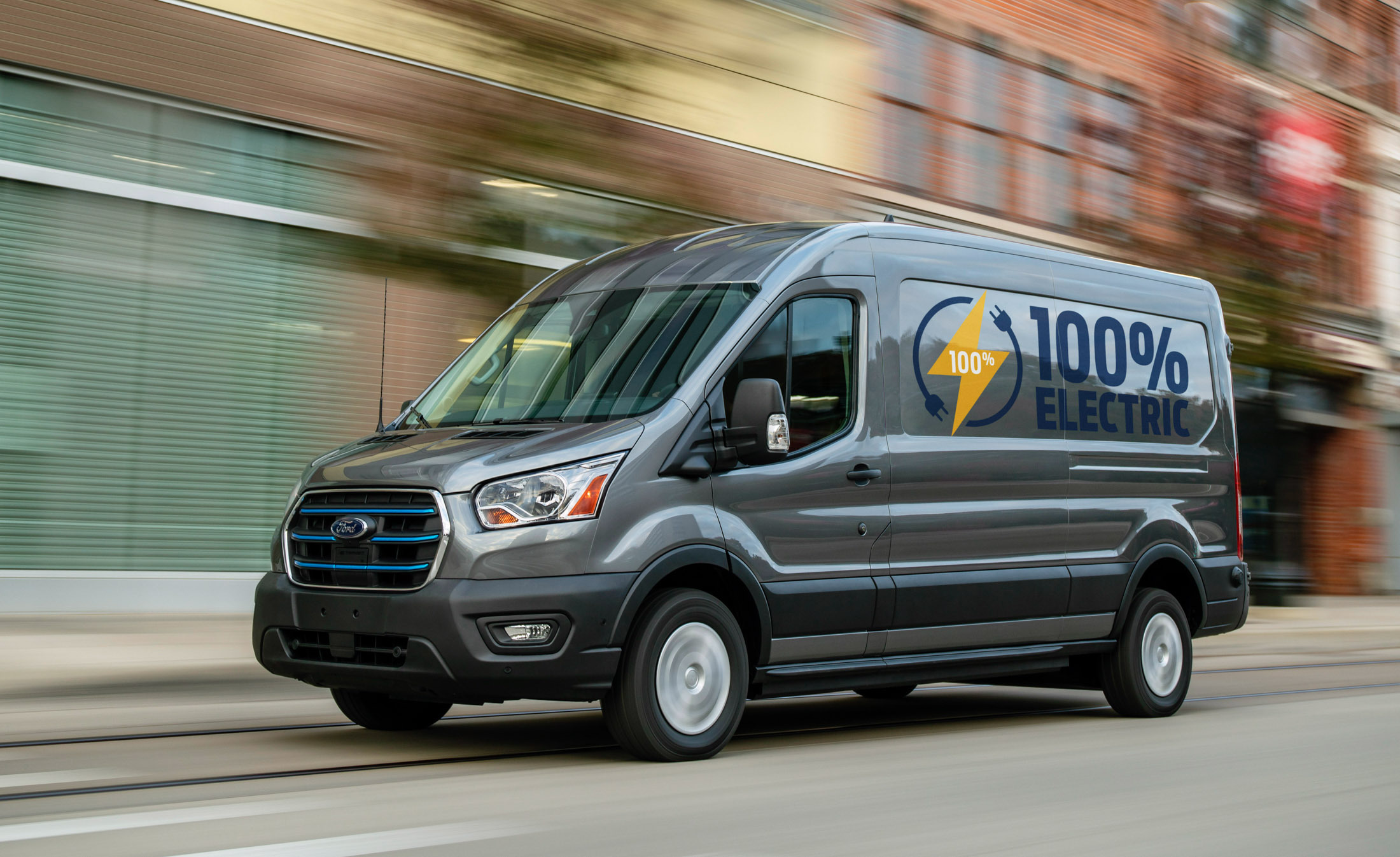
In the four years since the Model e division was established, Ford lost more than $16 billion. That’s an extraordinary amount of money, particularly when you consider that the only electric cars it currently sells in its home market are the Mustang Mach-E and E-Transit, following the early demise of the F-150 Lightning.

Combustion Still Carries The Load

According to The New York Times, Ford’s losses in electric vehicles were offset last year by stronger performance from its combustion-powered lineup and commercial vehicle sales. Those segments generated enough revenue to support an adjusted earnings total of $6.8 billion before interest and taxes. Ford expects those numbers to climb in 2026, projecting earnings between $8 billion and $10 billion.

Read: Farley Just Realized $55K EV Trucks Don’t Sell, After Ford Made Sure That’s All It Sold

One of the earliest signs of Ford backtracking on EVs came last year when it confirmed production of the F-150 Lightning had been halted indefinitely.

Still, there’s a sliver of hope for those holding out for an electrified truck. The next-generation F-150 Lightning is in the works and will feature a range-extending powertrain that combines electric drive with a combustion engine backup, offering over 700 miles of combined range.

 Ford Admits Its EV Division Will Keep Burning Billions For Years

❌
❌