Gov. Tony Evers rejected GOP measures to eliminate tax on overtime and tips. Evers speaks to reporters on March 3, 2026. (Photo by Baylor Spears/Wisconsin Examiner)
Wisconsin Gov. Tony Evers vetoed Republican bills that would eliminate income taxes on tips and overtime, require counties to cooperate with federal immigration agents and overturn his 400-year veto that provided school revenue limit increases.
No tax on tips and overtime
In July 2025, President Donald Trump signed a tax and spending bill that included provisions allowing tipped workers making less than $150,000 to deduct up to $25,000 in tips annually from their federal taxable income and allowing certain employees who work overtime and make less than $150,000 to claim a tax deduction. Republican lawmakers in Wisconsin introduced proposals to align state income tax policy with those measures.
SB 36 would have given tipped employees a state income tax exemption for cash tips, with a sunset date in 2028.
Evers supported eliminating taxes on tips in his 2025-27 state budget proposal, but GOP lawmakers rejected the provision and instead advanced their bill. Evers’ proposal would have been a permanent change, unlike the Republican proposal.
“We should not be at the whims of a Republican-controlled Congress that has no problem gutting basic necessities and services like food and access to healthcare just to pay for tax cuts for millionaires and billionaires,” Evers wrote in his veto message.
Wisconsin Republicans have sent Evers a number of proposals influenced by the Trump administration and Republican-led Congress to varying success. He signed a SNAP bill with funding for DHS that also included a policy to prohibit SNAP participants from being able to use their benefits to buy candy and soda, while vetoing a bill to opt the state into a federal school choice tax credit program.
Evers wrote that his “expectation” when providing tax relief is to pass proposals that are “real, responsible, and targeted to the middle class.” Evers has signed a number of tax cuts given to him by Republican lawmakers throughout his time in office. As a result of cuts, a 2024 Wisconsin Policy Forum report found that the state and local tax burden on residents had hit a record low in 2024. In 2025, another report found that the tax burdens remained low as incomes rose.
Evers said that the state must also “stay well within our means by still ensuring our tax policy changes are sustainable and will not force us to cut services or raise taxes down the road. Therefore, I am vetoing this bill in its entirety because I object to adopting a temporary income tax provision instead of working to provide comprehensive and lasting relief to Wisconsin taxpayers.”
Evers had a similar message in vetoing AB 461, which would have provided an income tax deduction for overtime. Under the bill, single filers would have been able to claim up to $12,500 per year under the subtraction, while joint filers would have been able to claim up to $25,000. Unlike the “no tax on tips” bill, the change would have been permanent.
“I object to this bill changing the tax code in a way that will treat Wisconsin workers who earn similar wages differently just because of their classification as salaried or hourly workers. A salaried worker who earns $35,000 (and is not eligible to earn overtime compensation) should not pay a different amount in taxes from an hourly worker who earns $35,000 through working overtime,” Evers wrote in his veto message. “We should focus on creating a fairer tax code that provides real, responsible tax relief that supports rather than divides working Wisconsinites.”
Vetoes ICE compliance bill
Evers vetoed AB 24, which would have required local law enforcement in Wisconsin to work with U.S. Immigration and Customs Enforcement (ICE). The bill would have required sheriffs to check the citizenship status of people being held in jail on felony charges and notify federal immigration enforcement officials if citizenship cannot be verified.
Counties failing to comply would be at risk of losing 15% of their shared revenue payments from the state, which help cover the cost of fire, law enforcement and other services.
Republican lawmakers, including Assembly Speaker Robin Vos (R-Rochester) and Sen. Julian Bradley (R-New Berlin), introduced the bill at the start of Trump’s second term, saying that the state needed to support his immigration agenda.
Since the introduction of the bill, the Trump administration has stepped up detaining and deporting immigrants. The federal government sent agents to neighboring Minnesota, where they shot and killed two U.S. citizens, including a Wisconsin native. This week in Wisconsin, ICE detained Salah Sarsour, a Palestinian activist and president of the Milwaukee Islamic Society. More local law enforcement in Wisconsin have also entered agreements with ICE in the last year.
According to a Stateline report, experts have said jails are the easiest place to pick up people for deportation, and more local law enforcement cooperation leads to more arrests.
Evers did not make any specific mention of ICE in his veto message, instead focusing on the potential penalty that local communities could face.
“Republican lawmakers are trying to micromanage local law enforcement decisions by threatening to gut state aid by 15% for our local communities — that’s a non-starter,” Evers wrote. “We shouldn’t be threatening law enforcement with deep budget cuts; we should be working together with local law enforcement to improve public safety, reduce crime and keep dangerous drugs and violent criminals off of our street.”
400-year veto repeal rejected
Evers also vetoed another attempt by Republican lawmakers to repeal his 400-year veto, which extended school districts’ ability to bring in an additional $325 per pupil annually through funding from the state or through property taxes. Lawmakers rejected calls to provide an increase to schools’ general aid in the most recent state budget, meaning most schools have raised property taxes to make use of the revenue authority.
Republican lawmakers have argued that eliminating the veto is the best way to help address rising property taxes and pushed forward SB 389 to do so.
Evers wrote in his veto message that lawmakers “all know that my 400-year veto didn’t raise Wisconsinites’ property taxes — it’s just a heckuva lot easier for them to blame me than it is to tell the truth.” He said he objected to repealing the veto, which was upheld by the state Supreme Court, without providing additional resources to school districts.
“My 400-year veto is here to stay, lawmakers,” he wrote. “Just fund our public schools and get over it.”.
Evers also vetoed AB 460, which would have allowed siblings of students in the state’s school voucher program to participate regardless of their income level. Advocates of the legislation said it would help keep families together in school, but Evers said the bill would expand the cost of the voucher system and further burden struggling public schools.
Currently to qualify for a school voucher program, a student’s family must be below a certain income. A student who has attended a prior year remains qualified even if the family income increases above the limit, but then a sibling who hasn’t attended might no longer qualify to apply for the voucher program.
The legislation went to Evers as the enrollment caps on the state’s voucher programs will sunset next school year. Evers said in his veto message that he objects to increased spending on the state’s voucher program.
“Funding for private parental choice programs remains convoluted and inconsistent across programs,” Evers said. “The cost burden of private parental choice program expansion falls either on local property taxpayers, who already are struggling due to a lack of investment in public schools by the Legislature, or on the state general fund, which draws resources away from students in public schools.”
Vetoes closing holdover appointments loophole
Evers also vetoed AB 248. The GOP bill would have closed the loophole in state law that allows for appointees to stay in their positions past the expiration of their term. The Wisconsin Supreme Court upheld the practice in 2021, when Department of Natural Resources Board member Fred Prehn, appointed during Gov. Scott Walker’s second term, stayed after his term was up, blocking an Evers appointee from taking the seat. The Court upheld the loophole again in 2025, when Wisconsin Elections Commission Administrator Meagan Wolfe stayed after the expiration of her term.
In his veto message Evers called the bill “just the latest in a decade-plus-long effort by Republican lawmakers to abuse the power available to them, undermine basic tenets of our democracy and erode foundational cornerstones of state government that will have impacts on our state for generations.” He noted that while he was in office lawmakers delayed confirming his nominees for key positions and fired others from their positions “for no apparent reason other than being appointed by a Democratic governor.”
“This bill is a representation of the years of Republican efforts to erode our democratic institutions… This bill represents the worst of partisan politics and what can happen when a Legislature chooses to put politics before people,” Evers wrote. “It’s shortsighted, and it is politics at its worst and most dangerous. I will not enable the Legislature to continue this ridiculous exercise.”
Evers signs handful of school bills
Evers also signed two bills introduced by lawmakers to address concerns about investigations into grooming allegations against teachers. The concerns were prompted after a CapTimes news report that found over 200 investigations into teacher licenses due to allegations of sexual misconduct or grooming from 2018 to 2023.
SB 785, now 2025 Wisconsin Act 185, requires the Department of Public Instruction (DPI) to maintain an online licensing portal that is searchable by the public at no cost. The portal will need to include information on license holders under investigation and the name of individuals who have had their licenses revoked.
AB 1004, now 2025 Wisconsin Act 186, prohibits public and private schools from entering agreements that would suppress information on the immoral conduct of an employee, would affect the report of immoral conduct by an employer or employees or require an education employer to expunge information about allegations of findings or immoral conduct.
Evers also signed AB 530, now 2025 Wisconsin Act 189, which prohibits the operation of drones over schools in Wisconsin unless there is authorization by the school’s governing body or by a sheriff or a chief of a local public protection service agency.
Gov. Tony Evers signed two executive orders Friday, reinstating commutations for prisoners who meet certain qualifications. He announced the orders in a video. (Screenshot/Governor's office YouTube channel)
The Wisconsin Examiner’s Criminal Justice Reporting Project shines a light on incarceration, law enforcement and criminal justice issues with support from the Public Welfare Foundation.
Gov. Tony Evers announced Friday that he had signed two executive orders to begin offering commutations, a reduction of a criminal sentence by the governor’s authority to grant clemency.
Even though Evers has granted a record number of pardons, a form of forgiveness that reinstates some rights, during his tenure — over 2,000 — he has not granted any commutations. The last Wisconsin governor to offer a commutation was Republican Tommy Thompson, who issued seven commutations in addition to 202 pardons. Thompson was governor from 1987 to 2001,
“It’s time for Wisconsin to join red and blue states across our country and finally move our justice system into the 21st Century by reforming our criminal justice and corrections systems to improve public safety, reduce the likelihood that individuals will reoffend when they enter our communities, and save taxpayer dollars in the long run,” Evers said in a statement. “Issuing official grants of forgiveness through pardons has been one of the most rewarding parts of my job as governor, and I’m looking forward to restoring the commutations process in Wisconsin for the first time since Tommy Thompson was governor.”.
Members of WISDOM, a non-profit faith-based organization that works to end mass incarceration, say Evers told them in 2023 that he would begin issuing commutations. Subsequently, the organization and other criminal justice advocates have been pressing Evers’ administration to offer commutations and to create a structure to process applications.
Prior to Evers’ announcement, there was no process in place for those in the criminal justice system, either in prison or community supervision (parole, probation or extended supervision), to apply for a commutation. There was only a process to apply for a pardon, but to be eligible for a pardon the applicant had to complete an entire sentence, including incarceration and community supervision, and avoid any criminal charges for five years.
Evers ran for office in 2018 on a commitment to reduce the prison population in Wisconsin, but after a dip during COVID, the number of people in prison population has remained steady at over 23,000. Advocates have said commutations would enable Evers to address the high prison population by offering it to worthy residents, especially those who committed crimes as youth, have been incarcerated for a considerable number of years, and are good candidates to return to society.
In his announcement, Evers called on lawmakers to take more steps to reduce the prison population.
“Wisconsin cannot wait for criminal justice reforms,” Evers said. “As our prison population continues to skyrocket, increasing costs to taxpayers on overtime and other resource needs, the Legislature must start working toward making long-term justice and corrections reforms a priority, including efforts to help stabilize our state’s prison population that our institutions already are struggling to accommodate. For years, I’ve asked the Legislature to work with me to invest in behavioral and mental health services, treatment and diversion, and reentry programming—these are evidence-based and data-driven policies we know will help keep our communities safer while continuing to ensure dangerous individuals remain in our institutions. My administration will continue doing what we can as long as I am governor, but we cannot do it alone—the Legislature must get serious about this issue.”
The governor noted in his order, Executive Order 287, that commutation “promotes rehabilitation by providing a system that rewards the positive efforts of incarcerated individuals who demonstrate personal growth and a commitment to change with the possibility of a second chance to contribute to society, become productive members of their communities, make amends, and improve their lives and those of the people around them.”
Additionally, the order noted, “the granting of commutations can also encourage incarcerated individuals to be accountable, take responsibility, make amends, and seek forgiveness for their actions that have harmed other individuals and the community.”
Advocates have said the possibility of a commutation is an incentive for those incarcerated to be model residents, to strive to improve themselves with job skills, and address behavioral issues to be better prepared for life outside of prison.
Evers said there will be categories of individuals ineligible for commutation, including those who have committed sexual assault, physical abuse of a child, sexual exploitation of a child, trafficking of a child, incest and soliciting a child for prostitution.
Executive Order 287 will create a Commutation Advisory Board comprised of 14 members, including the Governor’s chief legal counsel or a designee and others who “have experience or expertise in the fields of reentry services, victim rights, corrections, and related areas and who are otherwise able to provide a valuable perspective on reduction of criminal sentences.”
The governor’s second executive order, 288, creates a juvenile life sentence commutation process for individuals who were “tried as adults and sentenced to life imprisonment for a crime committed in their youth.”
“A growing body of neuroscientific and psychological research has demonstrated that an individual’s brain, behavior, and personality undergo significant changes throughout their teen years and into their twenties,” said the governor. He noted in a press release the U.S. Supreme Court decision Miller v. Alabama, which found that a mandatory life sentence without parole for juveniles is unconstitutional, in part because they are not fully accountable for their actions due to brain development and maturity.
“Individuals who commit a crime in their youth therefore possess increased potential for rehabilitation, a diminished degree of culpability, and a lower chance of reoffending once they have reached maturity,” said Evers.
Since 2022, there has been legislation offering adjustments of life sentences for people who were sentenced as adults when they were under age 18, but that legislation has failed to gain traction. With SB 882, the most recent example, one issue has been apparent confusion over the number of those eligible, with the number cited by Sen. Jesse James (R-Altoona), the legislation’s sponsor, reportedly differing from the number advocacy groups were reporting.
Advocacy groups welcome order
Beverly Walker, an official with WISDOM and also with Integrity Center who led the organization’s advocacy for commutation, and Sherry Reames, a WISDOM volunteer who also worked on commutations, said in statements that Evers’ order would address conditions created by Wisconsin’s sentencing policies, including prison overcrowding, that especially affect Black, brown, indigenous and poor communities.
“Today, Gov. Evers took action to advance justice in Wisconsin,” said Walker. “This marks a significant shift forward.”
“Gov. Evers’ decision to restore the commutations process will promote redemption and provide hope for people who have made great strides with their personal growth and development.” said Reames. “This is an important first step, but much work remains to be done.”
Reames said WISDOM would “closely monitor the implementation of the commutation process” and help ensure it is inclusive.
“If Governor Evers and future Wisconsin governors boldly move the commutations process forward in the coming months and years, this would begin to reverse the harm caused by decades of over-incarceration and provide hope and opportunities for many people,” she said.
Marianne Olesson, co-executive director of EXPO of Wisconsin, one of the advocacy groups that has been pressing for commutations, called Evers’ orders Friday “an important and long-overdue step toward a more just, humane, and credible legal system.”
“By signing Executive Orders 287 and 288, Governor Evers has reopened a pathway for review, redemption, and second chances for people currently serving sentences, including a process specifically recognizing the unique potential for growth and rehabilitation among youth sentenced to life in prison,” Olesson said. “The new process includes eligibility criteria, review by a Commutation Advisory Board, consideration of institutional conduct and rehabilitation, and opportunities for survivor and victim input.”
Olesson said opportunities for people in the justice system to demonstrate they’ve changed are important.
“A justice system that allows no meaningful path for review, even in the face of growth, accountability, and years of demonstrated change, is not a system rooted in true public safety or human dignity,” she said. “Restoring commutations acknowledges that people can evolve and that redemption must be more than just a talking point. We applaud his commitment and we are grateful.”
The Wisconsin State Public Defenders office also praised the orders.
“For the first time in a generation, thousands of Wisconsinites written off by the state’s legal system will have a clear path to returning home,” Public Defender Jennifer Bias said in a statement. “For the many Wisconsinites who have done the hard work of redemption and are ready to come home, this is a chance to start anew. For our state, this is an opportunity to heal the scars left by decades of over-incarceration. Governor Evers is taking a bold and necessary step forward.”
This report has been updated with additional comments received after publication from leaders of WISDOM.
Baskets of ballots sit at a new ballot processing center in Thurston County, Washington, on Oct. 30, 2025. (Photo by Jake Goldstein-Street/Washington State Standard)
President Donald Trump’s executive order restricting mail ballots faced a fresh challenge on Friday, as a coalition of Democratic states filed a lawsuit seeking to block an order that experts say is an extraordinary attempt by the president to assert authority over elections.
More than 20 states — led by California, Massachusetts, Nevada and Washington — and the District of Columbia sued in federal court in Massachusetts. They argue the order violates the Constitution, which gives states the responsibility to run elections and allows Congress, not the president unilaterally, the power to override state regulations.
“Though the President may wish he had unlimited power to restrict voting rights, the Constitution gives states – not the White House – the authority to oversee elections,” Massachusetts Attorney General Andrea Joy Campbell, a Democrat, said in a statement.
The lawsuit is only the latest in a growing number of legal challenges to the order since Trump signed it on Tuesday.
The Democratic National Committee, top Democrats in Congress and other Democratic groups have sued, along with the American Civil Liberties Union, League of Women Voters, the League of United Latin American Citizens and other voting rights groups.
Friday’s state-led challenge marked at least the fifth lawsuit over the order.
“Neither the Constitution nor any act of Congress confers upon the President the authority to mandate sweeping changes to States’ electoral systems or procedures,” the complaint reads.
The Trump administration has said the order is necessary to ensure the security of elections and crack down on noncitizen voting, which studies have found is extremely rare. Trump acknowledged the order would likely face litigation when he signed it but called it “foolproof.”
“The President will do everything in his power to defend the safety and security of American elections and to ensure that only American citizens are voting in them,” White House spokesperson Abigail Jackson said in a statement on Wednesday.
List required
The order requires the Department of Homeland Security, with help from the Social Security Administration, to compile a list of voting-age U.S. citizens living in each state and then provide that information to state officials at least 60 days before each federal election.
The order does not tell states how to use the data, but it instructs the U.S. attorney general to prioritize investigations into state and local officials who issue federal ballots to ineligible voters.
The list of citizens will be drawn from naturalization and Social Security records, according to the order. It will also include data from SAVE, a powerful computer program maintained by Homeland Security that verifies citizenship by checking names against information in federal databases.
The order also directs the postmaster general to require every outbound mail ballot be in an envelope that includes a tracking barcode.
At least 90 days before a federal election, states must notify the U.S. Postal Service whether they intend to allow ballots to be sent through the mail. States would then have to submit to USPS a list of voters planning to vote by mail at least 60 days before the election.
“The expression ‘a solution in search of a problem’ came to mind, but this is sort of a quasi-solution in search of a hallucination,” said Pamela Smith, president and CEO of Verified Voting, an organization that promotes the responsible use of technology in elections.
Under the order, the Justice Department and other federal agencies would be directed to withhold federal funds from states and localities that don’t comply with federal laws. It doesn’t specify what federal funds would potentially be targeted or whether states could lose election-related dollars.
“The president’s illegal executive order creates a shadow voter eligibility list within the federal government and it threatens to coerce states into disenfranchising voters missing from those lists,” Nevada Attorney General Aaron Ford said at a news conference in Las Vegas.
States say they run elections, not feds
The coalition of states argues in the lawsuit that Trump’s order would require states to upend existing election administration procedures and spend significant time and resources “mitigating the harms” of its requirements and educating voters about the new rules.
The states joining the lawsuit include Arizona, California, Colorado, Connecticut, Delaware, Illinois, Maine, Maryland, Massachusetts, Michigan, Minnesota, Nevada, New Jersey, New York, North Carolina, Oregon, Rhode Island, Vermont, Virginia, Washington and Wisconsin, in addition to the District of Columbia and Pennsylvania Gov. Josh Shapiro, a Democrat.
Some Republican state officials have backed Trump’s efforts. Wyoming Secretary of State Chuck Gray in a statement voiced “complete and total” support for the order.
“I look forward to continuing to work with the Trump Administration, the Department of Homeland Security, the United States Postal Inspection Service, and our county clerks on implementation of this executive order,” Gray said.
But the states say the order would require states to act contrary to their own voter roll procedures, systems and voter registration laws, the complaint argues. Arizona Attorney General Kris Mayes, a Democrat, said the Constitution is clear that states run elections.
“Not the President,” Mayes said. “And Arizona will not allow the federal government to seize control of our elections.”
An aerial view of the Pentagon on May 12, 2021. (Department of Defense Photo/Air Force Tech. Sgt. Brittany A. Chase)
WASHINGTON — The Trump administration released its fiscal 2027 budget request Friday, asking Congress to increase spending on defense programs by 43% and decrease funding for non-defense accounts by 10%.
The proposal kicks off what will be a monthslong process on Capitol Hill as lawmakers write the dozen annual government funding bills ahead of the Oct. 1 deadline.
Congress rarely adheres to the president’s request entirely, and didn’t do so last year, rejecting many of the proposed cuts, including to health and education.
Last year’s process, the first of President Donald Trump’s second term, was considerably rocky, leading to a 43-day shutdown that began in October, a brief partial shutdown that ended in early February and an ongoing shutdown for the Department of Homeland Security.
This budget request proposes Republicans again use the complex budget reconciliation process they used last year to enact the “big, beautiful” law to further bolster spending on the Pentagon and DHS.
The Defense Department would have its budget raised to $1.5 trillion, a $445 billion increase over its current funding level. The administration proposes lawmakers put $1.1 trillion of that in the annual spending bill that would require bipartisan support to move through the Senate and place the other $350 billion in the partisan reconciliation bill.
“America has already begun to strengthen and reinvigorate the military by committing tens of billions of dollars to new and innovative programs such as the Golden Dome for America, and making critical investments in the defense industrial base,” the document states. “By continuing to provide the resources necessary to rebuild America’s military, the Budget re-establishes deterrence, revives the warrior ethos of America’s Armed Forces, and prioritizes investments against the most acute national security threats.”
Department-by-department requests
The budget asks that lawmakers also increase spending on:
The Energy Department by $4.8 billion, or 10%, to $53.9 billion.
The Justice Department by $4.7 billion, or 13%, to $40.8 billion.
The Veterans’ Affairs Department by $11.5 billion, or 9%, to $144.9 billion in discretionary spending.
The proposal asks Congress to decrease spending on:
The Agriculture Department by $4.9 billion, or 19%, to $20.8 billion.
The Commerce Department by $1.3 billion, or 12.2%, to $9.2 billion.
The Education Department by $2.3 billion, or 2.9%, to $76.5 billion.
The Environmental Protection Agency by $4.6 billion, or 52%, to $4.2 billion.
The Department of Health and Human Services by $15.8 billion, or 12.5%, to $111.1 billion.
The Department of Housing and Urban Development by $10.7 billion, or 13%, to $73.5 billion.
The Interior Department by $2.3 billion, or 12.9%, to $15.9 billion.
The Labor Department by $3.5 billion, or 25.9%, to $9.9 billion.
The Small Business Administration by $671 million, or 67%, to $329 million.
The State Department and other international programs by $15.5 billion, or 30%, to $35.6 billion.
The Transportation Department by $1.6 billion, or 6.2%, to $26.6 billion.
The Treasury Department by $1.5 billion, or 12%, to $11.5 billion.
The budget proposes $63 billion in funding for the Department of Homeland Security, which doesn’t yet have its appropriations bill from the current year for comparison.
Senate Appropriations Committee Chairwoman Susan Collins, R-Maine, said in a statement there are issues with some of its proposals for both defense and domestic spending.
“While there are some improvements over last year’s domestic discretionary budget request, including full support for the Pell Grant program, the request has several shortcomings,” she said. “For example, the proposal includes unwarranted funding cuts in biomedical research. It would also terminate worthwhile programs like LIHEAP, which helps low-income families and seniors to pay their energy bills during the cold winter and hot summer months, and TRIO, which assists low-income, first-generation students in pursuing higher education.”
Collins indicated she may bolster defense spending for a certain type of ship that she views as essential to the country’s military.
“The request for just one DDG-51, the workhorse of the U.S. Navy, is insufficient to counter the ever-growing Chinese fleet, which now exceeds the size of the American Navy, as well as other global threats,” she said.
Privatizing TSA screening
The president’s request asks lawmakers to cut funding for the Federal Emergency Management Agency’s non-disaster grant program and to begin the process of offloading security screening at the nation’s airports.
“The Budget begins the privatization of TSA’s airport screeners by requiring small airports to enroll in the Screening Partnership Program, under which TSA pays for private screeners at designated airports,” it states. “The airports that already use this program have demonstrated savings compared to Federal screening operations. The move would yield cost savings compared to Federal screening and begin reform of a troubled Federal agency.”
The budget asks Congress to provide an increase of $1.7 billion to the Bureau of Prisons to improve working conditions and pay, with $152 million of that going to the first year costs to “rebuild Alcatraz as a state-of-the-art secure prison facility.” The Bureau of Prisons has been evaluating whether to restore the closed California facility.
The budget proposes increases in funding for Trump’s efforts to improve the District of Columbia, including a $10 billion Presidential Capital Stewardship Program run through the National Park Service and $403 million for a new Transportation Department program to upgrade security in the Metro system and other local projects.
The National Aeronautics and Space Administration, which launched the Artemis II mission this week to orbit the moon, would receive a $5.6 billion, or 23%, cut under Trump’s budget proposal to a total funding level of $18.8 billion.
It asks Congress to decrease funding for the International Space Station by $1.1 billion and “prioritizes the rapid development and deployment of commercial space stations, while also keeping the safe de-orbit of the ISS on track for 2030.”
Dems reject ‘bleak’ budget
Washington Democratic Sen. Patty Murray, ranking member on the Appropriations Committee, wrote in a statement that the budget request was “bleak and unacceptable.”
“President Trump wants to slash medical research to fund costly foreign wars,” she wrote. “It doesn’t get more backward than that, and the only responsible thing to do with a budget this morally bankrupt is to toss it in the trash.”
Murray added that she expects Congress to pursue bipartisan spending bills, just as lawmakers did during last year’s process, including investments in domestic issues.
“This week, President Trump said that our country cannot afford to help families with child care or health care—but his own budget proves what a ridiculous farce that is,” she said. “Imagine how many families we could help if, instead of giving the Pentagon more money than they can even figure out what to do with, we cut people’s heating bills in half and made child care affordable for every family in America.”
Senate Budget Committee ranking member Jeff Merkley, D-Ore., wrote in a statement the request lacks detail for programs that run outside of the annual budget and appropriations process, like Medicare, Medicaid and Social Security.
“Going back decades, presidents have sent to Congress detailed budgets with 10 years’ worth of detailed plans – outlining their approach to tax policy and our growing debt, as well as the solvency of our biggest programs like Medicare and Social Security,” he wrote. “This budget doesn’t do any of that. It’s just an out-of-touch plea for more money for guns and bombs, and less for the things people need, like housing, health care, education, roads, scientific research, and environmental protection.”
Minnesota Democratic Rep. Betty McCollum, ranking member on the Defense Appropriations Subcommittee, said the Pentagon doesn’t have an issue with how much in taxpayer money lawmakers allocate, but “a problem with efficiently spending the funding that Congress has provided them – and accounting for it.”
“The President’s request for $1.15 trillion in defense spending is outrageous and unacceptable, especially when President Trump and Congressional Republicans intend to make further cuts to critical services that Americans rely on at home,” she said. “Our nation cannot be secure without investments in our country’s critical health care, education, nutrition, and infrastructure.”
Plumes of smoke rise following an explosion on March 5, 2026 in Tehran, Iran. (Photo by Majid Saeedi/Getty Images)
WASHINGTON — A U.S. fighter jet went down over Iran Friday and one crew member has been rescued, according to several media reports. Iranian state media reported the Islamic Revolutionary Guard Corps was responsible.
The attack marks the first time Iran has shot down U.S. military aircraft since the war’s start. Reuters and the New York Times have cited U.S. officials confirming the incident. Axios has cited two unnamed sources. Sources told news media the aircraft was an F-15.
Another U.S. combat plane went down into the Persian Gulf, near the Strait of Hormuz, and the single pilot was rescued, according to media reports citing U.S. officials. Whether the A-10 Warthog was downed by enemy fire is unclear. The crash occurred roughly around the same time that the F-15 was attacked.
The Pentagon has not responded to States Newsroom’s requests for confirmation of the reports.
A U.S. military search and rescue operation is reportedly underway, according to American officials cited in the Times report and Iranian state media.
U.S. Central Command, which posts about the war every day on social media, had not posted information about the downed jet as of 5 p.m. Eastern.
President Donald Trump has not commented on the incidents. At 3:20 p.m. Eastern, he wrote on his social media platform, Truth Social, “KEEP THE OIL, ANYONE?”
The IRGC reportedly downed the jet, which Iranian media said was an F-35, over central Iran and the crew ejected from the plane, according to the Iranian Tasmin News Agency, citing IRGC officials.
Tasmin also claimed U.S. Black Hawk helicopters and a C-130 Hercules aircraft were searching for the pilot. A Black Hawk was hit by fire during the rescue operation but was able to remain in flight and land in Iraq, according to the New York Times, citing U.S. and Israeli officials.
Trump vowed to hit Iran ‘extremely hard’
The apparent attack came two days after Trump delivered a formal primetime address telling the nation the U.S. objectives in Iran were “nearing completion” but that American forces would be hitting Iran “extremely hard” over the next two to three weeks.
The U.S. entered the joint war with Israel on Feb. 28, killing the country’s late Supreme Leader Ali Khamenei and numerous other senior leaders. Khamenei’s son, Mojtaba Khamenei, has taken over as the Islamic state’s top cleric, according to Iran’s government, but he has not been seen in public.
The fighting continues to rock global energy markets after Iran’s takeover of the Strait of Hormuz, a major passageway for one-fifth of the world’s petroleum and liquid natural gas supply.
A gallon of gas in the U.S. now costs just above $4 on average, according to AAA, the highest since 2022, when Russia launched its full-scale war on Ukraine. Brent crude oil, the international standard, was trading at $109 a barrel as of Friday morning.
The war has taken thousands of civilian lives across the Middle East and injured tens of thousands more. Thirteen U.S. troops have been killed.
Energy and other civilian infrastructure has been badly damaged in Iran and across the region. Trump posted a video on Thursday on Truth Social of U.S. strikes destroying a major bridge connecting the country’s capital Tehran to Karaj.
Trump has repeated several times over the past week that the U.S. will bomb Iran “back to the stone ages.”
Wisconsin Supreme Court candidates, Court of Appeals Judges Maria Lazar, left, and Chris Taylor, right, participate in the Wisconsin Supreme Court debate hosted by WISN 12 News on Thursday April 2, 2026 at WISN-TV in Milwaukee, Wisconsin. (Photo by Jovanny Hernandez/ Milwaukee Journal Sentinel/Pool)
Wisconsin Supreme Court candidates Maria Lazar and Chris Taylor tried to tag each other with accusations of partisanship during the sole debate in the campaign Thursday evening.
After the initially scheduled debate last week was canceled because Taylor was hospitalized with a kidney stone — and another delay Thursday due to severe weather in the Milwaukee area — the debate, moderated by WISN’s Matt Smith and Gerron Jordan, was held at WISN’s studio in Milwaukee just five days before polls open April 7.
The candidates are vying for an open seat on the Court being vacated by conservative Justice Rebecca Bradley. After a string of high stakes races for the Court because the ideological swing of the body was up for grabs, this year’s race has drawn less attention and less money. This year the race will decide if the Court’s liberal wing will gain a 5-2 majority or if the split will remain 4-3.
Through most of the campaign, Taylor has led in the polls and raised more money, however recent polling showed large swaths of the state’s voters remained undecided.
Taylor, a judge on the state’s District IV Court of Appeals who previously worked on the Dane County Circuit Court, as a Democrat in the state Assembly and as the policy director of Planned Parenthood of Wisconsin, painted herself as a “scrupulous” judge who is proud of her work in the Legislature but will bring an independent judicial record to the Supreme Court.
“I am scrupulous in applying the law, and I have a spine of steel when it comes to making sure people’s rights and freedoms are protected,” Taylor said.
Lazar, a judge on the state’s District II Court of Appeals who worked on the Waukesha County Circuit Court and as an assistant attorney general at the Department of Justice under Republican Attorney General J.B. Van Hollen, touted her longer tenure as a judge and described herself as an independent jurist who has never belonged to a political party.
“I guess when my opponent has a few more years of judicial experience, she’ll understand that being reversed is a part of being an independent judiciary,” Lazar said.
Yet, as has been the case throughout the campaign, the candidates each tried to cast their opponent as a partisan extremist.
Lazar repeatedly said that Taylor was answering questions as a legislator, not a judge.
“On the one hand, you have a judge, an experienced judge who has been on the bench for more than 12 years, protecting the rights of everyone in the state,” Lazar said. “And on the other hand, you have a radical, extreme legislator who is known as the most liberal of the 99 in that Assembly, who now as a judicial activist, wants to put her views, her values and her agenda in the court above the law.”
But Taylor pointed to cases in which Lazar sided with right-wing interest groups, endorsements from right-wing figures and her work before joining the bench to argue that Lazar is the more partisan figure.
“She has a very specific agenda that favors big corporations and right-wing special interests,” Taylor said.
The first clash of the night came over the state’s political maps and election law. Through much of the campaign, Taylor and her supporters have argued that if Lazar is elected she’ll be a vote on the Supreme Court in favor of potential Republican efforts to meddle with the state’s election results.
Taylor pointed to Lazar’s previous support from election conspiracy theory figures such as Michael Gableman and her decision in Wisconsin Voter Alliance v. Secord, in which Lazar was criticized by the Supreme Court for ignoring existing precedent to rule that a group of election deniers should be given access to the confidential voting records of people with disabilities. She said that Lazar would be a “rubber stamp” for federal efforts to interfere in the state.
In response, Lazar defended the state’s election system more forcefully than she had previously on the campaign trail.
“I think it’s important that we tell people in the state of Wisconsin that our elections are safe, they’re fair and that their votes count, and that’s the key, important thing that we need to address in this state,” she said.
The sharpest disagreement of the night came during a discussion of abortion. Last year, the Court struck down the state’s 1849 criminal abortion ban, which had halted abortion services in the state following the U.S. Supreme Court’s decision to overturn Roe v. Wade. Since the state Court’s decision, a previously instituted law banning abortion after 20 weeks has been the guiding law in the state.
Lazar said that she thought the return of abortion policy decisions to the individual states was a good thing and that she believes the 20 week line is a good compromise for the divided Wisconsin electorate.
“I think that it falls within the parameters of where people in the state believe it should be, and if they don’t, the answer is to go to the legislature and the governor, not the courts,” she said, accusing Taylor of supporting abortions up to birth.
Taylor said Lazar’s support of overturning Roe v. Wade ignores the women across the country who have been harmed by losing access to abortion care.
“So it is tragic that we have someone running for the state Supreme Court that is celebrating that there are women all over this country who are victims of rape and incest … losing access,” Taylor said. “That is what the reality of overturning Roe v. Wade, that you have called very wise. It’s not been very wise for victims of rape and incest who now live in states where abortion has been outlawed. It’s not very wise for women who have lost their lives in states because they couldn’t get help when a pregnancy went wrong.”
Lazar responded by again accusing Taylor of acting as a partisan.
“This is exactly what we’ve been doing in this campaign,” she said. “It’s the same old political playbook. If you don’t have anything truthful to say about your opponent, then just lie and mislead.”
Early voting is open until Saturday. Polls open at 7 a.m. on Election Day, April 7. Details for poll locations and hours can be found at MyVote.WI.gov.
The new GT 4-Door will be equipped with three axial-flux electric motors.
Mercedes-AMG has developed an advanced air suspension for the sedan.
An Agility Control system can significantly alter the car’s handling balance.
The build-up to the release of the all-electric Mercedes-AMG GT 4-Door has been painfully slow, but it’s inching closer to the market, recently finishing up winter testing in Northern Europe. Along the way, a handful of fresh details have surfaced, offering a better sense of how far Mercedes is willing to go to make this feel like a proper AMG, or at least convince you it is.
While Mercedes-AMG has yet to confirm the final power output for the production sedan ahead of its spring launch, the concept has already shown it can deliver up to 1,341 hp. AMG has confirmed the car will use three advanced axial-flux electric motors, enabling configurable rear-wheel-drive and all-wheel-drive setups. At the center of it all is a complex driving-dynamics control system, managed through three settings: Response, Agility, and Traction.
The Response Control system tweaks the behavior of the electric motors depending on different accelerator pedal commands and individual driving modes. The Agility Control system focuses specifically on tweaking the cornering behavior of the car, adjusting the power distribution on the fly to give the car the feeling of having a shorter or a longer wheelbase and varying from slight understeer to controlled oversteer. So while the car will be electric, you’ll still be able to drift it.
Can It Be A Fun EV?
Traction control goes unusually deep, offering nine selectable levels, similar to setups used in the previous-generation AMG GT R and AMG GT Black Series.
Mercedes-AMG has also confirmed a somewhat unconventional braking setup, pairing carbon-ceramic discs at the front with steel units at the rear. Then there’s the suspension system, which appears particularly advanced, and it better be with all that power at hand. After all, the suspension systems in the Porsche Taycan and Audi e-tron GT are already highly sophisticated, so AMG needs something that can genuinely keep pace.
The setup includes adjustable air springs paired with semi-active roll bars and configurable dampers. In theory, it should deliver a broad range of ability, smoothing out rough roads while still tightening everything up when the pace increases. AMG claims it will balance comfort and cornering precision, whether you’re commuting or pushing harder on track.
Advanced Battery Cooling System
Of course, no EV would be complete without some trick technology on the battery side of things. The cells of the AMG GT 4-Door are directly cooled and include a non-conductive oil that flows around each individual cell to maintain an optimal temperature regardless of the conditions. This should mean it’ll perform for lap after lap on a track, or while plowing through snow, and crossing deserts.
That’s all Mercedes is prepared to share for now, but more details should arrive in the coming weeks. Expect a clearer look at the final design, along with confirmed powertrain options. As for pricing, don’t expect any surprises in your favor. The current gas-powered model spans from $102,000 to $200,500, and this next chapter will almost certainly push beyond that range.
The i3 Touring will shares its design with the sedan up to the B-pillars.
A longer roof and revised rear will give the wagon added practicality.
Production starts in 2027 following the sedan’s launch in late 2026.
The new BMW i3 sedan has finally filled in enough blanks to picture what its more practical wagon sibling might look like. With BMW confirming an i3 Touring, independent artists have stepped in to interpret the brand’s vague teasers and turn them into something more tangible.
Nikita Chuyko from Kolesa and Theophilus Chin have each offered their own interpretation of the fully electric wagon, and while both follow the same basic blueprint, the details diverge. In each case, the sheet metal mirrors the i3 sedan up to the B-pillars. What distinguishes the i3 Touring is the extended roof and the redesigned tail.
BMW’s own teaser hints at a rising beltline behind the C-pillars, a small tweak meant to inject some visual tension into the longer body. Theottle leans heavily into that idea, exaggerating the upward sweep, while Chuyko opts for a more restrained interpretation. The production version could land somewhere in the middle, keeping things sporty without overdoing it.
Illustrations Kolesa / Nikita Chuyko
At the rear, both designers carry over the slim LED taillights and rear bumper from the i3 sedan, focusing their changes on the tailgate and the sloping rear glass. Theottle retains the sculpted lines beside the BMW emblem and adds a more contemporary roof spoiler, similar to the one seen on the iX3 SUV.
We suspect that the production i3 Touring will likely keep the sedan’s 114.1-inch (2,898 mm) wheelbase, meaning any increase in overall size will likely come from a longer rear overhang.
The interior will also be carried over, including the pillar-to-pillar display on the base of the windshield and the 17.9-inch infotainment touchscreen. Rear passengers should benefit from slightly improved headroom, along with a more generous cargo area.
Underneath, the i3 Touring will share its 800-volt Neue Klasse architecture with the i3 sedan and the iX3 SUV. A potential 50 xDrive variant is expected to produce 463 hp (345 kW / 469 PS) and 645 Nm (476 lb-ft) of torque, offering more than enough performance for a family-oriented model.
The i3 sedan targets an EPA range of 708 km (440 miles) between charges, though the wagon’s less aerodynamic shape will likely reduce that figure slightly. Even so, it should be capable of adding 249 miles (400 km) of range in just 10 minutes when connected to a 400 kW charger.
BMW has confirmed that production of the i3 sedan will begin in August 2026, with first deliveries scheduled for the fall. The i3 Touring is expected to follow in 2027, as part of the 40 new and updated models the company plans to introduce by the end of that year.
The Bavarian automaker is also preparing an ICE-powered 3-Series Touring, which will mirror the design and technology of the Neue Klasse-based i3 Touring while riding on an updated version of the current CLAR platform.
Demand for the Fiat 500e has increased significantly over the last year.
Fiat’s electric 500 city car is much cheaper in Canada than in the US.
Total sales for Stellantis rose 15 percent in Canada in the first quarter.
Americans don’t seem particularly fond of new Fiat models, and the numbers make that pretty clear. The Italian brand sold just 155 vehicles in the US during the first quarter of 2025, down 70 percent from a year earlier, or roughly 1.75 cars per day. Across the border in Canada, however, the story takes a different turn.
While Fiat struggles with near nonexistent demand in the US, where 500e saleshave plunged 85 percent to just 68 units and 500X deliveries slipped 4 percent to 71, the story looks very different north of the border. In Canada, sales of the tiny EV have surged.
During the January–March period, Canadians buyers snapped up 1,287 examples of the electric 500e, the only model Fiat currently sells there. That’s 19 times more than it managed in the US, and a 72 percent jump from the 749 units sold in Q1 2025. It also works out to more than eight times Fiat’s total US sales over the same stretch.
No doubt contributing to the higher popularity of the 500e in Canada than in America is that it’s much cheaper. In the States, prices for the 500e start at $30,500, which is only about $5,000 less than a new Chevrolet Equinox EV that’s much larger, much more practical, and has more than double the driving range.
In Canada, the Fiat 500e starts at CA$30,290 (US$21,700 at current exchange rates), or effectively CA$25,290 (US$18,100), once a CA$5,000 (US$3,600) incentive from the country’s Electric Vehicle Affordability Program is applied. That makes it the cheapest EV on sale in Canada.
Some Stellantis Models Shine, Others Don’t
Fiat wasn’t the only brand from under the Stellantis umbrella to post gains in Q1 2026. Sales at Jeep rose 3 percent from 8,363 to 8,631, while Ram spiked 7 percent, hitting 12,463 units. Chrysler recorded the largest increase, with sales jumping 98 percent to 5,073, driven by a 256 percent surge in Pacifica demand.
Things weren’t so pretty for Dodge as its sales fell 4 percent to 2,743 units. Additionally, Alfa Romeo plummeted by 51 percent to just 81 units, with a measly 15 Giulias, 46 Stelvios, and 20 Tonales finding new homes.
The automaker’s Q1 sales fell 14.3 percent from the last quarter of 2025.
Tesla was left with a surplus of over 50,300 vehicles sitting in inventory.
Shares dropped more than 4 percent after the company’s delivery report.
Tesla sold significantly fewer vehicles in the first quarter of this year than it did in Q4 2025, joining several other car manufacturers in reporting declines through the first three months of the year. Tesla’s poor production and delivery figures triggered a more than 4 percent fall in shares.
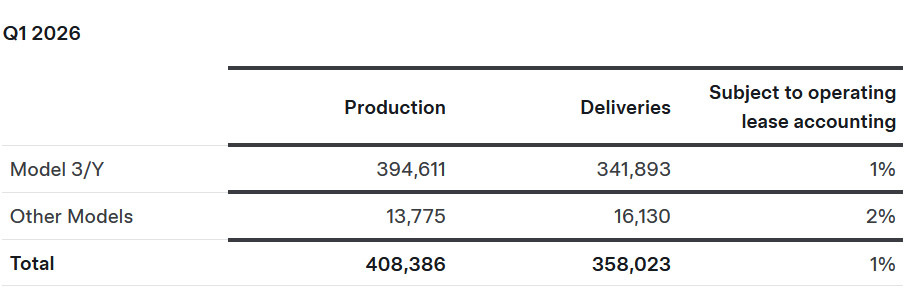
Last quarter, Tesla sold 358,023 vehicles worldwide. This represents a 14.3 percent decrease from the 418,227 models it sold in Q4 2025, but it is a 6 percent rise over Q1 last year. As sales plummeted, the difference between the number of vehicles built by Tesla and the number sold grew to its widest gap in four years.
Tesla wrapped up the quarter with 408,386 vehicles built, leaving a surplus of 50,363 units sitting in inventory. Data cited by Business Insider shows that it’s the largest gap between production and deliveries the company has ever recorded, which is surprising for a company that has typically kept supply and demand tightly aligned. The closest parallel dates back to the same period in 2024, when production outpaced deliveries by around 46,500 vehicles.
According to Morningstar analyst Seth Goldstein, there are two key reasons to explain why sales fell.
“Tesla’s first-quarter deliveries reflect the U.S. tax credit expiration as well as FSD not yet being approved in the EU,” he told Reuters. “These factors will likely continue to weigh on deliveries until Tesla gets EU approval and until we enter the fourth quarter in the U.S.”
Lower Than Analyst Expectations
The carmaker began to temper expectations for the first quarter last week, publishing a delivery consensus based on estimates from more than a dozen analysts. This suggests Tesla would end the quarter with 365,645 deliveries, but it fell short of that. The analysts also predicted Tesla would deploy 14.4 GWh worth of energy storage, but it actually delivered just 8.8 GWh of energy storage products.
As we’ve come to expect, the Model 3 and Model Y account for the bulk of the company’s sales, with 341,893 finding new homes. The remaining 16,130 vehicles delivered included a mix of the Cybertruck, Semi and the now-discontinued Model S and Model X.
Nissan recalls 51 examples of the 2026 Leaf over potential battery fire risks.
Owners are advised not to drive, charge, or park the vehicle near buildings.
Two thermal incidents were reported, though no injuries have been reported.
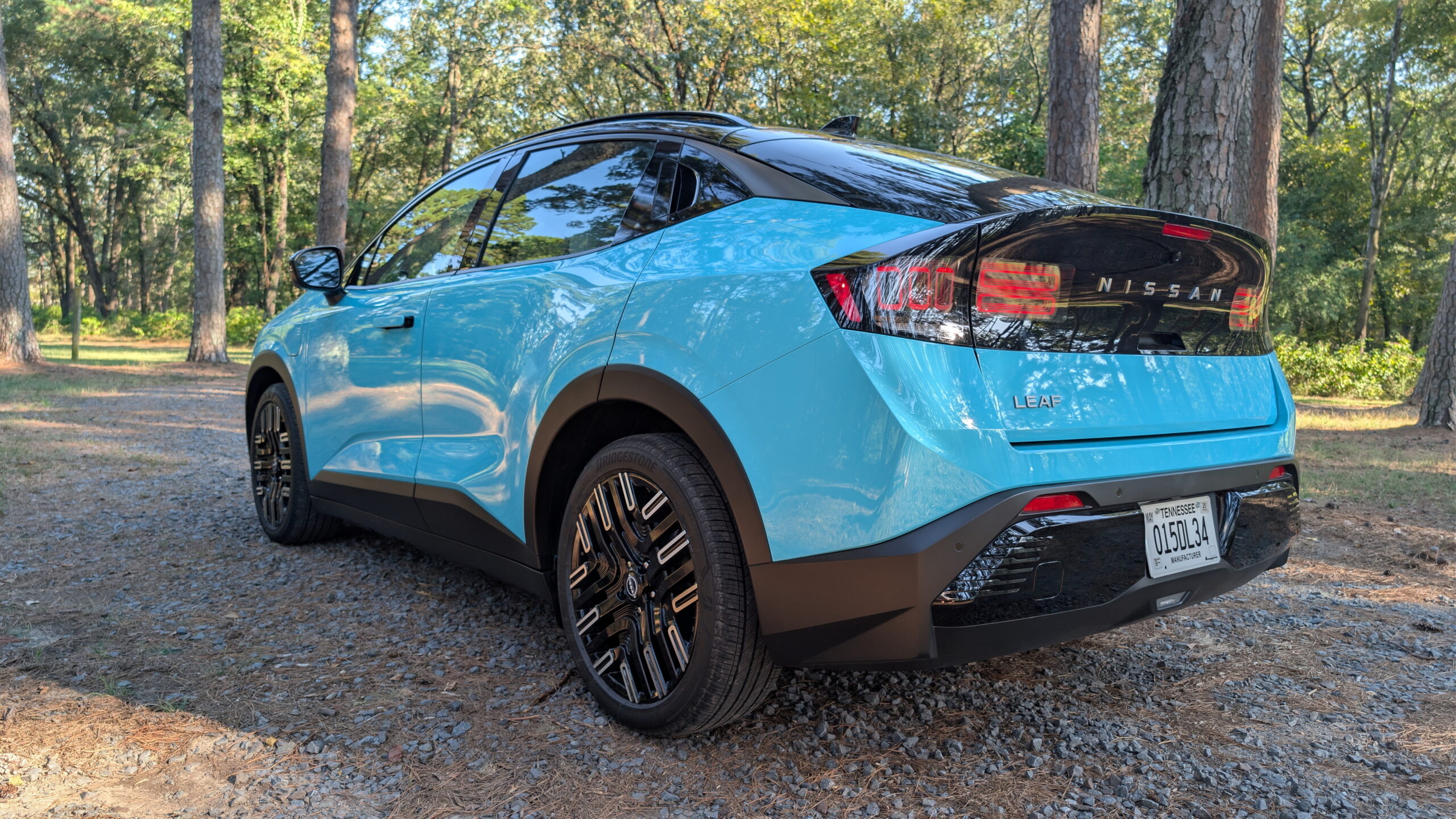
The current Nissan Leaf hasn’t even been out for a full year, and yet the company is already issuing a serious safety recall. 51 owners might have a car that could, in very specific circumstances, experience a thermal event. Put simply, the specific vehicles could catch fire, so Nissan is telling owners to take several safety precautions, including parking outside.
According to the recall, the issue traces back to the 78-kWh lithium-ion battery pack. During the supplier’s manufacturing process, the edge of a battery cathode may have been torn. If that damaged section folds over inside the cell, it can create an internal short circuit.
That’s where things get serious. Nissan says the short circuit could overheat the battery and potentially trigger what the company calls a “thermal event.” In other words, the battery could catch fire even when the car is parked, switched off, and not charging.
The first known incident happened in Japan on February 16, when a parked 2026 Leaf suffered a thermal event while sitting outside. A second case surfaced in the U.S. on March 2 at a Nissan dealership. In both cases, the vehicles were turned off and not plugged in.
That’s key because oftentimes, it’s the charging procedure itself that can initiate instances like this. Considering that these cars weren’t plugged in means owners could have zero indication of an issue before a fire erupts.
Nissan says it used telematics data to scan other Leafs for unusual battery behavior, then traced the suspect battery packs directly to specific VINs. The company says it has one-to-one traceability between the battery and each affected vehicle. Nissan stopped shipping potentially affected Leafs on March 17 and placed vehicles on hold at ports. Owners will begin receiving calls immediately, and interim recall letters will start going out on April 17.
Until then, Nissan says affected owners should park the car outside and away from structures, avoid charging it, and bring it to a dealer. Dealers will provide a rental car until a fix is ready. Once that happens, Nissan will replace the damaged battery modules, or the entire battery pack if necessary, free of charge.
Extreme driving maneuvers could cause the G580’s wheel bolts to loosen.
Mercedes-Benz will alert owners to the recall from May 22 in the US.
Wheel bolts used for the G580 are the same as those of the lighter G-Class.
Electric vehicles tend to carry more weight than their combustion-powered counterparts, which makes hardware choices far less forgiving. That’s where things appear to have gone sideways for the Mercedes-Benz G580 with EQ Technology, now facing a recall affecting more than 3,700 units in the US.
According to Mercedes, early versions of the electric G580 were fitted with wheel bolts that weren’t properly engineered for the model’s added mass and higher torque output. Instead, they were carried over from the combustion-powered version. Over time, that mismatch can cause the connection between the wheel and hub to loosen while driving, increasing the risk of a crash.
A total of 3,734 examples are being recalled, all of which were manufactured between February 26, 2024, to August 19, 2025.
Mercedes says that it became aware of a potential issue during ongoing durability testing of the electric G-Class, , when a wheel bolt loosened despite meeting the required specifications. That prompted a deeper investigation into whether the SUV’s added weight, higher torque output, and demanding driving conditions could gradually compromise the wheel bolt connection.
What Can Go Wrong
The company ultimately determined that a wheel is most likely to work loose following “extreme driving maneuvers together with a number of repeated wheel changes over the vehicle’s lifetime.” This combination can increase wear on the contact surfaces of the wheel bolts.
Starting May 22, Mercedes will begin notifying owners of the recall. Affected drivers will be asked to visit a dealership, where technicians will replace the original bolts with a redesigned set better suited to the electric model’s demands. The updated design uses a two-piece collared lug bolt, intended to maintain consistent friction at the contact surface and reduce wear during tightening.
Vehicles built from August 26, 2025, onward already feature these revised bolts from the factory.
While the regular G-Class enjoyed its best year of sales ever in 2025, the G580 was described by a Mercedes-Benz executive in mid-2025 as a “complete flop.” This recently prompted Mercedes to offer massive discounts the US, in the hopes of driving up sales of the electric SUV that starts from $164,550, including destination.
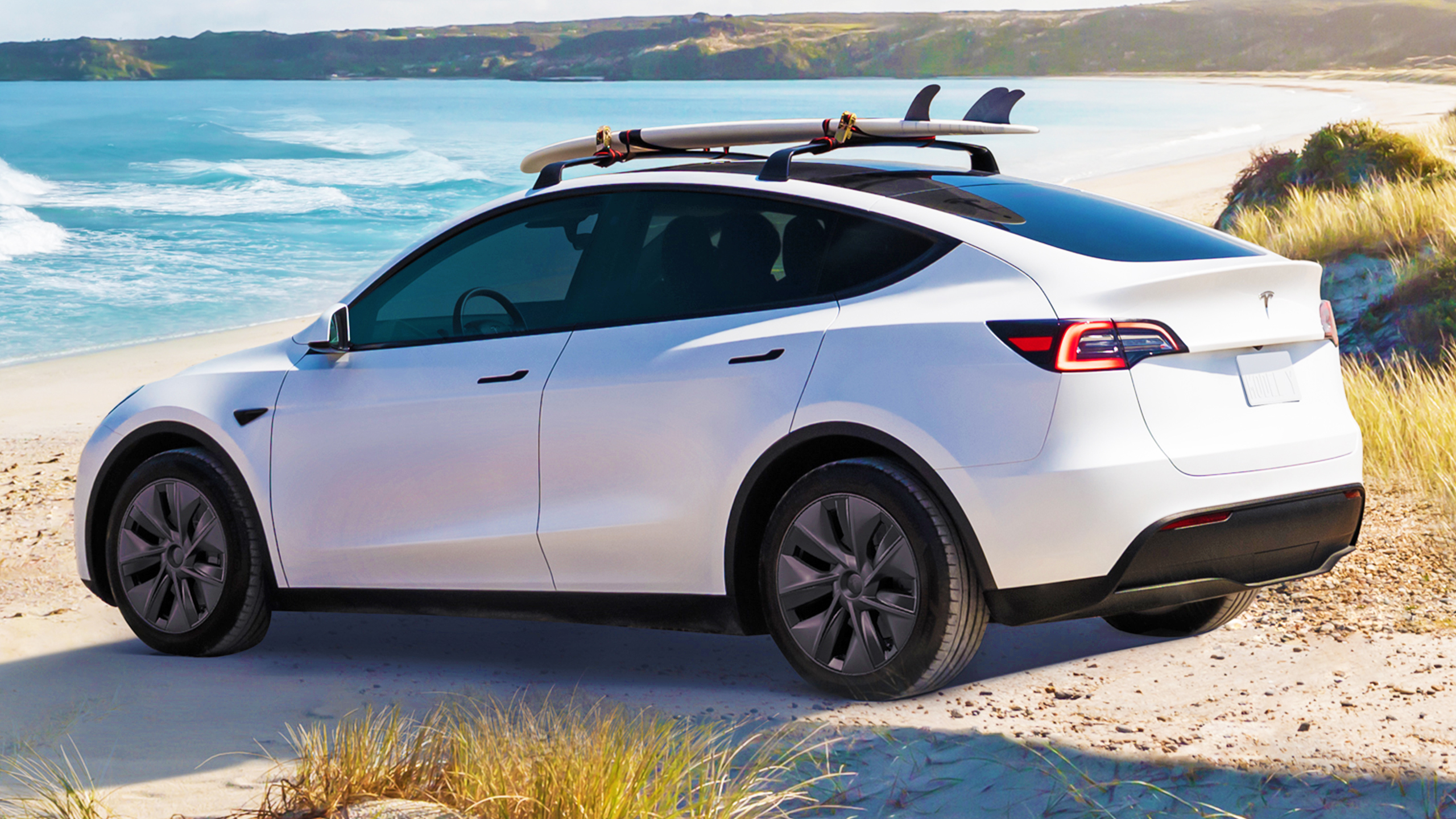
Brits can now order a seven-seat Tesla Model Y for £54,490.
Option is only available on the pricey Long Range AWD trim.
Seven-seats are already available in America and in Europe.
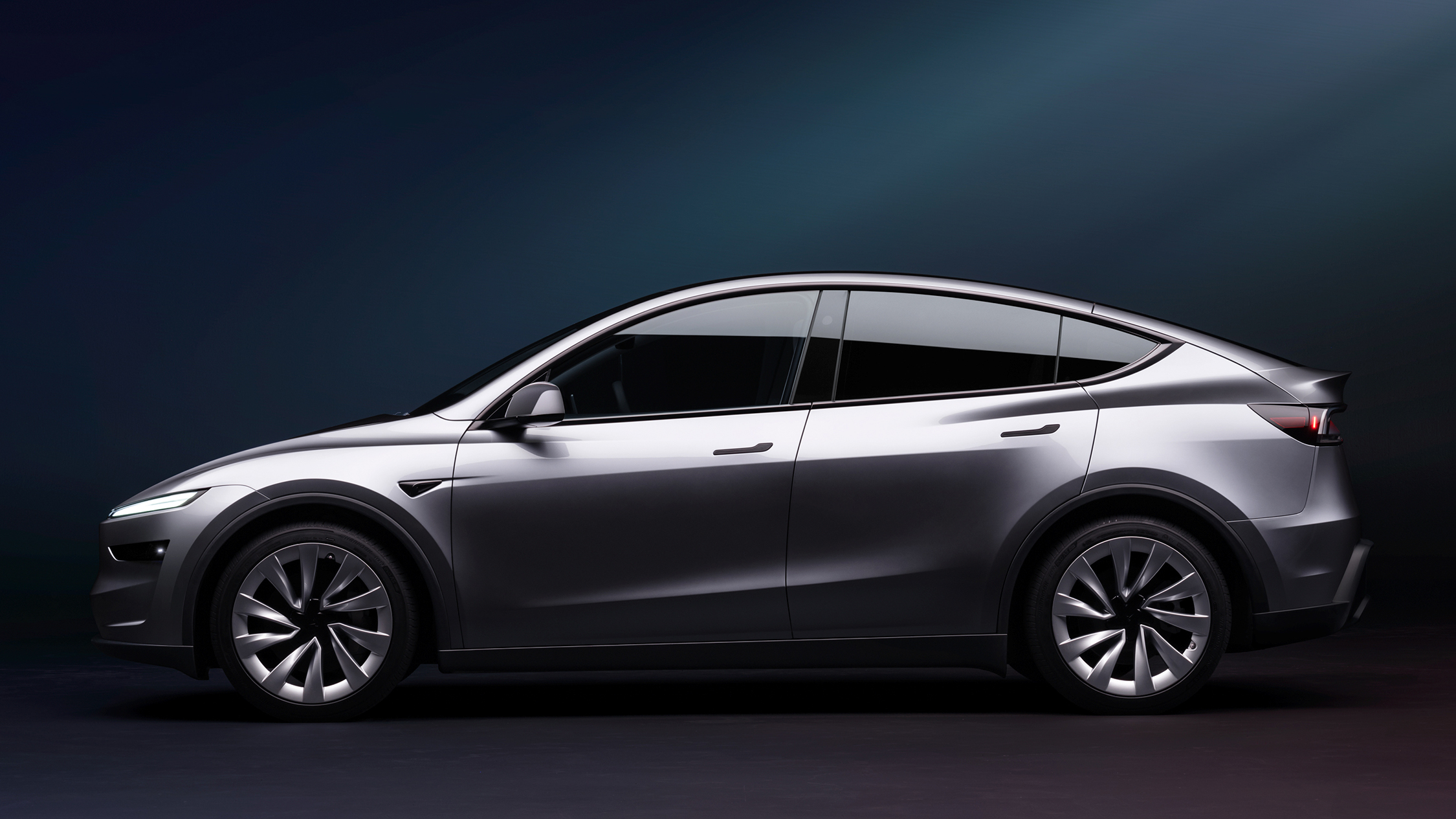
The Tesla Model Y is trying to win back big families and maybe a few lost sales rankings too. Tesla has quietly slipped a seven-seat option back into the UK lineup, and it might be just the nudge the crossover needs.
For £54,490 (equal to $68,500 at current rates), buyers get a pair of extra seats tucked neatly into the boot, an option already available in the US and the EU. That is £2,500 ($3,100) more than the regular version, versus $2,500 in the US, but that’s not the real catch. The bummer here is you can only have those extra chairs if you also choose the Long Range All-Wheel Drive model which costs £10k ($12,500) more than the entry-level single-motor SUV.
At least it means you still get plenty of punch to move seven bodies around. Twin motors deliver brisk acceleration, hitting 60 mph (97 kmh) in about 4.6 seconds, which is quicker than most people need when ferrying kids to school.
Tesla’s online configurator shows an identical sprint time for the five-seat version, and also suggests both are rated at 391 miles (630 km) WLTP. But UK websites like Auto Express claim the extra chairs cut the electric range to 372 miles (599 km). Even if that lower number is true, the Model Y would still be among the longest-legged seven-seat electric SUVs.
With all seven seats up, there is still room for a couple of carry-on suitcases, plus extra storage in the frunk. Fold the rearmost row flat and the Model Y turns back into a load-lugging champ. But the third row itself is best described as optimistic. Tesla admits it is more suited to children, and the lack of Isofix points limits its usefulness for younger passengers. Still, there are USB-C ports and cupholders, so at least those in the back will not feel entirely forgotten.
Not The Only Seven-Seat EV
This move also drops the Model Y back into the ring with rivals like the Peugeot E-5008 and Mercedes EQB, both of which have been courting family buyers looking for electric practicality with three rows of seats.
The bigger question is whether this is enough to boost Tesla’s fortunes in the UK. The Model Y used to dominate sales charts but slipped out of the top ten in 2025 despite a facelift. Adding two extra seats might not sound revolutionary, but for growing families it could be exactly what was missing.
It can be stomach-turning, watching the Trump administration torch federal climate policy. But what if some of what's burning wasn't working particularly well to begin with? Hannah Safford and Loren Schulman of the Federation of American Scientists' Center for Regulatory Ingenuity make the case, not for defending or trying to rebuild the status quo regulatory regime, but for imagining something better.
Okay. Hello, everyone. Greetings, salutations. This is Volts for April 3, 2026: “Rethinking climate regulation from the ground up.” I’m your host, David Roberts.
The Trump administration is dismantling federal climate policy at dizzying speed. The endangerment finding, the IRA, California’s vehicle standards — it’s all under assault, much of it already dead and gone. If you work in climate, you’re familiar with the sickening feeling of watching years of work get torched in real time.
The instinctive reaction can be to defend what remains and fight to get back what was lost — to try to restore the pre-Trump status quo.
My guests today think that instinct, while understandable, should be interrogated, not because the rollbacks aren’t bad (they are) but because some of what’s being rolled back wasn’t working particularly well to begin with. The tools we built to fight industrial pollution in the 1970s were never really designed to replace an entire fossil fuel economy with something new. And the mismatch between those tools and the actual task in front of us has been accumulating for decades.
Hannah Safford & Loren Schulman
Hannah Safford and Loren Schulman are the co-leads of the Center for Regulatory Ingenuity, a new initiative at the Federation of American Scientists. Their argument, in short, is that the opposite of DOGE isn’t a return to the status quo, it’s something better — a government redesigned to actually deliver the clean energy transition.
As Volts listeners know, I am a longtime lover of administrative capacity and a well-designed bureaucracy — listen to my episode with political scientist Doug Thompson, defending the deep state — so naturally this effort caught my eye. I have all kinds of questions!
We’re going to get into what’s wrong with existing regulatory design, what a renewed administrative state would look like, and whether any of this is politically viable on our seemingly cursed timeline.
With no further ado, Hannah Safford and Loren Schulman, welcome to Volts. Thank you so much for coming.
Loren Schulman
Thanks for having us.
Hannah Safford
Really glad to be here.
David Roberts
Let’s start with both of you, in turn. There’s a ton I want to cover, but let’s start very briefly at the beginning, just so listeners can get a sense of who they’re hearing from. Maybe each of you can tell us a little bit about your background and the thread of your work that led you to this. Let’s start with you, Hannah.
Hannah Safford
I am trained as a scientist, trained as an engineer. That was where I got my start, but then began working in federal policy at the White House from an early age. Did a stint under the Obama administration from 2014 to 2016, had a great time there, went back, did deeper technical expertise, and then came back and was doing federal policy work again under the Biden admin. In both of those terms of service, in both the Obama administration and the Biden administration, working on climate policy, it was two very different sets of tools that those administrations were working with.
Obama was trying to push forward climate policy through a lot of executive orders because it was running into all kinds of roadblocks on the Hill with appropriations. The Biden administration had more money but ran into implementation challenges and pushed hard on ambitious regulatory standards, only then to see those get reversed in the second Trump administration.
And now the work that I started doing at FAS and trying to think about what the next chapter of climate policy looks like, it is very clear to me that though there was a tremendous amount of ambition and expertise in both the Obama and Biden administrations and motivation to move on climate, the tools that we had to push that forward weren’t getting the job done in any way that was deeply effective and durable and matched to the pace of the challenge. That’s where I come at it from.
David Roberts
How about you, Loren?
Loren Schulman
My background is pretty different. I started my government career in the national security space during the Bush administration, going into the Obama administration, working at the Department of Defense and the National Security Council. This was, listeners may remember, prime counterinsurgency global war on terror era, where we frequently would make announcements about a shift in strategy — a shift in approach about being a more people-centric, people-enabling strategy in Afghanistan and Iraq from the military perspective, and also how the military would work with the State Department, U.S. Agency for International Development, and others.
It would be at best headline-deep, and all the decisions around personnel and funding and decision-making and how they would work together would be assumed — “oh, we’ll figure that out.” People will also recommend we did not figure a lot of that out. I saw the same narrative play over and over again in different spaces as the United States NSC apparatus started moving more towards using sanctions, an incredibly effective national security tool. There were so few people at Treasury or State who were capable of helping identify potential targets for this, but more importantly, possible risks and impacts.
Similarly, I remember years later as we started being able to say the words out loud, industrial policy or technology strategy, people making assumptions around supply chain risk and so on — “these are the policies we need to set” — and me thinking in the back of my head, Department of Commerce has maybe one person who can do that. We need an entire —
David Roberts
You and what army?
Hannah Safford
Yes, exactly.
Loren Schulman
I gradually shifted from being a national security policy person, which I still care deeply about, to somebody who cares about government capacity. Not just in terms of numbers, but in terms of roles, relationships, decision-making, feedback loops. Are we hearing from people about the impacts that we need and the ability to not be so rules-driven and compliance-focused, but more, are we actually able to meet the outcomes that we talked about? I served as a career official in NSC and DoD for about 10 years, left government for a while to work in the national security think tank, but then decided it was important to have this focus on capacity and move it over to the Partnership for Public Service, and spent more recent time in the Biden administration at OMB. My title was so boring: the Associate Director for Personnel and Performance Management.
David Roberts
Unlike most OMB jobs, which are just sexy.
Loren Schulman
Scintillating, yeah. But this one is the engine. My sexy title that I said for myself was, “we are the engine room of democracy.” We are the folks who are making sure you’ve got the people, the measurement, the evidence, all of that. If you’re doing a good job.
I left at the end of the Biden administration. I’ve been working with Hannah since last fall on both this effort and new efforts to think about what is the future of government, both what should it be from a vision perspective. But then also, no matter what vision we have, do we have those building blocks, those Lego pieces to actually get the job done?
David Roberts
You must be — given the character of your critiques of what you saw in the defense apparatus — delighted with what’s going on right now. Whatever remainder of competent implementation you saw when you were there, we’ve wiped that out now. I wonder, did you — this is to both of you, I guess — was it on purpose that you are launching this thing simultaneously with Trump wiping out the endangerment finding, which is the foundation of all federal climate regulation? Is it odd to you to be launching this right now, or do you think it’s perfectly apropos?
Hannah Safford
We started thinking about these questions even before the beginning of this second Trump administration. We started thinking about this: What does the path forward look like for climate policy? How do you marry questions of policy ambition and policy implementation in ways that take insights from climate experts and insights from state capacity experts really seriously? This was towards the tail end of the Biden administration as we were coming into election season and even at that point starting to do a bit of a retrospective of, “how come we weren’t able to move faster on the regs that were a day one priority?”
How come we weren’t able to push even more money out the door with the infrastructure bill and with the IRA than we had intended to? People, including us, were starting to think about these questions. I was thinking about these questions when I was in the White House and I was working on transportation regulations and we were trying to do fuel economy standards for electric vehicles, which don’t use fuel. You have an actual math problem. It’s this divide-by-zero problem when you’re thinking about miles per gallon, when you get infinite miles per gallon because there are no gallons.
Then the administration changed over and all of a sudden, these questions that seemed like they were there, but they could be back burner. The tools weren’t perfect, but we were figuring out how to make them work because at least there was a tremendous amount of political will at 1600 Penn.
All of a sudden it took on tremendously increased valence once there was going to be a reversal in climate priorities. That’s just built on itself. Built on itself. Built on itself. It did end up being serendipitous in some way, that the day that we formally launched the center after doing this year and a half of build-out, ended up being the same day as the endangerment finding rollback.
Loren Schulman
As this is happening, I’m getting all the explainers of, “here’s what this is, why this matters.” While I care deeply about this and I’m trying to bring the capacity lens, climate is not my original subject matter of expertise. We ended up changing our talking points of how we’re announcing this to a tired/wired bit around: Why are you tired? “Well, the entire legal foundation of why I have been doing this work for a long period of time is more or less gone now.” That’s a good reason to be tired.
But the why we’re excited, why we’re wired is, I guess, a nice way to say it. It was proving the point in a very dark and ugly and tremendously impactful way, but also proving the point that we need to think about this differently, apparently quite a bit more rapidly than we had been hoping, but we need to think differently.
David Roberts
It’s like you look at, anytime a terrorist blows up a building, you could always just squint and say, “hey, look, it’s an opportunity to build a new building, guys.” In that sense, he did you a favor, clearing the way for something new. Hannah, I’ve got a couple for you, and then I’m going to come back to you, Loren. Hannah, a central piece of all this is this notion — I thought one of the more striking lines in all the stuff I read was you saying that the regulatory system we’ve got was designed to produce cleaner technologies within the fossil economy, but is simply not set up to replace the fossil economy.
Can you unpack that a little bit? The way that current tools are not fit for purpose. Can you unpack what that means, what you mean by that? And maybe an elegant example.
Hannah Safford
Our nation’s foundational environmental laws and statutes — most of these, almost all of them, were passed back mostly in the 1970s, but certainly 20th century. There was this era of rampant industrial pollution. Factories dumping chemicals into rivers and belching smoke in the air. These were big environmental problems that we needed to solve. We largely did that. We passed a suite of landmark environmental laws: Clean Air Act, Clean Water Act, National Environmental Policy Act. That list goes on, that for the most part, did their job. Rivers got cleaner, air got cleaner, and then you fast forward a few decades in the 21st century and we haven’t fully — that kind of classic environmental pollution is still a problem for sure.
We’re seeing this administration weaken protections — it’s becoming more of a problem. Still, I think anybody in the environmental space would agree that the predominant environmental challenge is no longer industrial pollution, though that’s still an issue. The predominant environmental challenge is climate change, which is a really different problem. It’s a different job managing a massive economic transition to new technologies than motivating the stapling on of cleanup technologies to a few relatively stable sources, because you have very entrenched systems.
Our economy was built on fossil foundations that have been in place for more than 100 years. Figuring out how you transition off that foundation in ways that don’t have negative implications on factory communities, on the people and industries and intertwined systems that have been built up around them — it’s really hard and it requires — I said earlier, I’m an engineer and I think about using the whole toolbox and when we need a modern toolbox and a full toolbox in order to address fiscal, economic, distributive implications as well as the pure technological implications that industrial pollution cleanup problem engendered.
David Roberts
One of the points you make that makes this concrete is you make the point that when it comes to EV standards, Democratic states — Maryland, Massachusetts, Oregon — were rolling back their own EV rules before Congress killed the California rules they were acting under. I would like to hear you unpack what you take from that. What lesson do you draw from that?
Hannah Safford
You had Emily Grubert on your show a few weeks ago and a lot of the research that she’s done around the mid-transition and this messy period where you’re trying to shift from fossil systems to clean systems, and the clean systems are big enough that they’re not just at the margin, but they’re not big enough to fully displace the fossil systems. How you navigate that — that’s what you’re starting to see play out globally, but particularly also in the United States and some states that have been a little more forward-leaning.
In California, where now EVs are at least a quarter of vehicles on the road and are making up a growing percentage of new car shares, this is tricky. You’re trying to figure out how you build out the charging infrastructure at the same time that gas systems — you need them, but you don’t need them as much. Where’s the revenue coming from? Gas tax is taking up less of a share.
Once you start to have those messy questions and deal with the real-world implications of that mid-transition period, it’s real. It’s not just theoretical on paper and you’re saying, “okay, we’re going to get to 100% EV deployment out in the 2030s.” I think that’s a vision that I resonate with and I want to think about our 100% EV future, but I think there was less attention paid to the lived reality of the 40%, 50% EV future. That is a necessary intermediate step.
David Roberts
Here I think you’re making a point, and this is where I want to raise a question. One way to look at that, the fact that these Democratic states were already backing off on their EV standards before Congress killed the California standards — one way to interpret that is, as you say, the tools they had to use were not particularly well suited for the mid-transition. It was the design of the regulations that turned out to be the problem.
Another way of looking at that, you could spin that around and look at it from the other side and say there was a huge sweeping political shift just before that. All these states knew what was coming. They saw the shift, they saw the voting shifts, they saw the polling. You could explain that just through politics, not necessarily through regulatory design. Do you know what I mean? I’m not sure how you pick apart the consequences of poor regulatory design from politics. Do you know what I mean?
Hannah Safford
I do know what you mean. I think there are a couple of different ways to look at this. One, the tools that we have, and then to the extent that you’re using regulatory tools to try and drive climate progress, there is still going to need to be, no matter what policy package you have, regulatory tools and some regulatory levers are going to need to be some portion of that, whether it’s the load-bearing center or whether it’s the scaffolding. That might look different in different economic sectors. It is at least helpful then to have regulatory standards for vehicles that contemplate the existence of electric vehicles, rather than working with fuel economy standards.
That’s an example of where the regulatory tool fundamentally needs to be updated. Then there’s a piece of saying, “okay, but we can’t put all of our eggs in the regulatory basket,” which is what a lot of climate strategy has done to date — has been very heavily focused on regulatory standards, particularly at the federal level. What we started to see in the Biden administration, and Loren talked about this earlier, is this recognition that regulatory is a piece of it, fiscal and economic policy is a piece of it, industrial policy is a piece of it. All of these things have to work fairly seamlessly together.
You can’t advance a highly ambitious regulatory policy package without the complementary policies that can manage those other effects. To put that simply, you can’t say “we’re going to have 100% EV sales and that’s what we’re going to drive to” if you’re not confident or have a clear roadmap for building out the charging infrastructure at the same pace. Alongside those two things, it’s a chicken and egg problem, but you do need both the chicken and egg.
Finally, there is the political problem and how much political will you have to update tools or to put forward a comprehensive policy package. Sometimes where the politics fails is because constituents aren’t feeling the value of these policies in their day-to-day lives. If constituents aren’t going to see the benefits of climate policy, then they’re not going to rank climate high in their voting preferences. This is what Loren will get at a little bit later on — how do you design and implement policies that are much more responsive and visible in people’s day-to-day lives? That solves one piece of the political puzzle.
Then there’s another piece which is about incumbent interests. There’s certainly fossil and gas actors that have a vested interest in slow-walking the transition. That’s there. I would say it’s one of these four different pieces: regulatory design, regulatory coupling with non-regulatory strategies, the consumer responsiveness piece, and then the incumbent and political interests.
David Roberts
A little later, I’m going to dispute the relative weightings of those, let’s just say. But all right, we’ve got all those on the table. This maybe is a question for both of you because I have heard many times that the big problem with IRA is, passed all these big exciting policies — in your paper, you compare it to the garden hose, Olympic size.
Hannah Safford
I think I said trying to get an Olympic swimming pool through a garden hose.
David Roberts
Yes, exactly. The problem was we had all this money, we had all these policies, but literally getting the money out the door was the problem. There’s this gummed-up bureaucracy and I’ve heard that general point many times, but I would like a little specificity here. What went wrong? Who wasn’t acting fast enough? Can one or both of you flesh out what we mean when we say that? Who, what department wasn’t acting fast enough? What mechanisms weren’t working? Why was the garden hose so small?
Hannah Safford
I’ll start a little on that and then would love Loren to come in and do more. First, I should say, there were a lot of dollars to get out the door. A lot of dollars didn’t get out the door. A lot of dollars did get out the door. It’s always very easy to focus on what went wrong versus what went right. But hundreds of millions, billions of dollars went out the door in ways that did materially advance big-C climate policy as well as small-c, building more climate-resilient bridges and roads and other infrastructure, restoring coastal shorelines, these things that are in people’s communities and day-to-day lives. Just to give some credit where credit is due.
With that said, there were a lot of pieces that got stuck and you can zoom in on a bunch of different facets and see different implementation challenges. I will give you an example of one, which is for any very significant new grant funding opportunity, the notice of funding opportunity, the NOFO, gets developed by the agency that’s responsible for implementing the grant. For NOFOs that are over a certain dollar amount, they need to get reviewed by relevant policy councils at the White House.
There’s some reason for doing that. You’re trying to ensure top-level coherence of these different programs and having them work together and also advancing the same objectives. You don’t want one grant program to have these domestic purchasing requirements that another one doesn’t.
Also, there are only so many people who work at the White House. There are physical limitations. You can only put so many people there. It’s not a very big building and some people work remotely, but a lot of people don’t. I had the experience of having lots of NOFOs just pile up with me. Those are the pieces of paper that are the bottlenecks — until those pieces of paper get approved and go online, dollars cannot start flowing out the door. That’s just one very high-level bottleneck. But I know Loren has been thinking a lot about this, of where it translates into institutional design beyond the White House.
Loren Schulman
There’s a whole lot of examples that we could pull out. I’ll start with just some big points. One, this is the largest climate investment ever. An enormous amount of money, huge numbers of programs to start up all at one time. For almost all of those, you did not have the people in place when that legislation was passed to make sure that was possible. You had some of them, but not many. When the average hiring process for the federal government can take 90 days to six months, particularly for harder-to-find roles, you’re already on a delay. You are already on the delay of, I don’t necessarily have the right people there in the seats that I need for those roles. Many of them, as Hannah was saying, are extremely specialized.
There are great examples of, there are maybe two attorneys you can trust at the Department of the Treasury around specific kinds of rebate packages. They are miracle workers. They did incredible work. But even with that, their ability to suddenly not just quadruple, but whatever it would be — 20 times size — their review capacity, that’s not something you can suddenly overnight say, “please do that.”
With that, there’s a whole lot of elements of government that tend to be under-invested in, under-thought of until you suddenly need it. That is around HR, data management, procurement, IT, even though we spent billions and billions of dollars in IT. It’s all to fix old systems, not to modernize to new ones. These are all the things that you needed to be able to work incredibly well, to be able to deliver an IRA, to hire faster, to be able to get contracts out the door better, to be able to move grants faster through this system.
Those are all things that we hoped would stop breaking and kept breaking on a regular basis throughout the bill and IRA process. With that, you get it compounded with states — they are having the same sorts of capacity challenges times 20 as what the federal government was, because at the same time we were trying to get money out the door at the federal level, we were asking states and localities to be able to absorb it.
David Roberts
Here’s a question for you. You cite numerous examples of what you call the mission state, American tradition. There’s the New Deal, there’s the Apollo Project. These climate people are very familiar with all these because they’ve all been used in analogies at one point or another. New Deal, Apollo Project, there was the Operation Warp Speed in response to the pandemic.
The point you’re making, I think, is that there’s a tradition in America of us turning in a direction and focusing our resources on doing something big. The notable thing about all those examples is that all of them were forced by something like a crisis — the Depression, Cold War, the pandemic. Generally, it seems like America won’t do the right thing until forced.
The idea for decades in our world has been that climate change is going to serve that purpose, that climate change is going to be the equivalent of the Depression or the Cold War, that it would force us to get with it and focus and do something mission-driven. It doesn’t seem like that’s happening. It doesn’t seem like it’s working. Insofar as you all are envisioning some project of renewal, some big new project of renewal of the American state, what is supposed to be the forcing mechanism?
Hannah Safford
It’s a really good question. I think the climate community, and which I say as a proud member, is always wanting climate change to get better, because that’s the point. But also always saying, “if it just gets bad enough, then everybody is going to bump it up the priority list.”
David Roberts
That just keeps on not happening.
Hannah Safford
It keeps on not happening. To be honest, I don’t want — if at this point, it gets so bad that people start paying attention, it’s really bad. It’s not a world that I want to be in. You got to start —
David Roberts
In my experience, when things get really bad, people don’t respond with outbursts of rational policy development.
Hannah Safford
There’s a couple of things that I take away from this mission state conception. One, and we talked about this earlier, that’s all the tools in the toolbox and what that is. If you take Warp Speed, the most recent example — Covid truly upended every corner of our society and it was then truly mobilizing every corner of government at the federal and subnational levels to try and respond to that.
I experienced this firsthand. I did my PhD and was working on water research. Then Covid hit, and my lab capabilities at Davis were mobilized to do Covid wastewater detection in sewer systems, so it’s really like —
David Roberts
Don’t you feel that the full federal government response to the pandemic, which produced a vaccine quickly, was amazing. But don’t you feel it was making use of leftover competence, leftover administrative capacity and competence that the Trump administration had not yet gotten around to destroying, which now, could we do it again if it happened today?
Hannah Safford
There are two questions: what tools are you using? This is where, again, I go back to the design and application. You need to be using the right tools and have the capacity to implement them successfully. The first thing I take away from the Mission State conception is, if you’re going to run a whole-of-economy transition, it doesn’t make a priori sense.
If you’re going to design that from scratch, you probably wouldn’t run it through the EPA, to be honest. It just doesn’t have access to the trade policy levers, the economic levers. It’s not a very big agency and it’s got a lot of other stuff to do. That’s thing one that I take away from it — think about, we say this, we say whole of government a lot. That’s classic DC speak.
But what does it mean if we’re really trying to design a next chapter of climate policy that is truly whole of government? You don’t start with EPA and work out from there necessarily. You look at all of the tools and think about where you need to put it. I think this translates down then to states too, which often have much fewer regulatory levers than federal government does. I think they’ve operated in a way of saying, “well, then what are we supposed to do on this problem?”
But now that you have many of the clean technologies that we need as cost-competitive and commercial, there are a lot of creative things that can be done through financing and procurement policy and through market access and market transparency policy that are part of that creative, entrepreneurial, mission-state ethos. That’s one motivating thing that I take away from that principle or vision.
David Roberts
This brings up a question that — and this is really the central question that I kept bumping up against again and again reading your work — is: one way of viewing the federal response to climate change is to say we made a mistake of regulatory design by trying to do this through the EPA rather than a true whole-of-government, mission-driven effort. The response would be the reason we did it that way is not that we were confused about regulatory design. The reason we did it that way is downstream of politics.
The reason we did it that way is because we’re not gripped as a nation, we’re not in a mission mindset. We sloughed it off on EPA precisely because we’re not taking it seriously. I see those — a lot of these regulatory design issues as being downstream of politics. If we took it more seriously we would probably —
Hannah Safford
Update our regulatory tools?
David Roberts
Yes, exactly.
Hannah Safford
Totally. Again, I was part of the last administration and recognized that it didn’t make sense to apply fuel economy standards to EVs, and at the same time trying to do that because that was the tool that we had and trying to get dollars out the door and recognizing that it was silly that a lot of NOFOs were piling up on my desk. At the same time, there wasn’t a lot of — I couldn’t set aside a couple of years to work on a better institutional design structure because it was very pedal to the metal, let’s try and get the dollars out the door with what we have.
Two things. One is that this mismatch has grown over time. If you go back to the Obama administration, yes, there was still a mismatch between — it was still true that these foundational environmental laws had been passed in the 1970s. Now we’re trying to deal with climate change and grappling with the fact that the Clean Air Act doesn’t explicitly mention greenhouse gases. But we’re also still in a world where EV penetration is negligible and solar panels are expensive. There is still a need to drive down costs before you start thinking about very large-scale deployment and the knock-on economic effects that that’s going to have.
David Roberts
Also the lift required of your regulations —
Hannah Safford
Yeah.
David Roberts
— is lower if you start earlier. Obviously.
Hannah Safford
Definitely. Yes, of course. The political problem or the mismatch problem that you’re talking about — we could have decided in the early 2000s, “okay, climate change is a problem, and we should update our regulations.” But it wasn’t as much of a challenge as we’re facing right now. Now we’re in this moment where, on the one hand, federal climate policy is being gutted. That’s obvious. We’ve written about it. At the same time, the technologies that we need have never been more advanced or more affordable.
In this period, as we’re starting to think about what’s the next big federal play that we might make, maybe it is starting to think about some of these fundamental institutional design questions or regulatory design questions that the value proposition of interrogating those versus pushing for a really big funding investment is different than it was 10, 15 years ago.
Loren Schulman
Can I jump in on that, Hannah? I think that the creaky bureaucracy problem as the political problem, in some ways I get frustrated by the fact that I have to continue to make this argument — not to you guys, but to different audiences — that we haven’t had a candidate run on the promise and potential of government as a political thing that does good things in a real way in I don’t know how long. At best, you had Clinton come in with a reinventing government narrative, but that was all about cuts. That wasn’t about doing things differently.
David Roberts
That was an apology tour for government.
Loren Schulman
Exactly.
David Roberts
That wasn’t about how good government is. It was like, “we’re sorry government is so big and dumb and gross.”
Loren Schulman
You had Carter and in the 70s under Nixon, you had some institutional imagination that was going on there. But ever since then, it’s been a let’s just try as best we can to make sure that people outside of D.C. don’t know that we’re having to put all these band-aids around all of these institutions. At best, let’s maybe talk neutrally about government and maybe a political way. But the average talking point you see from anyone who’s running for office at any level is “government is not here to help. I’m here to go fix government for you and make sure to get those bureaucrats out of the way.” That has clearly been winning enough that people feel comfortable repeating it.
At the same time, people act shocked when you don’t have the personnel who are capable of executing things quickly and getting money out the door, who don’t have the relationships with states, who don’t understand that there’s one permitting officer in the entire enormous state. That mismatch there tells me, yes, it’s a political problem, but it’s also an incentives problem, short-termism problem, or a total lack of recognition of how government capacity is what gets you the political outcomes that you want.
The fact that we have made government the punching bag for so long is clearly biting us in this space, but is also going to continue to do so in any number of policy areas.
David Roberts
Yes, I have much more to say about that political question. But I’m trying to put it off to the end because I know once I get on it, I’ll never get off.
Loren, I have a question for you. Let’s just bracket for the moment the politics. What is the external forcing mechanism that is going to be equivalent to a depression or the Cold War or something that is going to force America into the crisis mode that it seems to need to be in to do big reforms? I don’t really know what that is, but let’s just say — let’s just say we have an opportunity to reinvent things, to start from scratch, to start with a new vision. Loren, you ran this futures exercise with 50-plus participants, asking a bunch of questions, probing what would you want from government if we were going to renew government? What is your vision for a good government?
What you found is there were eight distinct models with different priorities that people grouped under. For instance, there’s an abundance model which says growth and speed are the priority and we can accept a little fraud and some failures around the edges as the price of that speed. Then there’s the equity model, which is, no, slow down. Let’s have communities involved, community co-governance, which prioritizes that aspect of things.
Point being, it’s not simply we all want better regulation. We have at least partially incommensurate visions of what we want from government. How do you cognize that? How do you — even assuming we’re renewing government, on what lines? Based on whose vision? How do you think about that as you turn to this project of renewal?
Loren Schulman
This relates a lot to the rant that I was just on. I feel strongly that Americans have not been given the opportunity to weigh in on that question in a way that would get to a useful answer. I’ll talk a minute about what those possible models could be.
When we ask people, “Do you trust government?” that’s telling you about their immediate feelings about probably their member of Congress or maybe their city council. It’s not telling you what they want out of it and what they would want out of it. Not just in the boxes that you have today of Social Security or Medicare or IRS, but in terms of what are those pain points or opportunities that you experience most acutely and where is it that you feel as though there should be a societal role — a public role — in grappling with those? That is a big meta topper to what I wanted to say.
What was interesting to me as I was doing these exercises, was anything from people who wanted to focus very much on an abundance approach, who wanted to lean heavily into AI, folks who said that we wanted to lean much more into human dignity.
But as I went through all of the answers everyone had of, “okay, what are the ingredients you need in order to make this possible?” The ingredients were quite similar. You needed to be able to have access to the best talent that you could to deliver on public missions at the time you needed it. You needed to be able to have measures of not only is this working in this moment, but is it being responsive to the problem? Are you learning about this on a decision-making cycle that makes sense? You need to be able to, to Hannah’s point earlier, take on structural — meaty — endless problems that feel unsolvable, while also addressing the more immediate, my rent is too high, I can’t afford food, whatever the immediate thing is.
You also needed to be able to communicate on an iterative basis with the American people, not just on election day, so that you are building a participation process that wasn’t just, “I’m going to ask you on the worst possible website of our time for your feedback on an unintelligible regulation.” I want to build a relationship with you such that we’re able to mutually be conscious of what folks are working on.
What all of those have in common is that they have been things that we have been struggling with and identifying as problems in my community — government capacity — for ages: hiring, procurement, measurement, participation, customer experience. These are all things that we’ve said for a while. They are, as I said earlier, that engine room. To the degree we continue to denigrate that engine room and not prioritize it, it is going to fail you in climate, it’s going to fail you in housing, it’s going to fail you in transportation, it’s even going to fail you in national security. We’ve thrown a ton of money at that problem.
The reforms that you might need in that space, they are hard, but not laws-of-physics hard. They are priority hard. We’ve had political moments when that has been possible before, usually in the wake of a crisis. I think that the crisis moment, whether we wanted it or not, could have come a bit from DOGE and a bit from the Trump administration of putting so starkly on the front page what your taxpayer dollars are paying for or not, where your data is being used, whether or not we care that you are being cut off from a program or not. I don’t know that that’s the urgent crisis that gets Congress to suddenly say, “I’m going to talk about Title V reform,” but it has certainly opened the door to it in a way that was not open five years ago.
David Roberts
The vision here is something better. The vision here is something that works better. The point of this is regulatory ingenuity, that is, thinking anew, thinking in response to modern conditions, et cetera. Before we’re done, I would like to hear from both of you on at least a little bit, what does that look like? What does better look like?
There are two things going on here, two things being mixed up slightly. There’s the administrative capacity part of it, like how is government structured? How are agencies structured? That kind of thing. Who’s hired and how many people? Then there’s the regulatory design question.
Each of you is expert in one of those. I’ll start with you, Loren. I would like to hear, what are some administrative capacity type reforms that would show you evidence of a better government emerging? What types of administrative reforms? Is there a list somewhere? Are there things like better agencies, different agencies, more hiring, different hiring? Give us some substance here.
Loren Schulman
There’s a lot of paths you could go down. I think one of the biggest ones is, how do you take federal, state, and local government — because they all have this problem — away from a checklist, compliance, risk-aversion mindset to one where they’re trying to care about outcomes. There’s lots of angles.
David Roberts
This is — I’ll just note it since this is, of course, the heart of the abundance critique that is now all the rage in Democratic circles. Precisely this, that the Naderite lawsuit-based, risk-based, precautionary-principle-based excess caution has woven us into this web of rules and restrictions that is binding us and making it so that we can’t do what we want to do, and we need to sweep that away and focus on outcomes. This is a familiar critique that’s flying around these days.
Loren Schulman
Totally. One of the things that critique smooths over a little bit, or I sometimes disagree with it, is they — it tends to view people, communities, participation as a problem and a barrier. I think participation is a problem now because it is designed to do everything wrong. It is designed to happen too late. It is designed to make sure that you’re not bringing in people’s insights at the beginning to build in the trust that you needed in order to make large significant changes as well as incremental changes.
When it is not bringing in communities from a co-design perspective, it’s bringing them in as a “hey — we’re good — right” perspective, which gives everyone the opportunity for all kinds of catastrophic delays later on, and it avoids the fact that you’re going to be better off, I think, for many of the kinds of policy changes that Hannah could talk about if you are talking about benefits and risks, not just from an immediate community perspective, but from a broader beneficiary and impact community perspective. Not just in the town or the county locality that you are in, but you’re talking about it from a national angle.
That is a very different model of government than we’re in right now. It’s one that both is more trust-based but recognizes that good governance isn’t just about, “we told you what happened and we gave you the opportunity to input on a bad website,” but rather one where you have smaller, deliberative, relationship-based, trust-based co-design throughout.
David Roberts
This is something I hear a lot, and it’s interesting to hear from you. Your position is that community involvement, properly structured, accelerates rather than slows down big government projects? This is the best of both worlds. I’d love to believe this. I’d love to believe that we could get better on community engagement and get faster. I don’t know. Are there examples? How confident are we in this?
Loren Schulman
It will take some testing and we see some of this happening in California with some of the work that they’re doing. The Possibility Lab in California is doing some awesome work around this, both in small levels around, how do we build a park to bigger, higher-impact ones about, what is the future of California over the next hundred years? You see examples in cities and counties across the country that are testing out different ways to pull in community input that isn’t just, I’m asking you a question and you’re giving immediate answer, but more on a continuous, iterative basis. I think the challenge is going to be getting people to think of this as ultimately risk-mitigating upfront if you have more buy-in, rather than waiting to the end and presuming that everyone will be okay with it.
I agree with you that doing both at the same time seems like we’re just going to be spending more time on stuff, but how much time are we spending? How much cost are we doing based on any number of lawsuits that happen at the end? The overall, the absence of understanding of impact, there’s a trust mismatch element that’s going on here too.
The final piece I’ll note on this is I think we overall need to get better at — I’ve mentioned hiring a couple of times, but it’s not just hiring for the sake of bringing people in. It’s recognizing that federal, state, and localities have to work together in very different ways than they have in the past, where it’s not just, I, federal government, am telling you, state, to absorb this billion dollars, good luck. But having a much more fluid relationship in terms of talent, technical knowledge, capacity, ability to advise one another.
It’s not just a state suddenly meeting with 20 different representatives of the federal government, but much more of a regional approach of thinking through how do we work through this system together. Rather than, I’m overwhelmed, so now I’m going to hand this to you, state, to be overwhelmed. Who’s going to hand it to an implementer to be overwhelmed? That’s not how any smart organization works on problems. We can think of government capacity from a polycentric basis rather than just one — is about how do we redesign the EPA.
David Roberts
Yeah, the polycentric model is interesting. Hannah, let’s hear from you. On the regulatory design question, maybe just give us — it’s all very abstract. Maybe just give us some sense or some examples of what regulatory ingenuity would look like on the ground? What are some — ingenious. Is that a word?
Hannah Safford
Yeah, ingenious. When we started designing this, I kept saying “ongenuity” and I was very confident this is why you need stakeholder input. Because the stakeholders on my team then gently took me aside and said, “that’s not how you say it.” This conception of regulatory ingenuity that we’ve come up with — ingenuity by definition means creative and clever. That’s what we’re trying to get at — anything, any approach to climate policy that’s not blindly rerunning the same plays harder and faster because that’s what we know how to do, or that’s what we’re mandated to do, but instead saying, what is the problem that we’re trying to fix and how can we be responsive to those problems?
This word that you heard Loren say a couple of times — being responsive, responsiveness — it’s a normal word and it is absent from the climate think tank world, it’s astonishing to me. If we say that regulatory ingenuity is about how we update old tools, take laws and processes that were built for one purpose and adapt them for today’s challenge, and say, how can we be responsive to that challenge? That to me is at the heart of it.
Let me give you a more concrete example to take it away from being buzzwordy. If you’re somebody in one of many communities whose electric bill is going up because a data center moved into your utility’s territory — I live in Virginia, so this is happening in communities around me — regulatory ingenuity is when a state like Kentucky, which just did this, says, no, where the Public Utility Commission uses rate-making proceedings, which is a typical regulatory process, but to figure out how you more fairly distribute those costs so that consumers who aren’t reaping the benefits of data center buildout also aren’t footing the bill. This has been talked about a lot.
To be honest, that is a type of regulatory ingenuity because it’s a regulatory process that we have. It’s thinking about a new challenge — data centers and rapid hyperscaler buildout — and how do you be responsive to the impacts that that’s having on people’s lives in other communities. Connecticut is doing this too. They’ve built out a regulatory sandbox to test new grid technologies before they commit billions to grid upgrades in light of rising electricity demand and hyperscaling. Regulatory ingenuity to me also looks like — I keep going back to that fuel economy and EVs example because it’s such a concrete one.
It’s not blindly applying that to cars forever and ever, but going back and saying, okay, we’re in this messy middle of the transition from fossil fuel vehicles to clean vehicles, and what are the regulations? How do we build some flexibility and adaptiveness into them?
One more example — this actually happened — is the EPA also sets standards for vehicles. When we were working on the EPA vehicle emissions standards and this tension between how rapidly EVs are being deployed and how rapidly the charging infrastructure is being built out, we incorporated a provision into those regulations that said the EPA was going to — it created an off-ramp by which the EPA could go back for heavy-duty vehicles, where the charging infrastructure buildout is more expensive and more uncertain.
In a couple of years, if the charging infrastructure buildout was not keeping pace with the rate of heavy-duty zero-emission vehicle deployment, then EPA would be able to, without doing a whole big new rulemaking from scratch, just update some of the targets and some of the standards. Yes, that makes sense because the world is unpredictable and sometimes tech goes faster and sometimes tech goes slower.
David Roberts
You’ve laid out this vision of taking administrative capacity more seriously, building out a real competent government that can achieve the outcomes it lays out, and thinking anew about the problems of today rather than simply falling back on old tools, thinking newly and creatively about regulation. I love all of that.
That said, reading all your work was a very familiar experience to me in that my sense of the two primary driving forces that are causing all the problems that you are describing and trying to solve go unnamed. I will name them here. One is the Republican Party, since Ronald Reagan has been telling the United States that the government is stupid and incompetent and that government’s just going to mess things up and that it’s full of waste and fraud and abuse. They have been beating that message and they have become — the Republican Party has become a nihilist party. It is setting out to destroy the federal government. I don’t think that’s an exaggeration, it’s just a plain description of what they’re doing. They are now very consciously setting out to destroy precisely the administrative capacity that you all are saying we need and is good.
The second is related — the way the right has taken over the information environment. All the things you’re saying require a couple of things. They require social trust. If you want regulatory agencies to have the freedom of action to be creative and responsive, you need a public that gives them a little room and gives them a little room to move, that trusts them. Of course, the information environment that we have today is utterly corrosive to social trust. Second, you need citizens who know what’s happening, who know what the government is doing and what the results are so that they can ask for better things.
Right now we have an information environment which makes that difficult to impossible. If you survey the public, they don’t know what’s going on, they don’t know who’s doing what, and they don’t have any informational basis on which to make coherent requests of their government. In other words, everything you’re saying, particularly you, Loren, with your odes to the power and effectiveness and democratic necessity of a robust administrative state — yes, I’m cheering, I’m clapping, but that is anathema to the current Republican Party. In other words, all of this looks to me like a partisan fight.
The reason Democrats keep falling back on and using these old tools is that Republicans won’t let them pass anything else. They’ve tried a million times. The reason they’re using these old tools is that that’s all we’ve got. It’s become impossible. Republicans have rendered Congress basically moot. It doesn’t pass legislation anymore. It hasn’t passed serious pollution legislation in decades.
It’s not that Democrats went back to EPA standards because they thought, “ooh, this will be the best way to solve climate change.” It’s just there’s nothing else because Republicans have prevented us from developing anything else. I don’t know what I want you to say about this, but what I mean is the problem you’ve identified, we have thoughts about it.
Hannah Safford
We can talk about it, sure.
Loren Schulman
We can try.
David Roberts
Please share it. I know Democrats also suck on this in a lot of ways. I’m not here saying Democrats are great or this seems like a coherent argument and discussion to be having within the Democratic Party, but when it comes to the administrative state, the Republicans hate it and are trying to kill it. That’s the problem. Are you avoiding stating that clearly because you need this to be a nonpartisan project for image purposes? I’m just curious how you think about partisanship. Hannah, do you want —
Hannah Safford
We both have a lot of thoughts.
Loren Schulman
Yeah.
Hannah Safford
I can start and then Loren can take it, but you gave me a lot there, David, I have a lot of different thoughts. One, I would say the project of fully dismantling the administrative state is not going that well. There’s been a lot of — DOE, for instance, right now is having a big rehiring push. The Trump administration is not particularly popular. It’s not like people are applauding the wholesale rampant destruction of the administrative state and saying, “yes, this is what we were going for and this is what we signed up for.”
I think there is appetite on both sides of the political aisle for a substantively superior alternative to either wholesale destruction on the one hand or layers and layers of kludge on the other hand. Once you start to — before we started taping, you and I were talking about DC, and DC can be just such an ecosystem onto itself. Part of what we are trying to do through this center is build greater connectivity between the DC folks and the rest of the country.
Some of the examples that we talked about already on this podcast upend the political dynamics that are so entrenched in DC. We talked about, on the one hand, that blue states that had pushed forward on EV standards are now running into some challenges that they didn’t anticipate with that fossil-meets-clean, messy middle transition and walking some of that back.
At the same time, you’ve got red states like Kentucky that are doing innovative things with rate design as data centers are being built out in ways that will ultimately be beneficial for an energy transition. Another example that’s very capacity meets rate regulation and policy is when we were trying to administer the charging program from the infrastructure bill and all 50 states were excited about building out EV charging networks. Every single state from Wyoming to California developed an EV charging infrastructure plan. They were excited about using federal funds to go forward and build out that network.
It was very surprising to us who were the first movers and who were laggards. The very first state to open a federally funded fast charger was Ohio. One of our slowest moving states was Washington. It turned out that a lot of that boiled down to capacity at the — it wasn’t political will because they all took the money. It turned out it was capacity at the state level where Ohio just had their shit together. Washington had a lot of other state programs and state incentives for EVs.
We were talking about earlier, there’s one or two guys who do it, and they were just super overloaded. A lot of this transcends partisanship without being naive about which is the more climate-forward party and which isn’t. A lot of the things that we’re talking about in terms of responsiveness and delivering outcomes in energy, housing, and transportation, which also account for two-thirds of US emissions, do transcend partisanship in a very genuine way.
Loren Schulman
Yep.
David Roberts
I will say briefly in support of that, I talk to people sometimes off the record, talk to a guy who’s trying to do geothermal stuff and they’re finding that red states don’t want to do much of anything, but when they do want to do something, they just do it. They just do it. When blue states want to do something, they initiate a meeting to plan further meetings on it. It’s the worst of both worlds on both sides. A little competence in the name of doing the good things.
Loren Schulman
Let me say for the record, blue states, good participation isn’t doing more meetings or more meetings better. There are lots of better ways. Hannah made a lot of the point that I wanted to, which is one of the reasons that this isn’t enormously depressing to me right now is looking at states — not just because they’re an alternative to the corrosiveness of some of what we see in Washington right now, but because the work that they are doing, both to set models for others to copy, for them to take collaborative actions together, for them to think about different ways to share talent or contracts or other things, those are exactly the kind of things we needed to happen anyway.
We are better off having had to turn to states and cities to pull that off. It also hopefully gives us models that we can pull from on a national level to say, “Utah is doing an amazing job at regulatory experimentation. Let’s take this model elsewhere.” Or the Kentucky example that Hannah mentioned where, yes, at the national level, for politics, I don’t think you get any politician on television right now who’s in a national profile to say good things about the administrative state.
But at the state level, people want to see things when they’re owning it in that much more visceral, local way. They want to be able to get things done. They need to be able to have the people who are working for them, the systems that are working through them, and the relationships to get that done.
Where I worry, because it’s not just a left or right issue in DC, it’s a whole bunch of different narratives around whether or not the state is working and we can trust it. Again, that I am concerned about, from abundance to the right to, frankly, to the left, I worry about a desire to go back to status quo ante.
What the moment we’re seeing in Washington, to our conversation earlier, allows us to say is, a lot of the chaff has been cleared, for better or for worse. A lot of the talent space is open. A lot of the agencies that we need to rely on are already being remade. Let’s have a proactive vision for that. We, being whomever, is the next to care about this, to think about how we might do this differently.
If the seats and agencies are already empty, let’s rethink who it is that we need to be able to come in those doors and how we want to utilize them and how we want to talk about them and to the American people. That is not a simple thing to do for any party I know to suddenly go from, “let’s not really talk about the federal bureaucrat” to “this is a moment for American renewal to think about what is it we want out of the tax dollars we’re sending into DC every day.”
David Roberts
You understand that that is going directly into the face of six decades of propaganda in the other direction. This is the thing — they’ve repeated the fact that government is incompetent so often in so many venues that it has broken containment from political discourse and become one of these things that just everybody knows. It’s just kind of ambient. It’s just something you automatically — you’re fighting deep primal forces here.
This returns me to something I said earlier, which is something that’s always absent from these discussions, was if the Democratic Party wants to turn and talk differently about the administrative state, like you’re saying, using what information outlets? They bought the Washington Post and the LA Times and all the local newspapers and all the local TV stations and Twitter and Meta and who? Where? How are Democrats supposed to communicate the merits of the administrative state? They have no communication machine. I know that’s not your job, but that just seems upstream of everything else.
Loren Schulman
I think they’ll just listen to the Volts podcast and it’ll be fine.
David Roberts
There’s the solution.
Hannah Safford
Here’s the communication machine. I don’t think it is upstream of everything else. That’s where much of this can be a circular trap of messaging spiral and buzzword chasing. It’s “okay, it’s abundance.” Now we’ve got to go after abundance. Now it’s going to be affordability or it’s going to be efficient.
David Roberts
Wait, Hannah, I just want to make this clear. I’m not talking about the choice of buzzwords. I’m talking about the money and power required to own and dominate media outlets. That’s different from messaging.
Hannah Safford
Yeah, it’s different.
David Roberts
Power.
Hannah Safford
It is power. We talked about this earlier — the incumbents and incumbent actors and systems. This is a really big problem. It goes beyond — we’re trying to solve a lot of things for the Center for Regulatory Ingenuity. This is one where you have to say, the incumbency and big money is a big problem. We can’t ignore that. Also, given where we’re at, I don’t think that you win the hearts and minds of the American people on the administrative state by trying to heavily push a positive counterargument to try and stanch six decades of the opposite. I think it needs to be much more focused on doing.
If you’re going to have one side say government is bad, the administrative state is just a bunch of lazy bureaucrats taking home paychecks that they don’t deserve. Then you have the other side say, “no, they deserve it.” The obvious question is, “why? What are you doing? How is that showing up for me?” Which is why it comes back to the thing that has to be the North Star — responsiveness and outcomes. That’s what the policy agenda needs to be designed around, rather than spending a lot of time just trying to say, “yes, it’s good.”
Loren Schulman
For all that, I think better messaging and more positive messaging about the administrative state is something that I would value and I think needs to happen. It’s absolutely what Hannah just spoke of in terms of being able to show up with more immediate impacts of, “government is bad. It doesn’t do anything for you.” “Government just lowered your electricity payment,” or “government just cleared your snow,” or “DMVs around the country are doing amazing things to be able to speed up people’s experience with that.” Take away all of the tropes as we see happening both in red and blue states across the country.
As those get taken away, it becomes harder to pull on them over and over again. It will not happen overnight, but it will happen more when people’s experience with government feels more like something they would expect from others or at least, at the minimum, does not feel like a Veep episode.
David Roberts
I would question how much American attitudes are connected to the actual reality of their experience. I think that Republicans, because they dominate the information sphere, can maintain the idea that government’s bad, even if government is underneath that, doing good things, just because everyone’s trapped in their own little bubbles now. But I won’t dwell on this. We all are describing this downward spiral we’re in where government fails to deliver. Trust in government erodes. That makes it harder to build the political will to fix the government, which causes government to fail, more and more trust to erode, et cetera.
We are in this downward spiral now. I think it’s fair to say that makes my tummy hurt. Probably makes a lot of listeners’ tummies hurt. I don’t want to just leave people with a bunch of hurt tummies. Let’s talk about what people can do. This is, as you say, a big society-wide problem. These are big problems. But let’s give people a little agency. What can people do? What are the highest-leverage places where people can put their energy and attention in support of better government delivery of good climate outcomes? Give people something to put their energy toward if they want to.
Hannah Safford
There’s one conversation at the federal level and a lot of those vibes, understandably and for very real reason, are not so good. But then there’s a tremendous amount of agency that state and local actors, and that’s government as well as non-governmental actors too, like private sector, local philanthropy, can do a real amount. It’s easy to say, okay, you can do something in your backyard. But I said earlier, now that many clean technologies are commercial, it just opens the door to innovative policy at the state and truly local level that just didn’t exist before.
Local communities in particular are trying really creative things. Chargers are — you’ll often see this narrative, and I keep referencing EVs because I think it’s very concrete to people’s everyday lives and I’m a transportation person in some way by training. You’ll often see this narrative about the charging ecosystem is a patchwork and chargers are just bubbling up, here and there randomly. I think that’s exciting. It’s exciting to me that a strip mall in Oklahoma sees a business case to build out chargers — that’s cool and creative and locally tailored and in a way that’s deeply entrenched into community fabric that you can’t just have a whipsaw come in and take that all away.
You can rip federal chargers out of federal government facilities, but you can’t go into every community on private property and take them out. I’m sure Loren would too, as we’re continuing to build out the Center for Regulatory Ingenuity. Creative and clever ideas — some of them are in Washington, but most of the ideas in Washington are not that creative and clever, but they sure are across the country. I would love to hear what those examples are. What are the cool charging projects that are being built out? Where is there a solar canopy that’s co-located with a new housing development? This stuff is happening and if we bubble it up, we can scale it because it is now, in most cases, the math pencils.
Loren Schulman
My comment on this is a good complement to Hannah’s, where I think some of the best things to do is when something works well, works for the community, works for the cost, works for the goal that you’re trying to do, make it as much as possible replicable and copy-and-pasteable by others, whether you do it collaboratively with the city one town over or whether you share it with states, whether you share with NGA, whatever the mechanism is that is most appropriate based on what you’re talking about, make it possible for others to be able to pick that up.
Second is more from an average listener perspective. When you see government do something ingenious, I guess is the right word to hit. Say positive things about it. Note it. It is rare that we hear people say anything positive. When you see Boston making their home permitting system much more user-friendly about, “I just need a new roof. I don’t care about the 79 lines of the code that I need to care about this. I just need a new roof.” When you see things like that, talk about them positively and get them on the minds of other leaders elsewhere.
The last thing I would say is, from whatever professional angle you’re at, set a demand signal in whatever way makes sense for you of what government can and should be doing better. Not just, “here’s why it sucks” or “here’s why it was slow, here’s what was really annoying to me,” but instead a more positive vision. “I want to see X, I want to see Y.” Leaders rarely hear it. I think that does gradually and slowly start to make a difference in terms of how we change the messaging on government to go from, “here’s why it’s awful” to, “I would expect this from the biggest investment in climate ever. I would expect these sorts of things to change. And why didn’t they?”
David Roberts
Thanks, you two. I think this is such important work. I go back and forth and sometimes it feels a little early to be talking about rebuilding since we’re still extremely in the downward spiral. But I guess we need to be laying the groundwork. We need to be thinking. I will just say, Loren, in response to the last thing you said, I lived through the Biden administration and as you were saying, Hannah, they were shoveling money out the door toward all sorts of great things. They were doing all sorts of B and C level great things.
Loren Schulman
Yep.
David Roberts
I would get press releases about them every couple of days. Here’s this little cool thing. But as far as I could tell, nobody beyond me and a couple of my fellow cultists were tuned in enough to even find out about this stuff and I couldn’t get — I would tweet them out, throw them out, saying, “hey, look, there’s little good things happening. Government is doing good things.” I couldn’t get anyone to join in the chorus.
Even the green groups who are allegedly supposed to be pushing for this stuff and for whom it is being done — even they were mostly just bitching at Biden for approving some Alaska lease or something. Hearing you talk about it, Loren, the more I heard you talk, the more I thought it just really is no one doing that. No one is doing that. If you are on the left broadly and you think government should and could do good things, you can’t just crap on government doing bad things. Somebody’s gotta go sing the song of good government.
Loren Schulman
Yeah.
Hannah Safford
No one wants a wildfire. After a wildfire, the regrowth is astonishing. I think we’re wanting to see — I think that we’re at that point now too. There’s a bit of a fever pitch to get as much done with things that were becoming increasingly brittle. I think you’re right, we don’t run away from all of them. There’s still a defense, particularly legal defense, for many of the programs and policy decisions being litigated right now. At the same time, that clears the landscape for maybe some green shoots.
Loren Schulman
This is a whole other episode for you to go down at some point in time — not with me, but somebody else. The work that is done at NIH and elsewhere and when they managed to think through who are the trusted messengers in order to get people to do things, it’s really great because they start to think about the places where people are getting information that they would act on and care about. Is that their church? Is that Reddit? Is that their barbershop? It’s going to be different elsewhere, but it’s not a press release.
I’ve written many a government press release, but if we thought that that was not a white paper — if they thought that that was telling anybody anything, then that’s really nice. I hope we had a really good day about that. But you got to think about it in terms of the engagement differently.
David Roberts
All right. Thank you two so much. Thank you for walking us through this. Thank you for doing this work. I hope we move in this direction once the wildfire has burned itself out. I’ll just say that.
Thanks for coming on, guys.
Loren Schulman
Thank you.
Hannah Safford
Thanks for having us.
David Roberts
Thank you for listening to Volts. It takes a village to make this podcast work. Shout out especially to my super producer, Kyle McDonald, who makes me and my guests sound smart every week. It is all supported entirely by listeners like you. If you value conversations like this, please consider joining our community of paid subscribers at Volts.wtf, leaving a nice review, telling a friend about Volts, or all three.
(The Center Square) – Wisconsin Gov. Tony Evers vetoed a pair of bills Friday that would have exempted overtime pay and cash tips from state income taxes.
(The Center Square) – Wisconsin Gov. Tony Evers signed a pair of bills into law Friday aimed at providing more transparency into teacher’s license investigations related to sexual misconduct and prevents local school officials from entering into agreements to hide…
(The Center Square) – Wisconsin’s 3rd Congressional District represents a rural area running from the Minnesota and Iowa borders to Eau Claire and a strip that ends between Wausau and Appleton. But a large topic of debate in the rematch…
(The Center Square) – The two candidates for Wisconsin Supreme Court attempted to frame themselves as the middle-of-the-road fair candidate while painting the other candidate as partisan in the lone debate between judges Maria Lazar and Chris Taylor on Thursday…
(The Center Square) – Wisconsin’s sports wagering bill and a name, image and likeness bill that will send $15 million annually to the University of Wisconsin athletics departments while exempting athletics spending or revenue from public records requirements were both…

 Login
Login