
Normal view

There are new articles available, click to refresh the page.
Before yesterdayMain stream

As EV Sales Crash Badly, Hyundai Gets Its Lifeline From Elsewhere

  • Hyundai Ioniq 5 sales fell sharply after federal tax credits ended.
  • Ioniq 6 demand also dropped significantly with sales hitting new lows.
  • Hybrids surged strongly marking their best monthly performance yet.

Hyundai is selling more hybrids in the United States than ever, a result that surely has executives reaching for the champagne. The mood, however, is muted by a sharp downturn in the company’s electric vehicle fortunes. Since the federal EV tax credit expired on September 30, demand has plunged, leaving Hyundai’s battery-powered lineup scrambling to regain its footing

How Low Can It Go?

The Ioniq 5 remains Hyundai’s best-selling EV in the US, though November brought little reason to celebrate. Only 2,027 units found buyers across the country, a steep 59 percent drop from the 4,989 sold in November last year.
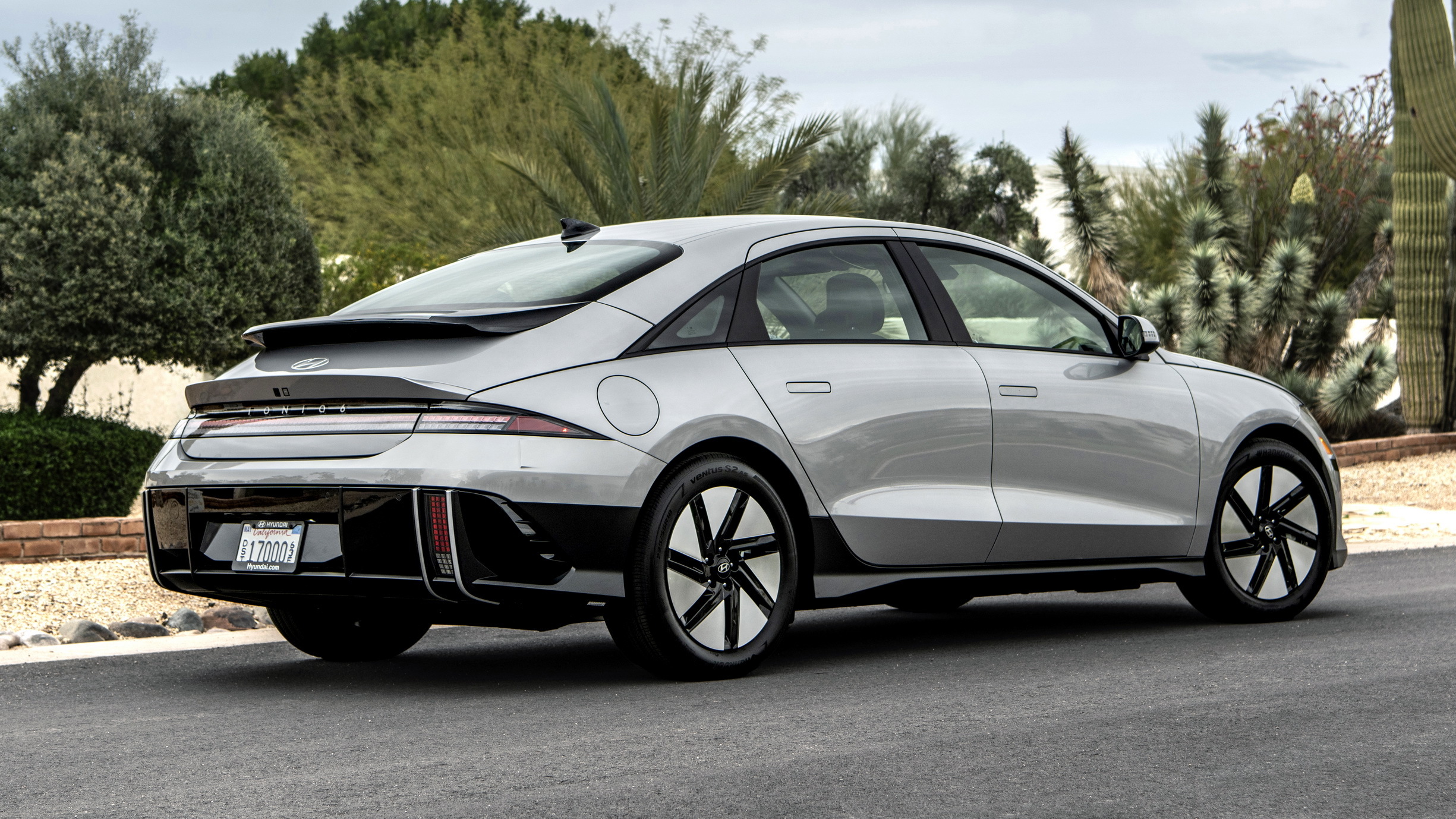
 As EV Sales Crash Badly, Hyundai Gets Its Lifeline From Elsewhere

There was some consolation in the fact that this figure edged up slightly from October’s 1,642 sales, but the wider picture is still uneven. Year-to-date results show a modest 12 percent improvement over 2024, totaling 44,760 cars sold.

Read: Hyundai And Kia EV Sales Collapse After Tax Credits Vanish Overnight

Things have been equally as bad for the Ioniq 6, with just 489 being sold this November, a decline of 56 percent. Cumulative sales have also slipped, from 11,055 cars in 2024 to 10,019 so far this year, marking a 9 percent decline.

The seven-seat, three-row Ioniq 9 wasn’t available last year, but it remains a relatively slow seller. A total of 315 found new homes last month, down slightly from the 317 sold in October. Year-to-date, 4,809 have been sold.

Hyundai Sales November 2025
VehicleNov-25Nov-24% Chg2025 YTD2024 YTD% Chg
Elantra10,38911,344-8%136,825125,113+9%
Ioniq 52,0274,989-59%44,76039,805+12%
Ioniq 64891,121-56%10,01911,055-9%
Ioniq 931504,8090
Kona5,7836,133-6%68,03076,326-11%
Nexo000%593-95%
Palisade9,9068,982+10%112,23799,757+13%
Santa Cruz1,5372,393-36%23,88929,991-20%
Santa Fe14,00412,376+13%127,964105,701+21%
Sonata4,0186,971-42%54,23861,701-12%
Tucson23,76220,178+18%212,037185,954+14%
Venue2,0591,521+35%27,94322,808+23%
Total Sales74,28976,008-2%822,756758,304+8%
SWIPE

Hyundai’s total November sales have fallen 2 percent from November last year to 74,289 units. So for this year, it still remains in the green, shifting 822,756 vehicles, an 8 percent rise from the 758,304 sold during the first 11 months of 2024.

Hybrids to the Rescue

The big story, though, is hybrids. Sales of electrified models jumped 42 percent, making November Hyundai’s strongest hybrid month on record. That surge has been critical in offsetting the EV slump and maintaining overall growth through the final quarter.

Among individual models, several performed particularly well. In November, The Palisade rose 10 percent to 9,906 units, Santa Fe gained 13 percent to 14,004, and Tucson continued its strong run with an 18 percent increase to 23,762. Even the pint-sized Venue grew 35 percent to 2,059 units.

The Sonata, meanwhile, took a noticeable hit in November, dropping 42 percent year-over-year to 4,018 sales, bringing its year-to-date total to 54,238, down 12 percent from the same period in 2024.

For now, Hyundai’s U.S. lineup shows a clear divide between hybrid gains and weakening EV demand. The next few months will show whether that hybrid momentum can do enough to steady the company’s position in a softening electric market.

 As EV Sales Crash Badly, Hyundai Gets Its Lifeline From Elsewhere

A $2 Water Bottle Just Cost This Hyundai Driver Nearly $12,000

  • Hyundai Ioniq 5 owner faces $12K bill after bottle spilled water.
  • Company denied warranty, citing damage from an external factor.
  • State Farm also refused coverage, claiming gradual wiring corrosion.

Most drivers think spilling a bottle of water in their car is annoying at worst. Maybe you get a damp carpet and some condensation on your windows. Maybe your floor mats start to smell like a gym bag.

What you probably do not expect is a repair bill that costs more than a used Honda Civic. But that’s exactly what happened to one Hyundai driver.

Related: Stop Sale Issued For Hyundai Ioniq 5 As Sonata Gas Tanks Risk Melting

Mike McCormick was driving his Ioniq 5 on the freeway in Florida when a traffic snarl-up ahead forced him to hit the brakes. That move sent a water bottle in one of the rear cupholders flying forward and eventually to the floor, where its contents found their way into some wiring harness connectors, though it’s not clear if the bottle’s cap was on, off or somewhere in between at the time.

Within a few minutes of the water bottle performing its base jump, McCormick noticed various warning lights come up on the dash. Then the turn signals stopped working and by the time he got home he couldn’t shut the car off.

How One Bottle Became a Bill

 A $2 Water Bottle Just Cost This Hyundai Driver Nearly $12,000

After inspecting the two-year-old EV, a Hyundai dealer told him the underfloor and under-seat wiring harnesses would both have to be replaced. Annoying, but how much could a few wires cost, right? The answer is a whole lot, as the bill ballooned to a crazy $11,882.08.

And according to the company, the damage was caused by an “external factor,” and not a factory defect, meaning McCormick was on the hook for the whole repair cost.

Okay, you’re thinking, go to plan B: insurance. He tried that too, and State Farm denied his claim, suggesting that its investigation showed the damage to the wiring harness had occurred over time, rather than as a result of the one water bottle spill. Talk about rock and a hard place.

Why So Fragile?

 A $2 Water Bottle Just Cost This Hyundai Driver Nearly $12,000

WFTV Channel 9’s report on the story highlighted the vulnerability of the Ioniq 5’s wiring harness below the Ioniq 5’s seat by referencing another owner who was left with a five figure bill for new harnesses after a dealer found his had frayed.

Also: Sure, You Can Replace Ioniq N Brakes, But Only With Hyundai’s $6K Tool Or A $2K Locked Workaround

And that’s not the only unexpected bill some of the EV drivers have come across. If you want to replace your own brake pads on the sporty Ioniq 5 N, maybe after a track day, you need access to special software and tools that can cost thousands of dollars. Some owners suggest cheaper unofficial workarounds, but those come with inherit risks, including the possibility of voiding your warranty or creating even costlier problems if anything goes wrong.

Do you think Hyundai or the insurance company should pay for the repairs to McCormick’s EV, or is it right that he’s being forced to foot the bill? Leave a comment and let us know.

Thanks to Marco for the tip!

Sources: WFTV 9

“This Is The Way” Says Porsche Exec After Driving Hyundai’s Ioniq 5 N

  • Porsche engineers were blown away by the Hyundai Ioniq 5 N’s fun driving character.
  • N Grin Boost, virtual shifts, and synthetic sounds made a big impression.
  • German brand may add similar features to its electric 718 due in 2027.

Porsche engineers are not exactly easy to impress. These are the people who spend their days perfecting GT3s and wringing every last drop of magic from flat-six engines and setting Nurburgring lap records.

So when two of the brand’s most senior engineering bosses drove the Hyundai Ioniq 5 N and came away buzzing like teenagers leaving an arcade, you know something interesting is happening in the electric-car world.

Also: Hyundai Ioniq 5 N Gets A Cheaper Version But You Can’t Have It

Frank Moser, Porsche’s vice president in charge of the 718 and 911 lines, admitted to Australia’s Drive that he has driven the Ioniq 5 N “several times” and called it an “eye-opening” experience.

Moser even dragged along Andreas Preuninger, the legendary head of Porsche GT cars, whose blood type is probably 98 RON premium, and definitely not amps.

From Skeptic to Convert?

Preuninger was not exactly enthusiastic at first. According to Moser, he grumbled, “I don’t want any of that electric stuff” when the idea was floated. But once they climbed inside and Moser pressed the Hyundai’s N Grin Boost button, the GT boss instantly turned into a believer.

“He was ‘wow’” Moser said, describing the moment Hyundai’s punchiest EV unleashed its full 641 hp ( 650 PS / 478 kW) and 568 lb-ft (770 Nm). “We learnt a lot from that car,” Moser told Australia’s Drive. “That’s why we decided to have a deeper look.”

It was not just the acceleration that snagged Porsche’s attention. The Ioniq 5 N’s signature party tricks, including its virtual gearshifts and synthesized powertrain noises, have Porsche seriously considering similar features for its upcoming electric 718 sports car.

Can Sound Create Soul?

\\\\\\\\\\\

Hyundai calls these systems N e-shift and N Active Sound+, and they replicate the snap of a dual-clutch gearbox and offer a selection of digital engine noises (most of them pretty lame, in my experience).

It is the kind of thing EV purists roll their eyes at, but performance engineers instantly understand. It makes the car feel alive and the driver connected to the driving experience.

“This is the way,” Moser said of the synthesized features, while making clear that Porsche wouldn’t force them on drivers.

“The customer could decide if he wants to drive in complete silent mode, or he wants to be part of the game, feeling the virtual sounds of a flat six and the virtual gear shifts,” Moser said. “That would be the direction for the future.”

Tuning the Future

 “This Is The Way” Says Porsche Exec After Driving Hyundai’s Ioniq 5 N

Our money’s on it being part of a Sport Chrono-type option package that’ll add at least $2,000 to the bill of the new electric Porsche 718 Boxster and Cayman.

The first 718 EV arrives in early 2027, and Moser promises it will be “really lightweight for an electric car,” though he declined to reveal an exact or even ballpark weight figure.

One thing is clear: Hyundai has just influenced one of the world’s most respected sports-car makers. Who could have imagined that happening 20 years ago?

Sure, You Can Replace Ioniq N Brakes, But Only With Hyundai’s $6K Tool Or A $2K Locked Workaround

  • Ioniq 5 and 5 N need official software to replace rear pads safely.
  • Hyundai defends the system, citing safety and secure service access.
  • Right-to-repair advocates say it limits owners’ maintenance rights.

Maintaining your own car has long been a badge of pride for some and a financial necessity for many others. Swapping fluids, filters, or brake pads is part of the standard weekend maintenance ritual for countless drivers.

But for one Hyundai Ioniq 5 N owner, that sense of self-reliance recently hit a wall, or more precisely, a brake caliper. He discovered that replacing the rear pads on his EV wasn’t as simple as it used to be. Now, Hyundai has responded.

More: Apparently You Need Hyundai’s Permission To Change Your Own Brakes

It might seem odd that someone has already burned through their rear pads, especially on an EV, but it happened because the owner drove this car the way Hyundai wants owners to: hard and on the track.

When he tried to replace these pads, he learned that he needed to retract the electronic parking brake. That’s where this easy DIY job took a scary turn.

When Maintenance Gets Complicated

 Sure, You Can Replace Ioniq N Brakes, But Only With Hyundai’s $6K Tool Or A $2K Locked Workaround
Aftermarket J2534 Diagnostic Tool from DG Technologies

One way to retract the brake is to use Hyundai’s Global Dynamic System (GDS). That software and the hardware that goes with it can cost almost $6,000, as we’ve seen online. Don’t worry, though, there’s another option called the J2534 Diagnostic Tool, which Hyundai supports, as seen in an official document discovered by TheDrive.

According to the owner, Redditor u/SoultronicPear, the software costs $60 a week (or less on average for longer time periods) and requires the use of a J2534 adapter that can be found for around $2,000.

Hyundai currently approves only three options for this tool: the CarDAQ Plus 3, Bosch’s MTS 6531 and DG Technologies’ d-briDGe PRO, adding that, “under no circumstances do we recommend the use of a
non-approved J2534 device”. So be warned.

Credentials Required

More importantly, beyond that, using the tool requires special National Automotive Service Task Force (NASTF) authentication and a constant internet connection.

But here’s the kicker. Only certified repair shops or repair businesses are supposed to get access to that software. NASTF told the owner that “NASTF credentials are for use by qualified technicians, mechanics or locksmiths working in businesses providing repair or replacement services.”

Hyundai Speaks Up

Before publishing our first coverage of this issue, we reached out to Hyundai for comment. After the story went live, the automaker responded with the following statement to Carscoops:

“Hyundai is committed to supporting both our dealer network and independent repair facilities with safe, secure, and accessible service solutions. For vehicles equipped with electronic parking brakes, including the Ioniq 5 and Ioniq 5 N, the official repair procedure requires placing the rear calipers in service mode using either our Global Diagnostic System (GDS) or the J2534 application.

This ensures proper functionality and customer safety. Hyundai recently expanded access through an update to our J2534 application, enabling aftermarket users to perform functions previously restricted by the GDS secure gateway.

While authentication through NASTF is required for sensitive operations, this step helps maintain security and accountability. Our official dealer tool (GDS) is also available for purchase by anyone. Hyundai is actively exploring ways to make routine maintenance easier for all customers while upholding safety standards.

We appreciate the interest in DIY repairs and will continue working toward solutions that balance convenience with security.”

 Sure, You Can Replace Ioniq N Brakes, But Only With Hyundai’s $6K Tool Or A $2K Locked Workaround

Seeking more detail, we pushed Hyundai to clarify whether a skilled owner could realistically do the job at home. The company followed up with this explanation:

“DIYers can replace brake pads on the Hyundai Ioniq 5 and Ioniq 5 N, but it requires specific steps and tools. Because these vehicles use electronic parking brakes, the rear calipers must be placed in service mode using either Hyundai’s Global Diagnostic System (GDS) or the J2534 application with a compatible pass-through device.

Both tools are publicly available, though GDS is more expensive and J2534 requires NASTF authentication for secure functions. Without these tools, the job cannot be done safely, as manual retraction could damage components.

Hyundai is not restricting DIY repairs, in fact, recent updates have expanded access, and we continue to explore ways to make routine maintenance easier while maintaining safety and security.”


So, yes, it can be done. But unless you already own the specialized tools or have deep pockets, the process can cost about as much as a tired old hatchback from the classifieds.

For now, at least until a cheaper workaround surfaces (we’re looking into it, so stay tuned), the Ioniq 5 N’s rear brakes may remain one of those maintenance jobs probably best left to the professionals.

 Sure, You Can Replace Ioniq N Brakes, But Only With Hyundai’s $6K Tool Or A $2K Locked Workaround

Hyundai And Kia EV Sales Collapse After Tax Credits Vanish Overnight

  • Hyundai’s Ioniq 5 sales plunged after federal tax credits ended.
  • Kia’s EV9 and EV6 saw steep drops of 66 and 71% respectively.
  • Kia delayed its EV4 launch citing changing U.S. market conditions.

We all knew that sales of EVs in the US would fall dramatically in October, since there’s no $7,500 federal tax credit available. However, major automakers like Hyundai and Kia may not have anticipated just how dramatically sales would fall due to this policy change.

Starting with Hyundai, it recently confirmed that it sold 70,118 vehicles last month, a 2 percent decline from the 71,802 in October 2024. Importantly, year-to-date sales are up 10 percent to 748,467. But this is where the good news mostly ends.

Read: Hyundai Enjoys Record Sales Thanks To Some Unlikely Models

Sales of the Ioniq 5 plummeted 62 percent to just 1,642 units, down from 4,498 sold last October. Similarly, Hyundai sold 52 percent fewer Ioniq 6s, down from 837 units to 398. The Ioniq 9 wasn’t available last year, but it hasn’t been a big seller this year, shifting 4,494 units year-to-date and just 317 in October.

Other Hyundai models that experienced significant declines included the Kona (-13 percent), Santa Cruz (-29 percent), Sonata (-32 percent), and Elantra (-16 percent). Helping to prop up total sales were the likes of the Palisade (+6 percent), Santa Fe (+22 percent), Tucson (+16 percent), and Venue (+49 percent).

Hyundai USA Sales
Model25-Oct24-OctDiff25 YTD24 YTDDiff
Elantra10,22412,151-16%126,436113,76911%
Ioniq 51,6424,498-64%42,73334,81623%
Ioniq 6398837-52%9,5309,934-4%
Ioniq 93174,494
Kona4,9695,685-13%62,24770,193-11%
Nexo24-50%593-95%
Palisade9,5498,9836%102,33190,77513%
Santa Cruz1,7192,427-29%22,35227,598-19%
Santa Fe11,8009,64422%113,96093,32522%
Sonata4,3066,300-32%50,22054,730-8%
Tucson23,03619,82916%18,8275165,77614%
Venue2,1561,44449%25,88421,28722%
Total70,1187,1802-2%748,467682,29610%
SWIPE

Kia’s EV Collapse

Things are similar at Kia. Year-to-date, it sold 705,150 vehicles, a solid increase from the 653,078 units moved over the same period in 2024. Its total sales also rose slightly in October from 68,908 units to 69,002. However, like Hyundai, Kia EVs didn’t share in this success.

Kia sold just 666 examples of the three-row EV9 this October, over 1,941 examples sold the same month last year. Overall sales of the EV9 this year are down from 17,911 to just 13,114. Then there’s the EV6, which saw its number fall from 1,732 to just 508.

Through the first ten months of the year, 11,585 EV6s have been sold compared to the 17,717 last year. Kia also sells the Niro as an EV in the US, but has grouped its sales with those of the gasoline and hybrid versions.

These numbers come just after Kia confirmed that it has postponed the American launch of the EV4 “until further notice” due to changing market conditions.

Kia USA Sales
Model25-Oct24-OctDiff25 YTD24 YTDDiff
EV96661,941-66%13,11417,911-27%
EV65081,732-71%11,58517,717-35%
K4/Forte9,95512,858-23%117,598116,8621%
K57,6315,81831%60,21234,29476%
Soul3,9914,622-14%44,39944,716-1%
Niro2,6981,54675%22,80726,678-15%
Seltos5,6224,26632%45,68752,443-13%
Sportage16,05713,68117%150,159132,43913%
Sorento6,6987,841-15%80,71077,0175%
Telluride8,5719,694-12%101,06991,44811%
Carnival6,6054,90935%57,81039,63646%
Total69,00268,9080%705,150653,0788%
SWIPE
 Hyundai And Kia EV Sales Collapse After Tax Credits Vanish Overnight

Apparently You Need Hyundai’s Permission To Change Your Own Brakes

  • Ioniq 5 N owner says Hyundai’s software blocks brake pad changes.
  • Access reportedly requires costly tools, a business login, and more.
  • The story raises new concerns about Right to Repair in modern EVs.

Automotive enthusiasts aren’t the only ones who enjoy getting their hands dirty. Many regular drivers tackle oil changes, swap air filters, or fit new brake pads without a second thought. These are the sorts of jobs that make you feel connected to your car, a small ritual of maintenance and pride.

But every so often, a manufacturer decides to make things harder than they need to be. I once had to drop an entire subframe on my BMW just to replace oxygen sensors, an experience that left me wondering whether the engineers had ever tried it themselves.

Also: His Ioniq 5 N Turned Into A Paperweight Months Ago And Hyundai Still Has No Answers

It’s rare to see a mainstream brand like Hyundai put similar hurdles on its customers when it comes to repairs. However, according to one owner, the brand isn’t just making a simple fix hard; it’s straight up declaring war on his (and your) right to repair his own car.

Is Hyundai Denying Right to Repair?

 Apparently You Need Hyundai’s Permission To Change Your Own Brakes

Two recent posts on Reddit’s r/Ioniq5N community have ignited a fierce debate. There, an owner claims Hyundai has drawn the battle lines. He’d set out to replace his rear brake pads, something he says he’s done countless times before on other vehicles, but soon discovered the automaker’s diagnostic tools had other plans.

According to the post, Hyundai’s digital systems effectively lock out anyone who isn’t a certified technician from performing even basic maintenance.

The rear brake pads are affected by the electric parking brake. To replace them, one must disengage the brake and get it to retract completely, otherwise, the new pads won’t fit. In addition, the car needs a diagnostic tool to recalibrate the motor on how far to move with the new pads in place.

In other words, even if you could manually disengage the parking brake, the car would still need calibration to work properly.

More: Rivian Refused To Sell JerryRigEverything A 12V Battery Then Sent Him The Bill

The only way to accomplish this is allegedly to use Hyundai’s J2534 Diagnostic Tool, a Windows-based application available only through the automaker’s tech info portal.

The owner says the software requires a $60 weekly subscription, a $2,000+ approved hardware adapter, and a constant internet connection for authentication. Even then, it reportedly doesn’t work properly on newer models like the 2025 Ioniq 5 N.

No DIYers, Please – Only Pros

“I broke down and bought the subscription and special adapter,” the owner wrote. “Guess what? It didn’t work.” Only later did they find out why. “My blood is boiling at the moment. NASTF has blocked my account, saying “DIYers are not permitted access.”

They included a photo of a message from NASTF that says in part, “Please provide your business name and 9-digit Federal Employer Identification Number. DIYers are not permitted access.”

 Apparently You Need Hyundai’s Permission To Change Your Own Brakes
Reddit

The irony, the poster points out, is that Hyundai dealers don’t even use this Windows tool. They reportedly have access to an entirely different Android-based software suite that works seamlessly.

While this all sounds like a bureaucratic mess, the underlying issue raises serious questions about Right to Repair access in the EV era. For decades, enthusiasts and independent mechanics have fought for access to diagnostic tools and repair data that manufacturers often guard tightly.

But when basic wear items like brake pads require proprietary authentication, the argument takes on a new urgency.

Has Hyundai Gone Too Far?

 Apparently You Need Hyundai’s Permission To Change Your Own Brakes

Nothing about this setup sounds reasonable. Replacing brake pads is as fundamental as car maintenance gets, yet Hyundai’s system allegedly makes it feel like breaking into Fort Knox.

If that’s true, the automaker has some serious rethinking to do because locking out the people who care most about maintaining their vehicles isn’t a good long-term strategy.

I have personally considered buying an Ioniq 5 and a Kia EV6, but will avoid both until this sort of thing is doable for folks like me. Hyundai tells us that it’s looking into the situation and will report back once it has more information.

 Apparently You Need Hyundai’s Permission To Change Your Own Brakes
❌
❌