Normal view

There are new articles available, click to refresh the page.
Before yesterdayMain stream

The World Is About To Get A New Hyundai Ioniq The US Will Never See

  • Hyundai’s smallest Ioniq debuts with practical five-door design.
  • All-electric powertrains could offer up to 400 miles of range.
  • Styling draws influence from the coupe-like Three Concept.

Electric vehicle sales may be cooling off with the rollback of government incentives in the United States, but Hyundai isn’t lifting its foot off the pedal just yet. In fact, it’s charging ahead with its most compact EV after the Inster. Named the Ioniq 3, this practical five-door hatch slots below the Ioniq 5 and Ioniq 6 in both size and price.

Read: Audi A4 Returns With Concept TT Styling To Give BMW Something To Worry About

Previewed by the recent Concept Three, the Ioniq 3 could become one of Hyundai’s most significant global EVs, combining affordability with everyday usability. Camouflaged prototypes have already been spotted testing out in the open, hinting that an official debut is just around the corner. Here’s a look at everything we know so far.

Striking the Middle Road

Unlike its larger siblings, the Ioniq 3 avoids polarizing the public with a look that’s easier on the eye. Prototypes confirm that it retains the Concept Three’s coupe-like proportions, although the front fascia is toned down with more conventional battery-cooling intakes and slim pixel DRLs split from the main headlamps underneath. 

 The World Is About To Get A New Hyundai Ioniq The US Will Never See
Illustrations Josh Byrnes / Carscoops

From the profile, it trades the concept’s slim-frame windows for clamshell items (welcome back to the 90s). Elsewhere, it’s a clean, uncluttered profile with smooth surfacing and intersecting lines drawn from Hyundai’s ‘Art of Steel’ design language.

The rear features a high-mounted full-width tail light cluster with LED pixel elements and a split-glass hatch configuration similar to that of Toyota’s Prius. The concept’s translucent aero elements and wild lower diffuser won’t make the cut, yet it still sports a subtle spoiler.  

A Tech-Focused Interior

\\\\\\\

SH Proshots

In a significant departure from Hyundai’s existing lineup, the cabin offers an all-new experience with a separate digital instrument cluster and a large Tesla-style infotainment display.

Also: BMW’s Largest SUV Is About To Get A Lot More Interesting

The screen runs Hyundai’s new Pleos Connect system, which is built on Android Automotive OS, bringing cloud-based user profiles (allowing owners to download features on demand) and conversational voice control for navigation and other vehicle functions.

Importantly, spy shots confirm the presence of physical buttons for HVAC controls below the infotainment screen. Elsewhere, the 5-seat cabin follows the same design theme as other Ioniq models, with minimalist door cards and ovoid trim elements. 

Other highlights include Apple CarPlay Ultra compatibility, ambient lighting and enhanced Level 2 driver assistance.

Platform, Powertrain, and Battery 

 The World Is About To Get A New Hyundai Ioniq The US Will Never See
Illustrations Josh Byrnes / Carscoops

While key specs remain under wraps, we know the Ioniq 3 will ride on a pared-down version of the E-GMP platform. Unlike the 800-volt architecture used in the Ioniq 5 and 6, this model runs a 400-volt system, helping to keep costs in check.

It shares much of its underpinnings with the upcoming Kia EV4, meaning a single-motor, front-wheel-drive layout is expected at launch, delivering 201 hp (150 kW). A dual-motor setup may follow in a potential N performance trim.

\\\\\\\\

SH Proshots

Two Lithium-ion NCM battery configurations are said to be on the cards, with the smaller packing coming in at 58 kWh, while the larger one muscles up 81.4 kWh. The latter should be good for a range estimate of 390-400 miles (628–644 km), and both offering V2G (vehicle-to-grid) and V2L (vehicle-to-load) capabilities. 

Rivals and Reveal

 The World Is About To Get A New Hyundai Ioniq The US Will Never See
A prototype of the Kia EV3

Key rivals include Kia’s EV3 and EV4 (essentially an Ioniq 3 in different clothing), Volkswagen ID.3, Cupra Borne, Peugeot e-308Mini Aceman ElectricMG4, BYD Dolphin, and Skoda Enyaq.

See: Kia’s Smallest EV Could Become One Of Its Most Thrilling Performance Models

With thin camouflage and key interior tech already known, we expect a full debut within the next six months and a global rollout by 2027. North American availability? Sorry folks, as this will be built in Turkey, it won’t be offered in the States.

Should Hyundai bring the Ioniq 3 to the USA? We’d love to hear your views in the comments below.

 The World Is About To Get A New Hyundai Ioniq The US Will Never See
Illustrations Josh Byrnes / Carscoops

Fiat’s Most Polarizing Minivan Deserves A Comeback, And This Is The Perfect Starting Point

  • Our render uses the Citroen ELO to imagine a Fiat Multipla EV.
  • Two-story headlights return with subtle vintage Fiat design cues.
  • Sliding doors reveal a modular six-seat cabin with center driving.

The unveiling of Citroen’s ELO concept, with its stacked LED lights, minivan-like shape, and six-seat layout, immediately stirred speculation. Not just about the prospect of a Citroen-badged people carrier, but also about what it might mean for other brands within the Stellantis umbrella. It landed with a visual impact that invited questions beyond the concept itself.

More: We Imagined Stellantis’ Tiny EV As Jeep, Dodge, And Chrysler Oddballs

Could this be the design foundation for a new Fiat Multipla? At first glance, it may seem like a stretch, but the idea isn’t as far-fetched as it sounds. Fiat is rumored to be bringing back the Multipla name for a family-focused SUV.

Still, the ELO’s shape and proportions prompted a different line of thinking; what if the next Multipla leaned more closely into its original spirit?

The Return of One-Box Thinking

The single-box layout of the Citroen concept feels oddly well-suited to a spiritual successor to the original 1955 Fiat 600 Multipla. The notion doesn’t feel far off, especially since both marques fall under the Stellantis umbrella.

 Fiat’s Most Polarizing Minivan Deserves A Comeback, And This Is The Perfect Starting Point
Illustrations Thanos Pappas / Carscoops

With minimal styling revisions, Fiat could spin off a distinctive variant while still sharing development costs with Citroen, if such a minivan duo were ever to hit the streets.

There’s a clear visual callback in the lighting setup. The concept features round LEDs paired with slim DRLs positioned at the base of the windshield, subtly hinting to the stacked, two-tier headlights that made the 1998 Multipla infamous. A slightly reworked front end, with smoother surfacing and Fiat’s latest badge, completes the update.

Most of the 4.10-meter (161.4-inch) bodywork is carried over from the Citroen ELO, with the exception of the rear. There, the UFO-like split taillights jutting from the corners could be swapped for pill-shaped units that recall the cheerful styling of the Fiat Topolino.

More: You’ll Grow A Beard Before Fiat’s New Manual Hybrid Hits 60

As a finishing touch, we added a set of vintage alloy wheels from the Fiat 500 anniversary specials, along with a more expressive palette of exterior colors. Finally, discreet plastic cladding around the wheel arches with a matching finish for the bumpers and door inserts make the fictional model look ready to hit the road.

 Fiat’s Most Polarizing Minivan Deserves A Comeback, And This Is The Perfect Starting Point
Illustrations Thanos Pappas / Carscoops

The wide-opening sliding doors and experimental cabin layout of the Citroen concept also make sense here. Six individual seats, a central driving position, and the option to remove chairs or add accessories like inflatable mattresses and modular storage could make this an ideal companion for family adventures.

Packaging like that requires a dedicated EV platform. That means no room for combustion engines. But a compact rear-mounted motor and a modest battery would be more than sufficient for city use and the occasional weekend escape.

The Story of the Multipla

The original Fiat 600 Multipla, designed by Dante Giacosa, was introduced in 1955. It was based on the underpinnings of the Fiat 600 featuring cab-over styling. Despite measuring just 3,531 mm (139 inches) long, it had a spacious interior that could accommodate up to six passengers and their luggage.

More: Remember The Fiat Multipla? Reimagining The ’90s Icon For The EV Age

Fiat revived the Multipla name in 1997 for a new compact MPV, and while it may be better remembered for its polarizing design, it delivered genuine functionality. Roberto Giolito’s design, with its two-level headlights and expansive glasshouse, stood out in every possible way.

\\\\\\\\\\\\\\\\\\\

Despite being shorter than a modern supermini at 3,994 mm (157.2 inches) long, the Multipla offered uncompromising practicality. Rather than stretching it lengthwise, Fiat’s designers cleverly pushed the dimensions outward, giving it a width of 1,871 mm (73.7 inches).

That allowed for two full rows of three seats, making it a genuine six-seater, with a minimum of 430 litres of boot space, plenty of room for luggage, shopping, or a four-legged passenger or two.

And because Fiat made it wide rather than long, the Multipla not only packed in the space but also handled better than most people movers, with a squat stance that gave it a more planted feel on the road.

The second-generation model received a more conventional facelift in 2004 and was discontinued in 2010. However, production continued under license in China by Zotye until 2013.

Is There Room for a Quirky Comeback?

 Fiat’s Most Polarizing Minivan Deserves A Comeback, And This Is The Perfect Starting Point
The 1998 Fiat Multipla (left) and the 1955 Fiat 600 Multipla (right).

Fiat hasn’t confirmed a new Multipla, but the name keeps resurfacing in product speculation. n. Most likely, it will be assigned to a crossover in the expanding Panda lineup.

That model is expected to use Stellantis’ Smart Car platform, shared with the Citroen C3 Aircross and Opel Frontera, and would likely compete with budget-friendly models like the Dacia Duster and Bigster.

Review: New Fiat Grande Panda Hybrid Makes Budget Look Cool Again

 Fiat’s Most Polarizing Minivan Deserves A Comeback, And This Is The Perfect Starting Point
Illustrations: Thanos Pappas for CarScoops

The forthcoming SUV will reportedly be offered with gasoline, mild-hybrid, and fully electric powertrain options, following the example of the Grande Panda subcompact hatchback and a mechanically-related fastback crossover that has been spied testing.

Still, for all the SUV planning, there remains a quiet corner of the internet hoping that Fiat remembers what made the original Multipla special: not just practicality, but a certain willingness to stand apart.

\\\\\

Stellantis Heritage Hub

A Car Designer From A Top Brand Used AI To Create This Lexus EV In 24 Hours

  • A Ford designer created a Lexus EV concept using AI tools.
  • Two sketches and prompts led to full photorealistic renderings.
  • Futuristic design combines supercar lines with hatchback form.

Artificial intelligence is quickly reshaping the way cars are designed, cutting down development time and simplifying once-complex workflows.

Curious to see how far the tech can stretch, one professional designer set himself a challenge: create an entire concept car in a single day, starting with a handful of loose hand-drawn sketches and ending with high-res, photorealistic renderings generated entirely by AI.

More: This Futuristic RWD Coupe Could Have Been Skoda’s Best Throwback Yet

The man behind this experiment is Antonin Cohen (@space_sketch on Instagram), a French automotive designer currently working for Ford Europe in Cologne, Germany. Before that role, he was employed by Kia, where he contributed to the design of the pre-facelifted fifth-generation Sportage.

We spoke to Antonin, who admitted to Carscoops that he wasn’t initially a fan of AI, but his perspective shifted after spending some time exploring what the tools could actually do.

The technology allows him to generate strikingly realistic renderings from multiple angles and quickly explore different colors, materials, and environments. It’s a faster way to communicate and assess early concepts without getting dragged into the time-intensive process of building them out manually.

Shaping a Digital Lexus

\\\\\\\\\\\\

Antonin Cohen

Cohen put the new technology through its paces on a personal project developed in his own free time, a futuristic, Lexus-badged EV. He started with a pair of quarter-view sketches showing the front and rear of a sleek, low-slung three-door hatchback. From there, AI took over, generating a complete set of visuals based on his creative prompts.

The car takes the form of a compact three-door hatchback with a streamlined, aerodynamic stance. A short nose, paired with a steeply raked supercar-style windshield and low-mounted LED headlights, gives the front end a planted, athletic look.

More: Buick’s New Concepts Look Suspiciously Ready For Production

The side profile sharpens that impression, with prominent fender flares and sculpted intakes that suggest a degree of performance. At the back, there is a glass canopy, slim LED taillights and an aggressive diffuser made of carbon fiber.

Cohen told us he always tries to give his designs an “impactful face”, describing the look of the concept as “a little robotic”. He imagined the C-pillars like arms that hold the volume together, and the rear end as “practical, upright, and solid”.

Details That Sell the Illusion

\\\\\\\\\\

Antonin Cohen

Even for trained eyes, it is hard to distinguish the AI-made renderings from actual photos. The reflections and the texture of the materials is top notch, while the setup is close to what you’d expect from a professional photographer.

Cohen also generated “behind-the-scenes” images showing AI humans prepping the car for an imaginary press shoot. The concept looks particularly striking in a deep orange shade paired with contrasting black roof, pillars, accents, and wheels.

Some images even reveal the interior, featuring a sweeping digital cockpit and angled center console. One version pairs white leather-style materials with minimal trim, while another opts for a more textured feel, combining blue upholstery with wood accents.

The Real Benefit for Designers

 A Car Designer From A Top Brand Used AI To Create This Lexus EV In 24 Hours

The prototype Lexus might be purely digital, but the process behind it highlights how AI tools can support, rather than replace, a designer’s vision. When used thoughtfully, they allow ideas to take shape faster and in greater detail, making it easier to pitch or refine early concepts.

More: French Carmaker Unlocks Its Secret Design Vault And The Scale Models You Can Buy Are Wild

Cohen put it this way: “AI allows us to focus purely on the creative side instead of spending time on rendering. I love illustration work – I’ve done sketches that took me three days – but sometimes you just don’t have that kind of time.”

He also offered a piece of advice to young designers: “No sketch is ever chosen for the quality of its reflections or how many hours you spent drawing the wheels. What really matters are the first few lines, regardless of the technique you use.”

We’d like to thank Antonin Cohen for sharing his project with us.

\\\\\

Antonin Cohen

We Imagined Stellantis’ Tiny EV As Jeep, Dodge, And Chrysler Oddballs

  • Fiat will bring its smallest EV to America, and it’s not even a car.
  • We visualize Jeep, Dodge, and Chrysler versions of the tiny EV.
  • Each brand gets its own styling twist on the same platform.

Americans aren’t exactly spoiled for choice when it comes to pint-sized urban runabouts. Those Kei cars from Japan that caught Donald Trump’s attention recently are off-limits, and Europe’s laughably compact quadricycles are considered too tiny to share the road with trucks and SUVs.

Still, Stellantis seems ready to test the limits of what American drivers will accept, choosing to bring over the Fiat Topolino, a vehicle so small, it makes the already diminutive 500 look like a family hauler.

Read: Fiat’s Bringing An EV To America So Small It Makes Kei Cars Look Like Cadillacs

To give you a sense of scale, the Topolino measures just 2.53 meters long (99.6 inches), making it seven inches shorter than the already tiny Smart Fortwo. That car, if you remember, looked like a Little Tikes Cozy Coupe next to your average truck.

 We Imagined Stellantis’ Tiny EV As Jeep, Dodge, And Chrysler Oddballs

Stellantis has been dabbling in the heavy quadricycle category since 2020, starting with the Citroen Ami, followed by the Opel Rocks Electric in 2021, and most recently the Fiat Topolino in 2023. All three share the same platform, and all three are designed with urban mobility in mind rather than highway cruising.

That got us wondering: what if this squat little EV were rebadged as a Dodge, Chrysler, or Jeep? Would American buyers warm up to it with a familiar name on the front?

Officially, Stellantis has no plans to expand the model lineup in North America. But given how freely these micro-EVs swap badges in Europe, it’s not much of a leap to imagine a domestic version. Maybe if it wore the right logo, this pocket-sized commuter could stand a better chance on American streets.

So we sketched out a few ideas: what would it look like if Dodge, Jeep, and Chrysler each took a swing at the format?

Jeep TrailBug: Like A Golf Cart For The Apocalypse

 We Imagined Stellantis’ Tiny EV As Jeep, Dodge, And Chrysler Oddballs
Illustrations Thanos Pappas / CarScoops

Based on the rugged Citroen Ami Buggy – more specifically, the Rip Curl concept with grippy tires, an LED roof bar, frame doors, and other accessories – the Jeep version was an easy win.

Using the Citroen Ami Buggy as a starting point, and specifically, the Rip Curl edition with its chunky tires, roof-mounted LEDs, and open-air doors, we imagined a Jeep-branded version that leans fully into rugged charm.

More: 2025 Citroen Ami Gets Funkier With Bulging Eyes And 2CV-Style Gills

The reworked front fascia includes a five-slot grille (sorry folks, room constraints nixed the full seven), with circular Wrangler-style LED headlights and Jeep-branded alloys. Matte plastic panels and a spartan cabin keep it functional, while the aesthetic reads more off-road pit crew than farmer’s market errand runner.

No, it wouldn’t come with Trail Rated credentials, but the TrailBug could still inject some Jeep attitude into cul-de-sac crawls and campground loops.

Dodge Lil’ Demon: Tiny Muscle Car Attitude

 We Imagined Stellantis’ Tiny EV As Jeep, Dodge, And Chrysler Oddballs
Illustrations Thanos Pappas / CarScoops

Our Dodge concept starts from the Opel Rocks Electric but pushes it in a more aggressive direction. The front gains a retro-style Cross Hair grille and a sharper lower bumper design.

More: Updated Opel Rocks Is A Mild Refresh Of The Citroen Ami Twin

Other touches pull directly from the brand’s muscle playbook, including Challenger-inspired quad headlights, Charger Daytona wheels, and a red paint scheme with full-length black stripes.

Chrysler AeroMini: A Retro Armchair On Wheels

The Chrysler version stays closest to the Fiat Topolino, as the retro aesthetic works great regardless of badge. We added a Chrysler wing emblem up front, U.S.-spec yellow indicators, chrome disc wheels, whitewall tires, and vintage mirrors.

The result is part mid-century cruiser, part bubble car. Its glossy navy finish paired with satin silver accents looks more like something from an airport lounge in 1958 than a modern EV.

 We Imagined Stellantis’ Tiny EV As Jeep, Dodge, And Chrysler Oddballs
Illustrations Thanos Pappas / CarScoops

As with their European siblings, all three of our fictional variants would share the same EV drivetrain and hardware underneath.

More: Tiny Jeep Dune Digital Concept Wants To Conquer Your Sidewalks

A single electric motor puts out 8 hp (6 kW / 8 PS), drawing power from a 5.4 kWh battery that offers up to 46 miles (75 km) of range. Hardly numbers that will worry Tesla, but then again, this thing looks more like a powered shopping cart than a proper car , and it performs accordingly.

In the US, these would likely fall into the “Neighborhood Electric Vehicle” category. They’re legal on certain public roads, but only at low speeds. European regulations follow a similar pattern, as under the L6e quadricycle class, models like this are capped at 28 mph and must weigh under 425 kg (without the battery).

So, from our imaginary garage, which of the three would you bring home? Would you take the Jeep TrailBug with its post-apocalyptic vibe, the sporty Dodge Lil’ Demon, or the Chrysler AeroMini channeling the Eisenhower era? Let us know which one you’d most like to wheel down the block.

Who knows, maybe someone from Stellantis is listening.

\\\\\\\

Photos Stellantis, Illustrations Thanos Pappas for CarScoops

Skoda’s Vision Sedan Keeps Its Engine Layout But Loses The Engine

  • Skoda unveiled a modern reincarnation of the 1970s 100 sedan.
  • Digital concept was designed by headlight specialist Martin Paclt.
  • It’s envisioned as fully electric with a rear-engined RWD layout.

Skoda has already served up a flurry of digital concepts nodding to its back catalogue, but this latest one marks a first, as it’s the only sedan in the mix. The design channels something like a future Superb, though under the surface it sticks with the rear-engined, rear-wheel-drive layout once common in the brand’s earlier models.

More: This Futuristic RWD Coupe Could Have Been Skoda’s Best Throwback Yet

The concept draws directly from the Skoda 100, a milestone model for the Czech brand that became its first to pass the one-million-unit production mark. Between 1969 and 1977, 1,079,708 examples of the 100 were built.

This digital reinterpretation was developed by Martin Paclt, part of Skoda’s headlight design team. He’s no stranger to shaping the company’s visual identity, having contributed to concept projects like the Vision X, 7S, and O, as well as production vehicles including the Enyaq, Karoq, Kamiq, and Kodiaq.

Paclt said he chose the Skoda 100 because of its strong recognition and what he described as its “clean, timeless lines,” which align naturally with the brand’s current Modern Solid design philosophy.

Throwback Details

\\\\\\

The new sedan’s proportions reflect those of today’s Superb, though Paclt aimed to give it a more premium, limousine-like presence compared to its modestly priced ancestor from the 1970s.

References to the original 100 appear throughout the design: character lines along the flanks, cooling intakes on the rear fenders, vents beneath the taillights, and a front graphic that encloses both grille and headlights.

The latter break from the old circular style, though Paclt experimented with that shape in early sketches before settling on a cleaner interpretation.

More: The Mazda RX-8 Spirit Lives On, But It’s Wearing A Skoda Badge

The reborn 100 sedan rides on large, futuristic alloy wheels that emphasize its balanced proportions and short overhangs. The rear deck draws attention with its roof scoop and the omission of a traditional rear window, a feature now common among experimental concepts that prioritize form over convention.

Electric Heart with a Vintage Layout

 Skoda’s Vision Sedan Keeps Its Engine Layout But Loses The Engine

Curiously, although envisioned as a fully electric vehicle, the study preserves the rear-engined, rear-drive setup that defined the original 100.

The rear intakes now cool electric components rather than a combustion engine, while the main storage area sits at the front with a smaller compartment at the back, staying faithful to the model’s unconventional architecture.

The digital 100 sedan joins Skoda’s growing catalogue of heritage-inspired concepts, following the 110R and 1000 MBX coupes, the Favorit hatchback, and the Felicia Fun pickup.

None are planned for production, yet each gives the company’s designers space to revisit its history through an electric, Modern Solid lens, where past models find new expression in digital form rather than on the assembly line.

\\\\\

Skoda

GM’s Sporty EV Concept Looks Like The Future Bolt We Were Promised

  • GM’s China studio created a sporty EV concept for local market appeal.
  • Sketches show a grille-less SUV with arrow cues and wraparound glass.
  • The design may inspire future Chevrolet models for Chinese customers.

The world’s largest automotive market has become a linchpin for General Motors, a place where nearly all its brands are striving to secure a stronger presence. To that end, GM’s China Advanced Design studio has unveiled another fresh concept study, a “sporty EV” created specifically with Chinese buyers in mind.

The exploration sketches and renderings were made by GM designer Charles Huang at the company’s Shanghai facilities. They show what looks like a small crossover – some might even see shades of a future Bolt – with oversized wheels and a contrasting bi-tone paint scheme.

More: Buick’s New Concepts Look Suspiciously Ready For Production

At the front, the concept trades a traditional grille for a clean, enclosed surface with split LED headlights and a Chevrolet emblem that may light up. The bodywork is restrained, defined by crisp lines and minimal decorative detailing.

The most striking element is the wraparound glasshouse, framed by a thick C-pillar that seems to clasp the rear of the vehicle. The contrast between the deep blue and black tones amplifies this visual tension.

\\\\\

GM Design / Instagram

According to the designer, the profile is inspired by a “released arrow”, an idea most evident in the early sketches. The later, photorealistic renderings dial the drama back, edging closer to something feasible for production.

In fact, it’s easy to picture this crossover parked in a Chevrolet showroom, fitted with regular mirrors and door handles, of course, assuming those still have a place in modern EV design.

The presentation on the GM Design Instagram profile doesn’t include any sketches of the interior. We don’t have any specs, either, although a rear-mounted electric motor and a medium-sized battery pack would probably do the job.

More: GM Imagines Tomorrowland’s EVs And They’re Nothing Like Today

 GM’s Sporty EV Concept Looks Like The Future Bolt We Were Promised

The EV seems to have a similar length to the Chinese-spec Chevrolet Tracker RS and the US-spec Bolt. That puts it below the Trailblazer, Trax, Equinox EV, and Blazer currently sold in the States.

While the Chevrolet concept is just a design study with no production intent, GM is working on multiple affordable EVs for the future. It is safe to assume that at least some of them will adopt an SUV bodystyle, possibly similar to the “sporty EV” depicted in the sketches.

Though GM describes the project as a design study with no immediate production intent, it arrives at a time when the company is actively developing several affordable EVs for many markets. It’s likely that some of those models will borrow cues from this study, especially the SUV silhouete.

 GM’s Sporty EV Concept Looks Like The Future Bolt We Were Promised
2027 Chevrolet Bolt

Buick’s New Concepts Look Suspiciously Ready For Production

  • GM Design revealed two new Buick concept vehicles created in China.
  • One of them is a family-oriented compact SUV with modern styling.
  • The other is a sleek crossover with a sporty estate stance and suicide doors.

Buick is enjoying solid momentum in China, with consistent demand for the Envision SUV, LaCrosse sedan, and GL8 minivan keeping showrooms busy. Even so, the design team continues to push forward, developing fresh ideas and refining future models.

Two of these design studies just appeared on the General Motors Design Instagram account: one is a family compact SUV, the other a sportier crossover estate. Different takes, but both look unusually ready for production.

More: Buick’s Flagship Sedan Concept Looks Like A Citroen DS Beamed In From The Future

Both concepts were developed at the GM Advanced Design studio in Shanghai, China. One is designed by Sangmin Kim, while the other is designed by Yixuan Feng.

\\\\\\\\\

GM Design / Instagram

Starting with the more conventional concept, it’s described as “a fun, family-oriented premium Buick design study” created around the theme “driving in comfort.”

Up front, split LED headlights feature futuristic internal graphics, compensating neatly for the absence of a traditional grille. Along the sides, large bi-tone alloy wheels fill the arches, framed by glossy black cladding and muscular fenders.

The thick C-pillars flow into a rear spoiler that wraps around the back window, where the taillights are integrated beneath the glass. The rear also features a wide tailgate and a sculpted bumper with a discreet diffuser. Despite modest ground clearance, the upright front end, roof rails, and protective cladding lend it an SUV stance reminiscent of the Kia Niro.

Buick hasn’t revealed technical details, but the proportions seem to place this concept between the 171.4 inches (4,355 mm) of the Encore GX and the 182.7 inches (4,645 mm) of the Envision.

\\\\\\\

GM Design / Instagram

The next concept is described as a “small, expressive premium Buick design study” built around the idea of “driving pleasure.” It adopts an aerodynamic crossover hatchback or estate profile, complete with suicide doors and a split tailgate.

The front end features an illuminated grille, slim headlights, and ADAS sensors hidden in the bumper intakes. The forged aluminum wheels have shiny chrome accents, while the surfacing in front of the toned rear shoulders looks inspired by Lexus.

More: GM Imagines Tomorrowland’s EVs And They’re Nothing Like Today

Other highlights include the panoramic sunroof, the flying buttresses, the swooping rear glass, and the reflective taillights. Overall, the model appears to be smaller in size compared to the Electra-L Shooting Brake concept from 2024.

What’s Next For Buick?

Buick’s design language is shifting toward New Energy Vehicles (NEV), and both of these concepts seem well-suited to fully electric or range-extender setups.

While the models are labeled as design studies, they could easily pass for production vehicles, as they don’t have any wildly futuristic features. Buick is reportedly working on an electric subcompact crossover, which is set to arrive before 2029, followed by a new generation of the Encore GX.

 Buick’s New Concepts Look Suspiciously Ready For Production

GM Design / Instagram

The Next Mazda3 Might Not Even Be A Mazda At All

  • Mazda may replace the 3 with a China-built electric version in some markets.
  • Trademark filings for Mazda3e hint at a Deepal-based model under Changan.
  • The sedan may grow in size, offering more tech, screens, and premium touches.

Mazda has been busy polishing its lineup of straight-six-powered crossovers, pouring attention into its larger and more profitable models. Yet, as the Hiroshima brand shifts focus to electrification and SUVs, the rest of its range has been quietly gathering dust.

Future Cars: Nissan’s 2027 Versa Could Prove Cheap Doesn’t Have To Mean Boring

Apart from the refreshed CX-5 and a few Chinese-sourced EVs, not much has been happening in Mazda’s compact corner. And the silence surrounding a successor to the 3 has been deafening, with no sign of it anywhere in the brand’s future product roadmap.

Reports suggests the compact offering won’t see light beyond 2026, which, if true, is an utter shame for a company that once prided itself on fun-driving sedans and hatchbacks. Has Zoom-Zoom transitioned into the land of doom?

Could China Keep the 3 Alive?

 The Next Mazda3 Might Not Even Be A Mazda At All
Illustrations Josh Byrnes / Carscoops

When Mazda axed the long-serving 6 sedan and wagon, many thought it would be replaced by a rear-drive, inline six proposition to compete with BMW M340i and Audi’s S4.

That dream never materialized. Instead, select markets such as Europe and Australia received the Deepal-based Mazda 6e/EZ-6, while North America was left out of the equation.

This begs the question: could the 3 see the same fate and become another Deepal-derived product? After all, it would make sense as Mazda is a small player compared to many of its rivals, leaning into Changan’s portfolio helps keep development costs in check. 

Also: New Mazda 6e Costs Twice As Much In Europe As It Does In China

 The Next Mazda3 Might Not Even Be A Mazda At All
The Mazda 6e sedan

Adding weight to the theory are recent trademark filings for the Mazda3e in Australia, the UK, and Europe, while the Chongqing-based automaker has also unveiled its smaller L06 sedan under the newly formed China Changan Automobile Group.

While purely speculative at this point, Deepal’s L06 could very well underpin the first-ever Mazda3e. Curious as to what form it could take? Let’s look at what we can expect.

An Electrified Twist

 The Next Mazda3 Might Not Even Be A Mazda At All

If Mazda takes the same route as the 6e, the 3e would borrow Deepal’s existing hardware. The L06 itself is set to launch in two forms: a range-extended hybrid (EREV) and a fully electric variant.

The EREV pairs a 97 hp 1.5-litre naturally aspirated engine with a 28.39 kWh LFP battery and a 190 kW (255 hp) electric motor on the rear axle. It offers an EV-only range of 180 km (about 112 miles) on the WLTP cycle, while the internal combustion engine’s fuel consumption is rated at 4.38 litres per 100 km, or roughly 54 mpg.

The electric version of the Deepal L06 is equipped with a single rear axle motor that produces 268 hp (200 kW). This variant will offer two battery packs, a 56 kWh battery and a larger 69 kWh pack with a range of 416 miles (670 km).

Interior Smarts

 The Next Mazda3 Might Not Even Be A Mazda At All
The interior of the of the European-specification Mazda 6e.

Inside, expect a more premium aesthetic compared to its Deepal donor car, and (annoyingly) the all-screens trend as seen in the new CX-5 and EZ-60 SUVs.

A 3-nanometre automotive-grade cockpit chip will help power the 50-inch AR-HUD (Augmented Reality Head-Up Display, infotainment, and Level 2+ driver assist systems, with the latter benefiting from standard LiDAR fitment.

Read: Mazda’s Global $16,800 Chinese SUV Makes America’s Cheapest Cars Look Overpriced

It has more space, too. Measuring 190 inches (4830 mm) in length, the sedan is notably longer than the current Mazda3 and just a whisker shorter (and wider) than the discontinued 6. This increase repositions it into a larger segment, which will help remedy one of the 3’s most significant shortfalls: tight rear seating.

Kodo Design

 The Next Mazda3 Might Not Even Be A Mazda At All
Illustrations Josh Byrnes / Carscoops

Our artistic interpretation of the Mazda 3e retains the automaker’s Kodo design language but keeps the donor car’s glasshouse and doors. The front end is an evolution of the Mazda 6e, with an illuminated front panel flanked by split-tier headlamps and active grille shutters in the lower portion of the bumper.

More: BMW’s New iX4 Could Finally Give The Model Y Something To Worry About

The side profile sports curvaceous sheet metal, semi-flush door handles and a coupe‑like roofline. Love or hate it, the LiDAR unit sits at the top of the windscreen, while out back, the sports a rear diffuser and full‑width taillight strip with circular elements.

Final Thoughts

 The Next Mazda3 Might Not Even Be A Mazda At All

It’s worth noting that Mazda has yet to confirm whether the current 3 will receive another generation or if a reskinned Changan product will replace it.

If the latter comes to fruition (likely in the next 24 months), the Tesla Model 3 rival will be off the cards for North American consumption. Still, it will rival a variety of electrified options like Hyundai’s Ioniq 6 and BYD Seal in European and Asia Pacific markets.

Should Mazda tap into its Changan joint venture for the next 3? Share your views in the comments below.
 The Next Mazda3 Might Not Even Be A Mazda At All
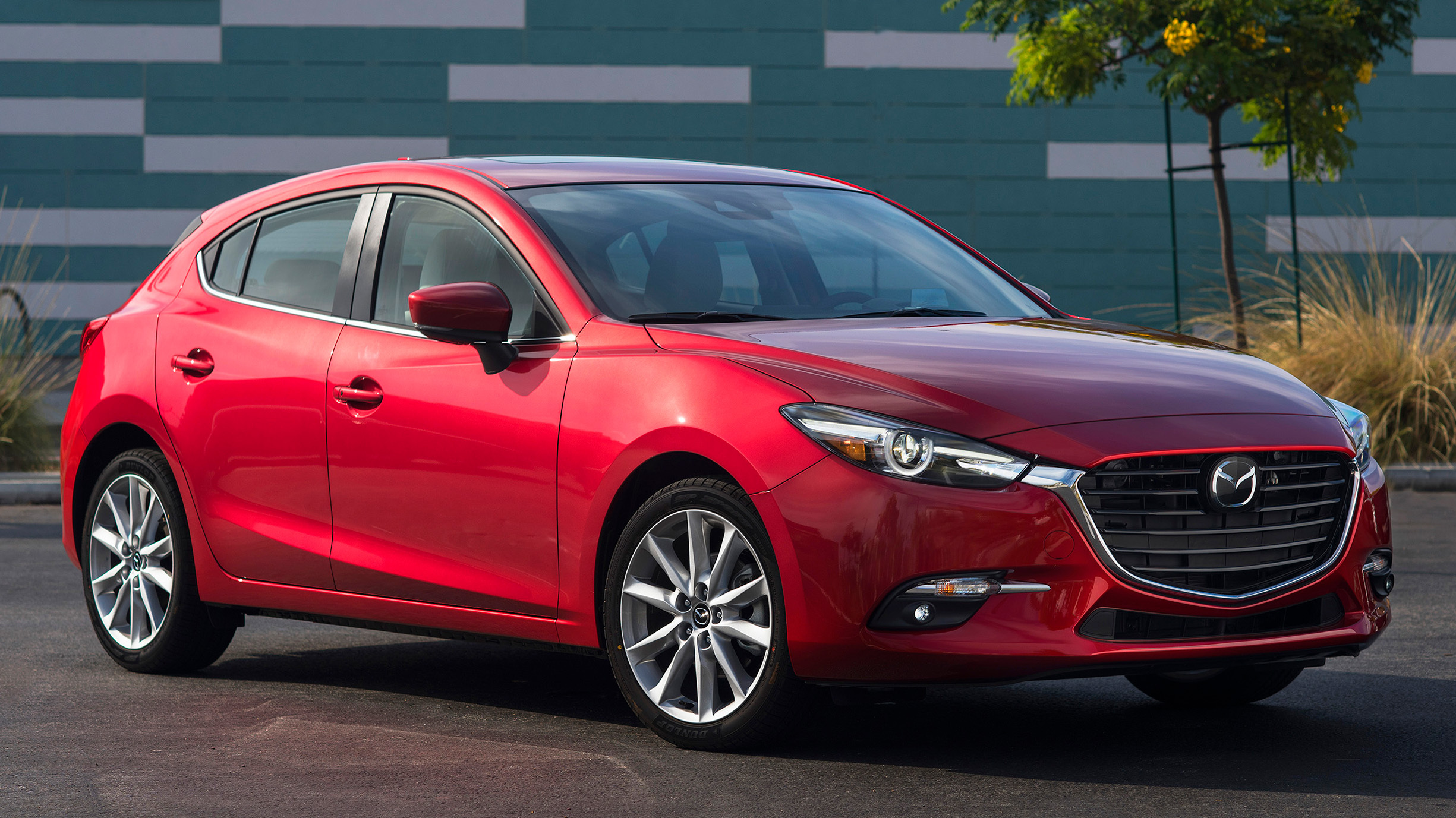
The current generation Mazda3 hatchback.

Come On BMW, You Know You Want To Build An i4 Coupe

  • BMW could introduce a two-door i4 Coupe EV by late 2028.
  • These renderings show the car with Neue KIasse design cues.
  • It’s possible an i4 Convertible could follow up on this model.

BMW is deep into one of the most ambitious product overhauls in its history. Over the next few years, dozens of new or comprehensively reworked models are set to arrive, and among them may be something rather special: a two-door i4 Coupe.

Also: Designers Are Doing What Honda Won’t With The S2000

Believed to carry the internal codename NA2, this sleek coupe is expected to serve as the all-electric successor to today’s 4-Series Coupe, provided it receives final approval for production. It could even pave the way for an i4 Convertible, reportedly called the NA3.

The renderings shown here offer a glimpse of how that future might look in coupe form.

Created by Sugar Design, these illustrations envision the two-door i4 adopting the styling cues of BMW’s recent Neue Klasse concept cars, albeit made to look even classier.

\\\\\\

The front end stretches long and low, framed by sharp headlights and slender kidney grilles. Though the new model will be offered solely as an EV, it’s hard not to imagine what sort of combustion engine BMW might have tucked beneath that hood in another era.

There’s a lot to like about the sides, too. As a two-door, it instantly looks better than the four-door Vision Neue Klasse that was unveiled two years ago. The rear also looks pretty neat, sporting thin horizontal LED taillights.

What Do We Know About The i4 Coupe?

 Come On BMW, You Know You Want To Build An i4 Coupe

Talk of a two-door i4 first surfaced last year, with reports suggesting the car had already been given the go-ahead for production starting in the latter half of 2028, likely sharing most of its parts with the upcoming i3 Sedan. That timeline, however, may not be set in stone.

With the global auto market shifting rapidly, BMW could easily adjust its schedule, or even its entire strategy, before the car reaches showrooms.

More: Audi A4 Returns As EV With Concept TT Styling To Give BMW Something To Worry About

There’s also a broader question of timing. The market for new EVs has cooled from early expectations in the States, BMW’s most crucial market, and two-door models typically attract smaller crowds even when there’s a combustion engine under the hood.

For BMW, launching an electric coupe right now would be less about market logic and more about image. It’s the kind of car built to make a point rather than a profit. Whether that’s enough to make the NA2 a reality will depend on how the next few years play out.

\\\\\\\

Sugar Design

Audi’s China-Only EV Deserves An RS Treatment

  • Renderings reimagine Audi’s E5 Sportback as a high-performance EV.
  • Digital artist crafted a widebody E5 with flared arches and details.
  • Concept showcases Audi’s sharper, more daring Chinese-market design.

Some of Audi’s recent designs have sparked a bit of a debate, with a few clear wins and a few that miss by a mile. The new A6 Avant, for instance, looks handsome and well-proportioned, while the Q4 e-tron feels like it was designed by committee after the coffee ran out.

Read: Of Course, The New AUDI E5 EV Is Ridiculously Cheap In China

That’s why it might be worth Audi’s European design team taking a closer look at what their counterparts in China have accomplished with the all-electric E5 Sportback. The model shows how Ingolstadt could refresh its global EV aesthetics, blending familiar Audi precision with an edgier presence.

Every version of the E5 Sportback shares the same overall silhouette, but with the right enhancements, there’s plenty of room for visual drama.

\\\\\\\\\\\\\\\\\\

Sugar Design/Instagram

These renderings from Sugar Design depict it in widebody guise inspired by the RS6 Avant and it looks absolutely brilliant. Who said EVs need to look bland and boring?

Immediately, the E5 looks a lot more menacing with the blacked-out front fascia, which is ordinarily painted to match the rest of the body on the standard model. By adding black color, the intricate LEDs running around the fascia are more visible.

Additionally, lowering the car and installing a sharp new splitter makes the car look a whole lot more aggressive. The RS badge is a nice touch, too.

\\\\\\\\\\\\\\\\\\\\\

Sugar Design/Instagram

Just like a proper RS model, the E5 Sportback has also been imagined with flared wheel arches at the front and rear. It also sits on oversized wheels and, as with the standard model, has a contrasting gloss-black roof.

Completing the stylistic changes is a new blacked-out rear fascia that, like the front, has a transformative effect on the car’s overall design.

For now, we’re not getting our hopes up that Audi will bring some of the E5’s key design elements into global markets. Still, considering how quickly the model has gained traction there, borrowing a few of its visual ideas might not be such a bad move for the global lineup.

 Audi’s China-Only EV Deserves An RS Treatment
The standard AUDI E5 Sportback

BMW’s Next i1 Hatch Could Be The Coolest Thing It’s Done In Years

  • BMW will expand Neue Klasse with a new i1 electric hatch.
  • Rendering imagines the i1 with sporty shooting brake styling.
  • Market demand in Europe keeps BMW’s compact lineup alive.

BMW’s next generation of models is rolling out fast, and the brand isn’t shy about spreading the Neue Klasse concept across its range. What began with the iX3 will soon expand to the fully electric i3 sedan, and not long after, the iX4 Coupe SUV too, which we covered earlier today.

The 1-Series hatchback is also being prepared for a new chapter, one that could see it offered with both combustion engines and electric power. The EV variant, expected to wear the i1 badge, might resemble what you see here in these new renderings.

Read: BMW Will Keep The 1 Series Alive And Upgrade It With The i1 EV

Created by digital artist Sugar Design, the i1 hatch blends cues from the Neue Klasse concepts with elements of the second-generation iX3. At the front, it wears BMW’s latest interpretation of the kidney grille.

Unlike the iX3, this interpretation of the i1 uses the elongated grille design previewed by the Neue Klasse sedan concept, merging the lighting units into a single visual element.

\\\\\

Sugar Design

Of course, it’s the overall shape of the i1 that has us really excited. It has an elongated roof and a steeply raked rear window, giving it the Shooting Brake vibes that so many car enthusiasts love, all in a more compact, hatch profile.

Admittedly, not having a more upright rear window would impact luggage capacity, but if you look this cool, who cares?

The Next 1-Series

Earlier this year, the senior vice president of BMW Brand and Product Management, Bern Koerber, underscored the importance of the combustion 1-Series and said that it will live on. The current ICE model is crucial in markets including Greece, Spain, and Italy, and serves as an appealing entry into the BMW family.

Technical details about the next-generation 1-Series are still limited, though it’s expected to share much of its underpinnings with other Neue Klasse models. It may also incorporate components from within the broader BMW Group, particularly from Mini.

\\\\\

Sugar Design

BMW’s New iX4 Could Finally Give The Model Y Something To Worry About

  • A new coupe SUV prototype by BMW has been spotted testing.
  • The Neue Klasse model is expected to adopt the iX4 moniker.
  • It will share its platform and interior with the upcoming iX3.

Update: Not long after the first prototype of BMW’s upcoming iX4 was caught testing out in the open, digital artists wasted no time trying to imagine what the final production model might look like. The early spy shots offer just enough visual clues to fuel some well-informed renderings, even as BMW keeps the real details under wraps.

More: This BMW M7 Super Sedan Is Too Good To Be Real

With its close ties to the new iX3, connecting the dots isn’t especially difficult, though a few surprises may still surface in the finer details, particularly around the taillights.

\\\\\

Illustrations Sugar Design

These digital interpretations from Sugar Design present a convincing idea of BMW’s next electric crossover, a model positioned squarely against one of the world’s best-selling EVs, the Tesla Model Y.

Both share a similar overall silhouette, marked by a hatchback-style arched roofline and a steeply slanted rear window that lends the iX4 a more dynamic profile, though the BMW shows more individuality in its detailing, particularly around the front fascia.

Original story continues below.

\\\\\

Illustrations Sugar Design

The aging X4 will bow out of production later this month, closing the chapter on BMW’s internal-combustion SUV coupe without a direct ICE successor. Yet the story doesn’t end there.

BMW is already working on a replacement, but it reimagines the formula for the electric age. The all-new iX4 is designed as a sportier counterpart to its square-roof sibling, the Neue Klasse iX3.

Our spy photographers captured the first camouflaged prototype during development testing. At a glance, the iX4 appears to borrow its front end from the iX3, including the headlights, grille, bumper, hood, and fenders.

From the B-pillar rearwards, though, the bodywork tells a different story. The profile has been reworked with a sloping roofline that flows into a fastback-style tail.

\\\\\\\\\\\

SH Proshots

The rear glass is more steeply angled than on the outgoing X4 and carries a discreet spoiler at its tip. Its sportier posture is further accentuated by broader, muscular rear shoulders that appear cleaner and more sculpted than those of the smaller, boxier X2 and iX2.

At the rear, the iX4 features slim LED taillights positioned close together, while the license plate has been relocated to the bumper. The prototype sits on ten-spoke alloy wheels with a diamond-cut finish, though it remains uncertain whether this design will make it to the production version.

Although exact dimensions remain unconfirmed, the iX4 is expected to be marginally longer than the new iX3, which measures 188.3 inches (4,783 mm), while maintaining the same 114.1-inch (2,898 mm) wheelbase. It may also improve upon the iX3’s already low drag coefficient of 0.24 cd.

 BMW’s New iX4 Could Finally Give The Model Y Something To Worry About
The iX4 should share the same dashboard as the iX3 above. | Photo Stefan Baldauf & Guido ten Brink

Inside, the iX4 will mirror the iX3 almost entirely, keeping the same layout, sans some headroom for the rear passengers.

More: BMW M’s iX3 Is Hiding Something Under Its Hood

That means BMW’s Panoramic iDrive stretching pillar to pillar, a 17.9-inch infotainment touchscreen, and an optional 3D head-up display, all running on the new BMW Operating System X.

\\\\\\\\\\

The new model will be built on the Neue Klasse architecture, meaning it will be offered exclusively as a battery-electric vehicle. Its powertrain range is expected to mirror that of the iX3.

More: BMW’s X1 Will Get A Radical Makeover With Neue Klasse Style And Tech

Currently, the iX3 50 xDrive delivers 463 hp (345 kW / 469 PS) through dual electric motors, while future variants are expected to include single-motor rear-wheel-drive options and higher-performance M-badged versions.

The BMW iX4 is expected to debut in late 2026. It will be the second fully electric coupe SUV from the Bavarian company, following the iX2 that was introduced in 2023. A larger iX6 is also rumored to follow at a later stage.

\\\\\\

SH Proshots

VW’s Next Electric Sedan Looks Nothing Like You’d Expect

  • Xpeng and VW are collaborating on a new ID electric sedan.
  • Based on the Xpeng P7, it features a unique exterior design,
  • VW plans 30 new models for China, including 20 electrified ones.

If anyone needed a reminder of just how central China has become to the global car industry, look no further than to Volkswagen’s partnership with Xpeng.

Announced last year, the collaboration centers on a next-generation electrical architecture set to support a wide range of future models, from pure EVs to traditional combustion and plug-in hybrid vehicles.

Read: VW’s Concepts Mark The Start Of 30 New Models For China’s EV Future

This joint effort is already bearing fruit. Among the first of these shared creations is an as-yet-unnamed sedan from Volkswagen that’s expected to join the ID family.

What Does It Look Like?

Recently seen testing under camouflage on Chinese roads, the upcoming electric sedan is believed to be based on the Xpeng P7, whose second generation debuted only a few months ago, while also reflecting design elements from Volkswagen’s ID. Aura and ID. Evo concepts showcased earlier this year.

\\\\\

Sugar Design

Digital artist Sugar Design produced a series of renderings based on those camouflaged prototypes, and there’s no denying that, compared with several Volkswagen models currently sold in Western markets, it has a distinctly sleeker and sportier presence.

At the front, it features split LED headlights and a small illuminated badge in the center, as well as a large open black grille and smooth lines. It’s nowhere near as radical as the sharp-looking second-gen P7, but for the German brand, it’s still quite a bold shift in style.

The side profile is particularly eye-catching, highlighted by its pronounced rear haunches and a smooth, flowing roofline. At the back, intricate LED taillights frame a softly illuminated VW badge, with a discreet black diffuser completing the look.

What Could Power It

Whether Volkswagen’s upcoming sedan will mirror the Xpeng P7’s specifications is still uncertain, but the P7 itself measures 197.5 inches (5,017 mm) in length and offers two battery options: a 74.9 kWh pack and a larger 92.9 kWh version.

 VW’s Next Electric Sedan Looks Nothing Like You’d Expect
The new Xpeng P7 | Photo Stefan Baldauf & Guido ten Brink

The standard rear-wheel-drive layout produces 362 hp (270 kW) from a single motor, while the all-wheel-drive setup adds a front unit for a combined 586 hp (437 kW). The AWD variant is expected to hit 62 mph in 3.7 seconds and reach a top speed of 142 mph.

Range depends on configuration, from roughly 436 miles (702 km) in base form to 509 miles (820 km) for the long-range RWD model.

VW’s Chinese Plans

VW is taking the Chinese market extremely seriously. Beyond confirming that its jointly developed electrical and electronic architecture with Xpeng will underpin future EVs, the company has made clear that the same foundation will serve combustion and plug-in hybrid models.

\\\\

Sugar Design

The new system won’t simply enable over-the-air updates; it’s also designed to streamline vehicle development, cutting production timelines and allowing faster adaptation to market trends.

The German brand has committed to launching more than 30 new models in China, including 20 new-energy vehicles. In addition to working with Xpeng to make these a reality, it is collaborating with partners through the FAW-Volkswagen and Volkswagen Anhui joint ventures.

\\\\

Sugar Design

❌
❌