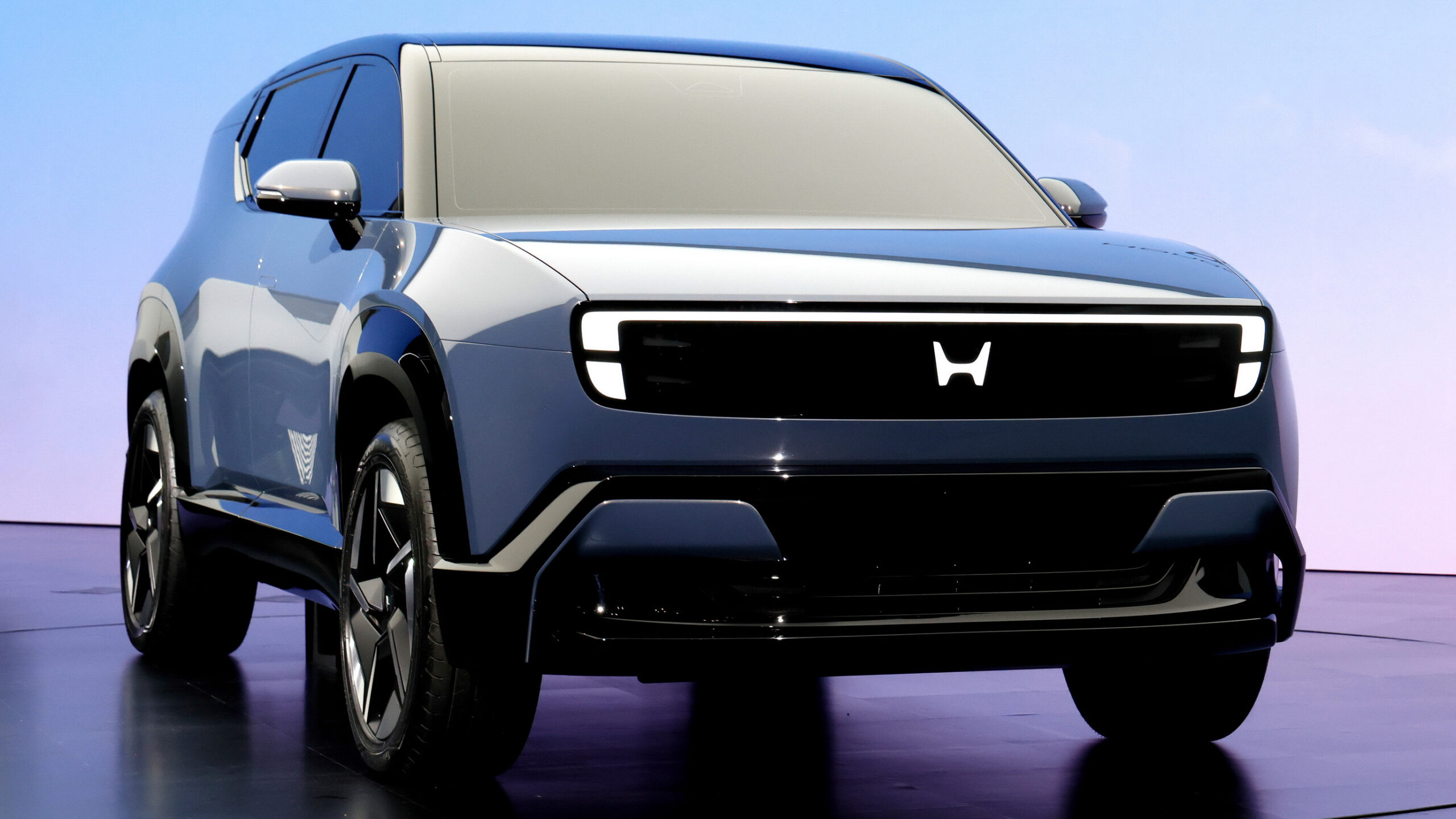
Honda’s new borderless H emblem arrives on cars starting 2027.
It will appear on 0 Series EVs and 13 next-generation hybrids.
The new badge rollout includes dealers, branding, and motorsport.
Update: We reached out to Honda for clarification on whether its new logo will appear solely on electrified vehicles (EVs and hybrids) or across all models, including gasoline-powered ones.
“Honda has announced that the new H-Mark will be applied to EV/HEV models launched after 2027,” a US spokesperson told us. “Honda has no details to share regarding gasoline models at this time.”
Honda is preparing for a small but symbolic shift in its visual identity as it steps deeper into electrification. The company has announced that a newly designed emblem will begin appearing on its electrified production vehicles and across other areas of its automotive business, including dealerships and motorsport divisions.
The classic H mark has been reimagined with a simplified, borderless design and will make its production debut on future electric vehicles and next-generation hybrids beginning in 2027.
Which Models Get It First?
The new logo made its first appearance on Honda’s 0 Series concepts, revealed in early 2024. The first production model expected to wear it is the 0 SUV, which will be built in Ohio. That vehicle was originally slated to launch in 2026, although the first confirmed use of the new badge is now set for 2027.
Following the 0 SUV, Honda will introduce the closely related 0 Saloon, which also features the illuminated emblem. A third vehicle, the compact 0 Alpha SUV, is being developed as a global model, with particular attention to the Japanese and Indian markets.
Alongside its all-electric lineup, Honda has confirmed the emblem will appear on a series of new hybrids as well. Between 2027 and 2031, the company plans to roll out 13 new vehicles featuring an updated version of its e:HEV hybrid system. The revised setup promises better efficiency, stronger performance, and tighter integration of components.
This means the Prelude coupe and the upcoming Super-One hatchback could be among the final new models to carry the current emblem, unless Honda opts to retrofit them with the new badge as part of future model year updates.
While there is no mention of future ICE-powered products, Honda has confirmed that the new branding will be “rolled out gradually across automobile models and other business areas” such as dealerships, communications initiatives, and motorsport activities.
The H mark has served as Honda’s signature since 1963, with previous redesigns arriving in 1969, 1981, 1991, and 2001. The latest version, inspired by the image of two outstretched hands, is intended to symbolize a “second founding” for the brand as it moves through a period of transformation.
EV sales from Nissan’s rivals jumped sharply late last year.
Japan now offers EV subsidies of up to $8,300 per buyer.
BYD will launch its all-electric Racco kei car this year.
Electric vehicle sales in Japan have never quite taken off, but disruptions are underway. For nearly 15 years, Nissan held the top spot in the country’s EV market, thanks largely to the Leaf. Now, that grip is loosening.
A cooling appetite for Nissan’s EVs and rising demand for newer offerings from rivals have pushed the market into a new phase. For the first time, Nissan has been overtaken as Japan’s top-selling EV brand in quarterly sales, with Toyota stepping into the lead during Q4 2025.
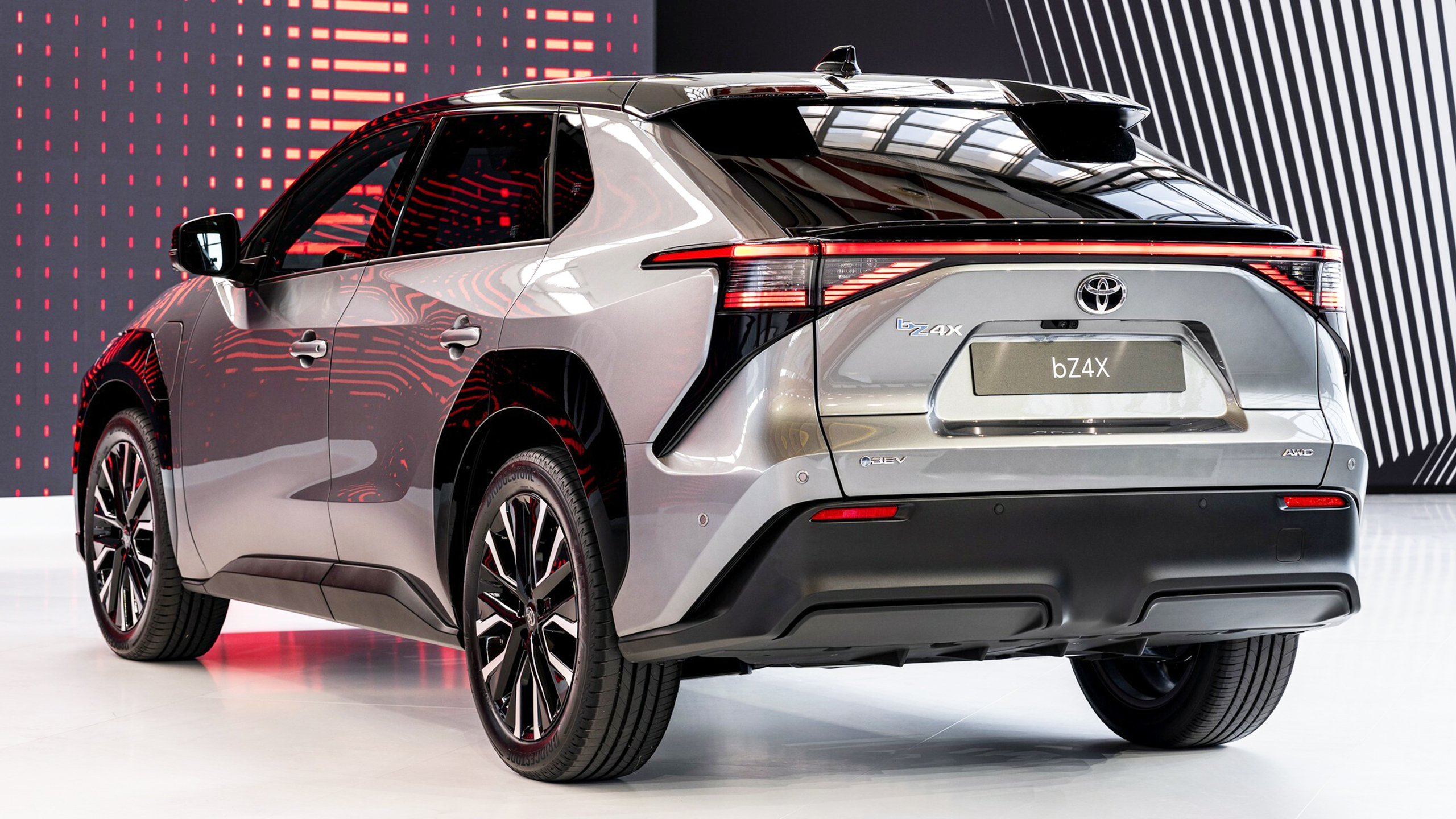
According to the latest data from Japan’s automotive industry association, Toyota sold 3,684 EVs domestically in the fourth quarter of 2025, a surge helped by the October launch of the bZ4X. While that figure is still modest by global standards, it represents a thirteenfold increase over the same period in 2024.
Nissan, meanwhile, saw its electric sales plunge 56 percent to 2,857 vehicles. The Leaf and Sakura both experienced weaker demand in the closing months of the year.
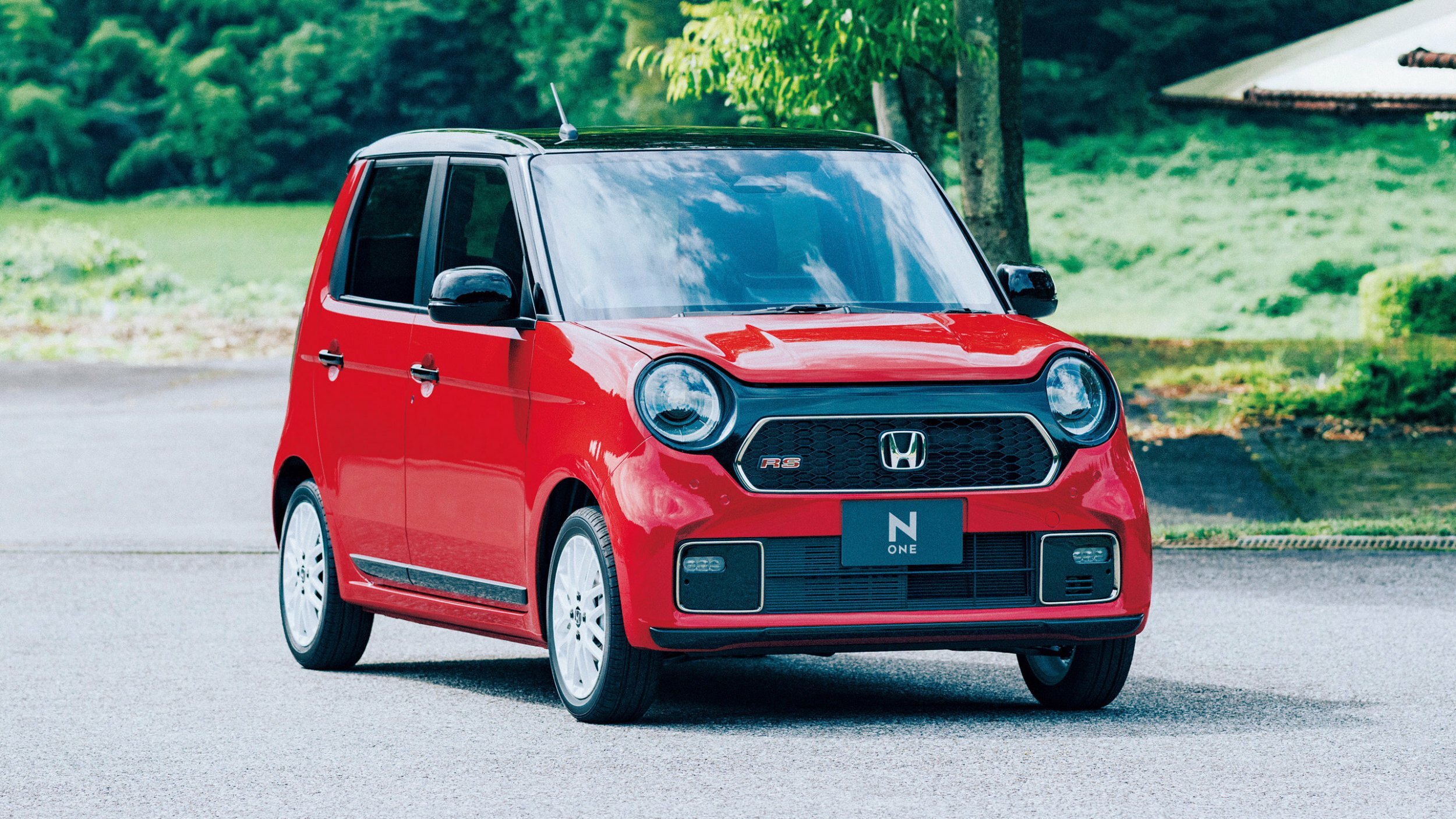
The momentum wasn’t limited to Toyota. According to Nikkei Asia, Honda also made gains, boosted by the launch of the N-One e:. With a range of up to 295 kilometers (183 miles) on a single charge, it now holds the title for longest-range electric minicar in the market.
Honda sold 2,732 units in Q4, a lift that was enough to pass Tesla, which also saw its numbers rise. Tesla’s sales increased by 62 percent year over year, reaching 2,600 vehicles in the quarter.
EVs Still a Niche in Japan
While EV sales have accelerated in much of the world over the past few years, they still make up only a small fraction of the Japanese market. At present, electric vehicles account for just 1.9 percent of all new car sales in the country. This is the lowest share among advanced economies.
Several new models slated for launch in 2026 could help lift that figure, and the government is moving to speed up the transition too. This year, qualifying buyers can receive up to 1.3 million yen ($8,300) in subsidies, aimed at nudging more drivers toward electric.
BYD may soon become a more significant contender. The Chinese automaker posted a 72 percent increase in Q4 sales, reaching 832 units. It plans to launch its all-new Racco electric kei car in the Japanese market this year, positioning it to make a more aggressive push into a historically difficult segment.
Sony Honda Mobility reveals Afeela Prototype 2026 crossover.
Both EVs share interior tech, platform, and design principles.
Afeela 01 sedan enters pre-production ahead of 2026 launch.
EV startup Sony Honda Mobility has returned to CES in Las Vegas this year with a fresh glimpse into its future, unveiling both a nearly production-ready version of the Afeela 01 sedan and a new crossover concept. The taller, more upright newcomer is called the Afeela Prototype 2026 and is set to arrive on American roads in 2028.
The two vehicles share a common mechanical platform and clearly draw from the same design playbook with broad LED light strips front and rear, a display panel built into the front fascia, and smooth, bi-tone bodywork.
Both wear their tech ambitions on their sleeves, though their overall shape leans more conventional than provocative. Still, they mark a visual step forward from the earlier Sony Vision-S 01 and Vision-S 02 prototypes that premiered at CES in 2020 and 2022.
A Cabin Built Around Screens
Inside, the crossover closely mirrors the sedan, with a dashboard lined in multiple displays and two additional screens in the rear, where passengers can dive into PlayStation games. The tech backbone is Qualcomm Technologies’ Snapdragon Digital Chassis, paired with an advanced AI agent developed in collaboration with Microsoft.
The added height should translate into better interior packaging, especially for families or anyone regularly hauling passengers. With LiDAR modules and cameras mounted to the roof, both Afeela EVs aim for Level 2+ autonomy at launch, with built-in capability to support Level 4 once regulations and software catch up.
Technical details on the crossover remain mostly under wraps, though it’s expected to closely track the sedan in terms of performance and equipment.
The Afeela 01 has dual electric motors generating 483 hp (360 kW / 489 PS), , fed by a 91 kWh battery. That setup delivers an estimated 300 miles (483 km) of EPA range. Those numbers don’t sound that exciting for 2028 standards, especially when the new BMW iX3 already offers a 400-mile (644 km) range.
How Much Will it Cost?
Sony Honda Mobility has yet to reveal pricing for the crossover variant that will hit the roads in 2028. However, the prices of the closely-related sedan are a good indication of what to expect.
The Afeela 01 sedan will debut in a high-spec Signature launch trim at $102,900, arriving in late 2026. A more affordable Origin base model, priced at $89,900, will follow in 2027. Interestingly, even though production is based in the US, the first customer deliveries are slated for Japan in the first half of that same year.
Average transaction price hovers near $50K with no slowdown.
Affordable cars fade as luxury trucks and SUVs dominate sales.
EV prices soften slightly but rely heavily on rising incentives.
If you were hoping falling interest rates, bigger incentives, or sheer consumer exhaustion might finally drag new-car prices back to Earth, number-crunching industry experts have some bad news.
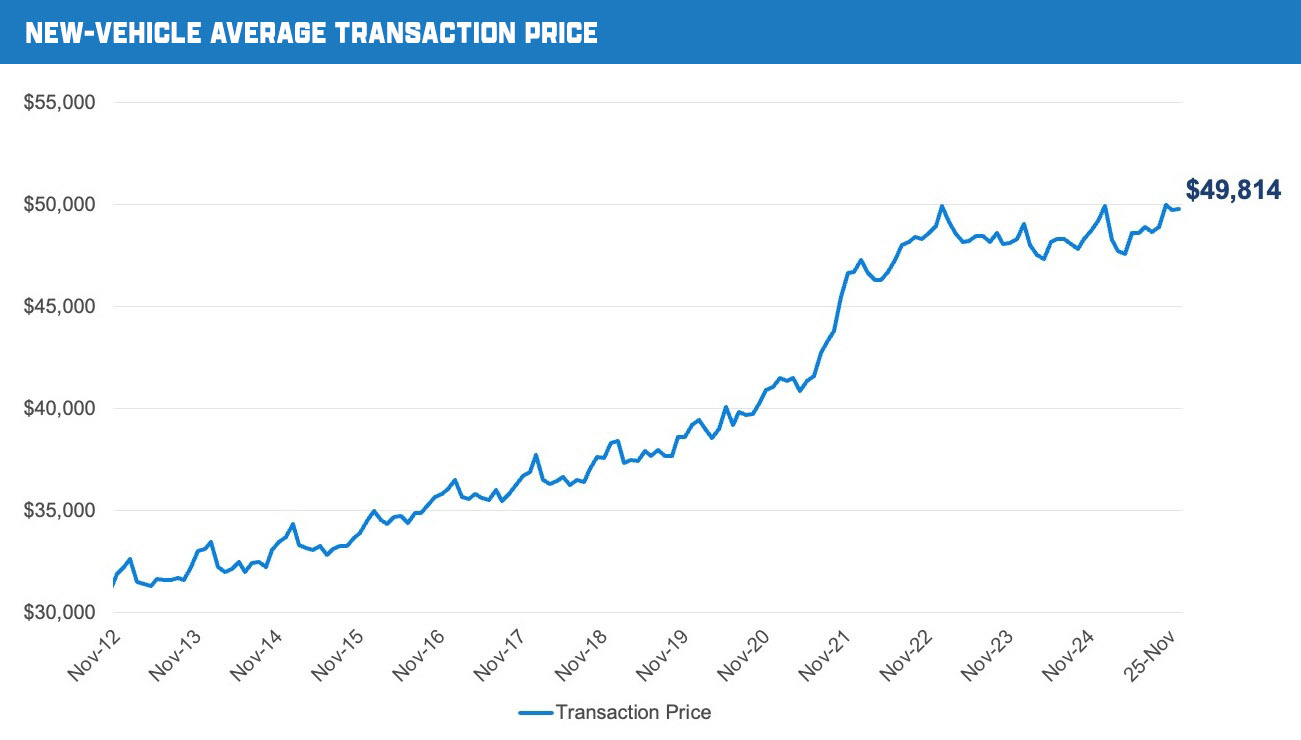
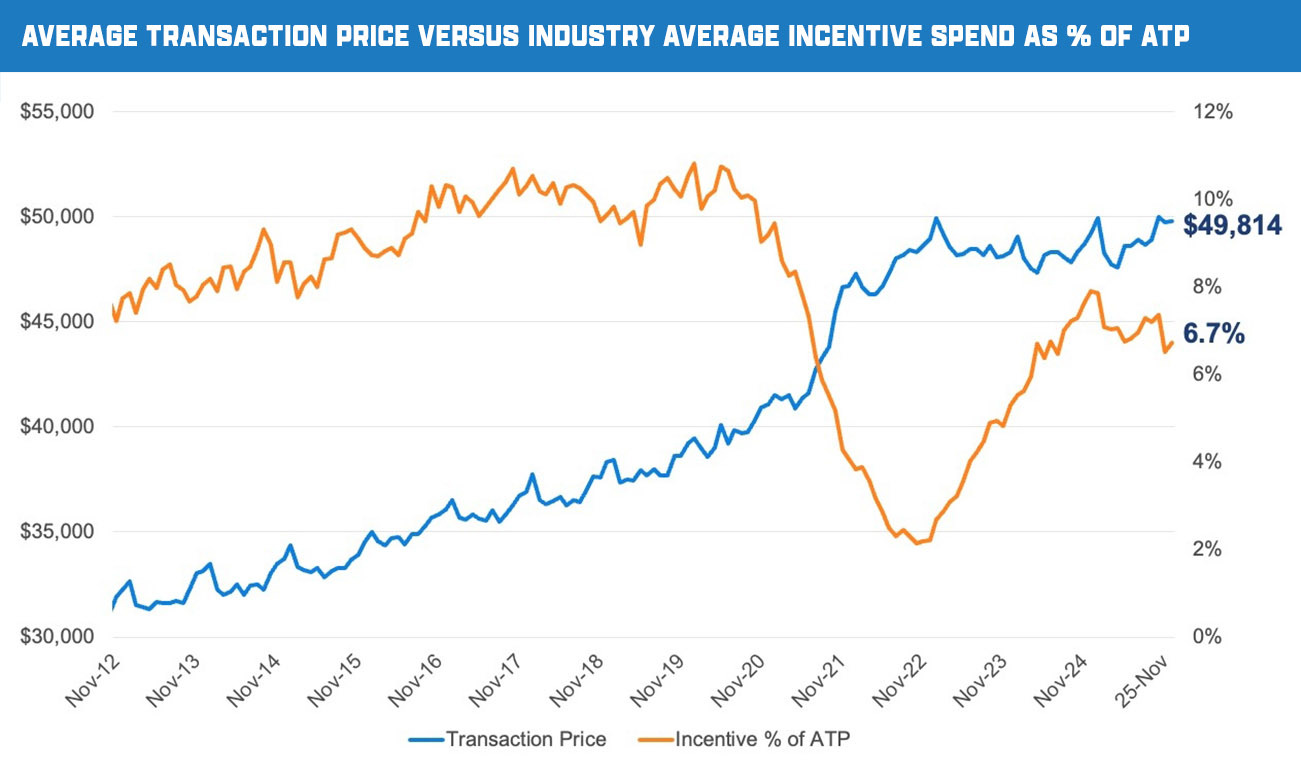
According to the latest Kelley Blue Book data, the average transaction price of a new vehicle in the US hit $49,814 in November, and it’s showing no real sign of dropping.
That figure is up 1.3 percent year over year and effectively unchanged from October, suggesting the industry has settled into a comfortable rhythm where fifty grand is the new normal.
Cox Automotive says prices usually peak in December, meaning the holiday season could push things even higher as buyers gravitate toward well-optioned trucks, luxury SUVs, and vehicles that require six figures of income and very little financial anxiety.
Fewer Incentives
Incentives are still around, but they are not doing the heavy lifting they once did. In November, incentives averaged 6.7 percent of average transaction prices, down from nearly 8 percent a year ago.
Automakers simply do not need to discount aggressively when buyers keep selecting expensive trims with panoramic roofs, giant screens, and fancy wheels.
The data makes one thing clear. Cheap cars are disappearing from the sales mix. Vehicles with MSRPs under $30,000 accounted for just 7.5 percent of November sales, down sharply from 10.3 percent a year earlier.
Meanwhile, more than one in 10 vehicles sold cost over $75,000. The most popular sub-$30K survivors remain familiar names like the Toyota Corolla, Chevrolet Trax, and Hyundai Elantra, clinging on like endangered species.
While transaction prices may have leveled off for now, average MSRPs, commonly known as the asking price, are still inching upward, reaching $51,986 in November. That marks a 1.7 percent increase over last year.
Blame Pricey Trucks
Trucks continue to be a major contributor to price inflation. Full-size pickups now average more than $70,000 for the third month in a row and accounted for over 14 percent of all sales in November, with nearly 183,000 units delivered. That helps explain why the industry average keeps floating upward even when compact and midsize segments remain relatively stable.
Electric vehicles add another twist. The average EV transaction price fell slightly month over month to $58,638, but remains up 3.7 percent year over year. Incentives jumped to over 13 percent of prices as sales softened again, dropping more than 40 percent compared with last year.
Tesla’s average transaction price rose to $54,310 in November, even as sales fell 22.7% year over year, largely due to sharp declines in Model 3 demand. Prices for the Model Y, the best-selling EV in the U.S., edged up slightly. Cybertruck sales fell to 1,194 units, their lowest monthly total of 2025, though its average price rose to $94,254.
Who’s Really to Blame?
According to Cox Automotive Executive Analyst Erin Keating, today’s prices aren’t just the result of inflation or supply hangovers, but they reflect what consumers are choosing to buy.
“It’s important to remember that the KBB ATP reflects what consumers choose to buy, not what’s available,” she explained.
“Many new-car buyers today are in their peak earning years and are less price-sensitive, opting for vehicles at the higher end of the market to get the features and experiences they value most. In November, sales of vehicles priced above $75,000 outpaced those below $30,000, underscoring this preference for premium products” Keating added.
The takeaway is simple. Prices are high because buyers keep buying high. Until that changes, the average US driveway will continue to look alarmingly expensive.
We just have to hope the trend doesn’t discourage automakers from developing and building the more affordable models that less affluent Americans still need.
Honda’s sales dropped sharply compared to the same month last year.
The end of federal EV tax credits took a significant toll on the Prologue.
The Passport SUV was the brand’s only major sales success last month.
Honda has released its sales figures for November, and the picture isn’t pretty. The company recorded US sales of 91,582 units, a notable decline of 16.8 percent compared to the same month last year, when it delivered 110,020 vehicles.
Despite the monthly slowdown, the company’s year-to-date total of 1,190,328 vehicles still reflects a modest 1.8 percent increase over the same period in 2024.
Among Honda’s key nameplates, most saw declines in November, with only slight variation between them. The Accord recorded 10,613 sales in November, down 9.1 percent from 2024, while the Civic moved 17,353 units, a 5.5 percent decline. The Odyssey minivan had a rougher month, slipping 17.3 percent to 5,492 units.
SUVs and crossovers continued to shoulder most of the brand’s sales volume, led by the CR-V at 29,421 units and the HR-V at 10,821. Both posted notable drops of 14.5 percent and 14.1 percent respectively. The Pilot followed with a 27 percent decline to 9,234 units, and the Ridgeline pickup slid 15.4 percent to 3,352.
Unsurprisingly, the steepest fall came from Honda’s electric Prologue, which was caught in the aftermath of the federal EV tax credit shake-up at the end of September. Sales cratered by 86.8 percent, plunging from 6,823 units last November to just 903 this time around.
That brings us to Honda’s newcomer, the Prelude, which officially entered the U.S. market last month. According to manufacturer data, 30 new buyers took delivery of the hybrid coupe after it went on sale around the third week of November.
No doubt, that figure will grow as production ramps up and imports arrive, so there’s little reason to draw conclusions just yet. Still, a heritage model like this tends to move quickly once stock builds up, though Honda’s pricing might slow that momentum.
The Prelude has made big waves since Honda admitted that it was returning. For the most part, that press has been good. In Japan, it was so popular among folks in their 50s and 60s that dealers had to pause taking orders for it. Of course, not all coverage of the car is so rosy. A starting MSRP of $43,195 (including destination) put it within $1,000 of a Nissan Z, which has the same number of seats and double the horsepower.
Notably, Honda only offers the Prelude in a single trim with just about every desirable option already included. Prospective buyers can add around $10,000 worth of additional accessories, special wheels, and more. That said, the big draw for the Prelude, other than its name and styling, is performance in the fuel economy department. It can achieve up to 46 mpg in the city, 41 on the highway, and 44 combined.
Honda US Sales November 2025
$43,195 already seems like a lot of cash for such a niche car, but get this: dealer markups are only making things worse. Late last month, we told you about some dealers asking $60,000 or more for this car. One justified it with a “Protection Package & Market Adjustment” tag for $14,995. That type of pricing is almost certainly going to keep the rollout slow for the time being.
Of course, not every dealer will price the car that way. Plenty will sell it at MSRP or near there. The real question is how many buyers in the U.S. will be willing to buy it and join the first 30 owners.
Honda revealed a new platform to support its next hybrid models.
It’s lighter, stiffer, and engineered to deliver sharper handling.
A camouflaged Civic mule previews the platform’s next evolution.
Honda used its Automotive Technology Workshop to share new details about a next-generation platform that will form the backbone of its upcoming hybrid range. The new architecture is set to underpin models such as the Civic, HR-V, CR-V, Accord, and several others, marking a major step in the brand’s transition toward cleaner and more efficient vehicles.
The new platform’s design centers on improved rigidity to sharpen handling, a development that will also influence Honda’s future EV structures. Engineers have managed to reduce overall weight by 90 kilograms (198 pounds) compared to the current setup.
According to Honda, these changes will make future models both more engaging to drive and more economical at the pump.
Honda has also drawn on its robotics expertise to introduce a new Motion Management System, designed to enhance stability and steering response. Complementing this is an upgraded Agile Handling Assist system, now paired with a pitch control feature to deliver steadier behavior across a variety of road surfaces.
Another focus area is modularity. The updated platform will allow for more than 60 percent parts commonality between models, streamlining development and manufacturing while reducing costs.
Next Civic Prototype
Among the vehicles being tested on this new foundation is a camouflaged Civic mule, previewed in these official photos you see here. The test car wears the body of the current Civic but features a noticeably bulkier front end, boxier bumper design, and a longer overhang. These changes are purely functional, meant to accommodate and evaluate the new underpinnings rather than preview final styling.
The extensions on the front and rear fenders hint at wider tracks, while the inserts on the hood could be related to aerodynamics.
The tail is carried over from the existing Civic sedan, but it gets dual tailpipes. Of course, the design of the final product will be different, as this vehicle is only intended for testing the new underpinnings.
Prelude Tricks Trickle Down The Range
The upcoming hybrid powertrain is expected to pair a 2.0-liter gasoline engine with electric motors, offering better performance with higher efficiency. It will also borrow certain traits from the Prelude coupe, including the Honda S+ Shift system. This feature mimics gear changes through sound and torque modulation, adding a familiar rhythm to the driving experience despite the absence of a physical gearbox.
The fake gearshifts will also find their way into the Super-One EV. The urban hatchback that debuted at the Japan Mobility Show will have a simulated seven-speed setup, an active sound control system, and a “Boost” driving mode, making the best out of the fully electric powertrain.
It rides on a lightweight platform evolved from the N Series kei cars, with a wider stance and a battery pack mounted under the floor. The Super-One will arrive in Japan from 2026, followed by the UK, Europe, and other Asian countries.
Honda’s long-term vision reaches well beyond product development. By 2050, the company intends to achieve full carbon neutrality across all its vehicles and corporate operations. In that same timeframe, it also aims for a world where traffic collisions involving its motorcycles and cars result in zero fatalities.

 Login
Login